

Cincinnati Art Museum
Background & History
Historical context and known paranormal claims surrounding Cincinnati Art Museum.
The Cincinnati Art Museum stands as a major cultural institution within Ohio, a repository of artistic achievement spanning from antiquity through contemporary periods. The building itself serves as architectural expression of civic cultural values, designed to protect and showcase artistic treasures and facilitate public appreciation of aesthetic achievement. The museum's collections encompass an extraordinary range of artistic traditions and historical periods—ancient Egyptian artifacts, medieval manuscripts and religious objects, Renaissance paintings, and comprehensive documentation of Cincinnati's own artistic and cultural contributions. The oldest sections of the building carry particular significance for paranormal researchers, as architectural age frequently correlates with reported paranormal phenomena. These historic spaces, with their original materials, proportions, and structural integrity, serve as the primary loci of documented paranormal activity, suggesting that physical age and historical resonance play roles in facilitating supernatural manifestation.
The Cincinnati Art Museum's architectural origins trace back to the late nineteenth or early twentieth century, a period when American cities were establishing major cultural institutions as expressions of civic pride and aspiration. The building's design incorporated the formal, imposing qualities expected of cultural temples—substantial stone construction, careful proportional relationships, architectural details suggesting permanence and cultural significance. The original design and construction process itself represented substantial community commitment and financial investment, reflecting Cincinnati's status as a major American city with economic and cultural aspirations. The building's subsequent expansion and renovation over the decades has created a complex architectural palimpsest, with newer sections sitting adjacent to original structures, creating zones of different temporal depth and historical association.
The Cincinnati Art Museum's collections, particularly the antiquities and medieval art sections, introduce profound historical associations into the physical space. Ancient Egyptian artifacts—mummies, canopic jars, funerary equipment, papyri documenting ancient religious and practical beliefs—carry resonances of death, ancient belief systems, and the preservation of human remains across millennia. Medieval religious objects—altar pieces, reliquaries, sacred vestments, illuminated manuscripts documenting theological interpretation and spiritual expression—introduce the accumulated spiritual intention of centuries of Christian devotion and ritual. These objects, gathered from their original contexts and displayed within the sterile, climate-controlled environment of the museum, create a distinctive psychological and spiritual environment. The artifacts themselves may serve as foci or attractors for paranormal manifestation, their original associations with death, spirituality, and historical significance potentially facilitating contact between material and non-material realms.
The seven-foot-tall specter that has been reported rising from a mummy sarcophagus within the ancient Egyptian section represents perhaps the most dramatic documented paranormal manifestation within the museum. This apparition appears to exhibit intelligent behavior, rising from the specific sarcophagus, suggesting an association with the particular artifact and its contents. The specificity of the manifestation—the particular location, the dimensions of the apparition, the apparent connection to the archaeological artifact—suggests more than random paranormal activity. The occurrence of an apparition of this character within a museum setting creates an intriguing methodological question: does the manifestation represent a spirit associated with the mummy itself, transported with the artifact to its museum location? Or does the appearance of the apparition at the sarcophagus suggest that the ancient artifact, with its profound historical and spiritual associations, serves as a focus or attracting force for other entities present within the location?
museum
Cincinnati, Ohio
Hamilton County
February 26, 2026
Open
People Also Searched For
You Might Also Like
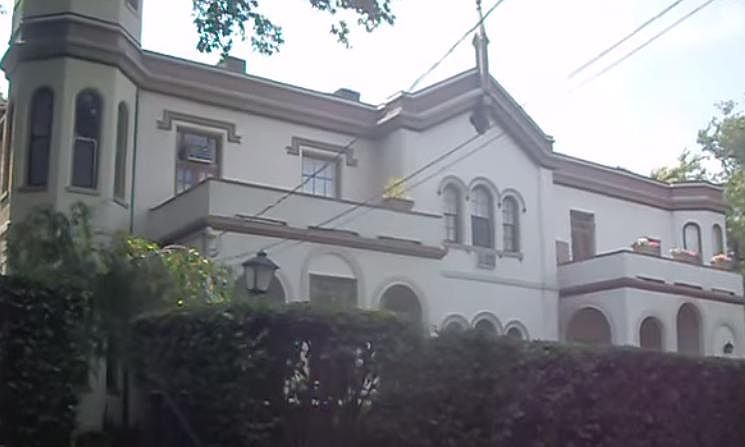
On a quiet cul-de-sac in Cincinnati's Clifton neighborhood, one of the city's most prestigious old-money districts built on the rolling hills that give the Queen City its classical silhouette, a Victorian mansion stands at 3517 Cornell Place that has been absorbing tragedy since before the Civil War… read more
Cincinnati, Ohio · house
The Cincinnati Zoo stands as one of America's oldest and most prestigious zoological institutions, with a history extending back to the nineteenth century and encompassing decades of dedicated work in animal care, scientific advancement, and public education. The facility's extensive grounds contain… read more
Cincinnati, Ohio · other
Spring Grove Cemetery in Cincinnati, Ohio, represents one of the finest and most historically significant cemeteries in the United States, a landscape of exceptional beauty and cultural importance recognized through its designation as a National Historic Landmark. Chartered in 1845, the cemetery enc… read more
Cincinnati, Ohio · cemetery
Have you visited Cincinnati Art Museum?
Share your paranormal experience and help other investigators decide if it's worth exploring.
Activity Breakdown
Types of documented activity recorded at Cincinnati Art Museum, organized by category.
Visual Activity
Reported Areas
Specific areas within Cincinnati Art Museum where activity has been documented.
Major art museum featuring collections including antiquities
medieval art
and Cincinnati Wing exhibits. Building protected 24/7 with notable paranormal activity in oldest sections.
Known Entities
Entities, spirits, and figures that have been identified or reported at Cincinnati Art Museum.
Civil War soldier ghost
Elizabeth Boott Duveneck spirit
shadow figure
Spanish monk ghost
Photos
Images sourced from across the web and linked directly to the original host. Ghouler does not download or host these images, nor do we claim them as our own.
Investigator Reviews
Your trust is our priority, so no location can pay to alter or remove their reviews.
No reviews yet.
Be the first to share your experience at Cincinnati Art Museum.
Find reviews useful? Help others by sharing your experience.
Documented Experiences
Paranormal reports and documented occurrences compiled for Cincinnati Art Museum from archived sources and community investigators.
No documented experiences for Cincinnati Art Museum yet.
Best Times to Visit
Based on investigator reports, these are the most active areas, times, and conditions reported at Cincinnati Art Museum.
Cincinnati Art Museum
Late Night, Midnight
Equipment & Methods
Equipment and investigation methods reported by community investigators at Cincinnati Art Museum.
No equipment or investigation methods have been reported for Cincinnati Art Museum yet.
Know Before You Go
Important details to help plan your visit or investigation of Cincinnati Art Museum.
Unknown
Open
Not specified
Sources & References
Referenced materials and documentation supporting the Cincinnati Art Museum case file.
Experience Glossary
Detailed descriptions of each type of activity documented at Cincinnati Art Museum.
Apparitions
Definition
A reported visual sighting of a human-like or shadow-like figure without a physical source.
What People Report
Witnesses describe full-body figures, partial forms, or fleeting silhouettes appearing in hallways, doorways, or peripheral vision. These sightings are typically brief and may vanish when directly observed.
Full-Body Apparitions
Definition
A complete human-shaped figure reportedly seen in physical space.
What People Report
Witnesses often describe defined features such as clothing, posture, or movement patterns. These manifestations may appear solid or semi-transparent before disappearing abruptly.
Shadow Figures
Definition
A dark, human-shaped silhouette seen in peripheral vision or dim lighting.
What People Report
Typically described as featureless and quickly vanishing when directly observed, shadow figures are among the most commonly reported visual phenomena.
Important Notices
Information in this case file is compiled from public sources and community reports. Accuracy cannot be guaranteed. Always verify details before visiting, and check with property owners and local or state authorities to confirm access is permitted.
Nearby Case Files
Explore Ohio
Browse by Haunt Type
Phenomena & Experiences
- Apparition reports
- Full-Body Apparition reports
- Shadow Figure reports
- EVP reports
- Disembodied Voice reports
- Unexplained Footsteps / Knockings reports
- Poltergeist reports
- Object Manipulation reports
- Cold Spot reports
- EMF Anomaly reports
- Intelligent Haunting reports
- Residual Haunting reports
- Sense of Presence reports
- Phantom Smell reports
- Electronic Disturbance reports
People Also Viewed
Stenton House – Cornell Place Apartments
House
Cincinnati, Ohio
Cincinnati Zoo
Other
Cincinnati, Ohio
Spring Grove Cemetery
Cemetery
Cincinnati, Ohio
Fostoria Area Historical Society and Museum
Museum
Fostoria, Ohio
Gray’s Armoury Historical Museum
Museum
Cleveland, Ohio
Central Ohio Fire Museum
Museum
Columbus, Ohio