
Haunted Hospitals in America
144 haunted locations
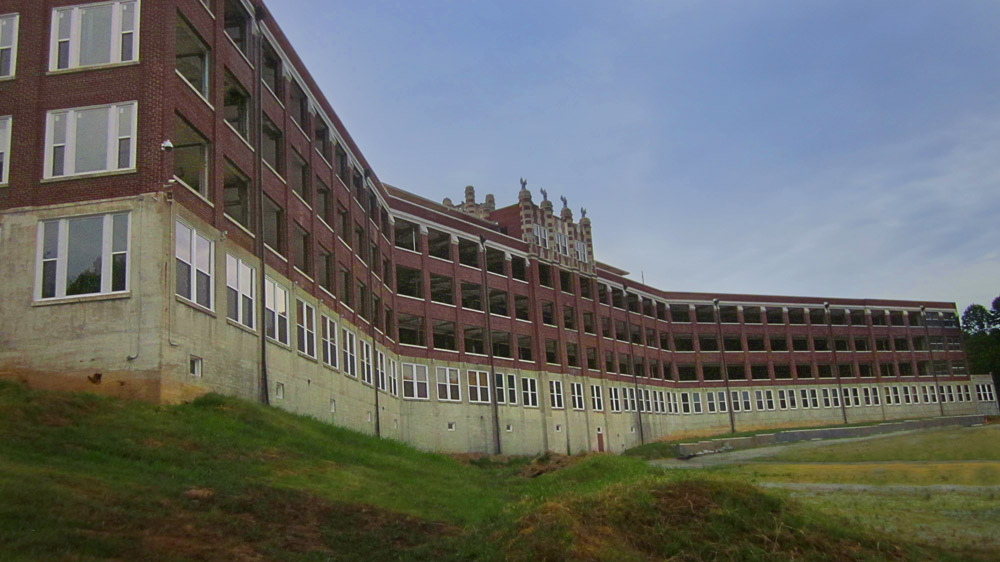
Waverly Hills Sanatorium
Rising from a windswept hill on the south side of Louisville, Kentucky, Waverly Hills Sanatorium looks exactly like what most people picture when they think of a haunted hospital—a massive Tudor Gothic structure with long sun-bleached corridors, cavernous open wards, and an elevation that keeps it visible and isolated all at once. But Waverly Hills wasn't built with darkness in mind. It was built out of desperation, as a response to one of the deadliest disease outbreaks an American city had ever faced. In the early 1900s, Louisville had the highest tuberculosis death rate in the entire country. Nestled in the Ohio Valley along the wetlands of the Ohio River, the city was a near-perfect environment for the disease to spread. To try to contain it, a Board of Tuberculosis Hospital was established in 1906, and a two-story wooden facility opened on the hill in 1910, capable of holding around 40 to 50 patients. As the epidemic worsened, that structure proved woefully inadequate. Construction on a permanent five-story building began in 1924, and the new Waverly Hills opened in 1926—considered at the time to be the most advanced tuberculosis sanatorium in the country. Unlike locations tied to a single act of violence, Waverly Hills carries the weight of prolonged suffering. Patients arrived knowing they might not leave. Treatments of the era were brutal by any measure—surgical procedures to collapse and expand the lungs, removal of ribs and chest muscles, experimental interventions that killed as often as they cured. Fresh air was considered therapeutic, so patients were positioned on open porches in all weather, including winter. Old photographs show men and women bundled in chairs, dusted in snow, staring out over Louisville. Many of them died there. When antibiotic streptomycin finally brought tuberculosis under control, Waverly Hills closed in 1961 with its work done but its halls saturated with decades of illness and death. The building itself is disorienting in scale. Five floors of open corridors stretch across the hilltop, with patient rooms branching off in long rows. The solarium porches jut from the exterior, still open to the sky. Deep in the building's lower section runs what staff called the body chute—an enclosed tunnel leading down the hillside to the railroad tracks below, used to transport the dead away from the facility without demoralizing the living patients above. It remains one of the most viscerally unsettling features of any historic building in the country. Peeling paint, rusted hardware, and collapsing plaster fill the interior, while the structural bones remain largely intact. Paranormal claims at Waverly Hills are among the most extensively documented of any location in the United States. Investigators and visitors report shadow figures moving through doorways, disembodied voices in the stairwells, and the sounds of footsteps trailing through otherwise empty wards. EVP sessions frequently yield responses that investigators describe as intelligent and direct. Some guests report being physically touched or experiencing sudden waves of dread in certain rooms without any obvious explanation. Room 502 on the top floor draws particular attention—the site of an alleged nurse suicide that has circulated in local legend for decades. The body chute produces some of the most consistent reports of any area, with visitors describing feelings of being followed, cold spots, and shadows moving along the tunnel walls. On the upper floors, investigators commonly report equipment failures, sudden battery drains, and apparitions near the open solarium windows. The reports span casual tourists and seasoned paranormal teams alike, and the consistency across unrelated accounts is difficult to dismiss. Skeptics reasonably point out that a massive deteriorating structure will generate sounds, pressure shifts, and visual anomalies on its own. The history of suffering embedded in Waverly Hills is well documented and powerful enough to shape perception before a visitor ever sets foot inside. Suggestion and atmosphere account for much. But even investigators who arrive with clinical skepticism tend to leave describing something harder to categorize than building noise and expectation. Today Waverly Hills is operated by owners Tina and Charlie Mattingly, who purchased the property in 2001 and have dedicated themselves to its restoration. It is listed on the National Register of Historic Places and draws thousands of visitors each year for historical tours, paranormal investigations, and overnight stays. The body chute is accessible. The corridors are walkable. Room 502 is just up the stairs. Whether you come for the architecture, the medical history, or the unexplained, Waverly Hills offers something few historic sites can match—a place where the past doesn't feel past at all, and where the silence between footsteps has a weight all its own.

Sunland Hospital Site – Orlando
Sunland Hospital no longer stands. The main building was demolished in 1999, the last administration building torn down in 2006, and the site in the Pine Hills neighborhood of Orlando now holds a children's playground. But the ground remembers what was built on it, and so does everyone who lived near it, explored it, or worked to shut it down. The facility began in 1938 as the Florida State Tuberculosis Sanitarium, part of a statewide chain of hospitals funded by benefactor W.T. Edwards. The building was constructed in the style common to TB hospitals of the era—long, thin, five stories tall, lined with enormous windows that could be cranked open to let in the fresh air believed to aid recovery. By 1960, antibiotics had conquered tuberculosis, and the State of Florida converted the Orlando facility into the Sunland Training Center, a residential institution for children and adults with profound mental and physical disabilities. The patients—most of them children, many of them wards of the state whose parents had surrendered custody on the advice of physicians—were supposed to receive expert care. What they received was something else entirely. Over two decades, conditions deteriorated into documented atrocity. Wards were severely overcrowded. Patients were bathed on bare concrete slabs. Staff and residents were bitten by rats. Gastric feeding tubes were surgically implanted in over four hundred patients, delivering a cereal-like gruel three times daily—a procedure performed here at rates far exceeding the national average. Investigators documented rampant infections, skin breakdown, and nutritional deficiencies. In 1979, the Association for Retarded Citizens filed a class-action lawsuit on behalf of the "Sunland Six," alleging gross neglect and abuse. The lawsuit succeeded. The hospital closed in 1983. One hundred and six Sunland patients are buried in Section Q of Orlando's Greenwood Cemetery. The building sat vacant for over fifteen years, and during that time it became the most infamous destination for urban explorers in Orlando. What they found inside was a decaying monument to institutional cruelty—wheelchairs left in corridors, medical equipment scattered across floors, old Disney characters painted on the walls of the children's ward, and an atmosphere that visitors described less as spooky and more as deeply, physically wrong. The reports were consistent and disturbing. Visitors heard screams and moaning, some distinctly childlike. Shadow figures moved through corridors and appeared in upper-story windows. Apparitions of small children were seen wandering the halls. A shadow resembling a figure hanging from the ceiling was reported more than once. In 1997, a twenty-three-year-old man exploring the building with friends fell three stories down an elevator shaft and was critically injured. When police arrived, an officer reported seeing a child peering through a window. The child was never found. The incident galvanized the Pine Hills community, and residents successfully lobbied for demolition. Today the site is a playground and open field where neighborhood children come to play in daylight. But visitors to the grounds after dark still report the presence of children who are not living ones—small figures seen at the edges of the field, the sound of laughter with no source, the unmistakable feeling of being watched by someone too short to see over the fence. The spirits attributed to Sunland are not vengeful or aggressive. They are small. And they are still there, playing on the ground where no one played when they were alive.

Cedarcrest Hospital
Cedarcrest Hospital sits on a wooded hillside off Russell Road in Newington, Connecticut, just east of the Berlin Turnpike and tucked far enough into the trees that most people driving through Hartford County have no idea it is there. The campus has been largely abandoned since 2010, its windows dark, its corridors open to weather and decay, its grounds patrolled intermittently by security. It is the kind of place that generates ghost stories almost by default. But Cedarcrest earned its atmosphere the hard way, through a full century of institutional use that began with one of the deadliest diseases in American history and ended with the quiet discharge of the state's most vulnerable psychiatric patients into a system that had no more room for them. In the early 1900s, tuberculosis was one of the leading causes of death in the United States. Connecticut, with its dense industrial cities and crowded tenements, was hit hard. Without a cure, the only strategy was isolation. The poor went to sanatoriums. In 1910, Hartford County opened the facility under its original name: the Hartford County Home for the Care and Treatment of Persons Suffering from Tuberculosis. By 1912, officials had mercifully shortened it to the Hartford State Sanatorium. Two treatment pavilions and a medical center rose atop Cedar Mountain to house the region's tuberculosis patients, many of whom were children. Life inside was defined by enforced stillness, fresh air exposure in all weather, and the slow arithmetic of survival. Patients who recovered did so over months or years. Many did not recover at all. Families left children at Cedarcrest not knowing when or whether they would return. In 1925, the facility was renamed Cedarcrest Sanatorium as part of a statewide effort to improve the public image of these institutions, though a name change did nothing to alter what happened inside them. The arrival of streptomycin in the 1940s made tuberculosis controllable, and the sprawling sanatorium system became redundant. Rather than demolish the buildings, the state repurposed them. Between the late 1930s and mid-1970s, Cedarcrest underwent a series of administrative transfers before ceasing operation as a sanatorium entirely in February 1976. The campus was handed to the Connecticut Department of Mental Health and reopened as Cedarcrest Regional Hospital, a 128-bed psychiatric facility treating patients with addiction and mental illness. One original treatment pavilion was demolished. Another, known as Hospital Two, was simply abandoned in place and left to deteriorate on the hillside. The psychiatric era lasted over three decades but ended with budget constraints and shifting policy. In 2010, all inpatient services were discontinued. Patients were transferred to Connecticut Valley Hospital in Middletown or discharged to supervised group homes. The campus officially ceased all operations in 2012. In 2018, the state transferred control of the land to the Town of Newington, though the buildings remain state property and are not slated for demolition. Paranormal claims at Cedarcrest are modest compared to more theatrical haunted locations but consistent in character. Visitors who have entered or approached the buildings report disembodied screams echoing through empty corridors, the sound of heavy doors slamming in unoccupied wings, and unexplained voices. Photographs taken on the property have captured light anomalies that some interpret as spirit manifestations. A former security guard who worked the third shift in the late 1970s—when portions of the campus were already abandoned—reported hearing unsettling screams during overnight patrols of darkened buildings with only a flashlight. He described the experience as disturbing enough that he quit. Others describe a pervasive heaviness near the older structures that predate the psychiatric conversion. It should be noted that at least one person who explored the property found nothing unusual at all and described the atmosphere as that of an ordinary abandoned building. The honest assessment is that Cedarcrest's haunted reputation rests more on what it was than on any well-documented catalog of paranormal events. A century of tuberculosis deaths, decades of psychiatric institutionalization, and the slow visual decay of abandonment create a powerful cocktail of suggestion. The crumbling plaster, the overgrown grounds, the silence of a place built to hold 128 suffering people and now holding none—these things do their own work on the human nervous system without requiring anything supernatural. Today, Cedarcrest remains closed and restricted. Trespassing carries real legal consequences. The buildings stand in various states of decay on Cedar Mountain, a place where Connecticut quietly stored its sick, its addicted, and its mentally ill for a hundred years before deciding it could no longer afford to. Whether anything lingers there beyond memory and architecture is a question the state has shown no interest in answering.

Central Louisiana State Hospital
Central Louisiana State Hospital operated as one of Louisiana's most significant psychiatric facilities for decades, developing into a massive institutional complex designed to house and treat individuals with severe mental illnesses during an era when such facilities represented the primary repository for psychiatric care in America. The hospital's physical plant expanded substantially over the decades of its operation, encompassing multiple specialized units, treatment areas, and residential quarters arranged across an extensive campus sprawling across significant acreage. The institution's historical record documents the treatment of thousands of patients across its operational lifespan, individuals admitted from across Louisiana and neighboring states seeking care for conditions including schizophrenia, bipolar disorder, depression, and other serious psychiatric illnesses requiring intensive institutional care. The approach to mental health treatment evolved substantially throughout the hospital's existence, transitioning from early twentieth century institutional models emphasizing restraint and isolation toward mid-century therapeutic approaches attempting to facilitate patient recovery and rehabilitation through more humane methodologies. The paranormal phenomena documented at Central Louisiana State Hospital are inextricably linked to the trauma, suffering, and death experienced within its walls, with approximately three thousand individuals believed to be buried in graves on the hospital grounds itself in unmarked mass burials. The concentration of death and emotional anguish represented by this mass burial site appears to have created an environment intensely conducive to paranormal manifestation and spiritual retention of traumatized consciousness. The most documented paranormal activity occurs in the vicinity of the Unit 2 elevator, where witnesses have reported the elevator functioning independently of external command, traveling between floors with no operator present and responding to calls from individuals apparently located on specific floors. Staff members have documented the phenomenon with sufficient consistency to determine that conventional mechanical explanation cannot account for the elevator's autonomous behavior and responsive movements. Additional paranormal activity includes reports of slamming doors occurring throughout the facility, particularly concentrated in Unit 7 and other psychiatric treatment areas where patients received intensive care and often experienced traumatic medical procedures. Witnesses describe sudden and violent door closures that occur without wind or mechanical triggering, sometimes accompanied by the sensation of a forceful presence surrounding the doors and corridors. Paranormal manifestations include instances of shattered glass and exploding tiles, wherein windows and wall tiles spontaneously fracture and scatter despite no apparent external trauma or impact forcing the destruction. The phenomenon appears to represent aggressive emotional release or the physical manifestation of anger and desperation through paranormal mechanisms operating beyond conventional understanding. Disembodied voices have been documented throughout the facility, including phantom conversations, cries of distress, and moans of agony suggesting that spirits of deceased patients remain confined within the hospital's structure, perpetually reliving moments of greatest suffering experienced in institutional confinement. The paranormal phenomena at Central Louisiana State Hospital continue to intensify, with investigative teams documenting increasingly frequent and intense manifestations suggesting escalating spiritual unrest among the institution's permanent residents.
National Emergency Training Center – St. Joseph’s College
National Emergency Training Center at St. Joseph's College, now serving as a training facility, occupies buildings with a haunting past rooted in nineteenth-century American medical tragedy and institutional loss. Originally established as a hospital facility during the American Civil War era, the institution functioned as a field hospital where thousands of wounded soldiers passed through its wards, many never to leave alive or with their bodies intact. The facility became known for the desperate measures undertaken by nurses, particularly members of religious orders including those influenced by Mother Elizabeth Ann Seton's charitable legacy, who worked tirelessly to treat soldiers suffering from gangrene, infection, and catastrophic battle wounds that defied medical intervention. The medical practices of the era, crude by modern standards, required frequent amputations and surgical interventions performed with minimal anesthesia in the hospital's surgical rooms, creating an environment of extreme human suffering where survival itself seemed uncertain and pain was accepted as inevitable. The basement areas of the facility, once used for storage and preparation of the deceased, witnessed an overwhelming mortality rate during the war's peak years, with bodies processed in assembly-line fashion as casualties mounted beyond the facility's capacity to manage them. The entire structure resonates with the accumulated trauma of warfare, medical experimentation, and loss on a scale that contemporary records struggled to document. Civil War nurses in their period uniforms have been reported throughout the hospital areas, often observed carrying buckets containing the grim remnants of surgical procedures and performing their duties in spaces long since converted to modern administrative purposes. Apparitions of wounded soldiers screaming in agony echo through hallways that once rang with cries of anguish and despair, while disembodied voices call out for assistance in rooms now used for training and education. The specter of Mother Elizabeth Ann Seton has been encountered near the former surgical rooms, her presence seemingly ongoing in her historical mission to comfort the suffering and dying. Most disturbingly, apparitions of severed limbs have been witnessed by multiple independent observers, floating or manifesting in the spaces where amputations were performed, a phenomenon that defies rational explanation and suggests the psychological imprinting of trauma upon the physical location itself. Modern paranormal investigation has documented unexplained sounds of medical procedures, phantom screams that match historical descriptions of the facility during active warfare periods, and the distinct impression of immense suffering that permeates certain areas of the facility with overwhelming force. Staff and visitors have reported sudden temperature drops in former hospital wards that occur without meteorological explanation, and overwhelming sensations of profound grief and loss in the basement areas that affect visitors regardless of their prior expectations or psychological state. The building's architectural features, including the long hallways that once connected patient wards and the confined surgical spaces, have become focal points for paranormal activity, with footsteps of unseen personnel regularly heard echoing through corridors in patterns that suggest medical staff performing their appointed duties. Disembodied voices speak in urgent tones discussing patient conditions and surgical procedures, suggesting that the spirits trapped within remain engaged in the mission that consumed their earthly existence. Today, as the building serves its new institutional purpose in military training operations, the spirits of those who died within its walls appear unable to find peace or move beyond their traumatic endings, their presence a solemn reminder of warfare's true cost in human suffering and the immense burden carried by medical personnel forced to witness human destruction on an unprecedented scale.
Old Saint Mary Hospital
Old Saint Mary Hospital in Manhattan, Kansas stands as a remnant of nineteenth-century hospital architecture built to serve rural American communities, embodying both the medical optimism and practical constraints of frontier healthcare provision. The hospital was constructed during an era when medical science advanced rapidly but when rural areas lacked resources to provide sophisticated care comparable to urban centers. The building represents an important part of Manhattan's civic and cultural history, a physical embodiment of the community's commitment to caring for the sick and injured regardless of economic status. Hospital architecture of this period reflects assumptions about disease transmission, the therapeutic effects of light and ventilation, and the moral and spiritual dimensions of healing that differ substantially from contemporary medical facility design. The hospital operated for decades before eventually being superseded by more modern facilities, leaving behind a structure heavy with the accumulated weight of countless births, deaths, recoveries, and medical tragedies. The paranormal phenomena reported at Old Saint Mary Hospital are directly connected to identifiable individuals whose deaths appear to have left spiritual imprints resistant to the passage of time. The most well-documented spectral presence is believed to be a nurse who fell down an elevator shaft around 1968, an accident that would have been sudden, unexpected, and tragic. The specificity of this account and temporal anchor suggest either basis in historical records or a consistent legend transmitted across generations. A second identified spirit, known as "George," is believed to be a male entity whose identity as a fraternity member suggests he was a younger individual connected to the nearby university, though the circumstances of his death or attachment remain obscure. The presence of identifiable spirits with names and histories distinguishes Old Saint Mary Hospital from many haunted locations where entities remain entirely anonymous. Paranormal activity at Old Saint Mary Hospital manifests across multiple categories of phenomena focused on areas associated with elevator systems and electrical infrastructure. Unexplained noises have been documented throughout the building, sounds that resist conventional explanation and cannot be traced to mechanical systems or structural settling. Apparitions have been witnessed by multiple independent observers, visual manifestations of spectral forms consistent with the hospital's historical period. Peculiar manipulation of electrical systems has been extensively documented, with lights flickering without corresponding electrical supply changes. Doors and windows have been observed opening and closing without human agency, anomalies that witnesses interpret as intentional communication or movement by spiritual entities. Most remarkably, clocks within the building have allegedly been fixed by unseen hands, advancing after becoming stopped or damaged, suggesting a spirit with ability to manipulate physical objects. These phenomena suggest either concentrated paranormal activity or compelling folklore narrative elaborated across generations. Old Saint Mary Hospital no longer operates as an active medical facility but remains available for paranormal investigations and ghost tours. The building's transformation from functioning hospital to historical artifact has not diminished paranormal reports but may have intensified the attachment of spirits no longer distracted by ongoing medical operations. The spirits persist in locations where they met their deaths or maintained their identities during life, suggesting consciousness can become profoundly anchored to specific locations when death occurs suddenly.
Hudson River State Hospital
Hudson River State Hospital in Poughkeepsie, New York, stands as one of the most significant and imposing examples of nineteenth-century institutional architecture in America, its massive and imposing structures dominating the surrounding landscape and overlooking the Hudson River majestically from an elevated position on substantial grounds. The hospital was officially and formally opened on October 18, 1871, as a state psychiatric facility designed specifically to provide comprehensive psychiatric care to the region's mentally ill population, representing the most advanced and progressive medical thinking of the era regarding mental health treatment, long-term institutionalization, and moral management philosophies. The sprawling complex comprises numerous interconnected buildings and structures, including the most prominent Ryon Hall with its distinctive and recognizable architectural features and imposing presence, all arranged strategically across extensive grounds that once functioned remarkably as a nearly self-sufficient and economically independent community. During its operational period spanning well over a century and encompassing dramatic changes in psychiatric medicine and hospital practices, the facility treated thousands of patients, many of whom unfortunately experienced tragic outcomes, profoundly inadequate treatment, and the devastating psychological consequences of prolonged and often involuntary institutional confinement. The facility operated during historical eras when psychiatric medicine was extremely primitive and sometimes actively harmful by modern standards, with treatment protocols including electroconvulsive shock therapy, ice water immersion techniques, pharmaceutical experiments with addictive drugs, and surgical procedures that produced extensive trauma, addiction, and high mortality rates among vulnerable patient populations. The building's patient population during peak operational years dramatically exceeded the facility's designed capacity significantly, resulting in severe overcrowding and institutional conditions that actively exacerbated and worsened patients' mental health conditions rather than meaningfully ameliorating them or promoting recovery. Ryon Hall, the most prominent and architecturally distinctive structure within the extensive hospital complex, has become the primary focus of concentrated and intense paranormal phenomena, with numerous witnesses and paranormal investigators carefully documenting extensive manifestations and activity. Ghosts of former patients appear persistently throughout the hospital's various buildings, particularly concentrated in the patient wards where they endured confinement and suffered, with apparitions described consistently as appearing profoundly distressed, agitated, or engaged in repetitive behaviors suggesting ongoing psychological disturbance and institutional trauma. Orbs of luminescence materialize unpredictably throughout the buildings' interiors, appearing as distinct spheres of light that move with what witnesses perceive as apparent intelligence and clear awareness of their surroundings, with some phenomena captured and documented by paranormal investigators actually showing orbs actively chasing or pursuing living people who have entered the abandoned structures. Strange and unidentifiable noises echo persistently throughout the buildings, including highly unusual and unidentifiable sounds, mechanical grinding and machinery noises, and what appear distinctly to be the footsteps of individuals moving purposefully through empty corridors. Screaming, voices of both male and female register clearly at various locations throughout the hospital complex, with detailed recordings captured by paranormal investigators preserving the anguished and disturbing vocalizations of spirits apparently trapped within the structures. Apparitions of hospital staff members have been extensively documented by paranormal exploration teams and researchers, suggesting strongly that those who worked within the institution have become as spiritually bound and trapped to the location as the patients they once treated and supervised. Disembodied voices have been extensively recorded and documented by paranormal investigators, with preserved audio documentation capturing speech of such remarkable clarity that investigators can identify specific words and phrases, many expressing profound anguish, confusion, disorientation, or expressions of active distress. The overall atmosphere within the abandoned hospital buildings produces extraordinarily profound psychological and emotional effects on living visitors, with many reporting overwhelming sensations of sadness, overwhelming dread, and spiritual oppression that can last long after departure. Paranormal investigation societies have extensively and thoroughly documented Hudson River State Hospital, officially designating it among the most actively and intensely haunted locations in New York State, with multiple independent research teams conducting extensive investigations and publishing detailed findings and evidence.
Norwich State Hospital
Norwich State Hospital in Preston, Connecticut, represents a dark chapter in American psychiatric medicine and stands as a testament to the evolution of mental health treatment from its most inhumane practices to the more ethical approaches of contemporary psychiatry. The facility was constructed during the nineteenth century as a state psychiatric institution, with the intention of providing care and treatment for individuals suffering from mental illness. At the time of its construction and throughout its operation, the hospital housed hundreds of psychiatric patients in conditions that ranged from austere to actively harmful. The various buildings at the hospital complex, including the Salmon building and the Earle building, are architecturally significant structures that reflected the thinking of their era regarding the treatment of mental illness and the containment and management of individuals deemed dangerous or incomprehensible by society. The hospital's design and layout suggest an institutional philosophy that prioritized security and control over genuine therapeutic care, with long corridors, barred windows, and locked wards creating an environment more resembling a prison than a medical facility. The population at Norwich included individuals suffering from a wide spectrum of mental conditions, from treatable conditions such as depression and anxiety disorders to severe psychotic disorders and personality disturbances. Many patients were admitted to the facility against their will and held indefinitely, with little hope of discharge or recovery. The hospital's patient records document cases of individuals who spent decades confined within its walls, experiencing conditions of neglect, abuse, and traumatic interventions. Among the most disturbing practices at Norwich State Hospital was the widespread use of transorbital lobotomy procedures, a practice that was fashionable in American psychiatry during the mid-twentieth century but is now universally regarded as a violation of human rights and a form of abuse. The procedure involved severing the neural connections between the prefrontal cortex and the rest of the brain, theoretically reducing emotional responses and behavioral disturbances but in practice creating individuals who were profoundly diminished in personality and cognitive capability. Patients subjected to this procedure often became institutionalized, losing the capacity for independent thought and action, and many suffered catastrophic complications including stroke, intellectual deterioration, and personality obliteration. The rooms where lobotomy procedures were performed became spaces of profound trauma and violation, and accounts from patients and staff members suggest that the procedures were sometimes performed without genuine informed consent or appropriate medical justification. The hospital staff members themselves, many of whom were witnesses to or participants in these traumatic procedures, carried psychological burdens related to their involvement in medical practices that caused harm rather than healing. Following changes in psychiatric medicine and public awareness of the harm caused by lobotomy procedures, the hospital gradually reduced and eventually ceased these brutal interventions, but the legacy of harm and trauma remained embedded within the institution. The paranormal phenomena reported at Norwich State Hospital are extensive and well-documented through multiple paranormal investigation teams and published reports. Disembodied voices are heard throughout the facility, with some voices calling out in distress and others engaging in conversations between spectral entities. Objects have been observed moving in ways that cannot be explained by natural causes, with investigators documenting instances of equipment moving without contact and personal items relocating to different locations. The sound of doors slamming is reported frequently, particularly in the lobotomy rooms and other treatment areas. Visitors and investigators have reported hearing a woman sobbing in various locations, her cries suggesting profound emotional anguish and despair. The lobotomy rooms specifically are sites of intense paranormal activity, with investigators reporting beeping sounds emanating from equipment that is no longer functional or operational. Floating orbs of light appear in photographs and are sometimes visible to the naked eye during investigations, particularly in the areas where the most traumatic medical procedures took place. Mysteriously moving objects, disembodied voices, and apparitions have been documented by multiple independent teams, creating a compelling body of evidence suggesting that the traumatic events and deaths that occurred at Norwich State Hospital have left permanent psychic impressions on the physical structure. The intensity and consistency of paranormal phenomena at this location suggests that the spirits of psychiatric patients and possibly some staff members remain bound to the location through the trauma they experienced, unable or unwilling to move beyond the site of their suffering and death.
Get Inn – Tuberculosis Hospital
The Get Inn Tuberculosis Hospital, located in Gooding, Idaho, represents a piece of early twentieth-century American medical history that reflects both the medical community's earnest attempts to combat a devastating plague and the tragic human cost of a disease that claimed millions of lives before effective treatments became available. The facility was constructed during an era when tuberculosis represented the leading infectious cause of death in developed nations, a disease that seemed to strike with indiscriminate lethality across all social classes despite various therapeutic interventions. The hospital was designed specifically to provide long-term care for tuberculosis patients, incorporating the most advanced medical thinking of its time into its architecture and operational procedures. Large open-air porches were built to expose patients to fresh air and sunlight, then believed to be essential to the disease's treatment, while the building's orientation was carefully calculated to maximize natural light exposure. The facility operated continuously for decades, serving patients from across Idaho and neighboring regions, providing care to individuals in advanced stages of tuberculosis who had exhausted conventional treatments and sought the sanatorium's last-hope interventions. The hospital eventually ceased tuberculosis operations as antibiotic therapies became available, with medical history rendering obsolete the facility's entire approach to disease treatment. The structure itself reflects medical architecture typical of sanatorium design from the era of its construction, with multiple stories, extensive corridors, and numerous individual patient rooms arranged to facilitate observation while maintaining some sense of privacy. The basement areas of the facility contained storage spaces, mechanical systems, and areas used for certain medical procedures, locations that staff members came to regard as particularly disquieting and charged with palpable wrongness. The top floor of the facility included a children's ward specifically designated to house younger tuberculosis patients, with these spaces becoming areas where some of the most significant paranormal manifestations would later be documented. The facility maintained its institutional character throughout its years of operation, with the overall atmosphere remaining one of medical seriousness and the ever-present awareness that many of the patients admitted would not survive their illness. When the tuberculosis hospital eventually ceased operations and the building stood largely unused, the physical structure continued to maintain a quality that visitors described as oppressive and deeply unsettling, as though the accumulated suffering and death within its walls had left a psychic imprint on the spaces themselves. Paranormal manifestations at the Get Inn Tuberculosis Hospital began to be documented with increasing frequency after the building transitioned to private ownership and conversion to a bed-and-breakfast establishment. Owners and staff members reported being subjected to consistent supernatural phenomena that eventually became severe enough to compromise the facility's viability as a commercial enterprise. Whispering voices emanated from empty rooms and hallways, the sounds possessing a quality that suggested human speech just at the edge of intelligibility, words that could not quite be understood but that conveyed emotional content of distress and confusion. Ghostly children were heard laughing, crying, and calling out in various rooms throughout the structure, with the sounds apparently originating from spaces documented as being completely unoccupied. An old man in a white coat, resembling the physicians and caretakers who worked at the facility during its era of operation, has been observed by multiple witnesses moving through corridors and entering patient rooms with deliberate purpose, his apparition displaying such visual clarity that observers initially believed they were encountering a living person before he vanished inexplicably. A woman carrying a young girl has been sighted in various locations throughout the building, their relationship and identity remaining mysterious but their appearance consistent across multiple independent witness accounts separated by years. Paranormal investigators visiting the facility documented substantial evidence of supernatural presence, including electronic voice phenomena captured on recording equipment, with recordings revealing voices speaking in response to investigators' questions despite no living persons being present to produce the sounds. The Get Inn Tuberculosis Hospital ultimately proved unsustainable as a hospitality business due to the intensity and consistency of paranormal activity that made the location unsuitable for guests seeking relaxation and comfort. Previous owners endured the supernatural manifestations until the emotional and financial burden became intolerable, eventually resulting in the facility's closure in 2012. The building continues to stand as a physical reminder of both medical history and paranormal tragedy, accessible to paranormal investigative groups interested in documenting evidence while remaining largely isolated from regular public visitation. The combination of the facility's tragic history—the deaths of countless tuberculosis patients who deteriorated within its walls—and the ongoing paranormal phenomena suggests that certain deaths or certain concentrations of human suffering create spiritual presences capable of persisting long after the institutions that housed them cease their original functions. The spirits of patients and caregivers appear unable or unwilling to leave the building despite the institution's closure, manifesting repeatedly to those who enter their domain, perhaps seeking recognition of their suffering or remaining compelled to replay the roles they performed in life. The Get Inn Tuberculosis Hospital thus stands as a location where medical history, human tragedy, and paranormal phenomena converge, creating a place where the boundary between the past and present, the living and the dead, appears permanently compromised.
Old DeLand Memorial Hospital
The Old DeLand Memorial Hospital stands as a significant architectural and medical landmark in DeLand, Florida, a building that once served as a beacon of hope and scientific advancement during an era when hospital care represented the frontier of medical treatment and institutional care. Constructed to serve the growing population of central Florida, the hospital embodied the optimistic vision of medical progress that characterized early twentieth-century American healthcare facilities. The building's design incorporated architectural elements considered essential for hospital function, with multiple patient floors, surgical suites, administrative offices, and all the infrastructure required to provide comprehensive medical services to the community. The structure witnessed countless scenes of human suffering and survival, moments of desperation and relief, as families and patients sought healing within its walls. Doctors and nurses worked tirelessly within the building's rooms, applying medical knowledge of their era to alleviate suffering, though the limitations of early twentieth-century medicine meant many patients did not achieve recovery. The hospital served the DeLand community faithfully through decades of medical practice, establishing itself as a trusted institution integral to local healthcare. Like many older hospitals, Old DeLand Memorial Hospital became associated with paranormal phenomena rooted in the suffering and death that inevitably accompanies medical institutions. Unknown spirits, identified through their persistent presence rather than through historical documentation, are believed to occupy the building. Some of these entities are thought to be former patients whose deaths occurred within the hospital's walls, individuals whose final moments were spent in fear, pain, or desperation. Others may include medical personnel who spent so much of their lives serving within these halls that departure became impossible even after physical death. The spirits do not demonstrate hostile intent but rather suggest a confusion or reluctance regarding transition from the physical to spiritual realm. The grounds surrounding the hospital, including a gazebo structure that once served recreational functions, contain energy imprinted by the building's history. Transparent figures are observed moving past windows on upper floors, visible silhouettes of human form that become invisible upon closer inspection. Ghostly figures walk the hospital grounds, particularly the exterior areas and landscaped spaces, their movements consistent with the deliberate stride of purposeful individuals. Objects within the hospital shift and shake without external force, with equipment, furniture, and furnishings moving independently of natural causes. Photographs taken within and around the facility frequently capture unexplained phenomena, including orbs of light and formations resembling ectoplasm that appear in images but were not visible to the naked eye at the time of photography. Visitors and investigators consistently report experiencing intense feelings of fear and dread in certain areas, emotions not connected to conscious thought but arising spontaneously from exposure to locations of concentrated paranormal energy. The building remains a subject of active paranormal investigation and documentation, with researchers continuing to study the phenomena that distinguish Old DeLand Memorial Hospital as one of central Florida's most authentically haunted locations.
St. Ignatius Hospital
St. Ignatius Hospital in Colfax, Washington holds complex significance in the medical and social history of the Palouse region, its founding and development intertwined with railroad transportation expansion and industrial advancement. The hospital's cornerstone was laid in June 1893, marking the community's commitment to establishing modern medical facilities in a region where healthcare access was severely limited. The building reflects late nineteenth century architectural sensibilities with solid construction designed to accommodate patient care, medical procedures, surgical operations, and administrative functions. The hospital was designed to serve a region characterized by resource extraction industries, agricultural labor, railroad operations, and associated industrial hazards. The early years of hospital operation coincided with significant danger and tragedy related to railroad expansion and industrial development. The first recorded fatality occurred in 1893 when F. E. Martin was struck by railroad cars, his death becoming emblematic of industrial hazards the hospital was designed to address but ultimately could not prevent. The hospital accumulated comprehensive medical care history over decades of operation, treating severely injured workers alongside patients with illnesses and injuries. Many patients did not survive despite receiving professional medical care and treatment. The hospital became associated with both life preservation efforts and death, functioning as a concentrated location of human suffering where medical intervention outcomes determined whether individuals survived or experienced fatal consequences. Beginning in the early twenty-first century, St. Ignatius Hospital emerged as a location of considerable paranormal significance, with paranormal investigators and visitors documenting spiritual presences inhabiting the building. Manifestations include disembodied voices emanating from empty spaces, physical contact from unseen entities, and full-body apparitions appearing in patient wards and hallways. Visitors report being touched, pulled, and struck by invisible forces, suggesting aggressive or at least interactive paranormal presence. Strange growls and other vocalizations occur particularly in former intensive care or terminal care zones where patient deaths concentrated. Physical attacks reported by visitors indicate hostile spiritual presences possibly from individuals who experienced traumatic hospital deaths. In 2015, the hospital opened to the general public for guided paranormal tours based on accumulated supernatural activity evidence and investigation findings. More than twenty-five thousand individuals have visited the hospital since tours began, with many reporting paranormal experiences consistent with documented patterns. Tours provided systematic documentation opportunities, with narrative visitor accounts establishing patterns suggesting specific entities associate with particular areas and rooms. The hospital's paranormal reputation attracted professional paranormal investigators and paranormal television programs, providing unprecedented data on manifestation patterns in medical settings. Today, St. Ignatius Hospital stands as one of the most documented paranormal sites in the Pacific Northwest, recognized as both a significant historical medical structure and location of genuine supernatural activity. The hospital remains partially operational for paranormal investigation and public visitation, functioning uniquely as both medical facility and paranormal tourism destination. The building's history of medical treatment, death, and industrial tragedy created conditions allowing spiritual presences to manifest consistently.
Duff Green Mansion
The Duff Green Mansion stands as one of the most architecturally significant and historically important private residences in Vicksburg, Mississippi, a substantial property that has witnessed over a century and a half of American history within its walls. Constructed as a residential estate during the antebellum period, the mansion represented the wealth and architectural aspirations of its original inhabitants, embodying the grandeur characteristic of pre-Civil War Southern society. The physical structure, with its extensive rooms and elaborate decorative features, created a space fundamentally marked by complex social hierarchies of the antebellum South. During the American Civil War, the mansion served multiple functions, transitioning from private residence to various military uses. The mansion served as a hospital during portions of the Civil War, particularly following battles when wounded soldiers required immediate medical attention. This transition from private residence to military medical facility infused the location with concentrated human suffering, pain, and death. The paranormal entities documented at the Duff Green Mansion present a complex supernatural landscape populated by multiple spirits with distinctive characteristics. Mary Green, identifiable by her appearance as a blonde woman dressed in a green gown, represents the primary entity most commonly associated with the mansion's paranormal reputation. Mary's spirit appears to maintain awareness of the mansion's spaces and visitors, manifesting with sufficient presence to suggest intelligent interaction. A Civil War soldier, described as appearing with one leg missing, represents another prominent entity whose manifestation directly references military amputation and the horrors of Civil War medical care. The soldier's apparition carries the physical characteristics of his injury, suggesting the trauma remains integral to his spiritual manifestation. A young girl whose spirit manifests within the mansion adds further complexity to the paranormal phenomena. Paranormal phenomena documented within the Duff Green Mansion demonstrate remarkable consistency and intensity, suggesting active and intelligent entities maintaining strong presence. Mary Green's apparition appears with sufficient clarity to identify her distinctive appearance, her blonde hair and characteristic green dress serving as consistent identifying features across multiple sightings. The spirit appears to move through the mansion's spaces, concentrating manifestation in areas historically associated with her living occupancy. The Civil War soldier's apparition appears with vivid detail, his physical characteristics including his missing leg clearly visible. The young girl's spirit manifests through sounds of bouncing ball and laughter, phenomena suggesting retained childhood characteristics. Paranormal phenomena at the Duff Green Mansion include temperature drops creating cold spots that defy environmental explanation. Shadowy figures move through rooms and hallways, perceived as dark silhouettes. Moaning sounds of human vocalization emanate from apparently empty spaces. Phantom footsteps echo through hallways and across floors, sounds of apparent movement occurring in empty spaces with sufficient clarity to suggest deliberate, purposeful motion. Metallic clinks and clangs have been documented, sounds suggesting either military equipment or surgical implements. Electronic Voice Phenomena investigations have captured disembodied voices engaged in apparent communication, with some recordings suggesting military commands or medical instructions. The surgical suite area appears to be a concentrated location for paranormal manifestation. The Duff Green Mansion continues to operate as a museum and paranormal investigation location, welcoming visitors interested in both the historical significance of the property and documented supernatural phenomena occurring within its spaces. Paranormal investigation teams have conducted extensive investigations documenting the manifestations through contemporary recording and detection technologies. Ghost Hunters television program investigations have been broadcast, bringing national attention to the mansion's paranormal profile. The mansion's reputation as one of Mississippi's most actively haunted locations has established it as a significant destination for paranormal enthusiasts and researchers. Mary Green, the Civil War soldier with his missing leg, and the young girl whose laughter echoes through the halls continue their manifestations, serving as reminders of the human cost of war and the emotional attachments that bind spirits to physical locations.
Old Hospital
The Old South Pittsburg Hospital stands in Pittsburg, Oklahoma as a historical medical facility that served the community's healthcare needs for many decades before its eventual closure and transition to paranormal notoriety. The building represents the kind of institutional medical structure that became common throughout American communities during the twentieth century, designed to provide centralized healthcare services to regional populations. The hospital's architecture includes multiple floors, numerous rooms designated for patient care, administrative spaces, and all the supporting infrastructure necessary for operating a functional medical facility. The exterior structure, likely constructed of brick and stone typical of institutional buildings from its era, has weathered decades of exposure to Oklahoma's climate and the accumulation of historical time. The interior spaces, with their maze of hallways, patient rooms, medical equipment areas, and administrative offices, create an environment of considerable atmospheric complexity and paranormal sensitivity. The building's very purpose, devoted to managing illness, injury, and death, may have contributed to the intensity of paranormal phenomena that manifest within its walls. Over its operational years, the hospital treated thousands of patients, some of whom recovered and returned to their communities, while others did not survive their medical crises and encountered death within the institution's walls. During the hospital's years of active operation, countless individuals experienced profound moments of human vulnerability and mortality within its spaces. Patients admitted to the facility arrived with diverse medical conditions, ranging from acute injuries to chronic progressive illnesses that ultimately proved fatal despite the best efforts of medical professionals. Women giving birth in the hospital's obstetric ward experienced both the joy and, for some, the tragedy of childbirth, with newborns born into the world within the institution's delivery rooms. The sounds of babies crying in the newborn nursery and maternity ward became one of the standard acoustic features of the hospital's environment, a constant reminder of life beginning even as death occurred elsewhere in the building. Medical staff, including doctors, nurses, and supporting personnel, dedicated themselves to caring for the sick and dying, working long hours in conditions that were often emotionally and physically taxing. The accumulation of suffering, loss, and the confrontation with human mortality that characterized hospital operations created an atmosphere saturated with human emotion and existential weight. Numerous individuals, both patients and staff members, experienced their final moments within the hospital's walls, their deaths becoming part of the building's accumulated history of loss and transition between life and death. Following the hospital's closure, the building has become recognized as one of the most actively haunted medical facilities in the United States, with paranormal manifestations documented across the building's interior spaces. The specific phenomena reported at Old South Pittsburg Hospital demonstrate remarkable consistency with other institutionally-haunted locations, particularly those involving medical facilities where numerous deaths occurred. Multiple independent witnesses have reported hearing the cries of babies emanating from rooms that are no longer equipped as maternity or nursery spaces, with the sounds of newborns crying as if the hospital's obstetric operations were still occurring within the abandoned structure. Full-bodied apparitions of individuals dressed in hospital gowns, medical uniforms, and civilian clothing have been observed moving through hallways and entering patient rooms, with some appearances suggesting the spirits of deceased patients and others suggesting the presence of medical staff continuing their rounds through the abandonment of the closed facility. Disembodied voices communicate from empty spaces, speaking words or simply making vocalizations that suggest the continued presence of those who died within the building. Shadow people, dark humanoid forms that lack distinct features yet convey an impression of human presence, move through the hospital's corridors with purpose, suggesting entities with unfinished business or unresolved connections to the location. Today, the Old South Pittsburg Hospital has been preserved as a paranormal investigation site, with ghost hunting groups, paranormal researchers, and those seeking to experience supernatural phenomena visiting the abandoned structure in hopes of encountering evidence of spiritual activity. The hospital has been featured in paranormal television programming and ghost hunting documentation, with investigators consistently reporting reproducible phenomena across multiple investigation sessions. The manifestations within the hospital appear to represent the accumulated spiritual imprints of those who experienced their final moments or profound human experiences within its walls, with the density and intensity of paranormal phenomena suggesting that places of concentrated human suffering and mortality can become particularly conducive to spiritual manifestation. The building stands as both a historical artifact of twentieth-century American medical practice and as a documented haunted location where the boundary between life and death remains demonstrably permeable. Visitors to Old South Pittsburg Hospital report an overwhelming atmosphere of sadness and loss, combined with an undeniable awareness of presences that should not exist within an abandoned structure. The hospital represents a space where medical science's encounter with human mortality has left indelible spiritual marks, transforming an institutional building into a venue where the living and the dead appear to coexist in ways that challenge conventional understanding of death's finality.
Hotel Blackhawk
Hotel Blackhawk, located in Davenport, Iowa, represents a distinguished historic hospitality establishment constructed in 1915 that occupies a prominent position within the city's architectural and cultural heritage. The building stands as a testament to early twentieth-century design principles and construction standards, featuring elegant architectural details consistent with the luxury hotel standards of that period. The structure includes multiple floors housing guest accommodations, with the eighth floor receiving particular attention within paranormal literature due to documented phenomena concentrated in that location. Hallways extending throughout the building connect individual rooms and facilitate guest movement, creating linear spaces that extend through multiple floor levels. The hotel underwent significant development and operation throughout the twentieth century, establishing itself as a preferred accommodation destination for visitors to Davenport and a focal point for regional social and commercial activity. The building's architectural prestige and continued maintenance has preserved its historical integrity while adapting to evolving hospitality standards and guest expectations. Throughout its operational history spanning more than a century, Hotel Blackhawk has hosted numerous guests including business travelers, families, celebrities, and individuals from diverse walks of life seeking accommodation during their time in Davenport. The property became associated with numerous notable figures during its operational history, including the renowned jockey Cary Grant, whose name became attached to phenomena occurring within the property. Multiple staff members worked within the hotel across the decades, providing services necessary to maintain the establishment's reputation for hospitality. The guest rooms witnessed countless personal moments, celebrations, business activities, and routine rest experienced by visitors from around the world. The hallways connected different areas of the building and facilitated daily movement of guests and staff through the structure. The accumulated presence of numerous individuals passing through the property across generations created layered social and emotional history within the hotel's walls and spaces. The building became embedded in the cultural memory of the Davenport region, representing a particular era of American hospitality and commercial development. Multiple independent witnesses have reported paranormal phenomena occurring within Hotel Blackhawk, with particular concentration in the eighth-floor areas and throughout the building's hallway systems. The most distinctive and frequently documented phenomenon involves reports of an apparition associated with the name and likeness of Cary Grant, the famous jockey, appearing within the hotel's spaces. The figure described in witness accounts manifests as a distinct apparition visible to multiple observers across different time periods, with descriptions showing consistency regarding appearance and behavior. Accompanying the apparition phenomena are reports of unexplained chills experienced by guests and visitors moving through affected areas, described as sudden drops in temperature localized to particular spaces without identifiable environmental cause. Unexplained noises have been documented throughout the property, described as footsteps, voices, and sounds consistent with hotel activities yet occurring when such sounds would have no conventional explanation. The phenomena show particular concentration on the eighth floor and in hallway areas, though reports from other locations within the hotel indicate phenomena are not strictly localized. The manifestations have been documented consistently across decades and by numerous independent observers. The apparition associated with Cary Grant, combined with the hotel's documented history of association with the renowned jockey, suggests the paranormal phenomena may relate to significant events in Grant's life that intersected with the hotel. The figure's continued manifestation within the property decades after the individual's death indicates possible strong emotional attachment or unfinished business associated with the location. The concentration of phenomena on the eighth floor suggests possible critical incident occurring at that location during the jockey's life. The reported chills and unexplained noises could represent manifestations of emotional intensity or the consciousness of an entity unable to transition from physical existence. The consistency of reports across extended time periods strengthens evidence for authentic phenomena rather than coincidental explanations. The historical significance of the hotel and Cary Grant's prominence in racing history have made the location particularly well-documented within paranormal literature. Research into Grant's biography and connection to the hotel may illuminate the specific circumstances creating the spiritual attachment to the property. Hotel Blackhawk continues operating as an active hospitality establishment serving contemporary visitors to Davenport while maintaining its historical identity and architectural character. The property has developed a visible presence within paranormal tourism literature and regional ghost tour circuits, with the location appearing in multiple paranormal databases and investigative reports. The building maintains its status as a preferred accommodation destination while acknowledging the paranormal reputation that has enhanced its cultural prominence. Guests specifically interested in paranormal phenomena have sought accommodations at the hotel, particularly rooms and areas associated with the reported apparition. Paranormal researchers and investigators have conducted systematic studies of the property, documenting environmental conditions and attempting to gather evidence through various methodologies. The hotel's management demonstrates awareness of and transparency regarding the paranormal reports, incorporating historical interest into the property's contemporary identity. The ongoing accumulation of visitor accounts continues to reinforce the hotel's reputation as one of Iowa's most actively and consistently haunted historic establishments.
Congress Inn
The Hotel Congress stands as a historic landmark in downtown Tucson, Arizona, occupying a prestigious location in the heart of the city's central business and entertainment district where it has served as both a functional hotel establishment and a cultural and entertainment venue for more than a century. The building was constructed during the early twentieth century, an era of Tucson's development as a significant regional center and transportation hub, a period when the city was expanding its commercial infrastructure and building structures intended to accommodate business travelers, tourists, and residents seeking quality lodging accommodations. The architecture of the Hotel Congress reflects the design principles and aesthetic sensibilities of early twentieth century hotel construction, featuring period-appropriate materials, detailing, and spatial configurations that have been largely preserved and maintained across the decades despite inevitable modifications required to accommodate changing utilities, safety codes, and guest service expectations. The building has survived various changes in ownership and management across its long operational history, periods of economic prosperity and periods of decline, modernization efforts intended to maintain the building's competitive position, and preservation initiatives designed to maintain the historical integrity of the structure as an important architectural and cultural landmark. In addition to its function as a hotel providing lodging accommodations, the Hotel Congress has historically served as an entertainment and cultural venue, hosting performances, events, and gatherings that have made it an important part of Tucson's social and cultural landscape, a location where residents and visitors have congregated for social interaction, entertainment, and community gathering. The paranormal phenomena occurring at the Hotel Congress manifest in patterns consistent with what paranormal investigators and researchers term residual haunting, a classification of haunting in which paranormal manifestations appear to represent recordings or impressions of historical events and individuals that replay repeatedly without apparent conscious agency or intentional communication. The phenomena reported at the hotel include apparitions and ghostly figures that appear in various locations throughout the building, particularly in hallways and guest room areas, phantom manifestations that are frequently characterized as translucent or insubstantial in appearance, visual phenomena that maintain insufficient coherence and permanence to allow reliable identification of specific individuals. Disembodied footsteps echoing through the corridors and hallways represent another primary category of paranormal manifestation occurring at the hotel, sounds that suggest the presence of invisible persons traversing the building's interior spaces, footsteps that follow intelligible patterns and routes through the building's architecture. The Hotel Congress has been featured in paranormal television programming, including an episode of the paranormal investigation program Ghost Adventures, an appearance that brought the location to the attention of paranormal enthusiasts and paranormal investigators who were previously unaware of the building's haunted reputation. The documentation provided by paranormal investigation teams and television productions has assisted in establishing the Hotel Congress as a recognized paranormal hotspot within the Tucson area, attracting paranormal tourists and ghost enthusiasts to the location specifically because of its documented supernatural phenomena. The specific identity of the entities haunting the Hotel Congress and the particular historical circumstances that may have resulted in their attachment to the building remain somewhat unclear from available documentation and paranormal accounts, suggesting that the building's long and complex history encompassing more than a century of continuous occupation may have resulted in the accumulation of multiple distinct haunting presences rather than a single dominant ghost or entity. The hotel's continued operation as a functional lodging establishment and entertainment venue means that guests and visitors encounter the paranormal phenomena as part of their experience of staying at the location, some seeking paranormal encounters deliberately by choosing the hotel specifically because of its haunted reputation, while others arrive without prior awareness and find themselves surprised by unexplained occurrences that they subsequently learn align with a pattern of documented paranormal activity. The Hotel Congress has maintained and even embraced its haunted reputation as part of its distinctive identity and historical significance, incorporating acknowledgment of the paranormal phenomena into its marketing and publicity in ways that emphasize the building's historical importance and cultural significance to the Tucson community. The paranormal manifestations appear to persist regardless of specific temporal or seasonal factors, suggesting that the haunting represents an ongoing and essentially permanent feature of the location rather than an occasional manifestation tied to anniversary dates or cyclical temporal patterns.
Arkansas Methodist Medical Center
The Arkansas Methodist Medical Center stands as a medical facility and hospital institution in Paragould, Arkansas, dedicated to providing healthcare services, emergency care, surgical procedures, and inpatient hospitalization to the regional population requiring medical treatment and institutional care. The structure encompasses multiple floors of patient rooms, intensive care units, surgical suites, laboratory spaces, imaging departments, emergency facilities, and administrative offices organized to serve the comprehensive medical needs of the institution's patient population. The architectural character of the building reflects medical facility design principles, with particular attention to circulation patterns facilitating efficient movement between departments and the accommodation of medical equipment and monitoring systems necessary for contemporary healthcare delivery. The institution has served the medical needs of the region across multiple decades of operation, providing emergency care to trauma and acute care patients, specialized surgical procedures, and the ongoing treatment of chronic conditions and complex medical situations. The basement levels of the structure serve utility functions including mechanical systems, storage, and support infrastructure required for the functioning of a contemporary medical facility. Like other medical institutions, the Arkansas Methodist Medical Center maintains the fundamental tension between its role as a healing institution and the reality that hospitals are locations where death frequently occurs and where human suffering is concentrated in physical and psychological intensity. The paranormal history of Arkansas Methodist Medical Center is deeply intertwined with the deaths and suffering that have occurred within its walls, creating what appears to be a spiritually charged environment where multiple entities remain bound to the location by various factors. A young blond boy, identified as approximately five years of age, is understood to manifest his presence throughout the facility, appearing in apparition form while dressed in pajamas suggestive of hospital patient clothing. The identity and circumstances of this child's death remain subject to investigation, though his youthful appearance and hospital garb suggest that he was a pediatric patient who did not survive his medical condition or treatment. A Confederate soldier from the American Civil War era is also understood to inhabit the facility, representing a temporal layer extending back more than one hundred and fifty years and suggesting some form of attachment to the location rooted in historical trauma or unresolved spiritual need. An elderly woman apparition has been documented within the facility, though her specific identity and circumstances of death remain unclear. A nurse in a white gown, distinctive in her professional attire and apparently representing the healthcare workers of an earlier era, is understood to remain present within the facility, continuing in some spectral form the professional duties and presence that characterized her living career. These four primary entities create a diverse paranormal population reflecting different ages, eras, and relationships to the medical institution. The paranormal phenomena at Arkansas Methodist Medical Center are distributed across multiple floors and functional areas of the facility, with particular concentration in locations where medical treatment, patient care, and death have occurred. The fourth floor and fifth floor have emerged as particular focal points for paranormal activity, with documented phenomena suggesting the presence of multiple entities and their ongoing manifestations. The morgue hall, a location directly associated with death and the bodies of the deceased, has become a location of particular paranormal intensity, suggesting that the proximity to death and the ritual handling of deceased bodies may serve as an attracting force for non-physical entities. Laboratory areas have documented inexplicable phenomena, suggesting that the paranormal presence extends throughout the medical institution rather than being confined to patient care areas. The basement areas of the facility have generated reports of unexplained presence and phenomena, though the specific manifestations documented in the lower levels remain somewhat less defined than those on the patient care floors. Mysterious voices call out names and utterances without visible source, suggesting either the presence of residual communication attempts or the conscious attempts of spirits to interact with and communicate with the living. The young blond boy has been observed playing, suggesting that his spirit maintains childlike characteristics and behavioral patterns despite his physical death. The presence of the white-gowned nurse figure suggests that healthcare workers' identities become so bound to their professional roles that their spiritual presence persists in the location where they performed their duties during life. Today, Arkansas Methodist Medical Center continues to function as a medical facility and hospital providing healthcare services to the regional population while simultaneously operating as a location of active paranormal manifestation. Patients, families, medical staff, and visitors to the facility encounter the paranormal environment created by the presence of the young blond boy, the Confederate soldier, the elderly woman, and the nurse in the white gown. Staff members have adapted to the presence of these entities, incorporating them into the unofficial narrative of the institution and the experiences shared among those who work within the facility. The facility has acquired a reputation within paranormal research communities as a significant location for paranormal investigation and documentation, attracting investigators interested in medical facility hauntings and the intersection of healthcare, death, and paranormal manifestation. The patient care functions of the institution continue simultaneously with the presence of entities understood to be neither living nor truly departed, creating a complex environment where healing, suffering, death, and paranormal manifestation intersect in the daily operations of the medical facility.
Bowne Hall – Dutchess Community College
Bowne Hall at Dutchess Community College represents a distinctive category of haunted location, wherein a building originally constructed for medical treatment has been repurposed for entirely different functions decades or generations after its original role concluded. The structure originated as a tuberculosis sanatorium, one of numerous medical facilities constructed throughout the United States in response to the tuberculosis epidemic that devastated American populations during the nineteenth and early twentieth centuries. Tuberculosis, responsible for more deaths than any other communicable disease during this period, created urgent need for specialized medical facilities capable of housing patients for extended treatment periods. The sanatorium movement represented a medical intervention philosophy combining isolation of infected individuals with therapeutic environmental conditions such as fresh air and sunlight, in belief that these measures could facilitate healing or extend patient survival. Bowne Hall, constructed as a tuberculosis treatment facility, would have housed dozens of patients simultaneously, representing hopes of desperate individuals and families. The tuberculosis sanatorium embodies profound tragedy, suffering, and mortality concentrated within a specific geographic location. Patients admitted to such facilities often experienced long terminal declines from disease, with pneumothorax procedures, thoracoplasty surgeries, and other interventions attempted in desperate efforts to achieve remission or cure. The institution simultaneously served as both a place of medical hope and a death house where patients confronted their mortality. Psychological trauma would have permeated the institution—fear of patients facing mortality, grief of family members separated from loved ones, compassion fatigue experienced by medical staff. The sanatorium also established a basement space functioning as a morgue, where bodies of deceased patients were temporarily stored before transfer to funeral homes or burial grounds. This basement morgue represents a concentration of death and mortality particularly associated with paranormal phenomena. The conversion of Bowne Hall from tuberculosis sanatorium into community college required physical modifications, but many structural elements of the original facility remain in place. The basement morgue persists as a physical space with its history embedded in architecture and layout. The hallways where patients once circulated during final months now contain classroom doors and student lockers. Bedrooms where individuals died remain accessible, though furnished with academic rather than medical equipment. This spatial persistence of the building's original function creates an environment potentially conducive to paranormal manifestations. Paranormal investigators theorize that buildings originally constructed for purposes associated with concentrated suffering or death may retain psychic imprints or spiritual residue. Paranormal phenomena documented at Bowne Hall include apparitional sightings, primarily of a young woman believed to have been a tuberculosis patient who died during the facility's sanatorium period. This apparition, described as appearing in a hospital gown and manifesting in dormitory areas, bedrooms, and hallways, suggests a spirit bound to the location by trauma of death. Additional manifestations include lights that activate and deactivate without external control, unexplained sounds including voices and movements, sudden temperature variations, and electronic voice phenomena captured during paranormal investigations. The basement area, historically the morgue facility, reports higher concentrations of paranormal activity compared to other building sections, with manifestations suggesting the presence of multiple entities. Paranormal investigations have documented electromagnetic anomalies consistent with theoretical models of paranormal manifestation, with particularly strong readings in the basement and bedrooms where patient deaths occurred.
Aunt B’s – Southern Hospitality
Aunt B's Southern Hospitality occupies a distinctive and historically significant position within the small community of Elba, Alabama, established as a bed-and-breakfast accommodation dedicated to providing travelers with Southern hospitality in the tradition of gracious regional customs and warm personal attention. The facility operates within a building of considerable historical significance, likely constructed during the late nineteenth or early twentieth century and subsequently preserved and adapted for contemporary use as a hospitality business serving transient guests and extended visitors to the region. The architectural character of the building reflects the vernacular traditions of rural Alabama construction, with spatial arrangements designed to maximize comfort and provide the privacy expected by overnight guests while maintaining the elegant ambiance appropriate to hospitality establishments catering to individuals seeking authentic regional experiences and atmospheric immersion in traditional Southern culture and environment. The paranormal phenomena documented at Aunt B's Southern Hospitality present a complex and multifaceted manifestation that extends beyond conventional single-entity hauntings, encompassing multiple distinct apparitions and forms of spectral activity that suggest a location inhabited simultaneously by several distinct spiritual presences with apparent different characteristics and behavioral patterns. The primary manifestations consist of multiple ghostly figures including male apparitions displaying aggressive or threatening demeanor, female apparitions accompanying these male entities, and distinctly separate manifestations involving a child apparition described as appearing in old-fashioned clothing indicative of historical periods antedating the contemporary era. The male apparitions are reported as particularly unsettling in their apparent intentionality and aggression, with witnesses describing apparitions of men attempting to force entry through windows and doors, creating the disturbing impression of attempted intrusion by malevolent entities rather than simple neutral ghostly manifestation or passive haunting phenomena. The specific locations within the Aunt B's structure where paranormal activity concentrates appear to correlate with the building's external perimeter and access points, with significant manifestation reported along windows and at doors where the male apparitions appear to attempt unauthorized entry and intrusion into the interior spaces of the accommodation. The patio area external to the primary structure appears to serve as a location of frequent manifestation, particularly for the child apparition whose appearance in old-fashioned historical clothing suggests connection to an earlier period in the building's history when different occupants and purposes characterized the space. The psychological response of guests and staff to the paranormal phenomena includes elevated anxiety, unsettling feelings of violation and threat in response to the aggressive male apparitions, and the general development of an atmosphere of unease that permeates the building despite its otherwise hospitable and welcoming decorative and functional environment. The apparitions appear responsive to human attention and awareness, with manifestations intensifying when observers actively acknowledge the spiritual presences or direct attention toward them. The contemporary operation of Aunt B's Southern Hospitality as an active hospitality business accommodating paying guests has created a complex situation in which the establishment must balance its mission to provide welcoming and safe accommodation with the acknowledgment and accommodation of persistent paranormal phenomena that guests may encounter during their stays. The management and staff have developed pragmatic approaches to addressing guest concerns about supernatural activity while avoiding sensationalized exploitation of the location's paranormal reputation that might undermine the establishment's primary function as a comfortable hospitality destination. The historical context of the building and any traumatic events that may have occurred at the location remain subject to investigation, with paranormal researchers suggesting that the aggressive male apparitions may represent spirits connected to violent historical incidents potentially including criminal activity, conflict, or deaths occurring under traumatic or violent circumstances. Aunt B's Southern Hospitality thus stands as an example of a contemporary hospitality business operating in conscious coexistence with well-documented paranormal phenomena, maintaining its function while acknowledging and respecting the apparent spiritual forces that appear to inhabit its spaces and interact with those who temporarily occupy its rooms.
Western Carolina University – The Moore Building
The Moore Building at Western Carolina University stands as a residential dormitory in Cullowhee, North Carolina, part of the Blue Ridge Mountain region. Western Carolina University developed as an institution of higher education serving the region and attracting students from throughout North Carolina and the southern Appalachian region. The Moore Building represents standard dormitory architecture typical of college campuses constructed during the mid-twentieth century, designed to house multiple student residents in compact quarters with shared facilities and community living spaces. The building served generations of students, with the residential space representing the first independent living environment for many and the location where formative college experiences occurred. The paranormal reputation of the Moore Building became established through persistent rumors and accounts of a female student who allegedly died under mysterious or tragic circumstances at the dormitory. The unverified nature of the accounts has led paranormal researchers and university historians to debate whether the incident actually occurred or whether the legend developed through gradual embellishment among successive student generations. The legend, whether rooted in actual historical incident or oral tradition, became sufficiently established in the collective consciousness of Western Carolina University students that the Moore Building acquired a haunted reputation. The consistency of student reports spanning multiple decades suggests that something significant has impacted the building's emotional environment. Successive generations of student residents reported experiencing recurring paranormal phenomena concentrated within specific dormitory rooms and hallway areas, particularly on the second floor. Student reports describe lights flickering inexplicably throughout dormitory rooms despite electrical inspections revealing no technical defects. Phantom voices and footsteps have been consistently reported, with sounds occurring at various times of day and night. Scratching sounds emanating from walls have been documented by multiple independent witnesses, with maintenance attributing them to rodent or insect activity despite pest control finding no evidence. Unexplained water sounds have been reported despite plumbing inspections finding no leaks or moisture damage. Paranormal investigation teams have documented these phenomena and investigated the possible connection between manifestations and the alleged death of the female student. The concentration of activity on the second floor supports the legend's narrative that the student's death occurred at that location. The nature of the phenomena, with lights flickering and phantom voices occurring sporadically without consistent patterns, suggests residual haunting activity where emotions and trauma imprinted themselves on the building's physical structure. The persistent reports spanning multiple decades indicate either constant manifestations or successive student generations perpetuating the legend through suggestion. The Moore Building continues to serve Western Carolina University as an active dormitory despite its paranormal reputation. Many prospective residents specifically request accommodations in Moore Hall seeking paranormal encounters. The persistent debate regarding whether the female student's death actually occurred has made the Moore Building a case study in paranormal legend transmission through institutional communities, with ongoing investigation and discussion among paranormal researchers and university historians regarding the authenticity of reported phenomena.
Century House Inn
The Century House Inn stands as a meticulously preserved testament to the architectural and social traditions of early American hospitality, embodying decades of continuous operation as a provider of lodging and respite for travelers throughout its region. Constructed during an era when such establishments formed the backbone of commercial travel infrastructure, the inn developed a reputation for elegance and attentiveness that attracted visitors from across the country, with particular popularity among business professionals and families seeking respite during extended journeys. The building's layout features numerous bedrooms distributed across multiple floors, each appointed with furnishings consistent with its period of construction and the refined standards the inn maintained throughout its operational history. The property's exterior walls and surrounding grounds have remained a significant aspect of its architectural character, with the stone and wood construction typical of structures built during its founding era. The inn has continuously adapted to changing hospitality standards while maintaining core historical elements that define its identity. Throughout its extended period of operation, the Century House Inn developed a complex social history typical of properties serving as transient accommodation centers. Multiple residents and workers passed through its corridors over the decades, each contributing to the layered history that accumulated within its walls and spaces. The bedrooms, which once hosted countless overnight guests from various walks of life, became repositories of the human experiences and emotions that transpired within their confines. Staff members who dedicated portions of their lives to maintaining the property's standards and caring for guests created patterns of movement and routine that structured daily operations. The basement areas and service spaces of the inn, while generally inaccessible to guests, witnessed the behind-the-scenes labor that enabled the property's continued operation and maintained its appearance of refined hospitality. For decades, visitors and residents have reported unusual phenomena occurring within the inn's bedrooms and throughout the interior spaces. Accounts describe manifestations including apparitions of both male and female figures, with the most frequent reports focusing on encounters within the guest rooms themselves. Visitors have reported sensations of an unwelcome presence in beds, with several accounts describing the distinct impression of another entity sharing the sleeping space despite the absence of any visible explanation. Cold spots have been documented in various areas of the building, manifesting as localized temperature drops that occur without apparent environmental cause. The female apparition, described as appearing in translucent form, has been reported in multiple rooms and hallways, while the male spirit's manifestations have primarily centered on the sleeping areas. These phenomena have been noted consistently across different time periods and by multiple independent observers with no prior knowledge of previous reports. The concentration of paranormal reports in the bedrooms and interior spaces suggests a possible connection to emotionally significant events that may have transpired during the inn's history. The unwelcome guest phenomenon reported by multiple visitors may relate to an individual who passed within the building or experienced significant trauma during their stay. The female apparition's appearances throughout the interior could indicate a presence rooted in the extensive time someone may have spent within those walls. Research into the inn's historical records has not yet definitively established the identities of the entities or the specific events that may have precipitated the phenomena, though patterns in the reports suggest the manifestations are concentrated around particular rooms and areas. In recent years, the Century House Inn has continued operating as a lodging establishment while developing an increasingly visible presence in paranormal tourism literature and ghost tour circuits. The inn has maintained transparency regarding the reported phenomena, with management acknowledging the historical accounts while emphasizing the property's continued operation and the safety and comfort of current visitors. The building undergoes regular maintenance and restoration to preserve its architectural integrity and historical character. Paranormal researchers and enthusiasts have conducted investigations of the property, documenting their findings through various methodologies. The inn's staff remains accustomed to inquiries from visitors specifically interested in the paranormal reputation, and accounts from overnight guests continue to feed the ongoing narrative surrounding the location's supernatural associations.