
Haunted Places in Cincinnati, Ohio
8 haunted locations
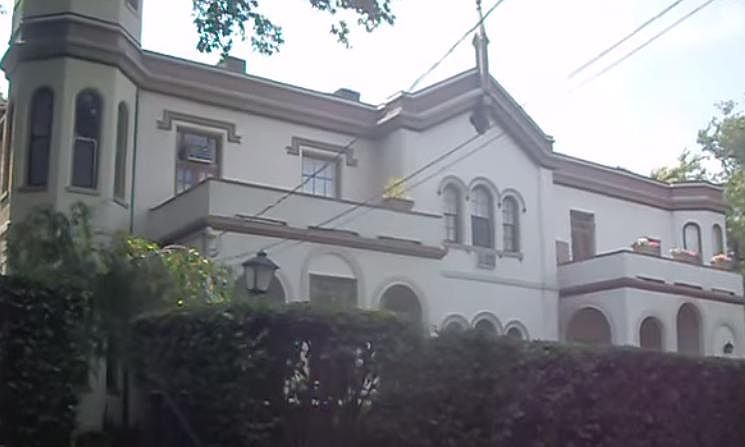
Stenton House – Cornell Place Apartments
On a quiet cul-de-sac in Cincinnati's Clifton neighborhood, one of the city's most prestigious old-money districts built on the rolling hills that give the Queen City its classical silhouette, a Victorian mansion stands at 3517 Cornell Place that has been absorbing tragedy since before the Civil War ended. Now subdivided into apartments and known as Cornell Place Apartments, the building is more commonly referred to in paranormal circles as Stenton House—a name drawn not from a builder or an original owner but from a family who moved into one of its units decades later and discovered that the dead had not moved out. The Clifton haunted walking tour regularly features the property as one of its signature stops, and some accounts describe it as one of the most haunted residences in the United States. It is a private building. Tours of the interior are not publicly offered. The privacy of the occupants, both living and otherwise, is expected to be respected. The mansion was built in 1850 as a private dwelling during the period when Dutch and German families were establishing Clifton as a refined residential enclave above the bustle of downtown Cincinnati. Property records identify it as part of the Ruben Resor tract, and rental listings for the building describe it as historically the second oldest home in Clifton, featuring an octagonal tower base, thirteen-foot ceilings, ten-foot walnut doors, marble entries and mantels, ornate plaster molding, and ceiling medallions—the bones of a house built for prominence. The first documented tragedy occurred in 1880, when a young man committed suicide inside the house. After his death, his family departed and the mansion sat vacant for years, the kind of prolonged emptiness that tends to compound whatever energy a violent death leaves behind. Around 1900, the building was converted into the Ealy School, an institution for girls. The school's tenure in the house produced its own dark chapter. According to local legend, a young schoolgirl hanged herself in one of the upstairs rooms. In a separate incident, another girl—described in some accounts as the daughter of a doctor—was found murdered on the stairway. The details of these deaths are sparse in the historical record, and the line between documented fact and accumulated neighborhood legend is difficult to draw with precision at this distance. What is consistent across accounts is that the building's years as a girls' school ended with at least two more deaths layered onto the suicide of 1880, creating a concentration of young, violent death within a single structure that few residential buildings in Cincinnati can match. After World War II, the mansion was subdivided into apartments, and it was during this era that the building acquired the name by which it is most commonly known. The Stenton family moved into one of the units, and almost immediately, odd incidents began. Phantom footsteps were heard walking the hallway when no one was visible. Two weeks after their arrival, at precisely 2:10 in the morning, the Stentons heard a heavy thump from the floor above them—the sound of something or someone hitting the ground with force. The thump repeated itself on subsequent nights, always at exactly 2:10 AM. When the family investigated, they learned that the young man who committed suicide in 1880 had killed himself in the room directly above their apartment. The regularity of the sound suggested not a conscious haunting but a residual one—an event so traumatic that its echo had embedded itself into the fabric of the building, replaying at the same hour like a recording that no one had asked to hear. Other tenants over the years have reported experiences consistent with what the Stentons described. Disembodied footsteps follow residents through the halls, keeping pace as they walk. Voices are heard in corridors and rooms when no living person is present. The sounds of phantom objects striking the floor continue to be reported. At least one tenant's dog refused to enter rooms where spiritual presences were manifesting, baying in alarm at thresholds the animal would not cross. The shadowy figure of a woman has been seen standing at the top of the staircase leading to the attic apartment, motionless, watching the space below her before disappearing. Whether she is one of the schoolgirls, a former resident, or something else entirely has never been established. Today the building at 3517 Cornell Place continues to operate as private rental apartments. The units feature the grand architectural details of the original mansion—the chandeliers, the woodwork, the veranda with sunset views overlooking acres of trees. It sits on a cul-de-sac within walking distance of Ludlow Avenue. The rent reflects the neighborhood. Nothing about the listing mentions what comes with the thirteen-foot ceilings and the walnut doors. But the residents know, and the tour guides know, and at 2:10 in the morning the building itself apparently still remembers.

Cincinnati Union Terminal and Museum Center
Cincinnati Union Terminal stands as one of the most architecturally significant transportation hubs in America, a masterpiece of Art Deco design completed in 1933 as both a functional railroad station and an enduring monument to the golden age of rail travel. The massive terminal building features soaring limestone and granite facades, a vast central concourse with towering columns supporting an ornate coffered ceiling, and elaborate decorative elements including murals, bronze sculptures, and intricate tilework that celebrate commerce, industry, and transportation. The terminal's rotunda rises majestically as a space of overwhelming grandeur, its proportions designed to inspire awe and convey the power of American technological achievement. Skilled craftspeople from multiple disciplines contributed artistic elements that transform the functional transportation hub into a cathedral of transit and progress. The terminal operated at peak capacity through the mid-twentieth century, handling thousands of passengers daily as they arrived and departed on streamlined trains bearing legendary names like the Pennant and the Zephyr. The station embodied the optimism and modernity of its era, representing technological progress and the promise of rapid continental connection that rail travel offered to business travelers, families relocating westward, and adventurers seeking new horizons. The building absorbed the emotional imprint of countless human dramas, farewells to soldiers departing for military service, reunions of separated families, and the daily rhythms of a city engaged with the wider nation through rail connections. The terminal also witnessed tragedies within its walls, including the death of a security guard named Shirley under circumstances that remain the subject of ongoing investigation and speculation. Additionally, the station houses exhibits and displays honoring aviation history, including artifacts from World War II era aircraft and the stories of pioneering pilots who shaped American aviation. The museum exhibits transform portions of the terminal into spaces dedicated to preserving and presenting historical narratives of human achievement and sacrifice. Paranormal activity reported at Cincinnati Union Terminal appears concentrated around the WWII airplane exhibit and general hallways of the facility. Security personnel working night shifts have reported hearing unexplained footsteps echoing through the station after hours when the building is closed to the public, often descending into the main concourse when no one should be present. The footsteps suggest purposeful movement rather than random noise, implying conscious agency and deliberate navigation of the familiar spaces. Apparitions have been sighted in the vicinity of the aviation exhibits, with multiple witnesses describing the ghostly figure of a pilot dressed in period military flight gear, examining the historical aircraft displays as though personally invested in their preservation. Some investigators suggest this entity may be a military aviator whose spirit remained at the location due to the profound connection to aviation history, unable to accept his death or move beyond the site of exhibits honoring his comrades. Visitors and staff have reported emotional disturbances in specific areas of the terminal, sudden temperature drops, and disembodied voices that seem to emanate from the exhibit spaces. The architectural grandeur and historical significance of Cincinnati Union Terminal appears to have impressed itself upon the spiritual realm as powerfully as upon the physical world, making it a magnet for continued paranormal investigation and documentation.
Westwood Town Hall
The Westwood Town Hall, located in Westwood, Ohio, represents a typical American municipal administrative building that has become associated with substantial paranormal phenomena and a documented history of tragedy that distinguishes the location from many other allegedly haunted civic structures throughout the greater Cincinnati metropolitan region. The building itself, serving as the central administrative headquarters for the municipality of Westwood, was constructed according to architectural conventions and civic building standards characteristic of twentieth-century Ohio municipal architecture, incorporating features typical of town administrative centers including meeting rooms, offices, and various service areas. The building's architecture incorporates multiple interior levels connected by staircases, with particular significance attached to the bell tower structure that extends above the main building mass, and attic spaces that provide additional volume and complexity to the building's interior configuration. The paranormal phenomena associated with Westwood Town Hall are fundamentally grounded in a tragic historical event involving a security guard identified only as Wesley, who allegedly hanged himself within the building during a period of his employment with the town administrative offices. The specific circumstances surrounding Wesley's death remain historically ambiguous, with varying accounts emphasizing different emotional, psychological, and situational factors that culminated in his self-inflicted death within the municipal building where he worked. The traumatic nature of Wesley's suicide, the violent manner of his death, and his apparent emotional desperation have allegedly created a spiritual anchor binding his presence to the location despite the passage of decades. Paranormal researchers have attributed the intensity and persistence of paranormal phenomena at the town hall directly to the circumstances of Wesley's death and his emotional state at the moment of his passing. Paranormal phenomena documented at Westwood Town Hall have concentrated in specific areas of the building, particularly in the bell tower, attic spaces, and the building's interior staircase systems. Doors throughout the building have been repeatedly observed opening and closing of their own volition, with particular frequency in the bell tower area and attic spaces, suggesting intelligent awareness of the building's current occupants. Objects within the building have been reported as moving from their established positions without apparent physical cause. Most dramatically, an apparition identified as Wesley himself has been reported by multiple witnesses as becoming visible within the building and then disappearing before their eyes, with the manifestations typically occurring in staircase areas and in the bell tower region. Sightings concentrated specifically in the bell tower have established that space as the most intensively paranormally active area of the facility. The emotional tone consistently attributed to the building and paranormal phenomena has been described as heavy, melancholic, and sad, reflecting the emotional state of the entity allegedly inhabiting the space. Westwood Town Hall continues to function as a municipal administrative center, with the building remaining in active operational use despite its persistent paranormal reputation. Paranormal investigation teams have conducted formal documented investigations within the facility, establishing the location within regional paranormal investigation communities and databases of Ohio haunted locations. Video documentation has been created of alleged paranormal phenomena, contributing to broader paranormal investigation networks and television presentation contexts that have enhanced public awareness. The documented accounts of supernatural phenomena, the specific history of tragic death within the building, and the consistent reports of paranormal activity have established Westwood Town Hall as one of southwestern Ohio's recognized paranormal locations.
Cincinnati Zoo
The Cincinnati Zoo stands as one of America's oldest and most prestigious zoological institutions, with a history extending back to the nineteenth century and encompassing decades of dedicated work in animal care, scientific advancement, and public education. The facility's extensive grounds contain enclosures, habitats, and infrastructure designed to house and display diverse animal species while providing educational experiences for millions of visitors across generations. Within this respected scientific and cultural institution exists a paranormal dimension that intersects with the zoo's animal-focused mission, creating a unique category of haunting that combines elements of zoological history with supernatural manifestation. The zoo grounds, with their combination of natural landscape features, constructed habitats, and the concentrated presence of both living animals and the spirits of deceased creatures, have become recognized as a paranormal hotspot within Cincinnati's documented haunted locations. The most distinctive paranormal manifestation at Cincinnati Zoo centers on the apparitional appearance of a ghost lion, a spectral feline entity whose presence has been repeatedly documented and discussed within paranormal investigation communities. The lion enclosure, designated as the primary location of the ghostly manifestation, has generated reports describing visual sightings of a large feline form appearing and disappearing with characteristics inconsistent with ordinary animal behavior. Witnesses describe the ghost lion as a distinct and recognizable entity rather than vague shadow or ambiguous shape, suggesting a manifestation of considerable clarity and specificity. The spectral nature of the lion appears to derive from the death of an actual lioness resident in the zoo, whose passing marked a significant event in the institution's history and whose exceptional nature apparently created conditions for persistent paranormal attachment to the location. The paranormal activity surrounding the ghost lion encompasses not merely visual apparitional sightings but extends to physical sensations and measurable responses from living animals present in nearby enclosures. Zoo visitors and staff members have reported experiencing unexplained cold spots within the lion enclosure area, a classic indicator of paranormal presence that paranormal investigators associate with the manifestation of spectral entities. Perhaps most significantly, living animals housed in neighboring enclosures have demonstrated behavioral reactions suggesting sensitivity to paranormal presence, exhibiting signs of agitation, alarm, or unusual attention directed toward the lion enclosure despite the absence of any visible threat. These animal reactions have proven particularly compelling to paranormal researchers, as they represent documentation of response to phenomena that living creatures perceive but humans may not consciously register through conventional sensory means. The Cincinnati Zoo's status as a paranormal hotspot has grown within the broader landscape of regional paranormal documentation, with the facility appearing consistently in comprehensive guides to haunted locations throughout the Queen City. Paranormal investigation groups have conducted systematic research within the zoo grounds, documenting electromagnetic anomalies and environmental variations consistent with spectral activity within the lion enclosure area. The intersection of the zoo's conventional mission as a scientific institution with its parallel reputation as a paranormal location creates a distinctive category of haunting centered on animal consciousness, loss, and the possible persistence of animal spirits within locations of attachment and significance. The ghost lion of Cincinnati Zoo represents a compelling case study in how paranormal manifestation extends beyond the exclusively human realm into the animal dimensions of death, loss, and the potential persistence of consciousness beyond biological termination.
Spring Grove Cemetery
Spring Grove Cemetery in Cincinnati, Ohio, represents one of the finest and most historically significant cemeteries in the United States, a landscape of exceptional beauty and cultural importance recognized through its designation as a National Historic Landmark. Chartered in 1845, the cemetery encompasses 733 acres of carefully landscaped grounds designed with both aesthetic sophistication and reverence toward the dead interred there. Spring Grove was established according to the principles of the "garden cemetery" movement that revolutionized American approaches to burial grounds during the nineteenth century. Rather than the overcrowded, poorly maintained graveyards often found in urban areas, the garden cemetery movement advocated for spacious, beautifully landscaped grounds that served simultaneously as memorials to the dead and as recreational spaces where the living could contemplate mortality and find solace in nature's beauty. Spring Grove represented this movement's ideals at their finest: comprehensive landscaping with mature trees and shrubs, monuments and mausoleums crafted with artistic ambition, and a layout designed to create a sense of peaceful order and aesthetic harmony. The cemetery contains the graves of numerous historically significant individuals, famous artifacts, and architectural works of distinction. An arboretum integrated within the cemetery grounds provides additional botanical interest and recreational value. The combination of historical importance, architectural merit, and horticultural achievement has made Spring Grove one of the most visited and studied cemeteries in America, attracting genealogists, historians, architectural enthusiasts, and the general public seeking to understand death, memory, and American cultural values. Yet beneath this landscape of ordered beauty and historical significance, paranormal phenomena have been reported with sufficient consistency to draw the attention of ghost hunters and paranormal researchers. The most famous of these phenomena centers on the bust of C.C. Breuer, a statue crafted with eyes rendered in glass rather than stone. Numerous visitors and staff have reported that the glass eyes of the Breuer bust appear to follow them as they move through the cemetery, a classic phenomenon associated with certain paintings and statues throughout history. The eyes seem to maintain contact with observers regardless of their position, creating an uncanny sense of being watched by the deceased individual memorialized in stone. Whether this phenomenon represents genuine paranormal activity or results from optical effects inherent in the representation itself—a well-known characteristic of certain artistic works that create the illusion of following eyes through the mechanics of perspective—remains debated among paranormal researchers and skeptics. Additional paranormal phenomena reported at Spring Grove include accounts of ghostly white dogs observed in various parts of the cemetery, particularly in the vicinity of the Dexter crypt and other sections. These spectral canines are described as glowing with an otherworldly luminescence, their eyes displaying an eerie blue fire that glows in the darkness. Multiple independent witnesses have reported seeing these apparitional dogs, sometimes accompanied by descriptions of an unseen groundskeeper or other human presences manifesting in the cemetery at night. Animals themselves have displayed unusual behavioral reactions to certain areas of the cemetery, suggesting perception of presences invisible to human observers. The combination of apparitional sightings, luminous phenomena, and animal reactivity has established Spring Grove as a location of paranormal significance within the paranormal research community. Spring Grove Cemetery's official administration and ownership have maintained a position of skepticism regarding paranormal claims, neither endorsing nor promoting the supernatural reputation of the location. Despite this official stance, the cemetery's status as a National Historic Landmark and major tourist attraction ensures that both the paranormal accounts and the historical significance of the location remain prominently featured in cultural discussions of Cincinnati and nineteenth-century American cemetery practices. The coexistence of Spring Grove's undeniable historical importance and architectural merit with paranormal reports suggests a location where the ordinary and the extraordinary intersect, where the documented facts of history meet speculative accounts of paranormal phenomena. For visitors to the cemetery, whether motivated by genealogical research, historical interest, or paranormal curiosity, Spring Grove offers a landscape rich with meaning, memory, and mystery.
Eden Park
Eden Park, situated on the hilltops overlooking Cincinnati, Ohio, stands as one of the city's most significant public parks, established in the nineteenth century as part of the urban park movement providing green spaces within rapidly expanding American cities. The park encompasses extensive acreage of landscaped grounds, native vegetation, walking paths, and architectural features including gazebos, bridges, and scenic overlooks designed to enhance recreational and aesthetic experiences. Eden Park's design reflected contemporary ideals of park planning and urban beautification, incorporating landscape architecture creating spaces of respite and contemplation within the urban environment. Throughout the nineteenth and twentieth centuries, Eden Park served as a destination for Cincinnati residents seeking outdoor recreation, family gatherings, romantic encounters, and peaceful solitude. The park's most distinctive paranormal feature is the historic gazebo, a Victorian-style ornamental pavilion positioned near Mirror Lake serving as a gathering place and scenic viewpoint. The historical tragedy generating paranormal phenomena centered upon Imogene Remus, wife of prominent bootlegger and organized crime figure George Remus during the Prohibition era. Imogene's life intersected with the gazebo at Eden Park in ways ultimately anchoring her spirit to the location. Imogene Remus, wife of George Remus, one of Prohibition-era's most significant organized crime figures, lived within contexts of wealth, power, and the criminal underworld created by Prohibition's alcohol ban. George Remus accumulated vast fortune through bootlegging operations during the 1920s, wealth allowing him to provide his wife with a lifestyle of luxury and prominence. However, the marriage existed within violence, betrayal, and inherent organized crime family instability. On October 16, 1927, Imogene Remus was shot and killed by her husband George, an act of violence shocking Cincinnati society and garnering significant media attention. The location of her death is reported to have been Eden Park, with accounts placing the fatal shooting near the gazebo at Mirror Lake. The violence of her death, the prominence of individuals involved, and the specific location where her life was taken created powerful residual impressions manifesting in contemporary paranormal phenomena. Imogene's spirit appears anchored to Eden Park, particularly to the gazebo and Mirror Lake area. Paranormal manifestations at Eden Park, specifically in the gazebo and Mirror Lake areas, have been consistently reported across multiple decades and corroborated through paranormal investigation. The most distinctive apparition is described as a "lady in black," a female figure dressed in dark clothing appearing within or near the gazebo area, particularly visible during evening and twilight hours. This apparition is believed to represent Imogene Remus, whose spirit maintains presence at the location of her violent death. Electronic Voice Phenomena recordings have captured auditory phenomena consistent with human vocalizations, with some recordings revealing distinctly feminine voices seemingly responsive to investigator inquiries. Disembodied voices have been reported throughout the park vicinity, with witnesses describing fragmented speech, singing, and other vocalizations from non-physical sources. A particularly unusual incident involved reported haunting affecting a vehicle, with occupants experiencing inexplicable phenomena including apparition sightings, suggesting Imogene's spirit may manifest in mobile environments as well as fixed locations. Eden Park's haunting has achieved significant recognition within paranormal research communities and incorporation into local ghost tour circuits, with guides explaining Imogene's tragic history and documented phenomena. The park continues functioning as a public recreational space, with visitors utilizing facilities for walks and contemplation. Persistence of paranormal manifestations over nearly a century after Imogene's death suggests her spiritual presence remains strongly anchored, manifesting in measurable ways accessible to sensitive individuals and paranormal investigation equipment. The gazebo overlooking Mirror Lake stands as a location where historical tragedy, documented paranormal activity, and contemporary public use intersect, providing visitors opportunities to encounter both Cincinnati's green space beauty and lingering presence of a woman whose life and death remain spiritually unquiet.
Cincinnati Art Museum
The Cincinnati Art Museum stands as a major cultural institution within Ohio, a repository of artistic achievement spanning from antiquity through contemporary periods. The building itself serves as architectural expression of civic cultural values, designed to protect and showcase artistic treasures and facilitate public appreciation of aesthetic achievement. The museum's collections encompass an extraordinary range of artistic traditions and historical periods—ancient Egyptian artifacts, medieval manuscripts and religious objects, Renaissance paintings, and comprehensive documentation of Cincinnati's own artistic and cultural contributions. The oldest sections of the building carry particular significance for paranormal researchers, as architectural age frequently correlates with reported paranormal phenomena. These historic spaces, with their original materials, proportions, and structural integrity, serve as the primary loci of documented paranormal activity, suggesting that physical age and historical resonance play roles in facilitating supernatural manifestation. The Cincinnati Art Museum's architectural origins trace back to the late nineteenth or early twentieth century, a period when American cities were establishing major cultural institutions as expressions of civic pride and aspiration. The building's design incorporated the formal, imposing qualities expected of cultural temples—substantial stone construction, careful proportional relationships, architectural details suggesting permanence and cultural significance. The original design and construction process itself represented substantial community commitment and financial investment, reflecting Cincinnati's status as a major American city with economic and cultural aspirations. The building's subsequent expansion and renovation over the decades has created a complex architectural palimpsest, with newer sections sitting adjacent to original structures, creating zones of different temporal depth and historical association. The Cincinnati Art Museum's collections, particularly the antiquities and medieval art sections, introduce profound historical associations into the physical space. Ancient Egyptian artifacts—mummies, canopic jars, funerary equipment, papyri documenting ancient religious and practical beliefs—carry resonances of death, ancient belief systems, and the preservation of human remains across millennia. Medieval religious objects—altar pieces, reliquaries, sacred vestments, illuminated manuscripts documenting theological interpretation and spiritual expression—introduce the accumulated spiritual intention of centuries of Christian devotion and ritual. These objects, gathered from their original contexts and displayed within the sterile, climate-controlled environment of the museum, create a distinctive psychological and spiritual environment. The artifacts themselves may serve as foci or attractors for paranormal manifestation, their original associations with death, spirituality, and historical significance potentially facilitating contact between material and non-material realms. The seven-foot-tall specter that has been reported rising from a mummy sarcophagus within the ancient Egyptian section represents perhaps the most dramatic documented paranormal manifestation within the museum. This apparition appears to exhibit intelligent behavior, rising from the specific sarcophagus, suggesting an association with the particular artifact and its contents. The specificity of the manifestation—the particular location, the dimensions of the apparition, the apparent connection to the archaeological artifact—suggests more than random paranormal activity. The occurrence of an apparition of this character within a museum setting creates an intriguing methodological question: does the manifestation represent a spirit associated with the mummy itself, transported with the artifact to its museum location? Or does the appearance of the apparition at the sarcophagus suggest that the ancient artifact, with its profound historical and spiritual associations, serves as a focus or attracting force for other entities present within the location?
Taft Museum of Art
The Taft Museum of Art in Cincinnati, Ohio occupies an architecturally significant Palladian-style mansion constructed during the early nineteenth century, a structure serving multiple functions throughout its long historical existence before transformation into a major art museum. The building was originally designed as a private residence for prominent Cincinnati citizens, incorporating architectural elements and interior design conventions characteristic of Federal-period American residential construction. The mansion's imposing facade, formal interior spaces, elaborate plasterwork, and multi-story arrangement reflected the architectural aspirations of Cincinnati's most influential families. The structure's transition into institutional use occurred when the Taft family, wealthy Cincinnati industrialists and philanthropists, acquired and repurposed it as a repository for their substantial personal art collection. Charles and Anna Taft assembled an exceptionally valuable and historically significant collection of paintings, sculptures, decorative arts, and cultural artifacts accumulated through decades of collecting. Their personal commitment to public access and cultural enrichment inspired the decision to transform their private residence into an institution serving the broader Cincinnati community. Charles Phelps Taft and his wife Anna Sinton Taft maintained deep personal attachment to the mansion and its contents throughout their lifetimes, supervising the meticulous arrangement and presentation of the art collection according to their precise aesthetic preferences. The couple's influence on the building's character and spiritual atmosphere appears profound even following their deaths. Anna Taft, in particular, has become the most frequently documented presence within the museum, appearing consistently to contemporary visitors and staff members. Witnesses have described observing a distinguished female figure dressed in formal attire consistent with the late nineteenth and early twentieth centuries, typically wearing a pink or rose-colored gown of elegant design. This apparition of Anna Taft has been most frequently sighted on the museum's upper floor balcony areas and in gallery spaces displaying the most valuable and significant artworks. Her manifestations suggest continued investment in the presentation and care of the collection that she and Charles assembled, as though her spiritual presence maintains supervisory attention to the museum's ongoing stewardship. Charles Taft's spiritual presence has also been documented within the museum, manifesting differently than his wife's apparitions. Witnesses have reported experiencing physical contact attributed to Charles Taft, specifically describing sensations of hands grasping shoulders, tapping motions on backs, and gentle pressure sensations indicating another individual's close physical proximity. These physical manifestations frequently occur in galleries displaying the most valuable and historically significant artworks. The gift shop located within the museum has become an unexpected focal point of paranormal activity. In the gift shop during nighttime hours, objects have been observed moving from shelves without discernible cause, items being knocked over, and merchandise being reorganized in patterns suggesting deliberate intentional actions. Footsteps have been heard throughout the museum's interior spaces during after-hours periods when the building is officially closed. Most strikingly, multiple staff members and paranormal investigators have documented evidence of disembodied voices calling individuals' names with clarity and specificity. Baby crying sounds have been heard in various locations throughout the museum, a phenomenon initially puzzling investigators. Researchers theorize these sounds may represent residual emotional energy imprinted upon the building's physical spaces rather than evidence of an actual infant's presence. The museum has become recognized as one of Cincinnati's most consistently haunted locations, with professional paranormal investigators offering regular investigation tours designed to document manifestations attributed to Anna and Charles Taft. The couple's commitment to the art collection and museum appears to transcend physical death, their spirits apparently maintaining vigilant oversight of the institution that has become their enduring legacy within Cincinnati's cultural landscape. The Taft Museum of Art continues to operate as one of the region's premier art institutions while maintaining its reputation as a location where the living and deceased share the same physical space.