
Haunted Buildings in the U.S.
14 haunted locations
Edinburgh Manor
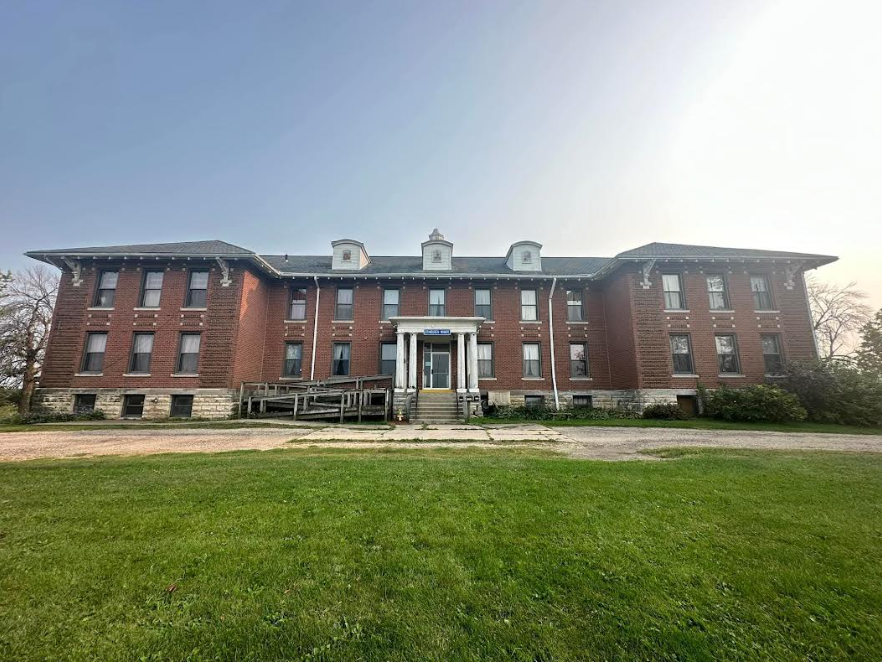
Rising from the rolling hills outside Scotch Grove, Iowa, Edinburgh Manor looks exactly like what most people picture when they think of a haunted asylum—massive brick walls, tall narrow windows, and an isolated presence that feels cut off from the modern world. But Edinburgh Manor wasn’t built as an asylum in the cinematic sense. It began in 1910 as the Jones County Poor Farm, part of a nationwide system designed to house society’s most vulnerable. Like many county poor farms of the era, the facility provided housing for the elderly, disabled, mentally ill, and those who had nowhere else to go. Residents worked the land if they were physically able. Crops were grown. Livestock was raised. The goal was self-sufficiency, but life inside these institutions was rarely comfortable. Resources were limited, oversight was minimal, and many residents spent their final years there. Over time, the Manor transitioned into a county home and later included mental health care wards as state systems evolved. Unlike locations tied to one infamous act of violence, Edinburgh Manor’s weight comes from duration. Decades of illness, poverty, isolation, and death unfolded inside its walls. Records confirm that many residents died on the property, and a cemetery sits nearby where some former occupants were buried. For paranormal believers, that long accumulation of hardship forms the foundation of the Manor’s reputation. The building itself amplifies the experience. Four stories tall, with an imposing central staircase and long corridors branching into patient rooms, it feels institutional and austere. The basement once housed storage areas and mechanical systems, while upper floors were dedicated to living quarters and later mental health wards. Paint peels from plaster walls. Old hardware remains intact. Natural light struggles to fill certain hallways, even during the day. Paranormal claims at Edinburgh Manor are among the most persistent in Iowa. Visitors frequently report hearing footsteps when no one is nearby. Doors are said to slam or move on their own. Disembodied voices—sometimes calm, sometimes distressed—are reported in EVPs and live sessions. Some investigators claim to capture direct responses to questions, suggesting intelligent interaction rather than residual replay. One of the most discussed areas is the former mental health ward, often described as heavy or oppressive. Guests report sudden mood shifts, unexplained anxiety, or the sensation of being watched. Shadow figures are commonly described moving across doorways or at the end of hallways. Others claim to see full-bodied apparitions, particularly near the central staircase. Cold spots and equipment malfunctions—draining batteries, REM pods triggering—are also frequently cited. Skeptics point out that the building’s age and structure naturally produce creaks, pressure changes, and temperature fluctuations. Large brick facilities amplify echoes. Wildlife in surrounding rural areas can create unexpected sounds. The power of suggestion plays a significant role, especially in a location marketed as haunted. Still, even seasoned investigators often describe Edinburgh Manor as unusually active compared to similar historic properties. Today, the Manor operates as a public paranormal investigation site. It has been featured in television shows, documentaries, and countless independent investigations. Unlike heavily themed attractions, it remains largely preserved in its institutional form—rooms mostly empty, hallways intact, the original layout maintained. That authenticity contributes to its atmosphere. There are no staged jump scares. Just silence, old architecture, and whatever people believe may still linger. Edinburgh Manor represents a chapter of American history that many communities quietly moved past—the poor farm system and early institutional mental health care. Whether you approach it as a historical landmark or a paranormal hotspot, it forces visitors to consider the lives once lived inside its walls. Some leave convinced they encountered something beyond explanation. Others walk away with logical answers. But almost everyone agrees on one thing: once the doors close and the building settles into darkness, Edinburgh Manor feels anything but empty.
Malvern Manor
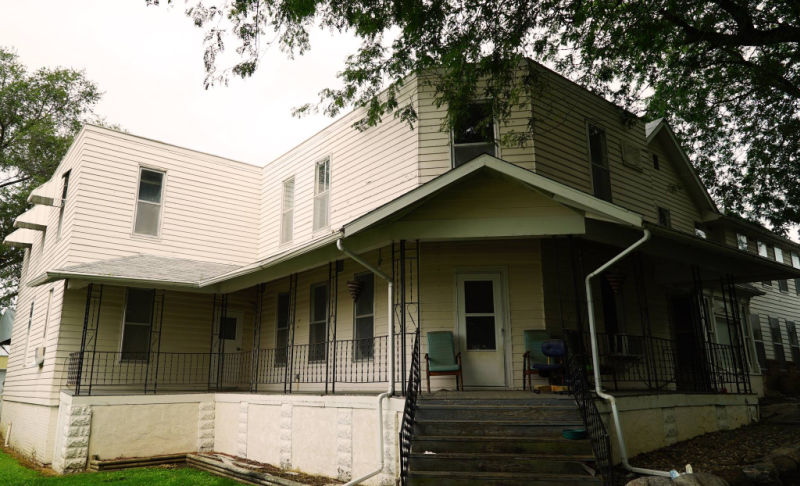
Tucked into the quiet town of Malvern, Iowa—population barely over 1,000—stands a red-brick building that looks more institutional than residential. Malvern Manor isn’t a centuries-old mansion or a crumbling castle. It’s a former care facility turned private residence turned paranormal destination. And despite its modest exterior, it has earned a reputation as one of Iowa’s most intensely investigated locations. The structure was built in 1867 and originally served as the Mills County Poor Farm. In the 19th and early 20th centuries, poor farms were county-run facilities that housed individuals who could not financially support themselves—the elderly, disabled, mentally ill, widowed, orphaned, or otherwise destitute. Life in these institutions was often harsh. Residents worked the land if they were able. Those who couldn’t were simply housed and managed with limited resources. Over time, Malvern Manor evolved. It later functioned as a private care facility for individuals with mental health conditions and developmental disabilities. Records indicate that patients were housed on site well into the mid-20th century. Like many institutions of that era, treatment standards reflected the time—structured, clinical, and sometimes controversial by modern understanding. While there are no confirmed records of extreme abuses often dramatized in asylum lore, the reality remains that the building housed vulnerable populations for decades. Eventually, the facility closed and the building passed into private ownership. In the early 2000s, new owners began restoring the property and living in it as a home. It was during this period that reports of unusual activity began surfacing publicly. The claims at Malvern Manor are wide-ranging. Visitors and investigators report shadow figures moving down hallways, disembodied voices, doors opening and closing on their own, and footsteps when no one else is present. Some claim to hear conversations in empty rooms. Others describe sudden cold spots or the sensation of being touched. One of the most frequently mentioned phenomena is children’s laughter or small voices, often attributed to the building’s time housing families and younger residents. Electronic voice phenomena (EVP) sessions conducted inside the Manor have allegedly captured responses to direct questions. Some investigators claim intelligent interaction—knocks in response to prompts, objects shifting, and REM pods activating without visible cause. A particular room often referred to as the “Shadow Room” has gained notoriety for reports of a darker presence, with some guests describing feelings of oppression or sudden anxiety while inside. Unlike many historic haunts built on a single violent event, Malvern Manor’s reputation stems from accumulation. There is no infamous mass murder tied to the building. Instead, its atmosphere seems connected to decades of human struggle—poverty, illness, abandonment, and isolation. For some paranormal researchers, that prolonged emotional weight creates what they believe to be residual energy rather than a single traumatic imprint. Skeptics argue that the building’s age, layout, and acoustics contribute heavily to reported experiences. Old plumbing knocks. Wooden floors shift. Temperature changes move through brick and plaster differently than modern drywall. Add darkness, expectation, and group dynamics, and experiences can escalate quickly. Yet even experienced investigators often admit the Manor feels unusually active compared to similarly aged structures. Today, Malvern Manor operates as a paranormal investigation venue, offering public events and private overnight stays. It has been featured in regional investigations, independent documentaries, and numerous YouTube explorations. Unlike heavily commercialized haunted attractions, the Manor maintains a more stripped-down, investigation-focused identity—bare halls, original rooms, minimal theatrics. For a small Iowa town, Malvern carries a surprisingly heavy story inside its brick walls. It represents a different kind of haunting—less about a single night of horror and more about the quiet accumulation of forgotten lives. Whether you believe spirits linger or not, the building forces visitors to confront a chapter of American history that isn’t often romanticized: the era of poor farms and institutional care. Malvern Manor stands as both historical landmark and paranormal lightning rod. It’s a place where history is documented, but interpretation varies. Some walk away convinced something unseen shares the halls. Others leave with logical explanations. Either way, few leave without feeling something.
Stage Coach Inn
Half a mile west of Ida Grove, Iowa, tucked into the timber of Moorehead Pioneer Park, a one-and-a-half-story frame building sits on land that was occupied long before any European settlers arrived in Ida County. The Moorehead Stagecoach Inn is the first structure ever built in Ida Grove, the oldest surviving building in the county, and a place where the layers of human use run so deep—and in some cases so grim—that the paranormal activity reported within its walls has drawn investigators for years and inspired a book-length account of what happens inside after dark. The Western Stage Line began operating stagecoaches from Lizzard Point at Fort Dodge to Sergeant Bluff near Sioux City in 1855, and the route needed way stations roughly every thirty miles where horses could be changed and riders could rest. The following year, John H. Moorehead began constructing an inn along the route on a site that, according to local accounts, sat directly over a Native American burial ground. A Sioux burial tree still stands approximately forty feet from the front door of the building. Moorehead completed the inn in 1863, creating a twelve-room, L-shaped frame structure that would serve the community in nearly every capacity a frontier settlement could require. In the years that followed, the inn functioned simultaneously as a stagecoach depot, the first Ida County courthouse—a role it held until 1871—the county post office, the community's first church, its first schoolroom, and its first hospital, where surgical procedures including amputations were performed on a table that reportedly remains inside the building to this day. The sheer density of function compressed into one small wooden structure meant that the inn absorbed births, deaths, legal proceedings, worship, education, and frontier medicine all under a single roof during the most volatile decades of Iowa's settlement period. John and Martha Moorehead raised their family in the building while operating it, and the inn passed through the decades as Ida Grove grew around it. The original stagecoach barn still stands nearby. By the twentieth century, the inn had outlived its practical usefulness but retained its historical significance. It was listed on the National Register of Historic Places in 1974. A historical architect was brought in during the 1970s to assess the building, and a restoration effort preserved the structure with its original character intact. Today the inn is part of Moorehead Pioneer Park, under the direction of the Ida County Conservation Board, and is open to the public on Sundays during summer months, with tours available by appointment year-round. The interior features period antiques and memorabilia from the stagecoach era, along with artifacts from the building's many institutional roles. The paranormal reputation of the Stagecoach Inn has been documented most extensively by Allen Cornelison, a veteran paranormal investigator who moved to Ida Grove around 2011 and, after discovering the building during a walk through the park, conducted an intensive six-year investigation of the site with permission from the Ida County Historical Society. Cornelison published his findings in Ghosts and Legends of the Stage Coach Inn, describing the inn as one of the most active locations he had encountered in two decades of investigative work. The phenomena reported at the inn span a wide range. Disembodied voices and whistling are heard regularly inside the building, along with phantom footsteps that sound through the rooms when no one is present. On one documented occasion, a spinning wheel displayed in the schoolroom area was captured on video turning rapidly on its own before abruptly stopping. The staircase has been identified by investigators as a particular focal point of activity, described as a kind of energy portal, with the top landing producing the most concentrated phenomena. Cornelison himself reported being physically tugged on the back of his coat during an early investigation, an experience he captured on video though the source of the pull was not visible. Audio recordings made during his sessions captured what investigators believe is a child's voice responding to direct questions. Outside the inn, the proximity of the Sioux burial tree adds another dimension to the site's reputation. Shadowy figures have been reported near the tree and around the burial ground, particularly after dark. Paranormal teams that have investigated the exterior have noted unusual occurrences near the tree, including sudden barrages of falling acorns that intensify when people approach and cease when they withdraw. The convergence of Indigenous sacred ground, frontier-era suffering, and the sheer volume of human activity that passed through the building during its working life creates a setting that investigators and visitors describe as unmistakably charged. Today the Moorehead Stagecoach Inn stands quietly in its park setting, surrounded by hiking trails, a stocked lake, and the other preserved structures of the Ida County Historical Society. The burial tree still rises near the front door. The amputation table, if the accounts are accurate, still sits inside. The building is the kind of place that looks unremarkable from the outside—a modest wooden house in a county park—but carries within its twelve rooms the compressed weight of an entire community's origins, from the sacred ground it was built upon to the stagecoach travelers who slept under its roof to whatever remains of the voices that investigators continue to record in the silence between visits.

State Capitol Building
Rising at the end of Dexter Avenue at the top of a hill originally called Goat Hill, the Alabama State Capitol building has presided over Montgomery since 1851 — a Greek Revival structure of white columns and a central dome that has witnessed more pivotal and painful moments in American history than almost any comparable building in the country. It has served as the seat of state government, the cradle of the Confederacy, the backdrop of the Civil Rights Movement, and the site of a blood feud murder. That it carries a haunted reputation is almost difficult to avoid. The current building is the second capitol on this ground. The first, completed in 1847, burned down two years later. The current structure was completed in 1851, built partly by enslaved laborers, with its famous cantilevered spiral staircases crafted by Horace King, a formerly enslaved man who became one of the most accomplished builders in the antebellum South. The building immediately became the center of enormous historical forces. On January 11, 1861, Alabama voted to secede from the Union in the old Senate Chamber. Within weeks, delegates from six seceding states gathered in that same room and drafted the Provisional Constitution of the Confederate States of America. On February 18, 1861, Jefferson Davis arrived by carriage and was inaugurated as the Confederacy's only president on the front portico — the exact spot now marked by a brass six-pointed star embedded in the marble. Montgomery served as the Confederate capital for just over three months before the government relocated to Richmond. What remained was a building soaked in the weight of a nation's collapse. More than a century later, the Capitol stood at the center of history again. The third Selma to Montgomery Voting Rights March ended on its steps on March 25, 1965, with 25,000 protesters gathered on Dexter Avenue as Martin Luther King Jr. addressed the crowd. The building had once been the seat of the government that institutionalized slavery. Now it was the terminus of a march demanding the right of Black Americans to vote. That collision of meanings is embedded in the architecture itself. The most documented paranormal claim involves a murder committed inside the building on Halloween 1912. A property dispute between a young man named Will Oakley and his stepfather P.A. Woods came to a head in the Capitol offices of the state convict board president. Oakley produced two pistols, offered one to his stepfather for a duel, and when Woods refused, shot him four times. Oakley fled down the Capitol stairs, walked to the county jail, and surrendered. He was eventually committed to Bryce Hospital in Tuscaloosa, escaped, and was never heard from again. Since then, employees and security guards have repeatedly reported bathroom faucets turning on by themselves in the offices near the old convict board rooms — water running from fixtures with no one present, stopping only when manually shut off. Renovations over the decades have done nothing to stop it. The prevailing legend holds that Oakley's spirit returns endlessly to wash his stepfather's blood from his hands. The building's Civil War associations generate a separate layer of claims. A security guard quoted in a 1994 Birmingham News article reported seeing a female apparition near the statue of Governor Lurleen Wallace, wearing white opera-length gloves that matched those in Wallace's official portrait. Ghost tour operators describe the figure as a Civil War widow roaming the upper offices, wailing for a husband lost to the war. Cold spots and unexplained sounds have been attributed to the presence of Jefferson Davis, Civil War surgeon John Allan Wyeth — whose statue stands on the Capitol grounds — and an unidentified Confederate soldier. The Alabama State Capitol is open to the public Monday through Saturday and offers free guided tours. The governor's office still operates here. The old Senate Chamber where the Confederacy was born still stands. The brass star still marks where Davis took his oath. And somewhere in the building, according to those who have worked the late shifts, the water still runs.

Old Santa Fe Depot of Guthrie
Sitting along the railroad tracks on Guthrie's west side, the Old Santa Fe Depot of Guthrie is one of the most historically layered buildings in a city that was itself born in a single afternoon. The two-story red brick station exists because of a land run, a railroad, and the ambition of a territorial capital that believed it would remain the center of power in Oklahoma forever. The Santa Fe Railroad completed its line through what was then Indian Territory in 1887, and the first depot at Guthrie was a modest red frame building serving as a watering station with rudimentary rail yards. That changed permanently on April 22, 1889, when President Benjamin Harrison's proclamation opened the Unassigned Lands to settlement and launched the first great Oklahoma land run. Twenty trains carrying over a thousand passengers each were scheduled out of Arkansas City, Kansas, and Purcell to the south. Guthrie, designated as a Federal Land Office where settlers would file their claims, was the target destination for most of them. By nightfall, a place with virtually no population that morning had become a tent city of ten thousand. Within a few years, Guthrie had transformed into a city of elegant redbrick and sandstone buildings, electric streetlights, and a mass-transit system. It was named the capital of Oklahoma Territory under the Organic Act of 1890 and remained the seat of government through statehood in 1907 until a contentious 1910 election moved the capital to Oklahoma City. The original frame depot could not keep pace. A flood destroyed it, and in 1903 the present structure was completed—a striking two-story red brick station roughly 185 feet long by 85 feet wide, with a central section flanked by one-story wings. It housed passenger service, mail service, a newsstand, employee living quarters, offices, and a Harvey House restaurant. Fred Harvey had revolutionized rail travel dining beginning in the 1870s, establishing a chain of restaurants along the Atchison, Topeka and Santa Fe line that replaced the notoriously wretched food available to travelers with immaculate table service, imported linens, and meals that rivaled fine restaurants back east. The Harvey Houses were staffed by the famous Harvey Girls—young, unmarried women between eighteen and thirty, recruited from across the country, who lived in quarters above the depot and were held to exacting standards of deportment and service. By 1904, the Guthrie depot oversaw nine lines of railroad and as many as thirty-six passenger trains daily. Guthrie's decline as a political center after 1910 did not immediately kill the depot. Passenger service continued for decades, but as automobile travel expanded and rail shrank, the building's role diminished. The last regular service ended in 1979, when Amtrak dropped its Lone Star route from the timetable. The building sat largely dormant until 1998, when restoration began on the northern portion. Subsequent work continued through the rest of the structure, though the upstairs rooms on the southern end—where Harvey Girls once lived—remained unfinished for years. The depot is a contributing resource within the Guthrie Historic District, a National Historic Landmark encompassing more than two thousand buildings. The most widely reported haunting centers on the upper floors. A woman in Victorian-era dress has been seen at one of the upstairs windows, gazing toward the tracks as trains pass. Some accounts identify her as a Harvey Girl who lived in the depot's upper rooms while working in the restaurant below. Others attribute the figure to Pearl Harvey, wife of Fred Harvey, though this reflects a misunderstanding—the Harvey family did not live in individual depot restaurants, and the chain was a commercial operation. The conflation likely arose from the building's long association with the Harvey name and the intimacy of the quarters where young women spent years of their lives. Regardless of the identity assigned to her, the apparition has been reported consistently enough to anchor the depot's haunted reputation. Visitors have also reported unexplained footsteps on upper floors when no one is present, and what some describe as the distant sound of a train pulling into the platform when no train is approaching. The MidAmerica Paranormal Science Team investigated the depot in 2008 and reported capturing video they believe shows an apparition, though the evidence remains anecdotal. The depot is a regular stop on the Guthrie Ghost Tour, alongside the Blue Belle Saloon, the Pollard Theatre, and the Stone Lion Inn. Today the Old Santa Fe Depot of Guthrie operates as a wedding and private event venue under the ownership of Adam and Abigail Ropp, who have continued restoring the building. The rail line alongside remains active. The upstairs windows still face the same long, flat stretch of Oklahoma where trains once arrived by the dozens, and where at least one presence, by all accounts, has never departed.
Hazel Towers
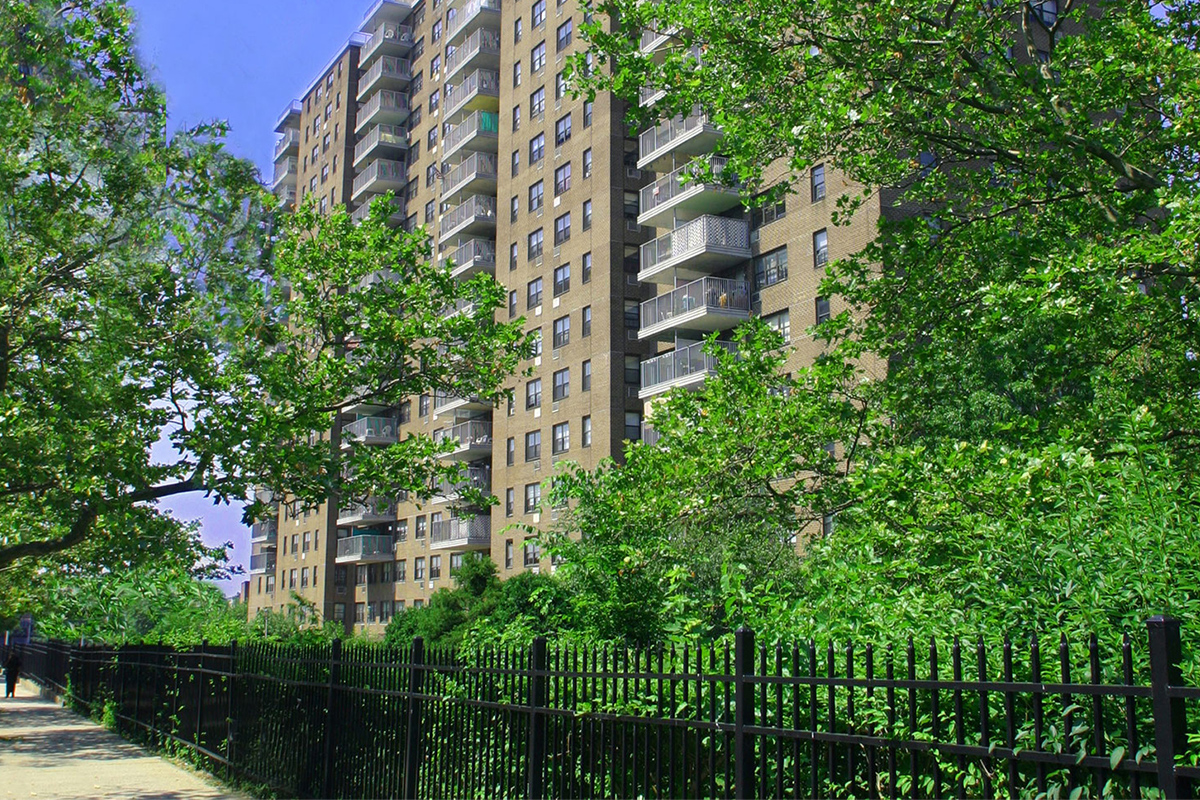
Standing eighteen stories over the Pelham Bay section of the Bronx, Hazel Towers is the kind of building that doesn't announce itself as haunted. There are no crumbling facades or Gothic embellishments—just a postwar residential high-rise at 1730 Mulford Avenue, brick and concrete, squared off against the sky like dozens of other mid-century towers that define New York City's outer borough skyline. It was built in 1968, designed by the architectural firm Pomerance & Breines, whose portfolio included hospitals and large-scale residential projects across the city. It went up during the great wave of high-rise construction that reshaped the Bronx in the 1960s, part of a broader effort to house the borough's growing working- and middle-class population in modern, elevator-serviced towers with balconies and amenities that older walkup tenements could never offer. The land beneath Hazel Towers carries a longer history than the building itself. The Pelham Bay neighborhood sits on ground originally purchased by Englishman Thomas Pell from the Siwanoy people in 1654—a vast tract that would eventually lend its name to the park, the parkway, and the surrounding streets. For centuries the area remained agricultural. It wasn't until the extension of the IRT Pelham Line in 1920 that the eastern Bronx opened to dense residential development, drawing Italian, Irish, and Jewish families outward from Manhattan. The postwar decades brought larger structures—towers like Hazel Towers—rising above a neighborhood that still retained the feel of a quiet enclave just two blocks from the 6 train. The building contains roughly 286 units with one-, two-, and three-bedroom apartments. Nelson Management Group acquired the property in 1999 and has since invested over four million dollars in upgrades including new elevators, windows, lobbies, and a security system. A tenants' association has been active since at least 1991. By all outward measures, Hazel Towers is a functioning, well-maintained residential building in one of the Bronx's more desirable neighborhoods. And yet the building appears on multiple databases of allegedly haunted locations, and the accounts from residents are remarkably consistent. Tenants across various apartments—not concentrated on any single floor—report shadow figures in hallways and rooms, particularly during late-night hours. Some describe orbs of light moving through darkened spaces. Objects reportedly fall or shift without explanation. Cold spots appear and dissipate with no apparent cause. Disembodied voices have been reported in apartments and common areas. Several residents describe an oppressive feeling of sadness or paranoia that lifts the moment they step outside, a phenomenon difficult to attribute to ordinary environmental factors. The basement and boiler room draw particular attention. At least one former resident has described seeing shadow figures near the boiler room during routine laundry trips—a detail that recurs independently in other accounts. One resident recounted a sleepover during which multiple people experienced panic attacks between three and four in the morning, accompanied by shadows, orbs, and objects falling. A follow-up Ouija board session in another apartment reportedly produced additional sightings—notable for involving multiple witnesses across two units on consecutive days. What makes Hazel Towers unusual is the absence of any known originating event. There is no documented tragedy, no publicized death, no fire or crime the narratives attach themselves to. The spirits, according to those who claim encounters, are simply present—and unwelcoming. Multiple sources describe the entities as hostile in demeanor, though no accounts describe physical harm. Most haunted locations build mythology around a specific incident. Hazel Towers offers no such anchor, which either undermines the claims or makes them harder to explain as narrative projection. Skeptics would rightly note that an eighteen-story concrete tower from the late 1960s will produce unexplained sounds—elevator machinery, water pressure shifts, air in aging ductwork. The basement of any large building is inherently atmospheric. And suggestion, once a building acquires a reputation, is powerful. But the consistency across unrelated residents over decades, and the emphasis on emotional effects rather than spectacle, gives the accounts a texture that environmental explanation doesn't fully resolve. Today Hazel Towers remains fully occupied in a neighborhood that continues to attract families. Pelham Bay Park sprawls to the north. The lobby is staffed around the clock. Nothing about the building suggests anything other than ordinary urban life. But behind certain doors, at certain hours, some residents insist the building holds something no renovation has managed to address—and something that does not seem glad to have company.

The Schumacher Building
The Schumacher Building stands as a testament to Fullerton, California's late nineteenth-century commercial development and the vision of its founder and namesake, Peter Schumacher. Constructed in 1905, the building occupies the distinction of being the oldest surviving commercial structure in Fullerton, reflecting both the building's solid construction and its fortunate preservation through dramatic urban transformations that characterized Southern California's twentieth-century development. Peter Schumacher, the building's developer and original owner, accumulated his substantial fortune through diverse economic activities including the cultivation and export of citrus fruits, the production and marketing of walnuts, and the acquisition and development of real estate holdings throughout the burgeoning region. His business acumen and financial success positioned him as a significant figure in Fullerton's early commercial landscape. The building's architectural style and construction reflect commercial building standards of the early twentieth century, incorporating design elements intended to project permanence, stability, and financial security. The structure's multi-story configuration provided valuable downtown real estate space, with the ground floor accommodating retail or service enterprises while upper floors served commercial functions. The building's placement within downtown Fullerton established it as a prominent landmark within the town's emerging commercial center. The Schumacher Building quickly became recognized not merely as a commercial property but as a civic monument to Fullerton's development from agricultural settlement to urban commercial center. Its preservation through subsequent decades of urban change reflected the community's recognition of its historical significance. Peter Schumacher's life trajectory culminated in a tragic conclusion that would permanently alter the spiritual character of his building and establish foundations for the paranormal phenomena associated with the location. Schumacher's death by suicide within the building represents a moment of profound personal despair and emotional intensity that appears to have impressed itself upon the building's spiritual essence. The circumstances surrounding his suicide remain embedded within the building's history, and the trauma of his death appears to have created conditions conducive to continued spiritual manifestation. Schumacher's presence within the building, established through decades of daily occupation and economic activity, becomes reinforced and intensified through the violent circumstances of his departure from life. The paranormal phenomena documented at the Schumacher Building manifest through multiple sensory and environmental forms, suggesting the presence of at least two distinct spiritual entities inhabiting the space. Peter Schumacher's apparition has been directly observed within the building's hallways and interior spaces, with his spectral form apparently maintaining patterns consistent with his earthly occupation. Cold drafts appear without meteorological explanation, particularly within specific locations corresponding to areas significant in his lifetime. Unknown voices, described variously by witnesses as indistinct murmurs or fragments of speech, emerge from empty rooms and corridors, suggesting disembodied communication. Additional paranormal manifestations defy simple explanation, with witnesses reporting mysterious and unexplained events suggesting intelligent agency. Psychic researchers investigating the building in 2001 documented anomalous photographic phenomena suggesting the presence of female spiritual entities in addition to Schumacher's masculine apparition. Photographs captured on the west stairway reveal a faint blur appearing to form the outline of a woman in flowing gown ascending the stairs, suggesting a second apparition inhabiting the building's spaces. This female entity's presence and purpose remain unexplained, though the formal gown suggests either a visitor from Schumacher's era or a figure from an earlier period in the building's history. The Schumacher Building now functions as a featured stop on Fullerton's organized Haunted Walking Tours, acknowledging and celebrating its paranormal reputation while maintaining its status as a historically significant commercial landmark.
Wetumpka Mortuary
The Wetumpka Mortuary occupies a significant position within the funeral and mortuary services infrastructure of Wetumpka, Alabama, a location dedicated to the solemn work of preparing the deceased for their final disposition and providing compassionate services to grieving families navigating the profound emotional terrain of loss. The mortuary building itself represents the architectural and aesthetic sensibilities of the period during which it was constructed, featuring the design elements associated with funeral service establishments that prioritize dignity, respect, and a visual environment conducive to mourning and remembrance. The structure contains specialized facilities designed specifically for the handling and preparation of human remains, operating under strict regulatory guidelines and professional standards established through the state of Alabama and the mortuary services industry generally. The mortuary has served the Wetumpka community for an extended period, establishing itself as a trusted institution handling one of life's most essential and sensitive functions in a manner that respects the dignity of the deceased and provides necessary support to their surviving family members. The history of the Wetumpka Mortuary extends back across multiple decades of operation, encompassing countless interactions with grieving families and the ritualistic handling of human remains in accordance with professional standards and cultural traditions. The building has witnessed extensive human suffering, emotional catharsis, and existential confrontation with mortality, creating an environment saturated with the accumulated grief and anguish of generations of individuals confronting the deaths of their loved ones within its walls. The mortuary facility has inevitably experienced tragic incidents throughout its operational history, including instances where the deceased arrived in traumatic circumstances or where complications arose during the process of preparation and arrangement. The nature of the mortuary's function means that it has come into regular contact with human death in its most raw and unmediated forms, creating an environment in which the boundary between life and death becomes physically manifest and spiritually palpable to those working within its spaces. The paranormal manifestations occurring within the Wetumpka Mortuary represent a striking case of poltergeist activity manifesting within a location inherently associated with death and the transition between the living and deceased realms. The most prominent and well-documented phenomenon involves the mysterious and spontaneous flickering of electric lights throughout the mortuary building, with switches turning on and off without human intervention and with patterns that suggest deliberate manipulation rather than electrical malfunction or mechanical failure. Multiple witnesses have reported hearing screams emanating from the interior of the mortuary structure during hours when the facility is closed to the public and staff members are absent from the building, creating situations in which emergency responders have been summoned to investigate potential emergencies that ultimately prove to have no physical basis. The screaming phenomena represent particularly disturbing manifestations, with the vocalizations suggesting extreme emotional distress and anguish that would be consistent with the final moments of someone experiencing considerable suffering or trauma. The poltergeist activity characterizing the Wetumpka Mortuary extends beyond the confines of the mortuary structure itself, with reported incidents involving nearby buildings and structures that share proximity to the mortuary location. The Chamber of Commerce building situated in the vicinity of the mortuary has experienced similar phenomena, with lights flickering inexplicably and unusual sounds being reported by staff members working in those facilities. This geographic extension of the paranormal manifestations suggests that the haunting may involve a poltergeist entity of considerable power and range, or alternatively that multiple spirits with similar manifestation patterns inhabit the region surrounding the mortuary. Paranormal researchers have documented the phenomenon with considerable care, establishing baselines for normal electrical function and distinguishing genuine paranormal activity from conventional mechanical failures or atmospheric disturbances that might otherwise explain the observed phenomena. Today, the Wetumpka Mortuary continues to provide funeral services to the Wetumpka community while simultaneously maintaining its status as an active paranormal location where investigators conduct regular research and documentation of the phenomena occurring within its walls. The staff members working at the mortuary have developed coping mechanisms for functioning professionally within an environment characterized by ongoing paranormal activity, recognizing that the poltergeist manifestations appear to pose no direct threat to living individuals despite their disturbing and intrusive character. The screaming phenomena and flickering lights have become accepted aspects of operating the mortuary, with staff members treating the paranormal activity with professional equanimity while remaining appropriately cautious regarding personal safety. Paranormal researchers continue to investigate the source and purpose of the poltergeist activity, exploring whether the manifestations result from a single spirit or multiple entities, and whether the phenomena might be motivated by unresolved trauma or simply represent the mechanical manifestation of supernatural forces drawn to locations saturated in death and grief. The Wetumpka Mortuary stands as a sobering illustration of the manner in which places devoted to death's processing and ritualization can become focal points for powerful paranormal phenomena.
Plato’s Closet
Plato's Closet represents a contemporary retail operation specializing in the acquisition, refurbishment, and resale of secondhand clothing and fashion accessories, a business model that has expanded to encompass multiple locations across North America throughout the twenty-first century. The specific Plato's Closet location in Chattanooga, Tennessee, occupies a commercial retail space designed to accommodate customer browsing, transaction processing, and inventory management consistent with modern retail operations. The building itself carries forward the architectural and structural characteristics of the commercial district in which it is located, reflecting Chattanooga's urban development patterns and economic structure. The Chattanooga location, like other Plato's Closet franchises, maintains active social media presence and contemporary marketing communications infrastructure designed to engage with youthful consumer demographics and fashion-conscious individuals seeking affordable access to brand-name and designer clothing items. The retail establishment operates within the broader context of a sustainable fashion movement and economic model emphasizing the reuse and circulation of existing garments rather than continuous consumption of new manufactured products. The business model that Plato's Closet represents reflects contemporary consumer consciousness regarding environmental sustainability and economic accessibility within the fashion industry. Despite the Plato's Closet location in Chattanooga's public commercial positioning as a contemporary retail establishment, historical research and paranormal investigation activities have identified the commercial space as occupying a physical location with significant historical trauma and documented paranormal activity characteristics. The building that currently houses the Plato's Closet retail operation was constructed during an earlier historical period and previously served purposes distinct from contemporary retail fashion distribution. Investigation into the building's history reveals a previous occupancy as a commercial or institutional facility associated with documented tragic events, circumstances, or human suffering that may account for the contemporary paranormal phenomena observed within the space. The conversion of a historically significant building with traumatic associations into a modern retail operation represents a common pattern wherein commercial properties are rehabilitated and repurposed without full acknowledgment of their historical dimensions or spiritual consequences of prior events. The physical structure itself, despite its conversion to modern retail use, appears to retain the historical memory of its previous occupancy and the events that transpired within its walls. Paranormal manifestations documented at the Plato's Closet location in Chattanooga include unexplained phenomena consistent with patterns observed at other historically significant haunted locations, though specific manifestations remain incompletely documented due to the location's relatively recent identification as a paranormal site. Retail employees and store managers have reported sensing a presence within the facility, experiencing emotional impressions and intuitive awareness of non-human entities occupying the commercial space during operational hours. The sensations reported are characterized as neither hostile nor threatening but rather as a persistent awareness of observation or presence emanating from areas of the building unrelated to active customer or employee activity. Customer testimonials collected during paranormal investigation activities have produced accounts of unusual experiences occurring during shopping visits, including the unexplained movement of merchandise, the sudden activation of security systems in the absence of any triggering event, and the manifestation of emotional disturbances or anxiety not attributable to conventional environmental factors. The temporal patterns of paranormal activity at the location remain incompletely characterized due to insufficient documentation, though preliminary investigation suggests activity levels fluctuate in correlation with building occupancy and specific times of day or week. The combination of the Plato's Closet location's contemporary retail function and its historical association with paranormal activity creates an unusual intersection between modern consumer commerce and spiritual dimensions of physical space. The retail establishment continues to operate normally despite the documented paranormal activity, with management and employees adjusting their operational practices to accommodate awareness of paranormal presence. The location's public presentation as a conventional retail fashion business does not prominently feature or acknowledge its paranormal dimensions, in contrast to other haunted hospitality establishments that have embraced and marketed their spectral associations. This disparity may reflect the relative recency of paranormal investigation attention directed toward the Plato's Closet location or management decisions regarding the strategic presentation of the facility's identity to the public. The contrast between the location's contemporary commercial function and its underlying historical haunting creates a layer of dissonance or dislocation between the space's apparent contemporary purpose and its actual spiritual and historical dimensions. Further paranormal investigation may produce additional clarification regarding the specific nature of the historical events that established the building as a haunted location and the characteristics of the entities that continue to manifest within the contemporary retail environment.
DeSoto Rock and Gift Shop
The DeSoto Rock and Gift Shop in Hot Springs, Arkansas occupies the ground floor of the historic DeSoto Hotel, a building with deep roots in the commercial and hospitality history of this well-known Arkansas destination famous for its natural hot springs and wellness tourism. The hotel itself dates to the era when Hot Springs developed as a major American resort destination, attracting visitors from across the nation seeking the therapeutic benefits attributed to the naturally heated mineral waters that emerge from underground thermal sources. The DeSoto Hotel building represents typical commercial architecture of its era, with multiple stories designed to accommodate guests and retail establishments, reflecting the prosperity of Hot Springs during periods when the natural springs attracted considerable tourist traffic and economic investment. The ground floor retail space that now houses the rock and gift shop previously served various commercial purposes, with the DeSoto Hotel functioning as a full-service hospitality establishment well into the twentieth century as Hot Springs maintained its reputation as a premier American wellness destination. When the DeSoto Rock and Gift Shop opened its doors in July 2012, the retail space was repurposed to specialize in the sale of rocks, crystals, and handmade jewelry, representing the contemporary shift in Hot Springs' commercial offerings toward New Age retail enterprises and metaphysical merchandise that appeal to modern visitors and wellness-oriented customers. The shop features carefully arranged displays of mineral specimens, semiprecious stones, and various crystal formations, with merchandise organized to appeal to both casual customers and serious collectors of mineralogical materials. The proprietors of the shop invested in the selection and arrangement of merchandise, developing a curated collection that reflects both aesthetic considerations and mineralogical authenticity. The retail environment created an inviting commercial space within the historic hotel building, bringing new economic activity to spaces that had previously served different commercial purposes, reflecting the evolution of Hot Springs from a medical wellness destination to a broader cultural and commercial center. Paranormal activity within the DeSoto Rock and Gift Shop manifests primarily through physical phenomena centered upon the merchandise displays and shelving systems that house the rocks and mineral specimens for sale. Staff members have repeatedly observed rocks and stone specimens inexplicably moving on display shelves, with items falling or sliding without apparent cause or disturbance that might account for such movement through conventional physical mechanisms. The phenomena occur frequently enough that staff members have assigned a personality to what they perceive as the responsible entity, affectionately referring to the ghost as "Tom," suggesting a personification of the spirit and the development of a quasi-familial relationship with the paranormal presence. Professional paranormal investigations conducted at the location have yielded electronic voice phenomena recordings providing possible auditory evidence of spiritual communication, digital camera images capturing unusual visual anomalies, and infrared security camera footage documenting physical phenomena for which no conventional explanation can be provided. In the present era, the DeSoto Rock and Gift Shop continues to operate as a retail establishment specializing in geological and crystal merchandise, with the paranormal phenomena representing a notable and widely acknowledged aspect of the shopping experience at the location. The unusual activity has generated some publicity and curiosity among visitors interested in paranormal phenomena, potentially increasing foot traffic and generating interest in the shop beyond what might be expected from normal retail marketing efforts. The proprietors have acknowledged the paranormal activity while maintaining a lighthearted and pragmatic approach to managing a retail business within a demonstrably haunted location. The DeSoto Rock and Gift Shop serves as a contemporary example of paranormal activity occurring within commercial retail environments, demonstrating that supernatural phenomena are not restricted to residential, institutional, or historical settings but appear with regularity in modern commercial establishments operated for contemporary consumer purposes.
Toltec Building
The Toltec Building stands as a cornerstone of El Paso's architectural and paranormal heritage, its Renaissance Revival facade dominating the historic downtown streetscape since its completion in 1910. The structure was designed during an era when El Paso was rapidly transforming from a frontier outpost into a prosperous trading hub, and the building's ornate stonework and impressive height marked a significant statement of civic pride and commercial ambition. The original construction incorporated the finest materials and craftsmanship available at the time, with particular attention paid to the grand ballroom theater on the upper floors, which featured state-of-the-art stage equipment and elaborate decorative elements. The building hosted performances, social gatherings, and significant cultural events throughout the early twentieth century, serving as one of the primary entertainment venues for the expanding regional population. By the 1930s, the structure was formally established as the Toltec Club, a prestigious organization that further enhanced its reputation as a gathering place for El Paso's most prominent citizens. Throughout its operational history, the Toltec Building witnessed countless dramatic moments and human experiences, from theatrical performances to important civic occasions that shaped the city's identity. The ballroom theater became particularly renowned for its technical sophistication, featuring innovative stage lighting systems and mechanical equipment that were cutting-edge for the period. However, these very systems would eventually become the focus of the building's most distinctive paranormal phenomena. Employees working during evening performances reported extraordinary and unexplainable malfunctions of the stage lighting apparatus, which would suddenly shift colors, extinguish without warning, or activate of their own volition without any human intervention. Theater props and set pieces would inexplicably fall from their secured positions, despite having been properly fastened by stagehands. The frequency and nature of these incidents prompted investigations by building management and theater technicians, yet no mechanical explanations could account for the disturbances. The paranormal phenomena escalated significantly beginning in the mid-twentieth century, with multiple witnesses reporting full apparitions within the building's corridors and performance spaces. Employees and visitors described seeing a distinctly dressed male figure, whose appearance and demeanor led many to believe they were witnessing the apparition of Pancho Villa, the legendary Mexican revolutionary leader and historical figure with documented connections to El Paso during a tumultuous period of the Mexican Revolution. The figure would appear suddenly in various locations throughout the building, particularly in the first-floor areas and the upstairs ballroom theater, then vanish without trace when approached. These sightings were consistent across multiple independent reports and continued over decades, establishing a pattern of spectral activity that gained recognition within paranormal research communities. Investigators attributed the apparitions to unresolved spiritual energy related to the building's significant historical associations with Mexican-American culture and the revolutionary period that profoundly influenced El Paso's development. Despite its storied past and paranormal reputation, the Toltec Building has maintained its status as an important architectural landmark, receiving designation on the National Register of Historic Places in 1979 in recognition of its historical significance and architectural merit. The building has undergone restoration efforts to preserve its original character and structural integrity, though many previous occupants and paranormal investigators report that the restoration work has done little to diminish the spectral manifestations. Today, the Toltec Building remains an active part of El Paso's downtown revitalization efforts, accommodating modern commercial tenants and visitors while maintaining its historical atmosphere. The ongoing reports of paranormal activity, combined with its architectural prominence and connection to regional history, have established the Toltec Building as one of El Paso's most compelling historical structures, drawing researchers and those interested in both architectural heritage and unexplained phenomena. The building continues to serve as a testament to the city's complex past and the enduring presence of historical figures who shaped the American Southwest.
Patagonia Market
Patagonia Market stands as a small commercial establishment in the frontier town of Patagonia, Arizona, situated in Santa Cruz County in the southeastern portion of the state. The market functions as a community gathering place and commercial hub for the town and surrounding region, a familiar destination for local residents seeking everyday goods and supplies. Like many small-town markets and general stores scattered throughout the American Southwest, the Patagonia Market represents a nexus of daily commerce and human interaction, a place where the mundane activities of shopping and social exchange have occurred countless times across its operational history. The building itself carries the wear and patina of decades of continuous operation, its walls and fixtures bearing the accumulated evidence of years of use and the countless transactions that have formed the backbone of small-town economic life. The market's ordinary appearance and function belie the remarkable paranormal phenomena that have been consistently documented within its spaces, suggesting that the supernatural is often found in the most commonplace and expected locations. The proprietor and owner of the establishment, Irma Sang, has provided some of the most detailed and credible accounts of paranormal phenomena occurring within the market. Sang has reported hearing her own name called out clearly and distinctly within the market, often in the absence of any visible person who could have spoken it. These disembodied voices addressing her by name suggest an entity with some knowledge of the market's operations and its owner, implying a presence aware of the human activities that occur within the space. Beyond these vocal phenomena, Sang has documented experiencing the sensation of hearing sounds consistent with another person being present in the store, including footsteps and movements, despite independent verification that no one else was physically present within the building. Items stored on shelves within the market have been observed falling off their displays without any apparent cause or external force that could account for their displacement. These object movements, while seemingly minor in nature, represent a consistent pattern of poltergeist-type activity that extends over considerable time. The store room area of the market has proven to be a particularly active center of paranormal phenomena, with multiple reports of unusual activity concentrated in this space. The office area of the establishment has similarly become a focus of strange occurrences, suggesting that the haunting is not randomly distributed throughout the space but rather concentrated in specific locations that may correspond to areas of significant human activity or emotional intensity. The nature of the phenomena, characterized primarily by disembodied voices and moving objects, suggests a manifestation that is interactive to some degree, capable of attempting communication and of manipulating the physical environment. The persistent pattern of these phenomena over extended periods indicates that this is not a fleeting or temporary haunting but rather a long-standing presence that has become integrated into the daily operations of the market. Within the broader paranormal landscape of Santa Cruz County, Arizona, the Patagonia Market has been recognized and documented as one of the area's consistently active haunted locations. The market has attracted the attention of paranormal investigation groups, who have conducted multiple visits to the property in attempts to document and understand the phenomena. The willingness of the owner to discuss and cooperate with investigators suggests a genuine commitment to understanding rather than exploiting the paranormal activity occurring on the property. The market's inclusion in regional paranormal documentation and ghost story compilations has elevated its status from a merely local curiosity to a recognized location in the broader paranormal landscape of Arizona. These accounts have been incorporated into the regional ghost stories and paranormal lore that form the cultural memory of Patagonia and surrounding areas. The identity of the entity or entities responsible for the paranormal phenomena at Patagonia Market remains unknown, as do the motivations driving the manifestations of disembodied voices and object movement. The activity does not appear to be malevolent or designed to cause harm, but rather seems more consistent with a presence attempting to communicate or assert its existence. The phenomena could represent a deceased individual who maintained a strong connection to the market during life, a residual energy imprint of significant human emotion or trauma, or some other form of spiritual manifestation. The specific knowledge demonstrated by the voice that calls Sang by name suggests a presence with awareness of ongoing operations rather than a generalized or random haunting. Today, the Patagonia Market continues to function as a commercial establishment while simultaneously operating as one of the notable paranormal hotspots in southeastern Arizona. The market's reputation within paranormal circles has not appeared to diminish its function as a community gathering place, and the acknowledgment of paranormal phenomena has not discouraged local patronage or operation. The coexistence of ordinary commerce with ongoing supernatural activity represents a unique integration of the paranormal into the everyday world, suggesting that in some locations, the boundaries between the living world and the supernatural realm remain persistently permeable and actively engaged.
Keuffers Building
The Keuffers Building in New Orleans, Louisiana stands within a city renowned for its historical significance and documented paranormal phenomena. New Orleans, with its centuries-long history of European colonization, warfare, disease, and cultural fusion, has accumulated an extraordinary concentration of spiritual attachments and paranormal manifestations across its geography. The Keuffers Building, situated within this historically dense landscape, represents one among countless structures that bear witness to the city's complex and often tragic past. The building's specific architectural style and period of construction place it within New Orleans' historical development, though detailed information regarding its original purpose remains limited in accessible documentation. The structure exemplifies the dense urban development characterizing historic New Orleans neighborhoods, with buildings closely clustered and sharing walls, creating intimate spatial relationships that may facilitate paranormal interaction and presence. The Keuffers Building's interior spaces reflect architectural conventions of New Orleans construction, likely including multiple floors and rooms designed for commercial or residential purposes. The city's building techniques developed in response to climate and cultural traditions, resulting in distinctive architectural features including elevated foundations, interior courtyards for ventilation, and dense spatial organization typical of historic urban centers. These physical characteristics create unique acoustic and atmospheric properties that may contribute to spiritual manifestations and paranormal phenomena. The building's position within the historic French Quarter neighborhoods places it within areas where paranormal reports are particularly common, suggesting that accumulated spiritual presence may characterize entire districts rather than isolated structures. Documentation regarding the specific paranormal phenomena associated with the Keuffers Building remains limited compared to more extensively documented haunted locations throughout New Orleans. The building's inclusion in paranormal databases indicates that reports of unusual experiences merit attention from paranormal researchers, though specific characteristics remain sparse in available records. The lack of detailed documentation may reflect the building's accessibility, its current status, or the relative recency of systematic paranormal investigation. New Orleans' overwhelming abundance of paranormal reports may result in less attention being directed toward locations where phenomena remain ambiguous or insufficiently documented in historical records. The entities or spiritual forces inhabiting the Keuffers Building remain unidentified in historical records and paranormal investigation reports. No specific named spirits or documented deaths have been conclusively linked to the building's paranormal phenomena, suggesting either that investigation remains incomplete or that manifestations represent residual psychic impressions rather than intelligent hauntings with clear biographical origins. The interior spaces appear to be the focus of paranormal activity, though specific areas and particular types of phenomena have not been clearly defined in available documentation. This ambiguity contrasts with many New Orleans hauntings featuring well-known historical narratives and named spirits. The Keuffers Building continues to exist within New Orleans' historic landscape, its status reflecting either active commercial operation, residential occupation, or historical preservation. The building stands as part of the tapestry of paranormal New Orleans, contributing to the city's reputation as a location where boundaries between living and dead blur with unusual frequency and intensity. The building exemplifies how historic cities accumulate multiple layers of spiritual presence and paranormal manifestation, creating environments where the everyday world and supernatural realm exist in close proximity, their boundaries permeable and their interaction continuous. The Keuffers Building's place within New Orleans' paranormal landscape reflects both the city's extraordinary historical experiences and the ongoing mystery of spiritual presence that defies complete documentation or understanding.
Bailey’s Furniture
Bailey's Furniture, located in Soldotna, Alaska, occupies a building with a complex and troubled commercial history stretching back several decades. The structure initially served as a grocery store under different ownership and management, functioning as a general retail establishment serving the local Soldotna community. The building's location in this growing Alaskan town positioned it as a commercial hub for residents seeking basic goods and supplies. Over the years, the commercial use of the space evolved, with different businesses occupying the premises as retail landscapes shifted and the local economy transformed. The transition from grocery operations to furniture retail represented a natural evolution in how the space was utilized and monetized by successive business owners. During its operation as a grocery store, the building became the site of a tragic and violent incident that would forever alter the character and spiritual atmosphere of the location. James O. Spence, an employee working during a night shift, was shot in the back in an act of violence that claimed his life. The murder occurred within the confines of the store, a place that should have been secure and protected for employees and customers. The investigation into Spence's death was completed when the shooter was identified and subsequently charged with the crime, resulting in prosecution. However, the resolution of the legal case did not resolve the spiritual implications of the tragedy or quiet the disturbances within the space. The identity of James O. Spence and the circumstances of his employment have become deeply intertwined with the building's paranormal history and reputation. Spence was a working man, employed as a grocery store employee, presumably earning a living to support himself during the period when the building served a grocery function. The time period of his employment and murder places this tragedy in the context of mid-twentieth century Alaska, when Soldotna was a smaller, more isolated community. The manner of his death, a sudden violent shooting from behind, created an element of shock and betrayal that may explain the intensity and aggressive nature of the paranormal manifestations. Paranormal activity at Bailey's Furniture has been characterized by physical disturbances and manifestations consistent with an agitated or emotionally troubled spirit. Apparitions have been observed within the building, with witnesses reporting visual encounters with unexplained figures. Object movement constitutes a significant portion of reported paranormal phenomena, with the ghost being described as particularly fond of breaking things. Items shift, fall, or shatter without any apparent human cause, suggesting the manifestation of anger or distress through violent physical action. Physical sensations reported by visitors include unexplained touches, temperature variations, and the feeling of a presence in specific areas. Bailey's Furniture continues to operate in Soldotna as a furniture retail establishment, serving the community's furnishing needs while carrying the burden of its haunted history. The building remains an active commercial space despite the paranormal phenomena documented within its walls over decades. For employees and customers, the experience of shopping or working at Bailey's Furniture involves awareness of the tragic history that precedes and underlies the current business operations. The transformation of the space from grocery store to furniture store has not diminished the paranormal activity, suggesting that the trauma associated with James O. Spence's murder has not faded with time or commercial change. Bailey's Furniture stands as testimony to the way violent death can imprint itself upon physical spaces.