
EMF Anomalies at Haunted Places
28 haunted locations

Villisca Axe Murder House
Villisca, Iowa is the kind of small railroad-and-farm town where everybody knows everybody—so when the Moore family didn’t step outside on a Monday morning in June 1912, the silence felt wrong. By the end of that day, Villisca would become a name that never really faded from America’s collective nightmares. On the evening of June 9, 1912, Josiah “Joe” Moore and his wife Sarah took their children home after a Children’s Day program at the local Presbyterian church. Two friends of the Moore girls—Ina and Lena Stillinger—came along for a sleepover. Sometime late that night, stretching into the early hours of June 10, someone entered the Moore home and carried out one of the most brutal crimes in Iowa history. By morning, eight people were dead: Joe and Sarah; their children Herman, Mary Katherine, Arthur, and Paul; and the Stillinger sisters. Investigators determined the killer used an axe, striking the victims in their sleep with devastating force. The crime scene details would become infamous. Curtains were drawn. Mirrors were covered. Rooms were darkened. There were signs of strange staging inside the house that left the town grasping for meaning. The investigation, overwhelmed by crowds and curiosity seekers, was chaotic. Evidence was compromised. Suspects were questioned and released. The case spiraled into rumor, accusation, and national headlines. Over the decades, a long list of suspects emerged, but no one was ever definitively convicted. One of the most discussed figures was Reverend George Kelly, a traveling minister who had been in Villisca around the time of the murders. His behavior and later writings about the case drew suspicion. He was arrested and tried, but after a confession that many believed was coerced or unreliable, the trials ultimately ended without a lasting conviction. Other theories pointed to local business rivalries, hired killers, drifters passing through town, and even connections to other axe murders that plagued parts of the Midwest and South in the early 1900s. None of these theories has ever been proven in court. That uncertainty is what keeps Villisca alive in the public imagination. The house itself still stands at 508 East Second Street, preserved and restored to resemble its 1912 appearance. What was once simply a family home became a true crime landmark—and eventually, a focal point for paranormal investigation. Visitors and investigators report footsteps on empty stairs, children’s voices in vacant rooms, doors opening or slamming without explanation, cold spots that seem to move with you, and an overwhelming feeling of being watched. Some claim to capture EVPs that sound like frightened children. Others describe sudden physical sensations—touches, scratches, or nausea—while inside the upstairs bedrooms. Skeptics attribute these experiences to suggestion, atmosphere, and the psychological weight of knowing what happened there. Believers argue that violent, unresolved trauma can imprint itself on a location. Today, the Villisca Axe Murder House offers tours and overnight investigations, drawing everyone from true crime historians to seasoned paranormal teams. For some, it’s a place to confront one of America’s most infamous unsolved murders. For others, it’s a chance to test whether the past truly lingers. More than a century later, the horror of that night still clings to the structure. It’s not just the brutality of the crime that unsettles people—it’s the absence of answers. No clear motive. No proven killer. Just a quiet Iowa house where eight lives ended and a mystery began. Whether you approach it as history, legend, or something darker, Villisca remains one of the most chilling and debated haunt locations in the United States.

Farrar Schoolhouse
Just northeast of the Des Moines metro, surrounded by quiet farmland and gravel roads, sits the tiny unincorporated community of Farrar, Iowa. The town itself is small—just a church, a handful of homes, and one enormous brick building that seems strangely oversized for the countryside around it. That structure is the Farrar Schoolhouse, a former rural school that educated generations of local children before eventually becoming one of the Midwest’s most recognized paranormal investigation locations. The community of Farrar formed in the early 1900s after a railroad line was built through the area. As farms developed across the surrounding countryside, the need for a centralized school became clear. At the time, many children in rural Iowa attended scattered one-room schoolhouses. Local leaders decided to consolidate those small schools into a single modern facility that could serve the wider farming community. Land for the new school was donated by local farmer C.G. Geddes, and construction began in the early 1920s. When the Farrar School officially opened in 1922, it was considered remarkably modern for rural Iowa. The two-story brick building spanned roughly 17,000 square feet and included amenities many country schools lacked at the time: electric lighting, boiler heat, indoor plumbing, and multiple classrooms under one roof. The project came with a steep price tag—nearly $100,000—which sparked debate among local residents who believed the building was too extravagant for such a small community. Despite the controversy, the school quickly became the educational and social center for the surrounding farmland. Generations of students attended classes, played basketball in the gymnasium, and gathered for community events inside its large halls. For roughly eighty years, the school served families throughout the region. Like many rural schools in the Midwest, however, declining populations and district consolidations eventually made it difficult to maintain such a large aging facility. In 2002, the Farrar Schoolhouse officially closed when students were absorbed into newer schools within the Bondurant–Farrar district. After the final class graduated, the building sat empty for several years. In 2006 it was purchased by Jim and Nancy Oliver, who began restoring the property and living inside the former school. It was during this period that stories of unusual activity began gaining wider attention. Visitors and investigators reported unexplained footsteps in empty hallways, doors closing on their own, children’s voices echoing through classrooms, and shadowy figures moving between rooms. Over time, Farrar Schoolhouse developed a reputation as one of Iowa’s most active paranormal locations. The building attracted numerous investigative teams and media coverage, including appearances on television programs such as My Ghost Story, Ghost Stalkers, and Kindred Spirits. Independent investigators and YouTube creators also began documenting their experiences inside the school, further expanding its reputation among paranormal enthusiasts. In 2024, the property gained even wider attention when it was purchased by paranormal YouTubers Sam Golbach and Colby Brock—better known online as Sam & Colby. The pair, whose channel reaches millions of viewers, bought the school after learning it might be demolished. Their goal was to preserve the building and continue investigating its claims while opening it to other paranormal researchers. Their multi-episode investigation series filmed inside the school brought a new wave of global interest to the location. During their time at the property, they collaborated with several well-known figures in the paranormal community, including Exploring With Josh, Dakota Laden from Project Fear, and creators such as CelinaSpookyBoo and KallMeKris. These investigations introduced Farrar Schoolhouse to a massive online audience and helped cement its status as one of the most recognizable haunted schools in the United States. Today the building remains largely intact from its days as a rural school. Classrooms, staircases, chalkboards, and administrative offices still stand much as they did decades ago. For historians, the structure represents a rare surviving example of early 20th-century rural school consolidation. For paranormal investigators, it has become a place where history, folklore, and modern digital storytelling intersect. Whether the strange reports inside Farrar Schoolhouse stem from paranormal forces, the psychology of expectation, or simply the acoustics of a century-old building is still debated. What is certain is that this once-quiet rural school now sits at the center of one of Iowa’s most widely discussed paranormal case files.
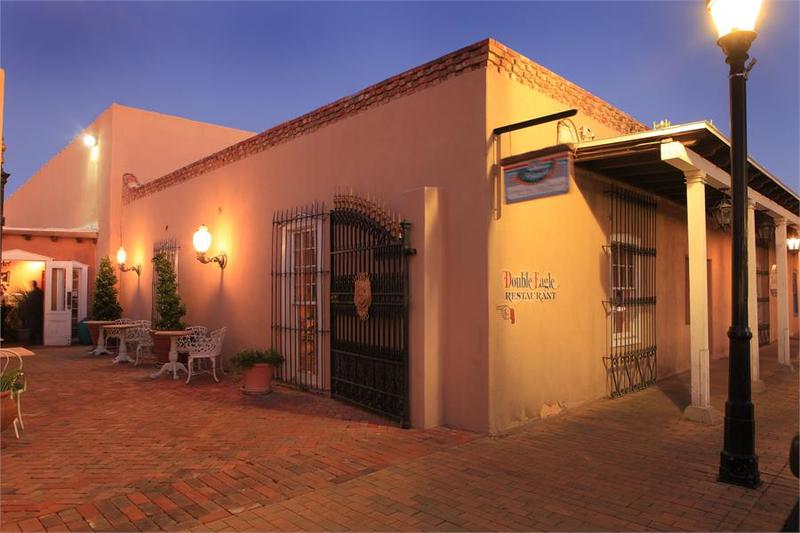
Double Eagle Restaurant
Standing just off the historic plaza in Mesilla, New Mexico, the Double Eagle Restaurant occupies one of the oldest surviving buildings in the region. With thick adobe walls, carved wood beams, chandeliers, and richly decorated dining rooms filled with antiques, the structure feels less like a restaurant and more like a preserved nineteenth-century estate. The original home was constructed in 1849, during a time when Mesilla was emerging as a major settlement along trade routes connecting Mexico, Texas, and the American Southwest. The town itself would soon become the backdrop for several pivotal moments in frontier history. The Gadsden Purchase was confirmed on the Mesilla plaza in 1853, bringing the region formally under United States control. During the Civil War, Mesilla was briefly declared the capital of the Confederate Arizona Territory in 1861. By the late nineteenth century, the town also gained notoriety when Billy the Kid was tried and briefly imprisoned there in 1881. The Double Eagle building stood through all of it, quietly watching the territory around it transform. The haunting legend most closely tied to the property centers on the Maese family, early owners of the home, and a tragic romance that has become one of the most enduring ghost stories in New Mexico. According to local accounts, the family’s teenage son Armando fell deeply in love with Inez, a young servant who worked in the household. Their relationship was forbidden by Armando’s mother, who believed her son should marry into a wealthier and more socially acceptable family. One evening she reportedly discovered the two together in Armando’s bedroom. Enraged, she seized a pair of sewing shears and attacked them. Inez was killed immediately, while Armando was fatally wounded and died days later. The room where the attack is said to have occurred is now known as the Carlotta Room, named after Armando’s mother, and it has become the focal point of nearly every haunting claim connected to the building. Unlike many haunted locations that sit abandoned, the Double Eagle remains active and carefully preserved. Dining rooms branch from one another through narrow passages and archways, still following the layout of the original home. The Carlotta Room in particular carries an atmosphere many visitors describe as unusually heavy or still. In one corner sit two Victorian chairs that have become central to the building’s ghost lore. Reports of paranormal activity at the Double Eagle have circulated for decades among staff and visitors. Many of the experiences center around the Carlotta Room, where Armando and Inez are said to remain. Employees have described chairs and tables shifting slightly, wine glasses breaking without an obvious cause, lights flickering, and unexplained cold spots drifting through the room. Some guests claim to hear whispers or their names spoken when no one else is nearby, while others report seeing shadowy figures near the corner chairs. Those chairs are the most famous detail of the haunting. According to local tradition, the seats show impressions shaped like two people sitting side by side despite rarely being used. Visitors are often warned not to sit in them. Over the years, several people who ignored the warning have reported sudden nausea, overwhelming sadness, or vivid nightmares afterward, reinforcing the belief that the spirits of Armando and Inez still occupy that space. Skeptics note that historic adobe buildings creak, settle, and carry sound in unusual ways, and that powerful stories can shape how visitors interpret ordinary events. But the Double Eagle’s reputation has endured because the reports are remarkably consistent across decades of unrelated visitors. Today the Double Eagle Restaurant operates as both a fine dining destination and one of the most famous haunted locations in the American Southwest. Guests come for the elaborate interior, the preserved frontier architecture, and the deep historical ties to Mesilla’s past. Yet many leave remembering something else entirely—the strange quiet of the Carlotta Room, the chairs in the corner, and the lingering sense that whatever tragedy once unfolded inside the house may not have completely faded with time.
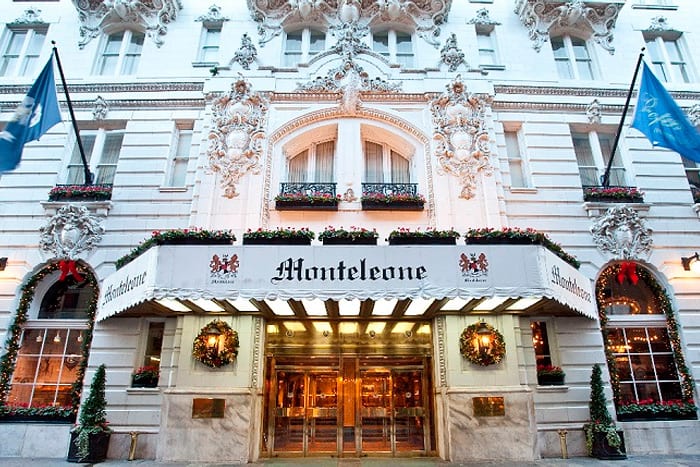
Hotel Monteleone
It has been said that the French Quarter begins in the lobby of the Hotel Monteleone. The claim is not merely geographic. Standing at the corner of Royal and Iberville streets since 1886, the Monteleone is the only high-rise building in the interior of the Quarter, a Beaux-Arts landmark that has anchored the cultural life of the neighborhood for well over a century. It is one of the last great family-owned hotels in America, and it is, by nearly every account, one of the most actively haunted buildings in New Orleans. The hotel's origins trace to Antonio Monteleone, a Sicilian nobleman who had operated a successful shoe factory before immigrating to New Orleans around 1880. Setting up a cobbler's shop on Royal Street, then the commercial and banking heart of the city, Monteleone prospered quickly enough to purchase a small sixty-four-room hotel on the corner of Royal and Iberville. He renamed it the Hotel Monteleone, and the property grew rapidly. A major expansion in 1903 added thirty rooms, and a sweeping 1908 renovation added three hundred more. Antonio died in 1913, and the hotel passed to his son Frank, who oversaw the addition of the Queen Anne Ballroom and two hundred more rooms in 1928—one year before the Depression. The Monteleone was one of the rare family-owned hotels to survive those lean years intact. In 1949, Frank introduced the hotel's most famous feature: the Carousel Piano Bar and Lounge, a twenty-five-seat revolving bar turning on two thousand steel rollers at a rate of one revolution every fifteen minutes. The original building was demolished and rebuilt in 1954, and a final expansion in 1964 added the upper floors, a Sky Terrace, rooftop pool, and the Presidential Suite. The hotel today holds 570 guest rooms across its towering frame. The Monteleone's literary associations alone would secure its place in American cultural history. Ernest Hemingway, William Faulkner, Tennessee Williams, Eudora Welty, and Truman Capote were all frequent guests. Hemingway referenced the hotel in his short story "Night Before Battle." Williams used it as a symbol in The Rose Tattoo. Capote famously claimed on The Tonight Show that he was born in the hotel—his mother lived there during her pregnancy but made it to the hospital in time. In 1999, the Friends of the Library Association designated the Monteleone an official literary landmark, one of only three hotels in the country to receive that distinction. In 1942, New Orleans author Innis Patterson Truman jumped to her death from the hotel's twelfth floor, an event documented in letters by the writer Lyle Saxon—one of the building's darker episodes and one that adds genuine tragedy to the property's layered past. The paranormal reputation of the Hotel Monteleone is extensive and has been the subject of formal investigation. In March 2003, the International Society for Paranormal Research conducted a multi-day investigation and reported making contact with more than a dozen earthbound entities. Among them were two former employees—a chef and a busboy or waiter—whom investigators linked to a recurring phenomenon involving the hotel restaurant's door, which opens and closes on its own despite being locked and operated by a push-button mechanism. The investigators concluded the two spirits were engaged in an ongoing disagreement about whether the door should remain open or shut. The most widely reported spirit is that of a toddler named Maurice Begere. According to the legend, Maurice's parents, Jacques and Josephine, were frequent guests in the late nineteenth century who would leave their young son with a nanny while they attended performances at the French Opera House on Bourbon Street. One evening, Maurice developed a high fever and died in his room on what is now the fourteenth floor. His grief-stricken mother returned to the hotel repeatedly, and eventually, the story holds, Maurice's spirit appeared before her, saying words to the effect of not to cry, that he was fine. Guests to this day report seeing a small boy wandering the fourteenth-floor hallway, sometimes standing at the foot of their bed, sometimes heard laughing. The fourteenth floor—which is actually the thirteenth, as the hotel skipped that number in its floor plan—has become the most requested floor among guests seeking a paranormal experience. Other reported entities include a man named William "Red" Wildemere, who died of natural causes in the hotel, a ghostly figure in nineteenth-century clothing believed by some to be Antonio Monteleone himself still watching over his creation, a phantom child who takes visitors' hands and then vanishes, and a spirit identified as "Solemn John," a Tennessee businessman said to have committed suicide after failed investments. Guests report shadows gliding through corridors, unexplained cold spots, elevators that stop on the fourteenth floor without being called, and the sounds of children playing in hallways where none are present. Today the Hotel Monteleone continues to operate under the fifth generation of the Monteleone family. The grandfather clock still chimes in the lobby. The Carousel Bar still turns. The doormen still stand at the entrance on Royal Street. And somewhere on the fourteenth floor, a small boy may still be looking for his parents—or simply making sure he is remembered.

Squirrel Cage – Old Pottawattamie County Jail
The Squirrel Cage Jail, constructed in 1885 as a correctional facility for Pottawattamie County, Iowa, stands as a remarkable example of late nineteenth-century criminal justice architecture and technological innovation combined with one of the most actively haunted locations in the continental United States. The facility was built on the site of a former church morgue, a historical fact that may have significance in understanding the paranormal phenomena that have been documented there across multiple decades. The building's design incorporated a unique rotational cage mechanism that allowed jailers to rotate a three-tiered cage structure containing prisoner cells, a technological innovation intended to improve security and reduce the number of staff members required to maintain the facility. The cage structure itself, despite its intended purpose of secure detention, appears to have created an environment conducive to the retention of traumatic impressions and the manifestation of persistent spiritual phenomena. The jail's architecture creates a distinctive physical environment featuring cell blocks arranged within the rotating cage mechanism, narrow hallways connecting various functional areas, and a fourth-floor apartment apparently designed to house a jailer or other staff member. This architectural configuration creates spaces of confined intensity where traumatized individuals were held during some of the worst periods of their lives, potentially creating emotional and psychological imprints that have persisted beyond physical death. The jail operated as a correctional facility from the late 1880s until the 1950s, housing hundreds of individuals during its operational period, some held for minor offenses and others awaiting trial or sentence for serious crimes. During the jail's operational period, multiple deaths occurred within its walls, deaths resulting from a variety of circumstances including accidents and intentional acts. A prisoner died of a heart attack while detained within the facility, a death that occurred within an environment already characterized by stress and confinement. Another prisoner fell three stories while being held at the facility, suffering fatal injuries as a result. A prisoner hanged himself within a cell, an act of desperation that represents the most extreme form of psychological distress. An officer was shot within the facility, an incident that introduced violence and loss of life among the staff responsible for maintaining the jail. These accumulated deaths and traumatic incidents appear to have created an environment saturated with suffering and loss, circumstances that may facilitate the manifestation of paranormal phenomena. From the early 1900s through the 1950s, staff members at the jail noticed strange happenings occurring within the facility that could not be explained by conventional means. Footsteps were distinctly heard echoing through empty hallways at times when the jail was secured and evacuated, with no living persons present to account for the sounds. Doors repeatedly opened and closed without human agency, locking mechanisms apparently disengaged by unseen forces. These phenomena were documented by multiple staff members across several decades, establishing a pattern of consistent manifestations rather than isolated incidents. Professional paranormal investigation teams equipped with sensitive electromagnetic field detection equipment have documented significant EMF spikes occurring at specific locations within the jail, spikes that cannot be attributed to electrical infrastructure or natural sources. Electronic Voice Phenomena recordings have been captured by investigators within the facility, audio recordings purporting to contain the voices or sounds of deceased individuals. Shadowy figures have been photographed by paranormal investigation teams, images suggesting the presence of non-physical entities within the building. These various forms of documentation appear to provide objective evidence for the reality of paranormal phenomena occurring within the jail. Apparitions of deceased prisoners have been reportedly sighted at the entrances of specific cells, manifestations suggesting that individual spirits remain bound to the locations where they suffered or died. The first paranormal investigation team to spend the night at the facility reported hearing the sound of approaching boots during their investigation, sounds that appear to have represented the presence of former jailers or law enforcement personnel continuing their duties in spectral form. The accumulated evidence from multiple decades of investigation and documentation establishes the Squirrel Cage Jail as one of America's most significantly haunted locations, a place where the trauma and loss of the past appears to retain powerful manifestations in the present.
Bush House Country Inn
The Bush House Country Inn in Index, Washington represents a historic lodging establishment situated in a remote mountain community with significant paranormal activity centered upon tragic historical events. The structure was constructed during an era when regional transportation and commerce relied upon railroad infrastructure connecting remote communities to broader economic networks. The building served lodging needs of railroad workers, traveling businessmen, and other transient populations moving through mountain passes and developing communities. The architectural style and construction methods reflect practical building approaches of the late nineteenth and early twentieth centuries, with materials and designs suited to challenging mountain climate and geographic isolation. The Bush House Country Inn's history is inextricably linked to the tragic death of Annabelle, a young woman who met her end through hanging in the stairwell connecting the third floor to lower building levels. The exact circumstances surrounding Annabelle's death remain embedded in historical records with varying degrees of clarity, creating ambiguity regarding whether death resulted from suicide, murder, or accident under circumstances clouded by historical distance. Regardless of precise manner, the traumatic nature of Annabelle's demise created a spiritual imprint manifesting continuously through paranormal phenomena concentrated in areas directly associated with her final moments. The presence of a male laborer or railroad worker apparition suggests additional tragic deaths or spiritual unrest associated with working-class populations frequenting the inn. The most dramatic paranormal manifestation involves Annabelle's apparition, whose ghostly form appears in the third floor stairwell where her body was discovered hanging. Witnesses describe encountering the spectral figure of a young woman who manifests most prominently in areas immediately surrounding the location of her death, appearing to reenact or replay elements of the tragic event. The intensity of her manifestations has increased over decades as the location's paranormal reputation became more widely known. Beyond the visual apparition, the inn experiences persistent olfactory phenomena associated with Annabelle's residual spiritual presence, with visitors reporting distinct scents of cigar smoke and feminine perfume concentrated in second floor guest areas where she may have spent time during living days. Paranormal investigators conducting formal investigations have documented extensive electronic evidence supporting witness testimony of supernatural activity. Disembodied voices captured on digital recording call guests by personal names, suggesting either telepathic communication or acquired knowledge of visitor identities. Electromagnetic field fluctuations concentrated in specific areas indicate concentrated spiritual energy presence consistent with documented apparitions and manifestation patterns. EVP recordings have captured speech in human voices speaking in apparent attempts at communication with living visitors. These electronic manifestations suggest spirits retain some awareness of the contemporary world and active interest in communicating with living inhabitants. The paranormal activity appears to intensify during evening and nighttime hours when fewer living occupants are present and contrast between spiritual and physical presence becomes pronounced. The Bush House Country Inn continues operating as a lodging establishment and paranormal investigation destination, attracting visitors interested in historical tourism and supernatural experiences. Staff members have developed familiarity with paranormal phenomena and report adapting to coexistence with resident entities. Guests selecting the inn specifically for paranormal activity often report vivid dreams, sensing presences in their rooms, and feeling emotional heaviness concentrated in particular areas. Paranormal investigation groups conduct regular formal investigations with inn permission and cooperation, accumulating extensive documentation spanning multiple investigation sessions across years. The location has gained recognition as one of Washington's most active paranormal sites, where tragic history of Annabelle's death and continuing spiritual manifestations create actively documentable paranormal phenomena.
Putnam Hotel
The Putnam Hotel occupies a significant position within the urban landscape of DeLand, Florida, representing both an artifact of the late nineteenth and early twentieth-century hotel construction era and a location marked by mysterious death, unsolved circumstances, and sustained paranormal manifestations of considerable intensity. Originally constructed during Florida's rapid commercial development and urban expansion, the hotel was designed and built to serve the traveling public, merchant visitors, and business professionals seeking accommodations in the growing city of DeLand. The structure embodies the architectural sensibilities and construction standards of the Gilded Age hotel building tradition, with multiple stories, numerous guest rooms distributed throughout upper floors, hallways connecting various sections of the building, and a ground-floor lobby and service areas serving guests and staff members. The hotel's physical organization and spatial hierarchy created conditions in which various tragic events, personal conflicts, and circumstances of death would eventually occur within its confined spaces during its long operational history. The Putnam Hotel's operational history during the twentieth century was characterized by significant transitions in ownership and purpose, eventually leading to the building's abandonment and deterioration as the hotel ceased functioning as a commercial lodging establishment. The central historical mystery and primary focus of paranormal investigation involves the death of Elmyra Winfield, who died under circumstances of considerable ambiguity and violence when she was pushed from a fire escape in the year 1984, an event during the latter phases of the hotel's operational history as a functioning commercial establishment. The circumstances surrounding Winfield's death generated substantial questions about the nature of her fall, the agency responsible for her being pushed, and the sequence of events culminating in her fatal descent from the fire escape structure. This violent and untimely death appears to have imprinted itself upon the physical spaces of the hotel with sufficient emotional and psychological intensity to sustain continued paranormal manifestations decades after the fatal event. Beyond Elmyra Winfield's documented death, paranormal investigations have documented evidence suggesting the presence of at least one additional spirit entity within the building, indicating that multiple deaths or tragic circumstances have occurred within the Putnam Hotel's spaces. The paranormal phenomena documented within the Putnam Hotel manifest across the building's multiple floors and spaces, with particular concentration of activity on the sixth floor, identified as the most actively haunted section of the structure. A pervasive sense of sadness and melancholy permeates the building's interior, creating an emotional atmosphere that visitors and investigators consistently report as profoundly affecting and emotionally oppressive. Shadowy figures appear and move through hallways and rooms without corresponding physical explanation, suggesting the manifestation of spiritual entities. Whistling sounds emanate from various locations without discernible source, adding auditory dimension to the documented paranormal activity. Footsteps echo through corridors and stairways with apparent purposefulness and deliberate movement patterns. Unexplained noises of various qualities and origins manifest throughout the structure, including sounds resisting conventional explanation based on settling, wind, or animal activity. Electromagnetic fluctuations detected through paranormal investigation equipment suggest the presence of electrical and energetic anomalies associated with spiritual manifestations. The Putnam Hotel continues to generate significant paranormal phenomena that attract ongoing investigation and research.
Joseph Jefferson Mansion
The Joseph Jefferson Mansion in New Iberia, Louisiana represents one of the most significant colonial-period residential structures surviving in the Louisiana bayou country, steeped in both architectural distinction and the complex social history of antebellum Louisiana. The mansion was constructed during the period when Louisiana had recently transitioned to United States jurisdiction following the Purchase of 1803, establishing itself as a symbol of commercial success and cultural refinement within a region experiencing rapid economic development based on plantation agriculture and river commerce. The mansion's construction quality, architectural sophistication, and prominent siting clearly indicate the wealth and influence of its original proprietor within the regional power structure, though complete genealogical documentation remains incomplete. The Joseph Jefferson Mansion's physical structure embodies design principles reflecting both American colonial aesthetic preferences and the regional adaptations required by Louisiana's distinctive climate and environmental conditions. The mansion occupies landscape positioning carefully selected to balance aesthetic prominence with practical requirements regarding water management and vulnerability to periodic inundation patterns characteristic of bayou country topography. The property grounds reflect the spatial organization typical of plantation-era Louisiana estates, with the main residential structure positioned to command prominent visibility while outbuildings and service areas occupied secondary locations consistent with antebellum social hierarchies and functional requirements of agricultural production. The paranormal phenomena documented at the Joseph Jefferson Mansion manifest with remarkable complexity and diversity, displaying characteristics that suggest multiple distinct spiritual entities occupying and haunting the property simultaneously. Witnesses and paranormal investigation teams have documented the appearance of strange lights throughout the property, phenomena that defy simple explanation through natural sources and suggest intentional spiritual manifestations. The manifestations include moving chairs that shift position autonomously without observable physical causation, inexplicable footsteps occurring throughout the mansion's interior spaces, and the appearance of green balls of light that manifest before disappearing inconsistent with conventional illumination sources. The paranormal activity at the Joseph Jefferson Mansion extends to documented object movement phenomena whereby physical items displace from their original positions and appear relocated in unexpected locations without human causation, patterns consistent with poltergeist-type activity manifesting from spiritual sources. Electronic measurement equipment employed by paranormal investigation organizations has registered electromagnetic field spikes at the property, documenting energy fluctuations consistent with recognized paranormal phenomena and supporting the visual and auditory accounts provided by witnesses and casual observers. Particularly remarkable is the documented incident where a plastic bottle responded to commands from paranormal investigators, moving in response to specific instructions, suggesting not merely the presence of spiritual entities but the capability for conscious communication and intentional interactive response to living observers. The Joseph Jefferson Mansion's extensive and well-documented paranormal phenomena have established it as a significant location within paranormal investigation communities, with multiple organizations conducting formal investigations and producing detailed documentation. The property's location in Louisiana, combined with its distinctive architectural and historical significance, positions it as a unique resource combining regional history, architectural preservation, and paranormal research opportunities. The mansion's paranormal reputation has achieved substantial documentation through multiple independent investigation teams whose findings collectively establish the location as one of the most actively haunted and thoroughly investigated historic properties in the Louisiana bayou region, attracting ongoing research interest from paranormal organizations and academic researchers studying regional spirituality and historical dimensions.
Highland Junior High
Highland Junior High School stands as a substantial brick and concrete structure within the Phoenix metropolitan area, representing a typical mid-twentieth-century educational facility constructed during the post-World War II era of rapid suburban expansion. The school was designed with the standard architectural conventions of the period, featuring classroom wings arranged around central administrative spaces, a full gymnasium complex for athletic activities and student assemblies, and various auxiliary facilities intended to serve the academic and developmental needs of the adolescent population it was built to accommodate. The building's construction materials and structural design were selected based on regional climate considerations and the educational theories prevalent during the era of its design, emphasizing efficient classroom layout and functional separation of academic, recreational, and administrative spaces. Over the succeeding decades, Highland Junior High underwent periodic renovations and upgrades to its mechanical systems, classroom technologies, and infrastructure, yet the fundamental structure and spatial organization remained consistent with the school's original conception. The facility has served continuously as an educational institution for multiple generations of Phoenix-area students, providing instruction in core academic subjects, physical education, and various elective courses designed to support middle-school-level learning outcomes. The gymnasium complex, which remains one of the school's most heavily utilized spaces, has hosted countless athletic competitions, physical education classes, and student assemblies throughout the institution's operational history. The locker room facilities associated with the gymnasium, with their rows of metal lockers and shower facilities designed to accommodate dozens of students simultaneously, have been the site of intensive daily activity during school hours. Similarly, the administrative offices and teachers' work areas represent spaces where professional staff spend significant portions of their working hours, engaging in the detailed clerical, instructional, and bureaucratic functions necessary to operate an educational institution. The integration of security technology throughout the building, including electronic vape detection systems designed to monitor student behavior in spaces less directly supervised than classrooms, reflects the evolution of institutional concerns and technological capabilities. Paranormal phenomena associated with Highland Junior High center on the manifestation of a young female entity identified as Lily, whose spiritual presence has been documented with particular intensity in the gymnasium locker room area and in various secondary locations throughout the building. Reports of paranormal activity have documented the spontaneous and violent slamming of metal locker doors with such force that the sound reverberates through adjoining spaces, despite the absence of any visible external agent that could account for such impacts. Electronic vape detection systems have been observed activating without the chemical compounds they are designed to detect, suggesting an electronic interference originating from sources other than human activity. Automated hand dryer mechanisms have been triggered in empty restroom facilities, operating at full force in the absence of any individual utilizing these devices or triggering their motion sensors through conventional means. Electromagnetic field detection instruments used by paranormal investigators have registered significant anomalies in specific locations, particularly in the locker room area and adjacent hallways, with readings far exceeding baseline environmental measurements. Visual phenomena documented at Highland Junior High include the appearance of unexplained spherical objects in photographs, commonly referred to as orbs, which manifest with particular frequency in areas associated with purported paranormal activity. Teachers have reported arriving at their offices to find papers shuffled, reorganized, or scattered despite the secure locking of office doors and the absence of any indication of unauthorized entry. File drawers have been discovered in open positions on numerous mornings, despite being closed and secured by the previous occupants at the end of the working day. The identity of Lily remains uncertain, with some accounts suggesting a connection to a student who may have experienced a tragic incident within the building's walls, while others propose alternative explanations for the spiritual manifestation. The entity's activity appears concentrated in areas frequented by the student population, suggesting either an attachment to adolescent spaces or an affinity for locations where youthful energy and activity are most concentrated. Despite the unsettling nature of these phenomena, no aggressive or harmful manifestations have been documented, and the school continues to operate normally while researchers and paranormal investigators continue their ongoing efforts to understand the nature and origins of the activity that persists within its walls.
Angel Island
Angel Island, situated in San Francisco Bay approximately a mile from the Golden Gate strait, served from 1910 onwards as the primary immigration processing station for the western United States, receiving hundreds of thousands of immigrant passengers seeking entry to America across five decades of continuous operation. The facility functioned as a complex assembly of administrative buildings, dormitory structures, and detention facilities designed to process, interview, and conditionally admit or deny entry to individuals arriving by ship from across the Pacific Ocean. The island's immigration station operated during a period of intense migration from China, Japan, India, and other Asian nations, coinciding with deeply restrictive immigration policies that made entry extraordinarily difficult and extended the processing period for many applicants to months or even years. The infrastructure evolved considerably over the decades as the volume of immigration fluctuated with changing United States policy, economic conditions, and international events. The physical structures themselves reflected the transitional nature of the facility, with wooden buildings and concrete structures serving as temporary housing for the thousands of individuals awaiting interview and determination of their immigration status. At the heart of Angel Island's most poignant narrative stands the tragic account of a young Chinese bride whose identity has been preserved through decades of historical documentation and paranormal research. The woman arrived at the facility with hopes of joining her husband in America, a journey undertaken despite the substantial risks and uncertainties inherent in immigration during this restrictive era. Upon arrival at the island, she was informed by immigration officials that she would not be permitted to enter the United States, a determination based on the complex and often contradictory provisions of Chinese Exclusion policies and related immigration legislation. The psychological devastation of this rejection, arriving after a lengthy voyage and with expectations of family reunification, proved insurmountable. Rather than accept the forced return to China, the bride took her own life within the women's shower facilities at the detention station, an act of desperation that marked the facility with one of its most profound human tragedies. Her death occurred during the detention period while she was technically in government custody, representing a failure of the institution to prevent harm to those it held responsibility for protecting. The presence of the deceased bride has manifested repeatedly throughout the decades following her death, with witnesses reporting a distinct apparition of a young female figure in the vicinity of the shower room where she died. Ghost hunters and paranormal investigators have documented electromagnetic anomalies in the area surrounding the fatal location, measuring unusual fluctuations and disturbances in electromagnetic fields that correlate with reported sightings and perceived activity. Disembodied voices speaking in Mandarin Chinese have been recorded in the women's quarters, with investigative teams capturing audio evidence that remains unexplained by conventional acoustic sources. Cold spots of unusual intensity appear suddenly within specific areas of the building, localized phenomena that reverse and disappear without apparent environmental cause. The apparition has been described as appearing sorrowful and distressed, her expression and bearing suggesting the profound emotional distress that characterized her final moments. The manifestation is not aggressive or threatening in nature but rather suggests a presence still struggling with the devastating rejection and despair that motivated her death. The historical context of Angel Island extends beyond this single tragedy to encompass the broader suffering of the immigrant population detained at the facility. Detainees carved melancholy poems in classical Chinese characters into the wooden walls of their dormitory quarters, creating an archive of literary expression reflecting their anxieties, homesickness, and philosophical responses to their liminal immigration status. These poems, preserved on the structures themselves, represent the emotional and cultural depths of the immigrant experience during this period. The combination of documented historical tragedy, physical archaeological evidence in the form of carved poetry, and reported paranormal activity has established Angel Island as a location of profound spiritual weight. The presence of the Chinese bride ghost has become the most famous and documented haunting associated with the facility, though the location's paranormal dimensions are understood as broader, encompassing the spirits of multiple immigrant individuals who suffered during their detention at the island. Angel Island Immigration Station now operates as a California state historical site and museum, with its paranormal history incorporated into the educational and interpretive mission of the facility.
Del Rey Cemetery – Prairie Cemetery
Del Rey Cemetery, also known as Prairie Cemetery in certain historical records and regional documentation, represents a significant burial ground within the American agricultural landscape, serving as the final resting place for generations of residents who built communities and families throughout the region's development. The cemetery's origins trace to the nineteenth century when early settlers and agricultural communities established burial grounds to honor their deceased members, creating what evolved into a substantial cemetery complex encompassing numerous graves, monuments, and historical markers documenting the passage of time and the lives of those interred within its boundaries. The physical landscape of Del Rey Cemetery reflects the typical characteristics of rural American burial grounds, including stone monuments of varying ages and conditions, maintained grounds, and the distinctive atmosphere of contemplation and remembrance that cemeteries throughout North America have cultivated as repositories of historical memory and spiritual significance. The cemetery's setting within the agricultural prairie creates a stark yet compelling visual environment where natural landscape features meet carefully maintained human structures dedicated to honoring the deceased. The paranormal phenomena associated with Del Rey Cemetery appear to concentrate particularly around specific graves and monuments within the cemetery's extensive grounds, with paranormal investigators identifying what they describe as localized hotspots of unusual activity rather than manifestations distributed uniformly throughout the entire burial ground. Among the most distinctive and frequently reported anomalies is the phenomenon of a glowing headstone that visitors describe as emitting an unexplained luminescence visible particularly during evening hours and periods of darkness. This particular grave marker has attracted substantial attention from paranormal researchers and casual visitors who have traveled to the cemetery specifically to document or witness the glowing phenomenon firsthand, establishing it as one of the region's most distinctive and visually remarkable paranormal manifestations. The identity and history of the individual interred beneath this remarkable headstone remain subjects of ongoing investigation and local speculation, with theories ranging from natural phosphorescent properties of unusual stone composition to spiritual phenomena reflecting the location's paranormal character. Visitors and paranormal investigation teams documenting activity at Del Rey Cemetery have consistently reported multiple categories of paranormal phenomena concentrated within specific areas of the burial ground. Shadowed figures, described as dark humanoid forms lacking detailed features or distinguishable characteristics, have been observed moving between cemetery monuments and through the grounds, particularly during transitional periods between daylight and darkness when atmospheric lighting conditions may enhance perceptual interpretations of environmental features. Whispering voices emanate from undetermined sources throughout the cemetery, with visitors describing the sounds as incomprehensible yet distinctly vocal in character, suggesting communication or utterances that resist clear interpretation despite obvious vocal production. The mysterious moaning sounds reported by cemetery visitors create an atmosphere of profound distress and emotional anguish, with the sources of these vocalizations remaining unidentified despite the absence of visible human presence in the locations where sounds originate. Cold spots appear spontaneously throughout the cemetery's grounds, creating localized areas of temperature depression that paranormal researchers attribute to spiritual manifestations rather than conventional meteorological phenomena. Paranormal investigation teams equipped with modern detection technology have documented unusually elevated electromagnetic field readings throughout portions of Del Rey Cemetery, establishing objective correlations between locations of reported paranormal activity and measurable electromagnetic anomalies. The electromagnetic field elevation appears to concentrate particularly in the vicinity of the glowing headstone and other locations where visual paranormal phenomena have been consistently reported, suggesting a potential relationship between electromagnetic disturbances and spiritual manifestations. Multiple paranormal investigation groups representing different organizations and methodological approaches have conducted independent investigations within the cemetery, and their findings consistently support the reliability and reproducibility of the documented paranormal phenomena rather than attributing reported phenomena to misinterpretation or psychological suggestion. The accumulation of eyewitness testimony from numerous independent visitors, combined with objective electromagnetic data collection, has established Del Rey Cemetery as a location meeting rigorous standards of paranormal credibility within the research community. Del Rey Cemetery continues to function as an active burial ground and community memorial space while simultaneously maintaining its status as a documented paranormal location attracting investigation teams and paranormal tourism. Local historical societies and cemetery preservation organizations have acknowledged the property's paranormal reputation while maintaining appropriate respect for the cemetery's primary function as a sacred burial ground and space for family remembrance and respect. The combination of documented historical significance, consistent paranormal phenomena documentation, and unusual electromagnetic characteristics have positioned Del Rey Cemetery among the most credibly documented paranormal locations in its region. Continued paranormal research activities within the cemetery, conducted by investigation teams respecting the location's sacred character and employing rigorous scientific methodologies, will likely continue to generate detailed documentation of the phenomena that have established this rural burial ground as a significant location within paranormal research and folklore traditions.
Oakland Cemetery
Oakland Cemetery in Yonkers, New York, established approximately 1783 as a burial ground dedicated to honoring Revolutionary War soldiers and continuing throughout its long history to serve as an active municipal cemetery through the nineteenth and twentieth centuries into the contemporary era, occupies a significant and historically important place in local Yonkers history and in the broader paranormal landscape of the Hudson Valley region. The cemetery represents nearly a quarter-millennium of continuous burial activity and community commemoration, with graves containing soldiers who fell during the American Revolution intermixed with subsequent burials spanning the entire documented history of Yonkers from its early role as a Revolutionary War battleground through its remarkable transformation and evolution into a major industrial city and contemporary suburban municipality. The physical landscape of Oakland Cemetery, particularly the central hill and the rear grounds area, contains numerous graves marked by weathered stones whose inscriptions have been worn nearly illegible by time and relentless atmospheric exposure to the elements, and the Gagliardi family gravestones located on Nepperhan Avenue represent one of the cemetery's more prominent and historically significant burial clusters of an established family. The paranormal reputation of Oakland Cemetery is dominated by the exceptionally well-documented and extensively reported manifestations of three ghostly women, described with remarkable consistency by paranormal investigators and eyewitnesses as apparitions dressed uniformly in white garments, who appear to serve as guardian spirits or dedicated protectors of the cemetery grounds and its sacred burials. These three women in white are reported to move generally from the central hill toward the overall center of the cemetery grounds, and they have been explicitly documented by multiple independent witnesses and paranormal investigators as deliberately chasing away vandals and those who appear to have clearly malicious intent toward the cemetery or its graves, suggesting forcefully that the spirits possess an ongoing and active commitment to the protection and sanctification of the burial grounds despite their lack of living physical agency or material form. Witnesses consistently describe the three women as possessing a distinctly coordinated quality to their manifestations, as though they operate as a unified entity or coordinated team despite their individual and separate appearances, and some paranormal researchers have speculated that they may represent either a sisterhood in life who died together or a spiritual bond forged through shared commitment to cemetery protection after death. Paranormal investigations conducted systematically at Oakland Cemetery by the dedicated Yonkers Ghost Investigators and other professional paranormal research organizations have yielded substantial and well-documented evidence of paranormal phenomena beyond the three women in white, including the careful capture of electronic voice phenomenon recordings documenting disembodied voices engaged in what appear to be conversations or expressions of distress and longing. The recording of misty apparitions on both photographic and video equipment and the measurement of electromagnetic anomalies at locations throughout the cemetery grounds, particularly near the rear hills and central burial areas, further establish the location's genuine paranormal activity. Paranormal investigators consistently report that electromagnetic activity at the cemetery is particularly intense and consistent, suggesting that the location may possess distinctive environmental or geological properties that facilitate or amplify paranormal manifestation, or conversely, that the concentration of spiritual presences at the location creates measurable electromagnetic disturbances detectable by sensitive instrumentation. Visitors to the cemetery, particularly during evening hours or at night, consistently report the distinct sensation of being watched or observed by unseen intelligences, profound feelings of sadness or melancholy that seem to emanate from the ground and graves themselves. Oakland Cemetery today continues operating as both a functioning municipal burial ground and a recognized paranormal hotspot that attracts paranormal investigators, ghost hunters, and curious visitors throughout the year.
Pipestone County Museum
The Pipestone County Museum stands as a significant historical and cultural institution in Pipestone, Minnesota, a small town in the southwestern region characterized by distinctive geological features and historical importance to Native American cultures. The museum building houses extensive collections of artifacts, documents, and displays related to Pipestone County regional history and the Minnesota frontier experience. The collections encompass archaeological artifacts, historical photographs, period furnishings, farming implements, and documentary materials illustrating settlement and development by European-American pioneers during the nineteenth and early twentieth centuries. Multiple display rooms are organized thematically to present information about settlement, agriculture, commerce, and daily life in frontier Minnesota. The museum serves educational functions for community and visiting tourists, preserving and interpreting regional historical heritage. Pipestone has distinctive significance as the location of quarries producing distinctive red stone used by Native American peoples for centuries to create sacred pipes and ceremonial objects, establishing the town as a place of spiritual and cultural importance long before European settlement. The region's complex history involving Native American presence, European settlement, and indigenous displacement creates a layered historical context that may contribute to documented paranormal phenomena at the museum. Paranormal phenomena center on the apparition of a little girl with blonde hair dressed in a blue dress with a white apron, an apparition frequently reported by multiple independent museum visitors. The girl spirit appears in various museum locations as a translucent ethereal figure moving with apparent purpose though minimally interacting with living inhabitants and visitors. The apparition's appearance, including blonde hair, blue dress, and white apron, suggests a nineteenth or early twentieth-century temporal origin consistent with Minnesota's frontier settlement period. The girl spirit appears particularly attached to certain museum areas, with more frequent sightings in specific locations rather than throughout the entire structure. Paranormal investigators have documented cold spots in various museum areas, sudden temperature variations lacking apparent physical explanation and correlating with the spirit girl's presence. Electromagnetic field anomalies have been recorded using standard paranormal investigation equipment, with EMF activity detected in areas where the apparition has been most frequently sighted. Paranormal activity concentrates in interior display areas and hallways, with the spirit seemingly most active during evening hours and lower visitor populations, suggesting attraction to quieter conditions or times when spiritual manifestations avoid interference from living human presence. The haunting's historical context centers on which specific historical event or tragedy resulted in the young girl's death whose spirit apparently remains at the location. Minnesota's frontier settlement period, during which the museum's primary collections concentrate, was characterized by numerous hardships including disease, accidents, difficult living conditions, and tragic losses among both European-American settlers and Native American populations. The girl may have died during this period through illness, accident, or other causes creating sufficient trauma or location attachment that her spirit became earthbound. The museum building may have housed or served frontier period people, creating physical and temporal connections between the structure and the girl's tragic death. The apparition's distinctive appearance, including specific clothing and physical characteristics, suggests historical records might contain information about specific child deaths during the museum area's history, though documentation may be incomplete or inaccessible. Pipestone's spiritual environment, related to its longtime significance as a place of spiritual meaning and sacred activity in Native American traditions, may create unique conditions conducive to paranormal phenomena. The Pipestone County Museum continues fulfilling educational and historical functions while the blonde-haired girl in her blue dress and white apron remains a mysterious spiritual presence, a child from the past observing and inhabiting the museum spaces that preserve the era in which she lived and died.
George Air Force Base
George Air Force Base lies eight miles northwest of Victorville, California, approximately seventy-five miles northeast of Los Angeles in the high desert region. The facility was established in June 1941 as an Advanced Flying School during military buildup preceding American entry into World War II. The base was constructed to train military pilots in aerial combat, navigation, and formation flying essential to air superiority. Throughout World War II, the base prepared successive cohorts of pilots for combat deployment in European and Pacific theaters. The base also served as a research and development center for advanced aircraft configurations and experimental flight procedures. Following World War II, George Air Force Base continued operations through the Korean War and Vietnam War era, training pilots and maintaining advanced fighter aircraft throughout the Cold War period. The facility underwent continuous modernization and expansion, adding hangars, dormitories, administrative buildings, and specialized training facilities. At its peak operational period, the base employed thousands of military personnel and civilian contractors. The base remained in continuous operation until December 1992, when it was officially closed and transferred to civilian authorities. Following closure, George Air Force Base rapidly deteriorated into an expansive urban ruin with hundreds of abandoned structures. Hospital buildings, residential barracks, administrative offices, and aircraft hangars fell into progressive decay. Windows shattered and remained unrepaired, exposing interiors to dust storms and harsh desert weather. Lead-based paint peeled from walls in toxic sheets, and vegetation native to the Mojave Desert invaded buildings and cracked pavement. The decomposition of the base proceeded visibly, transforming the once-vibrant military installation into a haunting landscape of abandonment. The physical decay proceeded alongside intensifying paranormal phenomena that attracted paranormal investigators from across California. Investigators documented extraordinary levels of anomalous activity throughout the base, particularly concentrated in hospital buildings and former residential quarters. Apparitions of military personnel in period-appropriate uniforms manifested repeatedly, with witnesses describing soldiers, pilots, and support staff appearing as full-bodied spectral forms. Particularly disturbing were sightings of childlike figures appearing in doorways and empty hallways. Poltergeist activity intensified throughout the facility, with disembodied hands slamming doors violently. Cabinet doors opened and closed repeatedly, and investigators heard inexplicable footsteps suggesting military cadence and disciplined marching patterns. Loud banging noises erupted from walls without identifiable sources, and rocks were observed being hurled through the air by invisible forces. Disembodied voices echoed through halls, and portable electronic recording equipment consistently malfunctioned during investigations. Some paranormal researchers speculated that the base harbored more sinister phenomena beyond conventional military hauntings, with allegations that satanic rituals had been performed, though these claims remained largely unsubstantiated. The prevailing interpretation among investigators was that the spirits of the base's long military history refused to accept the facility's decommissioning and abandonment, maintaining their presence and continuing their routines as if the base remained in active operational status.
Old Yoakum Community Hospital
The Old Yoakum Community Hospital emerged during the twentieth century as a medical institution serving Yoakum, Texas, and the surrounding region. Constructed to provide modern medical care to a rural community, the hospital embodied the contemporary medical philosophy and architectural standards of its era, with separate wards, administrative areas, and treatment spaces organized to facilitate healthcare delivery. The facility operated through decades of medical practice, treating illnesses and emergencies while serving as a location where human mortality intersected with institutional routine. The building, with its multiple stories and extensive corridors, became a repository of countless individual stories, each representing moments when lives hung in the balance within institutional walls. The paranormal phenomena documented at the Old Yoakum Community Hospital represent some of the most intensely documented cases in Texas paranormal investigation. The third floor has emerged as the primary locus of paranormal activity, with consistent reports of apparitions, disembodied voices, and physical phenomena manifesting with both frequency and intensity. The most persistently documented presence is that of a blue nun, whose distinctive appearance suggests a specific historical period. A second prominent entity is believed to be a murdered nurse, whose violent death has left a spiritual imprint manifesting through aggressive phenomena, including physical contact and hostile energy. A third documented presence involves a priest identified as having suffered from polio, whose spiritual connection to the location remains obscured by incomplete historical documentation. These three entities represent distinct consciousnesses, each maintaining recognizable identity and behavioral consistency across documented encounters. The paranormal manifestations extend beyond apparitional sightings to encompass phenomena indicative of intense spiritual activity. Electronic Voice Phenomena (EVP), with disembodied voices expressing intelligible words and emotional content, has been extensively documented. Electromagnetic field (EMF) spikes have been consistently measured during investigations, suggesting mechanisms by which spiritual presences interact with the physical environment. Physical contact, including being touched and pushed by unseen forces, has been reported by numerous visitors and investigators, with some accounts describing aggressive contact consistent with the suspected presence of the murdered nurse. The third floor hallways prove particularly active, with phenomena intensifying during nocturnal hours and in association with spaces where traumatic events may have occurred. The hospital ceased operation as an active medical facility, though the building continues to exist. The location has become increasingly prominent in paranormal research communities, with specialized investigations and overnight research sessions permitted by current proprietorship. Paranormal investigation groups have documented extensive phenomena, sometimes reporting hostile interactions, yet maintaining investigative presence due to the unique opportunity to study such active paranormal zones. The hospital's transformation from medical institution to paranormal research location represents a modern recontextualization of historic buildings. The persistent intensity and variety of paranormal manifestations at the Old Yoakum Community Hospital have established it as one of the most thoroughly documented and actively haunted medical facilities in the American South.
Old Fort Smith Courthouse
The Old Fort Smith Courthouse stands as one of the most haunted and historically significant structures in Arkansas, a building that witnessed the most consequential legal proceedings of the American frontier. Constructed in 1846, the courthouse served as the seat of justice for Judge Isaac Parker, the legendary hanging judge whose strict application of federal law transformed the Fort Smith court into an instrument of control over the vast Indian Territory to its north. Between 1875 and 1896, Judge Parker presided over the prosecution of thousands of cases, personally sentencing nearly two hundred defendants to death, with eighty-eight executions carried out on the gallows adjacent to the courthouse building. The concentration of legal authority and capital punishment within this single institution gave the building a character defined by judicial power and systematic death. The structure itself is architecturally imposing, a physical manifestation of judicial authority designed to impress and intimidate. The building housed not only the courtroom but also the jail facilities directly below, creating a vertical arrangement where judgments rendered above were immediately carried out in the cells and on the gallows below. This architectural concentration of judgment and punishment created an environment saturated with human anguish, desperation, and the trauma of capital justice. Condemned men awaited execution in close confinement, hearing the proceedings above while anticipating their own trials, sentencing, and deaths. The gallows, visible from the jail, served as a constant reminder of what awaited those convicted in the courtroom above. The paranormal manifestations at the Old Fort Smith Courthouse focus heavily on these condemned men and the specter of Judge Parker himself, whose stern presence seems to linger in the building he once dominated. Visitors and staff report encounters with apparitions of men in period clothing, most commonly in the jail cells and passages, appearing distressed and attempting to communicate. The sensation of being watched by an authoritative presence in the courtroom is one of the most consistently reported phenomena, with witnesses describing an overwhelming impression of judgment and scrutiny from an unseen judicial authority. Disembodied voices emanate from the jail areas, sometimes articulating pleas and sometimes merely expressing sounds of anguish and despair. The gallows area produces particularly strong paranormal signatures, with multiple visitors reporting apparitions of hanged men and vivid impressions of the moment of execution. Electronic equipment experiences interference and dramatic malfunctions in specific locations, particularly in the courtroom and the upper gallery where spectators once watched trials. Electromagnetic field anomalies spike sharply in the jail cells, suggesting concentrated energy manifestations. The phenomena suggest both residual hauntings, impressions of trauma and violence embedded in the location, and intelligent presences capable of responding to the living and interacting with the physical environment. The psychological weight of the location cannot be separated from its paranormal dimensions. The courthouse was a site of profound suffering, where the apparatus of federal justice eliminated human lives in an assembly-line fashion. Judge Parker condemned men to death with almost bureaucratic efficiency, creating an environment where despair became a tangible force. Researchers and paranormal investigators who have studied the site note that the activity intensifies around historically significant dates and in locations with the strongest associations to specific executions or trials. The Old Fort Smith Courthouse functions as a kind of historical resonator, channeling the anguish of its past into phenomena that challenge conventional understanding of what binds consciousness to place and time.
Witch’s Grave – Truxton Park
The Witch's Grave located within Truxton Park in Annapolis, Maryland, occupies a significant place in the paranormal and historical landscape of the Chesapeake Bay region, marking a site where colonial persecution, historical tragedy, and persistent paranormal phenomena converge. Annapolis, as the capital of Maryland and a major port city since its establishment in the seventeenth century, accumulated substantial historical weight across centuries of colonial and early American development. Within the park lies an unmarked location that allegedly serves as the burial place of three unnamed women accused of witchcraft and subjected to the violent and fatal consequences of colonial paranoia and religious extremism. The specific location of this grave, situated in the woods beyond the third baseball field and near a distinctive gnarled tree at the edge of Spa Creek, suggests a place deliberately chosen for burial away from consecrated ground and normal Christian internment practices. The historical context for the Witch's Grave reflects the broader colonial American experience with witch persecution. The three women whose remains allegedly rest at this location were victims of colonial judicial processes that accepted testimony about supernatural agency, magical harm, and diabolical conspiracy as sufficient grounds for conviction and execution. According to historical accounts and local tradition, two of the women were hanged, subjected to death by strangulation as punishment for their alleged crimes against the spiritual and social order of the colonial community. The third woman was burned, a more extreme form of punishment that reflected the severity of the accusations against her. The treatment of their bodies after death, including the decision to bury them in an unmarked grave in an isolated wooded area, reflected the colonial determination to exclude them from the Christian burial community. The paranormal manifestations associated with the Witch's Grave at Truxton Park constitute some of the most disturbing accounts documented in Maryland's paranormal literature, suggesting spirits of women whose deaths were violent and whose confinement to this location represents a continuing violation and injustice. The most frequently reported paranormal phenomena at the site involve apparitions of headless women screaming with apparent anguish and desperation, visual and auditory manifestations that directly reference the mode of execution by hanging. Some witnesses have reported seeing the ghostly image of bodies hanging from trees, vision-like phenomena that recreate the original execution scene. Electromagnetic field anomalies have been documented at the site, scientific measurements of paranormal activity that suggest the presence of spiritual or paranormal energy beyond conventional electromagnetic phenomena. These EMF readings indicate the site's status as a genuine locus of paranormal activity rather than mere folklore. The Witch's Grave at Truxton Park thus stands as a location where colonial history, paranormal manifestation, and the residual trauma of violent injustice converge in ways that demand serious recognition. The presence of the three unnamed women at this location, their persistent manifestations suggesting an inability or unwillingness to accept their own deaths and confinement, creates a profoundly complex paranormal site. The screaming apparitions of headless women serve as testimony to the violence inherent in colonial persecution of the vulnerable. Modern visitors to Truxton Park may encounter these manifestations either through direct experience or through documented accounts of paranormal investigators and witnesses, serving as reminders that historical atrocity leaves marks not only on the physical landscape but on the very substance of reality itself. The grave remains largely unmarked within the park, visible to those who know where to look but hidden from casual observation. The continuing paranormal activity at the site suggests that whatever justice or peace the women seek has not yet been achieved, and their spirits continue to cry out through the veil separating the physical world from whatever lies beyond.
Ghost Farm of Kingsley
The Ghost Farm of Kingsley occupies a portion of northern Michigan's landscape that carries profound historical significance rooted in the region's complex relationship with Native American heritage, European settlement patterns, and the spiritual traditions of multiple cultures whose influences have shaped the farm's identity across centuries. The property encompasses multiple distinct environmental and archaeological features, including the farm structures themselves, a historic barn, an ancient Native American burial mound, and portions of a traditional Native American trail that traversed the region long before European colonization transformed the landscape. This layering of different historical periods and cultural traditions within a single geographic location has created a site of exceptional spiritual complexity, where multiple historical periods and cultural narratives intersect and coexist within the same physical space. According to historical documentation and community historical records, the farm property itself dates to the European settlement period of northern Michigan, when settlers began establishing agricultural operations and permanent dwellings in an area previously occupied by indigenous peoples whose ancestors had lived on the landscape for millennia. The construction of farming structures and the organization of agricultural land represented a fundamental transformation of the natural landscape, imposing European settlement patterns and economic systems onto terrain that had previously supported Native American communities and spiritual traditions. This displacement of indigenous peoples and their replacement by European settlers created layers of historical tragedy that accumulated upon the physical location, establishing a site of significant historical trauma and spiritual complexity. Professional paranormal investigators and ghost hunters have identified the Ghost Farm as a location of exceptional paranormal activity, documenting evidence of multiple distinct paranormal entities manifesting throughout the farm property. Most prominently, a figure referred to as the Colonial has been repeatedly identified and documented, described as appearing in period clothing consistent with the frontier era of European settlement, suggesting association with one of the early European settlers who established the farm and constructed its original structures. A woman spirit has also been documented manifesting throughout the farm's various locations, whose identity remains uncertain but whose presence appears integral to the farm's paranormal phenomena. These distinct entities appear to represent different historical periods and cultural traditions, reflecting the layered historical complexity of a location shaped by both indigenous heritage and European colonization. Paranormal investigators utilizing specialized detection equipment have documented evidence of electromagnetic field anomalies occurring throughout the farm property, suggesting the presence of entities capable of generating or interacting with electromagnetic phenomena in ways that transcend conventional understanding of physical law. Spirit box communications, a technology designed to detect paranormal entities through radio frequency analysis and interpretation, have yielded apparent communications from the spirits inhabiting the property, providing potential channels for understanding the nature of the entities and their historical origins. The combination of visual apparitions, auditory phenomena, and instrumentation-based evidence has established the Ghost Farm as one of northern Michigan's most thoroughly documented paranormal locations, attracting serious paranormal researchers and investigators seeking to understand the complex supernatural phenomena manifesting there. Today, the Ghost Farm of Kingsley operates as a paranormal investigation destination, offering ghost hunting experiences to enthusiasts and researchers seeking direct encounter with the documented supernatural phenomena occurring on the property. The farm's unique position at the intersection of Native American heritage, colonial European history, and contemporary paranormal research has transformed it from a conventional agricultural property into a location of profound spiritual and historical significance. Visitors exploring the farm's barn structures, burial mound area, and ancient Native American trails encounter a location where multiple historical periods and paranormal realities coexist, where the spirits of different eras manifest their continued presence, and where the boundary between the living world and the spiritual realm becomes actively and undeniably visible through documented paranormal phenomena.
Forum Theatre
The Forum Theatre in Jonesboro, Arkansas stands as a significant architectural and cultural landmark representing mid-twentieth-century American theatrical traditions. The theater was constructed as a multiplex cinema venue, providing cinematic exhibitions and entertainment programming to the Jonesboro community. The building was designed with the architectural and mechanical sophistication necessary for theatrical presentation, including projection booth facilities, audience seating areas, and technical systems enabling film exhibition. The Forum Theatre functioned as a social gathering place for community members, with generations attending film screenings and presentations. The theater operated continuously from its establishment through the latter decades of the twentieth century, maintaining its function as a primary entertainment destination within the Jonesboro area. The Forum Theatre became recognized among paranormal researchers as a location of intense and distinctive supernatural phenomena, predominantly attributed to Charley, a former projectionist employed during the 1950s. The spirit appears to have maintained a profound attachment to the projection booth and mechanical systems that constituted his professional domain. Charley manifests as a mischievous spirit demonstrating interactive behavior and apparent awareness of living persons. The spirit appears with such consistency that paranormal investigators have documented detailed manifestations across multiple investigation sessions. Charley demonstrates inclination toward poltergeist activity, including operation of mechanical systems and musical instruments without apparent human agency. The sealed grand piano has been documented playing by itself, producing music without any living musician, a phenomenon attributed to Charley's continued engagement with artistic expression from his spectral presence. The paranormal phenomena attributed to Charley display characteristics suggesting interactive poltergeist activity combined with residual haunting manifestations. Charley has appeared in group photographs, manifesting as shadowy or luminous forms visible in imagery but absent during exposure. The spirit has produced physical effects including object movement, displacement of items from shelves, and mechanical system manipulation. Shadow figures have materialized throughout the theater, with witnesses describing dark silhouettes moving through corridors, balconies, and backstage areas. Disembodied voices have been recorded and heard in real-time, with utterances attributed to Charley expressing opinions or communicating with living persons. Footsteps echo through the building, particularly concentrated in the projection booth and balcony areas. Doors open and close throughout the theater, suggesting the spirit's movement or manipulation of physical barriers. Electromagnetic field readings demonstrate constant elevated activity in adjacent areas, indicating significant paranormal energy concentration. The Forum Theatre continues functioning as a cultural and entertainment venue, with Charley's paranormal manifestations contributing to the property's distinctive identity. The documented phenomena represent some of the most extensively recorded poltergeist activity at any southeastern theatrical property. Charley appears to have maintained such profound attachment to the Forum Theatre and its mechanical systems that his spiritual presence persists with remarkable clarity and interactive capacity more than seven decades after his death. The theater demonstrates how locations associated with valued professional work and strong personal attachment may harbor persistent paranormal phenomena expressing continued engagement with the occupational domain defining the historical individual's identity.
Palestine Graveyard
Palestine Graveyard, located in Picayune, Mississippi, serves as the burial ground for generations of residents who have passed away within the surrounding community. The cemetery occupies a rural setting typical of nineteenth and twentieth-century American burial grounds, with graves marked by headstones and monuments reflecting the era and social status of the deceased. The graveyard has accumulated generations of burials, creating layers of community history embedded in the physical landscape. Among the graves rests the remains of a young woman whose tragic personal narrative appears to have transcended the boundary between life and death, anchoring her spirit to the burial ground where her body was interred. This woman had been preparing for marriage, a momentous occasion that represented hope, romantic fulfillment, and the prospect of building a family and shared future with her intended partner. On the day designated for her wedding, the young woman was abandoned at the altar, left waiting in her bridal gown and flowers while her intended groom failed to appear. The psychological trauma of such public humiliation and romantic rejection, experienced in front of assembled family members and community witnesses, apparently exceeded the woman's capacity to endure. Unable to bear the shame, social ostracism, and personal anguish resulting from such a spectacular public betrayal, she chose to take her own life, ending her existence in an act of despair that bound her spirit to the location where her remains were ultimately interred. The specific circumstances of her death, whether by poison, overdose, or some other method, remain undocumented in the historical record, but the emotional devastation that prompted her suicide creates a psychological imprint powerful enough to sustain paranormal manifestation across decades or centuries of time. Paranormal activity at Palestine Graveyard manifests with particular clarity and consistency in the form of the White Lady, a full-bodied apparition of a young woman dressed in a white wedding gown. Multiple independent witnesses have reported encounters with this spectral bride, describing her as a translucent or luminous figure that appears to walk through the cemetery grounds seemingly unaware of living observers. The apparition maintains the appearance she possessed at the moment of her death, forever trapped in her bridal attire, her appearance a perpetual reminder of the wedding day that became her final earthly experience. The wedding dress itself holds symbolic significance, representing the pinnacle of her hopes and dreams at the moment they were shattered by abandonment and betrayal. Her spirit appears compelled to relive or replay her existence as a bride, eternally dressed for a wedding ceremony that never reached completion. Beyond the apparition of the White Lady, additional paranormal phenomena at Palestine Graveyard include disembodied male voices and humming sounds of undetermined origin. The male voice presence may represent the spirit of the groom who abandoned her, suggesting that his ghost may also be bound to the location by guilt or unresolved emotional connection to the tragedy he precipitated. The sounds of humming suggest other spiritual entities present within the graveyard, possibly other deceased residents whose presence creates a general atmosphere of paranormal activity. Visitors report feelings of being watched by unseen presences, electromagnetic field anomalies detected by paranormal investigation equipment, and occasional instances of camera malfunction occurring specifically when equipment is not focused on the church or cemetery buildings. The White Lady of Palestine Graveyard has become the subject of multiple paranormal investigation programs and documentary examinations seeking to understand the nature of her haunting and the psychological mechanisms by which such profound emotional trauma may anchor a spirit to a physical location. Her manifestations occur most frequently in the evening and night hours, when darkness provides optimal conditions for paranormal visibility and when the cemetery becomes quiet and isolated from human activity. The consistency of her appearances has established Palestine Graveyard as one of Mississippi's most reliably haunted locations, a place where visitors and paranormal investigators can expect to encounter genuine paranormal phenomena rather than isolated anecdotal accounts.