
Haunted Lighthouses in America
38 haunted locations
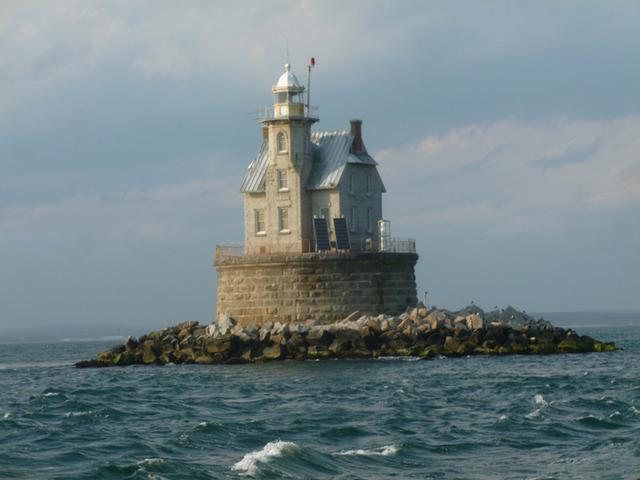
Race Rock Lighthouse
There is a point in the eastern reaches of Long Island Sound where three bodies of water — the Sound itself, Block Island Sound, and Fishers Island Sound — converge in a narrow channel four miles wide and choked with opposing tidal forces. Mariners have called it The Race for centuries, a name that captures the speed and turbulence of currents that can push six knots and reverse direction entirely with the tide. At the center of this convergence sits Race Rock, a submerged ledge rising only three feet above mean low water, decorated with shipwreck after shipwreck and surrounded by water that behaves like a living thing with bad intentions. The lighthouse that stands on that reef — granite, square at the base, octagonal at the top, its fourth-order Fresnel beam visible fourteen miles at sea — is one of the most consequential feats of American marine engineering, and one of the most persistently reported haunted sites along the Eastern Seaboard. By 1837, eight vessels had been lost on Race Rock Reef in eight years. Congress appropriated funds for a lighthouse as early as 1838, but the money was never spent, the engineering problem seemingly unsolvable. Buoys couldn't hold in the current. Iron spindles driven eighteen inches into the reef disappeared with the spring ice. The Lighthouse Board reported in 1852 that every conventional approach had been tried and failed. The danger was well-documented; the solution was not. It would take another two decades and a total of $278,716 — and nearly eight years of continuous effort — before the light was finally activated on January 1, 1879. The man who solved it was Francis Hopkinson Smith, a structural engineer contracted in 1871 who was also, improbably, a painter and novelist — a descendant of Francis Hopkinson, signer of the Declaration of Independence, and later famous for fiction drawn from his own experiences on this reef. Smith had previously built the Block Island breakwater and a seawall on Staten Island; he would later build the foundation for the Statue of Liberty. Race Rock would be his most demanding project. He and his crew — led by master diver Captain Thomas A. Scott — lived on the construction site during working months, erecting a shanty on the partial foundation while the water moved around them. When the initial riprap foundation of 10,000 tons of granite began to shift, Smith donned diving gear himself and went down to examine it. He came up certain the design had to change. The Lighthouse Board resisted; he convinced them. The concrete foundation — a stepped, concentric platform sixty-nine feet in diameter — was poured beginning in 1873. The pier rose from it in fourteen courses of heavy masonry, and the lighthouse itself went up in a single working season in 1878. The construction was not without its casualties. A boat carrying two hundred pounds of gunpowder exploded at the site, killing workers. The isolated conditions, the violence of the water, and the years of unrelenting labor extracted their price in lives and in men's minds. Smith later transformed those experiences into the novel Caleb West, Master Diver, thinly disguising Race Rock as its setting. The story had already written itself. Thomas A. Carroll was appointed keeper in 1880. He rowed regularly from Race Rock to Noank for supplies and to visit his family on shore. In January 1885, a severe storm caught him on the mainland and kept him there for several days. When he finally decided he could no longer neglect his post, he pushed his small boat out into the waves alone. He was never seen again. His body was never recovered. Coast Guard crews who later worked maintenance shifts at the lighthouse reported hearing whispers, laughter, and unexplained footsteps moving through the structure. Some reported physical contact — being touched, poked, or pushed — by no visible source. Wet footprints were found leading from the former shower area after the water supply had been disconnected and the fixture removed. Boaters passing at night have reported a shadowy figure visible in the lantern tower when no one is assigned there, illuminated briefly by the rotating beam. Whether the figure belongs to Carroll or to one of the earlier dead — workers from the construction, sailors from the reef's long list of wrecks — has never been resolved. The lighthouse was automated in 1978, ending any permanent human presence on the rock. In 2004, reportedly at the request of Coast Guard maintenance personnel who continued to report unsettling experiences during equipment checks, The Atlantic Paranormal Society conducted a formal overnight investigation, documented in the fourth episode of the first season of Ghost Hunters on Syfy. The investigation was conducted without electricity or facilities, in harsh weather and rough water. The team reported a chair moving across a room without assistance and an electromagnetic field that tracked consistently up and down the spiral staircase. At the conclusion of the twelve-hour session, investigators stated that Race Rock appeared to be genuinely haunted — an outcome the Coast Guard had hoped to disprove. Skeptics point to the obvious: Race Rock is exactly the kind of place where the imagination does what it is built to do. Isolated, unlit, accessible only by boat and only in favorable conditions, surrounded by the sound of water that has killed for centuries, the lighthouse sits in the kind of environment that produces reports almost automatically. The spiral staircase creates drafts; the granite structure amplifies sound; the current generates low-frequency vibration detectable in the bones but not in conscious hearing. All of that is probably true. It doesn't account for the consistency of the reports across unrelated witnesses over more than eighty years, or for the specificity of a keeper last seen rowing into a January storm, still attributed by those who work the light as not entirely gone. Race Rock Lighthouse was added to the National Register of Historic Places in 2005 and transferred to the New London Maritime Society in 2013 under the National Historic Lighthouse Preservation Act. The light remains operational, maintained by the Society and the Coast Guard jointly. Tours are offered occasionally in summer through New London's Custom House Maritime Museum, weather and tidal conditions permitting — the latter qualifier a reminder that the water around Race Rock still sets the terms of everything that happens there.

Tybee Island Lighthouse
Tybee Island Lighthouse stands prominently on a barrier island off the coast of Georgia, its distinctive brick tower rising dramatically from the landscape where it has served maritime traffic and coastal navigation for nearly two and a half centuries of continuous operation. The lighthouse was officially established in 1773, making it one of the oldest existing lighthouses in America and a structure that predates the nation itself, having witnessed the transformation of coastal commerce and maritime technology across three centuries. The structure has been rebuilt and substantially modified numerous times following devastating hurricanes, destructive storms, and damage from warfare during various historical conflicts including the Civil War period when the region became a military theater. The lighthouse complex encompasses not only the iconic tower structure itself but also the headkeeper's residence, support buildings, storage facilities, and extensive grounds that have witnessed countless dramas of human survival, loss, and tragedy associated with the maritime environment and the dangers of coastal navigation. The most notable and extensively documented haunting involves the spirit of Lachlan, described consistently as a five-year-old girl who was the daughter of the lighthouse's first keeper during its early operational period, who died on the property under circumstances that remain historically obscure but clearly traumatic enough to bind her spirit permanently to the location. Lachlan's ghost appears most frequently on the winding staircase of the lighthouse tower itself, where witnesses spanning generations have reported seeing a small female figure dressed in period clothing ascending or descending the stairs with childlike movements, only to vanish abruptly when approached or followed. The apparition exhibits distinctly childlike behaviors including playful manifestations and mischievous phenomena that suggest retained personality and awareness, though tempered with the profound poignancy of a young soul trapped eternally in a location forever associated with loss and personal tragedy. George Shaw, who served with distinction as headkeeper during a later operational period of the lighthouse spanning many years, haunts the tower and grounds, his presence announced by the characteristic sound of footsteps echoing through the structure's interior and a distinctive whistling tune that multiple independent witnesses across decades have described identically and recognized as the same melody. The headkeeper's residence produces paranormal phenomena consistent with Shaw's ongoing presence and continued concern with his professional domain, including footsteps in empty hallways, the sound of doors opening and closing in the residential spaces, and what witnesses describe as the sounds of domestic activity. Shipwreck victims whose vessels failed to navigate safely past the coastal dangers and maritime hazards have contributed their spirits to the location's accumulated paranormal phenomena, with witnesses reporting apparitions of drowned sailors and what appear to be the bodies of drowning victims floating above the lighthouse grounds in manifestations that disappear upon closer examination. Unexplained whistling sounds pierce the air at random intervals throughout the lighthouse complex, sometimes matching precisely the melody Shaw is reported to have favored and played during his lifetime, other times appearing as distress warning signals or calls for help from maritime disasters long past. The front entrance door of the lighthouse and the entrance areas experience particularly intense and persistent paranormal activity, with visitors reporting distinct spectral presences and what many describe as a palpable and overwhelming atmosphere of maritime tragedy and loss. Paranormal investigation events held at the lighthouse have documented electromagnetic anomalies spiking at specific locations, temperature fluctuations that exceed seasonal variation, and audio recordings capturing what appear to be voices from the past preserved in electromagnetic form. The lighthouse maintains operation today as both a functioning aid to maritime navigation and a popular tourist attraction for those seeking to experience coastal history, with visitors regularly encountering the spirits of those whose lives and deaths have woven themselves inextricably into the structure's rich historical and paranormal legacy.
Rose Island Lighthouse
Rose Island Lighthouse stands as an iconic sentinel on the waters off Newport, Rhode Island, its distinctive tower and attached buildings representing a crucial piece of maritime safety infrastructure that has guided countless vessels safely to harbor over more than a century of operation. The lighthouse was constructed during the latter part of the nineteenth century, when maritime traffic through Newport waters required reliable navigational aids and skilled lighthouse keepers to maintain the station around the clock. Charles Curtis served as the lighthouse keeper from 1887 to 1908, establishing a long tenure managing the station during a period when lighthouse keeping was a demanding and often isolating profession. The tower stairs that Curtis climbed thousands of times during his years of service have become one of the most active sites of paranormal phenomena on the island. Beyond the lighthouse proper, the island complex contained additional structures including residential barracks for lighthouse personnel, storage facilities for supplies and equipment, and the remains of a quarantine station that had been established years earlier to isolate individuals suffering from contagious diseases. The quarantine station's history adds a layer of tragedy to the island's overall narrative. Disease victims from the surrounding area were brought to the isolated island location to prevent transmission to mainland populations, creating a space of forced separation and medical helplessness. Many of those quarantined did not survive their isolation, succumbing to the very diseases they had been brought to the island to contain. The combination of isolation, disease, and death created conditions that appear to have left profound psychic impressions on the location. The spirits of those who died in the quarantine station, along with the enduring presence of Charles Curtis himself, seem to have become permanent residents of Rose Island. Investigations conducted at the lighthouse have documented consistent patterns of paranormal activity concentrated in specific areas that align with historical accounts of the station's use and the most likely locations of deaths. The paranormal phenomena at Rose Island Lighthouse are among the most well-documented and consistent in Rhode Island's haunted history. Visitors and investigators have repeatedly heard the sound of footsteps descending the tower stairs when no living person is moving through that location. The footsteps are described as deliberate and purposeful, suggesting the repetitive action of someone performing a routine task, which aligns with Curtis's decades of daily ascents and descents of the tower stairs. Disembodied voices have been captured on audio equipment throughout the lighthouse, with some voices speaking in patterns consistent with historical pronunciations and accents from Curtis's era. The kitchen area of the lighthouse building has been a focal point for paranormal activity, with investigators reporting phantom footsteps in this location and the sensation of a non-corporeal presence observing their activities. The barracks area shows similar patterns of spectral phenomena, suggesting that multiple spirits inhabit different areas of the island complex. One of the most compelling phenomena documented at Rose Island is the appearance of a light apparition near the tower during evening investigations, which witnesses describe as resembling a luminous figure walking along the catwalk or upper levels of the structure. Spirit photographs taken at the location frequently capture images of ghostly reflections in windows and transparent forms appearing in areas that were photographed in daylight but contain no visible objects that could create such reflections. The intensity of paranormal activity has made Rose Island Lighthouse a destination for paranormal researchers and overnight visitors seeking direct experience with the phenomena, and the island offers limited overnight accommodations specifically for individuals interested in conducting personal paranormal investigations in this historically significant and genuinely haunted location.
Fairport Harbor Marine Museum and Lighthouse
The Fairport Harbor Marine Museum and Lighthouse complex occupies a historically significant location along Lake Erie's shoreline in Ohio, representing the convergence of maritime history, navigational infrastructure, and accumulated paranormal phenomena that has attracted substantial attention from both local residents and paranormal investigation specialists. The lighthouse structure stands as an iconic architectural element that has guided countless vessels through the challenging waters of Lake Erie, serving as both a functional navigational aid and as a symbol of maritime safety extending across nearly two centuries of continuous operation. The museum facilities surrounding the lighthouse contain extensive collections of artifacts, documents, and historical materials documenting the region's maritime heritage, transportation history, and the lives of lighthouse keepers and their families who maintained the facility across generations. However, the museum complex's most notable reputation does not derive from its historical artifacts or architectural significance but rather from the distinctive paranormal phenomena documented throughout the facility, particularly the well-documented manifestation of a ghost cat that has achieved regional fame among paranormal enthusiasts and casual visitors alike. The ghost cat of Fairport Harbor Marine Museum represents one of the most unusual and distinctly benign paranormal phenomena documented among American haunted locations, manifesting not as a dangerous entity or source of fear but instead as a companionable presence that visitors and staff encounter with remarkable consistency. The apparition takes the form of a gray cat of indeterminate age and specific characteristics beyond its coloration, materializing throughout the museum complex and particularly concentrating in the second floor quarters that served as living spaces for lighthouse keeper families during the facility's operational history as an active navigational station. Museum visitors and staff have reported direct encounters with the ghost cat on numerous occasions spanning multiple decades, describing experiences of seeing the feline apparition moving through the building's corridors and rooms before it vanishes when approached or photographed. The encounters follow patterns consistent with intelligent hauntings rather than residual phenomena, with the ghost cat appearing to interact with its environment and deliberately reveal its presence to specific individuals. The paranormal manifestations attributed to the ghost cat extend beyond simple visual sightings to include tactile sensations and auditory phenomena that investigators interpret as evidence of the entity's continued existence and attempts at interaction with living inhabitants. Museum visitors and staff have documented multiple instances of feeling a cat rubbing against their legs or bodies, complete with the distinctive sensation of fur and physical pressure consistent with a living cat's affectionate behavior, only to discover that no physical cat is present when they attempt to locate the source of the sensation. These tactile experiences have been reported by multiple independent observers who had no prior knowledge of the ghost cat phenomenon, suggesting genuine encounters rather than psychological suggestion or imaginative projection. Audio recordings made within the museum have captured the distinctive sounds of cat skittering across wooden floors, the sound of claws on hard surfaces, and what researchers interpret as feline vocalizations despite no living cats being present in the facility during the recording sessions. The historical circumstances surrounding the ghost cat's presence remain partially mysterious despite extensive research into the museum facility's history and the lives of individuals who maintained residence at the lighthouse across its operational history. Curators and historians have documented evidence suggesting that cats served as valuable residents of lighthouse facilities throughout the Great Lakes region, employed to control rodent populations within the structures while simultaneously providing companionship and emotional comfort to lighthouse keepers and their families enduring extended periods of isolation. The museum's curator has reported personal observations of what appears to be a gray cat matching contemporary descriptions of the ghost cat, suggesting the museum has become sufficiently famous for its paranormal reputation that the curator has conducted systematic observations seeking to document and verify the phenomenon. Historical records indicate that multiple cats resided at the Fairport Harbor Lighthouse during its operational history, though the specific identification of the ghost cat with a particular feline individual remains elusive despite researchers' efforts to match contemporary descriptions with historical documentation. Fairport Harbor Marine Museum and Lighthouse has leveraged its paranormal reputation into a distinctive marketing advantage, with the ghost cat phenomenon generating substantial interest among paranormal enthusiasts and casual tourists seeking unique historical and supernatural experiences during visits to the Lake Erie shoreline. The museum has incorporated the ghost cat legend into its educational and promotional materials, acknowledging the phenomenon while maintaining appropriate historical and scientific perspective regarding paranormal claims. Contemporary visitors report experiences consistent with decades of historical accounts, with the ghost cat continuing to manifest with apparently undiminished frequency and intensity despite the location's transition from an operational lighthouse facility to a museum dependent upon tourism and historical preservation funding. The ghost cat of Fairport Harbor represents one of America's more famous benign hauntings, distinguished by its non-threatening nature and its apparent desire for continued interaction with human inhabitants of the facility it appears to consider its enduring residence.
Pensacola Lighthouse
The Pensacola Lighthouse stands as a significant maritime navigational structure located in Pensacola, Florida, a beacon constructed during the nineteenth century to guide ships navigating treacherous waters of Pensacola Bay and the surrounding Gulf coast region. Built to serve the vital maritime function of providing visual guidance to vessels during reduced visibility, the lighthouse represents an impressive engineering achievement, rising to substantial height above surrounding landscape and housing the light-generating mechanisms and lens apparatus required to maintain a powerful beacon visible to mariners at considerable distances. The structure was staffed by lighthouse keepers, specialized employees dedicated to facility maintenance and beacon operation, individuals maintaining constant vigilance over equipment and the light. The keeper's quarters provided residential space for keepers and their families, creating a domestic environment within the functional structure dedicated to maritime safety. Yet beneath its practical function exists a profound paranormal history, with the location harboring spirits of multiple individuals whose deaths and traumas have rendered it a location of significant supernatural activity. The paranormal entities inhabiting the Pensacola Lighthouse have been identified through paranormal investigation and historical research as multiple spirits apparently bound to the location through circumstances of their deaths or profound connections to the facility. The spirit identified as Samuel is believed to reside in the upper reaches of the lighthouse tower, manifesting at considerable heights above ground level. Samuel is described as an apparition sometimes visible to observers looking upward toward tower windows, suggesting a spirit localized to the highest portions. An apparition of a small child, believed to be a young girl, manifests within the keeper's quarters bedroom, known as the bloody bedroom due to historical associations with violence or trauma. The spirit identified as Thomas, described as having been enslaved, is reported as a tall apparition standing over seven feet in height, manifesting with startling presence and apparent awareness of living visitors. An additional spirit identified as Michaela Ingraham appears in the hallways of the keeper's quarters. The paranormal manifestations at the Pensacola Lighthouse documented by investigators encompass multiple categories of supernatural phenomena. Women visiting have reported experiences of being touched and grabbed by unseen entities, with witnesses describing physical contact of varying intensity. These encounters appear particularly associated with Samuel, suggesting the entity maintains awareness of visitors. The bedroom known as the bloody bedroom has become a focal point of intense paranormal activity, with visitors reporting apparitions of a young girl, cold spots, and emotional disturbances. The apparition of Thomas manifests with particular intensity and apparent intentionality. The spirits appear to respond to the presence of visitors and investigators. Paranormal researchers conducting formal investigations of the Pensacola Lighthouse have established the location as a site of significant and documented supernatural phenomena. Professional paranormal investigators have identified approximately six permanent spectral residents within the lighthouse, suggesting a location haunted by multiple distinct entities with varying degrees of awareness and interactive capacity. The consistency of phenomena across multiple investigation sessions and reliability of manifestations have established the Pensacola Lighthouse as one of the most verified haunted locations in Florida. The location has achieved recognition through paranormal investigation television programs, including appearances on nationally distributed paranormal investigation series that have brought the lighthouse to broader public attention. The Pensacola Lighthouse continues functioning in its contemporary maritime capacity while serving as a location of substantial paranormal interest and investigation. The coexistence of functional lighthouse operations with active paranormal manifestations creates a unique situation in which a practical public facility operates within an environment of documented supernatural phenomena. Visitors to the lighthouse, both tourists and paranormal enthusiasts, encounter a location where the past remains vibrantly present through spectral manifestation. The spirits of Samuel, the young girl, Thomas, and Michaela Ingraham continue inhabiting the structure, their presence suggesting that the intensity of trauma and their connection to the lighthouse have created an enduring supernatural bond.
Penfield Reef Lighthouse
Penfield Reef Lighthouse stands upon an isolated reef formation in the waters near Fairfield, Connecticut, representing technological achievement and human dedication involved in establishing navigational aids to protect maritime traffic from shipwreck and loss of life. Constructed during the nineteenth century to guide vessels through treacherous waters, the lighthouse embodied engineering capacity and physical determination required to build enduring structures in hostile marine environments. The conical tower rises prominently from the reef formation, its distinctive silhouette visible to ship captains navigating the Connecticut coastline. The interior structure contains multiple levels of compartments and stairs, with ascent to the light chamber requiring traversal of narrow vertical passages and metal stairs connecting lower operational areas with the beacon at the summit. Environmental conditions are characterized by exposure to Atlantic weather patterns, with storms and waves presenting constant threat to structural integrity and safety of personnel stationed within the tower. The lighthouse service required individual keepers to maintain residence within the tower for extended periods, accepting isolation and environmental rigors inherent to isolated maritime structures. Frederick A. Jordan assumed the role of Head Keeper at Penfield Reef Lighthouse during the early twentieth century, accepting responsibility for maintaining the beacon and ensuring safety of vessels dependent upon the light for navigation. Jordan's duties required him to ascend and descend the tower stairs repeatedly, monitor lighthouse equipment and fuel supplies, and maintain constant vigilance to ensure reliable function. His position represented an important responsibility requiring technical knowledge and physical reliability, along with psychological resilience to endure isolation and environmental stress. Jordan's tenure encompassed an extended period of dedicated service, with his presence and activities accumulating within the physical spaces of the tower. In 1916, Frederick A. Jordan met a tragic end while in service at Penfield Reef Lighthouse, drowning in the waters surrounding the tower structure. The circumstances of his death remain partially uncertain, though the outcome represented permanent termination of his tenure and an occurrence of profound trauma associated with the lighthouse. His death by drowning in proximity to the isolated tower created psychological and emotional impressions upon the location, imprinting trauma into the physical environment. The drowning of an experienced lighthouse keeper suggests circumstances of sudden unexpected tragedy and the violence and fear associated with such death would have created intense psychological distress. Following Frederick A. Jordan's death, his spectral presence apparently remained bound to the lighthouse where he had served, manifesting to subsequent keepers and visitors through paranormal phenomena concentrated in the tower structure. The apparition of an elderly man bearing strong resemblance to descriptions of Jordan has been observed on the stairs within the tower, appearing with sufficient clarity and detail to communicate recognizable human features. Witnesses describe an unearthly chill accompanying the apparition's manifestation, along with experience of the spectral figure dissolving into darkness and vanishing from observable space. Jordan's appearance was documented in the keeper's log maintained at the lighthouse, suggesting that his presence became sufficiently well-established that official records acknowledged the paranormal manifestations. The haunting of Penfield Reef Lighthouse exemplifies how isolated locations associated with death and environmental trauma can generate paranormal phenomena persisting across extended historical periods. The lighthouse structure itself appears to facilitate or concentrate Jordan's spiritual presence, with the tower stairs serving as focal point for apparition encounters. The isolation of the location and psychological environment of enduring environmental exposure may contribute to the development or persistence of paranormal phenomena. The lighthouse continues to operate related to maritime safety, with paranormal activity occurring within a structure maintaining its original functional purpose. Contemporary accounts continue accumulating regarding encounters with Jordan's apparition.
Old Presque Isle Light
The Old Presque Isle Lighthouse stands upon the Lake Michigan shoreline in Presque Isle, Michigan, a structure originally erected in 1840 during the early period of American maritime expansion and Great Lakes commerce, when lighthouses constituted essential infrastructure for safe navigation of the perilous inland seas. The lighthouse was constructed to guide steamships and commercial vessels navigating the treacherous passages and shoal-filled areas surrounding the Presque Isle headlands, where sudden storms, hidden obstacles, and shifting underwater topography created genuine hazards for maritime traffic. The design and construction of the lighthouse reflected the technical understanding of the era regarding lighthouse operation, beacon projection, and maritime safety. Throughout the nineteenth and early twentieth centuries, the lighthouse functioned as an essential navigation aid, manned by successive keepers who maintained the beacon, kept the station records, and provided emergency assistance to vessels in distress. The profession of lighthouse keeper represented a significant responsibility, often involving extended periods of isolation, constant vigilance, and the necessity to respond promptly to emergencies. The haunting of the Old Presque Isle Lighthouse became particularly associated with George Parris, who served as keeper of the light during a significant period of its operation and whose tenure at the station extended over many years of devoted service. Parris developed a deep attachment to the lighthouse and the surrounding landscape, his professional identity becoming inseparable from his role in maintaining the beacon that guided vessels safely past the treacherous shoreline. He remained at his post through changing maritime technologies, evolving vessel types, and shifting patterns of Great Lakes commerce. Parris's connection to the lighthouse transcended the merely professional, representing instead a fundamental identification between his person and his role, suggesting that his continued presence at the location after his death in 1992 may reflect an inability or unwillingness to abandon the responsibility that had occupied his living years. The paranormal phenomena reported at the Old Presque Isle Lighthouse center upon manifestations of mysterious lights and unexplained illumination phenomena that suggest the continued presence of a dedicated lightkeeper eternally tending the beacon. Witnesses have documented instances of the light mechanism activating and deactivating without electrical power, suggesting instead that a disembodied consciousness continues to perform the fundamental duties associated with lighthouse operation. The mysterious illumination has been observed both by casual visitors and by marine traffic navigating the passage, with observers noting that the light appears and vanishes according to patterns inconsistent with contemporary electrical systems or automated mechanisms. Some accounts describe distinct apparitions of a figure identifiable as a man moving within the lighthouse structure, carrying out routine maintenance tasks or ascending the spiral stairs to the beacon room with evident purpose. The phenomena have persisted despite modernization of the lighthouse systems and the formal decommissioning of the light. The consistency and predictability of the phenomena across many years and multiple independent observer populations support the hypothesis that a genuine spectral presence maintains eternal vigilance. In contemporary times, the Old Presque Isle Lighthouse functions primarily as a historical landmark and tourist attraction, with the building itself maintained by preservation organizations committed to preserving Great Lakes maritime heritage and history. The paranormal dimension of the site has become increasingly recognized, with the location appearing on paranormal tourism routes and attracting ghost hunters and paranormal researchers throughout the year. Local maritime historians have incorporated the hauntings into the broader narrative of Great Lakes lighthouses, recognizing that the dedication and sacrifice demanded of lighthouse keepers sometimes created conditions for powerful spiritual attachments to their stations. Paranormal investigation teams have conducted research at the lighthouse, documenting phenomena through photographic, electromagnetic, and other contemporary investigative methodologies. The legend of George Parris and his eternal tending of the light has become integrated into regional maritime tradition, exemplifying how dedicated professionals sometimes seem unable to relinquish their responsibilities even after death.
St. Augustine Lighthouse
The St. Augustine Lighthouse stands as a prominent coastal sentinel in Florida's oldest city, its 165-foot tower rising majestically from the northeastern shores completed between 1871 and 1875. The structure represented a significant engineering achievement of the Victorian period, constructed with the specific purpose of guiding mariners through one of America's busiest shipping lanes during the post-Civil War reconstruction era. St. Augustine's location on the Atlantic coast made it a crucial navigation point for ships traversing coastal waters, and the lighthouse fulfilled this essential function reliably for over a century following its completion. The engineering required to maintain the beacon's steady operation, manage the optical systems, and ensure structural integrity against Atlantic hurricanes represented cutting-edge technological achievement for its period. In 1873, a tragic incident occurred when two young sisters known as the Pittee girls perished in a horrific drowning accident near the lighthouse grounds. The children's cart overturned in the water adjacent to the beacon in an unexpected calamity that killed both girls almost instantly. The incident became a defining moment in the lighthouse's history, deeply affecting the local community and leaving an indelible mark on the site itself. The Pittee girls' deaths were not merely a personal tragedy but an event that would echo through the decades, becoming woven into the lighthouse's cultural identity and the folklore of St. Augustine. Multiple keepers served at the lighthouse over the years, including Peter Rasmussen and Joseph Andreu, both of whom contributed significantly to the structure's operational history and maintenance throughout their tenures. Following the Pittee girls' drowning, visitors and staff at the lighthouse began reporting experiences that defied conventional explanation or rational analysis. Witnesses consistently described hearing the distinct sound of children's laughter echoing through the tower despite no visible children being present in the structure. Numerous visitors documented photographs capturing apparitions of a young girl dressed in authentic Victorian-era clothing, manifesting particularly in areas around the lighthouse beacon and the access stairs. The apparition appeared with sufficient consistency that her presence became documented across multiple decades of investigations. Beyond the Pittee girls' phenomenon, other paranormal manifestations became documented occurrences at the site. Staff members repeatedly reported finding locked doors standing wide open when secured rooms had been checked and locked for the evening, a phenomenon suggesting either invisible manipulators or energy phenomena affecting mechanical systems. Personal items within the gift shop would vanish without explanation, only to reappear in unexpected locations days or weeks later. Chairs and furniture in various rooms were discovered moved from their original positions despite no authorized personnel having occupied the spaces. The lighthouse complex has evolved significantly since its early operational years, now functioning as both a historical preservation site and an active paranormal investigation destination. The site offers daytime historical tours allowing visitors to climb the tower and learn about St. Augustine's maritime heritage and the engineering ingenuity required to maintain such a structure throughout its operational history. Evening paranormal investigation events have become increasingly popular, drawing paranormal researchers and ghost enthusiasts from across the entire region. The lighthouse authority has documented these phenomena and incorporated them into the site's educational programming, creating a unique intersection between historical preservation and paranormal investigation. Visitors consistently report cold spots in otherwise warm areas of the structure, and unexplained disembodied voices are heard throughout the tower, particularly during evening and nighttime hours. The consistent nature of witness accounts over more than a century, coupled with the documented historical tragedy of the Pittee girls' drowning, maintains the lighthouse's status as one of Florida's most persistently haunted locations and a significant paranormal landmark in the American Southeast.
Battery Point Light
Battery Point Lighthouse stands upon the rocky California coastline near Crescent City, constructed in eighteen fifty-six to guide maritime vessels safely through the treacherous waters of the northern Pacific coast. The lighthouse was built during an era when coastal navigation relied entirely upon beacon light signals to warn ships of dangerous rocky outcroppings and unpredictable currents that threatened merchant vessels and passenger ships. The structure's location upon Battery Point, a rocky promontory jutting into the ocean, provided an elevated vantage point from which the lighthouse beam could project across the water for considerable distances. The architectural design reflected engineering principles of lighthouse construction established during the mid-nineteenth century, featuring a tower structure supporting a beacon mechanism and associated equipment necessary for maritime navigation. The construction materials and techniques ensured the lighthouse could withstand the harsh coastal environment including salt spray, strong winds, and the occasional violent storm surge that periodically battered the rocky point. Battery Point Lighthouse operated continuously for more than one century as an essential component of Pacific coast maritime safety infrastructure. Lighthouse keepers, assigned to the isolated location for extended periods, maintained the beacon light, recorded weather observations, and attended to equipment maintenance in all weather conditions. John Jeffrey, one of the most notable keepers, spent thirty-nine years in service at Battery Point, developing an intimate knowledge of the lighthouse operations and the coastal environment surrounding the structure. The keeper's role demanded dedication and responsibility, as failures in maintaining the beacon light could result in maritime disasters claiming numerous lives. The isolation of lighthouse keeping created a unique community of dedicated individuals whose commitment to their duty shaped the physical and spiritual character of the structure they inhabited and maintained. In nineteen sixty-four, a devastating tsunami struck the California coast following a major seismic event, generating powerful waves that inundated nearby coastal communities and caused widespread destruction. The disaster claimed numerous lives among residents and visitors in the Crescent City area, creating a localized catastrophe of significant proportions. In the aftermath of this tragedy, witnesses reported unusual phenomena at Battery Point Lighthouse, claiming to observe the spirits of tsunami victims apparently drawn to the structure's beacon light. Whether such reports reflected genuine paranormal phenomena or psychological responses to collective trauma remains subject to interpretation. Beginning in the decades following this disaster and continuing into subsequent generations, Battery Point Lighthouse developed a reputation as one of America's most actively haunted lighthouse structures. Paranormal investigators and visitors to Battery Point Lighthouse have reported an extraordinary variety of phenomena within the structure. Footsteps echo on the tower stairs during storm conditions when the lighthouse is unoccupied, suggesting the presence of entities moving through the structure. Rocking chairs move of their own accord despite the absence of human or wind agency. Lighthouse keepers have awakened to discover their slippers mysteriously relocated while they slept. A distinctive smell of phantom cigar smoke permeates certain areas of the structure despite the absence of smoking residents or visitors. Cold spots appear in specific locations, suggesting localized temperature anomalies potentially indicative of paranormal energy manifestation. Paranormal researchers believe the lighthouse is inhabited by multiple entities including a child ghost and at least two adult spirits, possibly including the long-serving keeper John Jeffrey. The convergence of numerous reports over many decades has established Battery Point Lighthouse as a location of sustained and documented paranormal activity.
Absecon Lighthouse
Absecon Lighthouse stands at the gateway to Atlantic City, New Jersey, a soaring structure measuring one hundred seventy feet in height serving as a critical navigation aid since its first light illuminated in 1857. Constructed during intensive lighthouse expansion along the American coast, the tower was engineered to provide reliable guidance to vessels navigating treacherous coastal waters and shallow sandbars. The lighthouse occupies a strategic position controlling approaches to Absecon Inlet, the primary waterway providing access to Atlantic City harbor and the broader ecosystem of ports and commerce. The structure survived more than 160 years of Atlantic storms, nor'easters, coastal erosion, and evolving maritime navigation demands. The tower's cylindrical brick construction, painted white for visibility enhancement, and integrated keeper's quarters and support structures created a self-contained complex supporting continuous human occupation. The light, first lit in 1857, marked commencement of continuous operations spanning generations and establishing the location as a permanent fixture in Atlantic City's maritime and cultural landscape. Lighthouse keepers, representing a specialized profession demanding technical competence and commitment to duty under challenging conditions, occupied adjacent quarters and maintained mechanisms producing the beacon's characteristic light patterns. The profession occupied a liminal status between civilian and military service, with keepers serving as de facto government authority representatives at isolated maritime locations. Over Absecon's operational history, multiple keepers served the lighthouse, some remaining extended periods while others moved to other postings. The cumulative presence of these individuals created complex human history layered across the physical structure. Paranormal reputation emerged through accounts from lighthouse keepers, visitors, and maritime personnel reporting experiences suggesting spiritual entity presence. The Jersey Devil, a legendary cryptid associated with New Jersey coastal regions, was reported at the lighthouse tower in 1905, with accounts describing the creature sitting atop the structure. This incident, documented in contemporary newspaper accounts and folklore, established Absecon as a location where Jersey Devil manifestations could occur. More consistently reported phenomena include distinctive pipe tobacco scent permeating keeper's quarters despite no active smokers, attributed to a former keeper's spiritual residency. Footsteps have been documented on spiral stairs despite stairwells being unoccupied. Disembodied laughter, described as boisterous and good-natured, has echoed through the tower. Shadowy figures in period-appropriate uniforms move through the structure. Absecon Lighthouse functions today as a historic monument and museum attraction, preserved as a cultural and maritime heritage resource available for touring. The lighthouse is recognized as New Jersey's tallest, contributing to its prominence in historical and paranormal contexts. The location hosts paranormal investigations on scheduled basis with organized groups conducting documentation efforts within the tower and keeper's quarters. Visitors frequently report experiencing documented phenomena, with many contemporary visitors anticipating and seeking to encounter spiritual entities. The lighthouse has become integrated into Atlantic City's paranormal tourism infrastructure, with ghost tour operators incorporating Absecon into itineraries describing the phenomena to visitors interested in historical and paranormal dimensions.
Portsmouth Harbor Lighthouse
Portsmouth Harbor Lighthouse, situated on an island in New Castle, New Hampshire, represents a maritime sentinel of the New England coast and a structure of profound historical and architectural significance. Established as part of the early American navigation system, the lighthouse marked hazardous waters and rocky outcrops critical to maritime safety. The original structure, constructed in the late eighteenth century, provided essential guidance to ships entering and departing Portsmouth Harbor, one of the most significant colonial and early American New England ports. Lighthouse operation required dedicated keepers who maintained light mechanisms and lived on the island, creating a unique occupational community isolated from the mainland by water. The isolation created particular hardships including separation from family, limited supply access, and dangerous conditions inherent in maintaining maritime infrastructure. The most significant historical event occurred on Fourth of July 1809 when a catastrophic explosion devastated the facility. The explosion occurred during service or repair operations, resulting in immediate deaths of ten individuals, making it one of the most significant maritime disasters in regional history. Exact circumstances leading to the explosion have been preserved in historical records and local tradition, with accounts attributing the disaster to gunpowder storage, equipment malfunction, or material mishandling during maintenance activities. The death toll and sudden nature left profound impression on regional consciousness, particularly among maritime communities depending on lighthouse guidance for navigation safety. Among individuals killed in the explosion was Joshua Card, a lighthouse keeper whose name and image became linked to paranormal phenomena reported at the site. According to witness accounts and paranormal investigation records, Joshua Card\'s spirit remained bound to the lighthouse, apparently continuing his former duties even in death. Witnesses reported encountering a translucent figure dressed in nineteenth-century maritime attire, specifically a pea coat matching early American nautical dress from the period. Professional paranormal investigators documented unexplained auditory phenomena including disembodied voices, mysterious knocking, and footsteps on lighthouse stairs when no living person was present. The keeper\'s quarters consistently yielded paranormal evidence across multiple independent investigations. Paranormal investigation gained significant public attention when SyFy\'s Ghost Hunters conducted documented investigations of the site. The team employed technical equipment to detect and record paranormal manifestations through audio and video recording. During investigation, the Ghost Hunters team reported recording disembodied voices and mysterious sounds consistent with previous reports from other investigators and visitors. One witness reported visual encounter with a male figure dressed in pea coat, significant because of apparent correspondence between apparition\'s clothing and documented historical dress of Joshua Card from the early nineteenth century. Present-day Portsmouth Harbor Lighthouse operates as both functional maritime beacon and significant historical tourist destination, actively promoted for paranormal investigation potential. The lighthouse authority has embraced rather than avoided the haunting reputation, offering special programs and tours during Halloween and other occasions. The facility remains accessible through guided tours and investigative programs. Joshua Card\'s apparent continued presence manifests through sounds, apparitions, and ongoing light maintenance, offering compelling narrative of dedication transcending mortality.
Peche Island Rear Range Light
The Peche Island Rear Range Light represents a crucial piece of maritime heritage in Michigan's nautical history, a navigational beacon whose purpose transcended the merely practical to become a symbol of hope and safety for vessels navigating the treacherous waters of the Great Lakes. Originally constructed in 1908 on Peche Island near Amherstburg, Ontario, the lighthouse functioned as an essential aid to navigation, its rotating light and distinctive appearance serving as an unmistakable landmark for commercial shipping and maritime traffic in the region. The structure was originally designed to guide ships safely through complex waterways where dangerous currents and shallow passages posed constant threats to vessels and their crews. However, after serving its navigational purpose for many decades, the lighthouse was deactivated and faced an uncertain future, eventually being relocated and relocated again as the needs of modern shipping changed and as preservation efforts sought to save this historic structure from destruction or abandonment. In 1982, after its operational life as an active navigational aid had concluded, the Peche Island Rear Range Light was moved to Marine City, Michigan, where it has been preserved and maintained as a public landmark and tourist attraction. This relocation represented both an act of preservation and a transformation of the structure's identity from a functional maritime tool to a historical monument. The lighthouse now stands as a testament to Michigan's maritime heritage, drawing visitors interested in the region's navigational history and the technological evolution of lighthouse design. The structure itself remains a recognizable symbol of an era when lighthouses were manned by dedicated keepers who lived in solitude, maintaining the beacon through long nights and challenging weather. The relocation process, while saving the structure from deterioration, may have also disturbed the spiritual equilibrium of a place that had absorbed decades of human presence and maritime vigilance. According to accounts from multiple investigators and visitors, the relocated lighthouse has become the focus of persistent paranormal phenomena centered on the figure of a man carrying a lantern, who has been observed on the upper deck during nighttime hours. This spectral figure appears to be performing duties consistent with the historical role of a lighthouse keeper, moving methodically and purposefully as though maintaining a vigil that has continued long after the lighthouse ceased its official operations. The apparition is described as carrying a dim lantern, suggesting either an attempt to replicate the beacon's function or a residual reenactment of duties performed decades earlier. The figure appears most frequently during evening and night hours, consistent with the periods when a lighthouse keeper would have been most actively engaged in maintenance and vigilance duties. This manifestation raises intriguing questions about whether a particular keeper's consciousness or spiritual presence remained attached to this structure, unable or unwilling to abandon the post even after the lighthouse's operational purpose had ended. Beyond the primary apparition of the lantern-carrying keeper, investigators and visitors have reported experiencing strange sensations and witnessing mysterious orbs of light within and around the lighthouse structure. These unexplained lights, captured both visually and through video documentation, suggest the presence of additional spiritual phenomena or forms of energy not fully explained by conventional means. Video documentation of paranormal activity at the historic lighthouse has provided researchers with unusual recorded evidence of manifestations occurring in real time. The upper deck area has proven to be the most active center of paranormal phenomena, with consistent reports of a strange, oppressive presence that seems to increase in intensity during evening hours. Some visitors have described feeling the sensation of being observed or monitored while on the upper deck, as though an invisible guardian remains vigilant over the structure and its surroundings. The nature of the haunting suggests a connection to a specific individual whose attachment to the lighthouse proved stronger than the finality of death itself. The repeated manifestations of the lantern-carrying figure indicate a consistent, recognizable presence rather than a chaotic or random paranormal phenomenon. The dedication evident in the apparition's methodical movements and continued vigilance suggests a keeper whose devotion to duty transcended the boundaries between life and death. The question of whether this entity represents a conscious spirit that has remained at the location, a residual energy imprint playing out a repeatedly recorded series of actions, or some other form of paranormal manifestation remains one of the central mysteries surrounding the lighthouse. Today, the Peche Island Rear Range Light stands as both a historic landmark preserving Michigan's maritime heritage and as an active paranormal site that continues to attract researchers, paranormal enthusiasts, and curious visitors. The lighthouse has been documented in regional paranormal literature and has become incorporated into the broader body of knowledge surrounding the haunted locations of the Great Lakes region. The structure's transformation from an active navigational beacon to a preserved historical monument and finally to a recognized paranormal hotspot illustrates how places can accumulate layers of significance beyond their original purposes. The lighthouse continues to welcome visitors during daylight hours, though many who have experienced phenomena during evening visits report that the most compelling encounters occur when darkness falls and the boundary between the visible and invisible worlds seems to grow thin.
Fire Island Lighthouse
Fire Island Lighthouse stands as a sentinel on the shores of Long Island, New York, its coastal location placing it at the intersection of maritime commerce, natural disaster, and human tragedy that have accumulated across centuries of service to navigation and community safety. Lighthouses by their nature occupy liminal spaces—geographic outposts between civilization and wilderness, between the safety of land and the peril of open water, between the mundane world of daylight and the mysterious darkness of night. Fire Island Lighthouse exemplifies these liminal characteristics while adding layers of emotional complexity derived from its unique history and the circumstances of those whose lives became intertwined with its operation and the treacherous waters it illuminates. The maritime history surrounding Fire Island Lighthouse is marked by multiple shipwrecks, maritime disasters, and deaths occurring in the waters adjacent to the structure, creating a confluence of tragic circumstances that paranormal researchers believe may explain the intensity and variety of phenomena reported at the location. The most prominent legend associated with the lighthouse involves a lighthouse keeper and his daughter, two souls whose relationship to the structure and whose fate within or near it have crystallized into a lasting paranormal presence that continues to manifest across modern times. Historical accounts and paranormal investigations suggest that this keeper and his daughter died under circumstances connected to the lighthouse's operation, though the exact details of their deaths remain somewhat obscured by the passage of time and the fragmentary nature of historical records concerning the structure. Paranormal investigators who have studied Fire Island Lighthouse have documented compelling evidence of ongoing activity within and around the structure, including investigations conducted on January 7, 2022, during which researchers captured night-vision video and other recordings that they believe constitute convincing paranormal evidence. The phenomena captured during these investigations suggest active presences rather than merely residual hauntings, indicating that conscious entities may continue to inhabit the lighthouse and respond to the presence of investigators seeking to document their existence. Apparitions have been sighted at various locations throughout the structure and on the surrounding grounds, with some witnesses describing full-bodied manifestations of historical figures identifiable with the lighthouse's past. The varied experiences reported by visitors and investigators at Fire Island Lighthouse span the full spectrum of paranormal phenomena, including disembodied voices that speak from empty chambers, auditory phenomena that manifest as footsteps and knockings on doors and interior walls, and unexplained lights that appear both within the tower structure and in the waters surrounding the lighthouse. These lights, some witnesses suggest, may be connected to maritime tragedies and drowning victims whose deaths in the treacherous waters below the lighthouse continue to generate energy that manifests as luminous phenomena visible on clear nights. Historical figures beyond the lighthouse keeper and his daughter have also been identified through paranormal investigation as remaining present at Fire Island Lighthouse, including shipwreck victims and individuals who met their end in the waters surrounding the tower. The spirits of the keeper, his daughter, and the countless others who perished at sea continue to inhabit Fire Island Lighthouse.
Yaquina Bay Lighthouse
Yaquina Bay Lighthouse rises prominently from its location at the mouth of Yaquina Bay near Newport, Oregon, a coastal navigation structure whose primary function as a maritime beacon has endured across more than a century of service. The lighthouse stands as both a functional maritime instrument and an architectural landmark, its tower structure designed to project light across the waters of the bay and adjacent Pacific Ocean to guide maritime vessels safely through treacherous coastal waters and into harbor. The construction date of the lighthouse reflects patterns of American coastal lighthouse development during the nineteenth century, a period when expanding maritime commerce and the necessity of safe navigation corridors prompted the establishment of lighthouse facilities at strategic coastal locations. The towering structure commands visual prominence within the coastal landscape, its architectural form and functional purpose creating a distinctive presence that distinguishes it from typical residential or commercial buildings. The Yaquina Bay Lighthouse emerged from a legendary ghost story whose dramatic narrative and cultural resonance ultimately saved the structure from planned demolition. This unusual historical trajectory—in which paranormal folklore directly influenced the preservation of a historic building—distinguishes the Yaquina Bay Lighthouse from typical haunted locations and demonstrates the unusual power of paranormal narratives to shape historical outcomes and preservation decisions. The ghost story associated with the lighthouse was compelling and well-publicized enough to generate sufficient public interest and historical consciousness to prevent the planned removal of the structure, a outcome that speaks to the cultural power of paranormal narrative and the capacity of ghost stories to influence practical decision-making about historical structures. The ghost story specifically centers on the spirit of Muriel Trevenard, whose paranormal presence at the lighthouse has become inseparable from the building's historical narrative and cultural significance. Muriel Trevenard was documented as an individual whose life history and death became intertwined with the lighthouse's reputation and the legend that grew around her spirit's apparent attachment to the location. The account of Muriel Trevenard's ghost achieved sufficient literary and cultural prominence to be published in the 1899 Pacific Monthly publication, indicating that the paranormal narrative had achieved documented publication in a legitimate periodical and had attracted sufficient cultural attention to warrant inclusion in literary and journalistic sources. This publication of the ghost story in a respected periodical during the early paranormal research era established the Muriel Trevenard narrative within a framework of documented paranormal folklore rather than mere oral rumor. The detailed account of Muriel Trevenard's ghost story documented in the Pacific Monthly publication created a narrative that combined historical specificity with paranormal elements, generating a compelling story with sufficient emotional resonance to capture cultural imagination and historical memory. The ghost story's power—its capacity to generate public interest, cultural attention, and ultimately to influence historical preservation decisions—speaks to the distinctive cultural function of paranormal narratives in American life. The story of Muriel Trevenard's spirit lingering at the lighthouse provided a narrative framework through which people could understand and interpret the structure's historical significance, transforming a functional maritime beacon into a location of romantic tragedy and supernatural mystery. The lighthouse itself, as a solitary structure at the margin of land and sea, carries inherent symbolic associations with isolation, danger, and the relationship between human habitation and the vast natural forces of ocean and weather. Lighthouse keepers historically represented a specialized profession characterized by isolation, responsibility for the safety of maritime traffic, and extended periods of solitude within a confined structure. The occupation and daily experience of lighthouse keeping involved psychological and emotional conditions distinctive from most other occupations, with extended isolation balanced against responsibility for saving lives through the maintenance of reliable light guidance. The stress, isolation, and emotional intensity associated with lighthouse keeping may contribute to the psychological and spiritual imprinting that facilitates paranormal manifestation.
Sulphur Springs Tower
The Sulphur Springs Water Tower rises as a prominent landmark in the Sulphur Springs neighborhood of Tampa, Florida, a 214-foot structure constructed in 1927 that has become known colloquially as the Tower of Terror due to its association with paranormal phenomena and tragic history. The tower, an engineering structure designed to store water for community distribution, represents practical infrastructure supporting urban development. The substantial height and visibility across the surrounding landscape create an imposing physical presence that has likely contributed to its cultural and paranormal significance. The tower's 1927 construction placed it at the cusp of the prosperous 1920s and the approaching Great Depression, a period of dramatic economic and social transition in American history. The infrastructure investment reflected contemporary confidence in continued growth, assumptions shattered by the 1929 economic collapse. The 1930s brought unemployment, financial devastation, and psychological trauma affecting individuals and families across all social strata. The association of the Sulphur Springs Water Tower with Depression-era suicides suggests the structure became a location where individuals experiencing economic despair made the decision to end their lives. The specific suicide history occurring at the tower, including death numbers and identities, remains largely undocumented in accessible historical records. The enduring cultural memory of these deaths, evidenced by the "Tower of Terror" nickname and persistent paranormal folklore, suggests multiple deaths likely occurred and achieved sufficient notoriety to embed themselves in community consciousness. The narrative power of the tower as symbol and location created the foundation for subsequent paranormal attribution. Beyond Depression-era suicides, the Sulphur Springs Water Tower has also become associated with paranormal reports attributing spiritual presences to pirate-related deaths or activities. The attribution of pirate spirits to a twentieth-century water tower reflects broader Florida pirate history mythology and enduring fascination in American folklore. While the specific historical connection between pirate activity and the tower location is unclear, the paranormal attribution suggests an effort to layer historical narrative, creating multiple explanatory frameworks for alleged supernatural phenomena. The paranormal phenomena reported at the tower center on observations of inexplicable lights appearing in the structure, described as strange illumination without apparent source appearing and disappearing. These lights have been observed by multiple independent witnesses and documented in media accounts, contributing to the tower's paranormal reputation. The appearance, particularly at night when the tower would be dark absent external lighting, represents dramatic visible phenomenon distinguishing it from locations where paranormal activity is reported only through subjective experience. Disembodied voices have been reported emanating from the tower, described as speaking, calling, or vocalizing suggesting intentional communication or emotional expression. These auditory phenomena have been attributed by folklore sources to spirits of those dying by suicide and pirate entities, though attribution remains speculative. Witnesses have reported being profoundly affected by auditory phenomena, experiencing emotional responses ranging from sadness to fear and urgency. Apparition sightings at the tower have included reports of full-body manifestations visible at the structure's height, described as translucent humanoid figures appearing in or near windows or tower top. These sightings suggest entities dramatically enacting their deaths or manifesting in ways communicating death nature to observers. The visibility of apparitions at significant height creates particularly dramatic paranormal phenomenon presentation. Today, the tower stands as landmark within the Sulphur Springs neighborhood, its paranormal history acknowledged even if underlying supernatural phenomena reality remains disputed.
Seguin Island Lighthouse
Situated on a rocky island off the coast of Maine, Seguin Island Lighthouse stands as a beacon and symbol of maritime navigation along New England's treacherous waters. Constructed in 1796, the lighthouse is recognized as Maine's second oldest lighthouse, predating most other navigational structures in the state and serving as a critical aid to ships navigating the rocky coastline near the entrance to the Kennebec River. The cylindrical stone tower rises prominently from the island's landscape, accompanied by keeper's quarters and associated structures necessary for maintaining the light through centuries of operation. The lighthouse has undergone numerous renovations and modifications throughout its more than two-hundred-year history, yet retains its essential character and function as an enduring maritime landmark. The isolation of Seguin Island creates a distinctive atmosphere, separated from the mainland by water that is often treacherous and subject to the dramatic weather patterns characteristic of the Maine coast. The lighthouse and its grounds occupy the entirety of this small island, creating an isolated environment where lighthouse keepers and their families lived for extended periods, far removed from typical communities. The history of Seguin Island Lighthouse encompasses over two centuries of lighthouse keeping, with numerous families serving in the role of caretaker of the light. The early history of the lighthouse reflects the maritime traditions of Maine and the dangerous nature of navigating rocky coastal waters during the age of sail. Keepers were responsible not only for maintaining and operating the light but also for rescuing shipwrecked mariners and providing assistance to vessels in distress. The isolation of Seguin Island meant that lighthouse keepers and their families experienced unique challenges, including limited access to supplies, the constant presence of the ocean environment, and the psychological effects of extended isolation. The lighthouse served generations of keepers, and numerous families contributed to its operation and maintenance. The quarters on the island housed entire families, including children, creating a community unto itself on the small rocky island. The daily routines of maintaining the lighthouse, managing the light apparatus, and ensuring the beacon functioned reliably created the narrative backdrop for the lives lived within these structures. Vioent tragedy and psychological distress have become intertwined with the history of Seguin Island Lighthouse through a series of tragic events that allegedly occurred within its keeper's quarters. Most notably, a lighthouse keeper and his wife inhabited the island during a period when tensions within their household escalated to tragic proportions. According to historical accounts that have been incorporated into the lighthouse's paranormal lore, the keeper developed an obsession with a piano melody, a piece of music that his wife played repeatedly. The keeper's fixation on this melody grew into an unhealthy preoccupation that strained the couple's relationship. The domestic conflict that arose from this obsession allegedly culminated in a tragic event in which the lighthouse keeper murdered his wife, with the piano melody serving as a catalyst for the violence. The precise details of this event vary depending on the source, but the fundamental narrative of a marriage destroyed by obsession and ending in murder has become central to understanding the paranormal phenomena associated with the lighthouse. Paranormal investigators and visitors have documented extensive paranormal activity at Seguin Island Lighthouse, earning it the designation of the most haunted lighthouse in Maine and among the most actively haunted in all of New England. Phantom piano music has been heard emanating from the keeper's quarters, with the disembodied melody echoing through empty rooms despite the absence of any functioning piano or human musician. This phenomenon has been reported consistently over many years by multiple witnesses, suggesting it may represent residual activity from the tragic event associated with the piano and the couple's conflict. Apparition sightings have been documented by paranormal investigators and visitors, with witnesses describing encounters with spectral figures in period clothing that manifest in various locations throughout the lighthouse and keeper's quarters. A young girl has been reported multiple times, suggesting that a child may have witnessed or experienced the tragic events that transpired. Disembodied voices have been recorded and heard by investigators, with these vocal phenomena including indistinct utterances, crying, and what some interpret as the distressed calls of a woman. Door and object movement have been documented, with doors opening and closing of their own accord, and objects being displaced from their original positions without apparent physical cause. The tower of the lighthouse and the keeper's quarters have emerged as separate focal points of paranormal activity, suggesting that different entities or phenomena may be associated with different areas. Unexplained footsteps and knocking sounds have been reported throughout the structure, with the acoustic properties of the stone lighthouse tower amplifying these sounds and creating an eerie ambiance. Strong presences have been felt in specific locations, particularly in the area of the keeper's quarters where the tragic event allegedly occurred. Paranormal investigation teams have conducted extensive documentation of the phenomena using modern equipment including thermal imaging cameras, electromagnetic field detectors, audio recorders, and video documentation. These investigations have captured evidence that corroborates visitor testimonies and has led to the lighthouse being featured in paranormal television programs and literature. The cumulative body of evidence has established Seguin Island Lighthouse as a location of genuine and substantial paranormal activity. Seguin Island Lighthouse remains an active maritime navigation aid and a popular tourist destination, with visitors accessing the island by boat during the operational season. The combination of the tragic historical event, the documented paranormal phenomena, and the isolation of the island location has made Seguin Island Lighthouse a premier destination for paranormal researchers and ghost enthusiasts. The lighthouse continues to attract investigation teams and individuals seeking to document the phenomena, and reports of paranormal activity persist despite the site's status as a publicly accessible location. Whether the phantom piano music represents a residual haunting from the tragic event or the manifestation of an entity seeking to communicate through familiar auditory phenomena remains unexplained. The apparitions and voices reported throughout the structure suggest that more than one entity may inhabit the lighthouse, possibly including the tragic victims of the murder and potentially other souls connected to the structure's long maritime history. Seguin Island Lighthouse stands as a complex paranormal site where maritime history, human tragedy, and the unexplained converge.
Ponce de Leon Inlet Lighthouse
The Ponce de Leon Inlet Lighthouse stands as a historic maritime navigation structure occupying the strategic location of Ponce Inlet in Volusia County, Florida. The lighthouse was constructed to provide navigational guidance to vessels approaching Ponce Inlet and the surrounding Florida coastal region, marking safe passage through potentially hazardous waters. The structure embodies architectural principles appropriate to its function, with design features including the distinctive light chamber and lantern room housing the beacon apparatus. The structural tower was engineered to withstand coastal environmental pressures and weather conditions. The lighthouse served throughout the late nineteenth and twentieth centuries as essential maritime infrastructure supporting navigation, commerce, and maritime safety. Operational history extends across more than a century, with successive lighthouse keepers maintaining the apparatus and ensuring the beacon's proper function. The lighthouse keeper position required individuals to reside within or near the structure, perform maintenance operations, and execute technical responsibilities maintaining the navigational light's reliability. The period witnessed multiple transitions in technology, fuel sources, and maintenance procedures as illumination technology evolved from open flame apparatus to electric systems. Lighthouse keeper families often inhabited spaces within the complex, creating domestic environments within maritime navigation infrastructure. Paranormal phenomena center on apparitions attributed to Joseph Davis, identified as an assistant lighthouse keeper who died in 1919, and a former lightkeeper's son allegedly kicked by a horse. These identified spirits are believed to maintain presence, generating phenomena consistent with paranormal manifestation patterns. An inexplicable kerosene odor manifests within the structure despite absence of active fuel use, suggesting olfactory phenomena of paranormal origin. Doors exhibit independent manipulation, opening and closing without mechanical explanation or visible agency. Playful antics have been reported, suggesting mischievous phenomena rather than hostile intent. Orbs—spherical luminous phenomena interpreted as paranormal manifestations—have appeared in photographic documentation within the grounds. The paranormal manifestations are interpreted as Joseph Davis and the lightkeeper's son maintaining continued presence and active engagement with the lighthouse. Playful character suggests spirits characterized by mischievous rather than malevolent disposition, potentially maintaining personality characteristics from life. The kerosene odor parallels Joseph's role as assistant keeper, suggesting manifestation maintains connection to the deceased individual's primary life circumstances and occupational identity. Orb phenomena documented through photographs suggest visual manifestation capabilities. The lighthouse continues functioning as a historic landmark and tourism destination, maintaining architectural integrity while serving educational and recreational purposes. The paranormal reputation has become integrated into cultural identity, with visitors and researchers maintaining awareness of reported phenomena. The lighthouse exemplifies how maritime navigation structures and occupational history become layered with paranormal associations. The lighthouse remains distinctive within Florida's landscape of historic haunted locations, demonstrating how maritime infrastructure and occupational life generate paranormal phenomena persisting across generations and technological transitions.
Point Isabel Lighthouse
The Point Isabel Lighthouse stands as a distinctive maritime landmark on the Texas coast near Port Isabel, constructed to guide vessels safely through the treacherous waters surrounding the southernmost point of the United States mainland. The structure itself represents a triumph of nineteenth-century engineering and the nation's commitment to maritime safety during an era when ocean navigation depended entirely on visual guides and the skills of experienced sailors. The lighthouse was erected to address the specific navigational hazards posed by the shallow waters, sandbars, and strong currents characteristic of the lower Texas coast, where numerous vessels had grounded or sunk in previous decades due to misjudgment or mechanical failure. Its iconic tower design, composed of distinctive materials and architectural elements, made it visible from considerable distances across the Gulf of Mexico and the surrounding coastal waters. The historical significance of Point Isabel Lighthouse extends far beyond its maritime function, particularly during the American Civil War when the coastal region experienced direct military conflict between Union and Confederate forces. Port Isabel and the surrounding territory changed hands multiple times during the war as both sides recognized the strategic value of coastal positions and lighthouse facilities. The lighthouse itself, as both a functional navigation aid and a symbol of federal authority, became a point of military interest and occupation. Union soldiers, advancing into the Texas coast as part of the overall campaign to secure the southern coastline, seized and occupied the lighthouse during portions of the war. Confederate forces, defending their territory, also possessed and operated the structure at different phases of the conflict. The violence and chaos of the Civil War era directly affected the region, and the lighthouse witnessed or stood nearby to skirmishes, military movements, and the deaths of soldiers from both sides. Paranormal documentation at Point Isabel Lighthouse represents some of the most systematically recorded evidence in American haunting research, particularly in the form of electronic voice phenomena recordings that have captured distinct utterances attributed to deceased individuals. Investigators and visitors have reported ghostly sightings within the interior of the lighthouse structure, with particular concentration on activity within the beacon area where the light mechanism operates. Electronic voice phenomena sessions have reportedly captured clear recordings of voices with distinct characteristics: one unidentified female entity whose description as the "Lighthouse Angel" suggests a protective or benevolent presence; military voices speaking with Civil War era dialects, identified as emanating from both Union and Confederate soldiers; and distinctly masculine voices with pronounced southern drawls delivering warnings or observations relevant to the structure's history. Specific recorded phrases attributed to these entities include "How now brown cow," seemingly innocuous utterances that may reflect the personalities or memories of the deceased, and warnings such as "Don't fall down and get killed," suggesting awareness of the physical dangers inherent to lighthouse operation. Another recorded statement, "Union uniforms as well," implies recognition of the military forces who occupied the structure. The constellation of paranormal phenomena at Point Isabel Lighthouse has generated considerable interest among paranormal researchers and organizations dedicated to documenting and analyzing electronic voice phenomena. The distinct voices captured in recordings, the specific content of the utterances, and the apparent awareness of historical events demonstrated in the recorded statements suggest intelligence and intentionality rather than random environmental artifacts. The presence of both Union and Confederate voices suggests that military personnel from both sides of the conflict may have become so emotionally attached to the location through their service there, or may have experienced traumatic deaths associated with the structure, that their consciousness or awareness persists in detectable form. Tourism operations have incorporated the lighthouse into ghost tour itineraries, and contemporary visitors frequently report photographic anomalies, equipment malfunctions, and unexplained sensory experiences consistent with documented paranormal activity. The lighthouse continues to operate as both a navigational aid and a location of paranormal interest, drawing researchers and curious visitors seeking to document or experience the phenomena that have made Point Isabel Lighthouse one of Texas's most significant haunted locations.
Cape Hatteras Lighthouse
Cape Hatteras Lighthouse stands as the world's tallest brick lighthouse, a monumental structure that has guided maritime traffic along the treacherous North Carolina coastline for generations. The lighthouse is immediately recognizable by its distinctive black and white horizontal stripes, a painting pattern that serves both aesthetic and practical purposes, allowing mariners to identify the beacon during daylight hours when the light itself is not visible. The structure rises from Cape Hatteras, a geographic feature formed by a series of barrier islands and shoals known as Diamond Shoals, some of the most dangerous waters along the American Atlantic coast. The lighthouse has served as a critical navigational aid for shipping traffic, fishing vessels, and military ships navigating the waters off North Carolina's Outer Banks. The engineering achievement of constructing and maintaining such a significant structure in this challenging environment demonstrates the determination of nineteenth and twentieth-century lighthouse keepers and maritime authorities to establish navigational safety in an otherwise perilous maritime region. The paranormal reputation of Cape Hatteras Lighthouse encompasses multiple distinct spirits and phenomena, each contributing to the location's status as one of the most actively haunted lighthouses in American paranormal lore. Among the documented apparitions is the Ghost Cat, a spectral feline form that has been observed sauntering near the lighthouse for well over one hundred years. This phantom animal exhibits behavior typical of living cats, brushing against the legs of visitors before vanishing without trace. The phenomenon has been reported with sufficient frequency and consistency that it has become a recognized aspect of the location's paranormal character. The Grey Man represents another significant spectral presence, documented in reports dating to the early 1900s. This apparition appears near the shoreline and has been interpreted by many witnesses as a warning entity, appearing before severe storms to alert those in the vicinity of impending dangerous weather. The manifestations of the Grey Man suggest a protective consciousness, perhaps a former lighthouse keeper or maritime worker whose sense of responsibility transcended death itself. A particularly tragic connection to Cape Hatteras Lighthouse involves the crew members of the Carroll A. Deering, a cargo ship that met a mysterious fate in 1921. The vessel became disabled and struck the Diamond Shoals, with the entire crew disappearing under circumstances that remain officially unexplained. Paranormal investigators and local witnesses have reported phenomena consistent with the presence of these departed souls lingering in the waters surrounding the shoals. The combination of the Ghost Cat, the protective Grey Man, and the spirits of the lost crew members creates a complex paranormal landscape at Cape Hatteras, each manifestation contributing to the overall reputation of the location as a nexus of supernatural activity. Visitors report apparitions, full body manifestations, animal disturbances, unexplained sounds, and mysterious lights dancing across the waters during both daylight and darkness. In modern times, Cape Hatteras Lighthouse continues to function as an active navigational aid while simultaneously maintaining its reputation as a significant paranormal location. The historic lighthouse complex has been preserved and maintained by the National Park Service as part of Cape Hatteras National Seashore, ensuring that future generations can visit the site and appreciate its maritime significance. Paranormal enthusiasts and historians regularly visit the lighthouse, drawn by its dual significance as both a critical piece of American maritime infrastructure and a location where the boundary between the living and deceased appears particularly thin. The documented phenomena at the lighthouse have been investigated by paranormal research groups and reported in numerous publications, establishing Cape Hatteras as a destination for those seeking to experience genuine American paranormal history embedded within a landscape of genuine geographic and maritime significance.
St. Simons Lighthouse
St. Simons Lighthouse stands as one of the southeastern United States's most historically significant maritime structures and simultaneously one of North America's most comprehensively documented haunted lighthouses. The lighthouse was constructed and first illuminated in 1872, representing a significant technological and structural achievement necessary to serve maritime interests depending upon St. Simons Island's geographical position at the confluence of the Atlantic Ocean and Georgia's coastal sounds and inlets. The original structure embodied nineteenth-century lighthouse engineering standards, with the tower designed to project a warning beacon across treacherous waters that had claimed numerous vessels before the light's establishment. The location positioned the lighthouse within one of the Southeast's most historically complex regions, an area with deep indigenous historical significance, colonial period French and Spanish settlement, and subsequent English colonial and American development accumulating centuries of human presence before the lighthouse's construction. The specific event establishing St. Simons Lighthouse's most prominent paranormal reputation occurred in 1880, when a violent confrontation between Frederick Osborne, the lighthouse keeper, and John Stephens, Osborne's assistant, resulted in Osborne being shot and killed within or immediately adjacent to the tower structure. The precise circumstances, motives, and sequence of events culminating in Osborne's death have been extensively documented in historical records and contemporary accounts, establishing the event as a singular dramatic incident generating lasting paranormal consequences. The death of Osborne within the tower appears to have created a strong spiritual connection between the deceased keeper and the physical structure, manifested through documented paranormal phenomena spanning more than a century following the shooting. The lighthouse keeper's responsibilities, involving maintenance of the light mechanism, regular tower ascents via spiral staircase, and constant vigilance regarding beacon operational status, created intimate familiarity with specific spaces. Paranormal investigators have documented extensive phenomena at St. Simons Lighthouse, with the most prominent manifestations concentrated in the tower interior, spiral staircase, and window areas where the light mechanism was maintained and operated. Apparitions attributed to Frederick Osborne have been reported by multiple witnesses at various periods spanning more than one hundred years, with descriptions consistently identifying a humanoid figure recognizable as the deceased keeper visible in specific tower locations. The apparition has been observed ascending and descending the spiral staircase in purposeful manner, consistent with the keeper's regular operational duties. Disembodied voices have emanated from the tower interior, interpreted by investigators as potentially the deceased keeper attempting communication or replicating verbal elements of normal duties. Physical sensations have included perceptible presences and intelligent contact, with some reports describing the sensation of being touched or guided by unseen hands. Temperature anomalies within tower areas have been documented by paranormal investigators, with sudden cold spots appearing and disappearing in patterns consistent with conscious manifestation. A remarkable 1908 historical incident reportedly involved Osborne's apparition engaging in maintenance activity on the light mechanism itself, an intervention potentially preventing malfunction or danger to beacon operational status. This event, spanning nearly three decades following Osborne's death, represented the most profound documented evidence of the deceased keeper's apparent inability or unwillingness to relinquish professional responsibilities and attachment to the specific structure. Mary the Wanderer, a female spirit associated with St. Simons Island, has also been reported at the lighthouse, with witnesses describing a lady figure potentially representing a distinct entity or spiritual companion. St. Simons Lighthouse has been ranked among the nation's most haunted lighthouses and recognized as one of the most actively investigated paranormal locations in the Southeastern United States, with its documented phenomena establishing one of the most comprehensively evidenced examples of a haunted maritime structure.