
Haunted Libraries in America
41 haunted locations

Jefferson Market Library
Rising above the intersection of Avenue of the Americas and West 10th Street in Manhattan’s Greenwich Village, the Jefferson Market Library is one of New York City’s most recognizable historic landmarks. With its tall clock tower, red brick façade, and Gothic arches, the building stands out sharply from the surrounding streetscape. Though it now serves as a quiet branch of the New York Public Library, the structure was not originally built for books or study. Its origins lie in the justice system of nineteenth-century New York, when the site functioned as one of the city’s busiest police courts. The property began as part of the Jefferson Market, a public marketplace established in the early 1800s when Greenwich Village was still developing on the northern edge of the city. As the neighborhood expanded, the market complex grew to include civic buildings, including a courthouse and jail. By the 1870s city officials determined a larger and more permanent courthouse was needed. The current structure was completed in 1877 and designed by architects Frederick Clarke Withers and Calvert Vaux in the Victorian Gothic style. Its ornate stonework, pointed arches, and soaring clock tower gave the courthouse a dramatic appearance that made it an immediate landmark in the neighborhood. Inside the building operated the Jefferson Market Police Court, which handled a constant stream of cases from the surrounding districts. During the late nineteenth and early twentieth centuries the court became one of the busiest in New York. The building processed everything from minor disturbances to more serious crimes, reflecting the dense and diverse population of Greenwich Village during that period. One of the courthouse’s most widely remembered moments occurred in 1906 when Harry Kendall Thaw, the man who shot and killed architect Stanford White in a crime that shocked New York society, was arraigned in the building shortly after the incident. Behind the courthouse stood the Women’s House of Detention, a jail where female prisoners were held while awaiting trial or serving short sentences. Conditions in the detention facility were frequently criticized, and the complex became associated with the harsher realities of the city’s criminal justice system. The courthouse itself continued operating until 1945, when changes to the court system led to its closure. For years afterward the building stood largely unused and faced the possibility of demolition. Local preservationists in Greenwich Village organized a campaign to save the structure, arguing that it was one of the city’s finest surviving examples of Victorian Gothic architecture. Their efforts succeeded, and the city eventually approved a plan to convert the former courthouse into a public library. After extensive renovation, the building reopened in 1967 as the Jefferson Market Library, transforming a place once tied to arrests and trials into a community space devoted to learning. Despite its peaceful modern role, the building has developed a reputation for unexplained activity. Stories connected to the courthouse’s past have circulated for decades among library staff, visitors, and local historians. Reports often describe footsteps echoing on staircases or in upper levels after the building has closed for the night. Some employees have reported hearing doors move or sensing someone nearby in otherwise empty areas of the building. One of the most frequently repeated legends centers on the spirit of a former prisoner believed by some to remain connected to the site. According to local lore, a young woman who had been held in the nearby detention facility died under tragic circumstances, and her presence is sometimes said to linger around the upper portions of the building, particularly near the tower and stairways. Visitors have occasionally reported hearing soft crying or glimpsing a faint figure moving along the corridors. Paranormal investigators who have visited the site sometimes focus on the clock tower and upper floors, where reports of strange sounds and shadowy figures are most often described. Skeptics suggest that the building’s age, complex architecture, and acoustics may easily produce unusual noises and shifting shadows that can be mistaken for something supernatural. Today the Jefferson Market Library remains an active and beloved part of Greenwich Village. Sunlight fills its reading rooms, and visitors gather among the shelves where courtrooms once stood. Yet the building’s long history—stretching from marketplace to courthouse, jail complex, and finally library—continues to shape its identity. The echoes of the lives and events tied to its earlier years help explain why the tower that once watched over trials and prisoners has also become the center of enduring ghost stories within the neighborhood.
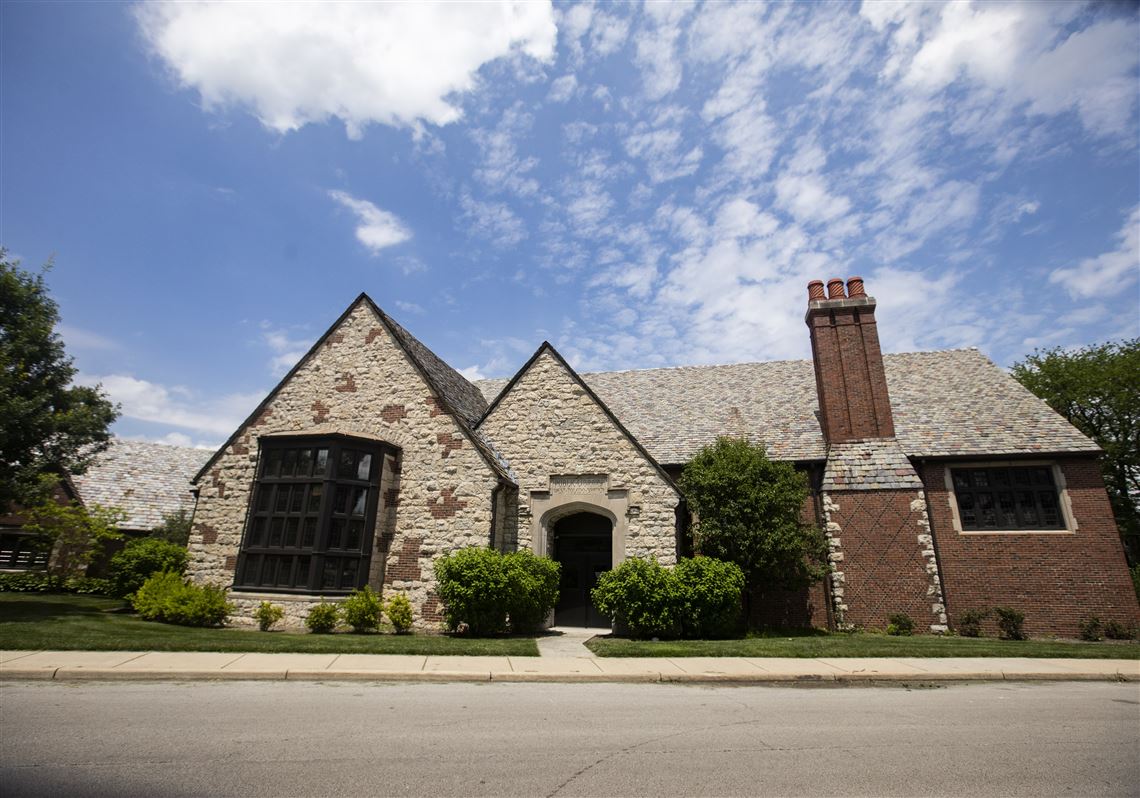
West Toledo Branch Library
Sitting on Sylvania Avenue in the west side of Toledo, Ohio, the West Toledo Branch Library doesn't look like a place that holds onto things. It's a Tudor-style brick building, modest and well-kept, with architectural details that speak to the civic ambition of 1930 — the year it first opened its doors to the neighborhood it would come to define. The surrounding community eventually took its identity from the building entirely. Today the area is known simply as Library Village, a name that says something about how deeply a public institution can root itself in a place over the course of nearly a century. The library was designed by the Toledo architectural firm of Gerow and Conklin and opened as part of the Toledo-Lucas County Public Library system's expansion during the late 1920s and early 1930s. It served a growing residential neighborhood on the western edge of the city, providing access to books, community gathering space, and the kind of quiet civic anchor that branch libraries represented in that era. The building's Tudor detailing — brick facades, arched entryways, and interior features including a notable fireplace along the west wall — gave it a warmth and permanence unusual for a municipal branch facility. It was built to last, and it has. Remodels in 2001 and again in 2014 expanded the footprint and updated the interior while deliberately returning the structure to its original 1930s architectural character. Unlike locations defined by violence or institutional suffering, the West Toledo Branch carries the weight of ordinary time. Decades of daily community life have passed through its doors — children learning to read, neighbors gathering, the rhythms of a working-class Toledo neighborhood running quietly in the background. The building has outlasted the era that built it, the architects who designed it, and several generations of the community it was built to serve. What remains is a structure that has absorbed more than ninety years of human presence, and the particular quality of stillness that old public buildings develop when the people have gone home for the night. The paranormal history of the library centers on the area near the west wall fireplace — the building's most architecturally distinctive interior feature and, according to those who have reported experiences there, its most active. The fireplace anchors the original reading room, a space that has remained largely consistent across the building's various renovations. It is here that visitors and staff have reported unexplained noises, bumping sounds, and the presence of an unidentified male figure, believed to date to around 1940 — roughly a decade after the building first opened. No specific identity has been attached to him, and no documented incident from that period has been publicly connected to the claims. He is simply described as a man, seen and sensed near the fireplace, in a building he appears reluctant to leave. Reports associated with the library are quiet in nature, consistent with the setting. This is not a location known for dramatic manifestations or aggressive energy. What gets reported here tends toward the subtle — sounds without sources, the sense of a presence in a room that should be empty, the particular feeling that something in the building is paying attention. Whether that registers as unsettling or simply atmospheric likely depends on the person experiencing it. Public libraries, especially older ones, have a way of feeling inhabited even when they aren't. The West Toledo Branch, with its original bones intact and its fireplace still standing, leans into that quality. Skeptics will note that a ninety-year-old brick building produces sounds, that heating systems tied to original fireplaces behave unpredictably, and that the power of suggestion in a building with a known ghost story is considerable. These are reasonable observations. The claims here are modest, and no one has presented documentation that rises above personal account and local reputation. What the West Toledo Branch Library offers is something quieter than the dramatic paranormal hotspots that draw large investigation teams and television crews. It is a neighborhood institution with a long memory, a beloved community anchor that has stood in the same spot through wars, economic shifts, and the transformation of the city around it. The man reportedly seen near the west wall fireplace — whoever he was, whenever he lived — chose a place that has always welcomed people in and kept them comfortable. For a haunt, there are worse choices than a library that a whole neighborhood named itself after.

Armstrong Browning Library
The Governor's Cafe in Dover, Delaware stands as a historic establishment steeped in the cultural heritage of the state capital. Located in a building with significant architectural merit, the cafe has long served as a gathering place for residents and visitors seeking refreshment and conversation in the heart of Delaware's downtown corridor. The structure itself bears witness to decades of social interaction, commercial activity, and the stories of countless individuals who have passed through its doors. The cafe's interior features period furnishings and decor that evoke the charm of earlier eras, with particular attention paid to the preservation of historic paintings that line the walls and add character to the dining spaces. These artworks represent investments in cultural preservation and aesthetic refinement that the establishment's proprietors have maintained with care over the years. The visual appeal of these pieces has made them focal points within the cafe, drawing the eyes of patrons and creating focal points for contemplation during meals. The origins of the hauntings at The Governor's Cafe remain somewhat obscure, with paranormal researchers unable to definitively connect the spiritual manifestations to specific historical events or tragic circumstances. Various theories have emerged among those interested in the paranormal, with some suggesting connections to the building's long commercial history and the unknown spirits that may have developed attachments to the location. The cafe's role as a community gathering space means it has absorbed the impressions of innumerable human experiences, emotions, and interactions over its years of operation. Some have speculated that intense emotional residue left by past patrons or staff members might contribute to the supernatural phenomena reported within the establishment. The nature of the haunting appears focused specifically on the areas where the historic paintings are displayed, suggesting a possible connection between the artwork and the paranormal manifestations that have been documented there. Paranormal activity at The Governor's Cafe centers on unexplained phenomena occurring in proximity to the displayed paintings. Visitors and staff members have reported sensing unusual presences in these areas, with sensations of being watched or observed while viewing the artwork becoming increasingly common among those who frequent the establishment. Some individuals have described experiencing sudden temperature fluctuations in the immediate vicinity of certain paintings, while others have reported seeing shadows or indistinct figures moving among the frames. The activity tends to be subtle and non-threatening, characterized more by feelings of presence and awareness than by overtly frightening manifestations. Paranormal investigation groups have documented instances of electromagnetic anomalies in the areas where the paintings hang, though definitive explanations for these readings remain elusive. The consistency of reports from independent witnesses, combined with the localized nature of the phenomena, has earned The Governor's Cafe recognition in paranormal research circles as a location worthy of continued study and documentation. Today, The Governor's Cafe continues to operate as a functional restaurant and social venue, with management maintaining a practical stance toward the paranormal reports while acknowledging the experiences shared by patrons. The establishment has neither attempted to exploit nor dismiss the stories associated with its location, instead allowing the paintings and their mysterious properties to remain part of the venue's natural character. Visitors curious about the paranormal history of Dover and the surrounding region continue to visit the cafe, drawn by both the quality of its food and service and the subtle supernatural reputation it has developed. The paintings remain on display as originally arranged, continuing to serve as focal points for the strange sensations and unexplained phenomena that characterize the haunting. The cafe maintains its role as a community institution while existing comfortably alongside the mysteries that seem to inhabit its spaces, creating an atmosphere that blends historical preservation with contemporary curiosity about the paranormal.
San Pedro Public Library
The San Pedro Public Library serves the community of San Pedro in New Mexico as a municipal public library facility dedicated to providing reading materials, research resources, and community gathering spaces for residents of all ages. The building, constructed during the twentieth century, was designed to fulfill the fundamental function of public library service, providing free access to books, periodicals, reference materials, and educational resources. Library buildings typically incorporate extensive shelving systems, reading areas, circulation desks, and administrative spaces organized to facilitate efficient distribution and management of library materials. The San Pedro Public Library represents public commitment to providing educational access and intellectual resources regardless of economic status. The San Pedro Public Library emerged from community educational and civic aspirations, reflecting broader American traditions of public library service developed as essential components of democratic society and community infrastructure. Public libraries serve multiple functions including educational support, recreational reading, research facilitation, and community gathering, making them significant social institutions. The library's collections, developed over decades of acquisitions, reflect the evolving interests and needs of the San Pedro community, with materials selected to serve diverse reading preferences and educational levels. Library staff members worked to organize, maintain, and facilitate access to the collection while managing administrative functions necessary to maintain library operations. Paranormal activity reported at the San Pedro Public Library centers on phenomena apparently connected to a former librarian spirit continuing to manifest within the building despite the individual's death. The former librarian's presence is most prominently indicated by repeated disembodied shushing sounds, a distinctly library-specific manifestation reflecting the deceased librarian's emphasis on maintaining quiet within reading spaces. These vocalizations have been documented by multiple witnesses and represent behavioral manifestation characteristic of the individual's professional role and occupational habits. Phantom footsteps echoing through library aisles have been reported with considerable frequency, suggesting the spirit walking through collection areas as if performing rounds. Objects, particularly books, disappear from shelves and subsequently reappear in different locations, suggesting either intentional rearrangement by the deceased librarian or manifestation of residual behavior patterns. Children's spirits have been documented within the San Pedro Public Library, with multiple witnesses reporting disembodied giggling sounds within the children's section. These vocalizations suggest the presence of youthful spirits, potentially former patrons forming emotional attachments to the space. Full-bodied apparitions of children have allegedly been observed by multiple witnesses, with descriptions suggesting young individuals in period clothing not corresponding to contemporary attire. Strange glowing lights have been reported appearing within darkened library sections, particularly in areas with extensive shelving. Books are frequently discovered in wrong shelf locations, suggesting either intentional rearrangement by paranormal entities or manifestation of residual behavior. The San Pedro Public Library represents institutional space where multiple layers of human experience converge, from the educational aspirations of the library's founding through everyday interactions between librarians and community members. The paranormal phenomena suggest that both the deceased librarian and child spirits maintain attachments to the space, continuing to manifest despite physical death. The documented phenomena combine behaviors characteristic of the deceased librarian's professional duties with manifestations suggesting childlike spirits exploring library resources. The library continues serving its public function, with documented paranormal phenomena representing an additional layer of the institution's social and spiritual complexity coexisting with its primary educational and recreational functions.
Irvine Katie Wheeler Library
The Irvine Katie Wheeler Library in Irvine, California represents a modern public library facility housing one of Southern California's most documented and culturally significant paranormal hauntings with well-established spirits maintaining continuous presence within the building. The library structure embodies contemporary architectural and functional design appropriate to twenty-first century educational and community facility standards, incorporating modern technological infrastructure, extensive book collections, and multiple reading and study zones serving diverse community needs. Named in honor of Katie Wheeler, reflecting institutional recognition of her historical importance to the region and community development efforts, the library has functioned as a vital community resource and educational institution. The paranormal reputation derives from the ongoing spiritual presence of historical figures whose lives and legacies remain intimately intertwined with the library location and the broader Irvine community's development. The most prominent spiritual entity haunting the library is Kathryn Helena Irvine, popularly known as "The Lady in Blue" due to consistent descriptions of her apparition wearing distinctive blue-colored clothing. Kathryn Helena Irvine and James Irvine II, identified as "The Tall Man" in paranormal research documentation, represent the two primary spiritual entities manifesting within the Katie Wheeler Library and associated locations throughout the Irvine community. Kathryn emerged as a significant historical figure through her marriage to James Irvine II, whose family's extensive landholdings and business enterprises transformed the Irvine region from agricultural landscape into a modern residential and commercial center. Kathryn's influence extended far beyond conventional spousal roles, encompassing cultural, philanthropic, and community development activities that contributed substantially to Irvine's establishment as a planned community. James Irvine II represents the patriarch figure controlling vast commercial interests and territorial holdings that fundamentally defined economic and social structures throughout the region. Both spirits apparently maintain strong attachment to the Katie Wheeler Library and surrounding community locations, suggesting their life achievements, emotional commitments, and unresolved concerns regarding their legacy continue manifesting as paranormal phenomena. Paranormal manifestations within the Katie Wheeler Library concentrate throughout the bookshelf aisles and dispersed throughout the building structure, suggesting both entities maintain active presence within multiple zones rather than localized to singular locations. Apparitions of both figures have been observed by library staff, patrons, and paranormal researchers, described as solid-appearing humanoid figures visible for brief durations before dissipating when approached directly. Kathryn's apparition, wearing distinctive blue clothing consistent with period-appropriate fashion from the late nineteenth and early twentieth centuries, materializes most frequently in the library's literature and history sections, suggesting possible continued intellectual interest. Sourceless singing, described as haunting vocalizations apparently originating from the spirits, has been reported emanating from various library locations, suggesting music held emotional or cultural significance. Disembodied voices have been captured on electronic recording equipment, articulating intelligible words and fragmented phrases suggesting attempted communication or manifestation of habitual speech patterns from their living years. Cold spots—sudden temperature drops without meteorological explanation—have been documented within specific library zones. Today, the Irvine Katie Wheeler Library continues serving its community function while maintaining recognition as one of Southern California's most actively haunted public institutions requiring ongoing paranormal documentation. The paranormal reputation has attracted paranormal research teams, paranormal television programming, and historical researchers interested in the library's documented hauntings and the historical context of Kathryn Helena Irvine and James Irvine II's lives and community legacies. Library management and staff have accommodated paranormal investigations conducted respectfully within the facility, recognizing the historical significance of the spirits and research value of documenting ongoing manifestations. The spirits of Kathryn and James show continuity in their paranormal activity, suggesting permanent spiritual attachment to the location and unwavering connection to their community legacy. The library represents an intersection between contemporary community function and historical spiritual presence, with living patrons accessing information within spaces occupied simultaneously by continuing spiritual consciousness of historical figures.
Jefferson County Library
The Steubenville Library, constructed in 1902, represents a significant example of early twentieth-century library architecture embodying the Progressive Era's commitment to public education and knowledge democratization. The building's carefully planned reading rooms, research areas, and administrative offices were arranged to optimize the library's function as a center of learning for Steubenville residents. Within this institution dedicated to the pursuit of truth, paranormal phenomena have persisted for more than a century, suggesting that the boundary between the living world and the realm of spirits may be particularly permeable within spaces dedicated to intellectual endeavor. The primary entity associated with the Steubenville Library's hauntings is Ellen Summers Wilson, the library's first librarian, whose tenure spanned the critical years of its founding and establishment. Ellen Summers Wilson devoted her professional life to building the library's collections, establishing organizational systems, and training staff. Her commitment to the institution was so profound that even death has failed to sever her connection to the library. Paranormal investigators and library staff have documented her presence throughout the facility, suggesting that her attachment derives from the profound meaning and purpose the library provided during her lifetime. The manifestations of Ellen Summers Wilson's presence focus particularly on the library's attic office, her primary workspace during the library's early years. Staff members report observing the translucent figure of a woman dressed in period-appropriate attire moving throughout the attic, performing tasks consistent with librarian responsibilities. The apparition has been reported throughout the basement and reading room areas, suggesting her attachment extends beyond any single location to encompass the institution as a whole. Visitors and staff have documented experiencing the physical sensation of being watched, particularly in spaces where Wilson conducted her duties. Paranormal phenomena at the Steubenville Library extend beyond visual apparitions to include various poltergeist-like activity. Library patrons and staff have consistently reported hearing unexplained footsteps echoing through corridors and reading rooms. Objects have been observed moving without apparent cause—books relocated on shelves, materials discovered in different configurations, furniture repositioned overnight. Multiple witnesses have documented instances of books jumping or flying from shelves spontaneously, suggesting an entity with sufficient force to manipulate the material world despite being incorporeal. Doors throughout the library have been observed opening and closing of their own volition, particularly in areas not readily visible to staff or patrons. The Steubenville Library continues to function as an active community institution while simultaneously serving as a documented paranormal location. Library staff have come to regard the phenomena associated with Ellen Summers Wilson as part of the institution's character and history, suggesting that Wilson's continued presence represents a dedication to the library's mission that transcends mortality. Paranormal investigators have documented the phenomena extensively, and the library has become recognized as one of Ohio's most authentically haunted public institutions, standing as evidence that commitment to purpose can forge bonds between individuals and places so powerful that death itself cannot dissolve them.
Clinton Community Library
Clinton Community Library in Rhinebeck, New York represents a quintessential example of the public library movement that transformed American communities in the nineteenth and twentieth centuries. Institutions founded on progressive convictions that free access to books and information constituted a fundamental right essential to democratic participation, public libraries embodied architectural and philosophical commitments to knowledge preservation, learning democratization, and community intellectual pursuit. Clinton Community Library has served as a repository not merely of books but of the cultural aspirations and social values of the communities it serves, buildings designed to inspire respect for knowledge and signal through architecture the importance society places on learning. The structure, constructed when libraries were conceived as enduring civic monuments, reflects assumptions about permanence, stability, and the timeless significance of the written word. The paranormal entities reportedly inhabiting Clinton Community Library remain unidentified and unnumbered, suggesting either a diffuse haunting involving multiple spirits or a single entity whose nature and identity resist clear classification. Unlike many haunted locations where specific spirits become identified with particular places or tragic events, the library's haunting appears characterized by anonymity and absence of definitive identity claims, as though spirits prefer to remain unknowable or the mechanisms creating paranormal phenomena operate differently. This resistance to identity may reflect something fundamental about libraries as spaces devoted to preserving and transmitting impersonal knowledge, institutional spaces where individual identity becomes subordinated to larger purposes. The paranormal phenomena may emerge from the accumulated intellectual and emotional resonance of the space rather than from specific traumatic events or individual attachments, suggesting libraries as repositories of human knowledge might naturally attract paranormal manifestations. Paranormal experiences at Clinton Community Library center on phenomena associated with movement, sound, and physical object manipulation. The most frequently documented phenomenon involves footsteps heard traversing stairways and corridors when no living persons are present, suggesting entities capable of navigating the building's architecture and engaging in ongoing routines. Whispering has been documented throughout the building, disembodied voices engaged in quiet conversation, though the content remains incomprehensible to living listeners. The sound of climbing stairs has been repeatedly recorded despite the absence of visible ascending figures, auditory phenomena consistent with spirits maintaining living existence patterns. Books have been knocked from shelves apparently by invisible hands, physical manipulations that might represent either hostile disruption or attempts by spirits to draw attention. The phenomena suggest entities intensely engaged with the building's function and organization, spirits interested in manipulating the space's contents. Clinton Community Library continues to operate as a functioning public library, serving the Rhinebeck community and surrounding region. Library staff and patrons are aware of the paranormal reputation, though phenomena appear not to constitute a significant barrier to normal operations. Paranormal investigations have contributed to documentation regarding hauntings in public and institutional spaces, suggesting spiritual activity may emerge in locations devoted to intellectual pursuits as readily as in sites marked by tragedy. The library represents how educational and cultural institutions devoted to knowledge preservation may become sites of paranormal activity, as though the persistence of human learning might attract spectral presences unwilling to abandon spaces of knowledge.
Linn-Henley Research Library
The Linn-Henley Research Library stands as an important institutional structure in Birmingham, Alabama, serving the community as a repository of historical documents, manuscripts, and research materials. The library was established to preserve and make accessible historical materials related to Alabama's past, including documents from significant families, businesses, civic organizations, and notable individuals. The building represents twentieth-century institutional architecture, designed with specialized requirements including secure document storage, controlled environmental conditions for preservation, and reading areas facilitating scholarly research and public access. The structure's organization reflects practical requirements of managing extensive collections. The building contains multiple floors, specialized climate-controlled storage areas, reading rooms equipped for research, and administrative spaces. The library developed into an important regional resource for historians, genealogists, and scholars conducting research into Alabama's history and Birmingham's development. Collections accumulated over decades as the institution acquired documents, manuscripts, and archival materials from various sources. The library became associated with notable figures in Alabama's historical community, including Fant Thornley, who served as library director and became instrumental in developing collections and establishing institutional reputation as a serious research facility dedicated to preserving Alabama's historical record. Thornley's professional dedication to the institution and long-term association made him prominent in the historical community. The paranormal phenomena at Linn-Henley Research Library appear connected to Fant Thornley's long career as director and his deep investment in the institution's mission. Thornley's death appears creating a spiritual connection between his presence and the building, resulting in reported manifestations of paranormal activity in various locations throughout the structure. The specific circumstances of Thornley's death, including precise date and cause, remain somewhat obscured by incomplete documentation, though the association between his presence and the library's paranormal phenomena remains consistently reported across investigations and accounts. Visitors and staff at Linn-Henley Research Library have reported consistent paranormal phenomena in particular building areas. The elevator has become particularly notable as a location of paranormal activity, with witnesses reporting black smoke appearing within the shaft without identifiable source. An apparition of a man with indistinct facial features has been reported appearing in various library locations, with descriptions suggesting a partially visible figure difficult to observe clearly yet distinctly human. The apparition has been observed in the stacks and various rooms, with manifestations lasting briefly before vanishing. Strange sounds of indeterminate origin have been documented throughout the building. Doors throughout have been reported opening mysteriously without living personnel responsible. A distinctive smell of cigarettes has been reported in various locations, appearing suddenly and dissipating briefly. The Linn-Henley Research Library continues functioning as a research facility providing public access to historical documents while maintaining a well-established reputation within the paranormal community. Library staff remain familiar with paranormal reports and continue conducting research operations while acknowledging documented phenomena. Paranormal investigators have conducted investigations documenting evidence. The library has been featured in regional paranormal publications. The unique combination of the library's function as historical repository, role as research institution, and well-documented paranormal phenomena creates a distinctive institutional identity where serious historical research continues alongside ongoing manifestations of supernatural activity.
Cumberland Public Library
The Cumberland Public Library in Cumberland, Rhode Island occupies a building with a unique and spiritually charged history. The structure that now houses the library was originally constructed as a monastery building in 1900, a religious edifice designed to serve the contemplative and communal purposes of monastic life. The building's initial function as a monastery created a spiritual atmosphere and purpose that imbued the physical structure with particular qualities and intentions. The transition from religious monastery to public library represented a significant shift in the building's function, yet the architectural features and spatial organization designed for monastic life remained largely intact. This transformation from sacred space to secular civic institution created an unusual juxtaposition of historical purposes and spiritual intentions within a single physical structure. The paranormal activity documented at the Cumberland Public Library centers upon phenomena consistent with the building's monastic origins. Witnesses and staff members have experienced ghostly voices echoing through the library spaces, disembodied utterances that carry the quality of monastic chanting, prayer, or contemplative murmuring. These voices appear without visible speakers and often carry an otherworldly quality that distinguishes them clearly from ordinary human speech. Door and window activity manifests through these portals opening and closing without human agency, locks engaging and disengaging mysteriously, and the sense of presence indicated by movements of these architectural features. Apparitions have materialized within the building, described as figure-like forms dressed in monastic robes or religious vestments, suggesting the persistence of the building's original residents beyond death. The building is said to be haunted by monks, likely multiple individuals whose lives were bound to the monastery and whose spirits appear unable or unwilling to abandon the sacred space that once defined their existence. The specificity and consistency of phenomena connected to monastic life suggest that the building's original purpose left a deep imprint upon its physical and spiritual character. The monks whose presence appears to persist at the location may have been particularly devoted to their religious life, with their attachment to the monastery transcending the boundary between life and death. Alternatively, the long years of prayer, contemplation, and spiritual practice conducted within the building's walls may have created an environment saturated with spiritual energy and presence that continues to manifest in paranormal phenomena. One particularly notable incident involves a staff member who heard someone calling her full name, an experience that proved unusual and unsettling because the staff members at the library never address one another by full names in the course of their daily work. This specific phenomenon suggests that the manifestations possess awareness of the individuals present, knowledge of their names, and the ability to interact in ways that transcend simple residual haunting. The naming phenomenon implies intentional communication or acknowledgment, suggesting a consciousness directing the paranormal manifestations rather than mere mechanical repetition of past events. Such phenomena create profound disquiet in those who experience them, as they challenge the presumption that haunted locations represent passive repetitions of the past rather than active intelligences. The Cumberland Public Library represents an unusual case of a building whose haunting appears directly connected to its original purpose and history. The transformation of the space from monastery to library created a permanent record of its original function through the continuing manifestations of its monastic inhabitants. Patrons of the library who experience the paranormal phenomena encounter not merely the physical books and information resources of a civic institution, but also the spiritual presences that predate and transcend the library's current function. The building serves as a tangible reminder that some spaces retain their essential character despite changes in their designated purpose, and that the individuals who devoted their lives to particular locations may leave imprints that persist beyond the termination of their physical existence.
Moravian Book Shop
Moravian Book Shop represents an extraordinary historical institution anchored in Bethlehem, Pennsylvania, continuously operating as a commercial bookstore since its establishment in 1745, making it the oldest continuously operating bookstore in the United States and potentially the oldest bookstore still in operation worldwide. The enterprise spans five separate buildings within the downtown Bethlehem commercial area, creating a complex of interconnected spaces that have accumulated centuries of history and architectural layering. The shop's longevity spans American colonial period, revolutionary era, early republic, industrial transformation, and contemporary periods, creating an institution that has witnessed and served nearly three centuries of American development. The bookstore's commercial continuity across such an extended temporal span represents an exceptional achievement in American retail and cultural history. Bethlehem itself developed as a Moravian religious community during the colonial period, established by the Moravian Church as a settlement community reflecting religious communal principles and German pietistic traditions. The Moravian settlement created a distinctive cultural and social environment that persisted even as the community gradually became incorporated within broader American society and economic systems. The religious character of the founding community influenced the community's cultural institutions, including the bookstore established as a commercial operation serving the religious community and regional customers. The Moravian commitment to education, literacy, and intellectual life created a cultural context supporting a bookstore operation and establishing books as central to community identity. The colonial and early American period saw the bookstore established as a commercial enterprise serving educated readers, clergy, religious communities, and intellectuals within a region otherwise limited in access to printed materials. The shop represented a connection to broader intellectual and cultural currents flowing through Atlantic networks and European intellectual traditions. The early operations would have focused on religious texts, theological literature, and general educational materials suited to readers within the Moravian tradition and educated classes more broadly. The shop's establishment during a period of limited book availability established its cultural significance as a repository of knowledge and intellectual resources. The building structures themselves have accumulated architectural modifications and interior transformations across nearly three centuries, with successive renovations, expansions, and adaptive reuse creating complex interior spaces and layered material histories. The basement areas particularly preserve evidence of older construction patterns and retain original structural elements visible to contemporary visitors and employees. The kitchen and back hallway areas have been modified repeatedly across centuries, though structural elements persist from earlier periods. The Colony Meadery, a specialized production space within the property complex, represents a continuation of traditional craft practices and reflects Moravian traditions of productive labor and skilled manufacturing. Paranormal accounts at Moravian Book Shop describe manifestations attributed to multiple entities inhabiting the complex, with documented descriptions including a Woman in White and a distinctive Kitchen Ghost associated with food preparation and domestic activities. A manager reported observing a shadowy woman moving rapidly from one section of the shop into another room, with investigation revealing that no staff member had entered the observed location, suggesting either invisibility, rapid exit through alternative routes, or manifestation inconsistent with physical presence. Employee Jane Clugston documented observing a dark figure moving through the back hallway toward the kitchen area, followed by discovery that the kitchen stove and fan were activated without explanation. The Woman in White is described as manifesting in specific areas of the property complex, appearing in distinctive period clothing and moving with apparent purposefulness through the connected buildings. The entity reportedly disappears around corners or into rooms where no exit is subsequently discoverable, creating the impression of manifestation inconsistent with normal physical presence. Staff members working in isolated sections report sensing an unseen presence and experiencing unexpected sensations including touches and emotional impressions. The Kitchen Ghost reportedly maintains active interest in kitchen areas and cooking operations, suggesting continuity of occupational identity and interest from life into afterlife manifestation. The property complex manifests diverse paranormal phenomena distributed throughout the interconnected buildings, with staff and visitors reporting auditory experiences including disembodied voices, sounds suggestive of movement and activity, and unexplained noises in areas where no person is physically present. Shadow figures are reportedly observed moving through hallways and between connected buildings, manifesting and disappearing in ways inconsistent with normal human movement. Doors reportedly open and close without explanation, with some accounts suggesting purposeful operation of barriers. Strong presence sensations are reported in specific areas, with individuals reporting the perception of being observed or accompanied while alone in particular locations. Moravian Book Shop has developed into a significant cultural institution and tourism destination, operating as both a functional bookstore serving contemporary readers and a preserved historical property. The shop offers organized tours during October featuring the Historic Haunts of Downtown Bethlehem tour, conducted from 6:30 PM to 8:30 PM on Friday and Saturday evenings, creating formalized paranormal tourism programming. The location attracts paranormal investigators, historical researchers, and tourists interested in both the bookstore's extraordinary historical significance and its documented paranormal reputation. The shop continues operation as an active commercial enterprise while maintaining its historical authenticity and acknowledging its established status as a haunted location within regional paranormal communities.
Sweetwater County Library
Sweetwater County Library stands in the high desert landscape of Green River, Wyoming, a modern institution built upon ground that holds far older claims to its inhabitants. The building's contemporary architecture and carefully maintained collections mask a profound historical paradox: the library occupies the site of a pioneer cemetery, a fact that was not fully recognized until excavations and construction encountered human remains—a discovery that would repeat itself over decades, unearthing the physical evidence of those whose rest was never truly secure. The cemetery predates the library by well over a century, representing the burial ground of early Wyoming settlers who staked their lives and futures in one of the American frontier's harshest territories. Pioneer burials at this location extend back into the nineteenth century, a period when Green River itself was a rough outpost serving trappers, traders, and eventually settlers drawn west by possibility and necessity. The location was chosen for burial ground use because the community had no other formal cemetery, making it a final resting place for those who helped establish the region during its most formative and dangerous years. The first major disturbance came in 1926 when graves were discovered during site work, yet construction continued. Subsequent decades brought additional encounters with human remains—in 1944, again in 1978, once more in 1983, and then multiple discoveries during 1985 and 1986, and finally in 1996. Each excavation represented a further disruption of the deceased, a repeating violation that may explain the intensity of paranormal phenomena that has become documented at the site. The library building itself was eventually established at this location despite the clear historical record of burials beneath and around it. The paranormal activity at Sweetwater County Library has become so well documented that the institution maintains what staff call the Ghost Log, an ongoing record begun in 1993 that catalogs unexplained phenomena reported by both employees and patrons. Accounts within the log describe flickering lights that illuminate without explanation and extinguish without cause, following no pattern related to electrical circuits or power fluctuations. Books are reported as being discovered thrown across shelves and onto floors, despite no one witnessing the initial displacement. Disembodied voices have been heard in the stacks at night, speaking indistinctly, as if the speakers are calling to someone or searching. Staff members report hearing footsteps in aisles that are documented as empty when checked. Most remarkably, accounts describe typewriters that write by themselves, producing text without human hands on keys—a phenomenon particularly unsettling in an institution dedicated to recorded knowledge. These manifestations reportedly intensify in areas directly above where graves are known to have been located, suggesting a spatial correlation between burial sites and paranormal concentration. The experiences are described as neither uniformly threatening nor benign, but rather persistent and purposeful, as if the pioneer spirits buried beneath the library remain aware of and troubled by the building that now marks their graves. The experiences suggest a kind of restlessness, a refusal to remain quiet about the desecration of their burial ground. The phenomena have attracted interest from paranormal researchers and curiosity seekers alike. Volunteer-organized ghost tours have been conducted at the library, allowing interested visitors to experience the site firsthand and hear from staff members about documented incidents. Local media coverage has periodically renewed public attention to the library's haunted reputation, particularly around autumn months when paranormal activity is reported most frequently. The library itself continues to operate normally during daylight hours, maintaining its ordinary function as a community resource despite its extraordinary reputation after dark. Present-day reports from staff and patrons continue to arrive at a steady rate, ensuring that the Ghost Log remains an active, growing document of unexplained phenomena. The library has acknowledged its unusual historical circumstances and paranormal reputation, incorporating both into its public identity while maintaining professional library services. The building stands as a clear example of how disrupted graves and desecrated burial grounds may produce prolonged and persistent hauntings, with pioneer spirits apparently refusing to be forgotten or overlooked despite their displacement from their intended rest.
Boston Athenaeum
The Boston Athenaeum stands on Beacon Street in Boston, Massachusetts, as one of America's most distinguished independent libraries and cultural institutions. Founded in 1807, the Athenaeum emerged from the intellectual ferment of early nineteenth-century Boston, created by prominent citizens seeking to establish a private library and reading room serving the city's educated elite. The institution moved to its current Beacon Street location in 1849, occupying a substantial townhouse structure redesigned to accommodate extensive library stacks, reading rooms, and specialized collections. The building's architecture reflects nineteenth-century design principles, with multiple floors devoted to cataloging, preservation, and patron access of rare books, manuscripts, and historical documents. The reading rooms feature period furnishings, individual nooks for study, and atmospheres conducive to serious intellectual work. The elevator, a later addition to the building, connects different floors and remains an integral if somewhat anachronistic element within the nineteenth-century structure. The Athenaeum's documentary collections have expanded continuously since its founding, with particular emphasis on New England history, rare books, and materials significant to American intellectual heritage. The institution has attracted scholars, readers, and researchers across two centuries, with access restricted to members and authorized visitors maintaining the library's character as a private facility for serious study rather than a public library. The building itself became a gathering place for Boston's literary and intellectual figures throughout the nineteenth and twentieth centuries, with staff, patrons, and researchers inhabiting the spaces across decades. The sustained human presence within the Athenaeum's rooms and corridors appears to have left impressions extending beyond the merely historical. A specific historical figure associated with the Athenaeum's paranormal phenomena is Reverend Harris, whose presence appears to have attached itself to the location through circumstances now somewhat obscured by historical distance. Reverend Harris was first witnessed by the celebrated American author Nathaniel Hawthorne in the reading room, an encounter documented nearly two centuries ago. Hawthorne's observation of Harris's presence lends historical weight and credibility to accounts of the reverend's continued manifestation at the location. The specific nature of Harris's life, death, or connection to the Athenaeum remains somewhat unclear from available records, but his presence has become the most historically substantiated entity associated with the library. Staff and patrons describe consistent paranormal phenomena concentrated in the building's library stacks, reading rooms, and corridor spaces. Footsteps echo through silent hallways without visible source, the sounds of footfalls descending stairs or traversing corridors occurring despite absence of any person. These auditory phenomena possess sufficient clarity and consistency to rule out floor settling, wind sounds, or building creaks. Multiple witnesses independently report the same phenomena, strengthening credibility beyond individual anecdotal observation. Sudden drops in temperature occur in specific locations without explanation—cold spots manifest in particular reading room areas, elevator spaces, and stack sections despite consistent indoor temperature control. Visitors to these locations report surprising drops in ambient temperature, with cold accompanied by sensations of presences or watching gazes. Particularly significant among reported phenomena is the observation of apparitional figures appearing in the library's favorite reading nooks and study areas. These ethereal forms manifest with sufficient clarity for description but possess transparence and non-solidity characteristic of full-body apparitions. Multiple observers including staff and night-duty visitors have witnessed these figures, with accounts suggesting specific entities associated with particular locations within the building. Disembodied voices have been heard at various locations, sometimes intelligible and sometimes consisting of indistinct sounds or words. Unexplained lights—readings lamps swirling to life unexpectedly without activation by any visitor—add to the paranormal character of the space. These lamps illuminate in specific locations, suggesting deliberate activation by some non-human agent rather than electrical malfunction. Other documented phenomena include unexplained odors manifesting without apparent source, particularly in reading rooms and stack areas. The scents vary in character and intensity but appear occasionally without explanation and disappear equally mysteriously. Strong presences fill certain rooms, with visitors and staff describing overwhelming sensations of being watched or not alone despite observable solitude. The most distinctive aspect of the Athenaeum's haunting involves unusual footsteps and knockings—sounds distinctly different from ordinary building noise or mechanical sounds. These phenomena occur with particular frequency during night hours when fewer occupants are present, suggesting the manifestations may become more evident in lower-activity periods. One particularly notable paranormal association involves a book within the Athenaeum's collections—a volume bound in human flesh containing the memoir of James Allen. This unusual and macabre artifact has been linked to paranormal activity, with some investigators suggesting the book's origins and nature may contribute to the location's paranormal character. The Athenaeum's paranormal reputation encompasses a spectrum of phenomena from the well-documented Reverend Harris sightings to broader manifestations suggesting multiple entities or forces within the location. Whether understood as residual impressions from the building's long history of human presence, the consciousness of particular individuals attached to the location through death or circumstance, or other paranormal mechanisms, the Boston Athenaeum functions as a location where the boundaries between historical documentation and paranormal phenomenon intersect in distinctive fashion.
Carnegie Library of Homestead
The Carnegie Library of Homestead stands in Munhall, Pennsylvania, a monument to Andrew Carnegie's vision of public libraries as democratic education institutions. Founded in 1896, the building exemplified progressive ideals, housing not merely a library but a comprehensive civic center including music hall and athletic facilities. The structure's architecture reflects industrial age confidence and permanence. Yet the community the library served experienced one of American labor history's most violent confrontations, an event that would imprint itself upon the building's physical and paranormal character in lasting ways. The Homestead steel strike of 1892 stands as one of American labor history's most dramatic confrontations between workers and capital. The strike erupted when Carnegie Steel Company attempted to break the Amalgamated Association of Iron and Steel Workers union, demanding reduced wages and expanded hours. The resulting conflict between strikers and company's hired Pinkerton detectives escalated into armed confrontation with multiple deaths. Approximately a dozen individuals died in violence, shocking the nation and marking a watershed moment in American labor relations. The strike's brutal suppression—involving gunfire, arrests, and military intervention—became a symbol of conflict between worker organization and industrial capital. The steel mill at Homestead operated as primary industrial engine of the region, employing thousands in dangerous conditions for minimal wages. Steel production involved molten metal, extreme heat, heavy machinery, and constant risk of catastrophic injury or death. Workers endured 12-hour shifts, seven-day work weeks, and conditions that shortened lifespans and created endemic trauma. Into this turbulent environment, Carnegie's library arrived as cultural and intellectual beacon, offering workers and families access to books, education, and civic spaces. Yet the library could not erase fundamental contradictions of industrial capitalism that characterized the community's existence. Phenomena documented at the Carnegie Library suggest haunting by steelworkers spirits, possibly including individuals who died in 1892 strike or in industrial accidents throughout mill's operational history. The music hall emerges as primary paranormal hotspot, with investigators reporting spontaneous activation of musical instruments and music playing when no musician is present. A woman's voice giggling has been heard in locker room areas, suggesting female entity or entities. More dramatically, loud noises sound like someone shouting frantically in the library—sounds suggestive of distress and alarm. These auditory phenomena suggest not peaceful residual hauntings but disturbed spirits expressing emotion and distress. The Ghost Hunters team documented clear, intelligible voices within the building through electronic voice phenomena. Books reportedly fly off shelves without visible cause—poltergeist-like activity suggesting spirits capable of manipulating physical objects. Shadowy figures appear briefly throughout the building before vanishing. These varied paranormal categories—apparitions, voices, object movement—combine to create atmosphere of active, ongoing spiritual presence. Phenomena intensify around the strike's anniversary and seasons associated with industrial tragedy, suggesting spirits responding to temporal markers connected with their deaths. The combination of Carnegie's philanthropic idealism with industrial violence and exploitation creates a psychological and spiritual landscape rich with contradiction. Workers who experienced the strike and industrial mill conditions may have found themselves unable to rest peacefully, spirits disturbed by injustice of their circumstances and deaths. The library, intended as monument to enlightenment and progress, became a structure haunted by human cost of industrial system that funded its construction. Today, the Carnegie Library of Homestead continues serving the community while functioning as one of Pennsylvania's most actively investigated paranormal locations. Ghost tours and paranormal investigations have generated over $35,000 in revenue since 2012. The location attracts paranormal researchers and those interested in witnessing intersection of American labor history and paranormal phenomena. The building stands as tangible reminder that even monuments to enlightenment carry weight of historical violence and exploitation, with steelworkers' paranormal presence serving as testimony to suffering that institutional memory might otherwise erase.
Belding Library
Reported haunted other in Belding, MI.
University of Rochester – Rush Rhees Library
Rush Rhees Library at the University of Rochester stands as one of the most prominent architectural landmarks in western New York, designed and constructed during the late 1920s in Gothic Revival style deliberately evoking medieval European cathedral architecture. The building's construction coincided with the university's expansion and institutional maturation, as Rochester established itself as a serious academic institution competing with longer-established northeastern universities. The architectural choice of Gothic Revival was deliberate and meaningful, evoking associations with Oxford and Cambridge universities. The library's soaring arches, ornamental stonework, and monumental scale were designed to inspire intellectual aspiration while physically manifesting the permanence and gravitas of the institution. The building's tower represented the cutting edge of construction technology and engineering for its era, showcasing the university's commitment to excellence. The construction of so ambitious a structure during the late 1920s required significant labor forces and extended periods of intensive work, creating conditions under which industrial accidents and tragedies could occur. Pete Nicosia, a Sicilian immigrant mason's helper, was employed as part of the construction workforce engaged in detailed stonework for the library's elaborate Gothic Revival facade and interior. Like many Italian immigrants of his era, Nicosia occupied the lower rungs of the construction hierarchy, performing physically demanding and dangerous work. The building's substantial height and inherent construction hazards created an environment where serious injury or death was realistic. According to historical record, Nicosia fell approximately one hundred fifty feet from the library's tower during the construction phase, a fall that would have almost certainly resulted in immediate death or fatal injuries. Following Nicosia's tragic death during construction, paranormal manifestations began occurring within the newly completed library, with documented sightings beginning in the 1930s. Students and staff reported encountering a stranger dressed in tattered, worn working-class clothing, a figure appearing confused or distressed and repeatedly asking about a paycheck owed by his employer. The apparition's persistence in demanding payment suggests Nicosia's death occurred before he received full compensation, or that he believed himself cheated by construction contractors. The phenomenon indicates not peaceful passing but rather a spirit troubled by unresolved grievances, bound to the location by intensity of unfinished concerns. Manifestations clustered particularly in the tower area where the accident occurred, suggesting Nicosia's ghost remains most strongly attached to the death location. The intensity of paranormal phenomena at Rush Rhees Library has fluctuated over the decades. The haunting reached peak intensity during the 1930s and 1940s, with numerous sightings reported by students, faculty, and staff. By the 1950s, reports began tapering off, declining through subsequent decades until the phenomenon became primarily legendary rather than regularly documented. Contemporary accounts suggest the apparition appears rarely, if at all, leading some to speculate that Pete Nicosia's spirit may have finally achieved peace. The university's acknowledgment of the haunting legend has preserved the story of Nicosia's tragic death within institutional memory, ensuring his brief life and tragic end are remembered and commemorated within the walls of the building his labor helped construct.
Haslam’s Book Store
Haslam's Book Store in St. Petersburg, Florida, stands as one of the nation's most extensive independent bookstores, its vast inventory exceeding thirty thousand separate titles arranged across more than thirty thousand square feet of retail space dedicated to literature, knowledge, and intellectual pursuit and exploration of ideas. The store was established by Jack Haslam and has remained a cornerstone of the local literary community for generations, serving not merely as a commercial enterprise but as a cultural institution where readers of all backgrounds converge to discover, purchase, discuss, and celebrate books and ideas that shape understanding and consciousness. The physical space evolved organically over decades of operation, with sections devoted to fiction, non-fiction, poetry, metaphysical texts, local history, and countless specialized categories reflecting the diverse interests and reading habits of its clientele across generations of operation and community service. The store became a gathering place for writers, intellectuals, and casual readers alike, its aisles and reading nooks hosting countless conversations about literature, philosophy, and ideas that shape human understanding and consciousness throughout the world. Among the many notable figures associated with Haslam's is Jack Kerouac, the Beat Generation author whose literary works explored unconventional consciousness, spiritual seeking, and American identity during the mid-twentieth century revolutionary period. Kerouac was a frequent visitor to the store prior to his death in 1969, and his engagement with the space and its inventory created a meaningful personal connection between the author and the physical location that appears to have transcended his death and continued beyond his mortal existence. Since Kerouac's death decades ago, the book store has become the site of ongoing paranormal manifestations that many attribute to the author's unfinished relationship with the space and continued affinity for literary environments and intellectual discourse among readers and writers. Staff and customers report that books, particularly volumes of metaphysical texts and works authored by Kerouac himself, spontaneously leave shelves and fly through the air as though propelled by invisible force or conscious intention demonstrating selectivity and purpose. These poltergeist phenomena demonstrate remarkable selectivity, targeting specific types of materials rather than affecting volumes indiscriminately, suggesting intentional rather than random activity motivated by purpose and awareness of what is being moved. Beyond Kerouac, other spirits inhabit the bookstore's cavernous interior spaces and aisles throughout the location and its various rooms. A little boy moves books around the store, reorganizing inventory and interfering with shelf arrangements in playful rather than malevolent ways that suggest youthful mischief and curiosity about the extensive collection. A little girl, described as confused or disoriented by customers and staff, wanders the aisles as though searching for something or someone she cannot locate or remember from her previous life. Throughout the store, cold spots manifest without apparent cause, localized temperature anomalies that persist across different seasons and locations throughout the building. Sudden temperature drops occur spontaneously, sometimes accompanied by the appearance of shadow figures in peripheral vision and in darkened areas, creating a multi-sensory paranormal experience for visitors seeking books and knowledge.
Elizabeth Daly House
The Marian Fell Library in Fellsmere, Florida, represents a significant location within the paranormal landscape of Indian River County, a library structure whose historical importance extends beyond its conventional function as a repository of books and information. The library building was established to serve the intellectual and informational needs of the Fellsmere community, reflecting the widespread American commitment to public libraries as institutions fundamental to democratic culture and civic life. The building's construction and furnishing reflected the architectural and design standards appropriate to library facilities of its era, with attention to creating spaces conducive to concentration, study, and research. The library's collection accumulated across decades of acquisition and curation, with librarians and patrons contributing to the gradual assembly of resources that reflect the knowledge interests and needs of the community. The Marian Fell Library's name reflects its connection to significant figures in Fellsmere's history, with the library building serving as a memorial to historical individuals whose contributions to the community are commemorated through institutional naming. The library space accumulated not only the physical collection of materials but also the emotional and intellectual energy of countless visitors who pursued knowledge, information, and intellectual development within its walls. The transformation of domestic space into a library created an environment where specific types of human behavior and emotional states became concentrated, with the focused attention and purposeful intellectual engagement of readers potentially creating psychic imprints upon the physical environment. The library's continued operation across multiple decades of community change has meant that it served successive generations of Fellsmere residents, accumulating the historical memory and emotional resonance associated with sustained community use. The paranormal phenomena documented at the Marian Fell Library suggest that the location maintains an active spiritual dimension that appears centered on an entity identified only as Cookie. The identity and historical circumstances of Cookie remain somewhat mysterious, though paranormal researchers have theorized connections to individuals connected to the library's early history or to residents who spent considerable time within the library's spaces. Witnesses and staff members have reported apparitions of a spectral figure appearing throughout the library's interior spaces, with the entity displaying patterns of behavior consistent with familiarity with the library's layout and organization. The haunting phenomena encompass the entire structure, suggesting that Cookie's connection to the library was sufficiently profound to extend beyond localized areas. Paranormal investigators have documented substantial evidence of Cookie's continued presence, including disembodied voices recorded at various locations throughout the library and footsteps ascending and descending the stairs without any visible walker. Temperature anomalies have been recorded throughout the library, with sudden drops in ambient temperature occurring without apparent meteorological cause. Orbs of light have appeared in photographs taken throughout the library and its grounds, phenomena that appear to intensify during evening hours and times of reduced human activity. Witnesses and staff members have reported experiencing physical sensations within the library space, including unexplained touches and sudden chills despite adequate heating. These physical sensations appear to be concentrated in particular areas of the library, suggesting that specific locations may hold particular significance for the spiritual entity. The paranormal activity at the Marian Fell Library has made it a significant destination for paranormal researchers interested in understanding the mechanisms through which institutions of intellectual significance accumulate spiritual presence.
Denver Public Library
The Denver Public Library has long served as a cultural and intellectual institution at the heart of Colorado's capital, housing extensive collections that reflect the city's complex history. The building itself, a modernist structure completed in the mid-twentieth century, underwent significant renovations in the 1990s to accommodate growing collections and expanding public services. The vast basement levels, particularly the B2 storage area and Western History Department, contain rare books, manuscripts, and archival materials that span centuries of human knowledge and regional history. These underground chambers were designed as climate-controlled repositories to preserve fragile materials, their concrete walls and artificial lighting creating an atmosphere distinctly removed from the vibrant public floors above. The Western History Department in particular has become a destination for researchers seeking primary source materials related to Colorado's frontier past, mining operations, indigenous cultures, and the evolution of Denver from frontier settlement to metropolitan center. The collection includes thousands of volumes, photographs, maps, and documents that provide comprehensive documentation of the region's transformation. Large storage sections dedicated to rare books occupy vast shelving systems throughout the basement, their organized rows stretching into dimly lit corridors that few public patrons ever venture into during their visits. Over the years, staff members and visitors to the basement have reported encounters with an aggressive and malevolent presence that many believe to be the spirit of a former librarian who spent decades working in these underground spaces. The entity has been characterized as particularly hostile, manifesting through sudden temperature drops, the sensation of being watched, and occasionally physical contact. Some accounts describe the presence as becoming intensely agitated when materials are moved or reorganized, as if the spirit maintains an obsessive attachment to the cataloging systems and organizational methods that defined their professional life. The aggression of the entity stands in stark contrast to the scholarly mission of the institution, creating an unsettling cognitive dissonance between the library's role as a beacon of knowledge and the dark presence that allegedly haunts its depths. Paranormal investigators and ghost hunting groups have documented their findings at the Denver Public Library, recording unusual electromagnetic fluctuations in the basement areas and capturing what some claim are auditory phenomena consistent with disembodied voices. Visitors and employees have reported hearing footsteps in empty corridors, the sound of books being pulled from shelves when no one is physically present, and unexplained changes in temperature within specific storage zones. Some accounts describe an overwhelming sense of dread emanating from particular sections of the B2 level, particularly near the oldest portions of the rare book collection. The intensity and consistency of reports from credible sources including library staff with years of institutional knowledge have contributed to the persistent reputation of the basement as one of Denver's most actively haunted locations. In contemporary times, the Denver Public Library remains a functioning institution of significant cultural importance, though access to the basement levels is restricted to authorized personnel and researchers with specific needs. The library has made no official statements regarding the paranormal reports, maintaining professional protocols while allowing the stories to circulate through informal channels among staff and frequent visitors. Tours and programming related to the library's history and collections continue at ground level and upper floors, though the basement mysteries remain largely confined to anecdotal accounts and investigative reports circulated through paranormal research communities. The building stands as a testament to both intellectual achievement and unexplained phenomena, its public mission uncompromised by the shadow presence that allegedly guards the forgotten knowledge stored in its depths.
Deep River Public Library
The Deep River Public Library in Connecticut occupies a historic building that dates to 1881, predating the library's official establishment by more than fifty years. The structure was originally constructed as the residence of Richard Pratt Spencer, a prominent banker in the Deep River community, serving as a family home during an era of significant economic growth and social development in Connecticut. The building, designed according to late nineteenth-century architectural sensibilities, represents a period when substantial homes were built as statements of success and permanence within their communities. After Spencer's death, the building was converted into the Deep River Public Library in 1933, beginning its second life as a public institution serving the community's educational needs. The transition from private residence to public library marked a significant change in function, yet the building retained many of its original architectural features and spatial configurations, including rooms that had served domestic purposes before being repurposed for library use. Within the library, paranormal activity has been documented since at least the 1950s, making it one of Connecticut's longest-documented haunted locations. The most significant phenomena occur in the reference area and a space that was previously the kitchen during the building's era as a private residence. Two distinct female spirits appear to inhabit the library, distinguished by different ages and characteristics. One spirit manifests as a young woman in her teenage years, while the other appears to be an older woman approximately in her fifties. These spirits, believed to be connected to the building's historical residents, have made their presence known through various paranormal manifestations. The reference area and former kitchen appear to be particular focal points for spiritual activity. The documentation of paranormal activity at Deep River Public Library is exceptionally thorough, with over thirty separate paranormal investigation groups having conducted formal investigations over the decades. This unprecedented level of research has resulted in substantial documented evidence, including electronic voice phenomena (EVP) recordings, photographic evidence, and eyewitness testimonies from trained investigators. The paranormal manifestations include disembodied voices captured on recording equipment, asking questions and responding to inquiries in intervals of approximately twenty seconds. Early morning hours are particularly active, with reports of unexplained noises, voices, and movement before the library opens. Feelings of dread have been reported near the reference area and former kitchen. Julia Spencer, believed to be the widow of the original banker-owner, was allegedly observed by paranormal investigators through photographic evidence and eyewitness testimony. The Deep River Public Library was featured on the Syfy Channel's "Haunted Collector," bringing national attention to its paranormal phenomena. The extensive investigation and documentation has established it as one of the most thoroughly studied haunted locations in the northeastern United States. The consistent pattern of paranormal manifestation over seven decades suggests that the phenomena represent a genuine and persistent paranormal presence rather than isolated incidents. The library continues to serve its community while simultaneously functioning as a paranormal landmark, demonstrating how historical buildings can carry the echoes of their past within their physical structures and spiritual dimensions.
Doane College Library
Doane College, situated in the small rural community of Crete, Nebraska, has long served as an anchor of educational excellence on the Great Plains. Established in 1872 by the Board of Freewill Baptists, the institution grew from modest beginnings into a respected liberal arts college, its physical structures evolving across more than a century to reflect the expanding needs and aspirations of its student body. The college library, a central repository of knowledge and learning, stands as one of the most essential buildings within the campus landscape, a place where countless students have sought refuge among the stacks and spent formative hours in quiet scholarly pursuit. The basement level of this library, situated beneath the day-to-day activity of the main floors, has acquired a reputation among students and staff that extends far beyond the mundane reality of archive storage and historical records. For decades, reports have emerged from Doane College of paranormal phenomena concentrated within the library's basement spaces. The accounts center on a persistent apparition described consistently across multiple sightings as a woman clothed in a white dress, typically observed either moving through the basement corridors or appearing near one of the library's windows. The specificity of the visual description—the white dress, the deliberate movements, the focal points of appearance—suggests a presence with deliberate purpose and a connection to particular locations within the structure. Adding another layer to the mystery, witnesses report that these apparitions intensify significantly during the full moon, a pattern that has been documented across numerous haunting investigations and folk traditions related to spiritual manifestations and spectral activity. The identity of the woman in white remains a subject of speculation among paranormal researchers and college historians. Various theories propose connections to the college's founding era or to individuals with deep historical ties to the institution and its library. The basement of an academic library, with its climate-controlled preservation of historical documents, old books, and institutional archives, often serves as a repository for more than just paper and ink. The accumulated history, the countless hours of intellectual struggle and emotional investment by generations of students and scholars, may create an environment susceptible to the imprinting of human consciousness and emotional residue. The woman's persistent return to the window and her preference for basement spaces suggests a possible connection to the library's construction, renovation, or the tragic circumstances surrounding a particular individual whose life intersected with the building during a formative period in its existence. The phenomenon has not diminished with the passage of time, nor has it become relegated to the realm of folklore and campus legend. Doane College's modern student population continues to report encounters with the apparition, lending contemporary verification to narratives that might otherwise be dismissed as outdated superstition. The library, rather than losing its scholarly character to superstition, has instead acquired a dual reputation—as both a place of learning and a location where the boundaries between past and present, between the material and the inexplicable, grow particularly thin during nocturnal hours and under the influence of lunar cycles. The woman in white, whatever her origins and identity, has become an integral part of the Doane College story, a persistent reminder that some presences, once anchored to a location, prove remarkably difficult to fully dispel.