
Real Haunted Houses in America
1,065 haunted locations

Villisca Axe Murder House
Villisca, Iowa is the kind of small railroad-and-farm town where everybody knows everybody—so when the Moore family didn’t step outside on a Monday morning in June 1912, the silence felt wrong. By the end of that day, Villisca would become a name that never really faded from America’s collective nightmares. On the evening of June 9, 1912, Josiah “Joe” Moore and his wife Sarah took their children home after a Children’s Day program at the local Presbyterian church. Two friends of the Moore girls—Ina and Lena Stillinger—came along for a sleepover. Sometime late that night, stretching into the early hours of June 10, someone entered the Moore home and carried out one of the most brutal crimes in Iowa history. By morning, eight people were dead: Joe and Sarah; their children Herman, Mary Katherine, Arthur, and Paul; and the Stillinger sisters. Investigators determined the killer used an axe, striking the victims in their sleep with devastating force. The crime scene details would become infamous. Curtains were drawn. Mirrors were covered. Rooms were darkened. There were signs of strange staging inside the house that left the town grasping for meaning. The investigation, overwhelmed by crowds and curiosity seekers, was chaotic. Evidence was compromised. Suspects were questioned and released. The case spiraled into rumor, accusation, and national headlines. Over the decades, a long list of suspects emerged, but no one was ever definitively convicted. One of the most discussed figures was Reverend George Kelly, a traveling minister who had been in Villisca around the time of the murders. His behavior and later writings about the case drew suspicion. He was arrested and tried, but after a confession that many believed was coerced or unreliable, the trials ultimately ended without a lasting conviction. Other theories pointed to local business rivalries, hired killers, drifters passing through town, and even connections to other axe murders that plagued parts of the Midwest and South in the early 1900s. None of these theories has ever been proven in court. That uncertainty is what keeps Villisca alive in the public imagination. The house itself still stands at 508 East Second Street, preserved and restored to resemble its 1912 appearance. What was once simply a family home became a true crime landmark—and eventually, a focal point for paranormal investigation. Visitors and investigators report footsteps on empty stairs, children’s voices in vacant rooms, doors opening or slamming without explanation, cold spots that seem to move with you, and an overwhelming feeling of being watched. Some claim to capture EVPs that sound like frightened children. Others describe sudden physical sensations—touches, scratches, or nausea—while inside the upstairs bedrooms. Skeptics attribute these experiences to suggestion, atmosphere, and the psychological weight of knowing what happened there. Believers argue that violent, unresolved trauma can imprint itself on a location. Today, the Villisca Axe Murder House offers tours and overnight investigations, drawing everyone from true crime historians to seasoned paranormal teams. For some, it’s a place to confront one of America’s most infamous unsolved murders. For others, it’s a chance to test whether the past truly lingers. More than a century later, the horror of that night still clings to the structure. It’s not just the brutality of the crime that unsettles people—it’s the absence of answers. No clear motive. No proven killer. Just a quiet Iowa house where eight lives ended and a mystery began. Whether you approach it as history, legend, or something darker, Villisca remains one of the most chilling and debated haunt locations in the United States.

Sanger Mansion – Sangerfield House
Rising from the crest of West Hill between the villages of Waterville and Oriskany Falls, the Sanger Mansion commands the kind of view that was never accidental. The main entrance overlooks Waterville to the east. The terrace faces Madison to the south. The stone walls, quarried from Oxford, give the structure the appearance of something closer to a castle than a country home—a 52-room estate spread across 61 acres of wooded hills, pastures, and farmed fields, with grounds designed by the Olmsted firm, the same landscape architects responsible for Central Park. It is one of the grandest private residences ever built in central New York, and for more than a century it has carried a reputation that extends well beyond its architecture. The man who built it came from a family already woven into the region's history. Colonel William Cary Sanger was born in Brooklyn in 1853 and descended from Richard Sanger, who arrived in Hingham, Massachusetts, around 1636. His great-great-grandfather was a member of the Provincial Congress that convened at Cambridge in 1775. His great-uncle, Jedediah Sanger, was the first settler of the town of New Hartford and the first judge of Oneida County—the township of Sangerfield itself bears the family name. After graduating from Harvard in 1874 and earning a law degree from Columbia in 1878, Sanger built a distinguished career in law, politics, and military service. He served as a colonel in the New York State National Guard, represented Oneida County in the State Assembly from 1895 to 1897, and was appointed United States Assistant Secretary of War under Theodore Roosevelt from 1901 to 1903. He later chaired the National Guard Commission, served on the New York State Lunacy Commission, and led the American delegation to the International Red Cross Conference in Geneva. In 1892 Sanger married Mary Ethel Cleveland Dodge and moved to Sangerfield, initially building a home called "The Maples" on nearby land. By 1906, construction had begun on the mansion itself, with a contractor and thirty to forty men raising the stone walls on the hilltop. The interior held between thirty and forty rooms, including servant's quarters in the north wing. The house was filled with life-size family portraits, antique furnishings, clocks from around the world, battle weapons dating to the age of the lance, and a suit of armor. Sanger died in New York City in December 1921 after contracting pneumonia following surgery. The estate passed to his son, William Cary Sanger Jr., a writer and World War I veteran who had served in military intelligence and with the American Embassy in Paris. The mansion's trajectory after the family's stewardship is where the story begins to shift. Around 1960, the property was sold to the Stigmatine Fathers and converted into a monastery. Monks lived and worked in the building through the early 1970s, and local craftsmen were brought in for restoration—one carpenter's daughter later recalled her father enjoying lunches with the monks while working to return the house to its original condition. After the monastery closed, the property's history grows murky. It was donated to a camp organization around 1990 and later sat on the market for years. In the 1970s, the Hall family purchased the house from the Stigmatine Fathers and raised Clydesdale horses on the property—the Budweiser horses were reportedly kept in the large horse barn. The family raised four daughters there before selling to a Boston buyer who never occupied the house. After a period of abandonment, subsequent owners invested heavily in restoration. The paranormal claims at Sangerfield House center on the monastery period and its aftermath. Visitors and residents have long reported seeing the ghosts of monks wandering both the house and the surrounding grounds—robed figures moving through hallways and appearing near windows. The most frequently cited modern account comes from a caretaker who witnessed the apparition of a woman standing in a second-floor window. Several paranormal investigation teams have explored the mansion over the years, reporting EVP captures and anomalous photographs. But the most compelling testimony comes from someone who actually lived there. A member of the Hall family, who resided in the house for a decade during the 1970s and 1980s, confirmed plainly that the house is haunted—but described the presence as friendly and loving, an entity the family came to call Henry. In their telling, Henry was not something to fear but something to coexist with, a presence that inhabited the house alongside them without malice. The mansion has been a private residence since 2006, and the current owners do not welcome trespassers or unauthorized visitors. The stone walls still hold. The Olmsted-designed grounds still frame the hilltop. And whether the monks who once walked those halls left something of themselves behind, or whether Henry predates them all, remains a question the house keeps to itself.

Stevenson House
The Stevenson House stands at 530 Houston Street in Monterey, California, a two-story Spanish Colonial adobe set back from the road behind trees and gardens in the heart of the old town. It is a quiet building on a quiet street, operated by the California Department of Parks and Recreation as part of Monterey State Historic Park, and best known as the place where a young, unknown, gravely ill Scottish writer named Robert Louis Stevenson spent the autumn of 1879 recovering from tuberculosis and courting the woman who would become his wife. The house bears his name and holds one of the world's most important collections of his personal belongings. But the ghost that has occupied the building for nearly eight decades is not Stevenson's. It belongs to the woman who ran the place before he ever arrived—and who died there trying to save her grandchildren from a disease she could not outrun. The original adobe was built around 1836 by Don Rafael Gonzalez, the customs administrator at the Port of Monterey during the Mexican era. The walls are a mixture of chalk rock laid in mud mortar and wood frame, plastered in limestone, with a bracketed shingled roof. After California passed to the United States, the building changed hands and purposes. In the late 1860s, a Swiss immigrant of French descent named Juan Girardin purchased the property with his second wife, a local Mexican woman named Manuela Perez. The Girardin family renovated the structure and opened it as the French Hotel, which became one of Monterey's primary boarding houses, serving sailors, tradesmen, artists, and travelers. The year 1879 destroyed them. A typhoid fever epidemic swept through Monterey, and Juan Girardin was among its first victims, dying on July 1. Months later, the couple's two grandchildren fell ill with the same disease. Manuela threw herself into nursing them, barely sleeping, refusing to leave their bedsides in the upstairs nursery. She contracted typhoid herself and died on December 21, 1879. The children, miraculously, survived—but Manuela never knew it. She died believing she had failed them. After so much death, no one wanted to buy the French Hotel. It was eventually purchased at a steep discount by a man named Jules Simoneau, who continued operating it as a boarding house. When his friend Robert Louis Stevenson arrived in Monterey that same autumn—penniless, tubercular, chasing Fanny Osbourne across a continent—Simoneau let him stay for free. Stevenson spent roughly three and a half months there, writing prolifically despite his illness, producing essays, stories, and gathering the impressions that would later inform his most famous work. In 1937, the building was purchased by Edith van Antwerp and Celia Tobin Clark to preserve it as a Stevenson memorial. They donated it to the state in 1941 along with a significant collection of the author's manuscripts, first editions, and personal effects. The house was restored to reflect both the Stevenson period and the Girardin family's era, with the upstairs rooms displaying the furnishings and domestic life of the French Hotel. It is in those upstairs rooms—particularly the nursery where Manuela nursed her grandchildren—that the haunting centers. For nearly eighty years, visitors and staff have reported encountering the spirit known as the Lady in Black. She appears as a woman in a black dress with a high lace collar, solid and lifelike enough that witnesses have mistaken her for a costumed docent—until she vanishes. The activity concentrates in December, the month of Manuela's death. The nursery rocking chair has been observed rocking on its own, propelled by no visible force. Visitors report the sudden, unmistakable smell of carbolic acid—the sickroom disinfectant used in the nineteenth century—filling the room without any source. One visitor described feeling a calming hand placed on her shoulder that began gently rubbing her back. Trunks have been found dragged across the floor. Books are pulled from shelves. The scent of roses appears and dissipates without explanation. During a lecture to the California Historical Society, a speaker reportedly noticed an unfamiliar woman in period dress sitting in the audience, listening with apparent interest from a rocking chair, before disappearing. Other visitors have reported seeing a blurry-faced man in a robe and a small child running through the halls. The museum does not permit paranormal investigators, preferring to maintain its identity as a literary and historical site rather than a haunted attraction. That restraint is itself notable—the lack of organized investigation means the reports that exist are almost entirely spontaneous, offered by visitors and staff who came for Stevenson and encountered something older. Today the Stevenson House operates by reservation, open for guided tours within Monterey State Historic Park. It is listed on the National Register of Historic Places and designated California Historical Landmark No. 352. The gardens are peaceful, the rooms carefully preserved, and the collection of Stevenson memorabilia is irreplaceable. But the building's most persistent presence is not the famous author who passed through for a season. It is the woman who lived and died there—who gave everything she had to keep two children alive and never learned that she succeeded. Manuela Girardin remains, by all accounts, exactly where she was needed most.
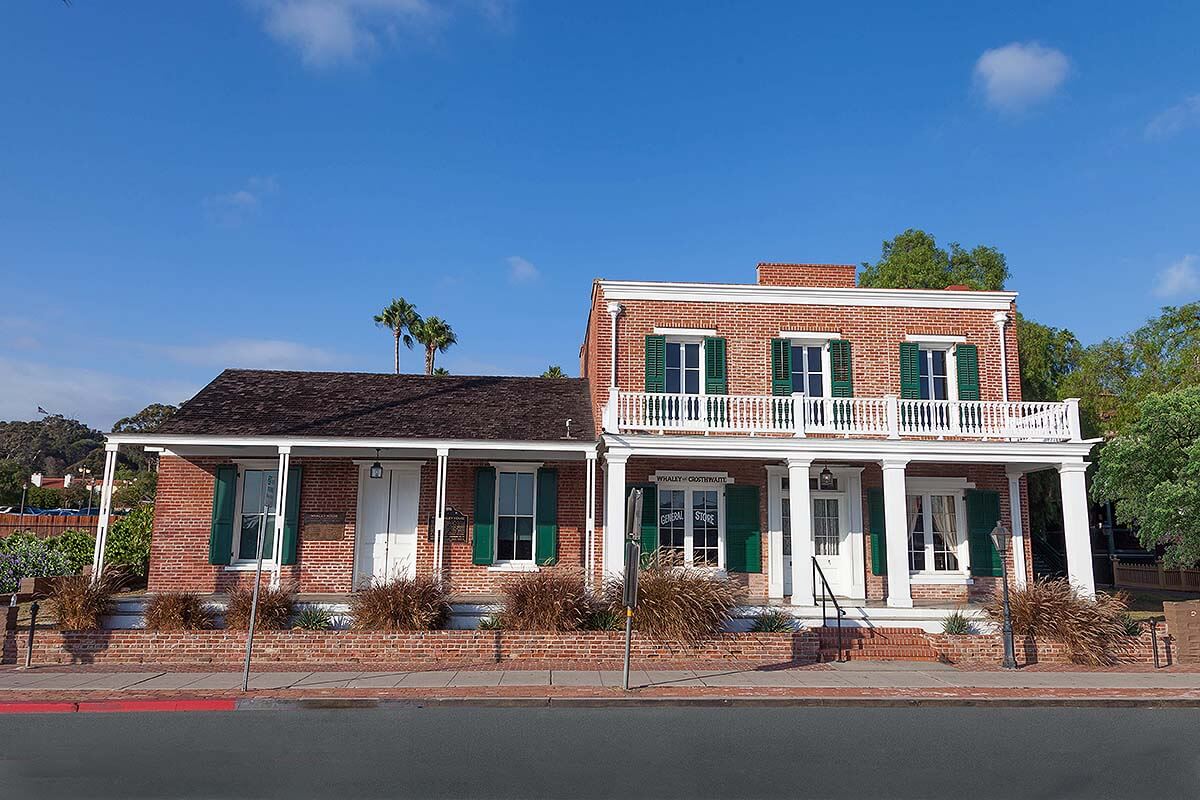
Whaley House
The Whaley House sits on San Diego Avenue in the Old Town neighborhood, a two-story Greek Revival brick home that looks, at first glance, like the kind of place a prosperous merchant would build to announce that he had arrived. And that is exactly what Thomas Whaley intended when he began construction in 1856. The house was the oldest brick structure in Southern California, built from clay bricks fired in Whaley's own kiln on Conde Street, with cedar woodwork and hardware shipped from New York. It cost over ten thousand dollars—a significant sum for a dusty frontier town that had only recently become part of the United States. What Whaley built on, however, was not ordinary ground. The property had served as San Diego's public gallows, and Thomas Whaley had personally witnessed the site's most notorious execution. In September 1852, a man named James Robinson—known locally as Yankee Jim—was hanged there for stealing a rowboat from San Diego Harbor. The trial had been swift and dubious: the jury included two men who owned the stolen boat, and the judge was reportedly drunk for much of the proceedings. Yankee Jim, a towering figure at six-foot-three, did not believe the sentence was real until he saw the rope. The gallows were too short for his frame. When the mule cart was pulled away, his feet grazed the ground, and he strangled slowly rather than dying from a broken neck. Thomas Whaley stood in the crowd and watched the entire thing. Three years later, he bought the land and built his family home directly over the spot. The archway between what became the music room and the parlor stands precisely where the gallows once were. The Whaley family moved in in 1857, and the house quickly became a civic centerpiece—it served at various times as a general store, San Diego's first commercial theater, and the county courthouse. But tragedy followed the family through its walls. Their eighteen-month-old son Thomas Jr. died of scarlet fever in the house. In 1871, armed men held Anna Whaley at gunpoint while seizing courthouse records during a bitter dispute between Old Town and the rising New Town. In 1885, their daughter Violet—devastated after discovering her new husband was a con artist who had married her for the family's money—shot herself in the chest with her father's revolver at the age of twenty-two. Thomas Whaley died in the house in 1890. Anna followed in 1913. Their son Francis died there in 1914, and their daughter Corinne lived in the home until her death in 1953, the last of the family to occupy the residence. Thomas Whaley himself was the first to report something wrong. He wrote in his journal of heavy footsteps moving through the upstairs rooms when no one was there—footsteps he attributed to Yankee Jim. That claim has persisted for over 160 years. Visitors today report a choking sensation when passing through the archway where the gallows stood. Staff and guests describe the sound of tiny footsteps and a child's crying attributed to baby Thomas. A young woman believed to be Violet is seen on the second floor. The scent of perfume associated with Anna drifts through rooms with no apparent source. Disembodied voices, cold spots, doors opening and closing on their own, and full-bodied apparitions have been reported by tourists and investigators alike. The house has been featured on numerous paranormal television programs, and EVP sessions have reportedly captured direct responses. The U.S. Department of Commerce has officially designated the Whaley House as haunted—one of only two homes in California to receive that recognition. Skeptics note that the house trades heavily on its reputation, and that the combination of dim lighting, period atmosphere, and primed expectation accounts for much of what visitors experience. That is a fair observation. But the reports predate the tourism industry by over a century—Thomas Whaley was documenting disturbances in the 1860s, long before anyone was selling tickets. Today the Whaley House operates as a museum maintained by Historic Tours of America. It is a California Historical Landmark and draws thousands of visitors annually for both historical and evening paranormal tours. The archway still stands. The parlor is still furnished. And the ground beneath the house has never forgotten what happened on it.
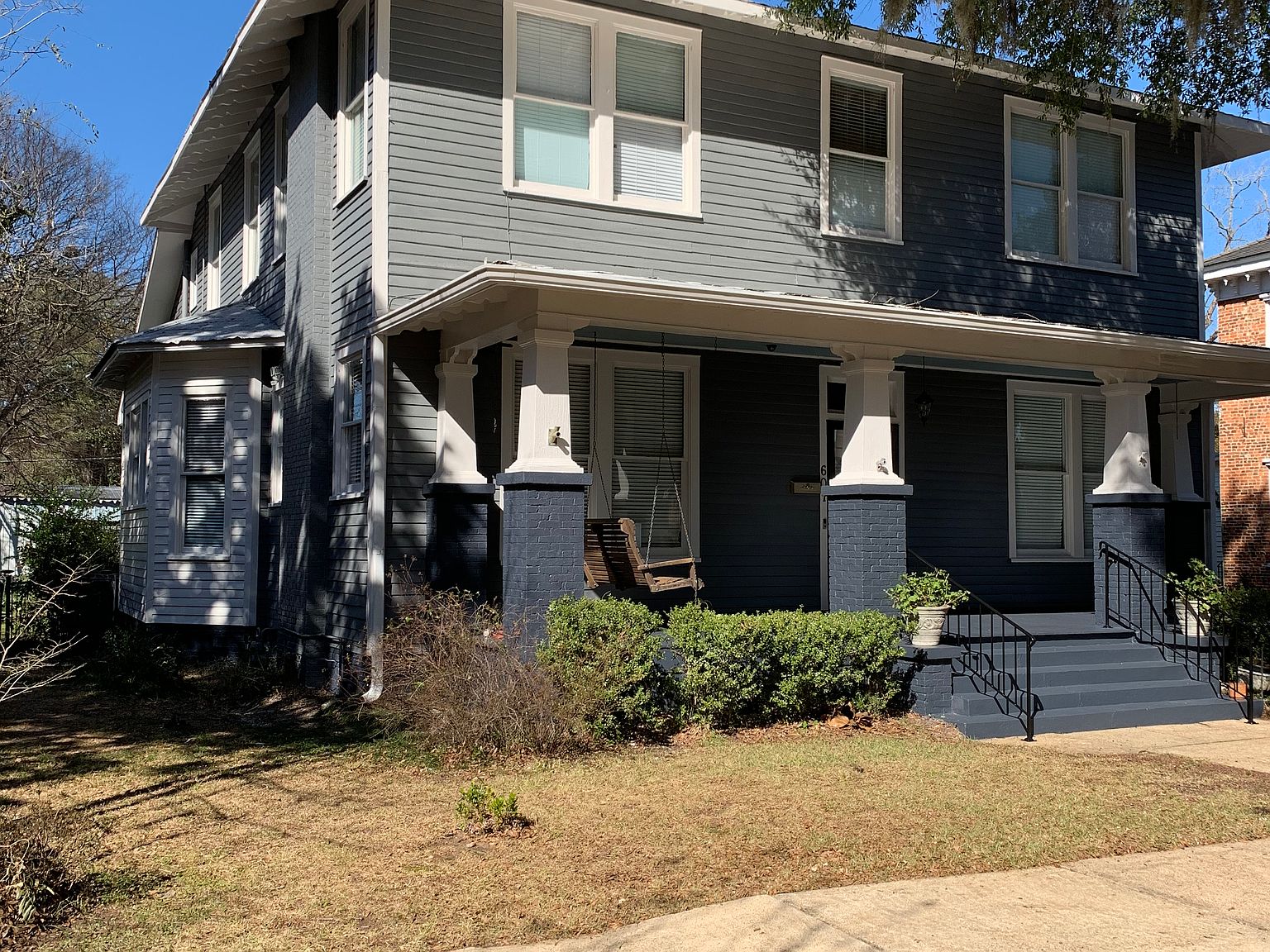
Trotter Home
On a tree-lined stretch of Selma Avenue in one of Alabama's most historically saturated cities, the Trotter Home sits as a quiet two-story Victorian-era residence that has accumulated, over the course of more than a century, a reputation that far exceeds its modest exterior. Built in the 1880s during the period of post-Reconstruction recovery that followed the Civil War's devastation of Selma, the house functioned for decades as a boarding house — one of the many private homes along its block that opened their doors to transient workers, young professionals, and families passing through a city still finding its footing in the New South. It is a structure defined less by grandeur than by longevity, the kind of house that absorbs lives rather than showcasing them, and it is precisely that quality of accumulated human experience that gives it its particular atmosphere. Selma itself provides the backdrop that makes stories like this one feel credible even to skeptics. The city sits in the heart of Alabama's Black Belt, on the banks of the Alabama River, with iron-rich bedrock running beneath its streets and centuries of layered history pressing down from above. It served as a Confederate industrial stronghold before Union forces swept through in the Battle of Selma on April 2, 1865, and it became the epicenter of the American civil rights movement a full century later. Paranormal investigators who have worked extensively in the area note that the combination of the city's geology — iron in the ground, a river running alongside, old structures holding old grief — creates what they describe as conditions unusually favorable to the retention and replay of energy. Whether or not that framework carries scientific weight, Selma produces more consistent accounts of unexplained phenomena per city block than almost anywhere in Alabama. The story at the heart of the Trotter Home's haunting begins in September 1941, when a twenty-one-year-old man named Robert Edgar was living in the house's upper front corner bedroom with his mother, the property then operating as a boarding house. He was driving near Marion Junction with his fiancée when the car tipped over and his arm was caught beneath it on the gravel road. The injury was severe enough to require amputation. Gangrene set in quickly. Surgeons removed the arm on September 16, 1941, but the infection had already progressed beyond saving. Three days later, on September 19, Robert Edgar died. His funeral was held in the home where he had lived, and his body was laid in state in the dining room for three days before burial. His gravestone, later discovered by the home's subsequent residents, reads: Although he sleeps, his memory doth live. The family that gives the house its current name — Norm Trotter, his late wife Pat, and their two teenage daughters — moved in on September 16, 1991, fifty years to the day that Robert Edgar's arm was amputated, and three days before the fiftieth anniversary of his death. They had no knowledge of Edgar when they purchased the house. The seller mentioned in passing, just before closing, that the home had a ghost. The Trotters moved in anyway. What followed was a sustained period of unexplained activity that the family documented carefully over years. Strange things began within weeks of their arrival. Guests sleeping in the home woke feeling a brush across their cheek with no one nearby. Coat hangers jangled loudly inside closed closets. A jar sitting on top of a kitchen cabinet with a raised lip fell and shattered without explanation. The daughters, getting ready for prom upstairs, heard the hangers going and opened the closet to find nothing disturbed. One of them woke in the night, saw a figure standing at the foot of the bed, assumed it was a friend staying over — and realized the friend was asleep beside her. In October 1992, during the World Series, a luminous ball of light floated down the staircase and into the foyer, where it lingered for several minutes while Pat watched it, unwilling to move for fear it would leave before she could make sense of it. The same experience was repeated years later by Norm's second wife, Jaclyn, who watched a glowing orb descend the stairs and pause in the foyer while she sat alone watching television. The spirit, when it appears visually, tends to present at the periphery — a shadow glimpsed at the edge of vision that disappears when turned toward directly. Lights switch on and off without anyone near the switch. Doors open on their own. Plants are knocked from their places. The activity was most concentrated when the daughters were living in the house, and diminished somewhat as they grew up and moved away, though occasional incidents have continued. Pat Trotter, who died in 2003, kept a running file of documented encounters during the years the family was most actively experiencing the phenomena. Research into the house's history eventually led Norm Trotter to newspaper accounts of Edgar's death and to the gravesite that confirmed the timing. The coincidence — that the family moved in on the precise anniversary of Edgar's amputation, and that his funeral had been held in the very dining room beneath their feet — struck the Trotters as something beyond accident, though Norm Trotter has consistently framed the situation with measured curiosity rather than fear. The activity, he has noted, was never threatening. It felt more like the presence of someone who remained attached to a place he knew, visiting the rooms he had occupied in life. The Trotter Home has been featured on Fox's Encounters television program and on Alabama Public Television, and has been included in the Selma and Dallas County Chamber of Commerce's Haunted History Tours for years. It remains a private residence, not open for public investigation. The dining room is still there. So, apparently, is Robert Edgar.
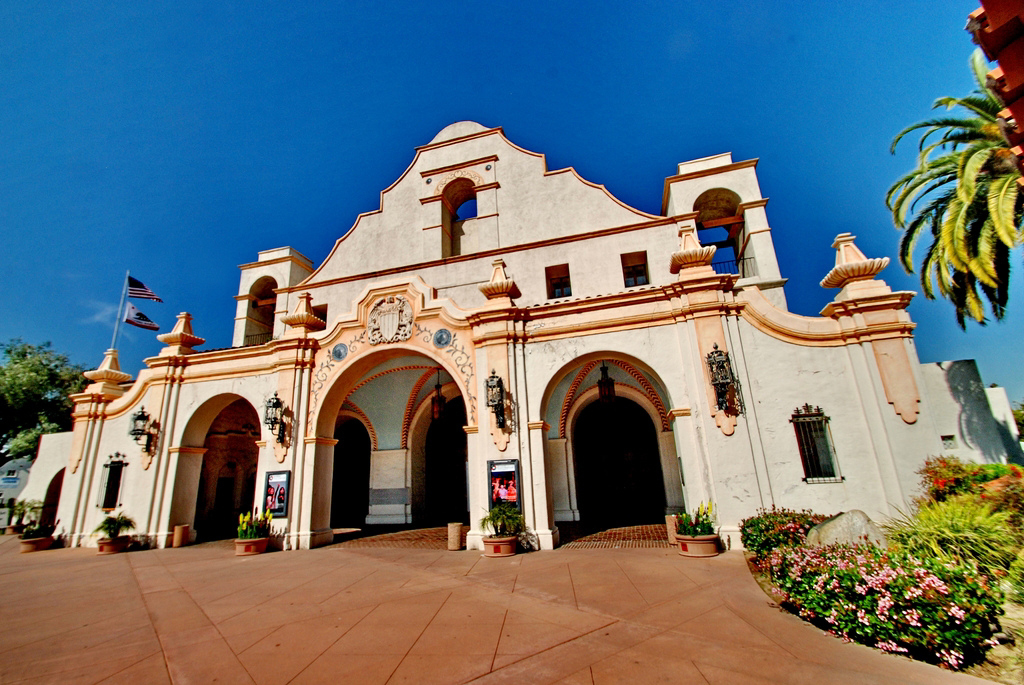
San Gabriel Mission Playhouse
At 320 South Mission Drive in San Gabriel, California, directly across from the old Mission San Gabriel Arcángel, a building designed to look like a Spanish mission but built to house a theatrical spectacle has been attracting audiences—and, according to those who work inside it, retaining at least one permanent resident—since 1927. The San Gabriel Mission Playhouse is a 1,387-seat performing arts venue constructed in the Mission Revival style by architect Arthur Burnett Benton, its facade modeled after Mission San Antonio de Padua in Monterey County. Inside, the theater is an extravagance of cultural layering: a carved and painted ceiling with Native American motifs, replica Spanish galleon lanterns hanging from the beams, woven tapestries gifted by King Alfonso XIII of Spain, and a fully restored 1924 Wurlitzer pipe organ originally built for the Albee Theatre in Brooklyn. The building was added to the National Register of Historic Places in 2019. The Playhouse was built for one man and one production. John Steven McGroarty was born in Pennsylvania in 1862, worked as a county treasurer, lawyer, and mining executive before moving to Los Angeles in 1901, where he joined the Los Angeles Times and began a career as journalist, poet, and chronicler of California history. His most ambitious work was The Mission Play, a three-hour pageant dramatizing the founding, flourishing, and ruin of the California missions from 1769 to 1847. The play opened in 1912 at a smaller venue and became a sensation—over its twenty-year run, more than 2.5 million people saw it across 3,198 performances. McGroarty, known locally as Uncle John, was knighted by the Pope and by the King of Spain, named California's Poet Laureate in 1933, and elected to two terms in the U.S. House of Representatives. He died in 1944 at eighty-one. The Playhouse was completed in 1927 to give his production a permanent home. When the Depression ended the play's run in 1932, the building served as a movie theater, then had its dressing rooms converted to apartments during the wartime housing shortage. The City of San Gabriel purchased it in 1945, renaming it the San Gabriel Civic Auditorium until the original name was restored in 2007. The paranormal claims revolve primarily around Uncle John himself. Staff report that McGroarty has never left the theater he built. His apparition has been spotted during performances and has appeared on security monitors. A metal bar inside the theater is said to swing on its own when a show particularly pleases him—a detail reported by a former employee as a known phenomenon among staff. The top floor and backstage areas carry the strongest reputation. A former stage manager is also said to haunt the building, and the ghost of a young girl has been reported in the theater's interior. Beneath the Playhouse lies a network of tunnels McGroarty had built so he could move between backstage and the foyer without crossing through the audience. One account—unverified but embedded in local lore—holds that during the Depression the tunnels were used to store dead bodies, and when full, were sealed shut. Whether or not the story is true, the tunnels exist and remain partially accessible. A former employee described seeing the entrance to one unsealed section, and multiple staff members have reported an oppressive feeling near the staircase on stage right. The upstairs areas and backstage dressing rooms are described as deeply unsettling when occupied alone. The building sits in a district saturated with history far older than the Playhouse. Mission San Gabriel Arcángel was founded in 1771 and served as one of the most productive of the twenty-one California missions. The surrounding ground holds the remains of thousands of Indigenous people who lived, labored, and died under the mission system. Residents have reported finding arrowheads while digging in their yards. One visitor described sensing robed figures walking in procession outside the Playhouse—hooded monks who paused only when a large cross was raised before them. Today the Mission Playhouse continues to host music, theater, dance, and community events. The Wurlitzer still plays. The tapestries from Spain still hang. The carved ceiling still catches the light the way it did when Uncle John first walked beneath it. And if the accounts from those who work the building are to be believed, he is still walking beneath it—swinging the bar when a show earns his approval, and refusing, nearly a century after his death, to give up the theater he built to tell the story of California.

Thornhaven Manor
Thornhaven Manor sits at the end of Spiceland Road in New Castle, Henry County, Indiana—a dilapidated Italianate estate on seven acres of former farmland, encircled by marshland and woods near the Big Blue River Valley. It was built in 1845 by Simon T. Powell, one of the wealthiest men in the county, on land he had purchased from the state. The original property stretched to a thousand acres. The house itself is six thousand square feet, constructed with walls three layers of brick deep, and it was the largest home in Henry County when it was finished. It was built not for one family but for the merging of two. Powell had married Elizabeth Hoover Thornburg, the widow of Jacob Thornburg, in 1842, and the house became home to Elizabeth's surviving children from her first marriage alongside the four children she and Simon would have together. The tragedies began almost immediately and did not stop for decades. Their youngest daughter Lizzie died in the house in 1853 at the age of two, cause unknown. Their daughter Ester Catherine married in 1869 and died inside the manor six years later. Their son Orlistus was killed during the Civil War at the Battle of Chickamauga; Simon traveled to the battlefield, found his son's body in a mass grave, and brought the remains home to New Castle for burial. Elizabeth herself died in the house in 1881. Family legend—supported by documented court records—holds that Simon Powell was tried by the state of Indiana for harboring a runaway slave named Thomas on the property, lending credibility to the long-standing claim that the manor served as a stop on the Underground Railroad. The basement, which extends beyond the footprint of the house, contains what the current owner believes is an entrance to hidden rooms and a tunnel system running to the north end of the property. After the Powell era, the home passed to the Bailey family. In 1906, the estate's longtime caretaker Reuben Bailey died inside the house after being poisoned by his own son-in-law—a case described by researchers as one of the most notorious murder conspiracies in Henry County history. The house continued to change hands. By the 1960s or 1970s, a man named Emmitt Bell ran the property as a restaurant. At some point after that, the house was abandoned entirely. It sat vacant for decades, deteriorating into the overgrown, collapsing structure that exists today. Steve Miller purchased Thornhaven Manor in 2012, naming it for the thorn trees that cover the grounds. He had no expectation of what he was walking into. The activity began almost immediately—the sound of a door slamming downstairs followed by what sounded like four or five people walking into the house, only to find every door still closed and no one inside. Since then, the reports have compounded. Visitors and investigators describe heavy footsteps on the upper floors, the sound of furniture being dragged across rooms, voices carrying through the brick walls, shadow figures blocking light sources in the servant quarters, and sudden drops in temperature that precede the sense of a presence entering a room. Investigators have reported being scratched. Mediums who have visited the property claim more than forty spirits are present. Ghost Adventures filmed an investigation at Thornhaven in 2013, and numerous other teams have followed. One paranormal investigator described hearing a persistent dragging sound on return visits that she could never locate or explain. The property is not a polished tourist attraction. It is a crumbling house on a rural road where the history is real, the deaths are documented, and the owner has spent years trying to restore what time and neglect have nearly consumed. Miller has expressed a desire to turn Thornhaven into a living museum honoring the Powell family's legacy—a family that corresponded with Lincoln and counted President Grant and Governor Morton among their associates. Whether that vision is realized or not, the house continues to draw investigators and the curious, and it continues to answer them in ways that no empty building should.

626 Pirate’s Alley
In the narrow passage that runs between St. Louis Cathedral and the Cabildo in the heart of the French Quarter, a red Creole townhouse at 626 Pirate's Alley stands shoulder to shoulder with the most storied ground in New Orleans. The alley itself measures only six hundred feet long and sixteen feet wide, but within that slender corridor lies a concentration of history—piracy, imprisonment, epidemic death, literary genius, and persistent spiritual activity—that rivals any block in the city. The building at 626, a private residence that overlooks St. Anthony's Garden from its upper-floor windows, carries its own quiet haunting, distinct from the louder legends of the alley around it. Pirate's Alley was originally known as Orleans Alley South, an extension of Orleans Street that provided a throughway between what is now Jackson Square and Royal Street. The passage was paved with cobblestones by 1831 and officially renamed in 1964, though locals had called it by its pirate-associated name for generations. The alley's reputation traces to the early nineteenth century, when New Orleans was home to the notorious privateers Jean and Pierre Lafitte. Legend holds that the Lafitte brothers conducted business in the alley and that Jean Lafitte negotiated his brother Pierre's release from the nearby jail—the Calabozo, a Spanish colonial prison that once stood along this stretch—in exchange for aiding General Andrew Jackson in the Battle of New Orleans in 1815. Historians have questioned whether Lafitte actually frequented the alley given its proximity to both the Cathedral and the seat of colonial government, but the association has endured in local lore for two centuries. The old prison, demolished in 1837, occupied roughly the footprint of the buildings that now line the alley, and first-hand accounts from prisoners documented hauntings within its walls that predated its demolition. The building at 626 Pirate's Alley is a Creole-style structure that dates to the period after the prison's removal, when the land was sold and developed for residential use. Its neighbor at 624, the yellow building immediately adjacent, is the far more famous Faulkner House—where William Faulkner lived in 1925 and wrote his first novel, Soldiers' Pay, and which now operates as Faulkner House Books, headquarters of the Pirate's Alley Faulkner Society. Faulkner's ghost has been widely reported inside the bookstore, seen sitting at the writing desk that remains in the shop, accompanied by the ghostly scent of pipe smoke drifting through the rooms. But 626, the red mansion next door, carries its own distinct haunting that has been documented separately. According to Jeff Dwyer's Ghost Hunter's Guide to New Orleans, the building's paranormal history is tied to one of the yellow fever epidemics that devastated New Orleans during the 1850s. During one of these outbreaks, a young girl living in the house contracted the disease. To aid in her recuperation, she was placed on a chaise lounge in front of one of the large third-floor windows overlooking St. Anthony's Garden. Whether she recovered or died in that position is not clearly recorded, but the aftermath has been reported consistently enough to draw the attention of both casual visitors and paranormal researchers. Ghost hunters standing in Pere Antoine Alley across the garden and looking up at the third- and fourth-story windows of the red mansion have reported seeing the face of a small girl in a white gown pressed against the glass, gazing out over the garden below. Dwyer himself was granted a tour of the home's interior and reported sensing a deep and pervasive sadness near one of the upper windows—the kind of emotional residue that paranormal researchers describe as a place-memory, an imprint left by suffering intense enough to mark the space permanently. The broader alley contributes its own layer of spectral activity. Visitors and tour groups walking through Pirate's Alley after dark have reported encountering figures in pirate and sailor attire who vanish when approached or when observers turn for a second look. The spirits of prisoners from the old Calabozo, Union soldiers who were held in the nearby arsenal during the Civil War, and an unidentified pirate whose legend has attached to the alley without a confirmed name have all been claimed by various sources over the years. Artists who display their work along the iron fence of St. Anthony's Garden during the day give way after dark to a different kind of presence—one that tour guides describe with the practiced ease of people who walk this passage several times a night and have learned to expect company. The building at 626 Pirate's Alley remains a private residence. It is not open to tours, and photography of the interior is not encouraged. The girl in the window, if she is still there, looks out over the same garden she watched from her sickbed more than a century and a half ago. The Cathedral rises on one side. The Cabildo stands on the other. And the cobblestones of the alley below carry the footsteps of the living and, if the accounts hold any weight, of those who walked this ground long before the stones were laid.
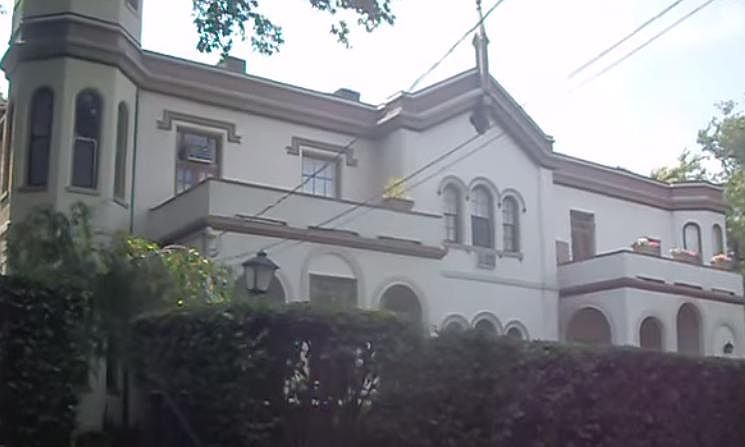
Stenton House – Cornell Place Apartments
On a quiet cul-de-sac in Cincinnati's Clifton neighborhood, one of the city's most prestigious old-money districts built on the rolling hills that give the Queen City its classical silhouette, a Victorian mansion stands at 3517 Cornell Place that has been absorbing tragedy since before the Civil War ended. Now subdivided into apartments and known as Cornell Place Apartments, the building is more commonly referred to in paranormal circles as Stenton House—a name drawn not from a builder or an original owner but from a family who moved into one of its units decades later and discovered that the dead had not moved out. The Clifton haunted walking tour regularly features the property as one of its signature stops, and some accounts describe it as one of the most haunted residences in the United States. It is a private building. Tours of the interior are not publicly offered. The privacy of the occupants, both living and otherwise, is expected to be respected. The mansion was built in 1850 as a private dwelling during the period when Dutch and German families were establishing Clifton as a refined residential enclave above the bustle of downtown Cincinnati. Property records identify it as part of the Ruben Resor tract, and rental listings for the building describe it as historically the second oldest home in Clifton, featuring an octagonal tower base, thirteen-foot ceilings, ten-foot walnut doors, marble entries and mantels, ornate plaster molding, and ceiling medallions—the bones of a house built for prominence. The first documented tragedy occurred in 1880, when a young man committed suicide inside the house. After his death, his family departed and the mansion sat vacant for years, the kind of prolonged emptiness that tends to compound whatever energy a violent death leaves behind. Around 1900, the building was converted into the Ealy School, an institution for girls. The school's tenure in the house produced its own dark chapter. According to local legend, a young schoolgirl hanged herself in one of the upstairs rooms. In a separate incident, another girl—described in some accounts as the daughter of a doctor—was found murdered on the stairway. The details of these deaths are sparse in the historical record, and the line between documented fact and accumulated neighborhood legend is difficult to draw with precision at this distance. What is consistent across accounts is that the building's years as a girls' school ended with at least two more deaths layered onto the suicide of 1880, creating a concentration of young, violent death within a single structure that few residential buildings in Cincinnati can match. After World War II, the mansion was subdivided into apartments, and it was during this era that the building acquired the name by which it is most commonly known. The Stenton family moved into one of the units, and almost immediately, odd incidents began. Phantom footsteps were heard walking the hallway when no one was visible. Two weeks after their arrival, at precisely 2:10 in the morning, the Stentons heard a heavy thump from the floor above them—the sound of something or someone hitting the ground with force. The thump repeated itself on subsequent nights, always at exactly 2:10 AM. When the family investigated, they learned that the young man who committed suicide in 1880 had killed himself in the room directly above their apartment. The regularity of the sound suggested not a conscious haunting but a residual one—an event so traumatic that its echo had embedded itself into the fabric of the building, replaying at the same hour like a recording that no one had asked to hear. Other tenants over the years have reported experiences consistent with what the Stentons described. Disembodied footsteps follow residents through the halls, keeping pace as they walk. Voices are heard in corridors and rooms when no living person is present. The sounds of phantom objects striking the floor continue to be reported. At least one tenant's dog refused to enter rooms where spiritual presences were manifesting, baying in alarm at thresholds the animal would not cross. The shadowy figure of a woman has been seen standing at the top of the staircase leading to the attic apartment, motionless, watching the space below her before disappearing. Whether she is one of the schoolgirls, a former resident, or something else entirely has never been established. Today the building at 3517 Cornell Place continues to operate as private rental apartments. The units feature the grand architectural details of the original mansion—the chandeliers, the woodwork, the veranda with sunset views overlooking acres of trees. It sits on a cul-de-sac within walking distance of Ludlow Avenue. The rent reflects the neighborhood. Nothing about the listing mentions what comes with the thirteen-foot ceilings and the walnut doors. But the residents know, and the tour guides know, and at 2:10 in the morning the building itself apparently still remembers.
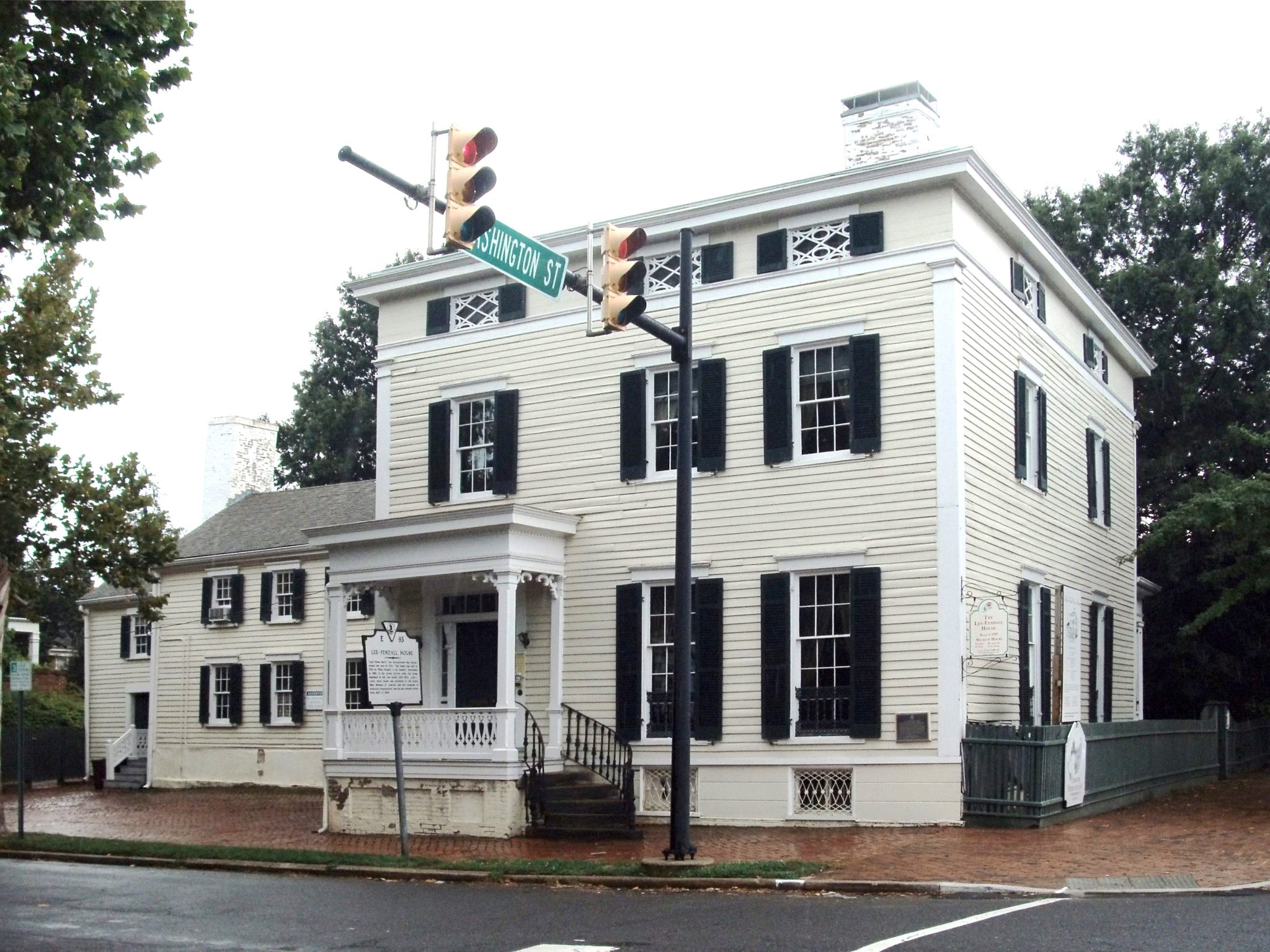
Lee-Fendall House
On the corner of Oronoco and Washington Streets in Old Town Alexandria, the Lee-Fendall House has been standing since 1785 — long enough to have absorbed nearly every defining era of American history within a single set of walls. It was built in the vernacular telescopic style common to Maryland but rare in Northern Virginia, constructed by Philip Richard Fendall on land sold to him by his stepson-in-law Henry "Light-Horse Harry" Lee, the Revolutionary War cavalry commander and father of Robert E. Lee. From 1785 until 1903, thirty-seven members of the Lee family lived here. The house was completed by November 1785, when George Washington noted in his diary dining at the Fendall home — one of at least seven recorded visits. Following Washington's death in December 1799, the house became a gathering place where Alexandrians organized their participation in his funeral at Mount Vernon. Former President John Quincy Adams visited in 1841. President Woodrow Wilson was received there in 1914. The Civil War interrupted all of that. In 1863, Union Chief Surgeon Edwin Bentley requested the use of what he called "the rebel house opposite Grosvenor Hospital" and was granted authority to seize it. The current occupant, Harriotte Cazenove, refused to swear the Loyalty Oath to the Federal Government, so the house was confiscated for unpaid taxes and converted into Grosvenor Branch Hospital. The Army expanded the property with additional wooden ward buildings and constructed a dead house on the grounds. Approximately 1,700 Union soldiers were treated there between 1863 and 1865, and nearly 100 died within those walls. The hospital's place in medical history is singular: it was the site of the first documented successful blood transfusion performed in North America, carried out by Dr. Bentley during the war. When the hospital closed in April 1865, the house was returned, sold, and passed through several families before Robert Downham — an Alexandria haberdasher whose father had twice been the city's mayor — purchased it in 1903. In 1937, labor leader John L. Lewis bought the house. Welsh-born, Iowa-raised, Lewis had risen from coal miner to president of the United Mine Workers of America for over four decades, eventually defying both Franklin Roosevelt and Harry Truman, founding the CIO, and reshaping American labor law from his base in Washington. At one point during a wartime strike he was strung up in effigy at the corner of Washington and Oronoco — directly outside the house he lived in. He died there on June 11, 1969, at age 89. His son sold the property to the Virginia Trust for Historic Preservation. The Lee-Fendall House Museum and Garden opened to the public in 1974. The paranormal claims are understated but consistent, and the museum leans into its haunted reputation enough to host annual ghost tours each October. Visitors have reported a female apparition in period dress moving through the interior rooms. A separate figure — a woman accompanied by a child — has been seen appearing on the back stairs. The sound of an antique telephone ringing has been heard by multiple people in rooms where no working telephone exists. The museum appeared in an episode of the television series Ghost Hunters. The weight of what occurred inside — nearly a century of Lee family life, hundreds of soldiers dying during two years of wartime medical care, the passing of one of the most consequential labor figures in American history — leaves the kind of residue that tends to generate these accounts. Open Wednesday through Sunday for guided tours. The garden is free.

George C. Gardner House
Standing on Main Street in the heart of Nantucket, Massachusetts, the George C. Gardner House looks exactly like what it is — a captain's home built at the peak of an island's wealth and ambition. The five-bay Federal facade, Ionic columned portico, rooftop balustrade, and widow's walk speak plainly to the world that built it: a world of whaling money, deep-sea voyages, and the particular kind of prosperity that Nantucket commanded throughout the early nineteenth century. The house was built in 1834 for sea captain George Gardner, a descendant of Richard Gardner, one of the island's earliest English settlers, whose own house stands directly next door. On Nantucket, history is that compressed. The Gardner family was woven into the fabric of Nantucket whaling from its earliest days. By the time George C. Gardner built his Main Street home, the island was at its apex as the whaling capital of the world — a thirty-square-mile landmass thirty miles off the coast of Massachusetts that had somehow become the center of a global industry. The captains who commanded those voyages returned wealthy, built grand homes along Main Street, and created a tight, insular society defined by long absences, uncertain returns, and the ever-present possibility that a husband or father would not come back at all. The widow's walk atop the Gardner House — that small rooftop platform common to Nantucket captain's homes — was not decorative. It was a place where women stood and watched the horizon. Unlike locations shaped by a single catastrophic event, the Gardner House carries the layered weight of time, family, and the slow accumulation of stories that attach themselves to old houses in old communities. Nantucket itself is an island steeped in maritime loss — by 1810, the island counted 472 fatherless children, and nearly a quarter of women over marrying age had lost husbands to the sea. The Gardner house was built into that culture. And in the late twentieth century, a bitter and protracted divorce dispute left the nineteen-room property sitting vacant and deteriorating for years, its deferred maintenance giving the exterior that particular quality of abandonment that tends to invite stories. The house's architecture rewards close attention. The facade is formal and symmetrical, anchored by its columned entrance and balanced windows. The interior, across its nineteen rooms, reflects the scale of wealth that successful whaling commanded in this era. The widow's walk above offers an unobstructed view of the harbor and the Atlantic beyond — a detail that does not lose its resonance when you stand in it. The property has since been restored, but its decades of decay and the lore that grew up around that period left a mark on local memory that restoration alone cannot fully erase. The paranormal claims associated with the Gardner House are rooted in two distinct layers. The first comes from former residents, who reported hearing disembodied footsteps moving through the house and witnessing silverware moving on its own — accounts modest in their specifics but consistent in their suggestion that something in the building draws attention to itself. The second layer is darker and more deeply embedded in local legend: the story of a Chinese servant of the Gardner family said to have been hanged after becoming infatuated with one of George Gardner's daughters. According to the legend, the body was buried on the grounds of the house. No documentation has surfaced to confirm the story, and it carries the hallmarks of island folklore that grows in the shadow of an abandoned property — but it has circulated in Nantucket's ghost walk tradition long enough to have taken on a life of its own. Skeptics will note that the years of vacancy and the visible decay of a grand old captain's house are precisely the conditions under which ghost stories flourish. An empty nineteen-room home on an island known for its fog, its maritime loss, and its long history of whaling-era superstition is a natural host for lore of this kind. Nantucket itself — known to sailors as the Gray Lady of the Sea for the fog that cloaks its coastline — has always had a complicated relationship with the supernatural. Sea captains carried their own omens and rituals. The island's isolation amplified everything. Today the house has been restored to something approaching its original grandeur and has periodically returned to the real estate market. It remains a private residence. It is included in Nantucket's ghost walk tradition and surfaces consistently in accounts of the island's most haunted locations. Whether you approach it as a piece of Federal-period architecture, a remnant of the whaling-era wealth that defined nineteenth-century Nantucket, or a house with something unexplained still moving through its rooms, the George C. Gardner House earns its place on the island's long list of places where the past has not entirely let go.
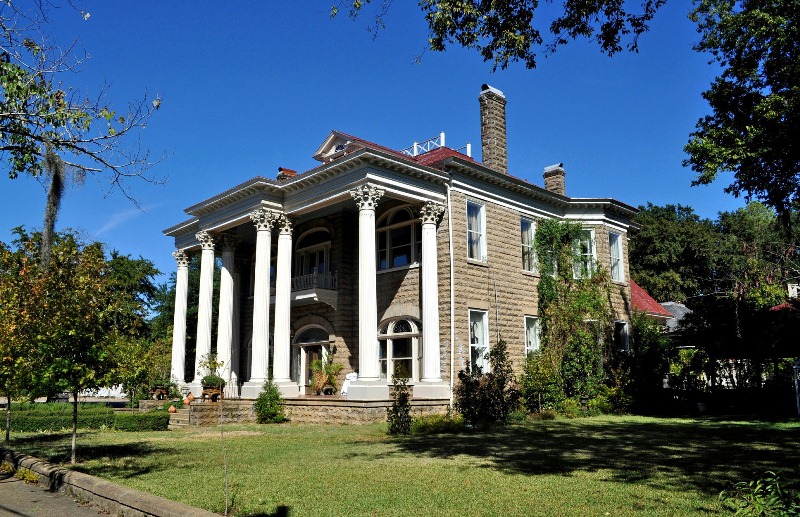
Brownstone Manor
Standing along the shaded stretch of Lapsley Street in Selma, Alabama, Brownstone Manor is a neoclassical mansion that carries itself with the quiet confidence of a house that has outlasted everything around it. Built in the late nineteenth century — sources place its construction variously between 1870 and 1904, with the most commonly cited date falling around 1898 — the home sits within Selma's Old Town Historic District, a nationally recognized collection of over 1,200 historic structures and the largest historic district in the state of Alabama. Lapsley Street itself was among the residential arteries that expanded westward from Selma's riverfront core, a neighborhood built by cotton wealth and defined by the social hierarchies of the antebellum and post-Civil War South. To understand Brownstone Manor, you have to understand Selma. Few American cities carry as much layered historical weight. In the nineteenth century, Selma was second only to Richmond, Virginia, as an industrial arsenal for Confederate forces, producing weapons, ammunition, and ironclad warships. On April 2, 1865, Union troops under Major General James H. Wilson swept through the city in what became known as the Battle of Selma, effectively destroying much of its industrial capacity. The neighborhoods around Lapsley Street survived largely intact, and in the decades following the war, the merchant class and professional families of Selma rebuilt and expanded — constructing the gracious homes that now line the Old Town streets, Brownstone Manor among them. A century later, Selma would again become a focal point of American history, this time as the epicenter of the Voting Rights Movement and the setting of the 1965 marches across the Edmund Pettus Bridge. The manor itself is a five-bedroom, three-bath structure spanning over 7,500 square feet, built in the neoclassical style with the proportions and presence typical of wealthy late-Victorian Alabama. The home gained a measure of literary distinction through its association with F. Scott Fitzgerald and his wife Zelda, who reportedly visited regularly because friends of theirs owned the property. Fitzgerald was already at work on the fiction that would define American modernism during those years, and Selma's drawing rooms and tree-lined avenues would have offered precisely the kind of faded Southern grandeur that runs through so much of his work. The mansion has served multiple purposes over the decades — private residence, bed and breakfast, and event venue — passing through various hands and earning a place on Alabama's Ghost Trail, a cultural initiative documenting the state's most storied haunted locations. The paranormal reputation of Brownstone Manor centers on a former owner known as Ms. Hooper. According to those who have visited and documented the property, her presence has never fully departed. The claims that circulate around the house are specific and consistent: paintings rearranged without explanation, disembodied footsteps moving through rooms when no one is present, and the apparition of a woman in period dress observed by visitors in and around the home. The spirit is described not as menacing but as proprietary — a woman who remains attached to her house and makes that attachment felt. Central Alabama Paranormal Investigations, a Selma-based group, has documented activity at the manor. Their lead investigator has noted the existence of a particularly compelling photograph taken at Brownstone Manor that remained under study. The group's broader work in Selma places the manor within a city they describe as exceptionally active, a characterization that local paranormal investigator Maggie Davies has reinforced over years of cemetery tours and investigations. Davies attributes Selma's unusual density of reported activity in part to the city's geology — iron-rich bedrock beneath an old river city, elements that some investigators believe contribute to the retention and replay of residual energies. Whether or not that theory holds scientific merit, it offers a framework for why Selma as a whole, and streets like Lapsley in particular, seem to generate more accounts than most places of comparable size. The manor today remains a private residence, observable from the street. It is part of the Old Town Historic District's contribution to the National Register of Historic Places. Selma is a city where the distance between the historical and the unexplained has always been thin — where soldiers died in the streets, where generations of families built and lost fortunes, and where the architecture of the past still stands close enough to touch. Brownstone Manor fits comfortably into that context: a grand house with a documented history, a literary footnote, and a former owner who, by most accounts, has never quite left.

Patterson-Noble-Baker House
The Patterson-Noble-Baker House stands at 313 West Noble Street in Louisburg, the county seat of Franklin County, North Carolina—a small piedmont town chartered in 1779 on the banks of the Tar River. The house dates to approximately 1820, built as a two-story frame plantation home in the Federal style during Louisburg's early years as a center of education and quiet commerce. Over the nineteenth century the property passed through several prominent local families before coming into the hands of the Bakers, whose roots in Franklin County reach back to the town's founding. George Strother Baker edited and published The Franklin Courier from the property after the Civil War, and by 1908 the family developed the surrounding land into the westward extension of Noble Street, shaping the residential neighborhood that still exists today. Louisburg did not escape the Civil War quietly. Union forces occupied the town, encamping on college grounds and in the yards of private homes. The Main Building of Louisburg College, barely two-tenths of a mile from the Patterson-Noble-Baker House, served as a Confederate hospital. A local diarist recorded soldiers pitching tents in her yard while a band played, and lamented weeks later that the groves once consecrated to learning were now polluted by the occupying army. The Baker household sat in the middle of all of it. The house has drawn the attention of paranormal investigators who consider it one of Franklin County's more active locations. Teams who have conducted investigations inside the home report capturing EVP recordings—electronic voice phenomena, responses picked up on audio equipment that were not heard at the time of recording. The property is listed across multiple haunted location databases as a hotspot for unexplained activity, and those who have investigated it describe results compelling enough to warrant repeat visits. No single named spirit has been publicly identified with the house, and no specific triggering event has been documented in the available record. But for a home that has stood for two centuries through plantation life, civil war, occupation, and the long silence of a small town settling into itself, the absence of a tidy explanation may be the most honest thing about it. The Patterson-Noble-Baker House is a private residence and is not open to the public.

Bottger Mansion of Old Town
The Bottger Mansion sits at 110 San Felipe Street Northwest in Old Town Albuquerque, half a block from the historic plaza where the city's story began in 1706. It is the last of the four original mansions that once anchored this neighborhood—the only one still standing virtually as it was built—and it operates today as Old Town's sole bed and breakfast, an intimate inn surrounded by adobe walls, cottonwood shade, and three centuries of layered New Mexico history. The current owners will tell you plainly that the house is not haunted. Ghost tour operators, paranormal investigators, and a steady procession of overnight guests disagree. The truth, as with most things in Albuquerque, probably lives somewhere in the space between. The property's history predates the mansion itself. In the 1700s, a sprawling 40-room adobe complex occupied this site, serving at various points as a residential compound and, according to some accounts, as the governor's mansion during territorial New Mexico. That structure was long gone by the time Charles Bottger arrived. Bottger was a German-born wool exporter who had made his fortune after immigrating to New Jersey. He relocated to New Mexico to position himself closer to the Native American sheep ranchers who supplied his trade. He acquired the property in the 1890s, and construction on the current American Foursquare-style mansion began in 1905, finishing around 1907. In addition to the house, Bottger owned a saloon just west of the property—now a parking lot—and a toll bridge over the Rio Grande. He was, by the standards of early twentieth-century Old Town, a man of considerable reach. Three generations of the Bottger family lived in the mansion before it was sold and began passing through a series of owners and uses that read like a compressed history of Albuquerque itself. During the 1940s, a small colony of Buddhists occupied the house. Later it housed a restaurant on the ground floor, a boarding house and beauty salon upstairs. The guest list over the decades was improbable. In 1955, a young Elvis Presley, traveling with Bill Black and Scotty Moore, performed two shows in Albuquerque and stayed at the Bottger before heading to Amarillo. In the late 1950s, Frank Sinatra attended a wedding at the mansion and performed in the courtyard after dinner. And in the 1940s, FBI most-wanted fugitive George "Machine Gun" Kelly, along with his girlfriend and gang members, checked in under assumed names while on the run from California to Memphis. They had dyed their hair and bought new clothes as disguises, but the owners grew suspicious when the group refused to leave their rooms, instead sending a neighborhood boy out to fetch all their meals. The owners moved to notify police, but a gang member overheard and the group fled just ahead of the law. They were captured shortly afterward. The paranormal reputation of the Bottger Mansion centers on three reported presences. The first is Charles Bottger himself, whose spirit is said to linger in the halls of the house he built, felt rather than seen—a residual sense of ownership that visitors describe as watchful but not hostile. The second is a female figure known simply as the sighing woman, whose audible sighs have been reported echoing through rooms at odd hours, evoking grief or longing from a period no living person can identify. The third, and most discussed, is an entity referred to as "the Lover"—a figure reported by female guests who describe the sensation of someone sitting on the edge of their bed while they sleep. The identity of this presence has never been established, and the accounts, while consistent in their description, resist easy historical attribution. Other reports include disembodied footsteps, the feeling of being watched in otherwise empty rooms, and a general atmosphere that some visitors describe as heavy or charged, particularly in the older sections of the building. One person who grew up near Old Town in the 1980s reported seeing apparitions and hearing unexplained sounds in and around the mansion over a period of years. Paranormal investigators, including Cody Polston of the Southwest Ghost Hunter's Association, have documented the site extensively, and it features prominently in walking ghost tours of Old Town. The current owners take a measured and somewhat bemused position. Their website states flatly that the Bottger Mansion has had no ghosts since 1912, and they ask that guests refrain from conducting ghost hunts that might disturb other visitors. They also note, with evident frustration, that nearly every published history of the mansion contains factual errors—a 1978 survey of Albuquerque landmarks reportedly got everything wrong except the street address. Practitioners of feng shui who have stayed at the property describe the house as having good energy and a peaceful atmosphere, which either contradicts the haunting claims or suggests that whatever occupies the Bottger has no particular quarrel with the living. Today the Bottger Mansion operates as an award-winning bed and breakfast, offering individually appointed rooms, house-made cookies, and locally inspired breakfasts within steps of Old Town Plaza. The San Felipe de Neri Church, founded in 1706, stands nearby. The Sandia Mountains rise to the east. The house itself remains structurally intact from its original construction, the last of Old Town's great mansions still standing in its original form. Whether its halls hold the residue of Charles Bottger, a sighing woman, a boundary-challenged Lover, or simply the accumulated weight of three centuries of human occupation on a single piece of high-desert ground, the Bottger Mansion remains a place where Albuquerque's past is not abstract—it is the floor beneath your feet and, by some accounts, the presence at the edge of your bed.
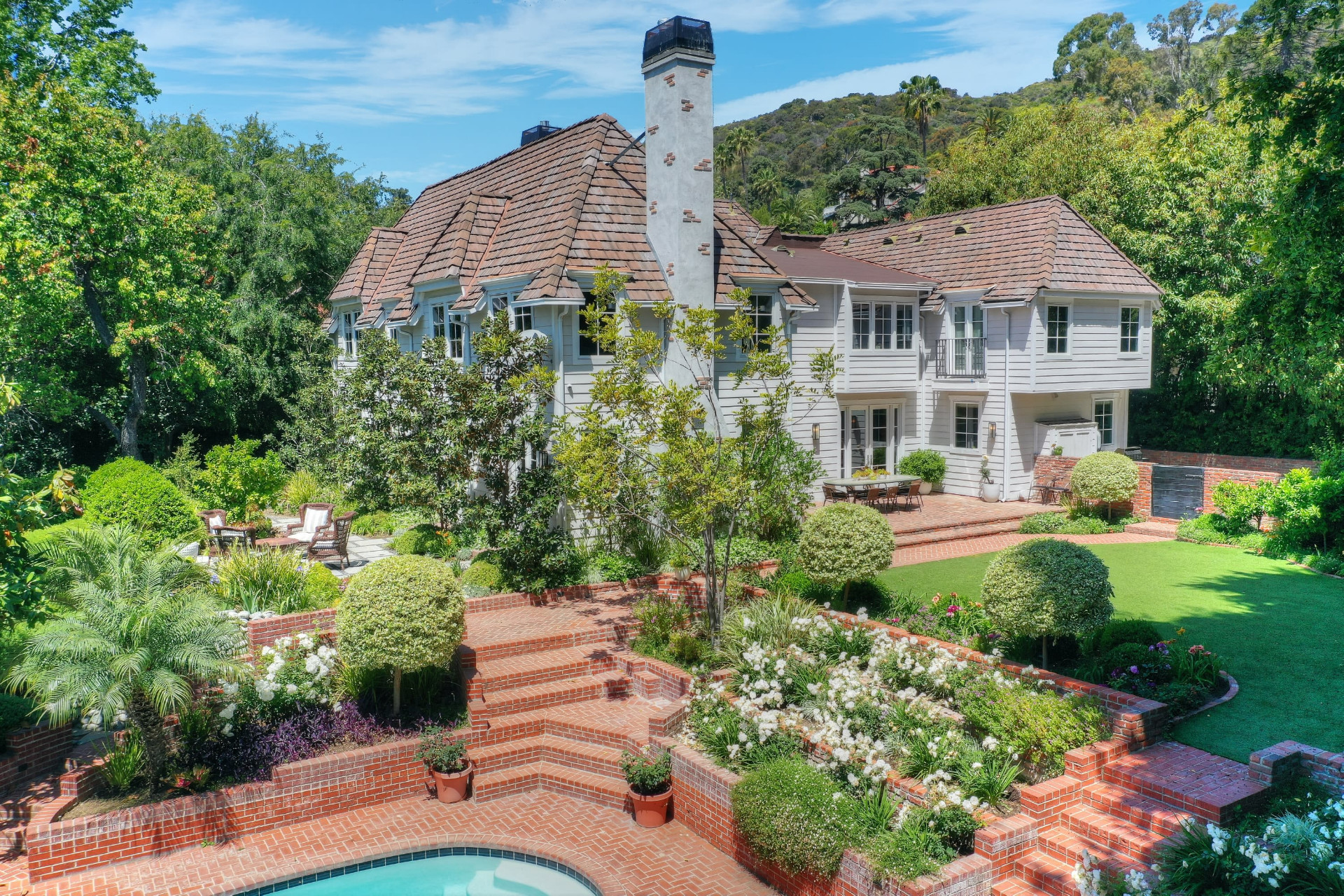
Nelson House
Nestled at the base of the Hollywood Hills near Franklin Avenue, the Colonial Revival house at 1822 Camino Palmero is one of the most quietly famous addresses in American entertainment history — a two-story clapboard home with dark green shutters that millions of television viewers came to know as intimately as their own living rooms, without ever being told its real name. The house was built in 1916 by architect Frank T. Kegley and H. Scott Gerity for Harold G. Feraud, a prominent Los Angeles businessman, on a sloping half-acre parcel in the exclusive Las Colinas Heights subdivision. Designed in the Colonial Revival style with traditional clapboard siding and a classic staircase entry, it was at the time one of the more distinguished residences in that part of western Hollywood. It sat quietly for decades before the family that would make it famous arrived. Ozzie Nelson — bandleader, attorney, Eagle Scout, and one of the most driven men in American entertainment — and his wife Harriet Hilliard moved in during the 1940s. Ozzie had built a career in big band music during the 1930s before pivoting to radio, where he created The Adventures of Ozzie and Harriet in 1944 as a domestic comedy featuring himself, his wife, and their two sons David and Ricky. When the show transitioned to ABC television in 1952, the house on Camino Palmero became a co-star. Establishing exterior shots were filmed directly in front of it, and the interior sets at Hollywood General Studios were modeled room by room after the real house, down to the Early American furniture Harriet had chosen. The kitchen viewers watched Harriet work in every week was a near-perfect recreation of the kitchen she actually cooked in at home. For 14 years and 435 episodes — still the record for total episodes produced in American live-action sitcom history — the Nelson family played themselves on national television, and this house was the stage for that illusion. Ricky Nelson wrote some of his early songs here. His name is reportedly still scratched into a door frame inside his old bedroom. The family became the definitive image of mid-century American domestic life, and the house absorbed every frame of it. Ozzie was the engine behind all of it — producer, director, co-writer, and perfectionist. He was also, by his own cheerful admission, someone who took meticulous care of his health: no smoking, no drinking, daily two-mile ocean swims. When he was diagnosed with liver cancer in 1974, he reportedly called it "odd for a guy who never drank or smoked." He died on June 3, 1975, at 69, surrounded by Harriet, David, and Ricky. The family sold the house shortly after. Ricky died in a plane crash on New Year's Eve 1985. Harriet died in 1994. David in 2011. The whole family is gone now, and the trajectory of their losses was steep. The paranormal claims at the house began almost immediately after Ozzie's death. Family members reported seeing his apparition walking through the rooms, lingering near his favorite spots — particularly the wood-paneled pub room he'd loved. New owners who purchased the house in 1975 reported mysterious footsteps in empty rooms, lights and faucets operating on their own, and doors opening despite being locked. One woman living in the house described feeling, on multiple occasions, a strong and unmistakably loving presence beside her in bed. Years later, in 1994, a painter working in the house heard unexplained footsteps while alone in the building and observed a white misty form drifting nearby, appearing to inspect his work. Ozzie's old model train set in the pub room reportedly began running on its own in the middle of the night. The accounts were consistent enough that when the house went to market, the listing agent felt obligated to disclose the rumored haunting to prospective buyers. The house remains a private residence. It later appeared as Ari Gold's home in HBO's Entourage, adding another layer of on-screen identity to a building that has rarely been just a building. Whatever is still inside, it keeps itself to walls that know the difference between a set and a home.

Ancestor’s Inn at the Bassett House
Standing along Sycamore Street in the village of Liverpool just north of Syracuse, the historic Bassett House has long been one of the older surviving structures connected to the early development of the community. The building at 215 Sycamore Street traces its roots to the early nineteenth century, a period when the region surrounding Onondaga Lake was transforming from scattered frontier settlements into an active corridor of commerce tied to salt production and canal travel. Liverpool in particular grew rapidly after the opening of the Erie Canal in 1825, which turned the nearby waterways and roads into important transportation routes linking central New York to markets across the state. Inns and taverns quickly followed the movement of travelers and laborers, and the Bassett House developed within this environment as a place of lodging and social activity. The structure is believed to date to the early 1800s and is commonly associated with the Bassett family, whose name became permanently attached to the property. Buildings like this served a variety of roles during the canal era. Travelers arriving by boat or carriage needed places to stay overnight, while canal workers, merchants, and farmers used taverns as informal meeting places where business was conducted and news from other towns circulated. The Bassett House functioned as both a residence and a hospitality property during different periods of its history, reflecting the changing character of Liverpool as the canal economy expanded and later declined. Throughout the nineteenth century the surrounding community remained closely tied to transportation and industry. The nearby salt works at Onondaga Lake drew workers and traders, while canal traffic brought a steady flow of strangers through the village. Buildings like the Bassett House witnessed decades of everyday life associated with this movement—meals served to passing travelers, rooms rented to overnight guests, and local residents gathering in common spaces that doubled as community hubs. Over time the property passed through multiple owners and uses, but the core structure remained intact, preserving elements of early nineteenth-century construction within a town that gradually modernized around it. In the twentieth century the building took on a new identity as Ancestor’s Inn, a restaurant and gathering place that embraced the property’s historic atmosphere. The name itself reflected the owners’ intention to connect the dining experience with the deep past of the house and the generations of people who had lived, worked, or stayed within its walls. Visitors often remarked on the building’s aged interior features—low ceilings, thick wooden beams, narrow stairways, and rooms whose shapes reflected centuries of additions and alterations. The sense of stepping into an earlier era became part of the appeal, particularly for diners interested in local history. It was during these later years that stories of unexplained activity began to circulate among staff and guests. Reports most often centered on strange sounds heard after closing, including footsteps on the staircases or movement in rooms that had already been locked for the night. Employees occasionally described objects being shifted or found out of place between shifts, while others spoke of doors opening or closing without an obvious cause in the quieter parts of the building. Some witnesses claimed to have seen shadowy figures moving through hallways or glimpsed the brief outline of a person standing in doorways before disappearing. Accounts varied, but the apparitions were often described as resembling individuals dressed in clothing from an earlier century, leading many to associate the sightings with the building’s canal-era past. Guests dining in the restaurant sometimes reported sudden cold drafts or the uneasy sensation of being watched when seated in the older dining rooms. Paranormal investigators who visited the site during the years the restaurant operated occasionally reported capturing unexplained audio responses during electronic voice recording sessions or experiencing sudden malfunctions in investigative equipment. As with many historic structures, skeptics have suggested that the building’s age and layered construction could easily produce creaking timbers, shifting floorboards, and air movement that mimic footsteps or other sounds. The powerful atmosphere created by an old house filled with local stories can also shape how ordinary events are interpreted. Despite these explanations, the Bassett House developed a modest reputation in regional ghost lore. The combination of its canal-era origins, its long service as an inn and gathering place, and the number of travelers who passed through its rooms over nearly two centuries created the sense that the building held echoes of the past. Today the property remains one of the older historic sites associated with Liverpool’s early development. Even as ownership and use have changed over the years, stories of unexplained encounters continue to circulate among locals, maintaining the quiet belief that some of the house’s earliest occupants—or perhaps former guests—may never have fully left the Bassett House behind.
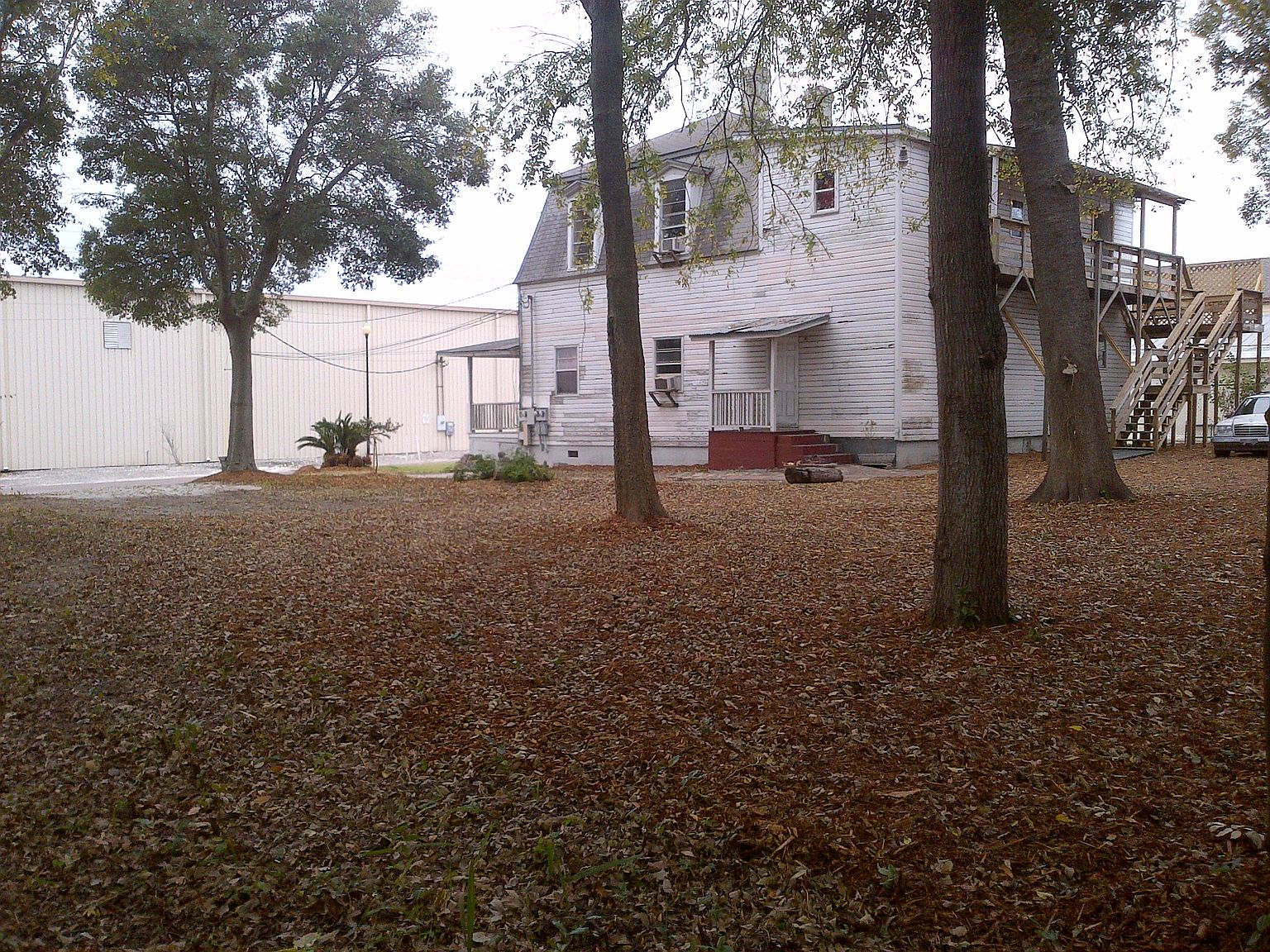
The White House Brothel
The building at 224 North Second Street in Fernandina Beach sits within one of the most historically layered towns in Florida—a place that has changed hands under eight different flags and spent much of the nineteenth century as a borderland haven for smugglers, pirates, and anyone else looking to operate outside the reach of organized law. That history is not incidental to what the building became. It is the reason the building existed at all. Amelia Island's deepwater harbor made Fernandina a strategic prize long before the town had paved streets. The Spanish platted Old Town in 1811 as the last Spanish city laid out in the Western Hemisphere, and almost immediately the settlement earned a reputation as what one contemporary account called a "festering fleshpot"—a free port where slaves, liquor, and foreign luxuries moved through with little interference. The bluffs overlooking the Amelia River were lined with bordellos. When Florida was ceded to the United States in 1821, the worst of the lawlessness was curtailed, but the character of the waterfront district did not vanish overnight. By the 1850s, Senator David Yulee's cross-state railroad had shifted the town south to its present location, and the new Fernandina that grew up around it attracted the same volatile mix of laborers, sailors, merchants, and opportunists that port towns have always drawn. Saloons, boarding houses, and brothels operated openly along the side streets near the waterfront, serving the men who built the railroad, worked the docks, and crewed the ships of the Mallory Steamship Line. The White House Brothel on North Second Street was part of that world—a private residence that operated as a house of prostitution during Fernandina's rougher years, catering to the sailors and dockworkers who moved through the port. The building is associated with the kind of transient, hard-living population that left few written records and even fewer names behind. What is known is that violence followed the trade. The property is said to be haunted by two spirits: a ghostly prostitute and a sailor who died in a fight at or near the premises. The details of neither death have been documented in the public historical record with specificity—no names, no dates, no coroner's reports have surfaced—but the claims have persisted long enough and consistently enough to appear across multiple paranormal databases and to feature on Fernandina Beach's popular ghost tours, which regularly pass the building. The reports themselves are sparse but pointed. The structure, now a private residence, carries a reputation among locals and tour guides as an active site. The spirits attributed to it are not described as residual impressions but as presences—figures associated with the building's past life, lingering in a structure that has long since been converted to domestic use. Fernandina Beach is a town saturated with haunted claims—Fort Clinch, the Palace Saloon, the Florida House Inn, Bosque Bello Cemetery, and the alleged witch's grave near the high school all feature prominently—but the White House Brothel occupies a different register. It is not a grand Victorian landmark or a civic institution. It is a small building on a side street where people lived hard, died violently, and were largely forgotten. The house is a private residence and is not open to the public.

House of Death
The address 14 West 10th Street in New York's historic Greenwich Village represents one of North America's most famous and extensively documented locations of concentrated paranormal activity, earning the designation "House of Death" through the accumulation of well-documented spiritual phenomena and the remarkable abundance of supernatural entities believed to inhabit its structure simultaneously, a concentration unparalleled in documented haunted locations. The building's history as a residential address in one of Manhattan's most culturally significant neighborhoods positioned it at the critical intersection of artistic creativity, intellectual ferment, political discourse, and the emotional turbulence that characterized Greenwich Village during its emergence as an artistic and cultural capital of American society during the nineteenth and twentieth centuries. The notoriety of 14 West 10th Street among paranormal researchers, ghost enthusiasts, and serious investigators stems significantly from its documented connection to the legendary American author Mark Twain, whose residence at the address and subsequent death within the building established his name permanently within its paranormal record and attracted scholarly interest from both serious literary historians and professional paranormal investigators seeking explanation of sustained phenomena. Mark Twain's ghostly presence has been documented most consistently in and around the stairwell, where multiple witnesses including skeptics and believers have reported observing a masculine apparition that precisely matches Twain's distinctive appearance and physical characteristics, moving with the characteristic gait of an elderly gentleman, traversing the stairs repeatedly as if engaged in some eternal routine or unable to release his profound attachment to the physical space. Beyond Mark Twain's well-documented presence, the building hosts an extraordinary collection of additional entities—estimates from professional paranormal investigations suggest the simultaneous presence of approximately twenty-two distinct spirits, a concentration of supernatural inhabitants unparalleled in most documented haunted locations worldwide. A woman wearing a white dress has been observed multiple times by independent witnesses, appearing as a translucent figure that manifests particularly in residential spaces and common areas throughout the building, suggesting a female resident or frequent visitor from the building's extensive and complex history whose life intersected with tragedy, violence, or profound emotional trauma. A young girl's apparition has been documented by numerous witnesses across multiple decades, often appearing playful or mischievous in demeanor and behavior, suggesting a child who died within the building and retained psychological and emotional attachment to the familiar spaces of her childhood residence. A gray cat, described by witnesses as translucent and distinctly ghostly in appearance, has been observed moving through the building's interior with characteristic feline grace and independence, suggesting the presence of a beloved pet whose emotional bond to the residence transcended biological death and maintained continued existence within the paranormal realm. Jan Bryant Bartell's documented investigation and residential experience at 14 West 10th Street produced detailed accounts of paranormal phenomena including icy cold touch sensations that appeared without corresponding environmental explanation, objects moving through space without visible agency, disembodied voices expressing intense emotion and occasionally apparent distress, and shadow figures that manifested in peripheral vision and moments of partial visibility. The concentration of distinct entities, the detailed documentation by credible investigators, the connection to famous historical figures, and the consistency of phenomena across multiple decades of witness testimony have established 14 West 10th Street as America's most thoroughly documented haunted residence and a primary site of serious paranormal investigation and ongoing research.
Heriot-Tarbox House
The Heriot-Tarbox House stands as a significant architectural remnant of Georgetown, South Carolina's colonial prosperity, its weathered facade and elegant proportions testimony to an era when this Low Country port rivaled Charleston in commercial importance. Constructed during the eighteenth century, the house witnessed the rise and fall of mercantile fortunes, hosting guests of considerable prominence and standing as a place of refinement and cultured society. The building's design reflects the architectural sophistication of its period, with symmetrical Federal-style elements and interior details that bespeak the wealth and taste of its original occupants. The exterior features characteristic Low Country construction techniques including piazzas designed to capture sea breezes and shade the interior from intense southern heat. Georgetown flourished as a center of indigo cultivation and trade, with merchant houses such as this one serving as both residences and business headquarters for the planter aristocracy that controlled the region's economy and social life. The waterfront location provided convenient access to shipping lanes and international commerce that enriched the families inhabiting such grand residences. The house absorbed the daily dramas of generations of inhabitants, from intimate family moments to significant historical events, its rooms holding centuries of memories within their walls. The spatial arrangement of the house reflects social hierarchies and domestic customs of the era, with servant spaces segregated from family quarters and public reception areas designed to impress visitors of consequence. The multiple fireplaces, specialized rooms, and decorative finishes indicate considerable wealth and refined sensibilities among successive occupants. Yet Georgetown and this historic house became inextricably linked with one of the most enduring mysteries of early American history, centered on Theodosia Burr Alston, daughter of Vice President Aaron Burr. In 1812, Theodosia embarked on a ship bound for Georgetown to visit her father, who had fled political disgrace in New York and sought refuge in isolation from the hostile political environment. The vessel carrying her vanished at sea under circumstances that remain unexplained to this day, and she was never found despite extensive searches and inquiries. Her disappearance sparked speculation and mourning that reverberated through American society, with theories ranging from piracy and privateering to shipwreck to deliberate assassination. The Heriot-Tarbox House, where she was expected to arrive and likely stayed on prior visits to her father, became associated with her tragic fate and the grief of lost reunion. Paranormal investigators and visitors have reported mysterious presences throughout the house's interior rooms, apparitions that some identify as Theodosia herself, still waiting for a reunion that never came. Witnesses describe seeing a translucent female figure in period dress moving through guest areas where she may have stayed, and experiencing profound sadness and unexplained emotional distress in specific rooms. Cold spots concentrate in chambers where she likely slept, and visitors report feelings of profound longing and despair. The emotional intensity of her situation appears to have impressed itself upon the physical structure. The activity suggests a spirit caught between arrival and departure, eternally present in a house of reunion that became instead a place of permanent absence and eternal waiting. Today, the Heriot-Tarbox House attracts paranormal researchers intent on communicating with its spectral inhabitant and understanding the cryptic messages she may be attempting to convey across more than two centuries.
Nathan Hale Homestead
The Nathan Hale Homestead occupies a position of considerable significance in the American colonial and Revolutionary War historical landscape, situated in the town of Coventry, Connecticut, as both a tangible architectural remnant and a symbolic reminder of the nation's struggle for independence. Originally constructed in the eighteenth century, the homestead served as the residence of Nathan Hale's family and represents the domestic life and family structure of a prominent Connecticut household during the formative decades of American colonial society. The property encompasses both the main house structure with its period-appropriate architectural features and surrounding land essential to the household's sustenance and economic productivity. Nathan Hale himself spent formative years within this homestead before pursuing education and eventually his fateful participation in military operations during the Revolutionary War. The homestead has been preserved and maintained as a historical site dedicated to interpreting colonial life, family structures, and the historical context in which figures such as Hale lived. Today the homestead operates as a museum and historic house, with trained interpreters and exhibits providing visitors with understanding of domestic life, family relationships, and historical circumstances of the colonial period. The apparitional manifestations documented within the Nathan Hale Homestead reveal a complex spiritual geography encompassing multiple distinct entities whose presences have made themselves known through varied paranormal phenomena throughout the building and grounds. Deacon Hale, the patriarch of the household who lived during the colonial period, has appeared to visitors and staff in the form of a spectral figure dressed in characteristic colonial-era garments, including breeches, waistcoat, and other clothing typical of a man of status and property during the eighteenth century. These manifestations have occurred most frequently in the main rooms of the homestead, areas central to family life and household management. A second spectral presence, identified as Lydia Carpenter, an enslaved or indentured servant woman, has been encountered in the form of a ghostly lady dressed in white, engaged in the perpetual repetition of domestic labor, particularly sweeping floors as she moves through the house. This figure embodies the historical reality of labor that supported colonial households, making visible through continued apparitional activity the work of women whose contributions are often rendered invisible. Additional paranormal phenomena include rattling chains emanating from basement areas, alongside unexplained footsteps traversing staircases and hallways without visible human agency. The paranormal activity has prompted serious investigation and documentation by paranormal researchers and historians seeking to understand the nature and origins of these manifestations. The back stairs appear to be a particular locus of paranormal activity, with visitors and staff reporting encounters with apparitions, strange sounds, and feelings of spiritual presences in this transitional space. The basement region, with its associations to servitude and labor, has emerged as a site of particularly intense haunting phenomena, with chains suggesting possible trauma or difficult circumstances associated with enslaved or indentured persons who labored in these spaces. The apparitional figures, auditory phenomena, and electromagnetic anomalies suggest the presence of residual psychic imprints associated with individuals whose emotional experiences and lived realities within the homestead have created lasting impressions upon the physical space. These manifestations continue to be experienced by contemporary visitors, particularly during evening and night hours when paranormal activity intensity increases. The homestead remains a significant location for both historical education and paranormal investigation.