
Phantom Smells at Haunted Places
243 haunted locations
Goatman’s Bridge
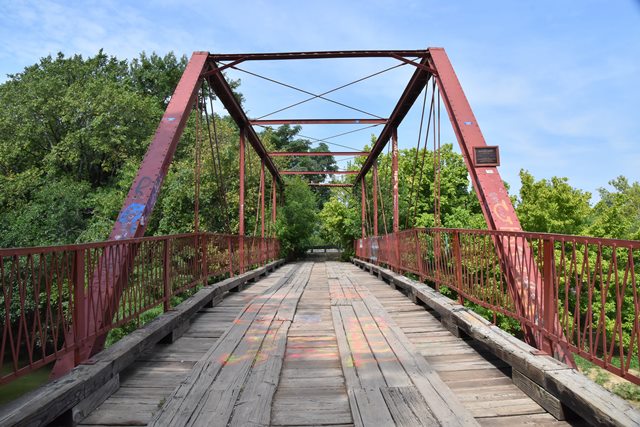
Just outside Denton, Texas, tucked between trees and hovering over Hickory Creek, stands the Old Alton Bridge—better known today as Goatman’s Bridge. What looks like a quiet iron truss bridge from the late 1800s has become one of the most infamous legend-laden locations in the state. Part history, part folklore, part modern paranormal hotspot, Goatman’s Bridge sits at the crossroads of documented past and deeply rooted local myth. The bridge was built in 1884 to connect the towns of Denton and Copper Canyon, replacing an earlier wooden structure. For decades, it served farmers, travelers, and livestock drivers moving through the area. The surrounding woods and creek bottom were rural, isolated, and—especially at night—pitch black. Even without a legend attached, it’s the kind of place that feels removed from the modern world once the sun goes down. The haunting reputation largely centers around the story of a Black goat farmer named Oscar Washburn. According to the legend, Washburn successfully raised goats near the bridge and even hung a sign reading “This way to the Goatman.” As the story goes, members of a local Ku Klux Klan group resented his success and presence in the area. One night, they allegedly dragged him onto the bridge and hanged him from the iron supports. When they looked over the edge to see his body, it was gone. In retaliation, the legend claims the mob murdered his wife and children at their cabin nearby. The problem is that historians have found little concrete evidence confirming the Washburn story as it’s commonly told. While racial violence was tragically common in Texas during that era, records directly tying this specific lynching to the bridge remain debated. Like many American ghost stories, the narrative appears to have evolved over time, blending fragments of possible history with escalating folklore. Beyond the Goatman legend, the surrounding woods have their own dark reputation. Some accounts claim the area was once a gathering site for the KKK. Others say occult rituals took place in the forest clearing near the bridge. Stories circulate of satanic symbols, animal remains, and strange ceremonies—though many of these reports are difficult to verify and may stem from trespassing, vandalism, or modern thrill-seekers attempting to add fuel to the myth. Paranormal claims at Goatman’s Bridge are intense and varied. Visitors report hearing growls or heavy footsteps pacing along the bridge at night. Some claim to see a tall, shadowy figure with glowing eyes moving between the trees. Others describe feeling sudden dread or being pushed, scratched, or followed. Electronic voice phenomena sessions allegedly capture aggressive responses. There are even reports of car malfunctions and battery drain near the bridge—common claims at high-profile paranormal sites. One of the most persistent experiences reported is a feeling of being watched from the treeline. Investigators often describe the woods as more active than the bridge itself. Disembodied voices, distant chanting, and unexplained knocks are frequently cited. Skeptics argue that the area’s wildlife—deer, coyotes, wild hogs—and the acoustics of the creek valley can easily account for many of the sounds. The power of suggestion also plays a significant role; when people walk into a place expecting a demonic goat creature, adrenaline tends to do the rest. Despite the debate over its historical accuracy, Goatman’s Bridge has cemented itself in Texas paranormal culture. It has been featured in documentaries, YouTube investigations, podcasts, and television ghost-hunting shows. The combination of racial tragedy, alleged occult activity, and a creature-based legend gives it a uniquely layered mythology compared to traditional “haunted house” locations. Today, the Old Alton Bridge is part of a public trail system, and visitors can legally walk the bridge during park hours. By day, it’s a scenic historic structure surrounded by greenbelt trails. By night, it transforms into something entirely different in the public imagination—a place where history, fear, and folklore blur together. Whether the Goatman is a vengeful spirit, a demon born from rumor, or simply a campfire story that grew too large to contain, the bridge remains one of Texas’ most talked-about haunted locations. It’s a reminder that sometimes the most powerful hauntings aren’t built on documented facts alone—but on the stories communities tell, retell, and refuse to let die.
Boulder Dam Hotel
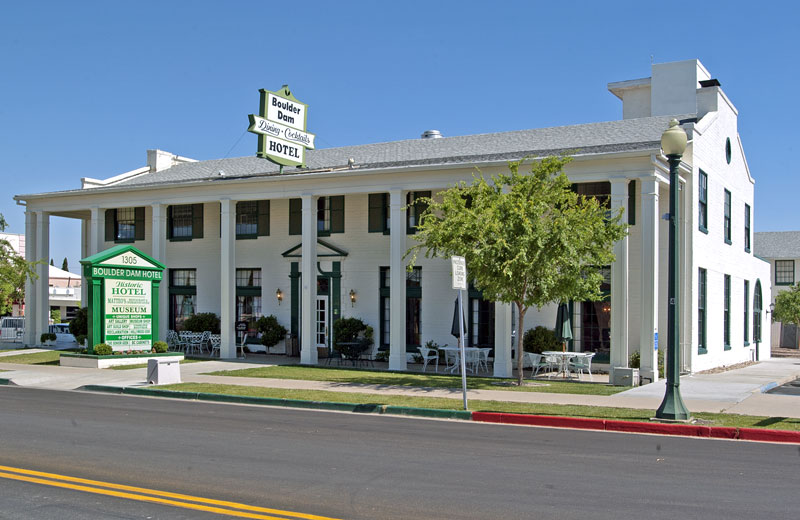
Boulder City, Nevada, is one of the strangest towns in the American West—a place that exists only because the federal government built it from nothing in 1931 to house the thousands of workers constructing what was then called Boulder Dam. In a state defined by gambling, Boulder City was the opposite: a tightly controlled government town with no casinos, no saloons, and strict rules governing daily life. It was engineered for productivity, not pleasure. But it needed a hotel. And the Boulder Dam Hotel, completed in 1933 at 1305 Arizona Street, was built to fill that gap—not for the workers who poured concrete in killing heat down in Black Canyon, but for the dignitaries, officials, and celebrities who came to watch them do it. The hotel was the vision of Paul Stewart Webb, a local businessman who recognized that the thousands of tourists arriving by train from Los Angeles and by car along the Arrowhead Highway would need somewhere to stay. City Manager Sims Ely issued Webb a permit, and the result was a two-story Dutch Colonial Revival structure designed by architect L. Henry Smith—white-columned, with concrete-block walls rising to gable roofs, a wood-paneled lobby, private baths in all thirty-two rooms, and a modern climate system advertised on highway billboards. At its grand opening, the Boulder Dam Hotel had no equal in southern Nevada. Las Vegas, still a small railroad town, had nothing to compare with it. The guest list through the 1930s and 1940s reads like a Hollywood directory crossed with a diplomatic registry. Bette Davis stayed while vacationing after filming in 1934. Mr. and Mrs. Cornelius Vanderbilt Jr. honeymooned there. Will Rogers performed at the nearby Boulder Theatre during a stay in 1935, weeks before his death. Boris Karloff visited while obtaining a divorce. The Maharajah and Maharani of Indore passed through, as did Cardinal Pacelli, who would later become Pope Pius XII. Howard Hughes recuperated at the hotel after crashing his amphibious plane on Lake Mead. Shirley Temple was a regular guest. The hotel also became popular with movie stars establishing Nevada residency for quick divorces, adding a layer of personal upheaval to the building's social history. The hotel's fortunes declined along with passenger rail and shifting tourism patterns. It changed hands over the decades but avoided demolition. In 1982, it became the first hotel in Nevada listed on the National Register of Historic Places. In 2005, the Boulder City Museum and Historical Association acquired the property and renovated it, reducing the room count to twenty-two while expanding public spaces. The Boulder City/Hoover Dam Museum now occupies the first floor, telling the story of the dam workers and the Depression-era community built to house them. Paranormal claims at the Boulder Dam Hotel are varied, persistent, and span decades. The most frequently cited phenomenon involves the sounds of music, conversation, and laughter emanating from the ballroom when it is entirely empty. Staff working alone at night have reported hearing what sounds like a party in full swing—piano music, clinking glasses, voices—only to find the room dark and vacant. The smell of cigar smoke has been reported throughout the hotel despite a no-smoking policy, particularly in the room once occupied by Howard Hughes, who was known to smoke cigars. Some staff believe Hughes himself lingers in the building. The apparition of a former night desk clerk named Tommy Thompson has reportedly been seen in the main lobby, and guests have described an overwhelming sensation of heaviness in the same area. Rooms 209 and 219 are cited as the most active, with reports of faucets turning on in unoccupied rooms, doors opening and closing on their own, and cold spots appearing without drafts. Some guests have described being physically touched or grabbed by unseen hands. Boulder City historian Dennis McBride, who kept offices in the hotel's basement, documented many of these accounts in his book on the property. McBride himself reported seeing an apparition in his basement office. During a reading he arranged with psychic Patsy Welding, she reported sensing strong presences on the upper floors and refused to descend into the basement, describing the energy as overwhelming. The hotel's proximity to Hoover Dam—where at least ninety-six workers died during construction—has led some to speculate that dam workers may account for some of the activity, and figures in old-fashioned work clothes have been glimpsed in restricted areas of the building. Today the Boulder Dam Hotel operates as a boutique historic hotel and museum. The staff generally downplays the haunting reports, and at least one investigator has noted that asking about ghosts can quickly cool an otherwise warm reception. But the accounts continue to accumulate, logged by guests who arrive knowing nothing of the hotel's reputation and leave describing experiences they cannot explain.

Stevenson House
The Stevenson House stands at 530 Houston Street in Monterey, California, a two-story Spanish Colonial adobe set back from the road behind trees and gardens in the heart of the old town. It is a quiet building on a quiet street, operated by the California Department of Parks and Recreation as part of Monterey State Historic Park, and best known as the place where a young, unknown, gravely ill Scottish writer named Robert Louis Stevenson spent the autumn of 1879 recovering from tuberculosis and courting the woman who would become his wife. The house bears his name and holds one of the world's most important collections of his personal belongings. But the ghost that has occupied the building for nearly eight decades is not Stevenson's. It belongs to the woman who ran the place before he ever arrived—and who died there trying to save her grandchildren from a disease she could not outrun. The original adobe was built around 1836 by Don Rafael Gonzalez, the customs administrator at the Port of Monterey during the Mexican era. The walls are a mixture of chalk rock laid in mud mortar and wood frame, plastered in limestone, with a bracketed shingled roof. After California passed to the United States, the building changed hands and purposes. In the late 1860s, a Swiss immigrant of French descent named Juan Girardin purchased the property with his second wife, a local Mexican woman named Manuela Perez. The Girardin family renovated the structure and opened it as the French Hotel, which became one of Monterey's primary boarding houses, serving sailors, tradesmen, artists, and travelers. The year 1879 destroyed them. A typhoid fever epidemic swept through Monterey, and Juan Girardin was among its first victims, dying on July 1. Months later, the couple's two grandchildren fell ill with the same disease. Manuela threw herself into nursing them, barely sleeping, refusing to leave their bedsides in the upstairs nursery. She contracted typhoid herself and died on December 21, 1879. The children, miraculously, survived—but Manuela never knew it. She died believing she had failed them. After so much death, no one wanted to buy the French Hotel. It was eventually purchased at a steep discount by a man named Jules Simoneau, who continued operating it as a boarding house. When his friend Robert Louis Stevenson arrived in Monterey that same autumn—penniless, tubercular, chasing Fanny Osbourne across a continent—Simoneau let him stay for free. Stevenson spent roughly three and a half months there, writing prolifically despite his illness, producing essays, stories, and gathering the impressions that would later inform his most famous work. In 1937, the building was purchased by Edith van Antwerp and Celia Tobin Clark to preserve it as a Stevenson memorial. They donated it to the state in 1941 along with a significant collection of the author's manuscripts, first editions, and personal effects. The house was restored to reflect both the Stevenson period and the Girardin family's era, with the upstairs rooms displaying the furnishings and domestic life of the French Hotel. It is in those upstairs rooms—particularly the nursery where Manuela nursed her grandchildren—that the haunting centers. For nearly eighty years, visitors and staff have reported encountering the spirit known as the Lady in Black. She appears as a woman in a black dress with a high lace collar, solid and lifelike enough that witnesses have mistaken her for a costumed docent—until she vanishes. The activity concentrates in December, the month of Manuela's death. The nursery rocking chair has been observed rocking on its own, propelled by no visible force. Visitors report the sudden, unmistakable smell of carbolic acid—the sickroom disinfectant used in the nineteenth century—filling the room without any source. One visitor described feeling a calming hand placed on her shoulder that began gently rubbing her back. Trunks have been found dragged across the floor. Books are pulled from shelves. The scent of roses appears and dissipates without explanation. During a lecture to the California Historical Society, a speaker reportedly noticed an unfamiliar woman in period dress sitting in the audience, listening with apparent interest from a rocking chair, before disappearing. Other visitors have reported seeing a blurry-faced man in a robe and a small child running through the halls. The museum does not permit paranormal investigators, preferring to maintain its identity as a literary and historical site rather than a haunted attraction. That restraint is itself notable—the lack of organized investigation means the reports that exist are almost entirely spontaneous, offered by visitors and staff who came for Stevenson and encountered something older. Today the Stevenson House operates by reservation, open for guided tours within Monterey State Historic Park. It is listed on the National Register of Historic Places and designated California Historical Landmark No. 352. The gardens are peaceful, the rooms carefully preserved, and the collection of Stevenson memorabilia is irreplaceable. But the building's most persistent presence is not the famous author who passed through for a season. It is the woman who lived and died there—who gave everything she had to keep two children alive and never learned that she succeeded. Manuela Girardin remains, by all accounts, exactly where she was needed most.

Spitzer House Bed and Breakfast
Four blocks west of the historic Medina Square in northeastern Ohio, the Spitzer House sits on West Liberty Street like a Victorian postcard brought to life—painted trim, stained glass windows, twin cherry staircases, and the kind of ornamental woodwork that announces both the wealth and the aspirations of the family that built it. Constructed in 1890 for Ceilan Milo Spitzer, the house was a monument to one of Ohio's most ambitious financial careers. Spitzer was born in 1849 in Batavia, New York, and raised in Medina County after his family relocated in 1851. He entered business young, moving into banking with his father Aaron. An early Cleveland venture—the German-American Bank—collapsed in 1880 amid a national financial panic, and Spitzer liquidated his personal assets to pay every creditor, a move that cost him dearly but cemented his reputation. He rebuilt from the ground up. By the late 1880s, he and his cousin Adelbert had established Spitzer & Company in Toledo, becoming the first firm west of New York City to deal in municipal bonds. They were widely credited as founders of the municipal bond industry in the American Midwest. In January 1900, Ohio Governor George Nash appointed Ceilan Quartermaster General of the state with the rank of Brigadier General—a title he carried for life. It was at the height of this ascent that Spitzer commissioned the Medina house, overseeing construction remotely while expanding operations in Boston. His return to inspect the nearly completed residence made the front page of the Medina County Gazette in December 1890. He granted his parents a lifelong lease the following year, and the Spitzer family would occupy the house for the next seventy years. The house is a German Renaissance design with Queen Anne and Stick-Style elements, executed with particular refinement. Cherry and oak woodwork run throughout. The guest rooms, now named for family members, retain the proportions and character of the original layout. After the family's long tenure ended, the home was converted into a bed and breakfast in 1994 and has earned recognition for its restoration. It sits within walking distance of downtown Medina—a quiet residential stretch that belies the building's increasingly well-known reputation. That reputation extends beyond architecture. The Spitzer House has been featured in Chris Woodyard's Haunted Ohio book series, Brandon Massullo's Haunted Medina County, Ohio, and appears on multiple paranormal databases. The claims are specific, recurring, and tied to distinct areas of the house. In Ceilan's Room, guests have reported the apparition of a stern-looking man—sometimes watching from the corner, sometimes near the bed. The figure is widely interpreted as Spitzer himself, and at least one account describes the apparition physically nudging a guest. In Anna's Room, named for Ceilan's stepmother, the presence is different: a young servant girl, appearing at the foot of the bed or at the top of the staircase. Guests have heard her laughter. Some accounts describe her as short and stout, wearing an Edwardian-era housedress, firing questions at startled witnesses before vanishing. In the dining room, the voices of two men have been heard conversing when the room is empty. The parlor piano has been reported playing on its own. Throughout the house, guests describe flickering lights, slamming doors, cold spots, and light touches from an unseen source. One guest reported being scratched. Another described a spirit whispering their name. What gives these accounts weight is their consistency across decades and unrelated witnesses, and the absence of any anchoring tragedy. There is no murder, no suicide, no fire. The Spitzer family's occupancy was long and unremarkable in terms of darkness. Ceilan himself died in 1919 in Toledo, not in the Medina house. The servant girl's identity remains unknown—no documented death connects a specific individual to the claims. The hauntings seem to belong to the house itself rather than to any story imposed upon it. Skeptics will note that Victorian homes are acoustically rich—old wood settles, radiators clang, drafts move through invisible gaps. A bed and breakfast trades on atmosphere, and guests who know the reputation are primed to interpret ambiguity as evidence. But the reports carry a specificity—particular rooms, particular figures, particular behaviors—that resists dismissal as environmental noise alone. Today the Spitzer House continues to operate at 504 West Liberty Street, offering four guest rooms with private baths, period furnishings, and breakfast served in the dining room where two invisible men still occasionally hold court. The cherry staircases are original. The stained glass catches the light the same way it did in 1890. And whether a young woman in a housedress is waiting at the top of the stairs depends on when you visit—and how much of the house's long memory you're prepared to meet.

Sedamsville Rectory
On a narrow street in one of Cincinnati's smallest and most overlooked neighborhoods, a four-level rectory sits on a hillside above the Ohio River, holding inside its six thousand square feet of space a concentration of dark history that has made it one of the most investigated paranormal locations in the state. The Sedamsville Rectory at 639 Steiner Avenue has been featured on the Travel Channel's Ghost Adventures, the SyFy Channel's Haunted Collector, and the Biography Channel's My Ghost Story, and was voted the number one fan favorite episode during the Travel Channel's 2015 Halloween marathon. The attention is not accidental. The building's history involves violent death, alleged abuse, and a period of abandonment during which the basement reportedly housed something far worse than neglect. Sedamsville itself was established in 1795 by Colonel Cornelius Sedam, a Revolutionary War veteran who moved to the area to help build Fort Washington. The neighborhood grew along the banks of the Ohio River and the railroad line, becoming a hub for manufacturing and river commerce. By the late nineteenth century, the community's booming German Catholic population led to the founding of Our Lady of Perpetual Help parish in 1878. The Gothic Revival church was dedicated on May 5, 1889, perched high on a hill overlooking the neighborhood. According to a booklet published by the parish for its centennial, the rectory was built in 1891 to house the priests serving the growing congregation. The building is a substantial structure with a parlor, living room, library, formal dining room, kitchen, and bathroom on the first floor, servant's quarters accessible by a back staircase on the second floor, additional rooms on the third floor, and a basement that would later take on its own grim reputation. Sedamsville prospered into the early twentieth century, with over a hundred businesses operating along River Road. Residents could take the streetcar into Cincinnati or the ferry across to Kentucky. But the catastrophic Ohio River flood of 1937, combined with the ongoing Depression, devastated the commercial district. Many businesses never rebuilt. The widening of River Road further isolated the neighborhood. Our Lady of Perpetual Help's school closed in 1976 and merged with Holy Family parish in East Price Hill. When the church itself closed in 1989, the remaining parishioners joined Holy Family as well. The church was stripped of its sacred items and the properties were sold. In 1995, John Klosterman purchased the church and rectory from the Archdiocese of Cincinnati. The rectory's paranormal reputation is anchored by several distinct threads of history. The most widely identified spirit is Father Donald MacLeod, who authored The History of Roman Catholicism in North America and resided at the rectory in the late 1800s. Father MacLeod was struck and killed by a train in Sedamsville while on his way to provide comfort to a seriously ill woman. Since his death, locals and parishioners have reported seeing his apparition walking along the street near the building or beside the railroad tracks. Inside the rectory, visitors have reported seeing the figure of a clergyman in the hallways. Adding to the building's burden are two separate deaths documented on the street directly in front of the rectory—a man found dead at one time, and a child found with a noose around its neck at another. The circumstances of these deaths are not well documented, but the proximity to the building has drawn them into its haunting narrative. The darkest chapter of the rectory's history involves two distinct periods of alleged abuse. The building is rumored to have housed a priest who abused and molested children during its years of church operation. Separately, during a period in the 1980s when the rectory sat vacant after the church closed, the basement was reportedly used to operate a dog fighting ring. The convergence of these two forms of cruelty—against children and against animals—has led investigators and visitors to describe the energy inside the building as not merely haunted but aggressively malevolent. The sounds of dogs growling and barking have been reported in the basement when no animals are present. Visitors have described being scratched, bitten, pushed, and shoved by unseen forces. A child-like entity has been encountered in the building, but when approached, it reportedly growls rather than speaks, leading some investigators to suspect it may not be what it appears. A shadowy figure described as a dark monk has been reported moving through the halls. The smell of sulfur—commonly associated in paranormal research with demonic or deeply negative presences—has been noted by former tenants. One ghost hunter received a scratch down his back in the shape of a cross during an investigation. When the current owners brought salvaged books and a Monet reproduction into the building from a vandalized neighboring house, the rectory reportedly erupted with growling, whispering, a slamming door upstairs, the sound of a woman crying, and a sudden darkening of the interior light. The Midwest Preservation Society began renovations of the rectory in March 2011, and it was during this restoration work that the building gained its widest attention. Workers reported eerie mists and shadows visible under the doors of empty rooms. The Ghost Adventures investigation in 2012 captured evidence that deepened the rectory's reputation as one of the most aggressive haunts in the Midwest. Paranormal teams that have investigated the site report shadow figures, intelligent responses to questions during EVP sessions, physical contact from unseen entities, and doors that open and close without explanation. Today the Sedamsville Rectory remains privately owned and continues to undergo restoration. The neighborhood around it is small and quiet—known primarily as the birthplace of Pete Rose and for the rectory itself. The church still stands on the hill above. The railroad tracks still run nearby. And the building at 639 Steiner Avenue continues to draw investigators and visitors who describe it in terms that most haunted locations never earn—not just active, not just unsettling, but a place where the accumulated weight of suffering seems to push back against anyone who enters.
The Cordova Inn
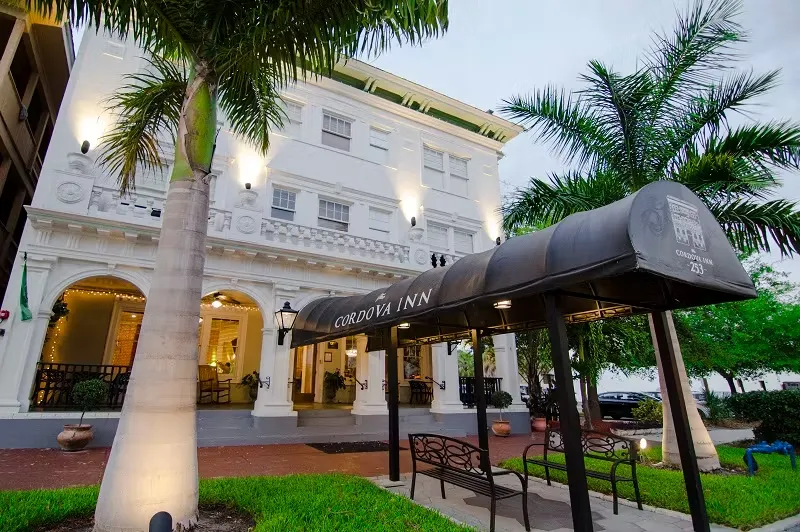
At 253 Second Avenue North in downtown St. Petersburg, Florida, a three-story Renaissance Revival building sits half a block from the Sundial shopping district, looking much the way it did when it first opened in 1921. The Cordova Inn is not the grandest of St. Petersburg's boom-era hotels—it never competed with the Vinoy or the Don CeSar for celebrity guests—but it is among the oldest, and its quieter history carries a weight those larger landmarks don't always match. Built by Francis Scott during the opening surge of the Florida Land Boom, the hotel originally operated as The Hotel Scott. It arrived at the moment when rising postwar prosperity and the spread of the automobile turned Florida's Gulf Coast into one of the most frenzied real estate markets the country had ever seen. St. Petersburg's population exploded in the early 1920s, and small hotels like The Scott sprang up to house the tourists, speculators, and seasonal residents flooding the area. The building was constructed of masonry with scored stucco designed to resemble stone, its facade detailed with five keyed arches, a balustrade topped with decorative urns, and a projecting cornice along the roofline. Inside, thirty-two rooms were fitted with clawfoot soaking tubs—many of which survive today. By 1923, the hotel had changed hands and been renamed the Hotel Cordova, after the family that would operate it for three decades. The Cordovas sold in the early 1950s, and for the next half century the property passed through multiple owners. As downtown St. Petersburg declined through the 1970s and 1980s, the hotel declined with it. By the late 1990s the surrounding blocks were considered undesirable after dark, and the Cordova closed in 1999, sitting empty on a street it had anchored for nearly eighty years. A local investor completed a full restoration, reopening it as The Pier Hotel in 2001—earning the St. Petersburg Preservation Society's Restoration of the Year Award. In 2014 the property reclaimed its historic name. It is a contributing property to the Downtown St. Petersburg Historic District on the National Register of Historic Places. The central figure in the hotel's haunting is not a guest or an owner but a member of the staff—the Major-domo, the building's head butler. According to the hotel's own published history, this man devoted twenty years to the Cordova's guests before dying inside the building he had served. The circumstances of his death are not widely detailed, but the hotel does not shy from acknowledging the story. During the years the building sat vacant before restoration, schoolboys who broke in at night reportedly heard howling in the empty hallways—sounds attributed to the displaced Major-domo protesting the abandonment of his post. Ghost tours in St. Petersburg have included the Cordova on their routes for years, and local paranormal investigator Brandy Stark has featured the hotel in her downtown walking tours. Guest accounts have accumulated steadily since reopening. Visitors describe the apparition of a well-dressed man in an old-fashioned suit, widely believed to be the Major-domo. Some employees have concluded this figure has helped protect the building from neglect—a guardian rather than a threat. But overnight experiences suggest something more complicated. Multiple visitors describe being woken by a sharp burst of air or a whispered word in their ear. Others report sleep paralysis accompanied by sensations of being touched or held down. One guest described hearing two women standing over them discussing a man who would be displeased with their belongings. The second and third floors generate the most reports. The staircase between them is a recurring point of interest—visitors describe sudden heaviness or a feeling of presence while ascending. Cold spots appear without explanation. A sulfurous smell has been noted near Room 208. The building's age explains some of this. A century-old masonry structure without elevators, with original plumbing and narrow corridors, will produce sounds modern buildings do not. Guests primed by the hotel's openly acknowledged reputation may interpret ambiguous input accordingly. But the specificity of many accounts—the whispered names, the paralysis, the smell—pushes beyond what settling wood and old pipes typically produce. Today the Cordova Inn operates as a boutique hotel with its original thirty-two rooms, a lobby bar called The Scott, a fireplace, a small library, and a veranda. There is no elevator—guests climb the original staircases, just as they did in 1921. Whether the Major-domo is still making his rounds depends on who you ask and what floor you're sleeping on. But the building remains what it has been for over a century: a place built to welcome strangers, where at least one longtime resident appears unwilling to stop doing exactly that.
Devil’s Bridge
On the south side of San Antonio, where the city thins out into scrubby ranchland and the San Antonio River bends through old mission territory, a small bridge on East Ashley Road crosses a ravine deep enough that locals say if you drop a rock from the railing, you'll never hear it land. The bridge sits near 2454 East Ashley Road, not far from Mission San Juan Capistrano—one of the chain of eighteenth-century Spanish missions that line the river and now form a UNESCO World Heritage Site. The area has been continuously inhabited for thousands of years. Native Americans camped along this stretch of river long before the Spanish arrived. The missions themselves, established in the 1730s, were built with Indigenous labor and sustained by an elaborate acequia system that still carries water through the surrounding farmland today. The ground here is layered with centuries of human presence, conflict, disease, conversion, and death. It is old land, even by Texas standards. Devil's Bridge is not an ancient structure. It is a modest roadway bridge, unremarkable in engineering, crossing a steep ravine in an area that goes very dark after sundown. The name belongs to a global tradition—there are dozens of Devil's Bridges across Europe, most of them medieval, each carrying its own legend about a pact with Satan in exchange for construction. San Antonio's version doesn't have a clear origin story for the name itself. Some say it refers to supernatural happenings at the site. Others suggest it simply describes the danger of crossing the ravine at night on an unlit road, in an era before guardrails and headlights made such crossings routine. The bridge did claim at least one documented life: on March 7, 1965, shortly after midnight, a forty-one-year-old woman named Victoria Ann Broussard was fatally injured when the car her husband was driving struck the bridge's guardrail head-on. He told the responding patrolman he hadn't seen the bridge. She was pronounced dead at Baptist Memorial Hospital and buried at San Fernando Cemetery No. 2. The paranormal claims at Devil's Bridge draw from multiple threads, none of them cleanly verifiable but all of them persistent. One account ties the haunting to the Spanish colonial period, claiming a priest whose parishioners were killed during the Inquisition hanged himself from a tree near the bridge. Visitors have reported hearing the sound of a creaking rope in the surrounding trees—rhythmic, deliberate, like a body swinging from a noose. A priest at the nearby San Juan Church reportedly warned a young man in the early 1970s to be careful exploring the riverbank near the bridge, telling him he had personally seen spirits walking the grounds where Native Americans once camped. The young man had found pottery shards and square nails in the area, artifacts consistent with centuries of habitation along the river. A paranormal investigator named Joe recorded EVP sessions at the bridge and claimed to capture a voice responding to the question "Who are you?" with the name "Melvin," along with a separate recording of a voice saying "I'm here." No historical records have been found for anyone named Melvin connected to the site. Visitors have also reported the apparition of a headless woman who approaches from behind, white smoke-like figures, and the smell of sulfur—rotten eggs—hanging in the air around the bridge at night. The claim about the impenetrable darkness is among the most frequently repeated: that after sundown, the area around the ravine becomes so dark that headlights and flashlights seem to penetrate only a few feet, as if the light itself is being absorbed. The most unsettling recurring detail involves the ravine itself. Multiple accounts describe throwing rocks off the bridge and never hearing them hit water or ground—as though something catches them, or the ravine simply has no bottom. One version of the legend attributes this to the spirit of a little girl. The depth of the ravine is real and measurable, but the acoustic effect in a steep, vegetation-choked gully at night, combined with ambient insect noise and the psychology of expectation, could plausibly account for the phenomenon. Or it couldn't. The people who've stood on that bridge in the dark tend to find the explanation less comforting than the mystery. Today Devil's Bridge remains a functioning road bridge on East Ashley Road, accessible by car, with no signage or formal acknowledgment of its reputation. Mission San Juan sits nearby, its stone walls and flowing acequias drawing tourists and pilgrims. The San Antonio Food Bank farms the old mission fields just down the road. It is a landscape where the sacred, the agricultural, and the spectral exist in close proximity—where a UNESCO site and a haunted bridge share the same stretch of river, and where the oldest water rights in Texas still flow through ditches dug by hands that have been gone for three hundred years.
Normandy United Methodist Church
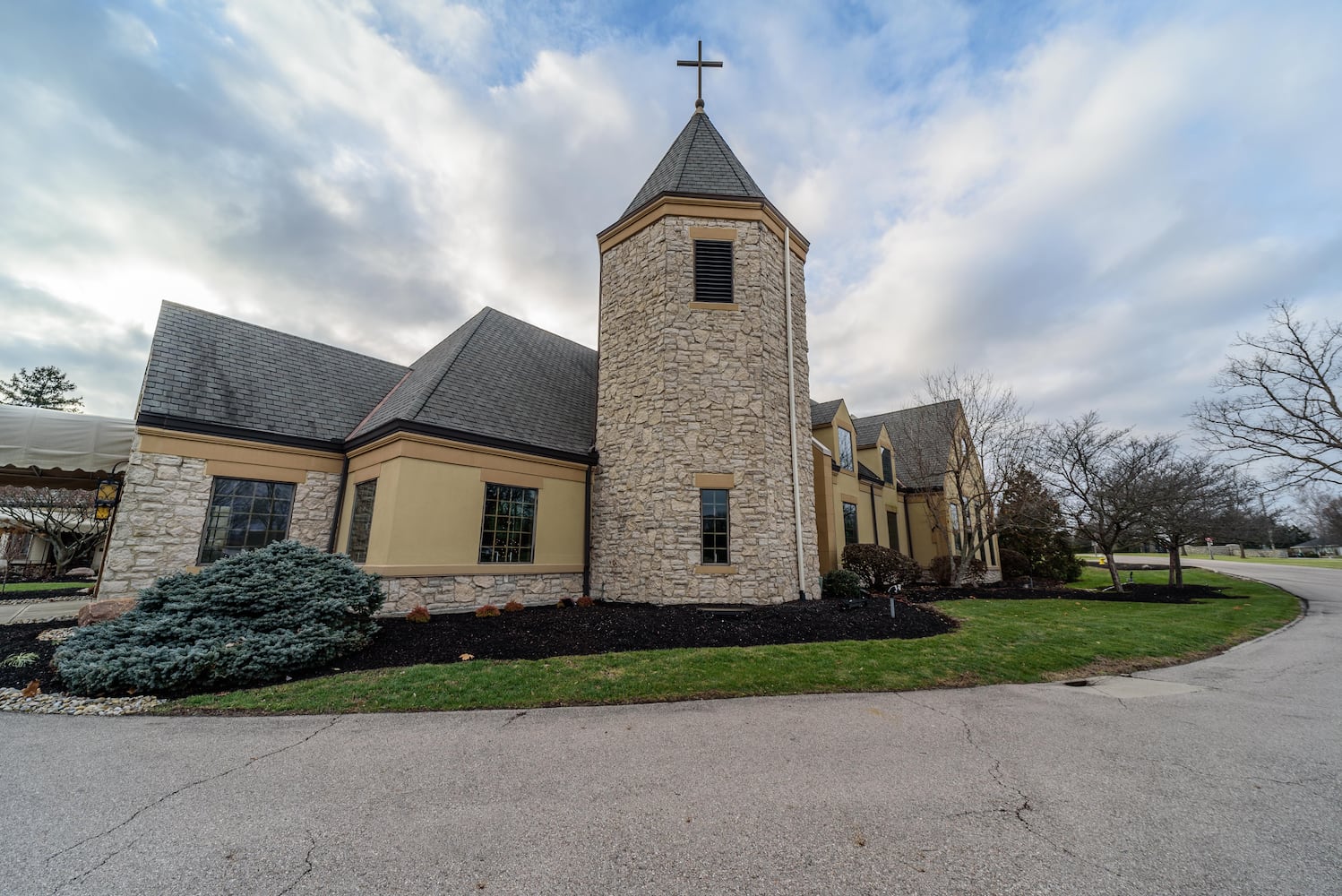
Normandy United Methodist Church sits at 450 West Alex Bell Road in Washington Township near Dayton, Ohio, but the building at its heart is not a church at all—it is a million-dollar English Manor estate built in the late 1920s by one of the most powerful automobile executives in the country. The mansion, known as Normandy Farms, was the home of Richard Hallam Grant Sr., a Harvard-educated industrialist who rose from a clerk's position at National Cash Register in 1904 to Vice President and General Sales Manager of Chevrolet and eventually a member of the General Motors Board of Directors. The Grants had traveled extensively in Europe and were particularly taken with the Normandy region of France, so in 1924 they hired a New York architectural firm to design a residence worthy of the name. Construction began in 1927 and was completed in 1930 at a reported cost of one million dollars—a staggering sum at the height of the Depression. The house was remarkable not just for its scale but for its innovation. It was reportedly the first fully air-conditioned private residence in the United States. Grant, an inventor by temperament, outfitted the home with automatic closet lights that activated when doors were opened—a concept he later carried over to the Chevrolet automobile. The estate featured dual furnaces and water systems, concealed closets, a private gymnasium, a two-story pewter chandelier, nickel-silver stair railings, four built-in safes, one of the first push-button radios, and an automatic push-button garage door opener. A swimming pool and diving platform graced the grounds. The rooftop promenade overlooked the rolling farmland of Montgomery County. It was a house built by a man accustomed to thinking on an industrial scale, applied to domestic life. Grant lived at Normandy Farms until 1955. In 1938, he had acquired controlling interest in the Reynolds & Reynolds Company, which he headed until his death in 1957. His wife Laura Williams Grant, whom he had married in 1906, was by all accounts deeply attached to the estate. When the Grants decided to leave, they sold or gifted the property to form the Normandy United Methodist Church. Services were originally held in the Grant living room, which became the chapel. A 1963 addition provided a sanctuary, education space, and kitchen—now known as Fellowship Hall. The church's present-day sanctuary was built in 1997. The mansion itself remains the architectural centerpiece of the campus, listed on the National Register of Historic Places since 1983. It is Laura Grant, by most accounts, who never left. Custodians and cleaning crews working late at night in the mansion have reported the unmistakable scent of perfume drifting through empty rooms when no one else is in the building. The fragrance appears without source, lingers briefly, and dissipates. Mysterious noises have accompanied the scent—sounds without clear origin in the old residence and staff quarters. One account from a person who grew up around the church in the 1980s describes seeing a woman in white watching from an attic window of the mansion during a snow day while children sledded on the hill behind the property. The figure was visible and distinct enough to send the witness running home. The same person reported multiple unexplained experiences over several years, spanning both the main residence and the staff quarters. Other accounts describe the family who once owned the estate haunting the grounds and buildings more broadly, though the perfume and the woman in white remain the most consistently reported phenomena. The claims are modest in number but striking in their domestic quality. There are no reports of malevolence, no violent history to anchor the haunting to a specific trauma. What people describe is the presence of someone who loved the house and apparently has no intention of leaving it—a woman whose perfume still fills rooms she furnished, whose silhouette still appears in windows she once looked through. If suggestion plays a role, the mansion itself provides ample material. The original architecture is extraordinarily well preserved, and the transition from private estate to church left much of the interior character intact. Walking through the Grant mansion is walking through a space that still feels owned—not by a congregation, but by the people who built it. Today Normandy United Methodist Church is an active congregation with roughly 490 in weekly attendance. The historic mansion hosts a popular annual Christmas open house featuring decorated trees, carolers, and tours of the original rooms. The property is surrounded by what is now Grant Park, where the farmland that once belonged to the estate is open to the public. The church does not trade on its haunted reputation, and the building's primary identity remains firmly rooted in community worship and service. But the perfume still comes, and the woman in white still watches from the attic, and the house that Richard Grant built for a million dollars and filled with every innovation of the modern age remains, by quiet account, occupied by someone who was there before any of the congregants arrived.

Beach Drive Inn Bed and Breakfast
Set along the palm-lined waterfront of Beach Drive in downtown St. Petersburg, Florida, the building now known as the Vinoy House Inn occupies a quiet but prominent place within one of the city’s most historic neighborhoods. Located just steps from Tampa Bay and the long-established waterfront parks of the Old Northeast district, the structure dates back to the early twentieth century, when St. Petersburg was rapidly developing into a winter destination for travelers escaping colder northern climates. During this period of expansion, large homes and guest properties were constructed along Beach Drive to accommodate seasonal residents and visitors drawn to the area’s warm weather and scenic waterfront. The house at 532 Beach Drive Northeast was built around 1910 as a private residence associated with the influential Vinoy family, whose name is closely tied to the development of the surrounding area and the nearby Vinoy Hotel. The structure reflected the coastal residential architecture common to the time, with broad porches designed to capture breezes from the bay and interior spaces arranged for long seasonal stays. Over the decades, as St. Petersburg evolved and many of its early waterfront homes were converted or replaced, the property transitioned from a private residence into a small hospitality business. Its location within walking distance of the city’s waterfront parks, museums, and cultural attractions made it well suited for use as a boutique lodging property. For many years the building operated as the Beach Drive Inn Bed and Breakfast, a small historic inn that preserved much of the original home’s character. Guests stayed in rooms that had once served as private bedrooms, and the structure retained details typical of early twentieth-century homes such as narrow staircases, wooden floors, and antique furnishings. In the early 2020s the property underwent renovations under new ownership and was reintroduced as the Vinoy House Inn, a name chosen to reconnect the building with the historic Vinoy district surrounding the nearby waterfront resort. While the branding changed, the structure itself remained the same historic house that had stood along Beach Drive for more than a century. Alongside its architectural history, the building has developed a reputation for unexplained occurrences that some visitors interpret as paranormal. Much of the reported activity centers around one of the upstairs guest rooms, commonly identified in earlier years as the Montego Room. According to widely repeated local accounts, a housekeeper who once worked at the property died there under unclear circumstances, and some believe her presence may still linger within the building. Guests staying in the room and nearby areas have described hearing unexplained footsteps in the hallway late at night, even when the inn is otherwise quiet. One of the most frequently mentioned claims involves a rocking chair that appears to move on its own without anyone nearby. Visitors have also reported faint music, doors opening or closing unexpectedly, and the sensation that someone is walking just outside their room during the night. Staff and guests occasionally describe subtle disturbances such as shifting shadows or the sound of movement on the stairs after the building has settled for the evening. While these reports remain anecdotal, the consistency of the stories over many years helped establish the inn’s reputation as one of the quietly haunted locations along the St. Petersburg waterfront. Local paranormal enthusiasts and curious travelers sometimes seek out the property because of these stories, and investigators have occasionally stayed at the inn hoping to experience the reported phenomena firsthand. Experiences vary widely. Some visitors report nothing unusual at all, while others describe small disturbances that they find difficult to explain. Skeptics often attribute the experiences to the age of the building itself, noting that historic homes can produce unusual sounds as wood expands and contracts and as air moves through older structures. Today the Vinoy House Inn continues to operate as a boutique bed and breakfast, offering guests a stay inside one of the surviving historic homes along Beach Drive. More than a century after it was first constructed, the house remains a physical link to St. Petersburg’s early development as a resort city. Whether visitors come for the architecture, the history of the waterfront district, or the lingering stories of unexplained activity within its rooms and hallways, the building remains a distinctive presence along one of the city’s most recognizable streets.

Gallatin Gateway Inn
The Gallatin Gateway Inn stands as a striking Spanish-stucco railroad hotel that opened its doors on June 18, 1927, in Gallatin Gateway, Montana, representing the pinnacle of railroad hospitality and architectural design during the era of transcontinental travel. Built to cater to wealthy travelers who arrived via the Northern Pacific Railway, the establishment quickly became a destination of choice for those seeking both luxury accommodations and breathtaking views of the surrounding Montana landscape. The five-story structure, with its distinctive architectural style and sweeping vistas, attracted guests from across the nation and hosted social gatherings of considerable prominence throughout the twentieth century. The hotel's early decades were marked by the promise of prosperity and refined elegance, yet beneath this veneer of success lay a darker chapter that would transform it into one of Montana's most documented haunted locations. Tragedy struck the inn when a young housekeeper became entangled in a relationship that would end in her violent murder at the hands of her boyfriend. The circumstances surrounding her death created a profound disturbance in the emotional landscape of the building, imprinting the location with residual spiritual energy that would persist for generations. Staff and guests began reporting encounters that defied conventional explanation, beginning with sightings of a ghostly female figure whose appearance matched the description of the deceased housekeeper. The most frequently reported phenomenon involved visitors gazing into mirrors throughout the establishment only to see her ghostly reflection staring back at them, often alongside their own image. These reflections appeared solid and deliberate, suggesting an active presence rather than mere psychological suggestion. Beyond the haunting image of the murdered housekeeper, numerous other entities established themselves within the inn's walls. Guests reported the spectral presence of a bridegroom ghost, whose identity and tragic circumstances remain shrouded in historical obscurity, wandering upstairs guest rooms and the third-floor hallways. Additional reports described encounters with maid apparitions in period clothing, suggesting that multiple spirits from different eras may have become bound to the location. The paranormal phenomena manifested in diverse and unsettling ways throughout the building. Visitors described unexplained odors of wet leaves that appeared suddenly and vanished without cause, lights in rooms turning on and off independently of any switch operation, and objects mysteriously hidden in unusual locations only to be discovered by bewildered guests. Some guests reported the distinct sound of piano music emanating from empty rooms where no instrument could be found. Others described the unmistakable sensation of a firm invisible hand grasping or touching them without warning, and a pervasive icy presence that swept through hallways and guest rooms regardless of the external temperature. The paranormal activity concentrated heavily in the upstairs guest rooms and throughout the third floor, where multiple spirits appeared to maintain their most intense presence. Witnesses described apparitions that would manifest momentarily before vanishing directly into solid walls, defying any rational understanding of spatial physics. The experiences became sufficiently documented that the hotel developed a reputation within paranormal research circles as a legitimate investigation site. Despite the supernatural disturbances, the Gallatin Gateway Inn continued operating as a hotel and event venue, attracting both regular guests seeking comfortable accommodations and paranormal enthusiasts hoping to document the otherworldly phenomena. The building stands as a testament to how historical trauma can create lasting impressions on physical structures, transforming a symbol of luxury and elegance into a location where the boundaries between the living and deceased appear remarkably permeable.
Vina Rae’s Grill & Graze
Avard, Oklahoma, situated in the high plains region of the panhandle, developed as a small agricultural community during the late nineteenth century as settlers and homesteaders claimed land and established farms throughout the region. The town's commercial center evolved gradually as population accumulated and economic activity generated demand for goods, services, and social gathering spaces. Among the structures that served community functions was the Avard High School, a building constructed to educate the town's youth and serve as a cultural focal point for civic activities and social gatherings. The gymnasium within the high school complex represented an investment in community infrastructure, providing space for athletic competitions, dances, school assemblies, and various social events that bound together the diverse families inhabiting the surrounding rural area. The building embodied practical architectural conventions emphasizing functionality and durability characteristic of school construction during its era. Throughout much of the twentieth century, the gymnasium and attached structures served their intended educational purposes, accumulating memories of youthful achievement, social bonding, and community celebration. Economic and demographic transformations characterizing rural America throughout the latter twentieth century rendered many small-town institutions obsolete or underutilized. The Avard High School complex, like countless similar facilities across agricultural regions, experienced declining enrollment as populations shifted toward larger urban centers. Rather than allowing the structures to deteriorate into abandonment, the property was repurposed to serve new commercial functions. The conversion to Vina Rae's Grill & Graze preserved the building from complete decay while creating new economic activity and gathering opportunities for the community. Interior spaces originally designed for athletic competition and school functions were reconfigured to accommodate dining service, kitchen facilities, and infrastructure required for food service operations. This transformation preserved the building's physical presence within the community while fundamentally altering its social function and temporal rhythm of daily activity. The establishment's paranormal phenomena concentrate around a woman's violent death that occurred during the building's commercial operation period. Documentation indicates that a woman was murdered within the facility's interior spaces, referenced in paranormal accounts as a headless apparition due to the severity of the injury. The extraordinary violence suggests the death occurred during a robbery, assault, or violent felony. The woman's death on Memorial Day 2002 created a traumatic energetic imprint that appears to have fundamentally altered the location's supernatural landscape. The specificity of the date indicates the event was significant enough to be recorded and remembered by paranormal investigators and community members. Since the documented murder, visitors and staff at Vina Rae's Grill & Graze have reported paranormal phenomena suggesting the persistent presence of the murdered woman's spirit. Photographs taken throughout the establishment consistently capture orbs of light that were not visible during photography, spherical manifestations paranormal investigators interpret as concentrated spiritual energy. Witnesses have reported detecting a distinctive odor described as burning hair, a sensory phenomenon suggesting trauma energy or spiritual distress. Disembodied voices throughout the facility produce both coherent words and inarticulate sounds expressing emotional anguish or rage. Footsteps echo through various areas without identifiable source, suggesting an entity capable of environmental interaction. Knocking sounds emanate from walls and surfaces, interpreted as communication attempts or expressions of frustration. These phenomena have established Vina Rae's as one of Oklahoma's most documented haunted restaurant locations, attracting paranormal researchers drawn by the genuine supernatural activity concentrated around violent trauma.
AMC Puente Hills 20
The Baker Hotel in Mineral Wells, Texas stands as a monumental testament to the prosperity and optimism of the American spa resort industry during the early twentieth century, a structure of substantial grandeur that once attracted wealthy visitors seeking the purported therapeutic benefits of the region's naturally occurring mineral springs. Constructed during an era when mineral water cures represented cutting-edge medical thinking and when thermal spas served as premier vacation destinations for the affluent, the Baker Hotel embodied American capitalist ambition and entrepreneurial vision. The hotel was built by T.B. Baker, a visionary businessman who recognized the commercial potential of Mineral Wells' natural resources and invested considerable capital in creating a luxury destination capable of competing with prestigious spas across the nation. The fourteen-story structure dominated the Texas landscape, its imposing architecture and comprehensive amenities making it a beacon of elegance and refinement throughout the twentieth century. The hotel accommodated hundreds of guests annually, offering not merely lodging but an entire experience designed around wellness, relaxation, and social engagement among the wealthy elite. The property featured numerous floors of guest rooms, elegant dining facilities, ballrooms for entertainment, and comprehensive therapeutic facilities dedicated to water-based treatments and spa services. However, the Baker Hotel's history encompasses tragedy and loss alongside its earlier prosperity and prestige. A woman identified as T.B. Baker's mistress reportedly jumped to her death from the seventh floor, a tragic event that cast a shadow across the hotel's legacy and contributed substantially to the location's dark reputation. The woman's death, whether suicide or accident, became embedded in the hotel's narrative and continues to resonate through visitor accounts and paranormal reports more than a century later. In subsequent decades, the hotel experienced significant decline as spa tourism diminished and the property gradually fell into disrepair, though portions continued to operate until final closure. The Baker Hotel has developed an extensive reputation for paranormal manifestations documented by numerous visitors, guests, and paranormal investigation teams. Mysterious scents materialize spontaneously throughout the structure, including the distinctive aroma of expensive perfume, the scent of cigar smoke associated with early twentieth-century gentlemen, and the sharp chemical smell of detergent, manifesting without identifiable source and dissipating mysteriously. Doors throughout the hotel open and close without apparent cause, including elevator doors that operate despite no button activation or electrical power supply, creating an atmosphere of constant unseen activity. Apparitions have been reported throughout the hotel, with some witnesses identifying figures consistent with period attire from the hotel's early twentieth-century heyday. Elevator incidents represent particularly troubling phenomena, with guests reporting feeling sudden, inexplicable movements, hearing mechanical sounds despite non-functional equipment, and experiencing overwhelming emotional disturbances within the elevator shaft area. Scholars of the paranormal attribute these manifestations to the traumatic death on the seventh floor, particularly the mistress whose fatal jump occurred under circumstances never fully clarified. The Baker Hotel's abandonment may have intensified rather than diminished reported paranormal activity, as the structure deteriorated and visitor interaction ceased, potentially intensifying spectral presence. The hotel continues to attract paranormal researchers and adventure seekers, despite substantial structural decay and ongoing restoration initiatives that gradually reclaim portions of the building.
Ojai Valley Inn
Ojai Valley Inn, situated in the naturally scenic Ojai Valley region of Southern California, has served as an upscale resort and hospitality destination for well over a century, consistently hosting guests seeking the valley's historically renowned therapeutic climate and its exclusive accommodations that have become legendary in California resort circles. The inn's historic structures reflect the distinctive Spanish Colonial Revival architecture characteristic of early twentieth-century California resort development during a period when such architecture was considered the height of sophisticated design and cultural authenticity. The sprawling grounds encompass meticulously manicured gardens, extensive recreational facilities including pools and fitness centers, and numerous guest bungalows spread across the substantial property in layouts designed to provide privacy and tranquility. The inn's long history spanning well over a hundred years of continuous hospitality has accumulated numerous tragic incidents, untimely deaths, and deeply emotional events within its rooms and across its grounds, phenomena that appear to have anchored spirits permanently to the location and its structures. Room 5 has become particularly notorious for concentrated paranormal phenomena, with numerous guests reporting the aggressive manifestation of what paranormal researchers identify as a poltergeist entity that repeatedly bangs the closet door open and shut violently throughout the night hours, often accompanied by foul odors that guests and staff consistently describe as overwhelmingly noxious and disgusting despite inability to identify the odor's chemical or biological source. The phenomenon occurs with remarkable regularity and consistency that strongly suggests purposeful and directed harassment rather than accidental mechanical failure, with closet doors found mysteriously and inexplicably open despite being carefully and securely closed by guests, and the violent banging occurring persistently regardless of time of day or season. A ghostly man dressed formally in attire entirely consistent with early twentieth-century fashion and social conventions has been frequently reported in the inn's prominent lobby and common areas, appearing to guests as a translucent or semi-transparent figure of considerable clarity before disappearing abruptly when approached or followed. This entity exhibits clear awareness of his surroundings and the living people within his vicinity, and appears to move with purposeful direction and intent, suggesting sentience and a possible significant former association with the inn during its early operational period. Shadowy figures move persistently throughout the guest room corridors and common spaces, with witnesses describing forms that distinctly lack the clear physical definition of solid bodies and appear to pass through walls and architectural barriers as if not bound by physical limitations. Multiple guests have reported the deeply disturbing sensation of their shirt collar being pulled forcefully from behind by unseen hands and invisible forces while alone in their rooms, an interaction pattern that strongly suggests direct physical manipulation by paranormal entities attempting to establish contact. The lobby area experiences consistent and ongoing paranormal phenomena including apparitional sightings, unexplained sounds, and what staff members describe as a persistent atmosphere of unease and oppression despite the location's demonstrably luxurious and carefully designed welcoming aesthetic. The restaurant area has been the documented site of numerous guest encounters with the resort's spectral inhabitants, with diners reporting the appearance of ghostly figures dressed in period clothing moving through the dining spaces and between tables. Staff members have regularly encountered extensive unexplained phenomena including the sound of disembodied voices speaking indistinctly, footsteps in verifiably empty areas, and the distinct and unsettling sense of being watched carefully by entities present in the physical space. The inn's expansive grounds contribute additional distinct paranormal phenomena, with outdoor areas producing apparitional sightings and what visitors and staff describe as the presence of entities of considerable emotional intensity and apparent disturbance. Despite the extensive and well-documented paranormal phenomena, the inn continues successful operations as a premier Southern California resort destination, with many guests explicitly attracted to the location precisely because of its established reputation for paranormal activity and ghostly encounters.
Carbon Hotel
Helper, Utah, emerged during the late nineteenth and early twentieth centuries as a railroad town centered around the economic activity generated by transcontinental rail development. The Carbon Hotel, constructed around 1900, reflected the architectural and social conventions of a frontier hospitality establishment designed to accommodate workers, travelers, and transient populations moving through the region. The building served multiple functions throughout its operational history, initially established as a conventional hotel providing lodging to railroad employees and commercial travelers. However, the establishment's history took a significant turn as social conditions evolved and economic opportunity attracted a more varied clientele seeking services beyond standard hotel accommodations. The building's location in Helper, a town defined by its connection to railroad infrastructure and the rough-edged culture that accompanied industrial development, created a specific social environment where conventional morality often yielded to economic pragmatism and survival considerations. During the early twentieth century, the Carbon Hotel transitioned from its original function to operate as a brothel, a transformation reflecting the commercial realities of frontier life and the economic strategies adopted by those seeking profit from human desire and loneliness. The establishment became known throughout the region as a place where various illicit services could be obtained, attracting a clientele drawn from the railroad workers, miners, and transient populations that characterized Helper's demographic composition. The women who worked within its walls occupied complex positions within the social hierarchy, simultaneously exploited and economically independent, subject to dangerous conditions yet capable of accumulating wealth unavailable through conventional employment. The building absorbed the energies, conflicts, and traumas associated with transactional intimacy and the intersection of desire with commerce, creating an environment suffused with complicated histories and unresolved human dramas. The Carbon Hotel's paranormal legacy appears firmly rooted in the tragic circumstances and trauma accumulation that characterized the building's period of operation as a brothel. A woman's apparition, consistently described by visitors and paranormal investigators as wearing old-fashioned dress appropriate to the early twentieth century, manifests throughout the building with apparent regularity. The apparition suggests the presence of a female spirit, possibly one of the establishment's workers, whose death or traumatic experience created sufficient energetic imprint to persist across subsequent decades. Witnesses describe encounters with a shadowy figure of an aged miner, possibly a client or worker associated with the building during its operational period, whose manifestation suggests the presence of another tormented entity. Historical records indicate that individuals who lived in the building as children during later periods of its operation reported disturbing experiences, including the inexplicable shaking of door handles and other poltergeist-like phenomena suggesting interaction with unseen forces. Most distinctive among the paranormal phenomena is the appearance of a characteristic wildflower scent that manifests in various locations throughout the building with apparent randomness. The odor, reminiscent of natural flora inappropriate to interior spaces, suggests the presence of a sensitized entity attempting to communicate through olfactory channels. Today, the Carbon Hotel stands as a documented haunted location attracting paranormal researchers and curiosity seekers drawn by the convergence of the building's complex history, documented paranormal phenomena, and the theoretical questions it raises about how human trauma and emotional intensity imprint themselves upon physical structures. The location's reputation extends beyond local knowledge, featuring in paranormal documentation and investigation resources that catalog America's most authentically haunted locations. Visitors report diverse experiences ranging from subtle sensations of unease to dramatic encounters with apparitions and unexplained phenomena, creating a consistent testimonial base suggesting genuine paranormal activity rather than mass hysteria or collective fabrication. The building remains a testament to the hidden histories embedded within frontier architecture and the possibility that human suffering and unresolved tragedy can extend their influence across temporal boundaries, haunting the physical spaces where such experiences were concentrated.
McMenamins Grand Lodge
McMenamins Grand Lodge in Forest Grove, Oregon represents a contemporary hospitality destination housed within a historic structure, operating simultaneously as a functioning hotel and restaurant while maintaining significant paranormal manifestations rooted in the property's earlier history. The lodge was constructed during an era of institutional development and serves as a multi-purpose facility providing lodging accommodations, dining, retail services, and entertainment venues for contemporary visitors. The building's architecture reflects period construction methods and design sensibilities consistent with its original institutional purpose, with architectural features and structural elements preserved through careful restoration and adaptation work. The paranormal presences center upon two primary entities whose distinct personalities create a dynamic supernatural environment within hotel spaces. The Lavender Lady, identified historically as Anna, represents one of the most prominent paranormal presences, manifesting as an elderly woman with white hair whose living life extended to nearly one hundred years of age. Her ghostly manifestations involve translucent figure appearance throughout various hotel areas, particularly in guest accommodations and common spaces where she appears to maintain continued presence and interest in daily activities. More distinctively, her presence announces itself through an overwhelmingly strong scent of lavender that permeates the air in areas where her apparition materializes, creating an olfactory signature so distinctive that contemporary guests describe it as the primary indicator of her presence. The Doctor represents the second major paranormal entity inhabiting McMenamins Grand Lodge, appearing as a professional gentleman in doctor's uniform consistent with medical dress from an earlier historical era. Unlike the Lavender Lady's relatively benign presence, the Doctor's manifestations involve active engagement with physical objects and interference with guest experiences. Paranormal investigators and guest accounts describe the Doctor as engaging in a pattern of moving guest belongings, hiding personal items, and rearranging furniture as though "playing tricks" upon hotel occupants. These activities suggest either malevolent intent or engagement with the physical environment as continued expression or amusement despite death and separation from physical existence. The active nature distinguishes him from many apparitions that manifest passively or reenact previous behaviors in repetitive patterns. Paranormal activity extends beyond primary manifestations to encompass broader supernatural phenomena affecting guest experiences and staff observations. Furniture rearrangement occurs in guest rooms and common areas without human agency, with items relocated to entirely different positions despite locked rooms and absent occupants. Mysterious music manifests within certain areas, particularly spaces historically associated with recreational or entertainment activities, suggesting auditory residual hauntings rooted in earlier entertainment functions. Objects appear and disappear within guest rooms, prompting guest inquiries about misplaced belongings only to find items returned to unexpected locations. The frequency and consistency of paranormal activity throughout the facility creates an environment where supernatural manifestation becomes normalized within the hospitality experience, with staff and regular guests developing familiarity with manifestation patterns and behavioral expectations of resident entities. The constant guest reports of paranormal activity have integrated the supernatural manifestations into the property's operational reality and marketing identity. Hotel management has incorporated acknowledgment of the haunted status into promotional materials and guest information, with many visitors specifically selecting the property because of its paranormal reputation. Paranormal investigation organizations conduct regular formal investigations with management cooperation and permission, documenting extensive evidence of supernatural activity. Staff members have adapted to coexistence with the Lavender Lady and the Doctor, developing informal communication patterns and learning to work around entities' persistent interference. McMenamins Grand Lodge represents a unique hospitality location where commercial operations continue uninterrupted within spaces actively inhabited by multiple paranormal entities whose ongoing presences influence all guest and staff member experiences.
Fitzpatrick Hotel
The Fitzpatrick Hotel occupies a prominent position within the historic architecture and cultural landscape of Savannah, Georgia, serving as both a testament to the city's prosperous nineteenth-century development and a location where multiple tragic events have created conditions for sustained paranormal manifestations. Originally constructed during the antebellum period, the hotel accommodated wealthy travelers and distinguished guests visiting for commerce and leisure. The structure embodies architectural sophistication characteristic of Savannah's most prestigious hotels, with elegant ballrooms designed for social gatherings, carefully appointed guest rooms representing period comfort and luxury, and back stairways facilitating staff labor. The hotel's physical design distinguished public spaces where guests gathered from private guest rooms and behind-the-scenes employee spaces. Throughout its long operational history, the Fitzpatrick Hotel functioned as a venue for significant social events and personal dramas whose emotional weight has left permanent impressions upon the physical spaces where they occurred. The paranormal activity documented within the Fitzpatrick Hotel centers upon multiple distinct spiritual entities whose presences manifest through varied expressions reflecting the circumstances and emotional contexts of their deaths. Room 200 contains a significant haunting involving two sisters whose tragic death history has sustained their continued manifestation within the chamber decades after their deaths. The emotional bonds between them created sufficient spiritual intensity that their presences remain tangible to contemporary visitors and paranormal investigators. Room 307 has become associated with a different manifestation involving a female victim whose death resulted from violent encounter with an assailant, generating oppressive energy within the confined space. A third significant paranormal presence is associated with a lady in green, a spectral figure whose distinctive green garment and the scent of floral perfume accompanying her manifestations make her immediately recognizable. This entity appears throughout the hotel's interior spaces, including ballrooms and back stairs, generating a presence whose emotional tone contrasts with darker manifestations associated with murder victims. The paranormal experiences reported by visitors and guests encompass a wide spectrum of phenomena suggesting multiple active spiritual forces. Phantom music emanates from ballrooms when no orchestras or musicians are present, suggesting the residual imprint of social gatherings and musical entertainment. Disembodied voices and unexplained footsteps traverse corridors and rooms with apparent agency and purpose. The scent of floral perfume appears and disappears without discernible source, accompanying the lady in green and creating an olfactory dimension to paranormal activity. Cold spots materialize and dissolve in specific areas, representing localized temperature anomalies associated with spiritual manifestations. Most significantly, visitors and guests report sudden experiences of panic and overwhelming emotional distress that appear to be psychically transmitted from resident spiritual entities, suggesting the continued emotional intensity of the trauma and suffering that preceded the deaths anchoring these spirits' presence within the hotel. The Fitzpatrick Hotel remains one of Savannah's most actively haunted locations, with ongoing paranormal investigation and tourism centered upon experiencing the verifiable manifestations that continue to characterize the building.
Log Cabin Village
Log Cabin Village in Fort Worth, Texas represents a carefully curated collection of authentic frontier dwellings relocated from across north-central Texas, preserving structures that once housed settlers and ranchers during the region's formative years. The village, established to commemorate the architectural heritage and daily lives of early Texas pioneers, encompasses multiple cabins and outbuildings dating primarily to the late nineteenth and early twentieth centuries. Each structure within the village has been restored to reflect historical accuracy, complete with period furnishings and implements that transport visitors back to an era when log construction represented both practicality and architectural sophistication on the expanding frontier. Among these preserved buildings stands the Foster Cabin, a structure whose dark history transcends ordinary frontier settlement narratives, becoming intertwined with a tragic tale of domestic discord and paranormal consequence that has persisted for more than a century. The most significant paranormal focus centers on the Foster Cabin's second floor, where the documented spirit of Jane Holt, former nanny and wife of the cabin's original owner, manifests with particular intensity and frequency. Historical records indicate that Jane Holt's time in the household was marked by emotional turmoil and unresolved conflict, circumstances that allegedly culminated in her death under circumstances that remain disputed and somewhat unclear even to modern historians. Her presence has been reported consistently by visitors and staff members who describe cold spots appearing spontaneously in certain areas of the second floor, temperature fluctuations that defy conventional explanation despite the structure's age and exposure to natural elements. The scent of lilacs, a flower particularly associated with Jane's personal preference and memory, materializes within the cabin with uncanny regularity, often occurring in spaces where floral arrangements have not been present and where such aromas should not logically appear. Various witnesses have documented their experiences with the Foster Cabin's paranormal phenomena, creating a substantial archive of contemporary accounts that corroborate earlier historical testimonies about the location's haunted nature. Visitors report hearing strange noises emanating from the second floor during daytime hours when the cabin should be empty or occupied only by staff members in other areas, sounds that range from footsteps and soft whispers to the distinctive rustling of long skirts moving across wooden flooring. Multiple observers have reported witnessing apparitions, translucent figures that typically appear in period dress consistent with early twentieth-century clothing, manifesting briefly before fading from view within seconds. Objects within the cabin have been documented moving inexplicably, with items displaced from their usual positions despite secure doors and windows, suggesting an intelligence deliberately rearranging the physical environment. These manifestations collectively suggest Jane Holt's presence remains attached to the location where her earthly suffering was most concentrated, her spectral form continuing to express the emotional intensity that characterized her troubled mortal existence. Log Cabin Village continues to operate as a significant historical and educational resource for Fort Worth and the broader Texas community, attracting thousands of visitors annually who seek both historical knowledge and potential paranormal encounters. The village managers and historical preservation staff maintain the structures with meticulous attention to historical detail while simultaneously documenting the ongoing paranormal activity that occurs within certain buildings. The Foster Cabin remains open to public tours despite its haunted reputation, and many visitors specifically request access to the second floor, hoping to experience or photograph manifestations of the resident spirit. The location has been featured in various paranormal investigation programs and historical documentaries, establishing Log Cabin Village as one of Fort Worth's most notable haunted sites and a destination where frontier history intersects with unexplained phenomena, creating a unique attraction that satisfies both historical curiosity and supernatural intrigue.
The Grove
The Grove in Jefferson, Texas, stands as a haunting reminder of one of the darkest chapters in American history, its elegant structure and grounds concealing a legacy of racial violence, systematic oppression, and tragic death that continues to resonate through its paranormal phenomena. The building itself is a substantial plantation mansion constructed during the antebellum period when the institution of slavery formed the foundation of Southern economic and social systems. The Grove served as the residence of a wealthy planter family whose prosperity derived entirely from enslaved human labor, with the mansion's opulent furnishings and architectural elaboration representing wealth accumulated through the exploitation and suffering of enslaved individuals. The structure's elegant design includes numerous rooms, gardens, and outbuildings typical of substantial antebellum plantations, and these spaces bear witness to decades of human bondage and brutality. The back porch of The Grove holds particular significance in the plantation's paranormal history, as it was the location associated with the tragic deaths that would come to define the property's spiritual legacy. The upstairs rooms of the mansion contained the private quarters of the planter family, while enslaved individuals occupied servant quarters and less visible areas of the property. The documented history of The Grove includes accounts of slavery's brutalities, including corporal punishment, family separation, and the denial of basic human rights and dignities that characterized the plantation system. The paranormal phenomena at The Grove are directly connected to the documented history of four enslaved individuals who were hanged at the property, creating a tragic focal point for spiritual manifestation and residual haunting phenomena. The historical accounts of these deaths are sparse and incomplete, as records from the antebellum period frequently failed to document the deaths of enslaved people with detail or care. The specific circumstances of the hangings, including the identities of the victims, the charges brought against them, and the dates of their deaths, remain partially obscure, preserved only in fragmentary historical accounts and local oral tradition. However, the reality of these tragic deaths is undeniable, and the spiritual consequences of this violence appear to have created permanent alterations to the property's psychic character. The spirits of these four individuals appear to have become bound to The Grove, unable or unwilling to depart from the location where they were violently executed. Their continued presence manifests through various paranormal phenomena that suggest ongoing anguish and unresolved trauma related to their deaths. The psychological weight of racial violence and the psychological imprints of unjust death appear to have created powerful spiritual presences that modern paranormal investigators can detect and document. The paranormal manifestations at The Grove present a complex and troubling picture of spiritual phenomena rooted in historical injustice and racial violence. Phantom odors have been reported throughout the property, with witnesses describing scents that appear without identifiable source and that linger despite attempts to locate their origin. Shadowy figures move through various rooms and outdoor areas of the property, appearing with enough clarity to be observed but maintaining a translucent or semi-transparent quality that identifies them as non-corporeal entities. Moving objects represent another documented phenomenon, with small items relocating without physical explanation and larger objects shifting position in ways that defy conventional understanding. Apparitions of full human figures have been reported by multiple witnesses, appearing primarily in areas associated with the tragic deaths of the enslaved individuals. Lights turning on and off without human intervention occur throughout the property, suggesting the presence of non-corporeal entities capable of interacting with the physical world. Mirrors mysteriously fall from walls and positioning, an unusual phenomenon that may reflect the disrupted nature of the spirits' manifestation. Loud wails emanate from empty rooms and outdoor areas, sounds that witness accounts describe as expressing profound suffering and anguish. Unexplained moisture appears on walls and surfaces without evident source, a phenomenon that some researchers interpret as residual energy from the violent deaths occurring at the property. Most pervasive of all is the consistent report of feeling watched while on the property, a sensation that visitors experience in specific locations and that intensifies during evening and nighttime hours. The combination of multiple types of paranormal phenomena, documented by numerous witnesses over an extended period, suggests that The Grove remains a location where the spirits of the unjustly executed continue to express their presence, their anguish, and their connection to the place where their lives were violently terminated.
Drum Barracks
Drum Barracks stands as a preserved military structure in Wilmington, California, representing a significant chapter in American Civil War history and the military infrastructure that supported Union operations in the southwestern United States during the 1860s. The building was constructed to house military personnel and serve as a command center for operations, representing the federal government's commitment to maintaining military control over the region even as the nation was divided by civil conflict. The structure features multiple rooms and spaces designed to accommodate officers, enlisted personnel, supply storage, and administrative functions necessary for military operations. The barracks is now maintained as a historical museum, preserving the building and its artifacts as a educational resource for understanding the Civil War period and the role of southwestern military installations in the broader conflict. The museum attracts visitors interested in history, military operations, and the everyday life of soldiers during the Civil War era. However, the building's historical significance is matched by its paranormal reputation, as multiple spirits appear to maintain an active presence within the structure. The paranormal presences at Drum Barracks are most prominently represented by two distinct entities who appear to have maintained a long-term presence within the building. Maria is identified as a woman who manifests in a hoop skirt, the garment suggesting either that she lived during the Civil War era or that her appearance is anchored to that period of history. Her apparition appears solid and clearly visible to observers, described as dressed in period-appropriate clothing that suggests her life spanned the era when the barracks was actively in use as a military installation. Maria's presence is often preceded or accompanied by the distinctive scent of lavender or violet perfume, a sensory manifestation suggesting the entity maintains sufficient energy and intention to create olfactory impressions in the physical world. The second entity is a uniformed officer from the 1800s who appears as a solid apparition wearing military dress and apparently smoking a pipe. His manifestations similarly include sensory components, with the smell of tobacco preceding or accompanying his appearances. The two entities appear to coexist peacefully within the building, though whether they interact with each other remains undocumented. Paranormal phenomena at Drum Barracks include both visual apparitions and phenomena affecting the other senses. The Model Room, located within the building, appears to be the most active location, with more frequent and intense manifestations concentrated in that specific space. Unexplained noises are common throughout the building, including sounds of dragging chains and footsteps that suggest movement through the corridors despite no visible source. The odors of perfume and tobacco are reported frequently and appear to be reliable indicators of the presence of Maria and the officer respectively. Items within the museum are sometimes moved from their expected locations, suggesting an active poltergeist phenomenon that may represent an entity other than Maria and the uniformed officer, or that may indicate these entities are capable of manipulating physical objects. Visitors to the museum frequently report emotional impressions and sensory perceptions that suggest the presence of conscious entities observing them as they move through the exhibits. The paranormal phenomena at Drum Barracks appear to be concentrated in the Model Room, where the manifestations are most frequent and intense, though apparitions and other phenomena have been documented throughout the building. The entities appear peaceful and non-threatening in their interactions with living individuals, suggesting they may be trapped spirits content to exist as eternal observers of the building they once inhabited. Maria's manifestations suggest she may have been associated with the barracks as a resident or visitor who maintained emotional connections to the location extending beyond her mortal life. The uniformed officer's continued presence similarly suggests emotional attachment to military service or to specific relationships or experiences that occurred within the structure. The phenomena are consistent across multiple visitor reports and investigations, suggesting genuine paranormal activity rather than isolated incidents or misinterpretation of normal phenomena. Paranormal investigation programs have documented the phenomena, contributing additional evidence to support the haunting claims. Drum Barracks continues to operate as a historical museum, preserving the paranormal phenomena as an integral component of the visitor experience alongside the historical artifacts and educational programming. The museum has incorporated the haunting into its promotional materials and historical interpretation, acknowledging the paranormal reputation while maintaining focus on the historical significance of the location. Visitors to the museum frequently report experiences consistent with the documented paranormal phenomena, including sightings of apparitions, unusual odors, and emotional impressions. The combination of historical preservation and active paranormal phenomena creates a unique location where past and present coexist, where Civil War era military history remains vividly present not only in artifacts and structures but in the apparently continuing presence of the spirits of those who lived and worked within the building. Drum Barracks represents a compelling example of how locations of historical significance may also become locations of paranormal activity, where trauma, loss, and profound emotional events may anchor spirits to the physical locations where their lives and deaths occurred.
Bush House Country Inn
The Bush House Country Inn in Index, Washington represents a historic lodging establishment situated in a remote mountain community with significant paranormal activity centered upon tragic historical events. The structure was constructed during an era when regional transportation and commerce relied upon railroad infrastructure connecting remote communities to broader economic networks. The building served lodging needs of railroad workers, traveling businessmen, and other transient populations moving through mountain passes and developing communities. The architectural style and construction methods reflect practical building approaches of the late nineteenth and early twentieth centuries, with materials and designs suited to challenging mountain climate and geographic isolation. The Bush House Country Inn's history is inextricably linked to the tragic death of Annabelle, a young woman who met her end through hanging in the stairwell connecting the third floor to lower building levels. The exact circumstances surrounding Annabelle's death remain embedded in historical records with varying degrees of clarity, creating ambiguity regarding whether death resulted from suicide, murder, or accident under circumstances clouded by historical distance. Regardless of precise manner, the traumatic nature of Annabelle's demise created a spiritual imprint manifesting continuously through paranormal phenomena concentrated in areas directly associated with her final moments. The presence of a male laborer or railroad worker apparition suggests additional tragic deaths or spiritual unrest associated with working-class populations frequenting the inn. The most dramatic paranormal manifestation involves Annabelle's apparition, whose ghostly form appears in the third floor stairwell where her body was discovered hanging. Witnesses describe encountering the spectral figure of a young woman who manifests most prominently in areas immediately surrounding the location of her death, appearing to reenact or replay elements of the tragic event. The intensity of her manifestations has increased over decades as the location's paranormal reputation became more widely known. Beyond the visual apparition, the inn experiences persistent olfactory phenomena associated with Annabelle's residual spiritual presence, with visitors reporting distinct scents of cigar smoke and feminine perfume concentrated in second floor guest areas where she may have spent time during living days. Paranormal investigators conducting formal investigations have documented extensive electronic evidence supporting witness testimony of supernatural activity. Disembodied voices captured on digital recording call guests by personal names, suggesting either telepathic communication or acquired knowledge of visitor identities. Electromagnetic field fluctuations concentrated in specific areas indicate concentrated spiritual energy presence consistent with documented apparitions and manifestation patterns. EVP recordings have captured speech in human voices speaking in apparent attempts at communication with living visitors. These electronic manifestations suggest spirits retain some awareness of the contemporary world and active interest in communicating with living inhabitants. The paranormal activity appears to intensify during evening and nighttime hours when fewer living occupants are present and contrast between spiritual and physical presence becomes pronounced. The Bush House Country Inn continues operating as a lodging establishment and paranormal investigation destination, attracting visitors interested in historical tourism and supernatural experiences. Staff members have developed familiarity with paranormal phenomena and report adapting to coexistence with resident entities. Guests selecting the inn specifically for paranormal activity often report vivid dreams, sensing presences in their rooms, and feeling emotional heaviness concentrated in particular areas. Paranormal investigation groups conduct regular formal investigations with inn permission and cooperation, accumulating extensive documentation spanning multiple investigation sessions across years. The location has gained recognition as one of Washington's most active paranormal sites, where tragic history of Annabelle's death and continuing spiritual manifestations create actively documentable paranormal phenomena.