
Haunted Asylums in America
36 haunted locations
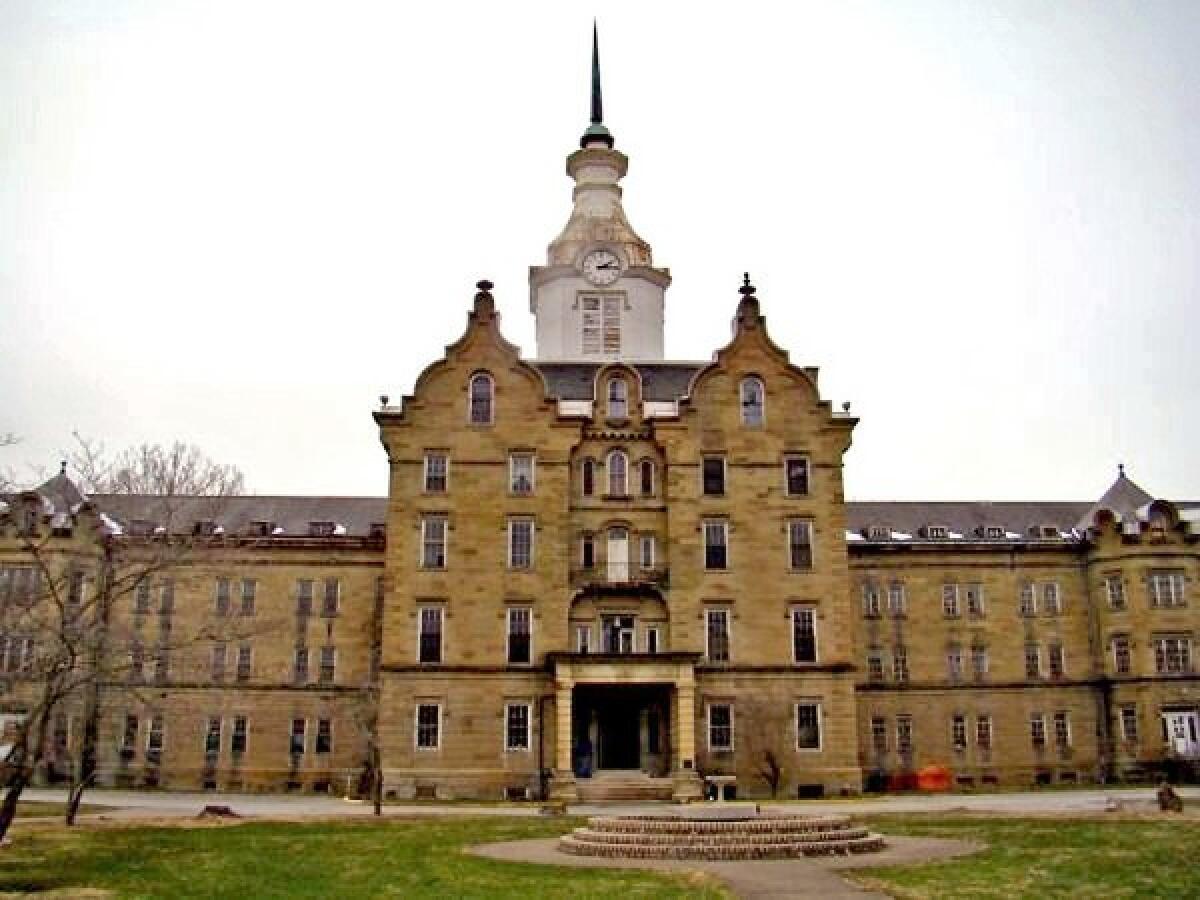
Trans-Allegheny Lunatic Asylum
Stretching nearly 1,300 feet across a hillside above the West Fork River in Weston, West Virginia, the Trans-Allegheny Lunatic Asylum is a building that defies casual description. Its staggered Gothic and Tudor Revival wings fan outward from a 200-foot central clock tower in a formation so massive it reads more like a fortified compound than a hospital. The walls are two and a half feet of hand-cut sandstone. There are over 900 windows and 900 doors across four floors and 242,000 square feet of interior space. It is reportedly the largest hand-cut stone masonry building in North America, second in the world only to the Kremlin. And for 130 years, it held some of the most vulnerable people in Appalachia behind those walls — first with the intention of healing them, and eventually with little intention at all. The Virginia General Assembly authorized the asylum in the early 1850s, part of a national wave of mental health reform driven by activist Dorothea Dix. The building was designed by Baltimore architect Richard Snowden Andrews following the Kirkbride Plan, a progressive model that emphasized fresh air, natural light, and the therapeutic power of environment. Each wing was staggered so that every room received sunlight and cross-ventilation. The capacity was set at 250 patients, reflecting the belief that a superintendent could only manage so many individuals while maintaining quality of care. Construction began in 1858, but the Civil War intervened almost immediately. The partially built structure was seized by Union forces and converted into Camp Tyler, and control of the site changed hands multiple times during the conflict. Confederate raids in 1862 and 1863 disrupted operations, and a final raid in 1864 stripped the building of food and clothing intended for its first patients. Despite all of this, the asylum opened that same year under the name West Virginia Hospital for the Insane. In its early decades, the facility functioned roughly as intended. Patients worked on a self-sustaining farm spread across more than 600 acres, learned trades like sewing and furniture-making, and lived in conditions that — by the standards of the era — represented genuine progress. But the population grew relentlessly. By 1880, the asylum held over 700 patients. By the 1930s, nearly 1,700. At its peak in the 1950s, more than 2,400 people were crammed into a building designed for a tenth of that number. The reasons for admission had long since expanded beyond what any modern definition of mental illness would recognize — patients were committed for conditions including epilepsy, alcoholism, domestic troubles, and even laziness. The overcrowding brought conditions that were nothing short of catastrophic. A series of investigative reports by the Charleston Gazette documented the deterioration in vivid terms, describing wards without adequate furniture, heating, or sanitation. Patients slept on floors. Some were locked in cages. Isolation cells still bear the rusted iron rings once used to restrain the most violent. The asylum also became a site for Walter Freeman's lobotomy project in the early 1950s, an effort by the state to reduce patient populations through surgical intervention. Thousands of procedures were performed using Freeman's transorbital method. The results were often devastating — patients left without affect or personality, their neural connections severed by a tool inserted through the eye socket. Combined with insulin shock therapy and electroconvulsive treatment, the facility's medical legacy is one of experimentation carried out on a population with no ability to refuse. A patient named Dean was murdered by two fellow inmates in a back room at the end of a wing, past the solitary confinement cells, where staff had no awareness of what was happening. The building's sheer scale made oversight impossible. The asylum finally closed in 1994 after decades of decline. The property sat abandoned until 2007, when Joe Jordan purchased the 242,000-square-foot main building at auction for $1.5 million. It reopened in 2008 as a historical and paranormal tourism destination, and it has since appeared on Ghost Hunters, Ghost Adventures, Paranormal Lockdown, and numerous other programs. Paranormal claims at Trans-Allegheny are extensive and tied closely to specific individuals whose stories are part of the building's documented history. The most widely reported spirit is Lily, a child believed to have been born inside the asylum to a patient and to have died of pneumonia at age nine, never having lived outside its walls. Her room in Ward Four on the first floor has been converted into a small shrine filled with toys and gifts left by visitors. Staff and guests report hearing a child's laughter, feeling small hands tug at clothing, and watching balls roll across the floor without visible cause. On the same floor, a spirit known as Ruth — described in life as a female patient with an intense hostility toward men — is said to throw objects at male visitors near her former holding cell. The third floor produces reports associated with a patient called Big Jim and a nurse named Elizabeth. The fourth floor generates accounts of a spectral Civil War soldier named Jacob. In the back rooms of one wing, investigators describe a dual energy in the space where Dean was killed — a childlike gentleness when encountered alone, and an oppressive coldness when the presence of his killers seems to enter the space alongside him. A figure known as Slewfoot, a patient who was slashed to death in a bathroom, is reported throughout the building. Beyond the named spirits, the asylum generates the kind of broad, ambient reports common to buildings of this scale and history — disembodied voices, shadows moving through empty corridors, cold spots, unexplained sounds of breaking glass, and the sensation of being watched or physically touched. The underground tunnel system used by staff to move unseen between buildings has its own claims, including the smell of baked goods attributed to a former chef. Skeptics have no shortage of material to work with. A building this old, this enormous, and this deteriorated will produce sounds, temperature shifts, and visual anomalies entirely on its own. The cultural expectation visitors carry into any asylum-turned-attraction shapes perception before a single door opens. But the consistency of reports across decades — from staff, casual tourists, television crews, and seasoned investigators — and the specificity with which encounters map onto documented residents and events, makes the Trans-Allegheny file difficult to set aside entirely. Today the asylum operates year-round, offering historical day tours, nighttime paranormal tours, and overnight ghost hunts that run from 9 p.m. to 5 a.m. The first-floor museum preserves patient artwork, medical equipment, restraints, and a restored ward. The remaining twenty-three wards are largely untouched — endless decayed hallways, vacant rooms, and isolation cells open to anyone willing to walk them. The clock tower still rises above Weston. The wings still stretch outward. And the building, for all its emptiness, does not feel empty at all.

Eloise Asylum
Eloise Asylum, originally established in 1839, represented one of America's most ambitious attempts to address mental illness through institutional medicine, evolving from a modest facility into a sprawling psychiatric complex that eventually encompassed seventy-five buildings across its extensive campus. The institution developed during an era when psychiatric conditions were poorly understood and treatment approaches ranged from benign to barbaric, creating an environment where vulnerable individuals faced uncertain futures and sometimes encountered practices that modern ethics would condemn. Eloise Asylum served the Detroit, Michigan region and neighboring areas, accepting patients whose conditions ranged from treatable mental illness to severe developmental disabilities to behavioral disorders that defied contemporary psychiatric classification. At its height, the facility housed hundreds of patients simultaneously, creating a small city unto itself with dormitories, medical facilities, kitchens, laundries, and support infrastructure. The asylum's sheer scale and complexity created an environment where individual patients could become lost within bureaucratic systems, their identities subsumed into institutional processes that prioritized efficiency over individual welfare. The primary spectral entity identified at Eloise Asylum is the "Lady in White," a female apparition whose identity remains shrouded in historical obscurity yet whose presence proves among the most consistently documented phenomena at the location. Witnesses described the Lady in White as a tall, elegant apparition dressed in white clothing, moving with purposeful intention through the asylum's spaces. Her appearance conveyed a sense of authority and familiarity with the building's layout, suggesting either staff status or long-term patient residency. The Lady in White has been reported in hallways, common areas, and patient rooms throughout the asylum complex, always maintaining an ethereal presence that inspired awe rather than fear. Her identity may never be conclusively determined, yet her apparent need to maintain presence within the asylum suggests deep emotional or professional connection to the institution. Additional prominent entities include the Hat Man, a figure of uncertain nature whose sinister presence contrasted starkly with the benign energy of the Lady in White. The Hat Man's identity remains unknown, appearing in shadows and periphery, suggesting he may represent malevolent intentions rather than protective spiritual presence. Eloise Asylum harbors spirits of numerous individuals who experienced trauma, abuse, loss, and death within its institutional confines. Ghostly children, identified as orphans who apparently lacked family connection sufficient to facilitate complete spiritual departure, manifest throughout the building complex. Witnesses described hearing children's voices, laughter, and sounds of movement from empty areas where no living children were present. The spirits of these young individuals apparently became bound to the institution during their vulnerable years, remaining trapped in a location where they experienced isolation and loss. The poltergeist activity documented at Eloise proved extensive and severe, with doors slamming spontaneously, medical equipment overturning without visible cause, and objects relocating from their original positions. Apparitions appeared in patient rooms, hallways, and staff areas, sometimes maintaining visibility long enough for witnesses to observe apparent features or expressions. Eloise Asylum achieved particular notoriety in paranormal research communities due to the concentration and intensity of documented phenomena. The institution's original purpose, combined with the suffering endured by vulnerable populations within its walls, apparently created ideal conditions for robust spiritual manifestation. Paranormal investigation teams documented significant electromagnetic anomalies, temperature fluctuations, and apparent spirit communication throughout the facility. The building's current status as a haunted experience venue featuring cutting-edge production technology reflects the recognition of Eloise's profound paranormal reputation. Visitors to the location encounter both historical presentations of the asylum's medical and social legacy and theatrical experiences designed to simulate paranormal phenomena. Yet the genuine spiritual activity documented at Eloise prior to its transformation into entertainment venue suggests that authentic hauntings persist beneath the entertainment presentation. The revelation that thousands of individuals buried in graves near the former psychiatric hospital remain unidentified underscores the profound human loss associated with the asylum's history. Eloise Asylum stands as a haunting reminder of how institutional approaches to mental illness, particularly during eras of limited psychiatric knowledge, could create tragic consequences for vulnerable individuals whose suffering apparently left lasting imprints upon the physical location.
Undercliff Sanatorium
Undercliff Sanatorium in Meriden, Connecticut, represents one of the most significant medical institutions in the region's history, having served as a tuberculosis hospital from its founding in 1910. The facility was constructed during an era when tuberculosis ravaged communities with merciless efficiency. The sanatorium model, premised on therapeutic benefits of fresh air, specialized care, and isolation of infectious patients, became the standard treatment approach for tuberculosis in early twentieth-century America. Undercliff eventually expanded to accommodate hundreds of patients simultaneously, becoming a comprehensive medical facility dedicated to addressing the devastating epidemic sweeping through Connecticut and New England. The institutional setting, with its emphasis on long-term care and concentration of dying patients, created an environment saturated with profound human suffering and loss. The hospital's patient population consisted primarily of individuals in advanced tuberculosis stages, many arriving with minimal hope of recovery given the era's medical limitations. Children constituted a significant portion of admitted patients, their young bodies succumbing to disease with tragic frequency. The mortality rate remained consistently high throughout the facility's operational history. Patients often spent months or years within the institution, developing attachments to the physical space and relationships with other patients and staff. The building itself became intimately associated with the patients' dying process, absorbing emotional and psychological energy of countless individuals approaching the end of their lives. The accumulated trauma of institutional death created an environment uniquely suited to paranormal manifestation. Paranormal phenomena documented at Undercliff Sanatorium centered extensively on child spirits, whose manifestations retained emotional character and behaviors associated with living children who died within the facility. Multiple independent investigations recorded voices of children laughing and crying, sounds emanating from apparently empty areas with sufficient clarity that environmental explanations proved inadequate. Witnesses reported observing shadows and transparent forms of spirits moving in windows, visible manifestations persisting despite the building's abandonment. Screams of inexplicable origin have been documented during investigations, piercing sounds suggesting extreme emotional distress. Footsteps of multiple individuals have been heard moving throughout building interiors. Apparitions of deceased patients, particularly individuals wearing hospital attire, have been reported by investigators. The laughter and crying of child spirits appeared alternately, suggesting mood shifts or presence of multiple entities with varying emotional dispositions. Electronic Voice Phenomena recordings captured voices speaking in tones consistent with juvenile vocalization, providing technological documentation of spiritual presence. These recordings represented some of the most compelling evidence, as captured voices exhibited characteristics defying straightforward rational explanation. Investigators reported intense emotional responses while conducting investigations, with sensitive individuals describing overwhelming feelings of sadness, loss, and despair when present in certain areas. The concentrated weight of pediatric mortality appeared to create powerful emotional imprints within the physical structure. Undercliff Sanatorium was ultimately demolished in spring 2014, eliminating the physical structure that had housed generations of patients and accumulated decades of paranormal manifestation. Prior to demolition, the site attracted paranormal researchers from across the country. The destruction of the building did not definitively resolve questions regarding the ultimate destination of child spirits that appeared to inhabit the location, though paranormal researchers continued monitoring the demolished site for evidence of lingering manifestation. Undercliff Sanatorium remains a significant case study in the relationship between institutional tragedy and paranormal activity, demonstrating how concentrated suffering of vulnerable populations, particularly children, may create powerful spiritual imprints that persist long after original events have faded from living memory.
Lake County History Center
The Lake County History Center in Painesville, Ohio stands as a repository of regional history, housing artifacts and documents spanning generations of the county's evolution from frontier settlement to modern community. Originally constructed as a significant civic institution, the building embodies the architectural and administrative principles of its era, serving as both a museum and archive for local historical materials. The structure occupies a position of prominence in Painesville, drawing researchers, students, and history enthusiasts who seek to understand the complex tapestry of Lake County's past and the lives of those who shaped its development. Within the Center's walls lies a particularly significant chapter of regional history connected to the poor farm era, a period when county institutions provided shelter and labor-based sustenance for destitute individuals and families. The dormitory floors and main residence areas of the facility saw the passage of numerous residents during this austere period, many of whom arrived in dire circumstances and lived out their final years within these confines. The hallways that connect these spaces have witnessed generations of institutional life, from the administrative operations on the main floor to the daily routines carried out in the dormitory wings. The transition of this facility from active poor farm operations to its current function as a historical museum represents a significant shift in both its physical purpose and the narratives it preserves. The paranormal phenomena reported at the Lake County History Center suggest that not all of the facility's former inhabitants have entirely departed. Multiple spirits are said to remain, with a particular association to the era when the building served as a poor farm. Among these entities is the presence known as Mrs. White, identified as a matron who would have overseen residents during the institution's operational period. Visitors and staff have documented disembodied voices echoing through empty hallways, particularly on the dormitory floors where residents once slept. Apparitions have been observed, sometimes accompanied by the sounds of footsteps moving through spaces that appear otherwise unoccupied. In several documented instances, voices have directed visitors to leave, with witnesses reporting stern commands to "get out" emanating from unseen sources. The flashlight phenomenon frequently occurs within the museum spaces, with equipment failing and reactivating in ways that suggest intentional manipulation. These paranormal reports have attracted serious attention from paranormal investigation groups and researchers interested in institutional hauntings. The documented evidence suggests a localized concentration of activity concentrated in the dormitory wings and main hallway areas, regions most closely associated with institutional life. The phenomena are often characterized by intelligent interaction rather than random disturbances, with entities seemingly responsive to visitor presence. Some investigators have theorized that the spirits may represent individuals who experienced profound loss or loneliness during their time as poor farm residents, their emotional imprints lingering in the spaces they once inhabited. The reports of voices commanding visitors to leave have been interpreted as territorial responses, though their exact motivation remains subject to interpretation. The Center continues to serve as an active location for paranormal research, with organized investigations occurring regularly to document the ongoing phenomena. Today, the Lake County History Center operates as a public museum and research facility, welcoming visitors interested in the region's history while simultaneously navigating its reputation as a paranormally active site. Staff members and researchers working within the facility have become accustomed to the unusual occurrences, maintaining professional documentation of reported phenomena while continuing their scholarly work. The presence of these paranormal reports has not diminished the Center's historical mission but rather adds an additional layer of complexity to the narratives it tells. Visitors arriving to study historical documents or view museum exhibits often depart with unexpected experiences, having encountered manifestations that suggest the past remains vibrantly present within the facility's walls. The Lake County History Center thus represents a unique intersection of scholarly historical preservation and active paranormal phenomena, making it a significant site for both regional historians and those interested in the supernatural dimensions of institutional spaces.
Rolling Hills Asylum
Rolling Hills Asylum stands as one of the most extensively documented haunted institutions in the United States, a sprawling complex of over sixty thousand square feet originally established in East Bethany, New York, in 1827 as the Genesee County Poor House. The facility underwent a transformative metamorphosis over the subsequent decades, evolving from a modest poorhouse into a full-fledged psychiatric asylum designed to accommodate the staggering influx of individuals suffering from mental illness and poverty during the nineteenth and twentieth centuries. The institution's physical footprint expanded dramatically throughout the late 1800s and early 1900s, with multiple wings and subterranean structures constructed to house the ever-increasing patient population, ultimately reaching capacity for hundreds of residents simultaneously spread across multiple levels spanning the entire property. The asylum's vast infrastructure included dormitories, treatment facilities, a functioning morgue, a psychiatric ward dedicated to the most troubled patients, and an extensive tunnel system connecting various buildings both above and below ground, creating a labyrinthine environment that housed some of the nation's most vulnerable populations. The institution's operational history is marked by persistent documentation of nearly eighteen hundred recorded deaths, many of which occurred under circumstances that remain inadequately explained or formally recorded in institutional archives. Contemporary accounts from former staff members and family records suggest that patient deaths frequently resulted from a combination of inadequate medical treatment, harsh institutional conditions, nutritional deficiencies, and untreated physical and psychological ailments. The asylum's treatment methodologies evolved over its near-two-century operational span, ranging from the harsh restraint practices of the nineteenth century through the various pharmaceutical interventions introduced in the twentieth century, many of which proved as problematic as the conditions they intended to treat. Patient records indicate systematic documentation of deaths attributed to pneumonia, tuberculosis, cardiac failure, and other conditions, though contemporaneous observers have questioned whether these attributions accurately reflected the actual circumstances surrounding many fatalities within the institution's walls. Paranormal activity documented at Rolling Hills Asylum has established it as a paranormal investigation hotspot recognized internationally for the intensity and consistency of reported phenomena. Investigators and visitors have recorded Class A electronic voice phenomena emanating from various locations throughout the facility, with disembodied voices captured on audio equipment throughout dormitories, hallways, and treatment areas. An entity known as Hattie, described as an elderly woman's presence, is reported to vocalize throughout her designated room with recordings capturing voice evidence of her shouting and calling out. The facility's second-floor men's dormitory, colloquially designated the Shadow Hallway, has become notorious for documented appearances of humanoid shadow figures observed walking through corridors and positioning themselves at window apertures, with multiple paranormal teams capturing photographic and video evidence of these entities. The morgue remains a persistent paranormal hotspot with reports of objects being displaced from their original positions, disembodied voices emanating from the storage areas, and inexplicable cold spots manifesting throughout the structure. Additional phenomena include poltergeist-like activities with reports of physical contact such as shoving and striking by unseen forces, dramatic temperature fluctuations, and the sensation of being watched or followed through various sections of the facility. The asylum's current operational status has transitioned from active medical facility to dedicated paranormal investigation venue, with professional paranormal research teams conducting regular investigations throughout the property. Multiple paranormal organizations have documented systematic research demonstrating the consistency of reported phenomena across hundreds of investigation sessions, with electronic recording equipment consistently capturing auditory evidence that correlates with historical patient records and documented deaths. The facility welcomes paranormal enthusiasts and investigation teams seeking authentic evidence of survival of consciousness, providing access to areas where the most significant activity has been documented. Today, Rolling Hills Asylum continues to draw researchers and paranormal investigators from throughout the world, serving as a primary focus for scientific study of supposed survival of consciousness, with documentation establishing it as among the most persistently active paranormal locations throughout North America, maintaining its reputation as a location where the boundary between the living and deceased appears persistently permeable.
Seaside Sanatorium
Seaside Sanatorium was constructed in Waterford, Connecticut, during the early twentieth century as a medical facility designed to address the tuberculosis epidemic that was ravaging American society during that period. The building was designed by the renowned architect Cass Gilbert, an architect of international reputation who also designed the United States Supreme Court Building in Washington, D.C., and the iconic Woolworth Building in New York City, two of the most significant architectural achievements of their era. The selection of such a prestigious architect for the sanatorium's design reflects the seriousness with which American society viewed tuberculosis treatment and the considerable resources that were devoted to constructing facilities deemed capable of addressing this devastating disease. The architectural design of Seaside Sanatorium combined functional medical facilities with aesthetic design principles, creating a building intended to inspire hope and facilitate healing among its patients. The sanatorium was established as an institution dedicated to treating tubercular patients with the best available medical knowledge and facilities of the early twentieth century, operating under the medical theories and treatment protocols that guided tuberculosis care during that era. During its initial decades of operation, Seaside Sanatorium served its intended purpose as a tuberculosis treatment facility, admitting patients suffering from this devastating infectious disease and attempting to cure or arrest the progression of the illness through available medical treatments and the healthful environment provided by the facility. However, as the twentieth century progressed and medical treatments for tuberculosis improved, the primary function of the facility gradually shifted. By the mid-twentieth century, Seaside Sanatorium was increasingly utilized to house elderly patients and individuals with mental disabilities and developmental disorders, populations for whom custodial care and institutional housing were deemed necessary. The facility transformed from a specialized tuberculosis hospital into a general institutional residence, housing growing numbers of vulnerable and dependent populations whose families were unable or unwilling to care for them in domestic settings. This shift in the facility's primary function coincided with increasing reports of deficient care, inadequate conditions, and an unacceptably high mortality rate among residents, particularly during the latter half of the twentieth century. The latter decades of Seaside Sanatorium's operation were marked by systematic abuse of residents, grossly inadequate care, poor sanitation and living conditions, and a death rate among the institutionalized population that far exceeded what would be expected based on the ages and conditions of the residents. Historical investigations and staff accounts document numerous instances of abuse of vulnerable patients, neglect of basic medical and personal care needs, and a pervasive institutional culture that devalued the lives and dignity of the institutionalized population. Researchers have documented evidence of direct physical abuse, restraint of residents without medical justification, deliberate withholding of medical care, and an atmosphere of institutional neglect that characterized the facility's operations during its final decades. The compounding effect of tuberculosis deaths during the facility's earlier decades, followed by the institutional abuse and neglect of subsequent decades, created a location saturated with human suffering, premature death, and spiritual trauma of extraordinary intensity. Seaside Sanatorium finally closed its doors in 1996, ending nearly a century of continuous institutional operations and marking the end of the deliberate abuse and neglect that had characterized the facility's latter decades. Following closure, the building fell into progressive disrepair, with many structures on the property becoming increasingly dilapidated and unsafe. In 2014, the property was formally designated as Seaside State Park, placing it under governmental protection and management as a historical site. However, the buildings themselves remain largely inaccessible to the general public, with structures closed to visitation and protected against casual exploration due to the condition of the buildings and concerns regarding public safety. The closure of the buildings to public access has not, however, eliminated the profound paranormal phenomena that manifest throughout the property, suggesting that the spiritual imprints left by the suffering, abuse, and death that occurred within the buildings persist despite the facility's physical closure.
Western State Hospital – Dejarnette Building
Western State Hospital was established in Staunton, Virginia during the nineteenth century as a mental health facility designed to provide care and treatment for individuals suffering from mental illness, neurological conditions, and psychological disturbances. The hospital developed into a substantial institutional facility encompassing multiple buildings, grounds, and infrastructure dedicated to the care and containment of psychiatric patients. The Dejarnette Building, named after institutional leadership, represented a significant structure within the hospital's complex, designed to house and treat patients within the facility's medical framework. The hospital's architecture reflected the institutional design philosophies of its era, with large imposing structures, substantial grounds, and facilities engineered to isolate patients and control their movements and activities. The facility's location in rural Staunton positioned it within the broader landscape of American psychiatric institutions. Western State Hospital's operational history spans more than a century of psychiatric treatment and patient care, encompassing evolving approaches to mental illness and varying standards of therapeutic practice. The institution witnessed the implementation of various treatment methodologies, some of which would later be recognized as harmful or exploitative. The early to mid-twentieth century witnessed forced sterilization programs at the hospital, justified through discredited eugenics pseudoscience. These involuntary sterilization procedures, conducted on vulnerable populations including individuals with mental illness and developmental disabilities, represented grave human rights violations. The victims were denied reproductive autonomy and subjected to irreversible surgical procedures against their will, creating lasting trauma. The hospital also practiced electroshock therapy and lobotomy on psychiatric patients. The accumulation of such practices over decades created a legacy of suffering within the institution's walls. Paranormal phenomena at the Dejarnette Building manifest as multiple forms of disturbing phenomena suggesting anguished spirits and the psychic imprints of human suffering. Footsteps move through the building's interior when no living persons are present. Moans and groans emanate from various areas, suggesting manifestations of pain and distress. Whispers echo without identifiable human speakers. Screams, both disembodied and collective, resonate through the structure. Doors open and close autonomously. A pervasive sense of paranoia and dread afflicts visitors, suggesting powerful negative emotional resonance. Disembodied screaming intensifies the disturbing character of the phenomena, with intensity varying according to unknown patterns. The paranormal manifestations appear directly connected to institutional trauma inflicted upon vulnerable populations subjected to involuntary sterilizations and other human rights violations. The accumulation of psychological and physical trauma experienced by patients subjected to forced medical interventions created profound suffering whose emotional weight remains encoded within the physical spaces. The apparent inability of spirits to achieve peace suggests many individuals died bearing the wounds of the medical violence inflicted upon them. The concentration of paranormal phenomena indicates that haunting represents accumulated emotional and spiritual consequences of institutional abuse affecting multiple victims. The abandoned status of the building has preserved the spaces in which abuses occurred, allowing paranormal phenomena to persist. Western State Hospital's Dejarnette Building stands as a location where profound human rights violations left enduring paranormal consequences, creating a haunted space testifying to historical trauma and institutional cruelty inflicted upon vulnerable populations denied agency and protection.
San Haven Sanatorium
San Haven Sanatorium stands as one of the most significant paranormal locations in the Great Plains, its institutional architecture dominating a landscape near Dunseith in northwestern North Dakota. The facility was established in 1909 during the height of the tuberculosis epidemic that ravaged the American heartland, claiming thousands of lives annually across the region. At that time, tuberculosis represented one of the primary causes of mortality in the United States, and North Dakota, like many northern states, experienced particularly severe outbreaks due to the frigid climate and densely populated rural communities. Public health officials recognized the urgent need for dedicated isolation facilities, and San Haven Sanatorium was constructed to provide specialized treatment for patients suffering from this devastating pulmonary disease. The institution operated under the prevailing medical theory of the era, which held that isolation, fresh air, and specialized nursing care could arrest the disease progression and provide patients with a chance at recovery or at minimum a humane place to spend their final days. The sanatorium underwent significant expansion throughout its operational decades, growing from its initial modest capacity to accommodate hundreds of patients as the scope of the tuberculosis crisis became increasingly apparent. Medical advances in the mid-twentieth century, particularly the development of effective antibiotic treatments, gradually reduced the demand for sanatorium care. However, rather than closing entirely, San Haven Sanatorium transformed its mission and reopened as a hospital specializing in the care of patients with developmental disabilities. This institutional transition marked a significant chapter in the facility history, as it shifted from treating infectious disease to providing long-term residential care for individuals requiring specialized support services. The facility continued in this capacity until December 1987, when it ceased operations and the buildings were abandoned to the elements. For decades following its closure, the sanatorium stood as a decaying monument to both medical history and institutional care, its empty corridors and patient wards becoming increasingly deteriorated. Paranormal activity at San Haven Sanatorium has been extensively documented through eyewitness accounts, paranormal investigation reports, and television documentation featured in prominent paranormal programming. Visitors and investigators consistently report encountering the apparition of nurses, their ghostly figures moving through the corridors as if continuing their duties to patients long deceased. A particularly unsettling entity has been described by multiple witnesses as a tall, dark, slender presence occupying the lower levels of the facility, characterized as intimidating and possessing an unmistakably malevolent energy. Beyond these major apparitions, the site is reported to be inhabited by numerous other spirits, suggesting that many of the patients who died within the facility walls have remained bound to the location. Among these entities is the spirit of a young girl who searches the corridors and rooms seeking her mother, her anguished presence a poignant reminder of the separation and loss that characterized so many institutional deaths. Investigators and visitors report sensing energy emanating from nearly every corner of the facility, with apparitions appearing in hallways, patient rooms, and common areas throughout the structure. The paranormal experiences documented at San Haven Sanatorium encompass a broad spectrum of phenomena that extend beyond simple apparitional encounters. Visitors and paranormal investigators have reported hearing unexplained sounds throughout the facility, ranging from footsteps of unseen persons to voices crying out in distress. The site has achieved recognition within paranormal circles, particularly following its prominent feature in the Ghost Adventures television series episode titled Dakota Sanatorium of Death, which brought national attention to the location and its extensive paranormal history. The combination of the facility tragic history, the enormous number of deaths that occurred within its walls, and the documented paranormal manifestations has established San Haven Sanatorium as one of the most consistently haunted locations in North Dakota and a significant destination for paranormal researchers and enthusiasts investigating institutional hauntings in the American Midwest.
Anoka State Hospital
Anoka State Hospital emerged from Minnesota's commitment to public mental health care during the Progressive Era, when states across America were establishing asylums to provide treatment for individuals suffering from mental illness. Founded in 1900 as one of Minnesota's major psychiatric facilities, Anoka State Hospital was designed to provide comprehensive care for patients with severe mental disorders, incorporating the latest architectural and therapeutic theories of the era. The facility was constructed on expansive grounds in the city of Anoka, north of Minneapolis, with multiple interconnected buildings designed to house hundreds of patients in a campus-style setting that was intended to create a therapeutic environment removed from urban stressors. The hospital's early decades reflected the optimism of progressive psychiatric medicine, with administrators and physicians believing that systematic treatment, proper nutrition, and structured routines could restore mental function to afflicted individuals. However, by the mid-twentieth century, Anoka State Hospital's reputation had transformed dramatically as treatment practices became increasingly brutal and experimental. During the tenure of various medical directors from the 1920s through the 1950s, patients underwent procedures that modern medicine recognizes as torture rather than treatment, including electroconvulsive shock therapy administered without anesthesia, insulin shock protocols, and prefrontal lobotomies performed on thousands of residents. These psychosurgical procedures, intended to alleviate severe psychiatric symptoms, frequently resulted in severe brain damage, complete personality destruction, and death. The hospital's extensive underground tunnel system, which connected the various buildings, was originally designed for practical purposes but became infamous as the pathway through which doctors transported patients to lobotomy theaters. Anoka State Hospital performed approximately five thousand lobotomies during its operational years, making it one of the most active lobotomy centers in America during the early twentieth century. The mortality rate at Anoka State Hospital remained alarmingly high throughout its existence, with patients dying from complications of surgical procedures, untreated infections, malnutrition, and the physical and psychological effects of repeated brutal interventions. Many patients who died were never properly identified, with some buried in unmarked graves on the hospital grounds that were later documented only by numerical markers rather than names. In the 1980s and 1990s, dedicated researchers and historians memorialized these forgotten victims by locating and properly identifying hundreds of these graves, creating a tangible record of the hospital's human cost. The unmarked cemetery stands as a physical manifestation of institutional neglect and the devaluation of mentally ill patients, whose deaths often went unacknowledged by families or officials. The psychological weight of thousands of traumatic deaths within the hospital's walls appears to have created a profound spiritual imprint that persists decades after the facility's closure. Paranormal phenomena at Anoka State Hospital have been extensively documented despite the absence of formal paranormal investigations authorized by hospital administration. Visitors and investigators report apparitions visible through windows of abandoned buildings, suggesting the presence of deceased patients unable to find rest. Disembodied voices echo through empty hallways, some crying for help or expressing confusion about their whereabouts. Shadow figures move rapidly through corridors and appear in photographs taken inside the facility, with their behavior suggesting residual hauntings rather than intelligent communication. Cold spots develop suddenly in treatment rooms and surgical theaters, accompanied by overwhelming sensations of dread and oppressive atmosphere that cause visitors to experience sudden anxiety or emotional distress. The paranormal activity appears concentrated in specific buildings where the most severe treatments were performed, particularly areas associated with lobotomy procedures and electroshock therapy.
Wolfe Manor
Wolfe Manor was a substantial eight-thousand square foot mansion constructed in Clovis, California, in 1922 during the prosperous 1920s era preceding the Great Depression. The building was designed and built as a residential estate reflecting the architectural aspirations and economic capacity of its original owners, with square footage and design suggesting substantial wealth and social standing. The mansion's size, materials, and design quality indicated construction to endure for generations as a family residence or substantial commercial property. The architectural style and construction techniques reflected contemporary California residential design, incorporating elements suited to the region's climate and incorporating modern conveniences available during the early 20th century. The property's location in Clovis positioned it as a prominent residence within the developing community, demonstrating solid construction practices and quality materials. Following its construction as a residential estate, Wolfe Manor was converted to function as a sanitarium, a private medical facility designed to treat specific disease conditions under controlled environments. The facility specialized in treating tuberculosis, a devastating infectious disease that killed thousands annually during the early 20th century before antibiotic therapies became available. Beyond tuberculosis treatment, the sanitarium also provided care for individuals suffering from mental illness, suggesting the facility offered psychiatric treatment and institutional care within the same building. Historical records and paranormal documentation indicate that the sanitarium's operational conditions were reportedly substandard, with accounts suggesting inadequate care, poor sanitation, insufficient nutrition, and potentially abusive treatment of patients. The combination of serious medical conditions, limited available medical treatments, unhygienic conditions, and potentially neglectful management would have resulted in high mortality rates within the facility's patient population. The paranormal phenomena documented at Wolfe Manor during its operational period and following its abandonment centered on a spirit identified as Mary and numerous other entities attributed to former patients and residents. Paranormal investigation teams conducting research at the mansion captured audio evidence of disembodied voices and spectral speech, with voices documented on recording equipment. Footsteps of invisible walkers were documented throughout the building, particularly in hallways and rooms where activity from mobile individuals would be expected. Shadow figures appeared in various locations, presenting visual phenomena consistent with silhouettes or dark forms moving through spaces. Photographs taken at the location captured visual anomalies interpreted as paranormal phenomena, including orbs and other luminous phenomena. Objects were reported moving without human contact, suggesting either intelligent manipulation by spirits or poltergeist-type phenomena. Wolfe Manor's status as a paranormal hotspot attracted professional paranormal investigation teams and documentary programmers seeking to document supernatural phenomena. The building's eventual demolition in 2014 terminated physical access to the location and removed the primary venue for ongoing paranormal investigation and documentation. The demolition represented the loss of a significant paranormal research site and resulted in the displacement of the spirits that had inhabited the mansion for nearly a century. The destruction of Wolfe Manor created a gap in paranormal documentation as researchers lost access to a location with extensive historical records of paranormal activity. The mansion's legacy persists through documentary records, paranormal investigation archives, and historical documentation of one of California's most intensely haunted structures.
Letchworth Village
Letchworth Village in Thiells, New York stands as one of the most significant and troubling examples of institutional psychiatric care in American history, its vast 2,000-acre campus sprawling across the landscape like a small town unto itself. Founded in 1911 during a period when state-run facilities for psychiatric care and intellectual disability services were being rapidly constructed across America, Letchworth Village was conceived as a progressive institutional approach to housing and treating individuals deemed unable to function in mainstream society. The facility was designed with utopian ideals in mind, incorporating separate colonies for different populations, agricultural areas, workshops, and recreational facilities meant to provide comprehensive care within a self-contained community structure. At its height of operation, the institution housed thousands of residents, many of whom had been committed through legal processes that offered minimal due process protections and frequently relied on family decisions made under dubious circumstances or based on diagnostic categories that modern medicine would reject as scientifically invalid. Throughout the middle decades of the twentieth century, Letchworth Village became increasingly notorious among medical professionals, social workers, and families of residents for the horrific conditions that prevailed behind its administrative facade. Despite its institutional appearance and professional structure, Letchworth descended into a nightmare of overcrowding, understaffing, abuse, and experimental treatment protocols that violated basic principles of human dignity and medical ethics. Residents endured physical abuse from staff, psychological trauma from inappropriate treatments, and deprivation of basic human needs including adequate nutrition, sanitation, and mental healthcare. The Medical Building in particular became a place of particularly intense suffering, with basement areas where some of the most vulnerable and severely disabled residents were confined in conditions resembling prison confinement more than medical care. Investigative journalism, court cases, and testimony from survivors gradually exposed the systemic abuse and neglect that characterized institutional care at Letchworth. The village continued operating under various reform efforts until 1996, when mounting costs, scandals, and evolving views of institutional care finally led to its closure. By the time the facility shut down, decades of accumulated trauma, suffering, and death had left an indelible imprint on the campus. The 130-plus buildings were gradually abandoned, and the site fell into increasing disrepair as nature began reclaiming the structures. Visitors to the site have documented hundreds of unmarked graves scattered throughout the wooded areas surrounding the institutional buildings, representing residents who died at Letchworth and were buried with minimal ceremony or record-keeping, their identities lost to institutional bureaucracy. The Medical Building basement, where some of the most disturbing abuses allegedly occurred, has become a particular focus for paranormal researchers investigating the site. Paranormal phenomena at Letchworth Village are among the most intense and varied documented at any single location in North America. Visitors consistently report encountering shadow figures that move with deliberate intention through corridors and rooms, disembodied voices crying out in distress or calling for help, and overwhelming feelings of dread and despair that assault visitors without obvious explanation. Many researchers experience sudden onset nausea, physical weakness, and sensations of being watched or followed by unseen presences. Extensive electronic voice phenomenon recordings obtained within the Medical Building have captured what researchers interpret as voices of deceased residents pleading for help, screaming in pain, or crying out names of loved ones from whom they were separated. The intensity of paranormal activity seems to concentrate in areas where the worst abuses occurred, as if the accumulated suffering and trauma of thousands of vulnerable individuals created psychic impressions that persist in defiance of death and institutional closure.
Abandoned Asylum
The Abandoned Asylum in San Antonio, Texas, represents one of the regional examples of nineteenth and early twentieth-century institutional psychiatry, a facility constructed to provide care, confinement, and treatment for individuals experiencing severe mental illness or behavioral disorders. San Antonio's development as a significant Texas city during the nineteenth century included the establishment of public institutions designed to manage the social problems associated with urbanization, poverty, and the recognition of mental illness as a distinct medical condition requiring specialized institutional care. The asylum, built during an era of significant optimism regarding the possibility of cure and rehabilitation through institutional treatment, embodied both progressive intentions and the harsh realities of confined populations living under conditions that were often overcrowded and medically limited. The architectural style and physical plant of the facility reflected the institutional sensibilities of the era, with design elements intended both to facilitate treatment and to maintain security and control over a population that was often there against their will. The historical period during which the asylum operated was marked by significant changes in psychiatric understanding and treatment approaches. The facility witnessed transitions from moral treatment philosophy, which emphasized kindness and rehabilitation, to more biomedical approaches focused on pharmaceutical intervention and surgical procedures. The conditions within the asylum, like those of many similar institutions across the United States, were subject to periodic investigation and reform, with journalists and reformers documenting overcrowding, inadequate nutrition, abuse, and the fundamental failure of the institution to achieve its stated therapeutic goals. Patients admitted to the asylum often remained for extended periods, some for the entirety of their remaining lives, transforming the facility into a form of permanent confinement rather than a temporary treatment location. Deaths within the asylum resulted from illness, medical complications, and tragic incidents, with many patients buried in institutional graveyards rather than being claimed by family members. The paranormal phenomena reported at the Abandoned Asylum in San Antonio focus on the manifestation of disembodied voices, suggesting the presence of entities engaged in ongoing communication or expression within the institutional spaces where they spent their lives or died. These voices have been described by investigators and urban explorers as varied in character and emotional tone, ranging from expressions of distress to what seem like ordinary conversations conducted by invisible speakers. Cold spots have been documented throughout the facility, with temperature anomalies appearing in various locations and often shifting position or intensity in ways that suggest intelligent direction of the phenomena. Unexplained sounds, distinct from coherent speech but clearly of non-mechanical origin, have been consistently reported, including sounds described as footsteps, objects being moved or dragged, and indistinct vocalizations. The pattern of phenomena suggests both residual hauntings, where past events replay through the physical environment, and active intelligent haunting, where spiritual entities continue to inhabit and interact with the spaces they occupied during life. The Abandoned Asylum remains largely unoccupied and unmaintained, its institutional functions long ceased and its buildings deteriorating as nature and time claim its structures. The facility has become a destination for paranormal investigators and urban explorers drawn to its historical significance and the documented presence of spiritual phenomena. The asylum represents a broader historical phenomenon in which institutions designed to manage human suffering and mental illness became themselves sources of trauma, creating locations marked by the suffering of those confined within them. The paranormal manifestations reported at the San Antonio asylum exemplify how locations of institutional confinement and human tragedy may harbor persistent spiritual phenomena reflecting the unresolved suffering of those who died within the facility's walls. The voices of the dead, seeking acknowledgment and communication across the barrier between worlds, constitute the most significant documented paranormal feature of this location.
Highland Hospital Site
The Highland Hospital Site occupies a significant location in Asheville, North Carolina, a mountain city that has become renowned in contemporary paranormal culture as a destination for ghost hunters and paranormal enthusiasts. The hospital, which stood on this land, has achieved particular prominence in American paranormal history due to its association with several high-profile tragic events and multiple deaths that have allegedly anchored powerful spiritual presences to the location. Asheville itself, nestled in the Blue Ridge Mountains, has cultivated an identity as a center of arts, culture, and alternative spirituality, creating a cultural context in which paranormal phenomena are discussed openly and investigated systematically. The city's history extends back through the nineteenth century, during which it developed from a modest settlement into a substantial regional center, and through the twentieth century, during which it became a destination for tourism, cultural development, and artistic expression. The Highland Hospital Site, before the hospital's closure, represented the confluence of modern medicine and the profound suffering associated with serious psychiatric illness, a combination that creates particularly intense emotional and psychological environments. The site's most prominent association remains with Zelda Fitzgerald, the wife of celebrated novelist F. Scott Fitzgerald, who was a patient at the facility. Zelda Fitzgerald's life trajectory—from Southern belle through glamorous marriage, through the intensity of the Jazz Age, through mental illness and institutionalization—has made her a figure of continuing cultural interest and psychological complexity. Her presence at Highland Hospital, particularly during the final years of her life, transformed the institution into a location associated with celebrity, mental suffering, and the perceived inadequacies of mid-twentieth-century psychiatric treatment. Her death in a hospital fire in 1948, while confined to the facility, created a tragedy that resonates across decades and connects the location to broader historical narratives about psychiatric treatment, institutional failure, and the vulnerability of individuals within medical systems. Beyond Zelda Fitzgerald, the location is marked by additional tragedies: a nineteen-year-old boy who committed suicide while a patient represents the suffering of younger individuals; nine women victims of the catastrophic 1948 fire that killed multiple occupants and exposed the vulnerability of patients in institutional settings. The fire itself represents a moment of particular horror—individuals in psychiatric crisis trapped in a burning building, their capacity to respond or escape potentially compromised by their mental conditions and the institutional setting. The paranormal phenomena reported at the Highland Hospital Site are varied and consistent with patterns observed at institutions marked by tragedy and death. Apparition sightings have been reported, including visual manifestations of individuals believed to be former patients, suggesting that those who died at the facility remain spiritually anchored to the location. Disembodied voices are frequently reported, sounds that may represent communication from the deceased or may constitute residual auditory impressions of human speech and institutional activity. Cold spots—areas of localized temperature reduction without apparent cause—appear in specific locations across the site, typically clustered near areas where the most significant tragedies occurred. The feeling of being watched is commonly reported by visitors, a sensation of attention or surveillance that suggests the presence of conscious awareness beyond the living. Witnesses have reported vivid emotional states induced by proximity to certain areas, feelings of sadness, despair, or rage that dissipate upon leaving the location, consistent with emotional imprinting or empathic reception of residual emotional energy. The site has been subjected to paranormal investigation, documented in television programs and paranormal research databases, and has become a location of pilgrimage for those seeking to encounter the spirits of the deceased. The present status of the land has seen the hospital building removed, yet the location retains its paranormal significance, with visitors reporting phenomena undiminished by the physical disappearance of the original structure. The site has become a memorial location where the tragic history of psychiatric institutionalization, the specific suffering of notable individuals, and the broader human cost of systemic failure persist in paranormal form.
Donkey Lady Bridge
The Donkey Lady Bridge spanning the landscape south of San Antonio, Texas embodies a paranormal phenomenon that bridges folklore and documented paranormal activity, blending legend with credible witness testimony in a manner rarely achieved in the paranormal investigation tradition. The structure, more formally known as the Old Applewhite Bridge, crosses a geographical feature whose isolation and rural character have facilitated the accumulation of local legend and ongoing paranormal manifestations over generations. The bridge and the surrounding roadways, particularly Applewhite Road, comprise a location where urban proximity to San Antonio contrasts sharply with the remoteness of the immediate surroundings, creating a liminal space where contemporary visitors encounter landscape and phenomena that seem to exist outside normal temporal flow. The history underlying the Donkey Lady haunting remains contested among folklore scholars and paranormal researchers, though the consistency of contemporary witness accounts across several decades provides persuasive evidence for genuine paranormal activity regardless of the precise historical origins. The entity known as the Donkey Lady represents one of paranormal tradition's most distinctive and unsettling manifestations, an apparition whose appearance and behavior challenge conventional categorization and inspire both scholarly analysis and visceral terror in witnesses. The figure typically presents as a severely disfigured woman, her facial features and bodily form marked by deformities and physical damage that numerous accounts describe with consistency suggesting baseline reality rather than subjective interpretation. Some accounts suggest facial burns or chemical damage, others propose trauma consistent with severe fire injury or extreme violence. The most distinctive characteristic of the apparition remains its facial or cranial resemblance to equine anatomy, the feature that has generated the colloquial designation "Donkey Lady" despite its superficial disrespect toward an entity of evident suffering. The origin of this deformity remains contested, with theories ranging from a circus worker's accident to a victim of deliberate violence to a woman whose facial structure was altered by disease or congenital abnormality. Witness accounts of encounters with the Donkey Lady describe a complex phenomenology encompassing multiple categories of paranormal manifestation. The apparition appears with particular frequency as a full-bodied manifestation, her figure approaching vehicles on Applewhite Road with an apparent purposefulness and deliberation that suggests conscious intention. Observers report experiencing intense feelings of being watched as the entity's attention fixates upon them, a psychological phenomenon accompanied by physical sensations including rapid heartbeat, paralysis-like sensations, and emotional states ranging from compassion to profound terror. The experience of witness testimony suggests that the apparition's emotional state transmits directly to observers, creating empathic resonance with an entity whose suffering appears evident despite her grotesque appearance. Some accounts describe the Donkey Lady's attempts at communication or appeals for assistance, her vocalizations taking forms variously described as non-linguistic sounds, attempted human speech, or apparent screams of rage or anguish. The broader context of the Donkey Lady phenomenon incorporates elements of social commentary and reflection on marginalization, disability representation, and the treatment of individuals whose physical difference renders them objects of fear or contempt. The paranormal manifestation appears to encode a narrative of social rejection and isolation, an entity rendered monstrous by circumstances—whether accidental or deliberate—and subsequently condemned to exist in liminal spaces excluded from normal community participation. The bridge itself, as a structure connecting spaces, becomes a fitting location for a manifestation embodying the concept of liminality and exclusion. Contemporary paranormal investigation at the site continues to generate detailed documentation of the apparition's manifestations and behavior patterns, contributing to the growing body of evidence that the Donkey Lady bridge represents one of South Texas's most genuine and substantial cases of paranormal activity, a phenomenon whose emotional and psychological dimensions extend well beyond the merely spectacular.
Holy Cross Sanatorium
Holy Cross Sanatorium stands within Deming, New Mexico as a structure bearing the architectural and cultural weight of an era when tuberculosis represented one of the most feared epidemic diseases ravaging the United States and the world beyond. Built during the early twentieth century, when the disease was reaching peak prevalence and mortality across American populations, the sanatorium emerged as part of a comprehensive response to the crisis—the construction of specialized medical facilities dedicated entirely to the isolation, study, and treatment of tuberculosis patients. The building reflects the architectural standards and medical understanding of its era, designed to provide controlled environments, natural light exposure, and the specialized facilities necessary for the treatment protocols then understood to offer greatest hope for recovery. The location within New Mexico was not arbitrary; the region's high altitude, low humidity, and crystalline air had become recognized among medical practitioners as environments offering particular therapeutic value for tubercular disease. The sanatorium represented substantial investment in both physical infrastructure and the human hope that architectural intervention might overcome epidemic disease. The institutional function of Holy Cross Sanatorium reflected the characteristic approaches to tuberculosis treatment during the interwar and postwar periods, before antibiotics transformed the disease from death sentence to treatable infection. Patients admitted to the facility entered a controlled environment entirely dedicated to their medical management, their isolation from broader populations justified by both infection control and the comprehensive nature of the treatment regimen. The sanatorium operated according to strict medical hierarchies and protocols, with administrative staff managing operations, physicians overseeing treatment, and nursing personnel providing the daily care and monitoring upon which the institution's function depended. The patient population itself represented a cross-section of American society, individuals of various ages, backgrounds, and social positions united by the shared condition of tubercular infection. For many patients admitted to Holy Cross, the facility represented their final refuge, the last institutional setting where medical science might intervene before tuberculosis completed its lethal trajectory. The accumulated human experience within Holy Cross Sanatorium's walls created an environment saturated with emotional intensity and concentrated suffering. The institution housed individuals confronting mortality and debilitation, spaces filled with the accumulated anxiety and desperation characteristic of places where death represents an ever-present outcome for a substantial percentage of occupants. Staff members labored within this environment of concentrated illness, their own consciousness shaped by continuous exposure to deterioration and loss. The spatial configurations of the sanatorium—patient wards, treatment rooms, administrative areas, and facilities designed for clinical care—became saturated with the emotional weight of human experience, each space retaining the accumulated consciousness of those who suffered and died within it. The fountain area referenced in contemporary accounts occupied particular significance, as such spaces within sanatoriums often functioned as social gathering points where mobile patients might congregate, creating zones of relative normality within otherwise clinical and isolating environments. The paranormal phenomena documented at Holy Cross Sanatorium have emerged with greater frequency and specificity as paranormal investigation has become more sophisticated and systematic. The area identified as the Altar Room has proven particularly responsive to investigation and documentation, with multiple witnesses reporting shadowy figures materializing within its confines, dark forms that seem to possess conscious presence and directed movement rather than mere shadow effects. Apparitions have been sighted throughout the structure, though most frequently in areas that would have served significant functions during the sanatorium's operational periods—wards, treatment facilities, and social spaces. Disembodied voices emerge from empty corridors and unoccupied rooms, utterances ranging from single words to extended conversations, their emotional tone suggesting communication rather than random paranormal noise. Shadow figures appear with frequency, their dark forms suggesting humanoid configuration and conscious movement. Light anomalies manifest throughout the building, illuminations that appear and disappear without apparent electrical source, orbs that move through spaces with apparent intelligence and direction. Photographic documentation has captured orb manifestations within numerous locations throughout the facility, creating visual records of phenomena that challenge conventional explanation. Strange smells emerge from various locations, odors that seem temporally displaced and inconsistent with contemporary facility use, suggesting olfactory memory from the institution's medical era. The manifestations at Holy Cross Sanatorium appear rooted in the profound suffering and concentrated human experience that characterized the institution during its operational period. The phenomena seem less random than responsive to particular locations and circumstances, suggesting consciousness distributed throughout the facility rather than concentrated in singular locations. The Altar Room, though its original function remains unclear in contemporary accounts, apparently served spiritual or psychological significance during the sanatorium era, accumulating concentrated consciousness and emotional intensity through that symbolic function. The manifestations do not suggest hostile entities but rather residual consciousness embedded within the institution's physical structure, the accumulated presence of individuals who experienced profound suffering and transformation within these walls. The abundance of orb documentation raises questions about the nature of consciousness after death, whether the phenomena represent individuated spirits or more diffuse manifestations of accumulated human experience. Holy Cross Sanatorium stands in the contemporary era as an abandoned structure, no longer functioning in its original medical capacity, its isolation and dereliction having allowed paranormal phenomena to become more pronounced rather than suppressed. The facility has fallen into disrepair, with portions of the structure deteriorating from decades of lack of maintenance and active use. The building remains accessible to paranormal investigators and curious visitors, though access is irregular and conditions within deteriorate continuously. The institutional memory embedded within the sanatorium—the concentrated consciousness of those who suffered and died within its walls—continues to manifest in documented phenomena that suggest the building remains occupied by something other than merely its physical structure. Holy Cross Sanatorium exemplifies an American institutional haunting, rooted in epidemic disease, medical crisis, and the profound emotional weight of human suffering concentrated within architectural space designed for that suffering's management and amelioration.
Rockhaven
Rockhaven Sanitarium in Montrose, California, represents a distinctive and unusual chapter in American psychiatric history, established as a private mental health facility that attempted to provide humane care and therapeutic treatment to patients suffering from mental illness during an era when such care was notoriously inadequate, often cruel, and frequently abusive. The facility operated as a residential therapeutic community, maintaining smaller size and more intimate patient-to-staff ratios than the massive public psychiatric institutions that dominated the landscape of American mental health treatment throughout much of the twentieth century, institutions often characterized by overcrowding and neglect. The main hospital building and surrounding residential structures were designed to create an environment that was simultaneously therapeutic and secure, providing gardens, therapeutic activities, art studios, and structured daily routines that were meant to support patients' psychological healing and rehabilitation rather than merely containing them. Many patients admitted to Rockhaven spent extended periods at the facility, some remaining for years or even decades, developing attachments to the location, to the staff who cared for them, and to fellow patients who became part of their daily reality. The paranormal phenomena reported at Rockhaven differ markedly and notably from the tortured, violent hauntings associated with many other psychiatric facilities around North America and internationally. Rather than manifestations of torment, suffering, or malevolent intent, the ghosts of Rockhaven appear to be benevolent presences—spirits of former residents who apparently experienced sufficient contentment or meaningful connection during their lives at the facility that they have chosen to remain present after death, unable or unwilling to depart. Full-body apparitions have been observed in the hospital building and throughout the main residential areas, translucent figures that move with apparent purpose and calm demeanor, sometimes engaging in activities that suggest they remain unaware they have died. These apparitions are most frequently female, and guides and staff who work at the facility report encountering these spirits with regularity, describing them not as frightening presences but as evidence of the continuing attachment these women maintain to Rockhaven. The spirits appear particularly concentrated in the halls and common areas, the spaces where community life occurred and social interaction happened, suggesting that connection and meaningful relationships anchored these presences to the location even beyond death. Paranormal investigators at Rockhaven have documented multiple categories of phenomena suggesting a multiplicity of residual spiritual presences that coexist within the facility. In addition to apparitional sightings, unexplained odors manifest in various locations, suggesting olfactory components to the haunting, phantom smells that appear without sources. Objects move without apparent physical causation, and strong presences are felt in certain areas, manifestations that indicate spiritual activity concentrated in specific spaces where emotional intensity or significant events occurred. Particularly notable is the apparition of a woman dressed in a red cardigan and flowered hat, a specific figure whose distinctive appearance and clothing suggest a particular individual rather than a generic or unspecified manifestation, a ghost whose identity may be traceable through records. The consistency of these paranormal reports, combined with the apparent benevolent nature of the spirits and their concentration in the spaces where therapeutic community activity occurred, presents Rockhaven as unique among American paranormal locations—a haunted facility where the ghosts appear to represent not tragedy or violence but continuity of human connection and community.
Jemison Center – Old Bryce Mental Hospital
The Jemison Center, originally a satellite facility for Bryce Hospital, operated as a psychiatric institution in Northport, Alabama from the late 1930s until its closure in the 1970s. Built as part of Alabama's mental health infrastructure, the Jemison Center functioned specifically for psychiatric care and treatment. The building's architecture reflected mid-twentieth-century psychiatric medicine practices, with distinct areas including a surgical wing that has become a focus of paranormal investigation. Its abandonment following closure contributed to physical deterioration and emergence as a paranormal location. The historical record documents that the Jemison Center suffered from significant operational deficiencies and systemic problems affecting patient care. Conditions were deplorable, with patients experiencing mistreatment and inadequate care from overworked, inadequately trained staff. The facility operated when psychiatric institutions nationwide struggled with overcrowding, insufficient funding, and limited understanding of mental health treatment. These systemic failures created environments of suffering for vulnerable populations, establishing foundations for subsequent paranormal associations. The surgical wing emerged as a focal point for paranormal investigation and reported phenomena. This area, designed for psychiatric medical procedures, carries historical weight connected to interventions now recognized as harmful and ethically problematic. The surgical wing's association with procedures, restraints, and medical authority within a system inflicting suffering on patients contributed to identification as a location of concentrated paranormal activity. Investigators have documented phenomena consistent with traumatic imprinting and residual haunting manifestations. Paranormal phenomena manifest across multiple sensory modalities. Disembodied voices and screams have been reported throughout the facility, with witnesses interpreting these auditory phenomena as expressions of patient suffering during the hospital's operational period. Footsteps and unexplained sounds create auditory landscapes connected to the building's traumatic history. More dramatic phenomena include accounts of being physically struck by unseen forces, with witnesses reporting hairpulling incidents and sensations of physical contact attributed to hostile paranormal entities. Paranormal investigation teams conducted documented investigations utilizing specialized equipment and recording methodologies. The Alabama Paranormal Research Team produced audible recordings of intercom sounds and nurse calls, suggesting either residual hauntings or intelligent entities communicating through building systems. Reports of investigators being thrown by unseen forces in the surgical wing indicate phenomena consistent with poltergeist activity. These documented investigations contributed substantial evidence to paranormal documentation. The Jemison Center now exists in serious disrepair, with building physical integrity compromised. Law enforcement patrols the location and restricts access due to safety hazards and security concerns. The building's abandoned status amplified its paranormal reputation, as derelict institutional structures have become archetypal locations within paranormal investigation traditions. The physical decay serves as testimony to abandonment and a contextual frame paranormal investigators bring to interpretations of phenomena. Paranormal teams have documented voices, cries, moans, and footsteps consistent with interpretations of a location heavily imprinted with former patient suffering. The location's status as a significant paranormal site reflects both documented systemic failures and interpretive frameworks paranormal investigation communities apply to institutional structures associated with human suffering. The Jemison Center exemplifies how institutional neglect and suffering can become inscribed in a location's paranormal character, creating a site where boundaries between historical trauma and paranormal manifestation become impossible to definitively distinguish.
Mystery Manor
Mystery Manor stands in Omaha, Nebraska, a structure whose paranormal reputation is grounded in documented historical tragedy rooted in the 1929 stock market crash's psychological consequences. Built in 1887, the house represented the architectural and economic achievement of William Hall. The Victorian structure embodied confidence and permanence characteristic of the Gilded Age. Yet the house's significance derives not from architectural merit but from the catastrophic violence that transformed it into one of the most notorious haunted locations in the American Midwest. On October 23, 1929, the American stock market crashed precipitously, destroying fortunes and bankrupting businesses. William Hall, Mystery Manor's owner, was devastated by market collapse. His financial ruin appears to have shattered his psychological equilibrium catastrophically. Just one week later, on October 29, 1929, William Hall experienced mental breakdown of such severity that he took an axe from the shed and murdered his wife, Greta, by chopping her body into pieces. The specificity and brutality suggest violence rooted in profound psychological disturbance. The act occurred within the family home, transforming intimate domestic space into a site of extreme violence. William Hall's murderous act occurred within a specific historical context of economic catastrophe. The stock market crash was not merely a financial event but a cultural shock disrupting fundamental assumptions about American prosperity. Men whose identity was entirely dependent on financial success found themselves destroyed by forces beyond individual control. William Hall's transformation from prosperous householder to murderer occurred in one week, suggesting psychological fragility inadequately supported by material prosperity. The murder of Greta Hall created foundational trauma upon which Mystery Manor's paranormal reputation is constructed. The physical location of extreme violence became indelibly associated with tragedy and death. The building's transition from family home to haunted location occurred swiftly as the violent crime ensured the location would retain traumatic associations. The house's paranormal reputation developed rapidly following the crime. Phenomena documented at Mystery Manor emphasize disembodied voices and the strong presence felt by visitors and paranormal investigators. Unlike locations with varied paranormal manifestations, Mystery Manor's hauntings appear concentrated on auditory phenomena and intuitive psychic impression. Visitors report hearing voices speaking within the building, sounds that paranormal researchers interpret as spirit voices or residual auditory imprints of past events. The disembodied voices constitute communication-like phenomena, suggesting either intelligent spirits attempting to communicate or residual recordings of speech from the location's violent past. The strong presence felt by visitors permeates portions of the building, suggesting concentrated paranormal activity. Several paranormal investigation groups have conducted formal investigations at Mystery Manor employing contemporary paranormal research technologies. Rob Garcia, founding member of ELITE Paranormal of Kansas City, conducted an investigation and stated publicly that the house contains real spirits, that his team captured electronic voice phenomena throughout the structure. The documentation of EVP constitutes evidence within paranormal research communities of intelligent spirit communication and interaction. The consistency of paranormal activity documentation across multiple investigation teams suggests the phenomena are genuine paranormal manifestations. Mystery Manor evolved from private residence into the Midwest's longest-running haunted attraction, maintaining this role for decades. The location's transformation represents adaptation to market demand for paranormal experiences and access to genuinely haunted locations. Paranormal tours and investigation opportunities allow visitors to experience the location's paranormal phenomena while engaging with the historical narrative of the 1929 crash and its human consequences. Today, Mystery Manor continues operating as a paranormal attraction and investigation site. The location attracts paranormal tourists, ghost hunters, and paranormal researchers. Visitors encounter a structure whose paranormal reputation is grounded in historical fact—verified murder, genuine financial catastrophe, documented crime—rather than folklore alone. The combination of verified historical trauma with documented contemporary paranormal phenomena makes Mystery Manor a distinctive paranormal location where history and the supernatural become inseparable.
Hollydale Insane Asylum
The Hollydale Insane Asylum represents a significant institutional structure within the history of mental health treatment in California, constructed during the era when large-scale public institutions were believed to offer the most effective and humane approaches to treating mental illness. The facility was designed according to architectural and philosophical principles prevalent in the nineteenth and early twentieth centuries, featuring multiple buildings arranged to segregate patient populations by condition, severity, and gender according to the medical understanding of the period. The asylum occupied substantial grounds in a semi-rural location selected for the presumed therapeutic benefits of isolation from urban stressors and exposure to natural surroundings. The physical structure was intended to embody institutional order and control, with locked wards, secure facilities, and architectural elements designed to contain and manage populations diagnosed with severe mental illnesses. Over the decades of its operation, the asylum housed hundreds of patients at various points, many of whom remained institutionalized for the entirety of their remaining lives. The institution accumulated a complex history of both therapeutic intent and institutional trauma, with individual stories of suffering, treatment, recovery, and death embedded within its physical structures. The treatment of mental illness during the institutional period was characterized by approaches that contemporary understanding would recognize as frequently inhumane, counterproductive, and based upon medical theories subsequently proven incorrect or actively harmful. Patients confined to such institutions experienced restrictions on personal liberty, exposure to experimental treatments, inadequate nutrition and hygiene, and social isolation from broader communities. Within this context of institutional violence and medical malpractice, a particularly disturbing incident unfolded when a patient diagnosed with severe mental illness attacked a Catholic priest who was performing spiritual services within the facility. During this violent altercation, the patient slashed the priest's throat with a weapon, resulting in severe injury or death. This single act of violence, occurring within an institution ostensibly dedicated to healing and care, encapsulates the profound vulnerabilities of both staff and patients within such confined environments. The incident represents a moment when institutional control failed catastrophically, unleashing violence that violated the spatial boundaries that were intended to contain danger and protect the innocent. Paranormal phenomena reported at Hollydale Insane Asylum encompass a spectrum of manifestations suggesting the presence of multiple entities and possibly concentrated paranormal energy throughout the facility. Investigators exploring abandoned sections of the building have reported observing unexplained lights appearing in windows of buildings that had been secured and confirmed to be electrically inactive, with illumination visible from external vantage points despite the absence of any apparent power source or human occupancy. Paranormal activity within the facility has been characterized by researchers as unusually intense and disturbing, with reports describing demonic entities and dark spiritual presences distinct from the typical residual hauntings associated with institutional deaths. Lights within the facility have been observed turning on and off independent of any electrical switches or human intervention, with patterns sometimes appearing deliberate or communicative in character. The emotional tenor of the manifestations has been consistently described as dark and oppressive, with investigators reporting overwhelming sensations of sadness, despair, and malevolent presence. Hollydale Insane Asylum has emerged as one of California's most intensely haunted institutional locations, attracting paranormal investigators, ghost hunters, and researchers specializing in the intersection of institutional history and supernatural phenomena. The abandoned sections of the facility present particular hazards for investigators, as the combination of structural deterioration, institutional labyrinth architecture, and concentrated paranormal activity creates an environment of significant risk. Multiple paranormal investigation programs have documented phenomena at the location, with findings suggesting genuine supernatural manifestation rather than conventional explanations. The cumulative suffering, trauma, violence, and death that characterized the asylum's institutional history appear to have created conditions conducive to powerful and persistent paranormal manifestation.
Vanderlip Mansion
The Vanderlip Mansion stands as a historic residential property situated in an exclusive area, representing a significant example of late nineteenth or early twentieth century residential architecture and embodying the aesthetic aspirations and material resources of wealthy American families during the period of industrial expansion and capital accumulation. The mansion was constructed as a primary residence for one of the region's prominent families, designed and built with considerable attention to architectural detail and constructed using high-quality materials reflecting the family's substantial financial resources. The building incorporates architectural elements derived from European traditions adapted to American contexts, reflecting the cosmopolitan awareness and cultural pretensions of the property's original owners. The extensive grounds surrounding the mansion were landscaped and maintained to enhance the property's visual impact and to provide private recreational spaces for the family's exclusive use. The original construction represented a substantial investment of capital and resources, reflecting the confidence of the family in their continued economic prosperity and social status. The architectural character of the building and the extensive grounds have made the property visually distinctive and memorable, contributing to its eventual development as a paranormal landmark. The preservation or transformation of the property through subsequent centuries has maintained its visibility and cultural significance within the surrounding region. The Vanderlip family history associated with the mansion encompasses the full arc of experiences typical of wealthy American families across multiple generations, including periods of prosperity alternating with financial difficulties and changing family fortunes. The family members who inhabited the mansion over extended periods created a rich history of human occupation and experience within the building and surrounding grounds. The intimate spaces of the residence witnessed both joyous celebrations and personal tragedies, family conflicts and reconciliations, births and deaths occurring within a private domestic setting. The extended occupation of the building by a single family over multiple generations created deep emotional connections between family members and the physical spaces they inhabited. The potential death of family members within the mansion, particularly under tragic circumstances, has been proposed by paranormal researchers as the source of the paranormal phenomena subsequently associated with the location. The family's prominence within the surrounding community and their social visibility may have contributed to the eventual development of paranormal narratives and ghost stories associated with the property. Paranormal phenomena attributed to the Vanderlip Mansion in paranormal literature and folklore narratives include multiple distinct categories of activity and alleged manifestations. Apparitions of family members have been reported by various witnesses, with descriptions suggesting translucent or partially visible human figures appearing within the mansion and surrounding property. The apparition of a wife figure, allegedly identified as the woman named Narcissa in some versions of the narratives, has been reported appearing in various locations within the mansion. The apparition of a daughter or young female family member has been reported by paranormal investigators and alleged witnesses. Ghost dogs have been included in paranormal narratives concerning the property, with descriptions suggesting spectral animals attacking or behaving aggressively toward witnesses. Paranormal activity has been reported in association with the windows and the exterior of the property, creating an sense that phenomena extend beyond the interior spaces of the mansion. Cries of children and other vocalizations of indeterminate origin have been reported in paranormal accounts. The overall paranormal narrative concerning Vanderlip Mansion presents a complex picture of multiple distinct entities and phenomena allegedly occurring across the property. The paranormal narratives and ghost stories associated with Vanderlip Mansion present a particularly complex situation concerning historical verification and the relationship between folklore and documented fact. Some paranormal researchers and folklore scholars have conducted investigations attempting to verify the historical accuracy of the narratives associated with the property, with varying results. Documentation concerning specific deaths or tragedies at the property that might support paranormal interpretations remains limited or uncertain, with historical records failing to provide clear corroboration for many of the dramatic narratives appearing in paranormal literature. Some skeptical researchers have noted that many ghost stories associated with the property appear to have internet origins or represent relatively recent folkloric creations rather than representing genuinely historical narratives with long-standing local tradition. The analysis of ghost story variations has revealed considerable differences in details and specific claims across various accounts, suggesting significant folkloric distortion or deliberate embellishment. The observation that stories appear to be internet fiction or contemporary creations has raised questions among skeptical analysts about the authenticity of the paranormal phenomena and whether the reported experiences represent genuine paranormal activity or represent expectations created by exposure to fictional narratives. In contemporary times, the Vanderlip Mansion has become established as a paranormal destination despite the contested and uncertain historical basis for many paranormal claims. Paranormal researchers and paranormal enthusiasts continue to visit the location seeking to experience or document paranormal phenomena. The property's architectural distinctiveness and its exclusive location have contributed to its mystique and attractiveness as a paranormal destination. The complex and diverse paranormal narratives associated with the property have provided paranormal researchers with multiple theoretical frameworks for interpreting potential phenomena. The uncertain historical foundation for many paranormal claims has created an ongoing tension between those who accept the paranormal narratives uncritically and those who question the authenticity of both the historical narratives and the reported phenomena. The location continues to be referenced in paranormal literature and paranormal research publications, maintaining visibility within paranormal enthusiast communities despite the skeptical challenges to the paranormal narratives. The Vanderlip Mansion exemplifies the phenomenon of residential properties developing paranormal reputations through accumulation of folklore and paranormal narrative, with the distinction that historical verification of the foundational narratives remains questionable and contested within paranormal research communities.