
Haunted Museums in America
216 haunted locations
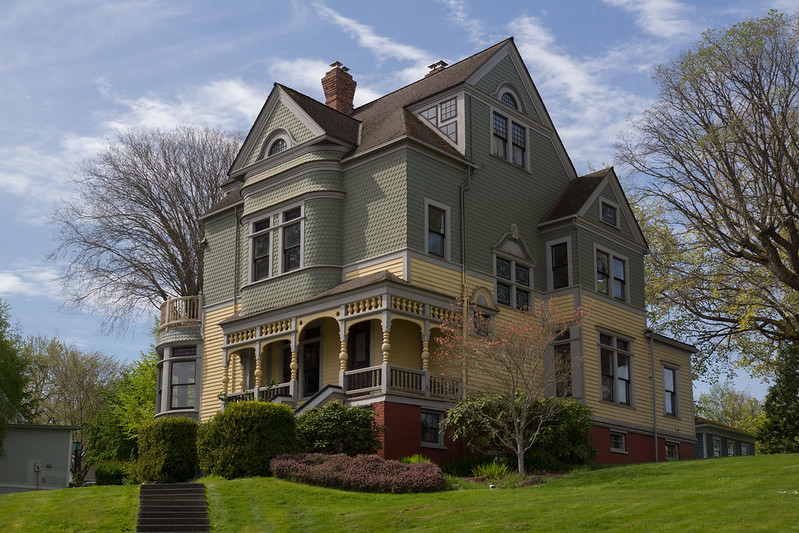
Walker-Ames House
The Walker-Ames House rises from a wooded hillside on Rainier Avenue in Port Gamble, Washington, a Victorian-era residence overlooking one of the most remarkably preserved company towns in the Pacific Northwest. The house is empty. It has been empty since the sawmill that built the town shut down in 1995. No one lives there, no one has lived there for decades, and yet by nearly every account available—from casual passersby to seasoned paranormal investigators—it is anything but unoccupied. Widely regarded as the most haunted house in Washington State, and possibly the entire West Coast, the Walker-Ames House sits at the center of a town where the dead, by persistent report, have simply chosen not to leave. Port Gamble was founded in 1853 when William Talbot and Andrew Pope established a sawmill on the shores of Hood Canal on the Kitsap Peninsula. The mill operated continuously for 142 years—the longest-running sawmill in the United States at the time of its closure in December 1995. Around the mill, the Puget Mill Company built a town modeled on the New England villages its founders had known, with tidy clapboard houses, a white-steepled church, a general store, and tree-lined streets arranged along the waterfront. Port Gamble was a company town in the fullest sense: the mill provided the livelihood, the company owned the homes, and the families who lived there were bound to the rhythms of timber, tide, and the company's fortunes. The original Walker-Ames House was destroyed in a fire in 1885. The current structure was built in 1888 for William Walker, the mill's master mechanic—a position of significant standing in a community organized entirely around the operation of the saw. Walker's daughter Maude married Edwin G. Ames, who served as the mill's resident manager and later its general manager. The house thus became the Walker-Ames, the most prominent and expensive residence in town, occupied by two generations of the family that ran the operation. After the mill closed, the house sat vacant, used occasionally for weddings, events, and eventually as a setting for films and fiction. Paranormal reports at the Walker-Ames House date back to at least the 1950s, well before the property gained any organized attention from investigators. Former town manager Shana Smith began actively collecting accounts from current and former tenants in 2006, after a paranormal group called Evergreen Paranormal requested permission to investigate. What struck Smith was the consistency across accounts separated by years and offered by people with no knowledge of one another's experiences. The house produces a range of reported phenomena. Pedestrians walking past have looked up to see the faces of small children peering from the upper-story windows of a house they know to be locked and empty. Attic lights flicker on and off with no one inside. Footsteps are heard running across floors above visitors standing in lower rooms. Disembodied voices have been recorded on electronic equipment. Visitors report being physically touched—one investigator emerged from the basement with a dusty handprint on her leg, claiming she had been grabbed. The basement generates the most intense reactions, with sensitives and casual visitors alike reporting feelings of sadness, heaviness, and an oppressive presence that several have described as darker in character than the rest of the house. The attic produces its own distinct atmosphere, with investigators reporting contact through electronic devices and the sense of a childlike energy. The most frequently described apparition is a female figure in a long dark dress with her hair pulled back in a bun—identified by some psychics as a nanny, though her name and specific history remain unknown. Paranormal investigator Pete Orbea, who has led guided tours and investigations of the house since 2012, described an encounter in which he heard a scuffle in a hallway, turned around, and found the woman standing expressionless behind him. She vanished the moment others in his group saw her, but not before someone captured a photograph of a form in the doorway. A male figure believed by some to be Edwin Ames has also been described, along with a boy with curly light brown hair in period clothing. The Walker-Ames House has been featured on A&E's "My Ghost Story" and serves as the centerpiece of the annual Port Gamble Ghost Conference, launched in 2010. Organized investigations are available by reservation, led by Orbea and visiting paranormal teams. One investigator's summary captures the paradox of the house well: despite having no dramatic history of violence or tragedy, the Walker-Ames produces an abundance of unexplainable activity—physical contact, electronic responses, apparitions, and EVP recordings that have left even skeptical visitors unsettled. Today, Port Gamble itself is a quiet tourist village of galleries, shops, and cafes housed in the old company buildings. The Buena Vista Cemetery on the hill above town holds its own reputation for activity. The Walker-Ames House stands on Rainier Avenue, locked and unrestored, its Victorian facade watching over a town that outlived its industry but not, apparently, all of its inhabitants. Whatever draws the spirits to this particular house—whether it is love of place, unfinished duty, or something less easily named—the Walker-Ames remains what it has been for over a century: a family home, still occupied by a family that no longer needs the door.

Brunswick Heritage Museum
Sitting in the heart of downtown Brunswick, Maryland, just steps from four active CSX mainline tracks and the Potomac River, the Brunswick Heritage Museum occupies a three-story brick building that has housed more history than its modest Main Street footprint would suggest. The 1904 structure — with its five tall narrow arches, Flemish bond brickwork, and dentelle cornice — was not built as a museum. It was built as a lodge, and the town it stands in was not always called Brunswick. It has been Eel Town, Berlin, Barry, and half a dozen other names across three centuries of continuous human settlement, each identity layered onto the one before it. The land along this stretch of the Potomac was home to the Susquehanna Indians when European settlement began in the early eighteenth century. The area was known as Eel Town because Native Americans fished for eel from the riverbank. A 1753 land grant from King George II planted the area firmly in colonial hands, and German immigrants followed in enough numbers through the 1780s that the settlement took the name Berlin. It remained a modest river trading post until the Baltimore and Ohio Railroad arrived and changed everything. In 1883, the B&O selected Berlin as the site for a massive new freight classification yard — the terrain was ideal, riverside bottomland was cheap, and the railroad was exempt from Maryland property taxes. The town was incorporated as Brunswick in 1890, and by 1907 the yard was complete: five miles of track, the largest and most modern classification yard in the country to serve a single railroad. A population of roughly 200 in 1890 swelled to an estimated 5,000 by 1910. Brunswick was, briefly, a boomtown. The building at 40 West Potomac Street was constructed in 1904 at the height of that boom, commissioned for the Delaware Tribe No. 43 of the Improved Order of Red Men — a fraternal organization whose roots traced to secret patriotic societies of the pre-Revolutionary era. The upper two floors served the lodge; the ground floor housed separate commercial tenants. A Native American statue stood at the building's entrance. The Improved Order of Red Men occupied the building until 1945, when the Fraternal Order of Eagles Brunswick Aerie No. 1136 purchased it, removed the statue from the entrance — it now stands on the museum's second floor — and operated there until 1969. The Brunswick Potomac Foundation purchased the building in 1974 for $30,000, paying off the mortgage through dollar donations and baked goods sales. The museum opened in 1980, focused initially on the railroad, and expanded its scope in 2013 to encompass the full arc of Brunswick's history. During the Civil War, Confederate forces used the area as a staging ground for raids into Maryland, and Union soldiers camped nearby after both Antietam and Gettysburg. Before the building became a museum, its third floor served as a dance hall where Patsy Cline performed for the Lions Club in the 1960s. The building itself carries three stories of accumulated human use across more than a century — fraternal lodge, dance hall, civic meeting space, and now museum. The architecture is straightforward brick commercial, but the interior has absorbed decades of different functions and different communities. The 1,700-square-foot HO scale model railroad on the third floor depicts the B&O Metropolitan Subdivision in meticulous detail. Elsewhere in the building, exhibits trace the town from its Indigenous roots through the canal era, the railroad boom, and into the present. The whole structure sits less than a block from active tracks, and the sound and vibration of passing trains are a constant undercurrent. Paranormal activity at the museum was described as occasional from the time it opened in 1980, but reports appeared to escalate in 2010 during construction on an elevator. The most consistent account across multiple independent sources is the apparition of a woman in a white dress — long-sleeved, ankle-length, described by at least one former resident as appearing to be from the Civil War era or earlier. She has been seen on the second floor and moving through exhibit spaces in rooms that should be empty. A former child resident of an apartment above the museum reported seeing the apparition repeatedly at night over the course of years, an account that surfaced only after adult investigators began documenting the building's activity. A second presence is described as a spirit who rearranges exhibits and interacts with the museum's collection — sometimes referred to as a ghostly curator. A third is associated specifically with the model railroad on the third floor, where the trains are said to start moving on their own and track switches reported to flip with no one near them. Skeptics will point to the building's age and constant low-level vibration from nearby rail traffic as natural sources for unexplained sounds and movement. A structure that has served as a fraternal lodge, dance hall, and community gathering space for over a century has absorbed a great deal of human energy, and the suggestion embedded in a location marketed as haunted is never insignificant. Investigators from multiple paranormal organizations have conducted formal sessions at the museum, with one 2017 expedition capturing what researchers described as statistically significant results from a random event generator and apparent direct radio voice responses to control questions using local and historical names. Today the Brunswick Heritage Museum is open to the public, free of charge, and operated as a nonprofit. It has been featured on regional ghost tours and included in guided haunted history routes through western Maryland. Whether visitors come for the model railroad, the Civil War history, the layers of fraternal lodge lore, or the woman in white reportedly still moving through the second-floor exhibits, the building at 40 West Potomac Street has more stories running through it than most places twice its size. Brunswick built itself around a railroad, and the museum built itself around Brunswick — and something in the building, apparently, has declined to leave.
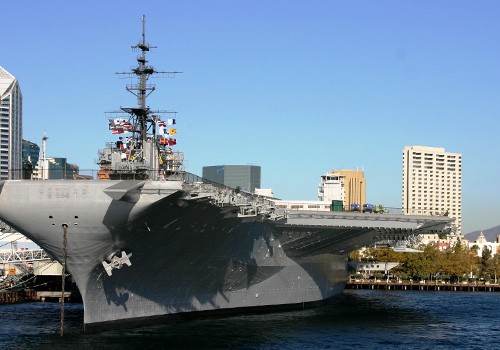
USS Midway
Moored at Navy Pier along San Diego's Embarcadero, the USS Midway is not a building haunted by a single tragic event or a house where someone died in the night. It is a 69,000-ton floating city that carried approximately 200,000 sailors across forty-seven years of continuous service, from the final week of World War II through the Persian Gulf War—the longest-serving aircraft carrier of the twentieth century. That kind of history does not sit quietly. The Midway was commissioned on September 10, 1945, one week after the formal Japanese surrender that ended the Second World War. Named for the decisive 1942 Battle of Midway, the carrier was the first in a new class of large ships featuring an armored flight deck and an air group of 120 planes. At the time of her launch, she was the largest ship in the world, a distinction she held for a full decade. Too massive to fit through the Panama Canal, the Midway was in a class by herself in more ways than one. Her Cold War service began almost immediately. In 1946, she became the first American carrier to operate in midwinter sub-Arctic conditions. The following year, she launched a captured German V-2 rocket from her deck—a trial that helped lay the groundwork for naval missile warfare. She later demonstrated that a carrier could deliver atomic weapons, fundamentally reshaping naval strategy. For ten years, the Midway patrolled European waters with the Atlantic Fleet before a round-the-world cruise brought her to the Pacific in 1955, where she was rebuilt with an angled flight deck to accommodate jet operations. The Midway's first combat deployment came in 1965, flying strikes against North Vietnam. Her aircraft shot down three MiGs, including the first air-to-air kill of the war, but seventeen Midway planes were lost to enemy fire during that cruise alone. In April 1975, during the fall of Saigon, the Midway served as the floating base for Operation Frequent Wind, rescuing more than 3,000 desperate refugees over a chaotic two-day evacuation. In 1991, she served as the flagship for Persian Gulf air operations during Operation Desert Storm. She was decommissioned in San Diego in 1992. After more than a decade of community effort to secure the ship as a museum, the USS Midway Museum opened on June 7, 2004, and quickly became the most visited naval warship museum in the United States, drawing over a million visitors annually. The paranormal claims aboard the Midway have accumulated steadily since the ship became a museum, though specifics have historically been kept close by staff and volunteers. The museum's curator, David Hanson—who also leads San Diego's largest paranormal investigation group—has investigated the ship's haunting activity for over a decade and maintains a log of all unusual incidents reported by staff, volunteers, and guests. Hanson prefers the term "paranormally active" to "haunted," noting that the spirits present on the Midway are overwhelmingly benign. He estimates that as many as thirty distinct entities have been recorded on the ship in recent years. Most, he believes, are not ghosts of sailors who died aboard the Midway but rather former crewmen who passed away later in life and returned to the ship out of duty and camaraderie. As Hanson has said of them, if that is their choice to be here, the museum welcomes them. Hanson's paranormal group has identified several spirits by name. A ghost called Monty inhabits the ship's library. Another named Jerome reportedly occupies the third row, third seat from the left in the Battle of Midway theater. A spirit identified as Chad, believed to have served in the Navy in 1953, was found in one of the ship's storage annexes, along with what investigators described as a swirling concentration of unidentifiable spiritual energy. Even before the ship became a museum, at least two hauntings were reported during active service—one occupying a cold storage food locker in the bow of the fourth deck, another in the Career Guidance Counselor's office near the stern. Visitors report hearing unexplained sounds echoing through corridors and compartments, sudden drops in temperature on the lower decks and in the engine room, the sensation of being watched or followed in isolated areas like the brig and old storage rooms, and the smell of what some describe as old blood in the sick bay area, accompanied by heavy, oppressive air. Museum mannequins positioned throughout the ship to represent sailors have been reported moving or appearing to speak. A phantom figure in uniform has been seen on the flight deck, vanishing when approached. Interestingly, some of the spirits encountered are not military at all—investigators have also identified female spirits and civilians who appear to pass through the ship without remaining, as though the Midway draws visitors from the other side just as it draws over a million living ones each year. Today the USS Midway Museum hosts more than 700 events annually, including military ceremonies, film screenings, and overnight educational programs where guests can sleep aboard the carrier. Twenty-nine restored aircraft sit on the flight deck and hangar deck. The self-guided audio tour, narrated by former Midway sailors, leads visitors through more than sixty locations. The ship that once carried atomic weapons and launched rescue helicopters over Saigon now carries schoolchildren, veterans, and tourists through corridors where the living and whatever remains of the dead share the same steel passageways—a floating city that never quite emptied out, even after the Navy was done with her.
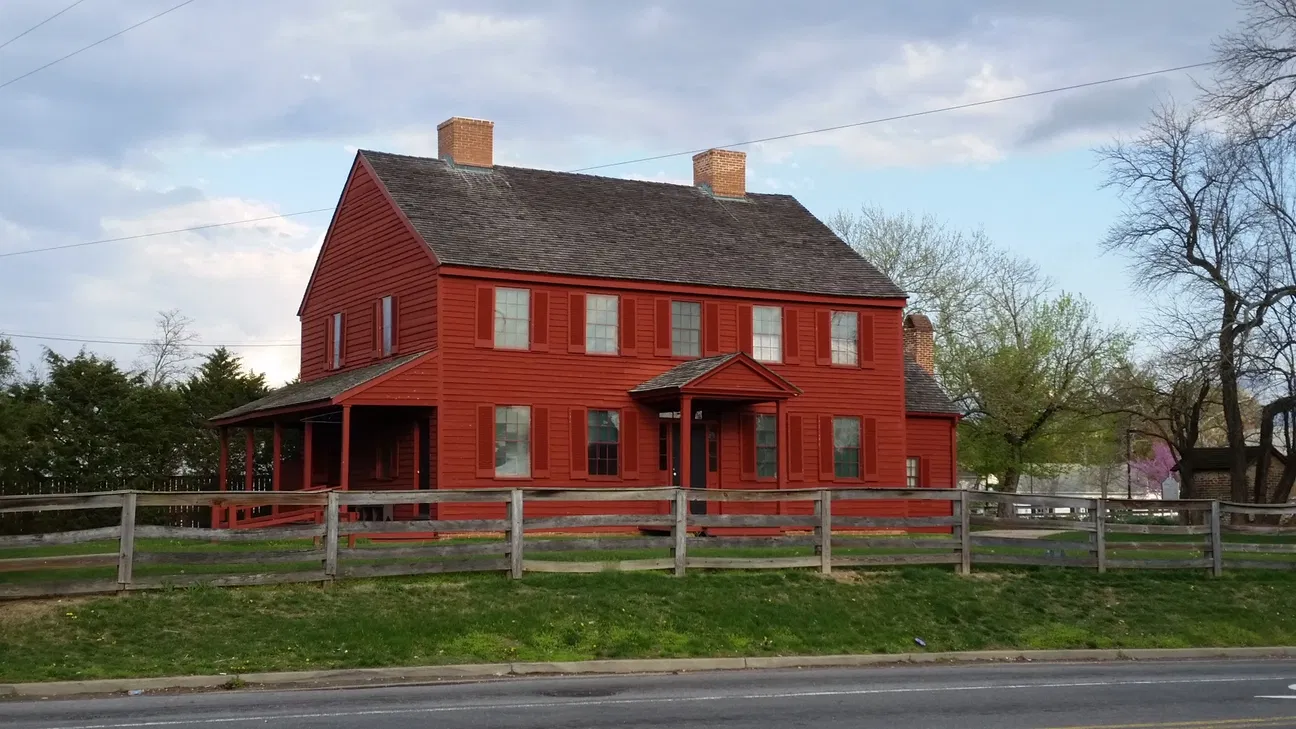
Surratt House Museum
The two-story red clapboard farmhouse on Brandywine Road in what is now Clinton, Maryland sits less than fifteen miles from Ford's Theatre and looks, from the outside, like any number of modest mid-century plantation homes that once dotted Southern Maryland. It does not announce what it was. But the Surratt House is one of the few surviving physical waypoints in the most consequential crime of the nineteenth century — the assassination of Abraham Lincoln — and the story that runs through it is as tangled and tragic as anything the Civil War produced. John and Mary Surratt built the house in 1852 on 200 acres of Prince George's County farmland, and from the beginning it served multiple purposes. It was a family home and a working plantation, but also a tavern, a public dining room, a hotel for traveling gentlemen, a post office, and a polling place. The surrounding community took the family name: the area became known officially as Surrattsville in 1853. When the Civil War began, the character of the place shifted. Southern Maryland was Confederate country in sympathy if not in official allegiance, and the Surratt tavern became a clandestine stop on the Confederate underground — a safe house for couriers and communications moving between Richmond and Washington. John Surratt Sr. died suddenly of a stroke in August 1862, leaving Mary with his debts, the farm, and three children. Facing financial collapse and unable to manage the property alone, she rented the Surrattsville tavern to a man named John Lloyd in the fall of 1864 and moved with her children to a rowhouse she owned at 541 H Street in Washington, where she ran it as a boarding house. She would never live in Surrattsville again. It was at the H Street boarding house that the conspiracy took shape. Mary's son John Jr., already an active Confederate courier, was introduced to actor John Wilkes Booth by Dr. Samuel Mudd in December 1864. Booth's original plan was kidnapping — seize Lincoln, use him as leverage to force the resumption of prisoner exchanges with the Confederacy. The Surratt boarders became his inner circle: Lewis Powell, George Atzerodt, David Herold. As part of the plot, weapons and supplies — two Spencer carbines, ammunition, field glasses — were cached at the Surrattsville tavern ahead of time, hidden there for retrieval during the planned escape through Southern Maryland. The kidnapping scheme collapsed, and Booth turned to assassination. On April 14, 1865, the same day he shot Lincoln at Ford's Theatre, Mary made one of her regular trips to Surrattsville — ostensibly to collect a debt from a neighbor. Her tenant John Lloyd would later testify that she told him to have the shooting irons ready. She delivered a package from Booth, later found to contain binoculars. Hours after Lincoln was shot, Booth and conspirator David Herold arrived at the Surratt tavern in the early morning hours. Booth had broken his leg leaping from the presidential box. He needed whiskey for the pain and the weapons that were waiting. The stop lasted only minutes. Twelve days later, Booth was dead in a Virginia barn. Mary Surratt was arrested, tried by a military tribunal, and convicted of conspiracy. On July 7, 1865, she was hanged at the Old Arsenal Penitentiary in Washington — the first woman executed by the United States federal government. Her guilt, and specifically the depth of her knowledge of Booth's plans, has been argued by historians ever since. The house was confiscated by the federal government after her conviction. Between 1868 and 1965, five separate families owned and lived in the former Surratt tavern, making ordinary modifications that gradually obscured its original character. In 1965 the property was donated to the Maryland-National Capital Park and Planning Commission, listed on the National Register of Historic Places in 1973, and restored to its 1865 appearance before opening as the first public historic house museum in Prince George's County on May 1, 1976. The Surratt Society, formed in 1975 by citizens interested in Mary's case — many of whom lean toward her exoneration — now supports the museum with more than 1,500 members worldwide. The paranormal claims attached to the house are modest but consistent, and notably some of the most credible come from the museum's own staff. The longtime director of the museum, Laurie Verge, described the experience plainly in multiple accounts: though she never saw anything, she repeatedly felt the sensation of a man stepping out of one of the upstairs bedrooms and looking directly at her, enough to raise the hair on the back of her neck. On one occasion, she and five or six employees sitting in her office — which was then located inside the house — all stopped mid-conversation and listened together as footsteps crossed the first floor below them, sounding exactly as though someone had walked in the front door, down the hall, and out the back. When they checked, no one was there. Verge noted that the paranormal attention directed at the house grew significantly after ghost investigator Hans Holzer visited in the 1950s with a spiritual medium — she was skeptical of his conclusions but could not explain what she had personally heard. She theorized, if any spirit was present, it was more likely John Lloyd — the tenant whose testimony condemned Mary — than Mary herself. Visitors have reported the figure of a bearded man seated in a rocking chair, visible only in a mirror's reflection. Others describe male apparitions on the back staircase, muffled voices of men, and the apparition of a woman believed to be Mary near the main staircase or on the porch. The museum declines paranormal investigation requests — staff receive them at roughly the rate of once a month — out of a deliberate choice to keep the documented history at the center rather than the ghost stories. The house still holds original furnishings, including Mary Surratt's own writing desk. The tavern room is intact. The staircase is there. Whether or not anything remains in residence, the weight of what happened inside is present in every room.
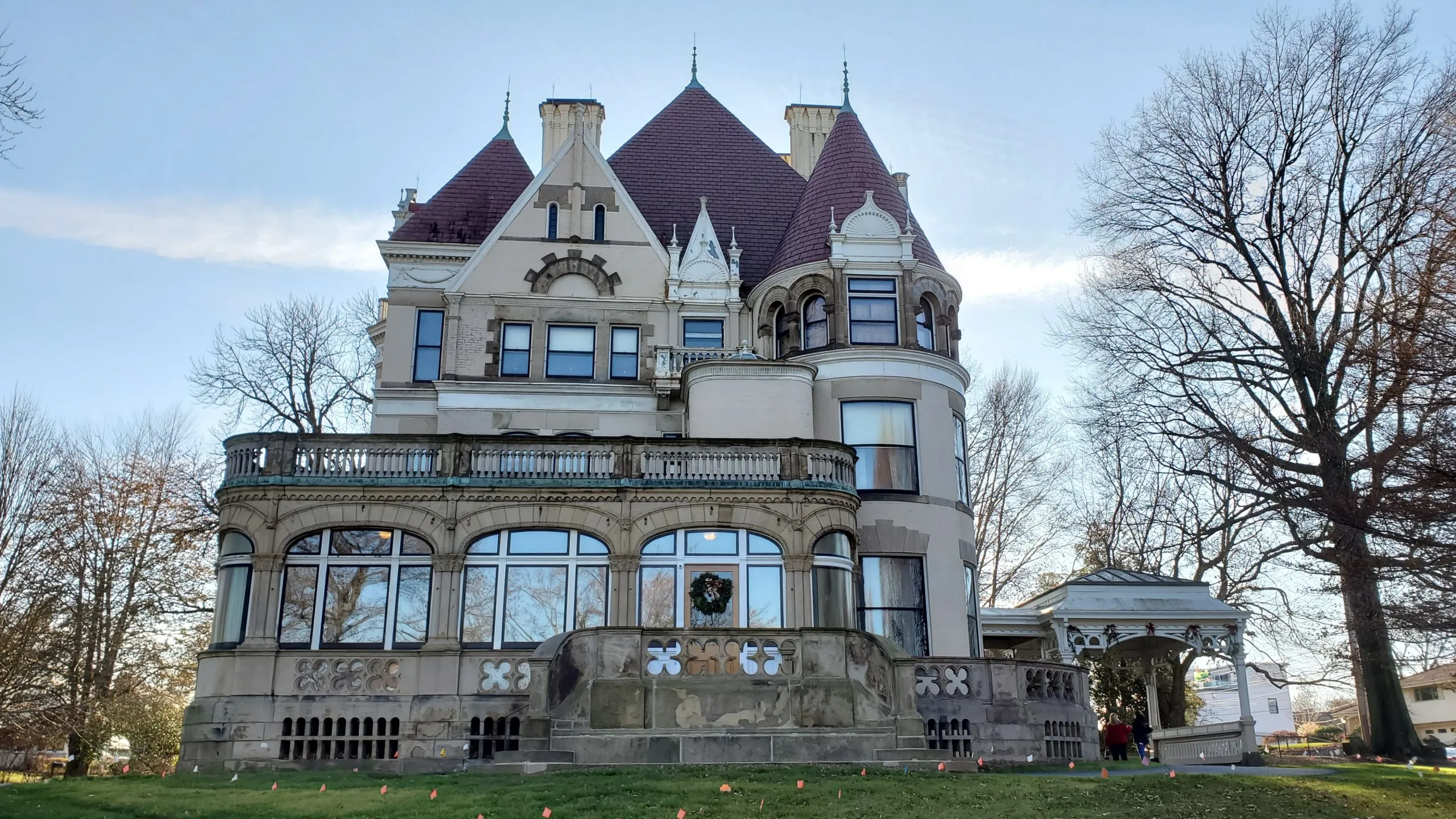
Frick Mansion – Clayton
Tucked into Pittsburgh's Point Breeze neighborhood on a tree-lined stretch of Reynolds Street, Clayton looks less like a museum and more like a home someone simply stepped out of — and may never have fully left. The 23-room mansion, now the centerpiece of the Frick Pittsburgh complex, was purchased in 1882 by Henry Clay Frick for $25,000 as an eleven-room Italianate house. Frick was already one of the most powerful men in American industry, having built a near-monopoly on coke production in the Pittsburgh region before aligning with Andrew Carnegie to help build the largest steel company the world had ever seen. He moved into Clayton with his new wife, Adelaide Howard Childs, and expanded it over the following decade into the Loire château-style mansion visitors see today, with Thomas Edison's company installing its electric lighting. The house carries the weight of the man who built it. Frick's name is inseparable from the Homestead Strike of 1892, one of the bloodiest labor confrontations in American history. When workers at the Carnegie Steel Homestead Works walked out over wage cuts, Frick surrounded the mill with barbed wire — workers called it "Fort Frick" — and hired 300 Pinkerton agents who arrived by barge on the Monongahela River. The resulting battle left ten men dead and dozens wounded. That same month, a 25-year-old anarchist named Alexander Berkman forced his way into Frick's office on the fourth floor of his Pittsburgh building and shot him twice, then stabbed him with a steel file before being subdued. Frick cabled Carnegie: "Was twice shot, but not dangerously." He finished his workday. The man was not easily stopped. But inside Clayton, beneath the public image of the ruthless industrialist, lived a father who suffered losses that money and power couldn't touch. In 1891, his six-year-old daughter Martha died at Clayton after swallowing a pin that caused a fatal infection, despite a specialist summoned from New York. Adelaide, her mother, fell into chronic illness and depression and never fully recovered. The following summer, infant son Henry Clay Jr. died shortly after birth. The two deaths in consecutive years, combined with the violence of the Homestead Strike and the assassination attempt, broke something in the family's relationship to Clayton. In 1905, they left for New York, taking almost nothing with them. The possessions stayed behind as though waiting for a return that never fully came. The house sat largely preserved in that frozen state for decades. Helen Clay Frick, the one surviving daughter, returned in 1981 and lived in Clayton until her death in 1984, having arranged in advance for the estate to be restored and opened to the public. The Frick Art & Historical Center opened in 1990 with 93 percent of the original family furnishings still in place — furniture, artwork, and personal items untouched across a century. That extraordinary preservation is itself central to the haunted reputation. Staff and visitors report hearing a child's laughter in the upstairs hallways and the sound of small feet running across floors when no children are present. A young girl in a white dress has been described at the end of corridors and on staircases, glimpsed briefly before vanishing — appearing to be around five years old, the age Martha was when she died. Security guards report women's footsteps on the third floor after hours, steady and deliberate, moving through rooms that stand empty. Adelaide's bed is regularly found with a deep impression in it, as though someone has lain down and risen again. Some accounts describe the scent of cigar smoke drifting through rooms where no one smokes. The spirit of Helen — who devoted her final years to keeping the house exactly as it was — is believed by many staff members to have never left the third floor where she slept. Clayton is open to the public for tours. The beds are made. The rooms are still. But the impressions keep returning.

Create Nightclub
The Hardin County Historical Museum in Kentucky occupies a building transformed across multiple decades, its current function as local history repository built upon architectural foundations from an earlier era. The structure represents significant historical property, its construction and architectural features reflecting nineteenth or early twentieth-century commercial or institutional architecture. The building preserves and displays artifacts, documents, photographs, and objects documenting Hardin County history. The museum contains recreated period settings, including a General Store exhibit reproducing commercial life from earlier decades. Interior spaces feature hallways connecting exhibition areas with displays organized chronologically. Despite contemporary museum function, the structure retains essence of original construction and paranormal phenomena connecting it to past inhabitants. The primary paranormal presence appears associated with Christopher Fraize, a historical figure whose connection created persistent spectral manifestation. Fraize, apparently resident or frequent visitor during his lifetime, developed strong attachment to the location—his spirit remains present after death. His presence is consistently reported by staff and visitors. Specific circumstances of Fraize's life, historical significance, and death are not fully documented in available sources, but his presence is undeniable. Attachment suggests either special building connection, significant life experiences within it, or reluctance to depart from location where identity aspects were fulfilled. Paranormal manifestations focus heavily on the General Store exhibit where Fraize's spirit appears most active. A spectral male apparition, dressed in brown suit consistent with early twentieth-century fashion, manifests with sufficient frequency to be documented phenomenon. The apparition appears three-dimensional and solid, demonstrating intelligent haunting characteristics. Most remarkably, Fraize's spirit engages in playing checkers, game pieces moving in response to unseen entity participation. Witnesses report observing checkers games with no visible opposing player, pieces moving with apparent intentionality. Disembodied sounds occur throughout the museum, vocalizations without obvious source. Eerie organ music manifests in various locations, apparently emanating from no identifiable source yet audible to multiple witnesses. Checkers selection suggests game's historical significance to Fraize's identity or regular activities. The General Store exhibit reproduces retail environment where Fraize apparently spent considerable time as proprietor, employee, or customer. General Stores represented social hubs in historical communities where men gathered for goods, social interaction, and recreational activities. Fraize's dedication to continuing checkers game across living and deceased boundary suggests activity carrying profound meaning. The Hardin County Historical Museum has acknowledged haunted status, integrating paranormal phenomena into educational mission. The museum hosts events focused on paranormal activity, offering visitors engagement opportunities. Paranormal investigation teams have conducted research, documenting phenomena and generating evidence. Local awareness of Fraize's continued presence has become institutional identity within Kentucky paranormal circles. The manifestation represents unusual haunting—characterized by apparent contentment rather than distress—where visitors encounter artifacts and spirit of historical figure continuing eternal checkers game.
Cincinnati Union Terminal and Museum Center
Cincinnati Union Terminal stands as one of the most architecturally significant transportation hubs in America, a masterpiece of Art Deco design completed in 1933 as both a functional railroad station and an enduring monument to the golden age of rail travel. The massive terminal building features soaring limestone and granite facades, a vast central concourse with towering columns supporting an ornate coffered ceiling, and elaborate decorative elements including murals, bronze sculptures, and intricate tilework that celebrate commerce, industry, and transportation. The terminal's rotunda rises majestically as a space of overwhelming grandeur, its proportions designed to inspire awe and convey the power of American technological achievement. Skilled craftspeople from multiple disciplines contributed artistic elements that transform the functional transportation hub into a cathedral of transit and progress. The terminal operated at peak capacity through the mid-twentieth century, handling thousands of passengers daily as they arrived and departed on streamlined trains bearing legendary names like the Pennant and the Zephyr. The station embodied the optimism and modernity of its era, representing technological progress and the promise of rapid continental connection that rail travel offered to business travelers, families relocating westward, and adventurers seeking new horizons. The building absorbed the emotional imprint of countless human dramas, farewells to soldiers departing for military service, reunions of separated families, and the daily rhythms of a city engaged with the wider nation through rail connections. The terminal also witnessed tragedies within its walls, including the death of a security guard named Shirley under circumstances that remain the subject of ongoing investigation and speculation. Additionally, the station houses exhibits and displays honoring aviation history, including artifacts from World War II era aircraft and the stories of pioneering pilots who shaped American aviation. The museum exhibits transform portions of the terminal into spaces dedicated to preserving and presenting historical narratives of human achievement and sacrifice. Paranormal activity reported at Cincinnati Union Terminal appears concentrated around the WWII airplane exhibit and general hallways of the facility. Security personnel working night shifts have reported hearing unexplained footsteps echoing through the station after hours when the building is closed to the public, often descending into the main concourse when no one should be present. The footsteps suggest purposeful movement rather than random noise, implying conscious agency and deliberate navigation of the familiar spaces. Apparitions have been sighted in the vicinity of the aviation exhibits, with multiple witnesses describing the ghostly figure of a pilot dressed in period military flight gear, examining the historical aircraft displays as though personally invested in their preservation. Some investigators suggest this entity may be a military aviator whose spirit remained at the location due to the profound connection to aviation history, unable to accept his death or move beyond the site of exhibits honoring his comrades. Visitors and staff have reported emotional disturbances in specific areas of the terminal, sudden temperature drops, and disembodied voices that seem to emanate from the exhibit spaces. The architectural grandeur and historical significance of Cincinnati Union Terminal appears to have impressed itself upon the spiritual realm as powerfully as upon the physical world, making it a magnet for continued paranormal investigation and documentation.
Baranov Museum
The Baranov Museum, located in Sitka, Alaska, occupies one of Alaska's oldest standing buildings, a log structure constructed during the Russian colonial period when this region represented the commercial and administrative center of Russian America. The building has survived more than two centuries of exposure to Alaska's extreme environmental conditions, making it an architectural artifact of considerable historical and engineering significance. The original construction employed traditional Russian building techniques adapted to regional materials and climatic conditions, with the log walls and structural systems demonstrating the practical ingenuity of colonial-era builders working in a remote and challenging landscape. The building has been repurposed multiple times across its history, functioning variously as a Russian colonial administrative headquarters, private residence, and currently as a museum dedicated to preserving and interpreting the complex cultural heritage of Russian colonial Alaska. The museum operations include exhibition spaces, artifact storage, archival materials, and interpretive facilities designed to educate visitors about the Russian colonial period and the interactions between Russian colonists, indigenous Tlingit peoples, and the broader trajectories of North American history. The historical context of the Baranov Museum building encompasses multiple layers of temporal accumulation, cultural encounter, and dramatic historical events that have occurred within and around the structure across its long operational history. The Russian colonial period represents a distinct epoch in North American history, during which Russian imperial commercial interests, particularly fur trading operations, extended across the Aleutian Islands and into southeastern Alaska, creating a distinctive multicultural society combining Russian, indigenous Tlingit, European, and American populations. The building itself has witnessed transitions in colonial authority, economic transformation, epidemiological catastrophe through introduced diseases, and the ultimate absorption of the region into American territorial and later state political structures. The architectural fabric of the building bears witness to these historical transformations through its materials, modifications, and the accumulated traces of occupation across generations. The building's age, historical significance, and the tragic events associated with the colonial enterprise have created a location saturated with historical meaning and emotional resonance. Paranormal phenomena reported at the Baranov Museum remain less extensively documented than those at many other American haunted locations, yet substantial anecdotal evidence and visitor reports suggest the presence of spiritual activity within the building. Visitors to the museum with remarkable frequency inquire whether the structure harbors a resident ghost or ghostly presence, indicating that the location possesses characteristics that generate paranormal expectations and interpretive frameworks in the minds of visitors. While no single entity or manifestation has been definitively identified or extensively documented, substantial historical justification exists for supposing that hauntings would be present at this location. The violence inherent in the colonial enterprise, the epidemic diseases that devastated indigenous populations, the forced labor systems and cultural disruption, and the tragic dimensions of imperial expansion all constitute experiences and suffering that some paranormal researchers theorize might generate spiritual imprints or manifestations. The building's extreme age, continuous occupation across multiple historical periods, and its role as a nexus of cultural conflict and human tragedy create the theoretical conditions under which paranormal phenomena might concentrate. Paranormal investigators and researchers have noted that the Baranov Museum presents unusual interpretive challenges in that the building's historical trauma and the abundance of documented tragedy provide substantial causal justification for haunting, yet the specific manifestations remain elusive and difficult to document with the clarity achieved at other paranormal sites. This ambiguity itself becomes significant, as it suggests that the spiritual imprints at the Baranov Museum may differ fundamentally from more conventional paranormal phenomena, potentially reflecting the complex and unresolved historical and cultural dimensions of the colonial experience. Some researchers theorize that the building may harbor spirits of indigenous individuals who died during the colonial period, whose presence might manifest in subtle or culturally specific ways not fully recognized by investigators operating within Western paranormal investigation frameworks. Today, the Baranov Museum operates as a dedicated cultural and historical institution while simultaneously serving as a site of potential paranormal investigation and historical reflection, creating a unique venue where Alaskan history, Russian colonial legacy, and spiritual mystery converge in ways that continue to challenge conventional historical and paranormal interpretation.
Pieces of the Past
The Haunted Antique Shop and Paranormal Museum occupies a substantial 1920 Craftsman-style bungalow in DeLand, Florida, a structure built during the height of the craftsman architectural movement when attention to quality materials and meticulous joinery represented both aesthetic and philosophical principles. The building features the characteristic wide porches, exposed beam work, and natural wood detailing that defined craftsman design, creating a warm, welcoming ambiance that contrasts sharply with its reputation as one of Florida's most actively paranormal properties. The construction exemplifies the values of handcrafted authenticity and natural materials that define the Arts and Crafts movement. The original residential function of the building and its transition to commercial museum use reflects the evolution of American cultural attitudes toward domestic space and historical preservation. The shop operates as a museum and retail establishment specializing in antique items spanning multiple centuries and cultures, with collections that include furniture, artwork, decorative objects, and artifacts of historical and cultural significance. Items within the shop originate from diverse sources and carry their own histories and potential spiritual associations. The proprietor has documented extensive paranormal activity throughout the structure, publishing books and maintaining detailed records of manifestations that rival any professional paranormal research facility in their comprehensive documentation. The meticulous record-keeping transforms the shop into an archive of paranormal phenomena unparalleled in scope and systematic observation. The most famous artifact within the museum is known as Haunted Charlie, a doll whose troubled history and reputation have generated international attention and visitor interest. According to accounts, Haunted Charlie exhibits disturbing behavioral patterns suggesting possession or animated by malevolent spiritual force, including unexplained movement between locations, changes in posture and positioning, and animated expressions appearing on its static face despite the absence of mechanical components. The doll becomes the focal point for many visitors' experiences and represents the bridge between the material and spiritual worlds. The shop also documents the presences of James DeWalt and Lucinda DeWalt, spirits believed to inhabit the structure and whose identities and histories form part of the ongoing paranormal narrative of the location. These entities appear to serve as caretakers or guardians of the space and its contents. Paranormal manifestations at the Haunted Antique Shop occur with remarkable frequency and consistency, creating an environment unlike most haunted locations in their predictability and intensity. Objects within displays rearrange themselves spontaneously, items relocating to entirely different rooms despite being secured in place, and the proprietor's careful organization constantly disrupted by unseen forces. Lights throughout the building activate and deactivate without human intervention, with switches being found in opposite positions from their intentional settings. Doors open and close with audible sounds despite locks being engaged, and disembodied voices emerge from empty rooms, sometimes in conversation with each other, sometimes addressing observers directly with apparent purpose and intention. Staff and visitors report encounters with phantom customers who browse the merchandise, inquire about items, and vanish when approached, suggesting spirits drawn to the retail space either by attachment to specific artifacts or by the social function of shopping and economic transaction. The manifestations appear sufficiently profound that paranormal research organizations, including those affiliated with academic institutions and major paranormal television productions, have conducted formal investigations of the location. The shop's proprietor has become recognized as an authority on haunted artifacts and paranormal museum operation, with published works documenting experiences and theoretical frameworks for understanding the phenomena and the relationship between objects and spiritual presence.
Squirrel Cage – Old Pottawattamie County Jail
The Squirrel Cage Jail, constructed in 1885 as a correctional facility for Pottawattamie County, Iowa, stands as a remarkable example of late nineteenth-century criminal justice architecture and technological innovation combined with one of the most actively haunted locations in the continental United States. The facility was built on the site of a former church morgue, a historical fact that may have significance in understanding the paranormal phenomena that have been documented there across multiple decades. The building's design incorporated a unique rotational cage mechanism that allowed jailers to rotate a three-tiered cage structure containing prisoner cells, a technological innovation intended to improve security and reduce the number of staff members required to maintain the facility. The cage structure itself, despite its intended purpose of secure detention, appears to have created an environment conducive to the retention of traumatic impressions and the manifestation of persistent spiritual phenomena. The jail's architecture creates a distinctive physical environment featuring cell blocks arranged within the rotating cage mechanism, narrow hallways connecting various functional areas, and a fourth-floor apartment apparently designed to house a jailer or other staff member. This architectural configuration creates spaces of confined intensity where traumatized individuals were held during some of the worst periods of their lives, potentially creating emotional and psychological imprints that have persisted beyond physical death. The jail operated as a correctional facility from the late 1880s until the 1950s, housing hundreds of individuals during its operational period, some held for minor offenses and others awaiting trial or sentence for serious crimes. During the jail's operational period, multiple deaths occurred within its walls, deaths resulting from a variety of circumstances including accidents and intentional acts. A prisoner died of a heart attack while detained within the facility, a death that occurred within an environment already characterized by stress and confinement. Another prisoner fell three stories while being held at the facility, suffering fatal injuries as a result. A prisoner hanged himself within a cell, an act of desperation that represents the most extreme form of psychological distress. An officer was shot within the facility, an incident that introduced violence and loss of life among the staff responsible for maintaining the jail. These accumulated deaths and traumatic incidents appear to have created an environment saturated with suffering and loss, circumstances that may facilitate the manifestation of paranormal phenomena. From the early 1900s through the 1950s, staff members at the jail noticed strange happenings occurring within the facility that could not be explained by conventional means. Footsteps were distinctly heard echoing through empty hallways at times when the jail was secured and evacuated, with no living persons present to account for the sounds. Doors repeatedly opened and closed without human agency, locking mechanisms apparently disengaged by unseen forces. These phenomena were documented by multiple staff members across several decades, establishing a pattern of consistent manifestations rather than isolated incidents. Professional paranormal investigation teams equipped with sensitive electromagnetic field detection equipment have documented significant EMF spikes occurring at specific locations within the jail, spikes that cannot be attributed to electrical infrastructure or natural sources. Electronic Voice Phenomena recordings have been captured by investigators within the facility, audio recordings purporting to contain the voices or sounds of deceased individuals. Shadowy figures have been photographed by paranormal investigation teams, images suggesting the presence of non-physical entities within the building. These various forms of documentation appear to provide objective evidence for the reality of paranormal phenomena occurring within the jail. Apparitions of deceased prisoners have been reportedly sighted at the entrances of specific cells, manifestations suggesting that individual spirits remain bound to the locations where they suffered or died. The first paranormal investigation team to spend the night at the facility reported hearing the sound of approaching boots during their investigation, sounds that appear to have represented the presence of former jailers or law enforcement personnel continuing their duties in spectral form. The accumulated evidence from multiple decades of investigation and documentation establishes the Squirrel Cage Jail as one of America's most significantly haunted locations, a place where the trauma and loss of the past appears to retain powerful manifestations in the present.
Abbeville County Museum
The Abbeville County Museum occupies a distinctive position within the South Carolina cultural landscape, both as a repository of regional historical artifacts and as a location of documented paranormal significance that reflects the complex and troubling aspects of the area's past. The building that now houses the museum collections was originally constructed to serve as a county jail, a facility designed and operated according to the standards and practices of nineteenth-century incarceration that would have confined individuals accused or convicted of crimes within its walls. The transition of this former jail building into a museum represented a significant cultural decision to preserve and interpret the structure as a historical artifact itself, transforming the spaces that once functioned as instruments of legal punishment and social control into environments dedicated to educating contemporary populations about the material culture and social history of Abbeville County and the surrounding region. The museum's collections encompass artifacts spanning multiple centuries of regional occupation and development, from indigenous peoples through colonial settlement to the antebellum, Civil War, and post-war periods. The upper floors of the structure, which would have housed the jail cells and secure holding areas during the facility's operation as a detention center, retain particular significance as spaces where individuals experienced confinement, legal proceedings, and the prospect of judicial punishment, including execution. Within the upper floors of the former jail building, particularly on the third floor level, paranormal phenomena of considerable intensity and consistency have been documented by visitors, staff, and paranormal investigators working to understand the spiritual geography of the structure. The most significant of these manifestations centers upon the presence of Earl Miller, an African American prisoner whose confinement within the jail dates to the year 1905 and whose continued presence within the building appears to extend to the present day, more than a century after his initial incarceration. The paranormal activity associated with Earl Miller manifests most distinctly through ghostly footsteps that traverse the third floor hallways, areas where cells would have been located and where detained individuals would have been confined during their incarceration. These footsteps occur without visible human source, echoing through the corridors and exhibition spaces with a deliberate rhythm that suggests purposeful movement through familiar spaces. The third floor area, identified by visitors and paranormal researchers as the most actively haunted section of the building, appears to be a nexus of paranormal phenomena related not only to Earl Miller but potentially to other individuals who experienced confinement and whose fates may have been determined by judicial proceedings and executions that occurred within or in close proximity to the facility. The history of the Abbeville County area, situated within the broader context of the American South's troubled racial history and the mechanisms of legal violence that disproportionately affected African American individuals, provides historical context for understanding the potential origins and nature of the paranormal manifestations documented within the museum. Apparitional figures have been reported on the upper floors where hangings may have occurred, suggesting the possible presence of individuals whose deaths through judicial execution have left persistent spiritual imprints upon the physical spaces where those deaths took place. The emotional and psychological trauma associated with confinement, facing mortality through judicial violence, and the racial dimensions of criminal justice in the American South appear to have created conditions within the building that sustain the continued presence and manifestation of spiritual entities. The Abbeville County Museum remains an active location for paranormal documentation, with ongoing research efforts seeking to understand the nature of these manifestations and their relationship to the historical experiences of individuals such as Earl Miller and others whose lives and deaths intersected with the building's function as a space of incarceration and punishment. Contemporary visitors to the museum continue to experience the footsteps, apparitional sightings, and other paranormal phenomena that suggest the presence of active spiritual forces within the structure, making the building simultaneously a site of historical interpretation and ongoing paranormal investigation.
Soldiers National Museum
The Mine Shaft Tavern in Madrid, New Mexico occupies a historic mining town structure with paranormal reputation reflecting centuries of exploitation, hardship, and tragic death characterizing the region's mining industry and resource extraction activities. Madrid developed as a mining settlement centered upon intensive coal extraction operations that dramatically transformed the landscape and attracted workers from across the nation and international immigrant populations seeking economic opportunity. The tavern structure represents a gathering place integral to mining community social and economic life, where workers assembled following exhausting shifts to consume alcohol, socialize, participate in gambling, and temporarily escape the difficult physical and psychological demands of extraction labor. The building's construction reflects frontier-era commercial architecture and functional design appropriate to remote mining communities lacking urban amenities and conventional entertainment options. The tavern continues operating as a bar and restaurant while simultaneously functioning as a paranormal attraction drawing tourists and paranormal researchers interested in the location's thoroughly documented haunting phenomena. The paranormal reputation centers upon the presence of Madaline, a woman spirit whose identity, background, and historical circumstances remain partially obscured, though her powerful paranormal manifestations indicate intense emotional attachment. The paranormal phenomena at The Mine Shaft Tavern concentrate with particular intensity within the bar area, adjacent museum property housing historical artifacts and mining-related displays, and notably at mirrors positioned strategically throughout the structure. Glasses spontaneously fall from shelves positioned behind the bar without apparent physical disturbance or mechanical cause, shattering upon impact with the floor in dramatic displays of poltergeist activity that occur multiple times daily. These falling glasses represent one of the most frequently documented and consistently reported paranormal phenomena, suggesting either habitual manifestation of emotional distress or deliberate attempts at capturing attention and demonstrating spiritual presence to patrons and staff. Doors open and close autonomously throughout the tavern including exterior doors, interior partition doors, and cabinet doors, with movement patterns suggesting either residual energy replaying habitual activities or intentional manipulation of the physical environment by Madaline's spirit. Mysterious sounds of unidentifiable origin emanate from various locations, ranging from subtle noises to dramatic disturbances. Furniture moves unexpectedly on its own, with chairs, tables, and barstools reporting shifts in position without human agency. Paranormal investigators utilizing advanced photographic equipment have documented orbs—spheres of light without conventional source—appearing within photographs taken throughout the tavern, with concentrations particularly intense within the bar area and near Madaline's presumed locations of primary activity. Mirror reflections allegedly display apparitions and ghostly figures not visible in direct observation or reflected properly according to conventional mirror optics, suggesting mirrors may serve as portals or focal points for spiritual manifestations. Witnesses report seeing faces, humanoid figures, and apparitions reflected in mirrors where direct observation reveals only empty space. Some paranormal researchers propose mirrors represent thresholds between physical and spiritual dimensions, potentially facilitating manifestation of entities otherwise invisible. The concentration of paranormal phenomena around the bar area suggests Madaline's strong association with this primary space, suggesting her life and death held profound significance relating to bar environment activities. Today, The Mine Shaft Tavern continues successful operation as a functioning bar and restaurant while maintaining its reputation as one of New Mexico's most actively haunted commercial establishments requiring continuous paranormal documentation. The paranormal phenomena persist with remarkable consistency, with daily reports of falling glasses, door movements, and other manifestations ensuring ongoing paranormal activity documentation and investigation. The tavern has cultivated its paranormal reputation through marketing and promotional activities, attracting paranormal enthusiasts, tourists seeking haunted location experiences, and serious paranormal researchers interested in documenting genuine spiritual phenomena. Madaline's presence within the tavern shows no indication of diminishing or changing character despite decades of continuous paranormal documentation efforts. The spirit appears capable of sustained manifestation and ongoing interaction with both living patrons and paranormal investigators, suggesting powerful emotional attachment and unresolved spiritual concerns. The Mine Shaft Tavern represents one of the most thoroughly documented and actively manifesting paranormal locations in the American Southwest.
Evergreen Cemetery
The Soldiers National Museum in Gettysburg, Pennsylvania occupies a structure with profound historical significance relating directly to the American Civil War and specifically to the Soldiers' National Orphanage established to provide shelter and education to children orphaned by the conflict. The building represents architectural and institutional continuity with the American Civil War era, constructed deliberately to serve humanitarian purposes supporting vulnerable populations created by the devastating war's enormous casualties and societal disruption. Gettysburg itself emerged as the epicenter of American Civil War focus following the three-day Battle of Gettysburg in July 1863, which resulted in approximately 51,000 casualties and effectively represented the crucial turning point in the war's trajectory and outcome. The Soldiers' National Orphanage served as an essential institution addressing the humanitarian crisis created by the war, providing structure and support to displaced and orphaned children lacking conventional family support systems. The museum subsequently transformed the historical orphanage structure into an interpretive facility dedicated to documenting Civil War history, military institutional development, and the profound experiences of those affected by the conflict. The paranormal reputation of the Soldiers National Museum centers upon Rosa Carmichael, a spirit entity manifesting consistently throughout the building structure with particular concentration in subterranean spaces and basement areas of the historical complex. The museum's paranormal phenomena concentrate with particular intensity within the dungeon, basement, and associated subterranean structures underlying the building, suggesting traumatic events, emotional distress, or tragic circumstances associated with these lower levels created particularly strong spiritual manifestations. Rosa Carmichael's identity, her relationship to the orphanage institution, and the specific circumstances of her death or paranormal attachment remain subjects of ongoing paranormal research and historical investigation by researchers and paranormal enthusiasts. The basement and dungeon areas allegedly functioned as spaces associated with discipline, punishment, confinement, or other institutional practices that may have created emotional trauma contributing to Rosa's spiritual manifestation and ongoing paranormal presence. Paranormal researchers conducting investigations within these subterranean spaces have documented unexplained phenomena persisting despite the structural separation from upper floors. Disembodied voices captured on electronic recording equipment suggest attempted communication or manifestation of habitual vocalizations from historical periods when the orphanage operated actively. Apparitions of humanoid figures have been observed, described as solid-appearing entities materializing briefly before dissipating when approached or directly observed by investigators and visitors. Poltergeist activity—spontaneous movement of objects without mechanical cause—has been documented throughout the basement and dungeon areas, suggesting powerful energy manifestations concentrated within these subterranean zones. The dungeon itself represents one of the most intensely haunted zones, with visitors descending into the dungeon frequently reporting overwhelming sensations of dread, unexplained fear, sudden emotional shifts, and psychological distress that dissipates immediately upon exiting the space. Paranormal investigators equipped with electronic equipment have detected unusual electromagnetic fluctuations, unexplained temperature variations, and potential electronic voice phenomena within the dungeon exceeding phenomena documented in surface level rooms. Today, the Soldiers National Museum continues functioning as a historical and interpretive institution dedicated to Civil War history and the experiences of soldiers and civilian populations affected by the conflict and its enormous casualties. The paranormal reputation has been acknowledged in paranormal research literature and has attracted paranormal researchers conducting investigations within the building structure and its subterranean spaces. Museum management has accommodated carefully conducted paranormal investigations recognizing the research value of documenting phenomena, though access to dungeon and basement areas has been carefully controlled to balance paranormal research interests with preservation of the historical structures. Rosa Carmichael's spirit shows continuity in paranormal manifestations, with no indication of diminished activity or spiritual departure despite contemporary institutional functions and historical reinterpretation efforts by the museum.
Culbertson Mansion
The Cherokee Strip Museum in Alva, Oklahoma occupies a historic building that has witnessed both the triumph and tragedy of frontier settlement and indigenous displacement. Originally constructed in the early twentieth century, the structure served various purposes throughout its evolution, eventually becoming home to a museum dedicated to preserving the complex history of the Cherokee Outlet and the 1893 Land Run that brought thousands of settlers into previously designated tribal lands. The building itself represents the architectural preferences of its era, with period details that evoke the bustling frontier spirit of territorial Oklahoma during the height of American western expansion and settlement. Within its walls, the museum maintains extensive collections documenting the lives of settlers, merchants, and indigenous peoples whose stories intersect at this pivotal moment in American history. The physical structure itself possesses substantial historical significance, having functioned in various capacities before its transformation into a museum, potentially including use as a medical facility, boarding house, or administrative building during the nineteenth and early twentieth centuries. The architectural integrity of the building has been carefully maintained and preserved, with original woodwork, period fixtures, and design elements authentically reflecting the era of its construction. The Cherokee Strip Museum has become known among paranormal investigators and local residents for unexplained phenomena that manifest particularly strongly on the second and third floors, where visitors and staff have reported witnessing ghostly voices without identifiable sources and experiencing sudden temperature fluctuations that defy conventional explanation. The voices manifest as distinct vocalizations, sometimes forming discernible words or phrases, other times appearing as inarticulate murmuring or crying sounds without clear linguistic content. The reception area has gained particular attention due to reports of an antique piano that appears to play of its own volition, with witnesses describing full melodies emanating from the instrument despite no visible hands upon the keys and no electrical power supply activating the mechanism. The piano's music has been described as both hauntingly beautiful and disturbingly dissonant, suggesting either skilled historical musicians or entities with less refined musical understanding. Strange lights and shadowy figures have been documented moving through hallways and across walls, observed primarily during evening hours when the building is largely unoccupied. The luminescent phenomena appear as indistinct glowing orbs, misty phosphorescent trails, and shadow figures that move with apparent intentionality despite their spectral nature. Floating orbs of light, captured both in photographs and witnessed by multiple observers simultaneously, drift through the museum galleries with no apparent physical cause or rational explanation. These phenomena have been documented occurring at varying altitudes, traveling in patterns inconsistent with conventional air currents or light refraction phenomena. Paranormal investigators and research groups have conducted numerous formal investigation events at the Cherokee Strip Museum, documenting electromagnetic fluctuations and audio anomalies consistent with claims of spectral presence throughout multiple seasons and weather conditions. The prevailing theory among paranormal researchers suggests that the haunting may be connected to spirits of patients who underwent botched surgical procedures, potentially during an earlier era when the building housed medical facilities, or other unidentified hospital-associated entities whose tragic deaths left an indelible mark on the location. Some researchers speculate the phenomena may relate to deaths of indigenous individuals connected to the historical narratives preserved within the museum's collections. The museum continues to operate as both a historical institution and an active site of paranormal interest, balancing its educational mission with growing recognition of its reputation as one of Oklahoma's most actively haunted public buildings, attracting both history enthusiasts and paranormal researchers seeking to understand the boundary between past and present.
Uppertown Firefighter’s Museum
The Uppertown Firefighters Museum occupies a distinguished position within the heritage and historical infrastructure of Astoria, Oregon, serving as both a museum dedicated to preserving fire service history in the region and a location where verified paranormal manifestations continue to occur with remarkable regularity and intensity. Originally constructed during the late nineteenth or early twentieth century, the building served as an active fire station housing firefighting equipment, apparatus, and dedicated personnel whose primary function was protecting the local community from the devastating effects of fire. The structure represents the architectural traditions of fire station design, with large doors and apparatus bays designed to accommodate firefighting equipment and vehicles, dormitory spaces where firefighters would rest during their shifts, equipment lockers for storing protective gear and essential tools, and administrative areas supporting the day-to-day operations of the fire station. The Astoria fire service had a significant operational history extending across multiple decades, with firefighters stationed at this location responding to emergency calls and maintaining continuous readiness for the unpredictable emergencies that fire creates in communities. When the fire station eventually ceased its operational function as an active emergency response facility, the building was preserved and adapted to serve as a museum interpreting the history of firefighting and the development of fire service methods. The primary paranormal presence documented at the museum is associated with a firefighter who died through tragic circumstances during the 1920s, approximately a century before the building's transformation into a museum. This firefighter died as a result of a catastrophic fall apparently occurring during the performance of firefighting duties or routine activities undertaken within the fire station facility itself. The nature of his death, involving a fall from an elevated position within the structure, created conditions of severe trauma and sudden cessation of life that appear to have anchored his spiritual presence within the building with unusual persistence and clarity. Most distinctly, this firefighter's apparition has been observed manifesting in a peculiar condition of apparent sleepwalking, moving through museum spaces seemingly unaware of his death while continuing to engage in habitual behaviors and movements associated with his life as a firefighter. This manifestation of a sleepwalking apparition represents an unusual and distinctly documented paranormal phenomenon that has been verified through multiple witness accounts. The paranormal activity manifests most intensely on the third floor where the firefighter's death occurred. The sleepwalking firefighter has been observed standing over sleeping visitors and overnight guests participating in paranormal investigations, suggesting concern or curiosity regarding living individuals present within his historical environment. Visitors and paranormal investigators have documented distinctive rattling and disturbance of equipment lockers without visible human agency. Strange and unexplained noises emanate from the third floor and other areas of the museum. Disembodied footsteps traverse corridors and stairways with apparent purposefulness, often occurring during night hours when the museum is closed to the public. The Uppertown Firefighters Museum has gained recognition as one of the most actively and verifiably haunted fire stations in the United States, with paranormal phenomena representing convincing evidence for afterlife manifestations sustaining presence.
Las Cruces Railroad Museum
The Las Cruces Railroad Museum occupies a historic depot building in Las Cruces, New Mexico, a structure that represents a crucial chapter in the region's transportation and economic development during America's railroad expansion era in the late nineteenth and early twentieth centuries. Constructed to serve the Santa Fe Railroad, this depot building stands as a testament to the ambitious infrastructure projects that connected isolated communities to the wider American network of commerce and communication. The structure represented a significant investment of capital and engineering expertise, designed to facilitate the movement of thousands of people and millions of tons of freight across the American Southwest. The building's architectural design reflects the practical elegance of railroad station architecture, combining aesthetic considerations with functional requirements, featuring elements designed to accommodate the heavy foot traffic of passengers, freight handlers, and railroad personnel throughout operating hours. The depot witnessed the arrival and departure of countless trains, each carrying travelers, immigrants, and goods that shaped the development of Las Cruces and surrounding communities profoundly and permanently. Within its walls, significant historical events unfolded repeatedly, moments that changed the trajectory of people's lives including tearful goodbyes between loved ones separated by distance, excited arrivals of settlers seeking new lives in promising frontier territories, and the steady, relentless rhythm of commerce that defined the railroad era. The museum now preserves this history through carefully curated exhibits, historical artifacts, and comprehensive documentation of the railroad's transformative impact on regional culture, economy, and settlement patterns. The building's transition from working railroad station to museum and historical space has not diminished the presence of those whose stories remain fundamentally intertwined with its physical foundations and spiritual energy. Multiple spirit entities are documented within the depot structure, their identities and origins preserved through careful historical records and consistent witness accounts from visitors and museum staff. Two men and one woman, all dressed in clothing styles consistent with the late nineteenth and early twentieth centuries, have appeared repeatedly within the building's interior spaces across multiple decades of reported sightings. A possible child entity, described as a small boy, is also believed to inhabit the structure, perhaps the child of a passenger or railroad employee. These spirits seem to remain connected to their experiences during the railroad's operational heyday, unable or unwilling to depart from a location that held profound personal significance in their lives. Paranormal manifestations within the museum center on auditory and physical phenomena consistent with conscious spiritual presence. Disembodied voices echo through the depot building persistently, speaking words that occasionally become clear enough for witnesses to discern actual phrases and entire conversations with unmistakable meaning. A persistent doorway experiences repeated slamming and closing without human intervention, as if an unseen presence continually moves between rooms and communicates its movements through this singular portal. The female spirit is particularly associated with whispering sounds, often described as a woman's voice producing soft, indistinct murmurings that create an intimate yet decidedly eerie atmosphere within the spaces she frequents. Objects throughout the museum move independently, with visitors and staff reporting items shifted from their expected positions without apparent natural cause or mechanical explanation. The paranormal activity intensifies during late evening hours and early morning periods when few visitors occupy the building, particularly in areas that once served critical functions during the railroad's operational era.
Melonie’s Antiques
The Haunted Antique Shop and Paranormal Museum in DeLand, Florida represents an unusual and distinctive commercial establishment that consciously and deliberately embraces its paranormal reputation and incorporates supernatural phenomena as an integral component of its identity while simultaneously functioning as a retail establishment and informal educational museum devoted to the history, documentation, and scientific investigation of paranormal phenomena. The shop occupies a historic building situated within DeLand's downtown commercial district, a structure that architecturally predates modern commercial construction standards and conspicuously carries the physical markers, distinctive details, and accumulated evidence of its earlier historical context and multiple prior uses and occupancies. The interior spaces have been thoughtfully and strategically organized to serve dual complementary purposes—functioning simultaneously as a retail establishment where visitors can purchase antique items, paranormal-related merchandise, and publications about supernatural phenomena while also operating as an informal museum where the proprietors display collected artifacts, documentation, photographs, and exhibits relating to reported paranormal phenomena and documented ghostly encounters from multiple locations. The building itself possesses a natural and apparent predisposition toward paranormal activity and manifestations, and the deliberate accumulation within its walls of numerous antique objects—items carefully salvaged from abandoned homes, estate sales, historical auctions, and diverse historical contexts—appears substantially to have amplified or concentrated the spiritual phenomena present within the space. The proprietors have consciously and deliberately documented and welcomed rather than resisted the paranormal manifestations occurring within their establishment, strategically cultivating an environment where supernatural activity is openly acknowledged, openly discussed with visitors, and explicitly presented to customers as an integral and valued aspect of the establishment's distinctive identity and commercial appeal. The paranormal phenomena manifesting within the shop encompasses a distinctive and well-documented category of poltergeist activity, with objects demonstrating remarkable apparent autonomy and seemingly purposeful movement that cannot logically be attributed to conventional physical causation, natural air currents, vibration, or accidental disturbance. Items placed with deliberate care on shelves and carefully organized displays inexplicably relocate to entirely different physical locations, repositioned with apparent intention as though manipulated by an unseen intelligent hand or conscious force. Merchandise displays spontaneously rearrange themselves completely, with items in meticulously curated arrangements becoming suddenly scattered, reorganized, or moved to unexpected areas without human intervention. Lighting fixtures activate and deactivate themselves without human manipulation of switches or electrical controls, creating an eerie and unsettling illumination that cycles through the retail space with apparent randomness yet perceived intentionality. Doors swing open and close of their own accord despite being secured, latched, or locked, permitting access to restricted areas or creating sharp acoustic effects as they move seemingly in response to invisible winds or unseen forces. The intensity of these phenomena appears noticeably responsive to the emotional state, expectations, and engagement level of visitors, intensifying dramatically when observers demonstrate particular interest in or emotional connection with the paranormal aspects of the location. The antique items themselves seem to constitute the primary focus of supernatural activity, with visitors and staff reporting unusual sensations, emotional impressions, and physical phenomena when handling or examining specific objects, as though the material items carry with them the emotional impressions or spiritual attachments of their previous owners and users.
Pioneer Memorial Museum
The Colorado Springs Pioneer Museum stands as a repository of regional history, chronicling the lives and legacies of those who ventured into the American West during the nineteenth and early twentieth centuries. Located in Colorado Springs, Colorado, the facility preserves artifacts, documents, and exhibits that illuminate the experiences of pioneers, miners, and settlers who shaped the mountain communities of the region. The museum's collections span multiple generations of frontier life, offering visitors glimpses into domestic arrangements, commercial endeavors, mining operations, and social structures of the era. Throughout its years of operation, the museum has expanded its holdings and refined its exhibitions to provide comprehensive narratives of territorial expansion and settlement patterns. The building itself contains numerous display halls, archival spaces, and exhibition areas arranged to guide visitors chronologically through regional history. The physical layout of the museum has evolved as collections grew and preservation standards improved. Various renovations and reorganizations have enhanced the visitor experience while maintaining the integrity of historically significant artifacts. The museum staff has worked to balance accessibility with conservation, creating an environment where the general public can engage with primary source materials and period-appropriate furnishings. Many of the exhibit spaces maintain authentic atmospheres through period lighting and contextual arrangement of objects. One of the most persistently documented paranormal incidents at the Colorado Springs Pioneer Museum involves the spirit of Eddie Beals, a former managing custodian who was shot dead in a violent dispute over wages. Beals' death occurred under circumstances that left questions unresolved, with the antagonism that led to his shooting rooted in disagreements over compensation and working conditions. The violent nature of his death and the injustice surrounding the incident have reportedly left an indelible mark on the location. Paranormal investigators and museum staff have documented unusual occurrences that correlate with areas where Beals spent considerable time during his employment. Visitors and staff members have reported a range of unexplained phenomena throughout the museum halls and across the building's interior spaces. Doors have been observed opening and closing without physical intervention, often when the building is secured and unoccupied. Lighting systems have exhibited erratic behavior, with lights flickering and dimming without logical electrical explanation. Cold spots—localized areas of significantly lower temperature—have been identified in hallways and exhibition spaces, appearing suddenly and dissipating without environmental cause. Multiple observers have reported shadowy figures perceived at the periphery of vision, which vanish when observed directly. Objects on displays have been found displaced or missing, then mysteriously reappeared in their original locations or nearby areas. These phenomena have become sufficiently consistent to warrant investigation by paranormal research groups specializing in documented hauntings. In contemporary times, the Colorado Springs Pioneer Museum remains accessible to the public as a functioning historical institution, though awareness of its paranormal reputation has grown among visitors and paranormal enthusiasts. Museum administration acknowledges the accounts reported by staff and visitors while maintaining its primary educational mission. The facility continues to serve as an important repository for regional history, attracting both traditional history enthusiasts and those interested in unexplained phenomena. The coexistence of serious historical preservation with documented paranormal activity has created a complex institutional identity that honors both scholarly pursuits and the authentic experiences reported by those who spend time within its walls.
Central Ohio Fire Museum
The Central Ohio Fire Museum in Columbus, Ohio preserves the history of firefighting, emergency response, and fire service evolution throughout Ohio's central region, maintaining extensive collections of historical firefighting equipment, apparatus, uniforms, and documentation spanning multiple centuries of fire service development. The museum occupies Engine House 16, a historic firehouse structure that functioned as an active fire service facility for decades, subsequently preserved as an institutional museum dedicated to honoring firefighting heritage and documenting the profession's historical evolution. Engine House 16 represents authentic fire service architecture, featuring the distinctive design elements characteristic of nineteenth and early twentieth-century firehouse construction, including apparatus bays designed to accommodate horse-drawn and later motorized firefighting equipment, residential quarters for firefighting personnel, and administrative and training spaces. The firehouse originally served the Columbus fire service as an operational facility where firefighters lived, worked, maintained equipment, and responded to emergency calls with horses initially providing locomotive power before motorized apparatus became standard. The building maintains its historical character while functioning as a museum, preserving period furnishings, authentic equipment, and architectural elements consistent with its historical period and operational purpose. The Central Ohio Fire Museum documents firefighting history, evolution of equipment and techniques, notable historical fires, and the heroism and sacrifice characteristic of professional fire service. The structure has maintained continuous presence within its neighborhood for more than a century, making substantial contributions to firefighting history and community safety throughout its operational lifespan. Engine House 16 has developed an extensive reputation for paranormal phenomena attributed primarily to Captain George Noah Dukeman, frequently referred to among paranormal researchers as Captain D, who served with distinction during the firehouse's active operational period. Witnesses have reported ghostly sounds of horse neighing and whinnying emanating from the apparatus bays despite the facility's cessation of equine use in the early twentieth century. The distinctive sounds of hoof strikes on floor and the creaking of leather saddles and tack reverberate through the structure despite no physical horses occupying the facility. Lights throughout the firehouse activate and deactivate mysteriously without manual switch intervention or electrical explanation, with illumination appearing in darkened areas and extinguishing in occupied spaces. Doors open and close without visible causation, with heavy firehouse doors swinging freely despite mechanical resistance and secured hinges that would require substantial force for operation. Mysterious flames appear in the apparatus bays and other fireplace locations, sometimes manifesting as spontaneous ignition of fireplace fires despite absence of materials or ignition source, exemplifying pyrolysis phenomena attributed to paranormal causation. Equipment throughout the firehouse activates without manual intervention, with apparatus engines starting spontaneously, hydraulic systems engaging independently, and mechanical systems demonstrating autonomous functionality despite being disconnected or disabled. Paranormal investigators working within Engine House 16 have documented electromagnetic anomalies concentrated near Captain Dukeman's remembered station areas and the apparatus bays where firefighting operations historically occurred. The manifestations appear concentrated during daylight hours when paranormal investigation teams conduct formal investigative work, suggesting the entities respond to investigative attention or become more active when research operations occur. Captain Dukeman's apparent continued attachment to the firehouse suggests extraordinary dedication to firefighting profession, potential death in service to community, or profound emotional connection to his firefighting colleagues and daily operations. The Central Ohio Fire Museum continues to function as both historical institution and paranormal research location, offering formal paranormal investigation events and ghost tours beginning at 7 PM, allowing visitors to experience the intersection of firefighting heritage and documented supernatural phenomena within an authentically preserved historical structure.
Mai Wah Building and Museum
The Mai Wah Museum occupies a historic building in Butte, Montana, representing a crucial repository of Asian-American cultural heritage in the American West. The structure dates to the early twentieth century and reflects architectural styles prevalent in Butte during the copper mining and industrial boom era. The building was originally constructed to serve mercantile and commercial purposes within Butte's thriving Chinese and Asian business communities, functioning as a store, community gathering space, and cultural institution for Asian populations migrating to the mining region seeking economic opportunities. The physical building demonstrates craftsmanship and design sensibilities of the early twentieth century, with original architectural features preserved within its walls. Butte, Montana, during the late nineteenth and early twentieth centuries, developed into a significant center of Asian immigration and settlement, particularly Chinese and Japanese immigrants who came to work in the copper mining industry. The Mai Wah building emerged as an important commercial and cultural center within the Asian-American community, serving both economic and social functions sustaining community cohesion and cultural continuity. The store sold goods imported from Asia and provided supplies for Asian laborers and families, while functioning as a gathering place where community members could maintain cultural connections despite geographic distance from home countries. The building's commercial success and cultural significance made it vital within Butte's broader economic and social landscape. The building reflects the historical layering typical of structures with extended operational histories spanning more than a century. Multiple renovations and rehabilitations have occurred throughout the building's existence, with each modification leaving traces of different periods of occupancy and use. The museum's interior spaces now display artifacts, documents, photographs, and cultural items illuminating the experiences of Asian-American communities in Montana and the broader West. Exhibition areas present historical narratives through carefully curated materials contextualizing the lives, struggles, and achievements of community members. The building's transformation from commercial enterprise to cultural museum represents broader historical preservation and recognition emphasizing diverse contributions of Asian-American populations to American history. The Mai Wah Museum stands out among documented haunted locations in that no paranormal activity has been officially documented or reported within the building despite extensive documentation efforts at other Montana historical sites. The absence of paranormal phenomena at the Mai Wah Museum is notable given that many buildings of similar age and historical significance in the region report documented hauntings. This absence suggests that paranormal manifestations are not inevitable consequences of historical occupation but emerge from specific combinations of historical circumstances and emotional intensity. The building's designation as a museum and cultural institution appears to have created an environment of active preservation and educational purpose influencing the spiritual character of the space. Today the Mai Wah Museum serves as a living testament to Asian-American history and heritage in the American West, functioning as historical institution, educational resource, and cultural center. The building's continued operation as a museum represents commitment to preserving marginalized histories and elevating perspectives frequently absent from mainstream historical narratives. Visitors encounter the material record of Asian-American settlement, commerce, and community building in a region where such contributions remain often overlooked. The Mai Wah Museum stands as an important destination for historical researchers, cultural organizations, and individuals seeking to understand Montana's diverse historical heritage.