
Sense of Presence at Haunted Sites
503 haunted locations
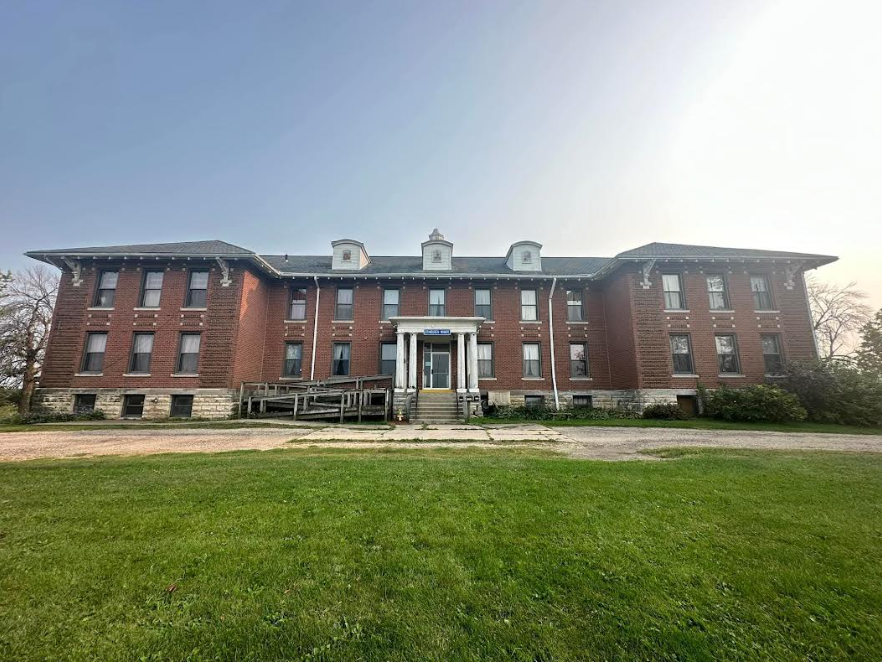
Edinburgh Manor
Rising from the rolling hills outside Scotch Grove, Iowa, Edinburgh Manor looks exactly like what most people picture when they think of a haunted asylum—massive brick walls, tall narrow windows, and an isolated presence that feels cut off from the modern world. But Edinburgh Manor wasn’t built as an asylum in the cinematic sense. It began in 1910 as the Jones County Poor Farm, part of a nationwide system designed to house society’s most vulnerable. Like many county poor farms of the era, the facility provided housing for the elderly, disabled, mentally ill, and those who had nowhere else to go. Residents worked the land if they were physically able. Crops were grown. Livestock was raised. The goal was self-sufficiency, but life inside these institutions was rarely comfortable. Resources were limited, oversight was minimal, and many residents spent their final years there. Over time, the Manor transitioned into a county home and later included mental health care wards as state systems evolved. Unlike locations tied to one infamous act of violence, Edinburgh Manor’s weight comes from duration. Decades of illness, poverty, isolation, and death unfolded inside its walls. Records confirm that many residents died on the property, and a cemetery sits nearby where some former occupants were buried. For paranormal believers, that long accumulation of hardship forms the foundation of the Manor’s reputation. The building itself amplifies the experience. Four stories tall, with an imposing central staircase and long corridors branching into patient rooms, it feels institutional and austere. The basement once housed storage areas and mechanical systems, while upper floors were dedicated to living quarters and later mental health wards. Paint peels from plaster walls. Old hardware remains intact. Natural light struggles to fill certain hallways, even during the day. Paranormal claims at Edinburgh Manor are among the most persistent in Iowa. Visitors frequently report hearing footsteps when no one is nearby. Doors are said to slam or move on their own. Disembodied voices—sometimes calm, sometimes distressed—are reported in EVPs and live sessions. Some investigators claim to capture direct responses to questions, suggesting intelligent interaction rather than residual replay. One of the most discussed areas is the former mental health ward, often described as heavy or oppressive. Guests report sudden mood shifts, unexplained anxiety, or the sensation of being watched. Shadow figures are commonly described moving across doorways or at the end of hallways. Others claim to see full-bodied apparitions, particularly near the central staircase. Cold spots and equipment malfunctions—draining batteries, REM pods triggering—are also frequently cited. Skeptics point out that the building’s age and structure naturally produce creaks, pressure changes, and temperature fluctuations. Large brick facilities amplify echoes. Wildlife in surrounding rural areas can create unexpected sounds. The power of suggestion plays a significant role, especially in a location marketed as haunted. Still, even seasoned investigators often describe Edinburgh Manor as unusually active compared to similar historic properties. Today, the Manor operates as a public paranormal investigation site. It has been featured in television shows, documentaries, and countless independent investigations. Unlike heavily themed attractions, it remains largely preserved in its institutional form—rooms mostly empty, hallways intact, the original layout maintained. That authenticity contributes to its atmosphere. There are no staged jump scares. Just silence, old architecture, and whatever people believe may still linger. Edinburgh Manor represents a chapter of American history that many communities quietly moved past—the poor farm system and early institutional mental health care. Whether you approach it as a historical landmark or a paranormal hotspot, it forces visitors to consider the lives once lived inside its walls. Some leave convinced they encountered something beyond explanation. Others walk away with logical answers. But almost everyone agrees on one thing: once the doors close and the building settles into darkness, Edinburgh Manor feels anything but empty.

Farrar Schoolhouse
Just northeast of the Des Moines metro, surrounded by quiet farmland and gravel roads, sits the tiny unincorporated community of Farrar, Iowa. The town itself is small—just a church, a handful of homes, and one enormous brick building that seems strangely oversized for the countryside around it. That structure is the Farrar Schoolhouse, a former rural school that educated generations of local children before eventually becoming one of the Midwest’s most recognized paranormal investigation locations. The community of Farrar formed in the early 1900s after a railroad line was built through the area. As farms developed across the surrounding countryside, the need for a centralized school became clear. At the time, many children in rural Iowa attended scattered one-room schoolhouses. Local leaders decided to consolidate those small schools into a single modern facility that could serve the wider farming community. Land for the new school was donated by local farmer C.G. Geddes, and construction began in the early 1920s. When the Farrar School officially opened in 1922, it was considered remarkably modern for rural Iowa. The two-story brick building spanned roughly 17,000 square feet and included amenities many country schools lacked at the time: electric lighting, boiler heat, indoor plumbing, and multiple classrooms under one roof. The project came with a steep price tag—nearly $100,000—which sparked debate among local residents who believed the building was too extravagant for such a small community. Despite the controversy, the school quickly became the educational and social center for the surrounding farmland. Generations of students attended classes, played basketball in the gymnasium, and gathered for community events inside its large halls. For roughly eighty years, the school served families throughout the region. Like many rural schools in the Midwest, however, declining populations and district consolidations eventually made it difficult to maintain such a large aging facility. In 2002, the Farrar Schoolhouse officially closed when students were absorbed into newer schools within the Bondurant–Farrar district. After the final class graduated, the building sat empty for several years. In 2006 it was purchased by Jim and Nancy Oliver, who began restoring the property and living inside the former school. It was during this period that stories of unusual activity began gaining wider attention. Visitors and investigators reported unexplained footsteps in empty hallways, doors closing on their own, children’s voices echoing through classrooms, and shadowy figures moving between rooms. Over time, Farrar Schoolhouse developed a reputation as one of Iowa’s most active paranormal locations. The building attracted numerous investigative teams and media coverage, including appearances on television programs such as My Ghost Story, Ghost Stalkers, and Kindred Spirits. Independent investigators and YouTube creators also began documenting their experiences inside the school, further expanding its reputation among paranormal enthusiasts. In 2024, the property gained even wider attention when it was purchased by paranormal YouTubers Sam Golbach and Colby Brock—better known online as Sam & Colby. The pair, whose channel reaches millions of viewers, bought the school after learning it might be demolished. Their goal was to preserve the building and continue investigating its claims while opening it to other paranormal researchers. Their multi-episode investigation series filmed inside the school brought a new wave of global interest to the location. During their time at the property, they collaborated with several well-known figures in the paranormal community, including Exploring With Josh, Dakota Laden from Project Fear, and creators such as CelinaSpookyBoo and KallMeKris. These investigations introduced Farrar Schoolhouse to a massive online audience and helped cement its status as one of the most recognizable haunted schools in the United States. Today the building remains largely intact from its days as a rural school. Classrooms, staircases, chalkboards, and administrative offices still stand much as they did decades ago. For historians, the structure represents a rare surviving example of early 20th-century rural school consolidation. For paranormal investigators, it has become a place where history, folklore, and modern digital storytelling intersect. Whether the strange reports inside Farrar Schoolhouse stem from paranormal forces, the psychology of expectation, or simply the acoustics of a century-old building is still debated. What is certain is that this once-quiet rural school now sits at the center of one of Iowa’s most widely discussed paranormal case files.
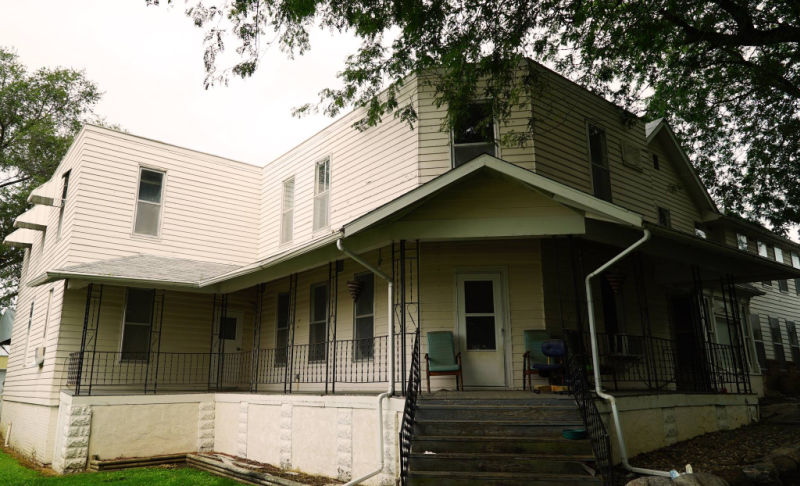
Malvern Manor
Tucked into the quiet town of Malvern, Iowa—population barely over 1,000—stands a red-brick building that looks more institutional than residential. Malvern Manor isn’t a centuries-old mansion or a crumbling castle. It’s a former care facility turned private residence turned paranormal destination. And despite its modest exterior, it has earned a reputation as one of Iowa’s most intensely investigated locations. The structure was built in 1867 and originally served as the Mills County Poor Farm. In the 19th and early 20th centuries, poor farms were county-run facilities that housed individuals who could not financially support themselves—the elderly, disabled, mentally ill, widowed, orphaned, or otherwise destitute. Life in these institutions was often harsh. Residents worked the land if they were able. Those who couldn’t were simply housed and managed with limited resources. Over time, Malvern Manor evolved. It later functioned as a private care facility for individuals with mental health conditions and developmental disabilities. Records indicate that patients were housed on site well into the mid-20th century. Like many institutions of that era, treatment standards reflected the time—structured, clinical, and sometimes controversial by modern understanding. While there are no confirmed records of extreme abuses often dramatized in asylum lore, the reality remains that the building housed vulnerable populations for decades. Eventually, the facility closed and the building passed into private ownership. In the early 2000s, new owners began restoring the property and living in it as a home. It was during this period that reports of unusual activity began surfacing publicly. The claims at Malvern Manor are wide-ranging. Visitors and investigators report shadow figures moving down hallways, disembodied voices, doors opening and closing on their own, and footsteps when no one else is present. Some claim to hear conversations in empty rooms. Others describe sudden cold spots or the sensation of being touched. One of the most frequently mentioned phenomena is children’s laughter or small voices, often attributed to the building’s time housing families and younger residents. Electronic voice phenomena (EVP) sessions conducted inside the Manor have allegedly captured responses to direct questions. Some investigators claim intelligent interaction—knocks in response to prompts, objects shifting, and REM pods activating without visible cause. A particular room often referred to as the “Shadow Room” has gained notoriety for reports of a darker presence, with some guests describing feelings of oppression or sudden anxiety while inside. Unlike many historic haunts built on a single violent event, Malvern Manor’s reputation stems from accumulation. There is no infamous mass murder tied to the building. Instead, its atmosphere seems connected to decades of human struggle—poverty, illness, abandonment, and isolation. For some paranormal researchers, that prolonged emotional weight creates what they believe to be residual energy rather than a single traumatic imprint. Skeptics argue that the building’s age, layout, and acoustics contribute heavily to reported experiences. Old plumbing knocks. Wooden floors shift. Temperature changes move through brick and plaster differently than modern drywall. Add darkness, expectation, and group dynamics, and experiences can escalate quickly. Yet even experienced investigators often admit the Manor feels unusually active compared to similarly aged structures. Today, Malvern Manor operates as a paranormal investigation venue, offering public events and private overnight stays. It has been featured in regional investigations, independent documentaries, and numerous YouTube explorations. Unlike heavily commercialized haunted attractions, the Manor maintains a more stripped-down, investigation-focused identity—bare halls, original rooms, minimal theatrics. For a small Iowa town, Malvern carries a surprisingly heavy story inside its brick walls. It represents a different kind of haunting—less about a single night of horror and more about the quiet accumulation of forgotten lives. Whether you believe spirits linger or not, the building forces visitors to confront a chapter of American history that isn’t often romanticized: the era of poor farms and institutional care. Malvern Manor stands as both historical landmark and paranormal lightning rod. It’s a place where history is documented, but interpretation varies. Some walk away convinced something unseen shares the halls. Others leave with logical explanations. Either way, few leave without feeling something.
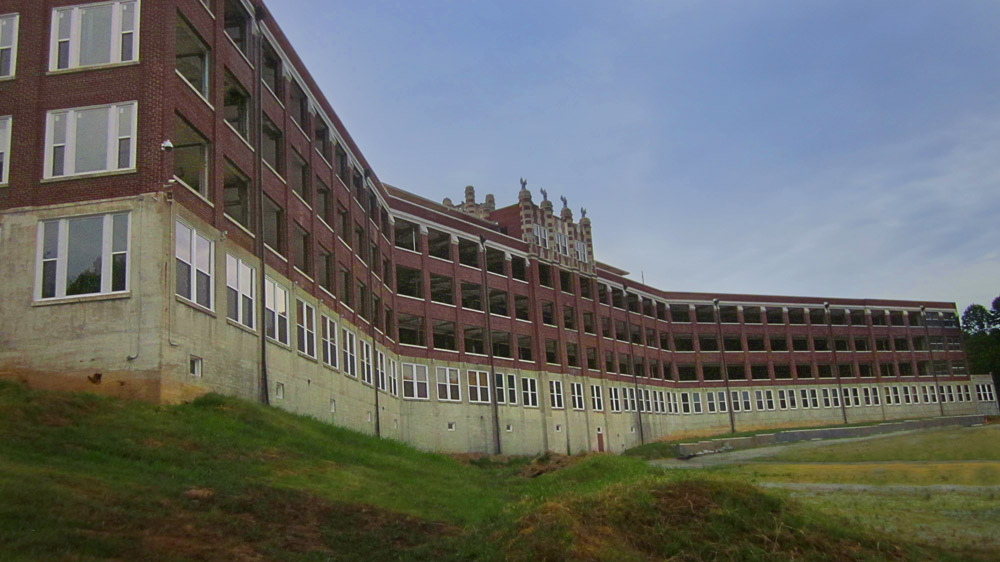
Waverly Hills Sanatorium
Rising from a windswept hill on the south side of Louisville, Kentucky, Waverly Hills Sanatorium looks exactly like what most people picture when they think of a haunted hospital—a massive Tudor Gothic structure with long sun-bleached corridors, cavernous open wards, and an elevation that keeps it visible and isolated all at once. But Waverly Hills wasn't built with darkness in mind. It was built out of desperation, as a response to one of the deadliest disease outbreaks an American city had ever faced. In the early 1900s, Louisville had the highest tuberculosis death rate in the entire country. Nestled in the Ohio Valley along the wetlands of the Ohio River, the city was a near-perfect environment for the disease to spread. To try to contain it, a Board of Tuberculosis Hospital was established in 1906, and a two-story wooden facility opened on the hill in 1910, capable of holding around 40 to 50 patients. As the epidemic worsened, that structure proved woefully inadequate. Construction on a permanent five-story building began in 1924, and the new Waverly Hills opened in 1926—considered at the time to be the most advanced tuberculosis sanatorium in the country. Unlike locations tied to a single act of violence, Waverly Hills carries the weight of prolonged suffering. Patients arrived knowing they might not leave. Treatments of the era were brutal by any measure—surgical procedures to collapse and expand the lungs, removal of ribs and chest muscles, experimental interventions that killed as often as they cured. Fresh air was considered therapeutic, so patients were positioned on open porches in all weather, including winter. Old photographs show men and women bundled in chairs, dusted in snow, staring out over Louisville. Many of them died there. When antibiotic streptomycin finally brought tuberculosis under control, Waverly Hills closed in 1961 with its work done but its halls saturated with decades of illness and death. The building itself is disorienting in scale. Five floors of open corridors stretch across the hilltop, with patient rooms branching off in long rows. The solarium porches jut from the exterior, still open to the sky. Deep in the building's lower section runs what staff called the body chute—an enclosed tunnel leading down the hillside to the railroad tracks below, used to transport the dead away from the facility without demoralizing the living patients above. It remains one of the most viscerally unsettling features of any historic building in the country. Peeling paint, rusted hardware, and collapsing plaster fill the interior, while the structural bones remain largely intact. Paranormal claims at Waverly Hills are among the most extensively documented of any location in the United States. Investigators and visitors report shadow figures moving through doorways, disembodied voices in the stairwells, and the sounds of footsteps trailing through otherwise empty wards. EVP sessions frequently yield responses that investigators describe as intelligent and direct. Some guests report being physically touched or experiencing sudden waves of dread in certain rooms without any obvious explanation. Room 502 on the top floor draws particular attention—the site of an alleged nurse suicide that has circulated in local legend for decades. The body chute produces some of the most consistent reports of any area, with visitors describing feelings of being followed, cold spots, and shadows moving along the tunnel walls. On the upper floors, investigators commonly report equipment failures, sudden battery drains, and apparitions near the open solarium windows. The reports span casual tourists and seasoned paranormal teams alike, and the consistency across unrelated accounts is difficult to dismiss. Skeptics reasonably point out that a massive deteriorating structure will generate sounds, pressure shifts, and visual anomalies on its own. The history of suffering embedded in Waverly Hills is well documented and powerful enough to shape perception before a visitor ever sets foot inside. Suggestion and atmosphere account for much. But even investigators who arrive with clinical skepticism tend to leave describing something harder to categorize than building noise and expectation. Today Waverly Hills is operated by owners Tina and Charlie Mattingly, who purchased the property in 2001 and have dedicated themselves to its restoration. It is listed on the National Register of Historic Places and draws thousands of visitors each year for historical tours, paranormal investigations, and overnight stays. The body chute is accessible. The corridors are walkable. Room 502 is just up the stairs. Whether you come for the architecture, the medical history, or the unexplained, Waverly Hills offers something few historic sites can match—a place where the past doesn't feel past at all, and where the silence between footsteps has a weight all its own.
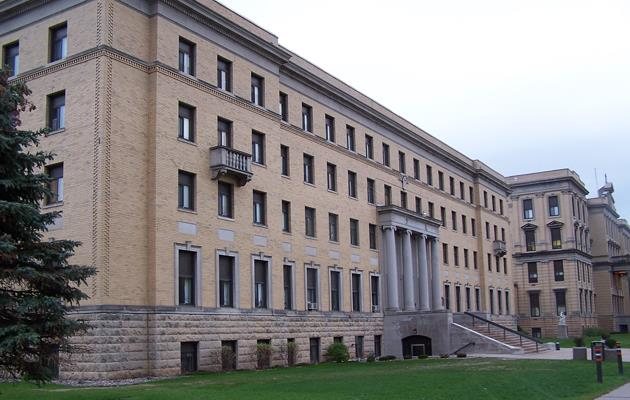
St. Mary’s College – Heffron Hall
Saint Mary's University of Minnesota sits on Terrace Heights, a bluff above the city of Winona on the western bank of the Mississippi, with the river valley spreading below and the limestone ridgelines of the Driftless Area rising on the opposite shore. It is a campus of red brick and Catholic institutional gravity, founded in 1912 by a bishop who purchased cornfields five miles west of the Winona downtown, raised the financing himself, and built a college from nothing on a hill. That bishop was Patrick Richard Heffron — New York-born, Minnesota-raised, ordained in Montreal in 1884, appointed second Bishop of the Diocese of Winona in 1910. He was by most accounts a commanding and demanding figure, the kind of institutional builder who leaves behind structures meant to outlast him. In this case, one of those structures is a dormitory that carries his name and has been called Minnesota's most legendarily haunted building since at least 1989, when USA Today applied that designation in its Halloween issue. The events that seeded the legend took place not in Heffron Hall but in St. Mary's Hall, the earlier building on campus, on the morning of August 27, 1915. Father Louis Lesches — French-born, ordained 1898, a priest of the Diocese of Winona with a documented history of instability, conflict, and insubordination — had been pressing Bishop Heffron for years for a parish of his own. Heffron had refused him, believing him mentally unbalanced and unsuitable for the responsibility. The conflict between the two men had been long, bitter, and increasingly one-sided in its institutional consequences. On that morning, Lesches walked from his guest room in St. Mary's Hall to the bishop's private second-floor chapel, where Heffron was celebrating Mass alone. He fired during the consecration. The first bullet struck Heffron in the left thigh from behind. As the bishop turned, a second shot entered the right side of his chest and penetrated his lung. A third bullet lodged in the tabernacle. Lesches fled, locked himself in his room, and was arrested within minutes. Heffron staggered from the chapel into the hallway, warned the priests summoned by the gunfire of the armed man still in the building, and directed them to call for medical help. Dr. William J. Mayo drove from Rochester by automobile to consult on the wound. The bishop recovered fully. At trial in December 1915, the jury deliberated forty-five minutes before acquitting Lesches by reason of insanity. He was committed to the state hospital for the criminally insane in St. Peter, Minnesota, where he would remain for the rest of his life. Heffron continued as bishop until his death from cancer on November 23, 1927. The dormitory named in his honor — Heffron Hall, a four-story brick building inaugurated in 1920, the first residence hall and second major building constructed on the Terrace Heights campus — became the container into which the legend would be poured over the decades that followed. Heffron Hall is a plain, functional building of its era: four floors, a central staircase, long corridors, institutional brick inside and out. The university president's office occupies the first floor; student rooms are on the second through fourth. The building connects to St. Mary's Hall and remains in continuous use as a non-freshman residence hall. It is the physical ordinariness of the building that makes its reputation notable — there is nothing architecturally Gothic about it, no ruined tower or locked wing, just a college dormitory where students have been sleeping and studying for over a century. The reports began in earnest in 1943 — the same year Father Lesches died in St. Peter at the age of eighty-four, still institutionalized, his remains returned to Winona and buried in St. Mary's Cemetery near the campus. Students on the third and fourth floors reported unexplained footsteps in the night, the sound of a cane tapping along the corridor, cold drafts with no identifiable source, and papers dislodged from bulletin boards when no windows were open. The activity was attributed by students to Lesches, finally free and returning to the institution whose bishop he had tried to kill. The ghost story gathered new material in 1967 when college newspaper reporters spent ten consecutive nights in the hall with cameras and thermometers. They recorded temperature drops of as much as ten degrees Centigrade on each of those nights, occurring consistently around 1:54 in the morning, and brought back infrared photographs showing anomalous blurs they attributed to heat or pressure variations in the hallway. A second death in the hall's history had by then been woven into the legend: in May 1931, Reverend Edward Lynch — described in accounts as a friend of Bishop Heffron's and an adversary of Lesches — was electrocuted in his room when he stepped between his bed and a radiator, touching both simultaneously. The legend assigned blame to Lesches, though he was alive and institutionalized in St. Peter at the time. More recent firsthand accounts from students have described a dark, cowled figure seen in the second-floor corridor near the location of the former chapel where the shooting occurred; a persistent sense of a presence on the staircase; rooms that rearrange themselves overnight; electronics that malfunction without explanation; and at least one account of a resident waking from sleep to find herself unable to breathe, a dark figure at the edge of her bed, an experience mirrored by a separate student on the same floor the same night. The identity of the figure is contested in the tradition — most accounts assign it to Lesches, still fixated on the institution that confined and defeated him; some attribute it to Heffron himself, maintaining order in the building that bears his name. The honest accounting of the Heffron Hall legend involves acknowledging how thoroughly the documented history and the accumulated folklore have merged over a century of transmission. Bishop Heffron did not die in the shooting — he recovered, continued as bishop for twelve years, and died of cancer. Father Lesches was not a murderer but a failed assassin committed to institutional care for twenty-eight years. The temperature drops recorded in 1967 were real measurements from a drafty brick building in a Minnesota winter, interpreted by college students with a story already in hand. What remains after the embellishments are stripped away — and the Winona Post, which published an exhaustive multi-part investigation of the legend, made that stripping-away its explicit project — is still this: a shooting during the consecration of the Mass, a bullet in the tabernacle, a man in chains for three decades, and a building on a bluff above the Mississippi that has been generating consistent, specific, uncorroborated reports for more than eighty years.
Highway 5 Ghost
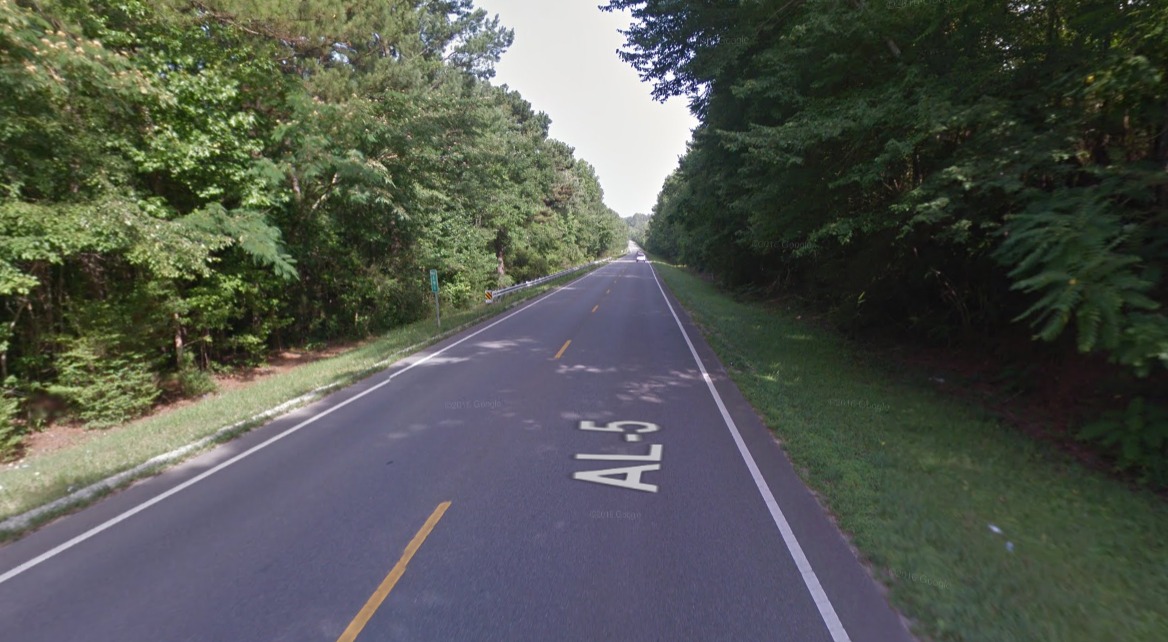
Running through the piney hills of northwest Alabama, Highway 5 cuts a quiet and largely unremarkable path through Winston County, connecting communities like Natural Bridge to the north and Jasper to the south. The road passes directly through Lynn, a small town that today holds a population of just over 800 people and barely registers on most maps of the state. But among truck drivers who haul freight through this stretch of Alabama backroad, Lynn carries a reputation that has circulated for generations — and that reputation has nothing to do with farming, lumber mills, or the Northern Alabama Railroad that first gave the town its name. The area around what is now Lynn began to be settled as early as 1814, five years before Alabama achieved statehood. In 1888, a local landowner named John White Lynn donated land for a railroad right-of-way with the condition that the surrounding community bear his name. A post office followed that same year, and the lumber industry arrived behind the railroad, briefly expanding the population before the mills shuttered and the town settled into the quiet it has kept ever since. Lynn was not formally incorporated until 1952, a vote held largely to legitimize a local pool room under state law. By any measure, this is not a place built around drama or notoriety. Winston County itself was forged in isolation — its craggy hills and rocky terrain leaving settlers outside the mainstream geographically, economically, and politically. During the Civil War, residents famously resisted joining the Confederacy, having no large plantations and virtually no enslaved labor, and at one point attempted to declare themselves the independent Free State of Winston. It is the kind of place where independence runs deep, where stories are passed down through families rather than written into official records, and where a legend can take root on a rural highway and outlast every person who first told it. The ghost of Highway 5 belongs to that tradition. The story holds that many years ago, on a rainy night in Lynn, a teenage girl was traveling home from prom with her boyfriend when an argument broke out. She asked to be let out, he complied, and she walked the rest of the way alone. While making her way along the side of the highway, she was struck by an 18-wheeler. The driver fled the scene, and her body was found the next morning in a ditch. The details shift depending on who is telling it — some versions place the argument at a local dragstrip, others at a prom, and some name a coal truck rather than a semi. One researcher who spent years combing through county and state records reported finding no documentation of a girl killed on that road at all, leaving the origin story unverifiable and the legend untethered to any confirmed event. What cannot be dismissed as easily are the accounts themselves. The central claim is consistent across dozens of reports: if an 18-wheeler travels Highway 5 on a rainy night, the girl will climb onto the side of the truck and peer in through the cab window, searching for the face of the man who killed her. Many truckers, rather than risk the encounter, chose to reroute entirely onto Highway 13 — a significantly longer detour — rather than pass through that stretch after dark. Some accounts describe her appearing in a long white dress, standing clean and dry at the road's edge despite rain and mud, then vanishing completely from the side mirrors of passing trucks. Others describe a knock on the cab door, a face at the glass, a figure that simply disappears. One account from 1999 describes a trucker so convinced he had struck someone that he stopped, called 911, searched the entire undercarriage of his vehicle, and found nothing — no body, no damage, no sign of impact. Another driver described pulling alongside a young woman and offering her a ride, only to have her exit near the drag strip and dissolve into the dark. Some versions of the legend include a resolution: the driver who struck the girl eventually confessed his crime, and after that, the activity along the highway diminished noticeably. Whether that detail was added to give the story a clean ending it never had, or whether it reflects something that actually quieted a restless presence, depends entirely on what you believe is happening on that road. Skeptics have reasonable ground to stand on. A narrow, poorly lit rural highway in rainy conditions produces exactly the kinds of visual distortions and psychological pressure that generate sightings. The legend is old enough and well-traveled enough that any driver who knows it arrives already primed to see something. And without a verifiable death to anchor the story, the whole structure floats on folklore alone. But the accounts keep coming — from truckers who had never heard the legend before stopping, from locals who grew up miles from the spot and still won't drive it alone at night, from people whose experience of that road defies easy explanation. Highway 5 doesn't have a ruined building or a documented death toll. It has something simpler and in some ways harder to shake — a stretch of open road in a small Alabama town where the darkness feels occupied, and where the rain, when it comes, still makes certain drivers choose a longer way home.

Gettysburg Battlefield
Spread across more than six thousand acres of rolling Pennsylvania farmland, the Gettysburg Battlefield does not look like a place where over fifty thousand men were killed, wounded, or went missing in three days. It looks like what it was before the armies arrived—a patchwork of wheat fields, orchards, low stone walls, and gentle ridges converging on a small crossroads town in Adams County. That ordinariness is part of what makes it so unsettling. In the summer of 1863, Confederate General Robert E. Lee launched his second invasion of the North, hoping to win a decisive battle on Union soil that might break Northern morale and force a negotiated end to the war. The armies collided at Gettysburg almost by accident on July 1, and over three days more than 165,000 soldiers fought across farms, hills, and streets in engagements that became legend—the defense of Little Round Top, the carnage at Devil's Den and the Wheatfield, and the doomed Confederate assault known as Pickett's Charge. The estimated 51,000 casualties included over 7,000 dead left on the field. It was the bloodiest single battle in American military history and the turning point of the Civil War. What followed was nearly as harrowing. Gettysburg's 2,400 residents were left with roughly 21,000 wounded, thousands of dead horses rotting in the July heat, and bodies everywhere. Homes, churches, and barns became hospitals. Burial parties worked by lantern light, digging trenches sometimes only ten inches deep, leaving hands and feet exposed. Rain on July 4 unearthed shallow graves. The stench hung over the town for months. One family left for nine years because the smell made their home uninhabitable. Of the 3,354 Union dead eventually interred in the Soldiers' National Cemetery—dedicated by Lincoln that November—979 remain unknown. The paranormal reputation of Gettysburg is as vast as the battlefield itself. Devil's Den produces some of the most consistent accounts—cameras and electronics malfunctioning, mysterious figures appearing in photographs, distant gunfire echoing off the rocks, and encounters with a barefoot man in ragged clothing who speaks briefly before vanishing. At Little Round Top, visitors report apparitions and phantom drumbeats. Across the Pickett's Charge fields, witnesses describe formations of soldiers still marching toward the ridge. Iverson's Pits—the site of a mass grave—has long been associated with apparitions and impressions of bodies in the grass. At Sachs Covered Bridge, visitors report phantom cigar smoke, distant cannon fire, and the sensation of being tapped on the shoulder by no one. Inside Gettysburg College's Pennsylvania Hall, which served as a Confederate field hospital, reports describe an elevator bypassing the first floor to open on a basement scene of Civil War-era surgical operations. Park rangers have privately described hearing crying, footsteps, and the smell of tobacco in battlefield structures, though the National Park Service issues no official statements on the subject. Skeptics rightly note that a landscape this saturated with historical narrative will prime visitors to interpret ordinary stimuli as extraordinary. But the sheer volume and consistency of reports—from tourists, historians, park employees, and investigators with no particular agenda—gives the place a reputation that resists easy dismissal. Today, Gettysburg National Military Park includes over 1,300 monuments and memorials. The Soldiers' National Cemetery holds over 6,000 burials spanning six American conflicts. The fields are walkable. The stone walls still stand. And for a place where the dead were once measured not in names but in trenches, the quiet has never entirely settled.

The Scotia Lodge
Deep in the redwood country of Humboldt County, California, where the Eel River bends through a valley of old-growth timber and perpetual fog, the town of Scotia sits like a time capsule from an era most of America has forgotten. Scotia was a company town—one of the last in the country—built and wholly owned by the Pacific Lumber Company from 1863 until the company's bankruptcy in 2008. Every house, every street, every storefront belonged to PALCO. The company provided the school, the hospital, the church, the skating rink, the theater, and the hotel. Workers lived in company housing, shopped at the company store, and were woken each morning by the company steam whistle at 7:30. At its peak, PALCO employed over 1,600 people and shipped more than twenty million board feet of redwood lumber annually. The town was originally called Forestville, renamed Scotia in 1888 after a coin toss—a nod to the Canadian Maritime provinces from which many early workers had emigrated. The Scotia Lodge sits at 100 Main Street, at the heart of this self-contained world. The first inn on the site was built in 1888, serving as the only hub of activity in the area and functioning as a stagecoach stop between San Francisco and Eureka. That structure burned in the early 1900s and was replaced in 1923 by the current building, originally called the Mowatoc Hotel—a name referencing local Native Americans, with a diamond motif on the facade drawn from Indigenous design. The name changed to the Scotia Inn in the late 1940s, and the property has most recently been reimagined as the Scotia Lodge, a boutique hotel positioned as a base camp for the Avenue of the Giants and Humboldt Redwoods State Park. The building has twenty-two rooms, a dining room, a pub, and event spaces. The paranormal reputation is built around a cast of recurring figures, the most prominent of whom the staff has named Frank. Frank is said to occupy the top floor, where reports of footsteps, scraping sounds, disembodied voices, and unexplained noises have accumulated over decades. According to one account, Frank is interactive—bounce a basketball toward the third floor and he will reportedly bounce it back. His identity is unknown. No specific death has been linked to the name. Frank is not alone. Guests and employees describe the apparition of a woman with children, linked to a story in which a little girl playing with a ball on an upper balcony fell to her death trying to retrieve it. The mother and daughter are said to haunt the room from which the child fell. A baby crying has been heard on floors where no infants are staying. A woman has been reported in the kitchen. A visiting executive staying alone—before the lodge was officially open to the public—knocked on the CEO's door in the middle of the night, telling him he had heard a crowd of people talking on his floor when the building was empty. He refused to return and slept elsewhere. Multiple guests describe waking around three in the morning to sounds of a group walking the hallway, or murmuring voices, only to confirm the hotel was nearly vacant. One guest heard a ball bouncing seven times in the hallway near midnight—a detail aligning with the story of the little girl. The building's history provides ample material. A century of lumber workers, traveling businessmen, and stagecoach passengers have passed through these rooms. The town endured catastrophic floods in 1862, 1955, and 1964—the last scattering eighteen million board feet of logs from the mill along the Eel River and out to the Pacific. Three major earthquakes struck in 1992, damaging homes and destroying the shopping center. And the slow collapse of PALCO under corporate raider Charles Hurwitz's leveraged buyout—followed by the timber wars, Julia Butterfly Hill's two-year tree-sit, mass layoffs, and bankruptcy—left Scotia with a grief that doesn't require ghosts to explain but may have produced conditions hospitable to them. Today the Scotia Lodge operates in a town still reinventing itself, its houses sold off one by one for the first time in over a century. The redwoods still tower. The Eel River still runs. The steam whistle, by popular vote, still sounds. And on the third floor, Frank—whoever he was—is apparently still home.
Boulder Dam Hotel
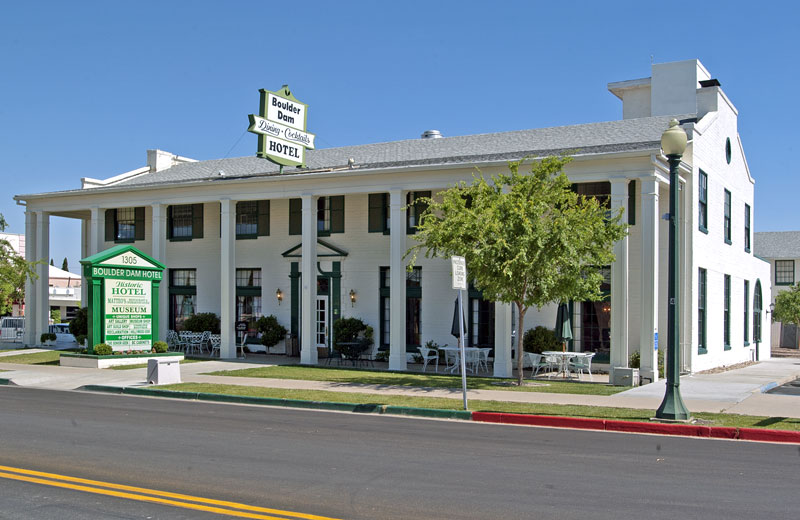
Boulder City, Nevada, is one of the strangest towns in the American West—a place that exists only because the federal government built it from nothing in 1931 to house the thousands of workers constructing what was then called Boulder Dam. In a state defined by gambling, Boulder City was the opposite: a tightly controlled government town with no casinos, no saloons, and strict rules governing daily life. It was engineered for productivity, not pleasure. But it needed a hotel. And the Boulder Dam Hotel, completed in 1933 at 1305 Arizona Street, was built to fill that gap—not for the workers who poured concrete in killing heat down in Black Canyon, but for the dignitaries, officials, and celebrities who came to watch them do it. The hotel was the vision of Paul Stewart Webb, a local businessman who recognized that the thousands of tourists arriving by train from Los Angeles and by car along the Arrowhead Highway would need somewhere to stay. City Manager Sims Ely issued Webb a permit, and the result was a two-story Dutch Colonial Revival structure designed by architect L. Henry Smith—white-columned, with concrete-block walls rising to gable roofs, a wood-paneled lobby, private baths in all thirty-two rooms, and a modern climate system advertised on highway billboards. At its grand opening, the Boulder Dam Hotel had no equal in southern Nevada. Las Vegas, still a small railroad town, had nothing to compare with it. The guest list through the 1930s and 1940s reads like a Hollywood directory crossed with a diplomatic registry. Bette Davis stayed while vacationing after filming in 1934. Mr. and Mrs. Cornelius Vanderbilt Jr. honeymooned there. Will Rogers performed at the nearby Boulder Theatre during a stay in 1935, weeks before his death. Boris Karloff visited while obtaining a divorce. The Maharajah and Maharani of Indore passed through, as did Cardinal Pacelli, who would later become Pope Pius XII. Howard Hughes recuperated at the hotel after crashing his amphibious plane on Lake Mead. Shirley Temple was a regular guest. The hotel also became popular with movie stars establishing Nevada residency for quick divorces, adding a layer of personal upheaval to the building's social history. The hotel's fortunes declined along with passenger rail and shifting tourism patterns. It changed hands over the decades but avoided demolition. In 1982, it became the first hotel in Nevada listed on the National Register of Historic Places. In 2005, the Boulder City Museum and Historical Association acquired the property and renovated it, reducing the room count to twenty-two while expanding public spaces. The Boulder City/Hoover Dam Museum now occupies the first floor, telling the story of the dam workers and the Depression-era community built to house them. Paranormal claims at the Boulder Dam Hotel are varied, persistent, and span decades. The most frequently cited phenomenon involves the sounds of music, conversation, and laughter emanating from the ballroom when it is entirely empty. Staff working alone at night have reported hearing what sounds like a party in full swing—piano music, clinking glasses, voices—only to find the room dark and vacant. The smell of cigar smoke has been reported throughout the hotel despite a no-smoking policy, particularly in the room once occupied by Howard Hughes, who was known to smoke cigars. Some staff believe Hughes himself lingers in the building. The apparition of a former night desk clerk named Tommy Thompson has reportedly been seen in the main lobby, and guests have described an overwhelming sensation of heaviness in the same area. Rooms 209 and 219 are cited as the most active, with reports of faucets turning on in unoccupied rooms, doors opening and closing on their own, and cold spots appearing without drafts. Some guests have described being physically touched or grabbed by unseen hands. Boulder City historian Dennis McBride, who kept offices in the hotel's basement, documented many of these accounts in his book on the property. McBride himself reported seeing an apparition in his basement office. During a reading he arranged with psychic Patsy Welding, she reported sensing strong presences on the upper floors and refused to descend into the basement, describing the energy as overwhelming. The hotel's proximity to Hoover Dam—where at least ninety-six workers died during construction—has led some to speculate that dam workers may account for some of the activity, and figures in old-fashioned work clothes have been glimpsed in restricted areas of the building. Today the Boulder Dam Hotel operates as a boutique historic hotel and museum. The staff generally downplays the haunting reports, and at least one investigator has noted that asking about ghosts can quickly cool an otherwise warm reception. But the accounts continue to accumulate, logged by guests who arrive knowing nothing of the hotel's reputation and leave describing experiences they cannot explain.
Trans-Allegheny Lunatic Asylum
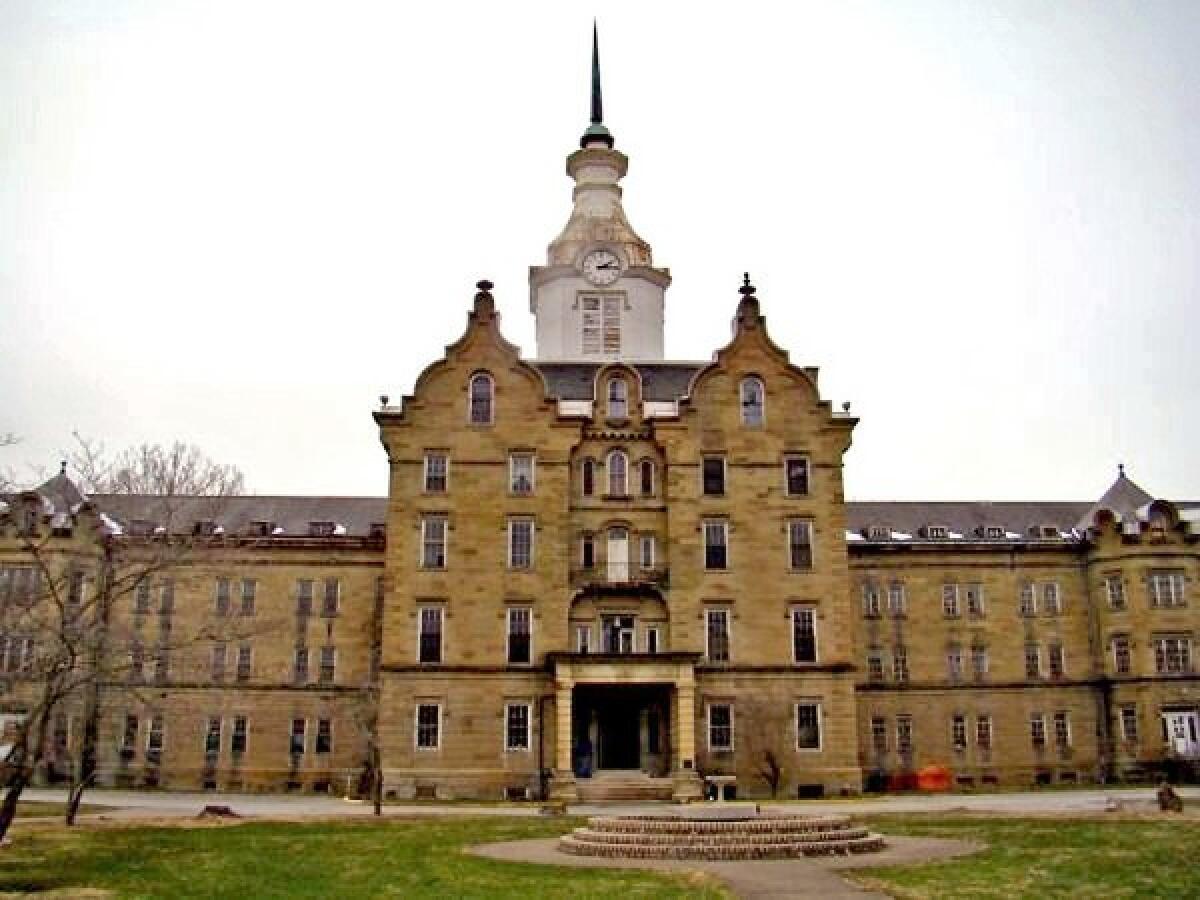
Stretching nearly 1,300 feet across a hillside above the West Fork River in Weston, West Virginia, the Trans-Allegheny Lunatic Asylum is a building that defies casual description. Its staggered Gothic and Tudor Revival wings fan outward from a 200-foot central clock tower in a formation so massive it reads more like a fortified compound than a hospital. The walls are two and a half feet of hand-cut sandstone. There are over 900 windows and 900 doors across four floors and 242,000 square feet of interior space. It is reportedly the largest hand-cut stone masonry building in North America, second in the world only to the Kremlin. And for 130 years, it held some of the most vulnerable people in Appalachia behind those walls — first with the intention of healing them, and eventually with little intention at all. The Virginia General Assembly authorized the asylum in the early 1850s, part of a national wave of mental health reform driven by activist Dorothea Dix. The building was designed by Baltimore architect Richard Snowden Andrews following the Kirkbride Plan, a progressive model that emphasized fresh air, natural light, and the therapeutic power of environment. Each wing was staggered so that every room received sunlight and cross-ventilation. The capacity was set at 250 patients, reflecting the belief that a superintendent could only manage so many individuals while maintaining quality of care. Construction began in 1858, but the Civil War intervened almost immediately. The partially built structure was seized by Union forces and converted into Camp Tyler, and control of the site changed hands multiple times during the conflict. Confederate raids in 1862 and 1863 disrupted operations, and a final raid in 1864 stripped the building of food and clothing intended for its first patients. Despite all of this, the asylum opened that same year under the name West Virginia Hospital for the Insane. In its early decades, the facility functioned roughly as intended. Patients worked on a self-sustaining farm spread across more than 600 acres, learned trades like sewing and furniture-making, and lived in conditions that — by the standards of the era — represented genuine progress. But the population grew relentlessly. By 1880, the asylum held over 700 patients. By the 1930s, nearly 1,700. At its peak in the 1950s, more than 2,400 people were crammed into a building designed for a tenth of that number. The reasons for admission had long since expanded beyond what any modern definition of mental illness would recognize — patients were committed for conditions including epilepsy, alcoholism, domestic troubles, and even laziness. The overcrowding brought conditions that were nothing short of catastrophic. A series of investigative reports by the Charleston Gazette documented the deterioration in vivid terms, describing wards without adequate furniture, heating, or sanitation. Patients slept on floors. Some were locked in cages. Isolation cells still bear the rusted iron rings once used to restrain the most violent. The asylum also became a site for Walter Freeman's lobotomy project in the early 1950s, an effort by the state to reduce patient populations through surgical intervention. Thousands of procedures were performed using Freeman's transorbital method. The results were often devastating — patients left without affect or personality, their neural connections severed by a tool inserted through the eye socket. Combined with insulin shock therapy and electroconvulsive treatment, the facility's medical legacy is one of experimentation carried out on a population with no ability to refuse. A patient named Dean was murdered by two fellow inmates in a back room at the end of a wing, past the solitary confinement cells, where staff had no awareness of what was happening. The building's sheer scale made oversight impossible. The asylum finally closed in 1994 after decades of decline. The property sat abandoned until 2007, when Joe Jordan purchased the 242,000-square-foot main building at auction for $1.5 million. It reopened in 2008 as a historical and paranormal tourism destination, and it has since appeared on Ghost Hunters, Ghost Adventures, Paranormal Lockdown, and numerous other programs. Paranormal claims at Trans-Allegheny are extensive and tied closely to specific individuals whose stories are part of the building's documented history. The most widely reported spirit is Lily, a child believed to have been born inside the asylum to a patient and to have died of pneumonia at age nine, never having lived outside its walls. Her room in Ward Four on the first floor has been converted into a small shrine filled with toys and gifts left by visitors. Staff and guests report hearing a child's laughter, feeling small hands tug at clothing, and watching balls roll across the floor without visible cause. On the same floor, a spirit known as Ruth — described in life as a female patient with an intense hostility toward men — is said to throw objects at male visitors near her former holding cell. The third floor produces reports associated with a patient called Big Jim and a nurse named Elizabeth. The fourth floor generates accounts of a spectral Civil War soldier named Jacob. In the back rooms of one wing, investigators describe a dual energy in the space where Dean was killed — a childlike gentleness when encountered alone, and an oppressive coldness when the presence of his killers seems to enter the space alongside him. A figure known as Slewfoot, a patient who was slashed to death in a bathroom, is reported throughout the building. Beyond the named spirits, the asylum generates the kind of broad, ambient reports common to buildings of this scale and history — disembodied voices, shadows moving through empty corridors, cold spots, unexplained sounds of breaking glass, and the sensation of being watched or physically touched. The underground tunnel system used by staff to move unseen between buildings has its own claims, including the smell of baked goods attributed to a former chef. Skeptics have no shortage of material to work with. A building this old, this enormous, and this deteriorated will produce sounds, temperature shifts, and visual anomalies entirely on its own. The cultural expectation visitors carry into any asylum-turned-attraction shapes perception before a single door opens. But the consistency of reports across decades — from staff, casual tourists, television crews, and seasoned investigators — and the specificity with which encounters map onto documented residents and events, makes the Trans-Allegheny file difficult to set aside entirely. Today the asylum operates year-round, offering historical day tours, nighttime paranormal tours, and overnight ghost hunts that run from 9 p.m. to 5 a.m. The first-floor museum preserves patient artwork, medical equipment, restraints, and a restored ward. The remaining twenty-three wards are largely untouched — endless decayed hallways, vacant rooms, and isolation cells open to anyone willing to walk them. The clock tower still rises above Weston. The wings still stretch outward. And the building, for all its emptiness, does not feel empty at all.
French Market Inn
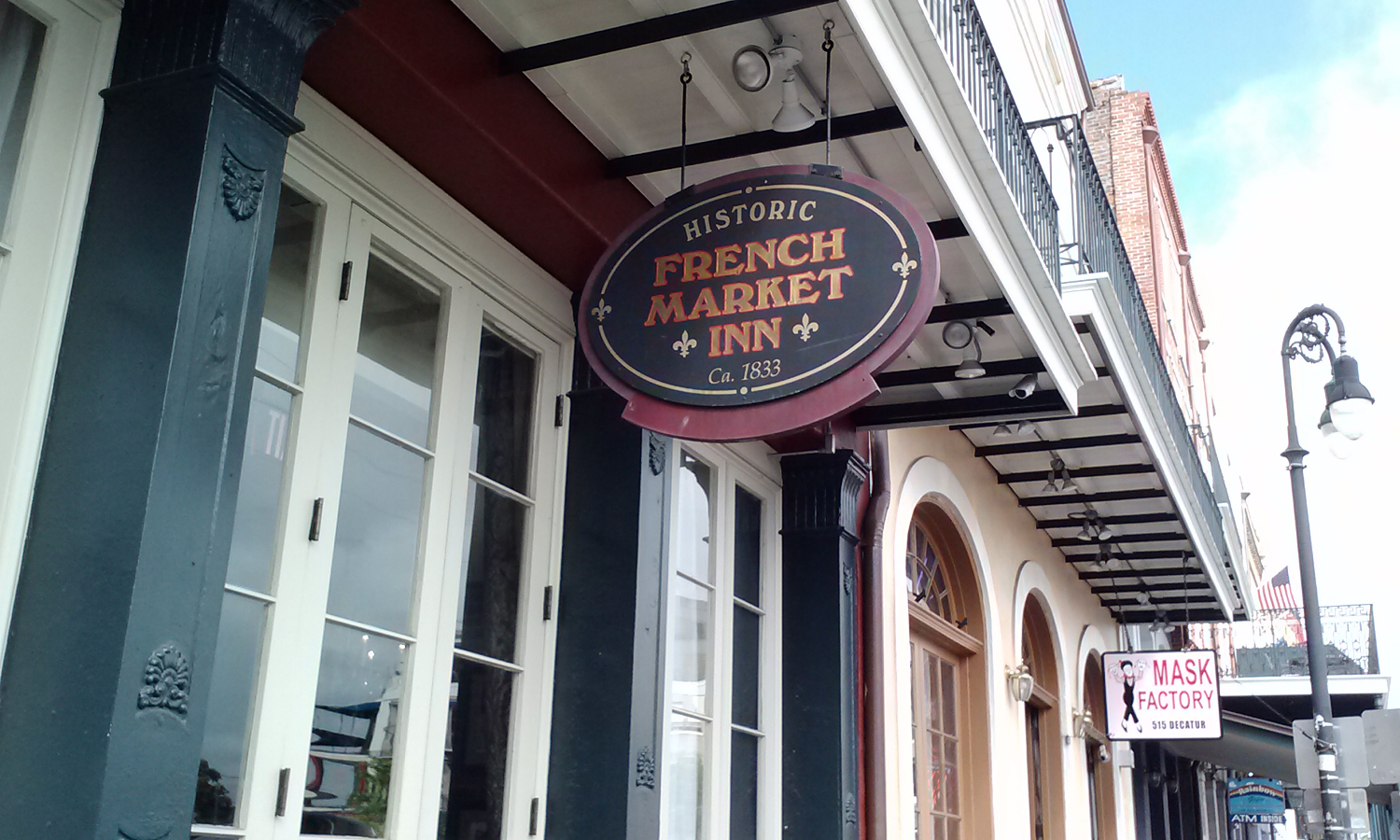
The French Market Inn sits at 509 Decatur Street in the heart of the French Quarter, a few steps from Jackson Square and within earshot of the Mississippi River. Its antique brick façade opens onto a lobby of period paintings, chandeliers, and marble, and a stone-paved courtyard shaded by greenery—the kind of place that looks exactly like what visitors expect from historic New Orleans. What most of them do not expect is what has been reported inside its rooms for nearly two centuries. The property dates to 1722, when the original deed was issued to a baker named Dreux, whose family operated a bakery on the site throughout the eighteenth century, using a pulley system to hoist goods between floors. The building was later acquired by Baron Joseph Xavier de Pontalba, husband of the formidable Baroness Micaela Almonester de Pontalba, whose business empire still marks the French Quarter landscape in the form of the iconic Pontalba Buildings flanking Jackson Square. By the 1830s, the property had been converted into an inn, and it has operated as one in various forms ever since. The current French Market Inn, run by the Valentino family for over sixty years, maintains more than a hundred guest rooms, many still showcasing the original exposed beams and brick walls of the centuries-old structure. The hauntings were first recorded in 1832, shortly after the building began receiving guests. Visitors reported misty shapes entering their rooms after dark and loud metallic clanging echoing through the halls—sounds consistent with the old pulley system from the Dreux bakery era, operating in a building where no such equipment had functioned for decades. Those two phenomena—shadow figures and phantom mechanical sounds—have persisted without interruption for almost two hundred years. But the claim that has defined the French Market Inn's paranormal reputation is far more visceral. Guests have reported waking in the night to find their pillowcases, sheets, and sometimes their own skin marked with bloody handprints. The accounts are not limited to a single era or a handful of visitors. They span decades and continue to the present day, with guests who had no prior knowledge of the inn's reputation describing nearly identical experiences. One guest recounted waking drenched in what appeared to be blood, covering both occupants of the bed and the headboard, with neither person bearing any wound. The prevailing legend attributes the blood to the spirit of a prostitute who was murdered by a client on the property—a cry for help that manifests in the most startling way possible. No historical record has confirmed the specific murder, but the reports have proven remarkably resistant to debunking by their sheer volume and consistency. Beyond the handprints, guests describe beds shaking violently in the middle of the night with no seismic explanation, lamps clicking on and off in pitch-dark interior rooms, showers activating on their own, cold spots appearing without cause in the humid New Orleans air, shadow figures passing through walls, and the unmistakable sensation of being watched or physically touched. Room 218 has drawn particular attention from investigators. One paranormal researcher who stayed there reported being kept awake all night by unseen presences and an alarm clock that triggered repeatedly without being set. A guest on the third floor described waking to find her pillow being tugged beneath her head, and her daughter woke to a black figure standing between her bed and the windows. When they reported the incident to the front desk, the night clerk asked which room, then said simply that they did not get many reports from that floor. The French Market Inn does not hide from its reputation—the hotel's own website acknowledges the hauntings as part of its history. It remains one of the most popular and consistently booked properties in the French Quarter, operated with the warmth and professionalism the Valentino family is known for. The courtyard is still beautiful. The rooms are still charming. And the walls are still the same centuries-old brick that has absorbed whatever it is that keeps making itself known after dark.
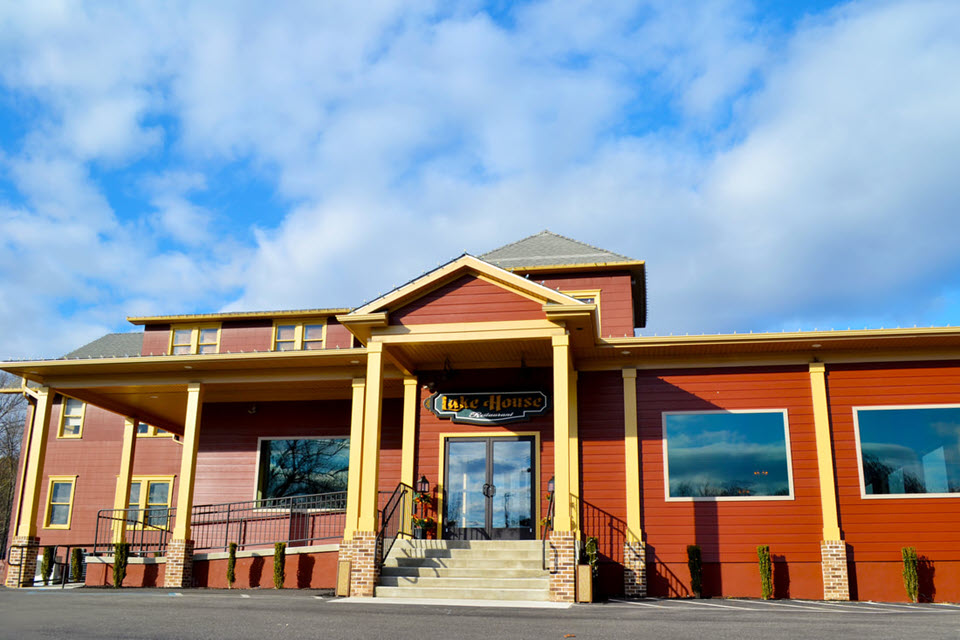
Iona Lake Inn – Lake House Restaurant
Set along the quiet shoreline of Iona Lake in the rural community of Newfield, Gloucester County, the building now associated with the Lake House Restaurant carries a history that stretches back to the nineteenth century, when the lake itself served as a modest resort destination for residents of southern New Jersey and nearby Philadelphia. The property at 611 Taylor Road sits beside the small man-made lake surrounded by woods and farmland, a setting that historically attracted visitors looking for fishing, boating, and seasonal recreation away from the larger cities of the region. Over time the site developed into a gathering place for travelers and locals alike, eventually becoming known as the Iona Lake Inn. During the late 1800s and early 1900s, lakeside inns and taverns were common throughout southern New Jersey, particularly in areas where rail lines or wagon routes made rural retreats accessible for day trips. The inn at Iona Lake operated as one of these establishments, offering food, lodging, and space for social gatherings. The surrounding grounds were used for outdoor recreation, and the lake itself became a focal point for visitors who arrived for fishing excursions, picnics, and small community events. Like many similar properties in the region, the building evolved gradually, expanding and changing hands as the local tourism economy shifted. Through the early twentieth century the inn developed a reputation as both a restaurant and social venue. Community gatherings, private celebrations, and seasonal events were held on the property, while travelers moving through Gloucester County stopped along the quiet rural road to eat or stay overnight. Over decades the structure absorbed numerous renovations and additions, but it retained the feel of an older roadside inn, with dining areas overlooking the water and interior spaces reflecting the layered construction typical of buildings that have been continuously adapted for hospitality use. By the mid-to-late twentieth century the property became more widely known as the Lake House Restaurant, though the historic identity of the Iona Lake Inn remained part of its reputation. Locals continued to treat the lakeside building as a familiar meeting place. The calm setting beside the water, particularly in the evening when the surrounding woods grow quiet, contributed to the atmosphere that later fed into stories surrounding the property. Reports of unusual activity at the site have circulated among employees and visitors for years, making the inn one of the lesser-known haunted locations occasionally discussed in southern New Jersey folklore. Staff members working late shifts have described hearing footsteps moving through empty dining rooms after closing, particularly in sections of the building believed to date to the earliest phases of construction. Others have reported doors opening or closing on their own or lights switching on in areas that had already been shut down for the night. One of the most commonly repeated claims involves the apparition of a woman seen near the stairways or hallways of the older portions of the building. Witnesses typically describe the figure appearing briefly before vanishing, often interpreted as someone dressed in clothing from an earlier period. Other employees have reported fleeting shadows moving across walls, unexplained cold spots, or the sense of someone standing behind them while working alone in the dining rooms. Paranormal investigators who have visited the location over the years have occasionally reported capturing electronic voice phenomena during recording sessions or experiencing sudden fluctuations in equipment readings. As with many historic restaurants, skeptics point out that aging structures frequently produce creaks, drafts, and shifting floorboards that can easily mimic footsteps or movement, particularly late at night when the building is otherwise quiet. The power of suggestion can also play a role once a location becomes known for ghost stories. Even with those explanations, the stories remain part of the building’s identity. The combination of an old lakeside inn, a secluded rural setting, and generations of visitors passing through its doors has given the property a reputation that blends local history with lingering folklore. Today the building continues to operate as a restaurant overlooking Iona Lake, maintaining the long tradition of hospitality on the site. For some visitors, however, the quiet halls and reflective water outside carry the persistent belief that the inn’s past occupants—or perhaps former guests—may still linger within the old lakeside structure.
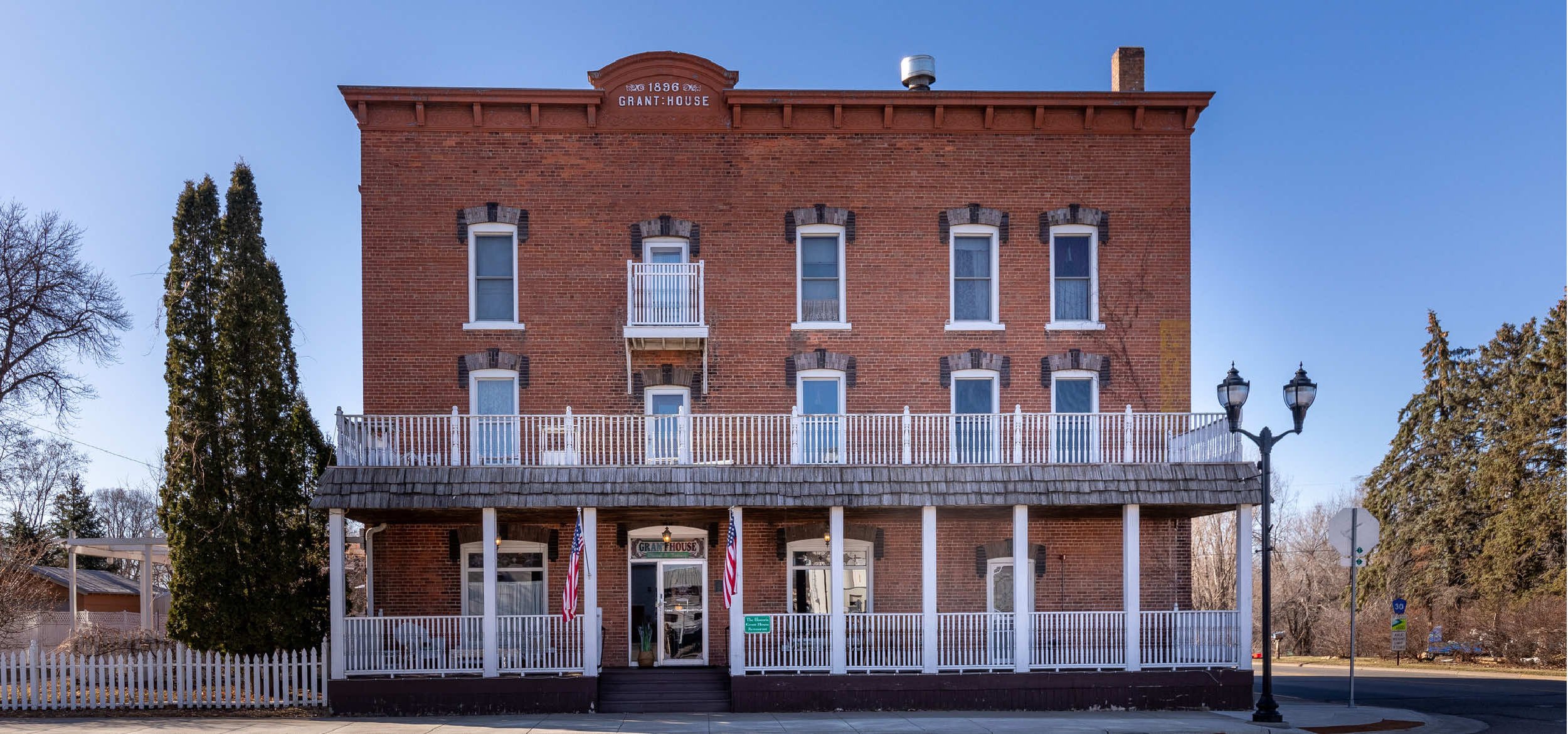
Grant House Hotel and Eatery
At the corner of Fourth Street and Bremer Avenue in downtown Rush City, Minnesota—a small town along Highway 61 roughly sixty miles north of the Twin Cities—a three-story brick hotel has been standing since the last years of the nineteenth century, carrying with it a history of fire, reinvention, and a reputation for paranormal activity that has drawn ghost hunters, television crews, and paranormal authors to a place most travelers on Interstate 35 pass without a second glance. The Grant House was originally built in 1880 by Colonel Russell H. Grant, second cousin to President Ulysses S. Grant. The original structure was a white-board building with an expansive porch, situated to serve the travelers and commerce flowing through Rush City along what was then a stagecoach route connecting St. Paul to Superior, Wisconsin. President Grant himself reportedly stayed at the hotel while visiting family in the area, taking advantage of Minnesota's hunting and fishing. The hotel prospered for just over a decade before fire destroyed the original building in 1895. Colonel Grant rebuilt the following year, this time in brick, and the 1896 structure—listed on the Registry of Historic Places—is the building that stands today, a 7,500-square-foot establishment with eleven rooms spread across its upper floors. The Grant House's history between the fire and the present day is marked by the kinds of uses that tend to leave residual energy in old buildings. During certain periods, the hotel reportedly operated as a bordello, and local accounts connect it to the bootlegging trade that ran through small Minnesota towns during Prohibition. Rush City's location along the railroad made it a natural waypoint for the kind of transient commerce—legal and otherwise—that characterized rural Midwestern towns in the early twentieth century. The Twin Cities Paranormal Society has noted that old railroad hotels in small towns are particularly prone to paranormal activity, citing the combination of constant human turnover, proximity to rail energy, and the fires and violence that frequently accompanied frontier-era hospitality. The paranormal reputation of the Grant House is well established and has been acknowledged by successive owners. Todd Johnston, who owned the hotel in the early 2010s, stated publicly that he, his staff, and guests had experienced numerous unexplained incidents during his tenure. In 2011, Johnston opened the hotel to a formal paranormal investigation, drawing ghost hunters and fans of SyFy Channel's Ghost Hunters International for an evening of organized investigation. The event confirmed what locals and staff had been reporting for years. Paranormal researcher Chad Lewis, author and lecturer for Unexplained Research LLC, has included the Grant House in his presentations on Minnesota's most haunted locations, noting the kinds of subtle evidence—recorded sounds inaudible to the naked ear, unexplained beams of light—that characterize active sites. The Grant House is also featured in The Big Book of Minnesota Ghost Stories by author Andy Weeks, who investigated the property as part of his broader survey of Minnesota hauntings. The reported phenomena at the Grant House span a range consistent with a building carrying multiple layers of occupation and use. Guests have heard ghostly laughter and disembodied voices in the hallways and rooms. Phantom footsteps are heard moving through the building when no one is present. Furniture has been found shifted or rearranged in rooms overnight by unseen hands. The most striking recurring claim involves the apparition of a woman who appears behind guests as they look into mirrors—visible in the reflection but not in the room itself when the guest turns around. The activity has been consistent enough to attract repeated visits from organized paranormal groups, including North Metro Paranormal, whose founder has described the Grant House as one of the locations that first drew him into ghost hunting after experiencing intense activity there on an early visit. Ghost tours have been held at the property, and the building's haunted reputation is embraced rather than concealed—the city of Rush City's own tourism page directs visitors interested in the paranormal to the hotel's website for ghost stories. Today the Grant House continues to operate in downtown Rush City, most recently housing The Fort, an eclectic American restaurant whose owners moved into the historic building in 2024. The new proprietors were aware of the building's reputation before signing the lease and were undeterred. The clawfoot tubs and pedestal sinks remain in the renovated guest rooms. The second-story porch still overlooks Main Street. The railroad tracks that once brought travelers and trouble to Rush City still run nearby. And the woman in the mirror, if she is still there, presumably has new faces to appear behind—and new guests to remind that in a building this old, the reflections do not always belong entirely to the living.
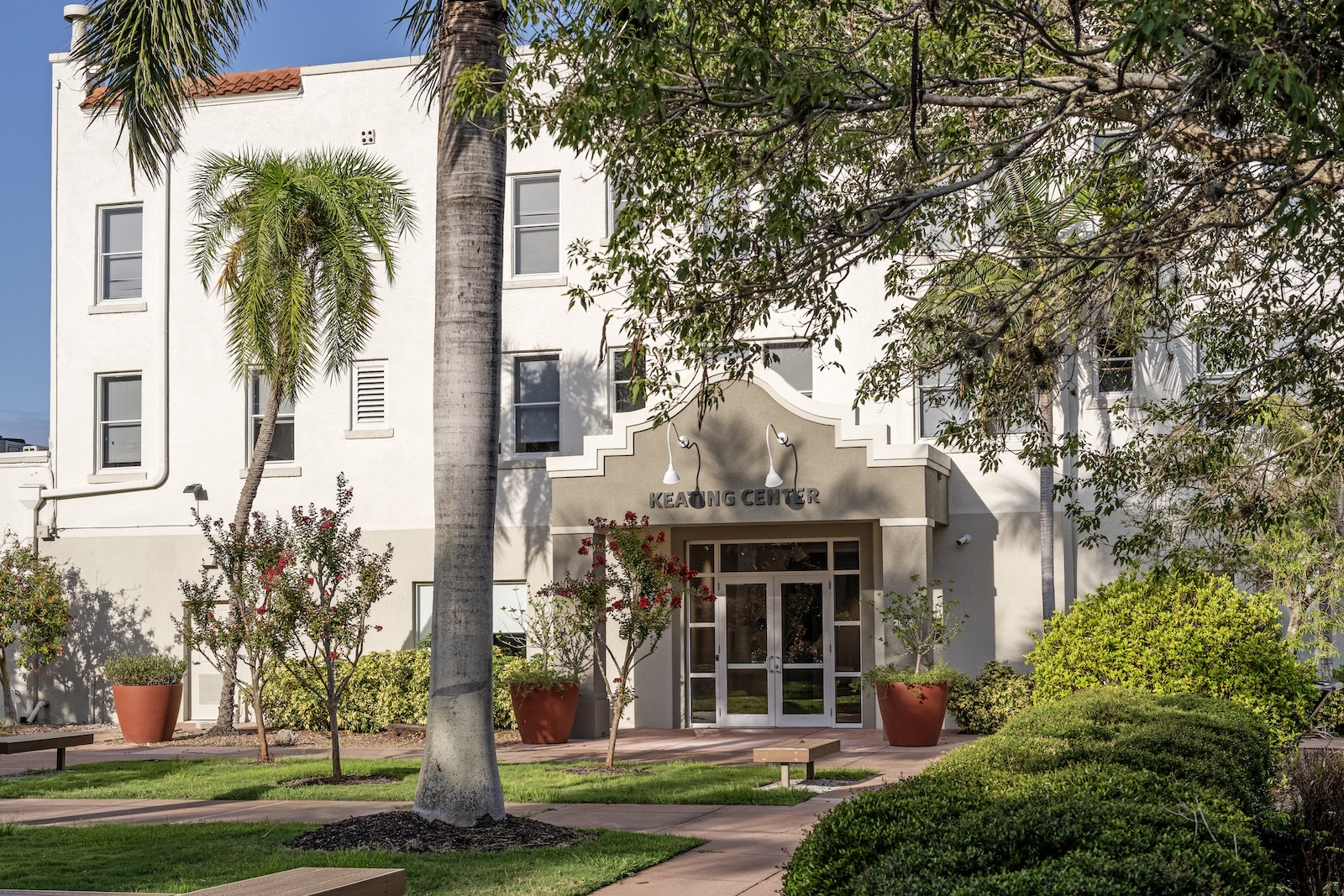
Ringling School of Art and Design
Along North Tamiami Trail in Sarasota, a short distance from the Ringling Museum estate and the circus money that shaped this stretch of Florida coastline, Ringling College of Art and Design sits on a campus that blends contemporary studio buildings with a handful of older structures carrying far heavier histories. At its center stands the Keating Center — a Spanish Mission Revival building constructed in 1925, listed on the National Register of Historic Places since 1984. Before it was an art school, it was a hotel. And before it was merely a hotel, it was something darker than that. The Bay Haven Hotel opened in the mid-1920s during the Florida land boom, a period when Sarasota was exploding with speculative wealth and circus-empire prestige. The Bay Haven was built to attract the traveling businessman and seasonal wealthy visitor. It was moderately successful for a few years. Then the boom crashed. By 1928, the man who developed the Bay Haven subdivision was killed in a car wreck near Arcadia, and his wife struggled to keep the hotel afloat. By 1930 the banks were closing, insurance payments lapsed, and the hotel fell into receivership. What replaced the original clientele, according to accounts passed through generations of students and staff, was a considerably different population: gamblers, Prohibition-era bootleggers, and women working in prostitution on the second floor. Into this compromised building, Dr. Ludd M. Spivey — president of Southern College in Lakeland — brought his plan for a Florida art school. He courted John Ringling, who was nearly bankrupt but agreed to lend his name and fund the $45,000 renovation. On October 2, 1931, the School of Fine and Applied Art of the John and Mable Ringling Art Museum opened with 75 students and 13 faculty. Students attended chapel daily and needed written permission to leave town. The school became independent in 1933 and eventually grew into Ringling College of Art and Design. The Keating Center has served as the campus heart ever since, housing administration below and student dormitory rooms above. The ghost came with the building. She is called Mary, and her legend is among the most consistently reported haunting accounts in Sarasota. The story holds that Mary was one of the women living and working on the second floor of the Bay Haven during its decline — a live-in prostitute who fell in love with a client who didn't return her feelings and took her life by hanging in the stairwell at the end of the second-floor corridor. Hotel management concealed the death. Alumni accounts from as far back as the 1960s reference a locked room off that hallway near the stairwell that was left unused. The manifestations are specific and consistent across decades. Students have described a young woman in her late teens or early twenties gazing down from a second-floor window at students below — sometimes smiling, sometimes not — wearing a cream-colored dress with ruffled armlets or a lavender flapper-style dress, a tight skull cap from the 1920s, with one foot bare and the other in a small blue shoe. Others report anguished sobbing from the stairwell at night with no visible source. Those who investigated described an overpowering smell of stale perfume and a crushing wave of sadness — shortness of breath, racing heart, an uncontrollable urge to weep. Former students from the 1970s and early 1980s described certain rooms on the haunted side as persistently thick and dark, prompting room transfers. A local priest reportedly performed an exorcism at the Keating Center in the 1990s — an event that those who claim ongoing encounters with Mary generally describe as unsuccessful. The Travel Channel featured the legend in 2004. Ringling College today is a thriving institution and the Keating Center is fully restored, its upper floors still active as student housing. Students still report seeing her at the window. The perfume still turns up where no one is wearing any.
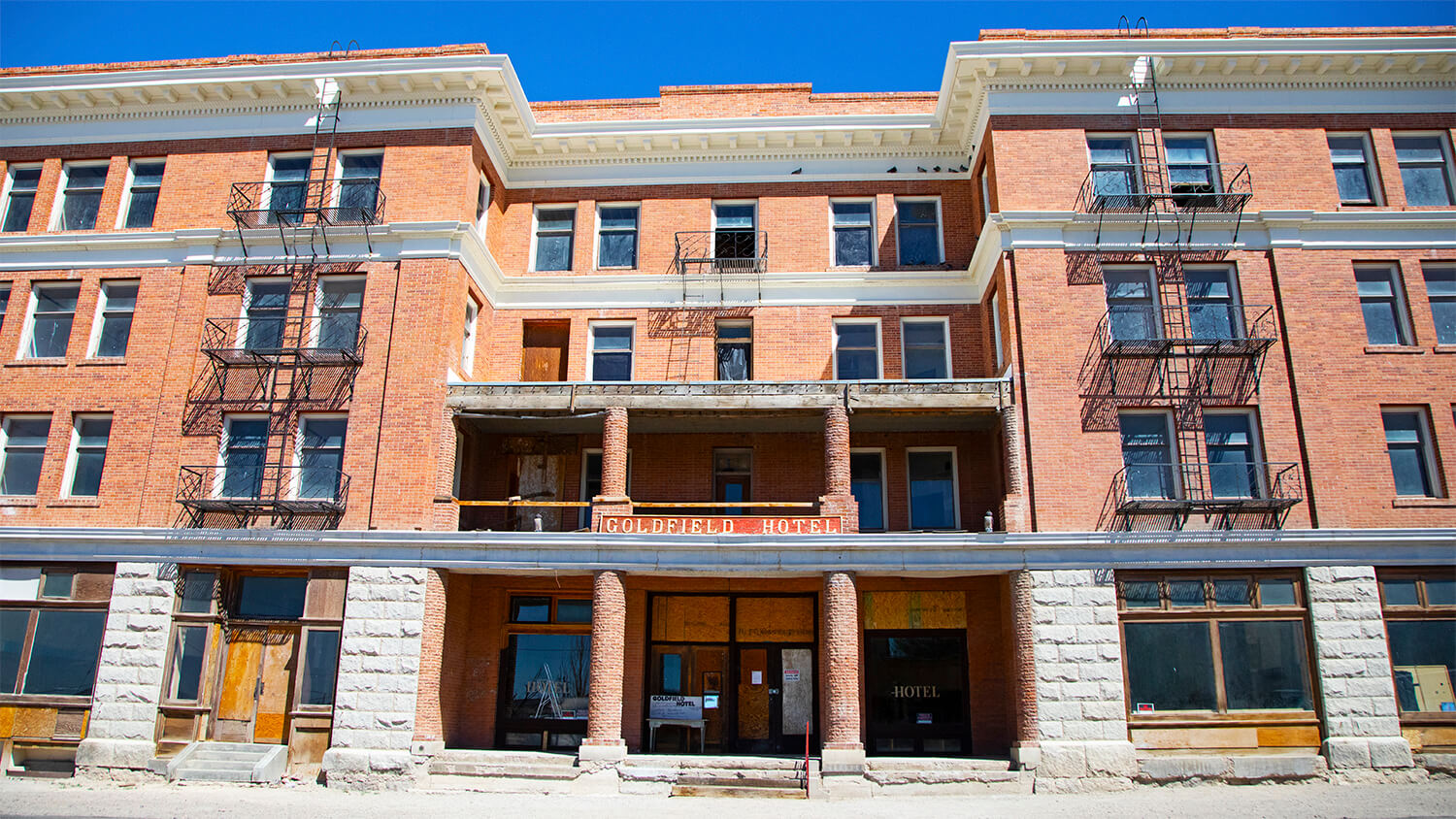
The Goldfield Hotel
The Goldfield Hotel rises four stories above a town that barely exists anymore, its granite-and-brick façade still dominating the main intersection of Goldfield, Nevada—a place that was once the largest city in the state and is now home to roughly 250 people. The hotel was built to match the ambitions of a boomtown drunk on gold, and it stands today as a monument to how quickly all of that can disappear. Gold was discovered near Goldfield in 1902, and within a few years the population surged to 20,000. The town supported three newspapers, five banks, and a mining stock exchange. At the center of it all was George Wingfield, a former cattle driver and card dealer who had grubstaked his way into control of the Goldfield Consolidated Mines Company. The hotel, designed by Reno architects Curtis and Holesworth, opened in 1908 at a cost of over $300,000. Legend holds that champagne was poured down the front steps at the grand opening. The 154-room interior featured mahogany paneling, gilded columns, crystal chandeliers, gold-leaf ceilings, European chefs, and one of the first Otis elevators west of the Mississippi. It was proclaimed the finest hotel between Chicago and San Francisco. But Goldfield was a storm, not a city. Mine output dropped sharply by 1910. A flash flood hit in 1913. In 1923, a moonshine still exploded and ignited a fire that consumed twenty-seven blocks. The hotel survived—stone and brick don't burn easily—but the town was gutted. By the 1930s, the Goldfield Hotel was a flophouse for cowboys. During World War II it housed officers from the nearby Tonopah Army Air Field, and when they checked out in 1945, the hotel closed for good. The hotel's paranormal reputation centers on Room 109 and a legend involving a woman named Elizabeth—said to have been a prostitute and mistress of Wingfield who became pregnant with his child. The story claims he chained her to a radiator in the room, kept her alive until the baby was born, and then either let her die or killed her. The infant was allegedly thrown down a mine shaft beneath the hotel. It is a vivid and horrible story, and it has no verified historical basis. Researchers at the Central Nevada Museum have noted significant inconsistencies—the mine shafts were dug in 1925, years after Wingfield sold the hotel and moved to Reno, and no contemporary records corroborate Elizabeth's existence. The legend appears to trace largely to a book by 1980s owner Shirley Porter, likely crafted to boost interest in the property. However, there is a documented shadow behind the myth: a 1904 lawsuit by a woman named May Baric, who claimed to be Wingfield's common-law wife, accused him of abuse, and was given $400 and forced to leave town with their child. She and the child died in obscurity. The Elizabeth legend may be an embellishment of a real and quieter cruelty. Regardless of origin, the reports attached to Room 109 are persistent. Visitors describe sudden extreme cold, disembodied crying, and an overwhelming sadness that causes some to weep without explanation. Elsewhere, cigar smoke is reported on the first floor—attributed to Wingfield—along with unexplained piles of fresh ash. The lobby staircase is associated with child spirits who tap visitors on the back. The basement became nationally known after a 2004 Ghost Adventures investigation in which a brick appeared to fly across the room on camera. The show returned multiple times. Investigators have reported equipment malfunctions, shadow figures, and physical aggression from an entity known locally as "the Stabber." Today the hotel is privately owned, closed to the public, and mired in renovation efforts that have stalled repeatedly over decades. It is listed on the National Register of Historic Places. You cannot walk in. You can only look through the windows at the mosaic tile floors and the mahogany front desk and the elevator shaft, all of it frozen in place since the last guest left eighty years ago.

Hotel Villa Convento
Standing on Ursulines Avenue in the lower French Quarter, just steps from the Mississippi River and within sight of the Old Ursuline Convent, the Hotel Villa Convento occupies a Creole townhouse that has been absorbing the weight of New Orleans history since the 1830s. The land itself carries an even older provenance. It was originally part of the holdings of the Ursuline nuns, the French Catholic order that arrived in Louisiana during the early colonial period and became one of the most important institutions in the young settlement. In 1805, the nuns partitioned off portions of their property as the growing city pressed in around them, and the lot at what is now 616 Ursulines Avenue passed into private hands. By 1833, the parcel had been purchased by a Frenchman named Jean Baptiste Poeyfarre, who commissioned the construction of the three-story Creole townhouse that remains standing today. Poeyfarre died roughly a decade later, and his widow sold the building to Octave Voorheis, who held the property until the economic collapse that followed the Civil War forced him to let it go around 1872. It is during the difficult years after the war that the building's most enduring and controversial legend takes shape. New Orleans, once one of the wealthiest and most cosmopolitan cities in America, had entered a steep decline. Vice industries flourished as the economy cratered, and the French Quarter became a district where brothels, gambling houses, and saloons operated with varying degrees of openness. Local tradition holds that 616 Ursulines became a brothel during this period, possibly operating as a so-called house of assignation—a place where illicit encounters could take place away from private residences. No definitive documentary proof has surfaced to confirm the building's use as a bordello, but available records suggest that something unsanctioned was happening at the address during these decades, and multiple sources have maintained the claim across generations. The legend has earned the Villa Convento a persistent association with the folk song "House of the Rising Sun," later made internationally famous by the Animals in 1964. Several locations in New Orleans have been put forward as the song's inspiration, and the true origin remains a matter of debate, but the Villa Convento has remained near the top of the list for decades. On March 10, 1902, Pasquale Taromina purchased the property, and his family occupied the building as a private residence until 1946. Following the Taromina family's departure, the structure was converted into a rooming house known as the Old Town Villa, offering inexpensive studio apartments to transient residents and students. Among the more notable tenants was a young Jimmy Buffett, who lived in apartment 305 during his early days in New Orleans and later returned with a video crew to film a documentary about that chapter of his life. The room retains his apartment number to this day and is informally known as the Jimmy Buffett room. In the early 1970s, the rooming house was converted into a hotel, and in September 1981, the Campo family—seventh-generation New Orleanians whose ancestors emigrated from the Canary Islands during the colonial period—purchased the property and have operated it as the Hotel Villa Convento ever since, preserving all twenty-five rooms with their original apartment numbers intact. The paranormal reputation of the Villa Convento is among the most consistently documented of any hotel in a city that has no shortage of haunted accommodations. The activity is not confined to a single room or floor but has been reported across the property, with certain rooms drawing particular attention. The most commonly identified entity is believed to be the ghost of a former madam from the building's rumored brothel era. Guests—overwhelmingly men—report hearing a woman's disembodied voice in Room 301, sometimes speaking in suggestive tones or addressing the guest by name. Male guests in multiple rooms have described rolling over in bed to see the apparition of a woman dressed in black standing at the bedside, gazing at them intently before vanishing. The figure reportedly appears visible only to the man, even when a partner is lying beside him. The connection to the brothel legend extends to another recurring phenomenon: unexplained knocking on guest room doors, which paranormal researchers and tour guides have linked to the old practice of madams making rounds to signal that a client's time was up. Room 302 has produced reports of full-bodied apparitions materializing and disappearing at all hours, including from a longtime annual guest who saw a figure form in the room and never returned to stay there again. Room 305, the Buffett room, generates reports of personal belongings being moved and an oppressive sense of being watched. At least one hotel staff member has described entering 305 to check on a hairdryer and being overcome by a sudden, intense feeling of being observed, strong enough to send her back downstairs immediately. Room 209 carries a grimmer association—local accounts hold that a man took his own life in the room, and guests who stay there have reported hearing voices and finding their possessions displaced. Visitors have also reported the sound of a child's laughter echoing through the building, and some guests have captured unexplained faces in photographs taken inside the hotel. Author James Caskey, who stayed at the Villa Convento while researching his book on New Orleans hauntings, has described it as possibly the most haunted hotel in the city. Paranormal tour groups regularly include the property on their routes, and independent investigators who have conducted overnight sessions at the hotel have reported capturing audio evidence and experiencing physical phenomena consistent with an active location. Today the Hotel Villa Convento operates as a small, family-run guest house with the quiet charm of a building that has never been stripped of its character. The courtyard offers chicory coffee and morning beignets. The wrought-iron balconies look out over Ursulines Avenue, where horse-drawn carriages still pass and the tops of ships on the river are visible in the distance. The Campo family embraces the building's history—its colonial origins, its possible life as a brothel, its tenure as a bohemian rooming house, and its reputation as one of the most paranormally active addresses in New Orleans. Whether the knocking at the door is a former madam making her rounds or just the old bones of an 1833 townhouse settling into another century, the Villa Convento offers the kind of stay where the line between history and haunting is never entirely clear.
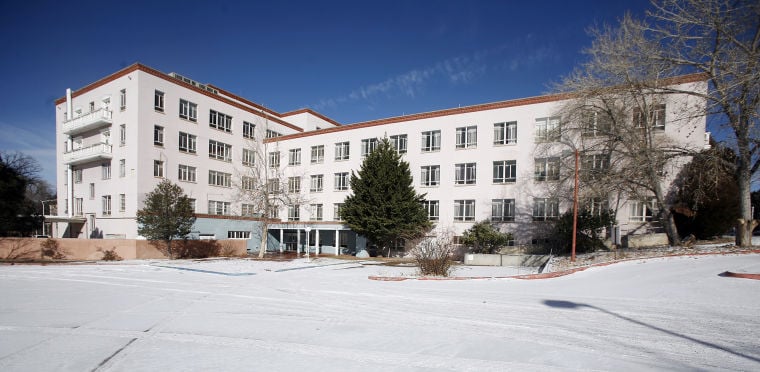
Old St. Vincent’s Hospital (Drury Inn)
The corner of Palace Avenue and Paseo de Peralta in downtown Santa Fe is one of the most historically saturated pieces of ground in the American Southwest. Before European contact, it sat within the territory of ancestral Pueblo peoples. After Spanish colonization established Santa Fe as a capital in 1610, it cycled through two centuries of colonial administration, conflict, and change. By the time Archbishop Jean Baptiste Lamy arrived in the mid-1800s to transform the church's presence in New Mexico, this corner was already ancient by American standards. The building that now operates as the Drury Plaza Hotel carries that entire weight — plus decades of hospital death, a nursing home, state offices, film sets, and years of abandonment — inside a structure that still looks, to many guests, like it remembers everything. The hospital's origin traces directly to Lamy. After his arrival, he invited the Sisters of Charity to New Mexico to help care for the sick. In 1865, Lamy sold them a building originally constructed as a rectory adjacent to what would become St. Francis Cathedral, and the Sisters opened Santa Fe's first hospital inside it. That original structure and the 1911 Craftsman-style Marian Hall built next door served the community for nearly a century before the Sisters outgrew them entirely. In 1953, renowned architect John Gaw Meem — known for the Zimmerman Library at the University of New Mexico and the Cristo Rey Church in Santa Fe — was commissioned to design a proper city hospital on the site. The resulting building was notably austere for Meem: yellow brick, sharp corners, large windows, only a faint nod to Territorial style. It opened as the new St. Vincent Hospital and served Santa Fe for roughly two decades before the hospital relocated to St. Michael's Drive in 1977. The state of New Mexico then took over the buildings for use as offices for the Department of Cultural Affairs and, eventually, a nursing home. That nursing home, which locals called La Residencia, occupied the old hospital until the early 1980s. The building then sat largely empty for years — used occasionally as a film location, including Jeff Bridges' 2009 film Crazy Heart — before Drury Hotels purchased it in 2007 and began a years-long adaptive reuse project. Archaeologists working the site in 2008 uncovered what appeared to be an underground vault of unknown origin before the economic collapse shut the project down. The Drury Plaza Hotel finally opened in 2014. The paranormal reputation of the building predates the hotel by decades and is concentrated in two areas: the basement and the third floor. During the La Residencia years, the basement became so unsettling to staff that sending new employees down there alone at night became a formal initiation ritual — a rite of passage that the longtime employees themselves refused to repeat solo under any circumstances. Multiple accounts describe the basement walls appearing to ooze blood, particularly near a storage room that had once been used to incinerate amputated limbs and surgical remains. A nurse coordinator investigating a disturbance in that room reported finding what looked like fresh blood on a wall surface. A former candy striper who worked at the original St. Vincent Hospital in the 1970s recalled that the area near the basement incinerator produced intense cold, a sense of presence, and disembodied voices — and that hospital staff uniformly avoided it after dark. During the Drury renovation, a security guard working nights described refusing to enter an adjacent structure called Marian Hall, reporting consistent unease throughout the basement level. The state museum's use of the building added another layer: Native American artifacts, and reportedly skeletal remains in cardboard boxes, were stored in the basement hallways during the state offices era. That detail appears in documented interviews with former employees and has fed persistent theories about the nature of the activity. Room 311 — or the fourth floor, depending on the account — carries its own specific legend. A young boy brought into the hospital on Christmas Eve after a severe car crash is said to have died crying for his deceased father throughout the night. Long after the hospital years, nurses at La Residencia reported hearing a baby crying in that room with no source, eventually keeping it vacant unless the census demanded otherwise. The sound has been reported by visitors as recently as the hotel era. A nurse who worked the top floor during the hospital years described a short Hispanic man in old-fashioned clothing appearing alongside a woman in a black mantilla — both seeming confused and in need of something they couldn't name. A worker who accidentally rode the elevator to the basement described the doors refusing to close until he stepped out, then ascending without him while a shadowy presence moved nearby. The Drury Plaza Hotel operates today as a functioning boutique hotel in one of Santa Fe's most storied locations. The basement is there. Room 311 is numbered. The history goes back further than the building — and, by most accounts, it hasn't stopped moving.
Sheraton Kansas City Hotel at Crown Center
The lobby of the Sheraton Kansas City Hotel at Crown Center is bright, modern, and busy—a soaring atrium with polished floors, a silver sculpture suspended from the ceiling, and sunlight streaming through walls of glass. Guests move through it on their way to conventions, shopping, and meetings at the adjacent Hallmark Cards headquarters. Nothing about the space announces what happened here. There is no plaque on the wall, no marker on the floor, no indication that on the evening of July 17, 1981, this lobby became the site of the deadliest structural failure in American history. The building opened July 1, 1980, as the Hyatt Regency Kansas City, a forty-story, 733-room tower developed by Don Hall of Hallmark Cards as the centerpiece of the Crown Center complex. At the time it was the tallest building in Missouri. The atrium was its showpiece—a cavernous open space crossed by suspended pedestrian walkways on the second and fourth floors, connected by steel rods. The hotel hosted weekly tea dances in the lobby, events that drew hundreds for big-band music and dancing beneath the soaring ceiling. On the evening of July 17, 1981, more than 1,600 people were gathered for one of those dances. At approximately 7:05 p.m., the fourth-floor walkway broke free from its suspension rods and collapsed onto the second-floor walkway below. Both structures crashed to the lobby floor, carrying dozens of people and crushing dozens more standing beneath. The cause was a design change made during construction: the original engineering called for continuous steel rods supporting both walkways, but the design was altered to use shorter rods each supporting only one level. The connection points bore twice the intended load. The National Bureau of Standards later determined the walkways could barely support their own weight. The rods tore through the box beams. One hundred and fourteen people were killed. Two hundred and sixteen were injured. Rescuers worked through the night, pulling the last survivor from the wreckage at four in the morning. The aftermath reshaped American engineering standards. The engineers who approved the design lost their licenses. The Crown Center Redevelopment Corporation paid over $140 million in claims. The hotel underwent reconstruction, replacing the skywalks with a single balcony supported by ground columns. The tea dances ended permanently. The hotel changed hands—becoming the Sheraton Kansas City in 2011 after Starwood assumed management. A memorial was not dedicated until 2015, when the Skywalk Memorial Plaza opened in Hospital Hill Park with a sculpture of dancers and the engraved names of all 114 victims. The paranormal accounts carry a weight distinct from most haunted hotel stories because the event that produced them is not legend—it is documented, investigated, and seared into the memory of a city. Guests who know nothing of the history report an oppressive heaviness in the lobby, particularly a downward pressure on the head and shoulders. One flight attendant described the sensation as feeling like her head was being physically pushed down from the moment she entered the atrium. Visitors have heard screaming echoing through the mezzanine—loud, hysterical, unmistakable—with no source found. The most commonly identified apparition is a woman in a tea gown, believed to be victim Kathryn Sullivan, seen in guest rooms, reflected in windows, and standing in the lobby. A young man in a black tuxedo with a blue bow tie has been reported disappearing through elevator doors. Figures in period attire have been observed in the atrium. A local paranormal investigator named Jim Schwalm, who had reportedly experienced premonitory dreams before the collapse, photographed the lobby shortly after the disaster and claimed to have captured an image of several couples dancing. Today the Sheraton Kansas City operates as a major convention hotel with over 42,000 square feet of function space and the largest ballroom in the city. The lobby is open, bright, and full of life. The skywalks are gone. The architecture has been redesigned to ensure nothing like the collapse could recur. But the space remembers what the building cannot say, and some who pass through it feel something no renovation has removed—a gravity in the air, a sound just below hearing, the sense that not everyone who came to dance that night has left the floor.
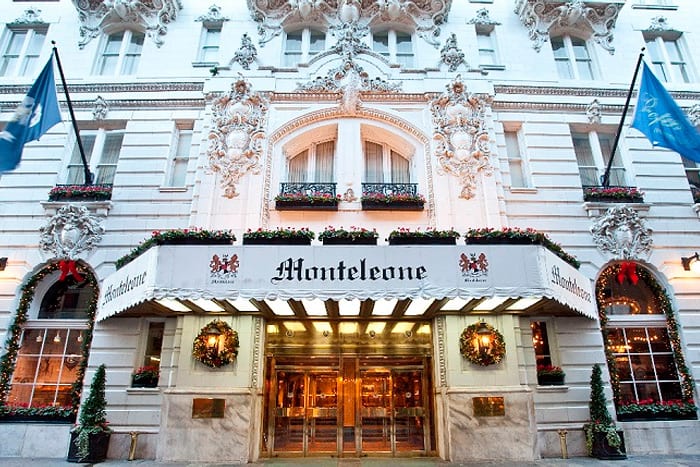
Hotel Monteleone
It has been said that the French Quarter begins in the lobby of the Hotel Monteleone. The claim is not merely geographic. Standing at the corner of Royal and Iberville streets since 1886, the Monteleone is the only high-rise building in the interior of the Quarter, a Beaux-Arts landmark that has anchored the cultural life of the neighborhood for well over a century. It is one of the last great family-owned hotels in America, and it is, by nearly every account, one of the most actively haunted buildings in New Orleans. The hotel's origins trace to Antonio Monteleone, a Sicilian nobleman who had operated a successful shoe factory before immigrating to New Orleans around 1880. Setting up a cobbler's shop on Royal Street, then the commercial and banking heart of the city, Monteleone prospered quickly enough to purchase a small sixty-four-room hotel on the corner of Royal and Iberville. He renamed it the Hotel Monteleone, and the property grew rapidly. A major expansion in 1903 added thirty rooms, and a sweeping 1908 renovation added three hundred more. Antonio died in 1913, and the hotel passed to his son Frank, who oversaw the addition of the Queen Anne Ballroom and two hundred more rooms in 1928—one year before the Depression. The Monteleone was one of the rare family-owned hotels to survive those lean years intact. In 1949, Frank introduced the hotel's most famous feature: the Carousel Piano Bar and Lounge, a twenty-five-seat revolving bar turning on two thousand steel rollers at a rate of one revolution every fifteen minutes. The original building was demolished and rebuilt in 1954, and a final expansion in 1964 added the upper floors, a Sky Terrace, rooftop pool, and the Presidential Suite. The hotel today holds 570 guest rooms across its towering frame. The Monteleone's literary associations alone would secure its place in American cultural history. Ernest Hemingway, William Faulkner, Tennessee Williams, Eudora Welty, and Truman Capote were all frequent guests. Hemingway referenced the hotel in his short story "Night Before Battle." Williams used it as a symbol in The Rose Tattoo. Capote famously claimed on The Tonight Show that he was born in the hotel—his mother lived there during her pregnancy but made it to the hospital in time. In 1999, the Friends of the Library Association designated the Monteleone an official literary landmark, one of only three hotels in the country to receive that distinction. In 1942, New Orleans author Innis Patterson Truman jumped to her death from the hotel's twelfth floor, an event documented in letters by the writer Lyle Saxon—one of the building's darker episodes and one that adds genuine tragedy to the property's layered past. The paranormal reputation of the Hotel Monteleone is extensive and has been the subject of formal investigation. In March 2003, the International Society for Paranormal Research conducted a multi-day investigation and reported making contact with more than a dozen earthbound entities. Among them were two former employees—a chef and a busboy or waiter—whom investigators linked to a recurring phenomenon involving the hotel restaurant's door, which opens and closes on its own despite being locked and operated by a push-button mechanism. The investigators concluded the two spirits were engaged in an ongoing disagreement about whether the door should remain open or shut. The most widely reported spirit is that of a toddler named Maurice Begere. According to the legend, Maurice's parents, Jacques and Josephine, were frequent guests in the late nineteenth century who would leave their young son with a nanny while they attended performances at the French Opera House on Bourbon Street. One evening, Maurice developed a high fever and died in his room on what is now the fourteenth floor. His grief-stricken mother returned to the hotel repeatedly, and eventually, the story holds, Maurice's spirit appeared before her, saying words to the effect of not to cry, that he was fine. Guests to this day report seeing a small boy wandering the fourteenth-floor hallway, sometimes standing at the foot of their bed, sometimes heard laughing. The fourteenth floor—which is actually the thirteenth, as the hotel skipped that number in its floor plan—has become the most requested floor among guests seeking a paranormal experience. Other reported entities include a man named William "Red" Wildemere, who died of natural causes in the hotel, a ghostly figure in nineteenth-century clothing believed by some to be Antonio Monteleone himself still watching over his creation, a phantom child who takes visitors' hands and then vanishes, and a spirit identified as "Solemn John," a Tennessee businessman said to have committed suicide after failed investments. Guests report shadows gliding through corridors, unexplained cold spots, elevators that stop on the fourteenth floor without being called, and the sounds of children playing in hallways where none are present. Today the Hotel Monteleone continues to operate under the fifth generation of the Monteleone family. The grandfather clock still chimes in the lobby. The Carousel Bar still turns. The doormen still stand at the entrance on Royal Street. And somewhere on the fourteenth floor, a small boy may still be looking for his parents—or simply making sure he is remembered.

Jefferson Market Library
Rising above the intersection of Avenue of the Americas and West 10th Street in Manhattan’s Greenwich Village, the Jefferson Market Library is one of New York City’s most recognizable historic landmarks. With its tall clock tower, red brick façade, and Gothic arches, the building stands out sharply from the surrounding streetscape. Though it now serves as a quiet branch of the New York Public Library, the structure was not originally built for books or study. Its origins lie in the justice system of nineteenth-century New York, when the site functioned as one of the city’s busiest police courts. The property began as part of the Jefferson Market, a public marketplace established in the early 1800s when Greenwich Village was still developing on the northern edge of the city. As the neighborhood expanded, the market complex grew to include civic buildings, including a courthouse and jail. By the 1870s city officials determined a larger and more permanent courthouse was needed. The current structure was completed in 1877 and designed by architects Frederick Clarke Withers and Calvert Vaux in the Victorian Gothic style. Its ornate stonework, pointed arches, and soaring clock tower gave the courthouse a dramatic appearance that made it an immediate landmark in the neighborhood. Inside the building operated the Jefferson Market Police Court, which handled a constant stream of cases from the surrounding districts. During the late nineteenth and early twentieth centuries the court became one of the busiest in New York. The building processed everything from minor disturbances to more serious crimes, reflecting the dense and diverse population of Greenwich Village during that period. One of the courthouse’s most widely remembered moments occurred in 1906 when Harry Kendall Thaw, the man who shot and killed architect Stanford White in a crime that shocked New York society, was arraigned in the building shortly after the incident. Behind the courthouse stood the Women’s House of Detention, a jail where female prisoners were held while awaiting trial or serving short sentences. Conditions in the detention facility were frequently criticized, and the complex became associated with the harsher realities of the city’s criminal justice system. The courthouse itself continued operating until 1945, when changes to the court system led to its closure. For years afterward the building stood largely unused and faced the possibility of demolition. Local preservationists in Greenwich Village organized a campaign to save the structure, arguing that it was one of the city’s finest surviving examples of Victorian Gothic architecture. Their efforts succeeded, and the city eventually approved a plan to convert the former courthouse into a public library. After extensive renovation, the building reopened in 1967 as the Jefferson Market Library, transforming a place once tied to arrests and trials into a community space devoted to learning. Despite its peaceful modern role, the building has developed a reputation for unexplained activity. Stories connected to the courthouse’s past have circulated for decades among library staff, visitors, and local historians. Reports often describe footsteps echoing on staircases or in upper levels after the building has closed for the night. Some employees have reported hearing doors move or sensing someone nearby in otherwise empty areas of the building. One of the most frequently repeated legends centers on the spirit of a former prisoner believed by some to remain connected to the site. According to local lore, a young woman who had been held in the nearby detention facility died under tragic circumstances, and her presence is sometimes said to linger around the upper portions of the building, particularly near the tower and stairways. Visitors have occasionally reported hearing soft crying or glimpsing a faint figure moving along the corridors. Paranormal investigators who have visited the site sometimes focus on the clock tower and upper floors, where reports of strange sounds and shadowy figures are most often described. Skeptics suggest that the building’s age, complex architecture, and acoustics may easily produce unusual noises and shifting shadows that can be mistaken for something supernatural. Today the Jefferson Market Library remains an active and beloved part of Greenwich Village. Sunlight fills its reading rooms, and visitors gather among the shelves where courtrooms once stood. Yet the building’s long history—stretching from marketplace to courthouse, jail complex, and finally library—continues to shape its identity. The echoes of the lives and events tied to its earlier years help explain why the tower that once watched over trials and prisoners has also become the center of enduring ghost stories within the neighborhood.