
Phantom Footsteps & Knockings
1,170 haunted locations
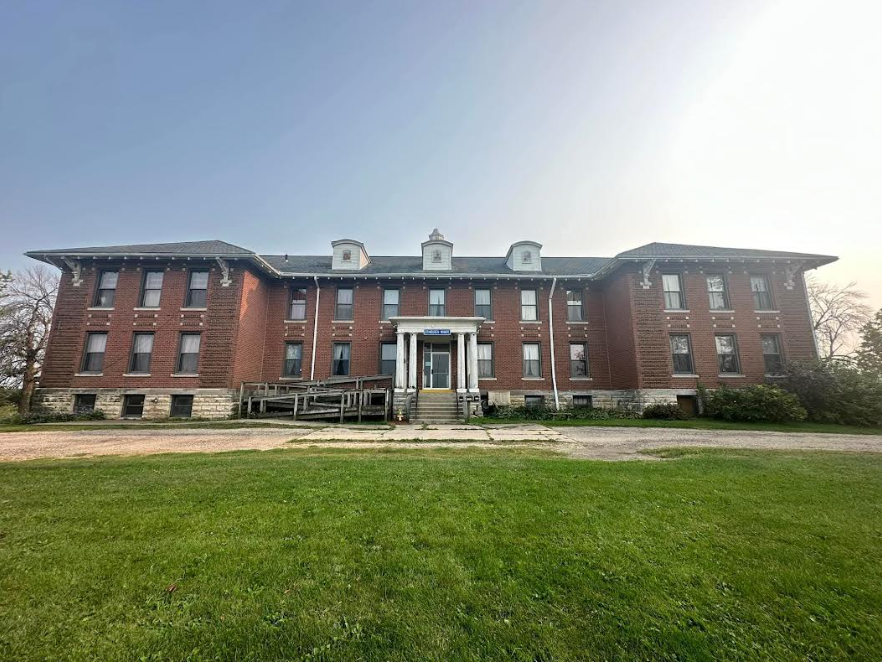
Edinburgh Manor
Rising from the rolling hills outside Scotch Grove, Iowa, Edinburgh Manor looks exactly like what most people picture when they think of a haunted asylum—massive brick walls, tall narrow windows, and an isolated presence that feels cut off from the modern world. But Edinburgh Manor wasn’t built as an asylum in the cinematic sense. It began in 1910 as the Jones County Poor Farm, part of a nationwide system designed to house society’s most vulnerable. Like many county poor farms of the era, the facility provided housing for the elderly, disabled, mentally ill, and those who had nowhere else to go. Residents worked the land if they were physically able. Crops were grown. Livestock was raised. The goal was self-sufficiency, but life inside these institutions was rarely comfortable. Resources were limited, oversight was minimal, and many residents spent their final years there. Over time, the Manor transitioned into a county home and later included mental health care wards as state systems evolved. Unlike locations tied to one infamous act of violence, Edinburgh Manor’s weight comes from duration. Decades of illness, poverty, isolation, and death unfolded inside its walls. Records confirm that many residents died on the property, and a cemetery sits nearby where some former occupants were buried. For paranormal believers, that long accumulation of hardship forms the foundation of the Manor’s reputation. The building itself amplifies the experience. Four stories tall, with an imposing central staircase and long corridors branching into patient rooms, it feels institutional and austere. The basement once housed storage areas and mechanical systems, while upper floors were dedicated to living quarters and later mental health wards. Paint peels from plaster walls. Old hardware remains intact. Natural light struggles to fill certain hallways, even during the day. Paranormal claims at Edinburgh Manor are among the most persistent in Iowa. Visitors frequently report hearing footsteps when no one is nearby. Doors are said to slam or move on their own. Disembodied voices—sometimes calm, sometimes distressed—are reported in EVPs and live sessions. Some investigators claim to capture direct responses to questions, suggesting intelligent interaction rather than residual replay. One of the most discussed areas is the former mental health ward, often described as heavy or oppressive. Guests report sudden mood shifts, unexplained anxiety, or the sensation of being watched. Shadow figures are commonly described moving across doorways or at the end of hallways. Others claim to see full-bodied apparitions, particularly near the central staircase. Cold spots and equipment malfunctions—draining batteries, REM pods triggering—are also frequently cited. Skeptics point out that the building’s age and structure naturally produce creaks, pressure changes, and temperature fluctuations. Large brick facilities amplify echoes. Wildlife in surrounding rural areas can create unexpected sounds. The power of suggestion plays a significant role, especially in a location marketed as haunted. Still, even seasoned investigators often describe Edinburgh Manor as unusually active compared to similar historic properties. Today, the Manor operates as a public paranormal investigation site. It has been featured in television shows, documentaries, and countless independent investigations. Unlike heavily themed attractions, it remains largely preserved in its institutional form—rooms mostly empty, hallways intact, the original layout maintained. That authenticity contributes to its atmosphere. There are no staged jump scares. Just silence, old architecture, and whatever people believe may still linger. Edinburgh Manor represents a chapter of American history that many communities quietly moved past—the poor farm system and early institutional mental health care. Whether you approach it as a historical landmark or a paranormal hotspot, it forces visitors to consider the lives once lived inside its walls. Some leave convinced they encountered something beyond explanation. Others walk away with logical answers. But almost everyone agrees on one thing: once the doors close and the building settles into darkness, Edinburgh Manor feels anything but empty.
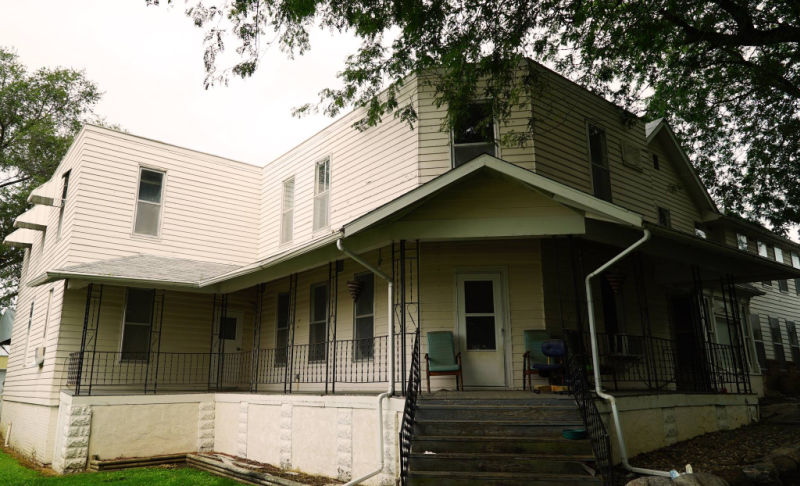
Malvern Manor
Tucked into the quiet town of Malvern, Iowa—population barely over 1,000—stands a red-brick building that looks more institutional than residential. Malvern Manor isn’t a centuries-old mansion or a crumbling castle. It’s a former care facility turned private residence turned paranormal destination. And despite its modest exterior, it has earned a reputation as one of Iowa’s most intensely investigated locations. The structure was built in 1867 and originally served as the Mills County Poor Farm. In the 19th and early 20th centuries, poor farms were county-run facilities that housed individuals who could not financially support themselves—the elderly, disabled, mentally ill, widowed, orphaned, or otherwise destitute. Life in these institutions was often harsh. Residents worked the land if they were able. Those who couldn’t were simply housed and managed with limited resources. Over time, Malvern Manor evolved. It later functioned as a private care facility for individuals with mental health conditions and developmental disabilities. Records indicate that patients were housed on site well into the mid-20th century. Like many institutions of that era, treatment standards reflected the time—structured, clinical, and sometimes controversial by modern understanding. While there are no confirmed records of extreme abuses often dramatized in asylum lore, the reality remains that the building housed vulnerable populations for decades. Eventually, the facility closed and the building passed into private ownership. In the early 2000s, new owners began restoring the property and living in it as a home. It was during this period that reports of unusual activity began surfacing publicly. The claims at Malvern Manor are wide-ranging. Visitors and investigators report shadow figures moving down hallways, disembodied voices, doors opening and closing on their own, and footsteps when no one else is present. Some claim to hear conversations in empty rooms. Others describe sudden cold spots or the sensation of being touched. One of the most frequently mentioned phenomena is children’s laughter or small voices, often attributed to the building’s time housing families and younger residents. Electronic voice phenomena (EVP) sessions conducted inside the Manor have allegedly captured responses to direct questions. Some investigators claim intelligent interaction—knocks in response to prompts, objects shifting, and REM pods activating without visible cause. A particular room often referred to as the “Shadow Room” has gained notoriety for reports of a darker presence, with some guests describing feelings of oppression or sudden anxiety while inside. Unlike many historic haunts built on a single violent event, Malvern Manor’s reputation stems from accumulation. There is no infamous mass murder tied to the building. Instead, its atmosphere seems connected to decades of human struggle—poverty, illness, abandonment, and isolation. For some paranormal researchers, that prolonged emotional weight creates what they believe to be residual energy rather than a single traumatic imprint. Skeptics argue that the building’s age, layout, and acoustics contribute heavily to reported experiences. Old plumbing knocks. Wooden floors shift. Temperature changes move through brick and plaster differently than modern drywall. Add darkness, expectation, and group dynamics, and experiences can escalate quickly. Yet even experienced investigators often admit the Manor feels unusually active compared to similarly aged structures. Today, Malvern Manor operates as a paranormal investigation venue, offering public events and private overnight stays. It has been featured in regional investigations, independent documentaries, and numerous YouTube explorations. Unlike heavily commercialized haunted attractions, the Manor maintains a more stripped-down, investigation-focused identity—bare halls, original rooms, minimal theatrics. For a small Iowa town, Malvern carries a surprisingly heavy story inside its brick walls. It represents a different kind of haunting—less about a single night of horror and more about the quiet accumulation of forgotten lives. Whether you believe spirits linger or not, the building forces visitors to confront a chapter of American history that isn’t often romanticized: the era of poor farms and institutional care. Malvern Manor stands as both historical landmark and paranormal lightning rod. It’s a place where history is documented, but interpretation varies. Some walk away convinced something unseen shares the halls. Others leave with logical explanations. Either way, few leave without feeling something.
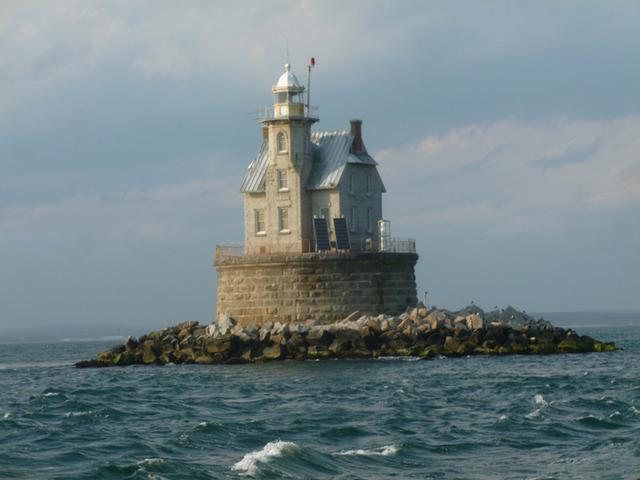
Race Rock Lighthouse
There is a point in the eastern reaches of Long Island Sound where three bodies of water — the Sound itself, Block Island Sound, and Fishers Island Sound — converge in a narrow channel four miles wide and choked with opposing tidal forces. Mariners have called it The Race for centuries, a name that captures the speed and turbulence of currents that can push six knots and reverse direction entirely with the tide. At the center of this convergence sits Race Rock, a submerged ledge rising only three feet above mean low water, decorated with shipwreck after shipwreck and surrounded by water that behaves like a living thing with bad intentions. The lighthouse that stands on that reef — granite, square at the base, octagonal at the top, its fourth-order Fresnel beam visible fourteen miles at sea — is one of the most consequential feats of American marine engineering, and one of the most persistently reported haunted sites along the Eastern Seaboard. By 1837, eight vessels had been lost on Race Rock Reef in eight years. Congress appropriated funds for a lighthouse as early as 1838, but the money was never spent, the engineering problem seemingly unsolvable. Buoys couldn't hold in the current. Iron spindles driven eighteen inches into the reef disappeared with the spring ice. The Lighthouse Board reported in 1852 that every conventional approach had been tried and failed. The danger was well-documented; the solution was not. It would take another two decades and a total of $278,716 — and nearly eight years of continuous effort — before the light was finally activated on January 1, 1879. The man who solved it was Francis Hopkinson Smith, a structural engineer contracted in 1871 who was also, improbably, a painter and novelist — a descendant of Francis Hopkinson, signer of the Declaration of Independence, and later famous for fiction drawn from his own experiences on this reef. Smith had previously built the Block Island breakwater and a seawall on Staten Island; he would later build the foundation for the Statue of Liberty. Race Rock would be his most demanding project. He and his crew — led by master diver Captain Thomas A. Scott — lived on the construction site during working months, erecting a shanty on the partial foundation while the water moved around them. When the initial riprap foundation of 10,000 tons of granite began to shift, Smith donned diving gear himself and went down to examine it. He came up certain the design had to change. The Lighthouse Board resisted; he convinced them. The concrete foundation — a stepped, concentric platform sixty-nine feet in diameter — was poured beginning in 1873. The pier rose from it in fourteen courses of heavy masonry, and the lighthouse itself went up in a single working season in 1878. The construction was not without its casualties. A boat carrying two hundred pounds of gunpowder exploded at the site, killing workers. The isolated conditions, the violence of the water, and the years of unrelenting labor extracted their price in lives and in men's minds. Smith later transformed those experiences into the novel Caleb West, Master Diver, thinly disguising Race Rock as its setting. The story had already written itself. Thomas A. Carroll was appointed keeper in 1880. He rowed regularly from Race Rock to Noank for supplies and to visit his family on shore. In January 1885, a severe storm caught him on the mainland and kept him there for several days. When he finally decided he could no longer neglect his post, he pushed his small boat out into the waves alone. He was never seen again. His body was never recovered. Coast Guard crews who later worked maintenance shifts at the lighthouse reported hearing whispers, laughter, and unexplained footsteps moving through the structure. Some reported physical contact — being touched, poked, or pushed — by no visible source. Wet footprints were found leading from the former shower area after the water supply had been disconnected and the fixture removed. Boaters passing at night have reported a shadowy figure visible in the lantern tower when no one is assigned there, illuminated briefly by the rotating beam. Whether the figure belongs to Carroll or to one of the earlier dead — workers from the construction, sailors from the reef's long list of wrecks — has never been resolved. The lighthouse was automated in 1978, ending any permanent human presence on the rock. In 2004, reportedly at the request of Coast Guard maintenance personnel who continued to report unsettling experiences during equipment checks, The Atlantic Paranormal Society conducted a formal overnight investigation, documented in the fourth episode of the first season of Ghost Hunters on Syfy. The investigation was conducted without electricity or facilities, in harsh weather and rough water. The team reported a chair moving across a room without assistance and an electromagnetic field that tracked consistently up and down the spiral staircase. At the conclusion of the twelve-hour session, investigators stated that Race Rock appeared to be genuinely haunted — an outcome the Coast Guard had hoped to disprove. Skeptics point to the obvious: Race Rock is exactly the kind of place where the imagination does what it is built to do. Isolated, unlit, accessible only by boat and only in favorable conditions, surrounded by the sound of water that has killed for centuries, the lighthouse sits in the kind of environment that produces reports almost automatically. The spiral staircase creates drafts; the granite structure amplifies sound; the current generates low-frequency vibration detectable in the bones but not in conscious hearing. All of that is probably true. It doesn't account for the consistency of the reports across unrelated witnesses over more than eighty years, or for the specificity of a keeper last seen rowing into a January storm, still attributed by those who work the light as not entirely gone. Race Rock Lighthouse was added to the National Register of Historic Places in 2005 and transferred to the New London Maritime Society in 2013 under the National Historic Lighthouse Preservation Act. The light remains operational, maintained by the Society and the Coast Guard jointly. Tours are offered occasionally in summer through New London's Custom House Maritime Museum, weather and tidal conditions permitting — the latter qualifier a reminder that the water around Race Rock still sets the terms of everything that happens there.

The Scotia Lodge
Deep in the redwood country of Humboldt County, California, where the Eel River bends through a valley of old-growth timber and perpetual fog, the town of Scotia sits like a time capsule from an era most of America has forgotten. Scotia was a company town—one of the last in the country—built and wholly owned by the Pacific Lumber Company from 1863 until the company's bankruptcy in 2008. Every house, every street, every storefront belonged to PALCO. The company provided the school, the hospital, the church, the skating rink, the theater, and the hotel. Workers lived in company housing, shopped at the company store, and were woken each morning by the company steam whistle at 7:30. At its peak, PALCO employed over 1,600 people and shipped more than twenty million board feet of redwood lumber annually. The town was originally called Forestville, renamed Scotia in 1888 after a coin toss—a nod to the Canadian Maritime provinces from which many early workers had emigrated. The Scotia Lodge sits at 100 Main Street, at the heart of this self-contained world. The first inn on the site was built in 1888, serving as the only hub of activity in the area and functioning as a stagecoach stop between San Francisco and Eureka. That structure burned in the early 1900s and was replaced in 1923 by the current building, originally called the Mowatoc Hotel—a name referencing local Native Americans, with a diamond motif on the facade drawn from Indigenous design. The name changed to the Scotia Inn in the late 1940s, and the property has most recently been reimagined as the Scotia Lodge, a boutique hotel positioned as a base camp for the Avenue of the Giants and Humboldt Redwoods State Park. The building has twenty-two rooms, a dining room, a pub, and event spaces. The paranormal reputation is built around a cast of recurring figures, the most prominent of whom the staff has named Frank. Frank is said to occupy the top floor, where reports of footsteps, scraping sounds, disembodied voices, and unexplained noises have accumulated over decades. According to one account, Frank is interactive—bounce a basketball toward the third floor and he will reportedly bounce it back. His identity is unknown. No specific death has been linked to the name. Frank is not alone. Guests and employees describe the apparition of a woman with children, linked to a story in which a little girl playing with a ball on an upper balcony fell to her death trying to retrieve it. The mother and daughter are said to haunt the room from which the child fell. A baby crying has been heard on floors where no infants are staying. A woman has been reported in the kitchen. A visiting executive staying alone—before the lodge was officially open to the public—knocked on the CEO's door in the middle of the night, telling him he had heard a crowd of people talking on his floor when the building was empty. He refused to return and slept elsewhere. Multiple guests describe waking around three in the morning to sounds of a group walking the hallway, or murmuring voices, only to confirm the hotel was nearly vacant. One guest heard a ball bouncing seven times in the hallway near midnight—a detail aligning with the story of the little girl. The building's history provides ample material. A century of lumber workers, traveling businessmen, and stagecoach passengers have passed through these rooms. The town endured catastrophic floods in 1862, 1955, and 1964—the last scattering eighteen million board feet of logs from the mill along the Eel River and out to the Pacific. Three major earthquakes struck in 1992, damaging homes and destroying the shopping center. And the slow collapse of PALCO under corporate raider Charles Hurwitz's leveraged buyout—followed by the timber wars, Julia Butterfly Hill's two-year tree-sit, mass layoffs, and bankruptcy—left Scotia with a grief that doesn't require ghosts to explain but may have produced conditions hospitable to them. Today the Scotia Lodge operates in a town still reinventing itself, its houses sold off one by one for the first time in over a century. The redwoods still tower. The Eel River still runs. The steam whistle, by popular vote, still sounds. And on the third floor, Frank—whoever he was—is apparently still home.

Sanger Mansion – Sangerfield House
Rising from the crest of West Hill between the villages of Waterville and Oriskany Falls, the Sanger Mansion commands the kind of view that was never accidental. The main entrance overlooks Waterville to the east. The terrace faces Madison to the south. The stone walls, quarried from Oxford, give the structure the appearance of something closer to a castle than a country home—a 52-room estate spread across 61 acres of wooded hills, pastures, and farmed fields, with grounds designed by the Olmsted firm, the same landscape architects responsible for Central Park. It is one of the grandest private residences ever built in central New York, and for more than a century it has carried a reputation that extends well beyond its architecture. The man who built it came from a family already woven into the region's history. Colonel William Cary Sanger was born in Brooklyn in 1853 and descended from Richard Sanger, who arrived in Hingham, Massachusetts, around 1636. His great-great-grandfather was a member of the Provincial Congress that convened at Cambridge in 1775. His great-uncle, Jedediah Sanger, was the first settler of the town of New Hartford and the first judge of Oneida County—the township of Sangerfield itself bears the family name. After graduating from Harvard in 1874 and earning a law degree from Columbia in 1878, Sanger built a distinguished career in law, politics, and military service. He served as a colonel in the New York State National Guard, represented Oneida County in the State Assembly from 1895 to 1897, and was appointed United States Assistant Secretary of War under Theodore Roosevelt from 1901 to 1903. He later chaired the National Guard Commission, served on the New York State Lunacy Commission, and led the American delegation to the International Red Cross Conference in Geneva. In 1892 Sanger married Mary Ethel Cleveland Dodge and moved to Sangerfield, initially building a home called "The Maples" on nearby land. By 1906, construction had begun on the mansion itself, with a contractor and thirty to forty men raising the stone walls on the hilltop. The interior held between thirty and forty rooms, including servant's quarters in the north wing. The house was filled with life-size family portraits, antique furnishings, clocks from around the world, battle weapons dating to the age of the lance, and a suit of armor. Sanger died in New York City in December 1921 after contracting pneumonia following surgery. The estate passed to his son, William Cary Sanger Jr., a writer and World War I veteran who had served in military intelligence and with the American Embassy in Paris. The mansion's trajectory after the family's stewardship is where the story begins to shift. Around 1960, the property was sold to the Stigmatine Fathers and converted into a monastery. Monks lived and worked in the building through the early 1970s, and local craftsmen were brought in for restoration—one carpenter's daughter later recalled her father enjoying lunches with the monks while working to return the house to its original condition. After the monastery closed, the property's history grows murky. It was donated to a camp organization around 1990 and later sat on the market for years. In the 1970s, the Hall family purchased the house from the Stigmatine Fathers and raised Clydesdale horses on the property—the Budweiser horses were reportedly kept in the large horse barn. The family raised four daughters there before selling to a Boston buyer who never occupied the house. After a period of abandonment, subsequent owners invested heavily in restoration. The paranormal claims at Sangerfield House center on the monastery period and its aftermath. Visitors and residents have long reported seeing the ghosts of monks wandering both the house and the surrounding grounds—robed figures moving through hallways and appearing near windows. The most frequently cited modern account comes from a caretaker who witnessed the apparition of a woman standing in a second-floor window. Several paranormal investigation teams have explored the mansion over the years, reporting EVP captures and anomalous photographs. But the most compelling testimony comes from someone who actually lived there. A member of the Hall family, who resided in the house for a decade during the 1970s and 1980s, confirmed plainly that the house is haunted—but described the presence as friendly and loving, an entity the family came to call Henry. In their telling, Henry was not something to fear but something to coexist with, a presence that inhabited the house alongside them without malice. The mansion has been a private residence since 2006, and the current owners do not welcome trespassers or unauthorized visitors. The stone walls still hold. The Olmsted-designed grounds still frame the hilltop. And whether the monks who once walked those halls left something of themselves behind, or whether Henry predates them all, remains a question the house keeps to itself.
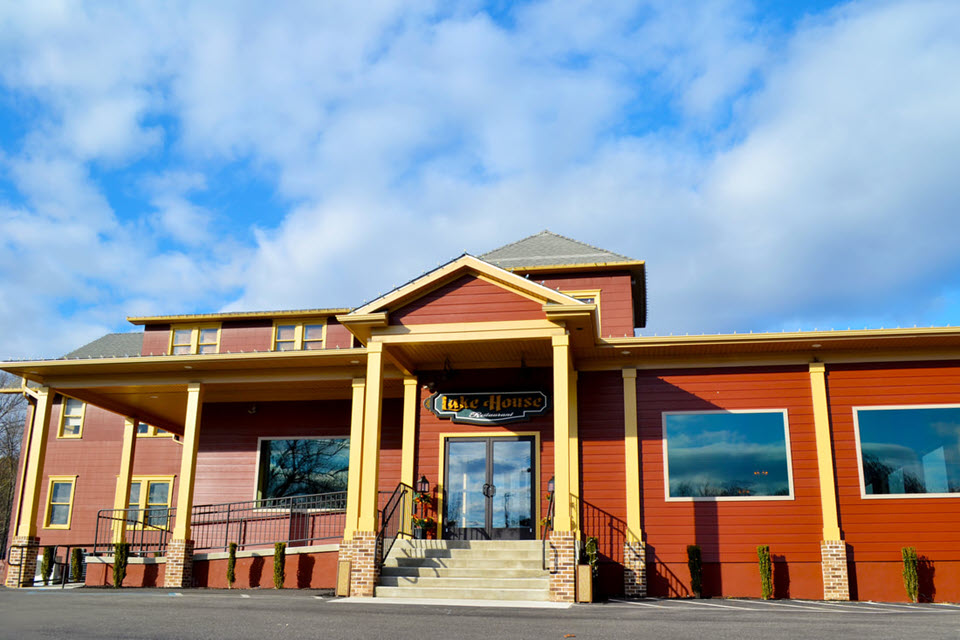
Iona Lake Inn – Lake House Restaurant
Set along the quiet shoreline of Iona Lake in the rural community of Newfield, Gloucester County, the building now associated with the Lake House Restaurant carries a history that stretches back to the nineteenth century, when the lake itself served as a modest resort destination for residents of southern New Jersey and nearby Philadelphia. The property at 611 Taylor Road sits beside the small man-made lake surrounded by woods and farmland, a setting that historically attracted visitors looking for fishing, boating, and seasonal recreation away from the larger cities of the region. Over time the site developed into a gathering place for travelers and locals alike, eventually becoming known as the Iona Lake Inn. During the late 1800s and early 1900s, lakeside inns and taverns were common throughout southern New Jersey, particularly in areas where rail lines or wagon routes made rural retreats accessible for day trips. The inn at Iona Lake operated as one of these establishments, offering food, lodging, and space for social gatherings. The surrounding grounds were used for outdoor recreation, and the lake itself became a focal point for visitors who arrived for fishing excursions, picnics, and small community events. Like many similar properties in the region, the building evolved gradually, expanding and changing hands as the local tourism economy shifted. Through the early twentieth century the inn developed a reputation as both a restaurant and social venue. Community gatherings, private celebrations, and seasonal events were held on the property, while travelers moving through Gloucester County stopped along the quiet rural road to eat or stay overnight. Over decades the structure absorbed numerous renovations and additions, but it retained the feel of an older roadside inn, with dining areas overlooking the water and interior spaces reflecting the layered construction typical of buildings that have been continuously adapted for hospitality use. By the mid-to-late twentieth century the property became more widely known as the Lake House Restaurant, though the historic identity of the Iona Lake Inn remained part of its reputation. Locals continued to treat the lakeside building as a familiar meeting place. The calm setting beside the water, particularly in the evening when the surrounding woods grow quiet, contributed to the atmosphere that later fed into stories surrounding the property. Reports of unusual activity at the site have circulated among employees and visitors for years, making the inn one of the lesser-known haunted locations occasionally discussed in southern New Jersey folklore. Staff members working late shifts have described hearing footsteps moving through empty dining rooms after closing, particularly in sections of the building believed to date to the earliest phases of construction. Others have reported doors opening or closing on their own or lights switching on in areas that had already been shut down for the night. One of the most commonly repeated claims involves the apparition of a woman seen near the stairways or hallways of the older portions of the building. Witnesses typically describe the figure appearing briefly before vanishing, often interpreted as someone dressed in clothing from an earlier period. Other employees have reported fleeting shadows moving across walls, unexplained cold spots, or the sense of someone standing behind them while working alone in the dining rooms. Paranormal investigators who have visited the location over the years have occasionally reported capturing electronic voice phenomena during recording sessions or experiencing sudden fluctuations in equipment readings. As with many historic restaurants, skeptics point out that aging structures frequently produce creaks, drafts, and shifting floorboards that can easily mimic footsteps or movement, particularly late at night when the building is otherwise quiet. The power of suggestion can also play a role once a location becomes known for ghost stories. Even with those explanations, the stories remain part of the building’s identity. The combination of an old lakeside inn, a secluded rural setting, and generations of visitors passing through its doors has given the property a reputation that blends local history with lingering folklore. Today the building continues to operate as a restaurant overlooking Iona Lake, maintaining the long tradition of hospitality on the site. For some visitors, however, the quiet halls and reflective water outside carry the persistent belief that the inn’s past occupants—or perhaps former guests—may still linger within the old lakeside structure.
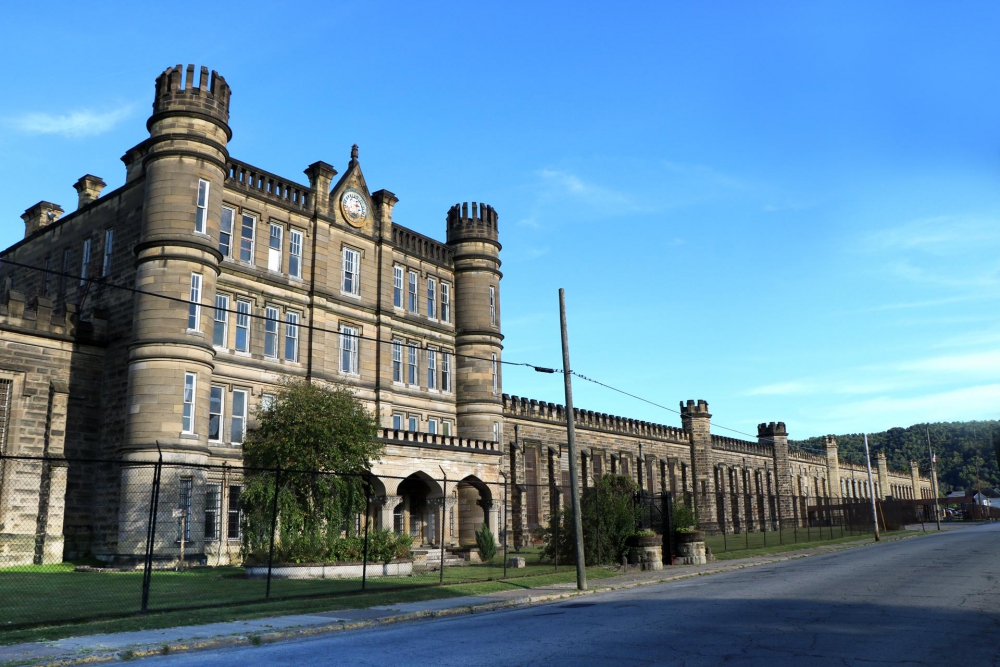
West Virginia State Penitentiary
Rising from a flat stretch along Jefferson Avenue in Moundsville, West Virginia, the West Virginia State Penitentiary looks exactly like what most people picture when they think of a haunted prison—massive sandstone walls adorned with battlements and turrets, a fortress silhouette that feels pulled from a darker century. But the Penitentiary's origins weren't born from cruelty by design. When West Virginia became a state in 1863, it had no state prison at all. Prisoners were held in county jails, an arrangement that quickly proved inadequate for a young state trying to establish its own institutions. Governor Boreman lobbied the legislature for funds to construct a state penitentiary, and in 1866 the legislature appropriated $50,000 to acquire land in Moundsville for construction. The prison at Joliet, Illinois provided the architectural prototype—an imposing stone structure fashioned in the castellated Gothic style, complete with turrets and battlements, though West Virginia's version would be approximately half the size. The Gothic structure officially opened in 1876 and would remain in continuous operation for nearly 130 years. Unlike locations defined by a single dramatic event, the Penitentiary's weight comes from accumulation. It witnessed riots, fires, and the execution of nearly 100 prisoners through either hanging or electrocution over its lifetime. Deadly riots in 1973 and 1979 prompted judicial oversight, and despite efforts to improve conditions, another riot on New Year's Day 1986 led the state Supreme Court to order the facility's eventual closing. A 1986 ruling determined that confinement to the 5-by-7-foot cells constituted cruel and unusual punishment, and the last prisoners were transferred out in 1995. The building itself amplifies everything. The sandstone facade rises with attached buttresses, circular turrets, and lancet windows—one of the finest examples of high Gothic Revival architecture in West Virginia. Long cellblock corridors stretch in either direction from the central administrative tower. The former North Hall, the shower room, and the solitary confinement area known as the Sugar Shack each carry their own particular atmosphere. Natural light barely penetrates the deeper interior. The original hardware, bars, and cell fixtures remain largely intact throughout. Paranormal claims at the Penitentiary are among the most documented in the country. Reports of supernatural phenomena include sightings of phantom inmates by former guards and legends of a shadowy figure that wanders the premises. Visitors frequently report cold spots and unexplained noises, including voices. EVP sessions in the cellblocks often yield results that investigators describe as direct responses rather than ambient noise. Some guests report being touched or physically pushed in areas where no one else is standing. Visitors have reported seeing the "Shadow Man," a static silhouette that roams the grounds. The former execution chamber draws particular attention, as does the Sugar Shack, where inmates were reportedly subjected to extreme punishment. Shadow figures, equipment malfunctions, and sudden drops in temperature are consistently reported across multiple independent investigations. Some claim to hear screaming from empty cellblocks, while others report doors moving on their own in the upper tiers. Skeptics note that any century-old stone structure will settle, creak, and breathe in ways that feel unexplainable. Large facilities amplify sound unpredictably. The history of violence and suffering embedded in this place—by design, by circumstance, and by record—gives visitors a psychological framework that can color every sound and shadow. Still, seasoned investigators routinely describe the Penitentiary as producing some of the most compelling evidence they've encountered anywhere. Today the site is maintained as a tourist attraction, museum, training facility, and filming location, operated by the Moundsville Economic Development Council. It sits directly across from the Grave Creek Mound, the largest prehistoric burial mound in eastern North America, a detail that adds another layer of historical unease to an already loaded site. There are no costumed actors on the standard tours. Just iron bars, cold stone floors, and the long institutional silence of a building that processed more than a century of human suffering. Whether visitors arrive as history buffs or paranormal investigators, most leave with the same feeling: that the West Virginia State Penitentiary has not finished telling its story.
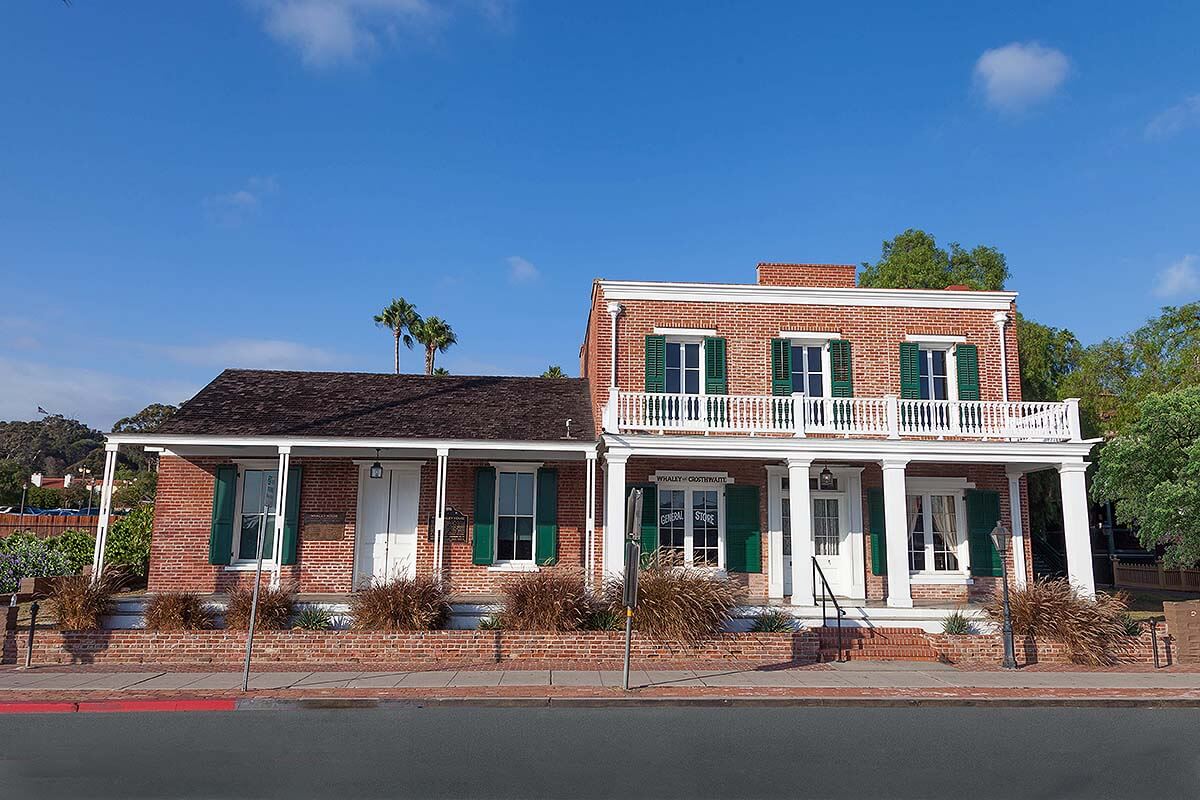
Whaley House
The Whaley House sits on San Diego Avenue in the Old Town neighborhood, a two-story Greek Revival brick home that looks, at first glance, like the kind of place a prosperous merchant would build to announce that he had arrived. And that is exactly what Thomas Whaley intended when he began construction in 1856. The house was the oldest brick structure in Southern California, built from clay bricks fired in Whaley's own kiln on Conde Street, with cedar woodwork and hardware shipped from New York. It cost over ten thousand dollars—a significant sum for a dusty frontier town that had only recently become part of the United States. What Whaley built on, however, was not ordinary ground. The property had served as San Diego's public gallows, and Thomas Whaley had personally witnessed the site's most notorious execution. In September 1852, a man named James Robinson—known locally as Yankee Jim—was hanged there for stealing a rowboat from San Diego Harbor. The trial had been swift and dubious: the jury included two men who owned the stolen boat, and the judge was reportedly drunk for much of the proceedings. Yankee Jim, a towering figure at six-foot-three, did not believe the sentence was real until he saw the rope. The gallows were too short for his frame. When the mule cart was pulled away, his feet grazed the ground, and he strangled slowly rather than dying from a broken neck. Thomas Whaley stood in the crowd and watched the entire thing. Three years later, he bought the land and built his family home directly over the spot. The archway between what became the music room and the parlor stands precisely where the gallows once were. The Whaley family moved in in 1857, and the house quickly became a civic centerpiece—it served at various times as a general store, San Diego's first commercial theater, and the county courthouse. But tragedy followed the family through its walls. Their eighteen-month-old son Thomas Jr. died of scarlet fever in the house. In 1871, armed men held Anna Whaley at gunpoint while seizing courthouse records during a bitter dispute between Old Town and the rising New Town. In 1885, their daughter Violet—devastated after discovering her new husband was a con artist who had married her for the family's money—shot herself in the chest with her father's revolver at the age of twenty-two. Thomas Whaley died in the house in 1890. Anna followed in 1913. Their son Francis died there in 1914, and their daughter Corinne lived in the home until her death in 1953, the last of the family to occupy the residence. Thomas Whaley himself was the first to report something wrong. He wrote in his journal of heavy footsteps moving through the upstairs rooms when no one was there—footsteps he attributed to Yankee Jim. That claim has persisted for over 160 years. Visitors today report a choking sensation when passing through the archway where the gallows stood. Staff and guests describe the sound of tiny footsteps and a child's crying attributed to baby Thomas. A young woman believed to be Violet is seen on the second floor. The scent of perfume associated with Anna drifts through rooms with no apparent source. Disembodied voices, cold spots, doors opening and closing on their own, and full-bodied apparitions have been reported by tourists and investigators alike. The house has been featured on numerous paranormal television programs, and EVP sessions have reportedly captured direct responses. The U.S. Department of Commerce has officially designated the Whaley House as haunted—one of only two homes in California to receive that recognition. Skeptics note that the house trades heavily on its reputation, and that the combination of dim lighting, period atmosphere, and primed expectation accounts for much of what visitors experience. That is a fair observation. But the reports predate the tourism industry by over a century—Thomas Whaley was documenting disturbances in the 1860s, long before anyone was selling tickets. Today the Whaley House operates as a museum maintained by Historic Tours of America. It is a California Historical Landmark and draws thousands of visitors annually for both historical and evening paranormal tours. The archway still stands. The parlor is still furnished. And the ground beneath the house has never forgotten what happened on it.
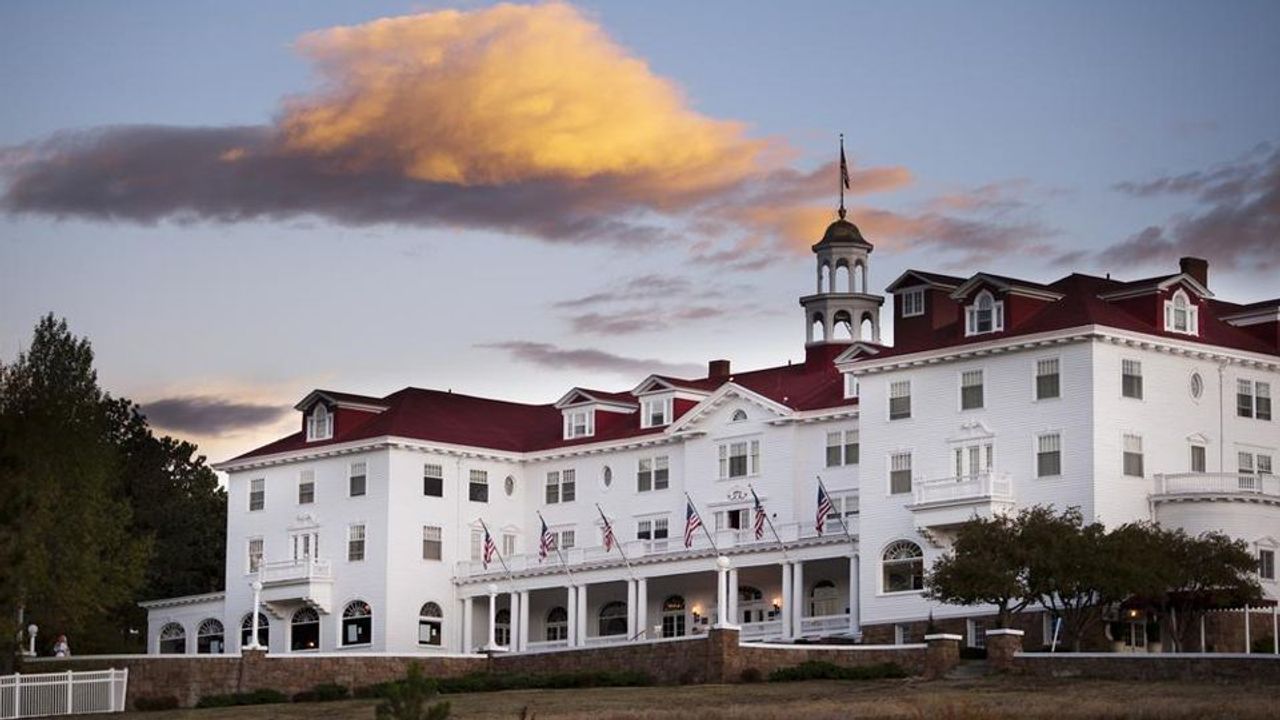
The Stanley Hotel
Perched on a hillside at the edge of Estes Park with the full sweep of the Rocky Mountains behind it, the Stanley Hotel looks less like a haunted building than a misplaced New England estate — white clapboard siding, Georgian columns, and a formal symmetry that has no business sitting at 7,500 feet in the Colorado high country. That contrast is entirely deliberate. The man who built it was an inventor from Maine who came west to save his own life, and what he left behind has refused to stay quiet for more than a century. Freelan Oscar Stanley arrived in the Estes Valley in 1903 suffering from tuberculosis, weak enough that his doctors had told him not to plan beyond six months. The mountain air reversed his decline so dramatically that by summer's end he resolved to return every year. But the tiny settlement of Estes Park offered nothing for a man of his means and temperament. Stanley had made his fortune co-inventing the Stanley Steamer automobile and manufacturing photographic dry plates, and he and his wife Flora were accustomed to the social fabric of the East Coast. So Stanley decided to bring that world to the Rockies. He purchased land from the holdings of the 4th Earl of Dunraven — an Anglo-Irish nobleman who had tried and failed to turn the valley into a private hunting preserve — and broke ground on his hotel in 1906. On July 4, 1909, the Stanley Hotel opened with 140 rooms, running water, telephones, electricity from a hydroplant Stanley himself had built on the Fall River, and a concert hall designed to echo the acoustics of Boston Symphony Hall. Flora, an accomplished pianist, christened the space with a 1904 Steinway grand that remains in the hotel today. Among the early guests were Teddy Roosevelt, Unsinkable Molly Brown, John Philip Sousa, and the Emperor of Japan. The hotel operated as a summer resort for decades, closing each winter and cycling through owners after Stanley sold it in 1926. By the 1970s it had deteriorated badly — neglected, half-empty, and close to demolition. Then, on the last night of the 1974 season, a young writer from Boulder checked in with his wife. Stephen King and Tabitha King were the only guests in the building. They ate dinner alone in the empty dining room, accompanied by recorded orchestral music, then retired to Room 217. That night King had a vivid nightmare of his three-year-old son being chased through the hotel's corridors by a living fire hose. He woke in a sweat, walked to the balcony, lit a cigarette, and by the time he finished it the framework of The Shining had taken shape in his mind. The novel, published in 1977, became his first hardcover bestseller and cemented the Stanley Hotel in the American imagination as the real-world counterpart to the fictional Overlook Hotel. But the paranormal claims at the Stanley predate King by decades and extend well beyond literary inspiration. Room 217 carries the longest recorded history. In June 1911, head housekeeper Elizabeth Wilson entered the room to light acetylene lanterns during a power outage. An undetected gas leak had filled the wing, and the match she struck triggered an explosion that destroyed the room and dropped her through the floor into the dining room below. She survived with broken bones, continued working at the hotel for years, and eventually died peacefully in the 1950s. Guests in Room 217 now report luggage being unpacked, clothing folded, lights switched on and off, and an unseen presence settling onto the bed — as though Wilson never stopped tending to her duties. Room 401 draws a different kind of attention. Attributed by legend to the spirit of Lord Dunraven — who never actually stayed at the hotel but once controlled the land beneath it — the room has produced accounts of a closet door opening on its own, women reporting being touched by an invisible presence, and personal items displaced without explanation. During a visit by the television program Ghost Hunters, an investigator reported the locked closet opening by itself while he slept. Room 407 generates reports of lights operating independently and indentations appearing on beds in otherwise empty rooms. The entire fourth floor, which originally served as servant quarters and storage, is the most consistently active area of the hotel, with guests describing the sounds of children running and laughing in the hallways when no children are present. The concert hall produces its own category of reports. Guests and staff describe hearing classical piano music emanating from the empty hall, and some claim to have seen piano keys depressing on their own. The spirit attributed to these performances is Flora Stanley, who died of a stroke in 1930 but whose love of music — and the Steinway she played — appears, according to believers, to have survived her. F.O. Stanley, who died in 1940 at ninety-one, is said to appear in the lobby and billiard room, sometimes visible in reflections. Beneath the hotel, a tunnel system once used by staff to move unseen has its own lore — including the reported smell of baked goods attributed to a deceased chef and sightings of a spectral grey cat. The skeptical framework here is worth noting. The hotel sits on heavy concentrations of quartz and granite, which some researchers have linked to elevated electromagnetic fields capable of producing disorientation. The building's age, its creaking wooden frame, and the low-frequency vibrations generated by mountain winds at high elevation all offer plausible explanations for sounds and sensations that visitors interpret as supernatural. The sheer cultural weight of The Shining guarantees that nearly every guest arrives primed for something eerie. Expectation and atmosphere do real work in a place like this. Still, the volume and consistency of reports across more than a hundred years — from staff, casual visitors, seasoned investigators, and celebrity guests alike — give the Stanley a paranormal file that few American hotels can rival. The property is listed on the National Register of Historic Places and was acquired in 2025 by The Stanley Partnership for Art, Culture, and Education. It remains fully operational, offering historical day tours, night tours focused on paranormal claims, and designated "spirited rooms" for guests who want to sleep where the activity is most frequently reported. Room 217 is just up the stairs. The concert hall is just across the grounds. And the piano, as always, is waiting.
Stage Coach Inn
Half a mile west of Ida Grove, Iowa, tucked into the timber of Moorehead Pioneer Park, a one-and-a-half-story frame building sits on land that was occupied long before any European settlers arrived in Ida County. The Moorehead Stagecoach Inn is the first structure ever built in Ida Grove, the oldest surviving building in the county, and a place where the layers of human use run so deep—and in some cases so grim—that the paranormal activity reported within its walls has drawn investigators for years and inspired a book-length account of what happens inside after dark. The Western Stage Line began operating stagecoaches from Lizzard Point at Fort Dodge to Sergeant Bluff near Sioux City in 1855, and the route needed way stations roughly every thirty miles where horses could be changed and riders could rest. The following year, John H. Moorehead began constructing an inn along the route on a site that, according to local accounts, sat directly over a Native American burial ground. A Sioux burial tree still stands approximately forty feet from the front door of the building. Moorehead completed the inn in 1863, creating a twelve-room, L-shaped frame structure that would serve the community in nearly every capacity a frontier settlement could require. In the years that followed, the inn functioned simultaneously as a stagecoach depot, the first Ida County courthouse—a role it held until 1871—the county post office, the community's first church, its first schoolroom, and its first hospital, where surgical procedures including amputations were performed on a table that reportedly remains inside the building to this day. The sheer density of function compressed into one small wooden structure meant that the inn absorbed births, deaths, legal proceedings, worship, education, and frontier medicine all under a single roof during the most volatile decades of Iowa's settlement period. John and Martha Moorehead raised their family in the building while operating it, and the inn passed through the decades as Ida Grove grew around it. The original stagecoach barn still stands nearby. By the twentieth century, the inn had outlived its practical usefulness but retained its historical significance. It was listed on the National Register of Historic Places in 1974. A historical architect was brought in during the 1970s to assess the building, and a restoration effort preserved the structure with its original character intact. Today the inn is part of Moorehead Pioneer Park, under the direction of the Ida County Conservation Board, and is open to the public on Sundays during summer months, with tours available by appointment year-round. The interior features period antiques and memorabilia from the stagecoach era, along with artifacts from the building's many institutional roles. The paranormal reputation of the Stagecoach Inn has been documented most extensively by Allen Cornelison, a veteran paranormal investigator who moved to Ida Grove around 2011 and, after discovering the building during a walk through the park, conducted an intensive six-year investigation of the site with permission from the Ida County Historical Society. Cornelison published his findings in Ghosts and Legends of the Stage Coach Inn, describing the inn as one of the most active locations he had encountered in two decades of investigative work. The phenomena reported at the inn span a wide range. Disembodied voices and whistling are heard regularly inside the building, along with phantom footsteps that sound through the rooms when no one is present. On one documented occasion, a spinning wheel displayed in the schoolroom area was captured on video turning rapidly on its own before abruptly stopping. The staircase has been identified by investigators as a particular focal point of activity, described as a kind of energy portal, with the top landing producing the most concentrated phenomena. Cornelison himself reported being physically tugged on the back of his coat during an early investigation, an experience he captured on video though the source of the pull was not visible. Audio recordings made during his sessions captured what investigators believe is a child's voice responding to direct questions. Outside the inn, the proximity of the Sioux burial tree adds another dimension to the site's reputation. Shadowy figures have been reported near the tree and around the burial ground, particularly after dark. Paranormal teams that have investigated the exterior have noted unusual occurrences near the tree, including sudden barrages of falling acorns that intensify when people approach and cease when they withdraw. The convergence of Indigenous sacred ground, frontier-era suffering, and the sheer volume of human activity that passed through the building during its working life creates a setting that investigators and visitors describe as unmistakably charged. Today the Moorehead Stagecoach Inn stands quietly in its park setting, surrounded by hiking trails, a stocked lake, and the other preserved structures of the Ida County Historical Society. The burial tree still rises near the front door. The amputation table, if the accounts are accurate, still sits inside. The building is the kind of place that looks unremarkable from the outside—a modest wooden house in a county park—but carries within its twelve rooms the compressed weight of an entire community's origins, from the sacred ground it was built upon to the stagecoach travelers who slept under its roof to whatever remains of the voices that investigators continue to record in the silence between visits.

The Springville Inn
The Springville Inn sits along California State Route 190 in the small foothill town of Springville, Tulare County, nestled against the western slope of the Sierra Nevada just minutes from the Giant Sequoia National Monument. The town has been here since 1849, when pioneers settled the area, and the inn has been at its center since 1911, when it was built as the Wilkinson Hotel to serve travelers arriving with the railroad. The original owners went broke during construction and were forced to sell before they ever saw it finished. A 1972 addition brought the motel rooms that extend behind the original structure, but the bones of the place—the restaurant on the ground floor, the bar and dance hall on the second—remain housed in the 1911 building. For over a century, the Springville Inn has served as the social hub of a town that goes quiet by six in the evening. It is also, by most accounts from those who have worked and stayed there, thoroughly haunted. Four distinct entities have been identified by staff over the decades, each given a plainspoken name by employees who encountered them often enough to stop being surprised. The Old Man is the most frequently reported, an observant presence concentrated around the kitchen and the old dumbwaiter that connects the lower kitchen to the upper service area. Former employees describe him not as a passive residual haunting but as an active and hostile personality—hiding the lock to the walk-in cooler, shoving barstools, breaking glassware, knocking from inside the walk-in as though someone had been locked in, and on more than one occasion physically attempting to push workers down the stairs. The Young Man is said to be the ghost of a logger who was shot and carried into the inn to die. His energy is described as friendly, even charming—he frequents the bar area and has a reported affinity for female guests and staff. The Little Girl, estimated by witnesses at seven or eight years old, appears in turn-of-the-century dress at various locations throughout the building, though sightings have grown less frequent in recent years. The Woman is the rarest and most unsettling of the four. She has been seen on the upstairs balcony in white, and one former restaurant employee described an encounter in which the figure appeared standing inverted on the ceiling of the dining room, staring down with a dark substance dripping from her mouth. That employee ran screaming into the kitchen. The reports extend beyond the original building. Guests in the motel rooms have described cabinet doors swinging open on working hinges, unexplained sparkling lights on ceilings that persisted even after curtains were drawn, and personal belongings rearranged overnight—dress socks neatly folded into pant legs in ways the guest swore they never would have done. Staff members have reported whispers, physical touches on the staircase, and self-propelled kitchen utensils. One visitor captured a voice on a phone recording that appeared to say "help me" over background noise. A man from Sacramento who stayed at the inn for a work trip reportedly refused to return, driving an extra forty-five minutes to stay in Tulare on all subsequent visits rather than spend another night. Former employees note the activity is markedly stronger during mornings and afternoons than at night.

Hotel Villa Convento
Standing on Ursulines Avenue in the lower French Quarter, just steps from the Mississippi River and within sight of the Old Ursuline Convent, the Hotel Villa Convento occupies a Creole townhouse that has been absorbing the weight of New Orleans history since the 1830s. The land itself carries an even older provenance. It was originally part of the holdings of the Ursuline nuns, the French Catholic order that arrived in Louisiana during the early colonial period and became one of the most important institutions in the young settlement. In 1805, the nuns partitioned off portions of their property as the growing city pressed in around them, and the lot at what is now 616 Ursulines Avenue passed into private hands. By 1833, the parcel had been purchased by a Frenchman named Jean Baptiste Poeyfarre, who commissioned the construction of the three-story Creole townhouse that remains standing today. Poeyfarre died roughly a decade later, and his widow sold the building to Octave Voorheis, who held the property until the economic collapse that followed the Civil War forced him to let it go around 1872. It is during the difficult years after the war that the building's most enduring and controversial legend takes shape. New Orleans, once one of the wealthiest and most cosmopolitan cities in America, had entered a steep decline. Vice industries flourished as the economy cratered, and the French Quarter became a district where brothels, gambling houses, and saloons operated with varying degrees of openness. Local tradition holds that 616 Ursulines became a brothel during this period, possibly operating as a so-called house of assignation—a place where illicit encounters could take place away from private residences. No definitive documentary proof has surfaced to confirm the building's use as a bordello, but available records suggest that something unsanctioned was happening at the address during these decades, and multiple sources have maintained the claim across generations. The legend has earned the Villa Convento a persistent association with the folk song "House of the Rising Sun," later made internationally famous by the Animals in 1964. Several locations in New Orleans have been put forward as the song's inspiration, and the true origin remains a matter of debate, but the Villa Convento has remained near the top of the list for decades. On March 10, 1902, Pasquale Taromina purchased the property, and his family occupied the building as a private residence until 1946. Following the Taromina family's departure, the structure was converted into a rooming house known as the Old Town Villa, offering inexpensive studio apartments to transient residents and students. Among the more notable tenants was a young Jimmy Buffett, who lived in apartment 305 during his early days in New Orleans and later returned with a video crew to film a documentary about that chapter of his life. The room retains his apartment number to this day and is informally known as the Jimmy Buffett room. In the early 1970s, the rooming house was converted into a hotel, and in September 1981, the Campo family—seventh-generation New Orleanians whose ancestors emigrated from the Canary Islands during the colonial period—purchased the property and have operated it as the Hotel Villa Convento ever since, preserving all twenty-five rooms with their original apartment numbers intact. The paranormal reputation of the Villa Convento is among the most consistently documented of any hotel in a city that has no shortage of haunted accommodations. The activity is not confined to a single room or floor but has been reported across the property, with certain rooms drawing particular attention. The most commonly identified entity is believed to be the ghost of a former madam from the building's rumored brothel era. Guests—overwhelmingly men—report hearing a woman's disembodied voice in Room 301, sometimes speaking in suggestive tones or addressing the guest by name. Male guests in multiple rooms have described rolling over in bed to see the apparition of a woman dressed in black standing at the bedside, gazing at them intently before vanishing. The figure reportedly appears visible only to the man, even when a partner is lying beside him. The connection to the brothel legend extends to another recurring phenomenon: unexplained knocking on guest room doors, which paranormal researchers and tour guides have linked to the old practice of madams making rounds to signal that a client's time was up. Room 302 has produced reports of full-bodied apparitions materializing and disappearing at all hours, including from a longtime annual guest who saw a figure form in the room and never returned to stay there again. Room 305, the Buffett room, generates reports of personal belongings being moved and an oppressive sense of being watched. At least one hotel staff member has described entering 305 to check on a hairdryer and being overcome by a sudden, intense feeling of being observed, strong enough to send her back downstairs immediately. Room 209 carries a grimmer association—local accounts hold that a man took his own life in the room, and guests who stay there have reported hearing voices and finding their possessions displaced. Visitors have also reported the sound of a child's laughter echoing through the building, and some guests have captured unexplained faces in photographs taken inside the hotel. Author James Caskey, who stayed at the Villa Convento while researching his book on New Orleans hauntings, has described it as possibly the most haunted hotel in the city. Paranormal tour groups regularly include the property on their routes, and independent investigators who have conducted overnight sessions at the hotel have reported capturing audio evidence and experiencing physical phenomena consistent with an active location. Today the Hotel Villa Convento operates as a small, family-run guest house with the quiet charm of a building that has never been stripped of its character. The courtyard offers chicory coffee and morning beignets. The wrought-iron balconies look out over Ursulines Avenue, where horse-drawn carriages still pass and the tops of ships on the river are visible in the distance. The Campo family embraces the building's history—its colonial origins, its possible life as a brothel, its tenure as a bohemian rooming house, and its reputation as one of the most paranormally active addresses in New Orleans. Whether the knocking at the door is a former madam making her rounds or just the old bones of an 1833 townhouse settling into another century, the Villa Convento offers the kind of stay where the line between history and haunting is never entirely clear.
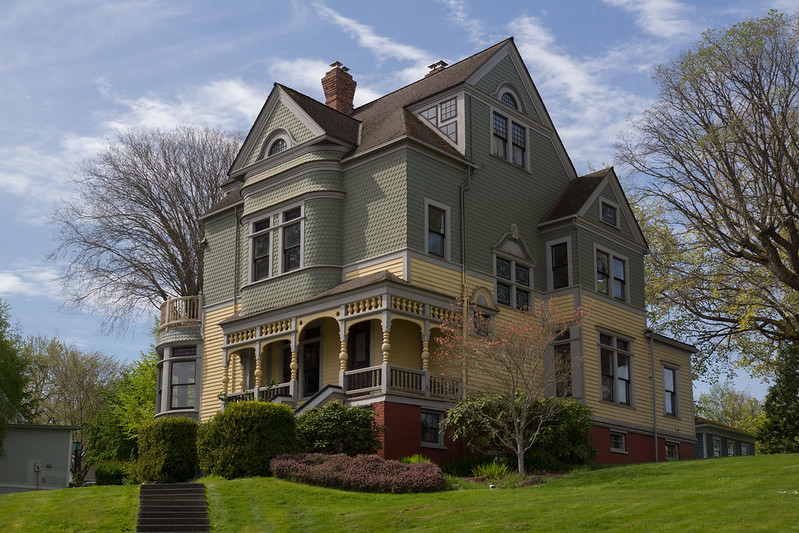
Walker-Ames House
The Walker-Ames House rises from a wooded hillside on Rainier Avenue in Port Gamble, Washington, a Victorian-era residence overlooking one of the most remarkably preserved company towns in the Pacific Northwest. The house is empty. It has been empty since the sawmill that built the town shut down in 1995. No one lives there, no one has lived there for decades, and yet by nearly every account available—from casual passersby to seasoned paranormal investigators—it is anything but unoccupied. Widely regarded as the most haunted house in Washington State, and possibly the entire West Coast, the Walker-Ames House sits at the center of a town where the dead, by persistent report, have simply chosen not to leave. Port Gamble was founded in 1853 when William Talbot and Andrew Pope established a sawmill on the shores of Hood Canal on the Kitsap Peninsula. The mill operated continuously for 142 years—the longest-running sawmill in the United States at the time of its closure in December 1995. Around the mill, the Puget Mill Company built a town modeled on the New England villages its founders had known, with tidy clapboard houses, a white-steepled church, a general store, and tree-lined streets arranged along the waterfront. Port Gamble was a company town in the fullest sense: the mill provided the livelihood, the company owned the homes, and the families who lived there were bound to the rhythms of timber, tide, and the company's fortunes. The original Walker-Ames House was destroyed in a fire in 1885. The current structure was built in 1888 for William Walker, the mill's master mechanic—a position of significant standing in a community organized entirely around the operation of the saw. Walker's daughter Maude married Edwin G. Ames, who served as the mill's resident manager and later its general manager. The house thus became the Walker-Ames, the most prominent and expensive residence in town, occupied by two generations of the family that ran the operation. After the mill closed, the house sat vacant, used occasionally for weddings, events, and eventually as a setting for films and fiction. Paranormal reports at the Walker-Ames House date back to at least the 1950s, well before the property gained any organized attention from investigators. Former town manager Shana Smith began actively collecting accounts from current and former tenants in 2006, after a paranormal group called Evergreen Paranormal requested permission to investigate. What struck Smith was the consistency across accounts separated by years and offered by people with no knowledge of one another's experiences. The house produces a range of reported phenomena. Pedestrians walking past have looked up to see the faces of small children peering from the upper-story windows of a house they know to be locked and empty. Attic lights flicker on and off with no one inside. Footsteps are heard running across floors above visitors standing in lower rooms. Disembodied voices have been recorded on electronic equipment. Visitors report being physically touched—one investigator emerged from the basement with a dusty handprint on her leg, claiming she had been grabbed. The basement generates the most intense reactions, with sensitives and casual visitors alike reporting feelings of sadness, heaviness, and an oppressive presence that several have described as darker in character than the rest of the house. The attic produces its own distinct atmosphere, with investigators reporting contact through electronic devices and the sense of a childlike energy. The most frequently described apparition is a female figure in a long dark dress with her hair pulled back in a bun—identified by some psychics as a nanny, though her name and specific history remain unknown. Paranormal investigator Pete Orbea, who has led guided tours and investigations of the house since 2012, described an encounter in which he heard a scuffle in a hallway, turned around, and found the woman standing expressionless behind him. She vanished the moment others in his group saw her, but not before someone captured a photograph of a form in the doorway. A male figure believed by some to be Edwin Ames has also been described, along with a boy with curly light brown hair in period clothing. The Walker-Ames House has been featured on A&E's "My Ghost Story" and serves as the centerpiece of the annual Port Gamble Ghost Conference, launched in 2010. Organized investigations are available by reservation, led by Orbea and visiting paranormal teams. One investigator's summary captures the paradox of the house well: despite having no dramatic history of violence or tragedy, the Walker-Ames produces an abundance of unexplainable activity—physical contact, electronic responses, apparitions, and EVP recordings that have left even skeptical visitors unsettled. Today, Port Gamble itself is a quiet tourist village of galleries, shops, and cafes housed in the old company buildings. The Buena Vista Cemetery on the hill above town holds its own reputation for activity. The Walker-Ames House stands on Rainier Avenue, locked and unrestored, its Victorian facade watching over a town that outlived its industry but not, apparently, all of its inhabitants. Whatever draws the spirits to this particular house—whether it is love of place, unfinished duty, or something less easily named—the Walker-Ames remains what it has been for over a century: a family home, still occupied by a family that no longer needs the door.

Sedamsville Rectory
On a narrow street in one of Cincinnati's smallest and most overlooked neighborhoods, a four-level rectory sits on a hillside above the Ohio River, holding inside its six thousand square feet of space a concentration of dark history that has made it one of the most investigated paranormal locations in the state. The Sedamsville Rectory at 639 Steiner Avenue has been featured on the Travel Channel's Ghost Adventures, the SyFy Channel's Haunted Collector, and the Biography Channel's My Ghost Story, and was voted the number one fan favorite episode during the Travel Channel's 2015 Halloween marathon. The attention is not accidental. The building's history involves violent death, alleged abuse, and a period of abandonment during which the basement reportedly housed something far worse than neglect. Sedamsville itself was established in 1795 by Colonel Cornelius Sedam, a Revolutionary War veteran who moved to the area to help build Fort Washington. The neighborhood grew along the banks of the Ohio River and the railroad line, becoming a hub for manufacturing and river commerce. By the late nineteenth century, the community's booming German Catholic population led to the founding of Our Lady of Perpetual Help parish in 1878. The Gothic Revival church was dedicated on May 5, 1889, perched high on a hill overlooking the neighborhood. According to a booklet published by the parish for its centennial, the rectory was built in 1891 to house the priests serving the growing congregation. The building is a substantial structure with a parlor, living room, library, formal dining room, kitchen, and bathroom on the first floor, servant's quarters accessible by a back staircase on the second floor, additional rooms on the third floor, and a basement that would later take on its own grim reputation. Sedamsville prospered into the early twentieth century, with over a hundred businesses operating along River Road. Residents could take the streetcar into Cincinnati or the ferry across to Kentucky. But the catastrophic Ohio River flood of 1937, combined with the ongoing Depression, devastated the commercial district. Many businesses never rebuilt. The widening of River Road further isolated the neighborhood. Our Lady of Perpetual Help's school closed in 1976 and merged with Holy Family parish in East Price Hill. When the church itself closed in 1989, the remaining parishioners joined Holy Family as well. The church was stripped of its sacred items and the properties were sold. In 1995, John Klosterman purchased the church and rectory from the Archdiocese of Cincinnati. The rectory's paranormal reputation is anchored by several distinct threads of history. The most widely identified spirit is Father Donald MacLeod, who authored The History of Roman Catholicism in North America and resided at the rectory in the late 1800s. Father MacLeod was struck and killed by a train in Sedamsville while on his way to provide comfort to a seriously ill woman. Since his death, locals and parishioners have reported seeing his apparition walking along the street near the building or beside the railroad tracks. Inside the rectory, visitors have reported seeing the figure of a clergyman in the hallways. Adding to the building's burden are two separate deaths documented on the street directly in front of the rectory—a man found dead at one time, and a child found with a noose around its neck at another. The circumstances of these deaths are not well documented, but the proximity to the building has drawn them into its haunting narrative. The darkest chapter of the rectory's history involves two distinct periods of alleged abuse. The building is rumored to have housed a priest who abused and molested children during its years of church operation. Separately, during a period in the 1980s when the rectory sat vacant after the church closed, the basement was reportedly used to operate a dog fighting ring. The convergence of these two forms of cruelty—against children and against animals—has led investigators and visitors to describe the energy inside the building as not merely haunted but aggressively malevolent. The sounds of dogs growling and barking have been reported in the basement when no animals are present. Visitors have described being scratched, bitten, pushed, and shoved by unseen forces. A child-like entity has been encountered in the building, but when approached, it reportedly growls rather than speaks, leading some investigators to suspect it may not be what it appears. A shadowy figure described as a dark monk has been reported moving through the halls. The smell of sulfur—commonly associated in paranormal research with demonic or deeply negative presences—has been noted by former tenants. One ghost hunter received a scratch down his back in the shape of a cross during an investigation. When the current owners brought salvaged books and a Monet reproduction into the building from a vandalized neighboring house, the rectory reportedly erupted with growling, whispering, a slamming door upstairs, the sound of a woman crying, and a sudden darkening of the interior light. The Midwest Preservation Society began renovations of the rectory in March 2011, and it was during this restoration work that the building gained its widest attention. Workers reported eerie mists and shadows visible under the doors of empty rooms. The Ghost Adventures investigation in 2012 captured evidence that deepened the rectory's reputation as one of the most aggressive haunts in the Midwest. Paranormal teams that have investigated the site report shadow figures, intelligent responses to questions during EVP sessions, physical contact from unseen entities, and doors that open and close without explanation. Today the Sedamsville Rectory remains privately owned and continues to undergo restoration. The neighborhood around it is small and quiet—known primarily as the birthplace of Pete Rose and for the rectory itself. The church still stands on the hill above. The railroad tracks still run nearby. And the building at 639 Steiner Avenue continues to draw investigators and visitors who describe it in terms that most haunted locations never earn—not just active, not just unsettling, but a place where the accumulated weight of suffering seems to push back against anyone who enters.
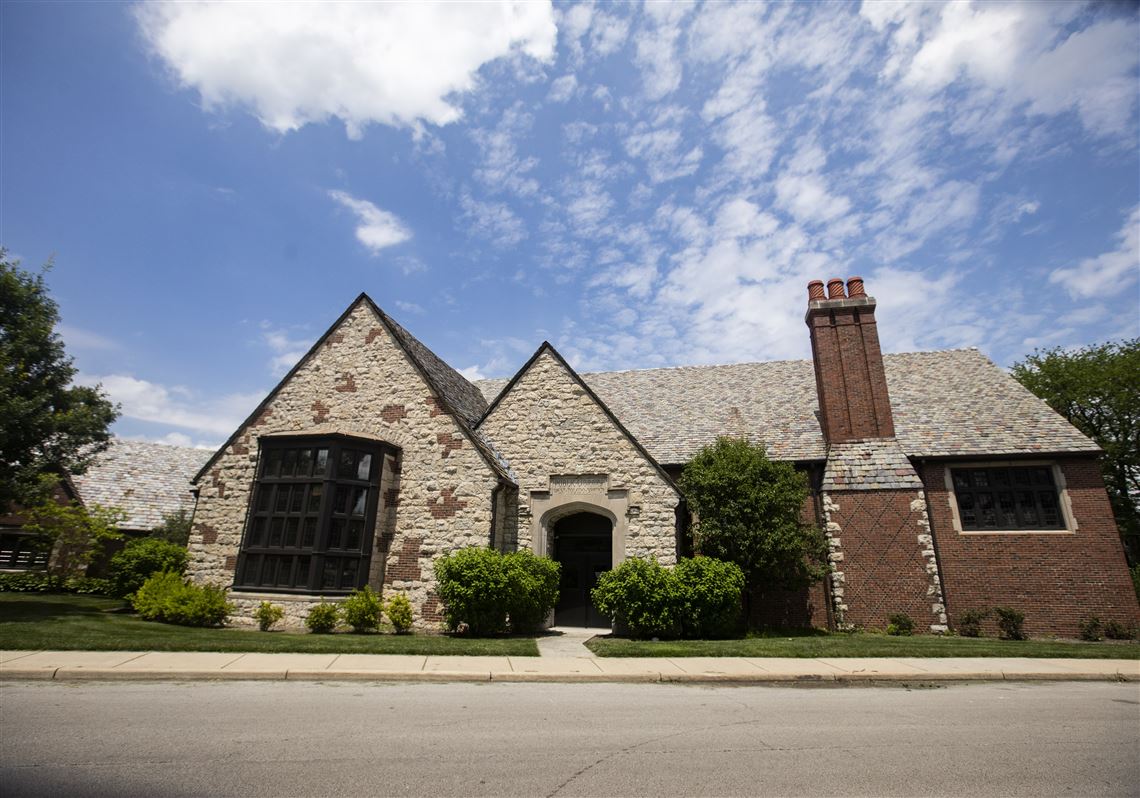
West Toledo Branch Library
Sitting on Sylvania Avenue in the west side of Toledo, Ohio, the West Toledo Branch Library doesn't look like a place that holds onto things. It's a Tudor-style brick building, modest and well-kept, with architectural details that speak to the civic ambition of 1930 — the year it first opened its doors to the neighborhood it would come to define. The surrounding community eventually took its identity from the building entirely. Today the area is known simply as Library Village, a name that says something about how deeply a public institution can root itself in a place over the course of nearly a century. The library was designed by the Toledo architectural firm of Gerow and Conklin and opened as part of the Toledo-Lucas County Public Library system's expansion during the late 1920s and early 1930s. It served a growing residential neighborhood on the western edge of the city, providing access to books, community gathering space, and the kind of quiet civic anchor that branch libraries represented in that era. The building's Tudor detailing — brick facades, arched entryways, and interior features including a notable fireplace along the west wall — gave it a warmth and permanence unusual for a municipal branch facility. It was built to last, and it has. Remodels in 2001 and again in 2014 expanded the footprint and updated the interior while deliberately returning the structure to its original 1930s architectural character. Unlike locations defined by violence or institutional suffering, the West Toledo Branch carries the weight of ordinary time. Decades of daily community life have passed through its doors — children learning to read, neighbors gathering, the rhythms of a working-class Toledo neighborhood running quietly in the background. The building has outlasted the era that built it, the architects who designed it, and several generations of the community it was built to serve. What remains is a structure that has absorbed more than ninety years of human presence, and the particular quality of stillness that old public buildings develop when the people have gone home for the night. The paranormal history of the library centers on the area near the west wall fireplace — the building's most architecturally distinctive interior feature and, according to those who have reported experiences there, its most active. The fireplace anchors the original reading room, a space that has remained largely consistent across the building's various renovations. It is here that visitors and staff have reported unexplained noises, bumping sounds, and the presence of an unidentified male figure, believed to date to around 1940 — roughly a decade after the building first opened. No specific identity has been attached to him, and no documented incident from that period has been publicly connected to the claims. He is simply described as a man, seen and sensed near the fireplace, in a building he appears reluctant to leave. Reports associated with the library are quiet in nature, consistent with the setting. This is not a location known for dramatic manifestations or aggressive energy. What gets reported here tends toward the subtle — sounds without sources, the sense of a presence in a room that should be empty, the particular feeling that something in the building is paying attention. Whether that registers as unsettling or simply atmospheric likely depends on the person experiencing it. Public libraries, especially older ones, have a way of feeling inhabited even when they aren't. The West Toledo Branch, with its original bones intact and its fireplace still standing, leans into that quality. Skeptics will note that a ninety-year-old brick building produces sounds, that heating systems tied to original fireplaces behave unpredictably, and that the power of suggestion in a building with a known ghost story is considerable. These are reasonable observations. The claims here are modest, and no one has presented documentation that rises above personal account and local reputation. What the West Toledo Branch Library offers is something quieter than the dramatic paranormal hotspots that draw large investigation teams and television crews. It is a neighborhood institution with a long memory, a beloved community anchor that has stood in the same spot through wars, economic shifts, and the transformation of the city around it. The man reportedly seen near the west wall fireplace — whoever he was, whenever he lived — chose a place that has always welcomed people in and kept them comfortable. For a haunt, there are worse choices than a library that a whole neighborhood named itself after.

Brunswick Heritage Museum
Sitting in the heart of downtown Brunswick, Maryland, just steps from four active CSX mainline tracks and the Potomac River, the Brunswick Heritage Museum occupies a three-story brick building that has housed more history than its modest Main Street footprint would suggest. The 1904 structure — with its five tall narrow arches, Flemish bond brickwork, and dentelle cornice — was not built as a museum. It was built as a lodge, and the town it stands in was not always called Brunswick. It has been Eel Town, Berlin, Barry, and half a dozen other names across three centuries of continuous human settlement, each identity layered onto the one before it. The land along this stretch of the Potomac was home to the Susquehanna Indians when European settlement began in the early eighteenth century. The area was known as Eel Town because Native Americans fished for eel from the riverbank. A 1753 land grant from King George II planted the area firmly in colonial hands, and German immigrants followed in enough numbers through the 1780s that the settlement took the name Berlin. It remained a modest river trading post until the Baltimore and Ohio Railroad arrived and changed everything. In 1883, the B&O selected Berlin as the site for a massive new freight classification yard — the terrain was ideal, riverside bottomland was cheap, and the railroad was exempt from Maryland property taxes. The town was incorporated as Brunswick in 1890, and by 1907 the yard was complete: five miles of track, the largest and most modern classification yard in the country to serve a single railroad. A population of roughly 200 in 1890 swelled to an estimated 5,000 by 1910. Brunswick was, briefly, a boomtown. The building at 40 West Potomac Street was constructed in 1904 at the height of that boom, commissioned for the Delaware Tribe No. 43 of the Improved Order of Red Men — a fraternal organization whose roots traced to secret patriotic societies of the pre-Revolutionary era. The upper two floors served the lodge; the ground floor housed separate commercial tenants. A Native American statue stood at the building's entrance. The Improved Order of Red Men occupied the building until 1945, when the Fraternal Order of Eagles Brunswick Aerie No. 1136 purchased it, removed the statue from the entrance — it now stands on the museum's second floor — and operated there until 1969. The Brunswick Potomac Foundation purchased the building in 1974 for $30,000, paying off the mortgage through dollar donations and baked goods sales. The museum opened in 1980, focused initially on the railroad, and expanded its scope in 2013 to encompass the full arc of Brunswick's history. During the Civil War, Confederate forces used the area as a staging ground for raids into Maryland, and Union soldiers camped nearby after both Antietam and Gettysburg. Before the building became a museum, its third floor served as a dance hall where Patsy Cline performed for the Lions Club in the 1960s. The building itself carries three stories of accumulated human use across more than a century — fraternal lodge, dance hall, civic meeting space, and now museum. The architecture is straightforward brick commercial, but the interior has absorbed decades of different functions and different communities. The 1,700-square-foot HO scale model railroad on the third floor depicts the B&O Metropolitan Subdivision in meticulous detail. Elsewhere in the building, exhibits trace the town from its Indigenous roots through the canal era, the railroad boom, and into the present. The whole structure sits less than a block from active tracks, and the sound and vibration of passing trains are a constant undercurrent. Paranormal activity at the museum was described as occasional from the time it opened in 1980, but reports appeared to escalate in 2010 during construction on an elevator. The most consistent account across multiple independent sources is the apparition of a woman in a white dress — long-sleeved, ankle-length, described by at least one former resident as appearing to be from the Civil War era or earlier. She has been seen on the second floor and moving through exhibit spaces in rooms that should be empty. A former child resident of an apartment above the museum reported seeing the apparition repeatedly at night over the course of years, an account that surfaced only after adult investigators began documenting the building's activity. A second presence is described as a spirit who rearranges exhibits and interacts with the museum's collection — sometimes referred to as a ghostly curator. A third is associated specifically with the model railroad on the third floor, where the trains are said to start moving on their own and track switches reported to flip with no one near them. Skeptics will point to the building's age and constant low-level vibration from nearby rail traffic as natural sources for unexplained sounds and movement. A structure that has served as a fraternal lodge, dance hall, and community gathering space for over a century has absorbed a great deal of human energy, and the suggestion embedded in a location marketed as haunted is never insignificant. Investigators from multiple paranormal organizations have conducted formal sessions at the museum, with one 2017 expedition capturing what researchers described as statistically significant results from a random event generator and apparent direct radio voice responses to control questions using local and historical names. Today the Brunswick Heritage Museum is open to the public, free of charge, and operated as a nonprofit. It has been featured on regional ghost tours and included in guided haunted history routes through western Maryland. Whether visitors come for the model railroad, the Civil War history, the layers of fraternal lodge lore, or the woman in white reportedly still moving through the second-floor exhibits, the building at 40 West Potomac Street has more stories running through it than most places twice its size. Brunswick built itself around a railroad, and the museum built itself around Brunswick — and something in the building, apparently, has declined to leave.
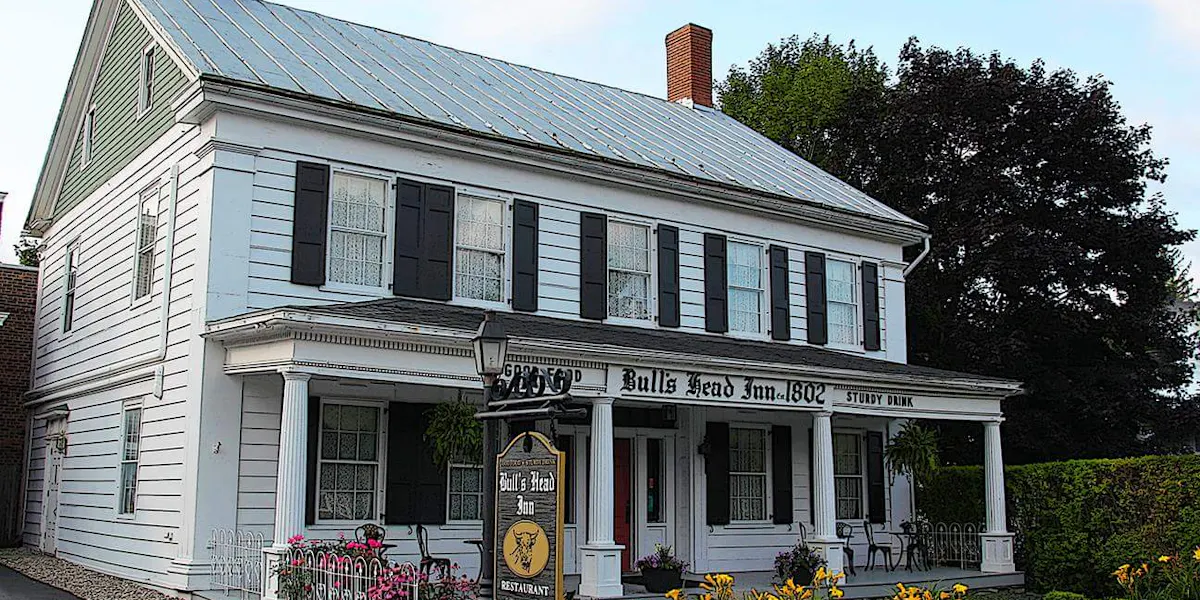
Bull’s Head Inn
Standing at the corner of Park Place in the heart of Cobleskill, New York, the Bull's Head Inn is the oldest building in the village — a Federal-style structure built in 1802 that has served, across more than two centuries, as tavern, town hall, Masonic temple, courthouse, meeting hall, private residence, and restaurant. It carries that layered institutional history the way old buildings do in small upstate New York towns — quietly, in the woodwork, in the reoriented staircase, in the central fireplace that has warmed a rotating cast of merchants, soldiers, politicians, and neighbors across generations. A portrait of Thomas Jefferson hangs in the foyer, a reminder that he was President when the building was new. But the site itself is older than the building by half a century. George Ferster constructed one of the first structures in Cobleskill here in 1752, and what followed was a sequence of catastrophes that left a mark the land has apparently not forgotten. On May 30, 1778, during the Battle of Cobleskill, Mohawk forces under the command of Joseph Brant — fighting alongside Tories and British — burned the settlement nearly to the ground. Retreating patriots were killed, and the structure on this site was destroyed. The two buildings that followed met the same fate, each burned in subsequent enemy raids on Cobleskill in the spring and fall of 1781. Local tradition holds that occupants perished in one or more of these fires — including, in one account, a young girl in an upstairs bedroom who froze in terror and could not escape the blaze. Another story maintains that a Native American was killed inside the building during one of the conflicts. Three buildings destroyed on the same ground, within a single generation, each one carrying its dead. The current structure was built in 1802 by Seth Wakeman — the same builder responsible for the Beekman Mansion in Sharon Springs — and established as an inn and tavern to serve merchant traffic along the newly charted Loonenburg Turnpike, which ran commerce between Central New York and New York City. The inn thrived until the Erie Canal redirected that traffic north through Albany, bypassing Cobleskill and draining the commercial foot traffic that had kept it busy. By 1839, the building had transitioned into a private residence, and it remained one for well over a century. In 1810, when Cobleskill's Main Street was developed, the building was physically reoriented — its staircase repositioned, its front entrance redesigned to face the new brick-lined street. The building adapted, as it always had. The architecture reflects its early Federal character — three floors, a central staircase, original wide-plank floors, and stone cellar walls that the current owners exposed and incorporated into the lower tavern space using reclaimed brick from Cobleskill's own Main Street. The building is divided across three distinct atmospheres: a ground floor dining room anchored by a classic brick fireplace, an upper floor with vintage glass windows suited for private gatherings, and a lower tavern built from the bones of the old cellar. It is a building that wears its age honestly, without staging. The last private residents of the Bull's Head were John and Grace Steacy, whose opposing natures apparently outlasted them both. John drank; Grace was a dedicated member of the Women's Christian Temperance Union. When the building was sold after their deaths and former Cobleskill mayor Monte Allen reopened it as a restaurant and bar in 1966, he placed the bar in the room that had served as Grace Steacy's bedroom. What followed, according to staff, guests, and ownership across multiple decades, has been consistent and specific. A woman in a white gown — long-sleeved, floor-length — has been seen moving around the central staircase, along the upper and lower landings, and through the first-floor dining room by guests and staff working late. Silverware and napkins have been knocked to the floor or sent across the room. Plates and utensils have been disrupted mid-service. Doors slam on their own. Faucets turn themselves on. The current ownership reports these occurrences as ongoing. The paranormal activity at the Bull's Head is notable for its consistency across unrelated witnesses spanning more than fifty years of restaurant operation. The apparition of the woman in white has been described in nearly identical terms by guests who had no prior knowledge of the building's story. Paranormal investigators have conducted formal sessions at the property, and the inn is an established stop on New York State's official Haunted History Trail. The figure most commonly associated with the activity is Grace Steacy — a teetotaler whose bedroom became a bar — though older stories from local family tradition point toward the Revolutionary-era fires and the girl reportedly trapped in the upstairs room as an earlier and perhaps deeper source. Skeptics will note that a two-hundred-year-old building with three destroyed predecessors on the same site is exactly the kind of place where stories accumulate and feed on each other. The convergence of documented historical violence, a colorful final resident with a grudge against alcohol, and decades of reported encounters makes the Bull's Head something of a perfect storm for haunted reputation. None of that makes the firsthand accounts less consistent or less specific. The woman in white keeps appearing near the staircase. The silverware keeps moving. And the bar, to Grace Steacy's apparent displeasure, remains open.
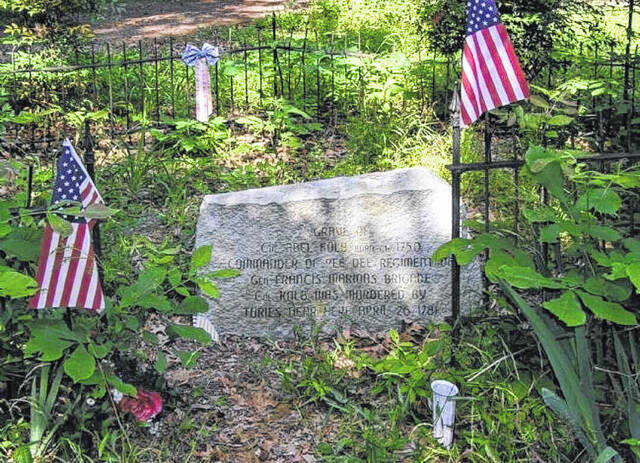
Colonel Kolb’s Tomb
The Great Pee Dee River moves through the coastal plain of South Carolina the way all rivers move through that kind of country — brown and wide and slow, flanked by bottomland that floods in spring and holds the heat in summer, lined with cypress and oak and the particular stillness of a landscape that has not changed its character in three hundred years. On its eastern bank, near the old Marlboro-Darlington county line, a small clearing holds what remains of the Old Welsh Neck Baptist Church cemetery — a few stone markers, several river rocks, and a modest obelisk that marks the grave of Colonel Abel Kolb, commander of the Pee Dee Regiment of General Francis Marion's Brigade. It is one of the more remote historic sites in South Carolina, sitting at the end of a county road in a place that the Darlington County Historical Commission's director has described, simply, as not having the peaceful, easy feeling you normally get from being on the banks of the Pee Dee River. The community that produced Abel Kolb was among the oldest in the Carolina interior. Welsh Baptist settlers from Pennsylvania and Delaware had been establishing homesteads on the eastern bank of the Pee Dee River as early as 1737, building Welsh Neck Church in 1738 — one of the foundational Baptist congregations in the American South — and creating a tight-knit community of farmers, planters, and dissenting Protestants who would, by the time of the Revolution, furnish a disproportionate number of committed patriots to the cause. Abel Kolb was born into this world around 1750, the son of Peter Kolb and Ann James, daughter of the Reverend Philip James, an early minister of Welsh Neck Church. His family's roots ran back to German Mennonite immigrants who had arrived in Pennsylvania in 1707; by the time Abel was born, the Kolbs were part of the established planter community on the Pee Dee. He was a gentleman farmer, a politician, a founding member of St. David's Episcopal Church in Cheraw, and, when the Revolution came, a soldier of considerable consequence in his region. Under General Francis Marion — the Swamp Fox, whose partisan warfare among the rivers and marshes of South Carolina has become one of the defining stories of the Revolutionary War in the South — Kolb served as commander of the Pee Dee Regiment, operating in the borderland between what is now Marlboro and Darlington counties. Marion's men fought without uniforms and without regular pay, relying on mobility and local knowledge to harry British forces and their Loyalist allies across the Carolina lowcountry. By 1781, Kolb and his regiment had contributed meaningfully to re-securing Patriot control of the Pee Dee region. That success made him a target. On the night of April 27–28, 1781, approximately fifty North Carolina Loyalist irregulars under Captain Joseph Jones — believed to have been operating under the command of the notorious Major Micajah Gainey — surrounded Kolb's home on the Pee Dee. His family was inside. Kolb came to the door and agreed to surrender himself as a prisoner of war at the urging of his wife and children. He stepped onto the porch. One of Jones's men shot him on the spot, in front of his family. The home was plundered and burned. His wife and children, along with other women and children present on the property, were spared. The historical marker erected in 1973 by the Marlboro County Historic Preservation Commission records the event without elaboration: he was shot while surrendering himself as a prisoner of war and his home was burned. The stone at his grave reads: "Col. Kolb was murdered by Tories near here April 26, 1781." Kolb was buried in the Welsh Neck cemetery a mile north of his home site, at the foot of the same eastern riverbank on which his community had built its first church forty years earlier. The obelisk that originally marked the grave was moved to the Marlboro County Historical Museum in Bennettsville for preservation after the site suffered repeated vandalism; a replacement marker now stands at the gravesite. The cemetery itself is old and largely abandoned — when the Welsh Neck congregation relocated to Society Hill in the nineteenth century, the graveyard was left behind. What remains are two stone monuments, several river rocks, scattered remnants of Kolb, Marshall, and Wilds family burials, and the accumulated presence of a site that has been undisturbed for close to two centuries except by those who come looking for something. The paranormal tradition attached to Kolb's tomb is specific and consistent. Visitors who come to the gravesite after dark report hearing the sound of someone walking in the woods around the clearing — footsteps without a visible source, movement in the tree line that does not correspond to any identifiable animal. Several witnesses have reported the apparition of a man appearing suddenly beside them at the grave, present for a moment and then gone. The site sits on the same ground where Kolb was shot, close enough to his home site that the killing and the burial are effectively collocated — the tomb is not a distant memorial but a marker placed within yards of the porch where he died. Paranormal investigators have conducted sessions at the site with EVP equipment and spirit communication devices, receiving responses including the words "commanded," "troops," "brass," and "shot" — the last considered by investigators to be consistent with the actual circumstances of the murder rather than the popular legend, which in some versions holds that Kolb and his family were burned alive together. The popular legend diverges from the historical record in its details but not in its emotional weight. The documented facts — a soldier who agreed to surrender to protect his family, shot the moment he stepped through his own front door, his house torched while his children watched — carry enough of their own gravity to sustain a haunting tradition without embellishment. The site sits in a region so saturated with Revolutionary War violence that artifacts turn up routinely in the surrounding fields and woods, alongside remnants of the Welsh Neck settlement that preceded the war by a generation. The Darlington County Historical Commission's director put it directly: if there is any indication of ghostly spirits in the area, Col. Kolb would be a likely candidate.
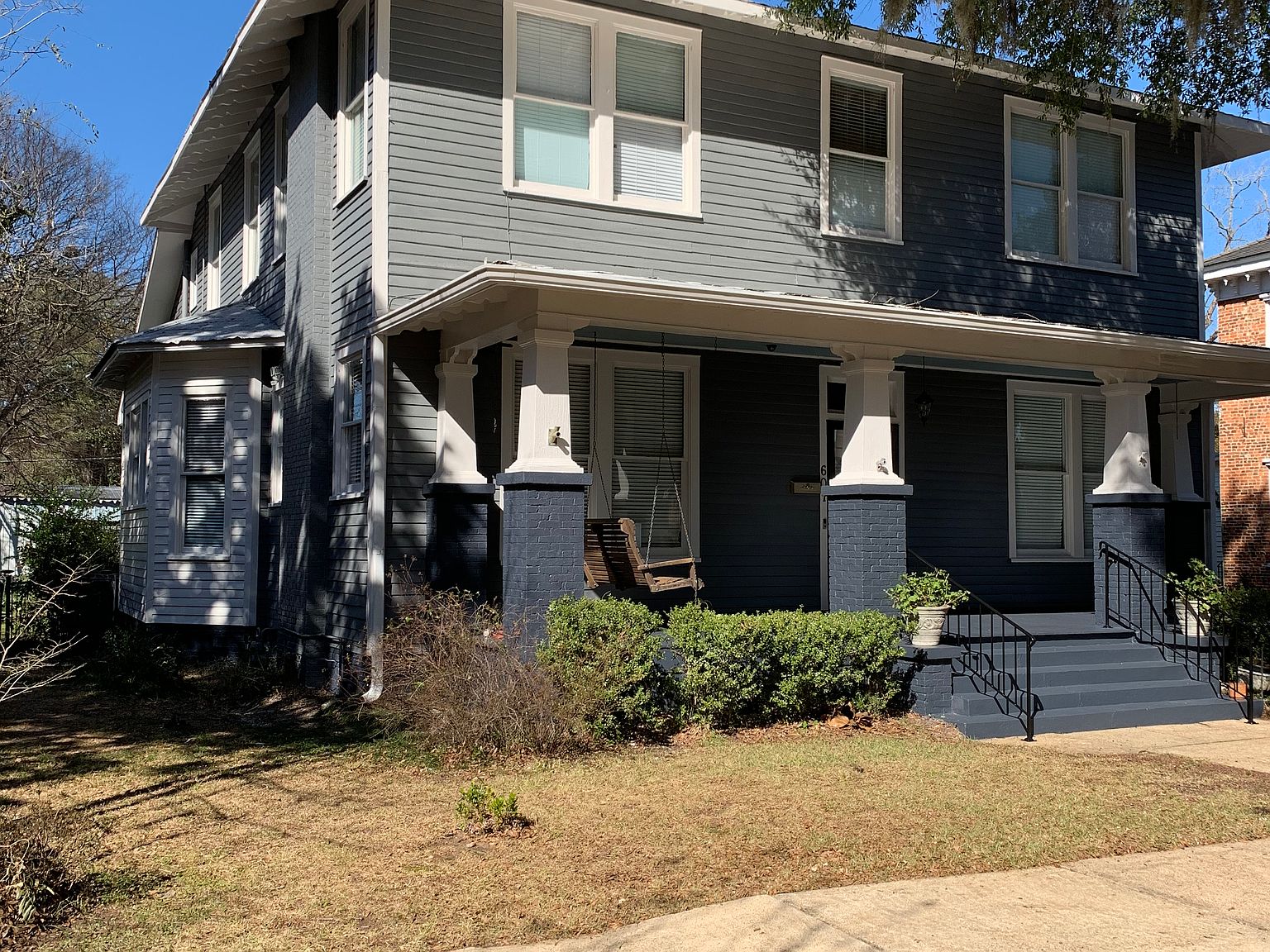
Trotter Home
On a tree-lined stretch of Selma Avenue in one of Alabama's most historically saturated cities, the Trotter Home sits as a quiet two-story Victorian-era residence that has accumulated, over the course of more than a century, a reputation that far exceeds its modest exterior. Built in the 1880s during the period of post-Reconstruction recovery that followed the Civil War's devastation of Selma, the house functioned for decades as a boarding house — one of the many private homes along its block that opened their doors to transient workers, young professionals, and families passing through a city still finding its footing in the New South. It is a structure defined less by grandeur than by longevity, the kind of house that absorbs lives rather than showcasing them, and it is precisely that quality of accumulated human experience that gives it its particular atmosphere. Selma itself provides the backdrop that makes stories like this one feel credible even to skeptics. The city sits in the heart of Alabama's Black Belt, on the banks of the Alabama River, with iron-rich bedrock running beneath its streets and centuries of layered history pressing down from above. It served as a Confederate industrial stronghold before Union forces swept through in the Battle of Selma on April 2, 1865, and it became the epicenter of the American civil rights movement a full century later. Paranormal investigators who have worked extensively in the area note that the combination of the city's geology — iron in the ground, a river running alongside, old structures holding old grief — creates what they describe as conditions unusually favorable to the retention and replay of energy. Whether or not that framework carries scientific weight, Selma produces more consistent accounts of unexplained phenomena per city block than almost anywhere in Alabama. The story at the heart of the Trotter Home's haunting begins in September 1941, when a twenty-one-year-old man named Robert Edgar was living in the house's upper front corner bedroom with his mother, the property then operating as a boarding house. He was driving near Marion Junction with his fiancée when the car tipped over and his arm was caught beneath it on the gravel road. The injury was severe enough to require amputation. Gangrene set in quickly. Surgeons removed the arm on September 16, 1941, but the infection had already progressed beyond saving. Three days later, on September 19, Robert Edgar died. His funeral was held in the home where he had lived, and his body was laid in state in the dining room for three days before burial. His gravestone, later discovered by the home's subsequent residents, reads: Although he sleeps, his memory doth live. The family that gives the house its current name — Norm Trotter, his late wife Pat, and their two teenage daughters — moved in on September 16, 1991, fifty years to the day that Robert Edgar's arm was amputated, and three days before the fiftieth anniversary of his death. They had no knowledge of Edgar when they purchased the house. The seller mentioned in passing, just before closing, that the home had a ghost. The Trotters moved in anyway. What followed was a sustained period of unexplained activity that the family documented carefully over years. Strange things began within weeks of their arrival. Guests sleeping in the home woke feeling a brush across their cheek with no one nearby. Coat hangers jangled loudly inside closed closets. A jar sitting on top of a kitchen cabinet with a raised lip fell and shattered without explanation. The daughters, getting ready for prom upstairs, heard the hangers going and opened the closet to find nothing disturbed. One of them woke in the night, saw a figure standing at the foot of the bed, assumed it was a friend staying over — and realized the friend was asleep beside her. In October 1992, during the World Series, a luminous ball of light floated down the staircase and into the foyer, where it lingered for several minutes while Pat watched it, unwilling to move for fear it would leave before she could make sense of it. The same experience was repeated years later by Norm's second wife, Jaclyn, who watched a glowing orb descend the stairs and pause in the foyer while she sat alone watching television. The spirit, when it appears visually, tends to present at the periphery — a shadow glimpsed at the edge of vision that disappears when turned toward directly. Lights switch on and off without anyone near the switch. Doors open on their own. Plants are knocked from their places. The activity was most concentrated when the daughters were living in the house, and diminished somewhat as they grew up and moved away, though occasional incidents have continued. Pat Trotter, who died in 2003, kept a running file of documented encounters during the years the family was most actively experiencing the phenomena. Research into the house's history eventually led Norm Trotter to newspaper accounts of Edgar's death and to the gravesite that confirmed the timing. The coincidence — that the family moved in on the precise anniversary of Edgar's amputation, and that his funeral had been held in the very dining room beneath their feet — struck the Trotters as something beyond accident, though Norm Trotter has consistently framed the situation with measured curiosity rather than fear. The activity, he has noted, was never threatening. It felt more like the presence of someone who remained attached to a place he knew, visiting the rooms he had occupied in life. The Trotter Home has been featured on Fox's Encounters television program and on Alabama Public Television, and has been included in the Selma and Dallas County Chamber of Commerce's Haunted History Tours for years. It remains a private residence, not open for public investigation. The dining room is still there. So, apparently, is Robert Edgar.
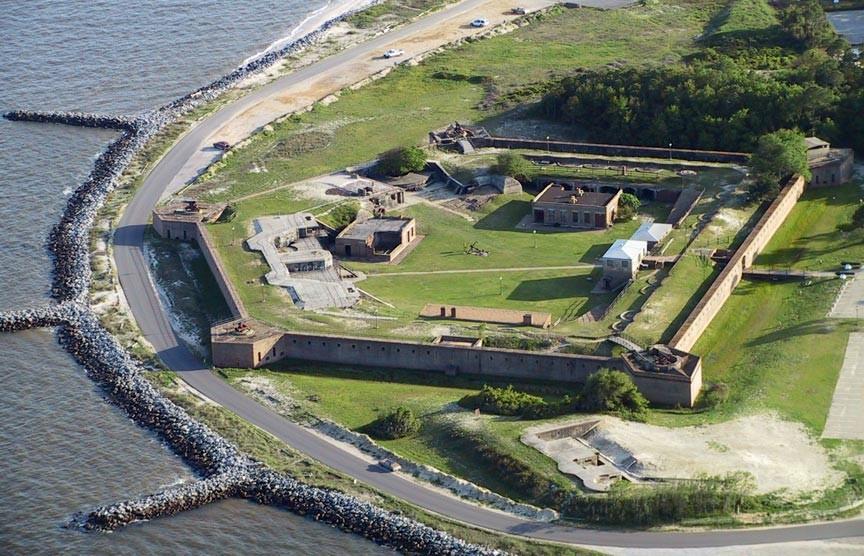
Fort Gaines
Sitting at the eastern tip of Dauphin Island where Mobile Bay meets the Gulf of Mexico, Fort Gaines occupies one of the most strategically loaded pieces of ground on the Alabama coast. The island itself carries death in its name. When French explorer Pierre Le Moyne d'Iberville arrived in 1699, he found so many sun-bleached human bones scattered across the shell mounds that he named the place Massacre Island. The name eventually softened to Dauphin Island, but the bones remained — remnants of Native American burial sites eroded and exposed by the sea. France, Spain, and Britain all used the island as a military platform at various points, each recognizing what the geography made obvious: whoever controlled this narrow strip of land controlled the entrance to Mobile Bay. The United States recognized it too. Following the War of 1812, Congress authorized a network of coastal fortifications along the southern shoreline, and Dauphin Island was identified as a critical position. Construction began in 1821 but lurched along for decades — plagued by poor engineering, flooded foundations, and funding gaps. A new design was ordered in the 1850s under chief engineer Joseph G. Totten, who drew up a five-sided masonry fort with 22.5-foot walls built to absorb artillery rather than shatter under it. Every one of the more than three million bricks had to be transported across the bay, since the island had no suitable clay. The fort was still incomplete when Alabama state militia seized it on January 5, 1861, six days before the state formally voted to leave the Union. Confederate engineers finished the work. Fort Gaines and Fort Morgan, sitting on opposite shores of the channel, formed a pair meant to strangle any naval approach to Mobile. By 1864, Mobile was one of the last Confederate ports open on the Gulf, and the Union was determined to close it. On August 5, Rear Admiral David Farragut led eighteen ships directly into the channel under the guns of both forts. When the ironclad USS Tecumseh struck a Confederate mine and sank almost instantly, Farragut reportedly shouted the order that has echoed through American history: "Damn the torpedoes — full speed ahead." The fleet punched through. Fort Gaines, pounded from sea and besieged from land, surrendered on August 8 with roughly 800 men taken prisoner — including a battalion of military cadets between twelve and sixteen years old from the Pelham Military Academy in Mobile. The fall of both forts sealed Mobile from the outside world and helped secure Abraham Lincoln's reelection that November. The fort remained in military use through both World Wars, serving as a coastal artillery installation and anti-aircraft gunnery school. It was sold to the City of Mobile in 1926, passed to the State of Alabama, and is now considered one of the best-preserved Civil War masonry forts in the country. The paranormal reputation of Fort Gaines draws from every layer of that long history. Visitors and investigators report a Confederate soldier seen standing at one of the cannons facing the water — motionless, as though still at his post. The old officers' quarters are cited as particularly active, with accounts of furniture moving, unexplained whispers filling empty rooms, and the persistent feeling of being watched. Cold spots appear without explanation in the tunnels connecting the bastions to the main courtyard. A dark shadowy figure has been reported following visitors through the inner buildings, vanishing when confronted. Paranormal researchers scouting for MTV's Fear series documented shadowy figures in photographs taken inside the walls, and the Mobile-based group SAPI has held annual ghost hunts at the fort for years. Beyond the fort itself, the ancient shell mounds on the island's eastern end — actual Native American burial sites used for centuries before European displacement — generate their own reports. Visitors describe faint drumming and chanting heard near the mounds after dark, and a blood-covered Native American apparition has been reported in the area. An older island legend speaks of a chief named Double Head who walked the beaches at night, leaving glowing phosphorescent footprints in the sand. Fort Gaines is open to the public. The guns still face the water. The brick walls still absorb the Gulf wind. And according to those who have spent time inside after the crowds leave, something in there hasn't fully stood down.