
Haunted Hotels in America
1,211 haunted locations

The Scotia Lodge
Deep in the redwood country of Humboldt County, California, where the Eel River bends through a valley of old-growth timber and perpetual fog, the town of Scotia sits like a time capsule from an era most of America has forgotten. Scotia was a company town—one of the last in the country—built and wholly owned by the Pacific Lumber Company from 1863 until the company's bankruptcy in 2008. Every house, every street, every storefront belonged to PALCO. The company provided the school, the hospital, the church, the skating rink, the theater, and the hotel. Workers lived in company housing, shopped at the company store, and were woken each morning by the company steam whistle at 7:30. At its peak, PALCO employed over 1,600 people and shipped more than twenty million board feet of redwood lumber annually. The town was originally called Forestville, renamed Scotia in 1888 after a coin toss—a nod to the Canadian Maritime provinces from which many early workers had emigrated. The Scotia Lodge sits at 100 Main Street, at the heart of this self-contained world. The first inn on the site was built in 1888, serving as the only hub of activity in the area and functioning as a stagecoach stop between San Francisco and Eureka. That structure burned in the early 1900s and was replaced in 1923 by the current building, originally called the Mowatoc Hotel—a name referencing local Native Americans, with a diamond motif on the facade drawn from Indigenous design. The name changed to the Scotia Inn in the late 1940s, and the property has most recently been reimagined as the Scotia Lodge, a boutique hotel positioned as a base camp for the Avenue of the Giants and Humboldt Redwoods State Park. The building has twenty-two rooms, a dining room, a pub, and event spaces. The paranormal reputation is built around a cast of recurring figures, the most prominent of whom the staff has named Frank. Frank is said to occupy the top floor, where reports of footsteps, scraping sounds, disembodied voices, and unexplained noises have accumulated over decades. According to one account, Frank is interactive—bounce a basketball toward the third floor and he will reportedly bounce it back. His identity is unknown. No specific death has been linked to the name. Frank is not alone. Guests and employees describe the apparition of a woman with children, linked to a story in which a little girl playing with a ball on an upper balcony fell to her death trying to retrieve it. The mother and daughter are said to haunt the room from which the child fell. A baby crying has been heard on floors where no infants are staying. A woman has been reported in the kitchen. A visiting executive staying alone—before the lodge was officially open to the public—knocked on the CEO's door in the middle of the night, telling him he had heard a crowd of people talking on his floor when the building was empty. He refused to return and slept elsewhere. Multiple guests describe waking around three in the morning to sounds of a group walking the hallway, or murmuring voices, only to confirm the hotel was nearly vacant. One guest heard a ball bouncing seven times in the hallway near midnight—a detail aligning with the story of the little girl. The building's history provides ample material. A century of lumber workers, traveling businessmen, and stagecoach passengers have passed through these rooms. The town endured catastrophic floods in 1862, 1955, and 1964—the last scattering eighteen million board feet of logs from the mill along the Eel River and out to the Pacific. Three major earthquakes struck in 1992, damaging homes and destroying the shopping center. And the slow collapse of PALCO under corporate raider Charles Hurwitz's leveraged buyout—followed by the timber wars, Julia Butterfly Hill's two-year tree-sit, mass layoffs, and bankruptcy—left Scotia with a grief that doesn't require ghosts to explain but may have produced conditions hospitable to them. Today the Scotia Lodge operates in a town still reinventing itself, its houses sold off one by one for the first time in over a century. The redwoods still tower. The Eel River still runs. The steam whistle, by popular vote, still sounds. And on the third floor, Frank—whoever he was—is apparently still home.
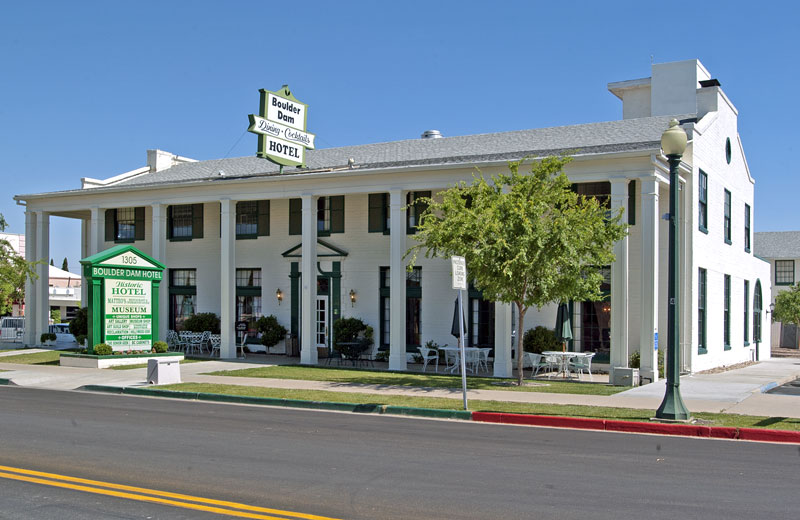
Boulder Dam Hotel
Boulder City, Nevada, is one of the strangest towns in the American West—a place that exists only because the federal government built it from nothing in 1931 to house the thousands of workers constructing what was then called Boulder Dam. In a state defined by gambling, Boulder City was the opposite: a tightly controlled government town with no casinos, no saloons, and strict rules governing daily life. It was engineered for productivity, not pleasure. But it needed a hotel. And the Boulder Dam Hotel, completed in 1933 at 1305 Arizona Street, was built to fill that gap—not for the workers who poured concrete in killing heat down in Black Canyon, but for the dignitaries, officials, and celebrities who came to watch them do it. The hotel was the vision of Paul Stewart Webb, a local businessman who recognized that the thousands of tourists arriving by train from Los Angeles and by car along the Arrowhead Highway would need somewhere to stay. City Manager Sims Ely issued Webb a permit, and the result was a two-story Dutch Colonial Revival structure designed by architect L. Henry Smith—white-columned, with concrete-block walls rising to gable roofs, a wood-paneled lobby, private baths in all thirty-two rooms, and a modern climate system advertised on highway billboards. At its grand opening, the Boulder Dam Hotel had no equal in southern Nevada. Las Vegas, still a small railroad town, had nothing to compare with it. The guest list through the 1930s and 1940s reads like a Hollywood directory crossed with a diplomatic registry. Bette Davis stayed while vacationing after filming in 1934. Mr. and Mrs. Cornelius Vanderbilt Jr. honeymooned there. Will Rogers performed at the nearby Boulder Theatre during a stay in 1935, weeks before his death. Boris Karloff visited while obtaining a divorce. The Maharajah and Maharani of Indore passed through, as did Cardinal Pacelli, who would later become Pope Pius XII. Howard Hughes recuperated at the hotel after crashing his amphibious plane on Lake Mead. Shirley Temple was a regular guest. The hotel also became popular with movie stars establishing Nevada residency for quick divorces, adding a layer of personal upheaval to the building's social history. The hotel's fortunes declined along with passenger rail and shifting tourism patterns. It changed hands over the decades but avoided demolition. In 1982, it became the first hotel in Nevada listed on the National Register of Historic Places. In 2005, the Boulder City Museum and Historical Association acquired the property and renovated it, reducing the room count to twenty-two while expanding public spaces. The Boulder City/Hoover Dam Museum now occupies the first floor, telling the story of the dam workers and the Depression-era community built to house them. Paranormal claims at the Boulder Dam Hotel are varied, persistent, and span decades. The most frequently cited phenomenon involves the sounds of music, conversation, and laughter emanating from the ballroom when it is entirely empty. Staff working alone at night have reported hearing what sounds like a party in full swing—piano music, clinking glasses, voices—only to find the room dark and vacant. The smell of cigar smoke has been reported throughout the hotel despite a no-smoking policy, particularly in the room once occupied by Howard Hughes, who was known to smoke cigars. Some staff believe Hughes himself lingers in the building. The apparition of a former night desk clerk named Tommy Thompson has reportedly been seen in the main lobby, and guests have described an overwhelming sensation of heaviness in the same area. Rooms 209 and 219 are cited as the most active, with reports of faucets turning on in unoccupied rooms, doors opening and closing on their own, and cold spots appearing without drafts. Some guests have described being physically touched or grabbed by unseen hands. Boulder City historian Dennis McBride, who kept offices in the hotel's basement, documented many of these accounts in his book on the property. McBride himself reported seeing an apparition in his basement office. During a reading he arranged with psychic Patsy Welding, she reported sensing strong presences on the upper floors and refused to descend into the basement, describing the energy as overwhelming. The hotel's proximity to Hoover Dam—where at least ninety-six workers died during construction—has led some to speculate that dam workers may account for some of the activity, and figures in old-fashioned work clothes have been glimpsed in restricted areas of the building. Today the Boulder Dam Hotel operates as a boutique historic hotel and museum. The staff generally downplays the haunting reports, and at least one investigator has noted that asking about ghosts can quickly cool an otherwise warm reception. But the accounts continue to accumulate, logged by guests who arrive knowing nothing of the hotel's reputation and leave describing experiences they cannot explain.
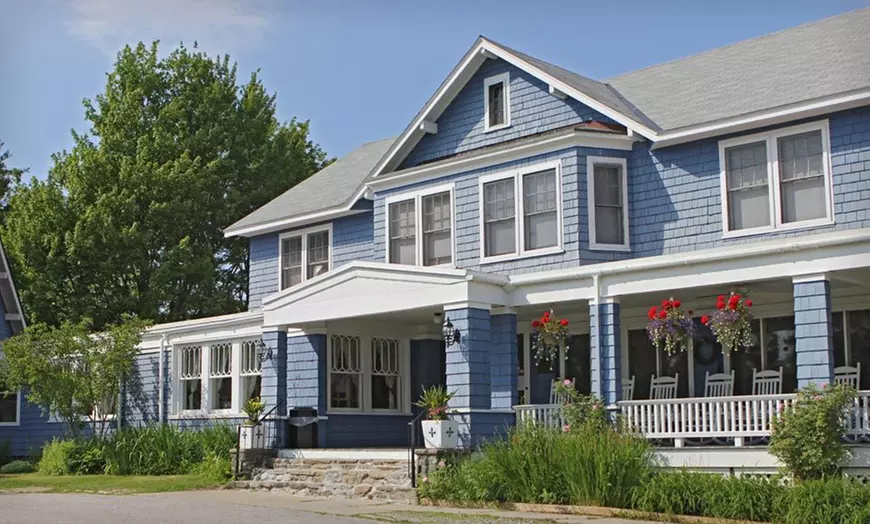
The Spalding Inn
Set on nearly eight acres of rolling land along Mountain View Road in Whitefield, New Hampshire, the Spalding Inn looks out across orchards and perennial gardens toward the smoky ridgeline of the Presidential Range. It is the kind of White Mountains property that seems to have always been there—a sprawling, white-columned Victorian structure flanked by a carriage house and framed by the kind of landscape that drew Bostonians and New Yorkers north by rail during the Gilded Age, when the region's grand resort hotels were at the peak of their influence. The building dates to the 1860s, when it was known as the Cherry Hill House—a modest structure with an attic that was later expanded by lifting the roof and adding a full second floor. It began its life as a private residence, and like many properties in northern New Hampshire's hotel corridor, it eventually transitioned into lodging as the White Mountains tourism trade grew. By 1926, the property had been formally established as the Spalding Inn, operating as a seasonal resort that welcomed guests for the spring and summer months, with some visitors staying the entire season. For a time it functioned as a private members-only establishment, a country club of sorts, offering tennis, a heated pool, golf, and formal dining against a backdrop of mountain scenery. Brochures from the mid-twentieth century advertise it as a gracious retreat—the kind of place where guests dressed for dinner and rocked on the veranda in the long northern twilight. Over the decades the property changed hands several times, and like many of the grand old lodging houses of the White Mountains, it experienced cycles of prosperity and decline. By the early 2000s the building was aging and in need of significant attention, its long history beginning to show in the bones of the structure. Reports of unusual activity inside the inn, however, had been circulating for far longer than anyone could precisely date. Guests and staff described shadow figures drifting through hallways, doors opening and closing without explanation, and a pervasive sense of unease in certain parts of the building—particularly the carriage house and the basement bar area. The stories were persistent enough that the inn had acquired a reputation for being haunted well before it attracted national attention. Local tradition holds that a former owner took his own life in the carriage house, and that a woman and a child also died on the property under circumstances that have blurred with time into the kind of half-documented, half-whispered accounts that cling to old New England buildings like woodsmoke. In 2008, the property was purchased by Jason Hawes and Grant Wilson, the co-founders of The Atlantic Paranormal Society and stars of Syfy's Ghost Hunters. The purchase was not incidental to the inn's reputation—both men were drawn to it precisely because of the paranormal claims that predated their ownership. They invested heavily in restoring the building, reopening it as a working inn with 36 rooms across the main house and carriage house, a main dining room, and a basement pub called 2 Kings. The inn debuted on Ghost Hunters in April 2009, in a Season 5 episode titled "Crossing Over," in which Hawes and Wilson brought in the Ghost Hunters International team to conduct an independent investigation. The results were striking. Digital recorders in the carriage house captured what investigators described as the sound of a door opening and closing on its own and a male voice saying a single word. In the bar area, a female voice with what was described as an English accent was captured—a detail investigators noted as significant given the inn's long history of hosting British guests. In the kitchen, where a dark shadow had been observed moving through the room, a recorder picked up a voice speaking the word "cherry," an apparent reference to the building's original name. The team's conclusion was unequivocal: they deemed the inn haunted. Subsequent investigations by other paranormal groups and by visitors attending the TAPS ghost-hunting events held at the property produced additional accounts. The carriage house consistently generated the most activity. Rooms 15, 16, and 17 on the upper floor were identified as hotspots, with Room 16 reportedly carrying a heavy male energy and Room 17 producing sightings of a shadowy female figure wearing what appeared to be a pearl necklace. One investigator who observed the figure from outside later learned that a former owner of the inn had been known for always wearing pearls. Room 33 in the main house drew reports from guests who described being awakened by unexplained disturbances in the night. In the main building, a hunched figure was reportedly observed moving slowly across the first floor, and investigators noted that nearly every room in the inn seemed to carry its own distinct energy. A massive dark mass was repeatedly witnessed in the bar and kitchen areas by both staff and guests. One visitor reported being tapped on the shoulder three times while sitting with his back to an empty room. Hawes's wife described an occasion when she and her son looked out a window of the main house and saw a woman standing in an upstairs carriage house window, staring back at them before vanishing. The inn also appeared in Ghost Hunters Season 8, in an episode titled "Sign the Ghostbook," which served as Grant Wilson's final investigation before departing the show. Hawes and Wilson listed the property for sale in 2013 at $795,000, noting that while they loved the building, they no longer had the time to operate it. The inn changed hands again and continued to operate on a limited basis in subsequent years, though its status has remained uncertain. As of recent reports, the Spalding Inn is not currently open to guests, and its future remains unclear. The building still stands on its hillside, the carriage house still flanks the main structure, and the view of the Presidential Range from the front porch has not changed. Whether the property will be restored again or allowed to continue its slow drift toward silence is an open question. What is less open to debate is the volume and consistency of the accounts that have accumulated within its walls—reports spanning casual visitors, seasoned investigators, and the families of the men who made their careers studying exactly this kind of thing, and who chose this particular building to call their own.

Belleview-Biltmore Hotel
For more than a century, the Belleview-Biltmore Hotel commanded one of the highest points along Florida's Gulf Coast, its white clapboard exterior and green-shingled roofline visible for miles across Clearwater Bay. Known as the "White Queen of the Gulf," the massive Queen Anne–style structure was one of the largest occupied wooden buildings in the United States—a sprawling 350,000-square-foot monument to the Gilded Age ambition that transformed Florida from frontier into winter playground. Its story is one of opulence, slow decline, and a demolition that erased most of the original structure but could not, according to decades of witness accounts, erase everything that happened inside it. The hotel was the creation of Henry B. Plant, a railroad and shipping magnate who spent the late nineteenth century building a transportation empire along Florida's western coast. Plant purchased the Orange Belt Railway in 1895 and recognized that the rail line alone would not generate sufficient tourist traffic without significant accommodations. He commissioned a massive resort on a bluff overlooking the bay between Clearwater and St. Petersburg. Construction began in 1896, and the Hotel Belleview opened January 15, 1897. Built primarily of native Florida heart pine, it featured peaked gables, deep verandas, steam-generated electricity, Tiffany glass, and a resident orchestra. Three long wings fanned from a central core, creating an interior of seemingly endless corridors, stairwells, and hidden service passages. The hotel drew America's industrial aristocracy immediately. The Vanderbilts, DuPonts, and Studebakers were regular guests. Railroad presidents arrived in private cars on the hotel's own siding. Among the more colorful figures in the hotel's history was Maisie Plant, who married Henry Plant's son Morton after Morton reportedly offered her existing husband eight million dollars to step aside. Maisie later traded the Plant family mansion on Fifth Avenue to the jeweler Cartier in exchange for a double strand of Oriental pearls valued at over a million dollars. According to persistent local legend, she lost those pearls somewhere inside the Belleview—a story that has become inseparable from the hotel's paranormal lore. During World War II, the hotel was requisitioned to house servicemen stationed at MacDill Air Force Base, adding another layer of transience to the building's dense history. Through the decades, the guest list included Presidents Ford, Carter, George H. W. Bush, and Obama, along with Margaret Thatcher, the Duke of Windsor, Thomas Edison, Babe Ruth, and Bob Dylan, who rehearsed for his 1976 Rolling Thunder Revue tour in the hotel's Starlight Ballroom. Decline set in during the 1970s as newer beachfront properties drew tourists elsewhere. The hotel was added to the National Register of Historic Places in 1979 but closed in 2009. Despite efforts by preservation organizations, demolition began in 2015. A portion of the 1897 structure was saved, relocated, and restored as the Belleview Inn, a boutique hotel that opened in 2018. The paranormal reputation of the Belleview-Biltmore was among the most widely reported of any hotel in Florida, drawing national attention through a Travel Channel Weird Travels episode filmed in 2004 and regular ghost tours in its final years. The most iconic claim involves Maisie Plant herself—guests and staff reported an apparition in a white dress and hat drifting through corridors and ballrooms, seemingly searching for her lost pearls. At least one investigator described seeing a full-bodied apparition matching this description. Other recurring reports included transparent elevator operators who vanished before reaching their floor, poltergeist activity involving doors banging and lights switching on unprompted, and dresser drawers opening on their own in occupied rooms. Guests on the first floor frequently heard children running through hallways at night, consistent with the fourth floor's historical use as quarters for servants and children kept out of sight during the Gilded Age. Room 4336 carried a specific legend involving a bride who allegedly leapt from its balcony after her husband was killed. The sealed fifth floor was described by paranormal teams as the most active area in the building, home to an aggressive presence investigators called "the angry man," alongside equipment anomalies, cold spots, and unexplained footsteps. A couple photographed at the base of a stairway during a 2004 holiday party discovered, upon developing their film, a misty white figure hovering above them that had not been visible to the naked eye. Today the Belleview Inn preserves a fragment of the original building, restored with heart-pine flooring, wainscoting, and original Tiffany glass. Most of the hotel's immense footprint is gone—the sealed fifth floor, the service tunnels, the rooms where guests heard running children and felt unseen hands. Whether the spirits that reportedly inhabited the White Queen survived demolition is a question no one can answer. But for over a century, the Belleview-Biltmore carried the kind of accumulated presence—grief, glamour, war, and loss—that tends to leave traces deeper than any wrecking crew can reach.
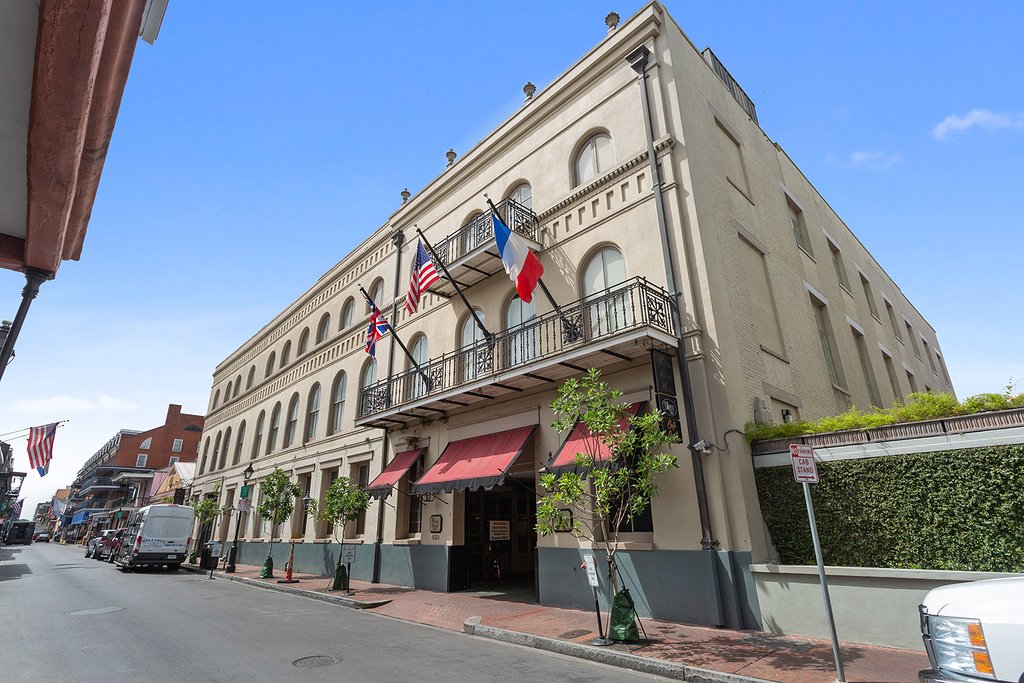
Prince Conti Hotel
At 830 Conti Street in the French Quarter of New Orleans, the Prince Conti Hotel occupies a building dating to the early 1900s, sitting on a block that has cycled through nearly every identity the Quarter has to offer—residence, commerce, vice, hospitality, and, if the accounts are to be believed, something that refuses to vacate regardless of what the current management has planned. The hotel is a small property by New Orleans standards, with just over fifty rooms tucked into a historic townhouse structure steps from Bourbon Street. It is operated by the Valentino family, who have run hotels in the French Quarter for over sixty years. The ground floor houses the Bombay Club, an upscale bar known for its martini list, Creole cuisine, and a resident spirit the staff has been dealing with for decades. Conti Street is named for the Princess Conti—originally the name given to what is now Bourbon Street before an early colonial renaming shuffled the designations. The street runs deep into French Quarter history. At 1026 Conti, just two blocks away, the infamous Norma Wallace operated the last major brothel in New Orleans from the late 1920s through the mid-1960s, entertaining governors, gangsters, and celebrities in a parlor house that ran nearly four decades before District Attorney Jim Garrison shut it down. Wallace's story ended in 1974 when she shot herself after learning of her husband's infidelity. Her building, an 1830s townhouse, is now condominiums—and reportedly still haunted. Farther up the block, the site of what is now the Williams Research Center once housed the Rising Sun Hotel in the 1820s, a property whose archaeological remains have yielded artifacts suggestive of early commercial sex work and whose name may have inspired one of the most famous folk songs in the English language. Conti Street has never been quiet. The Prince Conti Hotel's primary haunting centers on a figure the staff has named Sophie. According to paranormal researchers, Sophie is believed to be the spirit of a madam who operated on the premises before the building became a hotel. Her identity has never been established, but staff members have encountered her in the kitchen, the bar, and at Booth 3 of the Bombay Club. She is described as a presence rather than a full apparition—felt more often than seen, though some accounts describe a spectral woman visible in the bar during quiet hours. Guest accounts extend well beyond Sophie. Visitors on the upper floors—particularly the third floor—report a striking range of experiences. Multiple guests describe being nudged or physically shaken while asleep, only to find the room empty. One guest reported their mattress bouncing as though someone had sat down hard at six in the morning. Another described the full weight of a body pressing down on them during the night. Showers have turned on by themselves. Doors securely locked have been found standing wide open. A concierge reportedly confirmed that doors had been known to fly open on their own, accompanied on at least one occasion by a visible apparition. Objects have fallen from surfaces without explanation. Curtains have swung open untouched. In Room 361, a couple watching television reported their shower turning on for several seconds, followed by a bag of chips falling off the nightstand—and in the morning, a plugged-in diffuser was found unplugged from the wall. What makes these accounts notable is not their dramatic quality—by New Orleans haunted hotel standards, they are restrained—but their consistency across unrelated guests over many years, and the physical nature of the interactions. The nudging, the pressure, the bed-shaking describe contact, not atmosphere. Skeptics will note that old French Quarter buildings settle, plumbing acts unpredictably, and doors in century-old structures don't always stay shut. New Orleans humidity warps wood and metal alike. Guests arriving after a night on Bourbon Street are not always reliable witnesses. But the Prince Conti's accounts carry a specificity—particular rooms, particular times, particular physical sensations—that environmental explanations don't fully cover. Today the Prince Conti Hotel continues to operate at 830 Conti Street, offering the Bombay Club downstairs, Cafe Conti in the mornings, and a location at the center of one of the most historically layered streets in the most historically layered neighborhood in America. Sophie, if that is her name, appears to have no intention of checking out. And on the third floor, something still seems to think the beds could use one more occupant.
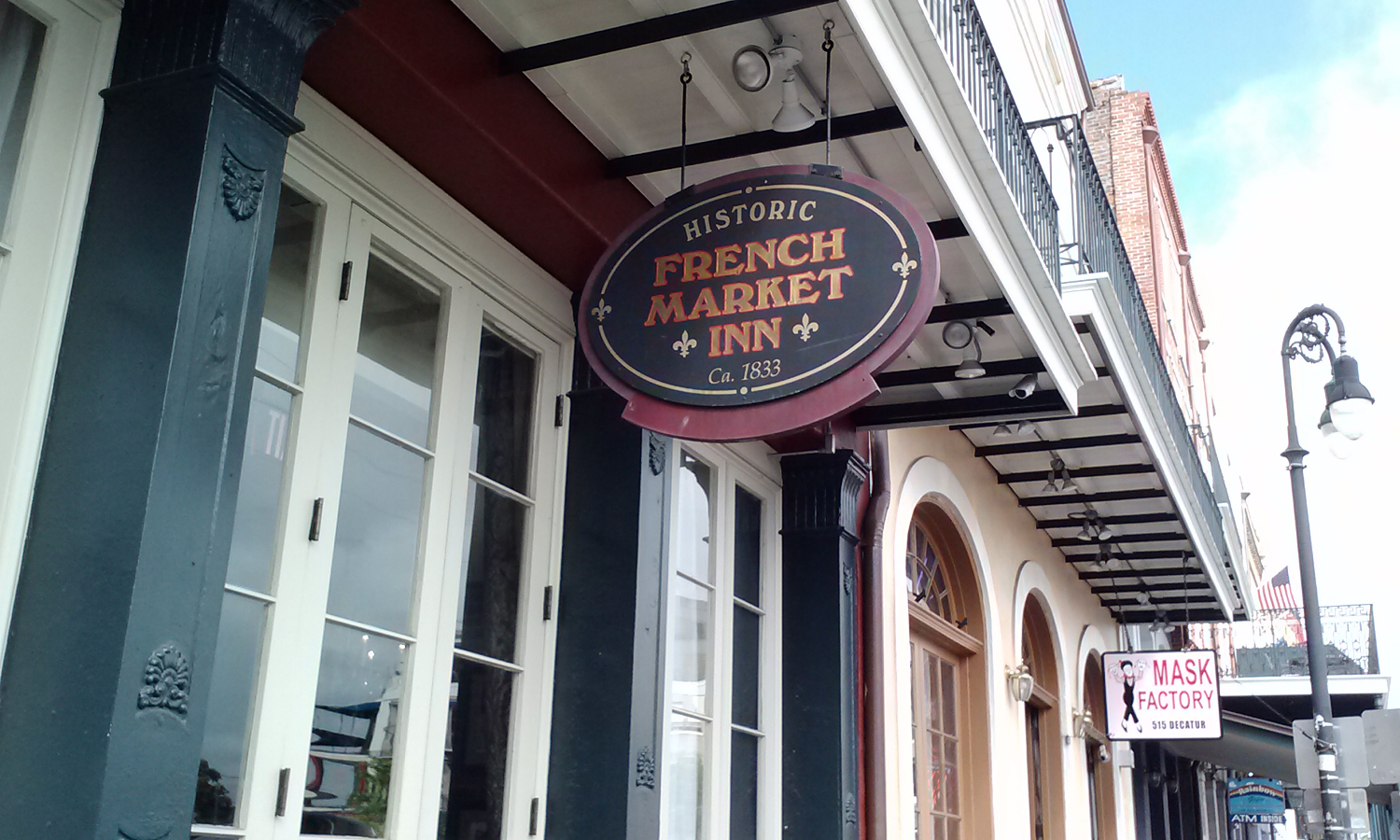
French Market Inn
The French Market Inn sits at 509 Decatur Street in the heart of the French Quarter, a few steps from Jackson Square and within earshot of the Mississippi River. Its antique brick façade opens onto a lobby of period paintings, chandeliers, and marble, and a stone-paved courtyard shaded by greenery—the kind of place that looks exactly like what visitors expect from historic New Orleans. What most of them do not expect is what has been reported inside its rooms for nearly two centuries. The property dates to 1722, when the original deed was issued to a baker named Dreux, whose family operated a bakery on the site throughout the eighteenth century, using a pulley system to hoist goods between floors. The building was later acquired by Baron Joseph Xavier de Pontalba, husband of the formidable Baroness Micaela Almonester de Pontalba, whose business empire still marks the French Quarter landscape in the form of the iconic Pontalba Buildings flanking Jackson Square. By the 1830s, the property had been converted into an inn, and it has operated as one in various forms ever since. The current French Market Inn, run by the Valentino family for over sixty years, maintains more than a hundred guest rooms, many still showcasing the original exposed beams and brick walls of the centuries-old structure. The hauntings were first recorded in 1832, shortly after the building began receiving guests. Visitors reported misty shapes entering their rooms after dark and loud metallic clanging echoing through the halls—sounds consistent with the old pulley system from the Dreux bakery era, operating in a building where no such equipment had functioned for decades. Those two phenomena—shadow figures and phantom mechanical sounds—have persisted without interruption for almost two hundred years. But the claim that has defined the French Market Inn's paranormal reputation is far more visceral. Guests have reported waking in the night to find their pillowcases, sheets, and sometimes their own skin marked with bloody handprints. The accounts are not limited to a single era or a handful of visitors. They span decades and continue to the present day, with guests who had no prior knowledge of the inn's reputation describing nearly identical experiences. One guest recounted waking drenched in what appeared to be blood, covering both occupants of the bed and the headboard, with neither person bearing any wound. The prevailing legend attributes the blood to the spirit of a prostitute who was murdered by a client on the property—a cry for help that manifests in the most startling way possible. No historical record has confirmed the specific murder, but the reports have proven remarkably resistant to debunking by their sheer volume and consistency. Beyond the handprints, guests describe beds shaking violently in the middle of the night with no seismic explanation, lamps clicking on and off in pitch-dark interior rooms, showers activating on their own, cold spots appearing without cause in the humid New Orleans air, shadow figures passing through walls, and the unmistakable sensation of being watched or physically touched. Room 218 has drawn particular attention from investigators. One paranormal researcher who stayed there reported being kept awake all night by unseen presences and an alarm clock that triggered repeatedly without being set. A guest on the third floor described waking to find her pillow being tugged beneath her head, and her daughter woke to a black figure standing between her bed and the windows. When they reported the incident to the front desk, the night clerk asked which room, then said simply that they did not get many reports from that floor. The French Market Inn does not hide from its reputation—the hotel's own website acknowledges the hauntings as part of its history. It remains one of the most popular and consistently booked properties in the French Quarter, operated with the warmth and professionalism the Valentino family is known for. The courtyard is still beautiful. The rooms are still charming. And the walls are still the same centuries-old brick that has absorbed whatever it is that keeps making itself known after dark.
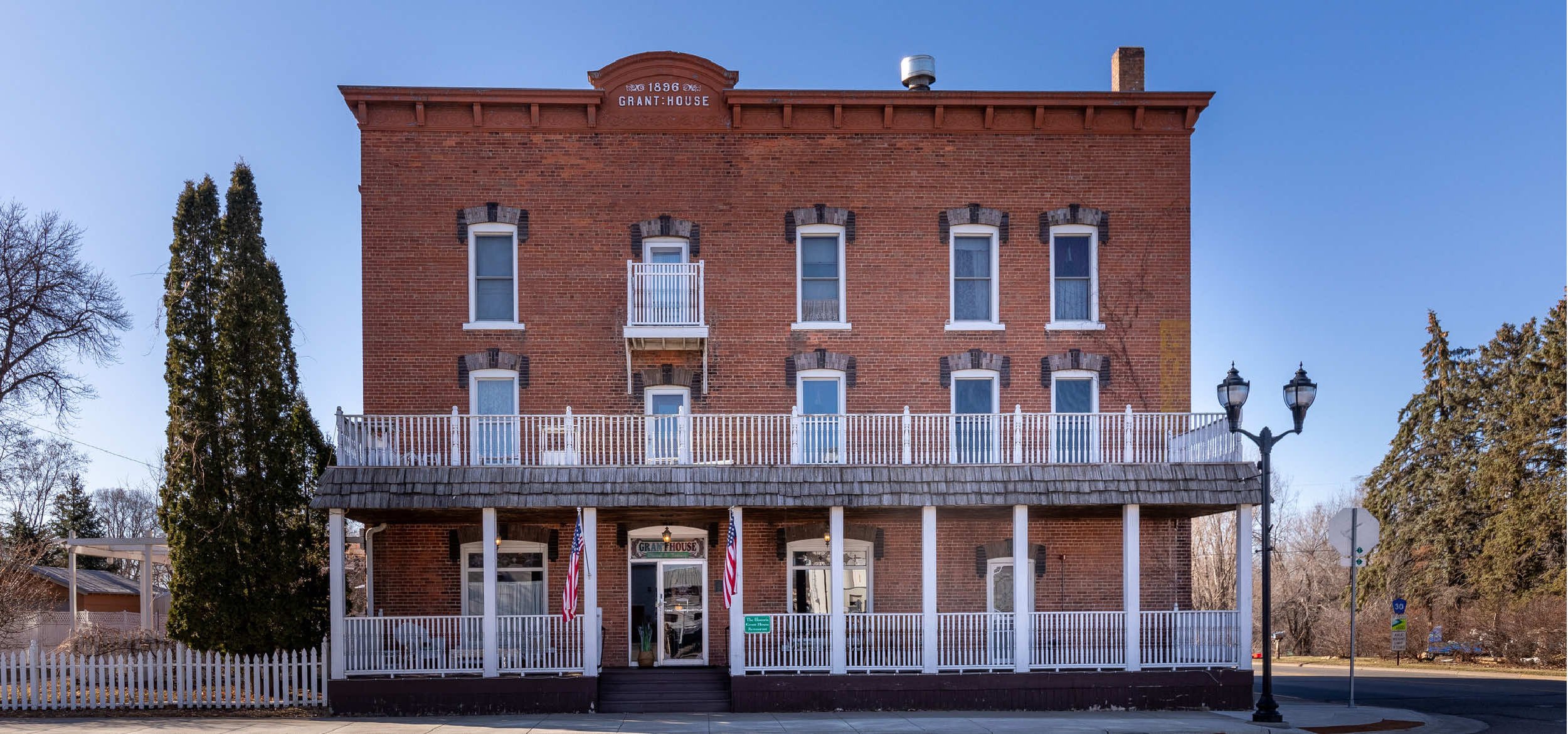
Grant House Hotel and Eatery
At the corner of Fourth Street and Bremer Avenue in downtown Rush City, Minnesota—a small town along Highway 61 roughly sixty miles north of the Twin Cities—a three-story brick hotel has been standing since the last years of the nineteenth century, carrying with it a history of fire, reinvention, and a reputation for paranormal activity that has drawn ghost hunters, television crews, and paranormal authors to a place most travelers on Interstate 35 pass without a second glance. The Grant House was originally built in 1880 by Colonel Russell H. Grant, second cousin to President Ulysses S. Grant. The original structure was a white-board building with an expansive porch, situated to serve the travelers and commerce flowing through Rush City along what was then a stagecoach route connecting St. Paul to Superior, Wisconsin. President Grant himself reportedly stayed at the hotel while visiting family in the area, taking advantage of Minnesota's hunting and fishing. The hotel prospered for just over a decade before fire destroyed the original building in 1895. Colonel Grant rebuilt the following year, this time in brick, and the 1896 structure—listed on the Registry of Historic Places—is the building that stands today, a 7,500-square-foot establishment with eleven rooms spread across its upper floors. The Grant House's history between the fire and the present day is marked by the kinds of uses that tend to leave residual energy in old buildings. During certain periods, the hotel reportedly operated as a bordello, and local accounts connect it to the bootlegging trade that ran through small Minnesota towns during Prohibition. Rush City's location along the railroad made it a natural waypoint for the kind of transient commerce—legal and otherwise—that characterized rural Midwestern towns in the early twentieth century. The Twin Cities Paranormal Society has noted that old railroad hotels in small towns are particularly prone to paranormal activity, citing the combination of constant human turnover, proximity to rail energy, and the fires and violence that frequently accompanied frontier-era hospitality. The paranormal reputation of the Grant House is well established and has been acknowledged by successive owners. Todd Johnston, who owned the hotel in the early 2010s, stated publicly that he, his staff, and guests had experienced numerous unexplained incidents during his tenure. In 2011, Johnston opened the hotel to a formal paranormal investigation, drawing ghost hunters and fans of SyFy Channel's Ghost Hunters International for an evening of organized investigation. The event confirmed what locals and staff had been reporting for years. Paranormal researcher Chad Lewis, author and lecturer for Unexplained Research LLC, has included the Grant House in his presentations on Minnesota's most haunted locations, noting the kinds of subtle evidence—recorded sounds inaudible to the naked ear, unexplained beams of light—that characterize active sites. The Grant House is also featured in The Big Book of Minnesota Ghost Stories by author Andy Weeks, who investigated the property as part of his broader survey of Minnesota hauntings. The reported phenomena at the Grant House span a range consistent with a building carrying multiple layers of occupation and use. Guests have heard ghostly laughter and disembodied voices in the hallways and rooms. Phantom footsteps are heard moving through the building when no one is present. Furniture has been found shifted or rearranged in rooms overnight by unseen hands. The most striking recurring claim involves the apparition of a woman who appears behind guests as they look into mirrors—visible in the reflection but not in the room itself when the guest turns around. The activity has been consistent enough to attract repeated visits from organized paranormal groups, including North Metro Paranormal, whose founder has described the Grant House as one of the locations that first drew him into ghost hunting after experiencing intense activity there on an early visit. Ghost tours have been held at the property, and the building's haunted reputation is embraced rather than concealed—the city of Rush City's own tourism page directs visitors interested in the paranormal to the hotel's website for ghost stories. Today the Grant House continues to operate in downtown Rush City, most recently housing The Fort, an eclectic American restaurant whose owners moved into the historic building in 2024. The new proprietors were aware of the building's reputation before signing the lease and were undeterred. The clawfoot tubs and pedestal sinks remain in the renovated guest rooms. The second-story porch still overlooks Main Street. The railroad tracks that once brought travelers and trouble to Rush City still run nearby. And the woman in the mirror, if she is still there, presumably has new faces to appear behind—and new guests to remind that in a building this old, the reflections do not always belong entirely to the living.
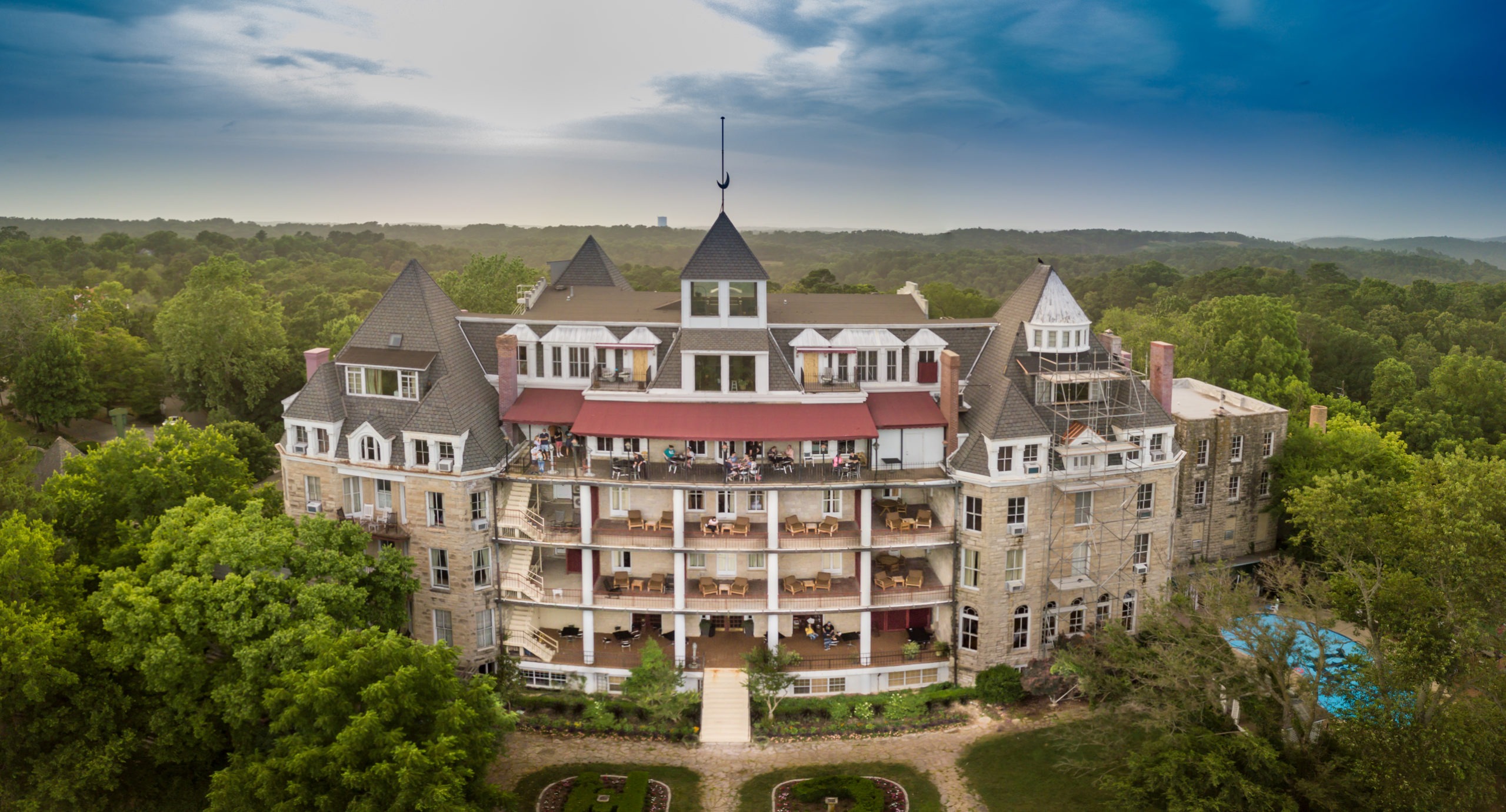
The Crescent Hotel
Perched on the crest of a limestone mountain overlooking the Victorian village of Eureka Springs, Arkansas, the 1886 Crescent Hotel commands the Ozark skyline like something lifted from a Gothic novel and dropped into the middle of the Bible Belt. Built from hand-cut limestone blocks so precisely fitted they required no mortar, the hotel rises in a blend of Richardsonian Romanesque and French Renaissance styling—arched windows, turrets, broad verandas, and a presence that can be seen from nearly anywhere in town. It was designed by architect Isaac S. Taylor, who would later design buildings for the 1904 St. Louis World's Fair, and funded by the Eureka Springs Improvement Company under former Arkansas governor Powell Clayton. When its doors opened on May 20, 1886, six hundred guests arrived from six states, greeted by a band stationed at the train depot. Eureka Springs had boomed almost overnight after its founding in 1879, drawn by sixty natural mineral springs that Native Americans had long known and that white settlers began marketing as miracle cures. By 1880, over fifteen thousand people had descended on the area. The Crescent was built to serve that wave—a luxury resort at nearly $300,000, the equivalent of roughly eight million dollars today. For its first two decades it operated as an exclusive destination, but interest in the springs faded, and the hotel couldn't sustain itself through the off-seasons. By 1902 it had been leased to the Frisco Railway. In 1908, it was converted into the Crescent College and Conservatory for Young Women, reportedly one of the finest women's seminaries in the country. That institution closed in 1924 for lack of funding, and a successor junior college folded during the Depression. By the mid-1930s, the grand hotel sat vacant and deteriorating. Then came Norman Baker. A former vaudeville performer and radio showman from Muscatine, Iowa, Baker had no medical training whatsoever but had already operated a fraudulent cancer clinic in his home state before being driven out. In 1937 he purchased the Crescent for $40,000 and transformed it into Baker's Cancer Curing Hospital, painting the interior in garish lavender and broadcasting his claims over the airwaves. His so-called treatments centered on injections of a concoction he called Formula 5—a mix of alcohol, carbolic acid, watermelon seed, corn silk, and clover leaves—administered up to seven times daily. Patients arrived from across the country, many spending their life savings on the promise of a painless cure. What they received was theater. At least forty-four patients died during the twenty months the hospital operated, their bodies moved to a basement morgue fashioned from the hotel's original kitchen, stored in the walk-in freezer. In 1940, federal authorities arrested Baker for mail fraud. He served four years in prison and died in Florida in 1958—of liver cancer. The hotel sat empty again until 1946, when new owners restored it to its original purpose. The paranormal reputation of the Crescent begins not with Baker but with the building itself. During construction in the 1880s, an Irish stonemason reportedly fell to his death from the upper framework into what is now Room 218. Staff have long referred to his spirit as Michael, and the room remains the most consistently active in the hotel. Guests report doors opening and slamming shut, pounding in the walls, the sound of a man falling through the ceiling, and, most disturbingly, hands emerging from the bathroom mirror. Room 419—known as Theodora's room—is associated with a former Baker patient who also worked as a hospital assistant. Guests find her straightening furniture or fumbling at the door as though searching for her key. On the third floor, witnesses describe the sound of squeaking wheels and the apparition of a nurse pushing a gurney down the corridor, only to watch it vanish. A young boy called Breckie, believed to have died from complications of appendicitis, has been seen bouncing a red ball on the second floor. In the hotel kitchen, a former chef reported pots and pans flying from their hooks, and another staff member witnessed a boy in old-fashioned knickers skipping through the room. Even Baker himself has reportedly been seen, appearing in his trademark white linen suit near the basement morgue. The morgue itself—still containing Baker's original autopsy table and walk-in cold storage—produces some of the most intense reports. Visitors describe oppressive atmosphere, sudden temperature drops, shadowy figures near the examination area, and the sensation of being touched by unseen hands. In 2019, groundskeepers digging near the hotel unearthed hundreds of glass bottles—remnants of Baker's operation—some containing preserved human tissue later confirmed by pathologists at the University of Arkansas for Medical Sciences. The discovery seemed to intensify reported activity, particularly in and around the morgue. Today the Crescent Hotel is owned by Elise Roenigk, who along with her late husband Marty purchased the property in 1997 for $1.3 million and undertook a six-year restoration. The hotel was listed on the National Register of Historic Places in 2016 and operates as a full-service resort and spa. It runs nightly ghost tours that draw over thirty-five thousand visitors annually, and hosts the Eureka Springs Paranormal Weekend each January. The morgue is open for public viewing. Room 218 books months in advance. The Crescent doesn't hide from what it is. It sets a place at the table for it.

Spitzer House Bed and Breakfast
Four blocks west of the historic Medina Square in northeastern Ohio, the Spitzer House sits on West Liberty Street like a Victorian postcard brought to life—painted trim, stained glass windows, twin cherry staircases, and the kind of ornamental woodwork that announces both the wealth and the aspirations of the family that built it. Constructed in 1890 for Ceilan Milo Spitzer, the house was a monument to one of Ohio's most ambitious financial careers. Spitzer was born in 1849 in Batavia, New York, and raised in Medina County after his family relocated in 1851. He entered business young, moving into banking with his father Aaron. An early Cleveland venture—the German-American Bank—collapsed in 1880 amid a national financial panic, and Spitzer liquidated his personal assets to pay every creditor, a move that cost him dearly but cemented his reputation. He rebuilt from the ground up. By the late 1880s, he and his cousin Adelbert had established Spitzer & Company in Toledo, becoming the first firm west of New York City to deal in municipal bonds. They were widely credited as founders of the municipal bond industry in the American Midwest. In January 1900, Ohio Governor George Nash appointed Ceilan Quartermaster General of the state with the rank of Brigadier General—a title he carried for life. It was at the height of this ascent that Spitzer commissioned the Medina house, overseeing construction remotely while expanding operations in Boston. His return to inspect the nearly completed residence made the front page of the Medina County Gazette in December 1890. He granted his parents a lifelong lease the following year, and the Spitzer family would occupy the house for the next seventy years. The house is a German Renaissance design with Queen Anne and Stick-Style elements, executed with particular refinement. Cherry and oak woodwork run throughout. The guest rooms, now named for family members, retain the proportions and character of the original layout. After the family's long tenure ended, the home was converted into a bed and breakfast in 1994 and has earned recognition for its restoration. It sits within walking distance of downtown Medina—a quiet residential stretch that belies the building's increasingly well-known reputation. That reputation extends beyond architecture. The Spitzer House has been featured in Chris Woodyard's Haunted Ohio book series, Brandon Massullo's Haunted Medina County, Ohio, and appears on multiple paranormal databases. The claims are specific, recurring, and tied to distinct areas of the house. In Ceilan's Room, guests have reported the apparition of a stern-looking man—sometimes watching from the corner, sometimes near the bed. The figure is widely interpreted as Spitzer himself, and at least one account describes the apparition physically nudging a guest. In Anna's Room, named for Ceilan's stepmother, the presence is different: a young servant girl, appearing at the foot of the bed or at the top of the staircase. Guests have heard her laughter. Some accounts describe her as short and stout, wearing an Edwardian-era housedress, firing questions at startled witnesses before vanishing. In the dining room, the voices of two men have been heard conversing when the room is empty. The parlor piano has been reported playing on its own. Throughout the house, guests describe flickering lights, slamming doors, cold spots, and light touches from an unseen source. One guest reported being scratched. Another described a spirit whispering their name. What gives these accounts weight is their consistency across decades and unrelated witnesses, and the absence of any anchoring tragedy. There is no murder, no suicide, no fire. The Spitzer family's occupancy was long and unremarkable in terms of darkness. Ceilan himself died in 1919 in Toledo, not in the Medina house. The servant girl's identity remains unknown—no documented death connects a specific individual to the claims. The hauntings seem to belong to the house itself rather than to any story imposed upon it. Skeptics will note that Victorian homes are acoustically rich—old wood settles, radiators clang, drafts move through invisible gaps. A bed and breakfast trades on atmosphere, and guests who know the reputation are primed to interpret ambiguity as evidence. But the reports carry a specificity—particular rooms, particular figures, particular behaviors—that resists dismissal as environmental noise alone. Today the Spitzer House continues to operate at 504 West Liberty Street, offering four guest rooms with private baths, period furnishings, and breakfast served in the dining room where two invisible men still occasionally hold court. The cherry staircases are original. The stained glass catches the light the same way it did in 1890. And whether a young woman in a housedress is waiting at the top of the stairs depends on when you visit—and how much of the house's long memory you're prepared to meet.
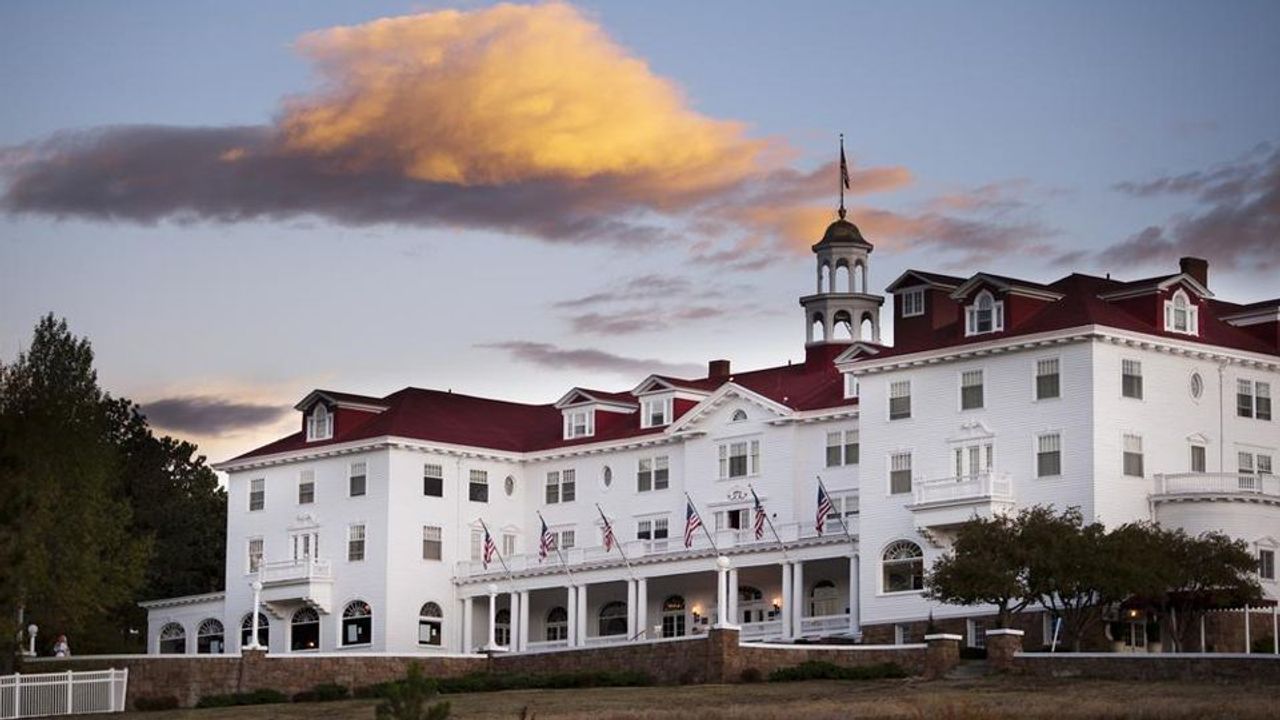
The Stanley Hotel
Perched on a hillside at the edge of Estes Park with the full sweep of the Rocky Mountains behind it, the Stanley Hotel looks less like a haunted building than a misplaced New England estate — white clapboard siding, Georgian columns, and a formal symmetry that has no business sitting at 7,500 feet in the Colorado high country. That contrast is entirely deliberate. The man who built it was an inventor from Maine who came west to save his own life, and what he left behind has refused to stay quiet for more than a century. Freelan Oscar Stanley arrived in the Estes Valley in 1903 suffering from tuberculosis, weak enough that his doctors had told him not to plan beyond six months. The mountain air reversed his decline so dramatically that by summer's end he resolved to return every year. But the tiny settlement of Estes Park offered nothing for a man of his means and temperament. Stanley had made his fortune co-inventing the Stanley Steamer automobile and manufacturing photographic dry plates, and he and his wife Flora were accustomed to the social fabric of the East Coast. So Stanley decided to bring that world to the Rockies. He purchased land from the holdings of the 4th Earl of Dunraven — an Anglo-Irish nobleman who had tried and failed to turn the valley into a private hunting preserve — and broke ground on his hotel in 1906. On July 4, 1909, the Stanley Hotel opened with 140 rooms, running water, telephones, electricity from a hydroplant Stanley himself had built on the Fall River, and a concert hall designed to echo the acoustics of Boston Symphony Hall. Flora, an accomplished pianist, christened the space with a 1904 Steinway grand that remains in the hotel today. Among the early guests were Teddy Roosevelt, Unsinkable Molly Brown, John Philip Sousa, and the Emperor of Japan. The hotel operated as a summer resort for decades, closing each winter and cycling through owners after Stanley sold it in 1926. By the 1970s it had deteriorated badly — neglected, half-empty, and close to demolition. Then, on the last night of the 1974 season, a young writer from Boulder checked in with his wife. Stephen King and Tabitha King were the only guests in the building. They ate dinner alone in the empty dining room, accompanied by recorded orchestral music, then retired to Room 217. That night King had a vivid nightmare of his three-year-old son being chased through the hotel's corridors by a living fire hose. He woke in a sweat, walked to the balcony, lit a cigarette, and by the time he finished it the framework of The Shining had taken shape in his mind. The novel, published in 1977, became his first hardcover bestseller and cemented the Stanley Hotel in the American imagination as the real-world counterpart to the fictional Overlook Hotel. But the paranormal claims at the Stanley predate King by decades and extend well beyond literary inspiration. Room 217 carries the longest recorded history. In June 1911, head housekeeper Elizabeth Wilson entered the room to light acetylene lanterns during a power outage. An undetected gas leak had filled the wing, and the match she struck triggered an explosion that destroyed the room and dropped her through the floor into the dining room below. She survived with broken bones, continued working at the hotel for years, and eventually died peacefully in the 1950s. Guests in Room 217 now report luggage being unpacked, clothing folded, lights switched on and off, and an unseen presence settling onto the bed — as though Wilson never stopped tending to her duties. Room 401 draws a different kind of attention. Attributed by legend to the spirit of Lord Dunraven — who never actually stayed at the hotel but once controlled the land beneath it — the room has produced accounts of a closet door opening on its own, women reporting being touched by an invisible presence, and personal items displaced without explanation. During a visit by the television program Ghost Hunters, an investigator reported the locked closet opening by itself while he slept. Room 407 generates reports of lights operating independently and indentations appearing on beds in otherwise empty rooms. The entire fourth floor, which originally served as servant quarters and storage, is the most consistently active area of the hotel, with guests describing the sounds of children running and laughing in the hallways when no children are present. The concert hall produces its own category of reports. Guests and staff describe hearing classical piano music emanating from the empty hall, and some claim to have seen piano keys depressing on their own. The spirit attributed to these performances is Flora Stanley, who died of a stroke in 1930 but whose love of music — and the Steinway she played — appears, according to believers, to have survived her. F.O. Stanley, who died in 1940 at ninety-one, is said to appear in the lobby and billiard room, sometimes visible in reflections. Beneath the hotel, a tunnel system once used by staff to move unseen has its own lore — including the reported smell of baked goods attributed to a deceased chef and sightings of a spectral grey cat. The skeptical framework here is worth noting. The hotel sits on heavy concentrations of quartz and granite, which some researchers have linked to elevated electromagnetic fields capable of producing disorientation. The building's age, its creaking wooden frame, and the low-frequency vibrations generated by mountain winds at high elevation all offer plausible explanations for sounds and sensations that visitors interpret as supernatural. The sheer cultural weight of The Shining guarantees that nearly every guest arrives primed for something eerie. Expectation and atmosphere do real work in a place like this. Still, the volume and consistency of reports across more than a hundred years — from staff, casual visitors, seasoned investigators, and celebrity guests alike — give the Stanley a paranormal file that few American hotels can rival. The property is listed on the National Register of Historic Places and was acquired in 2025 by The Stanley Partnership for Art, Culture, and Education. It remains fully operational, offering historical day tours, night tours focused on paranormal claims, and designated "spirited rooms" for guests who want to sleep where the activity is most frequently reported. Room 217 is just up the stairs. The concert hall is just across the grounds. And the piano, as always, is waiting.
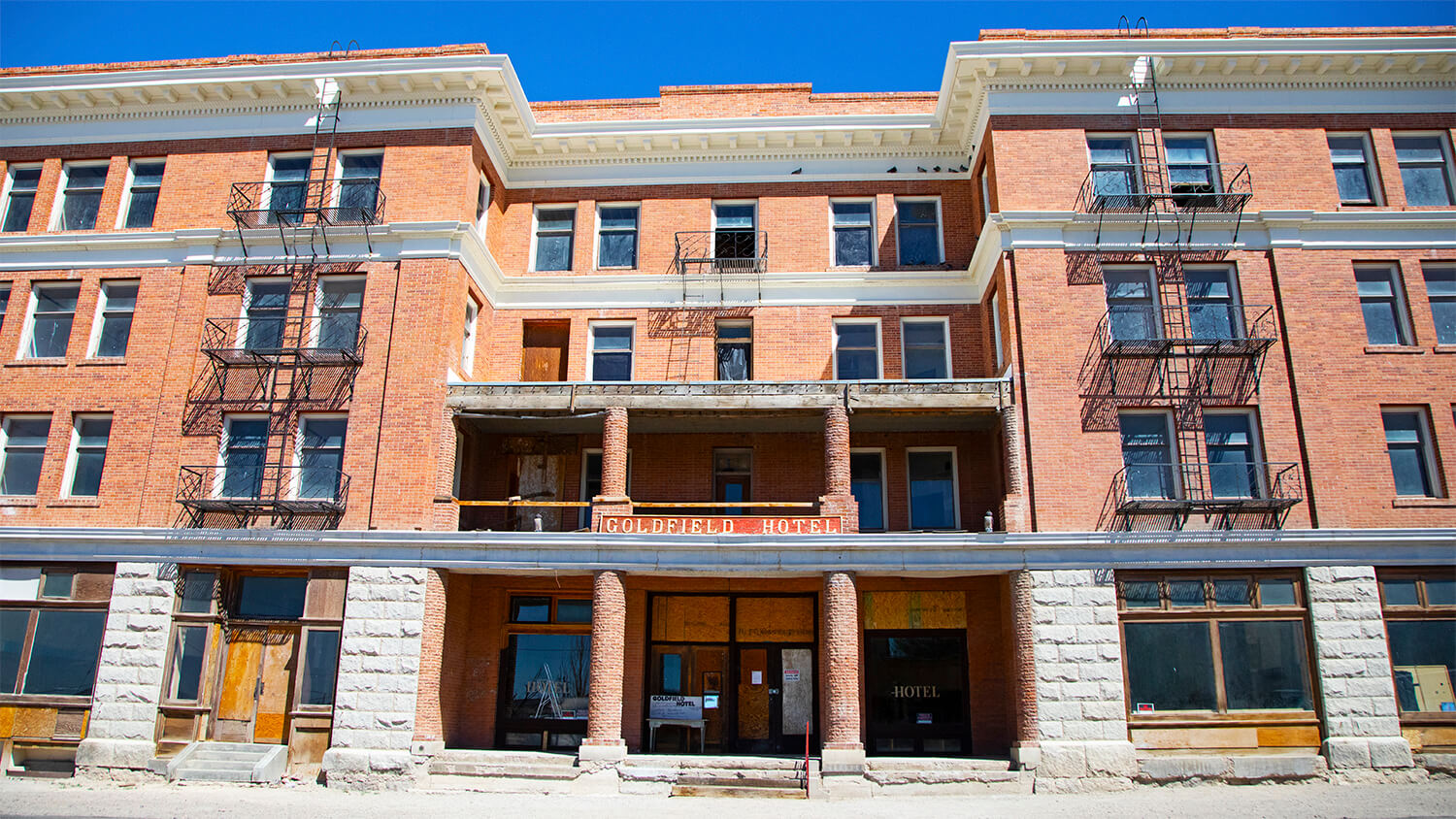
The Goldfield Hotel
The Goldfield Hotel rises four stories above a town that barely exists anymore, its granite-and-brick façade still dominating the main intersection of Goldfield, Nevada—a place that was once the largest city in the state and is now home to roughly 250 people. The hotel was built to match the ambitions of a boomtown drunk on gold, and it stands today as a monument to how quickly all of that can disappear. Gold was discovered near Goldfield in 1902, and within a few years the population surged to 20,000. The town supported three newspapers, five banks, and a mining stock exchange. At the center of it all was George Wingfield, a former cattle driver and card dealer who had grubstaked his way into control of the Goldfield Consolidated Mines Company. The hotel, designed by Reno architects Curtis and Holesworth, opened in 1908 at a cost of over $300,000. Legend holds that champagne was poured down the front steps at the grand opening. The 154-room interior featured mahogany paneling, gilded columns, crystal chandeliers, gold-leaf ceilings, European chefs, and one of the first Otis elevators west of the Mississippi. It was proclaimed the finest hotel between Chicago and San Francisco. But Goldfield was a storm, not a city. Mine output dropped sharply by 1910. A flash flood hit in 1913. In 1923, a moonshine still exploded and ignited a fire that consumed twenty-seven blocks. The hotel survived—stone and brick don't burn easily—but the town was gutted. By the 1930s, the Goldfield Hotel was a flophouse for cowboys. During World War II it housed officers from the nearby Tonopah Army Air Field, and when they checked out in 1945, the hotel closed for good. The hotel's paranormal reputation centers on Room 109 and a legend involving a woman named Elizabeth—said to have been a prostitute and mistress of Wingfield who became pregnant with his child. The story claims he chained her to a radiator in the room, kept her alive until the baby was born, and then either let her die or killed her. The infant was allegedly thrown down a mine shaft beneath the hotel. It is a vivid and horrible story, and it has no verified historical basis. Researchers at the Central Nevada Museum have noted significant inconsistencies—the mine shafts were dug in 1925, years after Wingfield sold the hotel and moved to Reno, and no contemporary records corroborate Elizabeth's existence. The legend appears to trace largely to a book by 1980s owner Shirley Porter, likely crafted to boost interest in the property. However, there is a documented shadow behind the myth: a 1904 lawsuit by a woman named May Baric, who claimed to be Wingfield's common-law wife, accused him of abuse, and was given $400 and forced to leave town with their child. She and the child died in obscurity. The Elizabeth legend may be an embellishment of a real and quieter cruelty. Regardless of origin, the reports attached to Room 109 are persistent. Visitors describe sudden extreme cold, disembodied crying, and an overwhelming sadness that causes some to weep without explanation. Elsewhere, cigar smoke is reported on the first floor—attributed to Wingfield—along with unexplained piles of fresh ash. The lobby staircase is associated with child spirits who tap visitors on the back. The basement became nationally known after a 2004 Ghost Adventures investigation in which a brick appeared to fly across the room on camera. The show returned multiple times. Investigators have reported equipment malfunctions, shadow figures, and physical aggression from an entity known locally as "the Stabber." Today the hotel is privately owned, closed to the public, and mired in renovation efforts that have stalled repeatedly over decades. It is listed on the National Register of Historic Places. You cannot walk in. You can only look through the windows at the mosaic tile floors and the mahogany front desk and the elevator shaft, all of it frozen in place since the last guest left eighty years ago.
Figueroa Hotel
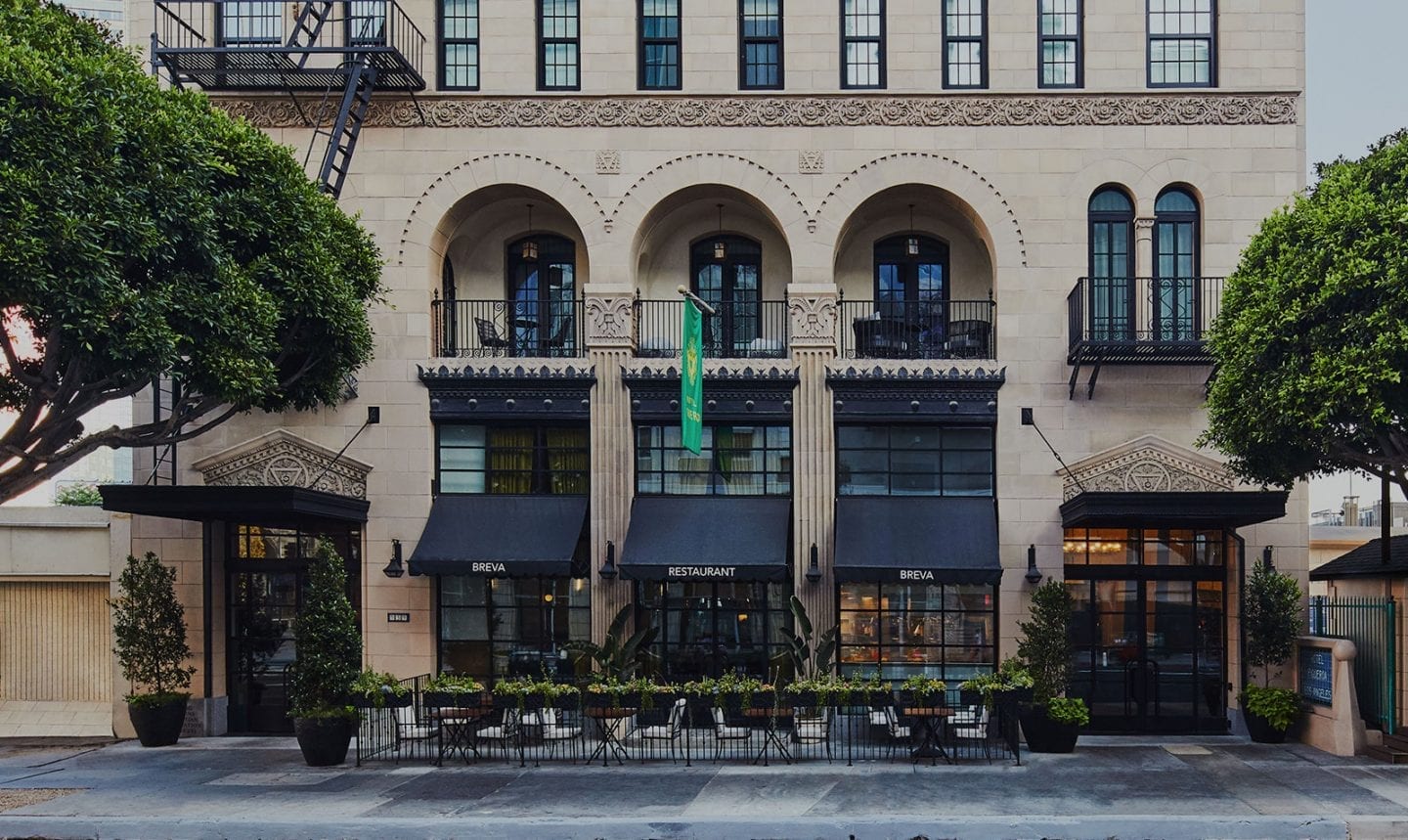
Rising thirteen stories above South Figueroa Street in the South Park district of Downtown Los Angeles, Hotel Figueroa occupies a building that was never meant to simply house travelers. It was built as a statement—the largest commercial structure in the United States financed, owned, and operated by women at the time of its completion in 1926. Its origins belong to the YWCA of Los Angeles, and its paranormal reputation belongs to nearly a century of human drama that unfolded within walls designed to shelter women at a time when most hotels in America would not admit them without a male escort. The project was spearheaded by the Los Angeles YWCA under the leadership of Mrs. Chester C. Ashley, who recognized that the growing number of women entering the white-collar workforce needed safe, respectable accommodations while traveling on business. The organization purchased the land at 939 South Figueroa Street and financed the 409-room concrete and steel structure through supporter donations and two mortgage bonds. The architecture firm Stanton, Reed and Hibbard designed the building in a Spanish Colonial Revival style, and construction began in 1925. The hotel was finished ahead of schedule and dedicated on August 14, 1926, with a night of dancing and entertainment attended by more than three hundred guests, including representatives of nearly every women's club in Los Angeles. The interior was appointed with wrought iron finishes, goldenrod satin draperies with black patent leather trim, Spanish tapestries on loan from prominent local women, and public spaces given Spanish names—the lobby was the sala de recepcion, the main corridor the el corredor. Maude Bouldin, a motorcycle-riding, plane-flying feminist, served as the hotel's first managing director, believed to be the first woman in the country to hold such a position at a major hotel. For its first two years, the hotel served women exclusively, with men granted only limited access. By 1928, the policy was relaxed to include men in order to sustain business. Through the 1930s, 1940s, and 1950s, the Figueroa functioned as a hub for political organizations, social clubs, and the creative community of downtown Los Angeles. The hotel held press conferences and rallies against sexism and racism, cultivating a reputation as a progressive gathering place. By the late 1950s and 1960s, as downtown Los Angeles experienced a westward migration of offices and residents, the Figueroa declined into a semi-permanent residential hotel with guests paying by the week. In 1976, Swedish entrepreneur Uno Thimansson purchased the property and converted it into a Moroccan-themed budget hotel, introducing the Tangier Room and Club Fes. For decades the Figueroa operated in this eclectic incarnation, known for its affordability and its distinctive coffin-shaped swimming pool but increasingly criticized for aging infrastructure and the absence of modern amenities. In 2014, a joint venture purchased the hotel for sixty-five million dollars and undertook a three-year restoration that stripped away the Moroccan layers and returned the building to its original Spanish Colonial splendor. The hotel reopened in 2018 with 268 rooms and 63 suites, an art program featuring works exclusively by women, and multiple dining and bar concepts. The darker chapters of the Figueroa's history provide the framework for its haunting claims. In 1929, radio operator William L. Tallman murdered his girlfriend Virginia Patty in the hotel and was never captured. A separate killing involved a woman named Cecilia Oswald, whose body was discovered in one of the rooms after her partner confessed, claiming he killed her because he loved her. At least one suicide has also been documented on the premises. These violent deaths, layered over decades of dense human occupancy—hundreds of rooms filled night after night with transient guests, long-term residents, and the steady churn of a building that has never stopped operating—have given the Figueroa a paranormal reputation that persists through its various renovations. Guests over the years have reported televisions and lights turning on in the middle of the night without explanation, air conditioning and heating systems cycling on and off in patterns that suggest deliberate manipulation, and elevator doors opening on empty floors unprompted. Some visitors have described an oppressive or unsettling energy in certain hallways, particularly near the old elevator shafts. The apparition of a former maid who was murdered in the hotel has been reported by multiple sources, and at least one valet parking attendant has acknowledged off the record that staff are aware of the haunting but are discouraged from discussing it with guests. Some visitors have described experiences intense enough to cause them to leave in the middle of the night. Others have noted that the energy in the building, while unmistakable, does not feel uniformly hostile—more restless than aggressive, as though the spirits occupying the Figueroa are as varied in temperament as the living guests who have passed through its doors over the past century. Today Hotel Figueroa operates as part of the Unbound Collection by Hyatt, fully restored and positioned as a boutique luxury destination steps from Crypto.com Arena, the Los Angeles Convention Center, and the LA Live entertainment complex. The Gran Sala lobby displays a black-and-white photograph of the founding women in their flapper dresses, and a large-scale painting of Maude Bouldin greets visitors near the entrance. The coffin-shaped pool remains. The art on the walls is still by women. And the building itself, approaching its centennial, continues to hold whatever it has accumulated across a hundred years of sheltering the living—and, perhaps, some who no longer are.

Seven Sisters Inn
On East Fort King Street in Ocala's Historic District, surrounded by live oak canopies and a neighborhood of Victorian-era homes added to the National Register of Historic Places in 1984, the Seven Sisters Inn rises from the landscape exactly as it was meant to — ornate, commanding, and unapologetically excessive. The Gothic Queen Anne Victorian was built around 1890 by Linda B. and Joseph Lancaster and was known locally in its early years as the Painted Purple Lady, a nod to its distinctive original color. But the house's identity was defined by its second owners, and it bears their name in local memory to this day. Charles Rheinauer was born in Germany in 1846, the son of a Jewish cantor, and arrived in America with ambitions that proved more than adequate to the frontier city of Ocala. After marrying Emma Hohenberg in Alabama in 1890, he migrated to Florida and established a dry goods and clothing business with his brother Maurice under the name Rheinauer and Brothers. The enterprise grew into one of the finest clothier operations in the state, their flagship building on Ocala's town square so prominent it became known as the Rheinauer Block. Charles served as vice president of the Ocala Iron and Machine Works, founder of the Board of Trade — the forerunner of the Chamber of Commerce — and founder and director of the first bank in the city, the Merchants National Bank. He helped introduce Thomas Edison's incandescent electric lamp to the community. He served as presiding officer of the Hebrew Society of Ocala. In 1906, he became the second Jewish mayor in the city's history. And in a chapter that links the house to wider hemispheric history, Rheinauer collaborated with Cuban revolutionary José Martí to co-found La Criolla Cigar Company, which became one of the largest cigar factories in Florida and drew thousands of Cuban immigrants to the section of Ocala that became known as Marti City before the factory eventually relocated to Tampa's Ybor City. Charles and Emma moved into the Fort King Street house in 1895 and remained there for the rest of their lives. Charles died in the home on May 18, 1925, at age 79. Emma outlived him by nearly seventeen years, dying on May 7, 1942, at age 74. Both are buried in the Temple Beth Shalom Cemetery, the only Jewish cemetery in Ocala. After Emma's death, the property passed through various hands over the following decades, serving at different points as a private residence and office space before being purchased and restored as a bed and breakfast. Later owners — former international cargo airline pilots — filled the house with antiques and artifacts gathered from decades of travel: temple doors from Bali over four hundred years old, pieces from Egypt, India, China, Indonesia, and South America. The inn now offers suites themed by destination, including Madrid, Casablanca, Beijing, Paris, and Cairo, each one a densely layered room that feels more like a cabinet of curiosities than a hotel accommodation. The paranormal reputation is substantial and has attracted serious outside attention. In October 2008, The Atlantic Paranormal Society — TAPS, the group behind the SyFy Channel's Ghost Hunters — spent four days at the inn filming what aired as "The Ghosts of the Sunshine State." Their K2 meters registered unexplained electromagnetic spikes. Investigators reported seeing a shadow moving between rooms during nighttime sessions. A shoe left on the stairs turned up in a room no one had entered. Co-owner Bonnie Morehardt, who ran the inn with her husband Ken Oden for nearly twenty years, described the presence as consistently playful rather than threatening, and noted that a book had been found placed on a table and opened as though someone was in the middle of reading it. She said, pointedly, that she believed it was not the house itself that was haunted but the property underneath it — speculating about what may have occupied the land before the Victorian was built, possibly connected to the nearby site of Fort King. In the years following the Ghost Hunters episode, the inn hosted additional investigations by Chip Coffey, John Zaffis and Brian Cano of Haunted Collector, Scott Tepperman of Ghost Hunters International, and Steve DiShiavi of The Dead Files. The haunting is described around a cast of seven identified spirits. Charles and Emma Rheinauer are said to appear occasionally in Victorian dress, and guests have reported seeing the couple together in what was once a ballroom. Three children of unknown identity are associated with playful, disruptive activity — moving small objects, producing sounds, generating unexplained responses during EVP sessions. A well-dressed man identified only as George, said to project a 1950s sensibility, has reportedly made his presence known to female guests specifically. A seventh figure, an older man whose identity has never been determined, is sometimes connected to the sound of phantom piano music. A woman in white has been reported passing through bathroom walls. Staff and guests across different eras have described footsteps in empty hallways, whispers, the rustle of long period clothing, furniture relocated without explanation, knocks from the walls, and the persistent feeling of being watched from somewhere inside the rooms. The inn has changed hands more than once in the years since its peak ghost-hunting notoriety and has gone through additional restoration. It operates today as a boutique accommodation. The antiques are still there. The architecture is intact. The seven rooms in the guest registry that were never formally checked out appear to still be occupied.

The Springville Inn
The Springville Inn sits along California State Route 190 in the small foothill town of Springville, Tulare County, nestled against the western slope of the Sierra Nevada just minutes from the Giant Sequoia National Monument. The town has been here since 1849, when pioneers settled the area, and the inn has been at its center since 1911, when it was built as the Wilkinson Hotel to serve travelers arriving with the railroad. The original owners went broke during construction and were forced to sell before they ever saw it finished. A 1972 addition brought the motel rooms that extend behind the original structure, but the bones of the place—the restaurant on the ground floor, the bar and dance hall on the second—remain housed in the 1911 building. For over a century, the Springville Inn has served as the social hub of a town that goes quiet by six in the evening. It is also, by most accounts from those who have worked and stayed there, thoroughly haunted. Four distinct entities have been identified by staff over the decades, each given a plainspoken name by employees who encountered them often enough to stop being surprised. The Old Man is the most frequently reported, an observant presence concentrated around the kitchen and the old dumbwaiter that connects the lower kitchen to the upper service area. Former employees describe him not as a passive residual haunting but as an active and hostile personality—hiding the lock to the walk-in cooler, shoving barstools, breaking glassware, knocking from inside the walk-in as though someone had been locked in, and on more than one occasion physically attempting to push workers down the stairs. The Young Man is said to be the ghost of a logger who was shot and carried into the inn to die. His energy is described as friendly, even charming—he frequents the bar area and has a reported affinity for female guests and staff. The Little Girl, estimated by witnesses at seven or eight years old, appears in turn-of-the-century dress at various locations throughout the building, though sightings have grown less frequent in recent years. The Woman is the rarest and most unsettling of the four. She has been seen on the upstairs balcony in white, and one former restaurant employee described an encounter in which the figure appeared standing inverted on the ceiling of the dining room, staring down with a dark substance dripping from her mouth. That employee ran screaming into the kitchen. The reports extend beyond the original building. Guests in the motel rooms have described cabinet doors swinging open on working hinges, unexplained sparkling lights on ceilings that persisted even after curtains were drawn, and personal belongings rearranged overnight—dress socks neatly folded into pant legs in ways the guest swore they never would have done. Staff members have reported whispers, physical touches on the staircase, and self-propelled kitchen utensils. One visitor captured a voice on a phone recording that appeared to say "help me" over background noise. A man from Sacramento who stayed at the inn for a work trip reportedly refused to return, driving an extra forty-five minutes to stay in Tulare on all subsequent visits rather than spend another night. Former employees note the activity is markedly stronger during mornings and afternoons than at night.

Hotel Villa Convento
Standing on Ursulines Avenue in the lower French Quarter, just steps from the Mississippi River and within sight of the Old Ursuline Convent, the Hotel Villa Convento occupies a Creole townhouse that has been absorbing the weight of New Orleans history since the 1830s. The land itself carries an even older provenance. It was originally part of the holdings of the Ursuline nuns, the French Catholic order that arrived in Louisiana during the early colonial period and became one of the most important institutions in the young settlement. In 1805, the nuns partitioned off portions of their property as the growing city pressed in around them, and the lot at what is now 616 Ursulines Avenue passed into private hands. By 1833, the parcel had been purchased by a Frenchman named Jean Baptiste Poeyfarre, who commissioned the construction of the three-story Creole townhouse that remains standing today. Poeyfarre died roughly a decade later, and his widow sold the building to Octave Voorheis, who held the property until the economic collapse that followed the Civil War forced him to let it go around 1872. It is during the difficult years after the war that the building's most enduring and controversial legend takes shape. New Orleans, once one of the wealthiest and most cosmopolitan cities in America, had entered a steep decline. Vice industries flourished as the economy cratered, and the French Quarter became a district where brothels, gambling houses, and saloons operated with varying degrees of openness. Local tradition holds that 616 Ursulines became a brothel during this period, possibly operating as a so-called house of assignation—a place where illicit encounters could take place away from private residences. No definitive documentary proof has surfaced to confirm the building's use as a bordello, but available records suggest that something unsanctioned was happening at the address during these decades, and multiple sources have maintained the claim across generations. The legend has earned the Villa Convento a persistent association with the folk song "House of the Rising Sun," later made internationally famous by the Animals in 1964. Several locations in New Orleans have been put forward as the song's inspiration, and the true origin remains a matter of debate, but the Villa Convento has remained near the top of the list for decades. On March 10, 1902, Pasquale Taromina purchased the property, and his family occupied the building as a private residence until 1946. Following the Taromina family's departure, the structure was converted into a rooming house known as the Old Town Villa, offering inexpensive studio apartments to transient residents and students. Among the more notable tenants was a young Jimmy Buffett, who lived in apartment 305 during his early days in New Orleans and later returned with a video crew to film a documentary about that chapter of his life. The room retains his apartment number to this day and is informally known as the Jimmy Buffett room. In the early 1970s, the rooming house was converted into a hotel, and in September 1981, the Campo family—seventh-generation New Orleanians whose ancestors emigrated from the Canary Islands during the colonial period—purchased the property and have operated it as the Hotel Villa Convento ever since, preserving all twenty-five rooms with their original apartment numbers intact. The paranormal reputation of the Villa Convento is among the most consistently documented of any hotel in a city that has no shortage of haunted accommodations. The activity is not confined to a single room or floor but has been reported across the property, with certain rooms drawing particular attention. The most commonly identified entity is believed to be the ghost of a former madam from the building's rumored brothel era. Guests—overwhelmingly men—report hearing a woman's disembodied voice in Room 301, sometimes speaking in suggestive tones or addressing the guest by name. Male guests in multiple rooms have described rolling over in bed to see the apparition of a woman dressed in black standing at the bedside, gazing at them intently before vanishing. The figure reportedly appears visible only to the man, even when a partner is lying beside him. The connection to the brothel legend extends to another recurring phenomenon: unexplained knocking on guest room doors, which paranormal researchers and tour guides have linked to the old practice of madams making rounds to signal that a client's time was up. Room 302 has produced reports of full-bodied apparitions materializing and disappearing at all hours, including from a longtime annual guest who saw a figure form in the room and never returned to stay there again. Room 305, the Buffett room, generates reports of personal belongings being moved and an oppressive sense of being watched. At least one hotel staff member has described entering 305 to check on a hairdryer and being overcome by a sudden, intense feeling of being observed, strong enough to send her back downstairs immediately. Room 209 carries a grimmer association—local accounts hold that a man took his own life in the room, and guests who stay there have reported hearing voices and finding their possessions displaced. Visitors have also reported the sound of a child's laughter echoing through the building, and some guests have captured unexplained faces in photographs taken inside the hotel. Author James Caskey, who stayed at the Villa Convento while researching his book on New Orleans hauntings, has described it as possibly the most haunted hotel in the city. Paranormal tour groups regularly include the property on their routes, and independent investigators who have conducted overnight sessions at the hotel have reported capturing audio evidence and experiencing physical phenomena consistent with an active location. Today the Hotel Villa Convento operates as a small, family-run guest house with the quiet charm of a building that has never been stripped of its character. The courtyard offers chicory coffee and morning beignets. The wrought-iron balconies look out over Ursulines Avenue, where horse-drawn carriages still pass and the tops of ships on the river are visible in the distance. The Campo family embraces the building's history—its colonial origins, its possible life as a brothel, its tenure as a bohemian rooming house, and its reputation as one of the most paranormally active addresses in New Orleans. Whether the knocking at the door is a former madam making her rounds or just the old bones of an 1833 townhouse settling into another century, the Villa Convento offers the kind of stay where the line between history and haunting is never entirely clear.
Old St. Vincent’s Hospital (Drury Inn)
The corner of Palace Avenue and Paseo de Peralta in downtown Santa Fe is one of the most historically saturated pieces of ground in the American Southwest. Before European contact, it sat within the territory of ancestral Pueblo peoples. After Spanish colonization established Santa Fe as a capital in 1610, it cycled through two centuries of colonial administration, conflict, and change. By the time Archbishop Jean Baptiste Lamy arrived in the mid-1800s to transform the church's presence in New Mexico, this corner was already ancient by American standards. The building that now operates as the Drury Plaza Hotel carries that entire weight — plus decades of hospital death, a nursing home, state offices, film sets, and years of abandonment — inside a structure that still looks, to many guests, like it remembers everything. The hospital's origin traces directly to Lamy. After his arrival, he invited the Sisters of Charity to New Mexico to help care for the sick. In 1865, Lamy sold them a building originally constructed as a rectory adjacent to what would become St. Francis Cathedral, and the Sisters opened Santa Fe's first hospital inside it. That original structure and the 1911 Craftsman-style Marian Hall built next door served the community for nearly a century before the Sisters outgrew them entirely. In 1953, renowned architect John Gaw Meem — known for the Zimmerman Library at the University of New Mexico and the Cristo Rey Church in Santa Fe — was commissioned to design a proper city hospital on the site. The resulting building was notably austere for Meem: yellow brick, sharp corners, large windows, only a faint nod to Territorial style. It opened as the new St. Vincent Hospital and served Santa Fe for roughly two decades before the hospital relocated to St. Michael's Drive in 1977. The state of New Mexico then took over the buildings for use as offices for the Department of Cultural Affairs and, eventually, a nursing home. That nursing home, which locals called La Residencia, occupied the old hospital until the early 1980s. The building then sat largely empty for years — used occasionally as a film location, including Jeff Bridges' 2009 film Crazy Heart — before Drury Hotels purchased it in 2007 and began a years-long adaptive reuse project. Archaeologists working the site in 2008 uncovered what appeared to be an underground vault of unknown origin before the economic collapse shut the project down. The Drury Plaza Hotel finally opened in 2014. The paranormal reputation of the building predates the hotel by decades and is concentrated in two areas: the basement and the third floor. During the La Residencia years, the basement became so unsettling to staff that sending new employees down there alone at night became a formal initiation ritual — a rite of passage that the longtime employees themselves refused to repeat solo under any circumstances. Multiple accounts describe the basement walls appearing to ooze blood, particularly near a storage room that had once been used to incinerate amputated limbs and surgical remains. A nurse coordinator investigating a disturbance in that room reported finding what looked like fresh blood on a wall surface. A former candy striper who worked at the original St. Vincent Hospital in the 1970s recalled that the area near the basement incinerator produced intense cold, a sense of presence, and disembodied voices — and that hospital staff uniformly avoided it after dark. During the Drury renovation, a security guard working nights described refusing to enter an adjacent structure called Marian Hall, reporting consistent unease throughout the basement level. The state museum's use of the building added another layer: Native American artifacts, and reportedly skeletal remains in cardboard boxes, were stored in the basement hallways during the state offices era. That detail appears in documented interviews with former employees and has fed persistent theories about the nature of the activity. Room 311 — or the fourth floor, depending on the account — carries its own specific legend. A young boy brought into the hospital on Christmas Eve after a severe car crash is said to have died crying for his deceased father throughout the night. Long after the hospital years, nurses at La Residencia reported hearing a baby crying in that room with no source, eventually keeping it vacant unless the census demanded otherwise. The sound has been reported by visitors as recently as the hotel era. A nurse who worked the top floor during the hospital years described a short Hispanic man in old-fashioned clothing appearing alongside a woman in a black mantilla — both seeming confused and in need of something they couldn't name. A worker who accidentally rode the elevator to the basement described the doors refusing to close until he stepped out, then ascending without him while a shadowy presence moved nearby. The Drury Plaza Hotel operates today as a functioning boutique hotel in one of Santa Fe's most storied locations. The basement is there. Room 311 is numbered. The history goes back further than the building — and, by most accounts, it hasn't stopped moving.
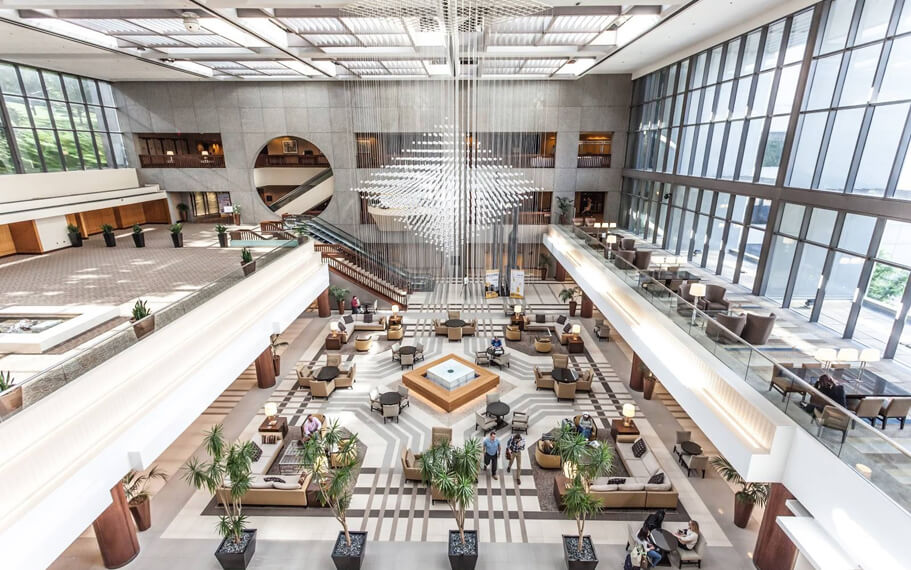
Sheraton Kansas City Hotel at Crown Center
The lobby of the Sheraton Kansas City Hotel at Crown Center is bright, modern, and busy—a soaring atrium with polished floors, a silver sculpture suspended from the ceiling, and sunlight streaming through walls of glass. Guests move through it on their way to conventions, shopping, and meetings at the adjacent Hallmark Cards headquarters. Nothing about the space announces what happened here. There is no plaque on the wall, no marker on the floor, no indication that on the evening of July 17, 1981, this lobby became the site of the deadliest structural failure in American history. The building opened July 1, 1980, as the Hyatt Regency Kansas City, a forty-story, 733-room tower developed by Don Hall of Hallmark Cards as the centerpiece of the Crown Center complex. At the time it was the tallest building in Missouri. The atrium was its showpiece—a cavernous open space crossed by suspended pedestrian walkways on the second and fourth floors, connected by steel rods. The hotel hosted weekly tea dances in the lobby, events that drew hundreds for big-band music and dancing beneath the soaring ceiling. On the evening of July 17, 1981, more than 1,600 people were gathered for one of those dances. At approximately 7:05 p.m., the fourth-floor walkway broke free from its suspension rods and collapsed onto the second-floor walkway below. Both structures crashed to the lobby floor, carrying dozens of people and crushing dozens more standing beneath. The cause was a design change made during construction: the original engineering called for continuous steel rods supporting both walkways, but the design was altered to use shorter rods each supporting only one level. The connection points bore twice the intended load. The National Bureau of Standards later determined the walkways could barely support their own weight. The rods tore through the box beams. One hundred and fourteen people were killed. Two hundred and sixteen were injured. Rescuers worked through the night, pulling the last survivor from the wreckage at four in the morning. The aftermath reshaped American engineering standards. The engineers who approved the design lost their licenses. The Crown Center Redevelopment Corporation paid over $140 million in claims. The hotel underwent reconstruction, replacing the skywalks with a single balcony supported by ground columns. The tea dances ended permanently. The hotel changed hands—becoming the Sheraton Kansas City in 2011 after Starwood assumed management. A memorial was not dedicated until 2015, when the Skywalk Memorial Plaza opened in Hospital Hill Park with a sculpture of dancers and the engraved names of all 114 victims. The paranormal accounts carry a weight distinct from most haunted hotel stories because the event that produced them is not legend—it is documented, investigated, and seared into the memory of a city. Guests who know nothing of the history report an oppressive heaviness in the lobby, particularly a downward pressure on the head and shoulders. One flight attendant described the sensation as feeling like her head was being physically pushed down from the moment she entered the atrium. Visitors have heard screaming echoing through the mezzanine—loud, hysterical, unmistakable—with no source found. The most commonly identified apparition is a woman in a tea gown, believed to be victim Kathryn Sullivan, seen in guest rooms, reflected in windows, and standing in the lobby. A young man in a black tuxedo with a blue bow tie has been reported disappearing through elevator doors. Figures in period attire have been observed in the atrium. A local paranormal investigator named Jim Schwalm, who had reportedly experienced premonitory dreams before the collapse, photographed the lobby shortly after the disaster and claimed to have captured an image of several couples dancing. Today the Sheraton Kansas City operates as a major convention hotel with over 42,000 square feet of function space and the largest ballroom in the city. The lobby is open, bright, and full of life. The skywalks are gone. The architecture has been redesigned to ensure nothing like the collapse could recur. But the space remembers what the building cannot say, and some who pass through it feel something no renovation has removed—a gravity in the air, a sound just below hearing, the sense that not everyone who came to dance that night has left the floor.
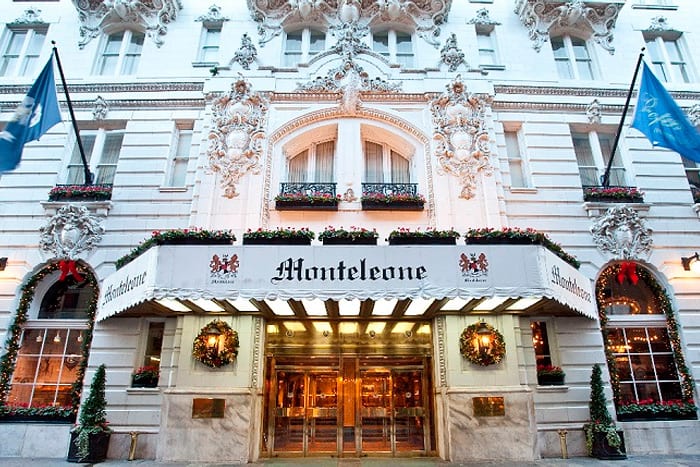
Hotel Monteleone
It has been said that the French Quarter begins in the lobby of the Hotel Monteleone. The claim is not merely geographic. Standing at the corner of Royal and Iberville streets since 1886, the Monteleone is the only high-rise building in the interior of the Quarter, a Beaux-Arts landmark that has anchored the cultural life of the neighborhood for well over a century. It is one of the last great family-owned hotels in America, and it is, by nearly every account, one of the most actively haunted buildings in New Orleans. The hotel's origins trace to Antonio Monteleone, a Sicilian nobleman who had operated a successful shoe factory before immigrating to New Orleans around 1880. Setting up a cobbler's shop on Royal Street, then the commercial and banking heart of the city, Monteleone prospered quickly enough to purchase a small sixty-four-room hotel on the corner of Royal and Iberville. He renamed it the Hotel Monteleone, and the property grew rapidly. A major expansion in 1903 added thirty rooms, and a sweeping 1908 renovation added three hundred more. Antonio died in 1913, and the hotel passed to his son Frank, who oversaw the addition of the Queen Anne Ballroom and two hundred more rooms in 1928—one year before the Depression. The Monteleone was one of the rare family-owned hotels to survive those lean years intact. In 1949, Frank introduced the hotel's most famous feature: the Carousel Piano Bar and Lounge, a twenty-five-seat revolving bar turning on two thousand steel rollers at a rate of one revolution every fifteen minutes. The original building was demolished and rebuilt in 1954, and a final expansion in 1964 added the upper floors, a Sky Terrace, rooftop pool, and the Presidential Suite. The hotel today holds 570 guest rooms across its towering frame. The Monteleone's literary associations alone would secure its place in American cultural history. Ernest Hemingway, William Faulkner, Tennessee Williams, Eudora Welty, and Truman Capote were all frequent guests. Hemingway referenced the hotel in his short story "Night Before Battle." Williams used it as a symbol in The Rose Tattoo. Capote famously claimed on The Tonight Show that he was born in the hotel—his mother lived there during her pregnancy but made it to the hospital in time. In 1999, the Friends of the Library Association designated the Monteleone an official literary landmark, one of only three hotels in the country to receive that distinction. In 1942, New Orleans author Innis Patterson Truman jumped to her death from the hotel's twelfth floor, an event documented in letters by the writer Lyle Saxon—one of the building's darker episodes and one that adds genuine tragedy to the property's layered past. The paranormal reputation of the Hotel Monteleone is extensive and has been the subject of formal investigation. In March 2003, the International Society for Paranormal Research conducted a multi-day investigation and reported making contact with more than a dozen earthbound entities. Among them were two former employees—a chef and a busboy or waiter—whom investigators linked to a recurring phenomenon involving the hotel restaurant's door, which opens and closes on its own despite being locked and operated by a push-button mechanism. The investigators concluded the two spirits were engaged in an ongoing disagreement about whether the door should remain open or shut. The most widely reported spirit is that of a toddler named Maurice Begere. According to the legend, Maurice's parents, Jacques and Josephine, were frequent guests in the late nineteenth century who would leave their young son with a nanny while they attended performances at the French Opera House on Bourbon Street. One evening, Maurice developed a high fever and died in his room on what is now the fourteenth floor. His grief-stricken mother returned to the hotel repeatedly, and eventually, the story holds, Maurice's spirit appeared before her, saying words to the effect of not to cry, that he was fine. Guests to this day report seeing a small boy wandering the fourteenth-floor hallway, sometimes standing at the foot of their bed, sometimes heard laughing. The fourteenth floor—which is actually the thirteenth, as the hotel skipped that number in its floor plan—has become the most requested floor among guests seeking a paranormal experience. Other reported entities include a man named William "Red" Wildemere, who died of natural causes in the hotel, a ghostly figure in nineteenth-century clothing believed by some to be Antonio Monteleone himself still watching over his creation, a phantom child who takes visitors' hands and then vanishes, and a spirit identified as "Solemn John," a Tennessee businessman said to have committed suicide after failed investments. Guests report shadows gliding through corridors, unexplained cold spots, elevators that stop on the fourteenth floor without being called, and the sounds of children playing in hallways where none are present. Today the Hotel Monteleone continues to operate under the fifth generation of the Monteleone family. The grandfather clock still chimes in the lobby. The Carousel Bar still turns. The doormen still stand at the entrance on Royal Street. And somewhere on the fourteenth floor, a small boy may still be looking for his parents—or simply making sure he is remembered.

Gratz Park Inn
Tucked into the corner of Second and Upper streets in downtown Lexington, Kentucky, just steps from the green canopy of Gratz Park, the building now known as the Sire Hotel—but remembered by most locals as the Gratz Park Inn—sits quietly among some of the oldest and most storied ground in the Bluegrass. The surrounding historic district occupies land first laid out in 1781 by order of the Virginia Assembly, and by the late eighteenth century the neighborhood had already begun its long accumulation of wealth, ambition, tragedy, and memory. Transylvania University, one of the oldest institutions of higher learning west of the Alleghenies, established its campus here in 1793. The park itself served as a Civil War bivouac for both Union and Confederate troops, and the Federal and Greek Revival homes lining its edges housed some of Lexington's most prominent—and most troubled—families. The building at 120 West Second Street was constructed around 1916 and opened in 1920 as the Lexington Clinic, a group medical practice modeled after the Mayo Clinic. What began as a modest venture among three physicians eventually grew to house nine doctors and expanded facilities, including surgical suites and, notably, a basement morgue complete with drainage scuppers that remain in the building to this day. The clinic served central Kentucky for decades before outgrowing its original home and relocating to Harrodsburg Road in the late 1950s. After the physicians departed, the Fuller Engineering firm occupied the structure through the mid-1970s, and the building sat largely underused until the 1980s, when developers converted it into the Gratz Park Inn—a boutique hotel that opened in 1988 and quickly became Lexington's only historic lodging property. The conversion from medical facility to intimate hotel preserved much of the building's original architecture, but it also appears to have preserved something less tangible. Staff and guests began reporting unusual encounters not long after the inn opened, and over the years a small but remarkably consistent cast of recurring figures emerged from the accounts. The most frequently described are three entities said to be linked to the building's years as a clinic—former patients, according to local tradition, who died within its walls and never fully departed. The spirit known as John is described as a mischievous older man with a sense of humor, known for switching televisions on and off in guest rooms and occasionally manifesting as a melancholy figure on the lower level. Little Annie, as she has come to be called, is reported as a young girl seen playing with a doll or jacks in the third-floor hallway, her footsteps sometimes heard running and then abruptly stopping outside occupied rooms. One guest, staying in what they believed was room 207, described waking to the sound of small footsteps approaching the bed—slow, deliberate, as if trying not to be noticed—before the steps broke into a child's sprint back toward the hallway when the guest removed their sleep mask. The front desk staff reportedly logged the encounter in a ledger kept for such reports. The third recurring presence is the Lady in White, an apparition of a woman in a white dress and matching hat who has been seen drifting through the halls and the atrium, described by witnesses as appearing to search for someone or something. Guests have also reported the sound of a woman walking in high heels through the atrium area, unexplained laughter emanating from room 216, levitating objects, and the apparitions of what appear to be rowdy, intoxicated partygoers from another era materializing briefly before vanishing. The building's medical past lends a particular gravity to these claims. The basement morgue, though no longer in active use, still bears the physical evidence of its original purpose, and the knowledge that patients lived, suffered, and died in the very rooms now occupied by hotel guests gives the reported activity a plausibility that pure legend would struggle to achieve. The Blue Grass Trust for Historic Preservation once conducted its Gratz Park Ghost Tails and Tours through the surrounding neighborhood, and the inn featured prominently in the route. Today, MK Paranormal leads ghost walks through the district, and the Gratz Park Inn remains a regular stop on haunted Lexington itineraries. The building was sold in the late 2010s and underwent a full renovation, reopening as the Sire Hotel under the Hilton Tapestry Collection. The 42 rooms were gutted and redesigned with modern finishes and equestrian-themed touches befitting Lexington's thoroughbred culture. The structural bones remain, though—the same hallways, the same third floor, the same basement. Whether the renovation disturbed or displaced whatever had settled into the old clinic is a question the new ownership has not publicly addressed. But the reports that preceded the transformation were consistent enough, and came from enough unrelated sources, that the building's reputation is unlikely to be stripped away as easily as the wallpaper. The Gratz Park district remains one of the most concentrated clusters of reported paranormal activity in the Commonwealth, and the old clinic at its eastern edge remains one of its anchors.

Hotel de la Poste
Tucked along Chartres Street in the heart of New Orleans' French Quarter, the property at 316 Rue Chartres sits on ground that has been shaped and reshaped by nearly three centuries of the city's layered and often turbulent history. The land's earliest documented use dates to 1731, when it served as a garden tended by the Ursuline nuns, the order of Catholic sisters who were among the first European women to settle in Louisiana and who played a central role in the colony's early development. For well over a century, the site passed through various hands as the French Quarter grew from a colonial outpost into the commercial and cultural heart of a booming port city. By the 1860s, the block had taken on a more industrial character, with structures at 310 and 316 Chartres rebuilt in the three- and four-story style typical of the period. A clothing factory operated on-site during this era, producing the voluminous blouses and long skirts that defined the fashion of the day. Like much of the Quarter, the buildings witnessed the catastrophic yellow fever epidemics that swept through New Orleans repeatedly in the nineteenth century, killing tens of thousands and leaving entire neighborhoods steeped in grief. In 1904, fire swept through the block and damaged the factory at 310 Chartres. The following decades saw the area decline sharply. By the 1930s, this stretch of the Quarter had become a rough district of brothels, dive bars, and crowded tenement housing. The deterioration continued through the middle of the twentieth century, and in the 1960s the building at 316 was demolished entirely and replaced with a parking lot, leaving 310 as the sole surviving structure on the block. It was not until the 1970s that the site was revived as the Hotel de la Poste, a boutique French Quarter hotel whose name referenced the old street posts where riders once hitched their horses along Chartres. The hotel incorporated a collection of older buildings, each carrying its own history and architectural character, stitched together around a central courtyard. In 2000, the property was rebranded as the W New Orleans–French Quarter and underwent a nine-million-dollar renovation completed in 2012 that leaned into the city's jazz and voodoo aesthetic. The property changed hands again in 2024, emerging from another major renovation as the Hotel de la Poste–French Quarter, a Renaissance Hotel, with ninety-seven guest rooms, a restaurant called 3rd Block Depot Kitchen and Bar, and design elements inspired by bayou landscapes and Sazerac culture. The paranormal reputation of the property predates its modern hotel incarnations and is rooted in the layered uses of the buildings themselves. The site's connection to enslaved labor, common across the French Quarter, provides much of the framework for the haunting claims. In July of 1996, investigators from the International Society for Paranormal Research, a New Orleans–based group led by Larry Montz and Daena Smoller, conducted a formal investigation of the hotel. On the second floor, the team reported encountering the spirit of a woman in her thirties, described as Caucasian, who they believed was responsible for recurring disturbances in that section of the building. In another area of the property—one that may have served as slave quarters in the antebellum period—the investigators identified the spirits of three enslaved children. Near the hotel's parking garage, which is believed to occupy the site of old stables, the team reported the presence of a middle-aged enslaved man they identified as Gerald, seemingly tied to the labor he performed there in life. These findings were later documented in the book ISPR Investigates the Ghosts of New Orleans, published in 2000. Beyond the formal investigation, the hotel carries the ambient weight of its French Quarter surroundings—a neighborhood built on ground saturated with the consequences of slavery, epidemic disease, fire, and colonial violence. Chartres Street alone is home to some of the most consistently reported hauntings in the city, from the Cabildo to the Old Ursuline Convent to the Pharmacy Museum just blocks away. The fact that the buildings at 316 Chartres are an assemblage of older structures, each with distinct histories and former uses, creates an environment where multiple eras of occupation overlap within a single property. Guests and staff over the years have reported the kinds of experiences common to actively haunted French Quarter buildings—unexplained sounds, cold spots in otherwise warm corridors, and the unsettling sense of being watched in rooms that should be empty. Today the property operates as a four-star Renaissance hotel, fully renovated and outfitted with modern amenities. The courtyard remains, lush and quiet at the center of the building. The guest rooms are decorated with cypress murals and jewel-toned accents meant to evoke the Mississippi Delta. Nothing about the polished interior announces what investigators and guests have reported over the decades. But the bones of the place are old, and the ground beneath it is older still. In a city where the past has a habit of refusing to stay buried, 316 Chartres Street carries a history dense enough to leave marks that no renovation can quite reach.