
EVP Recordings from Haunted Locations
133 haunted locations
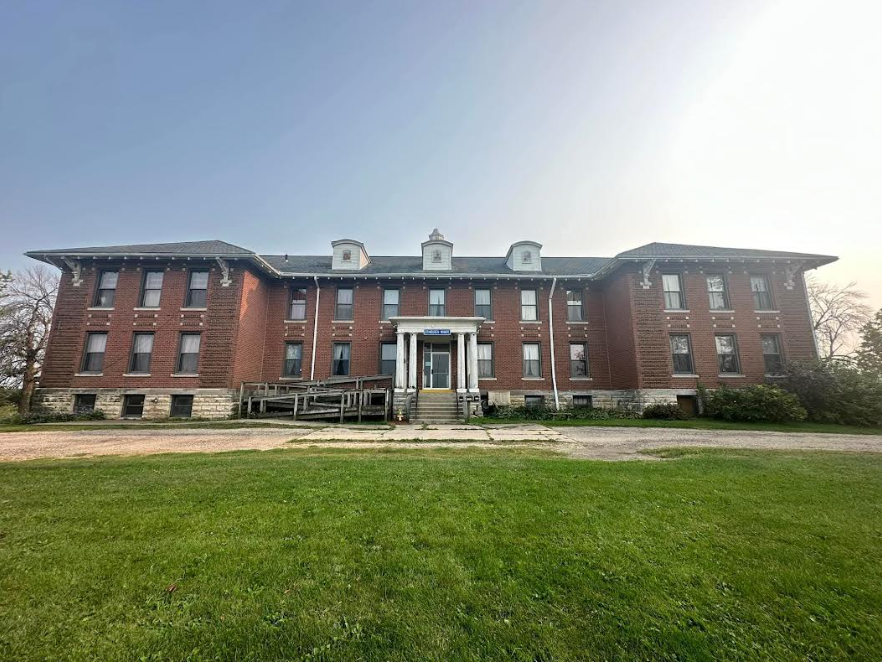
Edinburgh Manor
Rising from the rolling hills outside Scotch Grove, Iowa, Edinburgh Manor looks exactly like what most people picture when they think of a haunted asylum—massive brick walls, tall narrow windows, and an isolated presence that feels cut off from the modern world. But Edinburgh Manor wasn’t built as an asylum in the cinematic sense. It began in 1910 as the Jones County Poor Farm, part of a nationwide system designed to house society’s most vulnerable. Like many county poor farms of the era, the facility provided housing for the elderly, disabled, mentally ill, and those who had nowhere else to go. Residents worked the land if they were physically able. Crops were grown. Livestock was raised. The goal was self-sufficiency, but life inside these institutions was rarely comfortable. Resources were limited, oversight was minimal, and many residents spent their final years there. Over time, the Manor transitioned into a county home and later included mental health care wards as state systems evolved. Unlike locations tied to one infamous act of violence, Edinburgh Manor’s weight comes from duration. Decades of illness, poverty, isolation, and death unfolded inside its walls. Records confirm that many residents died on the property, and a cemetery sits nearby where some former occupants were buried. For paranormal believers, that long accumulation of hardship forms the foundation of the Manor’s reputation. The building itself amplifies the experience. Four stories tall, with an imposing central staircase and long corridors branching into patient rooms, it feels institutional and austere. The basement once housed storage areas and mechanical systems, while upper floors were dedicated to living quarters and later mental health wards. Paint peels from plaster walls. Old hardware remains intact. Natural light struggles to fill certain hallways, even during the day. Paranormal claims at Edinburgh Manor are among the most persistent in Iowa. Visitors frequently report hearing footsteps when no one is nearby. Doors are said to slam or move on their own. Disembodied voices—sometimes calm, sometimes distressed—are reported in EVPs and live sessions. Some investigators claim to capture direct responses to questions, suggesting intelligent interaction rather than residual replay. One of the most discussed areas is the former mental health ward, often described as heavy or oppressive. Guests report sudden mood shifts, unexplained anxiety, or the sensation of being watched. Shadow figures are commonly described moving across doorways or at the end of hallways. Others claim to see full-bodied apparitions, particularly near the central staircase. Cold spots and equipment malfunctions—draining batteries, REM pods triggering—are also frequently cited. Skeptics point out that the building’s age and structure naturally produce creaks, pressure changes, and temperature fluctuations. Large brick facilities amplify echoes. Wildlife in surrounding rural areas can create unexpected sounds. The power of suggestion plays a significant role, especially in a location marketed as haunted. Still, even seasoned investigators often describe Edinburgh Manor as unusually active compared to similar historic properties. Today, the Manor operates as a public paranormal investigation site. It has been featured in television shows, documentaries, and countless independent investigations. Unlike heavily themed attractions, it remains largely preserved in its institutional form—rooms mostly empty, hallways intact, the original layout maintained. That authenticity contributes to its atmosphere. There are no staged jump scares. Just silence, old architecture, and whatever people believe may still linger. Edinburgh Manor represents a chapter of American history that many communities quietly moved past—the poor farm system and early institutional mental health care. Whether you approach it as a historical landmark or a paranormal hotspot, it forces visitors to consider the lives once lived inside its walls. Some leave convinced they encountered something beyond explanation. Others walk away with logical answers. But almost everyone agrees on one thing: once the doors close and the building settles into darkness, Edinburgh Manor feels anything but empty.

Brunswick Heritage Museum
Sitting in the heart of downtown Brunswick, Maryland, just steps from four active CSX mainline tracks and the Potomac River, the Brunswick Heritage Museum occupies a three-story brick building that has housed more history than its modest Main Street footprint would suggest. The 1904 structure — with its five tall narrow arches, Flemish bond brickwork, and dentelle cornice — was not built as a museum. It was built as a lodge, and the town it stands in was not always called Brunswick. It has been Eel Town, Berlin, Barry, and half a dozen other names across three centuries of continuous human settlement, each identity layered onto the one before it. The land along this stretch of the Potomac was home to the Susquehanna Indians when European settlement began in the early eighteenth century. The area was known as Eel Town because Native Americans fished for eel from the riverbank. A 1753 land grant from King George II planted the area firmly in colonial hands, and German immigrants followed in enough numbers through the 1780s that the settlement took the name Berlin. It remained a modest river trading post until the Baltimore and Ohio Railroad arrived and changed everything. In 1883, the B&O selected Berlin as the site for a massive new freight classification yard — the terrain was ideal, riverside bottomland was cheap, and the railroad was exempt from Maryland property taxes. The town was incorporated as Brunswick in 1890, and by 1907 the yard was complete: five miles of track, the largest and most modern classification yard in the country to serve a single railroad. A population of roughly 200 in 1890 swelled to an estimated 5,000 by 1910. Brunswick was, briefly, a boomtown. The building at 40 West Potomac Street was constructed in 1904 at the height of that boom, commissioned for the Delaware Tribe No. 43 of the Improved Order of Red Men — a fraternal organization whose roots traced to secret patriotic societies of the pre-Revolutionary era. The upper two floors served the lodge; the ground floor housed separate commercial tenants. A Native American statue stood at the building's entrance. The Improved Order of Red Men occupied the building until 1945, when the Fraternal Order of Eagles Brunswick Aerie No. 1136 purchased it, removed the statue from the entrance — it now stands on the museum's second floor — and operated there until 1969. The Brunswick Potomac Foundation purchased the building in 1974 for $30,000, paying off the mortgage through dollar donations and baked goods sales. The museum opened in 1980, focused initially on the railroad, and expanded its scope in 2013 to encompass the full arc of Brunswick's history. During the Civil War, Confederate forces used the area as a staging ground for raids into Maryland, and Union soldiers camped nearby after both Antietam and Gettysburg. Before the building became a museum, its third floor served as a dance hall where Patsy Cline performed for the Lions Club in the 1960s. The building itself carries three stories of accumulated human use across more than a century — fraternal lodge, dance hall, civic meeting space, and now museum. The architecture is straightforward brick commercial, but the interior has absorbed decades of different functions and different communities. The 1,700-square-foot HO scale model railroad on the third floor depicts the B&O Metropolitan Subdivision in meticulous detail. Elsewhere in the building, exhibits trace the town from its Indigenous roots through the canal era, the railroad boom, and into the present. The whole structure sits less than a block from active tracks, and the sound and vibration of passing trains are a constant undercurrent. Paranormal activity at the museum was described as occasional from the time it opened in 1980, but reports appeared to escalate in 2010 during construction on an elevator. The most consistent account across multiple independent sources is the apparition of a woman in a white dress — long-sleeved, ankle-length, described by at least one former resident as appearing to be from the Civil War era or earlier. She has been seen on the second floor and moving through exhibit spaces in rooms that should be empty. A former child resident of an apartment above the museum reported seeing the apparition repeatedly at night over the course of years, an account that surfaced only after adult investigators began documenting the building's activity. A second presence is described as a spirit who rearranges exhibits and interacts with the museum's collection — sometimes referred to as a ghostly curator. A third is associated specifically with the model railroad on the third floor, where the trains are said to start moving on their own and track switches reported to flip with no one near them. Skeptics will point to the building's age and constant low-level vibration from nearby rail traffic as natural sources for unexplained sounds and movement. A structure that has served as a fraternal lodge, dance hall, and community gathering space for over a century has absorbed a great deal of human energy, and the suggestion embedded in a location marketed as haunted is never insignificant. Investigators from multiple paranormal organizations have conducted formal sessions at the museum, with one 2017 expedition capturing what researchers described as statistically significant results from a random event generator and apparent direct radio voice responses to control questions using local and historical names. Today the Brunswick Heritage Museum is open to the public, free of charge, and operated as a nonprofit. It has been featured on regional ghost tours and included in guided haunted history routes through western Maryland. Whether visitors come for the model railroad, the Civil War history, the layers of fraternal lodge lore, or the woman in white reportedly still moving through the second-floor exhibits, the building at 40 West Potomac Street has more stories running through it than most places twice its size. Brunswick built itself around a railroad, and the museum built itself around Brunswick — and something in the building, apparently, has declined to leave.

Boone-Hutcheson Cemetery
Set on a high hilltop overlooking Big Walnut Creek and the picturesque Houck Covered Bridge, Boone-Hutcheson Cemetery occupies one of the most striking pieces of ground in Putnam County, Indiana. The view stretches across open farmland in every direction—soybean fields, cornrows, and the kind of rolling central Indiana terrain that looks peaceful enough in daylight but takes on a different character entirely after dark. The cemetery was established in 1812, a full nine years before Putnam County itself was officially founded, making it one of the oldest burial grounds in the region and a direct artifact of the earliest American settlement in what was then unbroken wilderness. The names on the stones tell the story of who came first. Susan Boone Rissler, buried here, was the great-niece of Daniel Boone. Three children of Squire Boone—Daniel's brother—are also interred on the grounds. A monument to Phoebe Rissler Boone, Squire's wife, stands in the cemetery as well, though some records suggest the stone was erected by the family when she and Squire left Putnam County for Iowa in 1852, and debate persists over whether she is actually buried beneath it. The Hutcheson family arrived soon after—Dr. Walter Hutcheson reached the area in 1827, and his descendants have maintained a presence ever since. Civil War veterans, War of 1812 soldiers, and pioneer families fill the rows, their stones dating back to the 1820s and forward through the present day. But it is the landscape beneath the cemetery, as much as the one above it, that has given Boone-Hutcheson its particular hold on local imagination. A cave opening sits on or near the grounds, and the lore surrounding it has been accumulating for nearly two centuries. Legend holds that this cave connects to Sellers Cave near the DePauw University campus in Greencastle, roughly five miles northeast, through a tunnel system running beneath much of the town. One persistent story claims enslaved people escaping via the Underground Railroad used the passages, and that some who entered never emerged—their remains occasionally surfacing in macabre fashion. Another tale links the cave to John Dillinger's escape after his Greencastle robbery, though records confirm he left by automobile. Geologists have been considerably less impressed. The president of the Indiana University Caving Club has stated that caves in the Greencastle area are very small due to thin limestone, and that a five-mile underground passage is unlikely in the extreme. Visitors who have entered the opening confirm it is barely large enough to crawl into. None of that has done much to quiet the paranormal reports. The most distinctive claim involves a spectral police officer from the 1950s who sits inside the cemetery accompanied by a floating blue light. Multiple witnesses over multiple decades have described this figure independently. One longtime Greencastle resident recalled seeing the blue lantern drifting across the grounds as a teenager. Another visitor described finding an older-model police cruiser parked at the hilltop in broad daylight, the officer waving from the driver's seat—a vehicle consistent with no currently active patrol car. Others have reported seeing a car driving up the narrow road toward the cemetery only for it to vanish before arriving, with no turnoff that could explain its disappearance. Then there are the dogs. Phantom canines with glowing red eyes are among the most frequently reported phenomena here, and the accounts carry unusual consistency. Visitors describe aggressive growling directly outside car doors without any visible animal. Others have seen a black dog with red eyes running alongside their vehicle as they fled. The sounds are described as unlike anything recognizable—a moaning that grows louder and closer without resolving into a visible source. A woman in white has been spotted on the road leading to the cemetery. Investigators using spirit boxes report responsive communication and repeated warnings to stay away from the surrounding woods. The persistent sensation of being watched and the sound of footsteps mirroring a visitor's movement from the opposite side of the gravel loop appear in account after account. Skeptics can fairly point to the power of atmosphere—a hilltop cemetery at night, surrounded by open farmland and backed by woods, with a cave and generations of legend practically demanding a fear response. Real cows graze the adjacent field and have startled more than one visitor who mistook them for something worse. But the blue light reports predate the internet. The dog encounters come from people who arrived expecting to debunk them. And the cemetery itself, with two centuries of burials rooted in the earliest days of Indiana statehood, carries a weight that has nothing to do with legend. Boone-Hutcheson remains active, maintained through donations with no government funding. The covered bridge is visible from the hilltop. The Boone family section sits near the front. Whether you come for genealogy, the view, or the things that move between headstones after dark, the cemetery asks only that you respect the ground—because the people beneath it have been there a very long time.
Devil’s Bridge
On the south side of San Antonio, where the city thins out into scrubby ranchland and the San Antonio River bends through old mission territory, a small bridge on East Ashley Road crosses a ravine deep enough that locals say if you drop a rock from the railing, you'll never hear it land. The bridge sits near 2454 East Ashley Road, not far from Mission San Juan Capistrano—one of the chain of eighteenth-century Spanish missions that line the river and now form a UNESCO World Heritage Site. The area has been continuously inhabited for thousands of years. Native Americans camped along this stretch of river long before the Spanish arrived. The missions themselves, established in the 1730s, were built with Indigenous labor and sustained by an elaborate acequia system that still carries water through the surrounding farmland today. The ground here is layered with centuries of human presence, conflict, disease, conversion, and death. It is old land, even by Texas standards. Devil's Bridge is not an ancient structure. It is a modest roadway bridge, unremarkable in engineering, crossing a steep ravine in an area that goes very dark after sundown. The name belongs to a global tradition—there are dozens of Devil's Bridges across Europe, most of them medieval, each carrying its own legend about a pact with Satan in exchange for construction. San Antonio's version doesn't have a clear origin story for the name itself. Some say it refers to supernatural happenings at the site. Others suggest it simply describes the danger of crossing the ravine at night on an unlit road, in an era before guardrails and headlights made such crossings routine. The bridge did claim at least one documented life: on March 7, 1965, shortly after midnight, a forty-one-year-old woman named Victoria Ann Broussard was fatally injured when the car her husband was driving struck the bridge's guardrail head-on. He told the responding patrolman he hadn't seen the bridge. She was pronounced dead at Baptist Memorial Hospital and buried at San Fernando Cemetery No. 2. The paranormal claims at Devil's Bridge draw from multiple threads, none of them cleanly verifiable but all of them persistent. One account ties the haunting to the Spanish colonial period, claiming a priest whose parishioners were killed during the Inquisition hanged himself from a tree near the bridge. Visitors have reported hearing the sound of a creaking rope in the surrounding trees—rhythmic, deliberate, like a body swinging from a noose. A priest at the nearby San Juan Church reportedly warned a young man in the early 1970s to be careful exploring the riverbank near the bridge, telling him he had personally seen spirits walking the grounds where Native Americans once camped. The young man had found pottery shards and square nails in the area, artifacts consistent with centuries of habitation along the river. A paranormal investigator named Joe recorded EVP sessions at the bridge and claimed to capture a voice responding to the question "Who are you?" with the name "Melvin," along with a separate recording of a voice saying "I'm here." No historical records have been found for anyone named Melvin connected to the site. Visitors have also reported the apparition of a headless woman who approaches from behind, white smoke-like figures, and the smell of sulfur—rotten eggs—hanging in the air around the bridge at night. The claim about the impenetrable darkness is among the most frequently repeated: that after sundown, the area around the ravine becomes so dark that headlights and flashlights seem to penetrate only a few feet, as if the light itself is being absorbed. The most unsettling recurring detail involves the ravine itself. Multiple accounts describe throwing rocks off the bridge and never hearing them hit water or ground—as though something catches them, or the ravine simply has no bottom. One version of the legend attributes this to the spirit of a little girl. The depth of the ravine is real and measurable, but the acoustic effect in a steep, vegetation-choked gully at night, combined with ambient insect noise and the psychology of expectation, could plausibly account for the phenomenon. Or it couldn't. The people who've stood on that bridge in the dark tend to find the explanation less comforting than the mystery. Today Devil's Bridge remains a functioning road bridge on East Ashley Road, accessible by car, with no signage or formal acknowledgment of its reputation. Mission San Juan sits nearby, its stone walls and flowing acequias drawing tourists and pilgrims. The San Antonio Food Bank farms the old mission fields just down the road. It is a landscape where the sacred, the agricultural, and the spectral exist in close proximity—where a UNESCO site and a haunted bridge share the same stretch of river, and where the oldest water rights in Texas still flow through ditches dug by hands that have been gone for three hundred years.

Hannan Playhouse
Raymond, Washington sits at the head of the Willapa River estuary in Pacific County, about as far into the rainy, timber-shadowed southwest corner of the state as you can get without running out of land. The town was built starting in 1903 on stilts above the tidelands and sloughs of the river delta, its original boardwalks spanning water twice a day as the tides moved beneath them. Old-growth fir and cedar blanketed the surrounding Willapa Hills, and the mills ran twenty-four hours a day converting that forest into lumber destined for San Francisco, South America, and Hawaii. At its peak around 1913, Raymond claimed a population of six thousand — workers and merchants and the immigrant families who followed the work — and billed itself with characteristic Pacific Northwest optimism as the Empire City of Willapa Harbor. Among those immigrant communities were German, Greek, Finnish, and Polish workers, each establishing the social institutions that working-class immigrant populations built wherever they settled: churches, fraternal orders, mutual aid societies, and, in the Polish community's case, a hall. That hall — the Raymond Polish Hall — stood at 518 Eighth Street, a modest building serving as the social and cultural center for the Polish community that had come to the Willapa Valley to work the mills. Polish fraternal halls were a fixture of industrial immigrant life across the American Northwest and Midwest, providing gathering space for dances, meetings, weddings, and the kind of communal maintenance of culture that helped people remain coherent as a community far from home. The building served the Polish community through the first half of the twentieth century, through the boom years and through the Depression, through the decline of the old-growth harvest and the gradual softening of the industrial roar that had drawn those families to Raymond in the first place. By the time the timber economy began its long contraction in the mid-twentieth century, the community institutions built to serve it had aged alongside the town itself. The Willapa Players, a community theater group with roots going back to the 1930s and a formal resurgence in 1956, had been putting on productions in the Raymond area for years. The group was partly the creation of the Hannan family — a Raymond attorney named Hannan had been among its organizers in the early years, directing productions and building the troupe into a Pacific County institution. His wife had trained at the Cornish School in Seattle and the San Francisco Opera Ballet School and had spent her career as a dance instructor and choreographer throughout the region. In 1969, the Willapa Players acquired the old Polish Hall on Eighth Street and began converting it into a proper playhouse, which they named for the family most associated with its founding. The renovation was straightforward enough in conception — a community theater carved from a fraternal lodge — but it did not proceed quietly. The building that emerged from the conversion is a small, functional playhouse: a main stage, a seating house, dressing rooms, an attic above the stage, and the particular acoustic intimacy of a space designed for community gathering rather than professional performance. The Hannan seated audiences in close proximity to the stage, the kind of theater where the actors and the house are genuinely in the same room. For decades it served as the only dedicated performance venue in Pacific County, and the Willapa Players used it for adult productions, youth shows, and concerts that brought the region together in the way the Polish Hall had done for the immigrant community before them. The paranormal reports at the Hannan began during the 1969 renovation itself, before the theater had opened. Construction crew members heard footsteps in the attic when no one was up there. Props shifted position on the stage overnight. Doors opened and closed without explanation. Dusty footprints appeared on surfaces that had not been walked. A cat appeared inside the building and vanished. When the Willapa Players held their grand reopening, a company member found a set of footprints pressed into several inches of accumulated dust on the main stage — the building had been locked for years, and no one had been on that stage. Reports multiplied once the theater was in regular operation. Four distinct presences have been described by actors, crew members, and audience members across the decades: a laughing caretaker figure seen in the main house; a female costume designer appearing in the dressing rooms; a black cat observed crossing the stage during live productions; and a spirit called Oscar, understood in the theater's tradition to be the ghost of a Polish immigrant who died in the building during its years as the Polish Hall, and who has become the resident personality of the Hannan — protective, theatrical, watching over the actors as productions unfold in what was, in its earlier life, his community's gathering place. Paranormal investigators from Love the Dead Paranormal conducted multiple formal sessions at the theater, capturing an EVP of a voice saying the name "Chester," recording orb activity on video, and noting persistent EMF spikes in the dressing rooms and in the seats of the stage area. Actors who have worked multiple productions at the Hannan describe a specific accumulation of experience: cold spots appearing suddenly at stage right, objects seen moving on the rafters, shadows near the dressing room corridor, and an oppressive heaviness reported in the upper reaches of the building after hours. House lights have switched on after the lighting crew has left. In one well-documented account, an actor mid-scene looked up to see an object slide off a rafter above the stage, seconds before a cold zone settled across the right side of the stage and two people reported being physically touched. The experiences are specific enough and consistent enough across productions that the Willapa Players eventually leaned into them — local playwright and troupe president Russell Wiitala wrote an original musical called The Haunted Hannan Playhouse, drawing on sixty years of accumulated first-person accounts from people who had worked and performed in the building. The Willapa Players sold the Hannan Playhouse in 2020 and relocated to a former Methodist church in nearby South Bend, leaving the Eighth Street building behind. The move was practical — the old seats were, in Wiitala's words, like a torture chamber, and the lighting booth was the size of a fighter-plane cockpit. Whatever the practical case for leaving, the Hannan itself remains on the corner across from the park, its stage dark, its dressing rooms empty, its attic sitting above a building that began as a gathering place for people far from home and ended as the most haunted theater in the Pacific Northwest by the honest testimony of the people who spent decades performing inside it. Oscar, if he is still there, is watching an empty house.

Trelles Clinic – Ybor Resort and Spa
The Trelles Clinic, now operating as the Ybor Resort and Spa, occupies a structure with a distinctive and troubling medical history rooted in late nineteenth and early twentieth century healthcare practices. The building originally functioned as a medical clinic offering surgical services and specialized medical treatment during a period when surgical procedures and medical technology remained imprecise and frequently fatal. The architecture incorporates specialized surgical facilities including operating rooms equipped with contemporary medical equipment, storage areas for medical supplies, and examination rooms. The basement included a morgue area reflective of the high mortality rates characteristic of medical practice in that historical period, with facilities for storage and preparation of human remains. A bone crusher, a disturbing piece of equipment for reducing human skeletal remains to powder for disposal, testifies to the industrial scale upon which the facility handled human death. The building's transformation into a spa and resort operation represents an attempt to sanitize its medical and death-associated history while preserving architectural structures that continue to resonate with trauma and tragedy. Paranormal phenomena at the Trelles Clinic appear to center on two distinct spirits whose deaths created profound spiritual attachment within the structure. Conchita, the wife of a doctor associated with the clinic, apparently died at or in very close proximity to the facility, with her spirit remaining present within the building. Juan, a young boy who died while being treated at the clinic, represents a particularly tragic death, with the child's death from medical intervention or inadequate treatment creating sufficient trauma to bind his essence to the location. The presence of both an adult woman and a young child among the spiritual entities suggests that paranormal phenomena may reflect a pattern of death and tragedy accumulating across the clinic's period of operation. Paranormal manifestations at the Trelles Clinic take multiple forms reflecting the emotional intensity of the building's death-associated history. A child, presumably Juan, has been reported tugging at the clothing of visitors and staff members, demonstrating direct interactive phenomena suggestive of intelligent haunting. Windows throughout the structure have been documented slamming unexpectedly and with apparent force, creating acoustic phenomena suggesting strong emotion or aggressive energy. The apparition of Conchita materializes visibly in various locations, suggesting her spirit maintains sufficient coherence to manifest as a distinct visual phenomenon. Unexplained voices emerge from various locations, sometimes intelligible and sometimes characterized by emotional distress. Electronic voice phenomena captured through EVP recording techniques have documented voices materialize on audio equipment despite the absence of visible sources. Equipment disturbances affect medical devices, electronic systems, and mechanical equipment throughout the building, suggesting paranormal entities capable of manipulating technological systems. The Trelles Clinic has achieved recognition as one of the most actively haunted locations in Tampa Bay, with particular prominence in Ybor City paranormal lore. The historical significance as a center of medical death has attracted paranormal researchers interested in understanding how death, trauma, and suffering associated with medical institutions create intense paranormal phenomena. Television programs investigating haunted locations have documented the paranormal phenomena at the Trelles Clinic, bringing national attention to this location. The facility's transformation into a spa and resort has necessitated accommodation between modern wellness practices and acknowledgment of the building's haunted reputation. The Trelles Clinic exemplifies how institutions associated with death and medical trauma become focal points for concentrated paranormal phenomena that persist long after the original purposes have been superseded.
Sahara and Sandhill
Sandhill Road in Las Vegas, Nevada has earned recognition as one of the most intensely haunted locations in the American Southwest through decades of documented paranormal activity, witness testimony, and paranormal investigation concentrated along this relatively ordinary-appearing urban thoroughfare stretching across metropolitan territory. The road segment between Sahara Avenue and surrounding residential areas has accumulated a complex and tragic paranormal history that manifests through multiple categories of supernatural phenomena suggesting the presence of intelligent consciousness and residual emotional imprinting within the environment. The most frequently reported paranormal activity along Sandhill Road involves the apparition of an elderly woman who materializes from the darkness in a vehicle, reportedly pursuing vehicles that traverse the roadway during nighttime hours with relentless determination and threatening demeanor. Witnesses describe the woman's approach as aggressive and threatening, her elderly vehicle apparently capable of following at high speeds despite mechanical limitations that would prevent such performance in the physical world, suggesting paranormal enhancement. The phenomenon suggests not a passive haunting but an active paranormal consciousness engaged in behavior resembling pursuit or enforcement of some unknown boundary within the physical space, her manifestations representing interactive engagement. The paranormal activity at Sandhill Road extends beyond the road surface itself into the flood control tunnel system running beneath the streets between Charleston and Sahara Avenue, creating geographically dispersed paranormal phenomena. These tunnels, constructed for water management and partially flooded during heavy precipitation events, have become the site of manifestations linked to a tragic accident involving a motorcycle couple whose deaths occurred within the tunnel system decades past. The spirits of the deceased couple are reported to manifest within the tunnels, their presence announced through electromagnetic phenomena, disembodied cries recorded on paranormal investigation equipment, and the sensation of phantom touches upon investigators conducting research. Electronic voice phenomena recordings obtained within the tunnels have captured what investigators interpret as cries of anguish and distress, acoustic signatures suggesting the ongoing trauma associated with the couple's deaths and their awareness of paranormal existence. Cold spots concentrate in areas where the couple's vehicle came to rest, paranormal energy apparently anchored to the location of their fatal accident creating zones of concentrated manifestation. Additional paranormal phenomena throughout the Sandhill Road area include invisible contact wherein investigators feel hands or pressure upon their bodies despite the absence of any visible source or rational explanation. Researchers have documented these experiences with sufficient consistency to determine that conventional explanation cannot account for the phenomenon, establishing it as legitimate paranormal manifestation. The paranormal activity at Sahara and Sandhill appears to intensify during nocturnal hours and during periods of emotional or electromagnetic elevation, suggesting that the haunting represents a responsive phenomenon rather than simple residual energy locked in temporal repetition. The intersection of multiple tragic deaths with the emotional aftermath of loss has apparently created an environment of exceptional paranormal activity requiring specialized investigation protocols and protective measures for researchers willing to document the ongoing manifestations.
Heritage House
Heritage Park in Corpus Christi, Texas, represents a carefully preserved collection of historic structures serving as a living museum of the region's architectural and cultural heritage. The park encompasses multiple historic buildings and homes, each contributing to the overall narrative of how families and communities developed throughout the nineteenth and early twentieth centuries. These structures display period-appropriate furnishings, artifacts, and design elements offering visitors tangible connections to the lives of people from previous eras. The park operates as both an educational institution and a tourist destination, welcoming visitors who wish to understand the material culture and daily experiences of residents from the area's historical periods. The grounds are carefully maintained to reflect historical accuracy, with landscaping and outdoor features designed to approximate the appearance of the original properties during their periods of primary occupation. Within the historic structures, paranormal investigators have documented substantial evidence of supernatural activity concentrated particularly in upstairs areas, staircases, and attic spaces. The most prominent entity is the spirit of Charlotte Sidbury, a woman whose attachment to the property manifests through multiple forms of paranormal phenomena. The apparition of a ghostly woman has been frequently observed gazing from upstairs windows, a manifestation occurring with sufficient regularity to suggest a genuine haunting. Visitors and staff have reported the distinctive experience of witnessing this spectral figure at windows, only to find the actual interior spaces completely empty. Beyond Charlotte's presence, the park hosts a broader range of paranormal phenomena suggesting multiple entities inhabiting the historic structures. Tapping sensations have been experienced by visitors and researchers, occurring on walls and furniture without apparent source. These unexplained auditory phenomena often appear in response to questioning or as apparent attempts at communication from spectral inhabitants. Footsteps have been documented in staircases and upper hallways, suggesting movement of spirit entities through spaces where no living person is present. Electronic voice phenomena recorded during paranormal investigations have captured disembodied voices and fragmentary speech that cannot be attributed to ordinary sources. The apparitions appearing within Heritage Park display distinctive period clothing, suggesting these entities were residents or significant visitors during the era when the structures were actively occupied. A woman in blue, characterized by her distinctive appearance including hair arranged in a bun style consistent with earlier historical periods, has been reported with sufficient frequency to suggest a specific entity. These sightings suggest the spirits maintaining presence in Heritage Park may be connected to specific individuals with biographical and historical significance. The fact that multiple spirits appear to maintain simultaneous existence suggests either multiple entities with individual attachments or a complex psychogeographical phenomenon anchoring multiple supernatural manifestations. Heritage Park continues functioning as a museum and educational center while acknowledging its significant paranormal reputation. Paranormal investigation groups regularly visit to conduct research and document evidence of the entities inhabiting the structures.
Rising Sun Inn
The Rising Sun Inn occupies a historic building in Pennsylvania whose architecture and structural elements date to the nineteenth century, when inns and taverns formed the commercial and social nuclei of small communities throughout the eastern states. The building retains period architectural details and maintains its function as a lodging establishment, preserving the character and atmosphere that would have defined such establishments during the nineteenth and early twentieth centuries. The inn's layout reflects the functional requirements of hospitality, with common areas designed to encourage sociability and private chambers arranged for guest accommodation and rest. The inn served as a waystation for travelers, a gathering place for local residents, and a site of commercial transaction central to the economic life of its community. The structure absorbed decades of human activity, conversations, transactions, and the daily rhythms of community life that accumulated within its walls, creating an environment rich in accumulated human experience and emotional resonance. The building witnessed prosperity and decline, periods of bustling activity and seasons of relative quiet that marked the shifting fortunes of the traveling public. The paranormal history of the Rising Sun Inn centers on Scary Mary, a woman whose tenure as innkeeper and subsequent death at the property became the focus of extensive paranormal investigation and documentation. Accounts describe Mary as a figure of some notoriety and tragic circumstances, a woman whose life encompassed both professional competence in managing the inn and personal suffering or conflict that may have contributed to her demise. The nickname Scary Mary suggests a woman whose personality or appearance generated fear or unease in observers, though historical sources remain somewhat ambiguous regarding the exact nature of her life and the circumstances of her death. Her identity became intertwined with the inn's reputation and spiritual character. Paranormal manifestations throughout the Rising Sun Inn occur with remarkable intensity and frequency, suggesting a spirit profoundly attached to the location and unwilling to relinquish presence even after physical death. Apparitions of Mary herself have been reported throughout the building, with witnesses describing a translucent female figure visible in various locations, sometimes in period clothing and sometimes in more indistinct forms that convey presence and intent without clear physical definition. Footsteps resound through the hallways and staircase areas, the sound of deliberate human locomotion occurring in empty spaces where no physical person could be present, suggesting a spirit continuing the patterns of movement established during life. The footfalls indicate a specter engaged in the familiar routines of managing the property. Voices emanate from empty rooms, sometimes coherent conversation between multiple spectral entities, sometimes moaning or expressions of distress that convey emotional anguish. The paranormal research community has conducted extensive investigations of the Rising Sun Inn, utilizing electronic voice phenomenon recording equipment, electromagnetic field sensors, and thermal imaging technology to document evidence of unexplained phenomena. These investigations have captured compelling audio evidence of disembodied voices, fluctuations in environmental readings corresponding to reported apparition sightings, and thermal anomalies that defy conventional physical explanation. Furniture within the inn rearranges itself between observational periods, items move without human intervention, and guests report encounters with spectral figures that suggest the living remain not alone during their stays at this historic establishment.
Squirrel Cage – Old Pottawattamie County Jail
The Squirrel Cage Jail, constructed in 1885 as a correctional facility for Pottawattamie County, Iowa, stands as a remarkable example of late nineteenth-century criminal justice architecture and technological innovation combined with one of the most actively haunted locations in the continental United States. The facility was built on the site of a former church morgue, a historical fact that may have significance in understanding the paranormal phenomena that have been documented there across multiple decades. The building's design incorporated a unique rotational cage mechanism that allowed jailers to rotate a three-tiered cage structure containing prisoner cells, a technological innovation intended to improve security and reduce the number of staff members required to maintain the facility. The cage structure itself, despite its intended purpose of secure detention, appears to have created an environment conducive to the retention of traumatic impressions and the manifestation of persistent spiritual phenomena. The jail's architecture creates a distinctive physical environment featuring cell blocks arranged within the rotating cage mechanism, narrow hallways connecting various functional areas, and a fourth-floor apartment apparently designed to house a jailer or other staff member. This architectural configuration creates spaces of confined intensity where traumatized individuals were held during some of the worst periods of their lives, potentially creating emotional and psychological imprints that have persisted beyond physical death. The jail operated as a correctional facility from the late 1880s until the 1950s, housing hundreds of individuals during its operational period, some held for minor offenses and others awaiting trial or sentence for serious crimes. During the jail's operational period, multiple deaths occurred within its walls, deaths resulting from a variety of circumstances including accidents and intentional acts. A prisoner died of a heart attack while detained within the facility, a death that occurred within an environment already characterized by stress and confinement. Another prisoner fell three stories while being held at the facility, suffering fatal injuries as a result. A prisoner hanged himself within a cell, an act of desperation that represents the most extreme form of psychological distress. An officer was shot within the facility, an incident that introduced violence and loss of life among the staff responsible for maintaining the jail. These accumulated deaths and traumatic incidents appear to have created an environment saturated with suffering and loss, circumstances that may facilitate the manifestation of paranormal phenomena. From the early 1900s through the 1950s, staff members at the jail noticed strange happenings occurring within the facility that could not be explained by conventional means. Footsteps were distinctly heard echoing through empty hallways at times when the jail was secured and evacuated, with no living persons present to account for the sounds. Doors repeatedly opened and closed without human agency, locking mechanisms apparently disengaged by unseen forces. These phenomena were documented by multiple staff members across several decades, establishing a pattern of consistent manifestations rather than isolated incidents. Professional paranormal investigation teams equipped with sensitive electromagnetic field detection equipment have documented significant EMF spikes occurring at specific locations within the jail, spikes that cannot be attributed to electrical infrastructure or natural sources. Electronic Voice Phenomena recordings have been captured by investigators within the facility, audio recordings purporting to contain the voices or sounds of deceased individuals. Shadowy figures have been photographed by paranormal investigation teams, images suggesting the presence of non-physical entities within the building. These various forms of documentation appear to provide objective evidence for the reality of paranormal phenomena occurring within the jail. Apparitions of deceased prisoners have been reportedly sighted at the entrances of specific cells, manifestations suggesting that individual spirits remain bound to the locations where they suffered or died. The first paranormal investigation team to spend the night at the facility reported hearing the sound of approaching boots during their investigation, sounds that appear to have represented the presence of former jailers or law enforcement personnel continuing their duties in spectral form. The accumulated evidence from multiple decades of investigation and documentation establishes the Squirrel Cage Jail as one of America's most significantly haunted locations, a place where the trauma and loss of the past appears to retain powerful manifestations in the present.
Selma Mansion
The Selma Mansion, located in Norristown, Pennsylvania, represents a significant example of American domestic architecture whose aesthetic and historical merits are eclipsed by the persistent and well-documented paranormal phenomena that define the property's contemporary reputation. The mansion was constructed during a period of substantial economic growth in the nineteenth century, built by members of families whose names appear repeatedly in the region's historical records as major landholders and commercial entrepreneurs. The architectural design reflects the influence of contemporary aesthetic movements and incorporates materials and construction techniques consistent with the period of its construction. Interior spaces reveal careful attention to domestic comfort and aesthetic refinement, with decorative elements and structural features that indicate substantial financial resources dedicated to the property's creation and maintenance. The mansion has served various purposes over its long history, functioning at different periods as a private residence, institutional facility, and currently as a location available for private investigation and historical tourism. The paranormal activity at Selma Mansion is directly connected to the building's history as the residence of multiple family lines whose members lived, loved, and died within its walls. Members of the Porter, Knox, and Fornance families all occupied the mansion during different historical periods, each generation leaving behind emotional imprints and spiritual residues that appear to persist in the structure's physical fabric. When deaths occurred within the mansion, whether from natural causes or unexpected tragedy, the location seemed to retain the energetic signature of those departures. Contemporary paranormal investigators operating within the mansion have documented an extraordinarily dense concentration of paranormal phenomena that suggests the simultaneous presence of multiple distinct spiritual entities rather than a single haunting. The most prominent of these entities appears to respond to the name John, based on documented evidence gathered through electronic voice phenomena recording and direct communication attempts by experienced paranormal researchers. This entity demonstrates interactive capabilities and appears to serve as a form of psychic anchor within the mansion, perhaps responsible for the maintenance or attraction of other spiritual presences. Disembodied voices throughout the mansion express themselves in ways that range from casual conversation to expressions of distress and anguish. Some vocalizations appear in languages or dialects consistent with historical periods preceding contemporary American English, suggesting that the voices may derive from residents of the mansion during earlier historical eras. Poltergeist activity throughout the mansion includes the spontaneous movement of objects, the creation of eerie sounds with no visible source, and the manipulation of the physical environment in ways that suggest intentional rather than merely residual haunting phenomena. Electronic voice phenomena recordings conducted at Selma Mansion have captured clear vocalizations on multiple occasions, providing evidence that investigators believe supports the reality of the phenomena rather than resulting from misinterpretation of environmental sounds. Paranormal investigation groups from across the region have conducted extensive research at Selma Mansion, and the property has become a destination for those interested in serious investigation of documented hauntings. The mansion's availability for private paranormal investigations ensures that researchers will continue to accumulate evidence regarding the nature and extent of the supernatural activity occurring there.
Benson Road Cemetery
Benson Road Cemetery occupies a rural location in Richmond, New Hampshire, representing a specific category of burial ground that has accumulated significant paranormal attention despite lacking the architectural grandeur or historical prominence of larger institutional cemeteries. The burial ground itself reflects patterns typical of rural American cemeteries from the nineteenth and twentieth centuries, serving the practical function of providing interment space for community members across generations. The cemetery's setting within forested terrain contributes to its atmospheric qualities, with natural features including open woodland areas, overgrown sections, and environmental conditions that create distinctive sensory experiences for visitors. The road itself represents a major thorough-fare, creating an unusual urban-rural interface where a public cemetery exists in close proximity to significant traffic patterns and contemporary development. This intersection of modern infrastructure with historical burial grounds creates distinctive conditions that may contribute to the reported phenomena and visitor experiences. The documented history of Benson Road Cemetery includes burial of members of the Ballou family, a prominent local lineage whose family plots remain visible throughout the cemetery grounds. The Ballou family narrative, extending across multiple generations and centuries of American history, provides documented historical context distinct from the paranormal accounts that have subsequently developed around the location. Among the reported phenomena most distinctive to Benson Road Cemetery is the manifestation associated with a young boy whose specific identity and historical details remain partially obscured in contemporary accounts. This spirit has allegedly been observed attempting to flag down passing automobiles along the adjacent road, a manifestation reflecting the intersection of historical burial ground and contemporary transportation corridors. Shadow figures have also been reported throughout the cemetery, appearing and disappearing in ways that defy conventional explanation and suggesting paranormal presences not clearly identifiable with specific historical individuals. Paranormal investigation teams have conducted systematic documentation at Benson Road Cemetery, employing electronic voice phenomenon recording equipment and thermal imaging cameras. These investigations have yielded audio recordings interpreted as disembodied voices, referred to as EVP evidence by paranormal research communities. Unusual light anomalies have been documented in photographs taken within the cemetery, with investigators reporting unexplained photographic artifacts and luminous phenomena not readily attributable to natural light sources. The most striking documented phenomenon involves a full-body apparition captured on trail camera equipment, providing visual evidence interpreted by believers as confirmation of paranormal activity at the location. Additional reported phenomena include the unexplained cracking of a specific tombstone when the name of the deceased individual is spoken aloud, suggesting a responsive paranormal presence directly linked to specific graves and identifiable individuals. Benson Road Cemetery remains an active burial ground serving its original practical function while simultaneously functioning as a paranormal investigation destination. Researchers and paranormal enthusiasts visit regularly to conduct investigations, photograph unusual phenomena, and document reported experiences. The cemetery's accessibility and location along a major public road make it a convenient paranormal investigation site for regional researchers and enthusiasts. The combination of documented paranormal evidence, distinctive historical associations, and ongoing reports of unusual phenomena has secured Benson Road Cemetery's position among recognized paranormally active locations in New England. The location exemplifies how rural cemeteries, traditionally understood as spaces of solemn remembrance, can become focal points for contemporary paranormal investigation and supernatural narrative when paired with accumulated accounts of unusual phenomena and compelling documentary evidence.
Hotel Vendome
Hotel Vendome occupies a distinguished position in the historical landscape of Prescott, Arizona, representing a well-preserved example of late nineteenth-century hospitality architecture that has continuously operated as a working hotel across more than one hundred and thirty years of Arizona history. The hotel's construction in 1891 positioned it as a premier accommodation for travelers and tourists seeking refined lodging in Arizona's territorial period and early statehood years. The building's architecture reflects the Victorian and Romanesque sensibilities prevalent during its construction, with ornate details and period furnishings designed to convey elegance and comfort to guests. The hotel's central location within Prescott's historic downtown district made it a natural gathering place for the town's business and social elite, hosting significant events and celebrations throughout its long operational history. The transition from territorial to statehood era and economic fluctuations of the twentieth century have left their marks on Hotel Vendome's physical structure, creating layers of human experience embedded within the building's fabric. The documented paranormal phenomena at Hotel Vendome centers significantly on the spectral presence of Abby Byr, a guest who arrived during the early twentieth century suffering from tuberculosis in its advanced stages. Abby's stay extended as her condition deteriorated, the hotel effectively becoming her final residence and the location of her death, an event that apparently left a profound imprint persisting into the contemporary era. The most frequently reported manifestations concentrate in Room 16, where Abby spent her final weeks and where her passing occurred, with guests and staff reporting encounters with her presence. Hotel Vendome's paranormal residents apparently include a phantom cat referred to as Noble, a spectral feline whose presence has been documented by multiple independent witnesses, suggesting that animal consciousness may persist beyond death. Additional friendly spirits inhabit the hotel, entities whose presence seems benevolent rather than threatening, suggesting that Hotel Vendome's long years of hospitality toward the living have translated into similarly welcoming treatment of its spiritual inhabitants. The paranormal manifestations documented within Hotel Vendome demonstrate remarkable range and consistency, with multiple investigation teams recording evidence spanning several distinct categories of paranormal phenomenon. Apparitions have been reported in various rooms throughout the hotel, with several sightings concentrated in Room 16 where Abby Byr's presence appears most focused and active. Phantom footsteps resound through hallways and corridors with particular frequency during night hours when the hotel is largely unoccupied, suggesting the restless movement of spirits through spaces that once contained their mortal lives. Disembodied voices emanate from multiple locations throughout the hotel, with distinct conversations and individual utterances documented by multiple witnesses. Electronic Voice Phenomena recordings made within Room 16 have captured audio evidence of spirit communication, voices and sounds recorded on electronic equipment that were not heard by present observers. Spirit encounters often convey a sense of the historical period from which these spectral inhabitants originated. These varied and persistent manifestations establish Hotel Vendome as one of Arizona's most actively haunted locations. Hotel Vendome continues to operate as an active hotel and historical landmark, with management and staff openly acknowledging the location's paranormal reputation as integral to its contemporary identity and appeal. The hotel actively markets its haunted status to potential visitors, recognizing that documented paranormal activity significantly enhances its distinctive character. Multiple paranormal investigation teams have documented findings within Hotel Vendome's walls, and the location has been featured in various paranormal television programs. Room 16 has become a destination for visitors specifically seeking paranormal encounters or hoping to document evidence of Abby Byr's continuing presence. The combination of well-preserved Victorian architecture, continuous operational history spanning more than a century, and thoroughly documented paranormal phenomena establishes Hotel Vendome as a location where past and present intersect in remarkable ways, where historical narratives and contemporary paranormal activity together create a uniquely compelling tourist and historical resource.
The Mine Shaft Tavern
Evergreen Cemetery in Gettysburg, Pennsylvania stands as one of America's most profoundly haunted cemeteries, distinguished by its historical significance as a burial ground for Civil War casualties and civilian populations and its extraordinary paranormal reputation spanning decades of consistent and well-documented supernatural phenomena. The cemetery was established reflecting mid-nineteenth century design principles emphasizing natural aesthetics, peaceful contemplative spaces, and integrated burial landscapes throughout the property grounds. Evergreen Cemetery received profound historical significance following the Battle of Gettysburg in July 1863, with the institution transforming immediately into a repository for thousands of casualties from the devastating three-day conflict. The cemetery was expanded substantially and continuously following the battle to accommodate the overwhelming number of burials required to respectfully inter the casualties. The cemetery represents American commemoration of Civil War sacrifice, with numerous monuments, markers, and memorials documenting the names and service records of the deceased soldiers and civilians buried within its sacred grounds. The paranormal reputation of Evergreen Cemetery reflects the cemetery's profound historical associations with mass death, battlefield casualties, and the emotional devastation experienced by families throughout the nation following the Civil War conflict. The spiritual entities haunting the cemetery include Civil War soldiers representing multiple military branches and regiments, the Lady in White appearing throughout the grounds, and numerous unmarked spirits lacking specific identification and history. The concentration of paranormal phenomena at Evergreen Cemetery substantially exceeds most American cemetery hauntings, suggesting particular spiritual intensity resulting from the specific historical circumstances of the burial grounds and the mass casualties interred there. The paranormal manifestations concentrate throughout the cemetery grounds and at specific grave sites associated with prominent casualties or historically significant burials and military units. Apparitions of soldiers materializing across the cemetery landscape represent the most frequently reported paranormal phenomena documented across decades, with witnesses describing uniformed figures appearing briefly and vanishing when approached directly by investigators and visitors. These soldier apparitions manifest in various seasons and temporal conditions, suggesting residual energy recordings rather than intelligent spirit interaction, though some appearances exhibit characteristics suggesting conscious manifestation and awareness of living observers. The Lady in White, one of the cemetery's most recognized and thoroughly documented paranormal entities, has been observed by numerous witnesses across many decades, described consistently as a female apparition wearing period-appropriate white or light-colored clothing consistent with nineteenth-century fashion conventions. Cold spots—sudden temperature drops without meteorological explanation—have been documented throughout the cemetery grounds, typically concentrated in areas where apparitions have been observed with greatest frequency by investigators. Electronic voice phenomena captured on recording equipment articulate intelligible words, fragmented phrases, and emotional vocalizations suggesting spirit communication or expression of unresolved emotions from the deceased. Today, Evergreen Cemetery remains an active burial ground while simultaneously serving as one of America's most visited paranormal investigation sites and primary destinations for Civil War historical tourism and educational programs attracting visitors from across the nation. The cemetery's paranormal reputation has been extensively documented in paranormal research literature, paranormal television programs, and paranormal media productions focusing on American haunted locations and Civil War history. Cemetery management has accommodated paranormal research conducted respectfully within the property, recognizing the historical significance of the site and the research value of documenting the paranormal phenomena occurring continuously. The spirits of Civil War soldiers and the Lady in White show no indication of diminished activity or spiritual departure despite the passage of more than 150 years since the battle and continuing evolution of American society and historical interpretation.
Egypt Road Bridge
Egypt Road Bridge near Salem, Ohio has become one of the most infamous crybaby bridges in the Midwest, distinguished by decades of consistent paranormal reports and dark local folklore that continues to attract paranormal researchers and ghost hunters. The bridge spans a creek in a rural area that has witnessed numerous tragedies since its construction, with documented accounts stretching back generations through oral tradition and scattered historical records. The most prominent legend involves the drowning of an infant in the creek waters below, though historical records of the exact incident remain fragmented and difficult to verify through official documentation. Various versions of the tragic story circulate within the community—some describe a desperate mother throwing her newborn from the bridge during economically difficult times, while others reference accidental drowning during informal water crossings or baptismal ceremonies. Beyond the singular infant narrative, suicide victims are believed to have met their deaths at this location, adding substantial layers of tragedy to the site's dark and disturbing history. The paranormal experiences reported at Egypt Road Bridge have remained remarkably consistent over decades, with multiple independent witnesses describing nearly identical phenomena despite lacking prior knowledge of previous accounts. Visitors have documented persistent phantom baby cries emanating from beneath the bridge, particularly during nighttime hours, described as sudden wailing sounds without any identifiable source or explanation. Electronic voice phenomena captured on recording equipment by paranormal researchers conducting investigations has provided additional documentation of the haunting. Witnesses frequently report unseen entities attempting to push visitors from the bridge surface or railings with forceful pressure, with multiple documented accounts describing sudden, forceful contact against their bodies from invisible sources. These physical interactions represent one of the most unsettling and disturbing aspects of the bridge's reputation. The supernatural activity concentrates in two primary zones: the bridge structure itself and the creek area immediately below the bridge. Paranormal researchers have identified unusual electromagnetic fluctuations and unexplained temperature variations during nighttime investigations, suggesting spiritual energy manifestations. The creek area reportedly exhibits particular paranormal intensity during autumn and winter months, possibly correlating with seasonal changes. Sensory experiences beyond auditory phenomena include overwhelming feelings of dread, unexplained cold sensations, and sudden emotional shifts upon crossing the bridge. Some paranormal investigators suggest these experiences relate to residual energy from traumatic events, with spirits potentially reliving their final moments in a continuous paranormal loop. Today, Egypt Road Bridge remains accessible to the public, though the rural location limits traffic primarily to local residents and paranormal enthusiasts conducting investigations. The bridge has been featured in regional paranormal documentaries and investigation programs, attracting paranormal researchers from considerable distances who conduct investigations with recording equipment. Local law enforcement occasionally receives reports of unusual incidents, though the remote location and dark hours when phenomena reportedly peak have limited official documentation of these events. Egypt Road Bridge continues to warrant serious paranormal research attention as one of the most thoroughly documented crybaby bridges in American folklore and paranormal history.
Berry’s Chapel
Berry's Chapel occupies a distinctive position within the spiritual and paranormal landscape of southern New Jersey, situated in the vicinity of Quinton and bridging the boundaries between the developed areas of Bridgeton and the more rural, wooded regions that characterize the Pine Barrens ecosystem and surrounding terrain. The chapel itself represents a small ecclesiastical structure dedicated to Christian worship and spiritual gathering, constructed during the nineteenth century as part of the religious infrastructure that served scattered communities in the sparsely populated regions of this area of New Jersey. The building and the surrounding property reflect the modest scale and humble aesthetic typical of rural Protestant chapels constructed to serve dispersed populations whose religious practice and community cohesion depended upon dedicated spaces for gathering and collective worship. The setting of Berry's Chapel within wooded terrain, surrounded by pine forests and natural landscape features of the Pine Barrens region, creates a distinctive environmental context that contrasts sharply with the developed urban and suburban spaces that characterize much of the New Jersey landscape. The natural isolation of the chapel and its surroundings, combined with the region's cultural associations with mystery and unusual phenomena, has contributed to the chapel's significance as a location where paranormal manifestations have achieved notable intensity and recognition. The paranormal phenomena documented within and around Berry's Chapel manifest in forms distinctly different from the anthropomorphic apparitions and human-associated hauntings that characterize many other haunted locations in North America. Most prominently, multiple independent witness accounts, paranormal investigators, and casual visitors have documented sightings of a phantom white wolf, a spectral animal entity whose appearance, behavior, and manifestation patterns suggest the presence of a non-human spiritual force persisting within the natural landscape surrounding the chapel. The phantom white wolf appears with particular frequency in the pine woods areas adjacent to the chapel property, manifesting as a visible form distinctly white in coloration and possessing characteristics of wolf-like animals despite the biological impossibility of wolf populations in contemporary New Jersey. These sightings have generated considerable interest among paranormal researchers and cryptozoological investigators seeking to understand the nature of animal apparitions and the mechanisms by which non-human spiritual entities might achieve manifestation within physical space. Beyond the distinctive phenomenon of the phantom white wolf, visitors and paranormal investigators have reported creepy sounds emanating from throughout the property and surrounding wooded areas, sounds whose origins resist conventional explanation based on known animal vocalizations or environmental phenomena. Paranormal investigation teams conducting systematic research within Berry's Chapel have employed electronic voice phenomena recording techniques, a methodology through which investigators document and capture disembodied voices and unexplained auditory manifestations through audio recording equipment. The electronic voice phenomena recordings conducted at Berry's Chapel have yielded evidence of vocal utterances and communicative attempts by unknown entities, spoken through mechanisms that bypass conventional human vocal apparatus yet register clearly upon audio recording equipment. These recorded voices and the intelligible utterances captured through electronic voice phenomena documentation suggest the presence of communicative intelligence persisting within the location, entities capable of expressing meaning and intent through audio manifestation despite their non-physical nature. The combination of the phantom white wolf sightings, the creepy sounds, and the electronic voice phenomena recordings collectively establish Berry's Chapel as a location of sustained and multifaceted paranormal activity that defies simple categorization or explanation based upon conventional paranormal models centered upon human spirits and anthropomorphic apparitions. The chapel and its surrounding property remain actively haunted, with paranormal investigators and paranormal tourists continuing to visit and document the persistent manifestations that characterize this unusual location situated within the unique environmental and cultural context of southern New Jersey.
Palace of the Governors
The Spanish Governor's Palace in San Antonio, Texas stands as one of the oldest surviving structures within Texas territorial boundaries, representing colonial Spanish governmental and residential architecture that characterized the region during the Spanish colonial period. Constructed during the eighteenth century and continuously maintained across more than two hundred and fifty years of historical change, the palace embodies Spanish colonial administration, indigenous populations, and frontier society that characterized early Texas history. The building's architectural style reflects Spanish colonial design principles adapted to Texas frontier conditions, incorporating fortress-like elements with residential spaces designed to accommodate governmental functions and provide secure quarters for officials representing Spanish authority in distant frontier territories. The palace's location within San Antonio's core district established it as a central focus of colonial governmental authority. The building's transition through multiple political regimes, including Spanish colonial rule, Mexican independence, and American annexation, created a structure that symbolizes the complex historical processes transforming Texas from Spanish frontier into American state. The paranormal phenomena documented within the Spanish Governor's Palace reflect the complex human history embodied within the structure, including experiences of Spanish colonial administrators and enslaved and indigenous peoples whose labor sustained the colonial system. Ghostly children manifest with particular frequency throughout the palace's interior spaces, spectral presences suggesting the spirits of young individuals who experienced death or significant emotional trauma during colonial or later historical periods. Native American spirits inhabit multiple areas of the palace, paranormal manifestations reflecting the indigenous populations whose labor and subjugation formed the foundation of Spanish colonial society in Texas, their spectral presence suggesting unresolved trauma. Spanish colonial apparitions materialize in various chambers and hallways, translucent figures dressed in period appropriate clothing. A small girl ghost has been specifically documented and named in regional paranormal traditions, a particular child spirit whose manifestations occur with sufficient frequency to establish her as an individually recognized paranormal entity. The paranormal manifestations documented within the palace encompass visual apparitions, auditory phenomena, emotional sensations, and electronic evidence that collectively establish a comprehensive paranormal tradition. Screams echo from within the building's interior spaces with frightening intensity, sounds of human distress and terror captured by visitors and paranormal investigators, suggesting ongoing emotional trauma expressed through spectral vocalization. Ghostly children appear visually as translucent or fully formed apparitions moving through hallways and rooms. Apparitions of Native Americans manifest as dignified but sorrowful figures appearing in various palace spaces, their spectral presence conveying profound historical injustice experienced by indigenous peoples. Translucent figures of Spanish colonials move through colonial-period rooms and administrative chambers, ghostly inhabitants who appear to continue occupying the spaces where their mortal lives centered. Cold spots materialize randomly throughout the palace's various chambers and hallways. Sensations of not being alone pervade visitor experiences within the palace. Electronic Voice Phenomena recordings have documented disembodied voices and recordings of child giggles emanating from seemingly empty spaces. The Spanish Governor's Palace has achieved prominence within the broader landscape of American haunted historical sites, functioning simultaneously as a museum dedicated to Texas colonial history and as a recognized location of significant paranormal activity. The palace's paranormal reputation has enhanced its appeal to visitors interested in experiencing authentic historical spaces infused with ghostly presence. Multiple paranormal investigation teams have conducted research within the palace, documenting findings that corroborate visitor reports. The combination of the palace's extraordinary historical significance as a surviving Spanish colonial structure, its architectural and cultural importance within Texas historical tradition, and its thoroughly documented paranormal phenomena creates a compelling location where American history, cultural complexity, and the supernatural intersect in profound and meaningful ways.
Bush House Country Inn
The Bush House Country Inn in Index, Washington represents a historic lodging establishment situated in a remote mountain community with significant paranormal activity centered upon tragic historical events. The structure was constructed during an era when regional transportation and commerce relied upon railroad infrastructure connecting remote communities to broader economic networks. The building served lodging needs of railroad workers, traveling businessmen, and other transient populations moving through mountain passes and developing communities. The architectural style and construction methods reflect practical building approaches of the late nineteenth and early twentieth centuries, with materials and designs suited to challenging mountain climate and geographic isolation. The Bush House Country Inn's history is inextricably linked to the tragic death of Annabelle, a young woman who met her end through hanging in the stairwell connecting the third floor to lower building levels. The exact circumstances surrounding Annabelle's death remain embedded in historical records with varying degrees of clarity, creating ambiguity regarding whether death resulted from suicide, murder, or accident under circumstances clouded by historical distance. Regardless of precise manner, the traumatic nature of Annabelle's demise created a spiritual imprint manifesting continuously through paranormal phenomena concentrated in areas directly associated with her final moments. The presence of a male laborer or railroad worker apparition suggests additional tragic deaths or spiritual unrest associated with working-class populations frequenting the inn. The most dramatic paranormal manifestation involves Annabelle's apparition, whose ghostly form appears in the third floor stairwell where her body was discovered hanging. Witnesses describe encountering the spectral figure of a young woman who manifests most prominently in areas immediately surrounding the location of her death, appearing to reenact or replay elements of the tragic event. The intensity of her manifestations has increased over decades as the location's paranormal reputation became more widely known. Beyond the visual apparition, the inn experiences persistent olfactory phenomena associated with Annabelle's residual spiritual presence, with visitors reporting distinct scents of cigar smoke and feminine perfume concentrated in second floor guest areas where she may have spent time during living days. Paranormal investigators conducting formal investigations have documented extensive electronic evidence supporting witness testimony of supernatural activity. Disembodied voices captured on digital recording call guests by personal names, suggesting either telepathic communication or acquired knowledge of visitor identities. Electromagnetic field fluctuations concentrated in specific areas indicate concentrated spiritual energy presence consistent with documented apparitions and manifestation patterns. EVP recordings have captured speech in human voices speaking in apparent attempts at communication with living visitors. These electronic manifestations suggest spirits retain some awareness of the contemporary world and active interest in communicating with living inhabitants. The paranormal activity appears to intensify during evening and nighttime hours when fewer living occupants are present and contrast between spiritual and physical presence becomes pronounced. The Bush House Country Inn continues operating as a lodging establishment and paranormal investigation destination, attracting visitors interested in historical tourism and supernatural experiences. Staff members have developed familiarity with paranormal phenomena and report adapting to coexistence with resident entities. Guests selecting the inn specifically for paranormal activity often report vivid dreams, sensing presences in their rooms, and feeling emotional heaviness concentrated in particular areas. Paranormal investigation groups conduct regular formal investigations with inn permission and cooperation, accumulating extensive documentation spanning multiple investigation sessions across years. The location has gained recognition as one of Washington's most active paranormal sites, where tragic history of Annabelle's death and continuing spiritual manifestations create actively documentable paranormal phenomena.
McMorran Place Theater
McMorran Place Theater in Port Huron, Michigan represents an important cultural institution in a city that served as a major transportation and commerce hub throughout the twentieth century. Constructed during the era of grand movie palaces, when cinema represented cutting-edge entertainment technology and architectural ambition, the theater embodies the values and aspirations of its era. The structure features ornate detailing, sophisticated mechanical systems, and design elements meant to elevate attending theatrical performances to transcendent cultural events. The building has witnessed countless productions, musical performances, and screenings that constituted Port Huron's cultural life across multiple generations. Like many theaters of its era, McMorran Place has adapted to changing entertainment technologies and audience preferences while maintaining its fundamental identity as a gathering space for civic and cultural participation. The paranormal phenomena reported at McMorran Place Theater center on a female spirit of unknown identity, the defining feature of the building's supernatural reputation. According to witness accounts and paranormal investigation reports, this female entity appears most frequently in the balcony area of the theater, the elevated seating section historically reserved for patrons of lesser social status, suggesting her spirit remains anchored to this particular location. The identity of this female spirit remains unconfirmed, though speculation includes the possibility that she was an actress, performer, or staff member who experienced tragic death within the building and whose consciousness refused to depart the space so central to her living identity. Additional male spirits have been reported within the theater, their identities and circumstances equally obscure, creating the impression of multiple supernatural presences. The concentration of female apparitions in the balcony area suggests either more powerful attachment to that location or more vivid manifestation patterns that make these spirits more easily perceived. Paranormal experiences at McMorran Place Theater encompass phenomena both visual and psychological. Witnesses have reported ghostly eyes visible in empty seats, a disturbing phenomenon suggesting a spectral presence watching performances even after death severed the connection between consciousness and corporeal embodiment. Floating orbs have been documented in photographs throughout the theater, anomalies that paranormal investigators interpret as visible manifestations of spiritual energy. Multiple apparitions have been observed in eyewitness accounts and photographic documentation. Most remarkably, electronic voice phenomena investigations have captured what researchers interpret as a spirit communicating the phrase "I don't belong here!" This message, repeated across multiple investigation sessions, suggests consciousness struggling with displacement, a spiritual entity unable to accept its departed status and desperate to communicate existential distress to the living world. Such explicit verbal communication during paranormal investigations remains relatively rare, making the theater's evidence particularly significant. McMorran Place Theater continues to operate as an entertainment venue in Port Huron, hosting concerts and theatrical productions. The theater's management is aware of its paranormal reputation and has permitted paranormal investigators to conduct investigations within the building. The female spirit and her declaration of not belonging have become central to local folklore and paranormal tourism circuits. The building represents an intriguing case of how specific locations become focal points for paranormal activity, how the balcony can become a site of ongoing spiritual attachment even as the physical building hosts the living.
Mansfield Plantation
Mansfield Plantation stands as a significant historical estate in Georgetown, South Carolina, representing the antebellum South's complex legacy of agricultural wealth and aristocratic ambition. The grand mansion was constructed during the nineteenth century as the residence of a prominent planter family, its architectural design reflecting the classical revival style that dominated elite residential construction throughout the American South during this prosperous era. The main house and numerous outbuildings were positioned across extensive grounds that once supported large-scale rice and cotton cultivation, the lifeblood of the plantation's economic success and the reason for its construction in such a remote location. The property eventually passed through multiple ownership changes as agricultural economies shifted and the region transformed following the Civil War. During the twentieth century, the plantation was repurposed as a bed and breakfast operation, allowing visitors to experience the ambiance of a historical estate while enjoying modern hospitality services. The structure's imposing architecture, with its grand columns, spacious rooms, and period furnishings, attracted guests seeking immersion in historical atmosphere and Southern charm, drawing heritage tourists from across the country. The North Guest House, a separate residential building located on the plantation grounds, became the focal point of unusual occurrences that defied conventional explanation. Guests and staff members reported experiencing unexplained phenomena concentrated within this structure, including disembodied voices, cold spots that appeared and disappeared without obvious environmental cause, and the sensation of unseen presences moving through the rooms. Electronic voice phenomena recordings captured during investigations within the North Guest House yielded particularly striking results, with audio specialists identifying what appeared to be disembodied voices speaking in distressed tones. One recording repeatedly captured what sounded like a voice pleading "don't leave me," spoken with evident emotional anguish and desperation that suggested genuine psychological distress rather than contamination or mechanical artifact. The identity of the entities speaking these words remained mysterious, though investigation suggested they were former residents or workers connected to the plantation's complex history. Additional paranormal activity was reported throughout other areas of the mansion, with guests experiencing apparitions, sudden temperature fluctuations, and objects relocated from their original positions without any obvious explanation. Investigations conducted by professional paranormal researchers revealed consistent patterns of supernatural activity concentrated within specific rooms and areas of the plantation. The North Guest House demonstrated the highest concentration of documented paranormal incidents, with multiple independent investigations corroborating witness accounts of anomalous activity. Electronic recording equipment consistently captured evidence of disembodied voices and vocalizations that could not be attributed to wind, mechanical systems, or other conventional sources. Thermal imaging surveys revealed inexplicable cold spots that appeared and disappeared in areas of the building where no draft or air conditioning system could account for the temperature variations. Researchers theorized that the entities haunting the property might be connected to the plantation's historical role in the antebellum South, potentially including enslaved individuals whose lives were intertwined with the property or family members who died on the grounds under traumatic circumstances. The emotional content of the recorded voices and the apparent distress evident in the recorded communications suggested entities still attempting to express unresolved emotional trauma or communicate messages to the living world. Contemporary visitors to Mansfield Plantation, now operating as a historical bed and breakfast experience, continue to report paranormal encounters despite the property's transition to hospitality use. Overnight guests in the North Guest House and main residence frequently experience phenomena consistent with documented historical reports, including unexplained sounds, apparitions, and sensations of unseen presences. The plantation's management acknowledges the paranormal reputation and has incorporated this aspect into marketing materials, positioning the property as a location for those seeking genuine historical ambiance combined with potential supernatural encounters. Paranormal investigation teams regularly request permission to conduct formal investigations of the grounds and buildings, attracted by the property's consistent track record of documented phenomena and the compelling emotional resonance of the recorded voices captured during previous investigations. The persistence of paranormal activity across multiple decades and the consistency of reports from independent observers has established Mansfield Plantation as a credible location for serious paranormal research and documentation.