
Cold Spot Reports at Haunted Places
892 haunted locations
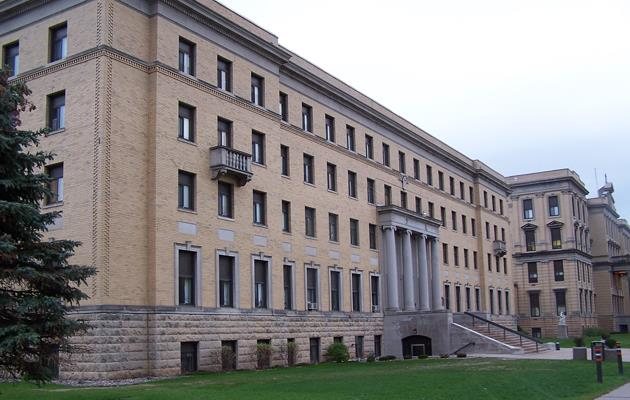
St. Mary’s College – Heffron Hall
Saint Mary's University of Minnesota sits on Terrace Heights, a bluff above the city of Winona on the western bank of the Mississippi, with the river valley spreading below and the limestone ridgelines of the Driftless Area rising on the opposite shore. It is a campus of red brick and Catholic institutional gravity, founded in 1912 by a bishop who purchased cornfields five miles west of the Winona downtown, raised the financing himself, and built a college from nothing on a hill. That bishop was Patrick Richard Heffron — New York-born, Minnesota-raised, ordained in Montreal in 1884, appointed second Bishop of the Diocese of Winona in 1910. He was by most accounts a commanding and demanding figure, the kind of institutional builder who leaves behind structures meant to outlast him. In this case, one of those structures is a dormitory that carries his name and has been called Minnesota's most legendarily haunted building since at least 1989, when USA Today applied that designation in its Halloween issue. The events that seeded the legend took place not in Heffron Hall but in St. Mary's Hall, the earlier building on campus, on the morning of August 27, 1915. Father Louis Lesches — French-born, ordained 1898, a priest of the Diocese of Winona with a documented history of instability, conflict, and insubordination — had been pressing Bishop Heffron for years for a parish of his own. Heffron had refused him, believing him mentally unbalanced and unsuitable for the responsibility. The conflict between the two men had been long, bitter, and increasingly one-sided in its institutional consequences. On that morning, Lesches walked from his guest room in St. Mary's Hall to the bishop's private second-floor chapel, where Heffron was celebrating Mass alone. He fired during the consecration. The first bullet struck Heffron in the left thigh from behind. As the bishop turned, a second shot entered the right side of his chest and penetrated his lung. A third bullet lodged in the tabernacle. Lesches fled, locked himself in his room, and was arrested within minutes. Heffron staggered from the chapel into the hallway, warned the priests summoned by the gunfire of the armed man still in the building, and directed them to call for medical help. Dr. William J. Mayo drove from Rochester by automobile to consult on the wound. The bishop recovered fully. At trial in December 1915, the jury deliberated forty-five minutes before acquitting Lesches by reason of insanity. He was committed to the state hospital for the criminally insane in St. Peter, Minnesota, where he would remain for the rest of his life. Heffron continued as bishop until his death from cancer on November 23, 1927. The dormitory named in his honor — Heffron Hall, a four-story brick building inaugurated in 1920, the first residence hall and second major building constructed on the Terrace Heights campus — became the container into which the legend would be poured over the decades that followed. Heffron Hall is a plain, functional building of its era: four floors, a central staircase, long corridors, institutional brick inside and out. The university president's office occupies the first floor; student rooms are on the second through fourth. The building connects to St. Mary's Hall and remains in continuous use as a non-freshman residence hall. It is the physical ordinariness of the building that makes its reputation notable — there is nothing architecturally Gothic about it, no ruined tower or locked wing, just a college dormitory where students have been sleeping and studying for over a century. The reports began in earnest in 1943 — the same year Father Lesches died in St. Peter at the age of eighty-four, still institutionalized, his remains returned to Winona and buried in St. Mary's Cemetery near the campus. Students on the third and fourth floors reported unexplained footsteps in the night, the sound of a cane tapping along the corridor, cold drafts with no identifiable source, and papers dislodged from bulletin boards when no windows were open. The activity was attributed by students to Lesches, finally free and returning to the institution whose bishop he had tried to kill. The ghost story gathered new material in 1967 when college newspaper reporters spent ten consecutive nights in the hall with cameras and thermometers. They recorded temperature drops of as much as ten degrees Centigrade on each of those nights, occurring consistently around 1:54 in the morning, and brought back infrared photographs showing anomalous blurs they attributed to heat or pressure variations in the hallway. A second death in the hall's history had by then been woven into the legend: in May 1931, Reverend Edward Lynch — described in accounts as a friend of Bishop Heffron's and an adversary of Lesches — was electrocuted in his room when he stepped between his bed and a radiator, touching both simultaneously. The legend assigned blame to Lesches, though he was alive and institutionalized in St. Peter at the time. More recent firsthand accounts from students have described a dark, cowled figure seen in the second-floor corridor near the location of the former chapel where the shooting occurred; a persistent sense of a presence on the staircase; rooms that rearrange themselves overnight; electronics that malfunction without explanation; and at least one account of a resident waking from sleep to find herself unable to breathe, a dark figure at the edge of her bed, an experience mirrored by a separate student on the same floor the same night. The identity of the figure is contested in the tradition — most accounts assign it to Lesches, still fixated on the institution that confined and defeated him; some attribute it to Heffron himself, maintaining order in the building that bears his name. The honest accounting of the Heffron Hall legend involves acknowledging how thoroughly the documented history and the accumulated folklore have merged over a century of transmission. Bishop Heffron did not die in the shooting — he recovered, continued as bishop for twelve years, and died of cancer. Father Lesches was not a murderer but a failed assassin committed to institutional care for twenty-eight years. The temperature drops recorded in 1967 were real measurements from a drafty brick building in a Minnesota winter, interpreted by college students with a story already in hand. What remains after the embellishments are stripped away — and the Winona Post, which published an exhaustive multi-part investigation of the legend, made that stripping-away its explicit project — is still this: a shooting during the consecration of the Mass, a bullet in the tabernacle, a man in chains for three decades, and a building on a bluff above the Mississippi that has been generating consistent, specific, uncorroborated reports for more than eighty years.
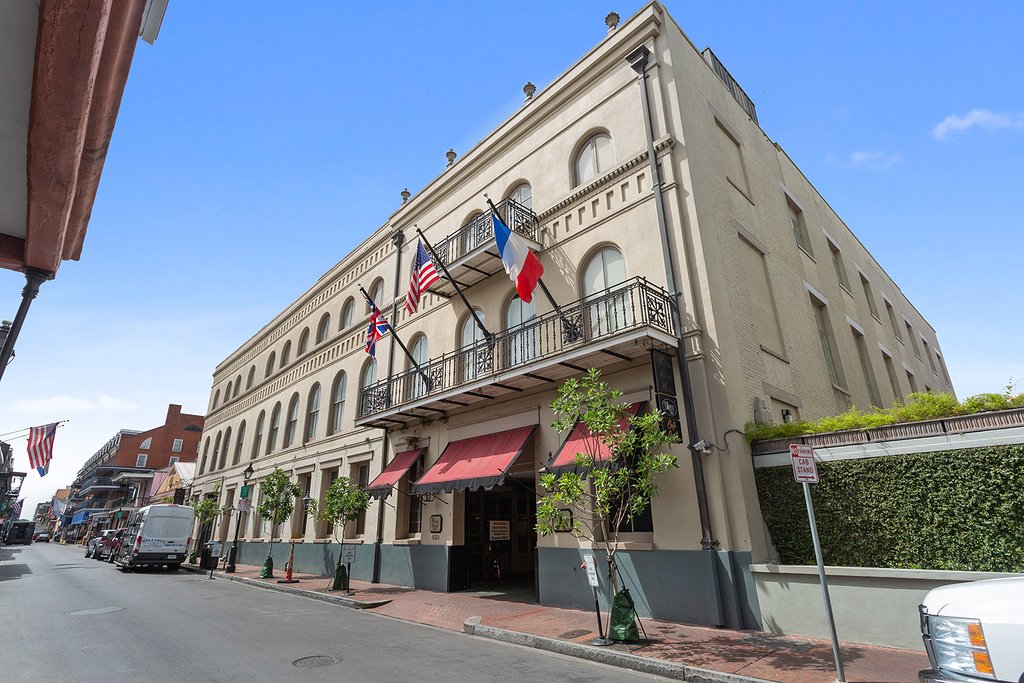
Prince Conti Hotel
At 830 Conti Street in the French Quarter of New Orleans, the Prince Conti Hotel occupies a building dating to the early 1900s, sitting on a block that has cycled through nearly every identity the Quarter has to offer—residence, commerce, vice, hospitality, and, if the accounts are to be believed, something that refuses to vacate regardless of what the current management has planned. The hotel is a small property by New Orleans standards, with just over fifty rooms tucked into a historic townhouse structure steps from Bourbon Street. It is operated by the Valentino family, who have run hotels in the French Quarter for over sixty years. The ground floor houses the Bombay Club, an upscale bar known for its martini list, Creole cuisine, and a resident spirit the staff has been dealing with for decades. Conti Street is named for the Princess Conti—originally the name given to what is now Bourbon Street before an early colonial renaming shuffled the designations. The street runs deep into French Quarter history. At 1026 Conti, just two blocks away, the infamous Norma Wallace operated the last major brothel in New Orleans from the late 1920s through the mid-1960s, entertaining governors, gangsters, and celebrities in a parlor house that ran nearly four decades before District Attorney Jim Garrison shut it down. Wallace's story ended in 1974 when she shot herself after learning of her husband's infidelity. Her building, an 1830s townhouse, is now condominiums—and reportedly still haunted. Farther up the block, the site of what is now the Williams Research Center once housed the Rising Sun Hotel in the 1820s, a property whose archaeological remains have yielded artifacts suggestive of early commercial sex work and whose name may have inspired one of the most famous folk songs in the English language. Conti Street has never been quiet. The Prince Conti Hotel's primary haunting centers on a figure the staff has named Sophie. According to paranormal researchers, Sophie is believed to be the spirit of a madam who operated on the premises before the building became a hotel. Her identity has never been established, but staff members have encountered her in the kitchen, the bar, and at Booth 3 of the Bombay Club. She is described as a presence rather than a full apparition—felt more often than seen, though some accounts describe a spectral woman visible in the bar during quiet hours. Guest accounts extend well beyond Sophie. Visitors on the upper floors—particularly the third floor—report a striking range of experiences. Multiple guests describe being nudged or physically shaken while asleep, only to find the room empty. One guest reported their mattress bouncing as though someone had sat down hard at six in the morning. Another described the full weight of a body pressing down on them during the night. Showers have turned on by themselves. Doors securely locked have been found standing wide open. A concierge reportedly confirmed that doors had been known to fly open on their own, accompanied on at least one occasion by a visible apparition. Objects have fallen from surfaces without explanation. Curtains have swung open untouched. In Room 361, a couple watching television reported their shower turning on for several seconds, followed by a bag of chips falling off the nightstand—and in the morning, a plugged-in diffuser was found unplugged from the wall. What makes these accounts notable is not their dramatic quality—by New Orleans haunted hotel standards, they are restrained—but their consistency across unrelated guests over many years, and the physical nature of the interactions. The nudging, the pressure, the bed-shaking describe contact, not atmosphere. Skeptics will note that old French Quarter buildings settle, plumbing acts unpredictably, and doors in century-old structures don't always stay shut. New Orleans humidity warps wood and metal alike. Guests arriving after a night on Bourbon Street are not always reliable witnesses. But the Prince Conti's accounts carry a specificity—particular rooms, particular times, particular physical sensations—that environmental explanations don't fully cover. Today the Prince Conti Hotel continues to operate at 830 Conti Street, offering the Bombay Club downstairs, Cafe Conti in the mornings, and a location at the center of one of the most historically layered streets in the most historically layered neighborhood in America. Sophie, if that is her name, appears to have no intention of checking out. And on the third floor, something still seems to think the beds could use one more occupant.
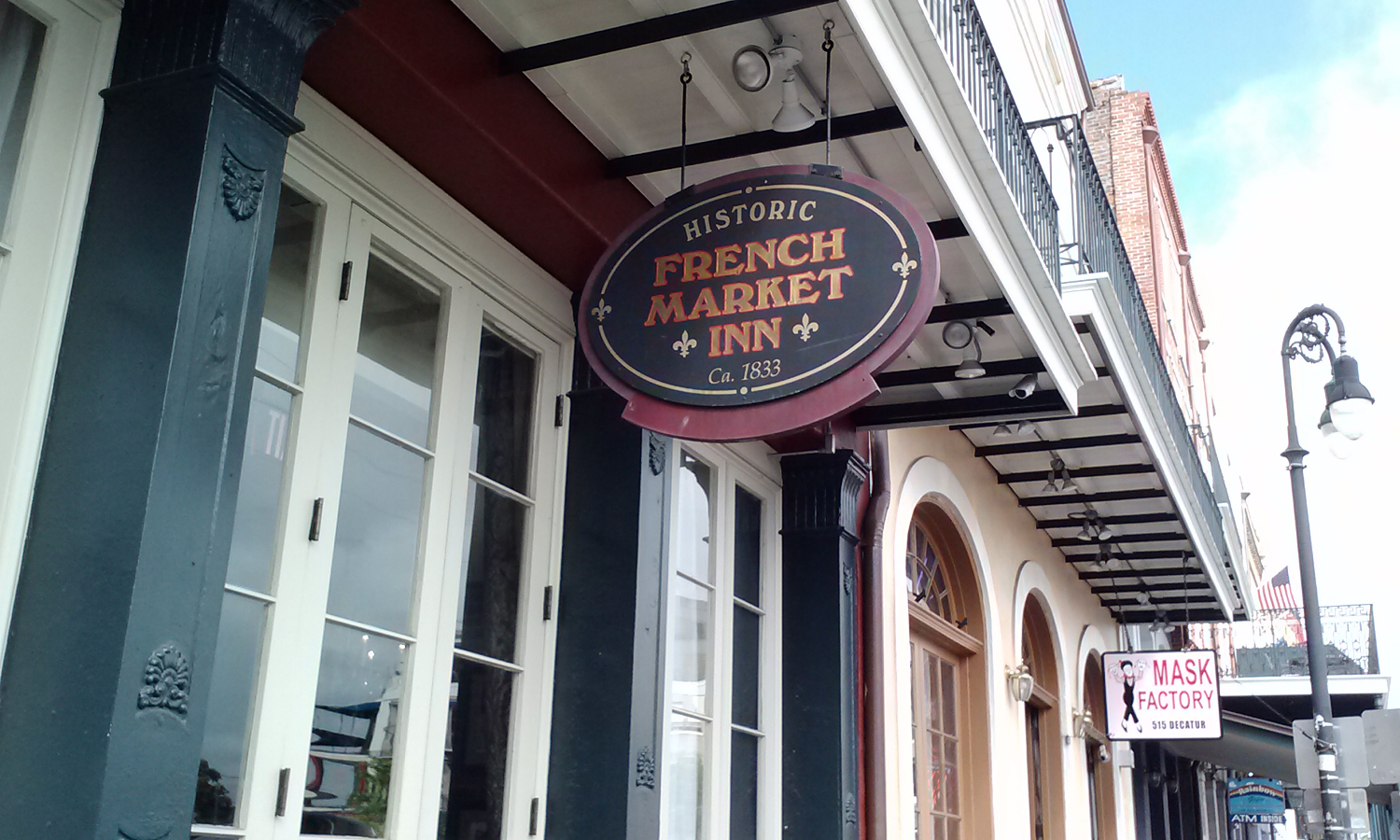
French Market Inn
The French Market Inn sits at 509 Decatur Street in the heart of the French Quarter, a few steps from Jackson Square and within earshot of the Mississippi River. Its antique brick façade opens onto a lobby of period paintings, chandeliers, and marble, and a stone-paved courtyard shaded by greenery—the kind of place that looks exactly like what visitors expect from historic New Orleans. What most of them do not expect is what has been reported inside its rooms for nearly two centuries. The property dates to 1722, when the original deed was issued to a baker named Dreux, whose family operated a bakery on the site throughout the eighteenth century, using a pulley system to hoist goods between floors. The building was later acquired by Baron Joseph Xavier de Pontalba, husband of the formidable Baroness Micaela Almonester de Pontalba, whose business empire still marks the French Quarter landscape in the form of the iconic Pontalba Buildings flanking Jackson Square. By the 1830s, the property had been converted into an inn, and it has operated as one in various forms ever since. The current French Market Inn, run by the Valentino family for over sixty years, maintains more than a hundred guest rooms, many still showcasing the original exposed beams and brick walls of the centuries-old structure. The hauntings were first recorded in 1832, shortly after the building began receiving guests. Visitors reported misty shapes entering their rooms after dark and loud metallic clanging echoing through the halls—sounds consistent with the old pulley system from the Dreux bakery era, operating in a building where no such equipment had functioned for decades. Those two phenomena—shadow figures and phantom mechanical sounds—have persisted without interruption for almost two hundred years. But the claim that has defined the French Market Inn's paranormal reputation is far more visceral. Guests have reported waking in the night to find their pillowcases, sheets, and sometimes their own skin marked with bloody handprints. The accounts are not limited to a single era or a handful of visitors. They span decades and continue to the present day, with guests who had no prior knowledge of the inn's reputation describing nearly identical experiences. One guest recounted waking drenched in what appeared to be blood, covering both occupants of the bed and the headboard, with neither person bearing any wound. The prevailing legend attributes the blood to the spirit of a prostitute who was murdered by a client on the property—a cry for help that manifests in the most startling way possible. No historical record has confirmed the specific murder, but the reports have proven remarkably resistant to debunking by their sheer volume and consistency. Beyond the handprints, guests describe beds shaking violently in the middle of the night with no seismic explanation, lamps clicking on and off in pitch-dark interior rooms, showers activating on their own, cold spots appearing without cause in the humid New Orleans air, shadow figures passing through walls, and the unmistakable sensation of being watched or physically touched. Room 218 has drawn particular attention from investigators. One paranormal researcher who stayed there reported being kept awake all night by unseen presences and an alarm clock that triggered repeatedly without being set. A guest on the third floor described waking to find her pillow being tugged beneath her head, and her daughter woke to a black figure standing between her bed and the windows. When they reported the incident to the front desk, the night clerk asked which room, then said simply that they did not get many reports from that floor. The French Market Inn does not hide from its reputation—the hotel's own website acknowledges the hauntings as part of its history. It remains one of the most popular and consistently booked properties in the French Quarter, operated with the warmth and professionalism the Valentino family is known for. The courtyard is still beautiful. The rooms are still charming. And the walls are still the same centuries-old brick that has absorbed whatever it is that keeps making itself known after dark.
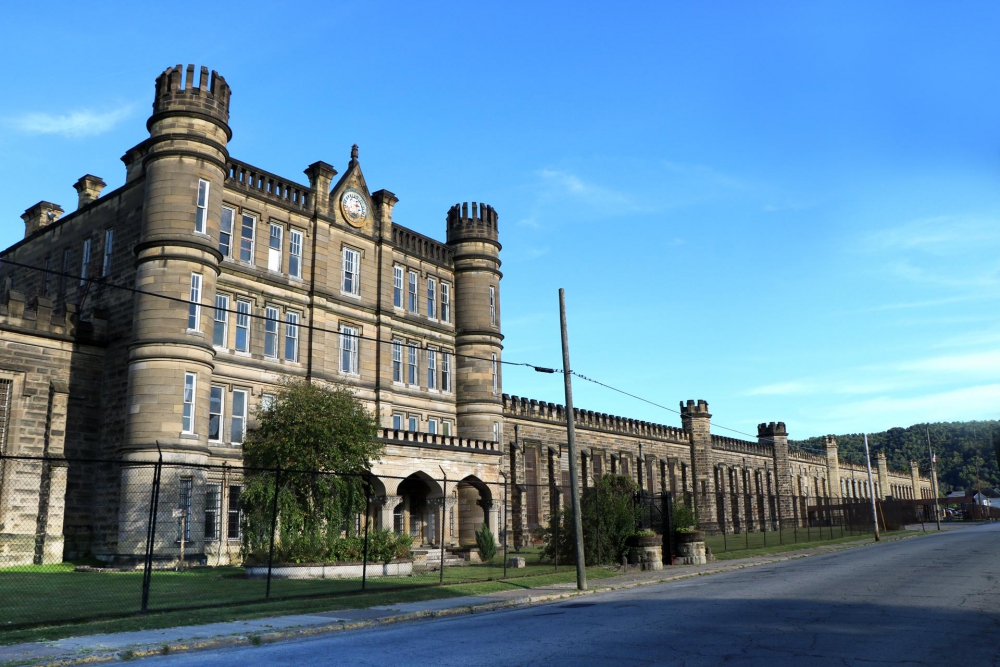
West Virginia State Penitentiary
Rising from a flat stretch along Jefferson Avenue in Moundsville, West Virginia, the West Virginia State Penitentiary looks exactly like what most people picture when they think of a haunted prison—massive sandstone walls adorned with battlements and turrets, a fortress silhouette that feels pulled from a darker century. But the Penitentiary's origins weren't born from cruelty by design. When West Virginia became a state in 1863, it had no state prison at all. Prisoners were held in county jails, an arrangement that quickly proved inadequate for a young state trying to establish its own institutions. Governor Boreman lobbied the legislature for funds to construct a state penitentiary, and in 1866 the legislature appropriated $50,000 to acquire land in Moundsville for construction. The prison at Joliet, Illinois provided the architectural prototype—an imposing stone structure fashioned in the castellated Gothic style, complete with turrets and battlements, though West Virginia's version would be approximately half the size. The Gothic structure officially opened in 1876 and would remain in continuous operation for nearly 130 years. Unlike locations defined by a single dramatic event, the Penitentiary's weight comes from accumulation. It witnessed riots, fires, and the execution of nearly 100 prisoners through either hanging or electrocution over its lifetime. Deadly riots in 1973 and 1979 prompted judicial oversight, and despite efforts to improve conditions, another riot on New Year's Day 1986 led the state Supreme Court to order the facility's eventual closing. A 1986 ruling determined that confinement to the 5-by-7-foot cells constituted cruel and unusual punishment, and the last prisoners were transferred out in 1995. The building itself amplifies everything. The sandstone facade rises with attached buttresses, circular turrets, and lancet windows—one of the finest examples of high Gothic Revival architecture in West Virginia. Long cellblock corridors stretch in either direction from the central administrative tower. The former North Hall, the shower room, and the solitary confinement area known as the Sugar Shack each carry their own particular atmosphere. Natural light barely penetrates the deeper interior. The original hardware, bars, and cell fixtures remain largely intact throughout. Paranormal claims at the Penitentiary are among the most documented in the country. Reports of supernatural phenomena include sightings of phantom inmates by former guards and legends of a shadowy figure that wanders the premises. Visitors frequently report cold spots and unexplained noises, including voices. EVP sessions in the cellblocks often yield results that investigators describe as direct responses rather than ambient noise. Some guests report being touched or physically pushed in areas where no one else is standing. Visitors have reported seeing the "Shadow Man," a static silhouette that roams the grounds. The former execution chamber draws particular attention, as does the Sugar Shack, where inmates were reportedly subjected to extreme punishment. Shadow figures, equipment malfunctions, and sudden drops in temperature are consistently reported across multiple independent investigations. Some claim to hear screaming from empty cellblocks, while others report doors moving on their own in the upper tiers. Skeptics note that any century-old stone structure will settle, creak, and breathe in ways that feel unexplainable. Large facilities amplify sound unpredictably. The history of violence and suffering embedded in this place—by design, by circumstance, and by record—gives visitors a psychological framework that can color every sound and shadow. Still, seasoned investigators routinely describe the Penitentiary as producing some of the most compelling evidence they've encountered anywhere. Today the site is maintained as a tourist attraction, museum, training facility, and filming location, operated by the Moundsville Economic Development Council. It sits directly across from the Grave Creek Mound, the largest prehistoric burial mound in eastern North America, a detail that adds another layer of historical unease to an already loaded site. There are no costumed actors on the standard tours. Just iron bars, cold stone floors, and the long institutional silence of a building that processed more than a century of human suffering. Whether visitors arrive as history buffs or paranormal investigators, most leave with the same feeling: that the West Virginia State Penitentiary has not finished telling its story.
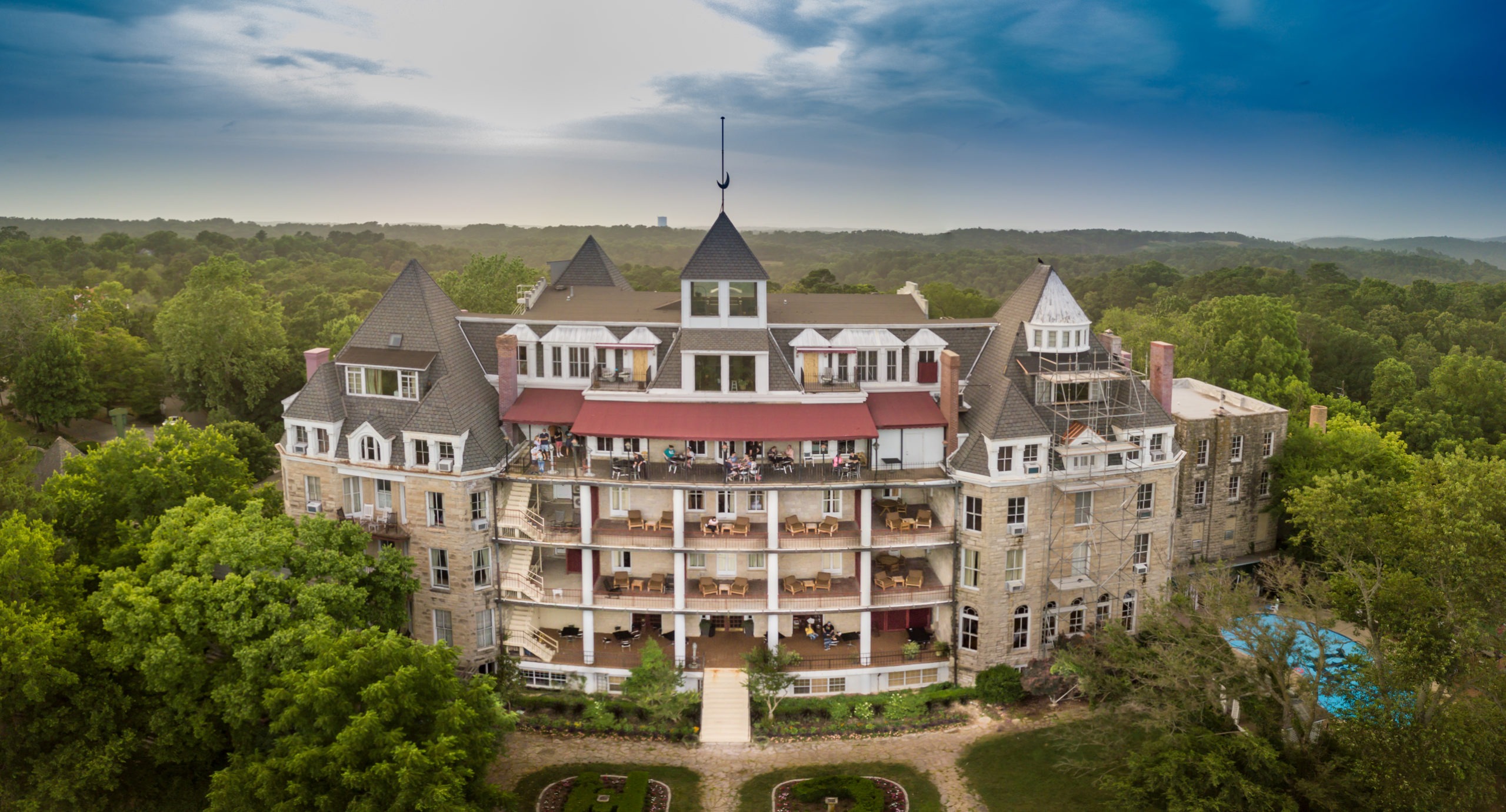
The Crescent Hotel
Perched on the crest of a limestone mountain overlooking the Victorian village of Eureka Springs, Arkansas, the 1886 Crescent Hotel commands the Ozark skyline like something lifted from a Gothic novel and dropped into the middle of the Bible Belt. Built from hand-cut limestone blocks so precisely fitted they required no mortar, the hotel rises in a blend of Richardsonian Romanesque and French Renaissance styling—arched windows, turrets, broad verandas, and a presence that can be seen from nearly anywhere in town. It was designed by architect Isaac S. Taylor, who would later design buildings for the 1904 St. Louis World's Fair, and funded by the Eureka Springs Improvement Company under former Arkansas governor Powell Clayton. When its doors opened on May 20, 1886, six hundred guests arrived from six states, greeted by a band stationed at the train depot. Eureka Springs had boomed almost overnight after its founding in 1879, drawn by sixty natural mineral springs that Native Americans had long known and that white settlers began marketing as miracle cures. By 1880, over fifteen thousand people had descended on the area. The Crescent was built to serve that wave—a luxury resort at nearly $300,000, the equivalent of roughly eight million dollars today. For its first two decades it operated as an exclusive destination, but interest in the springs faded, and the hotel couldn't sustain itself through the off-seasons. By 1902 it had been leased to the Frisco Railway. In 1908, it was converted into the Crescent College and Conservatory for Young Women, reportedly one of the finest women's seminaries in the country. That institution closed in 1924 for lack of funding, and a successor junior college folded during the Depression. By the mid-1930s, the grand hotel sat vacant and deteriorating. Then came Norman Baker. A former vaudeville performer and radio showman from Muscatine, Iowa, Baker had no medical training whatsoever but had already operated a fraudulent cancer clinic in his home state before being driven out. In 1937 he purchased the Crescent for $40,000 and transformed it into Baker's Cancer Curing Hospital, painting the interior in garish lavender and broadcasting his claims over the airwaves. His so-called treatments centered on injections of a concoction he called Formula 5—a mix of alcohol, carbolic acid, watermelon seed, corn silk, and clover leaves—administered up to seven times daily. Patients arrived from across the country, many spending their life savings on the promise of a painless cure. What they received was theater. At least forty-four patients died during the twenty months the hospital operated, their bodies moved to a basement morgue fashioned from the hotel's original kitchen, stored in the walk-in freezer. In 1940, federal authorities arrested Baker for mail fraud. He served four years in prison and died in Florida in 1958—of liver cancer. The hotel sat empty again until 1946, when new owners restored it to its original purpose. The paranormal reputation of the Crescent begins not with Baker but with the building itself. During construction in the 1880s, an Irish stonemason reportedly fell to his death from the upper framework into what is now Room 218. Staff have long referred to his spirit as Michael, and the room remains the most consistently active in the hotel. Guests report doors opening and slamming shut, pounding in the walls, the sound of a man falling through the ceiling, and, most disturbingly, hands emerging from the bathroom mirror. Room 419—known as Theodora's room—is associated with a former Baker patient who also worked as a hospital assistant. Guests find her straightening furniture or fumbling at the door as though searching for her key. On the third floor, witnesses describe the sound of squeaking wheels and the apparition of a nurse pushing a gurney down the corridor, only to watch it vanish. A young boy called Breckie, believed to have died from complications of appendicitis, has been seen bouncing a red ball on the second floor. In the hotel kitchen, a former chef reported pots and pans flying from their hooks, and another staff member witnessed a boy in old-fashioned knickers skipping through the room. Even Baker himself has reportedly been seen, appearing in his trademark white linen suit near the basement morgue. The morgue itself—still containing Baker's original autopsy table and walk-in cold storage—produces some of the most intense reports. Visitors describe oppressive atmosphere, sudden temperature drops, shadowy figures near the examination area, and the sensation of being touched by unseen hands. In 2019, groundskeepers digging near the hotel unearthed hundreds of glass bottles—remnants of Baker's operation—some containing preserved human tissue later confirmed by pathologists at the University of Arkansas for Medical Sciences. The discovery seemed to intensify reported activity, particularly in and around the morgue. Today the Crescent Hotel is owned by Elise Roenigk, who along with her late husband Marty purchased the property in 1997 for $1.3 million and undertook a six-year restoration. The hotel was listed on the National Register of Historic Places in 2016 and operates as a full-service resort and spa. It runs nightly ghost tours that draw over thirty-five thousand visitors annually, and hosts the Eureka Springs Paranormal Weekend each January. The morgue is open for public viewing. Room 218 books months in advance. The Crescent doesn't hide from what it is. It sets a place at the table for it.

Spitzer House Bed and Breakfast
Four blocks west of the historic Medina Square in northeastern Ohio, the Spitzer House sits on West Liberty Street like a Victorian postcard brought to life—painted trim, stained glass windows, twin cherry staircases, and the kind of ornamental woodwork that announces both the wealth and the aspirations of the family that built it. Constructed in 1890 for Ceilan Milo Spitzer, the house was a monument to one of Ohio's most ambitious financial careers. Spitzer was born in 1849 in Batavia, New York, and raised in Medina County after his family relocated in 1851. He entered business young, moving into banking with his father Aaron. An early Cleveland venture—the German-American Bank—collapsed in 1880 amid a national financial panic, and Spitzer liquidated his personal assets to pay every creditor, a move that cost him dearly but cemented his reputation. He rebuilt from the ground up. By the late 1880s, he and his cousin Adelbert had established Spitzer & Company in Toledo, becoming the first firm west of New York City to deal in municipal bonds. They were widely credited as founders of the municipal bond industry in the American Midwest. In January 1900, Ohio Governor George Nash appointed Ceilan Quartermaster General of the state with the rank of Brigadier General—a title he carried for life. It was at the height of this ascent that Spitzer commissioned the Medina house, overseeing construction remotely while expanding operations in Boston. His return to inspect the nearly completed residence made the front page of the Medina County Gazette in December 1890. He granted his parents a lifelong lease the following year, and the Spitzer family would occupy the house for the next seventy years. The house is a German Renaissance design with Queen Anne and Stick-Style elements, executed with particular refinement. Cherry and oak woodwork run throughout. The guest rooms, now named for family members, retain the proportions and character of the original layout. After the family's long tenure ended, the home was converted into a bed and breakfast in 1994 and has earned recognition for its restoration. It sits within walking distance of downtown Medina—a quiet residential stretch that belies the building's increasingly well-known reputation. That reputation extends beyond architecture. The Spitzer House has been featured in Chris Woodyard's Haunted Ohio book series, Brandon Massullo's Haunted Medina County, Ohio, and appears on multiple paranormal databases. The claims are specific, recurring, and tied to distinct areas of the house. In Ceilan's Room, guests have reported the apparition of a stern-looking man—sometimes watching from the corner, sometimes near the bed. The figure is widely interpreted as Spitzer himself, and at least one account describes the apparition physically nudging a guest. In Anna's Room, named for Ceilan's stepmother, the presence is different: a young servant girl, appearing at the foot of the bed or at the top of the staircase. Guests have heard her laughter. Some accounts describe her as short and stout, wearing an Edwardian-era housedress, firing questions at startled witnesses before vanishing. In the dining room, the voices of two men have been heard conversing when the room is empty. The parlor piano has been reported playing on its own. Throughout the house, guests describe flickering lights, slamming doors, cold spots, and light touches from an unseen source. One guest reported being scratched. Another described a spirit whispering their name. What gives these accounts weight is their consistency across decades and unrelated witnesses, and the absence of any anchoring tragedy. There is no murder, no suicide, no fire. The Spitzer family's occupancy was long and unremarkable in terms of darkness. Ceilan himself died in 1919 in Toledo, not in the Medina house. The servant girl's identity remains unknown—no documented death connects a specific individual to the claims. The hauntings seem to belong to the house itself rather than to any story imposed upon it. Skeptics will note that Victorian homes are acoustically rich—old wood settles, radiators clang, drafts move through invisible gaps. A bed and breakfast trades on atmosphere, and guests who know the reputation are primed to interpret ambiguity as evidence. But the reports carry a specificity—particular rooms, particular figures, particular behaviors—that resists dismissal as environmental noise alone. Today the Spitzer House continues to operate at 504 West Liberty Street, offering four guest rooms with private baths, period furnishings, and breakfast served in the dining room where two invisible men still occasionally hold court. The cherry staircases are original. The stained glass catches the light the same way it did in 1890. And whether a young woman in a housedress is waiting at the top of the stairs depends on when you visit—and how much of the house's long memory you're prepared to meet.
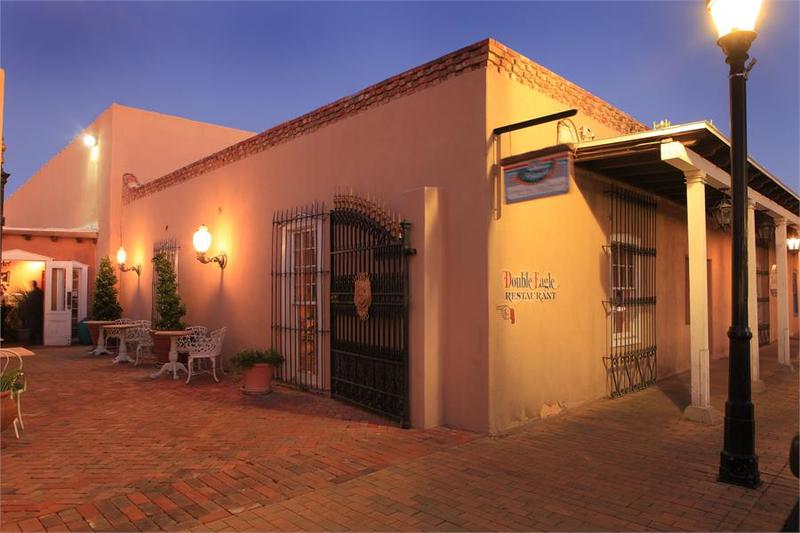
Double Eagle Restaurant
Standing just off the historic plaza in Mesilla, New Mexico, the Double Eagle Restaurant occupies one of the oldest surviving buildings in the region. With thick adobe walls, carved wood beams, chandeliers, and richly decorated dining rooms filled with antiques, the structure feels less like a restaurant and more like a preserved nineteenth-century estate. The original home was constructed in 1849, during a time when Mesilla was emerging as a major settlement along trade routes connecting Mexico, Texas, and the American Southwest. The town itself would soon become the backdrop for several pivotal moments in frontier history. The Gadsden Purchase was confirmed on the Mesilla plaza in 1853, bringing the region formally under United States control. During the Civil War, Mesilla was briefly declared the capital of the Confederate Arizona Territory in 1861. By the late nineteenth century, the town also gained notoriety when Billy the Kid was tried and briefly imprisoned there in 1881. The Double Eagle building stood through all of it, quietly watching the territory around it transform. The haunting legend most closely tied to the property centers on the Maese family, early owners of the home, and a tragic romance that has become one of the most enduring ghost stories in New Mexico. According to local accounts, the family’s teenage son Armando fell deeply in love with Inez, a young servant who worked in the household. Their relationship was forbidden by Armando’s mother, who believed her son should marry into a wealthier and more socially acceptable family. One evening she reportedly discovered the two together in Armando’s bedroom. Enraged, she seized a pair of sewing shears and attacked them. Inez was killed immediately, while Armando was fatally wounded and died days later. The room where the attack is said to have occurred is now known as the Carlotta Room, named after Armando’s mother, and it has become the focal point of nearly every haunting claim connected to the building. Unlike many haunted locations that sit abandoned, the Double Eagle remains active and carefully preserved. Dining rooms branch from one another through narrow passages and archways, still following the layout of the original home. The Carlotta Room in particular carries an atmosphere many visitors describe as unusually heavy or still. In one corner sit two Victorian chairs that have become central to the building’s ghost lore. Reports of paranormal activity at the Double Eagle have circulated for decades among staff and visitors. Many of the experiences center around the Carlotta Room, where Armando and Inez are said to remain. Employees have described chairs and tables shifting slightly, wine glasses breaking without an obvious cause, lights flickering, and unexplained cold spots drifting through the room. Some guests claim to hear whispers or their names spoken when no one else is nearby, while others report seeing shadowy figures near the corner chairs. Those chairs are the most famous detail of the haunting. According to local tradition, the seats show impressions shaped like two people sitting side by side despite rarely being used. Visitors are often warned not to sit in them. Over the years, several people who ignored the warning have reported sudden nausea, overwhelming sadness, or vivid nightmares afterward, reinforcing the belief that the spirits of Armando and Inez still occupy that space. Skeptics note that historic adobe buildings creak, settle, and carry sound in unusual ways, and that powerful stories can shape how visitors interpret ordinary events. But the Double Eagle’s reputation has endured because the reports are remarkably consistent across decades of unrelated visitors. Today the Double Eagle Restaurant operates as both a fine dining destination and one of the most famous haunted locations in the American Southwest. Guests come for the elaborate interior, the preserved frontier architecture, and the deep historical ties to Mesilla’s past. Yet many leave remembering something else entirely—the strange quiet of the Carlotta Room, the chairs in the corner, and the lingering sense that whatever tragedy once unfolded inside the house may not have completely faded with time.
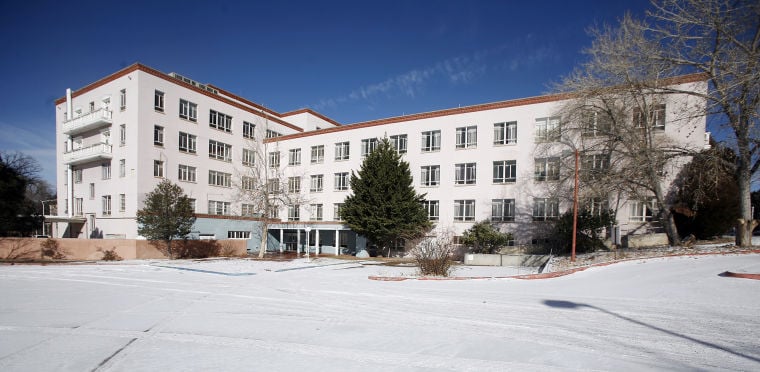
Old St. Vincent’s Hospital (Drury Inn)
The corner of Palace Avenue and Paseo de Peralta in downtown Santa Fe is one of the most historically saturated pieces of ground in the American Southwest. Before European contact, it sat within the territory of ancestral Pueblo peoples. After Spanish colonization established Santa Fe as a capital in 1610, it cycled through two centuries of colonial administration, conflict, and change. By the time Archbishop Jean Baptiste Lamy arrived in the mid-1800s to transform the church's presence in New Mexico, this corner was already ancient by American standards. The building that now operates as the Drury Plaza Hotel carries that entire weight — plus decades of hospital death, a nursing home, state offices, film sets, and years of abandonment — inside a structure that still looks, to many guests, like it remembers everything. The hospital's origin traces directly to Lamy. After his arrival, he invited the Sisters of Charity to New Mexico to help care for the sick. In 1865, Lamy sold them a building originally constructed as a rectory adjacent to what would become St. Francis Cathedral, and the Sisters opened Santa Fe's first hospital inside it. That original structure and the 1911 Craftsman-style Marian Hall built next door served the community for nearly a century before the Sisters outgrew them entirely. In 1953, renowned architect John Gaw Meem — known for the Zimmerman Library at the University of New Mexico and the Cristo Rey Church in Santa Fe — was commissioned to design a proper city hospital on the site. The resulting building was notably austere for Meem: yellow brick, sharp corners, large windows, only a faint nod to Territorial style. It opened as the new St. Vincent Hospital and served Santa Fe for roughly two decades before the hospital relocated to St. Michael's Drive in 1977. The state of New Mexico then took over the buildings for use as offices for the Department of Cultural Affairs and, eventually, a nursing home. That nursing home, which locals called La Residencia, occupied the old hospital until the early 1980s. The building then sat largely empty for years — used occasionally as a film location, including Jeff Bridges' 2009 film Crazy Heart — before Drury Hotels purchased it in 2007 and began a years-long adaptive reuse project. Archaeologists working the site in 2008 uncovered what appeared to be an underground vault of unknown origin before the economic collapse shut the project down. The Drury Plaza Hotel finally opened in 2014. The paranormal reputation of the building predates the hotel by decades and is concentrated in two areas: the basement and the third floor. During the La Residencia years, the basement became so unsettling to staff that sending new employees down there alone at night became a formal initiation ritual — a rite of passage that the longtime employees themselves refused to repeat solo under any circumstances. Multiple accounts describe the basement walls appearing to ooze blood, particularly near a storage room that had once been used to incinerate amputated limbs and surgical remains. A nurse coordinator investigating a disturbance in that room reported finding what looked like fresh blood on a wall surface. A former candy striper who worked at the original St. Vincent Hospital in the 1970s recalled that the area near the basement incinerator produced intense cold, a sense of presence, and disembodied voices — and that hospital staff uniformly avoided it after dark. During the Drury renovation, a security guard working nights described refusing to enter an adjacent structure called Marian Hall, reporting consistent unease throughout the basement level. The state museum's use of the building added another layer: Native American artifacts, and reportedly skeletal remains in cardboard boxes, were stored in the basement hallways during the state offices era. That detail appears in documented interviews with former employees and has fed persistent theories about the nature of the activity. Room 311 — or the fourth floor, depending on the account — carries its own specific legend. A young boy brought into the hospital on Christmas Eve after a severe car crash is said to have died crying for his deceased father throughout the night. Long after the hospital years, nurses at La Residencia reported hearing a baby crying in that room with no source, eventually keeping it vacant unless the census demanded otherwise. The sound has been reported by visitors as recently as the hotel era. A nurse who worked the top floor during the hospital years described a short Hispanic man in old-fashioned clothing appearing alongside a woman in a black mantilla — both seeming confused and in need of something they couldn't name. A worker who accidentally rode the elevator to the basement described the doors refusing to close until he stepped out, then ascending without him while a shadowy presence moved nearby. The Drury Plaza Hotel operates today as a functioning boutique hotel in one of Santa Fe's most storied locations. The basement is there. Room 311 is numbered. The history goes back further than the building — and, by most accounts, it hasn't stopped moving.
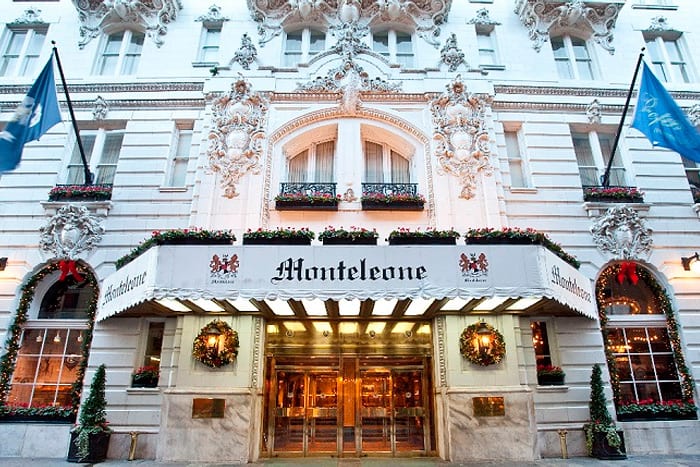
Hotel Monteleone
It has been said that the French Quarter begins in the lobby of the Hotel Monteleone. The claim is not merely geographic. Standing at the corner of Royal and Iberville streets since 1886, the Monteleone is the only high-rise building in the interior of the Quarter, a Beaux-Arts landmark that has anchored the cultural life of the neighborhood for well over a century. It is one of the last great family-owned hotels in America, and it is, by nearly every account, one of the most actively haunted buildings in New Orleans. The hotel's origins trace to Antonio Monteleone, a Sicilian nobleman who had operated a successful shoe factory before immigrating to New Orleans around 1880. Setting up a cobbler's shop on Royal Street, then the commercial and banking heart of the city, Monteleone prospered quickly enough to purchase a small sixty-four-room hotel on the corner of Royal and Iberville. He renamed it the Hotel Monteleone, and the property grew rapidly. A major expansion in 1903 added thirty rooms, and a sweeping 1908 renovation added three hundred more. Antonio died in 1913, and the hotel passed to his son Frank, who oversaw the addition of the Queen Anne Ballroom and two hundred more rooms in 1928—one year before the Depression. The Monteleone was one of the rare family-owned hotels to survive those lean years intact. In 1949, Frank introduced the hotel's most famous feature: the Carousel Piano Bar and Lounge, a twenty-five-seat revolving bar turning on two thousand steel rollers at a rate of one revolution every fifteen minutes. The original building was demolished and rebuilt in 1954, and a final expansion in 1964 added the upper floors, a Sky Terrace, rooftop pool, and the Presidential Suite. The hotel today holds 570 guest rooms across its towering frame. The Monteleone's literary associations alone would secure its place in American cultural history. Ernest Hemingway, William Faulkner, Tennessee Williams, Eudora Welty, and Truman Capote were all frequent guests. Hemingway referenced the hotel in his short story "Night Before Battle." Williams used it as a symbol in The Rose Tattoo. Capote famously claimed on The Tonight Show that he was born in the hotel—his mother lived there during her pregnancy but made it to the hospital in time. In 1999, the Friends of the Library Association designated the Monteleone an official literary landmark, one of only three hotels in the country to receive that distinction. In 1942, New Orleans author Innis Patterson Truman jumped to her death from the hotel's twelfth floor, an event documented in letters by the writer Lyle Saxon—one of the building's darker episodes and one that adds genuine tragedy to the property's layered past. The paranormal reputation of the Hotel Monteleone is extensive and has been the subject of formal investigation. In March 2003, the International Society for Paranormal Research conducted a multi-day investigation and reported making contact with more than a dozen earthbound entities. Among them were two former employees—a chef and a busboy or waiter—whom investigators linked to a recurring phenomenon involving the hotel restaurant's door, which opens and closes on its own despite being locked and operated by a push-button mechanism. The investigators concluded the two spirits were engaged in an ongoing disagreement about whether the door should remain open or shut. The most widely reported spirit is that of a toddler named Maurice Begere. According to the legend, Maurice's parents, Jacques and Josephine, were frequent guests in the late nineteenth century who would leave their young son with a nanny while they attended performances at the French Opera House on Bourbon Street. One evening, Maurice developed a high fever and died in his room on what is now the fourteenth floor. His grief-stricken mother returned to the hotel repeatedly, and eventually, the story holds, Maurice's spirit appeared before her, saying words to the effect of not to cry, that he was fine. Guests to this day report seeing a small boy wandering the fourteenth-floor hallway, sometimes standing at the foot of their bed, sometimes heard laughing. The fourteenth floor—which is actually the thirteenth, as the hotel skipped that number in its floor plan—has become the most requested floor among guests seeking a paranormal experience. Other reported entities include a man named William "Red" Wildemere, who died of natural causes in the hotel, a ghostly figure in nineteenth-century clothing believed by some to be Antonio Monteleone himself still watching over his creation, a phantom child who takes visitors' hands and then vanishes, and a spirit identified as "Solemn John," a Tennessee businessman said to have committed suicide after failed investments. Guests report shadows gliding through corridors, unexplained cold spots, elevators that stop on the fourteenth floor without being called, and the sounds of children playing in hallways where none are present. Today the Hotel Monteleone continues to operate under the fifth generation of the Monteleone family. The grandfather clock still chimes in the lobby. The Carousel Bar still turns. The doormen still stand at the entrance on Royal Street. And somewhere on the fourteenth floor, a small boy may still be looking for his parents—or simply making sure he is remembered.
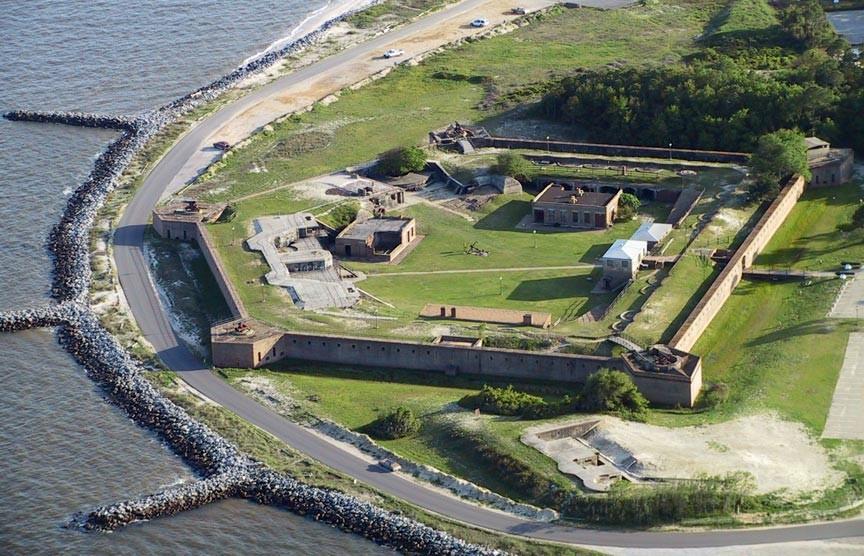
Fort Gaines
Sitting at the eastern tip of Dauphin Island where Mobile Bay meets the Gulf of Mexico, Fort Gaines occupies one of the most strategically loaded pieces of ground on the Alabama coast. The island itself carries death in its name. When French explorer Pierre Le Moyne d'Iberville arrived in 1699, he found so many sun-bleached human bones scattered across the shell mounds that he named the place Massacre Island. The name eventually softened to Dauphin Island, but the bones remained — remnants of Native American burial sites eroded and exposed by the sea. France, Spain, and Britain all used the island as a military platform at various points, each recognizing what the geography made obvious: whoever controlled this narrow strip of land controlled the entrance to Mobile Bay. The United States recognized it too. Following the War of 1812, Congress authorized a network of coastal fortifications along the southern shoreline, and Dauphin Island was identified as a critical position. Construction began in 1821 but lurched along for decades — plagued by poor engineering, flooded foundations, and funding gaps. A new design was ordered in the 1850s under chief engineer Joseph G. Totten, who drew up a five-sided masonry fort with 22.5-foot walls built to absorb artillery rather than shatter under it. Every one of the more than three million bricks had to be transported across the bay, since the island had no suitable clay. The fort was still incomplete when Alabama state militia seized it on January 5, 1861, six days before the state formally voted to leave the Union. Confederate engineers finished the work. Fort Gaines and Fort Morgan, sitting on opposite shores of the channel, formed a pair meant to strangle any naval approach to Mobile. By 1864, Mobile was one of the last Confederate ports open on the Gulf, and the Union was determined to close it. On August 5, Rear Admiral David Farragut led eighteen ships directly into the channel under the guns of both forts. When the ironclad USS Tecumseh struck a Confederate mine and sank almost instantly, Farragut reportedly shouted the order that has echoed through American history: "Damn the torpedoes — full speed ahead." The fleet punched through. Fort Gaines, pounded from sea and besieged from land, surrendered on August 8 with roughly 800 men taken prisoner — including a battalion of military cadets between twelve and sixteen years old from the Pelham Military Academy in Mobile. The fall of both forts sealed Mobile from the outside world and helped secure Abraham Lincoln's reelection that November. The fort remained in military use through both World Wars, serving as a coastal artillery installation and anti-aircraft gunnery school. It was sold to the City of Mobile in 1926, passed to the State of Alabama, and is now considered one of the best-preserved Civil War masonry forts in the country. The paranormal reputation of Fort Gaines draws from every layer of that long history. Visitors and investigators report a Confederate soldier seen standing at one of the cannons facing the water — motionless, as though still at his post. The old officers' quarters are cited as particularly active, with accounts of furniture moving, unexplained whispers filling empty rooms, and the persistent feeling of being watched. Cold spots appear without explanation in the tunnels connecting the bastions to the main courtyard. A dark shadowy figure has been reported following visitors through the inner buildings, vanishing when confronted. Paranormal researchers scouting for MTV's Fear series documented shadowy figures in photographs taken inside the walls, and the Mobile-based group SAPI has held annual ghost hunts at the fort for years. Beyond the fort itself, the ancient shell mounds on the island's eastern end — actual Native American burial sites used for centuries before European displacement — generate their own reports. Visitors describe faint drumming and chanting heard near the mounds after dark, and a blood-covered Native American apparition has been reported in the area. An older island legend speaks of a chief named Double Head who walked the beaches at night, leaving glowing phosphorescent footprints in the sand. Fort Gaines is open to the public. The guns still face the water. The brick walls still absorb the Gulf wind. And according to those who have spent time inside after the crowds leave, something in there hasn't fully stood down.
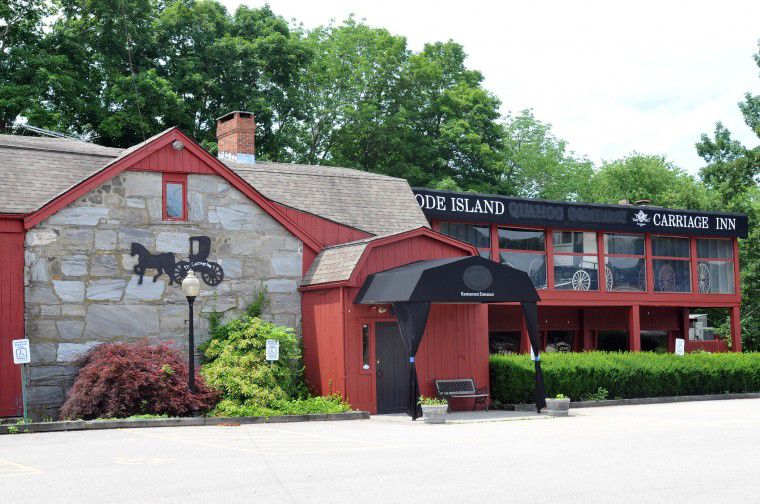
Hoof-Fin-Feathers – Carriage Inn and Saloon
Along Tower Hill Road in North Kingstown, Rhode Island, the structure known today as Hoof-Fin-Feathers—also referred to historically as the Carriage Inn and Saloon—stands along one of the oldest travel corridors in the region. The road itself traces the route of the colonial-era Post Road, a heavily used passage connecting Providence with coastal communities to the south. For centuries this stretch of Washington County functioned as a stopping point for travelers moving between ports, farms, and inland towns, and the building at 1065 Tower Hill Road developed alongside that flow of movement. The core of the structure dates back to the late eighteenth century, when the property operated as a roadside tavern and stagecoach stop serving people traveling through southern Rhode Island. At a time when journeys between towns could take days, establishments like this were essential infrastructure. Travelers could find food, drink, and lodging while horses were watered and rested in nearby stables. The building’s layout reflected those needs: large common rooms, low ceilings supported by heavy timber beams, and fireplaces capable of heating wide gathering spaces during the long New England winters. During the nineteenth century the inn continued to serve the changing traffic along the Post Road. Farmers, merchants, sailors traveling between Narragansett Bay ports, and stagecoach drivers passed through its doors. Taverns of this era were often the social centers of rural communities, functioning not only as lodging houses but also as places where news traveled, business was conducted, and local politics were debated. As railroads and later automobile travel transformed the region, the building’s role evolved but its hospitality function remained largely intact. The property moved through several owners and identities across the late nineteenth and early twentieth centuries, continuing as a tavern, restaurant, and gathering place for the surrounding community. By the mid-twentieth century the establishment became widely known as Hoof-Fin-Feathers, a name reflecting the restaurant’s focus on meat, seafood, and game dishes. Under that identity it developed a reputation as a long-running local dining destination. The interior retained many of the building’s historic features—exposed beams darkened by centuries of smoke, uneven floorboards, and rooms whose shapes reflected generations of additions and modifications. Like many colonial-era taverns that remained in continuous use, the structure accumulated layers of history rather than preserving a single moment in time. It was within that atmosphere that stories of unexplained activity began circulating among staff and visitors. Reports most commonly focused on what employees described as a lingering presence connected to the building’s earliest tavern years. Workers closing the restaurant late at night occasionally reported hearing footsteps in empty hallways or the sound of chairs shifting after the dining rooms had been cleared. Some staff members described glasses or small objects being moved or found out of place the following morning. One of the most frequently repeated claims involves the apparition of a man dressed in what witnesses interpret as colonial-era clothing. Accounts vary, but the figure is typically described as appearing briefly near the bar area or along interior doorways before disappearing. Other reports center on colder patches of air moving through rooms without an obvious source, or the feeling of being watched while working alone in the older sections of the building. Paranormal investigators who have visited the property over the years have sometimes reported electronic voice phenomena captured during recording sessions or unexplained fluctuations in equipment readings. As with many historic taverns, skeptics point out that the building’s age, irregular architecture, and constant creaking of old wood can easily create sounds that mimic footsteps or movement. The suggestion created by a long history and dim interior lighting can also influence how ordinary events are interpreted. Despite those explanations, the reputation has endured as part of the inn’s identity. The combination of colonial architecture, centuries of travelers passing through its doors, and the lingering folklore of a stagecoach-era tavern has made Hoof-Fin-Feathers one of Rhode Island’s more frequently discussed haunted restaurants. Whether the reports reflect environmental quirks of an eighteenth-century structure or something less easily explained, the building remains a place where local history and ghost lore have become closely intertwined. Today the property continues to operate as a restaurant and gathering place along Tower Hill Road, maintaining the hospitality tradition that began there more than two hundred years ago. Visitors come for the historic setting as much as for the food, stepping into rooms that have hosted travelers since the earliest days of Rhode Island’s coastal trade routes. With that deep continuity comes the persistent belief among some employees and patrons that the inn’s oldest guests may never have completely checked out.
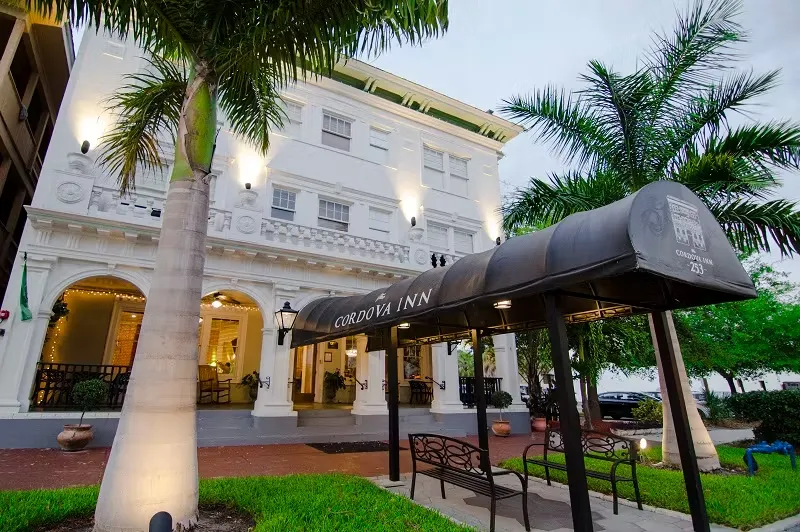
The Cordova Inn
At 253 Second Avenue North in downtown St. Petersburg, Florida, a three-story Renaissance Revival building sits half a block from the Sundial shopping district, looking much the way it did when it first opened in 1921. The Cordova Inn is not the grandest of St. Petersburg's boom-era hotels—it never competed with the Vinoy or the Don CeSar for celebrity guests—but it is among the oldest, and its quieter history carries a weight those larger landmarks don't always match. Built by Francis Scott during the opening surge of the Florida Land Boom, the hotel originally operated as The Hotel Scott. It arrived at the moment when rising postwar prosperity and the spread of the automobile turned Florida's Gulf Coast into one of the most frenzied real estate markets the country had ever seen. St. Petersburg's population exploded in the early 1920s, and small hotels like The Scott sprang up to house the tourists, speculators, and seasonal residents flooding the area. The building was constructed of masonry with scored stucco designed to resemble stone, its facade detailed with five keyed arches, a balustrade topped with decorative urns, and a projecting cornice along the roofline. Inside, thirty-two rooms were fitted with clawfoot soaking tubs—many of which survive today. By 1923, the hotel had changed hands and been renamed the Hotel Cordova, after the family that would operate it for three decades. The Cordovas sold in the early 1950s, and for the next half century the property passed through multiple owners. As downtown St. Petersburg declined through the 1970s and 1980s, the hotel declined with it. By the late 1990s the surrounding blocks were considered undesirable after dark, and the Cordova closed in 1999, sitting empty on a street it had anchored for nearly eighty years. A local investor completed a full restoration, reopening it as The Pier Hotel in 2001—earning the St. Petersburg Preservation Society's Restoration of the Year Award. In 2014 the property reclaimed its historic name. It is a contributing property to the Downtown St. Petersburg Historic District on the National Register of Historic Places. The central figure in the hotel's haunting is not a guest or an owner but a member of the staff—the Major-domo, the building's head butler. According to the hotel's own published history, this man devoted twenty years to the Cordova's guests before dying inside the building he had served. The circumstances of his death are not widely detailed, but the hotel does not shy from acknowledging the story. During the years the building sat vacant before restoration, schoolboys who broke in at night reportedly heard howling in the empty hallways—sounds attributed to the displaced Major-domo protesting the abandonment of his post. Ghost tours in St. Petersburg have included the Cordova on their routes for years, and local paranormal investigator Brandy Stark has featured the hotel in her downtown walking tours. Guest accounts have accumulated steadily since reopening. Visitors describe the apparition of a well-dressed man in an old-fashioned suit, widely believed to be the Major-domo. Some employees have concluded this figure has helped protect the building from neglect—a guardian rather than a threat. But overnight experiences suggest something more complicated. Multiple visitors describe being woken by a sharp burst of air or a whispered word in their ear. Others report sleep paralysis accompanied by sensations of being touched or held down. One guest described hearing two women standing over them discussing a man who would be displeased with their belongings. The second and third floors generate the most reports. The staircase between them is a recurring point of interest—visitors describe sudden heaviness or a feeling of presence while ascending. Cold spots appear without explanation. A sulfurous smell has been noted near Room 208. The building's age explains some of this. A century-old masonry structure without elevators, with original plumbing and narrow corridors, will produce sounds modern buildings do not. Guests primed by the hotel's openly acknowledged reputation may interpret ambiguous input accordingly. But the specificity of many accounts—the whispered names, the paralysis, the smell—pushes beyond what settling wood and old pipes typically produce. Today the Cordova Inn operates as a boutique hotel with its original thirty-two rooms, a lobby bar called The Scott, a fireplace, a small library, and a veranda. There is no elevator—guests climb the original staircases, just as they did in 1921. Whether the Major-domo is still making his rounds depends on who you ask and what floor you're sleeping on. But the building remains what it has been for over a century: a place built to welcome strangers, where at least one longtime resident appears unwilling to stop doing exactly that.
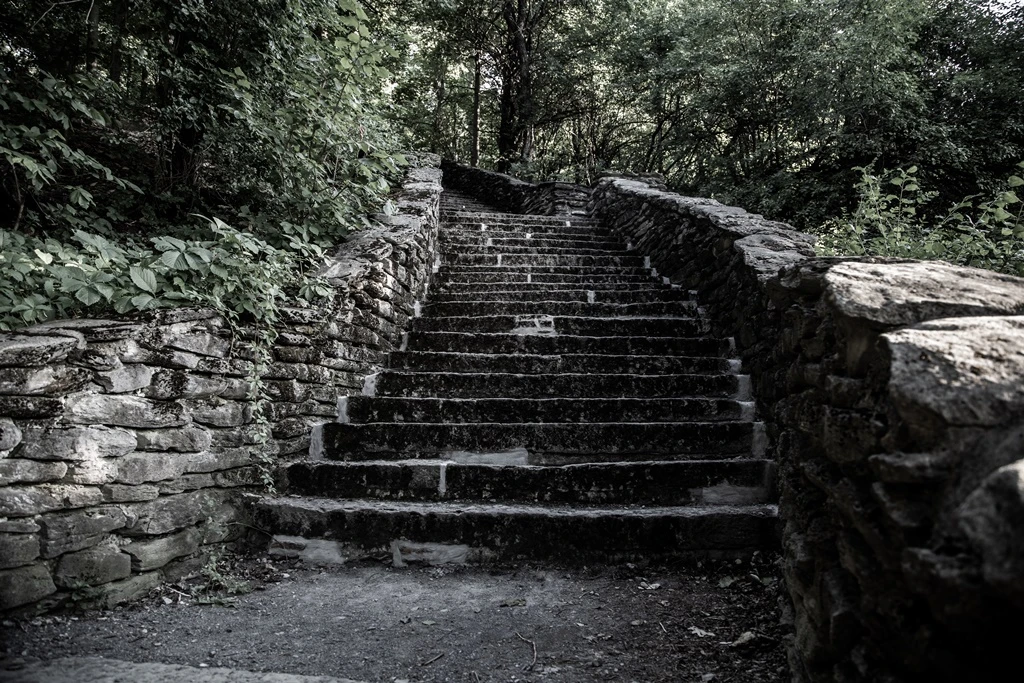
Thompson Park Vortex
Thompson Park sprawls across 355 acres of rocky, wooded hillside on the northwest edge of Watertown, New York, in Jefferson County—a landscape of rolling meadows, steep overlooks, stone pavilions, and curving roads that climb toward a summit known as the Pinnacle, from which you can see clear across the city to Lake Ontario. It is a place designed for picnics, golf, sledding, and afternoon walks. It also has a zoo. None of this sounds like the setting for one of the stranger paranormal claims in the northeastern United States. But for well over a century, people have been reporting something in Thompson Park that does not fit comfortably into any familiar category—not ghosts, not hauntings, but something closer to a glitch in the landscape itself. The park was the vision of John C. Thompson, president of the New York Air Brake Company, who in 1899 anonymously contacted the Olmsted Brothers firm about designing a public green space for Watertown. John Charles Olmsted—nephew and adopted son of Frederick Law Olmsted, the father of American landscape architecture and designer of Central Park—took the lead. He produced a general plan by 1901, and over the next two decades supervised construction on the challenging terrain, designing walls, shelters, overlooks, and stairways into the steep hillside. Thompson secretly acquired the land and donated it to the city around 1916, though his identity as benefactor remained hidden until his death in 1924, when the park was renamed in his honor. A zoo was added in 1920. A golf course followed. The park became a centerpiece of civic life in Watertown, and it has remained one ever since. The claims associated with Thompson Park are not about apparitions or disembodied voices. They are about disorientation—spatial and temporal. Since at least the early 1900s, visitors have reported sudden episodes in which they appear to lose their bearings entirely, finding themselves transported to a different part of the park with no memory of walking there. These episodes are described as brief—roughly four minutes by the clock—but subjectively feel much longer. Witnesses report mist-like visual disturbances, nausea, confusion, and odd sensory effects. Some accounts claim that people have disappeared momentarily and then reappeared, disoriented and insisting they had briefly visited another time. A few darker versions of the legend suggest that not everyone comes back. The phenomenon has been loosely dubbed a "vortex," and witnesses have noted over the years that its apparent location shifts within the park's boundaries. In 2007, a paranormal investigation team called the Shadow Chasers was invited by a local Fox News affiliate to examine the park with electromagnetic field equipment. What they found was unusual: parallel bands of EMF running through the park in a grid-like pattern, intersecting at regular intervals. They could not identify a source. Sustained exposure to elevated EMF is known to produce nausea, headaches, the sensation of being watched, and in some cases visual and auditory hallucinations—symptoms that align closely with what visitors to the park have described. The investigators offered a tentative hypothesis: the so-called vortex may not be a portal at all, but a physiological response to an unexplained electromagnetic environment. They also acknowledged they had never encountered anything like the pattern before or since. The city of Watertown has leaned into the legend rather than away from it. In 2014, during a partial lunar eclipse viewing that drew roughly 250 people to the park's eastern tree line, city officials installed a sign dubbing the site "Watertown's Area 51"—a nod to the coincidence that the CIA's actual code name for Nevada's Area 51 was "Watertown," chosen by former director Allen Dulles, who was born in the city. The vortex is now listed on the Haunted History Trail of New York State, one of fifty paranormal destinations promoted across the state by a coalition of tourism agencies. Today Thompson Park remains open and free to the public. The sign is near the zoo entrance. The vortex, wherever it is at the moment, is somewhere in the trees.
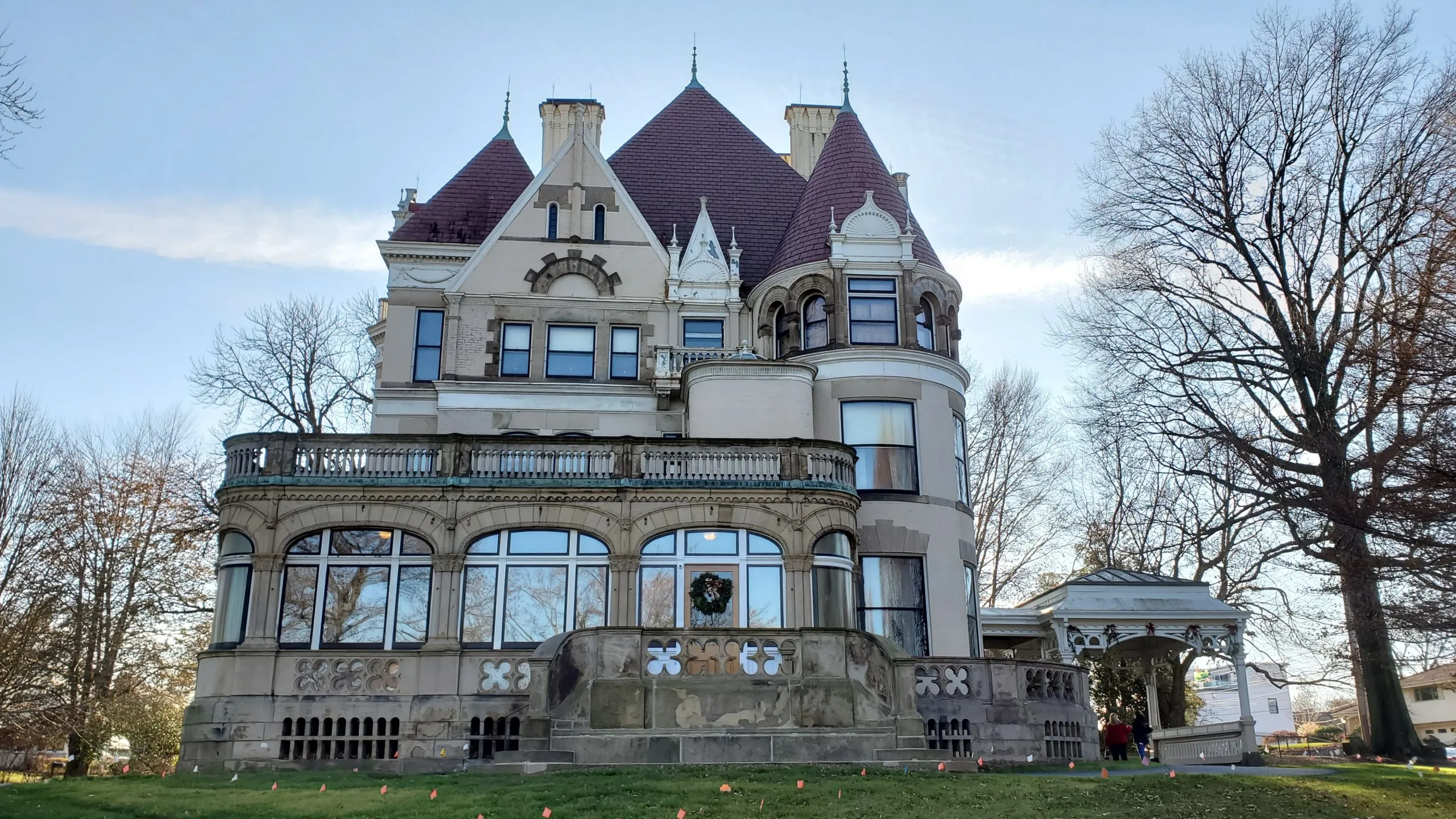
Frick Mansion – Clayton
Tucked into Pittsburgh's Point Breeze neighborhood on a tree-lined stretch of Reynolds Street, Clayton looks less like a museum and more like a home someone simply stepped out of — and may never have fully left. The 23-room mansion, now the centerpiece of the Frick Pittsburgh complex, was purchased in 1882 by Henry Clay Frick for $25,000 as an eleven-room Italianate house. Frick was already one of the most powerful men in American industry, having built a near-monopoly on coke production in the Pittsburgh region before aligning with Andrew Carnegie to help build the largest steel company the world had ever seen. He moved into Clayton with his new wife, Adelaide Howard Childs, and expanded it over the following decade into the Loire château-style mansion visitors see today, with Thomas Edison's company installing its electric lighting. The house carries the weight of the man who built it. Frick's name is inseparable from the Homestead Strike of 1892, one of the bloodiest labor confrontations in American history. When workers at the Carnegie Steel Homestead Works walked out over wage cuts, Frick surrounded the mill with barbed wire — workers called it "Fort Frick" — and hired 300 Pinkerton agents who arrived by barge on the Monongahela River. The resulting battle left ten men dead and dozens wounded. That same month, a 25-year-old anarchist named Alexander Berkman forced his way into Frick's office on the fourth floor of his Pittsburgh building and shot him twice, then stabbed him with a steel file before being subdued. Frick cabled Carnegie: "Was twice shot, but not dangerously." He finished his workday. The man was not easily stopped. But inside Clayton, beneath the public image of the ruthless industrialist, lived a father who suffered losses that money and power couldn't touch. In 1891, his six-year-old daughter Martha died at Clayton after swallowing a pin that caused a fatal infection, despite a specialist summoned from New York. Adelaide, her mother, fell into chronic illness and depression and never fully recovered. The following summer, infant son Henry Clay Jr. died shortly after birth. The two deaths in consecutive years, combined with the violence of the Homestead Strike and the assassination attempt, broke something in the family's relationship to Clayton. In 1905, they left for New York, taking almost nothing with them. The possessions stayed behind as though waiting for a return that never fully came. The house sat largely preserved in that frozen state for decades. Helen Clay Frick, the one surviving daughter, returned in 1981 and lived in Clayton until her death in 1984, having arranged in advance for the estate to be restored and opened to the public. The Frick Art & Historical Center opened in 1990 with 93 percent of the original family furnishings still in place — furniture, artwork, and personal items untouched across a century. That extraordinary preservation is itself central to the haunted reputation. Staff and visitors report hearing a child's laughter in the upstairs hallways and the sound of small feet running across floors when no children are present. A young girl in a white dress has been described at the end of corridors and on staircases, glimpsed briefly before vanishing — appearing to be around five years old, the age Martha was when she died. Security guards report women's footsteps on the third floor after hours, steady and deliberate, moving through rooms that stand empty. Adelaide's bed is regularly found with a deep impression in it, as though someone has lain down and risen again. Some accounts describe the scent of cigar smoke drifting through rooms where no one smokes. The spirit of Helen — who devoted her final years to keeping the house exactly as it was — is believed by many staff members to have never left the third floor where she slept. Clayton is open to the public for tours. The beds are made. The rooms are still. But the impressions keep returning.

State Capitol Building
Rising at the end of Dexter Avenue at the top of a hill originally called Goat Hill, the Alabama State Capitol building has presided over Montgomery since 1851 — a Greek Revival structure of white columns and a central dome that has witnessed more pivotal and painful moments in American history than almost any comparable building in the country. It has served as the seat of state government, the cradle of the Confederacy, the backdrop of the Civil Rights Movement, and the site of a blood feud murder. That it carries a haunted reputation is almost difficult to avoid. The current building is the second capitol on this ground. The first, completed in 1847, burned down two years later. The current structure was completed in 1851, built partly by enslaved laborers, with its famous cantilevered spiral staircases crafted by Horace King, a formerly enslaved man who became one of the most accomplished builders in the antebellum South. The building immediately became the center of enormous historical forces. On January 11, 1861, Alabama voted to secede from the Union in the old Senate Chamber. Within weeks, delegates from six seceding states gathered in that same room and drafted the Provisional Constitution of the Confederate States of America. On February 18, 1861, Jefferson Davis arrived by carriage and was inaugurated as the Confederacy's only president on the front portico — the exact spot now marked by a brass six-pointed star embedded in the marble. Montgomery served as the Confederate capital for just over three months before the government relocated to Richmond. What remained was a building soaked in the weight of a nation's collapse. More than a century later, the Capitol stood at the center of history again. The third Selma to Montgomery Voting Rights March ended on its steps on March 25, 1965, with 25,000 protesters gathered on Dexter Avenue as Martin Luther King Jr. addressed the crowd. The building had once been the seat of the government that institutionalized slavery. Now it was the terminus of a march demanding the right of Black Americans to vote. That collision of meanings is embedded in the architecture itself. The most documented paranormal claim involves a murder committed inside the building on Halloween 1912. A property dispute between a young man named Will Oakley and his stepfather P.A. Woods came to a head in the Capitol offices of the state convict board president. Oakley produced two pistols, offered one to his stepfather for a duel, and when Woods refused, shot him four times. Oakley fled down the Capitol stairs, walked to the county jail, and surrendered. He was eventually committed to Bryce Hospital in Tuscaloosa, escaped, and was never heard from again. Since then, employees and security guards have repeatedly reported bathroom faucets turning on by themselves in the offices near the old convict board rooms — water running from fixtures with no one present, stopping only when manually shut off. Renovations over the decades have done nothing to stop it. The prevailing legend holds that Oakley's spirit returns endlessly to wash his stepfather's blood from his hands. The building's Civil War associations generate a separate layer of claims. A security guard quoted in a 1994 Birmingham News article reported seeing a female apparition near the statue of Governor Lurleen Wallace, wearing white opera-length gloves that matched those in Wallace's official portrait. Ghost tour operators describe the figure as a Civil War widow roaming the upper offices, wailing for a husband lost to the war. Cold spots and unexplained sounds have been attributed to the presence of Jefferson Davis, Civil War surgeon John Allan Wyeth — whose statue stands on the Capitol grounds — and an unidentified Confederate soldier. The Alabama State Capitol is open to the public Monday through Saturday and offers free guided tours. The governor's office still operates here. The old Senate Chamber where the Confederacy was born still stands. The brass star still marks where Davis took his oath. And somewhere in the building, according to those who have worked the late shifts, the water still runs.
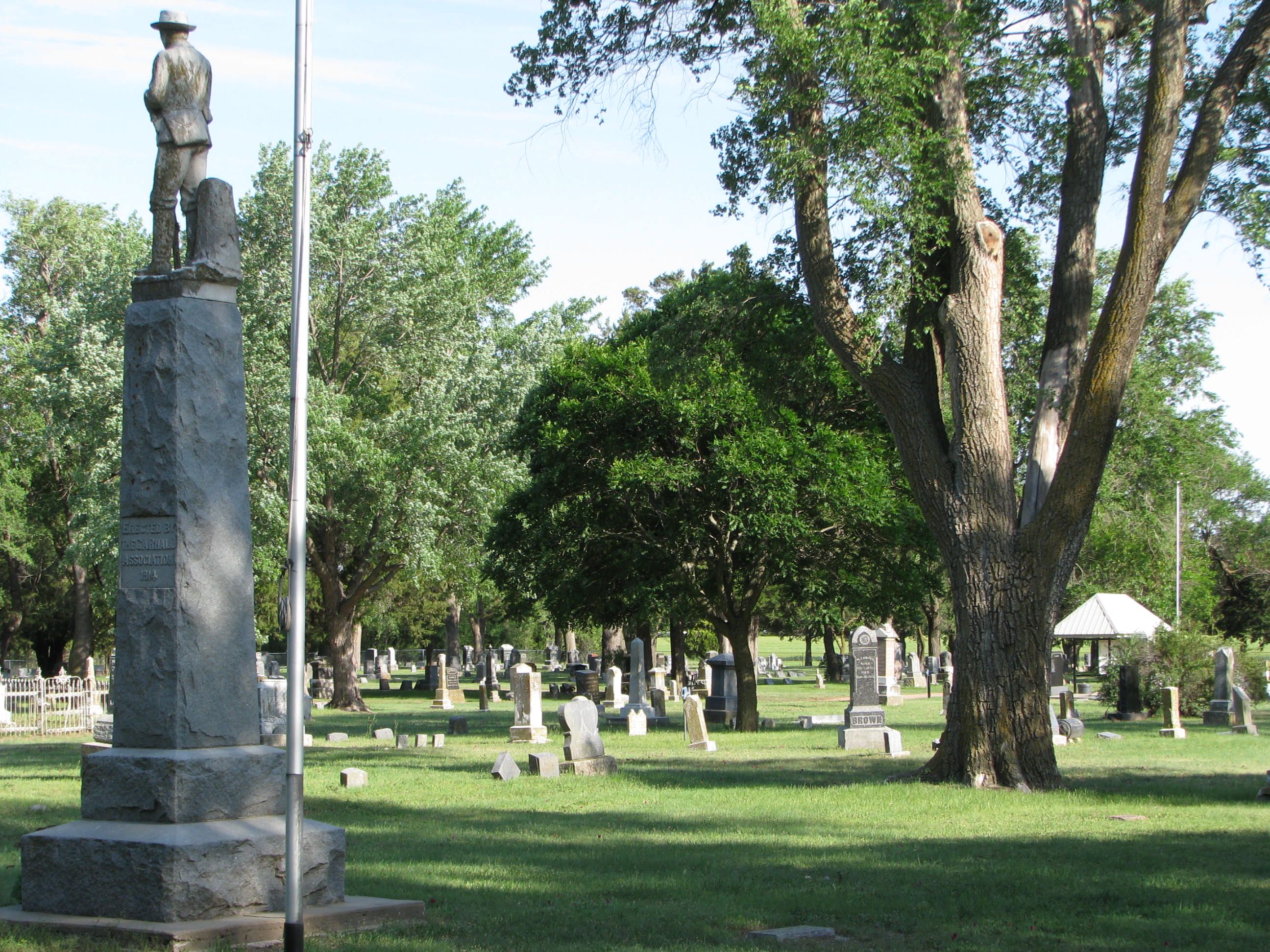
Wildmead Cemetery
Out on the flat central Kansas prairie, roughly a dozen miles northwest of Hutchinson along the Arkansas River lowlands, the small town of Nickerson came into being the way most of this part of the country did — by rail. The Atchison, Topeka and Santa Fe Railway laid its line through Reno County in 1872, and the town platted along that corridor was named in honor of Thomas Nickerson, then president of the railroad. First houses followed in 1875, incorporation came in 1879, and by the turn of the century Nickerson had banks, mills, a newspaper, an opera house, and Nickerson College. It was a proper little prairie city, built by homesteaders and Mennonite farmers working some of the richest wheat land in the country. Wildmead Cemetery sits just outside the town as a record of that community — nearly two thousand documented burials accumulated across generations of Reno County life. The headstones range from weathered frontier-era markers to mid-century monuments, and the grounds are shaded by old trees that give the place a stillness rare in the treeless Kansas landscape. Burials span the full arc of regional history, including at least one veteran of the Spanish-American War of 1898 whose grave has been noted by visitors as a point of quiet reflection. The paranormal reputation of Wildmead is anchored to a single dominant figure known locally as the White Lady — a female apparition said to move through the cemetery, particularly at night. Regional legend frames her not merely as a ghost but as something closer to a guardian, a presence that distinguishes between those who visit out of grief or genuine curiosity and those who come only to cause trouble or disrespect the grounds. The distinction matters in local telling: families and respectful visitors are said to fall under her protection, while those who arrive with bad intentions are not extended the same courtesy. Whether she is connected to a specific grave has never been established. The cemetery gate has its own piece of local lore. Multiple accounts describe the entrance as bent from the inside, and the gate itself is said to resist visitors — closing on those inside and refusing to open when it shouldn't. In one widely circulated account from around 1980, two carloads of teenagers drove into Wildmead late at night specifically hoping to catch a glimpse of the White Lady. During a slow loop through the grounds, both vehicles experienced headlights cutting out simultaneously with no mechanical explanation. One car stalled partway through the gate, blocking the exit. The group pushed it nearly half a mile down the road before both vehicles resumed normal function on their own. No apparition was seen that night, but the account circulated in Nickerson for decades afterward. More recent accounts have concentrated on the cemetery's maintenance building. Investigators reported hearing a generator inside the structure power on while they were nearby. When they approached, it shut off. One member of the group asked aloud for it to start again. It did, and the moment was captured on a recording device. Other visitors have described unexplained knocking sounds coming from trees within the grounds, temperature fluctuations on hot summer days, and an intermittent feeling of being observed from somewhere within the tree line. A self-described psychic sensitive who visited on a July afternoon in 2017 reported sudden, intense goosebumps near the grave of a Spanish-American War veteran — an experience she noted specifically because of the triple-digit heat that day. Wildmead is an active cemetery, open and accessible to the public. The headstones are readable, the trees still stand, and the gate is still there. Whether you arrive in daylight to trace family names or after dark looking for something harder to explain, the grounds have a weight to them that most visitors remark on before they leave.
Miss Gail’s Inn
Standing on the main commercial avenue of one of New Mexico's quietest county seats, Miss Gail's Inn doesn't announce itself the way most reputedly haunted locations do. There are no wrought iron gates or Gothic turrets—just a two-story brick building with segmented-arch windows and a broad front porch, set among the handful of turn-of-the-century structures that line Aztec's historic downtown. But this building has been collecting stories for well over a century, and not all of them belong to the living. The structure was originally built during 1906–1907 as the American Hotel, constructed of brick laid in Flemish and common bond, and opened with a grand reception in March 1907. Its timing was not accidental. The Denver & Rio Grande Railroad had completed a narrow-gauge line from Durango, Colorado to Aztec in 1905, transforming the small agricultural settlement on the banks of the Animas River into a regional hub for commerce and livestock shipping. Aztec had been formally established in 1887 after San Juan County split from Rio Arriba County, and by the turn of the century it was a town of picket fences, vegetable gardens, and cottonwood-lined streets—a place where children played on wooden board sidewalks and wandered freely in and out of storefronts. The American Hotel rose to meet the influx of travelers arriving by rail, its guests ferried from the station to the front door by a horse-drawn buggy known as the Red Apple Flyer Taxi. A one-story rear wing housed the dining room, kitchen, and laundry, and the hotel quickly earned a reputation for serving some of the finest meals in the region. Its comfortable porch became a gathering point where news of the wider world was exchanged and business deals struck. The town itself sits in the Four Corners region of the Colorado Plateau, named for the massive ancestral Puebloan ruins nearby that early Spanish explorers mistakenly attributed to the Aztec civilization of Mexico. The Animas River—its full Spanish name, Río de las Ánimas Perdidas, translating to "River of Lost Souls"—runs through the heart of the community, a detail that lends an almost literary quality to the landscape surrounding the inn. Over the decades the American Hotel changed hands and purposes. It was refurbished in 1981, when bricked-in second-floor windows were reopened and a porch was reconstructed. It was listed on the National Register of Historic Places in 1985 as part of the Aztec Historic District. At some point it was renamed Miss Gail's Inn and operated as a bed and breakfast, before eventually converting to rental units and, by most accounts, ceasing active hospitality operations altogether. It is the building's paranormal reputation, however, that has kept its name circulating long after the bed and breakfast closed its guest book. Multiple entities are said to occupy the premises, and the reports span decades and come from residents, guests, visitors, and at least one law enforcement officer. The most persistent figure is a hostile male presence concentrated in Room 7 on the upper floor—described by those who have encountered it as irritable and territorial. Local legend ties this spirit to a man allegedly hanged from a tree in the building's backyard, though the historical record on that event remains thin. Whether the hanging victim and the Room 7 presence are the same entity is a matter of speculation, but the geographic overlap between the two stories has not gone unnoticed by those who track the inn's history. Other reported figures include a woman in white seen drifting through the upper hallways, and a young boy heard playing in the corridor on the second floor. One former resident who stayed at the inn in the late 2000s described the lady in white and recalled a disembodied male voice whispering a gentle goodnight as she lay in bed. A retired Aztec police officer recounted a mid-1970s incident in which he and his partner responded to a disturbance on the upper floor. As they descended the large interior stairway, a strong male voice between the two men said clearly, "Get out," followed by a physical shove to the partner's lower back. No one else was on the stairs. Visitors have reported sudden and intense cold spots upon entering the building, the sensation of being watched, and an overall atmosphere of unease that seems to persist regardless of the time of day. A separate account from a neighborhood resident recalls a stabbing death on the sidewalk outside the building's lower-level apartments—a real and documented act of violence that added another layer of grief to a property already saturated with local lore. Skeptics can reasonably note that a building of this age, with shifting tenants and an evolving identity, will accumulate stories almost by inertia. Old brick structures settle and groan. Stairwells amplify sound. The power of suggestion runs strong in a town that already bears the name of a misidentified ancient civilization and sits along a river literally named for lost souls. But the consistency of certain details—the male aggression concentrated on the upper floor, the female apparition in white, the unsolicited physical contact reported by unrelated witnesses across decades—gives the accounts a cumulative weight that resists easy dismissal. Today the building at 300 South Main Avenue still stands, its brick facade and arched windows largely intact, a quiet survivor on a street full of them. It is no longer operating as an inn or bed and breakfast, and access depends entirely on the current property status and the willingness of whoever holds the keys. Whether the spirits inside have noticed the change in management is, as always, an open question.
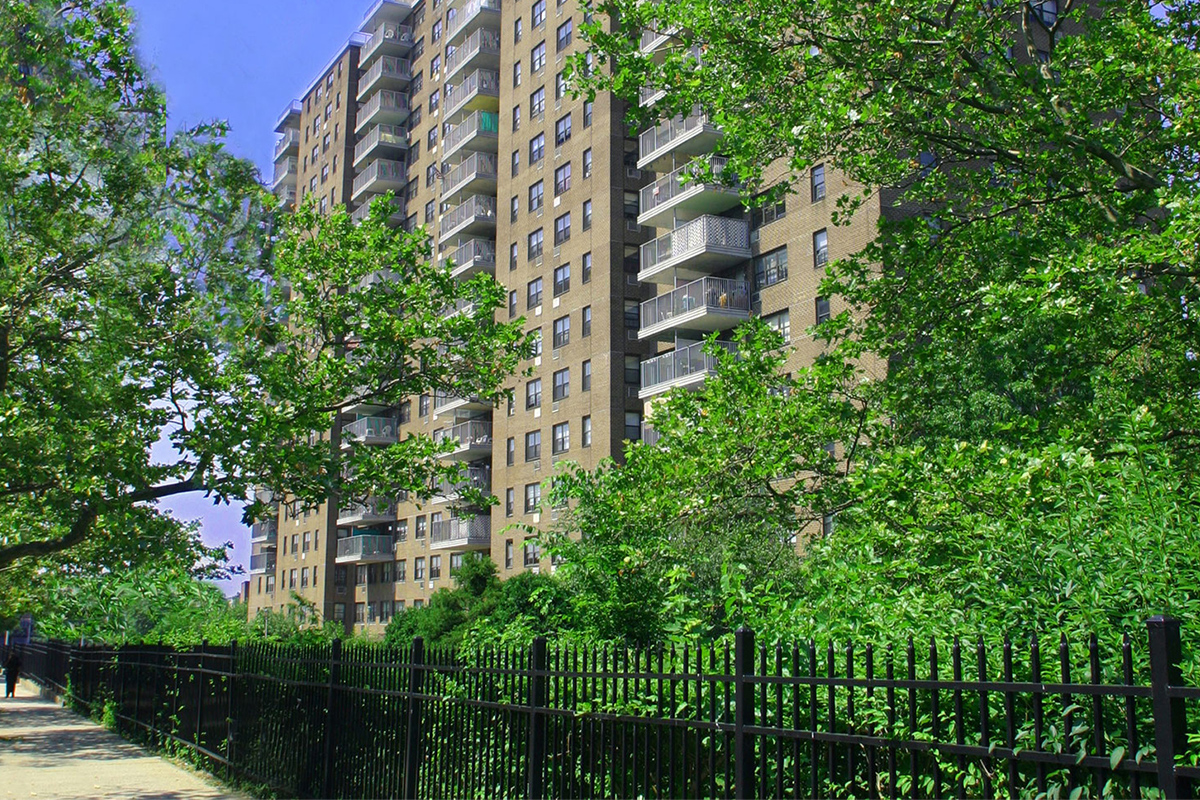
Hazel Towers
Standing eighteen stories over the Pelham Bay section of the Bronx, Hazel Towers is the kind of building that doesn't announce itself as haunted. There are no crumbling facades or Gothic embellishments—just a postwar residential high-rise at 1730 Mulford Avenue, brick and concrete, squared off against the sky like dozens of other mid-century towers that define New York City's outer borough skyline. It was built in 1968, designed by the architectural firm Pomerance & Breines, whose portfolio included hospitals and large-scale residential projects across the city. It went up during the great wave of high-rise construction that reshaped the Bronx in the 1960s, part of a broader effort to house the borough's growing working- and middle-class population in modern, elevator-serviced towers with balconies and amenities that older walkup tenements could never offer. The land beneath Hazel Towers carries a longer history than the building itself. The Pelham Bay neighborhood sits on ground originally purchased by Englishman Thomas Pell from the Siwanoy people in 1654—a vast tract that would eventually lend its name to the park, the parkway, and the surrounding streets. For centuries the area remained agricultural. It wasn't until the extension of the IRT Pelham Line in 1920 that the eastern Bronx opened to dense residential development, drawing Italian, Irish, and Jewish families outward from Manhattan. The postwar decades brought larger structures—towers like Hazel Towers—rising above a neighborhood that still retained the feel of a quiet enclave just two blocks from the 6 train. The building contains roughly 286 units with one-, two-, and three-bedroom apartments. Nelson Management Group acquired the property in 1999 and has since invested over four million dollars in upgrades including new elevators, windows, lobbies, and a security system. A tenants' association has been active since at least 1991. By all outward measures, Hazel Towers is a functioning, well-maintained residential building in one of the Bronx's more desirable neighborhoods. And yet the building appears on multiple databases of allegedly haunted locations, and the accounts from residents are remarkably consistent. Tenants across various apartments—not concentrated on any single floor—report shadow figures in hallways and rooms, particularly during late-night hours. Some describe orbs of light moving through darkened spaces. Objects reportedly fall or shift without explanation. Cold spots appear and dissipate with no apparent cause. Disembodied voices have been reported in apartments and common areas. Several residents describe an oppressive feeling of sadness or paranoia that lifts the moment they step outside, a phenomenon difficult to attribute to ordinary environmental factors. The basement and boiler room draw particular attention. At least one former resident has described seeing shadow figures near the boiler room during routine laundry trips—a detail that recurs independently in other accounts. One resident recounted a sleepover during which multiple people experienced panic attacks between three and four in the morning, accompanied by shadows, orbs, and objects falling. A follow-up Ouija board session in another apartment reportedly produced additional sightings—notable for involving multiple witnesses across two units on consecutive days. What makes Hazel Towers unusual is the absence of any known originating event. There is no documented tragedy, no publicized death, no fire or crime the narratives attach themselves to. The spirits, according to those who claim encounters, are simply present—and unwelcoming. Multiple sources describe the entities as hostile in demeanor, though no accounts describe physical harm. Most haunted locations build mythology around a specific incident. Hazel Towers offers no such anchor, which either undermines the claims or makes them harder to explain as narrative projection. Skeptics would rightly note that an eighteen-story concrete tower from the late 1960s will produce unexplained sounds—elevator machinery, water pressure shifts, air in aging ductwork. The basement of any large building is inherently atmospheric. And suggestion, once a building acquires a reputation, is powerful. But the consistency across unrelated residents over decades, and the emphasis on emotional effects rather than spectacle, gives the accounts a texture that environmental explanation doesn't fully resolve. Today Hazel Towers remains fully occupied in a neighborhood that continues to attract families. Pelham Bay Park sprawls to the north. The lobby is staffed around the clock. Nothing about the building suggests anything other than ordinary urban life. But behind certain doors, at certain hours, some residents insist the building holds something no renovation has managed to address—and something that does not seem glad to have company.

Sahara and Sandhill
Sandhill Road in Las Vegas, Nevada has earned recognition as one of the most intensely haunted locations in the American Southwest through decades of documented paranormal activity, witness testimony, and paranormal investigation concentrated along this relatively ordinary-appearing urban thoroughfare stretching across metropolitan territory. The road segment between Sahara Avenue and surrounding residential areas has accumulated a complex and tragic paranormal history that manifests through multiple categories of supernatural phenomena suggesting the presence of intelligent consciousness and residual emotional imprinting within the environment. The most frequently reported paranormal activity along Sandhill Road involves the apparition of an elderly woman who materializes from the darkness in a vehicle, reportedly pursuing vehicles that traverse the roadway during nighttime hours with relentless determination and threatening demeanor. Witnesses describe the woman's approach as aggressive and threatening, her elderly vehicle apparently capable of following at high speeds despite mechanical limitations that would prevent such performance in the physical world, suggesting paranormal enhancement. The phenomenon suggests not a passive haunting but an active paranormal consciousness engaged in behavior resembling pursuit or enforcement of some unknown boundary within the physical space, her manifestations representing interactive engagement. The paranormal activity at Sandhill Road extends beyond the road surface itself into the flood control tunnel system running beneath the streets between Charleston and Sahara Avenue, creating geographically dispersed paranormal phenomena. These tunnels, constructed for water management and partially flooded during heavy precipitation events, have become the site of manifestations linked to a tragic accident involving a motorcycle couple whose deaths occurred within the tunnel system decades past. The spirits of the deceased couple are reported to manifest within the tunnels, their presence announced through electromagnetic phenomena, disembodied cries recorded on paranormal investigation equipment, and the sensation of phantom touches upon investigators conducting research. Electronic voice phenomena recordings obtained within the tunnels have captured what investigators interpret as cries of anguish and distress, acoustic signatures suggesting the ongoing trauma associated with the couple's deaths and their awareness of paranormal existence. Cold spots concentrate in areas where the couple's vehicle came to rest, paranormal energy apparently anchored to the location of their fatal accident creating zones of concentrated manifestation. Additional paranormal phenomena throughout the Sandhill Road area include invisible contact wherein investigators feel hands or pressure upon their bodies despite the absence of any visible source or rational explanation. Researchers have documented these experiences with sufficient consistency to determine that conventional explanation cannot account for the phenomenon, establishing it as legitimate paranormal manifestation. The paranormal activity at Sahara and Sandhill appears to intensify during nocturnal hours and during periods of emotional or electromagnetic elevation, suggesting that the haunting represents a responsive phenomenon rather than simple residual energy locked in temporal repetition. The intersection of multiple tragic deaths with the emotional aftermath of loss has apparently created an environment of exceptional paranormal activity requiring specialized investigation protocols and protective measures for researchers willing to document the ongoing manifestations.
1400 Bar and Grill
The 1400 Bar and Grill occupies a location rich with historical significance, serving as both a dining establishment and a repository of stories spanning generations of community gatherings and social occasions. The structure itself reflects architectural styles from an earlier era, with materials and design elements suggesting the building may have served various purposes throughout its complex history. The main dining area features the warm ambiance typical of upscale restaurants, with carefully designed lighting and decor creating an inviting atmosphere for patrons seeking fine dining experiences. The establishment has built a reputation within the dining community for quality cuisine and service, attracting regular customers and new visitors who appreciate the culinary offerings and comfortable surroundings that make it a preferred destination. Within the 1400 Bar and Grill, paranormal investigators and restaurant staff have documented consistent reports of supernatural activity centered primarily in the main dining area where patrons gather. The most frequently reported manifestation takes the form of a man dressed in period uniform, an apparition that has been observed by multiple witnesses over extended periods spanning years of observation. This spectral figure maintains a distinctive appearance consistent across different accounts, suggesting a genuine entity rather than coincidental misidentification or imaginative misinterpretation. The presence of this uniformed ghost has led researchers to theorize connections to the building's historical past, possibly related to military personnel or law enforcement officials who may have occupied or frequented the space during earlier decades. Accompanying the apparition of the uniformed man are additional paranormal phenomena establishing the venue as a location of significant supernatural activity and paranormal intensity. Cold spots have been documented throughout the main dining area, appearing without logical explanation from ventilation systems or environmental conditions. These temperature anomalies persist even during warmer seasons and remain concentrated in specific zones suggesting intentional manifestation by the spirit. Unexplained footsteps have been reported by staff members during and after business hours, with sounds suggesting deliberate movement of a person despite complete absence of any visible individual. Disembodied voices and other mysterious auditory phenomena have been documented, often occurring during quiet periods when background noise cannot possibly account for the sounds experienced. The experiences at the 1400 Bar and Grill follow patterns consistent with residual hauntings, in which spirits replay actions or movements from their past lives with mechanical regularity. The uniformed apparition frequently appears in the same locations within the dining area, suggesting the ghost maintains presence in particular zones of personal significance. Staff working evening and closing shifts report the highest frequency of encounters, suggesting phenomena may intensify when the restaurant is less crowded and environmental interference is minimal. Contemporary operations continue despite documented paranormal activity, with paranormal investigation groups conducting research at the venue to better understand the phenomena. The distinctive appearance of the uniformed apparition has positioned the 1400 Bar and Grill as a significant haunted location within dining establishments of its region, attracting both curious diners and serious paranormal researchers.