
Haunted Bars & Restaurants in the U.S.
288 haunted locations
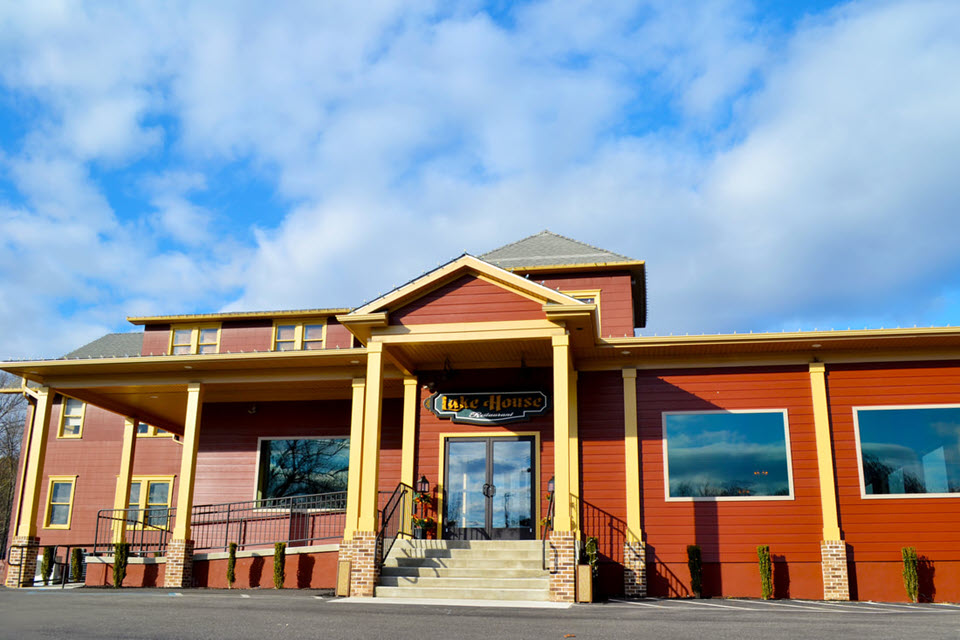
Iona Lake Inn – Lake House Restaurant
Set along the quiet shoreline of Iona Lake in the rural community of Newfield, Gloucester County, the building now associated with the Lake House Restaurant carries a history that stretches back to the nineteenth century, when the lake itself served as a modest resort destination for residents of southern New Jersey and nearby Philadelphia. The property at 611 Taylor Road sits beside the small man-made lake surrounded by woods and farmland, a setting that historically attracted visitors looking for fishing, boating, and seasonal recreation away from the larger cities of the region. Over time the site developed into a gathering place for travelers and locals alike, eventually becoming known as the Iona Lake Inn. During the late 1800s and early 1900s, lakeside inns and taverns were common throughout southern New Jersey, particularly in areas where rail lines or wagon routes made rural retreats accessible for day trips. The inn at Iona Lake operated as one of these establishments, offering food, lodging, and space for social gatherings. The surrounding grounds were used for outdoor recreation, and the lake itself became a focal point for visitors who arrived for fishing excursions, picnics, and small community events. Like many similar properties in the region, the building evolved gradually, expanding and changing hands as the local tourism economy shifted. Through the early twentieth century the inn developed a reputation as both a restaurant and social venue. Community gatherings, private celebrations, and seasonal events were held on the property, while travelers moving through Gloucester County stopped along the quiet rural road to eat or stay overnight. Over decades the structure absorbed numerous renovations and additions, but it retained the feel of an older roadside inn, with dining areas overlooking the water and interior spaces reflecting the layered construction typical of buildings that have been continuously adapted for hospitality use. By the mid-to-late twentieth century the property became more widely known as the Lake House Restaurant, though the historic identity of the Iona Lake Inn remained part of its reputation. Locals continued to treat the lakeside building as a familiar meeting place. The calm setting beside the water, particularly in the evening when the surrounding woods grow quiet, contributed to the atmosphere that later fed into stories surrounding the property. Reports of unusual activity at the site have circulated among employees and visitors for years, making the inn one of the lesser-known haunted locations occasionally discussed in southern New Jersey folklore. Staff members working late shifts have described hearing footsteps moving through empty dining rooms after closing, particularly in sections of the building believed to date to the earliest phases of construction. Others have reported doors opening or closing on their own or lights switching on in areas that had already been shut down for the night. One of the most commonly repeated claims involves the apparition of a woman seen near the stairways or hallways of the older portions of the building. Witnesses typically describe the figure appearing briefly before vanishing, often interpreted as someone dressed in clothing from an earlier period. Other employees have reported fleeting shadows moving across walls, unexplained cold spots, or the sense of someone standing behind them while working alone in the dining rooms. Paranormal investigators who have visited the location over the years have occasionally reported capturing electronic voice phenomena during recording sessions or experiencing sudden fluctuations in equipment readings. As with many historic restaurants, skeptics point out that aging structures frequently produce creaks, drafts, and shifting floorboards that can easily mimic footsteps or movement, particularly late at night when the building is otherwise quiet. The power of suggestion can also play a role once a location becomes known for ghost stories. Even with those explanations, the stories remain part of the building’s identity. The combination of an old lakeside inn, a secluded rural setting, and generations of visitors passing through its doors has given the property a reputation that blends local history with lingering folklore. Today the building continues to operate as a restaurant overlooking Iona Lake, maintaining the long tradition of hospitality on the site. For some visitors, however, the quiet halls and reflective water outside carry the persistent belief that the inn’s past occupants—or perhaps former guests—may still linger within the old lakeside structure.
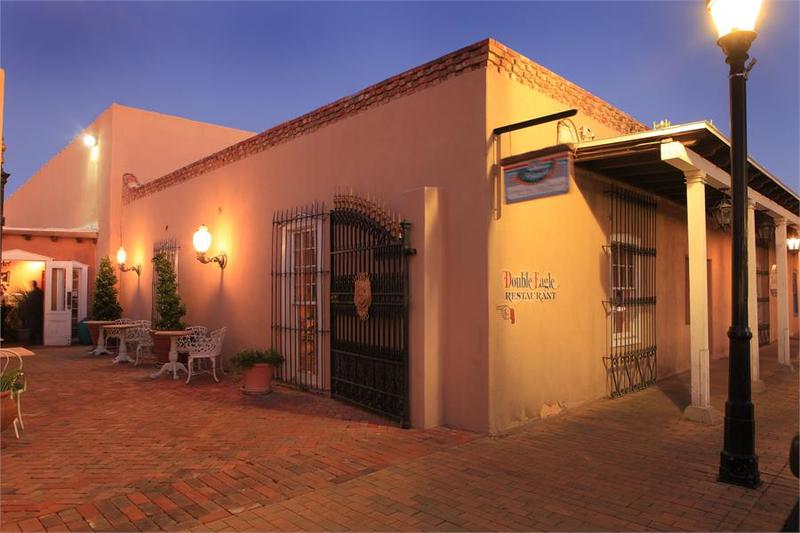
Double Eagle Restaurant
Standing just off the historic plaza in Mesilla, New Mexico, the Double Eagle Restaurant occupies one of the oldest surviving buildings in the region. With thick adobe walls, carved wood beams, chandeliers, and richly decorated dining rooms filled with antiques, the structure feels less like a restaurant and more like a preserved nineteenth-century estate. The original home was constructed in 1849, during a time when Mesilla was emerging as a major settlement along trade routes connecting Mexico, Texas, and the American Southwest. The town itself would soon become the backdrop for several pivotal moments in frontier history. The Gadsden Purchase was confirmed on the Mesilla plaza in 1853, bringing the region formally under United States control. During the Civil War, Mesilla was briefly declared the capital of the Confederate Arizona Territory in 1861. By the late nineteenth century, the town also gained notoriety when Billy the Kid was tried and briefly imprisoned there in 1881. The Double Eagle building stood through all of it, quietly watching the territory around it transform. The haunting legend most closely tied to the property centers on the Maese family, early owners of the home, and a tragic romance that has become one of the most enduring ghost stories in New Mexico. According to local accounts, the family’s teenage son Armando fell deeply in love with Inez, a young servant who worked in the household. Their relationship was forbidden by Armando’s mother, who believed her son should marry into a wealthier and more socially acceptable family. One evening she reportedly discovered the two together in Armando’s bedroom. Enraged, she seized a pair of sewing shears and attacked them. Inez was killed immediately, while Armando was fatally wounded and died days later. The room where the attack is said to have occurred is now known as the Carlotta Room, named after Armando’s mother, and it has become the focal point of nearly every haunting claim connected to the building. Unlike many haunted locations that sit abandoned, the Double Eagle remains active and carefully preserved. Dining rooms branch from one another through narrow passages and archways, still following the layout of the original home. The Carlotta Room in particular carries an atmosphere many visitors describe as unusually heavy or still. In one corner sit two Victorian chairs that have become central to the building’s ghost lore. Reports of paranormal activity at the Double Eagle have circulated for decades among staff and visitors. Many of the experiences center around the Carlotta Room, where Armando and Inez are said to remain. Employees have described chairs and tables shifting slightly, wine glasses breaking without an obvious cause, lights flickering, and unexplained cold spots drifting through the room. Some guests claim to hear whispers or their names spoken when no one else is nearby, while others report seeing shadowy figures near the corner chairs. Those chairs are the most famous detail of the haunting. According to local tradition, the seats show impressions shaped like two people sitting side by side despite rarely being used. Visitors are often warned not to sit in them. Over the years, several people who ignored the warning have reported sudden nausea, overwhelming sadness, or vivid nightmares afterward, reinforcing the belief that the spirits of Armando and Inez still occupy that space. Skeptics note that historic adobe buildings creak, settle, and carry sound in unusual ways, and that powerful stories can shape how visitors interpret ordinary events. But the Double Eagle’s reputation has endured because the reports are remarkably consistent across decades of unrelated visitors. Today the Double Eagle Restaurant operates as both a fine dining destination and one of the most famous haunted locations in the American Southwest. Guests come for the elaborate interior, the preserved frontier architecture, and the deep historical ties to Mesilla’s past. Yet many leave remembering something else entirely—the strange quiet of the Carlotta Room, the chairs in the corner, and the lingering sense that whatever tragedy once unfolded inside the house may not have completely faded with time.
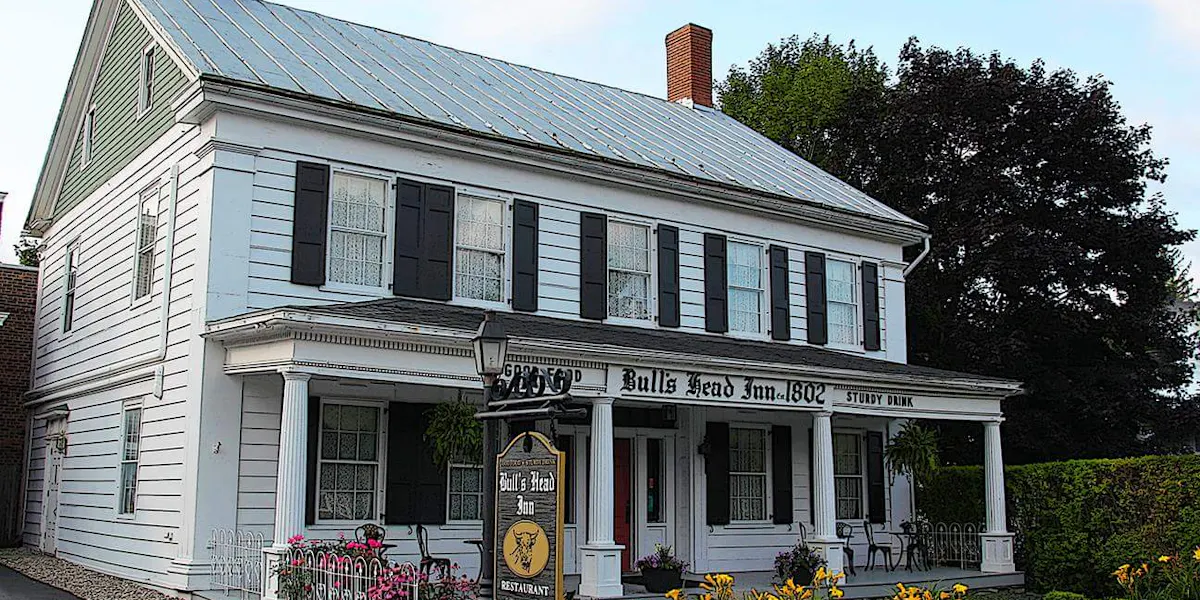
Bull’s Head Inn
Standing at the corner of Park Place in the heart of Cobleskill, New York, the Bull's Head Inn is the oldest building in the village — a Federal-style structure built in 1802 that has served, across more than two centuries, as tavern, town hall, Masonic temple, courthouse, meeting hall, private residence, and restaurant. It carries that layered institutional history the way old buildings do in small upstate New York towns — quietly, in the woodwork, in the reoriented staircase, in the central fireplace that has warmed a rotating cast of merchants, soldiers, politicians, and neighbors across generations. A portrait of Thomas Jefferson hangs in the foyer, a reminder that he was President when the building was new. But the site itself is older than the building by half a century. George Ferster constructed one of the first structures in Cobleskill here in 1752, and what followed was a sequence of catastrophes that left a mark the land has apparently not forgotten. On May 30, 1778, during the Battle of Cobleskill, Mohawk forces under the command of Joseph Brant — fighting alongside Tories and British — burned the settlement nearly to the ground. Retreating patriots were killed, and the structure on this site was destroyed. The two buildings that followed met the same fate, each burned in subsequent enemy raids on Cobleskill in the spring and fall of 1781. Local tradition holds that occupants perished in one or more of these fires — including, in one account, a young girl in an upstairs bedroom who froze in terror and could not escape the blaze. Another story maintains that a Native American was killed inside the building during one of the conflicts. Three buildings destroyed on the same ground, within a single generation, each one carrying its dead. The current structure was built in 1802 by Seth Wakeman — the same builder responsible for the Beekman Mansion in Sharon Springs — and established as an inn and tavern to serve merchant traffic along the newly charted Loonenburg Turnpike, which ran commerce between Central New York and New York City. The inn thrived until the Erie Canal redirected that traffic north through Albany, bypassing Cobleskill and draining the commercial foot traffic that had kept it busy. By 1839, the building had transitioned into a private residence, and it remained one for well over a century. In 1810, when Cobleskill's Main Street was developed, the building was physically reoriented — its staircase repositioned, its front entrance redesigned to face the new brick-lined street. The building adapted, as it always had. The architecture reflects its early Federal character — three floors, a central staircase, original wide-plank floors, and stone cellar walls that the current owners exposed and incorporated into the lower tavern space using reclaimed brick from Cobleskill's own Main Street. The building is divided across three distinct atmospheres: a ground floor dining room anchored by a classic brick fireplace, an upper floor with vintage glass windows suited for private gatherings, and a lower tavern built from the bones of the old cellar. It is a building that wears its age honestly, without staging. The last private residents of the Bull's Head were John and Grace Steacy, whose opposing natures apparently outlasted them both. John drank; Grace was a dedicated member of the Women's Christian Temperance Union. When the building was sold after their deaths and former Cobleskill mayor Monte Allen reopened it as a restaurant and bar in 1966, he placed the bar in the room that had served as Grace Steacy's bedroom. What followed, according to staff, guests, and ownership across multiple decades, has been consistent and specific. A woman in a white gown — long-sleeved, floor-length — has been seen moving around the central staircase, along the upper and lower landings, and through the first-floor dining room by guests and staff working late. Silverware and napkins have been knocked to the floor or sent across the room. Plates and utensils have been disrupted mid-service. Doors slam on their own. Faucets turn themselves on. The current ownership reports these occurrences as ongoing. The paranormal activity at the Bull's Head is notable for its consistency across unrelated witnesses spanning more than fifty years of restaurant operation. The apparition of the woman in white has been described in nearly identical terms by guests who had no prior knowledge of the building's story. Paranormal investigators have conducted formal sessions at the property, and the inn is an established stop on New York State's official Haunted History Trail. The figure most commonly associated with the activity is Grace Steacy — a teetotaler whose bedroom became a bar — though older stories from local family tradition point toward the Revolutionary-era fires and the girl reportedly trapped in the upstairs room as an earlier and perhaps deeper source. Skeptics will note that a two-hundred-year-old building with three destroyed predecessors on the same site is exactly the kind of place where stories accumulate and feed on each other. The convergence of documented historical violence, a colorful final resident with a grudge against alcohol, and decades of reported encounters makes the Bull's Head something of a perfect storm for haunted reputation. None of that makes the firsthand accounts less consistent or less specific. The woman in white keeps appearing near the staircase. The silverware keeps moving. And the bar, to Grace Steacy's apparent displeasure, remains open.
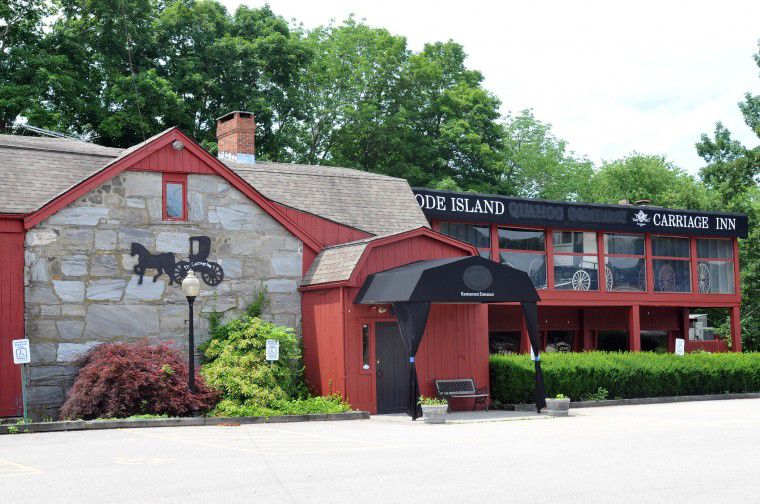
Hoof-Fin-Feathers – Carriage Inn and Saloon
Along Tower Hill Road in North Kingstown, Rhode Island, the structure known today as Hoof-Fin-Feathers—also referred to historically as the Carriage Inn and Saloon—stands along one of the oldest travel corridors in the region. The road itself traces the route of the colonial-era Post Road, a heavily used passage connecting Providence with coastal communities to the south. For centuries this stretch of Washington County functioned as a stopping point for travelers moving between ports, farms, and inland towns, and the building at 1065 Tower Hill Road developed alongside that flow of movement. The core of the structure dates back to the late eighteenth century, when the property operated as a roadside tavern and stagecoach stop serving people traveling through southern Rhode Island. At a time when journeys between towns could take days, establishments like this were essential infrastructure. Travelers could find food, drink, and lodging while horses were watered and rested in nearby stables. The building’s layout reflected those needs: large common rooms, low ceilings supported by heavy timber beams, and fireplaces capable of heating wide gathering spaces during the long New England winters. During the nineteenth century the inn continued to serve the changing traffic along the Post Road. Farmers, merchants, sailors traveling between Narragansett Bay ports, and stagecoach drivers passed through its doors. Taverns of this era were often the social centers of rural communities, functioning not only as lodging houses but also as places where news traveled, business was conducted, and local politics were debated. As railroads and later automobile travel transformed the region, the building’s role evolved but its hospitality function remained largely intact. The property moved through several owners and identities across the late nineteenth and early twentieth centuries, continuing as a tavern, restaurant, and gathering place for the surrounding community. By the mid-twentieth century the establishment became widely known as Hoof-Fin-Feathers, a name reflecting the restaurant’s focus on meat, seafood, and game dishes. Under that identity it developed a reputation as a long-running local dining destination. The interior retained many of the building’s historic features—exposed beams darkened by centuries of smoke, uneven floorboards, and rooms whose shapes reflected generations of additions and modifications. Like many colonial-era taverns that remained in continuous use, the structure accumulated layers of history rather than preserving a single moment in time. It was within that atmosphere that stories of unexplained activity began circulating among staff and visitors. Reports most commonly focused on what employees described as a lingering presence connected to the building’s earliest tavern years. Workers closing the restaurant late at night occasionally reported hearing footsteps in empty hallways or the sound of chairs shifting after the dining rooms had been cleared. Some staff members described glasses or small objects being moved or found out of place the following morning. One of the most frequently repeated claims involves the apparition of a man dressed in what witnesses interpret as colonial-era clothing. Accounts vary, but the figure is typically described as appearing briefly near the bar area or along interior doorways before disappearing. Other reports center on colder patches of air moving through rooms without an obvious source, or the feeling of being watched while working alone in the older sections of the building. Paranormal investigators who have visited the property over the years have sometimes reported electronic voice phenomena captured during recording sessions or unexplained fluctuations in equipment readings. As with many historic taverns, skeptics point out that the building’s age, irregular architecture, and constant creaking of old wood can easily create sounds that mimic footsteps or movement. The suggestion created by a long history and dim interior lighting can also influence how ordinary events are interpreted. Despite those explanations, the reputation has endured as part of the inn’s identity. The combination of colonial architecture, centuries of travelers passing through its doors, and the lingering folklore of a stagecoach-era tavern has made Hoof-Fin-Feathers one of Rhode Island’s more frequently discussed haunted restaurants. Whether the reports reflect environmental quirks of an eighteenth-century structure or something less easily explained, the building remains a place where local history and ghost lore have become closely intertwined. Today the property continues to operate as a restaurant and gathering place along Tower Hill Road, maintaining the hospitality tradition that began there more than two hundred years ago. Visitors come for the historic setting as much as for the food, stepping into rooms that have hosted travelers since the earliest days of Rhode Island’s coastal trade routes. With that deep continuity comes the persistent belief among some employees and patrons that the inn’s oldest guests may never have completely checked out.

Heaven City Restaurant (It Ain't Heaven)
On National Avenue in the Town of Vernon, just outside the village of Mukwonago in southeastern Wisconsin, a Spanish-style building with lead glass windows, art-deco details, and a forty-foot tree growing through a central atrium has been cycling through identities for more than a century—Native American gathering place, gentleman's farm, failed religious commune, brothel, gangster retreat, upscale restaurant, and, through all of it, a place where the dead reportedly never quite finished their business with the living. The land was a favored site for Native Americans long before European settlement. The first documented white owner was Gaius Munger, who received a government quarter-section land grant and made his living producing maple syrup. After Munger, the property passed through a remarkable succession of owners, each of whom bent the land to a different purpose. Abraham Perkins raised sheep and promoted the Wisconsin Central Railroad. Philip Best, the Milwaukee brewer, used it as a stock farm for his work horses. Thomas Spence, a plumbing manufacturer, raised Shetland ponies. George Schuster, a Milwaukee tobacconist, grew acres of tobacco and had the existing large Spanish-style home built around 1917 by Mukwonago's Gritzmacher Builders, modeled after a house he had seen in Palm Springs, Florida. Lloyd Dewey farmed the land and operated an amusement park on the river called Potawatomi Park. Dewey lost the property in a card game in East Troy, reportedly won it back with a lucky hand, and ultimately lost it again when a bank foreclosed. In 1932, A.J. Moore, a Chicago street preacher, purchased over four hundred acres from the bank and named the property Heaven City, intending it as the site of a religious commune modeled on a prototype he had started in Illinois. The commune failed. By the early 1940s, buildings were added to convert the property into a commercial hotel and resort, and the establishment quickly attracted a clientele that had nothing to do with Moore's spiritual ambitions. Lavish accommodations and fine meals drew what local accounts describe as underworld types seeking getaway weekends. The property reportedly operated as a brothel for a period, and local lore connects it to organized crime figures, with some former employees describing bricked-off tunnels they were told had been used by Al Capone in the 1920s—a claim that, while unverified, is consistent with the wider pattern of Chicago gangster activity across southern Wisconsin during Prohibition and its aftermath. The property passed through a series of subsequent owners, including Pat Talcott, Cindy and Richard Wilkening, and Ralph and Carol Hibbard. In the late 1980s, the building was converted into Heaven City Restaurant, an upscale fine-dining destination that became one of the most popular restaurants in the greater Milwaukee area, known for its romantic atmosphere and high-quality cuisine. The restaurant operated for fifteen years under chef Scott McGlinchey and his wife Mandy Meyer before closing in February 2005. The property has since housed additional restaurant ventures, including The Lakeside, and the adjacent building operates as It Ain't Heaven, a neighborhood bar. The paranormal reputation of Heaven City predates its restaurant era and is attributed in part to the property's location on land identified as a Native American burial ground. Witnesses over the years have reported seeing apparitions wandering through the building, particularly after closing time. Glasses have been known to fall and shatter when the restaurant is empty and locked for the night. Staff from the restaurant's operating years consistently reported strange occurrences, and nearly everyone who worked there had a story. One former busboy, who took his first job at Heaven City in the 1990s after graduating from Mukwonago High School, later described how the manager informed him on his first day that the building was haunted—a claim he initially took as a joke until he realized the accounts were pervasive among the staff. The building's layered history—its Native American origins, the violent associations of the brothel and gangster period, the sheer volume of human activity compressed into a single property over more than a century—has created what visitors and employees describe as a persistent, ambient charge that never fully dissipates, regardless of what business occupies the space. Today the Heaven City property continues to operate in some capacity, with the bar next door serving as a local gathering spot where bartenders double as informal historians of the building's past. A Waukesha County Historical Society marker erected in 1999 stands on the grounds, cataloging the property's succession of owners and uses. The Spanish-style facade still stands out against the Mukwonago landscape, looking like something transplanted from another era and another climate entirely. Whatever energy the land held before Gaius Munger arrived, and whatever was added by the gamblers, the gangsters, the commune members, and the generations of diners who came and went through the lead glass doors, appears to have settled into the property as permanently as the foundation itself.
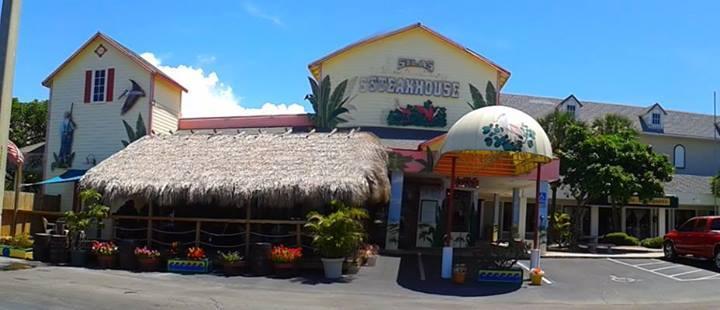
Silas Dent’s Steakhouse
Set just off Gulf Boulevard on St. Pete Beach, across from the long strip of sand and surf that made this stretch of Pinellas County a tourism corridor, the site known for decades as Silas Dent’s Steakhouse belonged to a distinctly local version of Old Florida. It was not an antebellum mansion or a grand Victorian hotel, but a busy beachside restaurant and bar at 5501 Gulf Boulevard whose identity was built around memory, regional folklore, and the image of a real man who had already passed into legend long before the first steak was served there. For many locals, that combination of commerce, nostalgia, and personality is exactly what gave the place its unusual atmosphere. The property itself had earlier lives before it became the restaurant most people remember. In the 1960s, this section of the beach was part of the fast-changing postwar tourist landscape, and the building at 5501 Gulf Boulevard stood adjacent to the London Wax Museum, one of St. Pete Beach’s best-known roadside attractions. The address also briefly housed the Suntan Art Center during that decade, when beachfront commercial spaces were still evolving into the mix of attractions, shops, restaurants, and entertainment venues that came to define the area. By the late 1970s, however, the space entered the chapter that fixed it in local memory. Silas Dent’s Steakhouse opened in 1979 under Rob Stambaugh, who named it for Silas Dent, the so-called “Happy Hermit of Cabbage Key,” a well-known figure in lower Pinellas history. Dent had lived for years on what later became part of Tierra Verde, in a palm-thatched shelter, cultivating an image that was half frontier holdout and half folk celebrity. He was remembered as a solitary but approachable island resident, associated with handmade grass skirts, boat travel, Christmas visits with children, and an older Florida that was already disappearing beneath dredging, development, and resort culture. By the time the restaurant opened, Dent had been dead for more than a quarter century, having died on Christmas Eve in 1952, but his name still carried enough local resonance to anchor an entire themed destination. Inside, the steakhouse leaned hard into that identity. It was known for Old Florida décor, historic memorabilia, waterfront views, late-night music, and a social scene that made it as much gathering place as restaurant. For much of the 1980s and beyond, it became a recognizable beach institution, the sort of place tourists discovered and locals returned to out of habit. The building’s history was never tied to a single notorious crime or headline-making tragedy, and that is part of what makes its haunted reputation different from many better-known paranormal sites. Its legend grew not from documented catastrophe, but from attachment to the man whose name it bore and the sense that his presence, or at least the story of him, had never really left. That is the origin of the haunting most commonly associated with Silas Dent’s Steakhouse. Local lore held that Silas Dent himself haunted the restaurant, less as a threatening apparition than as a familiar resident spirit. The most repeated claim centered on a rocking chair placed near the fish tanks, which staff and regulars said would move on its own. Over time, the story became so embedded in the restaurant’s identity that visitors reportedly asked about it, and longtime patrons were said to regard an unmoving chair as more disappointing than reassuring. Unlike locations known for violent manifestations, the claims here were comparatively gentle: an unseen presence, an object rocking without explanation, and the lingering impression that the restaurant’s namesake approved of the place built in his honor. As with many haunt legends attached to restaurants and bars, skepticism is easy to understand. A busy dining room creates drafts, vibration, uneven floors, and constant suggestion, especially once a ghost story becomes part of the brand. Yet that did not prevent the legend from persisting. The tale endured because it fit the setting so neatly: a beach establishment themed around a vanished local hermit, filled with memorabilia and memory, standing in a district shaped by reinvention and loss. In that context, the paranormal claim became less about fear than continuity. After nearly four decades in operation, Silas Dent’s Steakhouse was sold in 2018, and the longtime restaurant chapter came to an end. The property was reworked for other uses, including event space, and in more recent years new businesses have occupied parts of the address. Even so, the name Silas Dent remains one of the most recognizable pieces of folklore attached to St. Pete Beach. The original steakhouse is gone, but the story that made it memorable survives: a restaurant built to honor one of the region’s most colorful historical figures, and a quiet, persistent belief that the old hermit may still have lingered there, rocking gently beside the tanks while the crowd ate, drank, and watched the beach town change around him.

Ernie K-Doe’s Mother-In-Law Lounge
North Claiborne Avenue runs through the Tremé, the oldest African American neighborhood in the United States, in a part of New Orleans where the streets are wide and the buildings low and the culture so densely layered that even a single block can carry several lifetimes of music, grief, ceremony, and celebration. The Tremé sits adjacent to the French Quarter but belongs to a different world — the world of second lines and Mardi Gras Indians and jazz funerals, of neighborhood institutions that are as much community anchors as commercial enterprises. It was into this world that Ernest Kador Jr. was born on February 22, 1933, the son of a Baptist preacher, and it was from this world that he drew everything that made him singular. His stage name, Ernie K-Doe — phonetically simplified by the Minit record label in the same spirit that gave the label itself its simplified spelling — became one of the defining signatures of New Orleans rhythm and blues. K-Doe's career followed the arc common to mid-century R&B artists: a powerful early run, a long middle stretch of diminishing commercial returns, and then either irrelevance or reinvention. He started in gospel, moved to secular R&B, recorded with the Blue Diamonds in 1954, and spent the late 1950s building a regional reputation on a string of sharp, energetic singles. Then in 1961, Allen Toussaint wrote him a song. "Mother-in-Law" — a comic complaint about the domestic interloper, set against a rolling New Orleans groove — went to number one on both the Billboard pop chart and the R&B chart simultaneously. It was K-Doe's first top-forty pop hit and his last. He never had another at that level, but in New Orleans, which measures musical legacy by something other than chart position, it didn't matter. He was in the fabric of the city. The middle decades were hard. K-Doe drank heavily, developed a reputation for unreliability among club owners who didn't want to book him, and by the mid-1980s had effectively bottomed out — doing explosive, often unhinged radio programs on community station WWOZ that built him an international cult following while his personal circumstances deteriorated toward homelessness. The shows were something: K-Doe announcing records, proclaiming his own greatness, delivering improvisational monologues that became collector's items circulated on cassette tapes mailed around the world before the internet existed. WWOZ eventually canceled the show. K-Doe seemed, as his biographer would later put it, destined to die in the gutter. What saved him was Antoinette Dorsey Fox, an old friend who reconnected with him, helped him substantially reduce his drinking, and eventually became both his business partner and his wife. In 1994 — some accounts say 1995, the lounge opened formally in 1995 — Antoinette opened the Mother-in-Law Lounge at 1500 North Claiborne Avenue, at the downtown river corner of Claiborne and Columbus Street in the 7th Ward, specifically so that K-Doe would always have a venue. He had acquired a deserved reputation for unreliability, and no established club could count on him; Antoinette built him a room of his own. K-Doe performed there every Monday night, wearing capes and crowns, having declared himself the Emperor of the Universe in 1998 during a resurgence that saw him perform for sixty thousand people at the Washington Monument and ride as king of the Krewe du Vieux Mardi Gras parade in 2001. The lounge became, in short order, something unusual — a funky-but-chic destination drawing a vastly diverse clientele who all got along, the building's exterior covered in murals depicting K-Doe and collaborators including Allen Toussaint, the interior a dense shrine of memorabilia, photographs, and posters. Every inch was dedicated to him and to the music he embodied. K-Doe died on July 5, 2001, of kidney and liver failure following years of alcoholism. His death produced one of the great New Orleans jazz funerals of the modern era — he lay in state at Gallier Hall, an honor reserved for the city's most notable citizens, and the procession wound from there to Saint Louis Cemetery Number 2, where the Duval family donated space in their 200-year-old family tomb. He was interred alongside his second mother-in-law, with whom he had been exceptionally close, and his best friend, the musician Earl King. After the burial, Antoinette commissioned a life-size mannequin of Ernie, dressed in his actual suits and jewelry, given weekly manicures, sometimes placed outside the lounge with a hidden transmitter playing looped K-Doe recordings for passersby. In New Orleans, this was not considered unusual. It was considered faithful. Antoinette ran the lounge until Hurricane Katrina flooded it with five and a half feet of water in August 2005. She came back. With the help of the Hands on Network and the musician Usher, the lounge reopened on August 28, 2006 — the first anniversary of the storm — and Antoinette used it to feed returning neighbors and visiting volunteers while the Tremé put itself back together. On Mardi Gras mornings she led walking parades of women dressed as baby dolls from the lounge door. On Fat Tuesday, February 24, 2009, she died of a heart attack while closing up the lounge for the night, hours after riding on a float in the Krewe of Muses parade. The building that both she and Ernie had built their last years around was the last place she worked before she died. The haunting tradition at the Mother-in-Law Lounge does not involve anonymous presences or unknown figures — it is specifically Ernie and Antoinette, still in the building they made. The reports are consistent with the character of the place itself: warm, theatrical, musical, the kind of haunting that fits a man who performed seven consecutive renditions of his signature song in front of a shark tank wearing a green plumed cape. Staff, musicians, and regulars have reported the sense of presence and the particular weight of a room where two people poured everything they had into making it exist. The lounge was reopened in 2014 by New Orleans trumpeter Kermit Ruffins under the name Kermit's Tremé Mother-in-Law Lounge, and continues operating as a live music venue, Ruffins cooking for patrons from a grill in the back of a truck parked outside in the New Orleans tradition of feeding people as an act of love. The murals still cover the exterior. Ernie's suits are still inside. Whatever is left of two people who refused to let the music stop is presumably still there too.

Birchwood Saloon
Twenty miles northeast of downtown Anchorage, where the Glenn Highway begins to ease away from the Chugach Mountains toward the flatter plateau country along the Knik Arm, sits the small community of Birchwood — forested lots, private wells, log cabins and ranch homes set back among the birch trees that gave the area its name. This is a corner of Alaska where the land itself still carries the character of the frontier: scenic, isolated in feeling even when suburbia is close, and shaped by the particular culture of people who came north to build something from raw ground. The Denai'ina Athabascans had lived along this stretch of Cook Inlet watershed for thousands of years before white settlers arrived, and the name Chugiak — formally adopted by the handful of homesteaders who gathered to name their settlement on February 17, 1947 — is derived from a Denai'ina word said to mean "place of many places." The community that grew up around them in the 1950s was built largely by former military personnel who had served in Alaska during the war and decided to stay, homesteading 160 acres at a time along what was then called the Palmer Highway. Into this world of homesteads and volunteer fire departments and dogsled telephone lines came the particular institution of the Alaskan roadhouse bar — not merely a place to drink but a genuine community anchor, a warm room set against the cold, a location where neighbors gathered because in a place this large and this sparse, gathering places matter. The Birchwood Saloon on Pilots Road has functioned in this tradition for well over twenty-five years, operating as a neighborhood bar and restaurant — cheesesteaks and pool tables and cold beer — against a backdrop of Chugach Mountains and birch forest that makes the drive to the next nearest option feel theoretical rather than practical. Local guidebooks describe the saloon as an essential casual stop for the area, the kind of establishment that becomes part of the texture of a community rather than simply a business. The building sits on Pilots Road in the South Birchwood area, close to Badarka Road — a narrow gravel road not listed on most maps, a stretch of territory with its own folklore about the things that happen in its surrounding woods. This corner of South Birchwood carries, for people familiar with the area, a particular atmospheric weight. The forested land just off the road is the setting for one of the area's most persistent local stories: a father and young daughter who went into the woods to collect firewood, the girl killed when she pulled an axe from a tree and the tree fell, the father sitting in the snow cradling her body until he froze. Whether true or embellishment, the story has attached itself to the landscape and to Badarka Road in the way that such stories do in places where the wilderness still feels genuinely close. The Birchwood Saloon itself has accumulated a different kind of story. Staff and patrons over the years have reported experiences that resist ordinary explanation — voices heard clearly when the room is nearly empty, the kind of sound that makes a person turn and find no one there. The jukebox has reportedly played on its own, music starting without any coin, without any hand on the machine. Apparitions have been described moving through the bar area, figures that appear and then do not. Objects have vanished from one location and turned up in another part of the saloon with no accounting for how they got there. Footsteps have been heard on the roof — a specific, persistent detail that appears in multiple accounts and was cited by investigators in the book Ghosts of Alaska by Jody Ellis-Knapp, whose research into the saloon contributed to its regional reputation as one of the more reliably reported haunted locations in southcentral Alaska. The name most often attached to the presence is that of a young man who died nearby — electrocuted, the story goes, while shoveling snow from the roof of an adjacent building, his shovel contacting a power line. The accounts vary slightly in the telling: some say he was a neighbor, some describe him as a young local man, and the exact circumstances have blurred over years of retelling. The footsteps on the roof are the detail that people return to — as if something is still up there doing the job that ended badly, still moving across the surface in the cold Alaskan air above the warm room below. The physical proximity of that death to the saloon, and the specificity of the roof as a location of reported activity, have made the electrocution story the dominant explanation among those who believe the building is genuinely occupied. Whether a poltergeist, a residual haunting, or simply the accumulated effect of decades of community memory pressing against the walls of an old bar, the Birchwood Saloon has earned its place on lists of Alaska's most active paranormal locations. The 2021 ghost hunt events hosted at the address drew investigators from around the region, bringing equipment and methodology to bear on a building that had, by that point, spent years generating anecdotes. The saloon appears in published accounts of Alaskan haunted places alongside properties with considerably more dramatic histories — historic hotels, Gold Rush-era sites, remote wilderness locations — which speaks to the density of reported activity relative to the building's modest profile. Skeptics will note, reasonably, that the anchor stories are thin on documentation — no newspaper record of the electrocution has been widely cited, no name attached to the young man on the roof. The jukebox malfunction, the disembodied voices, the moving objects: these are the standard vocabulary of haunted bar folklore, easy to generate and impossible to disprove. What remains harder to account for is the consistency of the reports across years and across different people, the way the same specific details recur — the roof, the jukebox, the voices in the empty room — in accounts given by people who had no particular reason to tell the same story.

1400 Bar and Grill
The 1400 Bar and Grill occupies a location rich with historical significance, serving as both a dining establishment and a repository of stories spanning generations of community gatherings and social occasions. The structure itself reflects architectural styles from an earlier era, with materials and design elements suggesting the building may have served various purposes throughout its complex history. The main dining area features the warm ambiance typical of upscale restaurants, with carefully designed lighting and decor creating an inviting atmosphere for patrons seeking fine dining experiences. The establishment has built a reputation within the dining community for quality cuisine and service, attracting regular customers and new visitors who appreciate the culinary offerings and comfortable surroundings that make it a preferred destination. Within the 1400 Bar and Grill, paranormal investigators and restaurant staff have documented consistent reports of supernatural activity centered primarily in the main dining area where patrons gather. The most frequently reported manifestation takes the form of a man dressed in period uniform, an apparition that has been observed by multiple witnesses over extended periods spanning years of observation. This spectral figure maintains a distinctive appearance consistent across different accounts, suggesting a genuine entity rather than coincidental misidentification or imaginative misinterpretation. The presence of this uniformed ghost has led researchers to theorize connections to the building's historical past, possibly related to military personnel or law enforcement officials who may have occupied or frequented the space during earlier decades. Accompanying the apparition of the uniformed man are additional paranormal phenomena establishing the venue as a location of significant supernatural activity and paranormal intensity. Cold spots have been documented throughout the main dining area, appearing without logical explanation from ventilation systems or environmental conditions. These temperature anomalies persist even during warmer seasons and remain concentrated in specific zones suggesting intentional manifestation by the spirit. Unexplained footsteps have been reported by staff members during and after business hours, with sounds suggesting deliberate movement of a person despite complete absence of any visible individual. Disembodied voices and other mysterious auditory phenomena have been documented, often occurring during quiet periods when background noise cannot possibly account for the sounds experienced. The experiences at the 1400 Bar and Grill follow patterns consistent with residual hauntings, in which spirits replay actions or movements from their past lives with mechanical regularity. The uniformed apparition frequently appears in the same locations within the dining area, suggesting the ghost maintains presence in particular zones of personal significance. Staff working evening and closing shifts report the highest frequency of encounters, suggesting phenomena may intensify when the restaurant is less crowded and environmental interference is minimal. Contemporary operations continue despite documented paranormal activity, with paranormal investigation groups conducting research at the venue to better understand the phenomena. The distinctive appearance of the uniformed apparition has positioned the 1400 Bar and Grill as a significant haunted location within dining establishments of its region, attracting both curious diners and serious paranormal researchers.
Snuffer’s Restaurant
Snuffers Restaurant occupies a building with a complex and layered history in the Dallas-Fort Worth metropolitan area, earning a reputation as the most intensely haunted dining establishment in the region. The structure itself contains physical and spiritual remnants of multiple eras, with paranormal activity concentrated throughout the restaurant's dining and service areas. The property's history includes occupation as a pool hall during earlier decades, a social space where men gathered to play billiards, socialize, and occasionally engage in disputes. The transition from pool hall to restaurant did not erase the energy imprinted upon the location by previous activities and tragic events that unfolded within its walls. Beneath the restaurant's foundations lie the remains of what was once a cemetery, a graveyard displaced during urban development as the Dallas-Fort Worth area underwent rapid expansion and redevelopment. The disturbance of burial grounds and removal of human remains, even through officially sanctioned processes, often results in significant paranormal consequences. Many cultures and spiritual traditions recognize that displacing the dead creates unrest in the spiritual realm, and this location bears testament to that principle. The cemetery's former occupants, including children whose small bodies were laid to rest in this now-vanished burial ground, appear to have remained attached to the location despite the transformation of the surface landscape. Multiple spirit entities inhabit Snuffers Restaurant, their presence documented through consistent witness testimony and paranormal investigation records. A murdered man from the pool hall era roams the restaurant, his violent death creating a restless spirit unable to find peace. Numerous children, possibly cemetery remains disturbed during construction, are believed to occupy various areas of the establishment. These juvenile spirits appear to interact playfully and mischievously with the living environment, creating phenomena distinct from the darker energy of the murdered adult entity. The paranormal manifestations at Snuffers represent some of the most dramatic and varied encountered in commercial establishments. Electronic equipment throughout the restaurant malfunctions inexplicably, with computers, lighting systems, and kitchen equipment experiencing failures without mechanical explanation. Dramatic temperature fluctuations create localized cold spots in dining areas, with patrons and staff experiencing sudden chills despite climate controls operating normally. Lights sway and swing despite absence of air movement or physical contact. Disembodied footsteps echo through dining areas and kitchen spaces during periods when no humans are moving through those locations. Children's voices speak, laugh, and call out, their youthful tones unmistakable to adult listeners who encounter these sounds. Objects levitate or move independently, with glasses, utensils, and other items shifting positions or falling without natural causation. Shadowy figures manifest throughout the restaurant, appearing as dark humanoid shapes that dissipate before close examination. Strange, unidentifiable voices produce sounds that bear no relation to normal human speech or the ambient restaurant noise. The intensity of paranormal activity at Snuffers has made it a destination for paranormal investigators, ghost hunters, and curiosity seekers from throughout the United States, solidifying its status as a location of exceptional and documented supernatural significance.
The Oxford Saloon
The Oxford Saloon stands as a landmark establishment in Snohomish, Washington, representing the rough-and-tumble character of frontier saloon culture that defined the Pacific Northwest during the late nineteenth and early twentieth centuries. The building itself reflects the architectural style typical of its era, featuring multiple floors including a main level dedicated to the saloon and dining operations, upper floors containing private rooms and lodgings, basement spaces including a cardroom where high-stakes gambling occurred, and a staircase serving as the central vertical connector throughout the structure. The saloon operated as a social hub for the community, attracting locals, travelers, and individuals from all walks of life seeking drink, entertainment, and companionship. The establishment witnessed countless human dramas unfold within its walls, providing both refuge and tragedy for its patrons across the generations. The violent history that has resulted in Cazenovia Lake remaining haunted began with the tragic death of Katherine, a woman whose corpse was discovered under deeply disturbing circumstances that suggested malice and brutality. Katherine was found decapitated in a bathtub on the second floor of the establishment, her death representing a crime of such savagery that it shocked even the hardened mining town residents accustomed to frontier violence. The circumstances surrounding her death remain partially obscured by history, with some accounts suggesting a crime of passion while others propose a more deliberate and calculated murder. The shock of her violent end and the violation of her body appear to have left Katherine unable to rest, with her spirit allegedly remaining trapped within the building where she suffered her final moments. Another victim, a woman named Amelia who worked as a prostitute in the establishment, met an equally tragic end when she was found dead in a closet, her body hidden and her death initially going unnoticed. The discovery of her remains raised additional questions about the safety and protection available to workers within the establishment. The third major haunting involves Henry, a police officer who was brutally stabbed on the staircase during an incident that reflected the violent conflicts between law enforcement and criminal elements in the town. Henry was found on the stairs where he fell after sustaining fatal injuries, his blood likely staining the steps where modern visitors have reported unusual phenomena. These three violent deaths created a concentration of traumatic energy within the building that appears to have anchored multiple spirits to the location. The paranormal activity manifests in diverse ways, with witnesses reporting sudden cold breezes that appear without corresponding drafts, physical sensations of being grabbed by invisible hands, and flickering electrical lights that turn on and off without explanation. Objects are reported to move spontaneously from one location to another without human intervention, suggesting an active poltergeist phenomenon rather than passive haunting. The paranormal activity at the Oxford Saloon is most concentrated on the second floor where Katherine's death occurred, though manifestations have been documented throughout the building, particularly on the main staircase where Henry was killed and in the basement cardroom. The spirits appear reactive and sometimes hostile, with some witnesses describing an aggressive presence that communicates through physical contact and electromagnetic disturbances. Katherine is reportedly the most active entity, with guests and staff describing an apparition dressed in a purple dress, her appearance often preceding moments of extreme cold or sudden feelings of dread. The combination of three separate violent deaths occurring within the same structure suggests that multiple spirits may be interacting with living individuals and with each other, creating a complex haunted environment where different phenomena may be attributed to different entities. Paranormal investigators have documented significant electromagnetic fluctuations, particularly in areas associated with the specific deaths. The Oxford Saloon continues to operate as a bar and restaurant, acknowledging its haunted reputation while maintaining normal business operations. The establishment has been featured extensively in paranormal investigation television programs and documentaries, with researchers conducting formal investigations that have captured evidence supporting the haunting claims. The owners and staff have become accustomed to the paranormal activity, with some workers reporting they no longer find the phenomena shocking or frightening. The location has become renowned as one of the most actively haunted bars in Washington state, attracting both paranormal enthusiasts and casual visitors curious about the building's violent history. The Oxford Saloon represents a unique intersection of functional business operations and well-documented paranormal activity, where the past refuses to remain fully past and where the spirits of the violently deceased apparently maintain an active presence among the living.
Vina Rae’s Grill & Graze
Avard, Oklahoma, situated in the high plains region of the panhandle, developed as a small agricultural community during the late nineteenth century as settlers and homesteaders claimed land and established farms throughout the region. The town's commercial center evolved gradually as population accumulated and economic activity generated demand for goods, services, and social gathering spaces. Among the structures that served community functions was the Avard High School, a building constructed to educate the town's youth and serve as a cultural focal point for civic activities and social gatherings. The gymnasium within the high school complex represented an investment in community infrastructure, providing space for athletic competitions, dances, school assemblies, and various social events that bound together the diverse families inhabiting the surrounding rural area. The building embodied practical architectural conventions emphasizing functionality and durability characteristic of school construction during its era. Throughout much of the twentieth century, the gymnasium and attached structures served their intended educational purposes, accumulating memories of youthful achievement, social bonding, and community celebration. Economic and demographic transformations characterizing rural America throughout the latter twentieth century rendered many small-town institutions obsolete or underutilized. The Avard High School complex, like countless similar facilities across agricultural regions, experienced declining enrollment as populations shifted toward larger urban centers. Rather than allowing the structures to deteriorate into abandonment, the property was repurposed to serve new commercial functions. The conversion to Vina Rae's Grill & Graze preserved the building from complete decay while creating new economic activity and gathering opportunities for the community. Interior spaces originally designed for athletic competition and school functions were reconfigured to accommodate dining service, kitchen facilities, and infrastructure required for food service operations. This transformation preserved the building's physical presence within the community while fundamentally altering its social function and temporal rhythm of daily activity. The establishment's paranormal phenomena concentrate around a woman's violent death that occurred during the building's commercial operation period. Documentation indicates that a woman was murdered within the facility's interior spaces, referenced in paranormal accounts as a headless apparition due to the severity of the injury. The extraordinary violence suggests the death occurred during a robbery, assault, or violent felony. The woman's death on Memorial Day 2002 created a traumatic energetic imprint that appears to have fundamentally altered the location's supernatural landscape. The specificity of the date indicates the event was significant enough to be recorded and remembered by paranormal investigators and community members. Since the documented murder, visitors and staff at Vina Rae's Grill & Graze have reported paranormal phenomena suggesting the persistent presence of the murdered woman's spirit. Photographs taken throughout the establishment consistently capture orbs of light that were not visible during photography, spherical manifestations paranormal investigators interpret as concentrated spiritual energy. Witnesses have reported detecting a distinctive odor described as burning hair, a sensory phenomenon suggesting trauma energy or spiritual distress. Disembodied voices throughout the facility produce both coherent words and inarticulate sounds expressing emotional anguish or rage. Footsteps echo through various areas without identifiable source, suggesting an entity capable of environmental interaction. Knocking sounds emanate from walls and surfaces, interpreted as communication attempts or expressions of frustration. These phenomena have established Vina Rae's as one of Oklahoma's most documented haunted restaurant locations, attracting paranormal researchers drawn by the genuine supernatural activity concentrated around violent trauma.
Friendly Fisherman Restaurant
Five Fishermen Restaurant occupies a distinguished position in Halifax, Nova Scotia, as both a celebrated dining establishment and a landmark bearing witness to one of history's most catastrophic maritime disasters. The building's history is intertwined with the sinking of the RMS Titanic in 1912, when the restaurant space served a far grimmer purpose as an impromptu morgue and victim recovery facility. When the bodies of Titanic victims began arriving in Halifax aboard recovery ships, the building was requisitioned to house and preserve the deceased, transforming its rooms into a temporary holding facility for victims of the disaster. The restaurant also maintains historical connections to the Halifax Explosion of December 1917, when a catastrophic munitions ship collision devastated the harbor and the surrounding community, claiming over sixteen hundred lives. These twin tragedies of immense human suffering have left their mark upon the location, creating what many believe to be a conduit between worlds. The dining areas, bar, and throughout the building have become focal points for paranormal activity that numerous staff members and patrons have documented over decades of operation. Glasses frequently fly off shelves without explanation, defying the laws of physics and suggesting an invisible intelligence manipulating objects within the space. Cutlery shifts position on tables and counters when no one is present, appearing to move with purposeful intent rather than as the result of vibration or environmental factors. The taps throughout the establishment turn themselves on and off at inexplicable moments, water suddenly flowing or ceasing without human intervention. Cold pockets of air materialize throughout the space, sometimes concentrated in specific areas where visitors report sudden drops in temperature and accompanying sensations of dread or sorrow. Multiple apparitions have manifested within the restaurant's spaces, including grey mist formations that coalesce into semi-visible shapes and full body apparitions of individuals dressed in clothing from the early twentieth century. Witnesses report seeing a grey mist that gradually becomes more defined, taking on humanoid characteristics before fading again into ethereal vapor. More substantial full body apparitions have appeared to patrons and staff, often described as male figures wearing the formal attire typical of the Titanic era. Disembodied voices emanate from empty areas, speaking words that staff have struggled to comprehend, often in accents or patterns of speech unfamiliar to contemporary ears. The male apparition in particular is said to be protective and present throughout the building, as if maintaining a watch over the space and its occupants. Historians and paranormal researchers generally agree that the manifestations likely stem from the traumatic circumstances associated with both the Titanic disaster and the Halifax Explosion, both events of overwhelming human suffering. The victims of these catastrophes may retain some form of spiritual imprint or conscious presence within the location, drawn to the site where their bodies were processed and preserved. The Titanic victims in particular may never have received proper closure or burial rites, given the chaotic circumstances of the disaster and the difficulty in identifying so many victims. The connection between the restaurant and the Titanic recovery operation creates a tangible historical link to one of history's most profound maritime tragedies. Today, Five Fishermen Restaurant operates as a thriving establishment in Halifax's hospitality industry while maintaining its haunted reputation and honoring its complex historical legacy. Staff and management have generally accepted the paranormal phenomena as an integral part of the location's character, even as they continue to serve contemporary patrons unfamiliar with the building's dark history. Ghost tours and paranormal investigation groups regularly visit the location, documenting the ongoing activity and speaking with staff members about their experiences. The restaurant stands as a living memorial to the victims whose tragic deaths may have forever bound their spirits to the location, creating a unique intersection of culinary tradition and spectral presence that defines the Five Fishermen experience.
Dead President’s Tavern
Dead President's Tavern in Wilmington, Delaware stands as one of the oldest continuously operating drinking establishments in the United States, with roots extending back to the colonial period when the site functioned as a gathering place for merchants, militia members, and civic leaders. The building itself has undergone numerous renovations and restructurings across its three-century history, but its core structure preserves elements of eighteenth-century construction techniques and architectural details that identify it as a structure of significant historical importance. The tavern's name references its association with American presidential history, though the precise origins of this designation remain subject to historical debate and local folklore interpretation. The original proprietors established the tavern as a social institution where political discussions frequently occurred during the revolutionary and early federal periods. Over the centuries, successive owners modified the interior layout, added game rooms and dining areas, and modernized facilities while maintaining the essential character of a historic public house. Throughout its operational history, Dead President's Tavern has served as a nexus for community gathering and commercial exchange. The establishment became known for its convivial atmosphere and its role in facilitating informal political discourse among Wilmington's leading citizens. The bar itself, crafted from walnut and oak, represents craftsmanship from the nineteenth century and bears marks of intense use across generations of patrons. The game room has hosted countless poker games, chess matches, and informal competitions, its worn wooden floors and scarred furniture testament to years of vigorous social interaction. The dining areas reflect the architectural and design preferences of multiple historical periods, creating an interior environment that reads as a palimpsest of American domestic and commercial taste. The tavern's reputation grew beyond Wilmington, attracting visitors from across the Delaware Valley region who sought both authentic colonial-era ambiance and spirited social engagement. Paranormal phenomena at Dead President's Tavern have been extensively documented by staff members, patrons, and paranormal investigators who have conducted formal investigations at the location. Unexplained laughter echoes through the establishment, particularly during evening and night hours when the tavern is closed or sparsely populated, with multiple independent witnesses describing boisterous, joyful laughter of indeterminate origin. Objects exhibit inexplicable movement patterns, with bar glasses and dining items frequently found displaced from their original positions, often arranged in unusual configurations that suggest intentional placement rather than accidental disturbance. Temperature anomalies occur without apparent cause, creating localized cold spots in specific areas of the bar and game room. The most dramatic phenomena involve dinnerware, particularly dishes that have reportedly been thrown with sufficient force to create impact marks on walls and floors. Giggling sounds, apparently emanating from empty spaces or from beneath the floorboards, have startled numerous staff members during preparation and closing procedures. The most consistent manifestations center on the bar area and game room, suggesting that the spiritual activity may be connected to the site's primary historical function as a gathering place for social interaction and recreational pursuits. Glasses have been observed rattling without external vibration, and floating dominoes have been reported during late evening hours by multiple credible witnesses. Some researchers have theorized that the energetic residue of centuries of celebration, debate, and entertainment has imprinted itself upon the physical structure. The entity or entities responsible for the phenomena remain unnamed in official paranormal documentation, though local tradition references a historical figure known as Lemonade Mullery, though the precise identity and historical reality of this person continues to elude verification. Today, Dead President's Tavern continues to operate as both a functioning bar and an attraction for paranormal enthusiasts, offering a unique combination of authentic colonial-era hospitality and documented supernatural activity that draws investigators and curious visitors throughout the year.
Oxford Saloon
The Oxford Saloon stands as one of Snohomish, Washington's most historically significant establishments and simultaneously one of its most actively haunted locations. Built during the late nineteenth century as a genuine frontier saloon, it served as a central gathering place for the community, providing alcoholic beverages, social connection, and commercial negotiation. The wooden structure, constructed with period materials and architectural details, has maintained much of its original character through preservation efforts. The layout encompasses multiple distinct areas including ground floor drinking establishments, basement stairs, the second floor with gathering spaces, and private rooms. Throughout its long history, the Oxford Saloon has witnessed numerous human dramas involving colorful characters who frequented the establishment during frontier and early twentieth-century periods. The saloon operated as a social infrastructure hub for the developing community, providing spaces for celebrations, confrontations, business dealings, and personal relationships. The building's design provided numerous private corners where sensitive conversations could occur away from public view. Multiple individuals met tragic ends within the saloon's walls, leaving spiritual imprints upon the location. The paranormal activity centers upon three primary entities whose individual histories intertwine with the establishment's narrative. Henry the Cop represents law enforcement presence, with his ghostly apparition appearing near the basement stairs where manifestations occur most dramatically. Katherine, Madam Katherine, was prominent in the saloon's operation, regularly appearing as a spectral presence clothed in an elegant purple dress that visitors describe with remarkable consistency. Amelia, a former sex worker, manifests as phantom hands reaching from walls, creating deeply unsettling physical contact experiences. Beyond these, the saloon experiences general phenomena including mysterious pinching in the ladies restroom, unexplained cool breezes, flickering lights, and objects moving without human agency. The pinching sensations in the ladies restroom represent frequently reported phenomena, with witnesses describing distinct physical contact in absence of visible entities. Katherine's apparition appears throughout the establishment in her distinctive purple dress, most notably in upper floor regions. Henry the Cop's manifestations concentrate in basement areas where his presence creates distinct atmospheres of cold and pressure change. Phantom hands associated with Amelia reach from surfaces without warning, interpreted as attempts at communication or expression of her emotional struggles within the saloon environment. The Oxford Saloon maintains operation as both a functional drinking establishment and acknowledged paranormal location, attracting visitors interested in experiencing the supernatural alongside conventional hospitality. Paranormal investigation groups conduct formal investigations, documenting evidence through electronic and photographic means corroborating witness testimony. The location has achieved recognition as one of the Pacific Northwest's most active haunted establishments, with documentation spanning decades of consistent phenomena. Staff have adapted to coexistence with resident spirits, developing familiarity with manifestation patterns and reportedly establishing communication with entities. The Oxford Saloon represents where historical tragedy, human passion, and spiritual persistence create an environment saturated with paranormal activity.
Brea’s Best Hamburger
Brea's Best Hamburger occupies a distinctive position within paranormal and cultural landscape of Arizona, representing a commercial restaurant establishment whose primary function of serving food to local customers and travelers has been inextricably intertwined with paranormal phenomena and evidence of mysterious remains discovered on the property. The structure itself emerged as a modest commercial enterprise, likely constructed during the mid-twentieth century as part of the development of roadside dining establishments and small restaurants serving the traveling public and local populations in Arizona communities. The building exemplifies the simple utilitarian architecture typical of mid-twentieth-century restaurant construction, designed for functional food preparation and service rather than architectural distinction or particular aesthetic refinement. The property encompasses not only the indoor commercial space where food preparation and customer service occurred, but also surrounding exterior areas, yard space, and potentially underground or hidden areas beneath the primary structure. The restaurant's primary business purpose of serving hamburgers and other simple fare created a context in which the establishment functioned as a community gathering place and way station for traveling customers, a function that persisted for extended periods despite the paranormal circumstances that eventually emerged regarding the location. The paranormal activity and mysterious circumstances associated with Brea's Best Hamburger center upon paranormal phenomena documented on the property and, most significantly, upon the discovery of human remains at the location that could not be readily explained through conventional means and that generated substantial questions regarding their origins, the circumstances of the person's death, and the historical timeline associated with the burial or placement of the remains within the property. The discovery of these remains transformed Brea's Best Hamburger from a simple commercial restaurant into a location of significant criminal, paranormal, and historical interest, suggesting that death, violence, or murder had occurred at the location and that the physical evidence of these crimes or tragedies had been concealed within the property. The nature and identities of the remains, the historical period during which the death occurred, and the circumstances that led to their discovery remain partially obscured by the passage of time and incomplete documentation, yet their presence on the property created an irrefutable link between the location and serious human trauma, violence, or mysterious death. The paranormal phenomena reported at the location prior to the discovery of physical remains may have represented manifestations of spiritual unrest associated with the undiscovered remains and the unresolved nature of the death circumstances. The region behind the restaurant property has emerged as the primary locus of paranormal activity, a location where paranormal phenomena have been documented and where the discovery of remains focused investigation and attention upon the specific geographical area. Paranormal investigators and casual visitors have reported experiences of generalized paranormal activity within and surrounding the property, including sensations of unseen presences, emotional disturbances, and other phenomena consistent with the presence of disturbed spiritual entities. The possibility ghost hauntings associated with violent death or murder on the property creates a scenario in which the remainder of consciousness and emotional anguish associated with the deceased individual might persist within the location, manifesting through paranormal phenomena accessible to sensitive individuals and documented through paranormal investigation equipment. The discovery of remains on the property established Brea's Best Hamburger as a location of documented human death or probable violent crime, transforming the restaurant from a simple commercial establishment into a location of historical, paranormal, and criminal significance. The paranormal activity documented at Brea's Best Hamburger continues to attract paranormal researchers and investigators seeking to understand the circumstances associated with the remains discovered on the property and the identity of the individual whose death resulted in their presence at this undistinguished Arizona restaurant location.
Colonial Lanes
Colonial Lanes operates as a tavern and entertainment venue in the Tri-State region, a location combining food service with leisure activities in a building reflecting period architecture from an earlier era and preserving elements of historical construction. The establishment includes a main tavern area where patrons gather for drinks and socializing, along with functional spaces including a stockroom for inventory storage, a kitchen for food preparation, and a wine room housing bottle collections and vintage selections. Additional facilities include bar areas where beverages are mixed and served by trained staff, and various supporting spaces necessary for operating a contemporary hospitality establishment that maintains historical character. The venue has developed a reputation within the regional community as a destination for quality beverages and social gathering, attracting patrons who appreciate both the culinary offerings and the atmospheric qualities of the historic structure. The paranormal phenomena documented at Colonial Lanes have established it as a significant haunted location within the Tri-State paranormal community, with consistent reports attributed specifically to Mr. Frankel, the venue's former owner whose attachment to the location appears undiminished by his death. Paranormal investigators have theorized that Frankel's strong attachment to the business, combined with the profound identity he developed through decades of ownership and continuous presence, created circumstances binding his spirit to the establishment following his death. The manifestations of Frankel's presence occur with sufficient consistency and specificity that researchers have developed substantial documentation of his continued existence within the structure. Mr. Frankel appears to maintain active engagement with the physical environment and responds to activities occurring within the tavern, suggesting a spirit with both awareness of living occupants and demonstrated capacity to influence the material world around him. The most distinctive manifestation of Mr. Frankel's paranormal presence takes the form of an unmistakable olfactory phenomenon: the sudden appearance of cherry pipe tobacco scent in various locations throughout the tavern without any corresponding source or explanation. Multiple witnesses, including staff members, patrons, and paranormal investigators, have reported encountering this specific odor in areas where no one is smoking and where no tobacco products are physically present in the vicinity. The smell is distinctly recognizable and consistent with the specific tobacco product that Frankel favored during his lifetime, creating an unmistakable signature of his presence. This olfactory manifestation occurs sporadically throughout the building, sometimes concentrated in particular areas such as the bar where Frankel spent considerable time, and sometimes manifesting suddenly in distant locations throughout the establishment. Beyond the distinctive tobacco scent, Mr. Frankel's spirit manifests through additional paranormal phenomena demonstrating active engagement with the physical environment and apparent desire to make his continued presence known. Heavy footsteps have been documented moving through the tavern, stockroom, and kitchen areas, suggesting the spirit continuing familiar patrol patterns that Frankel likely established during his decades of management. Whispered names have been heard emanating from empty areas, as though Frankel is attempting to call out or establish communication with the living occupants of his former domain. The kitchen door has reportedly slammed shut with considerable force despite the complete absence of breeze or any apparent physical cause, occurring repeatedly with sufficient pattern to suggest intentional action rather than random paranormal phenomena. Swinging doors in the tavern have exhibited mysterious movement, opening and closing without human intervention or mechanistic explanation. Objects have been found displaced from expected locations, suggesting the spirit actively manipulating physical items and exerting influence over the material environment. The tavern's radio has been reported turning on independently at various times, emanating music or broadcast content without any human activation or explanation for the mechanism of activation.
The Jimani
The Jimani, located in the French Quarter of New Orleans, occupies a building with a history deeply marked by tragedy and loss. Originally constructed in the mid-twentieth century as a commercial establishment, the structure became known locally as the UpStairs Lounge, a thriving gay bar that served as a vital gathering place for the LGBTQ+ community during an era when such spaces were rare and precious. The bar operated successfully for several years, attracting patrons from throughout the city who came to enjoy music, camaraderie, and the sanctuary that the lounge provided. The establishment became woven into the cultural fabric of New Orleans, representing both freedom and community for those who frequented its doors. The upper floors of the building housed additional commercial and residential spaces, creating a bustling hub of activity that characterized this section of the historic French Quarter. On the evening of June 24, 1973, the UpStairs Lounge became the site of one of the deadliest fires in American history. A deliberate arson attack set by an individual with a personal vendetta against the bar's employees resulted in a catastrophic inferno that consumed the second-floor lounge with terrifying speed. The fire spread rapidly through the wooden structure, trapping patrons and staff on the upper floors. The building lacked adequate fire escapes, and windows had been barred for security purposes, leaving occupants with limited means of escape. Over thirty individuals perished in the blaze, with many more suffering severe injuries from burns and smoke inhalation. The victims included patrons caught in the crowded bar, staff members attempting to assist guests, and visitors who had sought refuge in what they thought would be sanctuary. George Bud Matyi, a bartender at the establishment, was among those who lost their lives during the tragedy. The loss was particularly devastating because the fire occurred during a moment when marginalized communities were already facing intense discrimination and societal rejection. The aftermath of the fire left profound wounds on the community and marked the building permanently with the trauma of the event. Investigators determined that the fire had been set intentionally, making it one of the earliest confirmed cases of what would later be recognized as a hate crime against the LGBTQ+ community. The tragedy received minimal media attention initially, with some coverage reflecting the prejudices of the era, but it eventually became recognized as a pivotal moment in the fight for civil rights and acceptance. The victims' families and the broader community mourned not only the loss of life but also the violence targeting a marginalized group. Over the following decades, the memory of those who died in the fire became increasingly important to historical understanding of discrimination and violence against the LGBTQ+ community. In the present day, the building houses the Jimani Sports Bar, a business that operates with awareness of the building's haunted past and the weight of history it carries. Numerous accounts from patrons and staff describe inexplicable paranormal phenomena that suggest the spirits of those who perished in the fire remain present within the structure. Visitors have reported hearing disembodied cries for help emanating from the second floor, particularly concentrated in areas where the fire was most intense. The acrid smell of burning flesh has been detected by multiple witnesses despite the absence of any active fire or combustion. Glowing orbs of light have been observed moving through the interior spaces, particularly in the upstairs areas, with some suggesting these represent the spirits of victims seeking peace or justice. Many individuals who enter the building report an overwhelming sensation of being watched, a presence that seems to emanate from the upper floors and follows visitors through the space. Screams and sounds of distress have been heard by employees working late into the evening, and staff members have reported hearing these vocalizations despite being alone in the building. These experiences have made the location one of the most actively haunted establishments in New Orleans, a place where tragedy has left an indelible spiritual mark that persists decades after the disaster occurred.
Calamity Jane’s
Calamity Janes operates as restaurant and bar establishment in Seattle, Washington, representing American hospitality venues serving social and recreational needs of urban populations. The venue combines dining and drinking functions, providing spaces for patrons seeking refreshment and groups gathering for social occasions. The interior architecture emphasizes ambiance and communal gathering, with bar counters serving as focal points where patrons interact. Calamity Janes adopted thematic character referencing Calamity Jane, historical frontier woman achieving fame during American western frontier period. The name and iconography created thematic context influencing interior decoration, visual presentation, and cultural atmosphere, evoking historical periods and cultural narratives of American West. The paranormal haunting centers on apparition of man dressed in period clothing, specifically figure wearing bowler hat identifying him as entity from historical era. The apparition appears most frequently in main bar area, central social space where patrons congregate. The bowler hat suggests era roughly corresponding to late nineteenth or early twentieth century, period encompassing tail end of American frontier and emerging urban commercial modernity. The consistent appearance in bar area rather than randomly throughout venue suggests connection between spirit's presence and social dynamics of bar space itself. The specific visual signature of apparition, bowler-hatted male form, has become iconic within paranormal accounts, allowing witnesses to recognize entity across observations. The historical context of venue, name Calamity Jane, and appearance of bowler-hatted apparition create suggestive circumstances for interpretation, though definitive historical documentation establishing identity of ghost remains unclear. The thematic association with frontier history might suggest connection between haunting and historical frontier figures, though thematic resonance need not indicate actual relationship. The bowler hat suggests figure oriented toward urban civilization rather than rough frontier imagery. The juxtaposition of frontier-themed establishment and urban-coded apparition creates productive tension, suggesting interesting historical narratives about relationship between frontier mythology and urban modernity. The paranormal phenomena extend beyond visual apparition into broader category of paranormal presences characteristic of haunted hospitality venues. Patrons and staff have reported impressions of presences and awareness of non-human entities sharing bar space. The bowler-hatted apparition manifests with sufficient consistency to create patterns recognizable to regular patrons and staff. Some accounts describe apparition appearing over extended observation periods, allowing multiple witnesses to see similar figures across repeated incidents. The concentration of phenomena in main bar area creates focused hotspot rather than phenomena distributed randomly throughout establishment. Contemporary experience reflects integration of paranormal reputation into cultural economics of hospitality establishments, with ghost story functioning as historical curiosity, marketing asset, and genuine phenomenon affecting lived experience of venue. Regular patrons may become invested in ghost story, developing personal relationships with entity. Staff working in venue develop experiential knowledge of paranormal phenomena. The haunting contributes to distinctive character and memorable quality, differentiating it within competitive landscape of Seattle hospitality. The connection between venue's Calamity Jane branding and paranormal phenomena creates layered cultural experience.
La Golondrina Cafe
La Golondrina Cafe occupies a historic building on Olvera Street in Los Angeles, standing as one of the oldest continuously operating Mexican restaurants in the region and representing the cultural and commercial vitality that has characterized the location for more than a century. The establishment emerged during a period of significant Hispanic population development in Los Angeles, establishing itself as a gathering place for family celebrations and social interactions that sustained community cohesion across generations. The building's architecture and spatial organization reflect both the practical requirements of restaurant operations and the cultural aesthetic values of early twentieth-century Los Angeles Hispanic community leaders whose vision shaped Olvera Street's development as a distinctive commercial and cultural district. The historical trajectory of La Golondrina Cafe encompasses multiple ownership transitions and physical renovations that maintained its fundamental character while adapting to evolving expectations regarding hygiene and modern culinary standards. The cafe's longevity across more than a century reflects both the consistency of demand for authentic Mexican cuisine and the management effectiveness of successive proprietors whose commitment to quality and cultural authenticity sustained the establishment through numerous economic cycles and demographic changes. The location's persistence as a Hispanic cultural anchor established it as an iconic element of Los Angeles cultural landscape, recognized by both longtime residents and contemporary tourists seeking cultural authenticity. The paranormal phenomena at La Golondrina Cafe appear particularly concentrated in the stairwell structure and various interior spaces of the restaurant, manifesting primarily through visual and auditory disturbances. Witnesses and paranormal investigators have documented the appearance of shadowy figures occupying the stairwell and other interior spaces, entities whose indistinct visual presentation suggests either deliberate obscuration or the inherent nature of the spiritual manifestations. The primary identified entity appears connected to a figure known as La Consuela, described as "The Mistress," whose historical identification remains subject to ongoing research, though her manifestations have achieved sufficient consistency to establish her as the dominant paranormal presence within the establishment. The paranormal activity at La Golondrina Cafe extends beyond visual apparitions to include unexplained noises and object movement phenomena that witnesses have documented with remarkable consistency. Disembodied voices and unidentified sounds emanate from areas of the cafe where no physical source can be identified, while objects have been reported moving autonomously or disappearing and reappearing in unexpected locations. These experiences have been documented by casual witnesses and restaurant patrons as well as organized paranormal investigation teams employing electronic recording and measurement equipment designed to detect paranormal phenomena at the site. La Golondrina Cafe has achieved recognition within paranormal investigation communities as a significant location for paranormal research and documentation, appearing on ghost tour itineraries and paranormal location databases while continuing to operate successfully as a restaurant. The establishment's reputation for haunting has become integrated into its cultural identity and commercial marketing, with ghost hunting organizations conducting formal investigations and producing detailed documentation of paranormal phenomena while the restaurant maintains uninterrupted food service operations. The combination of historical significance, cultural importance, paranormal activity, and ongoing commercial operation makes La Golondrina Cafe a unique Los Angeles location where Hispanic cultural heritage, culinary tradition, and spiritual manifestations converge to create an experience combining historical education, cultural engagement, and paranormal investigation opportunities.