

Bigelow House Museum
Background & History
Historical context and known paranormal claims surrounding Bigelow House Museum.
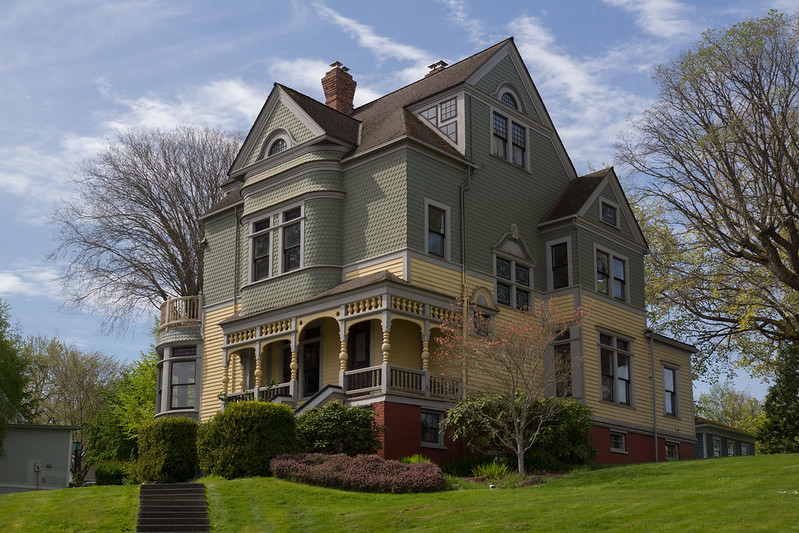
The Bigelow House Museum in Olympia, Washington stands as a carefully preserved example of nineteenth-century domestic architecture and early Washington Territory society, its Carpenter Gothic style reflecting the aesthetic sensibilities of an era when the Pacific Northwest was still developing its cultural institutions and building traditions. Located in the state capital, the museum preserves the material culture and spatial organization of a household that existed during the territorial period and the early years of Washington's statehood. Built in 1854 by Daniel R. Bigelow, a prominent lawyer and politician who played a significant role in the development of the Washington Territory and the establishment of legal institutions within the region, the house represents both personal ambition and the broader project of establishing civilized society in a frontier location.
Daniel R. Bigelow, the man for whom the house is named and whose continued presence appears to dominate the building's paranormal activity, was a figure of considerable standing within early Washington society. A trained attorney and an active participant in territorial politics, Bigelow represented the educated, professional class that migrated to the Pacific Northwest during the mid-nineteenth century, bringing with them eastern education, legal knowledge, and aspirations to establish the cultural apparatus of civilized society. His choice of architectural style—Carpenter Gothic—reflected both his sophistication and his willingness to embrace contemporary aesthetic trends. His decision to marry Ann Elizabeth White, a woman who came from a teaching background and brought her own intellectual and cultural contributions to the household, suggests a partnership grounded in shared values and mutual respect.
The physical structure of the Bigelow House itself embodies the spatial organization and design principles of nineteenth-century domestic life. The building's interior spaces—its rooms, hallways, and architectural details—were arranged according to the conventions of Victorian domesticity, with clear distinctions between public and private spaces, between rooms designated for public reception and those reserved for family use. The house served not merely as a residential space but as a statement about the inhabitants' place within the social hierarchy of territorial society. The architectural details, the quality of materials, and the overall organization of space communicated status, education, and cultural refinement.
The Bigelow House served as the family residence for many years, with the Bigelow family maintaining occupation of the property well into the twenty-first century—a continuity of habitation spanning nearly 150 years from its original construction until as recently as 2005. This extended tenure by family members suggests a deep attachment to the property and perhaps contributes to the strength and specificity of the paranormal manifestation that has been documented there.
The paranormal activity at the Bigelow House centers on the apparition of an elegant gentleman, described by witnesses as distinguished in appearance and engaged in careful examination of the museum's displays and exhibits. This ghostly figure, widely believed by staff and paranormal investigators to be the ghost of Daniel R. Bigelow himself, appears to maintain an ongoing interest in the spaces he inhabited in life and an apparent satisfaction or concern regarding how those spaces are presented and maintained. The apparition has been most frequently observed during the evening hours when the museum is being closed for the night, a time when staff members are conducting their shutdown procedures and preparing the building for unoccupied status.
The behavior of this spectral gentleman suggests an entity engaged in a form of ongoing inspection or evaluation. When approached by museum employees or investigators, the apparition does not attempt communication or interaction but instead vanishes, the ghostly figure simply ceasing to be visible as soon as it becomes the focus of direct attention. This pattern of appearance followed by disappearance at the moment of recognition suggests a form of consciousness or agency, a presence that seems aware of being observed and opts for withdrawal rather than engagement. The apparition's scrutinizing expression, described by witnesses as thoughtful and evaluative, suggests that whatever continues to constitute Daniel Bigelow's presence in the building, it maintains some form of interest in the premises and perhaps some judgment regarding their stewardship.
The museum itself—the institutional transformation of the domestic space from private residence into public exhibition—appears to have coincided with or perhaps precipitated the increased frequency of paranormal reports. The conversion of private family spaces into museum galleries, with artifacts displayed, interpretive signage installed, and the building opened to regular foot traffic from strangers, fundamentally altered the character of the space while simultaneously creating conditions that might trigger or intensify paranormal manifestation. The presence of a previous occupant observing and evaluating these transformations adds a poignant dimension to the museum experience—a former inhabitant apparently unable or unwilling to release his claim on the spaces he created and inhabited.
Today, the Bigelow House Museum functions as both a historical site and a paranormal location, attracting researchers and visitors interested in both the material culture of nineteenth-century Washington Territory and the possibility of encountering something beyond conventional material reality. The apparition of Daniel Bigelow represents a particularly articulate form of haunting—not a manifestation driven by trauma or tragedy but apparently by attachment and continuing interest in the spaces and activities of the living world.
museum
Olympia, Washington
Thurston County
February 26, 2026
Open
People Also Searched For
You Might Also Like
Boston University's Shelton Hall occupies a distinctive position within American academic paranormal lore as a dormitory building that has become known not primarily for architectural achievement or historical significance but for the persistent spiritual presence of Eugene O'Neill, one of twentieth… read more
Olympia, Washington · house
The Georgia Pacific facility in Olympia, Washington represents a significant industrial and manufacturing operation serving the Pacific Northwest region, producing forest products and related materials essential to construction, packaging, and various commercial applications throughout North America… read more
Olympia, Washington · other
The Anacortes Museum occupies a historic building in Anacortes, Washington, originally constructed as a Carnegie Library during the early twentieth century. The structure embodies principles of the Carnegie library era, when philanthropist Andrew Carnegie funded public libraries throughout the Unite… read more
Anacortes, Washington · museum
Have you visited Bigelow House Museum?
Share your paranormal experience and help other investigators decide if it's worth exploring.
Activity Breakdown
Types of documented activity recorded at Bigelow House Museum, organized by category.
Visual Activity
Reported Areas
Specific areas within Bigelow House Museum where activity has been documented.
No specific areas of activity have been reported for Bigelow House Museum yet.
Known Entities
Entities, spirits, and figures that have been identified or reported at Bigelow House Museum.
Daniel Bigelow
Photos
Images sourced from across the web and linked directly to the original host. Ghouler does not download or host these images, nor do we claim them as our own.
Investigator Reviews
Your trust is our priority, so no location can pay to alter or remove their reviews.
No reviews yet.
Be the first to share your experience at Bigelow House Museum.
Find reviews useful? Help others by sharing your experience.
Documented Experiences
Paranormal reports and documented occurrences compiled for Bigelow House Museum from archived sources and community investigators.
No documented experiences for Bigelow House Museum yet.
Best Times to Visit
Peak hours and months reported by investigators at Bigelow House Museum.
No peak time data has been reported for Bigelow House Museum yet.
Equipment & Methods
Equipment and investigation methods reported by community investigators at Bigelow House Museum.
No equipment or investigation methods have been reported for Bigelow House Museum yet.
Know Before You Go
Important details to help plan your visit or investigation of Bigelow House Museum.
Unknown
Open
Not specified
Sources & References
Referenced materials and documentation supporting the Bigelow House Museum case file.
Experience Glossary
Detailed descriptions of each type of activity documented at Bigelow House Museum.
Apparitions
Definition
A reported visual sighting of a human-like or shadow-like figure without a physical source.
What People Report
Witnesses describe full-body figures, partial forms, or fleeting silhouettes appearing in hallways, doorways, or peripheral vision. These sightings are typically brief and may vanish when directly observed.
Important Notices
Information in this case file is compiled from public sources and community reports. Accuracy cannot be guaranteed. Always verify details before visiting, and check with property owners and local or state authorities to confirm access is permitted.
Nearby Case Files
Explore Washington
- Most haunted places in Washington
- Haunted Museums in Washington
- Paranormal locations near Olympia
- Thurston County hauntings
- Haunted Asylums in Washington
- Haunted Bar / Restaurants in Washington
- Haunted Battlefields in Washington
- Haunted Bridges in Washington
- Haunted Buildings in Washington
- Haunted Cemeteries in Washington
Browse by Haunt Type
Phenomena & Experiences
- Apparition reports
- Full-Body Apparition reports
- Shadow Figure reports
- EVP reports
- Disembodied Voice reports
- Unexplained Footsteps / Knockings reports
- Poltergeist reports
- Object Manipulation reports
- Cold Spot reports
- EMF Anomaly reports
- Intelligent Haunting reports
- Residual Haunting reports
- Sense of Presence reports
- Phantom Smell reports
- Electronic Disturbance reports
People Also Viewed
Washington Governor’s Mansion
House
Olympia, Washington
Georgia Pacific
Other
Olympia, Washington
Anacortes Museum
Museum
Anacortes, Washington
Clark County Historical Museum
Museum
Vancouver, Washington
Walker-Ames House
Museum
Port Gamble, Washington
Greater Kent Historical Society – Bereiter House
Museum
Kent, Washington