

Three Chimneys Inn
Background & History
Historical context and known paranormal claims surrounding Three Chimneys Inn.
In Durham, New Hampshire, at 17 Newmarket Road, stands a structure whose claim as the oldest house in the town comes weighted with centuries of accumulated history and persistent spectral presence. The Three Chimneys Inn was constructed in 1649 by Valentine Hill, a date that places it firmly within the earliest phase of New England settlement and colonial expansion. This chronological distinction alone marks the building as a living artifact from a period when European colonization of North America was still geographically and culturally contested, when the established order had barely taken root in the landscape. The name itself derives from the building's distinctive architectural feature—three brick or stone chimneys that rise from the structure's roof line, visible markers of domestic comfort and permanence during an era when such amenities were neither universal nor assumed.
The building's longevity across nearly four centuries of American history means it has witnessed transformations of staggering scope: indigenous displacement, the American Revolution, the transition from agrarian to industrial economy, two world wars, and the digital transformation of the late twentieth and early twenty-first centuries. Throughout these epochal shifts, the Three Chimneys Inn has persisted, adapted, and served various functions—from family residence to inn to restaurant and hospitality establishment. This continuity of occupation and purpose creates the kind of layered historical sediment that paranormal researchers associate with locations prone to spectral manifestation. The building's very persistence seems to have attracted spirits to persist alongside it.
At the center of the Three Chimneys Inn's haunting narrative stands Hannah, whose identity as a descendant of the original builder Valentine Hill adds genealogical specificity to the apparition accounts. According to both documented local legend and testimony from inn employees, Hannah met a tragic end by drowning in the nearby Oyster River. The circumstances of her death—the specific location, the precise moment of disaster, any contextual details—remain somewhat obscured by the passage of time and the transition of accounts from oral tradition to contemporary documentation. What survives is the insistent presence of a spirit that bears her name and manifests in ways that suggest unfinished business or an attachment to the place of her earthly residence.
The physical evidence of Hannah's presence has been documented by staff members in ways that suggest either elaborate collaborative deception or genuine paranormal manifestation. Most remarkably, muddy footprints have appeared across the dining room floor bearing the characteristics of barefoot impressions, with the size and shape consistent with a woman's foot. This tactile evidence—dirt transferred from an unseen source, creating a visible trail—occupies an interesting epistemological space: too specific to be easily dismissed as hallucination, yet too unconventional to fit within established frameworks of physical reality. Additional accounts describe Hannah manifesting through deliberate physical interaction: she has reportedly played with the hair of a sleeping employee, creating a sensation of deliberate contact. Another staff member was awakened by footsteps emanating from the parlor, investigation of which revealed drawers opened precisely one inch in sequence—a detail suggesting either whimsical intention or a manifestation of particular precision.
The Three Chimneys Inn operates as an active hospitality business, accommodating guests who may or may not anticipate the possibility of nocturnal visits from an eighteenth-century ghost. This persistence of the building's commercial function alongside its reputation for haunting creates a contemporary accommodation of the supernatural within ordinary life. Employees continue to staff the inn, guests continue to book rooms, and Hannah continues her posthumous occupation of the space she inhabited in life. The building's status as Durham's oldest house ensures its continued historical significance and continued attention from both researchers and curious visitors seeking tangible connection to New England's colonial past.
hotel
Durham, New Hampshire
Strafford County
February 26, 2026
Open
People Also Searched For
You Might Also Like
Smith Hall stands as the oldest dormitory in active use on the University of New Hampshire campus in Durham, its brick and timber structure representing an early commitment to housing the institution's expanding student body. The building was constructed in 1908 specifically to house young women dur… read more
Durham, New Hampshire · school
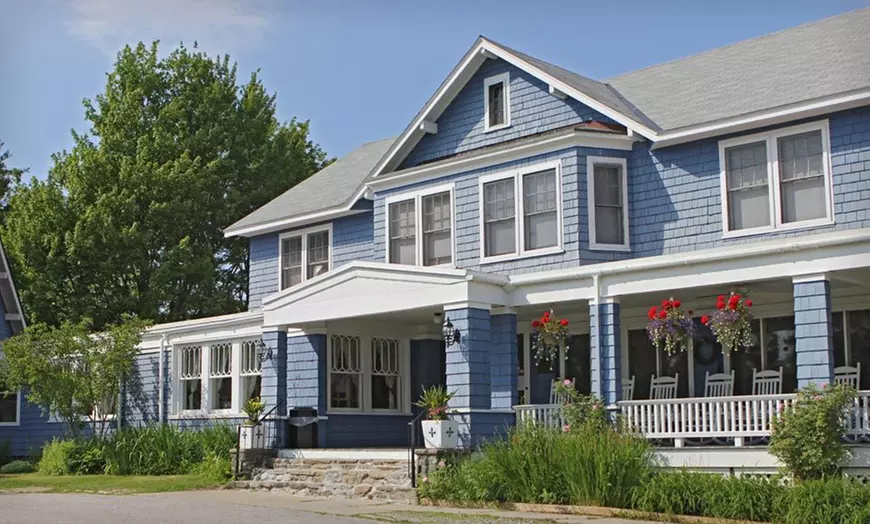
Set on nearly eight acres of rolling land along Mountain View Road in Whitefield, New Hampshire, the Spalding Inn looks out across orchards and perennial gardens toward the smoky ridgeline of the Presidential Range. It is the kind of White Mountains property that seems to have always been there—a sp… read more
Whitefield, New Hampshire · hotel
The 1875 Inn in Tilton, New Hampshire stands as a historic property that has been thoroughly documented in paranormal investigation literature and television paranormal reality programming, a distinction that reflects both the intensity and consistency of the phenomena associated with the location.… read more
Tilton, New Hampshire · hotel
Have you visited Three Chimneys Inn?
Share your paranormal experience and help other investigators decide if it's worth exploring.
Activity Breakdown
Types of documented activity recorded at Three Chimneys Inn, organized by category.
Visual Activity
Audio Activity
Physical Disturbances
Sensory & Environmental
Reported Areas
Specific areas within Three Chimneys Inn where activity has been documented.
Dining Room
Parlor
Filing Cabinets
Armoire
Bedroom
Known Entities
Entities, spirits, and figures that have been identified or reported at Three Chimneys Inn.
Hannah
Photos
Images sourced from across the web and linked directly to the original host. Ghouler does not download or host these images, nor do we claim them as our own.
Investigator Reviews
Your trust is our priority, so no location can pay to alter or remove their reviews.
No reviews yet.
Be the first to share your experience at Three Chimneys Inn.
Find reviews useful? Help others by sharing your experience.
Documented Experiences
Paranormal reports and documented occurrences compiled for Three Chimneys Inn from archived sources and community investigators.
No documented experiences for Three Chimneys Inn yet.
Best Times to Visit
Based on investigator reports, these are the most active areas, times, and conditions reported at Three Chimneys Inn.
Three Chimneys Inn
Evening, Late Night
Equipment & Methods
Equipment and investigation methods reported by community investigators at Three Chimneys Inn.
No equipment or investigation methods have been reported for Three Chimneys Inn yet.
Know Before You Go
Important details to help plan your visit or investigation of Three Chimneys Inn.
Unknown
Open
Not specified
Sources & References
Referenced materials and documentation supporting the Three Chimneys Inn case file.
Experience Glossary
Detailed descriptions of each type of activity documented at Three Chimneys Inn.
Apparitions
Definition
A reported visual sighting of a human-like or shadow-like figure without a physical source.
What People Report
Witnesses describe full-body figures, partial forms, or fleeting silhouettes appearing in hallways, doorways, or peripheral vision. These sightings are typically brief and may vanish when directly observed.
Object Manipulations
Definition
Objects reported to move, shift, or fall without visible physical interaction.
What People Report
Items may relocate across rooms, disappear temporarily, or be found in unusual positions. These reports often involve repeated displacement patterns.
Unexplained Footsteps / Knockings
Definition
Clear sounds of footsteps, pacing, or knocking without a visible source.
What People Report
Often reported in empty upper floors, hallways, or sealed rooms, these sounds may follow distinct rhythms or patterns.
Tactile Phenomena
Definition
Physical sensations such as being touched, pushed, or brushed with no visible source.
What People Report
Witnesses report sudden pressure on shoulders, hair pulling, cold contact, or the sensation of someone standing close behind them.
Important Notices
Information in this case file is compiled from public sources and community reports. Accuracy cannot be guaranteed. Always verify details before visiting, and check with property owners and local or state authorities to confirm access is permitted.
Nearby Case Files
Explore New Hampshire
- Most haunted places in New Hampshire
- Haunted Hotels in New Hampshire
- Paranormal locations near Durham
- Strafford County hauntings
- Haunted Asylums in New Hampshire
- Haunted Bar / Restaurants in New Hampshire
- Haunted Battlefields in New Hampshire
- Haunted Bridges in New Hampshire
- Haunted Buildings in New Hampshire
- Haunted Cemeteries in New Hampshire
Browse by Haunt Type
Phenomena & Experiences
- Apparition reports
- Full-Body Apparition reports
- Shadow Figure reports
- EVP reports
- Disembodied Voice reports
- Unexplained Footsteps / Knockings reports
- Poltergeist reports
- Object Manipulation reports
- Cold Spot reports
- EMF Anomaly reports
- Intelligent Haunting reports
- Residual Haunting reports
- Sense of Presence reports
- Phantom Smell reports
- Electronic Disturbance reports
People Also Viewed
Smith Hall – University of New Hampshire
School
Durham, New Hampshire
The Spalding Inn
Hotel
Whitefield, New Hampshire
The 1875 Inn – Tilton Inn
Hotel
Tilton, New Hampshire
The Nutmeg Inn
Hotel
Meredith, New Hampshire
Steele Hill Resort
Hotel
Sanbornton, New Hampshire
Christmas Farm Inn and Spa
Hotel
Jackson, New Hampshire