
Tactile Paranormal Phenomena
240 haunted locations
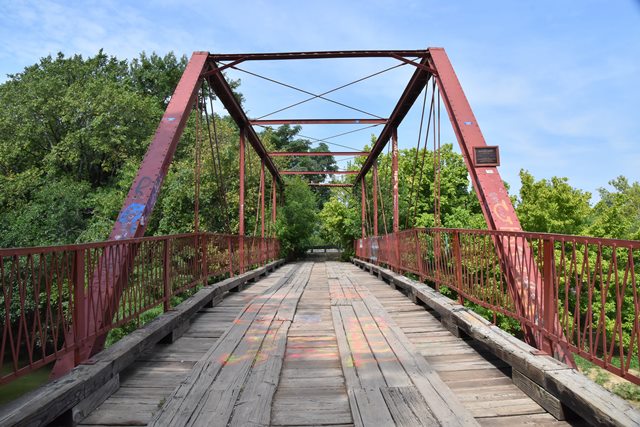
Goatman’s Bridge
Just outside Denton, Texas, tucked between trees and hovering over Hickory Creek, stands the Old Alton Bridge—better known today as Goatman’s Bridge. What looks like a quiet iron truss bridge from the late 1800s has become one of the most infamous legend-laden locations in the state. Part history, part folklore, part modern paranormal hotspot, Goatman’s Bridge sits at the crossroads of documented past and deeply rooted local myth. The bridge was built in 1884 to connect the towns of Denton and Copper Canyon, replacing an earlier wooden structure. For decades, it served farmers, travelers, and livestock drivers moving through the area. The surrounding woods and creek bottom were rural, isolated, and—especially at night—pitch black. Even without a legend attached, it’s the kind of place that feels removed from the modern world once the sun goes down. The haunting reputation largely centers around the story of a Black goat farmer named Oscar Washburn. According to the legend, Washburn successfully raised goats near the bridge and even hung a sign reading “This way to the Goatman.” As the story goes, members of a local Ku Klux Klan group resented his success and presence in the area. One night, they allegedly dragged him onto the bridge and hanged him from the iron supports. When they looked over the edge to see his body, it was gone. In retaliation, the legend claims the mob murdered his wife and children at their cabin nearby. The problem is that historians have found little concrete evidence confirming the Washburn story as it’s commonly told. While racial violence was tragically common in Texas during that era, records directly tying this specific lynching to the bridge remain debated. Like many American ghost stories, the narrative appears to have evolved over time, blending fragments of possible history with escalating folklore. Beyond the Goatman legend, the surrounding woods have their own dark reputation. Some accounts claim the area was once a gathering site for the KKK. Others say occult rituals took place in the forest clearing near the bridge. Stories circulate of satanic symbols, animal remains, and strange ceremonies—though many of these reports are difficult to verify and may stem from trespassing, vandalism, or modern thrill-seekers attempting to add fuel to the myth. Paranormal claims at Goatman’s Bridge are intense and varied. Visitors report hearing growls or heavy footsteps pacing along the bridge at night. Some claim to see a tall, shadowy figure with glowing eyes moving between the trees. Others describe feeling sudden dread or being pushed, scratched, or followed. Electronic voice phenomena sessions allegedly capture aggressive responses. There are even reports of car malfunctions and battery drain near the bridge—common claims at high-profile paranormal sites. One of the most persistent experiences reported is a feeling of being watched from the treeline. Investigators often describe the woods as more active than the bridge itself. Disembodied voices, distant chanting, and unexplained knocks are frequently cited. Skeptics argue that the area’s wildlife—deer, coyotes, wild hogs—and the acoustics of the creek valley can easily account for many of the sounds. The power of suggestion also plays a significant role; when people walk into a place expecting a demonic goat creature, adrenaline tends to do the rest. Despite the debate over its historical accuracy, Goatman’s Bridge has cemented itself in Texas paranormal culture. It has been featured in documentaries, YouTube investigations, podcasts, and television ghost-hunting shows. The combination of racial tragedy, alleged occult activity, and a creature-based legend gives it a uniquely layered mythology compared to traditional “haunted house” locations. Today, the Old Alton Bridge is part of a public trail system, and visitors can legally walk the bridge during park hours. By day, it’s a scenic historic structure surrounded by greenbelt trails. By night, it transforms into something entirely different in the public imagination—a place where history, fear, and folklore blur together. Whether the Goatman is a vengeful spirit, a demon born from rumor, or simply a campfire story that grew too large to contain, the bridge remains one of Texas’ most talked-about haunted locations. It’s a reminder that sometimes the most powerful hauntings aren’t built on documented facts alone—but on the stories communities tell, retell, and refuse to let die.
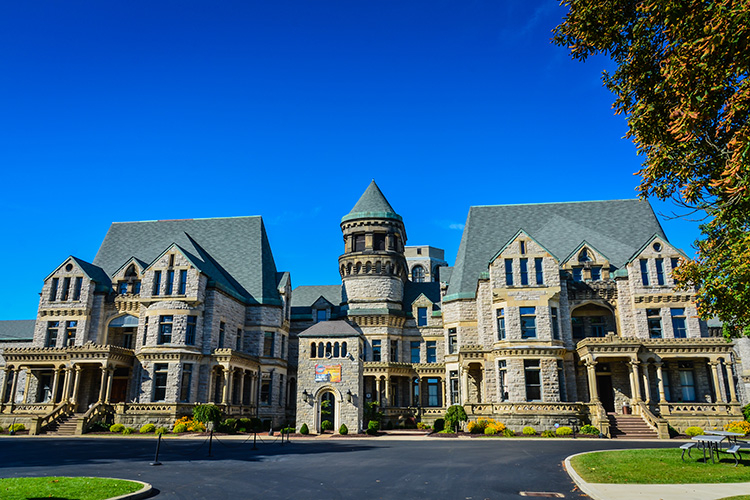
Ohio State Reformatory
Rising from the edge of Mansfield, Ohio, the Ohio State Reformatory looks exactly like what most people picture when they think of a haunted prison—a towering limestone fortress with Gothic turrets, arched windows, and a scale that seems impossible for a building that was never meant to be a maximum-security facility at all. But the Reformatory's origins weren't built on punishment. They were built on the belief that young men could be saved. The land itself carries history before the first stone was laid. The field where the Reformatory stands once served as Camp Mordecai Bartley, a Civil War training ground for Ohio soldiers. In 1867, Mansfield was selected as the site for a new state prison intended to fill the gap between juvenile corrections and the full Ohio State Penitentiary in Columbus. The city raised $10,000 to purchase the land. Construction began in 1886 under Cleveland architect Levi T. Scofield, who blended Victorian Gothic, Richardsonian Romanesque, and Queen Anne styles into a structure specifically designed to inspire moral renewal—its grandeur meant to encourage inmates toward repentance rather than despair. The first 150 prisoners arrived by train in 1896, and construction wouldn't be completed until 1910. Unlike locations shaped by a single catastrophe, the Reformatory's weight comes from a century of drift. The original mission was genuinely rehabilitative—inmates received religion, education, and a trade, with 18-month sentences that could end early for good behavior. By most accounts, the model worked. But as Ohio's criminal population grew and the facility became overcrowded, the state began sending more serious offenders to Mansfield. By the mid-twentieth century, rooms designed for one inmate held two or three. Violence became routine. Guards were killed. Inmates were murdered, drove themselves to suicide, or died from disease. Over 154,000 men passed through the gates before the building was ordered closed in 1990 following a federal class-action suit over inhumane conditions. Just outside the walls, 215 numbered graves mark the ones who never left. The building itself demands attention. The six-tier East Cell Block is widely cited as the largest freestanding steel cell block in the world—a canyon of iron that rises through the interior like something industrial and medieval at once. The warden's quarters, the chapel, the solitary confinement wing, and the basement all carry their own atmosphere. The Hole—a row of pitch-black isolation cells in the basement—is described by visitors as one of the most oppressive physical spaces they have ever entered. Natural light barely reaches the lower levels. The upper tiers stretch upward in iron rows until they disappear into shadow. Paranormal claims at the Reformatory are among the most extensively reported of any site in the Midwest. Visitors and investigators describe shadow figures moving across the upper tiers, unexplained voices in the cellblocks, and the sensation of being followed through otherwise empty corridors. EVP sessions regularly produce what investigators describe as direct, responsive communication. Some guests report being physically touched, grabbed, or scratched with no one nearby. Specific areas generate consistent accounts across unrelated visitors. The Hole produces reports of sudden nausea, cold air, and the feeling of being crowded in a space barely large enough to stand in. The basement is associated with two distinct presences—one described as a young boy, light and flickering, the other heavier and threatening. The warden's quarters carry stories of Helen Glattke, wife of longtime superintendent Arthur Glattke, who died in 1950 from an accidental gunshot wound inside the residence. Investigators report the scent of roses—her signature perfume—in rooms where no one has been. The chapel brings reports of whispered voices and phantom organ tones. Skeptics note that a century-old limestone structure of this scale naturally generates sounds, temperature swings, and optical oddities. The documented history of violence, suffering, and death embedded in this place is powerful enough to shape what any visitor expects to find before they step inside. That suggestion cannot be discounted. Still, the consistency of independent reports across decades, and across visitors with no prior knowledge of specific locations, gives even skeptical investigators reason to pause. Today the Reformatory is operated by the Mansfield Reformatory Preservation Society, which purchased the building from the state of Ohio for one dollar in the mid-1990s and has worked to restore it ever since. It is listed on the National Register of Historic Places, welcomes over 120,000 visitors annually, and is recognized worldwide as the primary filming location for The Shawshank Redemption. But the movie connection is only part of what draws people here. Some come for the architecture. Some come for the film history. Many come for the chance to spend a night in the East Cell Block, lights off, listening. Almost all of them leave with something they didn't have when they arrived—a story they struggle to explain, and a quiet conviction that the Ohio State Reformatory is far from empty.
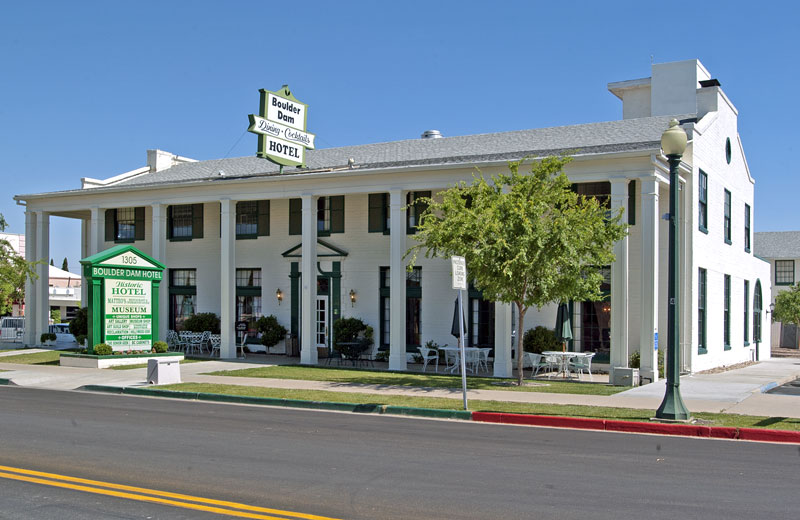
Boulder Dam Hotel
Boulder City, Nevada, is one of the strangest towns in the American West—a place that exists only because the federal government built it from nothing in 1931 to house the thousands of workers constructing what was then called Boulder Dam. In a state defined by gambling, Boulder City was the opposite: a tightly controlled government town with no casinos, no saloons, and strict rules governing daily life. It was engineered for productivity, not pleasure. But it needed a hotel. And the Boulder Dam Hotel, completed in 1933 at 1305 Arizona Street, was built to fill that gap—not for the workers who poured concrete in killing heat down in Black Canyon, but for the dignitaries, officials, and celebrities who came to watch them do it. The hotel was the vision of Paul Stewart Webb, a local businessman who recognized that the thousands of tourists arriving by train from Los Angeles and by car along the Arrowhead Highway would need somewhere to stay. City Manager Sims Ely issued Webb a permit, and the result was a two-story Dutch Colonial Revival structure designed by architect L. Henry Smith—white-columned, with concrete-block walls rising to gable roofs, a wood-paneled lobby, private baths in all thirty-two rooms, and a modern climate system advertised on highway billboards. At its grand opening, the Boulder Dam Hotel had no equal in southern Nevada. Las Vegas, still a small railroad town, had nothing to compare with it. The guest list through the 1930s and 1940s reads like a Hollywood directory crossed with a diplomatic registry. Bette Davis stayed while vacationing after filming in 1934. Mr. and Mrs. Cornelius Vanderbilt Jr. honeymooned there. Will Rogers performed at the nearby Boulder Theatre during a stay in 1935, weeks before his death. Boris Karloff visited while obtaining a divorce. The Maharajah and Maharani of Indore passed through, as did Cardinal Pacelli, who would later become Pope Pius XII. Howard Hughes recuperated at the hotel after crashing his amphibious plane on Lake Mead. Shirley Temple was a regular guest. The hotel also became popular with movie stars establishing Nevada residency for quick divorces, adding a layer of personal upheaval to the building's social history. The hotel's fortunes declined along with passenger rail and shifting tourism patterns. It changed hands over the decades but avoided demolition. In 1982, it became the first hotel in Nevada listed on the National Register of Historic Places. In 2005, the Boulder City Museum and Historical Association acquired the property and renovated it, reducing the room count to twenty-two while expanding public spaces. The Boulder City/Hoover Dam Museum now occupies the first floor, telling the story of the dam workers and the Depression-era community built to house them. Paranormal claims at the Boulder Dam Hotel are varied, persistent, and span decades. The most frequently cited phenomenon involves the sounds of music, conversation, and laughter emanating from the ballroom when it is entirely empty. Staff working alone at night have reported hearing what sounds like a party in full swing—piano music, clinking glasses, voices—only to find the room dark and vacant. The smell of cigar smoke has been reported throughout the hotel despite a no-smoking policy, particularly in the room once occupied by Howard Hughes, who was known to smoke cigars. Some staff believe Hughes himself lingers in the building. The apparition of a former night desk clerk named Tommy Thompson has reportedly been seen in the main lobby, and guests have described an overwhelming sensation of heaviness in the same area. Rooms 209 and 219 are cited as the most active, with reports of faucets turning on in unoccupied rooms, doors opening and closing on their own, and cold spots appearing without drafts. Some guests have described being physically touched or grabbed by unseen hands. Boulder City historian Dennis McBride, who kept offices in the hotel's basement, documented many of these accounts in his book on the property. McBride himself reported seeing an apparition in his basement office. During a reading he arranged with psychic Patsy Welding, she reported sensing strong presences on the upper floors and refused to descend into the basement, describing the energy as overwhelming. The hotel's proximity to Hoover Dam—where at least ninety-six workers died during construction—has led some to speculate that dam workers may account for some of the activity, and figures in old-fashioned work clothes have been glimpsed in restricted areas of the building. Today the Boulder Dam Hotel operates as a boutique historic hotel and museum. The staff generally downplays the haunting reports, and at least one investigator has noted that asking about ghosts can quickly cool an otherwise warm reception. But the accounts continue to accumulate, logged by guests who arrive knowing nothing of the hotel's reputation and leave describing experiences they cannot explain.
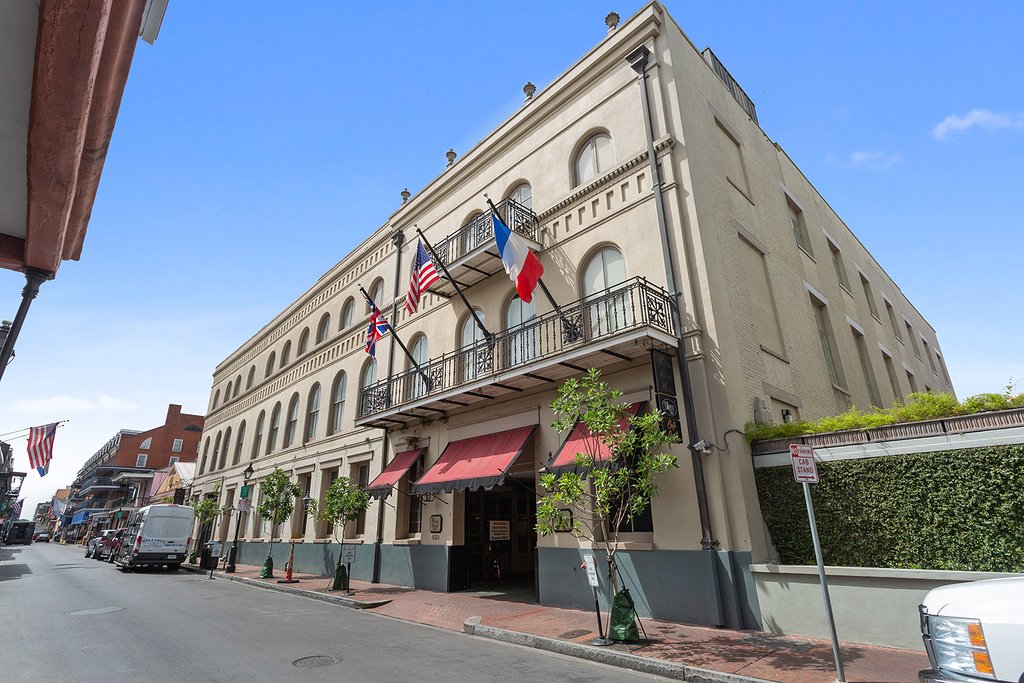
Prince Conti Hotel
At 830 Conti Street in the French Quarter of New Orleans, the Prince Conti Hotel occupies a building dating to the early 1900s, sitting on a block that has cycled through nearly every identity the Quarter has to offer—residence, commerce, vice, hospitality, and, if the accounts are to be believed, something that refuses to vacate regardless of what the current management has planned. The hotel is a small property by New Orleans standards, with just over fifty rooms tucked into a historic townhouse structure steps from Bourbon Street. It is operated by the Valentino family, who have run hotels in the French Quarter for over sixty years. The ground floor houses the Bombay Club, an upscale bar known for its martini list, Creole cuisine, and a resident spirit the staff has been dealing with for decades. Conti Street is named for the Princess Conti—originally the name given to what is now Bourbon Street before an early colonial renaming shuffled the designations. The street runs deep into French Quarter history. At 1026 Conti, just two blocks away, the infamous Norma Wallace operated the last major brothel in New Orleans from the late 1920s through the mid-1960s, entertaining governors, gangsters, and celebrities in a parlor house that ran nearly four decades before District Attorney Jim Garrison shut it down. Wallace's story ended in 1974 when she shot herself after learning of her husband's infidelity. Her building, an 1830s townhouse, is now condominiums—and reportedly still haunted. Farther up the block, the site of what is now the Williams Research Center once housed the Rising Sun Hotel in the 1820s, a property whose archaeological remains have yielded artifacts suggestive of early commercial sex work and whose name may have inspired one of the most famous folk songs in the English language. Conti Street has never been quiet. The Prince Conti Hotel's primary haunting centers on a figure the staff has named Sophie. According to paranormal researchers, Sophie is believed to be the spirit of a madam who operated on the premises before the building became a hotel. Her identity has never been established, but staff members have encountered her in the kitchen, the bar, and at Booth 3 of the Bombay Club. She is described as a presence rather than a full apparition—felt more often than seen, though some accounts describe a spectral woman visible in the bar during quiet hours. Guest accounts extend well beyond Sophie. Visitors on the upper floors—particularly the third floor—report a striking range of experiences. Multiple guests describe being nudged or physically shaken while asleep, only to find the room empty. One guest reported their mattress bouncing as though someone had sat down hard at six in the morning. Another described the full weight of a body pressing down on them during the night. Showers have turned on by themselves. Doors securely locked have been found standing wide open. A concierge reportedly confirmed that doors had been known to fly open on their own, accompanied on at least one occasion by a visible apparition. Objects have fallen from surfaces without explanation. Curtains have swung open untouched. In Room 361, a couple watching television reported their shower turning on for several seconds, followed by a bag of chips falling off the nightstand—and in the morning, a plugged-in diffuser was found unplugged from the wall. What makes these accounts notable is not their dramatic quality—by New Orleans haunted hotel standards, they are restrained—but their consistency across unrelated guests over many years, and the physical nature of the interactions. The nudging, the pressure, the bed-shaking describe contact, not atmosphere. Skeptics will note that old French Quarter buildings settle, plumbing acts unpredictably, and doors in century-old structures don't always stay shut. New Orleans humidity warps wood and metal alike. Guests arriving after a night on Bourbon Street are not always reliable witnesses. But the Prince Conti's accounts carry a specificity—particular rooms, particular times, particular physical sensations—that environmental explanations don't fully cover. Today the Prince Conti Hotel continues to operate at 830 Conti Street, offering the Bombay Club downstairs, Cafe Conti in the mornings, and a location at the center of one of the most historically layered streets in the most historically layered neighborhood in America. Sophie, if that is her name, appears to have no intention of checking out. And on the third floor, something still seems to think the beds could use one more occupant.
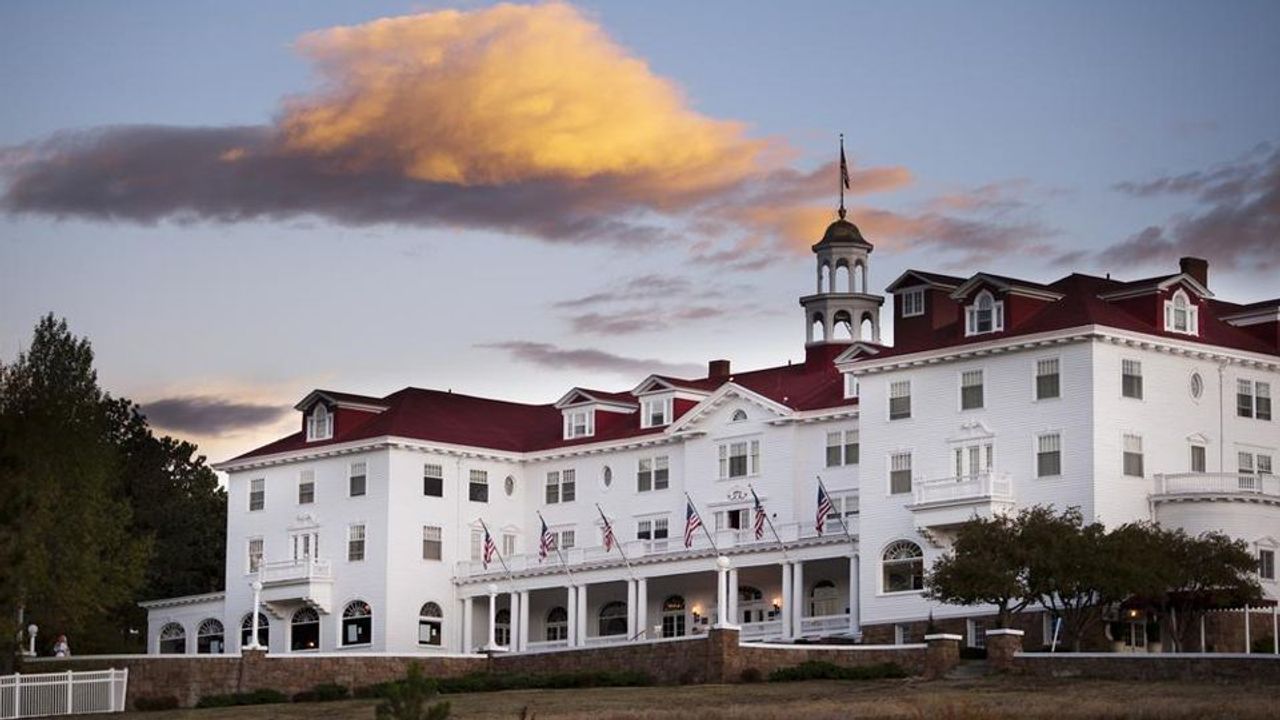
The Stanley Hotel
Perched on a hillside at the edge of Estes Park with the full sweep of the Rocky Mountains behind it, the Stanley Hotel looks less like a haunted building than a misplaced New England estate — white clapboard siding, Georgian columns, and a formal symmetry that has no business sitting at 7,500 feet in the Colorado high country. That contrast is entirely deliberate. The man who built it was an inventor from Maine who came west to save his own life, and what he left behind has refused to stay quiet for more than a century. Freelan Oscar Stanley arrived in the Estes Valley in 1903 suffering from tuberculosis, weak enough that his doctors had told him not to plan beyond six months. The mountain air reversed his decline so dramatically that by summer's end he resolved to return every year. But the tiny settlement of Estes Park offered nothing for a man of his means and temperament. Stanley had made his fortune co-inventing the Stanley Steamer automobile and manufacturing photographic dry plates, and he and his wife Flora were accustomed to the social fabric of the East Coast. So Stanley decided to bring that world to the Rockies. He purchased land from the holdings of the 4th Earl of Dunraven — an Anglo-Irish nobleman who had tried and failed to turn the valley into a private hunting preserve — and broke ground on his hotel in 1906. On July 4, 1909, the Stanley Hotel opened with 140 rooms, running water, telephones, electricity from a hydroplant Stanley himself had built on the Fall River, and a concert hall designed to echo the acoustics of Boston Symphony Hall. Flora, an accomplished pianist, christened the space with a 1904 Steinway grand that remains in the hotel today. Among the early guests were Teddy Roosevelt, Unsinkable Molly Brown, John Philip Sousa, and the Emperor of Japan. The hotel operated as a summer resort for decades, closing each winter and cycling through owners after Stanley sold it in 1926. By the 1970s it had deteriorated badly — neglected, half-empty, and close to demolition. Then, on the last night of the 1974 season, a young writer from Boulder checked in with his wife. Stephen King and Tabitha King were the only guests in the building. They ate dinner alone in the empty dining room, accompanied by recorded orchestral music, then retired to Room 217. That night King had a vivid nightmare of his three-year-old son being chased through the hotel's corridors by a living fire hose. He woke in a sweat, walked to the balcony, lit a cigarette, and by the time he finished it the framework of The Shining had taken shape in his mind. The novel, published in 1977, became his first hardcover bestseller and cemented the Stanley Hotel in the American imagination as the real-world counterpart to the fictional Overlook Hotel. But the paranormal claims at the Stanley predate King by decades and extend well beyond literary inspiration. Room 217 carries the longest recorded history. In June 1911, head housekeeper Elizabeth Wilson entered the room to light acetylene lanterns during a power outage. An undetected gas leak had filled the wing, and the match she struck triggered an explosion that destroyed the room and dropped her through the floor into the dining room below. She survived with broken bones, continued working at the hotel for years, and eventually died peacefully in the 1950s. Guests in Room 217 now report luggage being unpacked, clothing folded, lights switched on and off, and an unseen presence settling onto the bed — as though Wilson never stopped tending to her duties. Room 401 draws a different kind of attention. Attributed by legend to the spirit of Lord Dunraven — who never actually stayed at the hotel but once controlled the land beneath it — the room has produced accounts of a closet door opening on its own, women reporting being touched by an invisible presence, and personal items displaced without explanation. During a visit by the television program Ghost Hunters, an investigator reported the locked closet opening by itself while he slept. Room 407 generates reports of lights operating independently and indentations appearing on beds in otherwise empty rooms. The entire fourth floor, which originally served as servant quarters and storage, is the most consistently active area of the hotel, with guests describing the sounds of children running and laughing in the hallways when no children are present. The concert hall produces its own category of reports. Guests and staff describe hearing classical piano music emanating from the empty hall, and some claim to have seen piano keys depressing on their own. The spirit attributed to these performances is Flora Stanley, who died of a stroke in 1930 but whose love of music — and the Steinway she played — appears, according to believers, to have survived her. F.O. Stanley, who died in 1940 at ninety-one, is said to appear in the lobby and billiard room, sometimes visible in reflections. Beneath the hotel, a tunnel system once used by staff to move unseen has its own lore — including the reported smell of baked goods attributed to a deceased chef and sightings of a spectral grey cat. The skeptical framework here is worth noting. The hotel sits on heavy concentrations of quartz and granite, which some researchers have linked to elevated electromagnetic fields capable of producing disorientation. The building's age, its creaking wooden frame, and the low-frequency vibrations generated by mountain winds at high elevation all offer plausible explanations for sounds and sensations that visitors interpret as supernatural. The sheer cultural weight of The Shining guarantees that nearly every guest arrives primed for something eerie. Expectation and atmosphere do real work in a place like this. Still, the volume and consistency of reports across more than a hundred years — from staff, casual visitors, seasoned investigators, and celebrity guests alike — give the Stanley a paranormal file that few American hotels can rival. The property is listed on the National Register of Historic Places and was acquired in 2025 by The Stanley Partnership for Art, Culture, and Education. It remains fully operational, offering historical day tours, night tours focused on paranormal claims, and designated "spirited rooms" for guests who want to sleep where the activity is most frequently reported. Room 217 is just up the stairs. The concert hall is just across the grounds. And the piano, as always, is waiting.

The Springville Inn
The Springville Inn sits along California State Route 190 in the small foothill town of Springville, Tulare County, nestled against the western slope of the Sierra Nevada just minutes from the Giant Sequoia National Monument. The town has been here since 1849, when pioneers settled the area, and the inn has been at its center since 1911, when it was built as the Wilkinson Hotel to serve travelers arriving with the railroad. The original owners went broke during construction and were forced to sell before they ever saw it finished. A 1972 addition brought the motel rooms that extend behind the original structure, but the bones of the place—the restaurant on the ground floor, the bar and dance hall on the second—remain housed in the 1911 building. For over a century, the Springville Inn has served as the social hub of a town that goes quiet by six in the evening. It is also, by most accounts from those who have worked and stayed there, thoroughly haunted. Four distinct entities have been identified by staff over the decades, each given a plainspoken name by employees who encountered them often enough to stop being surprised. The Old Man is the most frequently reported, an observant presence concentrated around the kitchen and the old dumbwaiter that connects the lower kitchen to the upper service area. Former employees describe him not as a passive residual haunting but as an active and hostile personality—hiding the lock to the walk-in cooler, shoving barstools, breaking glassware, knocking from inside the walk-in as though someone had been locked in, and on more than one occasion physically attempting to push workers down the stairs. The Young Man is said to be the ghost of a logger who was shot and carried into the inn to die. His energy is described as friendly, even charming—he frequents the bar area and has a reported affinity for female guests and staff. The Little Girl, estimated by witnesses at seven or eight years old, appears in turn-of-the-century dress at various locations throughout the building, though sightings have grown less frequent in recent years. The Woman is the rarest and most unsettling of the four. She has been seen on the upstairs balcony in white, and one former restaurant employee described an encounter in which the figure appeared standing inverted on the ceiling of the dining room, staring down with a dark substance dripping from her mouth. That employee ran screaming into the kitchen. The reports extend beyond the original building. Guests in the motel rooms have described cabinet doors swinging open on working hinges, unexplained sparkling lights on ceilings that persisted even after curtains were drawn, and personal belongings rearranged overnight—dress socks neatly folded into pant legs in ways the guest swore they never would have done. Staff members have reported whispers, physical touches on the staircase, and self-propelled kitchen utensils. One visitor captured a voice on a phone recording that appeared to say "help me" over background noise. A man from Sacramento who stayed at the inn for a work trip reportedly refused to return, driving an extra forty-five minutes to stay in Tulare on all subsequent visits rather than spend another night. Former employees note the activity is markedly stronger during mornings and afternoons than at night.
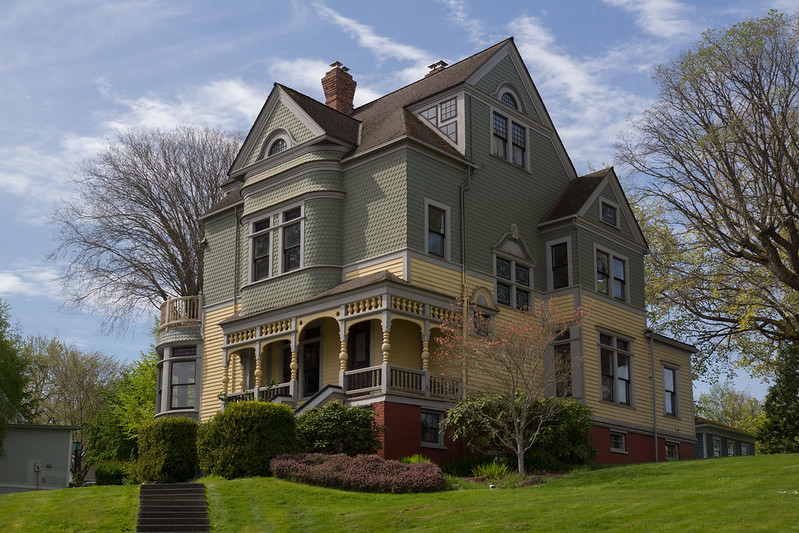
Walker-Ames House
The Walker-Ames House rises from a wooded hillside on Rainier Avenue in Port Gamble, Washington, a Victorian-era residence overlooking one of the most remarkably preserved company towns in the Pacific Northwest. The house is empty. It has been empty since the sawmill that built the town shut down in 1995. No one lives there, no one has lived there for decades, and yet by nearly every account available—from casual passersby to seasoned paranormal investigators—it is anything but unoccupied. Widely regarded as the most haunted house in Washington State, and possibly the entire West Coast, the Walker-Ames House sits at the center of a town where the dead, by persistent report, have simply chosen not to leave. Port Gamble was founded in 1853 when William Talbot and Andrew Pope established a sawmill on the shores of Hood Canal on the Kitsap Peninsula. The mill operated continuously for 142 years—the longest-running sawmill in the United States at the time of its closure in December 1995. Around the mill, the Puget Mill Company built a town modeled on the New England villages its founders had known, with tidy clapboard houses, a white-steepled church, a general store, and tree-lined streets arranged along the waterfront. Port Gamble was a company town in the fullest sense: the mill provided the livelihood, the company owned the homes, and the families who lived there were bound to the rhythms of timber, tide, and the company's fortunes. The original Walker-Ames House was destroyed in a fire in 1885. The current structure was built in 1888 for William Walker, the mill's master mechanic—a position of significant standing in a community organized entirely around the operation of the saw. Walker's daughter Maude married Edwin G. Ames, who served as the mill's resident manager and later its general manager. The house thus became the Walker-Ames, the most prominent and expensive residence in town, occupied by two generations of the family that ran the operation. After the mill closed, the house sat vacant, used occasionally for weddings, events, and eventually as a setting for films and fiction. Paranormal reports at the Walker-Ames House date back to at least the 1950s, well before the property gained any organized attention from investigators. Former town manager Shana Smith began actively collecting accounts from current and former tenants in 2006, after a paranormal group called Evergreen Paranormal requested permission to investigate. What struck Smith was the consistency across accounts separated by years and offered by people with no knowledge of one another's experiences. The house produces a range of reported phenomena. Pedestrians walking past have looked up to see the faces of small children peering from the upper-story windows of a house they know to be locked and empty. Attic lights flicker on and off with no one inside. Footsteps are heard running across floors above visitors standing in lower rooms. Disembodied voices have been recorded on electronic equipment. Visitors report being physically touched—one investigator emerged from the basement with a dusty handprint on her leg, claiming she had been grabbed. The basement generates the most intense reactions, with sensitives and casual visitors alike reporting feelings of sadness, heaviness, and an oppressive presence that several have described as darker in character than the rest of the house. The attic produces its own distinct atmosphere, with investigators reporting contact through electronic devices and the sense of a childlike energy. The most frequently described apparition is a female figure in a long dark dress with her hair pulled back in a bun—identified by some psychics as a nanny, though her name and specific history remain unknown. Paranormal investigator Pete Orbea, who has led guided tours and investigations of the house since 2012, described an encounter in which he heard a scuffle in a hallway, turned around, and found the woman standing expressionless behind him. She vanished the moment others in his group saw her, but not before someone captured a photograph of a form in the doorway. A male figure believed by some to be Edwin Ames has also been described, along with a boy with curly light brown hair in period clothing. The Walker-Ames House has been featured on A&E's "My Ghost Story" and serves as the centerpiece of the annual Port Gamble Ghost Conference, launched in 2010. Organized investigations are available by reservation, led by Orbea and visiting paranormal teams. One investigator's summary captures the paradox of the house well: despite having no dramatic history of violence or tragedy, the Walker-Ames produces an abundance of unexplainable activity—physical contact, electronic responses, apparitions, and EVP recordings that have left even skeptical visitors unsettled. Today, Port Gamble itself is a quiet tourist village of galleries, shops, and cafes housed in the old company buildings. The Buena Vista Cemetery on the hill above town holds its own reputation for activity. The Walker-Ames House stands on Rainier Avenue, locked and unrestored, its Victorian facade watching over a town that outlived its industry but not, apparently, all of its inhabitants. Whatever draws the spirits to this particular house—whether it is love of place, unfinished duty, or something less easily named—the Walker-Ames remains what it has been for over a century: a family home, still occupied by a family that no longer needs the door.

Thornhaven Manor
Thornhaven Manor sits at the end of Spiceland Road in New Castle, Henry County, Indiana—a dilapidated Italianate estate on seven acres of former farmland, encircled by marshland and woods near the Big Blue River Valley. It was built in 1845 by Simon T. Powell, one of the wealthiest men in the county, on land he had purchased from the state. The original property stretched to a thousand acres. The house itself is six thousand square feet, constructed with walls three layers of brick deep, and it was the largest home in Henry County when it was finished. It was built not for one family but for the merging of two. Powell had married Elizabeth Hoover Thornburg, the widow of Jacob Thornburg, in 1842, and the house became home to Elizabeth's surviving children from her first marriage alongside the four children she and Simon would have together. The tragedies began almost immediately and did not stop for decades. Their youngest daughter Lizzie died in the house in 1853 at the age of two, cause unknown. Their daughter Ester Catherine married in 1869 and died inside the manor six years later. Their son Orlistus was killed during the Civil War at the Battle of Chickamauga; Simon traveled to the battlefield, found his son's body in a mass grave, and brought the remains home to New Castle for burial. Elizabeth herself died in the house in 1881. Family legend—supported by documented court records—holds that Simon Powell was tried by the state of Indiana for harboring a runaway slave named Thomas on the property, lending credibility to the long-standing claim that the manor served as a stop on the Underground Railroad. The basement, which extends beyond the footprint of the house, contains what the current owner believes is an entrance to hidden rooms and a tunnel system running to the north end of the property. After the Powell era, the home passed to the Bailey family. In 1906, the estate's longtime caretaker Reuben Bailey died inside the house after being poisoned by his own son-in-law—a case described by researchers as one of the most notorious murder conspiracies in Henry County history. The house continued to change hands. By the 1960s or 1970s, a man named Emmitt Bell ran the property as a restaurant. At some point after that, the house was abandoned entirely. It sat vacant for decades, deteriorating into the overgrown, collapsing structure that exists today. Steve Miller purchased Thornhaven Manor in 2012, naming it for the thorn trees that cover the grounds. He had no expectation of what he was walking into. The activity began almost immediately—the sound of a door slamming downstairs followed by what sounded like four or five people walking into the house, only to find every door still closed and no one inside. Since then, the reports have compounded. Visitors and investigators describe heavy footsteps on the upper floors, the sound of furniture being dragged across rooms, voices carrying through the brick walls, shadow figures blocking light sources in the servant quarters, and sudden drops in temperature that precede the sense of a presence entering a room. Investigators have reported being scratched. Mediums who have visited the property claim more than forty spirits are present. Ghost Adventures filmed an investigation at Thornhaven in 2013, and numerous other teams have followed. One paranormal investigator described hearing a persistent dragging sound on return visits that she could never locate or explain. The property is not a polished tourist attraction. It is a crumbling house on a rural road where the history is real, the deaths are documented, and the owner has spent years trying to restore what time and neglect have nearly consumed. Miller has expressed a desire to turn Thornhaven into a living museum honoring the Powell family's legacy—a family that corresponded with Lincoln and counted President Grant and Governor Morton among their associates. Whether that vision is realized or not, the house continues to draw investigators and the curious, and it continues to answer them in ways that no empty building should.

Bottger Mansion of Old Town
The Bottger Mansion sits at 110 San Felipe Street Northwest in Old Town Albuquerque, half a block from the historic plaza where the city's story began in 1706. It is the last of the four original mansions that once anchored this neighborhood—the only one still standing virtually as it was built—and it operates today as Old Town's sole bed and breakfast, an intimate inn surrounded by adobe walls, cottonwood shade, and three centuries of layered New Mexico history. The current owners will tell you plainly that the house is not haunted. Ghost tour operators, paranormal investigators, and a steady procession of overnight guests disagree. The truth, as with most things in Albuquerque, probably lives somewhere in the space between. The property's history predates the mansion itself. In the 1700s, a sprawling 40-room adobe complex occupied this site, serving at various points as a residential compound and, according to some accounts, as the governor's mansion during territorial New Mexico. That structure was long gone by the time Charles Bottger arrived. Bottger was a German-born wool exporter who had made his fortune after immigrating to New Jersey. He relocated to New Mexico to position himself closer to the Native American sheep ranchers who supplied his trade. He acquired the property in the 1890s, and construction on the current American Foursquare-style mansion began in 1905, finishing around 1907. In addition to the house, Bottger owned a saloon just west of the property—now a parking lot—and a toll bridge over the Rio Grande. He was, by the standards of early twentieth-century Old Town, a man of considerable reach. Three generations of the Bottger family lived in the mansion before it was sold and began passing through a series of owners and uses that read like a compressed history of Albuquerque itself. During the 1940s, a small colony of Buddhists occupied the house. Later it housed a restaurant on the ground floor, a boarding house and beauty salon upstairs. The guest list over the decades was improbable. In 1955, a young Elvis Presley, traveling with Bill Black and Scotty Moore, performed two shows in Albuquerque and stayed at the Bottger before heading to Amarillo. In the late 1950s, Frank Sinatra attended a wedding at the mansion and performed in the courtyard after dinner. And in the 1940s, FBI most-wanted fugitive George "Machine Gun" Kelly, along with his girlfriend and gang members, checked in under assumed names while on the run from California to Memphis. They had dyed their hair and bought new clothes as disguises, but the owners grew suspicious when the group refused to leave their rooms, instead sending a neighborhood boy out to fetch all their meals. The owners moved to notify police, but a gang member overheard and the group fled just ahead of the law. They were captured shortly afterward. The paranormal reputation of the Bottger Mansion centers on three reported presences. The first is Charles Bottger himself, whose spirit is said to linger in the halls of the house he built, felt rather than seen—a residual sense of ownership that visitors describe as watchful but not hostile. The second is a female figure known simply as the sighing woman, whose audible sighs have been reported echoing through rooms at odd hours, evoking grief or longing from a period no living person can identify. The third, and most discussed, is an entity referred to as "the Lover"—a figure reported by female guests who describe the sensation of someone sitting on the edge of their bed while they sleep. The identity of this presence has never been established, and the accounts, while consistent in their description, resist easy historical attribution. Other reports include disembodied footsteps, the feeling of being watched in otherwise empty rooms, and a general atmosphere that some visitors describe as heavy or charged, particularly in the older sections of the building. One person who grew up near Old Town in the 1980s reported seeing apparitions and hearing unexplained sounds in and around the mansion over a period of years. Paranormal investigators, including Cody Polston of the Southwest Ghost Hunter's Association, have documented the site extensively, and it features prominently in walking ghost tours of Old Town. The current owners take a measured and somewhat bemused position. Their website states flatly that the Bottger Mansion has had no ghosts since 1912, and they ask that guests refrain from conducting ghost hunts that might disturb other visitors. They also note, with evident frustration, that nearly every published history of the mansion contains factual errors—a 1978 survey of Albuquerque landmarks reportedly got everything wrong except the street address. Practitioners of feng shui who have stayed at the property describe the house as having good energy and a peaceful atmosphere, which either contradicts the haunting claims or suggests that whatever occupies the Bottger has no particular quarrel with the living. Today the Bottger Mansion operates as an award-winning bed and breakfast, offering individually appointed rooms, house-made cookies, and locally inspired breakfasts within steps of Old Town Plaza. The San Felipe de Neri Church, founded in 1706, stands nearby. The Sandia Mountains rise to the east. The house itself remains structurally intact from its original construction, the last of Old Town's great mansions still standing in its original form. Whether its halls hold the residue of Charles Bottger, a sighing woman, a boundary-challenged Lover, or simply the accumulated weight of three centuries of human occupation on a single piece of high-desert ground, the Bottger Mansion remains a place where Albuquerque's past is not abstract—it is the floor beneath your feet and, by some accounts, the presence at the edge of your bed.
Miss Gail’s Inn
Standing on the main commercial avenue of one of New Mexico's quietest county seats, Miss Gail's Inn doesn't announce itself the way most reputedly haunted locations do. There are no wrought iron gates or Gothic turrets—just a two-story brick building with segmented-arch windows and a broad front porch, set among the handful of turn-of-the-century structures that line Aztec's historic downtown. But this building has been collecting stories for well over a century, and not all of them belong to the living. The structure was originally built during 1906–1907 as the American Hotel, constructed of brick laid in Flemish and common bond, and opened with a grand reception in March 1907. Its timing was not accidental. The Denver & Rio Grande Railroad had completed a narrow-gauge line from Durango, Colorado to Aztec in 1905, transforming the small agricultural settlement on the banks of the Animas River into a regional hub for commerce and livestock shipping. Aztec had been formally established in 1887 after San Juan County split from Rio Arriba County, and by the turn of the century it was a town of picket fences, vegetable gardens, and cottonwood-lined streets—a place where children played on wooden board sidewalks and wandered freely in and out of storefronts. The American Hotel rose to meet the influx of travelers arriving by rail, its guests ferried from the station to the front door by a horse-drawn buggy known as the Red Apple Flyer Taxi. A one-story rear wing housed the dining room, kitchen, and laundry, and the hotel quickly earned a reputation for serving some of the finest meals in the region. Its comfortable porch became a gathering point where news of the wider world was exchanged and business deals struck. The town itself sits in the Four Corners region of the Colorado Plateau, named for the massive ancestral Puebloan ruins nearby that early Spanish explorers mistakenly attributed to the Aztec civilization of Mexico. The Animas River—its full Spanish name, Río de las Ánimas Perdidas, translating to "River of Lost Souls"—runs through the heart of the community, a detail that lends an almost literary quality to the landscape surrounding the inn. Over the decades the American Hotel changed hands and purposes. It was refurbished in 1981, when bricked-in second-floor windows were reopened and a porch was reconstructed. It was listed on the National Register of Historic Places in 1985 as part of the Aztec Historic District. At some point it was renamed Miss Gail's Inn and operated as a bed and breakfast, before eventually converting to rental units and, by most accounts, ceasing active hospitality operations altogether. It is the building's paranormal reputation, however, that has kept its name circulating long after the bed and breakfast closed its guest book. Multiple entities are said to occupy the premises, and the reports span decades and come from residents, guests, visitors, and at least one law enforcement officer. The most persistent figure is a hostile male presence concentrated in Room 7 on the upper floor—described by those who have encountered it as irritable and territorial. Local legend ties this spirit to a man allegedly hanged from a tree in the building's backyard, though the historical record on that event remains thin. Whether the hanging victim and the Room 7 presence are the same entity is a matter of speculation, but the geographic overlap between the two stories has not gone unnoticed by those who track the inn's history. Other reported figures include a woman in white seen drifting through the upper hallways, and a young boy heard playing in the corridor on the second floor. One former resident who stayed at the inn in the late 2000s described the lady in white and recalled a disembodied male voice whispering a gentle goodnight as she lay in bed. A retired Aztec police officer recounted a mid-1970s incident in which he and his partner responded to a disturbance on the upper floor. As they descended the large interior stairway, a strong male voice between the two men said clearly, "Get out," followed by a physical shove to the partner's lower back. No one else was on the stairs. Visitors have reported sudden and intense cold spots upon entering the building, the sensation of being watched, and an overall atmosphere of unease that seems to persist regardless of the time of day. A separate account from a neighborhood resident recalls a stabbing death on the sidewalk outside the building's lower-level apartments—a real and documented act of violence that added another layer of grief to a property already saturated with local lore. Skeptics can reasonably note that a building of this age, with shifting tenants and an evolving identity, will accumulate stories almost by inertia. Old brick structures settle and groan. Stairwells amplify sound. The power of suggestion runs strong in a town that already bears the name of a misidentified ancient civilization and sits along a river literally named for lost souls. But the consistency of certain details—the male aggression concentrated on the upper floor, the female apparition in white, the unsolicited physical contact reported by unrelated witnesses across decades—gives the accounts a cumulative weight that resists easy dismissal. Today the building at 300 South Main Avenue still stands, its brick facade and arched windows largely intact, a quiet survivor on a street full of them. It is no longer operating as an inn or bed and breakfast, and access depends entirely on the current property status and the willingness of whoever holds the keys. Whether the spirits inside have noticed the change in management is, as always, an open question.
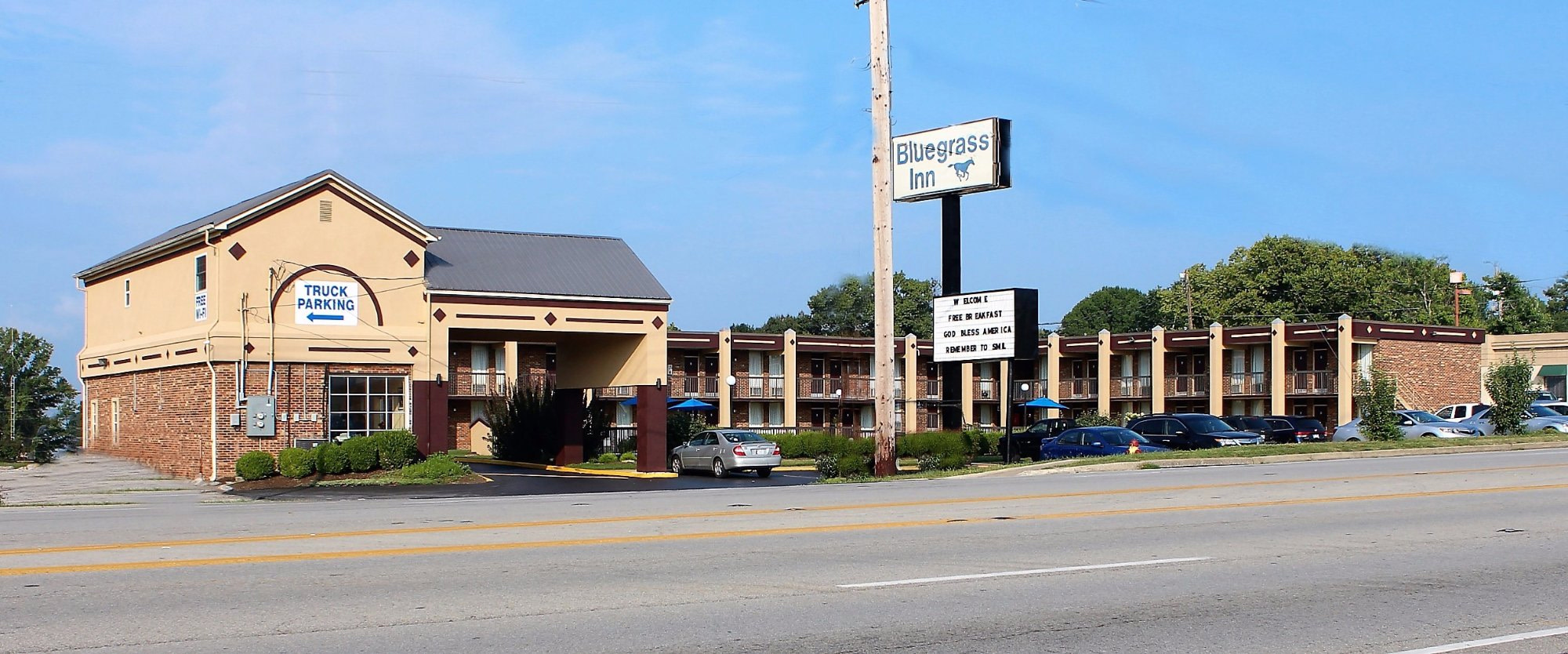
Bluegrass Inn
The Bluegrass Inn sits at 1835 Winchester Avenue in Ashland, Boyd County, Kentucky—a budget motel along the commercial stretch of U.S. Route 23 that most travelers pass without a second glance. It does not advertise its reputation. There are no ghost tours, no television crews, no plaques on the wall. It is the kind of place where rooms rent by the week, the parking lot is quiet by ten, and whatever happens behind the doors stays between the guest and the room. But for those who track haunted locations across Kentucky, the Bluegrass Inn carries a listing that punches above its weight—not because the claims are loud, but because they are strangely specific and consistent across people who have no connection to one another. Ashland dates to 1786, when the Poage family came through the Cumberland Gap and settled along the Ohio River. The community that grew around Poage's Landing remained small until the mid-nineteenth century, when iron production transformed the region. The Kentucky Iron, Coal and Manufacturing Company laid out the town in 1854, naming it after Henry Clay's estate in Lexington. Boyd County was formed in 1860, and Ashland became its largest city. By the early twentieth century, the American Rolling Mill Company had built a massive steel complex along the riverbank, employing thousands and anchoring the local economy for decades. Winchester Avenue developed as the city's main commercial artery—banks, theaters, shops, and lodging stretched along the route that connected Ashland to the broader Tri-State corridor where Kentucky, Ohio, and West Virginia converge. The Bluegrass Inn sits within that corridor, a quiet holdover from an era when roadside motels served the steady flow of workers and travelers moving through Appalachian Kentucky. No public record ties the property to a specific death, crime, or documented tragedy. But what the Bluegrass Inn lacks in backstory, it makes up for in the unnerving consistency of guest accounts. Rooms 127 and 129 are identified repeatedly as the source of activity. Guests in those rooms describe light blue orbs, roughly the size of a softball, drifting through the space. A pervasive feeling of dread settles in and does not lift for the duration of the stay. The physical sensation of hair standing on end—not momentarily, but continuously—has been reported by more than one visitor. One guest described waking to find three parallel scratches down their back, evenly spaced like fingernail marks, bright red and warm to the touch, with no explanation for how they got there. In room 205, a separate guest reported the persistent sound of someone else in the room each night—movement, presence, weight—when no one was there. What makes these accounts difficult to dismiss outright is not their drama but their restraint. These are not ghost stories told for entertainment. They read like the reluctant admissions of people who were not looking for anything and found something they could not explain. No investigation team has formally examined the property. No historical event has surfaced to explain why these rooms behave differently than the others. The Bluegrass Inn does not lean into its reputation or monetize it. It remains a working motel—affordable, unassuming, and open to anyone passing through Ashland who needs a place to sleep. Whether sleep is what they get may depend on the room.

State University of New York Geneseo
Erie Hall stands as a dormitory building on the campus of State University of New York at Geneseo, a college town nestled in the Finger Lakes region of upstate New York. Constructed as a residence facility for the university's growing student population, the building was designed with the conventional architectural features typical of mid-twentieth-century dormitory construction: narrow corridors, compact living quarters, and communal facilities. The building has housed countless generations of students seeking higher education, its rooms serving as temporary homes for thousands of young people pursuing academic achievement and formative life experiences. Room C2D1, a modest residential space within the dormitory, appeared indistinguishable from any other student housing until 1985, when documented paranormal encounters thrust it into the national spotlight and transformed it into one of the most studied cases of dormitory-based supernatural activity. The building's location in a region with centuries of recorded history and indigenous heritage added layers of historical significance to the campus grounds, though few students understood the full context of the place they inhabited. The dormitory was erected during the post-World War II expansion of American higher education, when universities across the nation constructed residence halls to accommodate unprecedented enrollment. Erie Hall emerged from this period of institutional growth, its construction meeting the functional requirements of student housing while reflecting the architectural sensibilities of its era. The building's design emphasized efficiency and economy, prioritizing utility over distinctive character. For decades, it functioned as an unremarkable component of campus infrastructure, hosting study sessions, romantic encounters, and the mundane activities of undergraduate life. However, the existence of dormitory paranormal accounts stretching back through multiple decades suggests that something far more mysterious may have inhabited the building's spaces from its earliest years, waiting for the right circumstances to manifest fully. On March 13, 1985, student Chris Di Cesare experienced a violent encounter in the shower room connected to room C2D1 that would fundamentally alter the trajectory of his life and establish the dormitory's reputation for supernatural malevolence. According to Di Cesare's detailed account, an unseen force attacked him in the shower, leaving three deep claw marks across his back—physical evidence of contact with something that defied conventional explanation. The attack was severe enough to cause bleeding and lasting trauma, representing one of the few documented cases of a paranormal entity causing verifiable physical injury to a living person. This incident gained further corroboration through photographic evidence: a skeletal image manifestation was captured on film on Valentine's Day, 1985, presumably by Di Cesare or a fellow researcher documenting the haunting. The apparition, appearing in photographs but not visible to the naked eye, suggested the presence of an intelligent entity capable of interacting across the boundary between the visible and invisible worlds. The entity haunting room C2D1, known as Tommy, has become the subject of extensive paranormal documentation and investigation. Witnesses describe a ghostly presence manifesting as a young boy, though accounts suggest Tommy may be trapped in a state of perpetual aggression and torment. Beyond the physical attack documented in 1985, visitors to the room have reported inexplicable poltergeist phenomena, including objects moving of their own accord, disembodied footsteps echoing through corridors, unexplained knockings on doors and walls, and vivid apparitions of a skeletal figure that appears with terrifying clarity. Chris Di Cesare eventually transformed his traumatic experience into a career as an author, educator, and public speaker, dedicating himself to documenting paranormal phenomena and sharing his story through multiple platforms, including a Netflix documentary series titled True Haunting that brought national attention to the Erie Hall haunting and established it as one of the most comprehensively documented cases of residential paranormal activity in American universities.
Hearthstone Inn
The Hearthstone Inn stands as a testament to Colorado Springs' architectural heritage and its complicated past as a tuberculosis refuge. Constructed initially in 1885 as a private residence for the prominent Bemis family, the structure exemplified the Victorian sensibilities of the era with its ornate design and substantial grounds. The building's prosperity would be short-lived, as the property was converted in 1900 into a tuberculosis boarding house, reflecting a desperate medical approach to treating one of the nineteenth century's most devastating illnesses. The sanatorium operated with the understanding that fresh air, rest, and isolation were the primary weapons against tuberculosis, conditions that the sprawling Colorado Springs property could ostensibly provide. Over the decades, the two connected Victorian mansions accumulated the stories of countless patients who arrived seeking cure and too often found only temporary respite before succumbing to their illness. The historical significance of the site deepens when examined through the lens of tragedies that occurred within its walls. Among the documented deaths was a man believed to have taken his own life, reportedly hanging himself on the third floor landing in an act of desperation that marked one of the facility's darkest chapters. Such suicides were not uncommon in tuberculosis sanatoriums, where patients facing prolonged suffering and inevitable death sometimes chose to end their ordeal prematurely. Alice Bemis Taylor, associated with the property's early ownership and development, became another name linked to the location's sorrowful history. The combination of terminal illness, isolation, and the constant proximity to death created an emotionally charged environment that would serve as fertile ground for later paranormal accounts. The paranormal phenomena reported at the Hearthstone Inn have drawn considerable attention from paranormal investigators and casual visitors alike. Witnesses describe encountering a mischievous little girl who appears to delight in playful, if unsettling, behavior including running, laughing, and throwing objects throughout both Victorian mansions. Cold spots materialize unexpectedly in various rooms, often concentrated in the living spaces rather than spreading evenly throughout the buildings. Orbs have been captured in photographs and videos, appearing as unexplained luminous spheres that defy conventional explanation. Mists form and dissipate without apparent cause, emerging from corners and hallways before vanishing as mysteriously as they arrived. Witnesses also report flickering and dimming lights that flicker independently of electrical systems, radios and televisions that activate autonomously, and the distinctly unsettling sensation of being touched or pushed by invisible hands. Objects have been observed flying off hooks and shelves with sufficient force to suggest intelligent direction rather than accidental displacement, adding to the cumulative evidence of non-human activity. The third floor landing has become particularly associated with manifestations believed connected to Alice Bemis Taylor and the man who hanged himself there, with visitors reporting heightened activity in that concentrated area. Researchers have suggested that the emotional trauma of the sanatorium era, combined with the specific tragedy of suicide, may have created powerful imprints capable of generating ongoing paranormal phenomena. The playful nature of the child apparition offers an intriguing counterpoint, suggesting that not all spirits present are burdened by darkness or despair. Over time, the Hearthstone Inn has undergone significant changes, having been converted from its haunted past into apartment units, fragmenting what was once a unified structure. Despite this modernization and division of the space, reports of paranormal activity have persisted among residents and visitors, suggesting that whatever forces or energies animate the location remain bound to the physical structure itself rather than to any particular configuration of walls or rooms. The building stands today as a reminder of both Colorado Springs' medical history and the lingering mysteries of human consciousness and mortality.
Osgood Castle – Redstone Castle
Redstone Castle, formally known as Osgood Castle, stands as one of Colorado's most architecturally significant structures and one of the nation's finest examples of Gilded Age mansion design and construction. Situated in a picturesque valley carved by the Crystal River in Pitkin County, the castle represents the apex of late nineteenth-century industrial wealth and ambitious cultural aspiration within Colorado's remote mountain territories. This distinctive location was strategically chosen to showcase regional prestige and natural resources. John Cleveland Osgood, one of Colorado's most prominent coal magnates and industrialists, commissioned construction beginning in 1887, envisioning a residence that would rival great East Coast mansions while showcasing the region's spectacular mountain landscape, natural beauty, and considerable economic potential and prosperity throughout the American West and beyond. The building's complex Gothic and Tudor Revival architectural elements, combined with Romanesque and Victorian features, create an eclectic but harmonious design that demonstrates Osgood's truly sophisticated aesthetic sensibilities and his unwavering determination to establish Redstone as a major cultural and social center for Colorado's industrial elite and privileged classes. The castle remains an outstanding testament to Gilded Age architectural excellence and industrial-era prosperity. Osgood's marriage to Alma Osgood, known throughout Colorado society as Lady Bountiful for her generous philanthropic endeavors and social grace, created a powerful couple whose influence extended far beyond their castle walls. Alma's dedication to charitable work and community service became legendary in Colorado's social history, earning her recognition and respect that transcended typical nineteenth-century gender roles. The couple filled their castle with guests representing the nation's industrial, political, and cultural elite, hosting gatherings that became famous for their sophistication and entertainment value. However, beneath this glittering lifestyle existed emotional currents that would eventually find expression in spectral manifestations long after both principals departed. Alma's personal chamber became the epicenter of documented paranormal phenomena, suggesting her spirit maintained an attachment to the castle. The paranormal activity at Redstone Castle occurs with consistent frequency that has drawn scrutiny from paranormal investigators. Visitors report detecting phantom aroma of cigar smoke from various spaces, particularly in rooms where Osgood conducted business, suggesting spectral persistence of his presence. Perfume and lilac scents materialize suddenly within hallways and rooms, concentrated in areas frequented by Alma. Individuals have reported sensations of being touched by invisible presences. Visitors describe feelings of a female presence in castle rooms. Objects move inexplicably. These manifestations suggest both remain connected to their castle. Redstone Castle remains open to the public through guided tours and special events, with visitors acknowledging its paranormal reputation. The castle's management has integrated paranormal phenomena into the historical narrative. Multiple paranormal investigation teams have documented findings within the castle. The castle's architecture and paranormal activity establish it as one of Colorado's premier historic haunted locations, drawing visitors seeking both its remarkable Gilded Age craftsmanship and its well-documented supernatural phenomena.
Pensacola Lighthouse
The Pensacola Lighthouse stands as a significant maritime navigational structure located in Pensacola, Florida, a beacon constructed during the nineteenth century to guide ships navigating treacherous waters of Pensacola Bay and the surrounding Gulf coast region. Built to serve the vital maritime function of providing visual guidance to vessels during reduced visibility, the lighthouse represents an impressive engineering achievement, rising to substantial height above surrounding landscape and housing the light-generating mechanisms and lens apparatus required to maintain a powerful beacon visible to mariners at considerable distances. The structure was staffed by lighthouse keepers, specialized employees dedicated to facility maintenance and beacon operation, individuals maintaining constant vigilance over equipment and the light. The keeper's quarters provided residential space for keepers and their families, creating a domestic environment within the functional structure dedicated to maritime safety. Yet beneath its practical function exists a profound paranormal history, with the location harboring spirits of multiple individuals whose deaths and traumas have rendered it a location of significant supernatural activity. The paranormal entities inhabiting the Pensacola Lighthouse have been identified through paranormal investigation and historical research as multiple spirits apparently bound to the location through circumstances of their deaths or profound connections to the facility. The spirit identified as Samuel is believed to reside in the upper reaches of the lighthouse tower, manifesting at considerable heights above ground level. Samuel is described as an apparition sometimes visible to observers looking upward toward tower windows, suggesting a spirit localized to the highest portions. An apparition of a small child, believed to be a young girl, manifests within the keeper's quarters bedroom, known as the bloody bedroom due to historical associations with violence or trauma. The spirit identified as Thomas, described as having been enslaved, is reported as a tall apparition standing over seven feet in height, manifesting with startling presence and apparent awareness of living visitors. An additional spirit identified as Michaela Ingraham appears in the hallways of the keeper's quarters. The paranormal manifestations at the Pensacola Lighthouse documented by investigators encompass multiple categories of supernatural phenomena. Women visiting have reported experiences of being touched and grabbed by unseen entities, with witnesses describing physical contact of varying intensity. These encounters appear particularly associated with Samuel, suggesting the entity maintains awareness of visitors. The bedroom known as the bloody bedroom has become a focal point of intense paranormal activity, with visitors reporting apparitions of a young girl, cold spots, and emotional disturbances. The apparition of Thomas manifests with particular intensity and apparent intentionality. The spirits appear to respond to the presence of visitors and investigators. Paranormal researchers conducting formal investigations of the Pensacola Lighthouse have established the location as a site of significant and documented supernatural phenomena. Professional paranormal investigators have identified approximately six permanent spectral residents within the lighthouse, suggesting a location haunted by multiple distinct entities with varying degrees of awareness and interactive capacity. The consistency of phenomena across multiple investigation sessions and reliability of manifestations have established the Pensacola Lighthouse as one of the most verified haunted locations in Florida. The location has achieved recognition through paranormal investigation television programs, including appearances on nationally distributed paranormal investigation series that have brought the lighthouse to broader public attention. The Pensacola Lighthouse continues functioning in its contemporary maritime capacity while serving as a location of substantial paranormal interest and investigation. The coexistence of functional lighthouse operations with active paranormal manifestations creates a unique situation in which a practical public facility operates within an environment of documented supernatural phenomena. Visitors to the lighthouse, both tourists and paranormal enthusiasts, encounter a location where the past remains vibrantly present through spectral manifestation. The spirits of Samuel, the young girl, Thomas, and Michaela Ingraham continue inhabiting the structure, their presence suggesting that the intensity of trauma and their connection to the lighthouse have created an enduring supernatural bond.
St. Ignatius Hospital
St. Ignatius Hospital in Colfax, Washington holds complex significance in the medical and social history of the Palouse region, its founding and development intertwined with railroad transportation expansion and industrial advancement. The hospital's cornerstone was laid in June 1893, marking the community's commitment to establishing modern medical facilities in a region where healthcare access was severely limited. The building reflects late nineteenth century architectural sensibilities with solid construction designed to accommodate patient care, medical procedures, surgical operations, and administrative functions. The hospital was designed to serve a region characterized by resource extraction industries, agricultural labor, railroad operations, and associated industrial hazards. The early years of hospital operation coincided with significant danger and tragedy related to railroad expansion and industrial development. The first recorded fatality occurred in 1893 when F. E. Martin was struck by railroad cars, his death becoming emblematic of industrial hazards the hospital was designed to address but ultimately could not prevent. The hospital accumulated comprehensive medical care history over decades of operation, treating severely injured workers alongside patients with illnesses and injuries. Many patients did not survive despite receiving professional medical care and treatment. The hospital became associated with both life preservation efforts and death, functioning as a concentrated location of human suffering where medical intervention outcomes determined whether individuals survived or experienced fatal consequences. Beginning in the early twenty-first century, St. Ignatius Hospital emerged as a location of considerable paranormal significance, with paranormal investigators and visitors documenting spiritual presences inhabiting the building. Manifestations include disembodied voices emanating from empty spaces, physical contact from unseen entities, and full-body apparitions appearing in patient wards and hallways. Visitors report being touched, pulled, and struck by invisible forces, suggesting aggressive or at least interactive paranormal presence. Strange growls and other vocalizations occur particularly in former intensive care or terminal care zones where patient deaths concentrated. Physical attacks reported by visitors indicate hostile spiritual presences possibly from individuals who experienced traumatic hospital deaths. In 2015, the hospital opened to the general public for guided paranormal tours based on accumulated supernatural activity evidence and investigation findings. More than twenty-five thousand individuals have visited the hospital since tours began, with many reporting paranormal experiences consistent with documented patterns. Tours provided systematic documentation opportunities, with narrative visitor accounts establishing patterns suggesting specific entities associate with particular areas and rooms. The hospital's paranormal reputation attracted professional paranormal investigators and paranormal television programs, providing unprecedented data on manifestation patterns in medical settings. Today, St. Ignatius Hospital stands as one of the most documented paranormal sites in the Pacific Northwest, recognized as both a significant historical medical structure and location of genuine supernatural activity. The hospital remains partially operational for paranormal investigation and public visitation, functioning uniquely as both medical facility and paranormal tourism destination. The building's history of medical treatment, death, and industrial tragedy created conditions allowing spiritual presences to manifest consistently.
Anson Opera House
Anson Opera House stands as a significant cultural institution and architectural landmark in Anson, Texas, representing the investment communities made in public entertainment venues and cultural development during the nineteenth and early twentieth centuries. The opera house was constructed to serve the entertainment and cultural needs of the community, providing space for theatrical productions, musical performances, lectures, and community gatherings during an era when such public cultural institutions were markers of civic pride and community sophistication. The architectural design of the structure reflects the theatrical and performance traditions of the period, incorporating features designed to enhance acoustics, visibility, and audience comfort for various performance activities. The building has served continuously as a performance venue and community gathering space across generations, maintaining its historical character while adapting to changing entertainment preferences and technological innovations. The transformation of the opera house into a recognized paranormal location has occurred through the persistent manifestation of supernatural phenomena concentrated in specific areas of the building, most notably the back dressing room and basement areas associated with theatrical preparation and technical operations. The paranormal phenomena documented at Anson Opera House are most prominently associated with a ghost referred to as Fingers, a spirit whose identity and historical connection to the building remain subjects of ongoing research and speculation. The character referred to as Fingers is credited with the remarkable paranormal manifestation of independently playing a player piano located within the opera house without any visible physical touch or manipulation by a living person. This distinctive phenomenon represents one of the most iconic and well-documented instances of an inanimate object being operated independently by a paranormal entity, creating music without any apparent mechanism for the occurrence. The specific name Fingers appears to reference the paranormal ability to manipulate piano keys through spiritual means, suggesting either a musician or someone with musical knowledge who retains the capacity to engage with musical instruments despite existing in a non-corporeal state. The continued operation of the player piano by invisible hands has made Anson Opera House notable among paranormal investigation sites specializing in object manipulation and inanimate object interaction with spiritual entities. The paranormal manifestations at Anson Opera House extend beyond the distinctive phenomenon of the player piano and encompass a range of related phenomena suggesting intelligent and purposeful interaction by spiritual entities with the living world. Disembodied voices manifest throughout the building, sometimes speaking intelligibly and sometimes producing vocalizations that suggest emotion or expression rather than clear linguistic communication. Witnesses report distinct sensations of being touched by invisible hands and fingers, with guests describing sudden pressure or contact in locations where no living person is physically present. The experience of hearing names called out by disembodied voices represents another documented paranormal phenomenon at the location, suggesting that the spiritual entities may be aware of and attempting to communicate with specific individuals among the living population. The concentration of phenomena in the back dressing room and basement areas suggests these locations held particular significance in the lives of the spirits or in the performance activities that occurred within these spaces. Paranormal investigation teams have documented extensive evidence of paranormal activity at Anson Opera House through careful documentation of the player piano manifestations, recordings of disembodied voices, eyewitness accounts of tactile paranormal contact, and systematic investigation of the building's historical background. The remarkable nature of the player piano phenomenon has made this location particularly notable within paranormal research communities, attracting investigators specializing in object manipulation and the mechanical interaction of spiritual entities with inanimate objects. Detailed historical research has attempted to identify the individual spirits responsible for the manifestations, with particular attention to the identity of Fingers and the historical performers, musicians, or personnel associated with the opera house who might have maintained such strong attachment to the location. The ongoing investigation and documentation of these phenomena contribute substantially to the understanding of how spiritual entities may retain abilities, interests, and capacities consistent with their earthly lives and identities. Anson Opera House continues to operate as a cultural venue and performance space while acknowledging its status as a documented paranormal research site and historically significant haunted location. The presence of Fingers and the other spiritual entities within the building has become integrated into the cultural and historical identity of the location, with the paranormal phenomena serving as distinctive features that complement the building's historical role as an entertainment and performance venue. Visitors and paranormal investigators interested in experiencing the distinctive phenomena at the location have opportunity to visit the opera house and potentially witness the remarkable manifestations that have made this location notable within paranormal research circles. The continued operation of the player piano by invisible hands, the manifestation of disembodied voices, and the documented experiences of tactile paranormal contact demonstrate the profound and complex nature of paranormal phenomena at this location. The ongoing investigation and documentation of paranormal activity at Anson Opera House contribute substantially to the broader understanding of spiritual manifestations in performance venues and the ways in which artists, musicians, and performers may remain attached to the locations where they practiced their crafts and created meaning through their work.
Old Canal Inn
The Old Canal Inn occupies a historic bar and restaurant establishment in Nutley, New Jersey, situated at 2 East Passaic Avenue within the heart of the community and representing a structure with paranormal reputation that has drawn attention from both casual patrons and paranormal researchers seeking to document and understand the phenomena occurring within the historic establishment. The building predates the modern era of the municipality and contains architectural elements and interior spaces that reflect periods of construction and renovation spanning multiple eras of American social and commercial history. The bar seating area represents the primary commercial function of the establishment, with the layout and arrangement of furniture and fixtures designed to facilitate customer interaction and social engagement around the central operational focus of the bar counter. The specific location of paranormal concentration within the Old Canal Inn involves a particular seat positioned at the end of the bar counter near the front entrance area, a location that has achieved designation as the Death Seat within local paranormal lore and paranormal research documentation. The Death Seat represents a physical location where multiple tragic events occurred in relatively close temporal proximity, creating circumstances that generated sufficient trauma and spiritual disturbance to bind the consciousness of deceased individuals to that specific seating location. The genesis of the Death Seat phenomenon and the associated haunting at the Old Canal Inn originates from events that occurred during the mid-twentieth century, when two men engaged in a violent altercation over control or possession of the particular seat at the end of the bar counter. The dispute, apparently rooted in competitive or personal animosity between the individuals, resulted in a physical confrontation sufficiently intense to produce a fight of notable violence within the bar environment. The immediate consequences of the fight did not appear to be fatal, and the combatants survived the encounter and presumably departed the establishment with injuries but intact vital functions. However, the circumstances surrounding the altercation appear to have generated psychological and emotional trauma sufficient to trigger catastrophic health events in subsequent days. Within the remarkably brief interval of ten days following the physical conflict, both men died from myocardial infarction, commonly referred to as heart attacks, suggesting that the stress, shame, or psychological trauma associated with the violent altercation proved sufficiently intense to precipitate fatal cardiovascular events. The tragic timing of consecutive deaths within such a brief period, combined with their common location of origin at the disputed bar seating area, created the conditions that would bind the consciousness of both individuals to that specific location. The paranormal phenomena occurring within the Old Canal Inn concentrate with particular intensity at the Death Seat, the specific bar seating location where the original altercation occurred and where the individuals continued to be associated through the subsequent events and the spiritual consequences of those events. Witnesses and patrons have reported seeing and hearing manifestations at the Death Seat with sufficient consistency that the phenomena have become established aspects of local historical knowledge and paranormal documentation. Sensations of being touched by invisible agents occur to patrons seated at the Death Seat, creating experiences of physical contact without visible source or explanation, manifestations that suggest the presence of non-corporeal entities capable of exerting physical influence upon living bodies. Apparitions have materialized at the bar seating area, presenting as visible figures of men whose appearance and characteristics remain consistent with descriptions of individuals present during the original fatal altercation. The manifestations include both auditory and visual phenomena, with witnesses reporting conversations, vocal utterances, and disembodied voices emanating from the bar area in contexts where no living individuals account for the vocalizations observed. The concentrated intensity of paranormal phenomena at the Death Seat has generated sufficient attention that the Old Canal Inn has achieved inclusion in paranormal guides and ghost hunting tourism literature focused on New Jersey and the New York metropolitan region. The establishment has incorporated the paranormal reputation and the legendary status of the Death Seat into its operational identity and marketing approaches, with the menu featuring a Death Seat Burger menu item explicitly referencing the haunted location and the tragic historical circumstances associated with the specific bar seating area. The current operators acknowledge the paranormal reputation while maintaining the operational functionality of the bar as a commercial establishment serving the Nutley community and surrounding areas. Patrons continue to encounter paranormal phenomena at the Old Canal Inn, with the manifestations persisting with undiminished intensity despite the passage of decades since the original fatal altercation that initiated the haunting. The Death Seat remains occupied by living patrons who either remain unaware of the paranormal reputation or who deliberately seek the experience of proximity to documented spectral phenomena, creating an unusual convergence of casual commercial socialization and contact with entities existing beyond the threshold of corporeal life. The Old Canal Inn represents a location where commercial hospitality operations continue seamlessly alongside the presence of spirits bound to a specific location through trauma and tragic circumstances that remain memorialized through both historical documentation and paranormal investigation.
Guggenheim Air Institute
Linkville Playhouse stands as a historic cultural institution in Klamath, Oregon, serving as a community theater venue that has facilitated theatrical performances, community events, and artistic expression for local residents and regional audiences throughout its operational history spanning multiple decades. The playhouse occupies a building reflecting the architectural conventions and construction techniques typical of early-to-mid twentieth century American community theater infrastructure, designed to accommodate theatrical productions with stage facilities, audience seating arrangements, and backstage spaces necessary for professional staging of dramatic works and musical performances. The venue has hosted countless theatrical productions ranging from contemporary dramatic works to classical theatrical adaptations, operatic performances, and experimental theatrical presentations that reflected the artistic ambitions and cultural interests of successive generations of Klamath community members and regional performers dedicated to advancing live theatrical performance. The physical spaces within the playhouse—including the stage, audience seating areas, dressing rooms, soundbooth facilities, and attic storage areas—accumulated decades of theatrical activity, emotional energy, performance anxiety, technical achievement, and community cultural meaning that infused these physical spaces with historical significance beyond their utilitarian theatrical functions. The central figure believed to animate the paranormal phenomena at Linkville Playhouse is Ralph, a former actor and long-time associate with the theater who died in the early 1990s (sources vary regarding whether his death occurred in 1992 or 1994, though the discrepancy reflects the passage of time and informal documentation typical of theatrical histories). Ralph's continuing presence at the playhouse appears to manifest through phenomena centered on active theatrical performance, suggesting an entity whose identity became so thoroughly intertwined with theatrical activity during his living years that death did not significantly diminish his apparent connection to the theater's ongoing operations. Ralph's apparent dedication to the theater suggests an individual whose entire existence was defined by theatrical performance and whose commitment to the art form extended beyond his physical death into what appears to be an afterlife existence similarly devoted to the theater's continued operations. Apparitions of Ralph have been reported on multiple occasions, typically described as a translucent humanoid figure visibly smoking a pipe, manifesting briefly before vanishing in ways consistent with apparitional phenomena documented at other haunted theaters. During dress rehearsal, witnesses observed an elderly male figure matching Ralph's description appear suddenly within the audience seating area, present for a brief interval interacting with the theatrical activity, before disappearing when approached. Disembodied voices and spectral music have been documented, particularly the melody known as "Greensleeves," a traditional English composition emanating from empty areas without identifiable source. Eerie lights manifest within attic storage spaces, appearing and disappearing without connection to electrical systems. The Linkville Playhouse continues operating as a community theater venue, with Ralph's apparent ongoing presence enhancing the institution's identity as a genuinely haunted theater venue.
Historic Castle House
The Historic Castle House in Brumley, Missouri represents a distinctive architectural achievement in the rural Ozark region, a structure that diverges sharply from conventional nineteenth-century vernacular building practices prevalent throughout the American heartland. Constructed during a period of relative prosperity in the Ozark region, the building's castle-inspired design reflects the architectural ambitions of its original owner and demonstrates the economic aspirations of the era. Brumley and the surrounding Morgan County area developed primarily through agricultural and timber extraction industries, with the settlement established along transportation routes that connected the isolated Ozark communities to larger commercial centers. The Historic Castle House stands as one of the most unusual residential structures in the Midwest, its distinctive design making it immediately recognizable to visitors and paranormal researchers who journey to this rural Missouri location. The house was originally constructed as a private residence intended to showcase architectural sophistication in a region dominated by modest cabin and farmhouse construction patterns. The building incorporates multiple rooms and distinct living spaces arranged vertically through its castle-like structure, with a master bedroom representing one of the primary residential chambers in the elaborate design. Throughout the house, the architecture incorporates unusual features that distinguish it from contemporary residential construction, including towers, distinctive stonework, and unusual room configurations that reflect its unique design philosophy. The location has been the subject of substantial architectural documentation and historical inquiry due to its unusual appearance and its significance as an unconventional expression of residential design in rural America. Paranormal investigations conducted at the Historic Castle House have documented extensive and well-documented supernatural phenomena that investigators consider among the most compelling evidence of genuine paranormal activity in the Midwest. Multiple spirits appear to inhabit the structure, with distinct entities demonstrating individual behavioral patterns and manifestation styles that suggest the presence of multiple deceased individuals. Investigators and sensitives have reported cold spots that appear suddenly and without meteorological explanation, particularly in bedrooms and interior spaces throughout the building. Footsteps have been documented on multiple occasions moving through hallways and rooms with a regularity suggesting habitual pathways followed by the spirits inhabiting the location. Lights in various rooms turn on and off without physical intervention, with switches located at distances impossible for any single agent to manipulate. Witnesses have reported whistling sounds emanating from empty rooms and hallways, sometimes suggesting responses to the investigators' presence or comments. Whispering voices have been recorded through multiple audio documentation methods, with speech patterns suggesting communication attempts by the spirits toward the living. Shadow people have been observed moving through the structure, dark silhouettes that appear and disappear with supernatural quickness and without consistent physical explanation. Visitors and investigators report sensations of being touched by unseen hands, with some describing contact sensations on their skin and clothing despite the absence of any physical agent. Phantom noises including rappings, knockings, and unidentifiable sounds have been systematically documented throughout the building. The Historic Castle House was featured on the HGTV network's program identifying it as among the scariest residential locations in America, bringing significant media attention to its paranormal reputation and attracting investigators and paranormal enthusiasts from across the country. The convergence of multiple distinct entities, the variety and intensity of reported phenomena, and the consistent documentation of supernatural activity across numerous investigations have established the Historic Castle House as one of the most actively haunted residences in the region. The spirits appear to interact with the physical environment, manipulating electrical systems and physical objects in ways that challenge conventional scientific explanation. Researchers continue to investigate the historical origins of the hauntings, seeking to understand which individuals or events in the building's history might account for the persistent paranormal activity. The structure remains accessible to paranormal investigators and continues to generate reports of supernatural phenomena from visitors and residents.