

St. Louis Cathedral
Background & History
Historical context and known paranormal claims surrounding St. Louis Cathedral.
The St. Louis Cathedral in New Orleans stands as one of America's most historically significant religious structures and one of the oldest continuously active cathedrals in the United States, its white-stuccoed facade and distinctive architectural profile dominating the landscape of the French Quarter and embodying the religious traditions and cultural heritage of New Orleans from its colonial foundations through the present day. The cathedral occupies a prominent position on the Place d'Armes facing the Mississippi River, a location that has held religious and civic significance since the earliest years of the French colonial period. The current cathedral structure, completed in 1794, represents the third building to occupy this site, with previous versions destroyed or rebuilt following various catastrophes and the requirements of expanding colonial and post-colonial communities. The architectural style reflects the Spanish colonial period of Louisiana history, when Spain controlled the territory and influenced the religious institutions that served the population. The cathedral's construction, renovation, and preservation across more than two centuries of American history represents an ongoing commitment to maintaining a building that embodies religious faith, cultural continuity, and historical memory. The interior spaces of the cathedral—its nave, altar, balcony areas, bell tower, and associated grounds—contain layers of architectural, artistic, and spiritual significance accumulated across generations of worship, ritual, and community gathering.
The paranormal reputation of St. Louis Cathedral rests upon the documented and traditional accounts of multiple apparitions and spiritual presences that are believed to inhabit the cathedral, spirits of historical religious figures, community leaders, and individuals whose lives became intertwined with the cathedral's history. The most prominently documented apparitions involve Pere Antoine and Pere Dagobert, religious figures associated with the cathedral's ministry and the broader Spanish colonial spiritual traditions of Louisiana. Pere Antoine served as a significant spiritual authority in New Orleans during the late colonial period, a figure who would have presided over countless religious ceremonies, heard confessions, and ministered to the dying and bereaved. Pere Dagobert similarly served as a clergy member whose ministry extended across a substantial time period, creating indelible associations with the physical and spiritual spaces of the cathedral. These religious figures appear to have developed such profound connections to the cathedral that their spirits are believed to persist within its sacred spaces even after their deaths. The enduring presence of religious figures within the spaces dedicated to their spiritual calling represents a thematic coherence between the living function of the cathedral and the persistent spiritual presence attributed to its former clergy.
Beyond the religious figures directly associated with the cathedral's clergy, paranormal traditions hold that other significant historical figures are also spiritually present within the cathedral. Benjamin Henry Latrobe, the renowned architect who designed many of the early American republic's most important buildings, is believed to be associated with the cathedral through his architectural work. Jean Delachaux, a historical figure whose identity and specific role in New Orleans history remain less universally familiar, is similarly included in the pantheon of spiritual presences believed to inhabit the cathedral. These various apparitions—the clergy members central to the cathedral's spiritual mission and the historical figures whose lives became connected to the building—create a complex spiritual landscape where multiple presences coexist within the sacred spaces. The accumulation of these apparitional traditions suggests a building so deeply embedded in the historical and spiritual narratives of New Orleans that it has become a focal point for the memories and persistent presences of numerous historical figures.
The specific locations within St. Louis Cathedral where paranormal manifestations have been reported provide geographic specificity to the broader paranormal traditions associated with the building. The cathedral balcony, an area accessible to certain classes of worshippers during the Spanish colonial period, has been a focal point of reported paranormal activity, with apparition sightings and sensations of presence concentrated in this elevated space. The altar, the most spiritually significant location within the cathedral from a theological perspective, represents a location where the most sacred religious rituals occur and where the boundary between the material and spiritual worlds is understood by believers to be most permeable. Apparitions have been reported in association with the altar area, suggesting that the spiritual significance of this location extends beyond theological interpretation to encompass actual paranormal manifestations. The aisles and nave of the cathedral, the central spaces where the congregation gathers for worship, have been locations of reported paranormal experiences. The bell tower, an architectural feature that marks the cathedral's presence in the physical landscape and that has served religious and civic functions across centuries, has been associated with paranormal phenomena reported by those who have ascended its heights or observed it from various perspectives.
The paranormal phenomena reported at St. Louis Cathedral encompass full-body apparitions of historical religious figures, manifestations that appear three-dimensional and sufficiently detailed to allow contemporary observers to recognize the apparent identities of the spirits. These apparitions have been described as appearing dressed in religious vestments appropriate to their historical periods, moving with purpose through the cathedral's interior spaces, and in some cases interacting with contemporary visitors in ways that suggest intelligent communication rather than simple replay of past events. The apparitions appear to concentrate in areas of the cathedral most directly associated with the religious functions and the life experiences of the individuals whose spirits are believed to persist. The apparition sightings appear distributed across different time periods and different investigators, suggesting either genuine paranormal phenomena or deeply embedded cultural narratives that produce consistent accounts through suggestion.
Residual haunting phenomena have been reported at St. Louis Cathedral, experiences interpreted as reenactments of historical events or emotional impressions from past occurrences. Visitors and paranormal investigators have reported witnessing what they interpret as replays of historical religious ceremonies, processions, or other traditional events that would have occurred repeatedly within the cathedral's spaces. These residual phenomena suggest that the emotional and spiritual intensity of rituals and events occurring repeatedly over centuries may have imprinted themselves upon the physical location, creating impressions that replay in the presence of sensitive observers. The contrast between the solemn, ordered character of religious ceremonies and the unexpected apparitional encounters reported by contemporary visitors creates an interesting tension that contributes to the psychological complexity of paranormal experiences at the cathedral.
Paranormal investigation of St. Louis Cathedral has been conducted by paranormal research teams and independent investigators interested in documenting the spiritual presences attributed to historical figures associated with the cathedral. The status of the cathedral as an active religious institution creates unique parameters for paranormal investigation, as researchers must conduct their work in a manner respectful of the ongoing religious functions and the sensibilities of the faith community. This restriction has limited overnight investigations and the deployment of sophisticated paranormal investigation equipment compared to secular haunted locations, though dedicated researchers have conducted investigations during periods of reduced religious activity. Digital audio recording equipment has been employed to capture potential disembodied voices, with some researchers interpreting recordings as containing the voices of historical religious figures. Photographic documentation has been examined for evidence of apparitions or anomalies interpretable as evidence of paranormal phenomena. The spiritual significance of the location from a theological perspective has created an interesting intersection with paranormal investigation, as the sacred character of the cathedral invites interpretation of paranormal phenomena through both paranormal and religious theological frameworks.
The historical record of St. Louis Cathedral provides substantial documentation of the building's architectural evolution, its religious functions, and the prominent historical figures associated with it, creating a foundation for understanding the paranormal traditions that have developed around the location. The cathedral's prominence in New Orleans history and its centrality to the cultural identity of the city have ensured that its history has been extensively documented and preserved. This historical grounding distinguishes St. Louis Cathedral from some haunted locations where historical details remain obscure or contested. The religious framework of Catholicism, which acknowledges the existence of spiritual realities beyond the material world, has created a cultural context receptive to paranormal traditions and to the interpretation of spiritual phenomena as manifestations of saints, blessed individuals, or spirits deserving respect and reverence. The convergence of documented historical significance, religious theology, and paranormal tradition creates a unique context where spiritual phenomena are interpreted not necessarily as aberrations or disturbances but as manifestations consistent with the cathedral's sacred character and its historical role as a center of spiritual life.
St. Louis Cathedral continues to serve as the centerpiece of religious life in New Orleans, hosting countless services, ceremonies, and pilgrimages annually while simultaneously functioning as a destination for paranormal tourists and ghost hunters interested in experiencing its reported spiritual presences. The dual role of the cathedral—as an active religious institution and as a location of paranormal interest—creates an interesting cultural dynamic where historical memory, religious faith, and contemporary paranormal narrative intersect. The apparitions of Pere Antoine, Pere Dagobert, Benjamin Henry Latrobe, and Jean Delachaux represent historical figures whose connections to the cathedral were so profound that they appear to persist within its spaces across the centuries following their deaths. The cathedral stands as testament to the power of sacred spaces to retain spiritual impressions and to the capacity of certain locations to serve as bridges between the living and the dead, between historical memory and contemporary experience, between the material and spiritual worlds. The St. Louis Cathedral represents one of America's most compelling intersections of historical significance and paranormal tradition, a location where the past visibly and spiritually continues to inhabit the present.
church
New Orleans, Louisiana
Orleans Parish County
February 26, 2026
Open
People Also Searched For
You Might Also Like
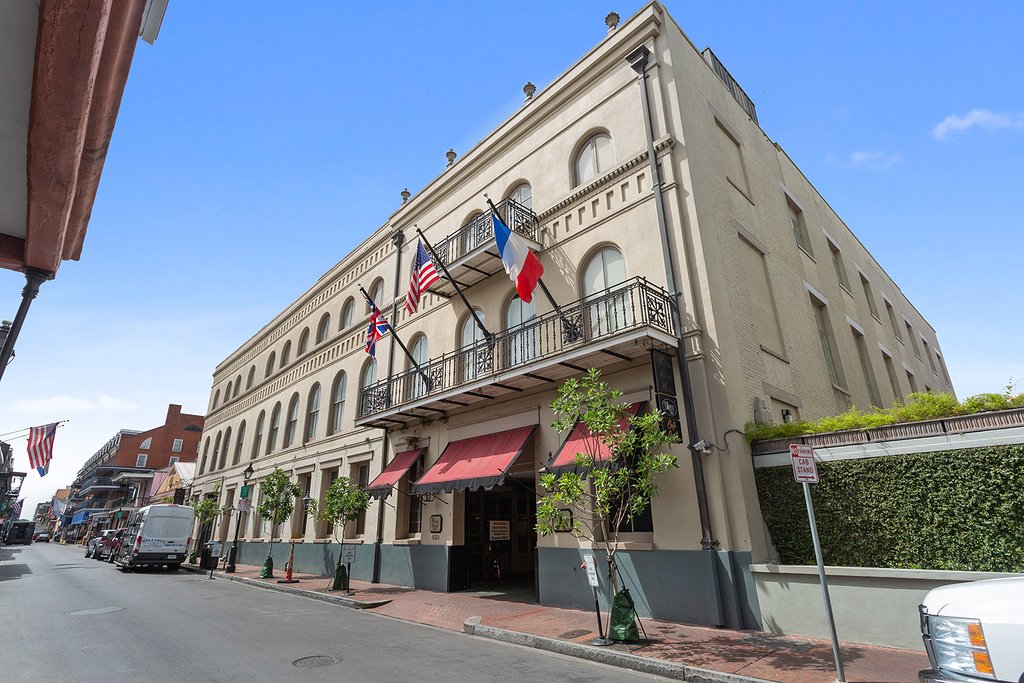
At 830 Conti Street in the French Quarter of New Orleans, the Prince Conti Hotel occupies a building dating to the early 1900s, sitting on a block that has cycled through nearly every identity the Quarter has to offer—residence, commerce, vice, hospitality, and, if the accounts are to be believed, s… read more
New Orleans, Louisiana · hotel

North Claiborne Avenue runs through the Tremé, the oldest African American neighborhood in the United States, in a part of New Orleans where the streets are wide and the buildings low and the culture so densely layered that even a single block can carry several lifetimes of music, grief, ceremony, a… read more
New Orleans, Louisiana · bar restaurant

In the narrow passage that runs between St. Louis Cathedral and the Cabildo in the heart of the French Quarter, a red Creole townhouse at 626 Pirate's Alley stands shoulder to shoulder with the most storied ground in New Orleans. The alley itself measures only six hundred feet long and sixteen feet… read more
New Orleans, Louisiana · house
Have you visited St. Louis Cathedral?
Share your paranormal experience and help other investigators decide if it's worth exploring.
Activity Breakdown
Types of documented activity recorded at St. Louis Cathedral, organized by category.
Visual Activity
Behavioral & Interactive
Reported Areas
Specific areas within St. Louis Cathedral where activity has been documented.
balcony
altar
aisles
bell tower
church grounds
Known Entities
Entities, spirits, and figures that have been identified or reported at St. Louis Cathedral.
Benjamin Henry Latrobe
Jean Delachaux
Père Antoine
Père Dagobert
Photos
Images sourced from across the web and linked directly to the original host. Ghouler does not download or host these images, nor do we claim them as our own.
Investigator Reviews
Your trust is our priority, so no location can pay to alter or remove their reviews.
No reviews yet.
Be the first to share your experience at St. Louis Cathedral.
Find reviews useful? Help others by sharing your experience.
Documented Experiences
Paranormal reports and documented occurrences compiled for St. Louis Cathedral from archived sources and community investigators.
No documented experiences for St. Louis Cathedral yet.
Best Times to Visit
Based on investigator reports, these are the most active areas, times, and conditions reported at St. Louis Cathedral.
St. Louis Cathedral
Dawn, Early Morning
Equipment & Methods
Equipment and investigation methods reported by community investigators at St. Louis Cathedral.
No equipment or investigation methods have been reported for St. Louis Cathedral yet.
Know Before You Go
Important details to help plan your visit or investigation of St. Louis Cathedral.
Unknown
Open
Not specified
Sources & References
Referenced materials and documentation supporting the St. Louis Cathedral case file.
ghost_tour_company
paranormal_blog
tourism_website
video_/_youtube
Experience Glossary
Detailed descriptions of each type of activity documented at St. Louis Cathedral.
Apparitions
Definition
A reported visual sighting of a human-like or shadow-like figure without a physical source.
What People Report
Witnesses describe full-body figures, partial forms, or fleeting silhouettes appearing in hallways, doorways, or peripheral vision. These sightings are typically brief and may vanish when directly observed.
Residual Hauntings
Definition
Recurrent activity believed to replay past events without interaction or awareness.
What People Report
Witnesses describe footsteps, voices, or visual forms that follow consistent timing or routes, often occurring in historic or emotionally significant locations.
Full-Body Apparitions
Definition
A complete human-shaped figure reportedly seen in physical space.
What People Report
Witnesses often describe defined features such as clothing, posture, or movement patterns. These manifestations may appear solid or semi-transparent before disappearing abruptly.
Important Notices
Information in this case file is compiled from public sources and community reports. Accuracy cannot be guaranteed. Always verify details before visiting, and check with property owners and local or state authorities to confirm access is permitted.
Nearby Case Files
Explore Louisiana
- Most haunted places in Louisiana
- Haunted Churches in Louisiana
- Paranormal locations near New Orleans
- Orleans Parish County hauntings
- Haunted Asylums in Louisiana
- Haunted Bar / Restaurants in Louisiana
- Haunted Battlefields in Louisiana
- Haunted Bridges in Louisiana
- Haunted Buildings in Louisiana
- Haunted Cemeteries in Louisiana
Browse by Haunt Type
Phenomena & Experiences
- Apparition reports
- Full-Body Apparition reports
- Shadow Figure reports
- EVP reports
- Disembodied Voice reports
- Unexplained Footsteps / Knockings reports
- Poltergeist reports
- Object Manipulation reports
- Cold Spot reports
- EMF Anomaly reports
- Intelligent Haunting reports
- Residual Haunting reports
- Sense of Presence reports
- Phantom Smell reports
- Electronic Disturbance reports
People Also Viewed
Prince Conti Hotel
Hotel
New Orleans, Louisiana
Ernie K-Doe’s Mother-In-Law Lounge
Bar / Restaurant
New Orleans, Louisiana
626 Pirate’s Alley
House
New Orleans, Louisiana
Brevard House – Anne Rice House
House
New Orleans, Louisiana
Lalaurie House
House
New Orleans, Louisiana
Metairie Cemetery
Cemetery
New Orleans, Louisiana