
Haunted Places in New Orleans, Louisiana
110 haunted locations
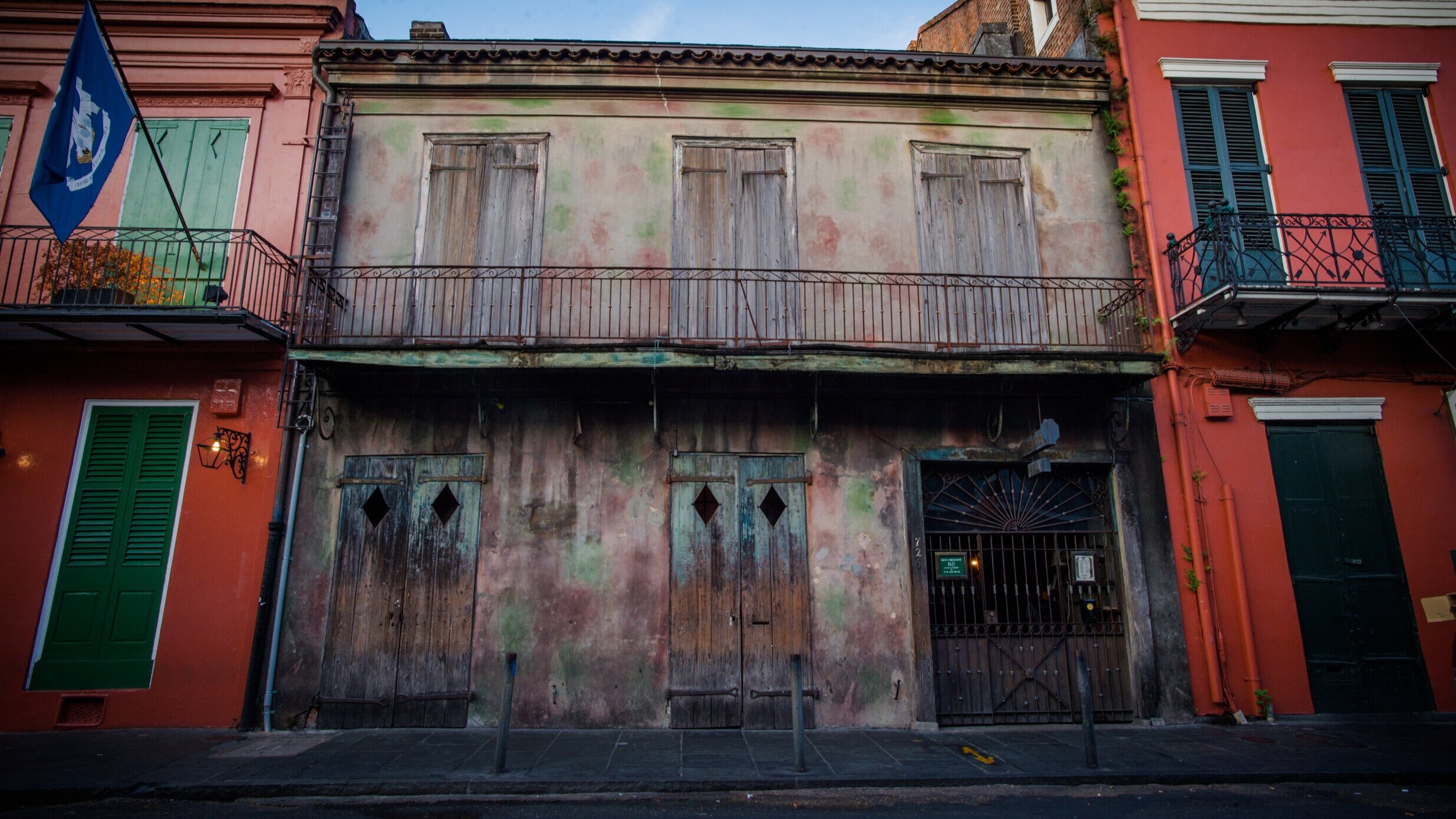
Preservation Hall
Preservation Hall in New Orleans stands as one of the most culturally significant music venues within the United States, established during the twentieth century as a dedicated space for the performance and preservation of traditional New Orleans jazz music. The venue's founding reflected a deliberate commitment to maintaining and celebrating the distinctive musical heritage that had developed within New Orleans communities and that had achieved widespread cultural influence extending far beyond the city's geographic boundaries. The building itself, constructed during an earlier historical period before its conversion to musical performance use, possesses architectural characteristics reflecting its historical context and geographic setting within the French Quarter district of New Orleans. The venue's relatively intimate spatial configuration, limited capacity, and distinctive acoustic properties create performance conditions that emphasize musical authenticity and direct artist-audience interaction. Preservation Hall's operational history spanning multiple decades has positioned it at the center of New Orleans's musical culture and its role as a premier destination for jazz musicians, music enthusiasts, and cultural tourists seeking authentic experiences of the city's distinctive musical traditions. The venue has hosted performances by legendary jazz musicians and successive generations of performers dedicated to perpetuating the traditional New Orleans jazz aesthetic and performance practices. The accumulation of musical performances, artist collaborations, and audience experiences within the venue's spaces has created an environment saturated with artistic expression, emotional intensity, and the profound human significance associated with cultural traditions serving as repositories of community identity and historical memory. The paranormal phenomena documented at Preservation Hall center upon the continued manifestation of spirits identified as former jazz musicians and performers whose lives and artistic legacies became intimately connected with the venue and its mission of musical preservation. Multiple witnesses, including contemporary performers, venue staff members, and audience members attending performances, have reported encountering apparitions or sensing the presence of deceased musicians whose careers and artistic accomplishments contributed substantially to Preservation Hall's historical significance. The manifestations suggest that the spirits of deceased performers remain engaged with the venue, maintaining active presence within the spaces where they conducted their artistic work during their lifetimes. Particular attention within documentation of Preservation Hall's paranormal phenomena has focused upon the reports of phantom trumpet sounds echoing through the venue's interior spaces during times when no living musicians are present to produce the musical sounds. Multiple independent witnesses have described hearing trumpet music emanating from within the hall or from specific interior spaces where musical performances typically occur, with the sounds demonstrating musical coherence and artistic quality that suggests purposeful musical expression. The trumpet sounds are frequently described as reproducing musical passages associated with specific performances or styles characteristic of traditional New Orleans jazz music, suggesting that deceased jazz musicians continue to engage in artistic expression and musical performance. Preservation Hall continues to operate as a premier jazz venue within contemporary New Orleans, maintaining its commitment to traditional music performance and cultural preservation while simultaneously functioning as a location of documented paranormal significance. The venue has achieved recognition within paranormal research communities interested in examining how locations deeply associated with artistic expression, cultural significance, and human creative endeavor develop persistent paranormal phenomena. Visitors to Preservation Hall continue to report experiences suggesting the presence of deceased musicians and artistic spirits, with some observers describing sensations of overwhelming emotion or heightened aesthetic appreciation during performances. The phantom trumpet sounds stand as compelling testimonies to the enduring power of artistic passion and creative dedication.
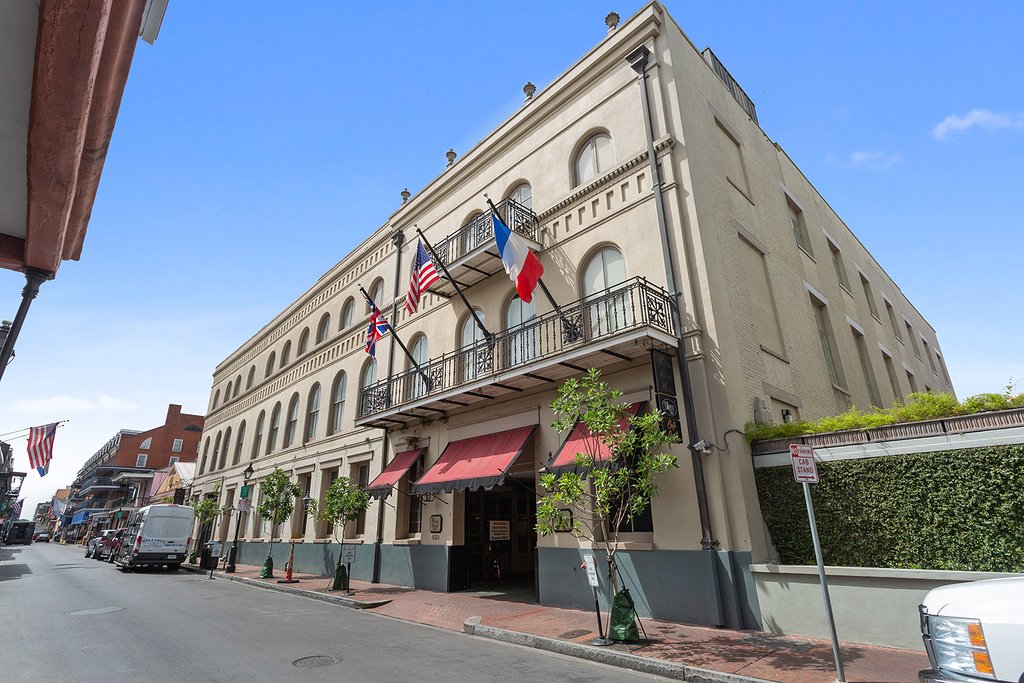
Prince Conti Hotel
At 830 Conti Street in the French Quarter of New Orleans, the Prince Conti Hotel occupies a building dating to the early 1900s, sitting on a block that has cycled through nearly every identity the Quarter has to offer—residence, commerce, vice, hospitality, and, if the accounts are to be believed, something that refuses to vacate regardless of what the current management has planned. The hotel is a small property by New Orleans standards, with just over fifty rooms tucked into a historic townhouse structure steps from Bourbon Street. It is operated by the Valentino family, who have run hotels in the French Quarter for over sixty years. The ground floor houses the Bombay Club, an upscale bar known for its martini list, Creole cuisine, and a resident spirit the staff has been dealing with for decades. Conti Street is named for the Princess Conti—originally the name given to what is now Bourbon Street before an early colonial renaming shuffled the designations. The street runs deep into French Quarter history. At 1026 Conti, just two blocks away, the infamous Norma Wallace operated the last major brothel in New Orleans from the late 1920s through the mid-1960s, entertaining governors, gangsters, and celebrities in a parlor house that ran nearly four decades before District Attorney Jim Garrison shut it down. Wallace's story ended in 1974 when she shot herself after learning of her husband's infidelity. Her building, an 1830s townhouse, is now condominiums—and reportedly still haunted. Farther up the block, the site of what is now the Williams Research Center once housed the Rising Sun Hotel in the 1820s, a property whose archaeological remains have yielded artifacts suggestive of early commercial sex work and whose name may have inspired one of the most famous folk songs in the English language. Conti Street has never been quiet. The Prince Conti Hotel's primary haunting centers on a figure the staff has named Sophie. According to paranormal researchers, Sophie is believed to be the spirit of a madam who operated on the premises before the building became a hotel. Her identity has never been established, but staff members have encountered her in the kitchen, the bar, and at Booth 3 of the Bombay Club. She is described as a presence rather than a full apparition—felt more often than seen, though some accounts describe a spectral woman visible in the bar during quiet hours. Guest accounts extend well beyond Sophie. Visitors on the upper floors—particularly the third floor—report a striking range of experiences. Multiple guests describe being nudged or physically shaken while asleep, only to find the room empty. One guest reported their mattress bouncing as though someone had sat down hard at six in the morning. Another described the full weight of a body pressing down on them during the night. Showers have turned on by themselves. Doors securely locked have been found standing wide open. A concierge reportedly confirmed that doors had been known to fly open on their own, accompanied on at least one occasion by a visible apparition. Objects have fallen from surfaces without explanation. Curtains have swung open untouched. In Room 361, a couple watching television reported their shower turning on for several seconds, followed by a bag of chips falling off the nightstand—and in the morning, a plugged-in diffuser was found unplugged from the wall. What makes these accounts notable is not their dramatic quality—by New Orleans haunted hotel standards, they are restrained—but their consistency across unrelated guests over many years, and the physical nature of the interactions. The nudging, the pressure, the bed-shaking describe contact, not atmosphere. Skeptics will note that old French Quarter buildings settle, plumbing acts unpredictably, and doors in century-old structures don't always stay shut. New Orleans humidity warps wood and metal alike. Guests arriving after a night on Bourbon Street are not always reliable witnesses. But the Prince Conti's accounts carry a specificity—particular rooms, particular times, particular physical sensations—that environmental explanations don't fully cover. Today the Prince Conti Hotel continues to operate at 830 Conti Street, offering the Bombay Club downstairs, Cafe Conti in the mornings, and a location at the center of one of the most historically layered streets in the most historically layered neighborhood in America. Sophie, if that is her name, appears to have no intention of checking out. And on the third floor, something still seems to think the beds could use one more occupant.
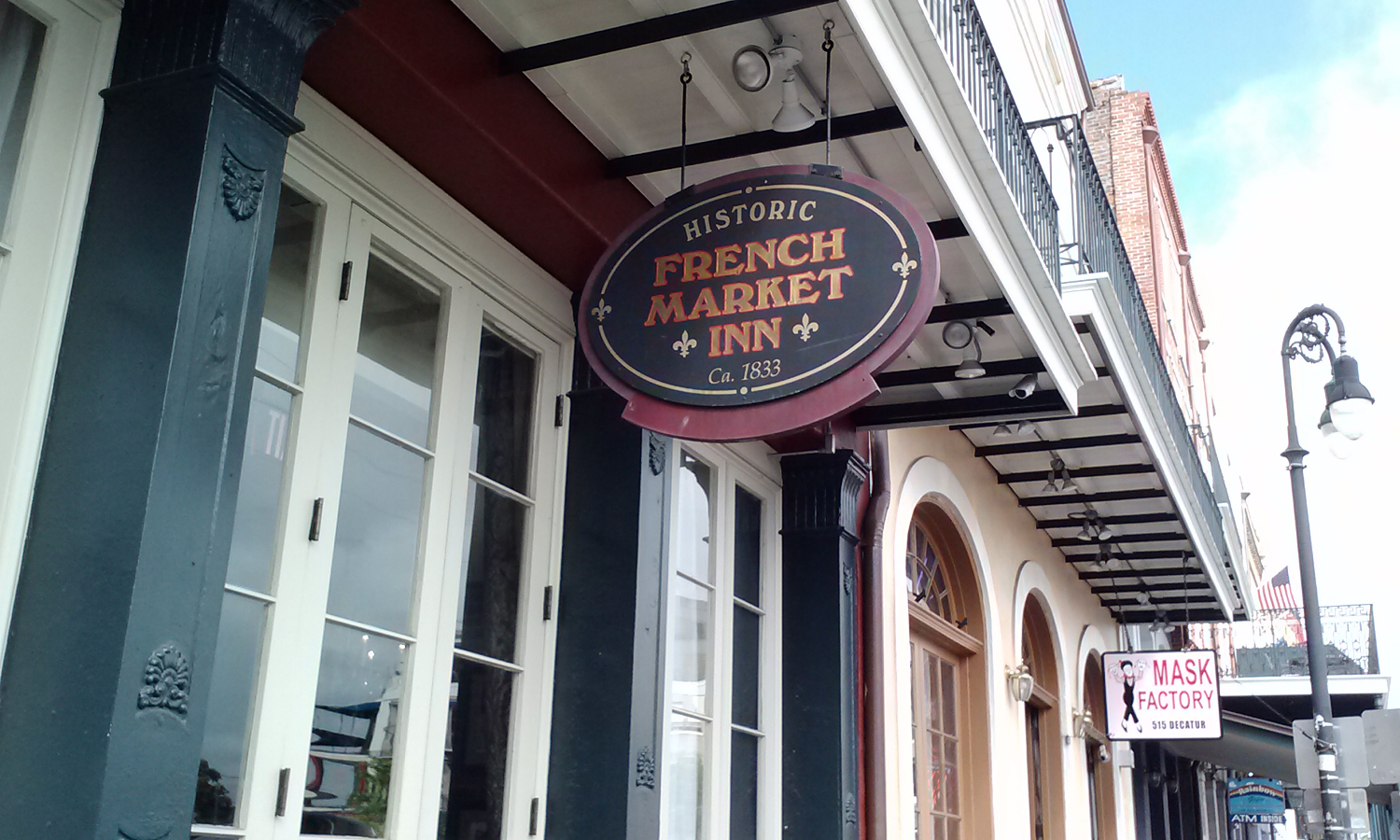
French Market Inn
The French Market Inn sits at 509 Decatur Street in the heart of the French Quarter, a few steps from Jackson Square and within earshot of the Mississippi River. Its antique brick façade opens onto a lobby of period paintings, chandeliers, and marble, and a stone-paved courtyard shaded by greenery—the kind of place that looks exactly like what visitors expect from historic New Orleans. What most of them do not expect is what has been reported inside its rooms for nearly two centuries. The property dates to 1722, when the original deed was issued to a baker named Dreux, whose family operated a bakery on the site throughout the eighteenth century, using a pulley system to hoist goods between floors. The building was later acquired by Baron Joseph Xavier de Pontalba, husband of the formidable Baroness Micaela Almonester de Pontalba, whose business empire still marks the French Quarter landscape in the form of the iconic Pontalba Buildings flanking Jackson Square. By the 1830s, the property had been converted into an inn, and it has operated as one in various forms ever since. The current French Market Inn, run by the Valentino family for over sixty years, maintains more than a hundred guest rooms, many still showcasing the original exposed beams and brick walls of the centuries-old structure. The hauntings were first recorded in 1832, shortly after the building began receiving guests. Visitors reported misty shapes entering their rooms after dark and loud metallic clanging echoing through the halls—sounds consistent with the old pulley system from the Dreux bakery era, operating in a building where no such equipment had functioned for decades. Those two phenomena—shadow figures and phantom mechanical sounds—have persisted without interruption for almost two hundred years. But the claim that has defined the French Market Inn's paranormal reputation is far more visceral. Guests have reported waking in the night to find their pillowcases, sheets, and sometimes their own skin marked with bloody handprints. The accounts are not limited to a single era or a handful of visitors. They span decades and continue to the present day, with guests who had no prior knowledge of the inn's reputation describing nearly identical experiences. One guest recounted waking drenched in what appeared to be blood, covering both occupants of the bed and the headboard, with neither person bearing any wound. The prevailing legend attributes the blood to the spirit of a prostitute who was murdered by a client on the property—a cry for help that manifests in the most startling way possible. No historical record has confirmed the specific murder, but the reports have proven remarkably resistant to debunking by their sheer volume and consistency. Beyond the handprints, guests describe beds shaking violently in the middle of the night with no seismic explanation, lamps clicking on and off in pitch-dark interior rooms, showers activating on their own, cold spots appearing without cause in the humid New Orleans air, shadow figures passing through walls, and the unmistakable sensation of being watched or physically touched. Room 218 has drawn particular attention from investigators. One paranormal researcher who stayed there reported being kept awake all night by unseen presences and an alarm clock that triggered repeatedly without being set. A guest on the third floor described waking to find her pillow being tugged beneath her head, and her daughter woke to a black figure standing between her bed and the windows. When they reported the incident to the front desk, the night clerk asked which room, then said simply that they did not get many reports from that floor. The French Market Inn does not hide from its reputation—the hotel's own website acknowledges the hauntings as part of its history. It remains one of the most popular and consistently booked properties in the French Quarter, operated with the warmth and professionalism the Valentino family is known for. The courtyard is still beautiful. The rooms are still charming. And the walls are still the same centuries-old brick that has absorbed whatever it is that keeps making itself known after dark.

Hotel Villa Convento
Standing on Ursulines Avenue in the lower French Quarter, just steps from the Mississippi River and within sight of the Old Ursuline Convent, the Hotel Villa Convento occupies a Creole townhouse that has been absorbing the weight of New Orleans history since the 1830s. The land itself carries an even older provenance. It was originally part of the holdings of the Ursuline nuns, the French Catholic order that arrived in Louisiana during the early colonial period and became one of the most important institutions in the young settlement. In 1805, the nuns partitioned off portions of their property as the growing city pressed in around them, and the lot at what is now 616 Ursulines Avenue passed into private hands. By 1833, the parcel had been purchased by a Frenchman named Jean Baptiste Poeyfarre, who commissioned the construction of the three-story Creole townhouse that remains standing today. Poeyfarre died roughly a decade later, and his widow sold the building to Octave Voorheis, who held the property until the economic collapse that followed the Civil War forced him to let it go around 1872. It is during the difficult years after the war that the building's most enduring and controversial legend takes shape. New Orleans, once one of the wealthiest and most cosmopolitan cities in America, had entered a steep decline. Vice industries flourished as the economy cratered, and the French Quarter became a district where brothels, gambling houses, and saloons operated with varying degrees of openness. Local tradition holds that 616 Ursulines became a brothel during this period, possibly operating as a so-called house of assignation—a place where illicit encounters could take place away from private residences. No definitive documentary proof has surfaced to confirm the building's use as a bordello, but available records suggest that something unsanctioned was happening at the address during these decades, and multiple sources have maintained the claim across generations. The legend has earned the Villa Convento a persistent association with the folk song "House of the Rising Sun," later made internationally famous by the Animals in 1964. Several locations in New Orleans have been put forward as the song's inspiration, and the true origin remains a matter of debate, but the Villa Convento has remained near the top of the list for decades. On March 10, 1902, Pasquale Taromina purchased the property, and his family occupied the building as a private residence until 1946. Following the Taromina family's departure, the structure was converted into a rooming house known as the Old Town Villa, offering inexpensive studio apartments to transient residents and students. Among the more notable tenants was a young Jimmy Buffett, who lived in apartment 305 during his early days in New Orleans and later returned with a video crew to film a documentary about that chapter of his life. The room retains his apartment number to this day and is informally known as the Jimmy Buffett room. In the early 1970s, the rooming house was converted into a hotel, and in September 1981, the Campo family—seventh-generation New Orleanians whose ancestors emigrated from the Canary Islands during the colonial period—purchased the property and have operated it as the Hotel Villa Convento ever since, preserving all twenty-five rooms with their original apartment numbers intact. The paranormal reputation of the Villa Convento is among the most consistently documented of any hotel in a city that has no shortage of haunted accommodations. The activity is not confined to a single room or floor but has been reported across the property, with certain rooms drawing particular attention. The most commonly identified entity is believed to be the ghost of a former madam from the building's rumored brothel era. Guests—overwhelmingly men—report hearing a woman's disembodied voice in Room 301, sometimes speaking in suggestive tones or addressing the guest by name. Male guests in multiple rooms have described rolling over in bed to see the apparition of a woman dressed in black standing at the bedside, gazing at them intently before vanishing. The figure reportedly appears visible only to the man, even when a partner is lying beside him. The connection to the brothel legend extends to another recurring phenomenon: unexplained knocking on guest room doors, which paranormal researchers and tour guides have linked to the old practice of madams making rounds to signal that a client's time was up. Room 302 has produced reports of full-bodied apparitions materializing and disappearing at all hours, including from a longtime annual guest who saw a figure form in the room and never returned to stay there again. Room 305, the Buffett room, generates reports of personal belongings being moved and an oppressive sense of being watched. At least one hotel staff member has described entering 305 to check on a hairdryer and being overcome by a sudden, intense feeling of being observed, strong enough to send her back downstairs immediately. Room 209 carries a grimmer association—local accounts hold that a man took his own life in the room, and guests who stay there have reported hearing voices and finding their possessions displaced. Visitors have also reported the sound of a child's laughter echoing through the building, and some guests have captured unexplained faces in photographs taken inside the hotel. Author James Caskey, who stayed at the Villa Convento while researching his book on New Orleans hauntings, has described it as possibly the most haunted hotel in the city. Paranormal tour groups regularly include the property on their routes, and independent investigators who have conducted overnight sessions at the hotel have reported capturing audio evidence and experiencing physical phenomena consistent with an active location. Today the Hotel Villa Convento operates as a small, family-run guest house with the quiet charm of a building that has never been stripped of its character. The courtyard offers chicory coffee and morning beignets. The wrought-iron balconies look out over Ursulines Avenue, where horse-drawn carriages still pass and the tops of ships on the river are visible in the distance. The Campo family embraces the building's history—its colonial origins, its possible life as a brothel, its tenure as a bohemian rooming house, and its reputation as one of the most paranormally active addresses in New Orleans. Whether the knocking at the door is a former madam making her rounds or just the old bones of an 1833 townhouse settling into another century, the Villa Convento offers the kind of stay where the line between history and haunting is never entirely clear.
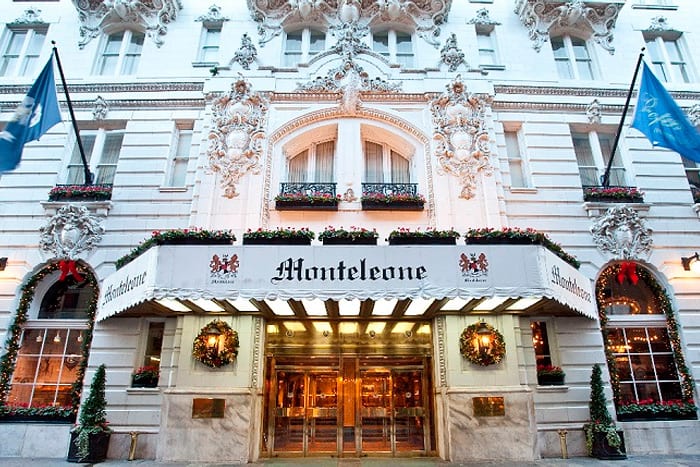
Hotel Monteleone
It has been said that the French Quarter begins in the lobby of the Hotel Monteleone. The claim is not merely geographic. Standing at the corner of Royal and Iberville streets since 1886, the Monteleone is the only high-rise building in the interior of the Quarter, a Beaux-Arts landmark that has anchored the cultural life of the neighborhood for well over a century. It is one of the last great family-owned hotels in America, and it is, by nearly every account, one of the most actively haunted buildings in New Orleans. The hotel's origins trace to Antonio Monteleone, a Sicilian nobleman who had operated a successful shoe factory before immigrating to New Orleans around 1880. Setting up a cobbler's shop on Royal Street, then the commercial and banking heart of the city, Monteleone prospered quickly enough to purchase a small sixty-four-room hotel on the corner of Royal and Iberville. He renamed it the Hotel Monteleone, and the property grew rapidly. A major expansion in 1903 added thirty rooms, and a sweeping 1908 renovation added three hundred more. Antonio died in 1913, and the hotel passed to his son Frank, who oversaw the addition of the Queen Anne Ballroom and two hundred more rooms in 1928—one year before the Depression. The Monteleone was one of the rare family-owned hotels to survive those lean years intact. In 1949, Frank introduced the hotel's most famous feature: the Carousel Piano Bar and Lounge, a twenty-five-seat revolving bar turning on two thousand steel rollers at a rate of one revolution every fifteen minutes. The original building was demolished and rebuilt in 1954, and a final expansion in 1964 added the upper floors, a Sky Terrace, rooftop pool, and the Presidential Suite. The hotel today holds 570 guest rooms across its towering frame. The Monteleone's literary associations alone would secure its place in American cultural history. Ernest Hemingway, William Faulkner, Tennessee Williams, Eudora Welty, and Truman Capote were all frequent guests. Hemingway referenced the hotel in his short story "Night Before Battle." Williams used it as a symbol in The Rose Tattoo. Capote famously claimed on The Tonight Show that he was born in the hotel—his mother lived there during her pregnancy but made it to the hospital in time. In 1999, the Friends of the Library Association designated the Monteleone an official literary landmark, one of only three hotels in the country to receive that distinction. In 1942, New Orleans author Innis Patterson Truman jumped to her death from the hotel's twelfth floor, an event documented in letters by the writer Lyle Saxon—one of the building's darker episodes and one that adds genuine tragedy to the property's layered past. The paranormal reputation of the Hotel Monteleone is extensive and has been the subject of formal investigation. In March 2003, the International Society for Paranormal Research conducted a multi-day investigation and reported making contact with more than a dozen earthbound entities. Among them were two former employees—a chef and a busboy or waiter—whom investigators linked to a recurring phenomenon involving the hotel restaurant's door, which opens and closes on its own despite being locked and operated by a push-button mechanism. The investigators concluded the two spirits were engaged in an ongoing disagreement about whether the door should remain open or shut. The most widely reported spirit is that of a toddler named Maurice Begere. According to the legend, Maurice's parents, Jacques and Josephine, were frequent guests in the late nineteenth century who would leave their young son with a nanny while they attended performances at the French Opera House on Bourbon Street. One evening, Maurice developed a high fever and died in his room on what is now the fourteenth floor. His grief-stricken mother returned to the hotel repeatedly, and eventually, the story holds, Maurice's spirit appeared before her, saying words to the effect of not to cry, that he was fine. Guests to this day report seeing a small boy wandering the fourteenth-floor hallway, sometimes standing at the foot of their bed, sometimes heard laughing. The fourteenth floor—which is actually the thirteenth, as the hotel skipped that number in its floor plan—has become the most requested floor among guests seeking a paranormal experience. Other reported entities include a man named William "Red" Wildemere, who died of natural causes in the hotel, a ghostly figure in nineteenth-century clothing believed by some to be Antonio Monteleone himself still watching over his creation, a phantom child who takes visitors' hands and then vanishes, and a spirit identified as "Solemn John," a Tennessee businessman said to have committed suicide after failed investments. Guests report shadows gliding through corridors, unexplained cold spots, elevators that stop on the fourteenth floor without being called, and the sounds of children playing in hallways where none are present. Today the Hotel Monteleone continues to operate under the fifth generation of the Monteleone family. The grandfather clock still chimes in the lobby. The Carousel Bar still turns. The doormen still stand at the entrance on Royal Street. And somewhere on the fourteenth floor, a small boy may still be looking for his parents—or simply making sure he is remembered.

Hotel de la Poste
Tucked along Chartres Street in the heart of New Orleans' French Quarter, the property at 316 Rue Chartres sits on ground that has been shaped and reshaped by nearly three centuries of the city's layered and often turbulent history. The land's earliest documented use dates to 1731, when it served as a garden tended by the Ursuline nuns, the order of Catholic sisters who were among the first European women to settle in Louisiana and who played a central role in the colony's early development. For well over a century, the site passed through various hands as the French Quarter grew from a colonial outpost into the commercial and cultural heart of a booming port city. By the 1860s, the block had taken on a more industrial character, with structures at 310 and 316 Chartres rebuilt in the three- and four-story style typical of the period. A clothing factory operated on-site during this era, producing the voluminous blouses and long skirts that defined the fashion of the day. Like much of the Quarter, the buildings witnessed the catastrophic yellow fever epidemics that swept through New Orleans repeatedly in the nineteenth century, killing tens of thousands and leaving entire neighborhoods steeped in grief. In 1904, fire swept through the block and damaged the factory at 310 Chartres. The following decades saw the area decline sharply. By the 1930s, this stretch of the Quarter had become a rough district of brothels, dive bars, and crowded tenement housing. The deterioration continued through the middle of the twentieth century, and in the 1960s the building at 316 was demolished entirely and replaced with a parking lot, leaving 310 as the sole surviving structure on the block. It was not until the 1970s that the site was revived as the Hotel de la Poste, a boutique French Quarter hotel whose name referenced the old street posts where riders once hitched their horses along Chartres. The hotel incorporated a collection of older buildings, each carrying its own history and architectural character, stitched together around a central courtyard. In 2000, the property was rebranded as the W New Orleans–French Quarter and underwent a nine-million-dollar renovation completed in 2012 that leaned into the city's jazz and voodoo aesthetic. The property changed hands again in 2024, emerging from another major renovation as the Hotel de la Poste–French Quarter, a Renaissance Hotel, with ninety-seven guest rooms, a restaurant called 3rd Block Depot Kitchen and Bar, and design elements inspired by bayou landscapes and Sazerac culture. The paranormal reputation of the property predates its modern hotel incarnations and is rooted in the layered uses of the buildings themselves. The site's connection to enslaved labor, common across the French Quarter, provides much of the framework for the haunting claims. In July of 1996, investigators from the International Society for Paranormal Research, a New Orleans–based group led by Larry Montz and Daena Smoller, conducted a formal investigation of the hotel. On the second floor, the team reported encountering the spirit of a woman in her thirties, described as Caucasian, who they believed was responsible for recurring disturbances in that section of the building. In another area of the property—one that may have served as slave quarters in the antebellum period—the investigators identified the spirits of three enslaved children. Near the hotel's parking garage, which is believed to occupy the site of old stables, the team reported the presence of a middle-aged enslaved man they identified as Gerald, seemingly tied to the labor he performed there in life. These findings were later documented in the book ISPR Investigates the Ghosts of New Orleans, published in 2000. Beyond the formal investigation, the hotel carries the ambient weight of its French Quarter surroundings—a neighborhood built on ground saturated with the consequences of slavery, epidemic disease, fire, and colonial violence. Chartres Street alone is home to some of the most consistently reported hauntings in the city, from the Cabildo to the Old Ursuline Convent to the Pharmacy Museum just blocks away. The fact that the buildings at 316 Chartres are an assemblage of older structures, each with distinct histories and former uses, creates an environment where multiple eras of occupation overlap within a single property. Guests and staff over the years have reported the kinds of experiences common to actively haunted French Quarter buildings—unexplained sounds, cold spots in otherwise warm corridors, and the unsettling sense of being watched in rooms that should be empty. Today the property operates as a four-star Renaissance hotel, fully renovated and outfitted with modern amenities. The courtyard remains, lush and quiet at the center of the building. The guest rooms are decorated with cypress murals and jewel-toned accents meant to evoke the Mississippi Delta. Nothing about the polished interior announces what investigators and guests have reported over the decades. But the bones of the place are old, and the ground beneath it is older still. In a city where the past has a habit of refusing to stay buried, 316 Chartres Street carries a history dense enough to leave marks that no renovation can quite reach.
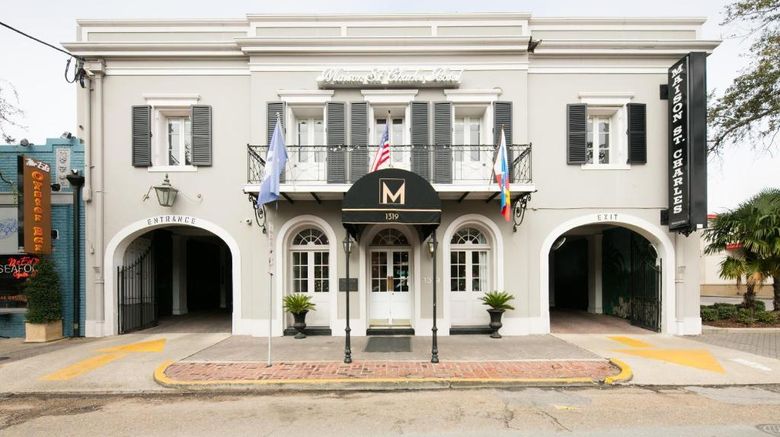
Maison St. Charles
Maison St. Charles sits at 1319 St. Charles Avenue in the Lower Garden District of New Orleans, a boutique hotel assembled from five antebellum townhouses arranged around brick courtyards and wrought-iron patios, directly on the route of the St. Charles streetcar line. The property operates today as a 128-room hotel with exposed brick walls, crystal chandeliers, and murals by local artist Robert Dafford depicting scenes of southern Louisiana life. It is charming, accessible, and laced with the particular brand of theatrical history that New Orleans produces better than any other American city. Because long before there was a hotel at 1319 St. Charles Avenue, there was—according to one of the city's most enduring legends—a mansion built by the Devil himself. The story, recorded in Jeanne deLavigne's 1946 collection of New Orleans folklore and retold in numerous subsequent accounts, holds that sometime in the 1820s, the Devil took up residence in New Orleans, drawn by the city's decadence and its hospitality toward the damned. Around 1840, he took a woman named Madeleine Frenau as his mistress and erected a mansion for her at the 1300 block of St. Charles Avenue. Some versions claim the house appeared overnight; others allow seven days. The structure was said to be architecturally disorienting, with rooms stacked on separate floors connected by stairways that seemed to lead only downward. The Devil entered not through the front door but through the upper gable, and at dusk could be seen peering down at the avenue, horns silhouetted against the fading light. The household was reportedly staffed by small red demons who cooked, cleaned, and dressed Madeleine in jewels. Madeleine, however, grew bored with infernal luxury and began an affair with a Creole gentleman named Alcide Cancienne. The Devil discovered the betrayal and offered Alcide a sum of money to leave town, on the condition the couple adopt the name Monsieur and Madame L. Alcide, having already tired of the affair, told Madeleine over dinner that he intended to leave. When she realized he meant to go without her, she flew into a rage and strangled him with a dinner napkin, severing a blood vessel in his neck and drenching herself and the table in blood. The Devil returned at that moment, gathered both Madeleine and her dead lover, and devoured them on an upstairs balcony. He left town the next day. For decades afterward, occupants of the mansion reported that each evening the murder scene replayed itself—a spectral dining table appearing at sunset, the figures of Madeleine and Alcide reenacting the fatal dinner, followed by the bloodied ghost of Madeleine moving from room to room wiping her hands on the linens. In 1878, Laure Beauregard, daughter of Confederate General P.G.T. Beauregard, moved into the mansion with her husband Charles Larendon. Rather than flee, the couple accepted the nightly apparitions as grim housemates. Charles documented the events for two decades, continuing even after Laure died in childbirth on July 4, 1884. He finally left around 1909. In the years that followed, passersby reported seeing the face of the Devil imprinted high on the crumbling facade. The mansion was torn down in the summer of 1930. The legend is almost certainly fiction—a gothic Creole folktale built from the same cultural soil that produced the stories of the LaLaurie Mansion, the Sultan's Palace, and Marie Laveau. No historical records confirm the existence of Madeleine Frenau or Alcide Cancienne. But the story's persistence says something real about the site and the city's relationship with its own mythology. New Orleans does not distinguish sharply between history and legend; both are treated as forms of truth, and both leave residue. The modern hotel at 1319 St. Charles Avenue carries its own set of claims, separate from the Devil's Mansion folklore. Room 126, located in the older portion of the property, has attracted the most attention. According to local accounts, a young woman was murdered in that room on her wedding day—stabbed repeatedly and found still in her blood-soaked dress after she failed to appear at the church. Guests and staff have reported seeing a woman in white or a hazy luminous figure looking out the window of Room 126. The room is said to go inexplicably cold in summer with the air conditioning off. Electronics behave erratically—televisions turning on after being unplugged, remote controls hurling across the room. Brightly colored socks have a documented tendency to vanish from guest luggage and reappear elsewhere on the property days later. Other guests have reported footsteps outside their doors in otherwise empty hallways, unexplained breezes in sealed rooms, sounds of arguments from unoccupied adjacent rooms, piano music at four in the morning, and the sensation of something pressing down on them while they sleep. A paranormal group reportedly captured EVP recordings on the property. Today, Maison St. Charles operates as a gated courtyard hotel on one of America's most storied avenues, with the streetcar rattling past the front entrance and the French Quarter a short ride away. It is a working hotel, not a haunted attraction, and the management does not trade on the property's darker reputation. But the site at 1319 St. Charles Avenue has been generating stories for nearly two centuries now—stories of appetite, betrayal, and things that refuse to leave when the lights go out. In New Orleans, that is less an anomaly than a qualification for residency.
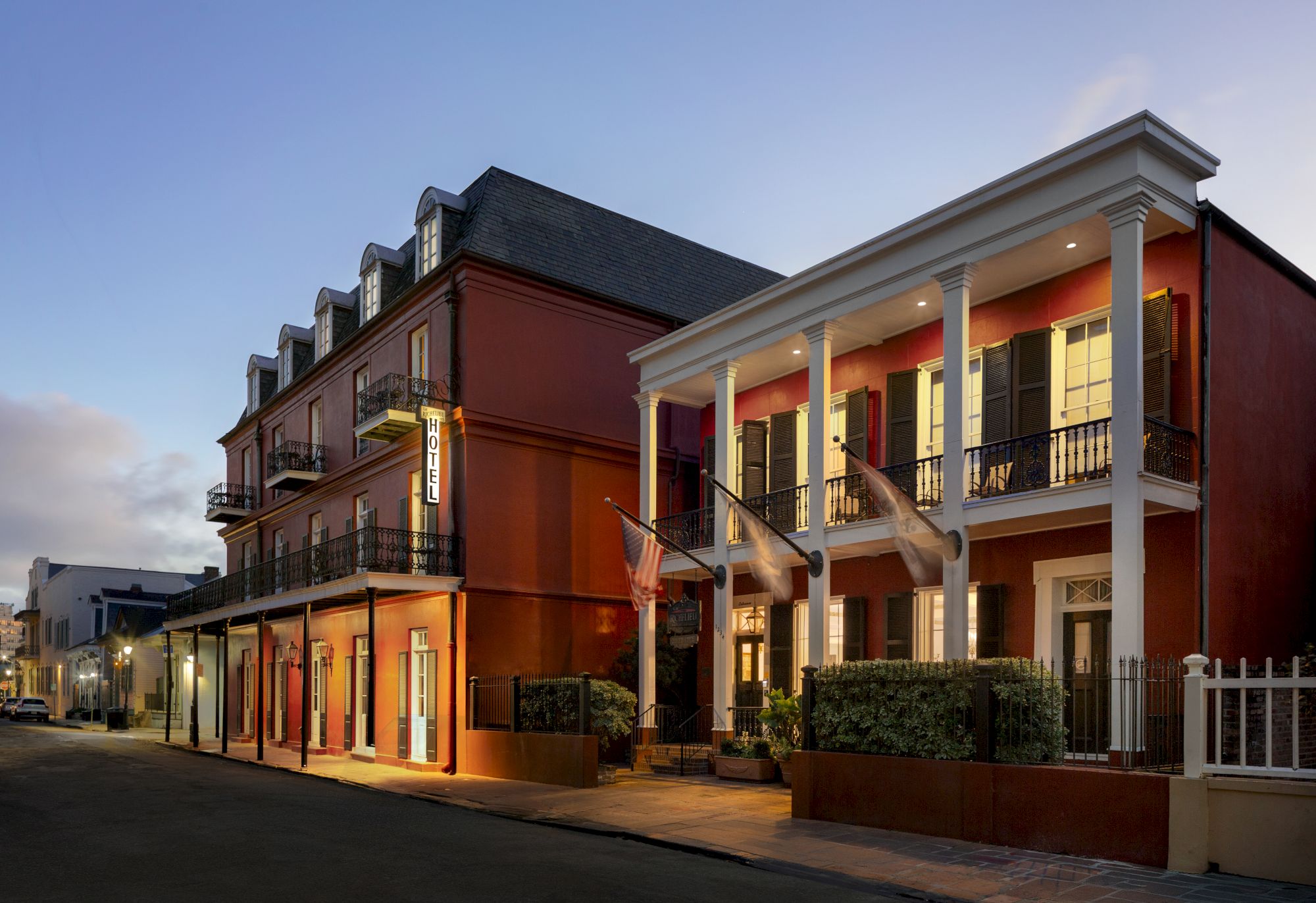
Le Richelieu Hotel
The land at 1234 Chartres Street sits at the quieter, residential end of the French Quarter, a few blocks downriver from Jackson Square where the tourist energy thins and the neighborhood begins to feel like a place where people actually live. It is a corner of the Vieux Carré that has been inhabited, built upon, burned, rebuilt, and reinvented so many times that the ground itself carries the compressed weight of more than two centuries of New Orleans history. Before any structure stood here, the site bore witness to one of the darker chapters of the city's colonial past. During the late eighteenth century, when control of Louisiana passed violently between French and Spanish hands, public executions were carried out across New Orleans as a tool of colonial authority. The land now occupied by Le Richelieu Hotel is reputed to have served as one such execution ground. According to local historians, five French patriots were put to death here during the period of Spanish rule, and a separate account holds that a group of mutinous Spanish soldiers met the same fate on the same soil. The precise details have been softened by time, but the association between the property and state-sanctioned killing has never been forgotten. By the mid-nineteenth century, the block had been developed with a row of townhouses in the Vieux Carré style, with an initial structure dating to around 1845. A second building was added or substantially expanded in 1902, and the complex of structures at the corner of Chartres and Barracks streets cycled through a succession of uses that mirrors the restless reinvention of the French Quarter itself—private residences, apartments, a hospital, a school, a furniture factory. Perhaps most memorably, the property housed a macaroni factory operated by Jacob Cusimano, a Sicilian immigrant who became a prominent figure in the city's turn-of-the-century Italian community. Cusimano's factory produced pasta on a scale significant enough to ship across the country during the First World War, and it remained in operation until 1939. The factory burned in 1916 but was rebuilt, and the solid burgundy wing where hotel guests now sleep was originally part of that industrial operation. In 1969, the property was purchased by Frank Rochefort, who converted the aging complex into the roughly ninety-room Le Richelieu Hotel and took up residence inside it. Under Rochefort's long stewardship, the hotel became a French Quarter institution—a quieter, more personal alternative to the grand hotels on Canal and Royal streets. Paul McCartney stayed for two months in the 1970s while recording with Wings, and the hotel named its presidential suite in his honor. Over the years the guest book accumulated names ranging from Carlos Marcello to Patti LaBelle to Billy Joel, drawn by the combination of location, discretion, and a staff whose tenure was measured in decades. Paranormal claims at Le Richelieu are rooted primarily in the site's pre-hotel history, and the most persistent accounts center on the execution ground that preceded everything else. Staff and guests have reported seeing apparitions of men in old Spanish military uniforms moving through the hotel's courtyard and near the pool and bar area. The figures are described as appearing suddenly and without apparent awareness of the living—walking their routes as though replaying a moment rather than inhabiting the present. Investigators who have studied the claims have suggested these may represent residual energy rather than interactive spirits, impressions left in the fabric of the location by events of extreme violence. But the soldiers are not the only presences reported. A spirit known as Ellen, believed to be a former hotel employee, is said to interact with guests in a more purposeful manner—adjusting bed sheets, tidying rooms, and rearranging personal belongings before vanishing when noticed. One guest in room 404 described televisions switching on repeatedly in the middle of the night and motion sensors activating in empty bathrooms. Another reported waking to the sound of piano music at two-thirty in the morning; the front desk confirmed there was no piano on the premises. A visitor in 2016 described seeing a small Creole woman in period clothing standing in the foyer, gazing up at a painting of a man in a rowboat before disappearing entirely. A guest in room 119 returned from the pool to find small handprints covering the lower portion of a floor-to-ceiling mirror that had been immaculate when they left. One account describes being pinned to the bed by a dark grey apparition that pressed weight onto the guest's legs and chest, returning a second time within minutes. Le Richelieu continues to operate as a boutique hotel in the French Quarter, now part of the J Collection of New Orleans properties. The courtyard pool remains, the wrought-iron balconies still overlook Chartres Street, and the Terrace Café still serves guests beneath the same canopy where Spanish soldiers are said to walk. The building's layered history—colonial execution ground, Creole townhouses, immigrant factory, celebrity hideaway—gives it a density of memory that few French Quarter properties can match, and the reports that accumulate in its guest logs suggest that not all of that memory has consented to stay in the past.

Cornstalk Hotel
Standing on the 900 block of Royal Street in the French Quarter, the Cornstalk Hotel is among the most photographed buildings in New Orleans—though not for its ghosts. What catches the eye first is the cast-iron fence that gives the hotel its name: an elaborate design of cornstalks rising from a base of pumpkins, with vines, morning glories, and a butterfly adorning the front gate. It is a whimsical feature utterly out of place in the subtropical landscape of southern Louisiana, and it has a story attached to it that has become inseparable from the building itself. The land at 915 Royal Street has been occupied since at least 1730, though all early structures were destroyed during the Great Fires of New Orleans in the 1790s, which leveled vast stretches of the French Quarter. The current brick building was constructed around 1816 for Francois Xavier Martin, a towering figure in Louisiana legal history who served as the state's first attorney general and later as Chief Justice of the Louisiana Supreme Court. Martin presided over some of the most consequential cases of antebellum Louisiana, including the landmark Miller v. Belmonti, which addressed the freedom of a woman unjustly held in slavery. He sold the Royal Street property around 1826 and died in 1846. By 1834, the home had passed to Dr. Joseph Secondo Biamenti, and it was during the Biamenti era that the famous fence appeared. According to the most commonly told version of the story, Dr. Biamenti's wife, who had come from Iowa, grew desperately homesick for the cornfields and open landscapes of her native Midwest. Unable to coax corn from the swampy New Orleans soil, the doctor commissioned the ornamental iron fence from the Philadelphia firm of Wood and Perot, surrounding the property with a permanent reminder of home. Whether the gesture succeeded in curing her homesickness is not recorded. The building passed through numerous owners in the decades that followed. It is claimed that Harriet Beecher Stowe stayed at the residence for a time and witnessed the nearby slave markets firsthand—experiences that may have influenced her writing of Uncle Tom's Cabin. By the twentieth century, the property had been converted into a small hotel, and its guest list grew to include Elvis Presley, who lived at the Cornstalk while filming King Creole in 1958, as well as Bill and Hillary Clinton, Richard Burton, Elizabeth Taylor, and Paul Newman. The hotel's fourteen rooms, each furnished with antiques, canopy beds, stained glass, chandeliers, and rosette scrollwork reminiscent of Louisiana plantation craftsmanship, made it a destination for visitors seeking an intimate alternative to the Quarter's larger establishments. The Cornstalk Hotel was placed on the National Register of Historic Places. The paranormal claims at the Cornstalk are quieter and more elusive than those at many of New Orleans' more aggressively haunted hotels, but they have accumulated steadily over decades. The most frequently reported figure is a woman seen on the upper floors, typically described as wearing a dark or black dress with her hair pulled into a bun. Former hotel manager Ryan Knight, who spoke publicly about the hauntings, described guests reporting this wispy figure moving along the back staircase and hallways, sometimes pausing near a window where observers from across the street have watched her stand motionless before slowly vanishing. Knight himself experienced spectral whispers in empty rooms late at night. The figure does not appear to interact with the living and may represent a residual impression rather than an active presence, though her identity has never been established. Guests have also reported the sounds and sights of ghostly children playing on the hotel's front lawn and running through hallways, though no documented deaths of children at the property have been found. Some visitors have discovered photographs on their cameras taken during the night—images they did not take and could not explain, as their rooms remained locked from the inside. Dresser drawers have been found pulled open or placed on the floor in rooms where guests insist they never touched the furniture. Cold spots have been noted in certain bedrooms. A grandfather clock in the hotel is said to behave erratically, keeping its own time independent of any mechanical explanation. The overall character of the haunting is described by staff and guests alike as nonaggressive—curious rather than threatening, as if whatever lingers in the building is simply unwilling to leave. The Cornstalk Hotel closed in 2020 during the COVID-19 pandemic and has not reopened as of this writing, though the property was listed for sale and management arrangements have been announced. The iconic fence still stands along Royal Street, and ghost tour groups still stop on the sidewalk to point up at the windows. Whether the woman with the bun is still looking back is something only the next guests to walk through the door will be able to say.

626 Pirate’s Alley
In the narrow passage that runs between St. Louis Cathedral and the Cabildo in the heart of the French Quarter, a red Creole townhouse at 626 Pirate's Alley stands shoulder to shoulder with the most storied ground in New Orleans. The alley itself measures only six hundred feet long and sixteen feet wide, but within that slender corridor lies a concentration of history—piracy, imprisonment, epidemic death, literary genius, and persistent spiritual activity—that rivals any block in the city. The building at 626, a private residence that overlooks St. Anthony's Garden from its upper-floor windows, carries its own quiet haunting, distinct from the louder legends of the alley around it. Pirate's Alley was originally known as Orleans Alley South, an extension of Orleans Street that provided a throughway between what is now Jackson Square and Royal Street. The passage was paved with cobblestones by 1831 and officially renamed in 1964, though locals had called it by its pirate-associated name for generations. The alley's reputation traces to the early nineteenth century, when New Orleans was home to the notorious privateers Jean and Pierre Lafitte. Legend holds that the Lafitte brothers conducted business in the alley and that Jean Lafitte negotiated his brother Pierre's release from the nearby jail—the Calabozo, a Spanish colonial prison that once stood along this stretch—in exchange for aiding General Andrew Jackson in the Battle of New Orleans in 1815. Historians have questioned whether Lafitte actually frequented the alley given its proximity to both the Cathedral and the seat of colonial government, but the association has endured in local lore for two centuries. The old prison, demolished in 1837, occupied roughly the footprint of the buildings that now line the alley, and first-hand accounts from prisoners documented hauntings within its walls that predated its demolition. The building at 626 Pirate's Alley is a Creole-style structure that dates to the period after the prison's removal, when the land was sold and developed for residential use. Its neighbor at 624, the yellow building immediately adjacent, is the far more famous Faulkner House—where William Faulkner lived in 1925 and wrote his first novel, Soldiers' Pay, and which now operates as Faulkner House Books, headquarters of the Pirate's Alley Faulkner Society. Faulkner's ghost has been widely reported inside the bookstore, seen sitting at the writing desk that remains in the shop, accompanied by the ghostly scent of pipe smoke drifting through the rooms. But 626, the red mansion next door, carries its own distinct haunting that has been documented separately. According to Jeff Dwyer's Ghost Hunter's Guide to New Orleans, the building's paranormal history is tied to one of the yellow fever epidemics that devastated New Orleans during the 1850s. During one of these outbreaks, a young girl living in the house contracted the disease. To aid in her recuperation, she was placed on a chaise lounge in front of one of the large third-floor windows overlooking St. Anthony's Garden. Whether she recovered or died in that position is not clearly recorded, but the aftermath has been reported consistently enough to draw the attention of both casual visitors and paranormal researchers. Ghost hunters standing in Pere Antoine Alley across the garden and looking up at the third- and fourth-story windows of the red mansion have reported seeing the face of a small girl in a white gown pressed against the glass, gazing out over the garden below. Dwyer himself was granted a tour of the home's interior and reported sensing a deep and pervasive sadness near one of the upper windows—the kind of emotional residue that paranormal researchers describe as a place-memory, an imprint left by suffering intense enough to mark the space permanently. The broader alley contributes its own layer of spectral activity. Visitors and tour groups walking through Pirate's Alley after dark have reported encountering figures in pirate and sailor attire who vanish when approached or when observers turn for a second look. The spirits of prisoners from the old Calabozo, Union soldiers who were held in the nearby arsenal during the Civil War, and an unidentified pirate whose legend has attached to the alley without a confirmed name have all been claimed by various sources over the years. Artists who display their work along the iron fence of St. Anthony's Garden during the day give way after dark to a different kind of presence—one that tour guides describe with the practiced ease of people who walk this passage several times a night and have learned to expect company. The building at 626 Pirate's Alley remains a private residence. It is not open to tours, and photography of the interior is not encouraged. The girl in the window, if she is still there, looks out over the same garden she watched from her sickbed more than a century and a half ago. The Cathedral rises on one side. The Cabildo stands on the other. And the cobblestones of the alley below carry the footsteps of the living and, if the accounts hold any weight, of those who walked this ground long before the stones were laid.

Ernie K-Doe’s Mother-In-Law Lounge
North Claiborne Avenue runs through the Tremé, the oldest African American neighborhood in the United States, in a part of New Orleans where the streets are wide and the buildings low and the culture so densely layered that even a single block can carry several lifetimes of music, grief, ceremony, and celebration. The Tremé sits adjacent to the French Quarter but belongs to a different world — the world of second lines and Mardi Gras Indians and jazz funerals, of neighborhood institutions that are as much community anchors as commercial enterprises. It was into this world that Ernest Kador Jr. was born on February 22, 1933, the son of a Baptist preacher, and it was from this world that he drew everything that made him singular. His stage name, Ernie K-Doe — phonetically simplified by the Minit record label in the same spirit that gave the label itself its simplified spelling — became one of the defining signatures of New Orleans rhythm and blues. K-Doe's career followed the arc common to mid-century R&B artists: a powerful early run, a long middle stretch of diminishing commercial returns, and then either irrelevance or reinvention. He started in gospel, moved to secular R&B, recorded with the Blue Diamonds in 1954, and spent the late 1950s building a regional reputation on a string of sharp, energetic singles. Then in 1961, Allen Toussaint wrote him a song. "Mother-in-Law" — a comic complaint about the domestic interloper, set against a rolling New Orleans groove — went to number one on both the Billboard pop chart and the R&B chart simultaneously. It was K-Doe's first top-forty pop hit and his last. He never had another at that level, but in New Orleans, which measures musical legacy by something other than chart position, it didn't matter. He was in the fabric of the city. The middle decades were hard. K-Doe drank heavily, developed a reputation for unreliability among club owners who didn't want to book him, and by the mid-1980s had effectively bottomed out — doing explosive, often unhinged radio programs on community station WWOZ that built him an international cult following while his personal circumstances deteriorated toward homelessness. The shows were something: K-Doe announcing records, proclaiming his own greatness, delivering improvisational monologues that became collector's items circulated on cassette tapes mailed around the world before the internet existed. WWOZ eventually canceled the show. K-Doe seemed, as his biographer would later put it, destined to die in the gutter. What saved him was Antoinette Dorsey Fox, an old friend who reconnected with him, helped him substantially reduce his drinking, and eventually became both his business partner and his wife. In 1994 — some accounts say 1995, the lounge opened formally in 1995 — Antoinette opened the Mother-in-Law Lounge at 1500 North Claiborne Avenue, at the downtown river corner of Claiborne and Columbus Street in the 7th Ward, specifically so that K-Doe would always have a venue. He had acquired a deserved reputation for unreliability, and no established club could count on him; Antoinette built him a room of his own. K-Doe performed there every Monday night, wearing capes and crowns, having declared himself the Emperor of the Universe in 1998 during a resurgence that saw him perform for sixty thousand people at the Washington Monument and ride as king of the Krewe du Vieux Mardi Gras parade in 2001. The lounge became, in short order, something unusual — a funky-but-chic destination drawing a vastly diverse clientele who all got along, the building's exterior covered in murals depicting K-Doe and collaborators including Allen Toussaint, the interior a dense shrine of memorabilia, photographs, and posters. Every inch was dedicated to him and to the music he embodied. K-Doe died on July 5, 2001, of kidney and liver failure following years of alcoholism. His death produced one of the great New Orleans jazz funerals of the modern era — he lay in state at Gallier Hall, an honor reserved for the city's most notable citizens, and the procession wound from there to Saint Louis Cemetery Number 2, where the Duval family donated space in their 200-year-old family tomb. He was interred alongside his second mother-in-law, with whom he had been exceptionally close, and his best friend, the musician Earl King. After the burial, Antoinette commissioned a life-size mannequin of Ernie, dressed in his actual suits and jewelry, given weekly manicures, sometimes placed outside the lounge with a hidden transmitter playing looped K-Doe recordings for passersby. In New Orleans, this was not considered unusual. It was considered faithful. Antoinette ran the lounge until Hurricane Katrina flooded it with five and a half feet of water in August 2005. She came back. With the help of the Hands on Network and the musician Usher, the lounge reopened on August 28, 2006 — the first anniversary of the storm — and Antoinette used it to feed returning neighbors and visiting volunteers while the Tremé put itself back together. On Mardi Gras mornings she led walking parades of women dressed as baby dolls from the lounge door. On Fat Tuesday, February 24, 2009, she died of a heart attack while closing up the lounge for the night, hours after riding on a float in the Krewe of Muses parade. The building that both she and Ernie had built their last years around was the last place she worked before she died. The haunting tradition at the Mother-in-Law Lounge does not involve anonymous presences or unknown figures — it is specifically Ernie and Antoinette, still in the building they made. The reports are consistent with the character of the place itself: warm, theatrical, musical, the kind of haunting that fits a man who performed seven consecutive renditions of his signature song in front of a shark tank wearing a green plumed cape. Staff, musicians, and regulars have reported the sense of presence and the particular weight of a room where two people poured everything they had into making it exist. The lounge was reopened in 2014 by New Orleans trumpeter Kermit Ruffins under the name Kermit's Tremé Mother-in-Law Lounge, and continues operating as a live music venue, Ruffins cooking for patrons from a grill in the back of a truck parked outside in the New Orleans tradition of feeding people as an act of love. The murals still cover the exterior. Ernie's suits are still inside. Whatever is left of two people who refused to let the music stop is presumably still there too.
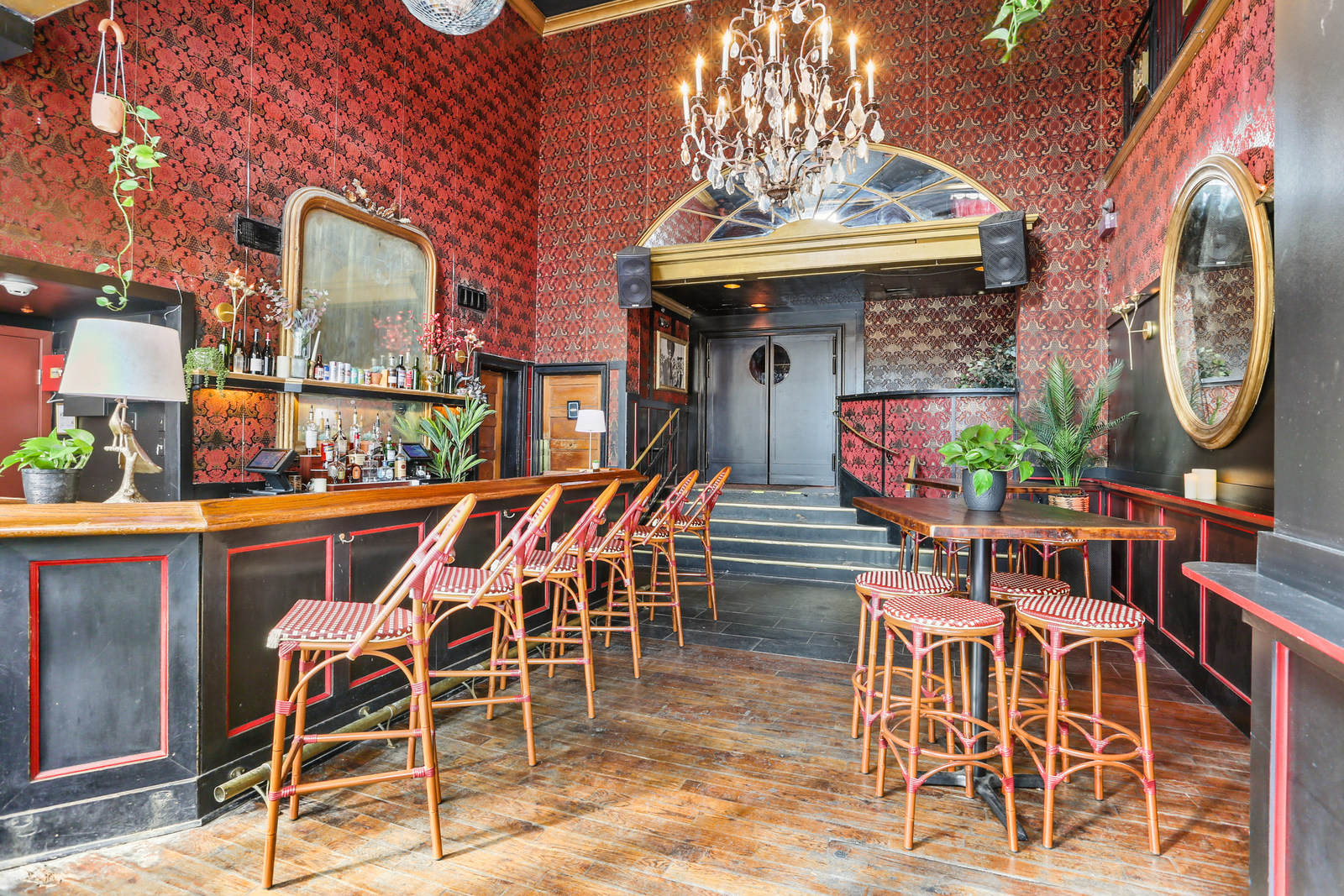
Toulouse Theatre (Maxwell’s Jazz Cabaret)
On Toulouse Street in the French Quarter of New Orleans, a half block from Bourbon, the building at 615 has cycled through more identities than most structures accumulate in twice its lifespan. It has been a cinema, a cabaret, a vaudeville theater, a rock club, a burlesque venue, and a jazz room. Under its current incarnation as the Toulouse Theatre, it is owned by a group that includes Preservation Hall proprietor Ben Jaffe. But long before any of its documented twentieth-century lives, the site carried a history rooted in the kind of French Quarter enterprise that rarely left clean records—and that history, according to local accounts, left something behind that outlasted every renovation. The current building at 615 Toulouse was constructed beginning in 1969 as a single-screen Walter Reade cinema featuring first-run films. In June 1977, the facility began its life as a live performance space with an opening night set by the Neville Brothers. Through the late 1970s and early 1980s, the venue became known for hosting regular performances of Vernel Bagneris's acclaimed vaudeville musical One Mo' Time, while the lobby bar featured a residency by the legendary and troubled New Orleans piano virtuoso James Booker. In the 1990s, the space became Maxwell's Toulouse Cabaret, a jazz venue operated by Jimmy Maxwell and other members of his family. The cabaret celebrated traditional New Orleans music and featured performers including Harry Connick Sr. at the piano and vocalist Rene Netto. The Jimmy Maxwell Orchestra papers, now held by the Historic New Orleans Collection, document this era of the building's musical life. After Maxwell's closed, the venue was reinvented in 1998 as the Shim Sham Club by Morgan Higby Night, followed in 2002 by One Eyed Jacks, which operated as a beloved rock and indie venue for nearly two decades before closing in March 2020. The building was purchased and renovated by Jaffe's group and reopened as the Toulouse Theatre, reclaiming the name the space had carried in its earliest days. The paranormal claims associated with 615 Toulouse Street predate the modern building and are tied to what occupied the site before the 1969 construction. According to local accounts, the location served as a speakeasy during Prohibition, concealed behind a veterinary office that functioned as a front. The arrangement was characteristic of the French Quarter during the 1920s and early 1930s, when dozens of illegal drinking establishments operated behind legitimate businesses, some with ties to organized crime networks running liquor and gambling operations across the Gulf South. Three spirits are said to be associated with the site. The first is described as a gangster—consistent with the speakeasy era and the violent enforcement that accompanied Prohibition-era commerce in the Quarter. The second is a lady in white, a figure reported by witnesses in the building over the years whose identity and era of origin have never been established. The third is a musician who is believed to have died on the premises, a claim that resonates with particular weight given the building's unbroken association with live music spanning more than half a century. In a city where musicians have lived, performed, and died in the same rooms and on the same stages for generations, the idea of one remaining attached to a venue is less legend than occupational hazard. Today the Toulouse Theatre operates as a renovated live music and events venue, its interior restored and its programming reflecting both the building's heritage and the broader mission of preserving New Orleans musical culture. The building sits in a stretch of Toulouse Street dense with French Quarter history, flanked by structures carrying their own hauntings and their own centuries of accumulated human drama. Whether the spirits reported at 615 Toulouse belong to the speakeasy era, to one of the musicians who played the room across its many incarnations, or to something older still embedded in the ground beneath the foundation, the building continues to function as it always has—as a place where the living gather to hear music in a city where the dead have never been known to stay quiet.

The Presbytere
Le vieux presbytère, the old rectory of the St. Louis Cathedral in New Orleans, stands as one of the French Quarter's most architecturally significant colonial structures and a location steeped in centuries of spiritual and paranormal activity. Built during the French colonial period and carefully restored multiple times over its long history, the presbytery originally served as the residence of successive Catholic priests who oversaw the spiritual welfare of the cathedral parish. The building's architecture reflects the transitional style between French and Spanish colonial influences, featuring characteristic arched windows, aged brick walls, and interior chambers that speak to the weight of history accumulated within its walls over nearly three centuries. The structure has witnessed countless pivotal moments in New Orleans history, from the early days of Catholic settlement through the tumultuous Civil War period and beyond, absorbing the experiences and emotions of those who dwelled within its confines. The interior layout reveals chambers dedicated to prayer and contemplation, alongside administrative spaces where ecclesiastical affairs were conducted, creating a physical embodiment of the spiritual mission pursued within its walls. The building is particularly associated with Father Antoine, a legendary priest whose tenure at the cathedral left an indelible mark on the spiritual landscape of the city. Historical records document his tireless ministry and the deep spiritual connections he forged with his parishioners, making him one of the most remembered ecclesiastical figures in the diocese. His presence seems to extend beyond the grave, with many paranormal phenomena appearing connected to his areas of former activity. Beyond its role as a secular historical monument, the presbytery has long been recognized as a location of significant paranormal phenomena that distinguishes it from other historical buildings in the vicinity. Visitors and investigators report encounters with ghostly apparitions in the side alleyways adjacent to the building, particularly in narrow passages between the rectory and the cathedral proper where Father Antoine would have passed during his daily rounds. These manifestations take various forms, from full-bodied apparitions to unexplained presences and sudden temperature fluctuations that occur independent of weather or season. Many who have ventured into the interior chambers late in the evening describe an overwhelming sense of being observed and a palpable spiritual presence that seems concentrated in certain areas where spiritual practices were most intensely conducted. Disembodied voices have been recorded in the building, some seemingly engaged in conversation in French, others uttering unintelligible utterances that appear to derive from earlier historical periods. The phenomenon intensifies during certain seasons and appears to concentrate around the alleyways where Father Antoine once moved during his daily pastoral rounds, suggesting a connection between specific individuals and the manifestations occurring at the location. Paranormal investigators operating at the presbytery have documented electromagnetic anomalies in particular chambers and recorded electronic voice phenomena expressing both devotion and concern. The location has become a focal point for paranormal researchers and enthusiasts who seek to understand the relationship between the building's rich spiritual heritage and the persistent manifestations recorded there. Today, the presbytery remains a carefully preserved historical landmark that serves both as a window into colonial New Orleans architectural traditions and as a location of continued paranormal interest, drawing visitors from around the world who wish to experience its unique combination of historical significance and unexplained phenomena.
Old U.S. Mint
The Old U.S. Mint in New Orleans stands as a substantial brick building representing early American Federal architecture, constructed in 1835 on the grounds of the New Orleans waterfront where commercial activity and financial transactions formed the lifeblood of this strategically important Gulf Coast city. The mint operated as an active facility for the production of United States coinage until 1861, serving as a critical node in the nation's monetary system and processing precious metals derived from mining operations across the western frontier. The architecture reflects utilitarian purposes balanced with the aesthetic conventions of Federal style, presenting a facade of official authority while the interior contained the machinery and secure spaces necessary for the production and safeguarding of currency. The building's location placed it at the intersection of commerce, politics, and violence during the turbulent nineteenth century, particularly during the Civil War when New Orleans fell under Union occupation and the city itself became a contested zone between warring American factions. The economic and strategic importance of the mint made it a site of particular contention and violent struggles. The structure itself contains vaults and secure spaces designed to safeguard enormous quantities of precious metals, and the facility processed thousands of coins and bullion shipments across its operating decades. The mint absorbed the tensions and dramas of a city undergoing radical transformation, from colonial outpost to American city to contested occupation during wartime to the complex, multicultural metropolitan center it became. The violence and social upheaval of the Civil War era saturated the location with trauma and discord. The most significant paranormal history of the Old U.S. Mint involves William Mumford, a man executed at the facility under controversial circumstances during the Civil War occupation of New Orleans. Mumford became a figure of Confederate resistance and was hanged at the mint as a public demonstration of Union authority and brutal justice. His death became a symbol of the brutal suppression tactics employed during the conflict, and accounts of his final moments suggest profound suffering and injustice in the manner of his execution. According to historical records and paranormal accounts, Mumford's mother also came to the mint to witness the aftermath of her son's death, and her grief at witnessing such tragedy may have forged a spiritual bond with the location. The emotional intensity of maternal grief and loss echoed through the building's spaces. Visitors and staff at the mint have reported apparitions visible on the second floor and throughout the grounds, particularly in areas where executions or other traumatic events are believed to have occurred. Witnesses describe encountering spectral figures, feeling overwhelming sadness and despair in specific locations, and experiencing sudden emotional disturbances unrelated to any conscious thought or external stimulus. Some reports describe visible ghostly presences that seem aware of the living observers, making eye contact or attempting to communicate through gestures or expressions. The building's conversion to a museum in recent decades has not diminished paranormal reports, suggesting that the trauma encoded into the mint's physical spaces remains potent and unresolved across generations. The historical significance of the building and the intensity of tragedy that occurred within its walls have apparently created conditions conducive to ongoing paranormal manifestations. Visitors to the museum frequently report unexpected emotional responses and inexplicable reactions to specific locations within the structure, suggesting residual spiritual presence and active paranormal influence.
Bourbon Street
The Bourbon Orleans Hotel in New Orleans, Louisiana stands as a prominent establishment within the French Quarter, representing the luxurious hospitality traditions and architectural elegance characteristic of New Orleans' prestigious historical district. The hotel occupies a commanding position on Bourbon Street, the French Quarter's most famous thoroughfare, serving as a significant landmark within the densely concentrated commercial and entertainment district. The structure was constructed during the nineteenth century according to architectural conventions characteristic of New Orleans' distinctive Creole and French colonial aesthetic traditions, featuring decorative iron balconies, masonry walls, and period design elements reflecting the city's unique cultural heritage. The hotel functions as a premier accommodation destination for domestic and international visitors drawn to New Orleans for its distinctive cultural character, musical heritage, culinary traditions, and historical significance. The facility offers contemporary luxury amenities within authentic historical surroundings, attempting to balance modern hospitality standards with preservation of the building's historical character and architectural integrity. The hotel attracts guests seeking immersion in New Orleans' distinctive atmosphere and culture while maintaining the comfort and services expected from established hospitality establishments. The surrounding neighborhood encompasses other significant haunted locations including the Lafitte Blacksmith Shop and the Old Absinthe House, suggesting the broader French Quarter contains concentrated paranormal presence across multiple historically significant structures. New Orleans' historical experiences encompass substantial tragedy including epidemics, violence, social upheaval, and the catastrophic consequences of slavery and colonialism, creating an environment where historical trauma manifests across numerous locations. The Bourbon Orleans Hotel specifically harbors multiple distinct entities reportedly including Jean Lafitte, the legendary pirate and smuggler whose activities influenced early nineteenth-century New Orleans, allegedly manifesting as a discernate presence within the hotel's physical space. The hotel hosts spirits of numerous victims of the Yellow Fever epidemic that devastated New Orleans in the nineteenth century, with the disease claiming thousands of lives and leaving profound emotional and psychological scarring upon survivors and subsequent generations. A suicidal nun reportedly haunts the location, her tragic death creating a permanent spiritual presence concentrated within specific areas of the hotel structure. A dancing woman spirit, identified through witness reports and paranormal investigation, repeatedly manifests within particular areas of the hotel, apparently reenacting behaviors characteristic of her earthly existence. Young girl spirits have been documented by multiple witnesses, suggesting deaths of minor children occurring either within the hotel or in the adjacent neighborhood during various historical periods. Room 644 specifically contains concentrated paranormal activity, with guests reporting extraordinary phenomena including apparitions, disembodied voices, screams of apparent distress, and overwhelming emotional disturbances. Screams and apparitions manifest particularly intensely within room 644, with witnesses describing anguished vocalizations seemingly emanating from deceased victims experiencing extreme emotional or physical trauma. Ghostly dancing has been documented within the hotel's ballrooms and common areas, with witnesses describing apparent ballroom dancing occurring without visible dancers, music, or visible orchestration, suggesting spectral reenactment of social entertainments from historical periods. Phantom figures appear throughout the hotel structure, manifesting both as full-bodied apparitions with clear distinguishing features and as translucent forms whose complete appearance remains obscured. Disembodied voices speak throughout the hotel, with witnesses documenting conversations, warnings, and communications originating from no visible source, with voices persisting despite thorough searches revealing no human speakers. The Bourbon Orleans Hotel continues to operate as a functioning luxury hotel while simultaneously hosting one of New Orleans' most extensively documented paranormal environments, with the building serving as destination for paranormal researchers, ghost tour participants, and spiritually curious visitors seeking to experience the intersection of historical tragedy and documented supernatural phenomena.
Jackson Barracks
Jackson Barracks in New Orleans stands as a sprawling military installation whose long history of service to the United States Armed Forces is intertwined with a persistent undercurrent of paranormal activity and tragic loss that extends across multiple centuries. Established in the nineteenth century to serve as a primary garrison and training facility for troops stationed throughout Louisiana and the Gulf region, the barracks complex expanded substantially over subsequent decades to accommodate growing military needs and strategic importance. The installation encompasses numerous structures including residential quarters, administrative buildings, parade grounds, mess halls, and training facilities spread across a significant geographical expanse that encompasses dozens of buildings and outdoor training areas. Throughout the twentieth century, Jackson Barracks served as home to countless soldiers and military families, each generation contributing their own experiences and memories to the accumulated history of the complex and its institutional character. The facility became particularly notable during the Civil War era as a strategic military position and continued operating through both World Wars and subsequent conflicts, making it a living archive of American military evolution and wartime service. The physical environment of the barracks reflects its long military history, with architectural elements from multiple periods coexisting within the installation boundaries. The paranormal phenomena at Jackson Barracks is fundamentally connected to the tragedy surrounding Sergeant Henry Brunig, whose 1937 suicide within the barracks marked a turning point in the location's supernatural activity and documented paranormal manifestations. Brunig, a career military man whose service records reflected dedication to his duties and responsibilities, fell into severe psychological distress and took his own life while stationed at the facility during a period of relative peace. The circumstances of his death created a psychic wound within the barracks' physical infrastructure that manifests through persistent paranormal phenomena appearing to intensify during particular times and seasons. Throughout the barracks complex, soldiers and staff have reported encounters with spectral apparitions of armed servicemen dressed in military uniforms from various eras, suggesting that Brunig's presence may not be alone in haunting the installation and that other military traumas are also encoded in its structure. Water runs mysteriously from faucets without visible activation or mechanical cause, doors slam with tremendous force in the absence of wind or physical cause, and toilets flush autonomously without human interaction or proximity sensors. These phenomena occur with such regularity that long-term residents of the barracks consider them normal aspects of the environment rather than aberrations requiring investigation. Most disturbingly, paranormal investigators have recorded disembodied voices emanating from empty barracks rooms, some giving orders in military terminology and protocol, others expressing anguish and despair consistent with psychological crisis. The phenomena intensifies during night hours when the barracks fall silent and appears concentrated around the residential quarters and common areas where soldiers spend their off-duty time and social interactions. Despite the persistent paranormal activity documented by multiple researchers and investigators, Jackson Barracks continues to function as an active military facility, with military personnel adapting to the unusual circumstances that define their working and living environment.
1928 South Carrollton Avenue
1928 South Carrollton Avenue represents a residential structure located in New Orleans, Louisiana, situated within the distinctive architectural and cultural landscape of this uniquely American city famous for its Creole and French colonial heritage, jazz traditions, and layered historical complexity. The address identifies a specific house within one of New Orleans's distinctive neighborhoods, characterizing the address in the manner typical of late nineteenth or early twentieth century American urban nomenclature. Like many houses in New Orleans, the structure at 1928 South Carrollton Avenue likely exhibits architectural characteristics reflecting period construction techniques, materials, and design aesthetics influenced by regional climate conditions, cultural traditions, and available resources. The house presumably contains multiple rooms organized around a central core or hallway arrangement typical of residential construction during its historical period, with basement areas providing storage space, utility functions, and potentially living quarters for servants or household staff depending on the property's historical use and the social status of its occupants. The presence of a fireplace within the structure indicates either original heating systems or decorative elements suggesting period domestic comfort and aesthetic preferences. The residence, like countless other houses in New Orleans, has likely undergone multiple ownership transitions, periods of renovation and modernization, and evolution of its primary functions across its operational history. The documented paranormal history of 1928 South Carrollton Avenue extends back at least to the 1970s, when initial reports of ghostly activity emerged from the household and attracted attention from paranormal researchers and local observers interested in New Orleans's reputation as a paranormally active city. The specific origins of the haunting remain incompletely documented, though historical records suggest the house contained a burial ground or cemetery space at some historical point, potentially explaining the presence of multiple spiritual entities within the residential structure. The most prominent ghost haunting the residence is identified as a seaman, a maritime professional whose connection to the New Orleans area reflects the city's long history as a major port and shipping center. The seaman's presence in the house suggests either a murder, accidental death, or intentional burial of the maritime worker within the residential structure, possibilities that remain unconfirmed by available historical documentation. The seaman ghost has been reported continuously since initial sightings in the 1970s, demonstrating remarkable persistence and apparently increasing paranormal activity strength as decades passed and the entity's presence became more established within the spiritual landscape of the residence. Multiple unidentified spirits inhabit the residence alongside the seaman ghost, suggesting complex layered hauntings and potentially multiple distinct traumatic events or deaths occurring within the structure. The paranormal phenomena manifesting at 1928 South Carrollton Avenue present an unusually diverse range of experiences and manifestations, suggesting highly active spiritual presence or multiple distinct entities with different behavioral patterns and manifestation capabilities. The most visually distinctive phenomenon involves the apparition of the seaman ghost, reported floating in the basement of the residence in ghostly form, dressed in maritime attire characteristic of his historical period. The seaman's apparition appears translucent or ephemeral, consistent with classic descriptions of full-bodied spectral manifestations, and manifests with sufficient consistency that multiple independent witnesses have documented the appearance without prior knowledge of previous reports. The spirit's apparent floatation rather than terrestrial locomotion suggests either water-related circumstances of death or a spectral form unconstrained by physical limitations affecting living humans. Beyond the seaman apparition, residents and investigators have documented items moving independently within the residence without visible human agency, suggesting poltergeist-type phenomena or intentional manifestations from intelligent entities seeking to communicate or express displeasure with living inhabitants. Disembodied voices and other auditory phenomena have been recorded within the residence, including voices apparently attempting communication or expressing emotional content related to the circumstances of the spirits' deaths or earthly experiences. The residence has been the subject of at least one attempted exorcism by Catholic clergy, consistent with New Orleans's predominantly Catholic religious traditions and the community's frequent invocation of religious authority to address problematic hauntings. The exorcism, despite following formal religious protocols and presumably conducted by qualified spiritual practitioners, reportedly failed to resolve the paranormal phenomena, suggesting the spirits' attachment to the residence or their resistance to displacement remained stronger than conventional religious intervention could accomplish. The spirits inhabiting 1928 South Carrollton Avenue have been characterized as playful in addition to troublesome, suggesting emotional complexity and potentially retention of individual personality characteristics and behavioral patterns from their earthly existences. 1928 South Carrollton Avenue continues to exist as a residential property in contemporary New Orleans, though the ongoing paranormal activity remains a documented characteristic of the house that potential buyers and renters presumably encounter in property disclosures or through local reputation and word-of-mouth accounts. The residence has attracted significant attention from paranormal researchers and ghost hunters drawn to New Orleans's reputation as a paranormally active city and to the specific documented hauntings of individual structures within its residential neighborhoods. The house's documented paranormal history places it within a broader context of New Orleans haunted houses and locations, a category that includes some of the most famous and intensively investigated paranormal sites in American paranormal research. The persistent activity across decades, combined with the apparent resistance of the spirits to exorcism and the playful yet occasionally troublesome behavior attributed to them, suggests a unique and complex paranormal ecosystem within the residential structure. The lesser-known status of 1928 South Carrollton Avenue compared to some of New Orleans's more famous haunted locations means it receives less attention from paranormal tourism industries, though paranormal researchers and dedicated ghost hunters continue to document phenomena and collect eyewitness testimony regarding the property. The residence stands as a compelling example of how paranormal activity can persist unabated within ordinary residential structures, enriching the complex paranormal landscape of New Orleans with additional documented cases of haunting and spirit presence outside of the well-known historic buildings that dominate the city's paranormal reputation.
The Jimani
The Jimani, located in the French Quarter of New Orleans, occupies a building with a history deeply marked by tragedy and loss. Originally constructed in the mid-twentieth century as a commercial establishment, the structure became known locally as the UpStairs Lounge, a thriving gay bar that served as a vital gathering place for the LGBTQ+ community during an era when such spaces were rare and precious. The bar operated successfully for several years, attracting patrons from throughout the city who came to enjoy music, camaraderie, and the sanctuary that the lounge provided. The establishment became woven into the cultural fabric of New Orleans, representing both freedom and community for those who frequented its doors. The upper floors of the building housed additional commercial and residential spaces, creating a bustling hub of activity that characterized this section of the historic French Quarter. On the evening of June 24, 1973, the UpStairs Lounge became the site of one of the deadliest fires in American history. A deliberate arson attack set by an individual with a personal vendetta against the bar's employees resulted in a catastrophic inferno that consumed the second-floor lounge with terrifying speed. The fire spread rapidly through the wooden structure, trapping patrons and staff on the upper floors. The building lacked adequate fire escapes, and windows had been barred for security purposes, leaving occupants with limited means of escape. Over thirty individuals perished in the blaze, with many more suffering severe injuries from burns and smoke inhalation. The victims included patrons caught in the crowded bar, staff members attempting to assist guests, and visitors who had sought refuge in what they thought would be sanctuary. George Bud Matyi, a bartender at the establishment, was among those who lost their lives during the tragedy. The loss was particularly devastating because the fire occurred during a moment when marginalized communities were already facing intense discrimination and societal rejection. The aftermath of the fire left profound wounds on the community and marked the building permanently with the trauma of the event. Investigators determined that the fire had been set intentionally, making it one of the earliest confirmed cases of what would later be recognized as a hate crime against the LGBTQ+ community. The tragedy received minimal media attention initially, with some coverage reflecting the prejudices of the era, but it eventually became recognized as a pivotal moment in the fight for civil rights and acceptance. The victims' families and the broader community mourned not only the loss of life but also the violence targeting a marginalized group. Over the following decades, the memory of those who died in the fire became increasingly important to historical understanding of discrimination and violence against the LGBTQ+ community. In the present day, the building houses the Jimani Sports Bar, a business that operates with awareness of the building's haunted past and the weight of history it carries. Numerous accounts from patrons and staff describe inexplicable paranormal phenomena that suggest the spirits of those who perished in the fire remain present within the structure. Visitors have reported hearing disembodied cries for help emanating from the second floor, particularly concentrated in areas where the fire was most intense. The acrid smell of burning flesh has been detected by multiple witnesses despite the absence of any active fire or combustion. Glowing orbs of light have been observed moving through the interior spaces, particularly in the upstairs areas, with some suggesting these represent the spirits of victims seeking peace or justice. Many individuals who enter the building report an overwhelming sensation of being watched, a presence that seems to emanate from the upper floors and follows visitors through the space. Screams and sounds of distress have been heard by employees working late into the evening, and staff members have reported hearing these vocalizations despite being alone in the building. These experiences have made the location one of the most actively haunted establishments in New Orleans, a place where tragedy has left an indelible spiritual mark that persists decades after the disaster occurred.
Buckner Mansion
The Buckner Mansion, constructed in 1856 and located at 1410 Jackson Avenue in New Orleans, Louisiana, stands as an elegant example of nineteenth-century residential architecture that reflects the wealth and sophistication of the antebellum planter class that dominated the region during that era. The mansion's design incorporates elements of Greek Revival architecture combined with stylistic features influenced by colonial and neoclassical traditions, creating a stately residence that served as a symbol of prosperity and social standing within New Orleans society. The building features multiple stories, expansive rooms with high ceilings, ornate chandeliers, elegant hallways, and numerous amenities that reflected the considerable resources of its original owners and subsequent occupants throughout the nineteenth and early twentieth centuries. Throughout its long history as a private residence, the Buckner Mansion hosted social gatherings, family celebrations, and served as the living space for generations of prominent New Orleans residents. The mansion's architecture and furnishings represent the accumulated aesthetic choices and cultural values of an era when personal wealth translated directly into the ability to construct and maintain architecturally ambitious residential structures. The paranormal reputation of Buckner Mansion became particularly associated with Josephine, a free woman of color who served in the household as a paid servant, midwife, and herbal healer during the nineteenth century. Josephine's exact biographical details remain somewhat shrouded in historical ambiguity, as official records from the era frequently obscured or minimized the roles and contributions of African American women, particularly those of mixed racial heritage whose social status remained complex and contested throughout the nineteenth-century South. As a midwife and herbal healer, Josephine possessed knowledge and skills that were highly valued within the household and the broader community, as her medical expertise allowed her to assist women during childbirth and provide herbal remedies for various ailments at a time when professional medical care was limited and sometimes dangerous. Her presence in the Buckner Mansion spanned years or possibly decades, during which she became an integral part of the household's daily functioning and developed relationships with family members and other residents. Her death at some point in the mansion's history created a spiritual void, as if her dedicated service and the relationships she cultivated proved insufficient to allow her spirit to find peaceful rest after the conclusion of her earthly existence. Visitors to Buckner Mansion and staff members who work at the location regularly report experiencing phantom footsteps echoing through the elegant halls and corridors at times when no living person is physically present in those areas. Witnesses describe hearing the unmistakable sound of footsteps moving with purpose through the mansion, often during late evening hours or early morning, suggesting that Josephine's spirit remains engaged in routine activities similar to those she performed during her lifetime. Flickering lights that cycle on and off without any rational explanation represent another persistent phenomenon at the mansion, with electrical systems checked and found to be functioning normally despite the unexplained fluctuations. Doors throughout the mansion open and close on their own, swinging open without any visible force or closing firmly despite the absence of air currents or mechanical triggers that would normally produce such movement. The ornate chandeliers suspended from the mansion's ceilings sway and move without any perceptible breeze, suggesting that invisible hands or spiritual forces are manipulating these heavy fixtures. Witnesses report detecting the distinctive smell of fresh lemon at various locations throughout the mansion, a scent that appeared to be Josephine's signature fragrance and now appears to serve as a calling card indicating her presence at particular locations within the building. Perhaps most remarkably, staff members and visitors have witnessed mysterious cleaning and tidying of spills and disarranged items, as if an invisible hand is maintaining the mansion's cleanliness and order consistent with Josephine's dedication to household management during her lifetime. Cabinets open and close mysteriously, and objects occasionally relocate from their expected positions to new locations, suggesting poltergeist-type phenomena that may represent Josephine's attempts to communicate or assert her continued presence within her former workplace.
Lafitte’s Blacksmith Shop
Lafitte's Blacksmith Shop stands as one of the oldest surviving structures in New Orleans, its brick walls and period architecture representing a tangible connection to the city's colonial and early American history. The building was originally constructed as a residential dwelling during the 1770s, when the region remained under Spanish colonial administration and the future city of New Orleans was developing its distinctive architectural and cultural character. The structure reflects the building practices and design preferences of the late eighteenth century, incorporating thick masonry walls, period-appropriate fenestration, and spatial configurations adapted to the practical and social needs of colonial residents. The property subsequently transitioned through multiple functions and ownerships, eventually becoming associated with commercial operations and, ultimately, with the legendary figure of Jean Lafitte, the privateer and smuggler whose activities in the Gulf of Mexico and New Orleans region generated considerable historical attention and folklore. The building's enduring physical presence despite centuries of environmental exposure and social change has contributed to its designation as a significant historical landmark within New Orleans's French Quarter district. The historical connection between Lafitte's Blacksmith Shop and the figure of Jean Lafitte represents a complex intersection of documented historical fact and romanticized legend. Jean Lafitte emerged as a significant figure in early nineteenth-century Gulf Coast history, commanding a network of privateers and smugglers who conducted maritime operations against Spanish colonial interests and American merchant vessels. Historical documentation confirms that Lafitte maintained operations in the New Orleans region and maintained connections to various properties and criminal enterprises throughout the area. The specific nature of Lafitte's connection to the structure now known as Lafitte's Blacksmith Shop remains subject to historical debate, with various sources attributing different functions and meanings to the building within Lafitte's operational network. Some historical accounts suggest the structure served as a front for smuggling operations, while others propose alternative functions or connections. The building's historical association with Lafitte has become firmly embedded within New Orleans culture and tourism, regardless of the precise historical accuracy of specific claims regarding Lafitte's direct ownership or operational control of the property. The romanticization of Lafitte as a folk hero and legendary figure has elevated the building's cultural significance far beyond what might be justified by strictly documented historical evidence. Lafitte's Blacksmith Shop has developed an extensive reputation as an actively haunted location, with the spectral presence of Jean Lafitte himself representing the primary paranormal entity associated with the property. Witnesses and paranormal investigators have documented the appearance of a full-bodied apparition identified as Lafitte, manifesting with sufficient solidity and clarity to generate genuine terror among observers unprepared for such an encounter. The apparition appears clothed in period costume consistent with early nineteenth-century maritime dress, suggesting either a habitual manifestation reflecting Lafitte's appearance during life or a psychological projection incorporating historical associations. Particularly striking paranormal phenomena involve the appearance of glowing red eyes staring outward from the building's fireplace grate, a manifestation that suggests either a concentrated point of paranormal energy or the literal appearance of Lafitte's spectral face within the chimney structure. The psychological impact of witnessing a disembodied face with glowing eyes constitutes one of the more disturbing paranormal phenomena documented at the location. Additional paranormal activity includes phantom sounds emanating from within the building, cold spots representing localized temperature anomalies, and the distinctive smell of tobacco smoke appearing without any visible source of combustion. These sensory phenomena combine to create an environment rich with paranormal manifestations that extend beyond visual sightings to encompass multiple forms of spectral communication and presence. The presence of a female ghost has also been reported by some investigators, though less extensively documented than the apparition of Jean Lafitte himself, suggesting multiple entities may inhabit the location.