

University Chapel – Auburn University
Background & History
Historical context and known paranormal claims surrounding University Chapel – Auburn University.
Auburn University Chapel, constructed in 1851, stands as the second-oldest structure on the Auburn University campus and the oldest building remaining in its original location on the grounds. Built in the Greek Revival architectural style, the chapel features classical proportions, columned porticos, and restrained ornamentation characteristic of antebellum American institutional architecture. Its construction relied on slave labor, reflecting the pre-Civil War Alabama context. The chapel's strategic location made it a focal point for the university's religious and community life, and its architectural integrity allowed it to survive multiple changes in function and purpose across subsequent decades. The building exemplifies Greek Revival principles that shaped many American educational and civic institutions during the 19th century, with design elements that continue to define its appearance in the present day.
During the American Civil War, the chapel was briefly repurposed as a Confederate military hospital, reflecting the community's involvement in the conflict and the practical demands of wartime. The building's conversion introduced tragedy to its history as soldiers with combat wounds and disease occupied the interior spaces. Following the war, the chapel resumed its religious role, though this wartime service remained part of its documented history. Between 1927 and 1973, the chapel housed the Auburn Players Theater for forty-six years, converting the space into a dramatic performance venue and introducing a new dimension to the building's cultural role. In 1973, following the Players' departure, the chapel underwent comprehensive renovation to reclaim its original function, with work continuing until 1976, carefully removing theatrical infrastructure while restoring religious solemnity.
The chapel's haunting is attributed to Sydney Grimlett, a Confederate soldier whose spiritual presence first manifested during the 1920s with the arrival of the Auburn Players Theater. The timing suggests a possible connection between theatrical activity and the ghost's emergence, though the mechanism remains unexplained. Grimlett became increasingly active during the theatrical era, with reports of his presence intensifying during performances and rehearsals throughout the building. The 1960s marked escalation in paranormal phenomena when witnesses reported glowing orbs hovering above performers on stage, suggesting an entity interacting with theatrical activity. These orbs were observed by multiple witnesses including cast members and audience members, establishing independent corroboration of the phenomenon. The full-body apparition of Grimlett has been reported by witnesses, along with unexplained sounds including footsteps throughout the building. The chapel has become known as Auburn's most haunted location, with its status firmly established in campus folklore.
Following the chapel's restoration to religious function in 1976, paranormal activity has remained concentrated in the building, persisting through decades of use as an interdenominational place of worship. The presence of Grimlett appears undiminished by the theatrical era's conclusion and the return to spiritual purpose. Contemporary reports from students, visitors, and staff continue to document the apparition, orbs, and unexplained sounds associated with the haunting. The identity of Sydney Grimlett as a Confederate soldier raises questions about his specific connection to Auburn University Chapel, whether he died within the building during its Civil War service as a hospital or whether his attachment stems from other aspects of his life story. The detailed documentation of Grimlett's presence has made Auburn University Chapel a subject of academic interest among paranormal researchers studying location-specific hauntings and soldier apparitions. The chapel's dual significance as a historical structure and authenticated paranormal site has enhanced its importance to the university community.
church
Auburn, Alabama
Lee County
February 26, 2026
Status Unknown
People Also Searched For
You Might Also Like
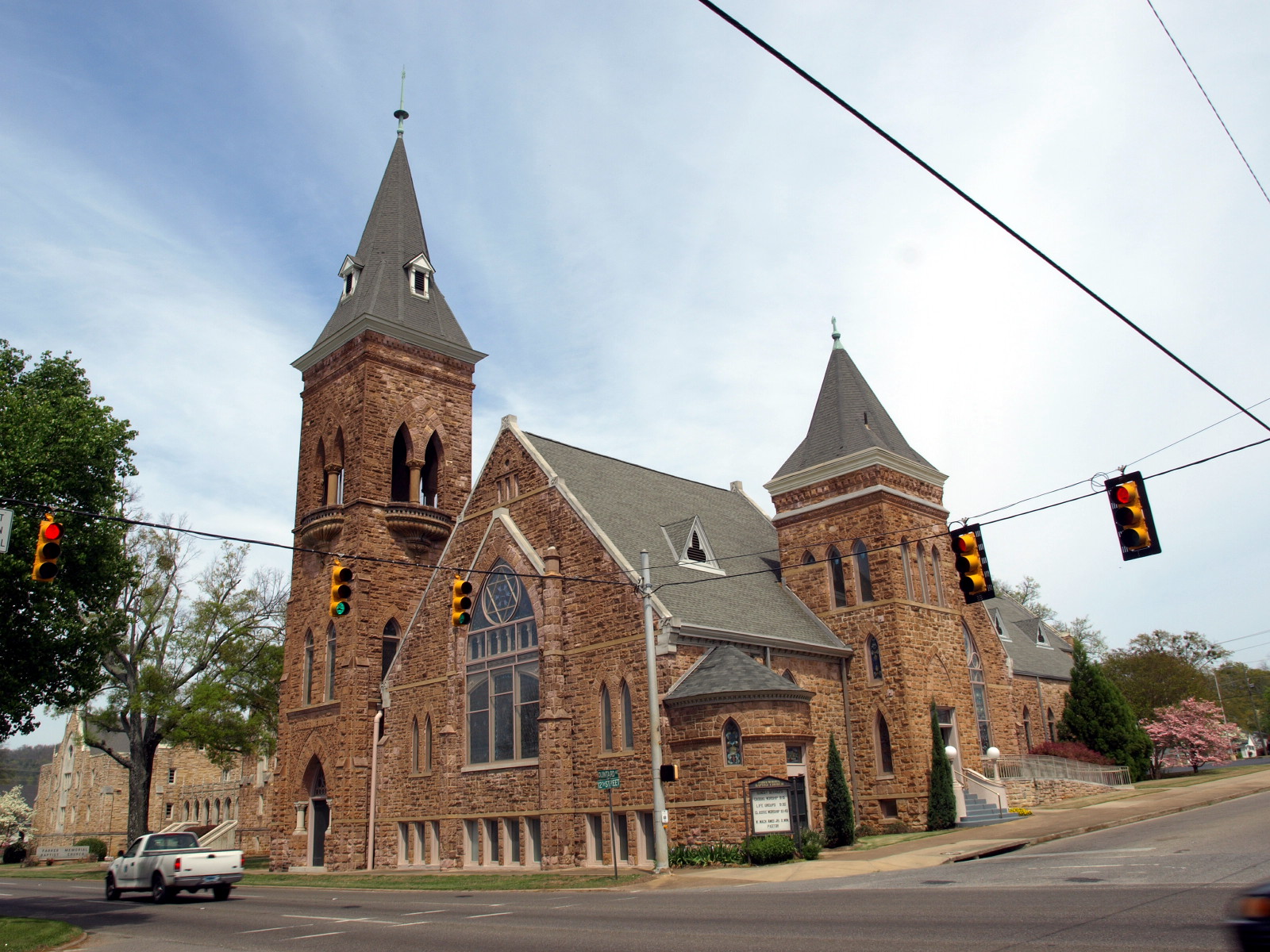
Standing along Quintard Avenue in Anniston, Alabama, Parker Memorial Baptist Church cuts a striking silhouette against the Calhoun County sky—a massive Victorian Gothic structure built of native pink sandstone, its corner tower and arched entryway pulling the eye upward in the tradition of grand 19t… read more
Anniston, Alabama · church

Sitting on McElderry Road in the rural northeast corner of Talladega County, Bethlehem United Methodist Church is the kind of small-town Alabama congregation that holds the bones of a community. Its attached cemetery has served the surrounding area for generations, and its burial records reach back… read more
Munford, Alabama · church
Cemetery Mountain rises from the remote terrain outside Munford, Alabama, a sprawling woodland preserve crowned by one of the state's most storied burial grounds. The mountain's geography is marked by steep hollows, dense forest, and the weathered stones of its cemetery that have watched over the re… read more
Munford, Alabama · cemetery
Have you visited University Chapel – Auburn University?
Share your paranormal experience and help other investigators decide if it's worth exploring.
Activity Breakdown
Types of documented activity recorded at University Chapel – Auburn University, organized by category.
Visual Activity
Audio Activity
Reported Areas
Specific areas within University Chapel – Auburn University where activity has been documented.
Auburn University Chapel
built in 1851 using slave labor in Greek Revival style
is the second-oldest building on campus and oldest in its original location. It briefly served as a Confederate hospital during the Civil War. From 1927 to 1973
it housed the Auburn Players Theater
and from 1973 to 1976 underwent renovation to become an interdenominational chapel. The chapel is haunted by Sydney Grimlett
a Confederate soldier whose ghost first manifested in the 1920s and began appearing once the acting troupe started using the space. Paranormal activity was first reported during the 1960s with reports of glowing orbs hovering over performers. The chapel is known as Auburn's most haunted location.
Known Entities
Entities, spirits, and figures that have been identified or reported at University Chapel – Auburn University.
Sydney Grimlett (Confederate soldier ghost)
Photos
Images sourced from across the web and linked directly to the original host. Ghouler does not download or host these images, nor do we claim them as our own.
Investigator Reviews
Your trust is our priority, so no location can pay to alter or remove their reviews.
No reviews yet.
Be the first to share your experience at University Chapel – Auburn University.
Find reviews useful? Help others by sharing your experience.
Documented Experiences
Paranormal reports and documented occurrences compiled for University Chapel – Auburn University from archived sources and community investigators.
No documented experiences for University Chapel – Auburn University yet.
Best Times to Visit
Based on investigator reports, these are the most active areas, times, and conditions reported at University Chapel – Auburn University.
University Chapel – Auburn University
Anytime,Daytime,Evening
Equipment & Methods
Equipment and investigation methods reported by community investigators at University Chapel – Auburn University.
Detection Equipment
What It Does
How to Use
Know Before You Go
Important details to help plan your visit or investigation of University Chapel – Auburn University.
Unknown
Status Unknown
Not specified
Sources & References
Referenced materials and documentation supporting the University Chapel – Auburn University case file.
paranormal_database
Experience Glossary
Detailed descriptions of each type of activity documented at University Chapel – Auburn University.
Apparitions
Definition
A reported visual sighting of a human-like or shadow-like figure without a physical source.
What People Report
Witnesses describe full-body figures, partial forms, or fleeting silhouettes appearing in hallways, doorways, or peripheral vision. These sightings are typically brief and may vanish when directly observed.
Light Anomalies
Definition
Unexplained light sources, flashes, or luminous forms observed in a location.
What People Report
These may appear as moving orbs, stationary glows, or brief flashes captured on camera. In many cases, the light does not correspond to reflective surfaces or known light sources.
Full-Body Apparitions
Definition
A complete human-shaped figure reportedly seen in physical space.
What People Report
Witnesses often describe defined features such as clothing, posture, or movement patterns. These manifestations may appear solid or semi-transparent before disappearing abruptly.
Unexplained Sounds
Definition
Unidentifiable noises such as bangs, growls, music, or movement occurring without environmental explanation.
What People Report
These sounds may be isolated or recurring and are frequently reported during periods of heightened activity.
Important Notices
Information in this case file is compiled from public sources and community reports. Accuracy cannot be guaranteed. Always verify details before visiting, and check with property owners and local or state authorities to confirm access is permitted.
Nearby Case Files
Explore Alabama
Browse by Haunt Type
Phenomena & Experiences
- Apparition reports
- Full-Body Apparition reports
- Shadow Figure reports
- EVP reports
- Disembodied Voice reports
- Unexplained Footsteps / Knockings reports
- Poltergeist reports
- Object Manipulation reports
- Cold Spot reports
- EMF Anomaly reports
- Intelligent Haunting reports
- Residual Haunting reports
- Sense of Presence reports
- Phantom Smell reports
- Electronic Disturbance reports
People Also Viewed
Parker Memorial Baptist Church
Church
Anniston, Alabama
Bethlehem United Methodist Church
Church
Munford, Alabama
Cemetery Mountain
Cemetery
Munford, Alabama
Camp Watts – Confederate Graveyard
Cemetery
Notasula, Alabama
Bottenfield Middle School
House
Adamsville, Alabama
1880’s Josephine Hotel
Hotel
Union Springs, Alabama