
Light Anomalies & Paranormal Orbs
578 haunted locations
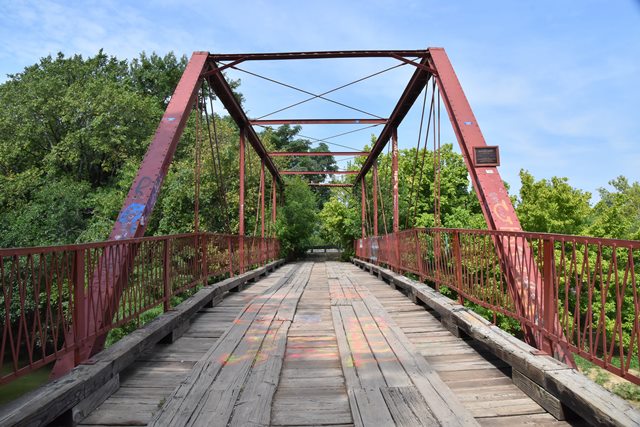
Goatman’s Bridge
Just outside Denton, Texas, tucked between trees and hovering over Hickory Creek, stands the Old Alton Bridge—better known today as Goatman’s Bridge. What looks like a quiet iron truss bridge from the late 1800s has become one of the most infamous legend-laden locations in the state. Part history, part folklore, part modern paranormal hotspot, Goatman’s Bridge sits at the crossroads of documented past and deeply rooted local myth. The bridge was built in 1884 to connect the towns of Denton and Copper Canyon, replacing an earlier wooden structure. For decades, it served farmers, travelers, and livestock drivers moving through the area. The surrounding woods and creek bottom were rural, isolated, and—especially at night—pitch black. Even without a legend attached, it’s the kind of place that feels removed from the modern world once the sun goes down. The haunting reputation largely centers around the story of a Black goat farmer named Oscar Washburn. According to the legend, Washburn successfully raised goats near the bridge and even hung a sign reading “This way to the Goatman.” As the story goes, members of a local Ku Klux Klan group resented his success and presence in the area. One night, they allegedly dragged him onto the bridge and hanged him from the iron supports. When they looked over the edge to see his body, it was gone. In retaliation, the legend claims the mob murdered his wife and children at their cabin nearby. The problem is that historians have found little concrete evidence confirming the Washburn story as it’s commonly told. While racial violence was tragically common in Texas during that era, records directly tying this specific lynching to the bridge remain debated. Like many American ghost stories, the narrative appears to have evolved over time, blending fragments of possible history with escalating folklore. Beyond the Goatman legend, the surrounding woods have their own dark reputation. Some accounts claim the area was once a gathering site for the KKK. Others say occult rituals took place in the forest clearing near the bridge. Stories circulate of satanic symbols, animal remains, and strange ceremonies—though many of these reports are difficult to verify and may stem from trespassing, vandalism, or modern thrill-seekers attempting to add fuel to the myth. Paranormal claims at Goatman’s Bridge are intense and varied. Visitors report hearing growls or heavy footsteps pacing along the bridge at night. Some claim to see a tall, shadowy figure with glowing eyes moving between the trees. Others describe feeling sudden dread or being pushed, scratched, or followed. Electronic voice phenomena sessions allegedly capture aggressive responses. There are even reports of car malfunctions and battery drain near the bridge—common claims at high-profile paranormal sites. One of the most persistent experiences reported is a feeling of being watched from the treeline. Investigators often describe the woods as more active than the bridge itself. Disembodied voices, distant chanting, and unexplained knocks are frequently cited. Skeptics argue that the area’s wildlife—deer, coyotes, wild hogs—and the acoustics of the creek valley can easily account for many of the sounds. The power of suggestion also plays a significant role; when people walk into a place expecting a demonic goat creature, adrenaline tends to do the rest. Despite the debate over its historical accuracy, Goatman’s Bridge has cemented itself in Texas paranormal culture. It has been featured in documentaries, YouTube investigations, podcasts, and television ghost-hunting shows. The combination of racial tragedy, alleged occult activity, and a creature-based legend gives it a uniquely layered mythology compared to traditional “haunted house” locations. Today, the Old Alton Bridge is part of a public trail system, and visitors can legally walk the bridge during park hours. By day, it’s a scenic historic structure surrounded by greenbelt trails. By night, it transforms into something entirely different in the public imagination—a place where history, fear, and folklore blur together. Whether the Goatman is a vengeful spirit, a demon born from rumor, or simply a campfire story that grew too large to contain, the bridge remains one of Texas’ most talked-about haunted locations. It’s a reminder that sometimes the most powerful hauntings aren’t built on documented facts alone—but on the stories communities tell, retell, and refuse to let die.
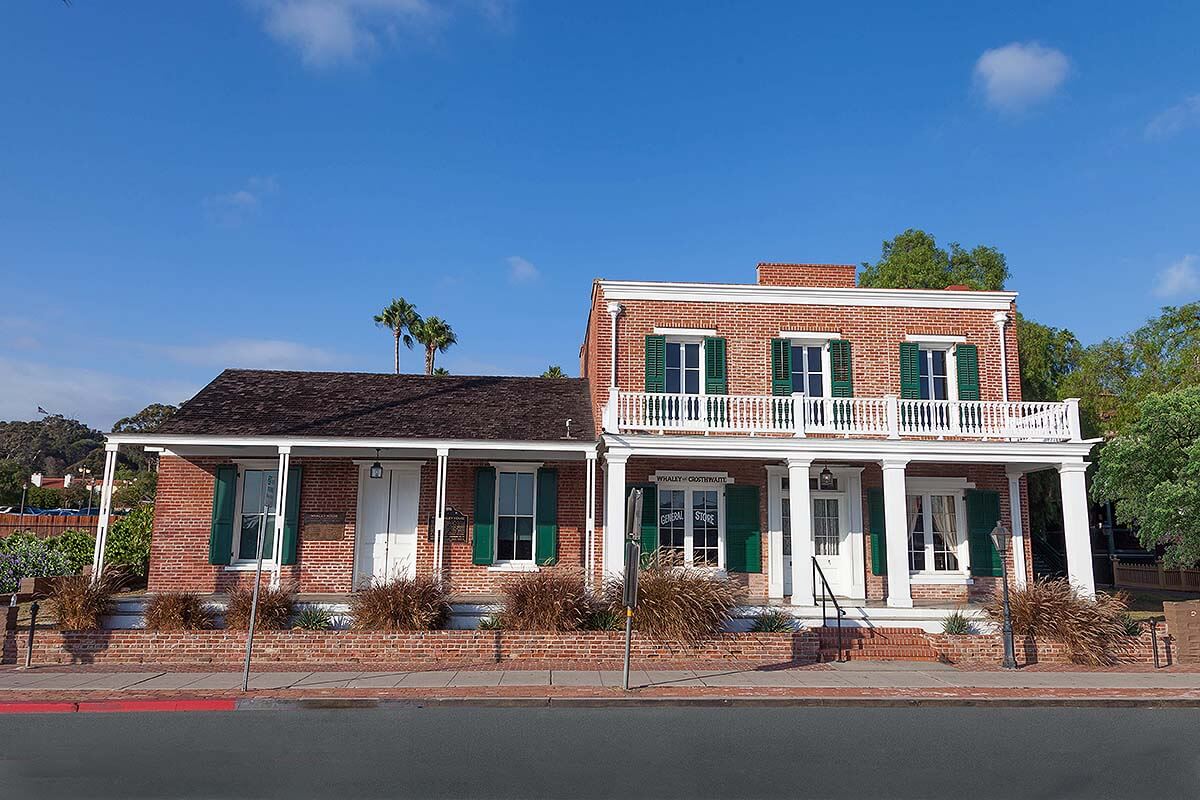
Whaley House
The Whaley House sits on San Diego Avenue in the Old Town neighborhood, a two-story Greek Revival brick home that looks, at first glance, like the kind of place a prosperous merchant would build to announce that he had arrived. And that is exactly what Thomas Whaley intended when he began construction in 1856. The house was the oldest brick structure in Southern California, built from clay bricks fired in Whaley's own kiln on Conde Street, with cedar woodwork and hardware shipped from New York. It cost over ten thousand dollars—a significant sum for a dusty frontier town that had only recently become part of the United States. What Whaley built on, however, was not ordinary ground. The property had served as San Diego's public gallows, and Thomas Whaley had personally witnessed the site's most notorious execution. In September 1852, a man named James Robinson—known locally as Yankee Jim—was hanged there for stealing a rowboat from San Diego Harbor. The trial had been swift and dubious: the jury included two men who owned the stolen boat, and the judge was reportedly drunk for much of the proceedings. Yankee Jim, a towering figure at six-foot-three, did not believe the sentence was real until he saw the rope. The gallows were too short for his frame. When the mule cart was pulled away, his feet grazed the ground, and he strangled slowly rather than dying from a broken neck. Thomas Whaley stood in the crowd and watched the entire thing. Three years later, he bought the land and built his family home directly over the spot. The archway between what became the music room and the parlor stands precisely where the gallows once were. The Whaley family moved in in 1857, and the house quickly became a civic centerpiece—it served at various times as a general store, San Diego's first commercial theater, and the county courthouse. But tragedy followed the family through its walls. Their eighteen-month-old son Thomas Jr. died of scarlet fever in the house. In 1871, armed men held Anna Whaley at gunpoint while seizing courthouse records during a bitter dispute between Old Town and the rising New Town. In 1885, their daughter Violet—devastated after discovering her new husband was a con artist who had married her for the family's money—shot herself in the chest with her father's revolver at the age of twenty-two. Thomas Whaley died in the house in 1890. Anna followed in 1913. Their son Francis died there in 1914, and their daughter Corinne lived in the home until her death in 1953, the last of the family to occupy the residence. Thomas Whaley himself was the first to report something wrong. He wrote in his journal of heavy footsteps moving through the upstairs rooms when no one was there—footsteps he attributed to Yankee Jim. That claim has persisted for over 160 years. Visitors today report a choking sensation when passing through the archway where the gallows stood. Staff and guests describe the sound of tiny footsteps and a child's crying attributed to baby Thomas. A young woman believed to be Violet is seen on the second floor. The scent of perfume associated with Anna drifts through rooms with no apparent source. Disembodied voices, cold spots, doors opening and closing on their own, and full-bodied apparitions have been reported by tourists and investigators alike. The house has been featured on numerous paranormal television programs, and EVP sessions have reportedly captured direct responses. The U.S. Department of Commerce has officially designated the Whaley House as haunted—one of only two homes in California to receive that recognition. Skeptics note that the house trades heavily on its reputation, and that the combination of dim lighting, period atmosphere, and primed expectation accounts for much of what visitors experience. That is a fair observation. But the reports predate the tourism industry by over a century—Thomas Whaley was documenting disturbances in the 1860s, long before anyone was selling tickets. Today the Whaley House operates as a museum maintained by Historic Tours of America. It is a California Historical Landmark and draws thousands of visitors annually for both historical and evening paranormal tours. The archway still stands. The parlor is still furnished. And the ground beneath the house has never forgotten what happened on it.
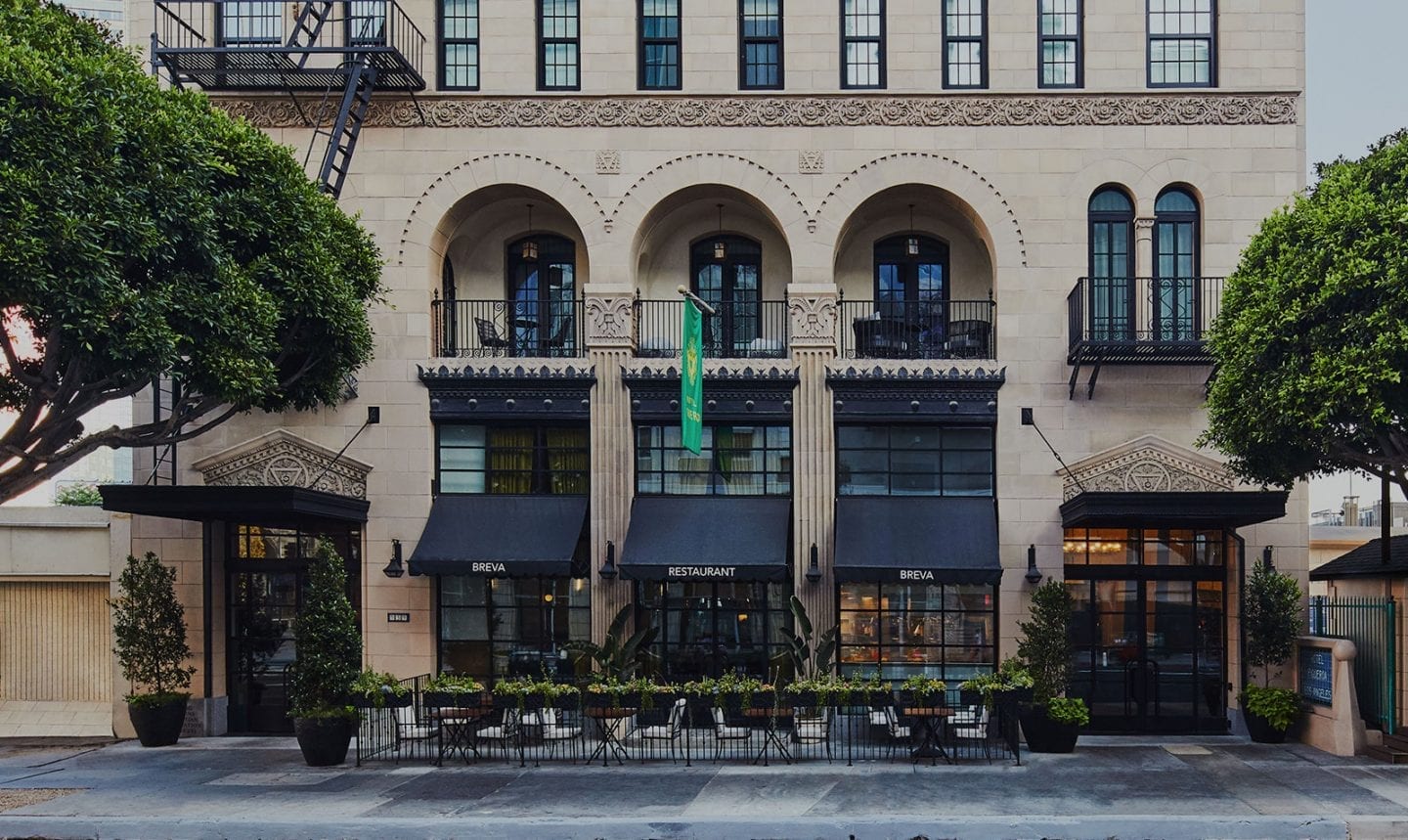
Figueroa Hotel
Rising thirteen stories above South Figueroa Street in the South Park district of Downtown Los Angeles, Hotel Figueroa occupies a building that was never meant to simply house travelers. It was built as a statement—the largest commercial structure in the United States financed, owned, and operated by women at the time of its completion in 1926. Its origins belong to the YWCA of Los Angeles, and its paranormal reputation belongs to nearly a century of human drama that unfolded within walls designed to shelter women at a time when most hotels in America would not admit them without a male escort. The project was spearheaded by the Los Angeles YWCA under the leadership of Mrs. Chester C. Ashley, who recognized that the growing number of women entering the white-collar workforce needed safe, respectable accommodations while traveling on business. The organization purchased the land at 939 South Figueroa Street and financed the 409-room concrete and steel structure through supporter donations and two mortgage bonds. The architecture firm Stanton, Reed and Hibbard designed the building in a Spanish Colonial Revival style, and construction began in 1925. The hotel was finished ahead of schedule and dedicated on August 14, 1926, with a night of dancing and entertainment attended by more than three hundred guests, including representatives of nearly every women's club in Los Angeles. The interior was appointed with wrought iron finishes, goldenrod satin draperies with black patent leather trim, Spanish tapestries on loan from prominent local women, and public spaces given Spanish names—the lobby was the sala de recepcion, the main corridor the el corredor. Maude Bouldin, a motorcycle-riding, plane-flying feminist, served as the hotel's first managing director, believed to be the first woman in the country to hold such a position at a major hotel. For its first two years, the hotel served women exclusively, with men granted only limited access. By 1928, the policy was relaxed to include men in order to sustain business. Through the 1930s, 1940s, and 1950s, the Figueroa functioned as a hub for political organizations, social clubs, and the creative community of downtown Los Angeles. The hotel held press conferences and rallies against sexism and racism, cultivating a reputation as a progressive gathering place. By the late 1950s and 1960s, as downtown Los Angeles experienced a westward migration of offices and residents, the Figueroa declined into a semi-permanent residential hotel with guests paying by the week. In 1976, Swedish entrepreneur Uno Thimansson purchased the property and converted it into a Moroccan-themed budget hotel, introducing the Tangier Room and Club Fes. For decades the Figueroa operated in this eclectic incarnation, known for its affordability and its distinctive coffin-shaped swimming pool but increasingly criticized for aging infrastructure and the absence of modern amenities. In 2014, a joint venture purchased the hotel for sixty-five million dollars and undertook a three-year restoration that stripped away the Moroccan layers and returned the building to its original Spanish Colonial splendor. The hotel reopened in 2018 with 268 rooms and 63 suites, an art program featuring works exclusively by women, and multiple dining and bar concepts. The darker chapters of the Figueroa's history provide the framework for its haunting claims. In 1929, radio operator William L. Tallman murdered his girlfriend Virginia Patty in the hotel and was never captured. A separate killing involved a woman named Cecilia Oswald, whose body was discovered in one of the rooms after her partner confessed, claiming he killed her because he loved her. At least one suicide has also been documented on the premises. These violent deaths, layered over decades of dense human occupancy—hundreds of rooms filled night after night with transient guests, long-term residents, and the steady churn of a building that has never stopped operating—have given the Figueroa a paranormal reputation that persists through its various renovations. Guests over the years have reported televisions and lights turning on in the middle of the night without explanation, air conditioning and heating systems cycling on and off in patterns that suggest deliberate manipulation, and elevator doors opening on empty floors unprompted. Some visitors have described an oppressive or unsettling energy in certain hallways, particularly near the old elevator shafts. The apparition of a former maid who was murdered in the hotel has been reported by multiple sources, and at least one valet parking attendant has acknowledged off the record that staff are aware of the haunting but are discouraged from discussing it with guests. Some visitors have described experiences intense enough to cause them to leave in the middle of the night. Others have noted that the energy in the building, while unmistakable, does not feel uniformly hostile—more restless than aggressive, as though the spirits occupying the Figueroa are as varied in temperament as the living guests who have passed through its doors over the past century. Today Hotel Figueroa operates as part of the Unbound Collection by Hyatt, fully restored and positioned as a boutique luxury destination steps from Crypto.com Arena, the Los Angeles Convention Center, and the LA Live entertainment complex. The Gran Sala lobby displays a black-and-white photograph of the founding women in their flapper dresses, and a large-scale painting of Maude Bouldin greets visitors near the entrance. The coffin-shaped pool remains. The art on the walls is still by women. And the building itself, approaching its centennial, continues to hold whatever it has accumulated across a hundred years of sheltering the living—and, perhaps, some who no longer are.

Seven Sisters Inn
On East Fort King Street in Ocala's Historic District, surrounded by live oak canopies and a neighborhood of Victorian-era homes added to the National Register of Historic Places in 1984, the Seven Sisters Inn rises from the landscape exactly as it was meant to — ornate, commanding, and unapologetically excessive. The Gothic Queen Anne Victorian was built around 1890 by Linda B. and Joseph Lancaster and was known locally in its early years as the Painted Purple Lady, a nod to its distinctive original color. But the house's identity was defined by its second owners, and it bears their name in local memory to this day. Charles Rheinauer was born in Germany in 1846, the son of a Jewish cantor, and arrived in America with ambitions that proved more than adequate to the frontier city of Ocala. After marrying Emma Hohenberg in Alabama in 1890, he migrated to Florida and established a dry goods and clothing business with his brother Maurice under the name Rheinauer and Brothers. The enterprise grew into one of the finest clothier operations in the state, their flagship building on Ocala's town square so prominent it became known as the Rheinauer Block. Charles served as vice president of the Ocala Iron and Machine Works, founder of the Board of Trade — the forerunner of the Chamber of Commerce — and founder and director of the first bank in the city, the Merchants National Bank. He helped introduce Thomas Edison's incandescent electric lamp to the community. He served as presiding officer of the Hebrew Society of Ocala. In 1906, he became the second Jewish mayor in the city's history. And in a chapter that links the house to wider hemispheric history, Rheinauer collaborated with Cuban revolutionary José Martí to co-found La Criolla Cigar Company, which became one of the largest cigar factories in Florida and drew thousands of Cuban immigrants to the section of Ocala that became known as Marti City before the factory eventually relocated to Tampa's Ybor City. Charles and Emma moved into the Fort King Street house in 1895 and remained there for the rest of their lives. Charles died in the home on May 18, 1925, at age 79. Emma outlived him by nearly seventeen years, dying on May 7, 1942, at age 74. Both are buried in the Temple Beth Shalom Cemetery, the only Jewish cemetery in Ocala. After Emma's death, the property passed through various hands over the following decades, serving at different points as a private residence and office space before being purchased and restored as a bed and breakfast. Later owners — former international cargo airline pilots — filled the house with antiques and artifacts gathered from decades of travel: temple doors from Bali over four hundred years old, pieces from Egypt, India, China, Indonesia, and South America. The inn now offers suites themed by destination, including Madrid, Casablanca, Beijing, Paris, and Cairo, each one a densely layered room that feels more like a cabinet of curiosities than a hotel accommodation. The paranormal reputation is substantial and has attracted serious outside attention. In October 2008, The Atlantic Paranormal Society — TAPS, the group behind the SyFy Channel's Ghost Hunters — spent four days at the inn filming what aired as "The Ghosts of the Sunshine State." Their K2 meters registered unexplained electromagnetic spikes. Investigators reported seeing a shadow moving between rooms during nighttime sessions. A shoe left on the stairs turned up in a room no one had entered. Co-owner Bonnie Morehardt, who ran the inn with her husband Ken Oden for nearly twenty years, described the presence as consistently playful rather than threatening, and noted that a book had been found placed on a table and opened as though someone was in the middle of reading it. She said, pointedly, that she believed it was not the house itself that was haunted but the property underneath it — speculating about what may have occupied the land before the Victorian was built, possibly connected to the nearby site of Fort King. In the years following the Ghost Hunters episode, the inn hosted additional investigations by Chip Coffey, John Zaffis and Brian Cano of Haunted Collector, Scott Tepperman of Ghost Hunters International, and Steve DiShiavi of The Dead Files. The haunting is described around a cast of seven identified spirits. Charles and Emma Rheinauer are said to appear occasionally in Victorian dress, and guests have reported seeing the couple together in what was once a ballroom. Three children of unknown identity are associated with playful, disruptive activity — moving small objects, producing sounds, generating unexplained responses during EVP sessions. A well-dressed man identified only as George, said to project a 1950s sensibility, has reportedly made his presence known to female guests specifically. A seventh figure, an older man whose identity has never been determined, is sometimes connected to the sound of phantom piano music. A woman in white has been reported passing through bathroom walls. Staff and guests across different eras have described footsteps in empty hallways, whispers, the rustle of long period clothing, furniture relocated without explanation, knocks from the walls, and the persistent feeling of being watched from somewhere inside the rooms. The inn has changed hands more than once in the years since its peak ghost-hunting notoriety and has gone through additional restoration. It operates today as a boutique accommodation. The antiques are still there. The architecture is intact. The seven rooms in the guest registry that were never formally checked out appear to still be occupied.
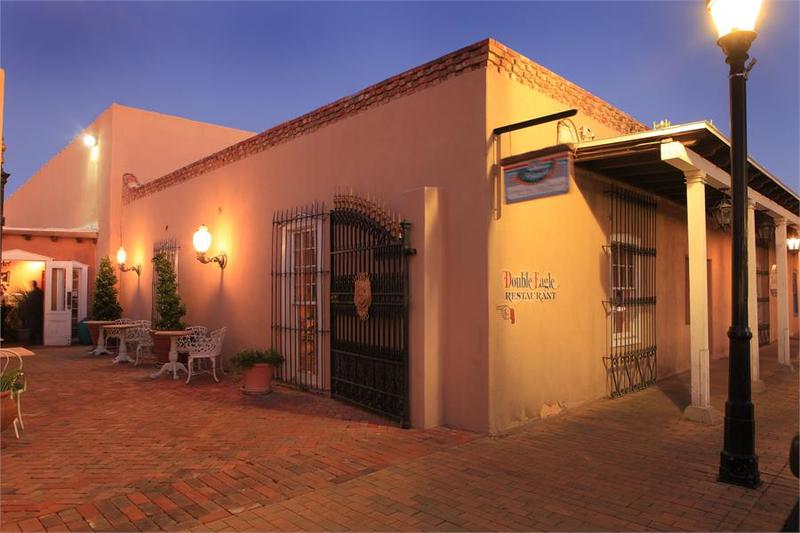
Double Eagle Restaurant
Standing just off the historic plaza in Mesilla, New Mexico, the Double Eagle Restaurant occupies one of the oldest surviving buildings in the region. With thick adobe walls, carved wood beams, chandeliers, and richly decorated dining rooms filled with antiques, the structure feels less like a restaurant and more like a preserved nineteenth-century estate. The original home was constructed in 1849, during a time when Mesilla was emerging as a major settlement along trade routes connecting Mexico, Texas, and the American Southwest. The town itself would soon become the backdrop for several pivotal moments in frontier history. The Gadsden Purchase was confirmed on the Mesilla plaza in 1853, bringing the region formally under United States control. During the Civil War, Mesilla was briefly declared the capital of the Confederate Arizona Territory in 1861. By the late nineteenth century, the town also gained notoriety when Billy the Kid was tried and briefly imprisoned there in 1881. The Double Eagle building stood through all of it, quietly watching the territory around it transform. The haunting legend most closely tied to the property centers on the Maese family, early owners of the home, and a tragic romance that has become one of the most enduring ghost stories in New Mexico. According to local accounts, the family’s teenage son Armando fell deeply in love with Inez, a young servant who worked in the household. Their relationship was forbidden by Armando’s mother, who believed her son should marry into a wealthier and more socially acceptable family. One evening she reportedly discovered the two together in Armando’s bedroom. Enraged, she seized a pair of sewing shears and attacked them. Inez was killed immediately, while Armando was fatally wounded and died days later. The room where the attack is said to have occurred is now known as the Carlotta Room, named after Armando’s mother, and it has become the focal point of nearly every haunting claim connected to the building. Unlike many haunted locations that sit abandoned, the Double Eagle remains active and carefully preserved. Dining rooms branch from one another through narrow passages and archways, still following the layout of the original home. The Carlotta Room in particular carries an atmosphere many visitors describe as unusually heavy or still. In one corner sit two Victorian chairs that have become central to the building’s ghost lore. Reports of paranormal activity at the Double Eagle have circulated for decades among staff and visitors. Many of the experiences center around the Carlotta Room, where Armando and Inez are said to remain. Employees have described chairs and tables shifting slightly, wine glasses breaking without an obvious cause, lights flickering, and unexplained cold spots drifting through the room. Some guests claim to hear whispers or their names spoken when no one else is nearby, while others report seeing shadowy figures near the corner chairs. Those chairs are the most famous detail of the haunting. According to local tradition, the seats show impressions shaped like two people sitting side by side despite rarely being used. Visitors are often warned not to sit in them. Over the years, several people who ignored the warning have reported sudden nausea, overwhelming sadness, or vivid nightmares afterward, reinforcing the belief that the spirits of Armando and Inez still occupy that space. Skeptics note that historic adobe buildings creak, settle, and carry sound in unusual ways, and that powerful stories can shape how visitors interpret ordinary events. But the Double Eagle’s reputation has endured because the reports are remarkably consistent across decades of unrelated visitors. Today the Double Eagle Restaurant operates as both a fine dining destination and one of the most famous haunted locations in the American Southwest. Guests come for the elaborate interior, the preserved frontier architecture, and the deep historical ties to Mesilla’s past. Yet many leave remembering something else entirely—the strange quiet of the Carlotta Room, the chairs in the corner, and the lingering sense that whatever tragedy once unfolded inside the house may not have completely faded with time.
Trotter Home
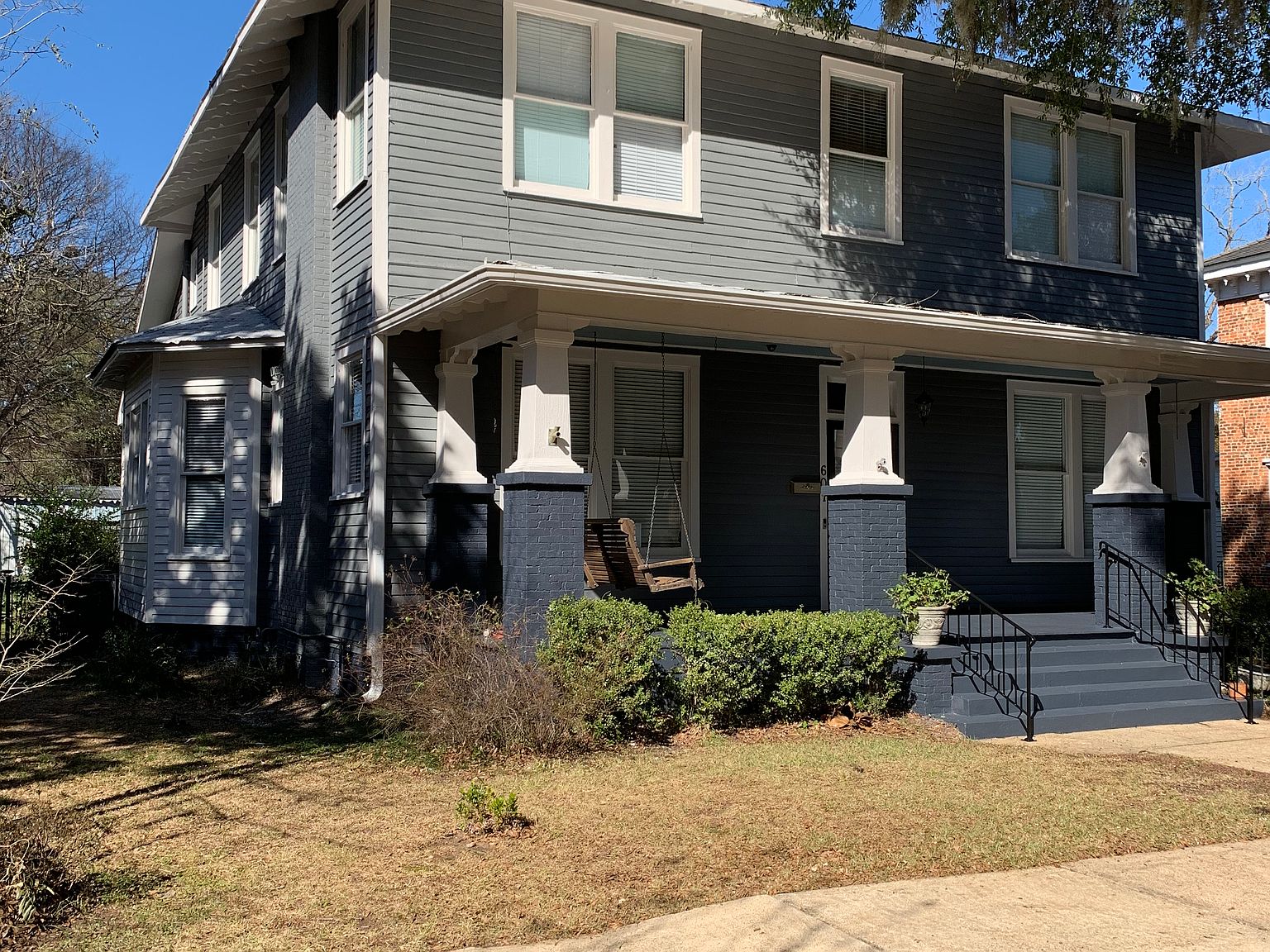
On a tree-lined stretch of Selma Avenue in one of Alabama's most historically saturated cities, the Trotter Home sits as a quiet two-story Victorian-era residence that has accumulated, over the course of more than a century, a reputation that far exceeds its modest exterior. Built in the 1880s during the period of post-Reconstruction recovery that followed the Civil War's devastation of Selma, the house functioned for decades as a boarding house — one of the many private homes along its block that opened their doors to transient workers, young professionals, and families passing through a city still finding its footing in the New South. It is a structure defined less by grandeur than by longevity, the kind of house that absorbs lives rather than showcasing them, and it is precisely that quality of accumulated human experience that gives it its particular atmosphere. Selma itself provides the backdrop that makes stories like this one feel credible even to skeptics. The city sits in the heart of Alabama's Black Belt, on the banks of the Alabama River, with iron-rich bedrock running beneath its streets and centuries of layered history pressing down from above. It served as a Confederate industrial stronghold before Union forces swept through in the Battle of Selma on April 2, 1865, and it became the epicenter of the American civil rights movement a full century later. Paranormal investigators who have worked extensively in the area note that the combination of the city's geology — iron in the ground, a river running alongside, old structures holding old grief — creates what they describe as conditions unusually favorable to the retention and replay of energy. Whether or not that framework carries scientific weight, Selma produces more consistent accounts of unexplained phenomena per city block than almost anywhere in Alabama. The story at the heart of the Trotter Home's haunting begins in September 1941, when a twenty-one-year-old man named Robert Edgar was living in the house's upper front corner bedroom with his mother, the property then operating as a boarding house. He was driving near Marion Junction with his fiancée when the car tipped over and his arm was caught beneath it on the gravel road. The injury was severe enough to require amputation. Gangrene set in quickly. Surgeons removed the arm on September 16, 1941, but the infection had already progressed beyond saving. Three days later, on September 19, Robert Edgar died. His funeral was held in the home where he had lived, and his body was laid in state in the dining room for three days before burial. His gravestone, later discovered by the home's subsequent residents, reads: Although he sleeps, his memory doth live. The family that gives the house its current name — Norm Trotter, his late wife Pat, and their two teenage daughters — moved in on September 16, 1991, fifty years to the day that Robert Edgar's arm was amputated, and three days before the fiftieth anniversary of his death. They had no knowledge of Edgar when they purchased the house. The seller mentioned in passing, just before closing, that the home had a ghost. The Trotters moved in anyway. What followed was a sustained period of unexplained activity that the family documented carefully over years. Strange things began within weeks of their arrival. Guests sleeping in the home woke feeling a brush across their cheek with no one nearby. Coat hangers jangled loudly inside closed closets. A jar sitting on top of a kitchen cabinet with a raised lip fell and shattered without explanation. The daughters, getting ready for prom upstairs, heard the hangers going and opened the closet to find nothing disturbed. One of them woke in the night, saw a figure standing at the foot of the bed, assumed it was a friend staying over — and realized the friend was asleep beside her. In October 1992, during the World Series, a luminous ball of light floated down the staircase and into the foyer, where it lingered for several minutes while Pat watched it, unwilling to move for fear it would leave before she could make sense of it. The same experience was repeated years later by Norm's second wife, Jaclyn, who watched a glowing orb descend the stairs and pause in the foyer while she sat alone watching television. The spirit, when it appears visually, tends to present at the periphery — a shadow glimpsed at the edge of vision that disappears when turned toward directly. Lights switch on and off without anyone near the switch. Doors open on their own. Plants are knocked from their places. The activity was most concentrated when the daughters were living in the house, and diminished somewhat as they grew up and moved away, though occasional incidents have continued. Pat Trotter, who died in 2003, kept a running file of documented encounters during the years the family was most actively experiencing the phenomena. Research into the house's history eventually led Norm Trotter to newspaper accounts of Edgar's death and to the gravesite that confirmed the timing. The coincidence — that the family moved in on the precise anniversary of Edgar's amputation, and that his funeral had been held in the very dining room beneath their feet — struck the Trotters as something beyond accident, though Norm Trotter has consistently framed the situation with measured curiosity rather than fear. The activity, he has noted, was never threatening. It felt more like the presence of someone who remained attached to a place he knew, visiting the rooms he had occupied in life. The Trotter Home has been featured on Fox's Encounters television program and on Alabama Public Television, and has been included in the Selma and Dallas County Chamber of Commerce's Haunted History Tours for years. It remains a private residence, not open for public investigation. The dining room is still there. So, apparently, is Robert Edgar.
Light of Saratoga – Bragg Road Ghost Lights
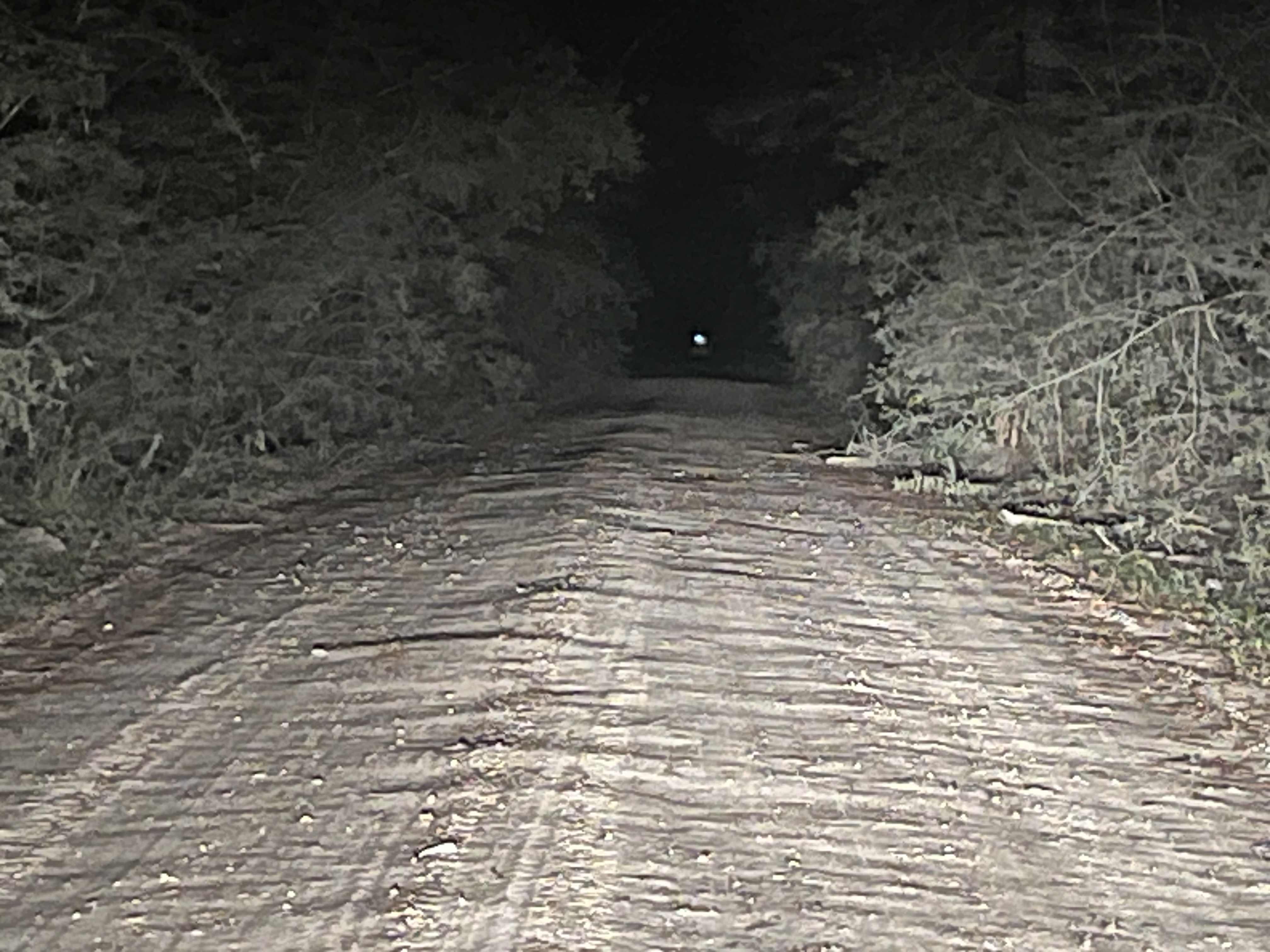
Bragg Road cuts eight miles through the Big Thicket of Southeast Texas in a line so straight it looks drawn with a ruler, a dirt track running north-south between Farm-to-Market Road 787 near Saratoga and Farm-to-Market Road 1293 near the ghost town of Bragg Station in Hardin County. During the day it is an unremarkable passage through dense piney woods, the canopy closing overhead in a green tunnel, the sandy road wide enough for two cars with a few small turnouts along its length. At night it becomes something else entirely. The trees block out all ambient light. The darkness is absolute. And somewhere down the road, almost every time someone drives it after dark, a light appears—a single orb, roughly the size of a small pumpkin, hovering at an indeterminate distance, shifting in color from pale yellow to green to blue, bobbing gently, approaching and retreating but never arriving. It is called the Light of Saratoga, and it has been reported for over a century. The road exists because of the railroad. In 1902, the Gulf, Colorado and Santa Fe Railway cut a survey line through the Big Thicket from Bragg Station to Saratoga, bought right-of-way, and laid tracks to serve the booming East Texas oil fields and the timber industry that was stripping the region's longleaf pine. The Saratoga train made daily trips to Beaumont, hauling oil, logs, cattle, and passengers through some of the densest and most inhospitable forest in the American South. The Big Thicket was swamp and wilderness, thick with cypress sloughs, alive with snakes, mosquitoes, and malaria. Railroad crews suffered casualties from accidents and disease, and the work of maintaining the line was brutal. By 1934, the railroad had become obsolete. The rails and ties were pulled up, but the roadbed remained—arrow-straight, flat, and useful enough that it became a link road for local traffic. No one built along it. No one claimed it. The road simply existed, a corridor through darkness that no longer served any industrial purpose. The ghost light was reported while the tracks were still down. The earliest accounts predate automobile traffic in the area, which eliminates the most common skeptical explanation—that the light is a refraction of headlights from a nearby highway. The highway in question, FM 787, can only be seen from the south end of the road, while the light is typically observed facing north. Reports increased after the rails were removed, and in the summer of 1960, Archer Fullingim, the editor of the Kountze News, began running front-page stories about the phenomenon. Metropolitan newspapers across Texas picked up the coverage, and Bragg Road entered the broader public consciousness as one of the most persistently haunted locations in the state. The legends that have attached themselves to the light share a common architecture. The most widely told involves a railroad worker—sometimes a brakeman, sometimes a conductor—who was decapitated in a train accident on the Saratoga line. His body was recovered but his head was never found, and the light is his lantern, still swinging as his headless ghost walks the roadbed searching for what was taken from him. A second story involves a newlywed bride who wandered away from a nearby hotel after her wedding and never returned. Her groom seized a lantern and spent every night of his remaining life walking Bragg Road looking for her, and the light is the residue of that search, carried forward past his death. A third, grimmer tale holds that a Mexican road crew was murdered by their foreman rather than paid their accumulated wages. The workers were buried hastily in the dense woods alongside the road, and their restless spirits haunt the ground that cost them their lives. None of these stories have been historically corroborated. What has been corroborated, by generations of witnesses, is the light itself. Visitors describe it appearing most often in the early evening, hovering at a distance that makes it impossible to judge size or proximity. It shifts color. It moves laterally and vertically in ways inconsistent with a fixed light source. It does not grow larger or brighter as one approaches—a behavior incompatible with oncoming headlights. Some witnesses describe it darting toward their vehicles at startling speed before vanishing. Others watch it bob gently for minutes before winking out. The experience is consistent enough to constitute a rite of passage for East Texans, who have been driving their friends and children out to Bragg Road after dark for as long as anyone can remember. The scientific explanations are plausible but incomplete. Will-o'-the-wisp—the combustion of swamp gases such as methane and phosphine—is a documented phenomenon in wetlands worldwide, but no laboratory has successfully reproduced it under controlled conditions, and some observers note that Bragg Road does not run through active swampland. Atmospheric refraction of distant light sources is possible along a straight, flat corridor, but the light's behavior does not match the predictable characteristics of refracted headlights. The road is maintained as a park by Hardin County, with weathered historical signs at each end describing the railroad era and the oil boom that brought it into being. Four cemeteries sit in the surrounding woods. Today, Bragg Road remains open and drivable, though it is unpaved and can become impassable after heavy rain. The nearest town is Saratoga, birthplace of country legend George Jones, roughly sixteen miles west of Kountze. There is no admission, no gate, no guide. You drive in from one end, kill your headlights if you dare, and wait. The peepers sing. The fireflies drift. And somewhere ahead, more often than not, a light appears in the darkness that has no business being there—steady, shifting, patient, and impossible to reach. Whether it belongs to a headless brakeman, a heartbroken groom, a murdered road crew, or a pocket of burning gas that science cannot quite replicate, the Light of Saratoga has been answering the darkness on Bragg Road for over a hundred years, and it shows no sign of going out.
San Gabriel Mission Playhouse
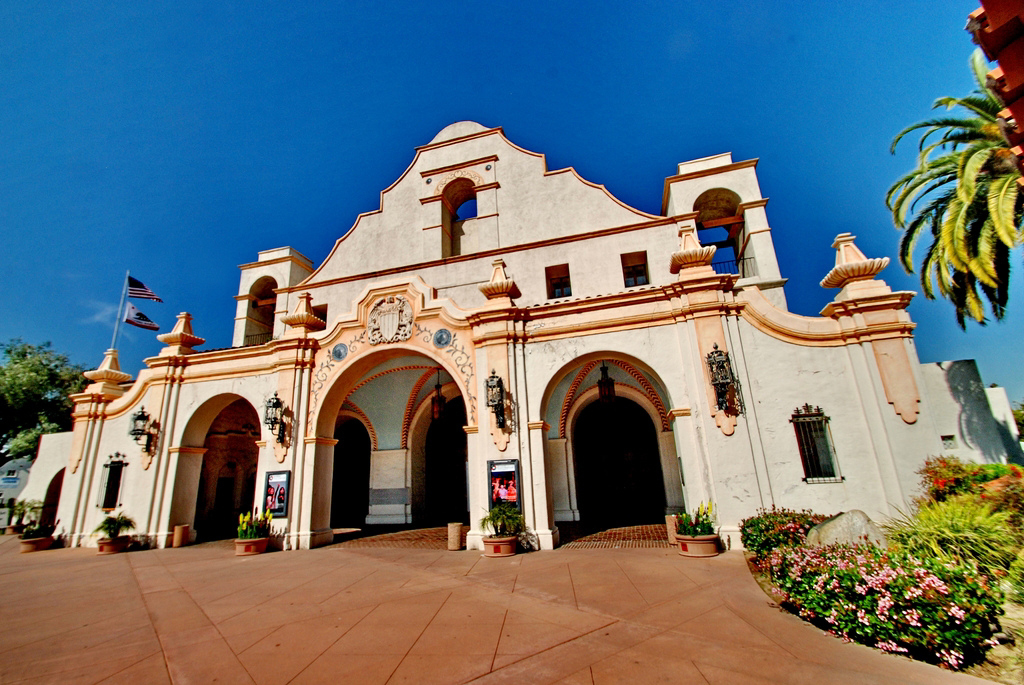
At 320 South Mission Drive in San Gabriel, California, directly across from the old Mission San Gabriel Arcángel, a building designed to look like a Spanish mission but built to house a theatrical spectacle has been attracting audiences—and, according to those who work inside it, retaining at least one permanent resident—since 1927. The San Gabriel Mission Playhouse is a 1,387-seat performing arts venue constructed in the Mission Revival style by architect Arthur Burnett Benton, its facade modeled after Mission San Antonio de Padua in Monterey County. Inside, the theater is an extravagance of cultural layering: a carved and painted ceiling with Native American motifs, replica Spanish galleon lanterns hanging from the beams, woven tapestries gifted by King Alfonso XIII of Spain, and a fully restored 1924 Wurlitzer pipe organ originally built for the Albee Theatre in Brooklyn. The building was added to the National Register of Historic Places in 2019. The Playhouse was built for one man and one production. John Steven McGroarty was born in Pennsylvania in 1862, worked as a county treasurer, lawyer, and mining executive before moving to Los Angeles in 1901, where he joined the Los Angeles Times and began a career as journalist, poet, and chronicler of California history. His most ambitious work was The Mission Play, a three-hour pageant dramatizing the founding, flourishing, and ruin of the California missions from 1769 to 1847. The play opened in 1912 at a smaller venue and became a sensation—over its twenty-year run, more than 2.5 million people saw it across 3,198 performances. McGroarty, known locally as Uncle John, was knighted by the Pope and by the King of Spain, named California's Poet Laureate in 1933, and elected to two terms in the U.S. House of Representatives. He died in 1944 at eighty-one. The Playhouse was completed in 1927 to give his production a permanent home. When the Depression ended the play's run in 1932, the building served as a movie theater, then had its dressing rooms converted to apartments during the wartime housing shortage. The City of San Gabriel purchased it in 1945, renaming it the San Gabriel Civic Auditorium until the original name was restored in 2007. The paranormal claims revolve primarily around Uncle John himself. Staff report that McGroarty has never left the theater he built. His apparition has been spotted during performances and has appeared on security monitors. A metal bar inside the theater is said to swing on its own when a show particularly pleases him—a detail reported by a former employee as a known phenomenon among staff. The top floor and backstage areas carry the strongest reputation. A former stage manager is also said to haunt the building, and the ghost of a young girl has been reported in the theater's interior. Beneath the Playhouse lies a network of tunnels McGroarty had built so he could move between backstage and the foyer without crossing through the audience. One account—unverified but embedded in local lore—holds that during the Depression the tunnels were used to store dead bodies, and when full, were sealed shut. Whether or not the story is true, the tunnels exist and remain partially accessible. A former employee described seeing the entrance to one unsealed section, and multiple staff members have reported an oppressive feeling near the staircase on stage right. The upstairs areas and backstage dressing rooms are described as deeply unsettling when occupied alone. The building sits in a district saturated with history far older than the Playhouse. Mission San Gabriel Arcángel was founded in 1771 and served as one of the most productive of the twenty-one California missions. The surrounding ground holds the remains of thousands of Indigenous people who lived, labored, and died under the mission system. Residents have reported finding arrowheads while digging in their yards. One visitor described sensing robed figures walking in procession outside the Playhouse—hooded monks who paused only when a large cross was raised before them. Today the Mission Playhouse continues to host music, theater, dance, and community events. The Wurlitzer still plays. The tapestries from Spain still hang. The carved ceiling still catches the light the way it did when Uncle John first walked beneath it. And if the accounts from those who work the building are to be believed, he is still walking beneath it—swinging the bar when a show earns his approval, and refusing, nearly a century after his death, to give up the theater he built to tell the story of California.
Heartbeat Bridge
Somewhere south of Whiteville, in the flat, swampy lowlands of Columbus County, North Carolina, Chair Factory Road cuts through a stretch of coastal plain that feels older than anything built on it. The road is narrow, rural, and unlit—bordered by pine forest, drainage ditches, and the kind of dense Carolina swamp that swallows sound and light in equal measure. Partway along it, a small bridge crosses a dark waterway. There is no historical marker. There is no signage. But for decades, locals have called it Heartbeat Bridge, and what they claim to hear there has made it one of the most persistent pieces of paranormal folklore in southeastern North Carolina. Columbus County was carved from parts of Bladen and Brunswick Counties in 1808. The land had been home to the Waccamaw people for centuries before English settlers pushed into the region. The Waccamaw eventually retreated into the swamps around their namesake river and Lake Waccamaw, where roughly 1,800 members of the Waccamaw-Siouan tribe still live. The county seat, Whiteville, was incorporated in 1832 on land donated by state senator James B. White. The area developed slowly, driven by agriculture, naval stores, and timber. Chair Factory Road takes its name from one of these old timber-related enterprises—a chair manufacturing operation that once stood along the route, now long gone, leaving only the road name behind. The landscape is defined by water. The Waccamaw, Lumber, and Cape Fear Rivers all flow through or border the county. The Green Swamp, a vast pine savanna ecosystem, lies to the east. Carolina bays—thousands of shallow, oval depressions of uncertain geological origin—dot the terrain. The bridge spans one of the area's many dark, slow-moving creeks, the kind that barely moves in summer and rises without warning after rain. It is a profoundly quiet place at night—no traffic, no ambient noise, just insects, frogs, and the occasional movement of water beneath the road. The legend centers on a murder. A young woman was reportedly killed on or near the bridge by a masked assailant, who cut out her heart and threw it into the water below. The tale has circulated in Columbus County for generations, passed along at bonfires, church hayrides, and late-night drives through the countryside. There are no verifiable records of such a crime. No newspaper accounts, no police reports, no named victim. The story exists entirely in the oral tradition—which, in a rural Southern county with deep roots and long memories, is not the same as saying it is baseless, only that it cannot be confirmed. What draws people to the bridge is what they claim to experience there. Visitors report that if you park on the bridge at night and cut your engine, you can hear the sound of a heartbeat rising from the water—faint at first, then growing louder, sometimes to the point of discomfort. The sound is described as rhythmic and unmistakable, not easily confused with frogs or the settling of a vehicle. Some visitors report shadowy figures in the tree line. Others describe orbs of light in photographs. One account describes a bottle placed on the hood of a car, the bag beneath it yanked away by an unseen force without the bottle moving—witnessed by multiple people on a windless night. Another longtime local describes sitting on his car hood listening to what he calls the soothing sound of the swamp, suggesting the bridge's atmosphere carries a quality not everyone interprets as threatening. The bridge sits near another Columbus County haunt—Old Tram Road, a long straight stretch associated with its own legend of a ghostly racing light. The two locations share a geographic and folkloric ecosystem, connected by the same back roads, and locals frequently visit both in the same night. The concentration of paranormal claims in this corridor of rural Columbus County has drawn amateur investigators and regional paranormal groups, though no formal investigation has produced conclusive findings. Skeptics will note that swamp environments produce a wide range of sounds—gas escaping from decomposing matter, water moving through submerged structures, the amplified acoustics of a flat landscape at night. A bridge surface acts as a resonating chamber. The human ear, primed by a frightening story and surrounded by darkness, is good at finding patterns in ambient noise. But the sheer number of independent accounts describing the same rhythmic sound at the same location, spanning decades, gives the claims a consistency that acoustics and suggestion don't fully explain. Heartbeat Bridge remains an unmarked, publicly accessible bridge on a rural county road. There is no admission, no tour guide, no gift shop. It is simply a place where the road crosses the water, the trees close in, and something beneath the surface—whether memory, geology, or something harder to name—keeps beating.

Wellscroft Lodge
Perched on the wooded slope of Ebenezer Mountain in Upper Jay, New York, Wellscroft Lodge is exactly the kind of building that stops you cold — a sprawling Tudor Revival mansion with steeply pitched gables, native fieldstone on its lower exterior, a porte cochere, projecting bays, and a roofline that breaks against the Adirondack treeline in a dozen different directions. It was built not as a hunting camp or rustic retreat, but as a statement of private wealth in one of the most scenic corners of the Northeast. The estate was constructed in 1903 at a reported cost of $500,000 — an extraordinary sum for the era — as a summer home for Jean Wells Smith and her husband Wallis Craig Smith, a Michigan attorney and businessman with interests in iron, hardware, and law. Jean was the daughter of Charles W. Wells, a prominent Saginaw industrialist whose accidental death in 1893 — his canoe capsized while he was shooting game, and he died of heart failure in the cold water before help could reach him — had stunned the Saginaw community and generated public mourning on a citywide scale. The name Wellscroft honored her family. At the time of its completion, it was among the largest private country estates in Essex County. The compound included not only the main house but a powerhouse, firehouse, gazebo, root cellar, reservoir, carriage house, and caretaker's cottage. The interior was finished in Arts and Crafts style, with careful detailing throughout its 22 rooms. The Smiths held the property for several decades before selling in 1942. What followed was a long and uneven second life — periods as a public lodge, stretches of private ownership, and at least two extended periods of abandonment interrupted by attempts at restoration. The building was listed on the National Register of Historic Places in 2004. The paranormal history of Wellscroft is dominated by a single persistent figure: a woman in a red dress. She has been reported appearing on the main staircase, standing in the front windows visible from outside, and moving through the upper floors when the building's power was completely off. Multiple unrelated witnesses, spanning different decades, describe the same apparition in strikingly consistent terms. A former resident who lived in the caretaker's house in the mid-1980s reported seeing the Lady in Red approximately ten times over four years. His family's two beagles refused to enter a specific room off the main lobby — hair raised, growling — and would not be coaxed past the threshold under any circumstances. That same witness described a Ouija board session in which the planchette allegedly launched itself off the table with no hands on it, sending the group of children involved scrambling out of the building. Phantom music has been reported inside the lodge, along with disembodied voices with no visible source. A former lodge manager's son described the death of his father in the second-floor master suite on January 6, 1965 — a deeply personal account that underscores the real human grief woven through the building's history, separate from any paranormal claim. The identity of the Lady in Red has never been confirmed. Whether she belongs to the original family, a later period of use, or to the imagination of a building that simply looks the part is unknown. Wellscroft has been the subject of a 2024 documentary podcast episode titled Seeing Red: The Hauntings of Wellscroft Lodge. It is private property. The mountain keeps its secrets.
Thompson Park Vortex
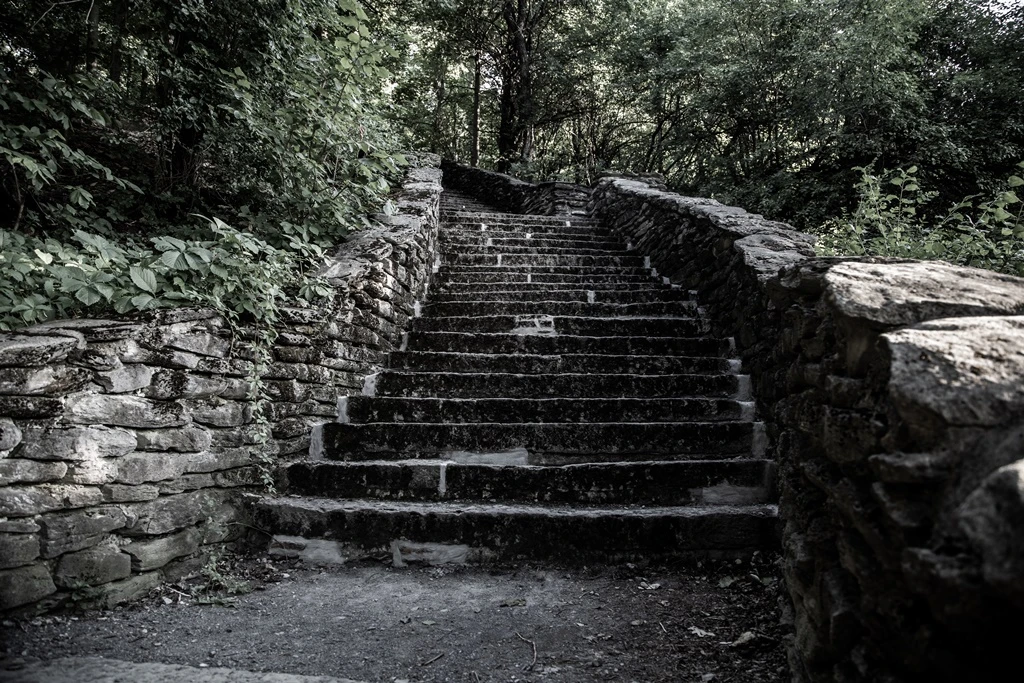
Thompson Park sprawls across 355 acres of rocky, wooded hillside on the northwest edge of Watertown, New York, in Jefferson County—a landscape of rolling meadows, steep overlooks, stone pavilions, and curving roads that climb toward a summit known as the Pinnacle, from which you can see clear across the city to Lake Ontario. It is a place designed for picnics, golf, sledding, and afternoon walks. It also has a zoo. None of this sounds like the setting for one of the stranger paranormal claims in the northeastern United States. But for well over a century, people have been reporting something in Thompson Park that does not fit comfortably into any familiar category—not ghosts, not hauntings, but something closer to a glitch in the landscape itself. The park was the vision of John C. Thompson, president of the New York Air Brake Company, who in 1899 anonymously contacted the Olmsted Brothers firm about designing a public green space for Watertown. John Charles Olmsted—nephew and adopted son of Frederick Law Olmsted, the father of American landscape architecture and designer of Central Park—took the lead. He produced a general plan by 1901, and over the next two decades supervised construction on the challenging terrain, designing walls, shelters, overlooks, and stairways into the steep hillside. Thompson secretly acquired the land and donated it to the city around 1916, though his identity as benefactor remained hidden until his death in 1924, when the park was renamed in his honor. A zoo was added in 1920. A golf course followed. The park became a centerpiece of civic life in Watertown, and it has remained one ever since. The claims associated with Thompson Park are not about apparitions or disembodied voices. They are about disorientation—spatial and temporal. Since at least the early 1900s, visitors have reported sudden episodes in which they appear to lose their bearings entirely, finding themselves transported to a different part of the park with no memory of walking there. These episodes are described as brief—roughly four minutes by the clock—but subjectively feel much longer. Witnesses report mist-like visual disturbances, nausea, confusion, and odd sensory effects. Some accounts claim that people have disappeared momentarily and then reappeared, disoriented and insisting they had briefly visited another time. A few darker versions of the legend suggest that not everyone comes back. The phenomenon has been loosely dubbed a "vortex," and witnesses have noted over the years that its apparent location shifts within the park's boundaries. In 2007, a paranormal investigation team called the Shadow Chasers was invited by a local Fox News affiliate to examine the park with electromagnetic field equipment. What they found was unusual: parallel bands of EMF running through the park in a grid-like pattern, intersecting at regular intervals. They could not identify a source. Sustained exposure to elevated EMF is known to produce nausea, headaches, the sensation of being watched, and in some cases visual and auditory hallucinations—symptoms that align closely with what visitors to the park have described. The investigators offered a tentative hypothesis: the so-called vortex may not be a portal at all, but a physiological response to an unexplained electromagnetic environment. They also acknowledged they had never encountered anything like the pattern before or since. The city of Watertown has leaned into the legend rather than away from it. In 2014, during a partial lunar eclipse viewing that drew roughly 250 people to the park's eastern tree line, city officials installed a sign dubbing the site "Watertown's Area 51"—a nod to the coincidence that the CIA's actual code name for Nevada's Area 51 was "Watertown," chosen by former director Allen Dulles, who was born in the city. The vortex is now listed on the Haunted History Trail of New York State, one of fifty paranormal destinations promoted across the state by a coalition of tourism agencies. Today Thompson Park remains open and free to the public. The sign is near the zoo entrance. The vortex, wherever it is at the moment, is somewhere in the trees.
Devil’s Bridge
On the south side of San Antonio, where the city thins out into scrubby ranchland and the San Antonio River bends through old mission territory, a small bridge on East Ashley Road crosses a ravine deep enough that locals say if you drop a rock from the railing, you'll never hear it land. The bridge sits near 2454 East Ashley Road, not far from Mission San Juan Capistrano—one of the chain of eighteenth-century Spanish missions that line the river and now form a UNESCO World Heritage Site. The area has been continuously inhabited for thousands of years. Native Americans camped along this stretch of river long before the Spanish arrived. The missions themselves, established in the 1730s, were built with Indigenous labor and sustained by an elaborate acequia system that still carries water through the surrounding farmland today. The ground here is layered with centuries of human presence, conflict, disease, conversion, and death. It is old land, even by Texas standards. Devil's Bridge is not an ancient structure. It is a modest roadway bridge, unremarkable in engineering, crossing a steep ravine in an area that goes very dark after sundown. The name belongs to a global tradition—there are dozens of Devil's Bridges across Europe, most of them medieval, each carrying its own legend about a pact with Satan in exchange for construction. San Antonio's version doesn't have a clear origin story for the name itself. Some say it refers to supernatural happenings at the site. Others suggest it simply describes the danger of crossing the ravine at night on an unlit road, in an era before guardrails and headlights made such crossings routine. The bridge did claim at least one documented life: on March 7, 1965, shortly after midnight, a forty-one-year-old woman named Victoria Ann Broussard was fatally injured when the car her husband was driving struck the bridge's guardrail head-on. He told the responding patrolman he hadn't seen the bridge. She was pronounced dead at Baptist Memorial Hospital and buried at San Fernando Cemetery No. 2. The paranormal claims at Devil's Bridge draw from multiple threads, none of them cleanly verifiable but all of them persistent. One account ties the haunting to the Spanish colonial period, claiming a priest whose parishioners were killed during the Inquisition hanged himself from a tree near the bridge. Visitors have reported hearing the sound of a creaking rope in the surrounding trees—rhythmic, deliberate, like a body swinging from a noose. A priest at the nearby San Juan Church reportedly warned a young man in the early 1970s to be careful exploring the riverbank near the bridge, telling him he had personally seen spirits walking the grounds where Native Americans once camped. The young man had found pottery shards and square nails in the area, artifacts consistent with centuries of habitation along the river. A paranormal investigator named Joe recorded EVP sessions at the bridge and claimed to capture a voice responding to the question "Who are you?" with the name "Melvin," along with a separate recording of a voice saying "I'm here." No historical records have been found for anyone named Melvin connected to the site. Visitors have also reported the apparition of a headless woman who approaches from behind, white smoke-like figures, and the smell of sulfur—rotten eggs—hanging in the air around the bridge at night. The claim about the impenetrable darkness is among the most frequently repeated: that after sundown, the area around the ravine becomes so dark that headlights and flashlights seem to penetrate only a few feet, as if the light itself is being absorbed. The most unsettling recurring detail involves the ravine itself. Multiple accounts describe throwing rocks off the bridge and never hearing them hit water or ground—as though something catches them, or the ravine simply has no bottom. One version of the legend attributes this to the spirit of a little girl. The depth of the ravine is real and measurable, but the acoustic effect in a steep, vegetation-choked gully at night, combined with ambient insect noise and the psychology of expectation, could plausibly account for the phenomenon. Or it couldn't. The people who've stood on that bridge in the dark tend to find the explanation less comforting than the mystery. Today Devil's Bridge remains a functioning road bridge on East Ashley Road, accessible by car, with no signage or formal acknowledgment of its reputation. Mission San Juan sits nearby, its stone walls and flowing acequias drawing tourists and pilgrims. The San Antonio Food Bank farms the old mission fields just down the road. It is a landscape where the sacred, the agricultural, and the spectral exist in close proximity—where a UNESCO site and a haunted bridge share the same stretch of river, and where the oldest water rights in Texas still flow through ditches dug by hands that have been gone for three hundred years.

Hannan Playhouse
Raymond, Washington sits at the head of the Willapa River estuary in Pacific County, about as far into the rainy, timber-shadowed southwest corner of the state as you can get without running out of land. The town was built starting in 1903 on stilts above the tidelands and sloughs of the river delta, its original boardwalks spanning water twice a day as the tides moved beneath them. Old-growth fir and cedar blanketed the surrounding Willapa Hills, and the mills ran twenty-four hours a day converting that forest into lumber destined for San Francisco, South America, and Hawaii. At its peak around 1913, Raymond claimed a population of six thousand — workers and merchants and the immigrant families who followed the work — and billed itself with characteristic Pacific Northwest optimism as the Empire City of Willapa Harbor. Among those immigrant communities were German, Greek, Finnish, and Polish workers, each establishing the social institutions that working-class immigrant populations built wherever they settled: churches, fraternal orders, mutual aid societies, and, in the Polish community's case, a hall. That hall — the Raymond Polish Hall — stood at 518 Eighth Street, a modest building serving as the social and cultural center for the Polish community that had come to the Willapa Valley to work the mills. Polish fraternal halls were a fixture of industrial immigrant life across the American Northwest and Midwest, providing gathering space for dances, meetings, weddings, and the kind of communal maintenance of culture that helped people remain coherent as a community far from home. The building served the Polish community through the first half of the twentieth century, through the boom years and through the Depression, through the decline of the old-growth harvest and the gradual softening of the industrial roar that had drawn those families to Raymond in the first place. By the time the timber economy began its long contraction in the mid-twentieth century, the community institutions built to serve it had aged alongside the town itself. The Willapa Players, a community theater group with roots going back to the 1930s and a formal resurgence in 1956, had been putting on productions in the Raymond area for years. The group was partly the creation of the Hannan family — a Raymond attorney named Hannan had been among its organizers in the early years, directing productions and building the troupe into a Pacific County institution. His wife had trained at the Cornish School in Seattle and the San Francisco Opera Ballet School and had spent her career as a dance instructor and choreographer throughout the region. In 1969, the Willapa Players acquired the old Polish Hall on Eighth Street and began converting it into a proper playhouse, which they named for the family most associated with its founding. The renovation was straightforward enough in conception — a community theater carved from a fraternal lodge — but it did not proceed quietly. The building that emerged from the conversion is a small, functional playhouse: a main stage, a seating house, dressing rooms, an attic above the stage, and the particular acoustic intimacy of a space designed for community gathering rather than professional performance. The Hannan seated audiences in close proximity to the stage, the kind of theater where the actors and the house are genuinely in the same room. For decades it served as the only dedicated performance venue in Pacific County, and the Willapa Players used it for adult productions, youth shows, and concerts that brought the region together in the way the Polish Hall had done for the immigrant community before them. The paranormal reports at the Hannan began during the 1969 renovation itself, before the theater had opened. Construction crew members heard footsteps in the attic when no one was up there. Props shifted position on the stage overnight. Doors opened and closed without explanation. Dusty footprints appeared on surfaces that had not been walked. A cat appeared inside the building and vanished. When the Willapa Players held their grand reopening, a company member found a set of footprints pressed into several inches of accumulated dust on the main stage — the building had been locked for years, and no one had been on that stage. Reports multiplied once the theater was in regular operation. Four distinct presences have been described by actors, crew members, and audience members across the decades: a laughing caretaker figure seen in the main house; a female costume designer appearing in the dressing rooms; a black cat observed crossing the stage during live productions; and a spirit called Oscar, understood in the theater's tradition to be the ghost of a Polish immigrant who died in the building during its years as the Polish Hall, and who has become the resident personality of the Hannan — protective, theatrical, watching over the actors as productions unfold in what was, in its earlier life, his community's gathering place. Paranormal investigators from Love the Dead Paranormal conducted multiple formal sessions at the theater, capturing an EVP of a voice saying the name "Chester," recording orb activity on video, and noting persistent EMF spikes in the dressing rooms and in the seats of the stage area. Actors who have worked multiple productions at the Hannan describe a specific accumulation of experience: cold spots appearing suddenly at stage right, objects seen moving on the rafters, shadows near the dressing room corridor, and an oppressive heaviness reported in the upper reaches of the building after hours. House lights have switched on after the lighting crew has left. In one well-documented account, an actor mid-scene looked up to see an object slide off a rafter above the stage, seconds before a cold zone settled across the right side of the stage and two people reported being physically touched. The experiences are specific enough and consistent enough across productions that the Willapa Players eventually leaned into them — local playwright and troupe president Russell Wiitala wrote an original musical called The Haunted Hannan Playhouse, drawing on sixty years of accumulated first-person accounts from people who had worked and performed in the building. The Willapa Players sold the Hannan Playhouse in 2020 and relocated to a former Methodist church in nearby South Bend, leaving the Eighth Street building behind. The move was practical — the old seats were, in Wiitala's words, like a torture chamber, and the lighting booth was the size of a fighter-plane cockpit. Whatever the practical case for leaving, the Hannan itself remains on the corner across from the park, its stage dark, its dressing rooms empty, its attic sitting above a building that began as a gathering place for people far from home and ended as the most haunted theater in the Pacific Northwest by the honest testimony of the people who spent decades performing inside it. Oscar, if he is still there, is watching an empty house.
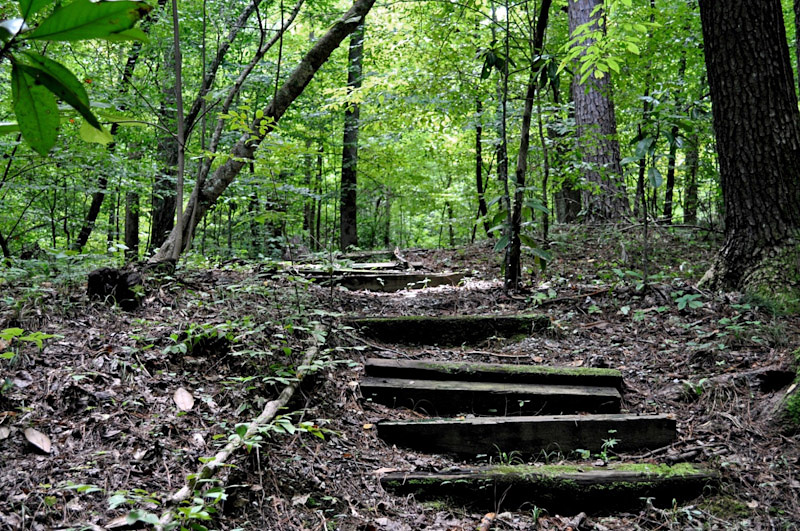
Nancy Mountain – Haines Mountain
Deep in the western reaches of Monroe County, Alabama, where the Alabama River bends through bottomland hardwood forest and the land rises in quiet, forested ridges above the water, there is a two-mile trail on a hill that locals have been calling Nancy's Mountain for generations. It sits within Haines Island Park, a 480-acre tract managed by the U.S. Army Corps of Engineers on the eastern bank of the Alabama River near the small community of Franklin. The park is not widely known outside the region. It has no dramatic overlooks, no landmark architecture, no interpretive museum. What it has is the river, the trees, a cable ferry that has been pulling vehicles across 300 yards of water since the 1830s, and a story that has outlasted every living person who first told it. The landscape itself is worth understanding before getting to the legend. This corner of Alabama sits in the Southern Red Hills, a geographic zone of steep, forested slopes rising above the river plain — unusual terrain for a state where much of the interior lies flat and open. Haines Island Park occupies that transitional ground, where the elevation climbs just enough above the Alabama River to create the kind of isolated, fog-wrapped ridge that naturally invites stories. The river has always been the arterial presence here. For most of American history, the Alabama River was the primary highway through this part of the state, carrying cotton downriver to Mobile and settlers upriver into the interior. Davis Ferry, which has operated at Haines Island in various forms for nearly two centuries, was one of the essential crossing points — a place where lives, cargo, and news traveled from one bank to the other. It was the kind of location that, in the mid-nineteenth century, a farming family might have settled specifically for the access it provided and the proximity to passing river traffic. The legend of Nancy begins in that period, set against the opening months of the Civil War. According to the oral tradition that has been passed down through Monroe County for well over a century, a woman named Nancy lived with her husband and their only son in a farmhouse on the mountain above the river. When the war came, the son enlisted in the Confederate Army and left. Months passed without word. Nancy, as the story goes, became increasingly distressed with each passing boat that arrived at the ferry landing without her boy aboard. Every day she walked down to the river to watch for him. Every day she returned without answers. Her husband, unable to watch her grief and unable to sit still, eventually left to search for the boy himself. Then the news came. Word reached Nancy that her husband had been found frozen to death near the grave of an unknown soldier somewhere in Tennessee — near Lookout Mountain, in some versions of the telling. He had died on his search, beside a grave that may or may not have held their son. No one ever confirmed the identity of the soldier buried there. The son's body was never recovered. Nancy, now alone on the mountain with neither husband nor child, reportedly continued walking — but the purpose of the walk changed. She carried a lantern and a pail of water, walking the trails of the mountain every night, waiting and searching and keeping vigil for a son who never came home. At some point Nancy herself disappeared. Her house fell to ruin and eventually vanished into the hillside. What remained was the mountain and the trail, and the accounts that began accumulating from people who walked it after dark. The reported phenomena at Nancy's Mountain are simple and consistent across decades of accounts. The most common sighting is a light — a lantern glow moving through the trees at night, bobbing as if carried by someone walking the trail, visible at a distance and then gone. Multiple visitors to the park, including local residents who grew up in the surrounding communities, have described seeing this light. Some have heard sounds that don't belong to the forest: footsteps on the trail, or something closer to a voice carried through the fog from the river. The apparition itself, when it appears to witnesses, presents as a woman in old-fashioned clothing moving through the trees, sometimes described as floating rather than walking, always carrying the lantern. Former park superintendent Ike Lyons documented multiple incidents over his tenure in which campers on the mountain abandoned their campsites in a panic after encountering what they described as a woman in period dress moving down the trail toward them. Animals have figured into the accounts as well. One writer who visited the trail with a large dog — a Labrador that had hiked dozens of trails without hesitation — found the animal refusing to move at the trailhead, sitting down and whimpering, unwilling to proceed up the mountain despite every encouragement. Whether that reflects something the dog sensed or simply the particular atmosphere of a foggy morning on a wooded hillside above the river is a question the story leaves open. The Nancy's Mountain Trail today is a two-mile loop within Haines Island Park, open from sunrise to sunset. The trailhead shares its parking area with the Davis Ferry landing, where the cable-guided boat still runs on weekdays, carrying a vehicle at a time across the Alabama River just as ferries have done at this spot since before Alabama was a state. The forest is dense and hardwood-heavy, particularly striking in autumn, and the trail climbs gradually through terrain that feels removed from the modern world in ways that go beyond simple quiet. The park is free. The ferry is free. The trail has no fee, no ranger station, no formal ghost tour. It is simply a path through the woods on a hill above an old river, in a county where the Civil War still echoes in the landscape and in the stories that people tell about it. Whether Nancy is out there or not, the mountain bears her name because something about this place, over many generations, has made the people who walk it feel like they are not entirely alone.

Bethlehem United Methodist Church
Sitting on McElderry Road in the rural northeast corner of Talladega County, Bethlehem United Methodist Church is the kind of small-town Alabama congregation that holds the bones of a community. Its attached cemetery has served the surrounding area for generations, and its burial records reach back into the 1800s, when the first settlers were still arriving in the region and the land was young enough that families lived and died within a few miles of where they were born. The church is still active, still holding Sunday services, still tending its grounds — which makes its quiet reputation for strange happenings at night feel more intimate than the usual deserted-ruin ghost story. Munford itself carries a particular weight in American history. First settled in the early 1830s, the town sits in northeastern Talladega County against the backdrop of Cheaha Mountain, the highest point in Alabama. It grew slowly through the antebellum period as a small farming community, surrounded by the kind of Appalachian foothills landscape that kept large plantation agriculture limited but did not insulate it from the broader cruelties of the era. What Munford is best known for historically is an event that happened fourteen days after the Civil War should have already been over. On April 23, 1865 — two weeks after Robert E. Lee's surrender at Appomattox — roughly 150 exhausted Confederate soldiers, described in accounts as convalescents, home guards, and pardoned deserters, faced off against 1,500 veteran Union cavalrymen under General John T. Croxton, armed with repeating carbines. The skirmish lasted only minutes before the Confederate position collapsed. One soldier died on each side, and Lieutenant Andrew Jackson Buttram became what many historians consider the last Confederate soldier killed in battle east of the Mississippi River. The fight at Munford is widely regarded as the final engagement of the Civil War in the Eastern Theater — a war that ended, in part, right here on this ground. That history hangs over the entire area. A community that absorbed the last shots of the Civil War and carried forward its dead through Reconstruction, through the mill era, through the industrial decline of the 20th century, accumulates a particular kind of layered grief. Church cemeteries like Bethlehem's are repositories for all of it — the marked graves and the unmarked ones alike. A regular churchgoer noted in one account that the cemetery contains unmarked graves of families whose descendants still remember them, tracing names like Nabors back to the 1800s through Decoration Day visits, the Southern tradition of gathering at church graveyards each spring to clean and decorate the graves of the dead. The paranormal claims at Bethlehem are modest but consistent. Visitors and passersby report seeing orbs rising over the cemetery after dark — soft, hovering lights that lift above the headstones and dissipate. The accounts come from multiple unrelated sources over time, spanning casual visitors and people who know the property well. One regular churchgoer offered a rational interpretation, suggesting the lights result from moonlight or passing headlights reflecting off certain headstones at specific angles, visible only at the right position. Others who visited on Halloween captured balls of light in photographs that were invisible to the naked eye at the time of shooting, a detail they described as disorienting. Whether the orbs at Bethlehem reflect something genuinely unexplained or are a product of old reflective stone and the human tendency to see meaning in light and shadow, the cemetery has earned its quiet local reputation. It is a functioning sacred space, maintained and attended by a congregation that has gathered here across generations, and the dead buried within it are not strangers — they are neighbors, relatives, and the people who built this community. The church remains open to its members. The cemetery asks for respect.

Cedarcrest Hospital
Cedarcrest Hospital sits on a wooded hillside off Russell Road in Newington, Connecticut, just east of the Berlin Turnpike and tucked far enough into the trees that most people driving through Hartford County have no idea it is there. The campus has been largely abandoned since 2010, its windows dark, its corridors open to weather and decay, its grounds patrolled intermittently by security. It is the kind of place that generates ghost stories almost by default. But Cedarcrest earned its atmosphere the hard way, through a full century of institutional use that began with one of the deadliest diseases in American history and ended with the quiet discharge of the state's most vulnerable psychiatric patients into a system that had no more room for them. In the early 1900s, tuberculosis was one of the leading causes of death in the United States. Connecticut, with its dense industrial cities and crowded tenements, was hit hard. Without a cure, the only strategy was isolation. The poor went to sanatoriums. In 1910, Hartford County opened the facility under its original name: the Hartford County Home for the Care and Treatment of Persons Suffering from Tuberculosis. By 1912, officials had mercifully shortened it to the Hartford State Sanatorium. Two treatment pavilions and a medical center rose atop Cedar Mountain to house the region's tuberculosis patients, many of whom were children. Life inside was defined by enforced stillness, fresh air exposure in all weather, and the slow arithmetic of survival. Patients who recovered did so over months or years. Many did not recover at all. Families left children at Cedarcrest not knowing when or whether they would return. In 1925, the facility was renamed Cedarcrest Sanatorium as part of a statewide effort to improve the public image of these institutions, though a name change did nothing to alter what happened inside them. The arrival of streptomycin in the 1940s made tuberculosis controllable, and the sprawling sanatorium system became redundant. Rather than demolish the buildings, the state repurposed them. Between the late 1930s and mid-1970s, Cedarcrest underwent a series of administrative transfers before ceasing operation as a sanatorium entirely in February 1976. The campus was handed to the Connecticut Department of Mental Health and reopened as Cedarcrest Regional Hospital, a 128-bed psychiatric facility treating patients with addiction and mental illness. One original treatment pavilion was demolished. Another, known as Hospital Two, was simply abandoned in place and left to deteriorate on the hillside. The psychiatric era lasted over three decades but ended with budget constraints and shifting policy. In 2010, all inpatient services were discontinued. Patients were transferred to Connecticut Valley Hospital in Middletown or discharged to supervised group homes. The campus officially ceased all operations in 2012. In 2018, the state transferred control of the land to the Town of Newington, though the buildings remain state property and are not slated for demolition. Paranormal claims at Cedarcrest are modest compared to more theatrical haunted locations but consistent in character. Visitors who have entered or approached the buildings report disembodied screams echoing through empty corridors, the sound of heavy doors slamming in unoccupied wings, and unexplained voices. Photographs taken on the property have captured light anomalies that some interpret as spirit manifestations. A former security guard who worked the third shift in the late 1970s—when portions of the campus were already abandoned—reported hearing unsettling screams during overnight patrols of darkened buildings with only a flashlight. He described the experience as disturbing enough that he quit. Others describe a pervasive heaviness near the older structures that predate the psychiatric conversion. It should be noted that at least one person who explored the property found nothing unusual at all and described the atmosphere as that of an ordinary abandoned building. The honest assessment is that Cedarcrest's haunted reputation rests more on what it was than on any well-documented catalog of paranormal events. A century of tuberculosis deaths, decades of psychiatric institutionalization, and the slow visual decay of abandonment create a powerful cocktail of suggestion. The crumbling plaster, the overgrown grounds, the silence of a place built to hold 128 suffering people and now holding none—these things do their own work on the human nervous system without requiring anything supernatural. Today, Cedarcrest remains closed and restricted. Trespassing carries real legal consequences. The buildings stand in various states of decay on Cedar Mountain, a place where Connecticut quietly stored its sick, its addicted, and its mentally ill for a hundred years before deciding it could no longer afford to. Whether anything lingers there beyond memory and architecture is a question the state has shown no interest in answering.
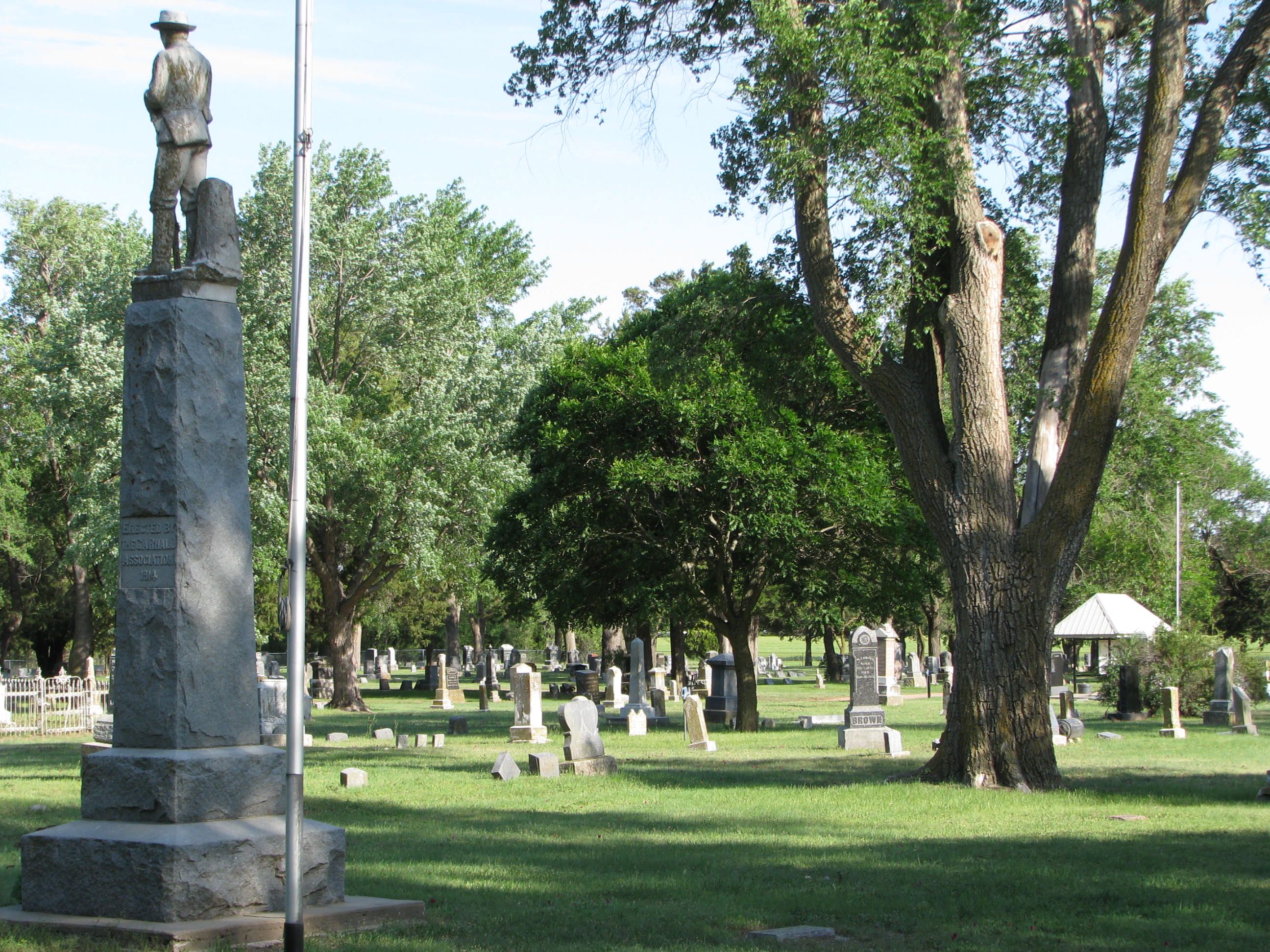
Wildmead Cemetery
Out on the flat central Kansas prairie, roughly a dozen miles northwest of Hutchinson along the Arkansas River lowlands, the small town of Nickerson came into being the way most of this part of the country did — by rail. The Atchison, Topeka and Santa Fe Railway laid its line through Reno County in 1872, and the town platted along that corridor was named in honor of Thomas Nickerson, then president of the railroad. First houses followed in 1875, incorporation came in 1879, and by the turn of the century Nickerson had banks, mills, a newspaper, an opera house, and Nickerson College. It was a proper little prairie city, built by homesteaders and Mennonite farmers working some of the richest wheat land in the country. Wildmead Cemetery sits just outside the town as a record of that community — nearly two thousand documented burials accumulated across generations of Reno County life. The headstones range from weathered frontier-era markers to mid-century monuments, and the grounds are shaded by old trees that give the place a stillness rare in the treeless Kansas landscape. Burials span the full arc of regional history, including at least one veteran of the Spanish-American War of 1898 whose grave has been noted by visitors as a point of quiet reflection. The paranormal reputation of Wildmead is anchored to a single dominant figure known locally as the White Lady — a female apparition said to move through the cemetery, particularly at night. Regional legend frames her not merely as a ghost but as something closer to a guardian, a presence that distinguishes between those who visit out of grief or genuine curiosity and those who come only to cause trouble or disrespect the grounds. The distinction matters in local telling: families and respectful visitors are said to fall under her protection, while those who arrive with bad intentions are not extended the same courtesy. Whether she is connected to a specific grave has never been established. The cemetery gate has its own piece of local lore. Multiple accounts describe the entrance as bent from the inside, and the gate itself is said to resist visitors — closing on those inside and refusing to open when it shouldn't. In one widely circulated account from around 1980, two carloads of teenagers drove into Wildmead late at night specifically hoping to catch a glimpse of the White Lady. During a slow loop through the grounds, both vehicles experienced headlights cutting out simultaneously with no mechanical explanation. One car stalled partway through the gate, blocking the exit. The group pushed it nearly half a mile down the road before both vehicles resumed normal function on their own. No apparition was seen that night, but the account circulated in Nickerson for decades afterward. More recent accounts have concentrated on the cemetery's maintenance building. Investigators reported hearing a generator inside the structure power on while they were nearby. When they approached, it shut off. One member of the group asked aloud for it to start again. It did, and the moment was captured on a recording device. Other visitors have described unexplained knocking sounds coming from trees within the grounds, temperature fluctuations on hot summer days, and an intermittent feeling of being observed from somewhere within the tree line. A self-described psychic sensitive who visited on a July afternoon in 2017 reported sudden, intense goosebumps near the grave of a Spanish-American War veteran — an experience she noted specifically because of the triple-digit heat that day. Wildmead is an active cemetery, open and accessible to the public. The headstones are readable, the trees still stand, and the gate is still there. Whether you arrive in daylight to trace family names or after dark looking for something harder to explain, the grounds have a weight to them that most visitors remark on before they leave.
Hazel Towers
Standing eighteen stories over the Pelham Bay section of the Bronx, Hazel Towers is the kind of building that doesn't announce itself as haunted. There are no crumbling facades or Gothic embellishments—just a postwar residential high-rise at 1730 Mulford Avenue, brick and concrete, squared off against the sky like dozens of other mid-century towers that define New York City's outer borough skyline. It was built in 1968, designed by the architectural firm Pomerance & Breines, whose portfolio included hospitals and large-scale residential projects across the city. It went up during the great wave of high-rise construction that reshaped the Bronx in the 1960s, part of a broader effort to house the borough's growing working- and middle-class population in modern, elevator-serviced towers with balconies and amenities that older walkup tenements could never offer. The land beneath Hazel Towers carries a longer history than the building itself. The Pelham Bay neighborhood sits on ground originally purchased by Englishman Thomas Pell from the Siwanoy people in 1654—a vast tract that would eventually lend its name to the park, the parkway, and the surrounding streets. For centuries the area remained agricultural. It wasn't until the extension of the IRT Pelham Line in 1920 that the eastern Bronx opened to dense residential development, drawing Italian, Irish, and Jewish families outward from Manhattan. The postwar decades brought larger structures—towers like Hazel Towers—rising above a neighborhood that still retained the feel of a quiet enclave just two blocks from the 6 train. The building contains roughly 286 units with one-, two-, and three-bedroom apartments. Nelson Management Group acquired the property in 1999 and has since invested over four million dollars in upgrades including new elevators, windows, lobbies, and a security system. A tenants' association has been active since at least 1991. By all outward measures, Hazel Towers is a functioning, well-maintained residential building in one of the Bronx's more desirable neighborhoods. And yet the building appears on multiple databases of allegedly haunted locations, and the accounts from residents are remarkably consistent. Tenants across various apartments—not concentrated on any single floor—report shadow figures in hallways and rooms, particularly during late-night hours. Some describe orbs of light moving through darkened spaces. Objects reportedly fall or shift without explanation. Cold spots appear and dissipate with no apparent cause. Disembodied voices have been reported in apartments and common areas. Several residents describe an oppressive feeling of sadness or paranoia that lifts the moment they step outside, a phenomenon difficult to attribute to ordinary environmental factors. The basement and boiler room draw particular attention. At least one former resident has described seeing shadow figures near the boiler room during routine laundry trips—a detail that recurs independently in other accounts. One resident recounted a sleepover during which multiple people experienced panic attacks between three and four in the morning, accompanied by shadows, orbs, and objects falling. A follow-up Ouija board session in another apartment reportedly produced additional sightings—notable for involving multiple witnesses across two units on consecutive days. What makes Hazel Towers unusual is the absence of any known originating event. There is no documented tragedy, no publicized death, no fire or crime the narratives attach themselves to. The spirits, according to those who claim encounters, are simply present—and unwelcoming. Multiple sources describe the entities as hostile in demeanor, though no accounts describe physical harm. Most haunted locations build mythology around a specific incident. Hazel Towers offers no such anchor, which either undermines the claims or makes them harder to explain as narrative projection. Skeptics would rightly note that an eighteen-story concrete tower from the late 1960s will produce unexplained sounds—elevator machinery, water pressure shifts, air in aging ductwork. The basement of any large building is inherently atmospheric. And suggestion, once a building acquires a reputation, is powerful. But the consistency across unrelated residents over decades, and the emphasis on emotional effects rather than spectacle, gives the accounts a texture that environmental explanation doesn't fully resolve. Today Hazel Towers remains fully occupied in a neighborhood that continues to attract families. Pelham Bay Park sprawls to the north. The lobby is staffed around the clock. Nothing about the building suggests anything other than ordinary urban life. But behind certain doors, at certain hours, some residents insist the building holds something no renovation has managed to address—and something that does not seem glad to have company.

Beach Drive Inn Bed and Breakfast
Set along the palm-lined waterfront of Beach Drive in downtown St. Petersburg, Florida, the building now known as the Vinoy House Inn occupies a quiet but prominent place within one of the city’s most historic neighborhoods. Located just steps from Tampa Bay and the long-established waterfront parks of the Old Northeast district, the structure dates back to the early twentieth century, when St. Petersburg was rapidly developing into a winter destination for travelers escaping colder northern climates. During this period of expansion, large homes and guest properties were constructed along Beach Drive to accommodate seasonal residents and visitors drawn to the area’s warm weather and scenic waterfront. The house at 532 Beach Drive Northeast was built around 1910 as a private residence associated with the influential Vinoy family, whose name is closely tied to the development of the surrounding area and the nearby Vinoy Hotel. The structure reflected the coastal residential architecture common to the time, with broad porches designed to capture breezes from the bay and interior spaces arranged for long seasonal stays. Over the decades, as St. Petersburg evolved and many of its early waterfront homes were converted or replaced, the property transitioned from a private residence into a small hospitality business. Its location within walking distance of the city’s waterfront parks, museums, and cultural attractions made it well suited for use as a boutique lodging property. For many years the building operated as the Beach Drive Inn Bed and Breakfast, a small historic inn that preserved much of the original home’s character. Guests stayed in rooms that had once served as private bedrooms, and the structure retained details typical of early twentieth-century homes such as narrow staircases, wooden floors, and antique furnishings. In the early 2020s the property underwent renovations under new ownership and was reintroduced as the Vinoy House Inn, a name chosen to reconnect the building with the historic Vinoy district surrounding the nearby waterfront resort. While the branding changed, the structure itself remained the same historic house that had stood along Beach Drive for more than a century. Alongside its architectural history, the building has developed a reputation for unexplained occurrences that some visitors interpret as paranormal. Much of the reported activity centers around one of the upstairs guest rooms, commonly identified in earlier years as the Montego Room. According to widely repeated local accounts, a housekeeper who once worked at the property died there under unclear circumstances, and some believe her presence may still linger within the building. Guests staying in the room and nearby areas have described hearing unexplained footsteps in the hallway late at night, even when the inn is otherwise quiet. One of the most frequently mentioned claims involves a rocking chair that appears to move on its own without anyone nearby. Visitors have also reported faint music, doors opening or closing unexpectedly, and the sensation that someone is walking just outside their room during the night. Staff and guests occasionally describe subtle disturbances such as shifting shadows or the sound of movement on the stairs after the building has settled for the evening. While these reports remain anecdotal, the consistency of the stories over many years helped establish the inn’s reputation as one of the quietly haunted locations along the St. Petersburg waterfront. Local paranormal enthusiasts and curious travelers sometimes seek out the property because of these stories, and investigators have occasionally stayed at the inn hoping to experience the reported phenomena firsthand. Experiences vary widely. Some visitors report nothing unusual at all, while others describe small disturbances that they find difficult to explain. Skeptics often attribute the experiences to the age of the building itself, noting that historic homes can produce unusual sounds as wood expands and contracts and as air moves through older structures. Today the Vinoy House Inn continues to operate as a boutique bed and breakfast, offering guests a stay inside one of the surviving historic homes along Beach Drive. More than a century after it was first constructed, the house remains a physical link to St. Petersburg’s early development as a resort city. Whether visitors come for the architecture, the history of the waterfront district, or the lingering stories of unexplained activity within its rooms and hallways, the building remains a distinctive presence along one of the city’s most recognizable streets.
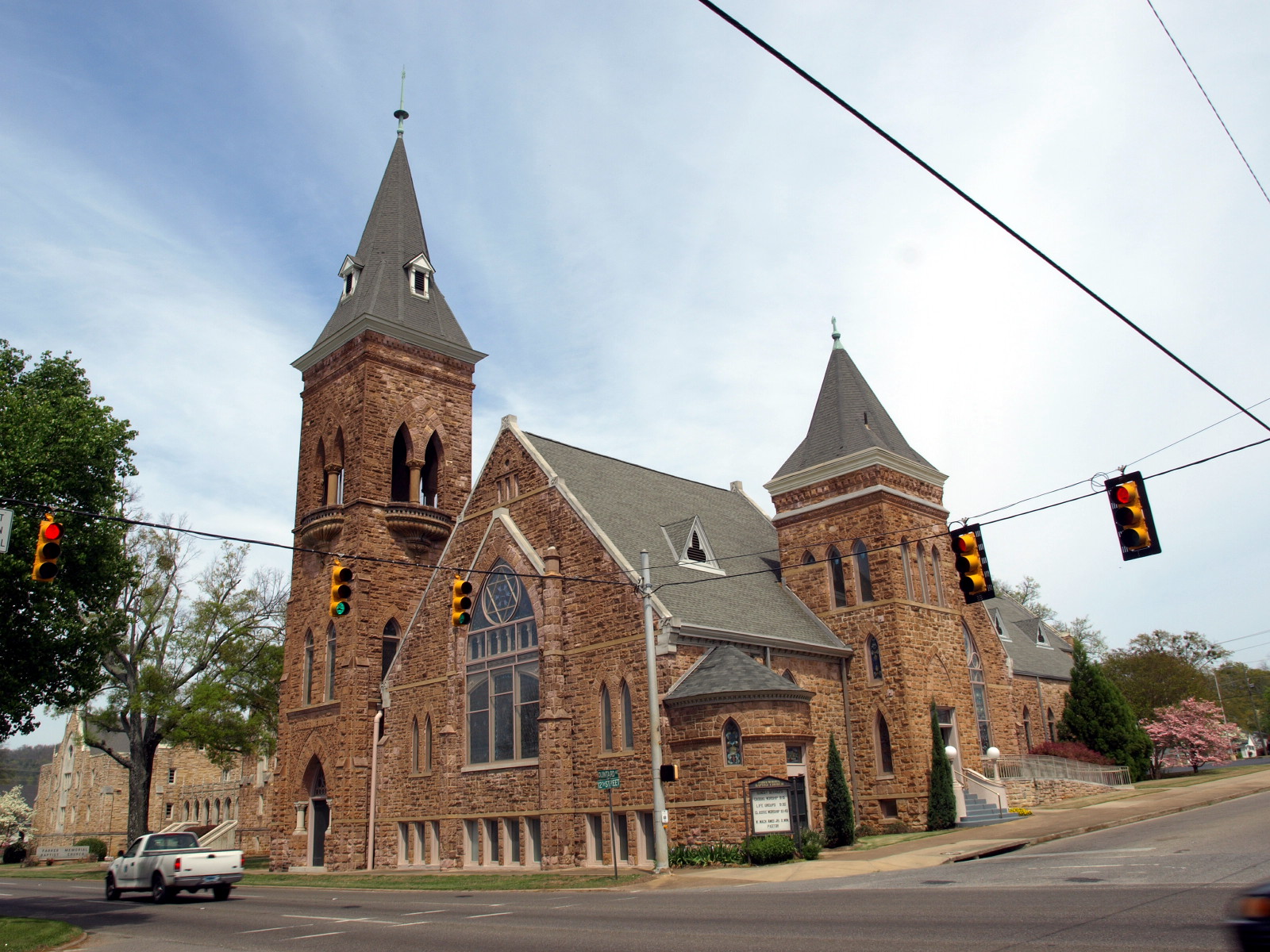
Parker Memorial Baptist Church
Standing along Quintard Avenue in Anniston, Alabama, Parker Memorial Baptist Church cuts a striking silhouette against the Calhoun County sky—a massive Victorian Gothic structure built of native pink sandstone, its corner tower and arched entryway pulling the eye upward in the tradition of grand 19th-century ecclesiastical architecture. It is a building that was never meant to project fear. It was built out of grief, funded by a man who lost everything he loved in the span of a few devastating months, and the weight of that origin has never fully left its walls. The congregation that would eventually call this building home first gathered on July 3, 1887, when 45 people met at the Opera House on Noble Street to organize a new church, originally called Second Baptist Church, before being renamed Twelfth Street Baptist when its location changed. The story of how it became Parker Memorial is one of the most quietly tragic founding narratives of any church in the state. Duncan T. Parker, founder and first president of First National Bank in Anniston, suffered a catastrophic personal loss in 1889. His young son died of pneumonia, and his wife Cornelia—who had served as the church's first organist—died of the same disease shortly after, her resistance already worn down from nursing a sick daughter through her own illness. Parker, devastated, offered to fund the construction of a new sanctuary as a memorial to his wife. The stained glass windows on the north and south sides of the sanctuary were his personal gifts to the congregation. Parker died shortly after construction began, but left instructions with his three daughters for the building's completion. The new building was dedicated in March of 1891. The result is a large masonry structure built in a late Victorian Gothic style, its exterior of randomly coursed native pink sandstone with belt courses, sills, coping, and steps of Kentucky blue stone. The arched main entrance is found in the northwest corner tower. Inside, the sanctuary retains the proportions and atmosphere of its era—soaring ceilings, rich woodwork, and the pipe organ that has become, over more than a century, one of the building's most persistently discussed features. The church was added to the Alabama Register of Landmarks and Heritage in 1981 and to the National Register of Historic Places in 1985. The paranormal claims surrounding Parker Memorial are modest by the standards of more widely documented haunted locations, but they carry an internal logic that connects directly to the building's founding story. The church has been described as reportedly haunted by a ghostly organ player who plays the chapel organ in the wee hours of the morning. Given that Cornelia Parker was herself the congregation's first organist—and that the church was built in her memory by a husband who died before seeing it completed—the specificity of that particular claim is difficult to dismiss entirely as random legend-making. Whether or not music actually drifts through the sanctuary after midnight, the image of a Victorian organist who never lived to see the church dedicated, tied forever to an instrument in a building raised in her honor, carries its own peculiar emotional resonance. The other claim in circulation is considerably less credible. At least one ghost website has proclaimed that the church is haunted by a nun who took her own life in the main hallway—a detail that doesn't survive even casual scrutiny given that this is a Southern Baptist congregation with no historic connection to Catholic religious life whatsoever. It is the kind of story that accumulates around old buildings the way moss does around stone, indifferent to whether it makes any sense. What gives Parker Memorial its genuine atmosphere isn't the folklore. It's the circumstances of its creation. A man who helped build a city lost his son and his wife to the same disease within weeks of each other, and responded by commissioning an $85,000 sandstone church he would never live to enter. His daughters completed it. His wife's organ was placed inside. The stained glass he paid for still filters the Alabama light. There is something melancholy and unresolved embedded in that sequence of events that no amount of skepticism can fully dispel. Buildings built to memorialize the dead have a different quality than buildings built for the living, and Parker Memorial Baptist Church has been, in a very literal sense, a monument to grief from the day its cornerstone was laid. Today the church remains an active Southern Baptist congregation and a legitimate piece of Anniston's architectural and civic heritage. The pink sandstone tower still anchors the Quintard Avenue streetscape. The stained glass still holds. Whether the organ plays on its own in the small hours is a question the congregation leaves largely unanswered. But for a building whose very name was spoken first in mourning, a little unresolved mystery seems entirely appropriate.