

Oak Hill Cemetery – Witch’s Grave
Background & History
Historical context and known paranormal claims surrounding Oak Hill Cemetery – Witch’s Grave.
Oak Hill Cemetery in Galena, Kansas, contains within its grounds one of the most intriguing and contested paranormal locations in the Great Plains—a grave site specifically identified as the Witch's Grave, marked by a location that has accumulated decades of paranormal accounts, folklore, and investigative documentation. The cemetery itself, a standard rural burial ground containing generations of interred residents from the surrounding region, occupies land in proximity to the town of Galena. The Witch's Grave, located in the cemetery's rear section, is not distinguished by elaborate headstones or monumental markers but rather identified through local knowledge, oral tradition, and contemporary paranormal research documentation. The grave site's position within the cemetery removes it from highly visible central locations, contributing to its isolation and to the atmospheric qualities that have made the location a focus for paranormal investigation. The cemetery's natural setting—surrounded by vegetation, with limited nighttime illumination, and positioned at a geographic distance from town centers—creates environmental conditions conducive to the subjective psychological experiences that constitute much paranormal investigation documentation.
The historical origins of the Witch's Grave's paranormal reputation remain uncertain and potentially rooted in folklore rather than documented historical fact. Unlike many haunted locations associated with specific documented traumas or deaths, the Witch's Grave appears to derive its reputation from oral tradition and folk memory rather than verifiable historical documentation. The term witch itself carries historical weight, referencing the colonial and early American period phenomenon of witch prosecution and execution, yet available historical records do not identify a specific witch trial or execution occurring in Galena or the surrounding region. The grave's identification may derive from folk associations between unnamed or forgotten burial sites and culturally embedded narratives regarding witchcraft, supernatural power, and the transgressive feminine. Alternatively, the location's paranormal reputation may have developed through a process of reverse causation—the grave's archaeological anonymity combined with cemetery settings' inherent cultural associations with death and liminality created conditions where paranormal interpretation became more readily applied.
The cemetery environment itself contributes fundamentally to the paranormal attribution process. Cemeteries occupy a cultural position as liminal spaces—thresholds between the living and the dead, boundaries between community spaces and sacred burial grounds. The isolation of cemetery locations, particularly their distance from residential areas and their nighttime absence of human activity, creates environmental conditions where individual sensitivity to paranormal interpretation becomes heightened. The visual environment of a cemetery—grave markers, vegetation in shadow, limited illumination—generates visual ambiguities that the mind readily interprets through supernatural frameworks. The acoustic properties of cemetery spaces, where sound travels across open ground and may be reflected by stone markers and earth contours, can create paranormal interpretations of wind, animal activity, or other natural phenomena. The emotional resonance of cemetery spaces—their association with death, loss, and the transcendence of individual mortality—contributes to psychological states where paranormal interpretation becomes more accessible.
Paranormal accounts associated with Oak Hill Cemetery's Witch's Grave concentrate on several consistent phenomena reported across multiple independent witness accounts and investigations. The grave site, particularly during nighttime hours, has been reported as the focus of apparitional activity, with multiple witnesses describing seeing forms or shapes that they interpret as paranormal manifestations. Disembodied voices have been reported emanating from the grave area, with some accounts describing articulate speech while others report only indistinct vocalizations. The voices are sometimes interpreted as threatening or malevolent, though accounts vary regarding the emotional tone of the reported phenomena. Eerie sounds of unidentified origin have been reported in proximity to the grave, described as creaks, groans, or other acoustic phenomena that witnesses interpret as paranormal. Some accounts mention a specific temporal pattern associated with the reported phenomena—manifestations supposedly occurring with increased frequency at 3:33 AM, a time designation associated with paranormal folklore and demonological traditions in contemporary paranormal literature.
The involvement of professional paranormal investigation teams has contributed complexity to the Witch's Grave's documentation history. A paranormal investigation team designated Post-Mortem Investigators traveled from Missouri to Kansas in 2007 to conduct systematic investigation of the reported phenomena. Their investigation methodology, applying contemporary paranormal research standards, yielded findings that diverged from the reputation surrounding the location. The Post-Mortem Investigators' conclusion that credible evidence supporting paranormal manifestations at the Witch's Grave remains absent represents a significant moment in the location's paranormal documentation history. Their assessment, while not definitively proving the location's paranormal phenomena nonexistent, suggested that natural explanation and psychological factors might account for reported experiences more readily than spirit manifestations. This professional investigation added another layer to the location's documentation, introducing skeptical perspective alongside folkloric accounts and tourist reports.
The Witch's Grave presents a methodologically significant case study for paranormal research regarding how reputation, location characteristics, and cultural narratives combine to generate paranormal interpretations. The absence of documented historical tragedy or death at the specific grave site—in contrast to many haunted locations where specific paranormal activity can be traced to particular identified deaths or traumas—makes the Witch's Grave distinctly interesting for understanding paranormal phenomenon generation. The location's paranormal reputation appears to derive from cultural factors, environmental characteristics, and folklore transmission rather than from specific historical events. This pattern of paranormal interpretation represents one category of haunting experience, where pre-existing cultural narratives regarding witchcraft, supernatural power, and paranormal danger are applied to geographically and temporally distant locations through contemporary paranormal interest. The Witch's Grave demonstrates how paranormal reputation can emerge without documented historical foundation, sustained through oral tradition and enhanced through contemporary paranormal investigation and tourism.
Access to Oak Hill Cemetery's Witch's Grave has become increasingly regulated as the location's paranormal reputation has grown and attracted investigation activity. Contemporary cemetery management has implemented policies requiring approval from city authorities for investigation purposes, reflecting concerns regarding cemetery preservation and the management of paranormal tourism. The installation of wireless camera systems by residents in the area provides contemporary surveillance capability that previous paranormal investigation periods would have lacked. These modern control measures represent contemporary institutional responses to paranormal tourism and investigation activity, attempting to balance preservation concerns with respect for cultural sites and the psychological experiences of paranormal researchers and visitors.
Today, Oak Hill Cemetery's Witch's Grave remains a location of paranormal interest despite—or perhaps because of—the professional paranormal investigation that concluded credible evidence supporting the reported phenomena remains absent. The location continues to attract paranormal enthusiasts seeking direct experience of the documented phenomena, with access regulated through institutional channels. The grave site represents an intriguing dimension of American paranormal locations: the historically unverifiable haunting, the paranormal reputation that derives from cultural narrative and environmental interpretation rather than from specific documented historical trauma. The Witch's Grave exemplifies how paranormal phenomena narratives emerge, circulate through oral tradition and contemporary paranormal research communities, and persist despite skeptical investigation findings. Whether the location possesses genuine paranormal phenomena, represents psychological projection influenced by cultural narrative, or constitutes folklore transmission regarding witchcraft and supernatural power remains subject to ongoing interpretation and investigation. The Witch's Grave stands as a location where paranormal documentation, folk tradition, and scientific skepticism intersect in a particular geography of a rural Kansas cemetery.
cemetery
Galena, Kansas
Cherokee County
February 26, 2026
Open
People Also Searched For
You Might Also Like
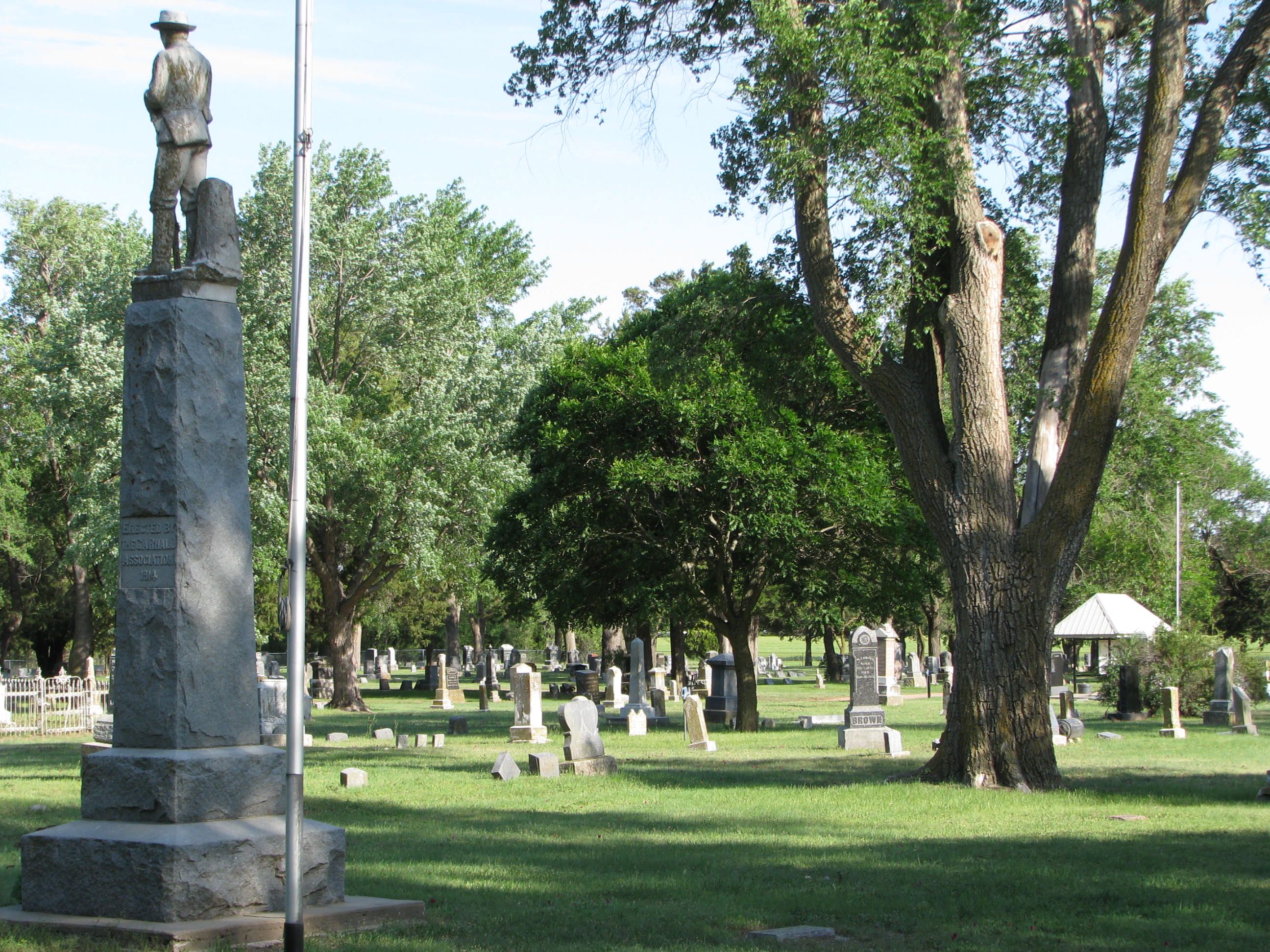
Out on the flat central Kansas prairie, roughly a dozen miles northwest of Hutchinson along the Arkansas River lowlands, the small town of Nickerson came into being the way most of this part of the country did — by rail. The Atchison, Topeka and Santa Fe Railway laid its line through Reno County in… read more
Nickerson, Kansas · cemetery
Haskell Indian Nations University in Lawrence, Kansas, represents a unique and historically significant educational institution established in 1885 with the explicit purpose of assimilating Native American students into dominant American cultural systems through intensive residential education. The… read more
Lawrence, Kansas · cemetery
Alma Cemetery, located in Alma, Kansas, serves as the final resting place for members of the surrounding community, occupying a physical landscape that has accumulated the remains of deceased inhabitants across generations. The cemetery was established in the nineteenth century, following the emerge… read more
Alma, Kansas · cemetery
Have you visited Oak Hill Cemetery – Witch’s Grave?
Share your paranormal experience and help other investigators decide if it's worth exploring.
Activity Breakdown
Types of documented activity recorded at Oak Hill Cemetery – Witch’s Grave, organized by category.
Visual Activity
Audio Activity
Reported Areas
Specific areas within Oak Hill Cemetery – Witch’s Grave where activity has been documented.
Back of Cemetery
Witch's Grave
Known Entities
Entities, spirits, and figures that have been identified or reported at Oak Hill Cemetery – Witch’s Grave.
apparitions
voices
witch
Photos
Images sourced from across the web and linked directly to the original host. Ghouler does not download or host these images, nor do we claim them as our own.
Investigator Reviews
Your trust is our priority, so no location can pay to alter or remove their reviews.
No reviews yet.
Be the first to share your experience at Oak Hill Cemetery – Witch’s Grave.
Find reviews useful? Help others by sharing your experience.
Documented Experiences
Paranormal reports and documented occurrences compiled for Oak Hill Cemetery – Witch’s Grave from archived sources and community investigators.
No documented experiences for Oak Hill Cemetery – Witch’s Grave yet.
Best Times to Visit
Based on investigator reports, these are the most active areas, times, and conditions reported at Oak Hill Cemetery – Witch’s Grave.
Oak Hill Cemetery – Witch’s Grave
Midnight
Equipment & Methods
Equipment and investigation methods reported by community investigators at Oak Hill Cemetery – Witch’s Grave.
Audio Equipment
What It Does
How to Use
Know Before You Go
Important details to help plan your visit or investigation of Oak Hill Cemetery – Witch’s Grave.
Unknown
Open
Not specified
Sources & References
Referenced materials and documentation supporting the Oak Hill Cemetery – Witch’s Grave case file.
Blog Article
Experience Glossary
Detailed descriptions of each type of activity documented at Oak Hill Cemetery – Witch’s Grave.
Apparitions
Definition
A reported visual sighting of a human-like or shadow-like figure without a physical source.
What People Report
Witnesses describe full-body figures, partial forms, or fleeting silhouettes appearing in hallways, doorways, or peripheral vision. These sightings are typically brief and may vanish when directly observed.
Disembodied Voices
Definition
Audible speech heard without a visible speaker present.
What People Report
Witnesses report whispers, direct responses, conversations, or voices calling their name in otherwise quiet environments. These events may occur during investigations or spontaneously in residential settings.
Unexplained Sounds
Definition
Unidentifiable noises such as bangs, growls, music, or movement occurring without environmental explanation.
What People Report
These sounds may be isolated or recurring and are frequently reported during periods of heightened activity.
Important Notices
Information in this case file is compiled from public sources and community reports. Accuracy cannot be guaranteed. Always verify details before visiting, and check with property owners and local or state authorities to confirm access is permitted.
Nearby Case Files
Explore Kansas
Browse by Haunt Type
Phenomena & Experiences
- Apparition reports
- Full-Body Apparition reports
- Shadow Figure reports
- EVP reports
- Disembodied Voice reports
- Unexplained Footsteps / Knockings reports
- Poltergeist reports
- Object Manipulation reports
- Cold Spot reports
- EMF Anomaly reports
- Intelligent Haunting reports
- Residual Haunting reports
- Sense of Presence reports
- Phantom Smell reports
- Electronic Disturbance reports
People Also Viewed
Wildmead Cemetery
Cemetery
Nickerson, Kansas
Haskell Indian Nations University
Cemetery
Lawrence, Kansas
Alma Cemetery
Cemetery
Alma, Kansas
Round Mound Cemetery
Cemetery
Mount Pleasant, Kansas
Elcado Cemetery
Cemetery
Little Caney, Kansas
Lorenz Schlichter Memorial Cemetery – Child’s Play Cemetery
Cemetery
SE of Burlington, Kansas