
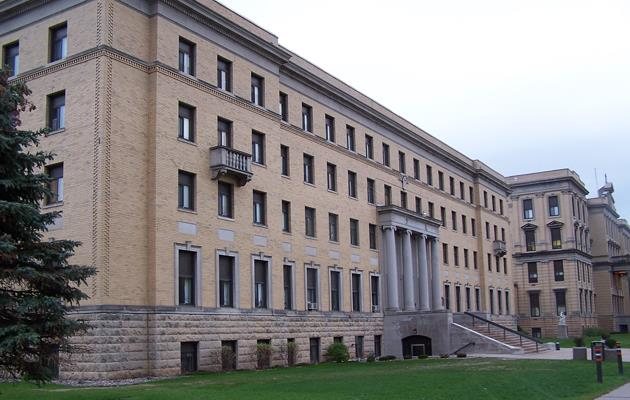
St. Mary’s College – Heffron Hall
Background & History
Historical context and known paranormal claims surrounding St. Mary’s College – Heffron Hall.
Saint Mary's University of Minnesota sits on Terrace Heights, a bluff above the city of Winona on the western bank of the Mississippi, with the river valley spreading below and the limestone ridgelines of the Driftless Area rising on the opposite shore. It is a campus of red brick and Catholic institutional gravity, founded in 1912 by a bishop who purchased cornfields five miles west of the Winona downtown, raised the financing himself, and built a college from nothing on a hill. That bishop was Patrick Richard Heffron — New York-born, Minnesota-raised, ordained in Montreal in 1884, appointed second Bishop of the Diocese of Winona in 1910. He was by most accounts a commanding and demanding figure, the kind of institutional builder who leaves behind structures meant to outlast him. In this case, one of those structures is a dormitory that carries his name and has been called Minnesota's most legendarily haunted building since at least 1989, when USA Today applied that designation in its Halloween issue.
The events that seeded the legend took place not in Heffron Hall but in St. Mary's Hall, the earlier building on campus, on the morning of August 27, 1915. Father Louis Lesches — French-born, ordained 1898, a priest of the Diocese of Winona with a documented history of instability, conflict, and insubordination — had been pressing Bishop Heffron for years for a parish of his own. Heffron had refused him, believing him mentally unbalanced and unsuitable for the responsibility. The conflict between the two men had been long, bitter, and increasingly one-sided in its institutional consequences. On that morning, Lesches walked from his guest room in St. Mary's Hall to the bishop's private second-floor chapel, where Heffron was celebrating Mass alone. He fired during the consecration. The first bullet struck Heffron in the left thigh from behind. As the bishop turned, a second shot entered the right side of his chest and penetrated his lung. A third bullet lodged in the tabernacle. Lesches fled, locked himself in his room, and was arrested within minutes. Heffron staggered from the chapel into the hallway, warned the priests summoned by the gunfire of the armed man still in the building, and directed them to call for medical help. Dr. William J. Mayo drove from Rochester by automobile to consult on the wound. The bishop recovered fully.
At trial in December 1915, the jury deliberated forty-five minutes before acquitting Lesches by reason of insanity. He was committed to the state hospital for the criminally insane in St. Peter, Minnesota, where he would remain for the rest of his life. Heffron continued as bishop until his death from cancer on November 23, 1927. The dormitory named in his honor — Heffron Hall, a four-story brick building inaugurated in 1920, the first residence hall and second major building constructed on the Terrace Heights campus — became the container into which the legend would be poured over the decades that followed.
Heffron Hall is a plain, functional building of its era: four floors, a central staircase, long corridors, institutional brick inside and out. The university president's office occupies the first floor; student rooms are on the second through fourth. The building connects to St. Mary's Hall and remains in continuous use as a non-freshman residence hall. It is the physical ordinariness of the building that makes its reputation notable — there is nothing architecturally Gothic about it, no ruined tower or locked wing, just a college dormitory where students have been sleeping and studying for over a century.
The reports began in earnest in 1943 — the same year Father Lesches died in St. Peter at the age of eighty-four, still institutionalized, his remains returned to Winona and buried in St. Mary's Cemetery near the campus. Students on the third and fourth floors reported unexplained footsteps in the night, the sound of a cane tapping along the corridor, cold drafts with no identifiable source, and papers dislodged from bulletin boards when no windows were open. The activity was attributed by students to Lesches, finally free and returning to the institution whose bishop he had tried to kill. The ghost story gathered new material in 1967 when college newspaper reporters spent ten consecutive nights in the hall with cameras and thermometers. They recorded temperature drops of as much as ten degrees Centigrade on each of those nights, occurring consistently around 1:54 in the morning, and brought back infrared photographs showing anomalous blurs they attributed to heat or pressure variations in the hallway. A second death in the hall's history had by then been woven into the legend: in May 1931, Reverend Edward Lynch — described in accounts as a friend of Bishop Heffron's and an adversary of Lesches — was electrocuted in his room when he stepped between his bed and a radiator, touching both simultaneously. The legend assigned blame to Lesches, though he was alive and institutionalized in St. Peter at the time.
More recent firsthand accounts from students have described a dark, cowled figure seen in the second-floor corridor near the location of the former chapel where the shooting occurred; a persistent sense of a presence on the staircase; rooms that rearrange themselves overnight; electronics that malfunction without explanation; and at least one account of a resident waking from sleep to find herself unable to breathe, a dark figure at the edge of her bed, an experience mirrored by a separate student on the same floor the same night. The identity of the figure is contested in the tradition — most accounts assign it to Lesches, still fixated on the institution that confined and defeated him; some attribute it to Heffron himself, maintaining order in the building that bears his name.
The honest accounting of the Heffron Hall legend involves acknowledging how thoroughly the documented history and the accumulated folklore have merged over a century of transmission. Bishop Heffron did not die in the shooting — he recovered, continued as bishop for twelve years, and died of cancer. Father Lesches was not a murderer but a failed assassin committed to institutional care for twenty-eight years. The temperature drops recorded in 1967 were real measurements from a drafty brick building in a Minnesota winter, interpreted by college students with a story already in hand. What remains after the embellishments are stripped away — and the Winona Post, which published an exhaustive multi-part investigation of the legend, made that stripping-away its explicit project — is still this: a shooting during the consecration of the Mass, a bullet in the tabernacle, a man in chains for three decades, and a building on a bluff above the Mississippi that has been generating consistent, specific, uncorroborated reports for more than eighty years.
school
Winona, Minnesota
Winona County
February 26, 2026
Open
People Also Searched For
Have you visited St. Mary’s College – Heffron Hall?
Share your paranormal experience and help other investigators decide if it's worth exploring.
Activity Breakdown
Types of documented activity recorded at St. Mary’s College – Heffron Hall, organized by category.
Visual Activity
Audio Activity
Physical Disturbances
Sensory & Environmental
Behavioral & Interactive
Reported Areas
Specific areas within St. Mary’s College – Heffron Hall where activity has been documented.
No specific areas of activity have been reported for St. Mary’s College – Heffron Hall yet.
Known Entities
Entities, spirits, and figures that have been identified or reported at St. Mary’s College – Heffron Hall.
Bishop Patrick Heffron
Father Louis Lesches
Photos
Images sourced from across the web and linked directly to the original host. Ghouler does not download or host these images, nor do we claim them as our own.
Investigator Reviews
Your trust is our priority, so no location can pay to alter or remove their reviews.
No reviews yet.
Be the first to share your experience at St. Mary’s College – Heffron Hall.
Loading reviews...
Documented Experiences
Paranormal reports and documented occurrences compiled for St. Mary’s College – Heffron Hall from archived sources and community investigators.
No documented experiences for St. Mary’s College – Heffron Hall yet.
Best Times to Visit
Equipment & Methods
Equipment and investigation methods reported by community investigators at St. Mary’s College – Heffron Hall.
Know Before You Go
Important details to help plan your visit or investigation of St. Mary’s College – Heffron Hall.
Permission Required
Open
Not specified
Sources & References
Referenced materials and documentation supporting the St. Mary’s College – Heffron Hall case file.
Blog Article
Experience Glossary
Detailed descriptions of each type of activity documented at St. Mary’s College – Heffron Hall.
Cold Spots
Definition
A sudden, localized drop in temperature without an identifiable environmental explanation.
What People Report
Investigators often document sharply defined cold zones that contrast with surrounding air conditions. These temperature shifts may occur in specific rooms or corners and sometimes coincide with other reported activity.
Apparitions
Definition
A reported visual sighting of a human-like or shadow-like figure without a physical source.
What People Report
Witnesses describe full-body figures, partial forms, or fleeting silhouettes appearing in hallways, doorways, or peripheral vision. These sightings are typically brief and may vanish when directly observed.
Dream/Visitation Experiences
Definition
Vivid dreams or sleep-related encounters believed to involve communication with an unseen presence.
What People Report
Experiences are often described as unusually realistic, emotionally intense, and distinctly different from ordinary dreams. Many reports include perceived messages, visual clarity, or sensations of presence upon waking.
Disembodied Voices
Definition
Audible speech heard without a visible speaker present.
What People Report
Witnesses report whispers, direct responses, conversations, or voices calling their name in otherwise quiet environments. These events may occur during investigations or spontaneously in residential settings.
Physical Markings
Definition
Unexplained scratches, bruises, or impressions appearing on the body.
What People Report
These markings are often noticed suddenly and may lack an identifiable injury mechanism. Some reports include recurring patterns or symmetrical markings.
Senses of Presence
Definition
A strong sensation that someone unseen is nearby.
What People Report
Often accompanied by chills, heightened alertness, or the instinct to turn around, this experience is frequently reported prior to visual or auditory phenomena.
Important Notices
Information in this case file is compiled from public sources and community reports. Accuracy cannot be guaranteed. Always verify details before visiting, and check with property owners and local or state authorities to confirm access is permitted.
Permission is required to access this location. Contact the site administration before visiting.