
Haunted Places in Winona, Minnesota
4 haunted locations
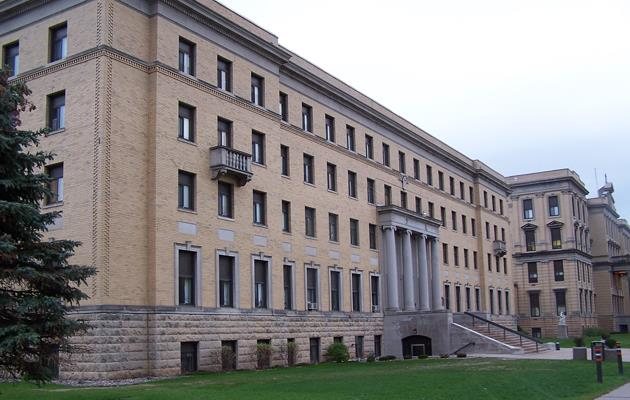
St. Mary’s College – Heffron Hall
Saint Mary's University of Minnesota sits on Terrace Heights, a bluff above the city of Winona on the western bank of the Mississippi, with the river valley spreading below and the limestone ridgelines of the Driftless Area rising on the opposite shore. It is a campus of red brick and Catholic institutional gravity, founded in 1912 by a bishop who purchased cornfields five miles west of the Winona downtown, raised the financing himself, and built a college from nothing on a hill. That bishop was Patrick Richard Heffron — New York-born, Minnesota-raised, ordained in Montreal in 1884, appointed second Bishop of the Diocese of Winona in 1910. He was by most accounts a commanding and demanding figure, the kind of institutional builder who leaves behind structures meant to outlast him. In this case, one of those structures is a dormitory that carries his name and has been called Minnesota's most legendarily haunted building since at least 1989, when USA Today applied that designation in its Halloween issue. The events that seeded the legend took place not in Heffron Hall but in St. Mary's Hall, the earlier building on campus, on the morning of August 27, 1915. Father Louis Lesches — French-born, ordained 1898, a priest of the Diocese of Winona with a documented history of instability, conflict, and insubordination — had been pressing Bishop Heffron for years for a parish of his own. Heffron had refused him, believing him mentally unbalanced and unsuitable for the responsibility. The conflict between the two men had been long, bitter, and increasingly one-sided in its institutional consequences. On that morning, Lesches walked from his guest room in St. Mary's Hall to the bishop's private second-floor chapel, where Heffron was celebrating Mass alone. He fired during the consecration. The first bullet struck Heffron in the left thigh from behind. As the bishop turned, a second shot entered the right side of his chest and penetrated his lung. A third bullet lodged in the tabernacle. Lesches fled, locked himself in his room, and was arrested within minutes. Heffron staggered from the chapel into the hallway, warned the priests summoned by the gunfire of the armed man still in the building, and directed them to call for medical help. Dr. William J. Mayo drove from Rochester by automobile to consult on the wound. The bishop recovered fully. At trial in December 1915, the jury deliberated forty-five minutes before acquitting Lesches by reason of insanity. He was committed to the state hospital for the criminally insane in St. Peter, Minnesota, where he would remain for the rest of his life. Heffron continued as bishop until his death from cancer on November 23, 1927. The dormitory named in his honor — Heffron Hall, a four-story brick building inaugurated in 1920, the first residence hall and second major building constructed on the Terrace Heights campus — became the container into which the legend would be poured over the decades that followed. Heffron Hall is a plain, functional building of its era: four floors, a central staircase, long corridors, institutional brick inside and out. The university president's office occupies the first floor; student rooms are on the second through fourth. The building connects to St. Mary's Hall and remains in continuous use as a non-freshman residence hall. It is the physical ordinariness of the building that makes its reputation notable — there is nothing architecturally Gothic about it, no ruined tower or locked wing, just a college dormitory where students have been sleeping and studying for over a century. The reports began in earnest in 1943 — the same year Father Lesches died in St. Peter at the age of eighty-four, still institutionalized, his remains returned to Winona and buried in St. Mary's Cemetery near the campus. Students on the third and fourth floors reported unexplained footsteps in the night, the sound of a cane tapping along the corridor, cold drafts with no identifiable source, and papers dislodged from bulletin boards when no windows were open. The activity was attributed by students to Lesches, finally free and returning to the institution whose bishop he had tried to kill. The ghost story gathered new material in 1967 when college newspaper reporters spent ten consecutive nights in the hall with cameras and thermometers. They recorded temperature drops of as much as ten degrees Centigrade on each of those nights, occurring consistently around 1:54 in the morning, and brought back infrared photographs showing anomalous blurs they attributed to heat or pressure variations in the hallway. A second death in the hall's history had by then been woven into the legend: in May 1931, Reverend Edward Lynch — described in accounts as a friend of Bishop Heffron's and an adversary of Lesches — was electrocuted in his room when he stepped between his bed and a radiator, touching both simultaneously. The legend assigned blame to Lesches, though he was alive and institutionalized in St. Peter at the time. More recent firsthand accounts from students have described a dark, cowled figure seen in the second-floor corridor near the location of the former chapel where the shooting occurred; a persistent sense of a presence on the staircase; rooms that rearrange themselves overnight; electronics that malfunction without explanation; and at least one account of a resident waking from sleep to find herself unable to breathe, a dark figure at the edge of her bed, an experience mirrored by a separate student on the same floor the same night. The identity of the figure is contested in the tradition — most accounts assign it to Lesches, still fixated on the institution that confined and defeated him; some attribute it to Heffron himself, maintaining order in the building that bears his name. The honest accounting of the Heffron Hall legend involves acknowledging how thoroughly the documented history and the accumulated folklore have merged over a century of transmission. Bishop Heffron did not die in the shooting — he recovered, continued as bishop for twelve years, and died of cancer. Father Lesches was not a murderer but a failed assassin committed to institutional care for twenty-eight years. The temperature drops recorded in 1967 were real measurements from a drafty brick building in a Minnesota winter, interpreted by college students with a story already in hand. What remains after the embellishments are stripped away — and the Winona Post, which published an exhaustive multi-part investigation of the legend, made that stripping-away its explicit project — is still this: a shooting during the consecration of the Mass, a bullet in the tabernacle, a man in chains for three decades, and a building on a bluff above the Mississippi that has been generating consistent, specific, uncorroborated reports for more than eighty years.

Pieces of the Past
The Haunted Antique Shop and Paranormal Museum occupies a substantial 1920 Craftsman-style bungalow in DeLand, Florida, a structure built during the height of the craftsman architectural movement when attention to quality materials and meticulous joinery represented both aesthetic and philosophical principles. The building features the characteristic wide porches, exposed beam work, and natural wood detailing that defined craftsman design, creating a warm, welcoming ambiance that contrasts sharply with its reputation as one of Florida's most actively paranormal properties. The construction exemplifies the values of handcrafted authenticity and natural materials that define the Arts and Crafts movement. The original residential function of the building and its transition to commercial museum use reflects the evolution of American cultural attitudes toward domestic space and historical preservation. The shop operates as a museum and retail establishment specializing in antique items spanning multiple centuries and cultures, with collections that include furniture, artwork, decorative objects, and artifacts of historical and cultural significance. Items within the shop originate from diverse sources and carry their own histories and potential spiritual associations. The proprietor has documented extensive paranormal activity throughout the structure, publishing books and maintaining detailed records of manifestations that rival any professional paranormal research facility in their comprehensive documentation. The meticulous record-keeping transforms the shop into an archive of paranormal phenomena unparalleled in scope and systematic observation. The most famous artifact within the museum is known as Haunted Charlie, a doll whose troubled history and reputation have generated international attention and visitor interest. According to accounts, Haunted Charlie exhibits disturbing behavioral patterns suggesting possession or animated by malevolent spiritual force, including unexplained movement between locations, changes in posture and positioning, and animated expressions appearing on its static face despite the absence of mechanical components. The doll becomes the focal point for many visitors' experiences and represents the bridge between the material and spiritual worlds. The shop also documents the presences of James DeWalt and Lucinda DeWalt, spirits believed to inhabit the structure and whose identities and histories form part of the ongoing paranormal narrative of the location. These entities appear to serve as caretakers or guardians of the space and its contents. Paranormal manifestations at the Haunted Antique Shop occur with remarkable frequency and consistency, creating an environment unlike most haunted locations in their predictability and intensity. Objects within displays rearrange themselves spontaneously, items relocating to entirely different rooms despite being secured in place, and the proprietor's careful organization constantly disrupted by unseen forces. Lights throughout the building activate and deactivate without human intervention, with switches being found in opposite positions from their intentional settings. Doors open and close with audible sounds despite locks being engaged, and disembodied voices emerge from empty rooms, sometimes in conversation with each other, sometimes addressing observers directly with apparent purpose and intention. Staff and visitors report encounters with phantom customers who browse the merchandise, inquire about items, and vanish when approached, suggesting spirits drawn to the retail space either by attachment to specific artifacts or by the social function of shopping and economic transaction. The manifestations appear sufficiently profound that paranormal research organizations, including those affiliated with academic institutions and major paranormal television productions, have conducted formal investigations of the location. The shop's proprietor has become recognized as an authority on haunted artifacts and paranormal museum operation, with published works documenting experiences and theoretical frameworks for understanding the phenomena and the relationship between objects and spiritual presence.
Winona State University
Winona State University is situated in Winona, Minnesota, where it operates as a comprehensive public institution of higher education serving regional and broader student populations through undergraduate and graduate degree programs. The university campus comprises numerous academic buildings, administrative facilities, dormitory complexes, and specialized structures designed to support the diverse functions of a modern university environment. Among the most architecturally and culturally significant buildings on campus is Lourdes Hall, a residential dormitory that has served as home to countless students throughout its years of operation. Additional notable structures include Richards Hall, the Performing Arts Center, and Somsen Hall, each representing different eras of campus development and varying architectural approaches to the challenges of educational infrastructure. Beginning in the latter decades of the twentieth century, Winona State University developed a reputation within paranormal research and popular culture as one of the most actively haunted college campuses in Minnesota. Multiple buildings across the university campus have been associated with documented paranormal phenomena, suggesting the presence of not a single isolated haunting but rather multiple distinct entities occupying different campus facilities. The most famous and most extensively documented haunting is centered on Lourdes Hall, which has become the subject of serious paranormal investigation, student newspaper scrutiny, and academic discussion regarding the authenticity and nature of the supernatural phenomena occurring within its walls. The hauntings at Winona State University have generated sufficient cultural attention and documentation to inspire comprehensive guides to paranormal locations throughout the broader Winona area. The entity most prominently associated with Winona State University appears to be a female spirit identified as either Rebecca or Ruth, whose identity as a nun suggests a religious affiliation or calling that may extend back to historical periods predating the university's founding in its current form. The nun spirit appears to maintain an active presence particularly within Lourdes Hall, the dormitory whose name itself carries religious significance and may reflect earlier institutional connections to religious organizations. In addition to the nun identified as Rebecca or Ruth, witnesses have documented the presence of an unnamed male priest spirit whose identity and historical connection to the university remain unclear. Further complicating the paranormal landscape at Winona State University is the apparent presence of a student spirit from 1978, a more recent haunting that suggests traumatic student death as a contributing factor to the campus's supernatural activity. The paranormal phenomena documented at Winona State University, particularly within Lourdes Hall and the upper floors of the dormitory, exhibit remarkable consistency in their manifestation patterns and effects. Posters, photographs, and decorative items placed by students on walls and furniture surfaces have been repeatedly observed to move position or disappear entirely, suggesting interaction by unseen entities with the material contents of the dormitory rooms. Doors throughout the affected buildings have been documented to close and lock themselves without human intervention, trapping residents within rooms or blocking access to specific areas. The entities have demonstrated communicative capacity through auditory phenomena, with voices heard speaking throughout the dormitory and the sounds of crying or emotional vocalization emanating from unoccupied rooms. The spirits appear to engage in active conversation, with talking sounds suggesting consciousness and intentional interaction with the living residents. Winona State University's paranormal reputation has been sufficiently documented and scrutinized that the phenomena have become integrated into student culture and campus consciousness, discussed in the university's student newspaper with academic rigor and investigative seriousness. The university community acknowledges both the historical significance of the hauntings and the genuine student experiences underlying the paranormal accounts. Whether the phenomena are evaluated as genuine supernatural manifestations or as psychological or environmental artifacts, their persistence across decades and their consistent documentation by independent witnesses testifies to their durability as a feature of campus life. The hauntings appear to remain unresolved and permanent, with the entities that inhabit Winona State University's buildings showing no signs of diminishing presence.
362 Cummings Street
The residence at 362 Cummings Street in Winona, Minnesota represents one of the region's notable examples of domestic architecture from the late nineteenth and early twentieth centuries. The structure exhibits the architectural characteristics of its era, with careful attention to design elements that reflected the aesthetic sensibilities and practical requirements of the period. The house was constructed to serve as a residence for a family of means, with rooms organized to accommodate domestic life and the social functions expected of households of such standing. The property includes both living quarters and utility spaces, organized vertically with the basement functioning as a service level that supported the operations of the household above. The house at 362 Cummings Street passed through the hands of various families across the decades, each leaving their particular mark on the structure and contributing to its accumulated history. The residence witnessed the rhythms of domestic life across a substantial period of American history, from the relative stability of the early twentieth century through the transformations of the Depression era and the subsequent decades of social change. Successive generations of residents organized their daily lives within these walls, creating memories and emotional attachments to specific rooms and spaces. The basement areas, while devoted to utilitarian purposes, became spaces where household operations and maintenance work proceeded, separate from the more formal living areas above but integral to the functioning of the residence. During the later decades of the twentieth century, new residents began occupying the Cummings Street house and almost immediately reported unusual experiences that suggested a paranormal presence or presences within the structure. Witnesses have described observing shadowy figures moving through the residence, particularly concentrated in basement areas and along hallways where the figures appeared to traverse with purpose and familiarity. The apparitions, though indistinct, have been described as possessing human form and apparent intention. Objects within the residence have been reported moving from their positions without any visible agent engaging them, with items shifting locations or falling from surfaces where they had been securely placed. Locked doors have been observed opening spontaneously, with the locking mechanisms apparently disengaging without any human intervention. Visitors and residents have reported experiencing sudden physical sensations without apparent cause, including cold spots that appear and disappear within specific areas of the residence, unexplained tactile sensations, and the feeling of an unseen presence accompanying individuals through various rooms. These sensations have been reported most frequently in basement areas and along the pathways connecting different sections of the house. The phenomena have demonstrated sufficient consistency and credibility to attract the attention of paranormal investigators and researchers who have documented multiple incidents with audio and photographic equipment. The manifestations continue to occur, with reports coming from various residents who have occupied the property in successive years. The experiences suggest multiple spiritual entities or a particularly active singular presence with considerable knowledge of the house's physical layout and operations. The basement areas appear to be focal points for the activity, suggesting a possible connection to traumatic events or individuals with strong emotional attachments to these utilitarian spaces. The house at 362 Cummings Street remains an active location for ongoing investigation and documentation of paranormal phenomena in the Winona community.