
Dream Visitation & Paranormal Dreams
14 haunted locations

Villisca Axe Murder House
Villisca, Iowa is the kind of small railroad-and-farm town where everybody knows everybody—so when the Moore family didn’t step outside on a Monday morning in June 1912, the silence felt wrong. By the end of that day, Villisca would become a name that never really faded from America’s collective nightmares. On the evening of June 9, 1912, Josiah “Joe” Moore and his wife Sarah took their children home after a Children’s Day program at the local Presbyterian church. Two friends of the Moore girls—Ina and Lena Stillinger—came along for a sleepover. Sometime late that night, stretching into the early hours of June 10, someone entered the Moore home and carried out one of the most brutal crimes in Iowa history. By morning, eight people were dead: Joe and Sarah; their children Herman, Mary Katherine, Arthur, and Paul; and the Stillinger sisters. Investigators determined the killer used an axe, striking the victims in their sleep with devastating force. The crime scene details would become infamous. Curtains were drawn. Mirrors were covered. Rooms were darkened. There were signs of strange staging inside the house that left the town grasping for meaning. The investigation, overwhelmed by crowds and curiosity seekers, was chaotic. Evidence was compromised. Suspects were questioned and released. The case spiraled into rumor, accusation, and national headlines. Over the decades, a long list of suspects emerged, but no one was ever definitively convicted. One of the most discussed figures was Reverend George Kelly, a traveling minister who had been in Villisca around the time of the murders. His behavior and later writings about the case drew suspicion. He was arrested and tried, but after a confession that many believed was coerced or unreliable, the trials ultimately ended without a lasting conviction. Other theories pointed to local business rivalries, hired killers, drifters passing through town, and even connections to other axe murders that plagued parts of the Midwest and South in the early 1900s. None of these theories has ever been proven in court. That uncertainty is what keeps Villisca alive in the public imagination. The house itself still stands at 508 East Second Street, preserved and restored to resemble its 1912 appearance. What was once simply a family home became a true crime landmark—and eventually, a focal point for paranormal investigation. Visitors and investigators report footsteps on empty stairs, children’s voices in vacant rooms, doors opening or slamming without explanation, cold spots that seem to move with you, and an overwhelming feeling of being watched. Some claim to capture EVPs that sound like frightened children. Others describe sudden physical sensations—touches, scratches, or nausea—while inside the upstairs bedrooms. Skeptics attribute these experiences to suggestion, atmosphere, and the psychological weight of knowing what happened there. Believers argue that violent, unresolved trauma can imprint itself on a location. Today, the Villisca Axe Murder House offers tours and overnight investigations, drawing everyone from true crime historians to seasoned paranormal teams. For some, it’s a place to confront one of America’s most infamous unsolved murders. For others, it’s a chance to test whether the past truly lingers. More than a century later, the horror of that night still clings to the structure. It’s not just the brutality of the crime that unsettles people—it’s the absence of answers. No clear motive. No proven killer. Just a quiet Iowa house where eight lives ended and a mystery began. Whether you approach it as history, legend, or something darker, Villisca remains one of the most chilling and debated haunt locations in the United States.
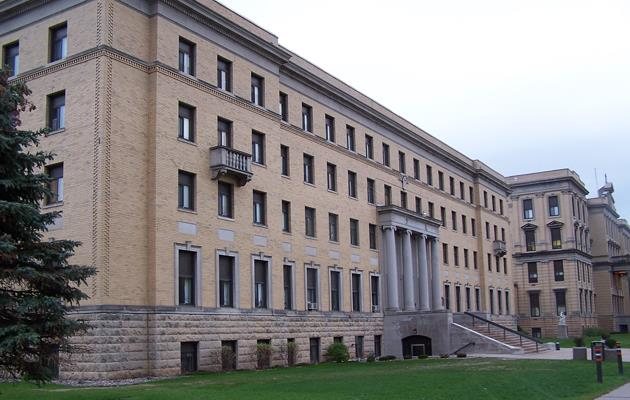
St. Mary’s College – Heffron Hall
Saint Mary's University of Minnesota sits on Terrace Heights, a bluff above the city of Winona on the western bank of the Mississippi, with the river valley spreading below and the limestone ridgelines of the Driftless Area rising on the opposite shore. It is a campus of red brick and Catholic institutional gravity, founded in 1912 by a bishop who purchased cornfields five miles west of the Winona downtown, raised the financing himself, and built a college from nothing on a hill. That bishop was Patrick Richard Heffron — New York-born, Minnesota-raised, ordained in Montreal in 1884, appointed second Bishop of the Diocese of Winona in 1910. He was by most accounts a commanding and demanding figure, the kind of institutional builder who leaves behind structures meant to outlast him. In this case, one of those structures is a dormitory that carries his name and has been called Minnesota's most legendarily haunted building since at least 1989, when USA Today applied that designation in its Halloween issue. The events that seeded the legend took place not in Heffron Hall but in St. Mary's Hall, the earlier building on campus, on the morning of August 27, 1915. Father Louis Lesches — French-born, ordained 1898, a priest of the Diocese of Winona with a documented history of instability, conflict, and insubordination — had been pressing Bishop Heffron for years for a parish of his own. Heffron had refused him, believing him mentally unbalanced and unsuitable for the responsibility. The conflict between the two men had been long, bitter, and increasingly one-sided in its institutional consequences. On that morning, Lesches walked from his guest room in St. Mary's Hall to the bishop's private second-floor chapel, where Heffron was celebrating Mass alone. He fired during the consecration. The first bullet struck Heffron in the left thigh from behind. As the bishop turned, a second shot entered the right side of his chest and penetrated his lung. A third bullet lodged in the tabernacle. Lesches fled, locked himself in his room, and was arrested within minutes. Heffron staggered from the chapel into the hallway, warned the priests summoned by the gunfire of the armed man still in the building, and directed them to call for medical help. Dr. William J. Mayo drove from Rochester by automobile to consult on the wound. The bishop recovered fully. At trial in December 1915, the jury deliberated forty-five minutes before acquitting Lesches by reason of insanity. He was committed to the state hospital for the criminally insane in St. Peter, Minnesota, where he would remain for the rest of his life. Heffron continued as bishop until his death from cancer on November 23, 1927. The dormitory named in his honor — Heffron Hall, a four-story brick building inaugurated in 1920, the first residence hall and second major building constructed on the Terrace Heights campus — became the container into which the legend would be poured over the decades that followed. Heffron Hall is a plain, functional building of its era: four floors, a central staircase, long corridors, institutional brick inside and out. The university president's office occupies the first floor; student rooms are on the second through fourth. The building connects to St. Mary's Hall and remains in continuous use as a non-freshman residence hall. It is the physical ordinariness of the building that makes its reputation notable — there is nothing architecturally Gothic about it, no ruined tower or locked wing, just a college dormitory where students have been sleeping and studying for over a century. The reports began in earnest in 1943 — the same year Father Lesches died in St. Peter at the age of eighty-four, still institutionalized, his remains returned to Winona and buried in St. Mary's Cemetery near the campus. Students on the third and fourth floors reported unexplained footsteps in the night, the sound of a cane tapping along the corridor, cold drafts with no identifiable source, and papers dislodged from bulletin boards when no windows were open. The activity was attributed by students to Lesches, finally free and returning to the institution whose bishop he had tried to kill. The ghost story gathered new material in 1967 when college newspaper reporters spent ten consecutive nights in the hall with cameras and thermometers. They recorded temperature drops of as much as ten degrees Centigrade on each of those nights, occurring consistently around 1:54 in the morning, and brought back infrared photographs showing anomalous blurs they attributed to heat or pressure variations in the hallway. A second death in the hall's history had by then been woven into the legend: in May 1931, Reverend Edward Lynch — described in accounts as a friend of Bishop Heffron's and an adversary of Lesches — was electrocuted in his room when he stepped between his bed and a radiator, touching both simultaneously. The legend assigned blame to Lesches, though he was alive and institutionalized in St. Peter at the time. More recent firsthand accounts from students have described a dark, cowled figure seen in the second-floor corridor near the location of the former chapel where the shooting occurred; a persistent sense of a presence on the staircase; rooms that rearrange themselves overnight; electronics that malfunction without explanation; and at least one account of a resident waking from sleep to find herself unable to breathe, a dark figure at the edge of her bed, an experience mirrored by a separate student on the same floor the same night. The identity of the figure is contested in the tradition — most accounts assign it to Lesches, still fixated on the institution that confined and defeated him; some attribute it to Heffron himself, maintaining order in the building that bears his name. The honest accounting of the Heffron Hall legend involves acknowledging how thoroughly the documented history and the accumulated folklore have merged over a century of transmission. Bishop Heffron did not die in the shooting — he recovered, continued as bishop for twelve years, and died of cancer. Father Lesches was not a murderer but a failed assassin committed to institutional care for twenty-eight years. The temperature drops recorded in 1967 were real measurements from a drafty brick building in a Minnesota winter, interpreted by college students with a story already in hand. What remains after the embellishments are stripped away — and the Winona Post, which published an exhaustive multi-part investigation of the legend, made that stripping-away its explicit project — is still this: a shooting during the consecration of the Mass, a bullet in the tabernacle, a man in chains for three decades, and a building on a bluff above the Mississippi that has been generating consistent, specific, uncorroborated reports for more than eighty years.
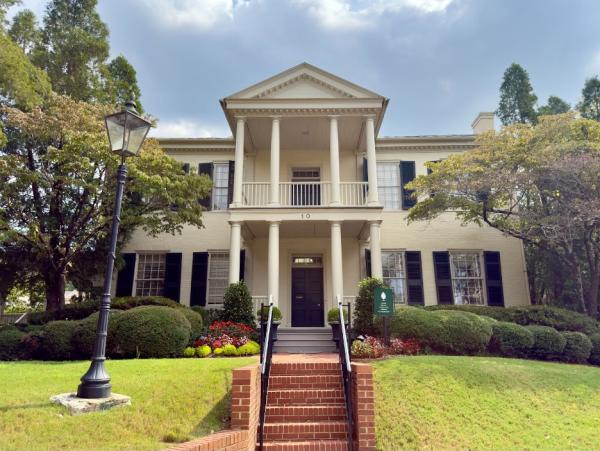
Cedarhurst Mansion
Tucked inside a quiet gated subdivision off Drake Avenue in Huntsville, Alabama, Cedarhurst Mansion doesn't announce itself the way haunted places often do. There are no rusted gates, no crumbling facades, no dramatic hilltop silhouette. What stands instead is a handsome two-story Federal-style structure built in 1823, its fifteen-inch-thick brick walls still solid after two centuries, now serving as a clubhouse for the surrounding residential community. It is a place that has aged gracefully on the outside while carrying, on the inside, one of the most persistently retold ghost stories in the entire state of Alabama. Stephen Ewing built Cedarhurst shortly after Alabama achieved statehood, making it one of the earliest substantial private residences in Huntsville. The Ewing family established themselves as prominent figures in the growing city, and the mansion reflected their standing — a well-proportioned, carefully constructed home in a region still finding its footing. By the 1820s and 1830s, Huntsville was developing rapidly, and properties like Cedarhurst represented the aspirations of its merchant and planter class. Ewing himself met an untimely end and did not enjoy his estate for long, leaving the mansion to pass through family hands. It was through those family connections that the defining event of Cedarhurst's history arrived. In 1837, a young woman named Sally Carter came to visit her sister Mary Ewing at the mansion. Sally was fifteen years old, just three weeks shy of her sixteenth birthday, when an unexpected illness overtook her during the stay. She became bedridden not long after arriving and died at Cedarhurst on November 28, 1837. She was buried on the property in the family cemetery plot, her grave marked with a stone that bore an epitaph reflecting the religious sensibilities of the era. The loss of a young woman in a household is not an uncommon tragedy for the antebellum South, but Sally Carter's story did not end with her burial. For decades, the grave sat quietly on the estate. The legend didn't fully ignite until 1919, when a seventeen-year-old boy from Dothan, Alabama, was visiting the mansion with his family and sleeping in the room that had once been Sally's. During a violent storm that night, he experienced what he described as a dream so vivid it barely felt like sleep. A tall girl with dark hair appeared before him and pleaded with him to help her — the wind had knocked her tombstone over, and she needed it set right. When he woke and told his family, they dismissed it as nothing more than a dream brought on by the weather. But the boy felt compelled enough to walk to the family cemetery and check. Sally Carter's headstone was face down in the grass. He returned to Dothan and, by most accounts, never came back to Huntsville again. That story became the foundation of a local legend that has only grown in the century since. Sally Carter became Huntsville's most famous ghost — a gentle, melancholy presence rather than a menacing one. Reports describe her spirit watching over children as they sleep, a behavior that tracks with the nature of her appearance in the 1919 account. Visitors and residents have described seeing a figure moving through the halls and across the grounds outside, always described as a young woman, always unhurried. Disembodied footsteps have been reported in empty corridors. Voices have been heard with no source. Electrical devices malfunction without explanation. Furniture has reportedly shifted position on its own. The cemetery itself became a focal point of curiosity for generations of Huntsville teenagers and paranormal enthusiasts, which eventually caused significant problems for the property. Repeated vandalism of Sally's grave led the family to make a difficult decision in 1982, when development of the surrounding subdivision began — they had her remains, along with others in the family plot, exhumed and relocated to Maple Hill Cemetery. The new location was never publicly disclosed. The vandalism stopped, but the sightings did not. Sally's presence, according to those who report it, seems tied to the house itself rather than to any grave. There is ongoing debate about the historical verifiability of Sally Carter's existence. Some researchers have found no official death records, birth records, or burial records under her name, pointing to this absence as evidence that the story is folklore rather than fact. Others note that record-keeping in rural Alabama in the 1830s was inconsistent at best, and that unmarked or poorly documented graves at Maple Hill are not unusual for that period. The epitaph on her original stone has been quoted in historical accounts, suggesting something physical once existed. Whether Sally Carter was a real person who died young or a legend that crystallized around a stone and a storm, the story has outlasted nearly everything else about the mansion's history. Today Cedarhurst is not open to the public. The gated community surrounding it means access is restricted to residents and their guests, and organized paranormal investigations of the property are not a regular feature. The mansion endures as a private space carrying a very public legend — a building that looks entirely ordinary from the outside and holds, according to the people who have spent time inside it, something that ordinary buildings do not. Whether that something is the restless spirit of a teenage girl who loved the estate enough to stay, or simply the accumulated weight of a story told for nearly two centuries, Cedarhurst Mansion remains one of the most quietly compelling haunted locations in the American South.

Maple Hill Manor Bed and Breakfast
Maple Hill Manor stands as a significant architectural presence in the American South, its substantial structure bearing witness to centuries of human occupation and the turbulent events that have shaped its legacy. Originally constructed as a residential estate during the pre-Civil War era, the manor was converted into a hospital facility during the American Civil War, serving as a makeshift medical center where Union and Confederate forces alike brought their wounded and dying. The building's strategic location and substantial size made it ideal for wartime medical operations, and accounts from the period suggest that hundreds of casualties passed through its corridors. The conversion of the residence into a hospital represented a dramatic transformation of domestic space into one marked by suffering, trauma, and loss of life. The surgical procedures performed on the second floor, documented in period records, were conducted under primitive conditions with limited anesthetics and no antibiotics, resulting in mortality rates that were staggering even by Civil War standards. After the war concluded, the manor returned to private residential use, though its history as a repository of wartime trauma remained embedded in the structure itself. The paranormal phenomena reported at Maple Hill Manor reflect the violent and tragic nature of its history during the conflict. Visitors and residents have documented consistent reports of ghostly figures throughout the building, with the lady in white apparition most frequently encountered in the main halls and upper corridors. The identity of this female spirit remains unclear, though theories suggest she may have been a nurse, a family member of the original inhabitants, or possibly a victim of wartime violence. Civil War soldiers have been reported in various locations throughout the manor, their spectral forms appearing and disappearing in doorways, on staircases, and in the rooms where they likely spent their final hours. The spirits of hospital patients, whose suffering was documented in medical journals and personal accounts, manifest through various phenomena including disembodied voices, the sound of footsteps in empty rooms, and the sensation of cold spots that appear without warning or environmental explanation. These cold zones are particularly prevalent on the second floor, where the most invasive and traumatic surgical procedures took place. Additional experiences reported by guests and investigators include phantom perfume scents that have no identifiable source, eerie lights visible in photographs that are not apparent to the naked eye, and reports of unusual dreams from individuals who have spent the night in the manor's bedrooms. The manifestations suggest that the spirits resident in Maple Hill Manor remain deeply connected to their traumatic experiences. Strange noises are frequently heard emanating from empty rooms, particularly during the evening and night hours when the manor is quietest. Unexplained voices have been recorded during paranormal investigations, some speaking words of pain or distress, others calling out names or crying for assistance. The second floor, where surgical operations were performed, remains the focal point of paranormal activity, with investigators noting a dramatic increase in phenomena when they focus their attention on these particular rooms. The apparition of the lady in white appears to have strong attachment to certain areas of the building, suggesting she may have been physically bound to the location through traumatic circumstance or unfinished business related to the events that occurred during the war. Multiple witnesses have described seeing her walking through the manor at different times, always in period dress consistent with the Civil War era, and her appearance seems to intensify when individuals approach the rooms where the most critical medical procedures took place. The combination of trauma, death, suffering, and unresolved grief appears to have created a powerful psychic imprint that continues to resonate through the manor's physical structure, manifesting in ways that contemporary paranormal investigators continue to document and attempt to understand.
Dabb’s Railroad Hotel
The Dabbs Railroad Hotel of Llano, Texas stands as a significant historical structure constructed in 1907 during the era when railroad expansion was transforming the Texas landscape and establishing transportation networks connecting previously isolated communities. The hotel was built explicitly to serve railroad travelers, workers, and those visiting Llano in connection with railroad operations, making it part of the hospitality infrastructure developed alongside railroad expansion across the American West and South. The early twentieth century represented a period of intensive railroad construction throughout Texas, with new rail lines opening previously inaccessible regions to commerce and economic development. The Dabbs Hotel occupied a strategic location within Llano's commercial district, positioned to serve railroad employees, commercial travelers, and others requiring temporary lodging during the economic boom generated by railroad infrastructure development. Beyond its historical function as a railroad hotel, the Dabbs establishment gained notoriety through its alleged connection to criminal activity during the 1930s, when legendary outlaws Bonnie Parker and Clyde Barrow operated their criminal enterprise across multiple central United States locations. Historical records and local tradition suggest that Bonnie and Clyde may have used the Dabbs Hotel as a hideout during their early 1930s crime spree. The connection between the hotel and these notorious historical figures has become embedded in local narratives and paranormal research discussions, adding a layer of violent criminal history to the building. Whether or not the outlaws actually stayed there, the association has become part of the building's cultural identity and reputation as a location marked by intense emotional drama and historical significance connected to American criminal history. The paranormal phenomena documented at the Dabbs Hotel are characterized by intense and frightening experiences reported by guests and proprietors. Most significantly, a male entity with palpably evil energy materialized in an upper northeastern bedroom and physically assaulted a sleeping guest. This experience, reported by former proprietor Gregory Klein on his first night of ownership, exemplifies the intensity and potentially dangerous nature of phenomena occurring within the building. Additional paranormal activity includes unexplained footsteps throughout the interior, disembodied voices, and apparitions of multiple entities. Researchers interpret these phenomena as deriving from multiple sources—the accumulated trauma of countless railroad workers and travelers, potentially violent criminal activity associated with Bonnie and Clyde, or other unidentified sources of spiritual disturbance. The Dabbs Hotel has been subject to extensive paranormal investigation, including formal investigations by paranormal researcher Will Light, possessing over four decades of professional experience. Light's investigation confirmed genuine paranormal phenomena within the building, lending credibility to reports from guests and proprietors. Additional investigation utilizing ghost-box technology produced responses identifying Clyde Barrow in connection with paranormal activity, suggesting a possible spiritual connection between the outlaw and the location. The building stands where railroad heritage intersects with criminal history and documented paranormal phenomena, creating a multilayered narrative encompassing economic development, violent crime, hospitality history, and unexplained spiritual activity. The Dabbs Hotel remains operational and continues attracting paranormal researchers, history enthusiasts, and visitors interested in exploring the intersection of documented history and paranormal phenomena within a single building marking significant aspects of Texas history.
Zane Grey Pueblo Hotel
The Zane Grey Pueblo Hotel on Catalina Island, situated off the coast of California in the Pacific Ocean, represents a distinctive architectural and historical presence within the exclusive resort landscape that developed on the island during the early twentieth century. The hotel, constructed with the distinctive pueblo revival architectural style that characterized southwestern American aesthetic preferences during the 1920s, emerges from the practical and imaginative vision of western author Zane Grey, a literary figure whose adventure novels and depictions of western frontier life achieved substantial commercial success. Zane Grey's fortune from literary production enabled him to acquire substantial property holdings on Catalina Island and to construct the pueblo-styled residence that would later be converted into a hotel operation. The structure's distinctive architectural character, informed by southwestern pueblo building traditions and adapted to the Mediterranean climate of Catalina Island, distinguished the building within the island's resort landscape and positioned it as a destination for tourists and visitors seeking distinctive accommodations with historical and architectural significance. Zane Grey, the author and original proprietor of the building that would become the Zane Grey Pueblo Hotel, established the residence during the height of his literary fame and financial prosperity, creating an expression of his aesthetic preferences and commercial aspirations. Grey, whose death occurred in 1939, spent substantial time at the Catalina Island property, utilizing it as both a residence and a center of hospitality for literary associates and the broader bohemian cultural circles that appreciated his romantic depictions of western adventure. The building's pueblo-influenced architectural design, uncommon among Catalina Island structures, reflected Grey's personal aesthetic preferences and his cultural positioning as a literary figure engaged with southwestern and frontier themes. Following Grey's death, the property transitioned from private residence to commercial hospitality operation, transforming the author's personal residence into a hotel accessible to tourists and visitors who sought to experience the distinctive architectural and cultural legacy that Grey had created. The paranormal phenomena documented at the Zane Grey Pueblo Hotel include apparitions manifesting within the building's hallways and lobby areas, apparitions that have been interpreted by some paranormal investigators as potentially representing the continued presence of Zane Grey himself. The manifestations include shadow figures that appear in various locations within the hotel structure, suggesting the presence of multiple distinct entities or the physical projection of paranormal phenomena through diverse manifestations. Cold spots, which represent a common environmental marker of paranormal activity, have been reported in specific locations within the building, correlating frequently with apparition sightings. Dreams and visions experienced by hotel guests and staff have been attributed to paranormal influence, suggesting that paranormal phenomena at the location may extend beyond conventional apparition and environmental phenomena into psychological and subjective realms of experience. The convergence of multiple paranormal phenomenon categories suggests a substantial concentration of paranormal activity within the hotel structure. The Zane Grey Pueblo Hotel underwent closure from 2011 through 2019, permitting renovation and modernization while allowing speculation regarding paranormal activity during vacancy. Rumors regarding the hotel's haunting circulated widely through Catalina Island communities and paranormal tourism networks, with the building's distinctive architecture and literary significance contributing to the paranormal narratives. Following reopening, the hotel resumed commercial operations while maintaining historical significance and architectural distinctiveness. The building's position as both a functioning hotel and documented paranormal site has established it as a destination for paranormal enthusiasts and literary historians seeking to experience the legacy of Zane Grey. The possibility that phenomena represent the continued presence of Zane Grey himself adds mystique to the hotel's paranormal reputation.
Mount Holly Cemetery
Mount Holly Cemetery in Little Rock, Arkansas stands as one of the oldest and most historically significant burial grounds in the state, serving for nearly two centuries as the final resting place for Arkansas's most prominent citizens. Established in the 1800s, the cemetery emerged during a period when Little Rock was consolidating its position as state capital and cultural center. The cemetery's founding represented recognition that a growing city required dedicated space for burial of the dead, preserving memory through monumental architecture. Mount Holly's location on elevated terrain overlooking the Arkansas River provided natural beauty complementing its role as repository for human remains and collective memory. The cemetery's development transformed it into a landscape of considerable aesthetic and historical significance. The burial grounds contain the remains of David Owen Dodd, a Confederate sympathizer executed by Union forces during the Civil War occupation of Arkansas. Dodd's story represents one of the most poignant and controversial episodes in Arkansas's Civil War history, involving questions of youth, allegiance, military necessity, and capital punishment under military occupation. Dodd's grave has become a focal point of paranormal activity. The cemetery also contains remains of numerous Confederate soldiers, representing the human cost of a war devastating the South. The presence of Native American Indians interred within or near the cemetery adds complexity, suggesting occupation and spiritual significance extending centuries into pre-Columbian eras. The paranormal phenomena at Mount Holly are among the most diverse and consistently documented of any haunted location in Arkansas. Native American spirits manifest through various phenomena suggesting presence extending back far beyond the cemetery's formal establishment. David Owen Dodd's apparition has been observed by numerous visitors, appearing in nineteenth-century clothing. Visitors report capturing photographic images of orbs and ghostly figures near his grave. Mysterious statues marking grave sites appear to move from original positions. Sudden chills permeate the cemetery even during warm months. Shadowy figures traverse the grounds at night observed by security personnel and visitors, moving with apparent purposefulness. Unexplained whispers emanate from various locations. The most renowned paranormal phenomenon involves ghostly flute music heard during early morning hours, when the boundary between night and day appears most permeable. These ethereal musical tones float across cemetery grounds without apparent human source, producing a haunting melody capturing attention. The flute music has been documented during paranormal investigations and reported consistently by security personnel, establishing a pattern suggesting genuine paranormal origin. Cold spots create localized areas of dramatically reduced temperature. Unexplained lights appear at various locations, sometimes resembling lanterns and other times manifesting as diffuse glows. Visitors report vivid dreams and visions following cemetery visits, suggesting spiritual presences communicate through non-ordinary perception channels. The cemetery's reputation as a portal to the past attracts paranormal investigators, ghost tours, and visitors. Today, Mount Holly Cemetery remains an active burial ground while functioning as a recognized historical landmark and paranormally active site. The accumulated reports of paranormal phenomena spanning multiple generations establish it as a location where spirits of the dead maintain active presence. The specific manifestations—appearing in appropriate historical clothing, communicating through music and voice phenomena—suggest consciousness and intentionality challenging conventional understanding of death. Mount Holly Cemetery retains status as one of Arkansas's most compelling locations where documented history and unexplained phenomena coexist.
The Dakota
The Dakota stands as one of New York City's most architecturally distinguished and historically significant residential buildings, a fortress-like structure completed in 1884 and positioned on the Upper West Side of Manhattan, facing the expanse of Central Park. Designed by architect Henry Janeway Hardenbergh and commissioned by Edward Clark, the wealthy capitalist who founded the Singer Sewing Machine Company, the Dakota represented the cutting edge of residential luxury and urban development in the Gilded Age. The building's Gothic Revival and Victorian architecture creates an imposing presence on the Manhattan street grid, with its exterior turrets, gables, and decorative elements evoking medieval fortifications or grand European estates transplanted to the American urban landscape. The Dakota's construction in a location then considered remote from Manhattan's developed center reflected the ambitions of Clark and Hardenbergh to create a residential enclave that would attract the wealthy elite willing to venture into what was then essentially frontier territory on the island's western edge. The building was named after the Dakota Territory, a reference that reflected the frontier sensibilities that characterized its creation at a moment when American territorial expansion remained a lived reality and a cultural preoccupation. From its completion through the early twenty-first century, the Dakota evolved into one of America's most prestigious residential addresses, attracting distinguished residents whose names became synonymous with American achievement in the arts, entertainment, and cultural life. The building's residents included novelists, composers, performers, and other notable figures whose presence lent cultural cachet to the address and contributed to its growing reputation as home to the creative and celebrated. Yet alongside the building's association with achievement and cultural significance developed a darker historical narrative, an accumulation of tragic deaths, unexplained circumstances, and paranormal phenomena that would gradually establish the Dakota's reputation as one of New York City's most actively and persistently haunted locations. The building became a place where achievement and death seemed to converge with unusual frequency, where tragedy appeared to cluster in ways that suggested forces beyond ordinary circumstance. The most famous and widely documented aspect of the Dakota's paranormal reputation centers on the presence of John Lennon, the legendary musician of the Beatles, who was assassinated outside the building on December 8, 1980. Lennon's death, occurring at the entrance of the building where he lived with his wife Yoko Ono, marked a moment of tremendous cultural trauma and grief that reverberated far beyond the Dakota and far beyond New York City. In the aftermath of Lennon's death, Yoko Ono has reported encounters with her late husband's presence within the Dakota, claiming to have heard his voice speaking to her in the building's spaces. Whether understood as genuinely paranormal or as the manifestation of grief and intimate knowledge of a beloved's presence, these accounts have become part of the cultural mythology surrounding Lennon's death and the Dakota's haunted reputation. The specificity of Yoko Ono's accounts, their sincere and consistent nature across multiple accounts, lends them a weight that extends beyond mere speculation or folklore. Beyond John Lennon's presence, the Dakota harbors multiple additional apparitions and paranormal phenomena that have been documented by residents, guests, and paranormal investigators. A figure known as the Crying Lady Ghost has been reported by multiple independent witnesses, a female apparition described as weeping or grieving, her manifestations often accompanied by feelings of profound sadness and emotional distress. Two children, apparently dressed in clothing from the nineteenth century, have been observed by residents and visitors, small figures that move through the building's hallways and rooms with apparent purpose, their presence suggesting a tragedy from the building's early history or from some earlier epoch. The apparition of a man identified as wearing a wig or period dress has been reported in various locations within the building, a figure that some researchers have tentatively identified as Edward Clark, the building's founder and original owner, unable or unwilling to fully depart from the structure he commissioned and saw brought into being. Additional apparitions, including unidentified figures observed in various locations throughout the Dakota, contribute to a comprehensive picture of the building as a place where multiple deceased individuals maintain a presence and continue to inhabit the spaces they occupied in life. The Dakota's reputation for paranormal activity extends beyond individual apparitions to encompass a more generalized atmosphere of haunting that characterizes the building in the estimation of sensitive individuals and paranormal researchers. Visitors and residents have described a pervasive feeling of dread in certain areas of the building, sensations of being watched or monitored by unseen presences, and the manifestation of dreams and visions of particular intensity and emotional power that appear to be connected to the building's history and accumulated tragedies. The dreams experienced by individuals sleeping within the Dakota have reportedly possessed unusual specificity and emotional authenticity, visions that seem to offer glimpses into past events or tragedies that occurred within the building's confines. The combination of well-documented individual apparitions, the generalized feeling of haunted presence, and the building's documented history of significant deaths and tragedies have established the Dakota as one of America's most reliably and consistently paranormally active residential locations, a place where the barrier between the living and the dead appears unusually thin and permeable. The Dakota endures as both a prestigious address and a destination for paranormal researchers and ghost hunters seeking evidence of authentic, sophisticated, and ongoing supernatural phenomena in the heart of New York City.
Lamothe House
The Lamothe House stands in the historic French Quarter of New Orleans, Louisiana, a neighborhood that has served as the cultural and commercial heart of the city since its colonial founding. The structure itself dates to the 1830s, a period when New Orleans was experiencing substantial growth and transformation as a major American port city and cultural center. The building was constructed during a time of considerable architectural development in the Creole and early American periods, when French and Spanish architectural traditions were gradually being blended with Anglo-American building practices. The location within the French Quarter places it at the precise center of New Orleans' most densely layered history, a neighborhood where centuries of human experience have accumulated within a relatively small geographic area. The building's longevity—spanning nearly two centuries—is itself remarkable, a testament to its sturdy construction and the care with which it has been maintained through periods of prosperity and decline. The Lamothe House has operated as a hotel for a significant portion of its existence, a function that has required periodic renovations and adaptations to meet the evolving expectations of travelers and visitors. The structure has been updated to incorporate modern conveniences while efforts have been made to preserve its historical character and architectural authenticity. The building's role as a hospitality establishment has meant that it has hosted hundreds, perhaps thousands, of guests over the decades—people from diverse backgrounds and places, each bringing their own stories and experiences into the structure. This continuous flow of human activity and emotional engagement may partially explain the mansion's reputation as one of the city's most actively haunted locations. Within the Lamothe House, the paranormal phenomena reported by guests and staff suggest a space populated by entities from its own historical past. The most frequently documented apparition is a woman dressed in red, a figure whose appearance and demeanor suggest she may be connected to the building's nineteenth-century history. Beyond this primary figure, guests have reported hearing the sounds of children playing and laughing in hallways and rooms, particularly in the early morning hours and during the quiet periods of late evening. These children's voices seem most prominent in certain areas of the building, but they are not consistently localized to any single chamber. The phenomenon suggests not a single ghost but rather multiple spirits, possibly members of a family whose lives were deeply intertwined with the building's history. Room 216 has emerged as the most actively haunted space within the building, the location where paranormal phenomena are reported with the greatest frequency and intensity. Guests staying in this room have reported unexplained cold spots, sudden temperature fluctuations that cannot be attributed to the building's HVAC system. Others have described experiencing what might be termed disembodied presences—a sense of being observed or accompanied by entities that remain invisible to direct perception. Some guests have reported hearing voices speaking words they could not quite understand, as if someone were attempting communication from just beyond the threshold of auditory comprehension. Objects in the room have been reported moving, sometimes violently, without explanation. Visitors have described seeing shadowy figures moving across the room's doorway, then vanishing when investigated. The experiences reported by guests in various rooms throughout the Lamothe House suggest a building where the past maintains an unusual presence, where the accumulated weight of history seems to press against the boundaries separating past from present. Whether these phenomena should be understood as genuine manifestations of departed spirits, as products of the building's psychological atmosphere, or as some combination of both remains a matter of interpretation and personal belief. What is undeniable is that the Lamothe House maintains a consistent reputation as a location where the conventional laws of reality seem to operate with somewhat less rigidity than they do elsewhere. For guests seeking an authentically haunted experience, for those interested in the spiritual and paranormal dimensions of New Orleans' complex history, the Lamothe House has become a destination of significant interest.
Maiden’s Cliff
Maiden's Cliff, situated above the shores of Lake Megunticook near Camden, Maine, represents a location where natural beauty converges with historical tragedy in ways that have left permanent marks upon both the physical landscape and the realm of paranormal manifestation. The cliff formation, rising dramatically from the lake's surface, has long served as a destination for visitors and recreational enthusiasts, drawn by the scenic vistas and the sense of connection to the natural world that such elevated positions afford. The cliff's location within a region of considerable natural beauty—the coastline and inland landscape of midcoastern Maine—has made it a location of aesthetic significance for artists, writers, and contemplatives throughout the modern era. Yet the cliff also carries historical weight of a considerably darker character. The tragedies that have occurred at this location, and most particularly the singular historical event that appears to have generated the persistent paranormal phenomena documented across generations of witnesses, have transformed Maiden's Cliff from a mere scenic overlook into a location where the past exerts a demonstrable presence upon the contemporary world, where the consciousness of an individual whose life ended tragically seems to have become bound to the physical location associated with her death. The foundational historical narrative at Maiden's Cliff centers upon Elenora French, a young woman whose death at the location during the nineteenth century became one of the most enduring accounts of tragic loss in the region's historical record. The specifics of Elenora's life remain partially obscured by the passage of time and the limitations of historical documentation, yet the essential facts of her death have persisted with sufficient clarity that researchers have been able to cross-reference historical records and develop a biographical understanding of her existence prior to her tragic demise. The cliff itself has become a memorial to her death, with visitors acknowledging the tragedy that occurred there through a stone cairn or similar marker that has been erected to commemorate her passing. The most widely documented account describes Elenora's death as a fall from the cliff, with the specific circumstances remaining somewhat ambiguous—whether her death resulted from accident, suicide, or some other form of tragedy—the essential fact remains uncontested: a young woman lost her life at this location, her body subsequently recovered, and her death creating a permanent alteration in the metaphysical character of the place. The paranormal manifestations at Maiden's Cliff appear to derive directly from Elenora French's presence at the location, with her spiritual essence or consciousness apparently having become fixed at the site of her death. Her apparitional manifestations constitute the primary documented form of paranormal activity, with witnesses reporting visual encounters with a young woman dressed in period-appropriate clothing, her figure appearing with sufficient clarity that descriptions from different witnesses align in significant details. Elenora's apparition is frequently described as appearing near the cliff's edge or overlooking the lake, her positioning suggesting a connection to the specific location of her fatal fall. The manifestations possess qualities suggestive of intelligent haunting rather than residual imprint; witnesses report that Elenora appears responsive to their presence, that her apparition sometimes gestures toward the lake or the cliff edge, and that her presence frequently generates strong emotional reactions in those who encounter her. Some witnesses describe experiences of profound melancholy or inexplicable sadness when in proximity to her manifestation, suggesting that Elenora's emotional state—the despair, resignation, or confusion associated with her death—remains sufficiently powerful to transmit affectively to the consciousness of the living. Beyond straightforward apparitional sightings, the paranormal phenomena at Maiden's Cliff encompasses experiences of dreams and visions that appear to represent direct communication from Elenora to contemporary visitors to the location. Individuals have reported falling asleep near the cliff and experiencing vivid, unusually coherent dreams in which Elenora appears, communicates through gesture or verbal expression, and conveys information or emotional content that they subsequently discover relates to historical details of her life or death. These dream-visitations possess qualities suggestive of something beyond mere neurological processing or subconscious imagination—the specificity of historical detail, the emotional intensity, and the consistency across multiple independent experiencers suggest a form of paranormal communication occurring through the altered consciousness state of sleep. Time distortion phenomena constitute another notable aspect of reported experiences at Maiden's Cliff, with some visitors describing moments in which temporal progression appears to have become disrupted, where they lose track of time passage or experience what they describe as moments of temporal displacement—brief intervals in which they appear to occupy the same physical location during a different historical era, sometimes reporting encounters with Elenora during what they describe as the historical period of her life rather than during contemporary time. The stone memorial erected at Maiden's Cliff serves simultaneously as a historical marker acknowledging Elenora French's death and as a focal point for contemporary paranormal activity. Visitors to the location frequently leave tokens—flowers, photographs, written messages—that suggest a widespread recognition of Elenora's presence and a desire to acknowledge or somehow communicate with her spirit. This practice of leaving offerings, occurring across generations of visitors who may be unaware of similar practices conducted by previous visitors, suggests a universal human impulse to acknowledge tragic loss and to create ceremonial connection with those whose consciousness remains bound to physical locations. The paranormal research community has recognized Maiden's Cliff as a significant location for investigation, with teams conducting equipment-based investigations designed to document paranormal activity and potentially establish communication with Elenora. Contemporary visitors to the location frequently report experiences consistent with the documented paranormal phenomena, suggesting that whatever metaphysical alteration occurred as a result of Elenora French's death continues to exert measurable effects upon the living world. Maiden's Cliff represents a location where profound historical tragedy has created lasting paranormal consequences, where the consciousness of a young woman who lost her life tragically appears to have become permanently connected to the physical environment where her death occurred, and where that connection continues to manifest through apparitional sightings, dreams, and experiences of temporal distortion that challenge conventional understanding of the relationship between consciousness, death, and place.
Thompson Island Bridge
Thompson Island Bridge spans the San Marcos River in south-central Texas, a structure serving the practical function of connecting divided sections of landscape while simultaneously occupying a location rich with historical significance and paranormal association. The bridge itself represents a typical example of American infrastructure development, constructed to facilitate transportation and commerce across a river barrier. The San Marcos River, a significant waterway in the region, creates a natural boundary that has influenced settlement patterns and transportation corridors for centuries. The bridge structure, whether constructed of wood, steel, or concrete depending upon historical era of construction, carries traffic across the river while simultaneously creating a location that merges human infrastructure with natural landscape. Thompson Island, situated in proximity to the bridge or possibly beneath it, adds additional geographical and historical dimensions to the location. The area surrounding the bridge has developed a distinctive reputation within local paranormal tradition, accumulating accounts and narratives that extend back across multiple generations of residents and travelers. The historical events associated with Thompson Island Bridge and the surrounding location center on incidents of tragedy and loss that appear to have created the conditions favorable to paranormal manifestation. A Confederate soldier, during or after the American Civil War, made a significant promise to his brother regarding his return home following military service. The failure to fulfill this promise—whether due to death in combat, capture, or other circumstances—created a situation of unresolved obligation and emotional trauma. The location of the bridge or island became associated with the soldier's spirit, suggesting that the failure to complete the promised return journey left an imprint upon the location itself. Additionally, the location has become associated with phenomena attributed to an entity identified as the Nightmare Man, a figure of particular terror whose manifestations carry characteristics suggesting something more malevolent than the typical spirit of a deceased individual. The combination of the soldier's tragedy and the more sinister presence of the Nightmare Man creates a location of complex paranormal phenomena. The paranormal experiences reported at Thompson Island Bridge are diverse and frequently disturbing in their manifestations and effects upon those who encounter them. Apparitions have been observed at the bridge and on the island, including the apparition of the Confederate soldier, whose appearance evokes historical trauma and whose presence carries emotional weight consistent with an unresolved tragedy. The Nightmare Man appears as a malevolent entity, manifesting in ways that create terror and psychological distress among those who encounter him. Cold spots manifest at the bridge and surrounding areas, sudden drops in temperature indicating the presence of entities or forces capable of affecting the physical environment. Disembodied voices have been heard speaking at the location, sometimes forming words or phrases and sometimes manifesting as incoherent sounds suggesting distress or anguish. Observers report profound feelings of being watched, a sensation suggesting the active attention of unseen presences. Perhaps most significantly, the location has become associated with strange dreams affecting individuals who spend time at or near the bridge, dreams characterized by elements of nightmare and psychological disturbance that persist even after waking. The paranormal phenomena at Thompson Island Bridge suggest the presence of multiple entities with distinct characteristics and different manifestational patterns. The apparition of the Confederate soldier represents a more recognizable entity, one whose appearance and manifestations can be understood within conventional frameworks of ghost phenomenon—a deceased individual whose unresolved trauma and failed promise created sufficient spiritual attachment to establish a lasting presence at the location. The Nightmare Man represents something potentially more complex, possibly a separate entity characterized by malevolence rather than tragedy, or possibly a manifestation of psychological or environmental forces that exceed simple categorization as a haunting. The capacity to affect dreams, a phenomenon less commonly documented than apparitional sightings or disembodied voices, suggests the presence of entities capable of exerting influence across the boundary between waking and sleeping consciousness. The concentration of phenomena at the bridge and island location, rather than distributed across the broader landscape, indicates a genuine environmental anomaly localized to that specific site. Thompson Island Bridge continues to serve its original function of spanning the San Marcos River while simultaneously bearing a reputation as one of the most actively haunted locations in south-central Texas. The bridge represents a location where infrastructure and history intersect, where practical human engineering meets the accumulated paranormal phenomena attributed to historical tragedy and ongoing supernatural manifestation. The documentation of phenomena reported by multiple witnesses across generations, combined with the distinctive characteristics of the experiences reported there—including the unusual manifestations associated with the Nightmare Man and the dream phenomena—establishes Thompson Island Bridge as a location of genuine paranormal significance. The combination of specific historical tragedy and documented paranormal phenomena creates a compelling case for the location as a site where human history and supposed supernatural forces have become deeply interwoven.
Hale Lake
Hale Lake in the Ruidoso Downs area of New Mexico presents a complex and multifaceted haunted location whose paranormal phenomena appear deeply rooted in the region's indigenous history spanning millennia and the violent, traumatic interactions that characterized colonial expansion into Native American territories and sacred lands. The lake occupies a landscape with extraordinarily deep archaeological and cultural significance to indigenous peoples who inhabited the region for thousands of years prior to European contact and colonial intrusion into their domains. The area surrounding Hale Lake contains substantial evidence of prolonged indigenous occupation across multiple centuries, seasonal encampments used for hunting and gathering food resources, and spiritual significance within Native American cosmology and territorial organization systems. The introduction of European and later Anglo-American settlement into the region created catastrophic disruptions to indigenous populations through introduced disease, military violence, forced displacement from ancestral territories, and systematic cultural suppression policies designed to erase indigenous identity and traditions permanently. Numerous violent conflicts between indigenous warriors defending their territories and colonizing forces occurred throughout the New Mexico region, with the landscape itself bearing silent witness to violence, tragedy, and the deaths of Native American tribesmen whose physical remains likely rest within or near Hale Lake's boundaries. The precise historical events directly linking specific incidents to the lake's contemporary haunting remain historically unclear, though paranormal accounts suggest multiple distinct spiritual presences rather than isolated individual entities. The paranormal phenomena documented at Hale Lake appear concentrated in the camping and recreational areas where visitors and paranormal investigators have reported the most consistent experiences across multiple seasons and years of documentation. The most distinctive paranormal manifestation involves faces appearing within campfires, their expressions and features suggesting human countenances emerging from flames and smoke, observed by multiple witnesses across different occasions and seasons. War paint has reportedly appeared on vehicles parked near camping sites, an inexplicable phenomenon suggesting either paranormal artistic activity or elaborate sustained pranks, though the consistency of reports and the practical implausibility of prolonged hoaxing suggest genuine paranormal manifestation. Electrical interference affects vehicles with disproportionate frequency at the location, disabling essential mechanical and electrical systems including radio equipment and heating/cooling functions through mechanisms that certified vehicle technicians cannot identify or effectively repair despite extensive diagnostic efforts and investigation. Most alarmingly, multiple independent witnesses have reported brake failure in vehicles driving through or near the lake area, creating hazardous driving conditions that threaten visitor safety and raising serious concerns about the location's ongoing accessibility. Visitors have reported unusual and disturbing dreams and nightmares occurring during nights spent camping at Hale Lake, with dream content frequently featuring indigenous warriors, violent battles, and scenes consistent with historical conflict patterns and regional disputes. The cumulative effect of phenomena suggests spiritual guardianship of sacred ground by entities unwilling to allow casual desecration.
Abigail’s Elegant Victorian Mansion
Abigail's Elegant Victorian Mansion stands as one of Eureka, California's most distinctive architectural landmarks and most thoroughly documented paranormally active properties. The structure was constructed in 1888 during the height of Victorian architectural expression, representing the aesthetic and engineering sophistication characteristic of the era's most ambitious domestic construction. The mansion's substantial Gothic and Victorian design elements, including elaborate ornamentation, extensive woodwork, and architectural complexity, reflect the wealth and social status of its original inhabitants and the skilled artisanship available during the period. The building's significance expanded considerably in the contemporary era through its designation as a National Historic Landmark, formally recognizing its architectural and historical importance at the highest level. The Victorian mansion subsequently underwent transformation to serve as both a bed and breakfast operation and living history museum, positioning it as a destination for historical tourism and experiential education. The facility's dual purpose as hospitality venue and educational institution has enabled detailed documentation of its architectural features and its paranormal characteristics by multiple categories of observers including staff, guests, and visiting scholars. The paranormal phenomena documented at Abigail's Elegant Victorian Mansion center on the presence of an entity identified as a jazz enthusiast, whose manifestations involve auditory phenomena and apparent spiritual presence connected to musical expression. Multiple guests and staff members have reported hearing musical compositions, identified as jazz music, emanating from various locations within the mansion during evening and nighttime hours when legitimate musical sources are absent. The music has been described as clear and deliberate, with identifiable jazz compositions rather than indistinct or ambient sound. The phenomenon occurs with sufficient frequency and consistency to constitute a documented pattern rather than isolated incident. Guests have also reported experiencing vivid dreams and visions while occupying various rooms throughout the mansion, with the dream content frequently containing elements aligned with the structure's historical period and associations. The auditory and visionary phenomena suggest the presence of an entity whose conscious interests and passions remain active within the physical structure despite the loss of physical embodiment. The manifestations indicate an entity neither aggressive nor intrusive, but rather one whose musical interests continue to express themselves through the spiritual presence within the building. The present-day operation of Abigail's Elegant Victorian Mansion as a bed and breakfast and living history museum reflects the establishment's role as a prominent paranormal tourism destination within Eureka and the broader California paranormal community. Proprietors and staff actively acknowledge and document the paranormal phenomena, recognizing that the haunted status enhances the historical significance and visitor experience. Guests specifically seek out the mansion with the expectation of encountering paranormal activity, particularly hoping to experience the jazz music phenomena or vivid dreams associated with the entity's presence. The mansion's combination of exceptional architectural significance and active paranormal phenomena positions it as one of the most compelling historical sites in Northern California for visitors seeking simultaneous engagement with history, architecture, and the paranormal. The documented jazz music manifestations represent an unusual category of paranormal phenomenon, suggesting the continuation of specific personal interests and passions across the boundary separating physical existence from spiritual manifestation. Abigail's continues to operate as both a functional hospitality establishment and a living museum of Victorian history, while maintaining its distinguished position as one of California's most actively and repeatedly documented paranormally active historic properties.
Golden Stage Inn Bed and Breakfast
The Golden Stage Inn in Proctorsville, Vermont represents a structure with exceptional historical longevity and continuous functional significance within New England's hospitality tradition. The building was constructed in 1788 and established as a stagecoach stop, positioning it as a crucial waypoint within the regional transportation infrastructure and commercial networks of the late eighteenth century. The facility's primary function as a stagecoach stop meant it served as a point of convergence for travelers, merchants, and local residents engaged in commerce and communication across the broader region. The building maintained its function as a hospitality establishment continuously throughout its operational history, serving successive generations of travelers and transient guests in addition to its role within the local community. The late eighteenth century construction and enduring function as an inn established the Golden Stage Inn as a property of considerable historical significance, accumulating the experiences and emotional imprints of countless individuals across more than two centuries. The building's architectural character reflects the aesthetic and construction techniques of the late colonial and early federal periods, representing the physical embodiment of early American hospitality traditions and design sensibilities. The paranormal phenomena documented at the Golden Stage Inn involve multiple distinct entities whose manifestations and characteristics have been consistently reported across extended periods by multiple categories of observers including guests and staff members. Guests and staff have reported visual apparitional encounters with a young woman observed in the act of brushing her hair while positioned at an upstairs window, suggesting a female entity engaged in routine domestic grooming activity consistent with historical domestic patterns. The apparitional manifestations consistently place this entity in the upper floor spaces, creating a pattern of spatial distribution consistent with residential occupation. Staff and guests have encountered the apparition of a spectral gentleman identified contextually as an entity occupying the private quarters, suggesting a male presence distinct from the female manifestation. The paranormal phenomena extend beyond visual apparitions to include auditory experiences, with patrons reporting hearing unexplained sounds and disturbances during nighttime hours. Guests have reported experiencing animal-related phenomena including sensations of a spectral cat walking across beds. Photographic documentation has captured anomalous phenomena including inexplicable orbs and atmospheric haziness without apparent environmental explanation, adding visual evidence to witness accounts. The Golden Stage Inn operates as a fully functional bed and breakfast while serving paranormal enthusiasts, history seekers, and visitors interested in paranormal phenomena. Owners have publicly acknowledged the friendly and welcoming energy present within the establishment, suggesting that the paranormal manifestations do not constitute threatening or aggressive phenomena. Guests specifically seek accommodations at the inn in anticipation of encountering paranormal activity, viewing the apparitions and unusual phenomena as part of the authentic historical experience offered by the property. The long operational history of the structure combined with its documented paranormal complexity positions the Golden Stage Inn as one of New England's most extensively and consistently reported haunted hospitality establishments. The presence of multiple distinct entities suggesting different historical periods and social roles indicates that the building has accumulated spiritual presences across its extensive timeline. The inn continues to operate as a fully functional bed and breakfast while serving paranormal enthusiasts and individuals interested in engaging with documented spiritual presences within the historic structure.