
Physical Markings & Paranormal Scratches
32 haunted locations
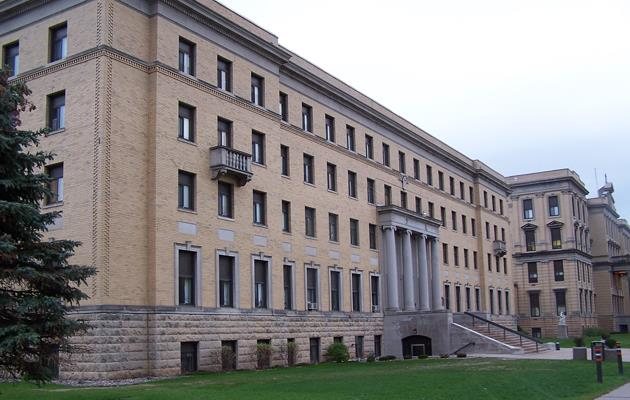
St. Mary’s College – Heffron Hall
Saint Mary's University of Minnesota sits on Terrace Heights, a bluff above the city of Winona on the western bank of the Mississippi, with the river valley spreading below and the limestone ridgelines of the Driftless Area rising on the opposite shore. It is a campus of red brick and Catholic institutional gravity, founded in 1912 by a bishop who purchased cornfields five miles west of the Winona downtown, raised the financing himself, and built a college from nothing on a hill. That bishop was Patrick Richard Heffron — New York-born, Minnesota-raised, ordained in Montreal in 1884, appointed second Bishop of the Diocese of Winona in 1910. He was by most accounts a commanding and demanding figure, the kind of institutional builder who leaves behind structures meant to outlast him. In this case, one of those structures is a dormitory that carries his name and has been called Minnesota's most legendarily haunted building since at least 1989, when USA Today applied that designation in its Halloween issue. The events that seeded the legend took place not in Heffron Hall but in St. Mary's Hall, the earlier building on campus, on the morning of August 27, 1915. Father Louis Lesches — French-born, ordained 1898, a priest of the Diocese of Winona with a documented history of instability, conflict, and insubordination — had been pressing Bishop Heffron for years for a parish of his own. Heffron had refused him, believing him mentally unbalanced and unsuitable for the responsibility. The conflict between the two men had been long, bitter, and increasingly one-sided in its institutional consequences. On that morning, Lesches walked from his guest room in St. Mary's Hall to the bishop's private second-floor chapel, where Heffron was celebrating Mass alone. He fired during the consecration. The first bullet struck Heffron in the left thigh from behind. As the bishop turned, a second shot entered the right side of his chest and penetrated his lung. A third bullet lodged in the tabernacle. Lesches fled, locked himself in his room, and was arrested within minutes. Heffron staggered from the chapel into the hallway, warned the priests summoned by the gunfire of the armed man still in the building, and directed them to call for medical help. Dr. William J. Mayo drove from Rochester by automobile to consult on the wound. The bishop recovered fully. At trial in December 1915, the jury deliberated forty-five minutes before acquitting Lesches by reason of insanity. He was committed to the state hospital for the criminally insane in St. Peter, Minnesota, where he would remain for the rest of his life. Heffron continued as bishop until his death from cancer on November 23, 1927. The dormitory named in his honor — Heffron Hall, a four-story brick building inaugurated in 1920, the first residence hall and second major building constructed on the Terrace Heights campus — became the container into which the legend would be poured over the decades that followed. Heffron Hall is a plain, functional building of its era: four floors, a central staircase, long corridors, institutional brick inside and out. The university president's office occupies the first floor; student rooms are on the second through fourth. The building connects to St. Mary's Hall and remains in continuous use as a non-freshman residence hall. It is the physical ordinariness of the building that makes its reputation notable — there is nothing architecturally Gothic about it, no ruined tower or locked wing, just a college dormitory where students have been sleeping and studying for over a century. The reports began in earnest in 1943 — the same year Father Lesches died in St. Peter at the age of eighty-four, still institutionalized, his remains returned to Winona and buried in St. Mary's Cemetery near the campus. Students on the third and fourth floors reported unexplained footsteps in the night, the sound of a cane tapping along the corridor, cold drafts with no identifiable source, and papers dislodged from bulletin boards when no windows were open. The activity was attributed by students to Lesches, finally free and returning to the institution whose bishop he had tried to kill. The ghost story gathered new material in 1967 when college newspaper reporters spent ten consecutive nights in the hall with cameras and thermometers. They recorded temperature drops of as much as ten degrees Centigrade on each of those nights, occurring consistently around 1:54 in the morning, and brought back infrared photographs showing anomalous blurs they attributed to heat or pressure variations in the hallway. A second death in the hall's history had by then been woven into the legend: in May 1931, Reverend Edward Lynch — described in accounts as a friend of Bishop Heffron's and an adversary of Lesches — was electrocuted in his room when he stepped between his bed and a radiator, touching both simultaneously. The legend assigned blame to Lesches, though he was alive and institutionalized in St. Peter at the time. More recent firsthand accounts from students have described a dark, cowled figure seen in the second-floor corridor near the location of the former chapel where the shooting occurred; a persistent sense of a presence on the staircase; rooms that rearrange themselves overnight; electronics that malfunction without explanation; and at least one account of a resident waking from sleep to find herself unable to breathe, a dark figure at the edge of her bed, an experience mirrored by a separate student on the same floor the same night. The identity of the figure is contested in the tradition — most accounts assign it to Lesches, still fixated on the institution that confined and defeated him; some attribute it to Heffron himself, maintaining order in the building that bears his name. The honest accounting of the Heffron Hall legend involves acknowledging how thoroughly the documented history and the accumulated folklore have merged over a century of transmission. Bishop Heffron did not die in the shooting — he recovered, continued as bishop for twelve years, and died of cancer. Father Lesches was not a murderer but a failed assassin committed to institutional care for twenty-eight years. The temperature drops recorded in 1967 were real measurements from a drafty brick building in a Minnesota winter, interpreted by college students with a story already in hand. What remains after the embellishments are stripped away — and the Winona Post, which published an exhaustive multi-part investigation of the legend, made that stripping-away its explicit project — is still this: a shooting during the consecration of the Mass, a bullet in the tabernacle, a man in chains for three decades, and a building on a bluff above the Mississippi that has been generating consistent, specific, uncorroborated reports for more than eighty years.
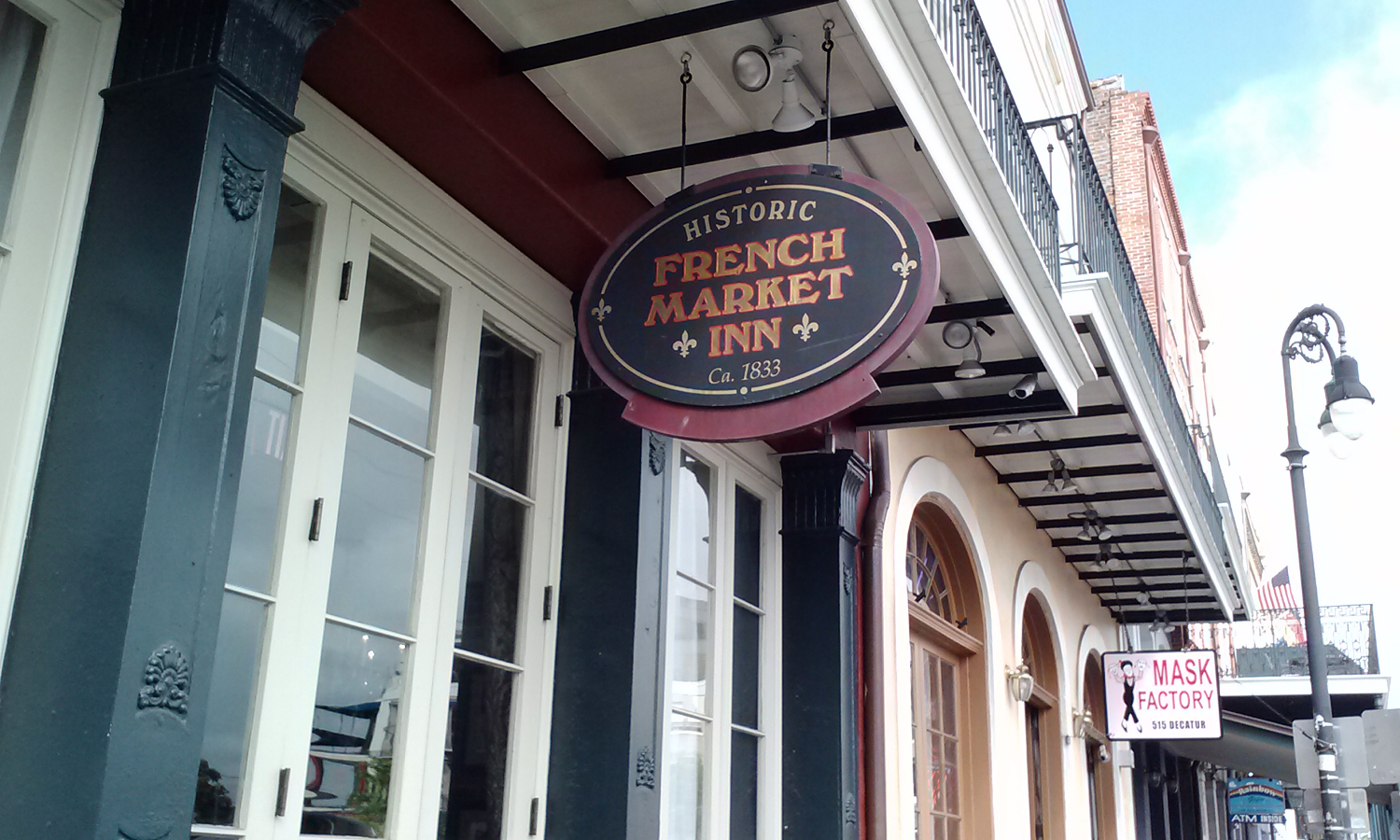
French Market Inn
The French Market Inn sits at 509 Decatur Street in the heart of the French Quarter, a few steps from Jackson Square and within earshot of the Mississippi River. Its antique brick façade opens onto a lobby of period paintings, chandeliers, and marble, and a stone-paved courtyard shaded by greenery—the kind of place that looks exactly like what visitors expect from historic New Orleans. What most of them do not expect is what has been reported inside its rooms for nearly two centuries. The property dates to 1722, when the original deed was issued to a baker named Dreux, whose family operated a bakery on the site throughout the eighteenth century, using a pulley system to hoist goods between floors. The building was later acquired by Baron Joseph Xavier de Pontalba, husband of the formidable Baroness Micaela Almonester de Pontalba, whose business empire still marks the French Quarter landscape in the form of the iconic Pontalba Buildings flanking Jackson Square. By the 1830s, the property had been converted into an inn, and it has operated as one in various forms ever since. The current French Market Inn, run by the Valentino family for over sixty years, maintains more than a hundred guest rooms, many still showcasing the original exposed beams and brick walls of the centuries-old structure. The hauntings were first recorded in 1832, shortly after the building began receiving guests. Visitors reported misty shapes entering their rooms after dark and loud metallic clanging echoing through the halls—sounds consistent with the old pulley system from the Dreux bakery era, operating in a building where no such equipment had functioned for decades. Those two phenomena—shadow figures and phantom mechanical sounds—have persisted without interruption for almost two hundred years. But the claim that has defined the French Market Inn's paranormal reputation is far more visceral. Guests have reported waking in the night to find their pillowcases, sheets, and sometimes their own skin marked with bloody handprints. The accounts are not limited to a single era or a handful of visitors. They span decades and continue to the present day, with guests who had no prior knowledge of the inn's reputation describing nearly identical experiences. One guest recounted waking drenched in what appeared to be blood, covering both occupants of the bed and the headboard, with neither person bearing any wound. The prevailing legend attributes the blood to the spirit of a prostitute who was murdered by a client on the property—a cry for help that manifests in the most startling way possible. No historical record has confirmed the specific murder, but the reports have proven remarkably resistant to debunking by their sheer volume and consistency. Beyond the handprints, guests describe beds shaking violently in the middle of the night with no seismic explanation, lamps clicking on and off in pitch-dark interior rooms, showers activating on their own, cold spots appearing without cause in the humid New Orleans air, shadow figures passing through walls, and the unmistakable sensation of being watched or physically touched. Room 218 has drawn particular attention from investigators. One paranormal researcher who stayed there reported being kept awake all night by unseen presences and an alarm clock that triggered repeatedly without being set. A guest on the third floor described waking to find her pillow being tugged beneath her head, and her daughter woke to a black figure standing between her bed and the windows. When they reported the incident to the front desk, the night clerk asked which room, then said simply that they did not get many reports from that floor. The French Market Inn does not hide from its reputation—the hotel's own website acknowledges the hauntings as part of its history. It remains one of the most popular and consistently booked properties in the French Quarter, operated with the warmth and professionalism the Valentino family is known for. The courtyard is still beautiful. The rooms are still charming. And the walls are still the same centuries-old brick that has absorbed whatever it is that keeps making itself known after dark.

Hotel Villa Convento
Standing on Ursulines Avenue in the lower French Quarter, just steps from the Mississippi River and within sight of the Old Ursuline Convent, the Hotel Villa Convento occupies a Creole townhouse that has been absorbing the weight of New Orleans history since the 1830s. The land itself carries an even older provenance. It was originally part of the holdings of the Ursuline nuns, the French Catholic order that arrived in Louisiana during the early colonial period and became one of the most important institutions in the young settlement. In 1805, the nuns partitioned off portions of their property as the growing city pressed in around them, and the lot at what is now 616 Ursulines Avenue passed into private hands. By 1833, the parcel had been purchased by a Frenchman named Jean Baptiste Poeyfarre, who commissioned the construction of the three-story Creole townhouse that remains standing today. Poeyfarre died roughly a decade later, and his widow sold the building to Octave Voorheis, who held the property until the economic collapse that followed the Civil War forced him to let it go around 1872. It is during the difficult years after the war that the building's most enduring and controversial legend takes shape. New Orleans, once one of the wealthiest and most cosmopolitan cities in America, had entered a steep decline. Vice industries flourished as the economy cratered, and the French Quarter became a district where brothels, gambling houses, and saloons operated with varying degrees of openness. Local tradition holds that 616 Ursulines became a brothel during this period, possibly operating as a so-called house of assignation—a place where illicit encounters could take place away from private residences. No definitive documentary proof has surfaced to confirm the building's use as a bordello, but available records suggest that something unsanctioned was happening at the address during these decades, and multiple sources have maintained the claim across generations. The legend has earned the Villa Convento a persistent association with the folk song "House of the Rising Sun," later made internationally famous by the Animals in 1964. Several locations in New Orleans have been put forward as the song's inspiration, and the true origin remains a matter of debate, but the Villa Convento has remained near the top of the list for decades. On March 10, 1902, Pasquale Taromina purchased the property, and his family occupied the building as a private residence until 1946. Following the Taromina family's departure, the structure was converted into a rooming house known as the Old Town Villa, offering inexpensive studio apartments to transient residents and students. Among the more notable tenants was a young Jimmy Buffett, who lived in apartment 305 during his early days in New Orleans and later returned with a video crew to film a documentary about that chapter of his life. The room retains his apartment number to this day and is informally known as the Jimmy Buffett room. In the early 1970s, the rooming house was converted into a hotel, and in September 1981, the Campo family—seventh-generation New Orleanians whose ancestors emigrated from the Canary Islands during the colonial period—purchased the property and have operated it as the Hotel Villa Convento ever since, preserving all twenty-five rooms with their original apartment numbers intact. The paranormal reputation of the Villa Convento is among the most consistently documented of any hotel in a city that has no shortage of haunted accommodations. The activity is not confined to a single room or floor but has been reported across the property, with certain rooms drawing particular attention. The most commonly identified entity is believed to be the ghost of a former madam from the building's rumored brothel era. Guests—overwhelmingly men—report hearing a woman's disembodied voice in Room 301, sometimes speaking in suggestive tones or addressing the guest by name. Male guests in multiple rooms have described rolling over in bed to see the apparition of a woman dressed in black standing at the bedside, gazing at them intently before vanishing. The figure reportedly appears visible only to the man, even when a partner is lying beside him. The connection to the brothel legend extends to another recurring phenomenon: unexplained knocking on guest room doors, which paranormal researchers and tour guides have linked to the old practice of madams making rounds to signal that a client's time was up. Room 302 has produced reports of full-bodied apparitions materializing and disappearing at all hours, including from a longtime annual guest who saw a figure form in the room and never returned to stay there again. Room 305, the Buffett room, generates reports of personal belongings being moved and an oppressive sense of being watched. At least one hotel staff member has described entering 305 to check on a hairdryer and being overcome by a sudden, intense feeling of being observed, strong enough to send her back downstairs immediately. Room 209 carries a grimmer association—local accounts hold that a man took his own life in the room, and guests who stay there have reported hearing voices and finding their possessions displaced. Visitors have also reported the sound of a child's laughter echoing through the building, and some guests have captured unexplained faces in photographs taken inside the hotel. Author James Caskey, who stayed at the Villa Convento while researching his book on New Orleans hauntings, has described it as possibly the most haunted hotel in the city. Paranormal tour groups regularly include the property on their routes, and independent investigators who have conducted overnight sessions at the hotel have reported capturing audio evidence and experiencing physical phenomena consistent with an active location. Today the Hotel Villa Convento operates as a small, family-run guest house with the quiet charm of a building that has never been stripped of its character. The courtyard offers chicory coffee and morning beignets. The wrought-iron balconies look out over Ursulines Avenue, where horse-drawn carriages still pass and the tops of ships on the river are visible in the distance. The Campo family embraces the building's history—its colonial origins, its possible life as a brothel, its tenure as a bohemian rooming house, and its reputation as one of the most paranormally active addresses in New Orleans. Whether the knocking at the door is a former madam making her rounds or just the old bones of an 1833 townhouse settling into another century, the Villa Convento offers the kind of stay where the line between history and haunting is never entirely clear.
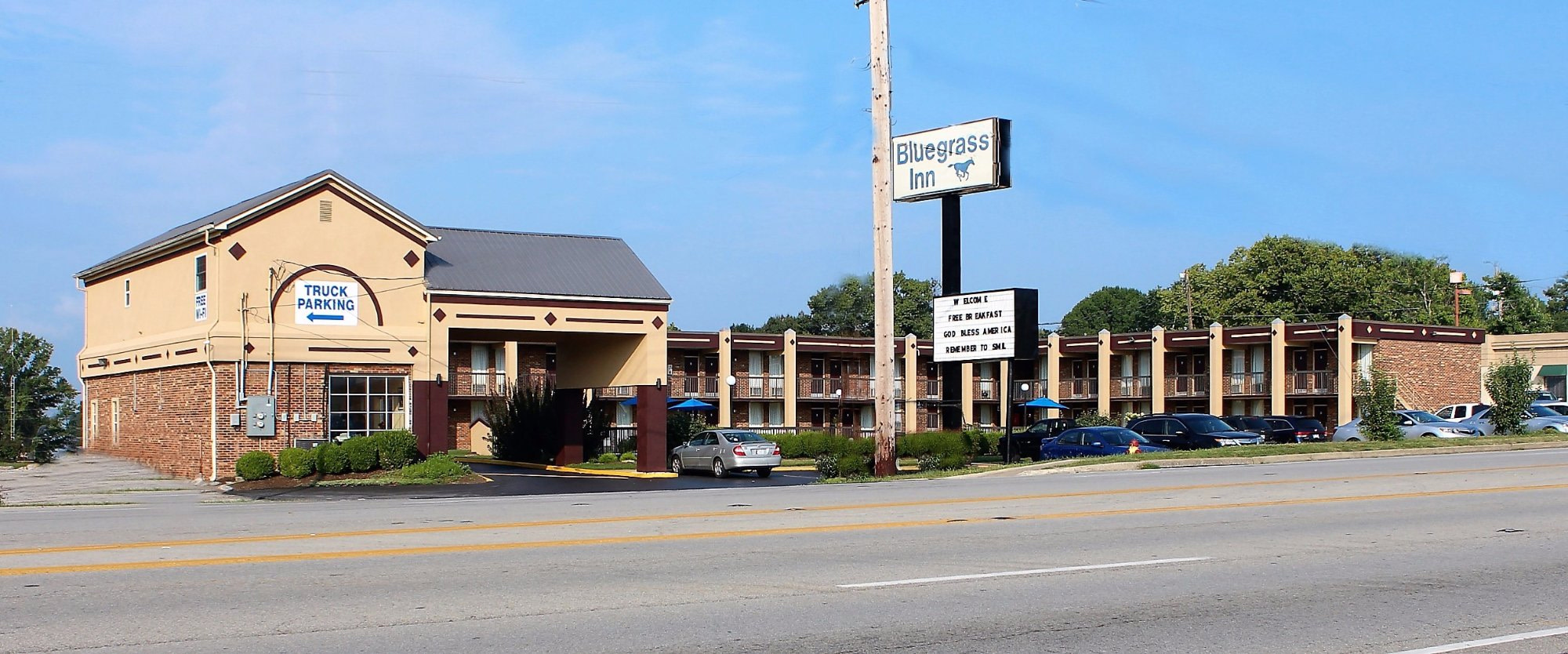
Bluegrass Inn
The Bluegrass Inn sits at 1835 Winchester Avenue in Ashland, Boyd County, Kentucky—a budget motel along the commercial stretch of U.S. Route 23 that most travelers pass without a second glance. It does not advertise its reputation. There are no ghost tours, no television crews, no plaques on the wall. It is the kind of place where rooms rent by the week, the parking lot is quiet by ten, and whatever happens behind the doors stays between the guest and the room. But for those who track haunted locations across Kentucky, the Bluegrass Inn carries a listing that punches above its weight—not because the claims are loud, but because they are strangely specific and consistent across people who have no connection to one another. Ashland dates to 1786, when the Poage family came through the Cumberland Gap and settled along the Ohio River. The community that grew around Poage's Landing remained small until the mid-nineteenth century, when iron production transformed the region. The Kentucky Iron, Coal and Manufacturing Company laid out the town in 1854, naming it after Henry Clay's estate in Lexington. Boyd County was formed in 1860, and Ashland became its largest city. By the early twentieth century, the American Rolling Mill Company had built a massive steel complex along the riverbank, employing thousands and anchoring the local economy for decades. Winchester Avenue developed as the city's main commercial artery—banks, theaters, shops, and lodging stretched along the route that connected Ashland to the broader Tri-State corridor where Kentucky, Ohio, and West Virginia converge. The Bluegrass Inn sits within that corridor, a quiet holdover from an era when roadside motels served the steady flow of workers and travelers moving through Appalachian Kentucky. No public record ties the property to a specific death, crime, or documented tragedy. But what the Bluegrass Inn lacks in backstory, it makes up for in the unnerving consistency of guest accounts. Rooms 127 and 129 are identified repeatedly as the source of activity. Guests in those rooms describe light blue orbs, roughly the size of a softball, drifting through the space. A pervasive feeling of dread settles in and does not lift for the duration of the stay. The physical sensation of hair standing on end—not momentarily, but continuously—has been reported by more than one visitor. One guest described waking to find three parallel scratches down their back, evenly spaced like fingernail marks, bright red and warm to the touch, with no explanation for how they got there. In room 205, a separate guest reported the persistent sound of someone else in the room each night—movement, presence, weight—when no one was there. What makes these accounts difficult to dismiss outright is not their drama but their restraint. These are not ghost stories told for entertainment. They read like the reluctant admissions of people who were not looking for anything and found something they could not explain. No investigation team has formally examined the property. No historical event has surfaced to explain why these rooms behave differently than the others. The Bluegrass Inn does not lean into its reputation or monetize it. It remains a working motel—affordable, unassuming, and open to anyone passing through Ashland who needs a place to sleep. Whether sleep is what they get may depend on the room.

Gribble House
The Gribble House in Savannah, Georgia stands as a historical structure connected to one of the region's most disturbing and tragic events, a narrative of violence, injustice, and loss that continues to resonate through the building's physical spaces and the consciousness of those who enter its walls. The structure itself represents the architectural heritage of Savannah, a city with profound historical significance extending across centuries of American development and bearing the complicated legacies of regional history. The building was constructed during the nineteenth century and witnessed the unfolding of normal domestic life across multiple decades until the tragic events that would forever define its reputation and paranormal character. The warehouse configuration of the structure provided space for storage, commercial operations, and residential quarters, creating a complex interior environment with multiple rooms, isolated areas, and spaces conducive to the development of supernatural manifestations. The building's history as a location of paranormal activity appears directly connected to the tragic events occurring within its walls, suggesting that extreme trauma, violence, and loss may imprint themselves upon physical spaces in ways that generate persistent supernatural phenomena detectable by sensitive individuals and paranormal investigators. The Gribble House's paranormal reputation stems directly from documented murders of specific individuals whose deaths occurred within the building, their spirits apparently remaining attached to the location of their deaths and continuing to manifest in ways detectable by contemporary witnesses and paranormal investigators. The murder victims include Eliza Gribble, Carrie Gribble, and Maggie Hunter, women whose deaths at the hands of murderer represent acts of violence that left emotional imprints upon the space and apparently created conditions conducive to prolonged paranormal manifestation. The trauma of violent death, the emotional suffering of the victims, and the violation inherent in homicide appear to have created paranormal conditions of unusual intensity and persistence, allowing the spirits of the deceased to maintain sustained presence within the building despite the passage of decades following the deaths. Investigators theorize that the strength of emotional trauma associated with violent death, combined with the victims' apparent resistance to accepting the reality of their deaths, may create conditions allowing conscious spiritual presence to manifest more readily than would occur in cases of natural death or peaceful passing. The specific rooms where murders occurred appear to maintain concentrated paranormal activity, suggesting that the physical location of trauma serves as an anchor point for spiritual manifestation and continued presence. Paranormal phenomena documented at the Gribble House include a comprehensive array of unusual experiences reported consistently by visitors, investigators, and paranormal researchers who have spent time within the building. Light anomalies including unexplained illuminations, shadows moving independently, and photographic evidence of anomalous luminescence have been documented within specific rooms and areas associated with the murders. Unidentified voices captured through electronic voice phenomena recordings suggest the presence of conscious entities attempting to communicate with the living, with some recordings capturing what appears to be the distressed vocalizations of murder victims reliving aspects of their deaths. Visitors report experiencing touching sensations, including the sensation of unseen hands making contact with their bodies, suggesting active engagement by paranormal entities with the living individuals present within the building. Inexplicable scratches appearing on visitors' skin without any visible cause have been documented by multiple witnesses, suggesting aggressive paranormal activity possibly connected to the violent circumstances of the deaths. Visitors experience anxiety, apprehension, and unexplained headaches while inside the building, potentially resulting from exposure to the concentrated emotional trauma and spiritual distress emanating from the murdered victims. Glowing orbs appearing in photographs and brief light flashes witnessed during investigation sessions suggest the manifestation of forms of energy or consciousness that exist outside the normal range of human perception and conventional scientific explanation. The Gribble House has been transformed into a paranormal experience venue, with professional paranormal investigators and tour operators offering ghost hunting experiences to visitors interested in encountering documented supernatural phenomena within a historically significant location. The proprietors of paranormal experiences at the Gribble House have developed formal investigation protocols, provided guests with electronic monitoring equipment, and created structured opportunities for visitors to attempt direct communication with the spirits of the murdered victims. This transformation of the location of tragedy into a commercial paranormal attraction represents a contemporary approach to historical trauma, acknowledging the supernatural phenomena while creating spaces for public engagement and investigation. The combination of documented murders, persistent paranormal phenomena spanning decades, physical evidence captured during investigations, consistent witness accounts, and the establishment of professional paranormal investigation operations has confirmed the Gribble House as one of Savannah's most significant paranormal locations, attracting serious researchers and curiosity seekers interested in understanding how violent trauma creates conditions conducive to sustained supernatural manifestation.
Tillett Cemetery – Hookman’s Cemetery
Tillett Cemetery, commonly known as Hookman's Cemetery, occupies a rural location in Peru, Indiana, representing a burial ground of substantial historical significance within Miami County's cultural landscape and genealogical heritage. The cemetery contains rows of gravestones marking the final resting places of numerous individuals whose lives span multiple centuries, creating a palimpsest of local history preserved in stone and earth. The surrounding terrain features forested and semi-rural characteristics typical of rural Indiana, with trees and natural vegetation creating atmospheric conditions that paranormal observers describe as particularly conducive to supernatural manifestation. The cemetery's remote location, removed from urban noise and activity, allows subtle paranormal phenomena to become apparent to sensitive individuals and investigators. Nearby roads traverse the landscape in proximity to the cemetery, creating an interface between the living world of vehicular traffic and the realm of the deceased. The physical layout of Tillett Cemetery features characteristic burial ground organization, with gravestones arranged in rows and sections reflecting genealogical relationships and chronological burial sequences across multiple eras. The mature trees scattered throughout create distinctive shadow patterns and atmospheric conditions that shift across day and season, generating impressions combining natural environmental factors with paranormal phenomena. The roads nearby provide access while simultaneously creating a boundary between the civilian world of transportation and the consecrated space dedicated to the dead. The cemetery's appearance shifts substantially between daylight and evening darkness, with the transition creating psychological and paranormal changes in the intensity of manifesting phenomena. The spatial isolation from adjacent properties creates a sense of separation essential to the paranormal atmosphere pervading the location. Tillett Cemetery has become infamous as the primary location associated with the Hookman legend, one of the most persistent and geographically specific urban legends originating in the Midwest region. The Hookman entity is described as a phantom figure possessing a hook prosthetic where a hand should be, allegedly the manifestation of a man murdered or mutilated in violent circumstances whose angry spirit haunts the cemetery and surrounding roads. Witnesses have reported encountering thick eerie fogs rolling across cemetery grounds despite weather conditions that cannot account for fog formation, suggesting paranormal misting phenomena. Cold spots materialize suddenly within cemetery boundaries, with temperature drops dramatic and localized, creating islands of extreme cold. Multiple witnesses have documented scratches appearing on vehicles following cemetery visits, with some reporting distinctive hook-shaped markings. Dragging hook sounds have been reported emanating from cemetery grounds at night, suggesting the movement of a heavy implement. Witnesses have encountered apparitions, disembodied voices, and phantom footsteps. Tillett Cemetery represents a unique intersection between documented urban legend and verified paranormal phenomena, where a region-specific supernatural narrative has become inseparably linked with measurable paranormal activity. The physical phenomena documented, including inexplicable vehicle scratches, fog manifestations, and cold spots, provide evidence for genuine paranormal activity beyond psychological explanations. The cemetery continues to attract paranormal enthusiasts, urban legend researchers, and daring youth seeking to verify the Hookman legend through direct encounter. The ongoing activity suggests that cemeteries, as locations specifically dedicated to memorializing the deceased, may harbor heightened spiritual and paranormal activity, creating convergence points between the material world and spiritual existence.
Cragfont
Cragfont mansion stands as an imposing testament to antebellum architectural ambition and Southern prosperity in Castalian Springs, Tennessee. Constructed as a grand estate during the nineteenth century, the mansion represents the apex of period craftsmanship and design, featuring multiple stories, numerous bedrooms, and expansive halls designed to showcase wealth and refinement. Every detail reflects careful consideration of comfort, aesthetics, and permanence—a dwelling intended to endure generations and command respect through its very presence. The property changed hands multiple times throughout its existence, serving different purposes and witnessing diverse human experiences. Certain incidents within the building's past appear to have left indelible marks, creating disturbances that persist into the present day. Multiple deaths and tragic circumstances have been associated with Cragfont, some shrouded in historical ambiguity and unclear circumstances. The nature of these deaths and the identities of those who perished remain partially obscured by time, contributing to the enigmatic quality of the mansion's haunting. Violent emotions, unresolved conflicts, or sudden departures may explain why certain spirits appear reluctant to vacate the premises. The paranormal activity has become increasingly documented, particularly following its appearance on the television program Haunted Live, where paranormal investigators examined the property in detail. Footsteps of unseen occupants traverse hallways and rooms, their presence announced by footfalls on wood and stone throughout the structure. Paranormal phenomena at Cragfont include shadow sightings of dark silhouettes moving through doorways with no corresponding physical body. Visitors describe unexplained touches, hands grasping at clothing or making contact with skin, and mysterious headaches developing in certain rooms. Objects move of their own accord, doors opening and closing without intervention, furniture shifting positions spontaneously. Most disturbing, residents report being pushed or scratched, their bodies bearing marks consistent with hostile contact. Candles spontaneously ignite throughout the structure, beds are found unmade despite prior arrangement, and glass spontaneously shatters without cause. These violent phenomena suggest presences that may be territorial, disturbed, or actively antagonistic toward the living. Investigators note that phenomena escalate when the property is occupied or when investigative teams conduct their work. The main halls and bedrooms appear to be primary areas of manifestation, with certain rooms being considerably more active than others. Psychical researchers theorize that the emotional intensity surrounding tragic events may have imprinted itself upon the physical structure, creating a location where the boundary between living and deceased existence grows thin. The mansion's architectural complexity, with numerous rooms and passages, may contribute to the sense of oppression reported by those spending extended time within its walls. Cragfont continues to draw paranormal investigators and researchers from across the region and beyond. The property stands as a prominent example of reported hostile paranormal activity, distinguishing itself through the aggressive nature of its phenomena. Television appearances have elevated Cragfont to recognized status within ghost hunter communities, making it a destination for serious researchers. The mansion's beautiful architectural shell contrasts sharply with the distressing experiences reported within, creating a compelling paradox that continues to fascinate those drawn to paranormal phenomena and the darker aspects of haunted locations.
St. Charles Hall – Carroll College
Saint Charles Hall stands as one of the central institutional buildings on the campus of Carroll College in Montana, a structure that serves academic and residential functions while simultaneously hosting paranormal phenomena that have become embedded within campus folklore and documented in paranormal literature as one of Montana's more distinctive college hauntings. The building's architectural form and spatial organization reflects its historical construction and subsequent renovations designed to accommodate evolving educational and residential requirements across decades of institutional development. The hall's position within the Carroll College campus has given it central importance to student life and academic functions, making it a location where generations of students have lived, studied, and experienced formative educational experiences. The building's status as a residential hall means that its interior spaces include dormitory rooms, communal bathrooms, and shared living spaces designed to facilitate community formation and social interaction among student residents, creating an environment where personal relationships and emotional connections accumulate across each resident cohort's tenure. The paranormal phenomena now associated with Saint Charles Hall center specifically on events occurring within a bathroom facility, with the spatial restriction of the most dramatic manifestations suggesting that particular physical locations within the building have become focal points for spiritual presence and paranormal concentration. The historical catalyst for the haunting appears to relate to an accident occurring in 1964 within or adjacent to the bathroom facility, an event that resulted in the death of a student and created the traumatic circumstances that paranormal researchers describe as conducive to spiritual attachment to physical location. The specific nature of the accident and the precise circumstances of the death have been partially obscured through time and the transmission of narrative through informal oral tradition, with contemporary accounts remaining somewhat vague regarding exact details while maintaining consistency regarding the bathroom location and the student victim's tragic fate. The institutional response to the accident apparently involved securing the affected bathroom area, with physical sealing mechanisms including locking and boarding of the facility designed to prevent future access and perhaps to contain or minimize the paranormal phenomena associated with the traumatic event. The paranormal manifestations documented at Saint Charles Hall center specifically on bathroom phenomena, with the boarded and locked facility remaining a focal point of paranormal investigation interest despite physical barriers preventing direct access to the space. The most dramatically reported phenomenon involves the appearance of a ghostly apparition of a man visible in bathroom mirrors, apparitional manifestations that suggest the victim's consciousness may remain present within the bathroom environment or that traumatic imprint of the death experience may create perceptual phenomena resembling visual manifestations. Witnesses have reported observing blood flowing from sink fixtures within the bathroom, described as an apparent phenomenon that repeats or manifests spontaneously at times when no visible source of blood would account for the observation. Scraping and scratching sounds have been documented emanating from behind the boarded walls, sounds suggesting either rodent activity or paranormal phenomena interpreted by witnesses and paranormal investigators as evidence of spiritual distress or attempts at communication from the trapped consciousness of the deceased student. The concentration of phenomena specifically within and around the bathroom space, combined with the physical sealing that prevents contemporary access, has created a location of particular interest for paranormal researchers attempting to investigate and document the phenomena without direct physical access to the original site. The response of Carroll College institutional authorities to the paranormal phenomena appears to have involved a strategy of containment and avoidance, with the physical boarding and locking of the bathroom facility designed to prevent both direct access to the location and casual circulation of sensationalized stories among the student population. This institutional approach differs from locations where paranormal phenomena have been actively investigated or incorporated into institutional narratives, instead attempting to minimize attention and restrict access. Contemporary paranormal investigation teams and college folklore enthusiasts continue to be drawn to Saint Charles Hall seeking to research and document the phenomena that have become embedded in Carroll College's paranormal reputation. The location exemplifies the pattern wherein traumatic deaths occurring within institutional settings, particularly in settings where multiple generations of young people reside, create conditions for persistent paranormal manifestation and the accumulation of narratives within informal community memory. The specific concentration of phenomena within the bathroom environment, combined with the 1964 date of the triggering accident and the institutional sealing response, has established Saint Charles Hall as a recognizable location within paranormal investigation literature and Montana's documented haunted locations. The building's continued function as a residential facility means that contemporary students experience the campus space inhabited by the phenomena that continue to manifest from the traumatic event, creating an ongoing intersection of ordinary residential life and paranormal dimensions of institutional space.
Gurnsey Hollow Cemetery
Gurnsey Hollow Cemetery, situated in Frewsburg, New York, occupies a remote and geographically distinctive setting within the landscape of western New York State, representing a burial ground that has accumulated centuries of interments and the accumulated spiritual weight of countless farewells and remembrances spanning generations of community members and families. The cemetery's location within a hollow or low-lying area creates a distinctive topographical and atmospheric character, with the surrounding landscape creating a sense of seclusion and separation from ordinary community spaces. The natural features of the location, including mature trees, rocky terrain, and the particular qualities of light and shadow created by the geographical configuration of the surrounding area, contribute to a distinctive and somewhat foreboding atmosphere that has long been recognized by local residents as creating an environment distinct from typical cemetery settings. The cemetery has accumulated grave markers across extended time periods, with some graves bearing inscriptions and dates from the eighteenth and nineteenth centuries alongside more contemporary burials, demonstrating the continuity of the cemetery's function as a burial location across multiple historical periods and cultural transformations within the surrounding region. The accumulated history of burial, mourning, and remembrance has created an environment of profound historical and spiritual resonance, where the past remains palpably present within the contemporary landscape. The recorded history of Gurnsey Hollow Cemetery extends deeply into the settlement and development patterns of western New York, with the cemetery representing the burial location for members of families who established themselves in the region during early periods of European settlement and who have maintained presence and continuation within the community across subsequent generations. The graves within the cemetery document family lineages, social relationships, and the ordinary and extraordinary events that marked the lives of buried community members. Some graves commemorate individuals who died during periods of significant historical events, including early American frontier conflicts, the American Civil War, and subsequent periods of industrial and social development within New York. The cemetery has absorbed the emotional intensity of countless grief experiences, with families marking graves with flowers and remembrances, maintaining ongoing spiritual connection with deceased relatives through continued visitation and ritual observance. The accumulated grief, love, remembrance, and spiritual attention directed toward the cemetery across centuries has created an environment thick with emotional resonance and spiritual presence. The paranormal phenomena documented at Gurnsey Hollow Cemetery have established the location as one of the most consistently haunted and thoroughly investigated cemetery locations in western New York State, with numerous paranormal investigation teams and paranormal research organizations conducting extensive investigations and documenting substantial evidence of supernatural activity. A lady in white has been reported at numerous locations throughout the cemetery, appearing as a feminine apparition dressed in period-appropriate white attire, with witnesses describing her as gliding or moving through the cemetery grounds in a manner suggesting either profound distress or unfulfilled spiritual purpose. A young boy figure has been reported appearing in various locations throughout the cemetery, manifesting as a youthful apparition or shadowy form, with multiple independent reports suggesting the presence of a child spirit or spirits of multiple children attached to the cemetery location. A young girl, identified through paranormal investigation as being approximately seven years old at the time of her death and potentially having been mentally disabled or intellectually challenged, has been reported appearing at specific gravesites and throughout the cemetery grounds. The manifestations of this young girl spirit have included both visual apparitions and auditory phenomena, including the sounds of moaning, crying, and vocalizations expressing distress or anguish that seem emotionally congruent with a child's spiritual suffering or confusion regarding her death and circumstances. The paranormal phenomena at Gurnsey Hollow Cemetery extend beyond simple apparitional reports to include kinetic phenomena and environmental disturbances with no readily explicable cause. Spectral orbs have been documented in photographs taken at the cemetery during paranormal investigations, appearing as spherical luminous phenomena in digital images despite their absence in direct perception. Unearthly moans and vocalizations have been captured on audio recording equipment, with sounds seemingly originating from specific locations within the cemetery despite the absence of living human beings or conventional sources for such sounds. Electronic equipment failures and malfunctions have been documented during paranormal investigations, with electronic devices ceasing to function properly within specific areas of the cemetery before resuming normal function upon relocation to other areas. Vehicles approaching or traversing through the cemetery have reported sudden stalling and failure to restart without mechanical intervention, with multiple accounts suggesting that supernatural interference may be affecting vehicle electrical systems. Witnesses have reported being scratched or otherwise physically contacted by unseen entities, with some accounts describing deliberate ghostly attacks resulting in visible marks upon living flesh. These kinetic phenomena suggest the presence of entities possessed of sufficient energy or consciousness to directly affect physical reality in ways traditionally associated with poltergeist activity. Gurnsey Hollow Cemetery has achieved recognition as one of the most paranormally active cemetery locations in New York State, with extensive paranormal investigation documentation and ranking among the top two haunted cemetery locations in the state according to paranormal societies and paranormal research organizations. The cemetery has become a destination for paranormal enthusiasts, paranormal researchers, and ghost hunters from across the region and nation, drawn by the combination of historical significance, consistent paranormal activity, and the documented presence of multiple distinct spirit entities within the location. The identification of specific spirits, including the lady in white, the young boy, and the young girl, represents the outcome of extensive paranormal investigation utilizing both technological paranormal detection equipment and investigator intuition and psychic sensitivity. Contemporary investigators have worked to identify the specific individuals comprising the spirit population and the circumstances of their deaths, with research suggesting connections between identified graves and the reported apparitions. The cemetery continues to serve its function as an active burial ground while simultaneously functioning as one of western New York's most compelling paranormal investigation locations, creating a unique intersection of sacred burial space and paranormal research destination. The accumulation of documented paranormal activity across multiple investigations and multiple investigator teams has created a substantial evidentiary record supporting the conclusion that Gurnsey Hollow Cemetery is genuinely haunted by multiple spiritual entities who remain attached to the location through emotional bonds, unfinished business, or other mechanisms not yet fully understood by contemporary paranormal research.
Gold Camp Tunnels
Gold Camp Road, a scenic byway connecting Colorado Springs to the mountain communities surrounding the Pikes Peak region, winds through terrain rich with gold mining history and natural beauty, creating a roadway that transcends its function as a mere thoroughfare to become a passageway through the geological and cultural heritage of Colorado's mining era. The road itself was constructed by the Cripple Creek and Colorado Springs Railroad in the late nineteenth century, following gold rush activity that had transformed the region into a hive of economic frenzy and human endeavor, attracting prospectors and fortune seekers from across the nation who arrived with visions of untapped mineral wealth. The railroad tunnel system was engineered into the mountainside to maintain grade and facilitate the transportation of ore and equipment necessary to sustain the booming mining operations that depended on efficient logistics and reliable infrastructure. These tunnels represent remarkable engineering achievements for their time, carved through solid rock with nineteenth-century technology and explosive force, creating passages that would endure well beyond the era that brought them into being. Over the decades following the peak of mining activity, the tunnels remained, silent monuments to an era of resource extraction and economic ambition, their purpose gradually diminishing as mining declined and modern transportation routes superseded the railroad corridor. The most persistent and haunting legend associated with Gold Camp Road involves a school bus tragedy that allegedly occurred on or near the road during the mid-twentieth century, an event that seared itself into local folklore and became inseparable from the paranormal reputation of the location. According to the legend, a bus carrying children encountered either structural failure or an accident within or immediately following one of the tunnels, resulting in the loss of young lives in a sudden and tragic manner. The specifics of the incident vary across different tellings, with some versions suggesting mechanical failure, others emphasizing environmental factors, and still others claiming deliberate foul play, yet the core narrative remains consistent: children died within or near the tunnels in an untimely and terrible way. Despite searches through historical records and official documentation, no definitive evidence of such an incident has been conclusively verified, leading some researchers to question whether the story represents an actual historical event or evolved from misremembered occurrences or local imagination. However, the power of the legend has transcended questions of verifiability, becoming deeply embedded in Colorado Springs regional consciousness and paranormal tradition. The paranormal phenomena reported within the Gold Camp Road tunnels form a constellation of interconnected experiences that collectively create an atmosphere of supernatural presence and unsettling activity that defies rational explanation. Visitors and travelers passing through the tunnels report discovering tiny handprints appearing in the accumulated dust on tunnel walls and surfaces, handprints that are distinctly smaller than those an adult could produce, suggesting the presence of child-sized spirits moving through the darkness. The sensation of being grasped or touched by unseen hands is frequently reported, with witnesses describing sudden, unexplained groping sensations that occur without any visible source, creating feelings of profound violation and fear in those who experience these encounters. Whispers and disembodied voices echo through the tunnel passages, speaking words that are often indecipherable or speaking in tones that convey distress and anguish without clarity of message. Shadowy humanoid figures materialize briefly within the tunnel passages before vanishing into the darkness, their forms too ephemeral to be clearly identified but unmistakably suggestive of human shape and presence. The sounds of children laughing and playing have been reported echoing through the tunnels, a juxtaposition of innocence and location that creates an eerie psychological dissonance in those who hear it. Vehicles traveling through the tunnels have reported experiencing inexplicable pushing sensations, as though unseen forces are attempting to guide or propel the vehicles through the passages, with some drivers experiencing sudden acceleration or directional changes that could not be attributed to mechanical malfunction. The investigation of paranormal activity at Gold Camp Road has attracted paranormal research teams, ghost hunters, and curious enthusiasts from across Colorado and beyond, drawn by the combination of a compelling legend and consistent contemporary reports of supernatural phenomena. Documented investigations have recorded electromagnetic anomalies, temperature variations that cannot be explained by environmental conditions, and audio recordings that capture sounds seemingly inconsistent with the location's current status as an abandoned roadway serving minimal traffic. The tunnel structures themselves have been subject to geological and historical examination, with researchers attempting to understand whether the physical characteristics of the location might contribute to misidentification of natural phenomena as paranormal activity. Some theorists have suggested that the tunnels' particular acoustical properties, combined with psychological expectation and the power of suggestion invoked by the school bus legend, might amplify and distort ordinary sounds into apparently paranormal phenomena. However, such rational explanations have failed to account for certain reported experiences, particularly the physical phenomena of handprints and the touching sensations, which seem to demand explanation beyond conventional interpretation. Today, Gold Camp Road remains a popular recreational route for drivers and motorcycle enthusiasts seeking scenic mountain travel, yet it has simultaneously become recognized as one of Colorado's most persistently haunted locations, a place where the boundary between natural landscape and supernatural realm seems particularly permeable and active. The road's accessibility and continued use ensure that new reports and contemporary accounts continually emerge from drivers and passengers who experience unexplained phenomena during their passage through the tunnels. The unresolved status of the school bus legend and the absence of conclusive historical verification paradoxically seem to strengthen rather than weaken the location's paranormal reputation, as the mystery and ambiguity surrounding the legend allow it to evolve and adapt to contemporary understandings of the supernatural. Visitors to Gold Camp Road often approach the tunnels with a combination of cultural awareness regarding their paranormal reputation and an openness to experiencing something beyond the ordinary, creating a psychological and emotional context that may amplify their sensitivity to subtle manifestations. The tunnels continue to serve as a liminal space where Colorado's mining heritage, automotive culture, the power of local legend, and genuine paranormal phenomena intersect, creating one of the state's most compelling and mysterious locations.
Western Carolina University – The Moore Building
The Moore Building at Western Carolina University stands as a residential dormitory in Cullowhee, North Carolina, part of the Blue Ridge Mountain region. Western Carolina University developed as an institution of higher education serving the region and attracting students from throughout North Carolina and the southern Appalachian region. The Moore Building represents standard dormitory architecture typical of college campuses constructed during the mid-twentieth century, designed to house multiple student residents in compact quarters with shared facilities and community living spaces. The building served generations of students, with the residential space representing the first independent living environment for many and the location where formative college experiences occurred. The paranormal reputation of the Moore Building became established through persistent rumors and accounts of a female student who allegedly died under mysterious or tragic circumstances at the dormitory. The unverified nature of the accounts has led paranormal researchers and university historians to debate whether the incident actually occurred or whether the legend developed through gradual embellishment among successive student generations. The legend, whether rooted in actual historical incident or oral tradition, became sufficiently established in the collective consciousness of Western Carolina University students that the Moore Building acquired a haunted reputation. The consistency of student reports spanning multiple decades suggests that something significant has impacted the building's emotional environment. Successive generations of student residents reported experiencing recurring paranormal phenomena concentrated within specific dormitory rooms and hallway areas, particularly on the second floor. Student reports describe lights flickering inexplicably throughout dormitory rooms despite electrical inspections revealing no technical defects. Phantom voices and footsteps have been consistently reported, with sounds occurring at various times of day and night. Scratching sounds emanating from walls have been documented by multiple independent witnesses, with maintenance attributing them to rodent or insect activity despite pest control finding no evidence. Unexplained water sounds have been reported despite plumbing inspections finding no leaks or moisture damage. Paranormal investigation teams have documented these phenomena and investigated the possible connection between manifestations and the alleged death of the female student. The concentration of activity on the second floor supports the legend's narrative that the student's death occurred at that location. The nature of the phenomena, with lights flickering and phantom voices occurring sporadically without consistent patterns, suggests residual haunting activity where emotions and trauma imprinted themselves on the building's physical structure. The persistent reports spanning multiple decades indicate either constant manifestations or successive student generations perpetuating the legend through suggestion. The Moore Building continues to serve Western Carolina University as an active dormitory despite its paranormal reputation. Many prospective residents specifically request accommodations in Moore Hall seeking paranormal encounters. The persistent debate regarding whether the female student's death actually occurred has made the Moore Building a case study in paranormal legend transmission through institutional communities, with ongoing investigation and discussion among paranormal researchers and university historians regarding the authenticity of reported phenomena.
Huguenot House – Makens Bemont House
The Bellingham-Cary House stands in Chelsea, Massachusetts, as a historic residential structure whose architectural integrity and period preservation have made it a valuable contribution to the community's historical landscape, while simultaneously marking it as a location where paranormal phenomena rooted in deep historical trauma continue to manifest with apparent consistency. Constructed during the nineteenth century when Chelsea was transitioning from a rural community toward increasing urbanization and industrialization, the Bellingham-Cary House represented the residential aspirations of established families whose position in the community's social hierarchy afforded them the resources and status necessary to construct homes of considerable architectural distinction. The structure reflects the architectural sensibilities of its era, with period-appropriate construction methods, materials, and design elements that have been preserved through careful restoration and maintenance, ensuring that the building maintains visual connection to its historical origins while serving contemporary purposes. The grounds surrounding the house, including formal entryways, staircases, and interior passages, have been maintained in configurations largely consistent with historical records and period documentation, creating an environment that preserves the spatial relationships and physical layout within which the historical events that appear to have triggered the paranormal activity originally occurred. The haunting that persists at the Bellingham-Cary House remains rooted in tragic conflict between two Civil War-era lovers whose opposing allegiances to the Union and Confederate causes created an irreconcilable division during one of American history's most turbulent and morally fraught periods, when personal relationships became fractured by ideological commitments and national identity itself seemed to hang in the balance. The specific circumstances surrounding the lovers' separation or tragedy remain partially obscured by the distance of historical time and the selective survival of documentation regarding private emotional conflicts that were often conducted away from public observation and recorded primarily through private correspondence or family oral tradition that may not have survived intact to contemporary periods. The emotional intensity of the conflict between the lovers, combined with the historical significance of the Civil War period itself and the broader national trauma that context implies, appears to have created psychological and emotional conditions favorable to the manifestation of paranormal phenomena anchored to the specific location where the relationship conflict occurred or where the consequence of that conflict became dramatically evident. The paranormal activity at the Bellingham-Cary House manifests primarily as apparitions and supernatural phenomena concentrated on the staircase, a location that holds particular symbolic and physical significance within the house's geography and may represent the specific location where significant events in the lovers' tragic history occurred. The concentration of paranormal activity around the staircase suggests either the location of a specific traumatic event or the symbolic significance of the staircase as a boundary space, a transitional zone between different levels and areas of the house that might have represented the threshold between the lovers' separate worlds and conflicting allegiances. Witnesses reporting experiences at the Bellingham-Cary House have described encountering manifestations that suggest the presence of human spirits whose emotional attachment to the location and to the unresolved trauma of their romantic conflict creates conditions favorable to continued presence in the physical environment despite their transition into non-physical existence. The apparitions appear to remain locked in the patterns and emotional states that characterized their mortal existence, unable or unwilling to transition fully beyond the physical location that holds the key to their personal history and emotional identity. Today, the Bellingham-Cary House operates as a preserved historical site and museum property within Chelsea's historic district, with the building serving to educate contemporary visitors regarding the nineteenth-century history of Chelsea and the architectural traditions of the period while simultaneously offering genuine paranormal encounters for those sensitive to supernatural manifestations. The documented accounts of paranormal activity at the location continue to accumulate as visitors report experiencing apparitions, emotional impressions, and unexplained sensations concentrated particularly on or near the staircase, creating an increasingly comprehensive body of evidence regarding the location's genuinely haunted character. The tragic Civil War-era romance that appears to anchor the haunting to this specific location represents a uniquely American form of supernatural tragedy, one rooted in the nation's historical conflict and the personal separations and losses that extended far beyond the battlefield to affect families, communities, and individual relationships destroyed by ideological division. The Bellingham-Cary House stands as a physical reminder that paranormal activity may be grounded in specific historical traumas and personal losses, that spirits may become attached to locations where their most intense emotional experiences occurred, and that the weight of historical significance combined with personal tragedy may create conditions through which the boundaries between past and present, living and deceased, become permeable and accessible to those willing to seek such encounters.
Zombie Road – Lawler Ford Road
Zombie Road, more formally known as Lawler Ford Road, traverses a remote and historically significant area of Missouri. The road itself passes through terrain historically significant during the Civil War period, when military movements, skirmishes, and casualties marked the landscape with armed conflict trauma that continues to resonate across time. The landscape is characterized by dense forests, overgrown vegetation, and abandoned structures gradually succumbing to decay over decades of minimal human activity. The road has become increasingly isolated as surrounding communities abandoned the area and alternative transportation routes drew traffic away, leaving Zombie Road as a remnant of earlier settlement and infrastructure patterns. The paranormal phenomena associated with Zombie Road are diverse and multifaceted, encompassing experiences ranging from subtle environmental anomalies to dramatic confrontations with apparently hostile supernatural entities. Visitors and explorers have repeatedly reported encountering distinct cold spots where ambient air temperature drops precipitously without apparent meteorological explanation, creating physical sensations that can result in discomfort if exposure is prolonged. Manifestations extend to auditory phenomena, with witnesses describing disembodied voices emanating from surrounding forests, sometimes intelligible and sometimes merely inarticulate sounds expressing distress or anger. Most dramatically, some visitors report the disturbing sensation of unseen hands making physical contact, scratches appearing on skin without visible agency, and the sense of being touched by hostile invisible presences. The apparitions encountered on Zombie Road include spirits of Civil War soldiers whose presence reflects violent deaths and tragic circumstances from over a century and a half ago. These military ghosts manifest in various forms, some as full-bodied apparitions in period military uniform, others as shadowy shapes in peripheral vision. Visitors have documented encounters with apparitions of children, ghostly youngsters suggesting distinct historical narratives of deaths or tragedies involving minors. The most enigmatic entity is a mysterious old woman who appears to explorers, yelling at them and expressing anger at their presence, seemingly determined to drive them away through intimidation. Her identity and historical background remain obscure, her appearance suggesting she may date from an earlier or later historical period, or represent a distinct traumatic event. Zombie Road has become a destination for paranormal researchers and ghost hunters seeking to document phenomena and understand underlying historical events. The road remains accessible to vehicular and pedestrian traffic despite its remote location and deteriorating condition, though pervasive unease and documented hostile manifestations discourage casual recreation. Legends surrounding Zombie Road have grown increasingly elaborate and somewhat divorced from documented evidence, with some contemporary accounts describing aggressive zombie-like entities or demonic presences that may represent exaggeration. Nevertheless, Zombie Road stands as a location where historical tragedy, paranormal activity, and remote isolation combine to demonstrate how traumatic death and emotional intensity apparently transcend the boundary between physical and spiritual worlds, leaving indelible impressions and making the dead insistent upon presence and communication with the living.
Oxford Hotel
The Oxford Hotel stands as a landmark of Victorian-era architecture and luxury hospitality in Denver, Colorado, constructed in 1891 during the height of the city's development as a major metropolitan center for wealthy travelers drawn by mining wealth and commercial opportunity in the American West. The hotel represented a significant architectural and economic investment, designed to provide accommodations and services consistent with expectations of business magnates, political figures, and leisure travelers visiting Denver. The building's ornate exterior and carefully appointed interior spaces reflected architectural principles characterizing elite Gilded Age establishments, incorporating the finest-available materials and craftsmanship standards of the era. The hotel's distinguished architecture and commitment to luxury service established it as a prominent Denver fixture from opening through subsequent decades of operation. Careful preservation efforts and restoration work maintain historical integrity while adapting facilities to meet contemporary guest expectations and hospitality service standards. Paranormal phenomena at Oxford Hotel center on Florence Montague, whose 1898 death under extraordinary violence and emotional trauma created a spiritual imprint persisting across more than a century with remarkable consistency. Florence Montague was shot by a lover in Room 320, an incident that generated considerable scandal and media attention during an era when such crimes were subjects of intense public fascination and moral judgment. The violence and emotional intensity of her death apparently created spiritual resonance sufficiently powerful for her ghost to manifest within Room 320 and other hotel areas with remarkable consistency through multiple decades of eyewitness testimony from countless independent witnesses. Paranormal phenomena attributed to Florence Montague and a 1930s-era man in the Cruise Room bar manifest through disturbing and unusual experiences that guests and staff report with consistency establishing clear paranormal patterns. Within Room 320, the site of Florence's death, witnesses consistently report physical sensations including scratching, pushing, and strangulation feelings, suggesting Florence's emotional trauma imprinted onto physical space in ways perceivable by living individuals. Mirrors throughout the hotel, particularly in areas associated with Florence's death and the surrounding spaces, became paranormal manifestation sites with reports of apparitions appearing in reflective surfaces suggesting entity presence beyond normal optical physics. Moving glasses, cigars appearing to smoke themselves, and elevator malfunctions have been documented in the Cruise Room bar and surrounding areas, phenomena apparently associated with a 1930s man whose identity and circumstances remain less clearly documented than those associated with Florence. Manifestations exhibit patterns suggesting both residual emotional imprints related to violence and more conscious paranormal phenomena suggesting intelligent agency. Oxford Hotel continues functioning as a working hotel while simultaneously operating as one of Denver's most prominent paranormal destinations, attracting both conventional guests seeking elegant accommodations and paranormal enthusiasts specifically visiting to experience documented supernatural phenomena. Room 320 remains available for guest booking, with some visitors specifically requesting it in hopes of experiencing paranormal activity while others deliberately avoid it due to disturbing nature of reported experiences. The Cruise Room bar continues serving guests and operates as a popular Denver destination venue, with staff trained to manage the reality of working in a location where paranormal phenomena occur regularly. Paranormal investigation teams conducted multiple formal investigations within the hotel, producing audio recordings of unexplained voices and thermal imaging data interpreted as evidence. Management acknowledged historical tragedies and embraced the paranormal reputation as a distinctive feature differentiating the Oxford Hotel from other establishments. Florence Montague's and the unidentified man's spirits apparently continue their eternal residence, their manifestations serving as reminders of human drama and violence.
Hotel Jeffery
The Hotel Jeffery, constructed in 1851 in the historic mining town of Coulterville, California, represents one of the most enduring and architecturally significant structures in the Sierra Nevada foothills region, having continuously operated across more than a century and a half of California history. The building was constructed during the height of California's Gold Rush period, when Coulterville functioned as a vital trading, supply, and entertainment center for the mining communities scattered throughout the surrounding mountain territory. The original structure was designed and built to serve as a hotel, saloon, and social gathering place for miners, merchants, and other individuals engaged in the extractive industries that defined the regional economy during the nineteenth century. The Hotel Jeffery became known as the oldest continuously operating saloon in California, a distinction reflecting both the building's physical longevity and the continuity of its social function across changing eras. The structure survived the dramatic fluctuations of fortune that characterized frontier communities, the evolution of California from remote territory to established state, and the transformation of Coulterville from a booming mining camp to a quieter rural town. The architectural details of the building, its furnishings, and its accumulated material culture encode the history of its extended operation. The Hotel Jeffery has earned renown not solely as a historical landmark but as one of California's most extensively documented paranormal locations, with investigations and accounts suggesting the presence of approximately seventeen distinct spirits inhabiting the structure. The confirmed occupants of the building when living are far outnumbered by the reported spiritual residents, suggesting that the location has accumulated paranormal presences across its long operational history. Among the entities documented through paranormal investigation and witness accounts are the spirit of an elderly miner, an apparition described as possessing a notably negative or hostile demeanor, and a particularly distinctive entity known as the Red Eyed Roof Crawler, a phenomenon reported to manifest specifically during full moon periods. Room 22 has become legendary within paranormal research circles as a location of particular paranormal intensity, with investigators documenting shadow persons, apparitions, and other phenomena with greater frequency in that room than in other sections. The paranormal investigation of the Hotel Jeffery has been carried out by multiple professional teams utilizing various methodologies and equipment, generating documented evidence including electronic voice phenomenon recordings, thermal imaging data showing unexplained temperature anomalies, and photographic documentation of apparitions and paranormal manifestations. Some paranormal investigators conducting work at the location have reported physical contact with unseen entities, including documented instances of scratching or marking of investigator's skin. The phenomenon of floating orbs has been captured in photographs taken throughout the building, appearing with particular frequency in certain rooms and hallways, suggesting concentrated areas of paranormal activity or spiritual presence. The entities documented through investigation appear to possess varying degrees of awareness and intentionality, ranging from residual hauntings that appear to represent repetitive behavioral patterns to intelligent hauntings in which the spirits demonstrate apparent cognizance of living individuals and capacity for communication or interaction. The historical research conducted into the background of the Hotel Jeffery has linked the documented paranormal activity to specific tragic events and deaths occurring at the location. The mining industry that created the conditions for the Hotel Jeffery's original construction was inherently dangerous, with numerous fatal accidents occurring in mining operations throughout the region. The frontier saloon culture that characterized the Hotel Jeffery's social context was occasionally violent, with murders, accidents involving firearms, and other traumatic deaths documented in frontier records. Some spirits may represent individuals who died within the building itself, while others may have been drawn to the location after death due to the intense social significance and spiritual energy concentrated in the structure. The Hotel Jeffery continues to operate as both a historical landmark and an active paranormal location.
Elkhorn Lodge and Guest Ranch
The Elkhorn Lodge and Guest Ranch occupies a distinctive place in Estes Park, Colorado's paranormal and historical record, standing as one of the oldest continuously operating hotel properties in the state and predating the famous Stanley Hotel by approximately thirty years of continuous operation. The lodge was constructed during the late nineteenth century, placing its origins in the frontier-era development of Estes Park as a mountain destination for tourists and those seeking refuge in high-altitude environments. The longevity of the Elkhorn Lodge's continuous operation spanning more than a century of uninterrupted hospitality service represents a remarkable achievement in American hotel history, indicating sustained success in attracting clientele and maintaining operational viability through dramatic changes in travel patterns, tourism preferences, and hospitality industry standards. The establishment initially functioned as a working cattle ranch during the 1870s before transitioning to accommodate increasing numbers of visitors drawn to Estes Park's scenic beauty and distinctive mountain environment. The dual identity as both working ranch and hospitality destination created a unique institutional character, combining the rough masculinity of frontier ranch operations with the refined hospitality expected of mountain resort properties. The historical accumulation of human experience at the Elkhorn Lodge spanning more than 150 years created an environment saturated with emotional resonance and historical significance. The lodge witnessed the transformation of Estes Park from frontier wilderness to established mountain destination, providing accommodation for thousands of guests across multiple generations. The documented paranormal phenomena at the Elkhorn Lodge present an exceptionally complex picture of multiple entities manifesting diverse behavioral patterns and paranormal activities. The most frequently identified entity is known colloquially as "Mr. Fix-It," a spectral presence believed to represent an eighty-year-old handyman who performed maintenance and repair functions at the lodge during his living years. The apparition of Mr. Fix-It continues to engage in behavior consistent with his living occupation, manifesting in areas associated with maintenance and repair work. Multiple ranch hands from the property's cattle ranch period of the 1870s were believed to maintain presence within the lodge. A highly distinctive phenomenon involves reports of a white horse with pink-colored eyes manifesting on the lodge property during stormy weather conditions, reportedly serving a protective function and described as guarding the lodge and its inhabitants. The paranormal manifestations at the Elkhorn Lodge encompass physical phenomena suggesting substantial paranormal energy and entity agency within the structure. Doors throughout the lodge open independently of human intervention, suggesting entities capable of exerting force sufficient to operate mechanical systems. Scratching sounds emanate from walls, indicating either entities attempting to communicate through physical impact or manifestations of disturbance and agitation. Windows experience repeated impacts, with audible striking sounds and visible effects suggesting entity engagement with the physical structure. The concentration of eighteen documented entities within a single structure represents one of the most densely haunted locations documented in paranormal research. The Elkhorn Lodge remains actively operational in contemporary times, serving tourists and visitors drawn to Estes Park despite its reputation as one of Colorado's most actively haunted locations.
Willow Creek Farm
Willow Creek Farm occupies a position of remarkable distinction within American paranormal literature as one of the most thoroughly paranormally active residences on the continent, with documented evidence of extraordinary paranormal phenomena manifesting across the entire farmstead complex with a frequency and variety that exceeds most known haunted locations. Established in 1878, the farmhouse and associated structures occupy land in Shannon, Illinois that had formerly been part of indigenous territories, and paranormal researchers have documented consistent evidence suggesting that Native American spirits maintain significant presence throughout the property. The property encompasses a working farm with barns, machine sheds, multiple outbuildings, surrounding fields, and pastures, all of which have generated paranormal reports indicating that the supernatural phenomena are not limited to the main residence. The farmhouse structure itself features the architectural characteristics of late nineteenth-century rural residential construction, with modifications and updates reflecting subsequent periods of occupation. The documented population of spirits inhabiting Willow Creek Farm is extraordinarily large, with investigations by professional paranormal research organizations identifying between seven and nine regular resident spirits, supplemented by what witnesses describe as many as thirty additional entities that appear to pass through the property. Among the named entities with consistent manifesting patterns are spirits identified as Sarah and Joe, who have demonstrated sufficient behavioral consistency and communicative capability that investigators have compiled substantial archives documenting their characteristics. The paranormal experiences documented at the property encompass an exhaustive range of phenomena, including full-body apparitions, shadow figures, disembodied voices calling out names and attempting direct communication, repeated footsteps in hallways and exterior spaces, loud knocking and pounding sounds of unexplained origin, spontaneous movement of objects, dramatic physical contact including scratching and choking sensations, unexplained odors, and temperature fluctuations. Professional paranormal investigation organizations have documented at Willow Creek Farm some of the most dramatic and sustained paranormal activity ever recorded in residential settings, with investigation reports detailing phenomena so intense and consistent that investigators have struggled to explain how residents maintain occupancy. The farm produces loud bangs and percussive sounds that shake the structure, disembodied voices engaged in what appear to be conversations with residents or investigators, and physical contact events where residents report being scratched, pushed, or grabbed by unseen forces. Over one dozen formal paranormal investigations have been conducted at Willow Creek Farm, with investigative reports available through research organizations and paranormal archives. Willow Creek Farm represents a singular example of extraordinary paranormal concentration, a location where the density, variety, and intensity of documented supernatural phenomena exceed virtually all other known American residences. The property has attracted significant paranormal research attention, with multiple investigation teams returning repeatedly to document behavioral patterns and test investigative methodologies. The combination of Native American spiritual presence, unidentified resident spirits, and what may represent residual phenomena creates a complex paranormal landscape that continues to defy simple explanation despite sustained professional investigation.
Harden House
The Harden House in Clermont, Florida, stands as a residential structure marked by an unsolved violent crime and subsequent paranormal manifestations that drew national attention through television documentation. The house serves as the permanent site where a traumatic event unfolded on March 22, 1975, when John W. Harden was murdered under circumstances that remained unsolved for decades and continue to present investigative challenges to law enforcement. The house itself, with its stairs and multiple rooms, became the focal point of both the criminal investigation and the paranormal phenomena that emerged in the aftermath of the violent death. The structure represents a case study in how residential properties can become psychologically and spiritually marked by sudden, violent tragedy, with the physical building apparently retaining impressions of the traumatic event long after the crime itself occurred. The circumstances surrounding John W. Harden's death involved deliberate criminal methodology suggesting premeditated violence. The perpetrator or perpetrators cut telephone lines to isolate the residence from external communication, establishing conditions that would prevent the victim from calling for help during the attack. A fire was subsequently set, apparently intended to drive Harden from the house and into a vulnerable position where he could be attacked and killed. The violence that followed resulted in Harden's death, and despite thorough investigative efforts by law enforcement, the case remained officially unsolved, with the identity of the killer or killers never conclusively established. The premeditated nature of the crime, involving advance planning and the deliberate creation of dangerous conditions, added layers of darkness to the tragedy and may have contributed to the intensity of paranormal activity at the location. In the years following Harden's death, residents and visitors to the house reported consistent and escalating paranormal phenomena centered on various areas of the structure. Apparitions were observed throughout the residence, with full-body manifestations of what witnesses believed to be Harden's spirit appearing in multiple rooms and corridors. Heavy footsteps echoed through the house, particularly on stairs and in hallways, suggesting the presence of a large, deliberate figure moving through the residence. Residents reported physical contact with unseen entities, including being touched, pushed, or brushed by invisible forces. Most disturbing, several residents reported being scratched without visible cause, particularly within the basement area of the house, suggesting aggressive or distressed interactions with the paranormal entity. The paranormal activity at the Harden House attracted the attention of television producers, resulting in the residence being featured on the television program Unsolved Mysteries during an episode dedicated to documenting the murder case and the associated supernatural phenomena. Victoria Mango Hardin, a resident at the house, reported witnessing the apparition of a man wearing jeans and flannel clothing, which aligned with descriptions of Harden's typical attire. Children of another family, the Hatleys, reported befriending a pale man who stood silently behind them, describing an entity that appeared ghostly and presented as an unusual companion in the household. Elaine Hatley reported being scratched repeatedly in the basement, suggesting potentially aggressive interactions with the entity. The television documentation brought the Harden House haunting to national attention, establishing it as a recognized paranormal location and attracting paranormal investigation groups and ghost hunters. Notably, subsequent owners of the house reported that the paranormal activity appeared to diminish or cease entirely in more recent years, suggesting that the haunting may have been tied to specific individuals' presence or particular energetic conditions that eventually dissipated. The documented paranormal activity at the Harden House occurred primarily in the decades immediately following Harden's death, with reports becoming less frequent or ceasing as time progressed and the house changed hands among residents. The Harden House stands as a significant example of how violent crime and sudden death may imprint upon a physical location, creating paranormal phenomena that persist for years before eventually subsiding as the emotional and spiritual disturbance gradually resolves.
Retlaw Plaza Hotel
The Retlaw Plaza Hotel stands as a distinctive architectural landmark in Fond du Lac, Wisconsin, positioned prominently in the city's downtown district. The hotel was constructed in the early twentieth century during a period of significant commercial expansion and prosperity in Fond du Lac, reflecting the aspirations and architectural preferences of that era. The building features ornate detailing and a layout designed to accommodate the social and commercial needs of the traveling public during the height of American hotel culture. The structure underwent various renovations and updates throughout the twentieth century, with management and ownership transitioning multiple times as the hospitality industry evolved and contemporary expectations for hotel amenities changed. The Retlaw name itself derives from a reversal of the surname of an original proprietor, a naming convention that would have been notable and memorable during the era of the hotel's founding. The hotel's paranormal reputation centers significantly on the legend of Room 717, which has become known as the location's most intensely haunted space. According to accounts, a young woman fell or was pushed from Room 717 to her death on the street below, an incident that occurred sometime during the mid-twentieth century. The circumstances surrounding her death remain subject to various interpretations and theories, with some accounts suggesting suicide while others hint at foul play or accident. Additionally, the spirit of Walter Schroeder, reportedly a former owner or manager of significant historical importance to the property, is believed to haunt the hotel. A redheaded woman dressed in a white bathrobe has been described in reports from various areas of the building, her identity and circumstances unknown but apparently associated with the paranormal phenomena. Paranormal activity at the Retlaw manifests across multiple forms and affects numerous areas of the structure. Loud, forceful banging on doors occurs frequently, often concentrated on upper floors but reported throughout the building. Guests and staff have consistently reported sudden drops in temperature creating uncomfortably cold zones despite normal heating conditions. Doors have been observed closing and locking automatically, trapping occupants in rooms or isolating areas of the building. Electrical phenomena include lights turning on and off without physical intervention, creating an unsettling pattern of illumination throughout the hotel. Scratching sounds emanating from walls and structural elements have been documented, suggesting possible intelligent manipulation of the building's infrastructure. Most disturbing, several guests have reported what they interpret as physical assaults by unseen entities, experiencing scratching, pushing, or impacts without visible cause. Disembodied male voices speaking in deep tones have been captured and documented, along with plaintive cries for help heard echoing through corridors and rooms. Phantom footsteps traverse hallways and upper floors regularly, while mysterious humming sounds have been reported emanating from various locations, suggesting possible musical or vocal phenomena from the spiritual realm. The extensive and diverse nature of paranormal phenomena at the Retlaw Plaza Hotel has made it one of Wisconsin's most documented haunted locations. Paranormal investigation teams have spent considerable time and resources studying the location, capturing evidence of various phenomena and documenting accounts from dozens of guests and employees. The consistency of reported phenomena across multiple decades, combined with the specificity of witness accounts, suggests complex and multi-faceted paranormal activity rather than isolated incidents. The combination of apparent tragic death, unresolved circumstances, and strong emotional imprints appears to have created conditions highly conducive to ongoing paranormal manifestation. Today, the Retlaw Plaza Hotel continues operating as a functional hotel, attracting guests both for conventional business travel and for paranormal investigation purposes. The property has become a significant destination for paranormal enthusiasts and investigators seeking firsthand experience of authentic haunting phenomena. Room 717 and the upper floors remain particularly popular with visitors specifically seeking paranormal encounters. The hotel represents a convergence of genuine hospitality function and documented supernatural activity, creating a unique environment where guests may expect both comfortable accommodations and potentially dramatic encounters with phenomena that defy conventional explanation.
Manhattanville College
Manhattanville College stands as a prestigious liberal arts institution originally established in Manhattan during the late nineteenth century and relocated to a more spacious campus setting in Purchase, New York in 1952 to accommodate its expanding educational mission and growing student body. The relocation to Purchase involved the acquisition of extensive grounds that had previously served as residential and commercial properties, with the college developing a comprehensive campus infrastructure to support academic programs, residential facilities, administrative operations, and cultural activities. The most distinctive and historically significant structure on the Manhattanville College campus is known as The Castle, a mansion built during the late nineteenth century as a private residence for millionaire Lemuel "Whitelaw" Reid, a prominent newspaper publisher and businessman whose wealth and influence shaped American journalism and political discourse. The Castle reflects the Gilded Age architectural aspirations of wealthy industrialists and financiers, featuring distinctive architectural elements, interior luxury, and grounds designed to demonstrate wealth and cultural refinement. When the college relocated to Purchase, it acquired the Castle property along with surrounding grounds, incorporating the structure into its campus infrastructure despite the building's original purpose as a family residence. The Castle thus became the most visually distinctive and historically prominent structure within the college campus, its architectural distinctiveness and historical associations making it a focal point for student and visitor attention. The original owners of the Castle and the surrounding property, the Reid family, experienced profound tragedy within the mansion's walls during the late nineteenth or early twentieth century. A catastrophic fire broke out in the structure, rapidly consuming portions of the building and causing tremendous destruction and loss of life. The fire claimed the lives of three children of Whitelaw Reid, the sons of the family who had resided in the Castle alongside their parents and other household members. The deaths of the three children in a sudden, violent, and terrifying fire created profound trauma within the family and marked the mansion with the imprint of tragedy. The fire's circumstances, whether caused by accident, negligence, or intentional action, remain historically documented but contribute to the overall sense of loss and suffering associated with the location. The deaths of the children transformed the Castle from a symbol of familial happiness and domestic security into a location forever marked by loss and grief. The emotional intensity surrounding the tragic deaths, the sudden and violent nature of the fire, and the helplessness of family members unable to prevent the tragedy created powerful psychological and spiritual imprints within the physical structure. Following Manhattanville College's acquisition of the Castle property, students and staff began reporting paranormal phenomena concentrated within the historic structure. Visitors to the Castle described experiencing pronounced cold spots throughout the building, with temperatures dropping dramatically in localized areas despite the absence of environmental explanation. The sensation of being watched pervaded the interior spaces, with individuals reporting awareness of non-corporeal presences observing their activities. Doors opened and closed of their own accord, with no identifiable physical cause, sometimes closing suddenly in the faces of individuals attempting to enter specific rooms. Most dramatically, several tour guides and student guides conducting groups through the Castle reported experiencing sudden physical immobility, with their bodies becoming temporarily paralyzed despite full consciousness and awareness of their surroundings. This phenomenon of temporary immobilization, attributed to supernatural interference with bodily function, created profound fear and disrupted tour activities. In addition to phenomena within the Castle itself, the college cemetery located behind the structure became a site of paranormal activity. Visitors reported observing dark shadows moving through the cemetery grounds despite the absence of visible human figures. Footsteps echoed across the gravel pathways outside the chapel at irregular intervals, the sounds of walking audible despite the absence of visible walkers. Photographs taken at night in the cemetery frequently captured orbs and blurry luminescent figures, interpreted as manifestations of spiritual presence. The freshman dormitory building on the Manhattanville College campus contains room 118, which became recognized as an exceptionally active paranormal location within the college. Historical accounts suggest that a nun, perhaps formerly associated with the college's religious origins or serving in a staff capacity, died by suicide within room 118, hanging herself in circumstances of despair and psychological crisis that left profound emotional imprints within the physical space. Despite subsequent renovations, structural modifications, and changes to room configuration, the paranormal phenomena associated with the nun's death persisted. Students and staff reported encountering the transparent apparition of a nun-robed figure walking through the hallways of the dormitory building, the figure opening doors and manipulating physical objects as if still engaged in the duties and routines of living staff. Visitors reported experiencing the sensation of invisible hands grabbing and tugging at their feet and legs, scratches appearing on skin despite the absence of visible implements or assailants. The phenomena in the dormitory concentrated in localized areas and seemed to follow patterns consistent with a specific entity attempting to establish communication or express distress. Paranormal researchers and college officials now recognize that Manhattanville College, despite its status as a prestigious academic institution, harbors significant and persistent paranormal activity arising from multiple sources and concentrated in multiple locations. The Castle remains the most visually prominent haunted location, with the spirits of the three Reid children demonstrating remarkable persistence and occasional willingness to manifest to student visitors. The nun in dormitory room 118 continues her presence despite her death by suicide, suggesting consciousness or spiritual energy unable to transcend the trauma of her final moments. The cemetery catacombs beneath the Old Chapel contain the physical remains of numerous nuns and other individuals associated with the college's earlier religious operations, their collective presence perhaps contributing to the pervasive paranormal phenomena documented throughout the campus. Manhattanville College thus stands as a location where educational mission, architectural history, personal tragedy, and persistent paranormal activity converge to create a genuinely haunted academic institution where the boundaries between the living and deceased remain permeable and spiritually active.