
Haunted Schools in America
207 haunted locations

Farrar Schoolhouse
Just northeast of the Des Moines metro, surrounded by quiet farmland and gravel roads, sits the tiny unincorporated community of Farrar, Iowa. The town itself is small—just a church, a handful of homes, and one enormous brick building that seems strangely oversized for the countryside around it. That structure is the Farrar Schoolhouse, a former rural school that educated generations of local children before eventually becoming one of the Midwest’s most recognized paranormal investigation locations. The community of Farrar formed in the early 1900s after a railroad line was built through the area. As farms developed across the surrounding countryside, the need for a centralized school became clear. At the time, many children in rural Iowa attended scattered one-room schoolhouses. Local leaders decided to consolidate those small schools into a single modern facility that could serve the wider farming community. Land for the new school was donated by local farmer C.G. Geddes, and construction began in the early 1920s. When the Farrar School officially opened in 1922, it was considered remarkably modern for rural Iowa. The two-story brick building spanned roughly 17,000 square feet and included amenities many country schools lacked at the time: electric lighting, boiler heat, indoor plumbing, and multiple classrooms under one roof. The project came with a steep price tag—nearly $100,000—which sparked debate among local residents who believed the building was too extravagant for such a small community. Despite the controversy, the school quickly became the educational and social center for the surrounding farmland. Generations of students attended classes, played basketball in the gymnasium, and gathered for community events inside its large halls. For roughly eighty years, the school served families throughout the region. Like many rural schools in the Midwest, however, declining populations and district consolidations eventually made it difficult to maintain such a large aging facility. In 2002, the Farrar Schoolhouse officially closed when students were absorbed into newer schools within the Bondurant–Farrar district. After the final class graduated, the building sat empty for several years. In 2006 it was purchased by Jim and Nancy Oliver, who began restoring the property and living inside the former school. It was during this period that stories of unusual activity began gaining wider attention. Visitors and investigators reported unexplained footsteps in empty hallways, doors closing on their own, children’s voices echoing through classrooms, and shadowy figures moving between rooms. Over time, Farrar Schoolhouse developed a reputation as one of Iowa’s most active paranormal locations. The building attracted numerous investigative teams and media coverage, including appearances on television programs such as My Ghost Story, Ghost Stalkers, and Kindred Spirits. Independent investigators and YouTube creators also began documenting their experiences inside the school, further expanding its reputation among paranormal enthusiasts. In 2024, the property gained even wider attention when it was purchased by paranormal YouTubers Sam Golbach and Colby Brock—better known online as Sam & Colby. The pair, whose channel reaches millions of viewers, bought the school after learning it might be demolished. Their goal was to preserve the building and continue investigating its claims while opening it to other paranormal researchers. Their multi-episode investigation series filmed inside the school brought a new wave of global interest to the location. During their time at the property, they collaborated with several well-known figures in the paranormal community, including Exploring With Josh, Dakota Laden from Project Fear, and creators such as CelinaSpookyBoo and KallMeKris. These investigations introduced Farrar Schoolhouse to a massive online audience and helped cement its status as one of the most recognizable haunted schools in the United States. Today the building remains largely intact from its days as a rural school. Classrooms, staircases, chalkboards, and administrative offices still stand much as they did decades ago. For historians, the structure represents a rare surviving example of early 20th-century rural school consolidation. For paranormal investigators, it has become a place where history, folklore, and modern digital storytelling intersect. Whether the strange reports inside Farrar Schoolhouse stem from paranormal forces, the psychology of expectation, or simply the acoustics of a century-old building is still debated. What is certain is that this once-quiet rural school now sits at the center of one of Iowa’s most widely discussed paranormal case files.
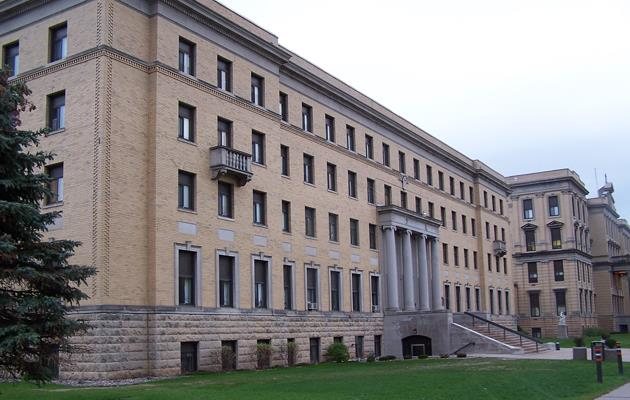
St. Mary’s College – Heffron Hall
Saint Mary's University of Minnesota sits on Terrace Heights, a bluff above the city of Winona on the western bank of the Mississippi, with the river valley spreading below and the limestone ridgelines of the Driftless Area rising on the opposite shore. It is a campus of red brick and Catholic institutional gravity, founded in 1912 by a bishop who purchased cornfields five miles west of the Winona downtown, raised the financing himself, and built a college from nothing on a hill. That bishop was Patrick Richard Heffron — New York-born, Minnesota-raised, ordained in Montreal in 1884, appointed second Bishop of the Diocese of Winona in 1910. He was by most accounts a commanding and demanding figure, the kind of institutional builder who leaves behind structures meant to outlast him. In this case, one of those structures is a dormitory that carries his name and has been called Minnesota's most legendarily haunted building since at least 1989, when USA Today applied that designation in its Halloween issue. The events that seeded the legend took place not in Heffron Hall but in St. Mary's Hall, the earlier building on campus, on the morning of August 27, 1915. Father Louis Lesches — French-born, ordained 1898, a priest of the Diocese of Winona with a documented history of instability, conflict, and insubordination — had been pressing Bishop Heffron for years for a parish of his own. Heffron had refused him, believing him mentally unbalanced and unsuitable for the responsibility. The conflict between the two men had been long, bitter, and increasingly one-sided in its institutional consequences. On that morning, Lesches walked from his guest room in St. Mary's Hall to the bishop's private second-floor chapel, where Heffron was celebrating Mass alone. He fired during the consecration. The first bullet struck Heffron in the left thigh from behind. As the bishop turned, a second shot entered the right side of his chest and penetrated his lung. A third bullet lodged in the tabernacle. Lesches fled, locked himself in his room, and was arrested within minutes. Heffron staggered from the chapel into the hallway, warned the priests summoned by the gunfire of the armed man still in the building, and directed them to call for medical help. Dr. William J. Mayo drove from Rochester by automobile to consult on the wound. The bishop recovered fully. At trial in December 1915, the jury deliberated forty-five minutes before acquitting Lesches by reason of insanity. He was committed to the state hospital for the criminally insane in St. Peter, Minnesota, where he would remain for the rest of his life. Heffron continued as bishop until his death from cancer on November 23, 1927. The dormitory named in his honor — Heffron Hall, a four-story brick building inaugurated in 1920, the first residence hall and second major building constructed on the Terrace Heights campus — became the container into which the legend would be poured over the decades that followed. Heffron Hall is a plain, functional building of its era: four floors, a central staircase, long corridors, institutional brick inside and out. The university president's office occupies the first floor; student rooms are on the second through fourth. The building connects to St. Mary's Hall and remains in continuous use as a non-freshman residence hall. It is the physical ordinariness of the building that makes its reputation notable — there is nothing architecturally Gothic about it, no ruined tower or locked wing, just a college dormitory where students have been sleeping and studying for over a century. The reports began in earnest in 1943 — the same year Father Lesches died in St. Peter at the age of eighty-four, still institutionalized, his remains returned to Winona and buried in St. Mary's Cemetery near the campus. Students on the third and fourth floors reported unexplained footsteps in the night, the sound of a cane tapping along the corridor, cold drafts with no identifiable source, and papers dislodged from bulletin boards when no windows were open. The activity was attributed by students to Lesches, finally free and returning to the institution whose bishop he had tried to kill. The ghost story gathered new material in 1967 when college newspaper reporters spent ten consecutive nights in the hall with cameras and thermometers. They recorded temperature drops of as much as ten degrees Centigrade on each of those nights, occurring consistently around 1:54 in the morning, and brought back infrared photographs showing anomalous blurs they attributed to heat or pressure variations in the hallway. A second death in the hall's history had by then been woven into the legend: in May 1931, Reverend Edward Lynch — described in accounts as a friend of Bishop Heffron's and an adversary of Lesches — was electrocuted in his room when he stepped between his bed and a radiator, touching both simultaneously. The legend assigned blame to Lesches, though he was alive and institutionalized in St. Peter at the time. More recent firsthand accounts from students have described a dark, cowled figure seen in the second-floor corridor near the location of the former chapel where the shooting occurred; a persistent sense of a presence on the staircase; rooms that rearrange themselves overnight; electronics that malfunction without explanation; and at least one account of a resident waking from sleep to find herself unable to breathe, a dark figure at the edge of her bed, an experience mirrored by a separate student on the same floor the same night. The identity of the figure is contested in the tradition — most accounts assign it to Lesches, still fixated on the institution that confined and defeated him; some attribute it to Heffron himself, maintaining order in the building that bears his name. The honest accounting of the Heffron Hall legend involves acknowledging how thoroughly the documented history and the accumulated folklore have merged over a century of transmission. Bishop Heffron did not die in the shooting — he recovered, continued as bishop for twelve years, and died of cancer. Father Lesches was not a murderer but a failed assassin committed to institutional care for twenty-eight years. The temperature drops recorded in 1967 were real measurements from a drafty brick building in a Minnesota winter, interpreted by college students with a story already in hand. What remains after the embellishments are stripped away — and the Winona Post, which published an exhaustive multi-part investigation of the legend, made that stripping-away its explicit project — is still this: a shooting during the consecration of the Mass, a bullet in the tabernacle, a man in chains for three decades, and a building on a bluff above the Mississippi that has been generating consistent, specific, uncorroborated reports for more than eighty years.
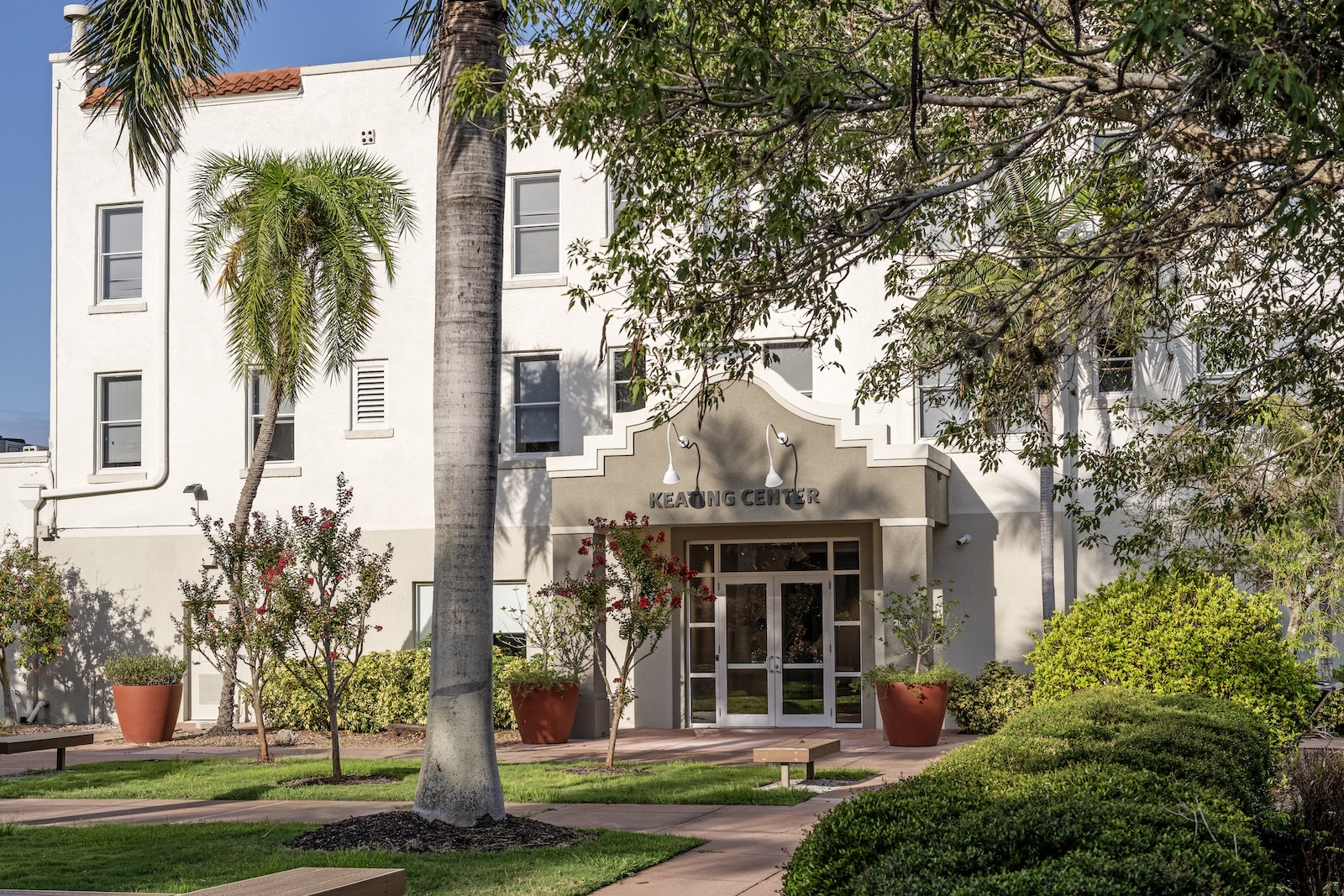
Ringling School of Art and Design
Along North Tamiami Trail in Sarasota, a short distance from the Ringling Museum estate and the circus money that shaped this stretch of Florida coastline, Ringling College of Art and Design sits on a campus that blends contemporary studio buildings with a handful of older structures carrying far heavier histories. At its center stands the Keating Center — a Spanish Mission Revival building constructed in 1925, listed on the National Register of Historic Places since 1984. Before it was an art school, it was a hotel. And before it was merely a hotel, it was something darker than that. The Bay Haven Hotel opened in the mid-1920s during the Florida land boom, a period when Sarasota was exploding with speculative wealth and circus-empire prestige. The Bay Haven was built to attract the traveling businessman and seasonal wealthy visitor. It was moderately successful for a few years. Then the boom crashed. By 1928, the man who developed the Bay Haven subdivision was killed in a car wreck near Arcadia, and his wife struggled to keep the hotel afloat. By 1930 the banks were closing, insurance payments lapsed, and the hotel fell into receivership. What replaced the original clientele, according to accounts passed through generations of students and staff, was a considerably different population: gamblers, Prohibition-era bootleggers, and women working in prostitution on the second floor. Into this compromised building, Dr. Ludd M. Spivey — president of Southern College in Lakeland — brought his plan for a Florida art school. He courted John Ringling, who was nearly bankrupt but agreed to lend his name and fund the $45,000 renovation. On October 2, 1931, the School of Fine and Applied Art of the John and Mable Ringling Art Museum opened with 75 students and 13 faculty. Students attended chapel daily and needed written permission to leave town. The school became independent in 1933 and eventually grew into Ringling College of Art and Design. The Keating Center has served as the campus heart ever since, housing administration below and student dormitory rooms above. The ghost came with the building. She is called Mary, and her legend is among the most consistently reported haunting accounts in Sarasota. The story holds that Mary was one of the women living and working on the second floor of the Bay Haven during its decline — a live-in prostitute who fell in love with a client who didn't return her feelings and took her life by hanging in the stairwell at the end of the second-floor corridor. Hotel management concealed the death. Alumni accounts from as far back as the 1960s reference a locked room off that hallway near the stairwell that was left unused. The manifestations are specific and consistent across decades. Students have described a young woman in her late teens or early twenties gazing down from a second-floor window at students below — sometimes smiling, sometimes not — wearing a cream-colored dress with ruffled armlets or a lavender flapper-style dress, a tight skull cap from the 1920s, with one foot bare and the other in a small blue shoe. Others report anguished sobbing from the stairwell at night with no visible source. Those who investigated described an overpowering smell of stale perfume and a crushing wave of sadness — shortness of breath, racing heart, an uncontrollable urge to weep. Former students from the 1970s and early 1980s described certain rooms on the haunted side as persistently thick and dark, prompting room transfers. A local priest reportedly performed an exorcism at the Keating Center in the 1990s — an event that those who claim ongoing encounters with Mary generally describe as unsuccessful. The Travel Channel featured the legend in 2004. Ringling College today is a thriving institution and the Keating Center is fully restored, its upper floors still active as student housing. Students still report seeing her at the window. The perfume still turns up where no one is wearing any.

Lawther Hall – University of Northern Iowa
Sitting quietly on the residential edge of the University of Northern Iowa campus in Cedar Falls, Lawther Hall doesn't announce itself the way a prison or asylum does. It's a brick dormitory, institutional and understated, built in 1940 and named for Anna B. Lawther — the first woman appointed to the Iowa State Board of Education and a figure in the women's suffrage movement. From the outside, it looks like exactly what it is: a mid-century college residence hall with long corridors, small rooms, and a top-floor attic that students haven't had access to in decades. What makes it notable isn't architecture or tragedy. It's a name. Augie. The building opened for the summer 1940 term, initially housing 293 women. During World War II, the adjacent Bartlett Hall was converted to house a training unit for the U.S. Navy WAVES — Women Accepted for Volunteer Emergency Service — which pushed Bartlett residents into Lawther, sometimes four students to a room designed for two. That wartime compression is the most dramatic chapter in Lawther's documented history. The building was always a women's dormitory. It was never officially used as a military infirmary, though the legend that eventually grew up around it says otherwise. Somewhere between the wartime crowding, the sealed attic floors, and the particular way old dormitories settle at night, a story took shape. The legend of Augie describes a World War II soldier who died in Lawther Hall when the building was being used as an infirmary — a detail that university archivists have been unable to verify and that conflicts with the building's known history as an exclusively female residence. What is documented is that the upper attic floors of Lawther were closed off in the early 1970s, deemed unsafe and in disrepair, and that students began reporting strange experiences around that time and after. The earliest recorded reference to Augie by name dates to 1977, when someone rearranged the lettering on a hall bulletin board to read: "Augie will return to haunt Bordeaux House." It is unclear whether that was a prank, a genuine report, or the moment a legend crystallized into campus fact. The building itself contributes to its reputation through atmosphere alone. The sealed upper floors — inaccessible, dusty, and unlit — created the kind of physical mystery that college-aged imaginations tend to populate. For years, a student-run haunted house called Augie's Attic operated in those upper spaces during Halloween season, drawing four hundred to a thousand visitors annually from campus and the surrounding Cedar Falls-Waterloo area. The event ran until the late 1990s, when fire code violations and roof damage ended it. The last Augie's Attic was held in 1997. After that, the attic stayed quiet, and Augie, according to students, moved to other parts of the building. Reports associated with Lawther Hall are consistent in their details if not in their explanation. Residents describe electronics behaving erratically — televisions switching on unprompted, radios continuing to play after being unplugged, alarm clocks failing without any mechanical defect. Posters found inverted or relocated overnight. Closet lights switched back on after being taped down. A resident assistant reported seeing a man in a striped outfit walking the hall during a period when the building was closed for break, who vanished into a women's restroom. One widely circulated account describes a resident waking in the night to find her television screen illuminated blue, hearing footsteps in the room, feeling her bedsheets pulled from her grip despite her resistance, and seeing the words "Good Night" appear on the screen before the pulling stopped. Skeptics — and there are reasonable ones — note that residence halls are among the noisiest, most suggestible environments imaginable. Hundreds of people have lived in Lawther Hall over the decades, sharing close quarters and trading stories across generations of students. Pipes, drafts, settling foundations, and shared folklore account for a great deal. The Augie legend itself may have its origins in misidentified history, a bulletin board prank, or simply the appeal of having a named ghost in a building with a sealed attic. These are not unreasonable explanations. What they don't fully account for is why the accounts from Lawther have remained so specific and so consistent for nearly fifty years, told by students who arrived with no prior knowledge of the legend and left with stories that matched the ones before them. Lawther Hall is not a place defined by documented violence or suffering. It's a place defined by accumulation — of stories, of residents, of years. Whether Augie is the ghost of a soldier, the product of a long-running campus tradition, or something harder to categorize, the building has earned its reputation through simple persistence. Generations of students have lived there, and a notable number of them left convinced that something in Lawther Hall was paying attention.

Watson Hall - University of Jamestown
The University of Jamestown sits on a hill on the north side of the city, looking out over a landscape that is as flat and open as any in North America — the James River bottomland, the prairie extending in every direction, the sky enormous and unobstructed the way it only gets in the northern Great Plains. The institution was founded in 1883 by Presbyterian settlers, six years before North Dakota achieved statehood, making it the first private college chartered in what would become the forty-first state. Classes began on September 29, 1886, with thirty-five students and four courses of study. The original campus consisted of a single building and a barn, heated by wood stoves and lit by oil lamps, on a hill above a frontier town that had itself been incorporated only that same year. The college closed during the economic panic of 1893 and did not reopen until 1909, when Dr. Barend Kroeze came from Whitworth College to serve as president and rebuilt the institution largely through force of will. Kroeze served thirty-seven years. The Association of American Colleges later declared that Jamestown College was truly the lengthened shadow of that one man. The first building ever constructed on that hill — the original Old Main, built in 1883 from local brick fired at Anton Klaus's Jamestown brick yard and laid by a contractor named H.C. Hotchkiss — was the entire college in physical form. It housed all classrooms, the library, administrative offices, the chapel, the dining room, and the men's dormitory. Women students, in the custom of frontier institutions, lived in private homes in the surrounding neighborhood. Old Main was the institutional memory of the place made brick, the building that had been there from the beginning, that had survived the closure and the reopening, that carried in its walls the accumulated presence of every student and faculty member who had passed through in the college's first half century. On a night in September 1930 — part of a startling series of fires that struck Jamestown that year, leading the Fargo Forum to accuse the town of harboring a pyromaniac — Old Main burned. A brisk wind and low water pressure made it impossible to direct water into the cupola at the center of the roof. When the fire was over, only the brick walls were standing. The president placed the loss between $50,000 and $75,000. The building that had been Jamestown College's original body was gone. Watson Hall was built on that site. The current structure — a residence hall occupying the footprint of the original Old Main — serves primarily as a freshman dormitory, part of a residential campus that houses over seventy percent of its students. It is a standard mid-century brick dormitory, unremarkable in appearance, with the campus surrounding it on all sides and the James River valley visible from the hill below. Its name honors a donor family, as most buildings at the University of Jamestown do, and its administrative function as a student residence gives it the churning, year-over-year population typical of any college dorm — new students every fall, rarely anyone in the building for more than four years, institutional memory maintained by tradition rather than continuous occupancy. The paranormal reports associated with Watson Hall center on two specific elements. On the second-floor hallway, late at night, students have reported seeing the apparition of a girl approximately six years old — her appearance is described consistently in terms of age and location, a small figure in the corridor above the first floor. The other active location is a single first-floor room, which in the accumulated testimony of residents over the years has developed a reputation as a poltergeist space: posters torn from walls, objects thrown across the room without a detectable source, doors slamming on their own. The activity in that room is characterized less by visual appearance than by physical disruption — the kind of report that tends to be specific enough to follow a room from one occupant to the next across years and class years, building a reputation that incoming residents inherit along with the key. The ghost on the second floor does not obviously map onto the building's documented history — no child died in Watson Hall, and no child appears in the record of Old Main's long life as classrooms, chapel, and men's dormitory. The fire of 1930 destroyed the building but killed no one on record. What the site does carry is a specific kind of institutional weight: it is the exact ground where the college began, where every version of the institution before the fire took physical form, where the first students slept and ate and studied on a windswept prairie hill in a territory that was not yet a state. Whether that accumulated presence accounts for anything is a question the paranormal record cannot answer. Watson Hall is an active freshman residence hall and the most haunted-by-reputation building on a campus where the other dormitory, Kroeze Hall, has its own distinct legend — a former student said to have died by suicide and whose clicking sound, attributed to a beloved Rubik's Cube, has been reported in the corridors ever since. The University of Jamestown is a small, close-knit institution where campus folklore circulates with the density typical of residential liberal arts colleges, and where the stories that attach to specific buildings get told to new students by the people who lived in those buildings the year before. Watson Hall's second-floor corridor, and the room on the first floor, have been in that conversation for long enough that they exist in the institutional tradition now alongside the chapel programs and the athletics records and the photographs of Dr. Kroeze's thirty-seven-year presidency — embedded in the life of the place, whatever their ultimate source.

Parsonsfield Seminary
Parsonsfield Seminary stands as one of Maine's most historically significant and troubled educational institutions, its substantial campus of 42 rooms rising from forested land in Oxford County. The original seminary building, constructed in the 1830s to provide education for students of the Free Will Baptist denomination, operated continuously from 1832 onward, establishing itself as a respected institution of learning for several generations. The property and its structures would become forever marked by tragedy when, in 1853, disaster struck at midnight. The seminary's bell tower caught fire under mysterious and disputed circumstances, with the exact cause remaining unclear even after investigation. The blaze claimed the lives of at least five individuals, including three children and a fleeing slave en route to Canada through the Underground Railroad. Principal Oren Burbank Cheney provided an eyewitness account of the inferno, describing how the bell tower flickered in flames as children fled the pillar-brick walls. Though the fire destroyed much, the seminary was rebuilt with donated funds from Moses Sweat and the Free Will Baptist Conference, with construction of the new structure commencing in February 1855 and completing that same year. The seminary continued to serve the educational community until 1949, when it finally ceased operations. The campus experienced significant restoration and expansion during the late nineteenth century. In 1899 and into the early 1900s, Bartlett Doe, a wealthy San Francisco businessman and Parsonsfield native, became invested in the school's future. He provided substantial funds for repairs and remodeling of Seminary Hall, added a rear wing and a new front bell tower to the main structure, and endowed money for a boys' dormitory and later a girls' dormitory completed in 1906. These improvements transformed the aging seminary into a more modern educational facility, though the shadows of its tragic past remained etched into its architecture and grounds. The property was eventually listed on the National Register of Historic Places, acknowledging its historical significance to Maine and American education. In recent decades, Parsonsfield Seminary has gained considerable attention not for its academic legacy but for the profound paranormal phenomena reported by visitors and paranormal investigation teams. The seminary, now operating as a 42-room haunted attraction, has become a destination for those seeking direct encounters with restless spirits. Volunteers and paranormal investigators climbing the higher elevations of both the Academy Building and Doe Hall consistently report escalating discomfort, including mysterious headaches, nausea, and an unmistakable sensation of being watched by unseen eyes. The most pervasive phenomenon reported across the entire property is an overwhelming sense of profound sadness that envelops visitors regardless of location. This emotional heaviness has been attributed to the spirits of those who perished in the 1853 bell tower fire, as well as other entities that seem to inhabit various sections of the campus. Paranormal investigation teams have documented footsteps in hallways where no one walks, disembodied voices emanating from empty rooms, water phenomena in areas with no running water, and unexplained noises throughout the night hours. Trickster spirits have been reported in the attic spaces, moving objects and creating mischievous disturbances. The bell tower area, scene of the original tragedy, remains particularly active, with investigators consistently detecting heightened paranormal energy in this location. The seminary hall's numerous rooms and corridors all seem to hold their own supernatural occupants, creating an environment of pervasive haunting activity that has made Parsonsfield Seminary one of Maine's most actively haunted locations.
Florida State University – Cawthon Hall
Cawthon Hall at Florida State University exemplifies the phenomenon of American college dormitories becoming centers of concentrated paranormal activity, locations where the intense emotional energy of student life, academic ambition, personal development challenges, and the occasional tragic death create environmental conditions particularly susceptible to supernatural manifestation and spiritual residency. The residential hall's primary haunting entity is believed to be a female student who died during the 1940s under circumstances of particular tragedy—a lightning strike on the hall's rooftop that terminated her life with sudden violence and devastating finality, establishing a traumatic entry point for spiritual attachment and establishing conditions for paranormal residency within the building's structure. The structural features of Cawthon Hall—its distinctive roofline where tragedy occurred, upper floor architecture housing residential spaces, window configurations that frame views and access points, and internal corridor networks facilitating student movement—have accumulated the psychological and emotional residue of decades of student occupancy, countless individual emotional crises and personal triumphs, the development of lasting friendships and romantic relationships, and the psychological turbulence characteristic of adolescence and early adulthood during formative educational experiences. A second entity, identified as Sarah Cawthon—alternatively known as Tissie Landrum according to historical records—appears to exert protective oversight and maternal concern regarding the female students currently residing in the dormitory, suggesting a consciousness concerned with the welfare and security of younger women inhabiting the space, manifesting a maternal or sisterly concern that transcends death and biological distinction. The most dramatic and frequently documented paranormal phenomenon at Cawthon Hall consists of pounding on windows, described consistently as forceful, violent, and intentional, occurring from both interior and exterior perspectives simultaneously and particularly concentrated on the upper floor and roofline areas where the lightning strike that claimed the student's life occurred decades earlier in documented history. Students and visitors have reported observing a translucent female figure positioned outside windows on upper floors and roof-level areas, visible through glass as an apparition gazing inward with expressions suggesting sorrow, searching intent, emotional longing, or apparent distress, creating the compelling impression of a consciousness attempting communication or experiencing continued emotional trauma. Objects throughout the dormitory move spontaneously without human agency or visible cause—items shift position on shelves and surfaces, books fall from previously secured locations, personal possessions relocate in patterns that perplex residents and categorically rule out conventional explanations such as vibration or structural settling. Unexplained noises manifest throughout the dormitory with sufficient frequency and consistency to establish auditory phenomena as a defining characteristic of Cawthon Hall's paranormal signature, with sounds described as footsteps, voices, and mechanical noises occurring at times and locations where no corresponding human activity can explain their origin or provide reasonable explanation. Disembodied voices expressing emotional content—sadness, protective warning, or genuine maternal concern—have been documented by multiple student residents who describe instances where spectral utterances seemed to respond to direct queries or to provide cautionary communication regarding imminent danger or concerning circumstances. The established presence of intelligent, interactive supernatural entities combined with the concentration of documented phenomena and the consistency of reports across generations of Florida State University students have secured Cawthon Hall's position as one of the nation's most credibly documented haunted college dormitories and a location of serious academic and paranormal interest.
Missouri Southern State University
Missouri Southern State University, located in the southeastern region of Missouri, stands as an institution of higher education serving the regional community's need for accessible undergraduate instruction and professional development opportunities within a campus environment designed to support student learning and residential life. The university's physical plant includes multiple academic buildings, administrative structures, residence halls, and recreational facilities distributed across the campus grounds, creating a comprehensive institutional environment designed to support the diverse activities and needs of a contemporary university community. The campus environment has become known within paranormal investigation circles as a location inhabited by at least one prominent spectral entity referred to as the Dark Lady, an apparition that has been documented by multiple observers and investigated by paranormal research organizations. The identity of the Dark Lady remains obscure despite ongoing investigation and documentation efforts, though her manifestations suggest a female spirit whose presence carries emotional weight and apparent intentionality. The Dark Lady's apparition has been documented in various locations throughout the campus grounds, though her presence appears to concentrate in specific areas of particular significance or emotional intensity. Paranormal phenomena associated with the Dark Lady include the movement of objects without human agency, manifestations described as poltergeist-type phenomena in which items shift position or relocate to unexpected locations. Cold spots have been documented at various campus locations, localized areas of atmospheric temperature reduction that cannot be explained by conventional meteorological or environmental causes. These cold spots appear to coincide with sightings of the Dark Lady or with increased manifestations of paranormal activity, suggesting a direct relationship between her spiritual presence and the physical phenomena documented at the location. Missouri Southern State University hosts a science-based paranormal investigation organization known as the MoSo Ghost Hunters, an organization established by university students and community members interested in documenting paranormal phenomena using systematic investigative methods and equipment. This investigation group has conducted multiple studies and investigations within the university environment, documenting phenomena and maintaining records of their findings. The establishment of this paranormal investigation organization within the university suggests that the institution's leadership recognizes the significance of the documented paranormal phenomena and supports scientific study of the manifestations occurring within its facilities. The location has been listed among recognized paranormal places in the Missouri region, establishing its credibility as a site of documented and ongoing paranormal activity. The Dark Lady's persistent presence within the Missouri Southern State University environment suggests a spirit unable or unwilling to depart from the location, apparently maintaining attachment to specific campus areas for reasons that remain unclear despite investigation efforts. The combination of documented apparition sightings, object movement phenomena, cold spot manifestations, and the establishment of dedicated paranormal investigation groups within the university suggests that Missouri Southern State University represents a genuine site of ongoing paranormal phenomena worthy of continued research and documentation.
Medaille College
Medaille College in Buffalo, New York operates as an accredited educational institution while simultaneously hosting one of the region's most persistently active paranormal manifestations centered upon tragic student death. The college campus comprises multiple academic buildings, dormitory facilities, and administrative structures built over time to accommodate growing enrollment. The main building represents the historic core of the college's physical infrastructure, constructed during an era when the institution established itself as a respected educational provider within Buffalo. The campus layout includes classrooms, laboratories, dormitory spaces, and administrative offices distributed throughout multiple structures creating the comprehensive college environment. The most significant paranormal phenomenon involves the presence of young boys manifesting in classroom spaces throughout campus, appearing to witnesses in clothing styles consistent with the 1940s era. Multiple observers have reported seeing ghostly figures of male students in period-appropriate attire moving through hallways, appearing in classroom doorways, and manifesting in dormitory areas as though continuing daily routines of educational life. These manifestations suggest multiple spirits rather than a single entity, implying that the college experienced significant loss of young male students during a particular historical period. The 1940s clothing consistency creates temporal specificity about when these tragic events occurred, allowing researchers to investigate historical college records for documentation of deaths or disasters involving student populations during that era. The most dramatic paranormal phenomenon involves the apparition of a boy appearing to be hanging suspended from the ceiling in a room located at the fourth floor center of the main building. Multiple paranormal investigators and building employees have observed this horrifying manifestation, particularly during nighttime hours when lighting conditions contrast sharply with the spectral image. The spectral boy appears to reenact the final moments of his death, creating a visual replay of the tragic event claiming his life. The location concentration in a specific room suggests either that the physical death occurred within that space or the location holds particular spiritual significance. Investigation teams employing thermal imaging equipment have documented temperature anomalies concentrated around where the hanging apparition appears, suggesting active spiritual energy presence despite physical explanations being unavailable. Beyond primary manifestations of young male spirits, Medaille College experiences additional paranormal phenomena distributed throughout campus suggesting broader spiritual activity. An inexplicable light illuminates in various campus locations seemingly of its own volition despite absence of operational light switches or electrical explanation. Distorted faces materialize in hallway photographs, showing facial features warped and twisted in expressions of anguish or terror suggesting photographed spirits' emotional state or traumatic death natures. Water taps throughout dormitory and classroom facilities activate independently, turning themselves on despite no visible human interaction or mechanical malfunction. These diverse phenomena create a comprehensive paranormal environment where multiple supernatural manifestations coexist, suggesting multiple entities with varying levels of attachment and communication capacity. The ongoing paranormal activity at Medaille College remains integrated into the school's operational reality despite tragic circumstances underlying the manifestations. Contemporary administrative staff acknowledge paranormal reports and make accommodations for continued spirit presence. Theater programs continue uninterrupted despite Fred's active manifestations, with student performers and directors adapting to performances conducted in spaces inhabited by phantom presence. The fourth floor isolation persists as ongoing constraint on school operations, with shuttered spaces containing unexplained noises preventing safe access without paranormal investigation support. Medaille College represents an educational institution where tragic loss and paranormal manifestation intersect with ongoing developmental experiences of contemporary student populations.
Regal Cinemas Dole Cannery Stadium
The Regal Cinemas Dole Cannery Stadium in Honolulu represents a modern entertainment venue with significant paranormal activity that contradicts its contemporary appearance and operational status. Constructed as a state-of-the-art multiplex cinema facility within the Dole Cannery complex, the structure was specifically designed to offer advanced movie theater technology and superior comfort for Hawaiian audiences seeking contemporary entertainment experiences. The theater underwent multiple rounds of significant modernizations and technological upgrades throughout its operational history, becoming one of the primary entertainment destinations in the Honolulu metropolitan area and serving diverse audiences seeking cinematic entertainment. The Dole Cannery complex occupies a historically significant location with deep and complex roots in Hawaii's agricultural and industrial past, having previously served as the center of pineapple operations, commercial development, and economic activity for multiple generations of Hawaiian residents and workers. Despite its relatively recent construction and exclusively modern purpose as a cinema facility, the Regal Cinemas Dole Cannery Stadium has become the subject of persistent and compelling paranormal reports that suggest layers of preceding spiritual activity beneath its contemporary commercial facade and operational veneer. Staff members and visiting patrons have consistently reported unexplained phenomena occurring in specific areas of the facility, particularly Theater 14 located strategically at the back corner of the complex where multiple independent witnesses have documented persistent supernatural occurrences across extended time periods. The concentration of paranormal energy and activity in this particular theater suggests underlying historical trauma or spiritual unrest predating the modern cinema installation, possibly rooted in earlier uses of the Dole Cannery property or tragic events that occurred within the geographic location. The most notable and well-documented paranormal presence involves the persistent apparition of a male patron appearing to be approximately in his fifties, who manifests consistently in the back corner seat of Theater 14 seemingly engaged in watching the cinema screen. Witnesses describe this spectral figure with remarkable consistency in appearance and behavior, suggesting a genuine entity rather than misidentification or imaginative interpretation. Beyond this primary apparition, the theater has become prominently associated with children's voices and sounds emanating from the restroom facilities, reportedly corresponding to unverified school bus crash victims whose deaths may have tragic connections to the location's history. These juvenile voices create a deeply unsettling juxtaposition with the family-friendly and lighthearted nature of cinema entertainment and entertainment venues. Additional phenomena reported throughout the facility include unexplained cold spots appearing suddenly in various locations despite consistent climate control systems and persistent feelings of being watched by unseen presences throughout the theater and surrounding areas. The paranormal activity at Regal Cinemas continues to draw sustained attention from paranormal researchers, enthusiasts, and investigation organizations who view the location as significant for serious investigation and comprehensive documentation. The manifestations appear to operate on consistent patterns and schedules, with reliable witnesses providing corroborating testimony of similar experiences across multiple occasions spanning years of observations. The presence of the male patron ghost and the children's voices collectively suggests connection to multiple incidents of tragic loss and death, perhaps involving transportation accidents, bus crashes, or sudden unexpected deaths that left indelible spiritual impressions upon the location. Modern cinema operations continue uninterrupted despite the established and well-documented paranormal presence, with management acknowledging the reports while maintaining full public access to all facilities and theatrical spaces. The dynamic juxtaposition of contemporary entertainment, modern technology, and persistent supernatural activity creates a unique and fascinating location where the mundane and paranormal coexist in active commercial operation.
Las Casas Dorms – Arizona State University
Las Casas Dorms at Arizona State University's West campus represents a residential college facility designed to provide housing and community for undergraduate students pursuing academic degrees within the university system. Located in Glendale, Arizona, the dormitory complex consists of individual rooms arranged in a residential configuration that encourages peer interaction and community building. The facility was constructed to modern dormitory standards, with individual private spaces, shared bathroom facilities, and communal gathering areas designated for student socialization and academic collaboration. The building infrastructure includes utility systems designed to provide hot water, heating, cooling, and electrical services necessary for residential comfort. The facility underwent construction and development phases that culminated in its occupation by student residents seeking convenient on-campus housing. The physical spaces within Las Casas Dorms include dormitory rooms ranging from single occupancy to shared configurations, with each unit containing sleeping arrangements, study spaces, and personal storage. Shower and bathing facilities are centralized within the residential complex, shared by multiple residents using communal bathroom areas. Hallways connect the various residential units, creating circulation patterns that define the social geography of the dormitory. Lounge areas and common spaces provide environments for students to gather, study, and interact outside of their individual rooms. The building's infrastructure and finishing materials were selected based on durability and ease of maintenance, factors relevant to the intensive use characteristic of residential student housing. Utility systems throughout the structure include water distribution networks, electrical circuits, and HVAC equipment essential to providing basic residential comfort. A catastrophic fire occurred during the construction phase of Las Casas Dorms in 2003, creating a traumatic event that left residual energy within the developing structure. The fire caused significant damage, loss, and disruption to the construction timeline, with potentially fatal consequences for workers present during the incident. The unidentified entity associated with paranormal phenomena at Las Casas Dorms is linked to this fire event, suggesting that the trauma of the incident left an indelible mark on the physical location. Whether the entity represents a spirit with direct connection to the fire or a more generalized residual energy imprinted by traumatic events remains unclear from documented accounts. The fire's destructive force and the terror it must have inspired left psychological and possibly supernatural traces that persist in the completed structure. Students and staff at Las Casas Dorms have reported consistent patterns of paranormal phenomena that include both auditory and physical manifestations. Books placed on shelves have been observed falling without external cause, plummeting to floors despite secure placement on stable surfaces. Doors throughout the dormitory have slammed shut violently, with the force of closure appearing to exceed normal wind or air pressure effects. Strange voices have been heard emanating from various locations within the building, sometimes indistinct and other times carrying recognizable speech patterns. Books have been documented as being actively thrown from shelves, suggesting forceful projection rather than simple falling. Doors have repeatedly opened and closed of their own volition, cycling through open and closed positions in patterns suggesting agency or purposeful manipulation. Strange noises described as creaking, banging, and unexplained sounds have been reported throughout the structure. One of the most disturbing phenomena involves shower facilities, where water temperature has been reported as scorching hot without explanation or resident manipulation. In the most extreme cases, shower handles have allegedly popped off shower fixtures with force, as if someone with supernatural strength was applying pressure to burning-hot water controls, endangering residents attempting to use basic hygiene facilities. Las Casas Dorms remains operational as a residential college facility. Arizona State University administration has acknowledged reports from residents while maintaining that the facility is safe for habitation. The paranormal reputation is known among students, with some seeking accommodation elsewhere due to the phenomena, while others view the haunting as distinctive to their experience. The coexistence of student life with paranormal activity has created a unique institutional culture where supernatural phenomena are acknowledged as a regular aspect of residential experience.
Evans High School
Evans High School stands as a mid-twentieth century American educational institution, rising from suburban expansion as a cornerstone of secondary education. The institution served its region as a comprehensive high school with auditorium and gymnasium complexes representing pinnacles of school design. By the 1960s, Evans High School had established itself as a vibrant center of adolescent life, hosting theatrical productions, athletic competitions, and the full range of activities that defined American high school culture. Tragedy struck when a male student, facing overwhelming bullying and social isolation, took his own life by hanging himself in the gymnasium during the early 1960s. The circumstances reflected darker aspects of school culture that remained hidden beneath official narratives, involving peer harassment and psychological distress that went unaddressed by authorities. Beyond this primary tragedy, reports emerged of a bullied female student whose experiences contributed to the haunted reputation. The convergence of these traumas within school walls created a spiritual heaviness that persists in contemporary accounts. Paranormal investigators have documented numerous unexplained phenomena concentrated in areas associated with the tragedy. Lights in the auditorium, gymnasium, and stage activate without apparent human agency, often during hours when the building should be empty. Strange howling sounds emanate from within the building, particularly near the gymnasium and auditorium. People entering certain rooms find themselves inexplicably locked inside despite absent working locks. The catwalk above the stage produces noises of movement and weight shifting when it should remain empty. Stage lighting fixtures activate in sequences creating organized patterns without any operator at controls, with staff repeatedly finding that lights they switched off reactivate moments later, suggesting intelligence directing manifestations. Experiences extend beyond mechanical anomalies into psychological harassment and emotional disturbance. Witnesses describe sensations of being watched intently while in auditorium or gymnasium spaces. Students and teachers report sudden feelings of dread and oppression upon entering certain areas, emotional states that dissipate immediately upon leaving. Some accounts describe phenomena escalating during school stress periods, as though location energies respond to heightened emotional intensity. The bullying and persecution that characterized the school environment appear to replay through paranormal phenomena, generating unexplained social friction and interpersonal tensions. Evans High School continues operating as an active educational institution, with administrators maintaining official skepticism despite persistent documentation of phenomena. The auditorium remains in use for productions and assemblies, while the gymnasium hosts athletic competitions. Security staff conducting evening rounds have become accustomed to frequent false alarms from stage lighting activating without intervention. Paranormal investigation groups have requested access for formal investigations, yet administrators have declined most requests citing liability concerns and desire to maintain positive institutional image. Students in contemporary eras report awareness of haunting legends and describe personal experiences aligning with historical accounts, suggesting manifestations from the 1960s remain embedded in the building's structure.
Wesleyan Hall – University of North Alabama
Wesleyan Hall stands as one of the oldest and most historically significant academic buildings on the campus of the University of North Alabama, a institution founded in the nineteenth century in the city of Florence within the northern reaches of the state. The structure itself represents an architectural artifact of an era when higher education in the American South was undergoing profound transformation, having been constructed during a period of considerable institutional expansion and growth at the university. Throughout its lengthy existence spanning more than a century and a half, the building has served as a classroom facility, administrative center, and dormitory space for countless students who have walked its hallways in pursuit of academic achievement and intellectual development. The university itself carries deep historical significance as one of the South's oldest continuously operating institutions of higher learning, and Wesleyan Hall has remained central to its academic mission throughout generation after generation of students and faculty. The building's particular connection to paranormal phenomena centers on the spiritual presence of a young drummer boy named Jeremiah, believed to have died during the Civil War era while serving in a military capacity associated with the university or the surrounding region during those turbulent years of the American conflict. Historical accounts and oral traditions passed down through generations of students and faculty members suggest that the boy's spirit has remained bound to the halls of Wesleyan, unable or unwilling to depart from the location where his life came to an abrupt and tragic end during wartime circumstances. The entity is said to have maintained a particular attachment to the building's interior spaces, with multiple reports describing his ghostly presence manifesting throughout the corridors and offices that comprise the structure's layout. The temporal nature of the hauntings suggests that the spirit may be replaying moments from his final days or desperately attempting to communicate some message or memory that remains unresolved within his consciousness. Numerical accounts from students, faculty, and maintenance personnel over the decades have documented an array of paranormal phenomena consistently attributed to the presence of Jeremiah's restless spirit. Witnesses report experiencing disembodied footsteps echoing through the hallways during late evening and night hours when the building should be completely empty of human activity, accompanied frequently by rhythmic banging sounds that suggest the use of drumsticks or percussion implements against various surfaces throughout the structure. The manifestations include the spontaneous opening and closing of doors with no observable cause, sudden and unexplained activation of computer equipment that has been switched off, and the mysterious power-down of electronic devices despite being in proper working order. Investigators and paranormal researchers have documented these phenomena on multiple occasions through careful observation and through the use of specialized recording equipment designed to detect electromagnetic fluctuations and other markers of supernatural activity. The consistency and specificity of these accounts across multiple independent witnesses suggest a genuine paranormal presence rather than misinterpretation or coincidence. The building's reputation as a haunted academic space has become something of a fixture within campus culture and local folklore surrounding the University of North Alabama. Paranormal investigation teams have visited Wesleyan Hall on numerous documented occasions, bringing technical equipment and expertise in the study of unexplained phenomena to attempt to understand the nature and origin of the manifestations occurring within its walls. The entity associated with the building appears to maintain a consistent behavioral pattern, suggesting a spirit bound by circumstance or emotion rather than one that drifts aimlessly through multiple locations. Campus tours and historical accounts frequently reference the haunting, and the building has become something of a point of interest for visitors and students fascinated by the intersection of history, tragedy, and the unexplained. Wesleyan Hall continues to function as an active part of the university community while maintaining its reputation as one of the most reliably haunted structures within the institution's extensive campus grounds, attracting both scholarly interest and casual curiosity from those intrigued by paranormal phenomena.
Coe College
Coe College stands as an academic institution of significant historical importance within Iowa, with institutional origins tracing to the nineteenth century period of American expansion and establishment of educational institutions supporting intellectual development and professional training. The college was founded during a period when American higher education underwent dramatic expansion, with numerous private institutions established throughout the nation to provide educational opportunities to growing populations. The institution developed into a comprehensive college offering specialized academic programs in sciences, humanities, business, and professions, attracting student bodies and faculty engaged in intellectual pursuits across multiple disciplinary domains. The college's campus encompasses multiple buildings spanning different architectural periods, with original nineteenth-century structures preserved alongside twentieth-century additions reflecting evolving institutional needs. Voorhees Hall, identified as a primary location of documented paranormal phenomena, represents one of the college's earliest and most historically significant structures, with architectural features reflecting design principles characteristic of the late nineteenth or early twentieth century. The transformation of the Coe College campus during the early twentieth century coincided with significant transitions in American society, including the impact of World War I and subsequently the influenza pandemic of 1918-1919 that devastated populations throughout the United States and internationally. The influenza pandemic, spread by military movements and disrupted by wartime population concentrations, reached into educational institutions and affected student bodies, faculty, and staff populations. Coe College, like many American educational institutions during this period, experienced deaths among student populations from influenza infection. The pandemic deaths represented sudden tragic losses of young individuals at the threshold of their adult lives, with infections progressing to death within days in severe cases, overwhelming medical services. The psychological trauma of witnessing multiple deaths among student peer populations, combined with fear regarding disease transmission, created an environment of significant emotional disturbance and anxiety. The primary paranormal phenomenon documented at Coe College centers on the manifestation of Helen, identified as a college student who died of influenza during the 1918-1919 pandemic. Helen's apparition appears as a female figure consistent with contemporary dress of the historical period, manifesting most frequently in Voorhees Hall and female dormitory areas, locations where she would have lived and studied during her college enrollment. Contemporary descriptions of paranormal phenomena attributed to Helen include doors slamming within dormitory areas, footsteps ascending and descending stairs in dormitory buildings, blankets being pulled from beds by invisible hands, and the sound of piano music played in dark hours when the building should be unoccupied. Occasionally, students and staff have reported observing the full apparition of Helen, appearing as a translucent female figure in period clothing, sometimes interacting with physical objects or disappearing when approached. The manifestations demonstrate characteristics consistent with both residual haunting phenomena and active haunting phenomena. The historical context of Helen's death involves the overwhelming and devastating nature of the influenza pandemic, creating circumstances of sudden mortality and inadequate psychological and grief processing at the institutional level. Helen, presumably a young woman of late teenage or early adult age, undertook college education at a time when educational opportunities for women were expanding. Her death at the college represented the interruption of personal development and achievement, a loss of future potential and unfulfilled life trajectory. The psychological impact on surviving student peers, faculty members, and family members would have been substantial, representing not merely individual loss but collective trauma affecting institutional morale. Helen's spirit may have become bound to the college location through the trauma of her death, the strength of her attachment to the institution, or the inadequacy of grief processing and memorialization. The manifestations suggest an entity continuing to inhabit the physical spaces of the college. Contemporary paranormal investigations have documented electromagnetic anomalies and audio phenomena potentially consistent with paranormal manifestations.
Minnesota Institute of the Arts
The Minnesota Institute of the Arts, known professionally as the Minneapolis Institute of Art or MIA, stands as a major cultural institution and one of the most significant art museums in the Upper Midwest. The institution's building and collections represent centuries of accumulated artistic achievement, with galleries showcasing art from diverse periods, cultures, and traditions. The museum operates as a public institution, welcoming thousands of visitors annually to experience its extensive collections and temporary exhibitions. The building itself incorporates multiple floors, galleries, storage areas, and specialized spaces designed to preserve, display, and interpret art objects. The architecture of the museum reflects various periods of construction and renovation, with the oldest sections representing designs from the early twentieth century and subsequent additions reflecting evolving architectural standards and museum practice. Within the building's galleries are period rooms constructed to recreate the domestic environments of specific historical periods, furnished with period-appropriate objects and decorated to evoke the lived experience of previous centuries. The Connecticut Room, Tudor Room, and various other period installations create immersive historical environments where visitors can contemplate art and domestic life as experienced in past eras. The museum's collection and operations have accumulated over many decades of institutional history, with artists, conservators, researchers, and countless visitors passing through the building's galleries. The institution has served as an educational center, cultural beacon, and repository of artistic and historical artifacts representing human creative achievement across cultures and centuries. Within the museum's archives and storage areas rest numerous objects, some of which carry their own histories of tragedy, loss, and human experience. The Connecticut Room and Tudor Room, in particular, contain furnishings and objects that embody the domestic lives of historical figures and families. These period rooms are designed to educate visitors about historical interior decoration, social customs, and the material culture of past eras. The kids quarters section of the museum, designed specifically to engage younger visitors in artistic exploration and learning, contains toys, furniture, and educational materials. The accumulated history of the museum's building and collections represents not merely an accumulation of objects, but a preservation of human experience encoded within material form. Beginning at some point during the museum's operational history, staff members and visitors began reporting unusual paranormal phenomena concentrated within specific areas of the institution. Most prominently documented is the presence of a spirit associated with a young woman who appears to have been a student at an educational institution previously occupying the building or associated with the location. This student, a female victim of rape and murder, apparently remains spiritually bound to the location of her trauma and death. Her presence manifests through various paranormal phenomena concentrated in the Connecticut Room and other period spaces within the museum. Visitors and staff have documented experiencing unexplained cold spots in specific areas of the museum, particularly within the period rooms. Screaming sounds, described as the terrified or anguished cries of a female voice, have been heard at night and during times when the museum is relatively empty of visitors. These auditory phenomena are often accompanied by strong emotional impressions of fear and distress. Additionally, visitors have reported the unusual sensation of being physically grasped or tugged at while in the museum, with some describing the sensation of clothing being pulled or hands grasping their coats despite no visible entity causing the phenomena. Further paranormal phenomena at the Minnesota Institute of the Arts involve additional spectral entities and manifestations distinct from the student murder victim. A tall shadowy figure has been observed materializing in doorways and moving through the museum's spaces, described by witnesses as having an imposing and menacing presence. Toys within the kids quarters section of the museum have been reported moving and being rearranged despite the rooms being secured and empty of visitors. The footsteps of unseen individuals have been heard walking through the museum after hours, suggesting the continued presence of spirits moving through the familiar spaces of the building. Doors throughout the museum have been documented mysteriously closing despite being left open, with some observers describing the sensation of an invisible force deliberately shutting doors. A spirit entity known as Mrs. T appears to be associated with the cream silk furnishings or spaces within the museum, with some paranormal phenomena concentrated around these objects or areas. The museum itself has acknowledged these paranormal phenomena through paranormal-themed programming and exhibitions exploring the intersection of supernatural themes and art. In the contemporary era, the Minnesota Institute of the Arts continues to operate as a major public art museum, with its paranormal reputation adding an additional layer of interest and investigation to the institution. The museum has openly acknowledged the paranormal phenomena through its public programming, with ghost-themed tours and paranormal-themed exhibitions offered to visitors. Professional paranormal investigation groups have conducted investigations within the museum's galleries and period rooms, documenting evidence of the persistent spiritual presence of the entities associated with the location. Visitors exploring the museum's collections and period rooms may encounter both the artistic and historical significance of the objects on display as well as unexpected manifestations of paranormal activity. The coexistence of educational mission, artistic significance, and paranormal phenomena creates a unique environment where the contemplation of art and history may be interrupted by encounters with spirits bound to the physical space. The Minnesota Institute of the Arts stands as a remarkable example of how institutions of cultural significance may develop paranormal reputations, with the trauma of violent crime and the accumulated experiences of the building's history apparently manifesting as persistent spiritual presence. The museum continues to serve its educational mission while remaining open to investigation and acknowledgment of the paranormal phenomena that appear to inhabit its spaces.
Highland Junior High
Highland Junior High School stands as a substantial brick and concrete structure within the Phoenix metropolitan area, representing a typical mid-twentieth-century educational facility constructed during the post-World War II era of rapid suburban expansion. The school was designed with the standard architectural conventions of the period, featuring classroom wings arranged around central administrative spaces, a full gymnasium complex for athletic activities and student assemblies, and various auxiliary facilities intended to serve the academic and developmental needs of the adolescent population it was built to accommodate. The building's construction materials and structural design were selected based on regional climate considerations and the educational theories prevalent during the era of its design, emphasizing efficient classroom layout and functional separation of academic, recreational, and administrative spaces. Over the succeeding decades, Highland Junior High underwent periodic renovations and upgrades to its mechanical systems, classroom technologies, and infrastructure, yet the fundamental structure and spatial organization remained consistent with the school's original conception. The facility has served continuously as an educational institution for multiple generations of Phoenix-area students, providing instruction in core academic subjects, physical education, and various elective courses designed to support middle-school-level learning outcomes. The gymnasium complex, which remains one of the school's most heavily utilized spaces, has hosted countless athletic competitions, physical education classes, and student assemblies throughout the institution's operational history. The locker room facilities associated with the gymnasium, with their rows of metal lockers and shower facilities designed to accommodate dozens of students simultaneously, have been the site of intensive daily activity during school hours. Similarly, the administrative offices and teachers' work areas represent spaces where professional staff spend significant portions of their working hours, engaging in the detailed clerical, instructional, and bureaucratic functions necessary to operate an educational institution. The integration of security technology throughout the building, including electronic vape detection systems designed to monitor student behavior in spaces less directly supervised than classrooms, reflects the evolution of institutional concerns and technological capabilities. Paranormal phenomena associated with Highland Junior High center on the manifestation of a young female entity identified as Lily, whose spiritual presence has been documented with particular intensity in the gymnasium locker room area and in various secondary locations throughout the building. Reports of paranormal activity have documented the spontaneous and violent slamming of metal locker doors with such force that the sound reverberates through adjoining spaces, despite the absence of any visible external agent that could account for such impacts. Electronic vape detection systems have been observed activating without the chemical compounds they are designed to detect, suggesting an electronic interference originating from sources other than human activity. Automated hand dryer mechanisms have been triggered in empty restroom facilities, operating at full force in the absence of any individual utilizing these devices or triggering their motion sensors through conventional means. Electromagnetic field detection instruments used by paranormal investigators have registered significant anomalies in specific locations, particularly in the locker room area and adjacent hallways, with readings far exceeding baseline environmental measurements. Visual phenomena documented at Highland Junior High include the appearance of unexplained spherical objects in photographs, commonly referred to as orbs, which manifest with particular frequency in areas associated with purported paranormal activity. Teachers have reported arriving at their offices to find papers shuffled, reorganized, or scattered despite the secure locking of office doors and the absence of any indication of unauthorized entry. File drawers have been discovered in open positions on numerous mornings, despite being closed and secured by the previous occupants at the end of the working day. The identity of Lily remains uncertain, with some accounts suggesting a connection to a student who may have experienced a tragic incident within the building's walls, while others propose alternative explanations for the spiritual manifestation. The entity's activity appears concentrated in areas frequented by the student population, suggesting either an attachment to adolescent spaces or an affinity for locations where youthful energy and activity are most concentrated. Despite the unsettling nature of these phenomena, no aggressive or harmful manifestations have been documented, and the school continues to operate normally while researchers and paranormal investigators continue their ongoing efforts to understand the nature and origins of the activity that persists within its walls.
St. Charles Hall – Carroll College
Saint Charles Hall stands as one of the central institutional buildings on the campus of Carroll College in Montana, a structure that serves academic and residential functions while simultaneously hosting paranormal phenomena that have become embedded within campus folklore and documented in paranormal literature as one of Montana's more distinctive college hauntings. The building's architectural form and spatial organization reflects its historical construction and subsequent renovations designed to accommodate evolving educational and residential requirements across decades of institutional development. The hall's position within the Carroll College campus has given it central importance to student life and academic functions, making it a location where generations of students have lived, studied, and experienced formative educational experiences. The building's status as a residential hall means that its interior spaces include dormitory rooms, communal bathrooms, and shared living spaces designed to facilitate community formation and social interaction among student residents, creating an environment where personal relationships and emotional connections accumulate across each resident cohort's tenure. The paranormal phenomena now associated with Saint Charles Hall center specifically on events occurring within a bathroom facility, with the spatial restriction of the most dramatic manifestations suggesting that particular physical locations within the building have become focal points for spiritual presence and paranormal concentration. The historical catalyst for the haunting appears to relate to an accident occurring in 1964 within or adjacent to the bathroom facility, an event that resulted in the death of a student and created the traumatic circumstances that paranormal researchers describe as conducive to spiritual attachment to physical location. The specific nature of the accident and the precise circumstances of the death have been partially obscured through time and the transmission of narrative through informal oral tradition, with contemporary accounts remaining somewhat vague regarding exact details while maintaining consistency regarding the bathroom location and the student victim's tragic fate. The institutional response to the accident apparently involved securing the affected bathroom area, with physical sealing mechanisms including locking and boarding of the facility designed to prevent future access and perhaps to contain or minimize the paranormal phenomena associated with the traumatic event. The paranormal manifestations documented at Saint Charles Hall center specifically on bathroom phenomena, with the boarded and locked facility remaining a focal point of paranormal investigation interest despite physical barriers preventing direct access to the space. The most dramatically reported phenomenon involves the appearance of a ghostly apparition of a man visible in bathroom mirrors, apparitional manifestations that suggest the victim's consciousness may remain present within the bathroom environment or that traumatic imprint of the death experience may create perceptual phenomena resembling visual manifestations. Witnesses have reported observing blood flowing from sink fixtures within the bathroom, described as an apparent phenomenon that repeats or manifests spontaneously at times when no visible source of blood would account for the observation. Scraping and scratching sounds have been documented emanating from behind the boarded walls, sounds suggesting either rodent activity or paranormal phenomena interpreted by witnesses and paranormal investigators as evidence of spiritual distress or attempts at communication from the trapped consciousness of the deceased student. The concentration of phenomena specifically within and around the bathroom space, combined with the physical sealing that prevents contemporary access, has created a location of particular interest for paranormal researchers attempting to investigate and document the phenomena without direct physical access to the original site. The response of Carroll College institutional authorities to the paranormal phenomena appears to have involved a strategy of containment and avoidance, with the physical boarding and locking of the bathroom facility designed to prevent both direct access to the location and casual circulation of sensationalized stories among the student population. This institutional approach differs from locations where paranormal phenomena have been actively investigated or incorporated into institutional narratives, instead attempting to minimize attention and restrict access. Contemporary paranormal investigation teams and college folklore enthusiasts continue to be drawn to Saint Charles Hall seeking to research and document the phenomena that have become embedded in Carroll College's paranormal reputation. The location exemplifies the pattern wherein traumatic deaths occurring within institutional settings, particularly in settings where multiple generations of young people reside, create conditions for persistent paranormal manifestation and the accumulation of narratives within informal community memory. The specific concentration of phenomena within the bathroom environment, combined with the 1964 date of the triggering accident and the institutional sealing response, has established Saint Charles Hall as a recognizable location within paranormal investigation literature and Montana's documented haunted locations. The building's continued function as a residential facility means that contemporary students experience the campus space inhabited by the phenomena that continue to manifest from the traumatic event, creating an ongoing intersection of ordinary residential life and paranormal dimensions of institutional space.
Chowan University
Chowan University, located in Murfreesboro, North Carolina, represents a historic institution of higher education with roots extending deep into American educational history. The university's campus combines traditional collegiate architecture with more modern facilities, creating an environment that bridges centuries of educational practice and institutional continuity. Among the university's buildings, several have become recognized as centers of paranormal activity, including the Columns Building with its distinctive architectural features, the Music Hall devoted to performance arts and musical instruction, Mixon Hall serving as student housing, and Belk's Hall representing additional residential or academic space. These buildings, constructed at different points in the university's history, share the characteristic of having witnessed generations of student life, academic endeavor, and the full spectrum of human experience that characterizes residential educational institutions. The campus grounds themselves, with their historic landscape and accumulated years of human activity, have become layered with the spiritual imprints of those who have lived, studied, and, in some cases, died within the university's boundaries. The Gothic Revival architectural style of some buildings, combined with the natural atmosphere of academic institutions devoted to intellectual development and personal growth, may contribute to the intensity of paranormal phenomena manifest throughout Chowan's campus. The most famous and well-documented paranormal entity associated with Chowan University is known as the Brown Lady, a female apparition whose origins and historical context have been the subject of considerable paranormal investigation and campus folklore. The Brown Lady appears to have been associated with the university during an earlier period of its history, possibly as a student, faculty member, or staff person, and her death, whether accidental or intentional, left a spiritual imprint that persists into contemporary times. Her apparition is most frequently reported in the Columns Building, particularly on the third floor, where witnesses have observed her moving through hallways and appearing in specific locations with remarkable consistency. The Brown Lady is typically described as dressed in garments of brown coloration, her appearance suggesting a woman from an earlier era whose clothing and demeanor reflect the historical period in which she lived and died. Numerous independent witnesses across many decades have reported seeing her apparition, creating one of the most thoroughly documented ghost stories associated with any American university. Her manifestations appear benign, with observers reporting that she seems unaware of or uninterested in the living, moving through her familiar spaces as if continuing routines established in life. The Brown Lady has achieved sufficient fame that Chowan University actively acknowledges her presence in institutional discourse, treating her as a permanent, if unseen, resident of the campus. Beyond the Brown Lady, Chowan University is home to several other distinct paranormal entities that manifest in different campus locations. The Music Hall is haunted by the spirit of a pianist or musician whose ability to play, expressed through ethereal melodies emanating from the building during times when no living musician should be present, suggests a individual so devoted to musical performance that death has not interrupted this primary mode of expression and interaction with the world. The piano music heard within the Music Hall is described as beautiful and technically proficient, suggesting an accomplished musician whose skills transcended the boundary between life and death. Mixon Hall houses the spirit of a student who died by suicide, a tragedy that apparently occurred within the dormitory and created spiritual conditions conducive to haunting. The manifestations associated with this entity relate directly to the means and circumstances of his death, with phenomena suggesting anguish, despair, and an inability to find peace. Additionally, a little girl ghost inhabits Belk's Hall or another campus location, her apparition suggesting a child who died under circumstances that remain somewhat mysterious to contemporary observers. The girl has been observed as an apparition and reported as a presence, with her innocent participation in childhood-like activities creating a poignant counterpoint to the more troubled spirits also inhabiting the campus. Today, Chowan University maintains active awareness of its paranormal reputation, and the haunted locations on campus have become integrated into the institutional identity and campus culture. Student ghost tours, paranormal investigation visits, and academic discussions of the university's haunted history have made the supernatural phenomena an accepted aspect of the Chowan experience. The Brown Lady, in particular, has achieved a kind of celebrity status within paranormal circles, with her documented apparitions and long history of manifestation making her one of the most famous college ghosts in North America. The spirits inhabiting Chowan's various buildings represent diverse circumstances of death and attachment to place, ranging from the devoted musician unable to cease his performances to the troubled student whose suicide created enduring spiritual disturbance. The university has been featured in paranormal television investigations and ghost hunting documentation, with researchers consistently documenting phenomena across multiple investigation sessions and reporting experiences consistent with the historical accounts of Chowan's hauntings. The paranormal activity has transformed Chowan University from a merely historic institution into a destination location for those interested in American collegiate hauntings and the way that educational institutions can accumulate spiritual imprints reflecting the depths of human experience they contain. The campus stands as a place where academic traditions and supernatural phenomena intertwine, creating an environment where students pursue education in proximity to spirits who haunt the spaces with apparent permanence.
Kean University
Kean University stands as one of New Jersey's most historic institutions of higher education, with origins dating to the nineteenth century when educational visionaries established comprehensive learning centers serving the region's expanding population. The campus evolved through multiple name changes before achieving status as a comprehensive public university offering undergraduate and graduate programs across diverse disciplines. Over more than a century, the institution developed a reputation for academic rigor and community engagement, attracting students and faculty from across the northeastern United States. The physical campus expanded considerably throughout the twentieth century with numerous academic buildings, residential facilities, and recreational structures creating a complex architectural landscape reflecting various historical periods. The main campus in Union, New Jersey developed from early structures into a sprawling complex serving thousands of students, ranging from classical Victorian-era buildings to contemporary educational structures. The architectural development of Kean University reflects the institution's growth alongside American higher education. The earliest structures, constructed during the nineteenth century, embodied academic and aesthetic preferences of that era, featuring ornate detailing and substantial masonry construction conveying permanence and scholarly gravitas. Historic buildings such as Wilkins Theater, East Campus structures, the Eames building, and Rogers Hall became centerpieces of the campus landscape, serving as reference points for institutional identity and historical continuity. The university's commitment to preserving historic structures while constructing new facilities created a complex architectural palimpsest. Tragedy and supernatural mystery have long defined Kean University's cultural identity, with documented deaths and unexplained incidents occurring throughout the institution's history. The Wilkins Theater became the site of a fatal incident involving a stage worker and technician named George, whose sudden death marked the beginning of sustained paranormal reporting in that space. Historical records reference a young girl from an era when the campus was associated with Catholic educational institutions, whose death on the premises remains imperfectly documented. A malevolent spirit entity has been documented by paranormal investigators and has been linked to overwhelming dread, hostile encounters, and aggressive manifestations. These tragic events transformed Kean University's relationship with its physical spaces, with certain buildings becoming known more for paranormal associations than their educational significance. Paranormal activity at Kean University has been extensively documented through decades of witness reports and paranormal investigations. The Wilkins Theater experiences frequent disturbances including inexplicable shaking and movement of lighting systems, with witnesses reporting lights swaying without mechanical explanation. Disembodied voices and strange sounds emanate from the theater pit during both occupied and unoccupied periods. Multiple apparitions have materialized to witnesses across campus locations, with descriptions consistently matching figures from the institution's historical past. Doors throughout East Campus, the Eames building, and Rogers Hall repeatedly shut with force despite being held open. Pervasive feelings of uneasiness and dread sweep through certain campus areas without clear environmental cause. The totality of paranormal reports has established Kean University as one of the northeastern United States' most reliably haunted educational institutions. Today, Kean University acknowledges and celebrates its paranormal reputation through campus programming and historical documentation. The institution offers candlelit ghost tours of Liberty Hall and historic campus structures, drawing significant attendance from university community members and paranormal enthusiasts. Academic departments have incorporated the campus's haunted history into coursework examining paranormal phenomena and institutional history. The university has developed a historical haunted trail guiding visitors through the most actively haunted campus locations. Staff, faculty, and students have accommodated the university's supernatural residents, treating the hauntings as integral to institutional identity. George's presence in Wilkins Theater has become collegial, with theater workers acknowledging the spectral stagehand as part of the production team and attributing favorable performances to his continued interest in theatrical productions.
Mount Saint Mary’s College
Mount Saint Mary's College occupies a prominent position in Emmitsburg, Maryland, serving as a Catholic educational institution dedicated to providing undergraduate and graduate education within a faith-based framework and residential college environment. The campus encompasses multiple academic buildings, residential halls, administrative offices, chapel spaces, and recreational facilities distributed across substantial acreage that creates a comprehensive physical plant suitable for residential collegiate life. The architecture of the campus reflects multiple eras of construction and design, with older buildings representative of nineteenth-century institutional construction juxtaposed with more contemporary academic and residential facilities built in subsequent decades. The institution maintains a continuous educational mission extending across multiple centuries of operation, positioning itself as one of the oldest continuously operating Catholic educational institutions in the United States. The campus serves as a residential environment for undergraduate and graduate students, faculty, and administrative staff who collectively constitute the living community of the college. The spiritual character of the institution is reflected in its religious mission, physical chapel spaces, and the integration of Catholic faith traditions into the educational experience and institutional culture. Embedded within the history of Mount Saint Mary's College are connections to figures of profound spiritual and historical significance, most notably Father Simon Gabriel Brute, whose life and ministry became intimately connected to the institution and whose presence is understood to extend beyond the conclusion of his physical existence. Father Brute, identified as a figure of considerable spiritual authority and ecclesiastical importance, occupied a position of prominence within the institution and the broader Catholic Church during his lifetime. The presence of Father Brute's spirit at the college suggests an attachment to the location rooted in his years of service and dedication to the institution's educational and spiritual mission. Additionally, the college's grounds and history encompass connections to Civil War era events and military presence, with Civil War soldiers understood to be represented among the paranormal entities inhabiting the campus. Mother Seton, another figure of significant spiritual and institutional importance, is also understood to maintain a presence at the college, suggesting that multiple historical figures central to the institution's development continue to manifest spiritual presence within the campus environment. These three primary historical figures create a complex paranormal landscape reflecting the institution's spiritual heritage and historical depth. The paranormal manifestations at Mount Saint Mary's College are distributed across multiple campus locations, each associated with specific historical figures or tragic events embedded in the institution's past. Father Simon Gabriel Brute's apparition is documented with particular frequency in Room 252 of Brute Hall, a specific chamber that apparently held significance during his life and has become a focal point for his spectral manifestations. Within this room, investigators and residents have documented lights inexplicably flickering and turning on and off without human agency, creating electrical phenomena that suggest non-physical energy manipulation of mechanical systems. The area surrounding an old well on campus grounds has become associated with paranormal phenomena, though the specific manifestations and historical events that may have triggered the activity remain partially obscured in available documentation. Civil War soldiers are understood to manifest their presence throughout the campus grounds, with one soldier in particular known for tapping the shoulders of living investigators and visitors, creating direct physical contact phenomena that suggest conscious awareness and interaction. The corridors throughout the campus have become locations where disembodied voices and apparitions are encountered, creating a distributed paranormal presence rather than activity concentrated in a single focal location. Brady Hall in particular has become known for oppressive presence phenomena and the sound of slamming doors occurring without human agency, suggesting an entity or entities of significant psychic presence or distress. The apparition of Mother Seton has been documented walking through campus spaces in apparent companionship with a figure dressed as a doctor or physician, suggesting spiritual reenactment of interactions that occurred during her life or manifestation of relationships that transcend the boundary of physical death. Today, Mount Saint Mary's College continues to operate as a functioning Catholic educational institution while simultaneously serving as a location of active and documented paranormal manifestation. Students, faculty, and staff inhabit the campus alongside the spiritual presences of Father Brute, Civil War soldiers, Mother Seton, and other entities whose presence contributes to the paranormal reputation of the location. The college has come to acknowledge and integrate its paranormal heritage into the broader narrative of its historical identity, with ghost tour information and accounts of the paranormal activity available to interested visitors and prospective students. Room 252 in Brute Hall has become a location of particular interest to those seeking to encounter paranormal phenomena, while the campus grounds more broadly invite investigation and personal experience of the spiritual dimensions embedded within the institution. Mount Saint Mary's College represents a unique educational environment where the transmission of knowledge, spiritual development, and active paranormal manifestation occur simultaneously within a landscape layered with historical presence and supernatural significance.