
Haunted Places in Ohio
173 haunted locations
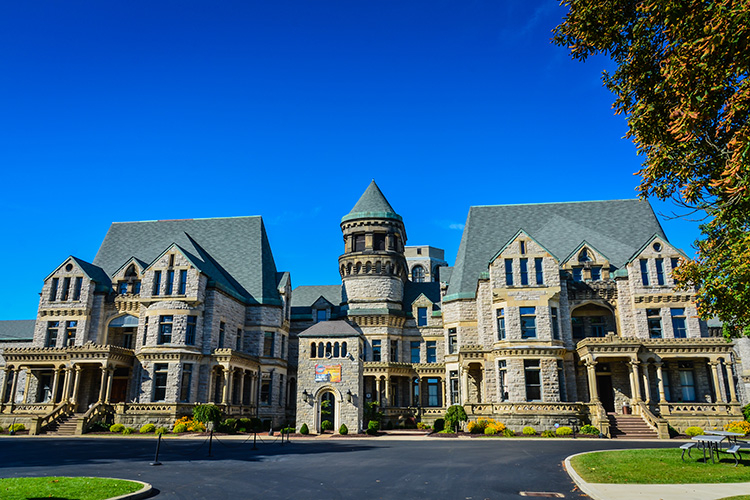
Ohio State Reformatory
Rising from the edge of Mansfield, Ohio, the Ohio State Reformatory looks exactly like what most people picture when they think of a haunted prison—a towering limestone fortress with Gothic turrets, arched windows, and a scale that seems impossible for a building that was never meant to be a maximum-security facility at all. But the Reformatory's origins weren't built on punishment. They were built on the belief that young men could be saved. The land itself carries history before the first stone was laid. The field where the Reformatory stands once served as Camp Mordecai Bartley, a Civil War training ground for Ohio soldiers. In 1867, Mansfield was selected as the site for a new state prison intended to fill the gap between juvenile corrections and the full Ohio State Penitentiary in Columbus. The city raised $10,000 to purchase the land. Construction began in 1886 under Cleveland architect Levi T. Scofield, who blended Victorian Gothic, Richardsonian Romanesque, and Queen Anne styles into a structure specifically designed to inspire moral renewal—its grandeur meant to encourage inmates toward repentance rather than despair. The first 150 prisoners arrived by train in 1896, and construction wouldn't be completed until 1910. Unlike locations shaped by a single catastrophe, the Reformatory's weight comes from a century of drift. The original mission was genuinely rehabilitative—inmates received religion, education, and a trade, with 18-month sentences that could end early for good behavior. By most accounts, the model worked. But as Ohio's criminal population grew and the facility became overcrowded, the state began sending more serious offenders to Mansfield. By the mid-twentieth century, rooms designed for one inmate held two or three. Violence became routine. Guards were killed. Inmates were murdered, drove themselves to suicide, or died from disease. Over 154,000 men passed through the gates before the building was ordered closed in 1990 following a federal class-action suit over inhumane conditions. Just outside the walls, 215 numbered graves mark the ones who never left. The building itself demands attention. The six-tier East Cell Block is widely cited as the largest freestanding steel cell block in the world—a canyon of iron that rises through the interior like something industrial and medieval at once. The warden's quarters, the chapel, the solitary confinement wing, and the basement all carry their own atmosphere. The Hole—a row of pitch-black isolation cells in the basement—is described by visitors as one of the most oppressive physical spaces they have ever entered. Natural light barely reaches the lower levels. The upper tiers stretch upward in iron rows until they disappear into shadow. Paranormal claims at the Reformatory are among the most extensively reported of any site in the Midwest. Visitors and investigators describe shadow figures moving across the upper tiers, unexplained voices in the cellblocks, and the sensation of being followed through otherwise empty corridors. EVP sessions regularly produce what investigators describe as direct, responsive communication. Some guests report being physically touched, grabbed, or scratched with no one nearby. Specific areas generate consistent accounts across unrelated visitors. The Hole produces reports of sudden nausea, cold air, and the feeling of being crowded in a space barely large enough to stand in. The basement is associated with two distinct presences—one described as a young boy, light and flickering, the other heavier and threatening. The warden's quarters carry stories of Helen Glattke, wife of longtime superintendent Arthur Glattke, who died in 1950 from an accidental gunshot wound inside the residence. Investigators report the scent of roses—her signature perfume—in rooms where no one has been. The chapel brings reports of whispered voices and phantom organ tones. Skeptics note that a century-old limestone structure of this scale naturally generates sounds, temperature swings, and optical oddities. The documented history of violence, suffering, and death embedded in this place is powerful enough to shape what any visitor expects to find before they step inside. That suggestion cannot be discounted. Still, the consistency of independent reports across decades, and across visitors with no prior knowledge of specific locations, gives even skeptical investigators reason to pause. Today the Reformatory is operated by the Mansfield Reformatory Preservation Society, which purchased the building from the state of Ohio for one dollar in the mid-1990s and has worked to restore it ever since. It is listed on the National Register of Historic Places, welcomes over 120,000 visitors annually, and is recognized worldwide as the primary filming location for The Shawshank Redemption. But the movie connection is only part of what draws people here. Some come for the architecture. Some come for the film history. Many come for the chance to spend a night in the East Cell Block, lights off, listening. Almost all of them leave with something they didn't have when they arrived—a story they struggle to explain, and a quiet conviction that the Ohio State Reformatory is far from empty.

Spitzer House Bed and Breakfast
Four blocks west of the historic Medina Square in northeastern Ohio, the Spitzer House sits on West Liberty Street like a Victorian postcard brought to life—painted trim, stained glass windows, twin cherry staircases, and the kind of ornamental woodwork that announces both the wealth and the aspirations of the family that built it. Constructed in 1890 for Ceilan Milo Spitzer, the house was a monument to one of Ohio's most ambitious financial careers. Spitzer was born in 1849 in Batavia, New York, and raised in Medina County after his family relocated in 1851. He entered business young, moving into banking with his father Aaron. An early Cleveland venture—the German-American Bank—collapsed in 1880 amid a national financial panic, and Spitzer liquidated his personal assets to pay every creditor, a move that cost him dearly but cemented his reputation. He rebuilt from the ground up. By the late 1880s, he and his cousin Adelbert had established Spitzer & Company in Toledo, becoming the first firm west of New York City to deal in municipal bonds. They were widely credited as founders of the municipal bond industry in the American Midwest. In January 1900, Ohio Governor George Nash appointed Ceilan Quartermaster General of the state with the rank of Brigadier General—a title he carried for life. It was at the height of this ascent that Spitzer commissioned the Medina house, overseeing construction remotely while expanding operations in Boston. His return to inspect the nearly completed residence made the front page of the Medina County Gazette in December 1890. He granted his parents a lifelong lease the following year, and the Spitzer family would occupy the house for the next seventy years. The house is a German Renaissance design with Queen Anne and Stick-Style elements, executed with particular refinement. Cherry and oak woodwork run throughout. The guest rooms, now named for family members, retain the proportions and character of the original layout. After the family's long tenure ended, the home was converted into a bed and breakfast in 1994 and has earned recognition for its restoration. It sits within walking distance of downtown Medina—a quiet residential stretch that belies the building's increasingly well-known reputation. That reputation extends beyond architecture. The Spitzer House has been featured in Chris Woodyard's Haunted Ohio book series, Brandon Massullo's Haunted Medina County, Ohio, and appears on multiple paranormal databases. The claims are specific, recurring, and tied to distinct areas of the house. In Ceilan's Room, guests have reported the apparition of a stern-looking man—sometimes watching from the corner, sometimes near the bed. The figure is widely interpreted as Spitzer himself, and at least one account describes the apparition physically nudging a guest. In Anna's Room, named for Ceilan's stepmother, the presence is different: a young servant girl, appearing at the foot of the bed or at the top of the staircase. Guests have heard her laughter. Some accounts describe her as short and stout, wearing an Edwardian-era housedress, firing questions at startled witnesses before vanishing. In the dining room, the voices of two men have been heard conversing when the room is empty. The parlor piano has been reported playing on its own. Throughout the house, guests describe flickering lights, slamming doors, cold spots, and light touches from an unseen source. One guest reported being scratched. Another described a spirit whispering their name. What gives these accounts weight is their consistency across decades and unrelated witnesses, and the absence of any anchoring tragedy. There is no murder, no suicide, no fire. The Spitzer family's occupancy was long and unremarkable in terms of darkness. Ceilan himself died in 1919 in Toledo, not in the Medina house. The servant girl's identity remains unknown—no documented death connects a specific individual to the claims. The hauntings seem to belong to the house itself rather than to any story imposed upon it. Skeptics will note that Victorian homes are acoustically rich—old wood settles, radiators clang, drafts move through invisible gaps. A bed and breakfast trades on atmosphere, and guests who know the reputation are primed to interpret ambiguity as evidence. But the reports carry a specificity—particular rooms, particular figures, particular behaviors—that resists dismissal as environmental noise alone. Today the Spitzer House continues to operate at 504 West Liberty Street, offering four guest rooms with private baths, period furnishings, and breakfast served in the dining room where two invisible men still occasionally hold court. The cherry staircases are original. The stained glass catches the light the same way it did in 1890. And whether a young woman in a housedress is waiting at the top of the stairs depends on when you visit—and how much of the house's long memory you're prepared to meet.

Sedamsville Rectory
On a narrow street in one of Cincinnati's smallest and most overlooked neighborhoods, a four-level rectory sits on a hillside above the Ohio River, holding inside its six thousand square feet of space a concentration of dark history that has made it one of the most investigated paranormal locations in the state. The Sedamsville Rectory at 639 Steiner Avenue has been featured on the Travel Channel's Ghost Adventures, the SyFy Channel's Haunted Collector, and the Biography Channel's My Ghost Story, and was voted the number one fan favorite episode during the Travel Channel's 2015 Halloween marathon. The attention is not accidental. The building's history involves violent death, alleged abuse, and a period of abandonment during which the basement reportedly housed something far worse than neglect. Sedamsville itself was established in 1795 by Colonel Cornelius Sedam, a Revolutionary War veteran who moved to the area to help build Fort Washington. The neighborhood grew along the banks of the Ohio River and the railroad line, becoming a hub for manufacturing and river commerce. By the late nineteenth century, the community's booming German Catholic population led to the founding of Our Lady of Perpetual Help parish in 1878. The Gothic Revival church was dedicated on May 5, 1889, perched high on a hill overlooking the neighborhood. According to a booklet published by the parish for its centennial, the rectory was built in 1891 to house the priests serving the growing congregation. The building is a substantial structure with a parlor, living room, library, formal dining room, kitchen, and bathroom on the first floor, servant's quarters accessible by a back staircase on the second floor, additional rooms on the third floor, and a basement that would later take on its own grim reputation. Sedamsville prospered into the early twentieth century, with over a hundred businesses operating along River Road. Residents could take the streetcar into Cincinnati or the ferry across to Kentucky. But the catastrophic Ohio River flood of 1937, combined with the ongoing Depression, devastated the commercial district. Many businesses never rebuilt. The widening of River Road further isolated the neighborhood. Our Lady of Perpetual Help's school closed in 1976 and merged with Holy Family parish in East Price Hill. When the church itself closed in 1989, the remaining parishioners joined Holy Family as well. The church was stripped of its sacred items and the properties were sold. In 1995, John Klosterman purchased the church and rectory from the Archdiocese of Cincinnati. The rectory's paranormal reputation is anchored by several distinct threads of history. The most widely identified spirit is Father Donald MacLeod, who authored The History of Roman Catholicism in North America and resided at the rectory in the late 1800s. Father MacLeod was struck and killed by a train in Sedamsville while on his way to provide comfort to a seriously ill woman. Since his death, locals and parishioners have reported seeing his apparition walking along the street near the building or beside the railroad tracks. Inside the rectory, visitors have reported seeing the figure of a clergyman in the hallways. Adding to the building's burden are two separate deaths documented on the street directly in front of the rectory—a man found dead at one time, and a child found with a noose around its neck at another. The circumstances of these deaths are not well documented, but the proximity to the building has drawn them into its haunting narrative. The darkest chapter of the rectory's history involves two distinct periods of alleged abuse. The building is rumored to have housed a priest who abused and molested children during its years of church operation. Separately, during a period in the 1980s when the rectory sat vacant after the church closed, the basement was reportedly used to operate a dog fighting ring. The convergence of these two forms of cruelty—against children and against animals—has led investigators and visitors to describe the energy inside the building as not merely haunted but aggressively malevolent. The sounds of dogs growling and barking have been reported in the basement when no animals are present. Visitors have described being scratched, bitten, pushed, and shoved by unseen forces. A child-like entity has been encountered in the building, but when approached, it reportedly growls rather than speaks, leading some investigators to suspect it may not be what it appears. A shadowy figure described as a dark monk has been reported moving through the halls. The smell of sulfur—commonly associated in paranormal research with demonic or deeply negative presences—has been noted by former tenants. One ghost hunter received a scratch down his back in the shape of a cross during an investigation. When the current owners brought salvaged books and a Monet reproduction into the building from a vandalized neighboring house, the rectory reportedly erupted with growling, whispering, a slamming door upstairs, the sound of a woman crying, and a sudden darkening of the interior light. The Midwest Preservation Society began renovations of the rectory in March 2011, and it was during this restoration work that the building gained its widest attention. Workers reported eerie mists and shadows visible under the doors of empty rooms. The Ghost Adventures investigation in 2012 captured evidence that deepened the rectory's reputation as one of the most aggressive haunts in the Midwest. Paranormal teams that have investigated the site report shadow figures, intelligent responses to questions during EVP sessions, physical contact from unseen entities, and doors that open and close without explanation. Today the Sedamsville Rectory remains privately owned and continues to undergo restoration. The neighborhood around it is small and quiet—known primarily as the birthplace of Pete Rose and for the rectory itself. The church still stands on the hill above. The railroad tracks still run nearby. And the building at 639 Steiner Avenue continues to draw investigators and visitors who describe it in terms that most haunted locations never earn—not just active, not just unsettling, but a place where the accumulated weight of suffering seems to push back against anyone who enters.
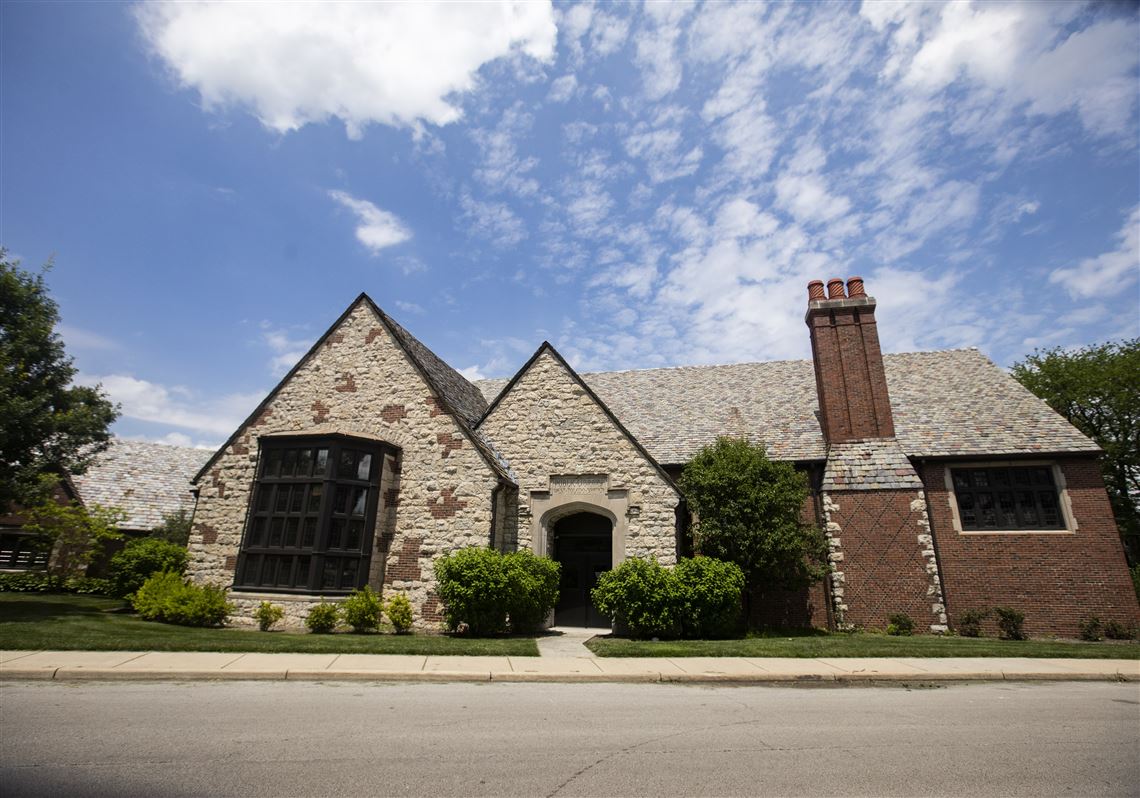
West Toledo Branch Library
Sitting on Sylvania Avenue in the west side of Toledo, Ohio, the West Toledo Branch Library doesn't look like a place that holds onto things. It's a Tudor-style brick building, modest and well-kept, with architectural details that speak to the civic ambition of 1930 — the year it first opened its doors to the neighborhood it would come to define. The surrounding community eventually took its identity from the building entirely. Today the area is known simply as Library Village, a name that says something about how deeply a public institution can root itself in a place over the course of nearly a century. The library was designed by the Toledo architectural firm of Gerow and Conklin and opened as part of the Toledo-Lucas County Public Library system's expansion during the late 1920s and early 1930s. It served a growing residential neighborhood on the western edge of the city, providing access to books, community gathering space, and the kind of quiet civic anchor that branch libraries represented in that era. The building's Tudor detailing — brick facades, arched entryways, and interior features including a notable fireplace along the west wall — gave it a warmth and permanence unusual for a municipal branch facility. It was built to last, and it has. Remodels in 2001 and again in 2014 expanded the footprint and updated the interior while deliberately returning the structure to its original 1930s architectural character. Unlike locations defined by violence or institutional suffering, the West Toledo Branch carries the weight of ordinary time. Decades of daily community life have passed through its doors — children learning to read, neighbors gathering, the rhythms of a working-class Toledo neighborhood running quietly in the background. The building has outlasted the era that built it, the architects who designed it, and several generations of the community it was built to serve. What remains is a structure that has absorbed more than ninety years of human presence, and the particular quality of stillness that old public buildings develop when the people have gone home for the night. The paranormal history of the library centers on the area near the west wall fireplace — the building's most architecturally distinctive interior feature and, according to those who have reported experiences there, its most active. The fireplace anchors the original reading room, a space that has remained largely consistent across the building's various renovations. It is here that visitors and staff have reported unexplained noises, bumping sounds, and the presence of an unidentified male figure, believed to date to around 1940 — roughly a decade after the building first opened. No specific identity has been attached to him, and no documented incident from that period has been publicly connected to the claims. He is simply described as a man, seen and sensed near the fireplace, in a building he appears reluctant to leave. Reports associated with the library are quiet in nature, consistent with the setting. This is not a location known for dramatic manifestations or aggressive energy. What gets reported here tends toward the subtle — sounds without sources, the sense of a presence in a room that should be empty, the particular feeling that something in the building is paying attention. Whether that registers as unsettling or simply atmospheric likely depends on the person experiencing it. Public libraries, especially older ones, have a way of feeling inhabited even when they aren't. The West Toledo Branch, with its original bones intact and its fireplace still standing, leans into that quality. Skeptics will note that a ninety-year-old brick building produces sounds, that heating systems tied to original fireplaces behave unpredictably, and that the power of suggestion in a building with a known ghost story is considerable. These are reasonable observations. The claims here are modest, and no one has presented documentation that rises above personal account and local reputation. What the West Toledo Branch Library offers is something quieter than the dramatic paranormal hotspots that draw large investigation teams and television crews. It is a neighborhood institution with a long memory, a beloved community anchor that has stood in the same spot through wars, economic shifts, and the transformation of the city around it. The man reportedly seen near the west wall fireplace — whoever he was, whenever he lived — chose a place that has always welcomed people in and kept them comfortable. For a haunt, there are worse choices than a library that a whole neighborhood named itself after.
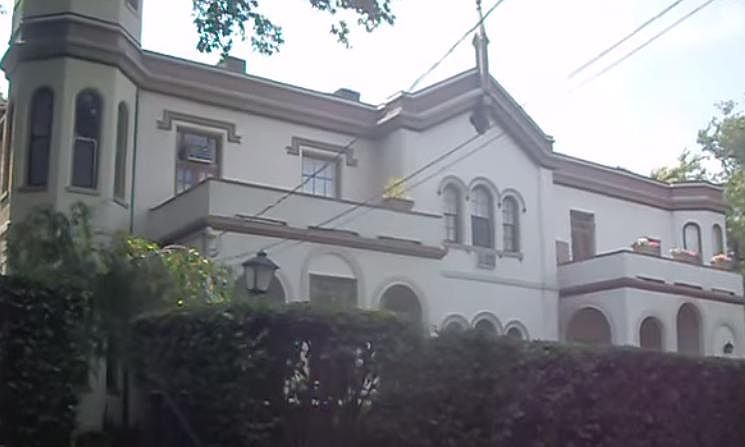
Stenton House – Cornell Place Apartments
On a quiet cul-de-sac in Cincinnati's Clifton neighborhood, one of the city's most prestigious old-money districts built on the rolling hills that give the Queen City its classical silhouette, a Victorian mansion stands at 3517 Cornell Place that has been absorbing tragedy since before the Civil War ended. Now subdivided into apartments and known as Cornell Place Apartments, the building is more commonly referred to in paranormal circles as Stenton House—a name drawn not from a builder or an original owner but from a family who moved into one of its units decades later and discovered that the dead had not moved out. The Clifton haunted walking tour regularly features the property as one of its signature stops, and some accounts describe it as one of the most haunted residences in the United States. It is a private building. Tours of the interior are not publicly offered. The privacy of the occupants, both living and otherwise, is expected to be respected. The mansion was built in 1850 as a private dwelling during the period when Dutch and German families were establishing Clifton as a refined residential enclave above the bustle of downtown Cincinnati. Property records identify it as part of the Ruben Resor tract, and rental listings for the building describe it as historically the second oldest home in Clifton, featuring an octagonal tower base, thirteen-foot ceilings, ten-foot walnut doors, marble entries and mantels, ornate plaster molding, and ceiling medallions—the bones of a house built for prominence. The first documented tragedy occurred in 1880, when a young man committed suicide inside the house. After his death, his family departed and the mansion sat vacant for years, the kind of prolonged emptiness that tends to compound whatever energy a violent death leaves behind. Around 1900, the building was converted into the Ealy School, an institution for girls. The school's tenure in the house produced its own dark chapter. According to local legend, a young schoolgirl hanged herself in one of the upstairs rooms. In a separate incident, another girl—described in some accounts as the daughter of a doctor—was found murdered on the stairway. The details of these deaths are sparse in the historical record, and the line between documented fact and accumulated neighborhood legend is difficult to draw with precision at this distance. What is consistent across accounts is that the building's years as a girls' school ended with at least two more deaths layered onto the suicide of 1880, creating a concentration of young, violent death within a single structure that few residential buildings in Cincinnati can match. After World War II, the mansion was subdivided into apartments, and it was during this era that the building acquired the name by which it is most commonly known. The Stenton family moved into one of the units, and almost immediately, odd incidents began. Phantom footsteps were heard walking the hallway when no one was visible. Two weeks after their arrival, at precisely 2:10 in the morning, the Stentons heard a heavy thump from the floor above them—the sound of something or someone hitting the ground with force. The thump repeated itself on subsequent nights, always at exactly 2:10 AM. When the family investigated, they learned that the young man who committed suicide in 1880 had killed himself in the room directly above their apartment. The regularity of the sound suggested not a conscious haunting but a residual one—an event so traumatic that its echo had embedded itself into the fabric of the building, replaying at the same hour like a recording that no one had asked to hear. Other tenants over the years have reported experiences consistent with what the Stentons described. Disembodied footsteps follow residents through the halls, keeping pace as they walk. Voices are heard in corridors and rooms when no living person is present. The sounds of phantom objects striking the floor continue to be reported. At least one tenant's dog refused to enter rooms where spiritual presences were manifesting, baying in alarm at thresholds the animal would not cross. The shadowy figure of a woman has been seen standing at the top of the staircase leading to the attic apartment, motionless, watching the space below her before disappearing. Whether she is one of the schoolgirls, a former resident, or something else entirely has never been established. Today the building at 3517 Cornell Place continues to operate as private rental apartments. The units feature the grand architectural details of the original mansion—the chandeliers, the woodwork, the veranda with sunset views overlooking acres of trees. It sits on a cul-de-sac within walking distance of Ludlow Avenue. The rent reflects the neighborhood. Nothing about the listing mentions what comes with the thirteen-foot ceilings and the walnut doors. But the residents know, and the tour guides know, and at 2:10 in the morning the building itself apparently still remembers.
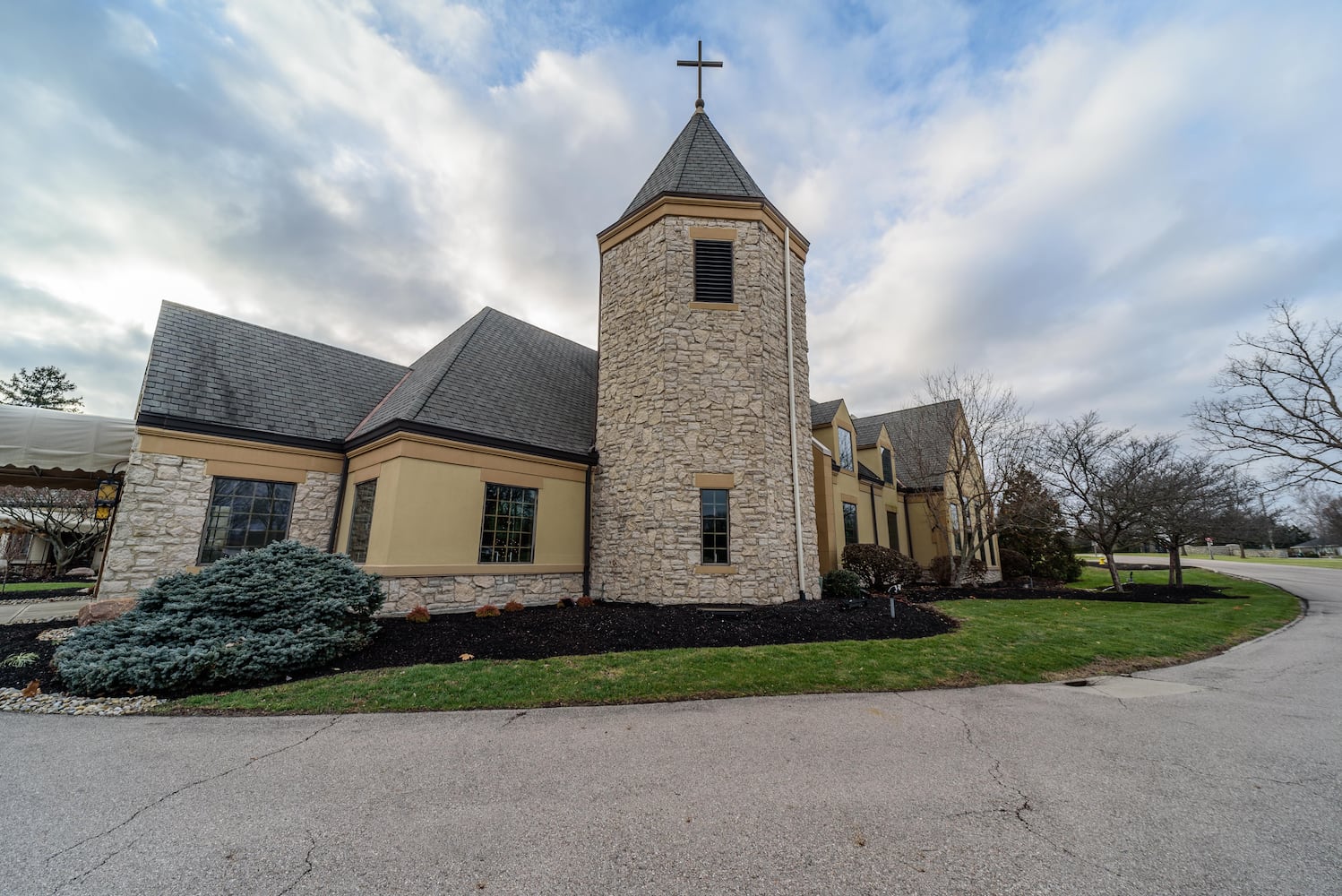
Normandy United Methodist Church
Normandy United Methodist Church sits at 450 West Alex Bell Road in Washington Township near Dayton, Ohio, but the building at its heart is not a church at all—it is a million-dollar English Manor estate built in the late 1920s by one of the most powerful automobile executives in the country. The mansion, known as Normandy Farms, was the home of Richard Hallam Grant Sr., a Harvard-educated industrialist who rose from a clerk's position at National Cash Register in 1904 to Vice President and General Sales Manager of Chevrolet and eventually a member of the General Motors Board of Directors. The Grants had traveled extensively in Europe and were particularly taken with the Normandy region of France, so in 1924 they hired a New York architectural firm to design a residence worthy of the name. Construction began in 1927 and was completed in 1930 at a reported cost of one million dollars—a staggering sum at the height of the Depression. The house was remarkable not just for its scale but for its innovation. It was reportedly the first fully air-conditioned private residence in the United States. Grant, an inventor by temperament, outfitted the home with automatic closet lights that activated when doors were opened—a concept he later carried over to the Chevrolet automobile. The estate featured dual furnaces and water systems, concealed closets, a private gymnasium, a two-story pewter chandelier, nickel-silver stair railings, four built-in safes, one of the first push-button radios, and an automatic push-button garage door opener. A swimming pool and diving platform graced the grounds. The rooftop promenade overlooked the rolling farmland of Montgomery County. It was a house built by a man accustomed to thinking on an industrial scale, applied to domestic life. Grant lived at Normandy Farms until 1955. In 1938, he had acquired controlling interest in the Reynolds & Reynolds Company, which he headed until his death in 1957. His wife Laura Williams Grant, whom he had married in 1906, was by all accounts deeply attached to the estate. When the Grants decided to leave, they sold or gifted the property to form the Normandy United Methodist Church. Services were originally held in the Grant living room, which became the chapel. A 1963 addition provided a sanctuary, education space, and kitchen—now known as Fellowship Hall. The church's present-day sanctuary was built in 1997. The mansion itself remains the architectural centerpiece of the campus, listed on the National Register of Historic Places since 1983. It is Laura Grant, by most accounts, who never left. Custodians and cleaning crews working late at night in the mansion have reported the unmistakable scent of perfume drifting through empty rooms when no one else is in the building. The fragrance appears without source, lingers briefly, and dissipates. Mysterious noises have accompanied the scent—sounds without clear origin in the old residence and staff quarters. One account from a person who grew up around the church in the 1980s describes seeing a woman in white watching from an attic window of the mansion during a snow day while children sledded on the hill behind the property. The figure was visible and distinct enough to send the witness running home. The same person reported multiple unexplained experiences over several years, spanning both the main residence and the staff quarters. Other accounts describe the family who once owned the estate haunting the grounds and buildings more broadly, though the perfume and the woman in white remain the most consistently reported phenomena. The claims are modest in number but striking in their domestic quality. There are no reports of malevolence, no violent history to anchor the haunting to a specific trauma. What people describe is the presence of someone who loved the house and apparently has no intention of leaving it—a woman whose perfume still fills rooms she furnished, whose silhouette still appears in windows she once looked through. If suggestion plays a role, the mansion itself provides ample material. The original architecture is extraordinarily well preserved, and the transition from private estate to church left much of the interior character intact. Walking through the Grant mansion is walking through a space that still feels owned—not by a congregation, but by the people who built it. Today Normandy United Methodist Church is an active congregation with roughly 490 in weekly attendance. The historic mansion hosts a popular annual Christmas open house featuring decorated trees, carolers, and tours of the original rooms. The property is surrounded by what is now Grant Park, where the farmland that once belonged to the estate is open to the public. The church does not trade on its haunted reputation, and the building's primary identity remains firmly rooted in community worship and service. But the perfume still comes, and the woman in white still watches from the attic, and the house that Richard Grant built for a million dollars and filled with every innovation of the modern age remains, by quiet account, occupied by someone who was there before any of the congregants arrived.

Cincinnati Union Terminal and Museum Center
Cincinnati Union Terminal stands as one of the most architecturally significant transportation hubs in America, a masterpiece of Art Deco design completed in 1933 as both a functional railroad station and an enduring monument to the golden age of rail travel. The massive terminal building features soaring limestone and granite facades, a vast central concourse with towering columns supporting an ornate coffered ceiling, and elaborate decorative elements including murals, bronze sculptures, and intricate tilework that celebrate commerce, industry, and transportation. The terminal's rotunda rises majestically as a space of overwhelming grandeur, its proportions designed to inspire awe and convey the power of American technological achievement. Skilled craftspeople from multiple disciplines contributed artistic elements that transform the functional transportation hub into a cathedral of transit and progress. The terminal operated at peak capacity through the mid-twentieth century, handling thousands of passengers daily as they arrived and departed on streamlined trains bearing legendary names like the Pennant and the Zephyr. The station embodied the optimism and modernity of its era, representing technological progress and the promise of rapid continental connection that rail travel offered to business travelers, families relocating westward, and adventurers seeking new horizons. The building absorbed the emotional imprint of countless human dramas, farewells to soldiers departing for military service, reunions of separated families, and the daily rhythms of a city engaged with the wider nation through rail connections. The terminal also witnessed tragedies within its walls, including the death of a security guard named Shirley under circumstances that remain the subject of ongoing investigation and speculation. Additionally, the station houses exhibits and displays honoring aviation history, including artifacts from World War II era aircraft and the stories of pioneering pilots who shaped American aviation. The museum exhibits transform portions of the terminal into spaces dedicated to preserving and presenting historical narratives of human achievement and sacrifice. Paranormal activity reported at Cincinnati Union Terminal appears concentrated around the WWII airplane exhibit and general hallways of the facility. Security personnel working night shifts have reported hearing unexplained footsteps echoing through the station after hours when the building is closed to the public, often descending into the main concourse when no one should be present. The footsteps suggest purposeful movement rather than random noise, implying conscious agency and deliberate navigation of the familiar spaces. Apparitions have been sighted in the vicinity of the aviation exhibits, with multiple witnesses describing the ghostly figure of a pilot dressed in period military flight gear, examining the historical aircraft displays as though personally invested in their preservation. Some investigators suggest this entity may be a military aviator whose spirit remained at the location due to the profound connection to aviation history, unable to accept his death or move beyond the site of exhibits honoring his comrades. Visitors and staff have reported emotional disturbances in specific areas of the terminal, sudden temperature drops, and disembodied voices that seem to emanate from the exhibit spaces. The architectural grandeur and historical significance of Cincinnati Union Terminal appears to have impressed itself upon the spiritual realm as powerfully as upon the physical world, making it a magnet for continued paranormal investigation and documentation.
Egypt Road Bridge
Egypt Road Bridge near Salem, Ohio has become one of the most infamous crybaby bridges in the Midwest, distinguished by decades of consistent paranormal reports and dark local folklore that continues to attract paranormal researchers and ghost hunters. The bridge spans a creek in a rural area that has witnessed numerous tragedies since its construction, with documented accounts stretching back generations through oral tradition and scattered historical records. The most prominent legend involves the drowning of an infant in the creek waters below, though historical records of the exact incident remain fragmented and difficult to verify through official documentation. Various versions of the tragic story circulate within the community—some describe a desperate mother throwing her newborn from the bridge during economically difficult times, while others reference accidental drowning during informal water crossings or baptismal ceremonies. Beyond the singular infant narrative, suicide victims are believed to have met their deaths at this location, adding substantial layers of tragedy to the site's dark and disturbing history. The paranormal experiences reported at Egypt Road Bridge have remained remarkably consistent over decades, with multiple independent witnesses describing nearly identical phenomena despite lacking prior knowledge of previous accounts. Visitors have documented persistent phantom baby cries emanating from beneath the bridge, particularly during nighttime hours, described as sudden wailing sounds without any identifiable source or explanation. Electronic voice phenomena captured on recording equipment by paranormal researchers conducting investigations has provided additional documentation of the haunting. Witnesses frequently report unseen entities attempting to push visitors from the bridge surface or railings with forceful pressure, with multiple documented accounts describing sudden, forceful contact against their bodies from invisible sources. These physical interactions represent one of the most unsettling and disturbing aspects of the bridge's reputation. The supernatural activity concentrates in two primary zones: the bridge structure itself and the creek area immediately below the bridge. Paranormal researchers have identified unusual electromagnetic fluctuations and unexplained temperature variations during nighttime investigations, suggesting spiritual energy manifestations. The creek area reportedly exhibits particular paranormal intensity during autumn and winter months, possibly correlating with seasonal changes. Sensory experiences beyond auditory phenomena include overwhelming feelings of dread, unexplained cold sensations, and sudden emotional shifts upon crossing the bridge. Some paranormal investigators suggest these experiences relate to residual energy from traumatic events, with spirits potentially reliving their final moments in a continuous paranormal loop. Today, Egypt Road Bridge remains accessible to the public, though the rural location limits traffic primarily to local residents and paranormal enthusiasts conducting investigations. The bridge has been featured in regional paranormal documentaries and investigation programs, attracting paranormal researchers from considerable distances who conduct investigations with recording equipment. Local law enforcement occasionally receives reports of unusual incidents, though the remote location and dark hours when phenomena reportedly peak have limited official documentation of these events. Egypt Road Bridge continues to warrant serious paranormal research attention as one of the most thoroughly documented crybaby bridges in American folklore and paranormal history.
Prospect Place
Prospect Place Mansion stands as one of Ohio's most historically significant and architecturally distinguished antebellum estates, located in Trinway and representing the wealth and influence accumulated through agricultural production and commercial enterprise during the nineteenth century. The expansive mansion encompasses numerous rooms spread across multiple floors, constructed with careful attention to aesthetic detail and structural integrity that reflects the architectural aspirations and resources of its original builders. The surrounding grounds include extensive gardens, support structures, and notably a barn complex that has accumulated its own substantial portion of the location's paranormal reputation. The estate's history extends from its construction in the early nineteenth century through multiple generations of ownership, each contributing chapters to the location's complex social and spiritual heritage. However, the mansion's architectural significance and historical importance have become substantially overshadowed by the intense paranormal phenomena documented throughout the property in both contemporary accounts and historical records extending back multiple decades. The paranormal manifestations at Prospect Place demonstrate remarkable complexity and specificity, with distinct entities occupying different areas of the mansion and demonstrating varied behaviors suggesting individual personalities and purposes. Visitors to the main staircase have repeatedly reported experiencing the distinct presence of a man dressed in formal period attire, who materializes on the stairs with sufficient clarity that witnesses initially mistake him for a living person until the figure vanishes before reaching the landing or being addressed. This male apparition appears to have maintained consistent characteristics across multiple documented sightings spanning different time periods, suggesting a well-defined entity with a stable identity and defined location within the mansion's physical structure. The formal clothing worn by this apparition has prompted historical researchers to investigate records of notable residents and guests who may match the figure's description, though definitive identification of the entity remains elusive despite extensive documentation efforts. A child's laughter resounds throughout the mansion's upper floors and corridors, a phenomenon documented through audio recording equipment deployed during multiple paranormal investigations and described consistently by witnesses across different seasonal periods. The source of this laughter remains mysterious despite extensive physical investigation revealing no concealed individuals or mechanical devices capable of producing the sound, with acoustic analysis suggesting the laughter originates from within the building's structure itself rather than from external sources. Visitors and staff report hearing disembodied whispers and hair-raising voices emanating from empty rooms, with the auditory phenomena often escalating in intensity during late evening hours or during periods of significant atmospheric disturbance. These vocal manifestations appear to express emotional states ranging from distress to anger, with some investigators interpreting the vocalizations as desperate attempts at communication with the living world. The barn complex at Prospect Place harbors one of the location's most disturbing historical legends, documenting the death of a slave catcher through hanging by the enslaved individuals he had been pursuing or pursuing for their capture and forced return. Historical records suggest this execution occurred during the period when Prospect Place functioned as a station on the Underground Railroad, when the mansion's owners sheltered enslaved individuals seeking freedom while simultaneously protecting them from pursuers employed to retrieve them forcibly. The slave catcher's death, perceived by many historical accounts as justice delivered outside formal legal proceedings, appears to have generated profound supernatural consequences concentrated within the barn structure. Paranormal investigators have documented the manifestation of an apparition within the barn that witnesses describe as profoundly malevolent, radiating anger and violent intent toward visitors who enter the space. This entity's paranormal activity manifests as intense emotional impressions overwhelming visitors with sensations of rage, betrayal, and violent death, experiences that prompt rapid retreat from the barn despite the lack of physical threat or dangerous manifestations. Contrary to the malevolent barn entity, the shadowy apparitions manifesting throughout the main mansion's rooms and corridors appear to demonstrate considerably less hostile intent, instead seeming focused on communication or the continuation of familiar behavioral patterns from their lifetimes. Paranormal investigation teams have documented multiple instances of objects being manipulated or rearranged by unseen forces, along with electromagnetic fluctuations concentrated in specific rooms that correlate with historical records indicating deaths or significant emotional events at those locations. The mansion's accessibility for public paranormal tours and conducted investigations has resulted in extensive contemporary documentation of phenomena that provide researchers with unusual opportunities to study active hauntings in real time. Prospect Place remains actively managed as a historic property, with current operators acknowledging the paranormal reputation while emphasizing the mansion's historical significance as an Underground Railroad station and architectural landmark of considerable regional importance.
Fairport Harbor Marine Museum and Lighthouse
The Fairport Harbor Marine Museum and Lighthouse complex occupies a historically significant location along Lake Erie's shoreline in Ohio, representing the convergence of maritime history, navigational infrastructure, and accumulated paranormal phenomena that has attracted substantial attention from both local residents and paranormal investigation specialists. The lighthouse structure stands as an iconic architectural element that has guided countless vessels through the challenging waters of Lake Erie, serving as both a functional navigational aid and as a symbol of maritime safety extending across nearly two centuries of continuous operation. The museum facilities surrounding the lighthouse contain extensive collections of artifacts, documents, and historical materials documenting the region's maritime heritage, transportation history, and the lives of lighthouse keepers and their families who maintained the facility across generations. However, the museum complex's most notable reputation does not derive from its historical artifacts or architectural significance but rather from the distinctive paranormal phenomena documented throughout the facility, particularly the well-documented manifestation of a ghost cat that has achieved regional fame among paranormal enthusiasts and casual visitors alike. The ghost cat of Fairport Harbor Marine Museum represents one of the most unusual and distinctly benign paranormal phenomena documented among American haunted locations, manifesting not as a dangerous entity or source of fear but instead as a companionable presence that visitors and staff encounter with remarkable consistency. The apparition takes the form of a gray cat of indeterminate age and specific characteristics beyond its coloration, materializing throughout the museum complex and particularly concentrating in the second floor quarters that served as living spaces for lighthouse keeper families during the facility's operational history as an active navigational station. Museum visitors and staff have reported direct encounters with the ghost cat on numerous occasions spanning multiple decades, describing experiences of seeing the feline apparition moving through the building's corridors and rooms before it vanishes when approached or photographed. The encounters follow patterns consistent with intelligent hauntings rather than residual phenomena, with the ghost cat appearing to interact with its environment and deliberately reveal its presence to specific individuals. The paranormal manifestations attributed to the ghost cat extend beyond simple visual sightings to include tactile sensations and auditory phenomena that investigators interpret as evidence of the entity's continued existence and attempts at interaction with living inhabitants. Museum visitors and staff have documented multiple instances of feeling a cat rubbing against their legs or bodies, complete with the distinctive sensation of fur and physical pressure consistent with a living cat's affectionate behavior, only to discover that no physical cat is present when they attempt to locate the source of the sensation. These tactile experiences have been reported by multiple independent observers who had no prior knowledge of the ghost cat phenomenon, suggesting genuine encounters rather than psychological suggestion or imaginative projection. Audio recordings made within the museum have captured the distinctive sounds of cat skittering across wooden floors, the sound of claws on hard surfaces, and what researchers interpret as feline vocalizations despite no living cats being present in the facility during the recording sessions. The historical circumstances surrounding the ghost cat's presence remain partially mysterious despite extensive research into the museum facility's history and the lives of individuals who maintained residence at the lighthouse across its operational history. Curators and historians have documented evidence suggesting that cats served as valuable residents of lighthouse facilities throughout the Great Lakes region, employed to control rodent populations within the structures while simultaneously providing companionship and emotional comfort to lighthouse keepers and their families enduring extended periods of isolation. The museum's curator has reported personal observations of what appears to be a gray cat matching contemporary descriptions of the ghost cat, suggesting the museum has become sufficiently famous for its paranormal reputation that the curator has conducted systematic observations seeking to document and verify the phenomenon. Historical records indicate that multiple cats resided at the Fairport Harbor Lighthouse during its operational history, though the specific identification of the ghost cat with a particular feline individual remains elusive despite researchers' efforts to match contemporary descriptions with historical documentation. Fairport Harbor Marine Museum and Lighthouse has leveraged its paranormal reputation into a distinctive marketing advantage, with the ghost cat phenomenon generating substantial interest among paranormal enthusiasts and casual tourists seeking unique historical and supernatural experiences during visits to the Lake Erie shoreline. The museum has incorporated the ghost cat legend into its educational and promotional materials, acknowledging the phenomenon while maintaining appropriate historical and scientific perspective regarding paranormal claims. Contemporary visitors report experiences consistent with decades of historical accounts, with the ghost cat continuing to manifest with apparently undiminished frequency and intensity despite the location's transition from an operational lighthouse facility to a museum dependent upon tourism and historical preservation funding. The ghost cat of Fairport Harbor represents one of America's more famous benign hauntings, distinguished by its non-threatening nature and its apparent desire for continued interaction with human inhabitants of the facility it appears to consider its enduring residence.
The Buxton Inn
The Buxton Inn in Granville, Ohio, stands as one of America's most historically significant and architecturally distinguished inns, constructed in 1812 during the early period of settlement expansion beyond the original thirteen states. The inn's architectural style reflects Federal-period design principles combined with practical accommodation for the travelers and merchants who formed the lifeblood of early American commercial activity and territorial development. The proprietor Major Horton Buxton designed and constructed the inn to serve the needs of an expanding population of settlers, merchants, and professional travelers requiring quality accommodations in rural Ohio territory. The building's solid construction and thoughtful architectural design enabled it to survive more than two centuries of continuous operation, function changes, and structural modifications while maintaining its essential character and historical integrity. However, the inn's historical significance has become substantially intertwined with its reputation as one of Ohio's most actively haunted establishments, with documented paranormal phenomena that have persisted across multiple generations and achieved substantial documentation through both historical accounts and contemporary paranormal investigations. The primary paranormal entity documented at The Buxton Inn appears to be Ethel "Bonnie" Bounell, who manifests throughout the inn's rooms and common areas as a presence contemporary witnesses and paranormal investigators identify as the "lady in blue" based on descriptions of her clothing and appearance. Bounell's presence generates numerous paranormal phenomena including unexplained footsteps echoing through hallways despite no living inhabitant being present in the locations where sounds originate, and doors opening and closing seemingly of their own volition despite being locked or held shut. Room 7 and Room 9 have emerged as particular focal points for Bounell's paranormal activity, with multiple independent witnesses documenting experiences of unseen hands touching guests, names being called out in empty rooms, and disembodied voices emanating from locations where no living person could be producing sound. Temperature fluctuations manifesting as cold spots have been extensively documented in Bounell's primary areas of activity, with paranormal investigation teams measuring dramatic temperature variations occurring without apparent cause from the building's climate control systems. The secondary paranormal presence documented at The Buxton Inn takes the form of Major Buxton himself, the inn's founder and original proprietor, whose spirit appears to maintain continued association with the establishment across the nearly two centuries since the structure's construction. Major Buxton's presence manifests through phenomena consistent with residual hauntings, with shadowy figures appearing in hallways and common areas that witnesses and investigators associate with the inn's original proprietor. The apparition has been observed moving through the inn's spaces with apparent purposefulness, suggesting that Major Buxton's spirit may retain awareness of the building's layout and continue to maintain proprietorial interest in the establishment's condition and operations. Paranormal researchers have theorized that Buxton's strong emotional connection to the physical structure he designed and constructed may explain the persistence of his paranormal manifestation across such an extended historical period, with the building serving as a focal point for his spiritual presence. A particularly distinctive paranormal presence documented at The Buxton Inn involves the manifestation of a ghost cat associated with Major Buxton, referred to in local paranormal documentation as simply "Major Buxton's cat." This feline apparition manifests with less frequency and specificity than the primary human entities inhabiting the inn, yet multiple witnesses have documented encounters with the spectral cat moving through the building's spaces with the purposefulness and familiarity of a resident animal. The ghost cat appears to concentrate its presence in areas historically associated with Major Buxton, suggesting a continued spiritual bond between the proprietor and his animal companion that has persisted across multiple centuries. Visitors and staff have reported tactile sensations of a cat brushing against their legs in locations where the cat's apparition has been visually observed, and audio recordings have captured what researchers interpret as feline vocalizations despite no living cats residing in the inn. The Buxton Inn remains operational as a functioning hospitality establishment, with contemporary management acknowledging the inn's reputation for paranormal activity while marketing this distinctive historical legacy as a draw for paranormal enthusiasts and historically interested travelers. The inn offers guided historical tours and paranormal investigation opportunities, allowing visitors to experience the building's supernatural phenomena firsthand while learning about its substantial historical significance. Contemporary accounts from inn guests continue to corroborate historical paranormal reports, with modern visitors documenting encounters with the "lady in blue," experiencing unexplained temperature fluctuations, hearing disembodied voices, and encountering the ghost cat. The Buxton Inn stands as one of America's oldest continuously documented haunted inns, with paranormal phenomena that have achieved sufficient consistency and credibility to establish it as a premier location for paranormal investigation and historical research into the mechanisms underlying persistent supernatural manifestations.
Siesta Motel
The Siesta Motel stands in Norwich, Ohio, as a modest roadside accommodation facility designed and constructed to serve the lodging needs of travelers passing through the region. The building's architecture reflects the standard mid-twentieth-century motel design aesthetic, with individual rooms arranged in a linear configuration accessible from a central driveway. The motel's humble appearance and utilitarian construction reveal little about the violent tragedy that would transform it into one of Ohio's most actively paranormally haunted lodging facilities. The property's function as a motel necessarily creates an environment of transient occupancy, with guests arriving and departing continuously, making the location an unusual concentration point for paranormal activity precisely because the spirits manifesting within its spaces encounter new witnesses constantly, documenting and reporting encounters with supernatural phenomena. The interconnected guest rooms and shared hallway spaces create an environment where paranormal manifestations occurring in one room may be perceived by occupants of adjacent spaces, creating multiple independent corroborating accounts of the same phenomena. The primary entity haunting the Siesta Motel is the angry spirit of a man who met his violent death within the facility during a burglary incident, a tragic event whose traumatic circumstances appear to have created such intense emotional disturbance that his spirit remains bound to the location in perpetuity. The man, a guest staying at the motel at the time of the burglary, was killed by the burglar during the commission of the crime, circumstances that appear to have resulted in profound trauma that his spirit cannot overcome or transcend. The manifestations of this angry ghost are documented as aggressive and confrontational, with multiple reports from guests and staff describing distinct phenomena originating from the spirit's presence. Objects throughout the motel mysteriously disappear from their original locations only to be discovered later in unexpected and physically illogical places, hidden by the invisible force of the angry spirit seemingly for the purpose of tormenting the living inhabitants. Guests have reported hearing vulgar whispering emanating from empty spaces within their rooms, with the voices speaking obscenities and disturbing statements that reflect the angry and disturbed nature of the entity. Dramatic paranormal phenomena documented at the Siesta Motel include door slamming with sufficient force to shake walls and startle occupants, lights turning on and off in uncontrolled and purposeful-seeming sequences, and the sensation of physical contact from invisible hands, sometimes striking guests with sufficient force to leave marks on the skin. The sounds of crying and laughter combined together in an unsettling manner have been reported by multiple witnesses, suggesting emotional instability and psychological disturbance within the manifesting entity. Guests sleeping in certain rooms have awakened to find objects moved from their original locations to positions on the bed or directly beside sleeping individuals, creating an intimidating situation suggesting the angry spirit's capacity to access sleeping areas and approach defenseless occupants. The intensity and persistence of the paranormal activity at the Siesta Motel, combined with the well-documented cause of the haunting, has made it a significant location for paranormal researchers studying hauntings resulting from violent death. The motel continues to operate and accommodate guests, many of whom specifically choose to stay there because of its paranormal reputation, creating a unique situation where the angry ghost continues to manifest for new audiences on a continuous basis.
Central Ohio Fire Museum
The Central Ohio Fire Museum in Columbus, Ohio preserves the history of firefighting, emergency response, and fire service evolution throughout Ohio's central region, maintaining extensive collections of historical firefighting equipment, apparatus, uniforms, and documentation spanning multiple centuries of fire service development. The museum occupies Engine House 16, a historic firehouse structure that functioned as an active fire service facility for decades, subsequently preserved as an institutional museum dedicated to honoring firefighting heritage and documenting the profession's historical evolution. Engine House 16 represents authentic fire service architecture, featuring the distinctive design elements characteristic of nineteenth and early twentieth-century firehouse construction, including apparatus bays designed to accommodate horse-drawn and later motorized firefighting equipment, residential quarters for firefighting personnel, and administrative and training spaces. The firehouse originally served the Columbus fire service as an operational facility where firefighters lived, worked, maintained equipment, and responded to emergency calls with horses initially providing locomotive power before motorized apparatus became standard. The building maintains its historical character while functioning as a museum, preserving period furnishings, authentic equipment, and architectural elements consistent with its historical period and operational purpose. The Central Ohio Fire Museum documents firefighting history, evolution of equipment and techniques, notable historical fires, and the heroism and sacrifice characteristic of professional fire service. The structure has maintained continuous presence within its neighborhood for more than a century, making substantial contributions to firefighting history and community safety throughout its operational lifespan. Engine House 16 has developed an extensive reputation for paranormal phenomena attributed primarily to Captain George Noah Dukeman, frequently referred to among paranormal researchers as Captain D, who served with distinction during the firehouse's active operational period. Witnesses have reported ghostly sounds of horse neighing and whinnying emanating from the apparatus bays despite the facility's cessation of equine use in the early twentieth century. The distinctive sounds of hoof strikes on floor and the creaking of leather saddles and tack reverberate through the structure despite no physical horses occupying the facility. Lights throughout the firehouse activate and deactivate mysteriously without manual switch intervention or electrical explanation, with illumination appearing in darkened areas and extinguishing in occupied spaces. Doors open and close without visible causation, with heavy firehouse doors swinging freely despite mechanical resistance and secured hinges that would require substantial force for operation. Mysterious flames appear in the apparatus bays and other fireplace locations, sometimes manifesting as spontaneous ignition of fireplace fires despite absence of materials or ignition source, exemplifying pyrolysis phenomena attributed to paranormal causation. Equipment throughout the firehouse activates without manual intervention, with apparatus engines starting spontaneously, hydraulic systems engaging independently, and mechanical systems demonstrating autonomous functionality despite being disconnected or disabled. Paranormal investigators working within Engine House 16 have documented electromagnetic anomalies concentrated near Captain Dukeman's remembered station areas and the apparatus bays where firefighting operations historically occurred. The manifestations appear concentrated during daylight hours when paranormal investigation teams conduct formal investigative work, suggesting the entities respond to investigative attention or become more active when research operations occur. Captain Dukeman's apparent continued attachment to the firehouse suggests extraordinary dedication to firefighting profession, potential death in service to community, or profound emotional connection to his firefighting colleagues and daily operations. The Central Ohio Fire Museum continues to function as both historical institution and paranormal research location, offering formal paranormal investigation events and ghost tours beginning at 7 PM, allowing visitors to experience the intersection of firefighting heritage and documented supernatural phenomena within an authentically preserved historical structure.
Mount Olive Cemetery
Mount Olive Cemetery, located in Solon, Ohio, occupies a landscape characteristic of northeastern Ohio's geology and ecology, situated among the rolling hills and diverse vegetation that define this region of the American Midwest. The cemetery was established during the nineteenth century as communities throughout Ohio required dedicated burial grounds to serve their spiritual, cultural, and familial needs, with Mount Olive Cemetery becoming a significant landmark within Solon and the surrounding area. The cemetery grounds feature typical characteristics of period American burial sites, including open terrain interspersed with mature trees, grave markers and monuments spanning various architectural styles and commemorative traditions, and pathways facilitating visitor access and family remembrance rituals. The physical environment of Mount Olive Cemetery reflects the natural beauty and ecological diversity of northeastern Ohio, with seasonal variations in vegetation creating distinctive atmospheric qualities across the year. Like many rural and suburban cemeteries in Ohio, Mount Olive has accumulated significant historical and genealogical importance, serving as the final resting place for prominent community members, founding families, and ordinary residents whose lives contributed to Solon's development and cultural identity across generations. The cemetery remains an active burial ground, continuing to accommodate new interments while simultaneously serving as a repository of local history and familial memory. The most prominent paranormal figure associated with Mount Olive Cemetery is a woman identified as Mary Jane, whose historical status as a practitioner of witchcraft or folk magic created complex social and spiritual dimensions that apparently persist beyond her death. The historical context surrounding Mary Jane's life and death necessarily involves the cultural attitudes toward witchcraft prevalent during the historical period in which she lived, attitudes that included fear, suspicion, and often violent hostility directed toward individuals, particularly women, suspected of engaging in magical or heretical practices. Mary Jane's identification as a witch may reflect either contemporary accusations and social stigmatization or her own identification with magical traditions and practices existing within folk culture and pre-Christian spiritual systems. The alleged curse attributed to Mary Jane suggests that whatever magical or spiritual power she wielded or was believed to wield during her lifetime persisted beyond death, continuing to exert influence over the cemetery grounds and potentially affecting visitors or residents in surrounding areas. The nature of the curse remains incompletely documented, though accounts suggest it creates a sense of dread, misfortune, or spiritual danger associated with the cemetery or specific locations within it. The persistence of Mary Jane's haunting across generations attests to the profound impact of her presence, identity, and alleged magical power, creating a lasting impression upon the paranormal landscape of Mount Olive Cemetery. The paranormal manifestations at Mount Olive Cemetery encompass multiple distinct phenomena attributed to both Mary Jane's spirit and a secondary entity identified as a soldier spirit apparently stationed or buried within the cemetery grounds. The ghost of Mary Jane manifests as an apparition or presence associated with specific areas within the cemetery, often perceived rather than visually observed, creating an aura of unease and dread among visitors to those locations. The manifestation of a soldier spirit standing guard suggests either a military burial or the presence of a protective entity maintaining vigilance over the cemetery grounds. This soldier apparition is described as appearing in military attire appropriate to a specific historical period, likely the American Civil War era or another significant conflict that claimed Ohio residents among its casualties. The soldier's apparent protective stance and watchful demeanor create an interesting counterpoint to Mary Jane's more ominous presence, suggesting a complex supernatural ecology within the cemetery encompassing entities with different historical origins and potentially conflicting purposes or natures. The concurrent manifestation of multiple spirits at Mount Olive Cemetery suggests either a location of particularly intense spiritual activity or a cemetery whose psychological and historical significance attracts or facilitates continued spiritual presence and manifestation. Paranormal investigators have documented both visual phenomena and electromagnetic anomalies at the cemetery, contributing to the accumulated evidence base regarding the location's paranormal characteristics. Mount Olive Cemetery in contemporary Solon continues to function as an active burial ground and a recognized location within Ohio's documented paranormal landscape. The cemetery remains accessible to family members and paranormal researchers, though the specific locations associated with Mary Jane's curse or the soldier spirit's manifestations may warrant particular caution or respect from visitors seeking to explore the cemetery's paranormal dimensions. Local historical societies have compiled records and genealogical information related to Mount Olive Cemetery, including documentation of Civil War-era burials and other historically significant interments that contextualize the cemetery's role within Solon's and northeastern Ohio's broader historical narrative. Paranormal investigation organizations have included Mount Olive Cemetery in their investigations of Ohio's most active haunted cemeteries, contributing to the accumulated documentation of witch-associated hauntings and Civil War-related spiritual manifestations. The cemetery has gained recognition within paranormal tourism circles as a location embodying the intersection of historical tragedy, folk magical traditions, military service, and unexplained spiritual phenomena. The presence of Mary Jane's curse alongside the soldier spirit's protective manifestation creates a unique paranormal environment unlike many other American cemeteries, suggesting a location where historical trauma, cultural conflict, and spiritual unrest have created conditions favorable to ongoing manifestation and continued interaction between the living and the dead. Mount Olive Cemetery stands as a testament to the enduring power of historical grievance, magical tradition, and military sacrifice, phenomena that apparently transcend death and persist within this quiet Ohio burial ground.
Westwood Town Hall
The Westwood Town Hall, located in Westwood, Ohio, represents a typical American municipal administrative building that has become associated with substantial paranormal phenomena and a documented history of tragedy that distinguishes the location from many other allegedly haunted civic structures throughout the greater Cincinnati metropolitan region. The building itself, serving as the central administrative headquarters for the municipality of Westwood, was constructed according to architectural conventions and civic building standards characteristic of twentieth-century Ohio municipal architecture, incorporating features typical of town administrative centers including meeting rooms, offices, and various service areas. The building's architecture incorporates multiple interior levels connected by staircases, with particular significance attached to the bell tower structure that extends above the main building mass, and attic spaces that provide additional volume and complexity to the building's interior configuration. The paranormal phenomena associated with Westwood Town Hall are fundamentally grounded in a tragic historical event involving a security guard identified only as Wesley, who allegedly hanged himself within the building during a period of his employment with the town administrative offices. The specific circumstances surrounding Wesley's death remain historically ambiguous, with varying accounts emphasizing different emotional, psychological, and situational factors that culminated in his self-inflicted death within the municipal building where he worked. The traumatic nature of Wesley's suicide, the violent manner of his death, and his apparent emotional desperation have allegedly created a spiritual anchor binding his presence to the location despite the passage of decades. Paranormal researchers have attributed the intensity and persistence of paranormal phenomena at the town hall directly to the circumstances of Wesley's death and his emotional state at the moment of his passing. Paranormal phenomena documented at Westwood Town Hall have concentrated in specific areas of the building, particularly in the bell tower, attic spaces, and the building's interior staircase systems. Doors throughout the building have been repeatedly observed opening and closing of their own volition, with particular frequency in the bell tower area and attic spaces, suggesting intelligent awareness of the building's current occupants. Objects within the building have been reported as moving from their established positions without apparent physical cause. Most dramatically, an apparition identified as Wesley himself has been reported by multiple witnesses as becoming visible within the building and then disappearing before their eyes, with the manifestations typically occurring in staircase areas and in the bell tower region. Sightings concentrated specifically in the bell tower have established that space as the most intensively paranormally active area of the facility. The emotional tone consistently attributed to the building and paranormal phenomena has been described as heavy, melancholic, and sad, reflecting the emotional state of the entity allegedly inhabiting the space. Westwood Town Hall continues to function as a municipal administrative center, with the building remaining in active operational use despite its persistent paranormal reputation. Paranormal investigation teams have conducted formal documented investigations within the facility, establishing the location within regional paranormal investigation communities and databases of Ohio haunted locations. Video documentation has been created of alleged paranormal phenomena, contributing to broader paranormal investigation networks and television presentation contexts that have enhanced public awareness. The documented accounts of supernatural phenomena, the specific history of tragic death within the building, and the consistent reports of paranormal activity have established Westwood Town Hall as one of southwestern Ohio's recognized paranormal locations.
Dutch Mill Truck Stop – The Windmill
The Dutch Mill Truck Stop, known colloquially as The Windmill, stands as a distinctive roadside commercial establishment constructed in 1928 as an integrated filling station and diner combination, reflecting architectural and commercial innovations that reshaped American highway culture and created new categories of commercial enterprise oriented toward mobile and transient populations. The facility's construction during the post-First World War period coincided with rapid technological transformation and economic expansion, when automobile ownership proliferated across American society and highway commerce developed as a significant economic sector. The distinctive windmill architectural feature provides visual distinction to passing motorists and establishes brand presence through architectural novelty. The building's location in Ohio's Wyandot County placed it within a region increasingly characterized by paranormal activity reports and investigations, establishing the Dutch Mill within a geographic zone recognized by paranormal research communities as harboring elevated concentrations of documented supernatural phenomena. The primary paranormal entity documented at the Dutch Mill Truck Stop involves the appearance of a ghostly male figure carrying a leather briefcase, an apparition suggesting professional identity, business engagement, or occupational circumstances potentially associated with the entity's death. The manifestation of a male ghost carrying a leather briefcase haunting a roadside truck stop creates a distinctive paranormal narrative, suggesting possible connection to traveling businessmen, commercial transport operations, or transactional encounters that may have culminated in death or tragedy. The apparition's appearance throughout the establishment suggests the ghost's presence extends beyond confined spaces to encompass the building's various functional areas, implying a connection to the location itself rather than to specific circumstances. The specific detail of the leather briefcase appearing consistently in witness descriptions suggests a residual haunting locked into repetitive manifestation patterns or an intelligent entity maintaining aspects of his identity through paranormal appearance. Paranormal investigations at the Dutch Mill Truck Stop have documented phenomena consistent with the presence of a residual haunting centered on the ghostly male figure and his associated briefcase, suggesting that the entity represents a deceased individual whose death may have occurred at or immediately adjacent to the facility. Historical research into paranormal manifestations at truck stops and roadside establishments has occasionally revealed connections between such hauntings and traffic accidents, homicides, or other traumatic deaths occurring in commercial settings. The accumulated reports of the ghostly male figure carrying a briefcase across multiple decades of occupancy suggest that the paranormal phenomenon persists as a permanent characteristic of the location. The consistent description of the entity's appearance and identifying characteristics across multiple independent witness accounts provides substantial basis for recognition of the haunting's authenticity and coherence. Paranormal activity documentation at the Dutch Mill Truck Stop has been enriched through investigation of the facility's renovation history, with reports of unseen entities encountered during building modifications and maintenance operations creating additional paranormal accounts. The convergence of multiple paranormal phenomena at the Dutch Mill, combined with the facility's location within Wyandot County's acknowledged paranormal activity zone, establishes the truck stop as a location worthy of serious paranormal investigation and research. The persistence of paranormal reports across the decades, despite substantial changes in commercial function and management, suggests that whatever paranormal force has become attached to the Dutch Mill possesses sufficient strength and persistence to remain independent of external circumstances. The Dutch Mill Truck Stop's status as a historic commercial establishment combined with its documented paranormal character establishes it as a significant location within regional paranormal traditions.
Candlewood Suites
Candlewood Suites in North Olmsted, Ohio represents a modern hospitality establishment designed to provide extended-stay accommodations for business travelers and families in transition requiring economical, flexible lodging. Built during the late twentieth century as part of a national chain specializing in suite-style rooms with kitchenettes and home-like amenities, the facility was constructed according to contemporary building codes intended to maximize comfort and functionality for temporary residential guests. The building materials and mechanical systems reflect the standardized approaches of commercial hospitality construction, with emphasis on efficiency and cost-effectiveness in service delivery. Like thousands of similar establishments, Candlewood Suites occupied a routine position within the commercial hospitality landscape, distinguished primarily by service quality and convenience rather than historical significance or architectural distinction. The paranormal activity at Candlewood Suites emerged following a tragic event that transformed the facility into a location marked by supernatural disturbance and spiritual unrest. A female guest took her own life while staying at the hotel, an act of desperation that apparently left an indelible spiritual imprint upon the location and its surrounding spaces. The death created profound trauma affecting the deceased individual's family, friends, and hotel staff who discovered the body and had to process the emotional devastation. The sudden and violent nature of the death, combined with despair and hopelessness that motivated the act, apparently prevented the deceased woman's spirit from achieving peace or closure, binding her consciousness inexorably to the location where her earthly life came to a violent and tragic end. The manifestations of the deceased woman's spirit take multiple forms throughout Candlewood Suites, creating a complex and multifaceted paranormal landscape affecting numerous areas. Guests and staff have reported seeing a shadowy female form moving through the hotel with apparent purpose and awareness, particularly in the lobby and hallways where guests frequently congregate. The apparition is frequently accompanied by spontaneous electrical fluctuations, with lights turning on and off without manipulation, and cool breezes moving through sealed rooms where no ventilation sources should exist. Guests have documented intense cold spots where air temperature drops precipitously without explanation. The most disturbing phenomena include forceful pounding on lobby windows causing vibrations, a wall clock's hands spinning rapidly without power, mysterious noises from unoccupied rooms including footsteps and bathroom fixtures activating without human interaction, and distinctive infant cries alongside children's laughter. The cumulative effect of these varied and persistent phenomena has transformed Candlewood Suites into a location of considerable paranormal activity and spiritual presence. Guests arrive with awareness of the haunting, and staff members maintain detailed records of unexplained occurrences and manifestations. The hotel continues to operate despite the pervasive paranormal presence, with management acknowledging documented phenomena and encouraging guests to report unusual experiences and observations. The coexistence of living guests and the spirit of the deceased woman creates a unique hospitality environment where the living and deceased apparently share the same commercial space, serving as a tragic reminder of how despair and violent death can bind consciousness to the earthly realm indefinitely.
Sorg Opera House and Mansion
The Sorg Opera House and Mansion stands as a monumental Victorian-era structure in Middletown, Ohio, representing the architectural ambition, cultural aspirations, and substantial wealth of industrial magnate Paul J. Sorg who commissioned its construction during the late nineteenth century. The complex comprises an elaborate opera house designed for theatrical performances and an adjoining mansion serving as residential accommodation for the Sorg family. Positioned within Middletown's landscape as a prominent and architecturally distinctive complex, the structure represented the cultural and economic dominance of the Sorg family. The building's design reflected contemporary architectural trends, featuring ornate interior decoration, elaborate stage facilities, and technological systems required for theatrical presentations. The complex embodied the cultural ideals and economic confidence of the Gilded Age period, when successful industrialists invested substantial resources in building monuments to their success. Paul J. Sorg built his fortune through industrial enterprises, establishing himself as one of Middletown's most prominent businessmen during an era of substantial industrial development in Ohio. The construction of the opera house and mansion represented both a practical investment in Middletown's emerging cultural infrastructure and a dramatic assertion of the Sorg family's status. The opera house opened to considerable fanfare and became a destination for cultural entertainment, hosting theatrical performances, musical presentations, and other cultural events attracting regional audiences. The mansion provided luxurious residential accommodations reflecting Sorg's substantial wealth and refined aesthetic sensibilities. The complex became iconic within Middletown's identity as a cultural institution. Throughout the operational history of the complex, it served as the setting for countless performances, social gatherings, and daily activities of the Sorg family and employed staff members. Theatrical performers appeared on the stage, audiences gathered in seating areas to experience entertainment, and staff worked to ensure smooth operations. A bartender worked at the facility, providing hospitality services to patrons. A worker or performer apparently fell or was injured in an accident involving the catwalk above the stage, an elevated platform used for technical operations. The tragic accident resulting in a worker's death created circumstances resulting in spiritual attachment. Additional female entities including a lady in blue and a woman in red dress manifest within the complex, their identities remaining subject to ongoing paranormal research. Following changes in cultural preferences and the decline of live theatrical performances, the opera house's operational status shifted considerably. The complex experienced periods of disuse or transformation into alternative uses. However, the historical significance and architectural achievements inspired preservation efforts and eventual restoration, transforming the complex into a museum, historical site, and paranormal investigation location. Paranormal activity at the Sorg Opera House and Mansion has become extensively documented among paranormal research communities. The ghost of Paul J. Sorg himself appears to manifest within the complex, with investigators documenting apparitions attributed to the facility's original developer. The spirit of the deceased bartender manifests, apparently maintaining attachment to the location. Multiple female entities including the lady in blue and woman in red appear throughout the complex. Most dramatically, the man who died in the catwalk accident manifests with particular intensity, his apparition apparently running back and forth along the catwalk repeatedly. Staff members and investigators have reported hearing footsteps and talking late at night when the building should be empty. Investigation teams have documented substantial electromagnetic anomalies, recorded audio evidence of disembodied voices, and captured photographic evidence of apparitions throughout the complex. The Sorg Opera House and Mansion is recognized among paranormal researchers as one of Ohio's most prominently haunted performance venues and residential complexes.
Ye Olde Trail Tavern
Ye Olde Trail Tavern stands as a historic hospitality establishment located in Yellow Springs, Ohio, a village community that has maintained distinctive character throughout its history through commitment to artistic expression, cultural activities, and the preservation of heritage resources. The tavern occupies a structure whose origins extend into the nineteenth century, constructed during an era when Yellow Springs functioned as a destination for travelers, health seekers, and individuals drawn to the community's natural springs and cultural attractions. The building was designed and constructed as a tavern and hospitality facility, intended to serve the beverage and food needs of local residents and traveling visitors while providing social gathering space where community members could interact and conduct business. The architectural character of the structure reflects the construction practices and aesthetic preferences of the period of its initial development, with materials and design features selected to create a functional establishment capable of serving the anticipated clientele and withstanding the demands of continuous commercial operation. Throughout the nineteenth and twentieth centuries, the tavern maintained its primary function as a hospitality and social gathering establishment, undergoing periodic renovations and modifications while retaining its essential historical character and cultural significance. The building's interior layout includes both downstairs and upstairs spaces, with the downstairs sections traditionally utilized for public gathering, food service, and beverage preparation, while the upstairs areas have served various functions including private dining spaces, sleeping accommodations for guests, and residential quarters for proprietors and staff. The architectural division of the building into distinct upper and lower sections has created different atmospheric conditions and distinct paranormal phenomena in each area, with each space appearing to maintain its own spiritual character and manifestation patterns. The hallways connecting these various spaces, along with the staircases providing vertical circulation, have become focal points for paranormal activity and spiritual manifestation, serving as transitional zones where the boundary between the material and supernatural appears particularly permeable. The building's long history of continuous occupation, the successive generations of proprietors who have invested their effort and emotional energy in the establishment, and the countless social interactions that have occurred within its spaces over more than a century of operation have apparently created conditions conducive to the persistence of spiritual entities. Paranormal phenomena at Ye Olde Trail Tavern center on the manifestation of two distinct female entities whose spiritual presences have been observed and documented with remarkable consistency across multiple decades of witness accounts and investigation. The first entity is characterized as a woman dressed in a period costume of blue fabric, described as wearing the attire characteristic of the nineteenth century or early twentieth century era, who has been observed walking through the downstairs spaces of the tavern with purposeful movement and a distinctive expression of contentment or happiness. The apparition moves from the front to the rear of the establishment in a predictable pattern, suggesting either a residual haunting wherein the entity continues to perform actions or movements established during life, or a conscious manifestation with a specific pattern or purpose. The second female entity is described as appearing in the upstairs portions of the building, characterized by long black hair and dress in dark colored garments, manifesting with an expression of profound sadness and displaying visible weeping or crying behavior. This apparition appears to occupy or focus on specific upstairs locations, remaining relatively localized in her manifestations despite the larger spatial area available. Witnesses and investigators have documented additional phenomena including sensations of protection and safety reported by some visitors, suggesting that the spiritual presences within the tavern may not be inherently malevolent or threatening, but rather represent emotional attachments to the location that are neither actively hostile nor overtly aggressive. Some accounts describe experiences characterized as pranks or minor mischievous manifestations, suggesting a playful or non-threatening quality to the paranormal activity. The distinct personalities and emotional states of the two female entities suggest separate spiritual identities with different historical backgrounds and motivations for maintaining connection to the tavern location. The blue-dressed woman appears content and accepting of her spiritual state, while the black-dressed woman appears trapped in emotional distress and sorrow. The disparate natures of these manifestations have led researchers to propose that both entities may have experienced significant emotional events within the tavern, whether connections to happy memories that the blue-dressed apparition continues to enjoy, or tragic circumstances associated with the black-dressed woman's manifestation. Ye Olde Trail Tavern continues to operate as a functioning tavern and restaurant establishment, serving as both a working business and a recognized location where paranormal phenomena continue to manifest, attracting paranormal researchers and curious visitors interested in understanding the spiritual entities that continue to inhabit this historic structure.
Cleveland Hotel
The Cleveland Hotel, located in downtown Cleveland, Ohio, represents a significant architectural and commercial landmark from the early twentieth century. Originally constructed during a period of substantial urban development and growth, the hotel served the business and travel needs of the expanding industrial city. The building's design reflects the architectural standards of its era, with multiple stories of guest rooms, public spaces, and service areas designed to accommodate the transient population of business travelers, families, and tourists passing through Cleveland. The structure incorporates multiple floors with hundreds of rooms, each designed to provide basic comfort and accommodations consistent with hotel standards of the period. The fourth floor, in particular, has become renowned within paranormal research circles, though the specific historical events that may have triggered the paranormal phenomena remain somewhat obscured by the hotel's lengthy operational history. The building has been extensively renovated and rebranded over the decades, though the original structural elements remain intact beneath modern updates and modifications. Throughout the twentieth century, the Cleveland Hotel served the traveling public and hosted countless guests during its long operational history. Like many urban hotels, the establishment became a place where temporary residents from diverse backgrounds spent nights, conducted business, and experienced brief moments of their lives. The hotel's commercial success and reputation made it a notable establishment within Cleveland's hospitality industry. However, beneath the routine operations of check-ins, departures, and housekeeping lay currents of human experience that would eventually manifest in ways that transcended ordinary explanation. The hotel's transition through various ownership and management structures, renovations, and rebranding efforts did not alter the fundamental nature of the space or the phenomena that appear to be tied to specific locations within the structure, particularly the fourth floor. The accumulation of human experience, tragedy, and emotion within the confines of a multi-story hotel with hundreds of rooms created an environment potentially conducive to paranormal phenomena. Beginning at some point during the hotel's operational history, guests and staff began reporting unusual phenomena concentrated on the fourth floor and spreading throughout various rooms and common areas of the hotel. The phenomena are diverse and frequently involve electrical systems and physical objects responding without apparent external cause. Lights throughout the fourth floor have been consistently reported to turn on and off spontaneously, creating an eerie atmosphere for guests attempting to rest. Water fixtures, including bathroom faucets, have been documented activating without being touched, with water flowing from taps with no human hand to turn them. Toilets flush unexpectedly in empty bathrooms, creating startling and inexplicable events. Doors throughout the floor open, close, and slam violently without explanation, sometimes in patterns suggesting deliberate action rather than natural air movement or mechanical failure. Visitors have reported encountering apparitions of indistinct figures in rooms that were thought to be vacant, witnessing transparent forms moving through the space before vanishing. Dark shadow figures have been observed materializing and moving through hallways and common areas, sometimes approaching guests before dissipating. The psychological impact of these phenomena on guests and staff has been substantial, with many reporting feelings of menace and unease rather than the benign curiosity that sometimes accompanies mild paranormal phenomena. Individuals spending nights on the fourth floor have reported disturbing nightmares, feelings of being watched, and what they describe as menacing breathing sounds nearby despite no visible presence in their rooms. Some guests have reported the distinct sensation of an unseen presence touching them or attempting to grasp at their clothing or limbs. The experience of these phenomena is sufficiently distressing that many guests choose to relocate to other floors or abandon their stays entirely. The hotel's reputation for paranormal activity on the fourth floor has become well-established within paranormal research circles, and professional investigators have documented these phenomena using standard investigative techniques and equipment. Multiple independent investigations have corroborated guest and staff reports, lending credibility to accounts of intelligent, responsive paranormal activity rather than coincidence or misinterpretation. In the contemporary era, the Cleveland Hotel continues to operate as a hotel and has been rebranded as the Renaissance Hotel, incorporating modern updates while maintaining the original structure. Guests booking rooms, particularly on the fourth floor, may be aware of or surprised by the location's paranormal reputation. The documented phenomena continue to occur with consistency, with contemporary guests and staff regularly reporting the same experiences documented over decades of the hotel's history. The fourth floor maintains its reputation as a paranormal hotspot, attracting paranormal enthusiasts willing to spend nights in the hotel specifically to investigate or experience the documented phenomena. The coexistence of modern hotel operations and persistent paranormal activity creates a unique environment where guests seeking ordinary travel accommodations may inadvertently become participants in documented paranormal experiences. The Cleveland Hotel stands as a testament to the persistence of unexplained phenomena within human-occupied spaces and the resilience of spirits that appear to remain attached to locations of significance or tragedy.