
Haunted Places in Maryland
68 haunted locations

Brunswick Heritage Museum
Sitting in the heart of downtown Brunswick, Maryland, just steps from four active CSX mainline tracks and the Potomac River, the Brunswick Heritage Museum occupies a three-story brick building that has housed more history than its modest Main Street footprint would suggest. The 1904 structure — with its five tall narrow arches, Flemish bond brickwork, and dentelle cornice — was not built as a museum. It was built as a lodge, and the town it stands in was not always called Brunswick. It has been Eel Town, Berlin, Barry, and half a dozen other names across three centuries of continuous human settlement, each identity layered onto the one before it. The land along this stretch of the Potomac was home to the Susquehanna Indians when European settlement began in the early eighteenth century. The area was known as Eel Town because Native Americans fished for eel from the riverbank. A 1753 land grant from King George II planted the area firmly in colonial hands, and German immigrants followed in enough numbers through the 1780s that the settlement took the name Berlin. It remained a modest river trading post until the Baltimore and Ohio Railroad arrived and changed everything. In 1883, the B&O selected Berlin as the site for a massive new freight classification yard — the terrain was ideal, riverside bottomland was cheap, and the railroad was exempt from Maryland property taxes. The town was incorporated as Brunswick in 1890, and by 1907 the yard was complete: five miles of track, the largest and most modern classification yard in the country to serve a single railroad. A population of roughly 200 in 1890 swelled to an estimated 5,000 by 1910. Brunswick was, briefly, a boomtown. The building at 40 West Potomac Street was constructed in 1904 at the height of that boom, commissioned for the Delaware Tribe No. 43 of the Improved Order of Red Men — a fraternal organization whose roots traced to secret patriotic societies of the pre-Revolutionary era. The upper two floors served the lodge; the ground floor housed separate commercial tenants. A Native American statue stood at the building's entrance. The Improved Order of Red Men occupied the building until 1945, when the Fraternal Order of Eagles Brunswick Aerie No. 1136 purchased it, removed the statue from the entrance — it now stands on the museum's second floor — and operated there until 1969. The Brunswick Potomac Foundation purchased the building in 1974 for $30,000, paying off the mortgage through dollar donations and baked goods sales. The museum opened in 1980, focused initially on the railroad, and expanded its scope in 2013 to encompass the full arc of Brunswick's history. During the Civil War, Confederate forces used the area as a staging ground for raids into Maryland, and Union soldiers camped nearby after both Antietam and Gettysburg. Before the building became a museum, its third floor served as a dance hall where Patsy Cline performed for the Lions Club in the 1960s. The building itself carries three stories of accumulated human use across more than a century — fraternal lodge, dance hall, civic meeting space, and now museum. The architecture is straightforward brick commercial, but the interior has absorbed decades of different functions and different communities. The 1,700-square-foot HO scale model railroad on the third floor depicts the B&O Metropolitan Subdivision in meticulous detail. Elsewhere in the building, exhibits trace the town from its Indigenous roots through the canal era, the railroad boom, and into the present. The whole structure sits less than a block from active tracks, and the sound and vibration of passing trains are a constant undercurrent. Paranormal activity at the museum was described as occasional from the time it opened in 1980, but reports appeared to escalate in 2010 during construction on an elevator. The most consistent account across multiple independent sources is the apparition of a woman in a white dress — long-sleeved, ankle-length, described by at least one former resident as appearing to be from the Civil War era or earlier. She has been seen on the second floor and moving through exhibit spaces in rooms that should be empty. A former child resident of an apartment above the museum reported seeing the apparition repeatedly at night over the course of years, an account that surfaced only after adult investigators began documenting the building's activity. A second presence is described as a spirit who rearranges exhibits and interacts with the museum's collection — sometimes referred to as a ghostly curator. A third is associated specifically with the model railroad on the third floor, where the trains are said to start moving on their own and track switches reported to flip with no one near them. Skeptics will point to the building's age and constant low-level vibration from nearby rail traffic as natural sources for unexplained sounds and movement. A structure that has served as a fraternal lodge, dance hall, and community gathering space for over a century has absorbed a great deal of human energy, and the suggestion embedded in a location marketed as haunted is never insignificant. Investigators from multiple paranormal organizations have conducted formal sessions at the museum, with one 2017 expedition capturing what researchers described as statistically significant results from a random event generator and apparent direct radio voice responses to control questions using local and historical names. Today the Brunswick Heritage Museum is open to the public, free of charge, and operated as a nonprofit. It has been featured on regional ghost tours and included in guided haunted history routes through western Maryland. Whether visitors come for the model railroad, the Civil War history, the layers of fraternal lodge lore, or the woman in white reportedly still moving through the second-floor exhibits, the building at 40 West Potomac Street has more stories running through it than most places twice its size. Brunswick built itself around a railroad, and the museum built itself around Brunswick — and something in the building, apparently, has declined to leave.
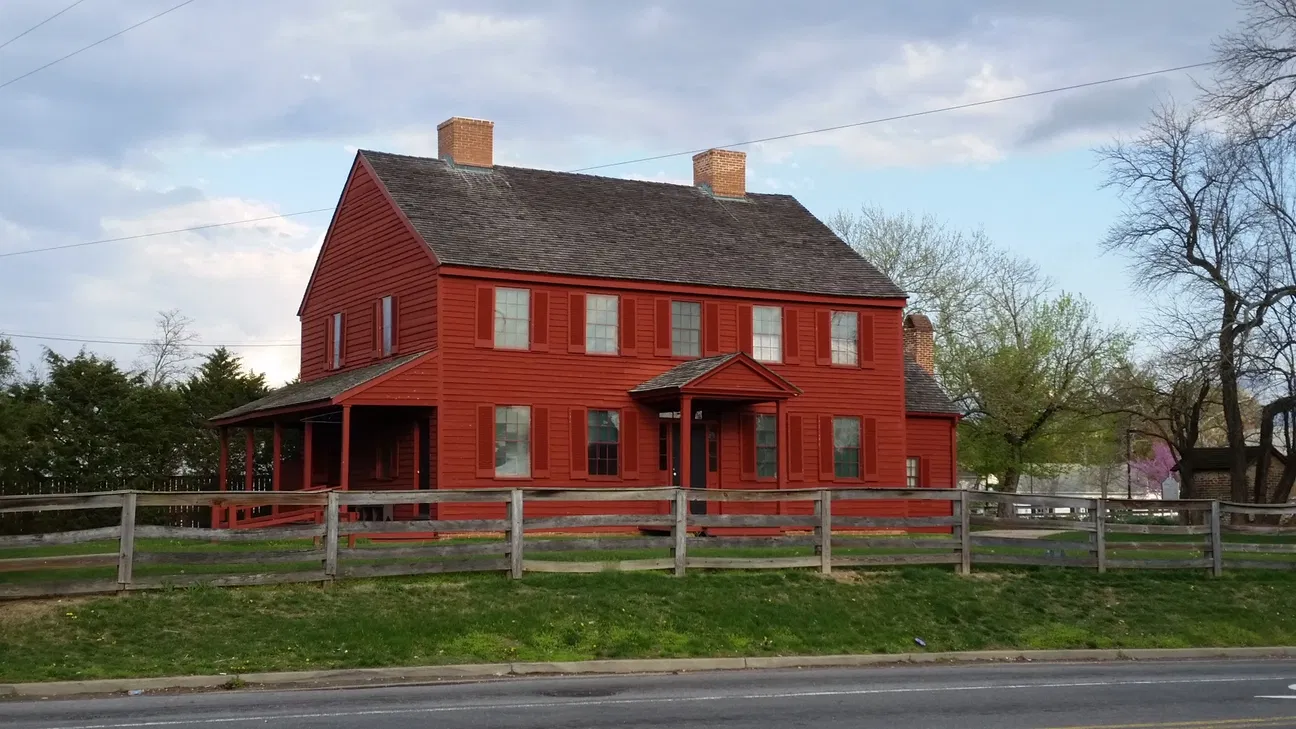
Surratt House Museum
The two-story red clapboard farmhouse on Brandywine Road in what is now Clinton, Maryland sits less than fifteen miles from Ford's Theatre and looks, from the outside, like any number of modest mid-century plantation homes that once dotted Southern Maryland. It does not announce what it was. But the Surratt House is one of the few surviving physical waypoints in the most consequential crime of the nineteenth century — the assassination of Abraham Lincoln — and the story that runs through it is as tangled and tragic as anything the Civil War produced. John and Mary Surratt built the house in 1852 on 200 acres of Prince George's County farmland, and from the beginning it served multiple purposes. It was a family home and a working plantation, but also a tavern, a public dining room, a hotel for traveling gentlemen, a post office, and a polling place. The surrounding community took the family name: the area became known officially as Surrattsville in 1853. When the Civil War began, the character of the place shifted. Southern Maryland was Confederate country in sympathy if not in official allegiance, and the Surratt tavern became a clandestine stop on the Confederate underground — a safe house for couriers and communications moving between Richmond and Washington. John Surratt Sr. died suddenly of a stroke in August 1862, leaving Mary with his debts, the farm, and three children. Facing financial collapse and unable to manage the property alone, she rented the Surrattsville tavern to a man named John Lloyd in the fall of 1864 and moved with her children to a rowhouse she owned at 541 H Street in Washington, where she ran it as a boarding house. She would never live in Surrattsville again. It was at the H Street boarding house that the conspiracy took shape. Mary's son John Jr., already an active Confederate courier, was introduced to actor John Wilkes Booth by Dr. Samuel Mudd in December 1864. Booth's original plan was kidnapping — seize Lincoln, use him as leverage to force the resumption of prisoner exchanges with the Confederacy. The Surratt boarders became his inner circle: Lewis Powell, George Atzerodt, David Herold. As part of the plot, weapons and supplies — two Spencer carbines, ammunition, field glasses — were cached at the Surrattsville tavern ahead of time, hidden there for retrieval during the planned escape through Southern Maryland. The kidnapping scheme collapsed, and Booth turned to assassination. On April 14, 1865, the same day he shot Lincoln at Ford's Theatre, Mary made one of her regular trips to Surrattsville — ostensibly to collect a debt from a neighbor. Her tenant John Lloyd would later testify that she told him to have the shooting irons ready. She delivered a package from Booth, later found to contain binoculars. Hours after Lincoln was shot, Booth and conspirator David Herold arrived at the Surratt tavern in the early morning hours. Booth had broken his leg leaping from the presidential box. He needed whiskey for the pain and the weapons that were waiting. The stop lasted only minutes. Twelve days later, Booth was dead in a Virginia barn. Mary Surratt was arrested, tried by a military tribunal, and convicted of conspiracy. On July 7, 1865, she was hanged at the Old Arsenal Penitentiary in Washington — the first woman executed by the United States federal government. Her guilt, and specifically the depth of her knowledge of Booth's plans, has been argued by historians ever since. The house was confiscated by the federal government after her conviction. Between 1868 and 1965, five separate families owned and lived in the former Surratt tavern, making ordinary modifications that gradually obscured its original character. In 1965 the property was donated to the Maryland-National Capital Park and Planning Commission, listed on the National Register of Historic Places in 1973, and restored to its 1865 appearance before opening as the first public historic house museum in Prince George's County on May 1, 1976. The Surratt Society, formed in 1975 by citizens interested in Mary's case — many of whom lean toward her exoneration — now supports the museum with more than 1,500 members worldwide. The paranormal claims attached to the house are modest but consistent, and notably some of the most credible come from the museum's own staff. The longtime director of the museum, Laurie Verge, described the experience plainly in multiple accounts: though she never saw anything, she repeatedly felt the sensation of a man stepping out of one of the upstairs bedrooms and looking directly at her, enough to raise the hair on the back of her neck. On one occasion, she and five or six employees sitting in her office — which was then located inside the house — all stopped mid-conversation and listened together as footsteps crossed the first floor below them, sounding exactly as though someone had walked in the front door, down the hall, and out the back. When they checked, no one was there. Verge noted that the paranormal attention directed at the house grew significantly after ghost investigator Hans Holzer visited in the 1950s with a spiritual medium — she was skeptical of his conclusions but could not explain what she had personally heard. She theorized, if any spirit was present, it was more likely John Lloyd — the tenant whose testimony condemned Mary — than Mary herself. Visitors have reported the figure of a bearded man seated in a rocking chair, visible only in a mirror's reflection. Others describe male apparitions on the back staircase, muffled voices of men, and the apparition of a woman believed to be Mary near the main staircase or on the porch. The museum declines paranormal investigation requests — staff receive them at roughly the rate of once a month — out of a deliberate choice to keep the documented history at the center rather than the ghost stories. The house still holds original furnishings, including Mary Surratt's own writing desk. The tavern room is intact. The staircase is there. Whether or not anything remains in residence, the weight of what happened inside is present in every room.

Lord Baltimore Hotel
The Lord Baltimore Hotel stands as a historic hospitality establishment of substantial architectural significance, having served travelers and residents for more than a century while accumulating a reputation as one of the most actively haunted hotels in its region. The hotel was constructed during the early twentieth century, reflecting architectural design principles characteristic of that era's premium hospitality establishments. The building encompasses multiple stories with numerous guest rooms, public spaces including dining facilities and ballrooms, and infrastructure necessary to operate a large-scale commercial enterprise. The nineteenth-floor rooftop deck represents a distinctive architectural feature that has acquired particular paranormal significance. The ballroom provides a grand public space reflective of the hotel's historical role as a center for social gatherings and formal events. The elevator system has become identified as a location of particular paranormal activity, with mechanical features apparently subject to intelligent manipulation by paranormal entities. The most prominent and extensively documented spirit is a young girl named Molly, whose apparition has been observed repeatedly on the nineteenth-floor rooftop deck and within the ballroom areas. Molly manifests as a girl dressed in a cream-colored dress engaged in play with a ball, suggesting she may have died at a young age and continues playing in locations where she spent her final moments. Her manifestations have achieved sufficient prominence that professional paranormal investigators have incorporated her into formal case documentation and ghost tour narratives. Additional spirits believed to include individuals who took their own lives through suicide, with documented phenomena suggesting that at least one suicide victim died on the nineteenth floor during 1908, while additional suicides apparently occurred among individuals suffering from the psychological devastation of the Great Depression. Paranormal phenomena at the Lord Baltimore Hotel demonstrate the wide range of manifestations characteristic of actively haunted establishments. A child tugging at the clothing of guests and staff represents direct interactive phenomena, suggesting that Molly and other child spirits retain the capacity to touch and physically manipulate living individuals. The girl in the cream dress playing with a ball manifests as a clear apparitional presence. Elevator doors open autonomously on various floors without user input, sometimes becoming stuck or operating in violation of normal mechanical sequencing. Unseen hands touching guests suggest interactive paranormal phenomena involving physical contact between spirits and the living. Cold spots manifest throughout various locations, creating localized zones of dramatic temperature reduction. Flickering lights occur under apparent intelligent control. Unexplained sounds emanate from various locations, creating an auditory environment suggesting unseen activity. Nightmares plague guests in certain rooms, potentially representing paranormal intrusion into sleep processes. The Lord Baltimore Hotel has become a destination for paranormal tourism, with official ghost tour offerings providing guided experiences designed to acquaint visitors with the documented phenomena. Paranormal investigation teams have conducted extensive examinations, documenting evidence consistent with testimonies of guests and staff who have experienced supernatural phenomena. The hotel continues to operate as a functioning hospitality establishment while serving as a destination for paranormal research and ghost tourism, exemplifying how historical tragedy and architectural distinctiveness can transform a conventional business into a significant paranormal destination.
National Emergency Training Center – St. Joseph’s College
National Emergency Training Center at St. Joseph's College, now serving as a training facility, occupies buildings with a haunting past rooted in nineteenth-century American medical tragedy and institutional loss. Originally established as a hospital facility during the American Civil War era, the institution functioned as a field hospital where thousands of wounded soldiers passed through its wards, many never to leave alive or with their bodies intact. The facility became known for the desperate measures undertaken by nurses, particularly members of religious orders including those influenced by Mother Elizabeth Ann Seton's charitable legacy, who worked tirelessly to treat soldiers suffering from gangrene, infection, and catastrophic battle wounds that defied medical intervention. The medical practices of the era, crude by modern standards, required frequent amputations and surgical interventions performed with minimal anesthesia in the hospital's surgical rooms, creating an environment of extreme human suffering where survival itself seemed uncertain and pain was accepted as inevitable. The basement areas of the facility, once used for storage and preparation of the deceased, witnessed an overwhelming mortality rate during the war's peak years, with bodies processed in assembly-line fashion as casualties mounted beyond the facility's capacity to manage them. The entire structure resonates with the accumulated trauma of warfare, medical experimentation, and loss on a scale that contemporary records struggled to document. Civil War nurses in their period uniforms have been reported throughout the hospital areas, often observed carrying buckets containing the grim remnants of surgical procedures and performing their duties in spaces long since converted to modern administrative purposes. Apparitions of wounded soldiers screaming in agony echo through hallways that once rang with cries of anguish and despair, while disembodied voices call out for assistance in rooms now used for training and education. The specter of Mother Elizabeth Ann Seton has been encountered near the former surgical rooms, her presence seemingly ongoing in her historical mission to comfort the suffering and dying. Most disturbingly, apparitions of severed limbs have been witnessed by multiple independent observers, floating or manifesting in the spaces where amputations were performed, a phenomenon that defies rational explanation and suggests the psychological imprinting of trauma upon the physical location itself. Modern paranormal investigation has documented unexplained sounds of medical procedures, phantom screams that match historical descriptions of the facility during active warfare periods, and the distinct impression of immense suffering that permeates certain areas of the facility with overwhelming force. Staff and visitors have reported sudden temperature drops in former hospital wards that occur without meteorological explanation, and overwhelming sensations of profound grief and loss in the basement areas that affect visitors regardless of their prior expectations or psychological state. The building's architectural features, including the long hallways that once connected patient wards and the confined surgical spaces, have become focal points for paranormal activity, with footsteps of unseen personnel regularly heard echoing through corridors in patterns that suggest medical staff performing their appointed duties. Disembodied voices speak in urgent tones discussing patient conditions and surgical procedures, suggesting that the spirits trapped within remain engaged in the mission that consumed their earthly existence. Today, as the building serves its new institutional purpose in military training operations, the spirits of those who died within its walls appear unable to find peace or move beyond their traumatic endings, their presence a solemn reminder of warfare's true cost in human suffering and the immense burden carried by medical personnel forced to witness human destruction on an unprecedented scale.
Schifferstadt
Schifferstadt stands as one of Maryland's most historically significant structures and one of the few authentic remaining examples of German colonial architecture in North America, preserving within its aged brick and timber construction the tangible remnants of early German immigration to the Chesapeake region during the eighteenth century. Constructed during the colonial period, Schifferstadt represents the material culture and building traditions of German settlers who established themselves in Maryland when such colonial communities were formulating the foundations of the United States. The structure stands as both a museum and a haunted location, with rooms preserving period furnishings and interpretive displays while simultaneously serving as the setting for persistent paranormal phenomena that have drawn the attention of paranormal researchers and ghost hunters throughout the Mid-Atlantic region. The paranormal history of Schifferstadt is intimately connected to tragic events and spirits of individuals whose lives ended within the house's walls under circumstances suggesting unfinished business and powerful emotional imprints. Joseph Brunner and Elias Brunner, whose identities are preserved through the house's history, remain connected to the property through their deaths and the apparent inability of their spirits to fully depart. The kitchen holds particular paranormal significance due to the tragic death of Wilhelmina, a young midwife who lost her life in a devastating kitchen fire, transforming what should have been a place of domestic comfort into a location of trauma and loss. Christian, a young boy who died within the house, adds another layer of tragedy to Schifferstadt's history, creating a tapestry of multiple deaths and spiritual attachments spanning different time periods. The paranormal manifestations at Schifferstadt are remarkably consistent in their character and testimony. Throughout the house, visitors and investigators have repeatedly documented unexplained voices speaking in German, suggesting the spirits have maintained their ancestral language across centuries. Footsteps traverse the house continuously through corridors and rooms with purposeful presence, creating an auditory environment conveying the impression of a household still inhabited by multiple occupants. The most visually striking phenomena involve apparitions, with multiple witnesses describing sightings of a young woman matching Wilhelmina's description, her spirit apparently recreating moments surrounding her tragic kitchen fire death, and the appearance of Christian, whose presence suggests the deaths of children created particularly powerful paranormal imprints. The historical significance of Schifferstadt as a museum and cultural institution has not diminished the intensity of paranormal activity within its walls. Rather, ongoing restoration efforts, historical interpretation, and regular visitation by the public have created an environment in which paranormal phenomena have become more pronounced. The house has become a destination for paranormal investigation groups from throughout the region, with many teams reporting successful documentation of unexplained voices, apparitions, and other manifestations lending credibility to collective testimonies of previous witnesses and researchers. The preservation of the house as a museum dedicated to colonial history seems to have paradoxically strengthened the connection between the living world and the spirits of the deceased who continue to inhabit Schifferstadt's rooms and passages. Schifferstadt today remains both a significant historical museum dedicated to preserving German colonial culture in Maryland and a recognized paranormal hotspot attracting ghost hunters and paranormal enthusiasts from a wide geographic region. The coexistence of these two roles has created a unique institution serving simultaneously as a cultural and educational center and as a location of acknowledged and documented paranormal activity. Visitors may find themselves moving through rooms where historical artifacts illuminate colonial domestic life while simultaneously being aware that spirits of past inhabitants remain present and active within the same spaces, creating an unusual convergence of historical education and paranormal experience that characterizes few other locations in the Mid-Atlantic region.
Kent Manor Inn
Kent Manor Inn represents a historic inn or hotel facility located in Kent Island, Maryland, serving travelers and visitors seeking accommodation within a region characterized by significant historical depth and haunted locations throughout the Chesapeake Bay area. The structure carries architectural significance characteristic of manor houses or historic inn facilities constructed during earlier centuries of American history, preserving design elements, materials, and spatial configurations reflecting construction practices and aesthetic sensibilities of its era. The building's historical roots extend at least to the nineteenth century, providing sufficient temporal depth to accumulate historical events and human experiences frequently correlating with paranormal manifestations and ghostly presences. Kent Island itself carries historical significance extending through colonial settlement and maritime activities associated with the Chesapeake region. The inn's location in Maryland on Kent Island positions it within an area known for paranormal activity and haunted locations frequently referenced within regional paranormal folklore. The most prominent paranormal entity is the spirit of Alexander Thompson, identified as having died by hanging within Room 210 during 1875, creating a death spanning nearly a century and a half of temporal separation from present day. Death by hanging represents suicide or capital punishment, both generating particularly intense paranormal manifestations and long-lasting spiritual presences. The extreme nature of hanging death, involving asphyxiation and profound psychological distress, creates emotional and spiritual trauma associated with persistent hauntings. Thompson's death to Room 210 creates a precise geographical anchor for the haunting, with paranormal activity concentrated intensely within that specific room. The century-and-a-half haunting persistence suggests a spirit unwilling or unable to depart the death location, bound by unresolved circumstances or profound emotional connection. The continuation of Thompson's presence within the death room for such extended temporal span suggests a haunting of considerable psychological significance and emotional intensity. Additional paranormal entities include the apparition of a young girl characterized by long flowing hair, appearing in corridors and interior inn spaces, and a man depicted as riding horseback appearing outside the primary structure. The young girl apparition presents features suggesting youth and innocence, possibly indicating child death within the building or location. The horseman figure appears to represent a spirit connected to earlier historical periods, possibly colonial or early American eras, suggesting that paranormal activity may involve multiple temporal layers with spiritual presences from different historical periods inhabiting the same location. The diversity of apparitions and entities suggests either multiple deaths or tragic events occurring across different historical periods or a location of such spiritual significance as to attract or manifest multiple distinct entities. The paranormal phenomena extend across a spectrum of manifestation types associated with genuine hauntings and multiple spiritual presences. Disembodied voices and footsteps have been consistently reported by guests, staff, and paranormal investigators, with audible vocalizations in areas where no living human presence could source the sounds. Doors throughout the inn are observed opening and closing without visible agency or explainable physical cause, occurring particularly in areas associated with specific apparitions. Phantom cigar smoke has been reported by multiple witnesses, manifesting as cigar tobacco aroma in areas where no one smokes, suggesting sensory impressions from spiritual presences or electromagnetic phenomena. Physical sensations including hair tugging, unexplained touches, and direct physical contact with invisible presences have been documented, suggesting spirits capable of direct physical interaction. The combination of auditory, olfactory, tactile, and visual phenomena creates comprehensive haunting making Kent Manor Inn a recognized location within Maryland's paranormal geography. The inn continues operating as an active hospitality facility while maintaining its reputation as genuinely haunted, attracting paranormal investigators and visitors interested in experiencing verified supernatural phenomena.
Westminster Hall
Westminster Hall and Burying Ground stands as one of Baltimore's most historically significant and actively haunted sites, occupying a location that has served as a repository for the city's most notable deceased since its establishment in the late eighteenth century. Located in the heart of downtown Baltimore, the cemetery and its associated chapel represent centuries of Maryland's cultural, literary, and civic heritage, drawing visitors and paranormal investigators alike to witness phenomena that have been documented across multiple generations. The burial ground emerged during a period of rapid urban expansion in Baltimore, when the need for a formal cemetery became evident as the city's population grew exponentially throughout the nineteenth and early twentieth centuries. The Gothic Revival architecture of the chapel itself, constructed in the 1850s, creates an atmospheric setting that has long captivated those interested in the supernatural and historical preservation. Among the thousands interred within Westminster's grounds rests Edgar Allan Poe, the celebrated American author whose tragic life and mysterious death have become inseparable from the cemetery's paranormal reputation. Poe's burial at Westminster in 1849 transformed the site into a literary pilgrimage destination, though the author's connection to the location extends beyond mere internment. The cemetery also contains the remains of Lucia Watson Taylor, a young woman of merely sixteen years whose untimely death in 1816 marked the beginning of documented supernatural encounters at the site. The presence of these and hundreds of other notable Baltimore citizens created what many paranormal researchers believe to be a psychologically charged environment where emotional imprints of the deceased may manifest in observable and measurable ways. Paranormal activity at Westminster Hall has been consistently reported across multiple dimensions of the property, from the cemetery grounds themselves to the underground catacombs beneath the chapel structure. Witnesses describe disembodied voices with no identifiable source, emanating from various locations throughout the burial areas with such clarity that initial observers often mistake them for living visitors. Auditory phenomena include footsteps that follow no discernible pattern and horrific screaming sounds that have prompted emergency investigations by local authorities who found no identifiable cause. Visitors to the cemetery have reported the sudden sensation of icy hands grasping their shoulders from behind, only to turn and discover no physical presence responsible for the contact. Unexplainable foul stenches emerge and dissipate without correlation to weather patterns or decomposition, often concentrated in specific burial zones. The cemetery grounds at night frequently showcase shadowy figures that move with apparent purpose before vanishing when directly observed, and orbs of luminescence have been captured in both photographic and video documentation by professional paranormal research teams. The catacombs beneath the chapel have proven particularly active, with multiple documented instances of disembodied voices, apparitions, and electromagnetic fluctuations that exceed baseline readings significantly. The Screaming Skull of Cambridge, a legendary artifact associated with paranormal phenomena at historical burial sites, remains connected to Westminster's lore through various historical accounts and folkloristic traditions. The phenomenon of objects exhibiting apparent sentience or supernatural agency has fascinated paranormal researchers for decades, and Westminster's documented cases suggest possible connections to widely recognized patterns in spectral manifestation. Modern investigators have employed thermal imaging cameras, digital audio recorders, and electromagnetic field detectors to document activity at the site, with results consistently showing anomalies that resist conventional scientific explanation. Today, Westminster Hall remains actively haunted and continues to attract paranormal enthusiasts, historians, and researchers seeking to understand the nature of spectral phenomena and post-mortem consciousness. The cemetery is accessible to the public during daylight hours, and organized paranormal tours offer evening investigations for those serious about exploring the site's supernatural dimensions. The combination of historical significance, documented paranormal activity, and atmospheric architecture ensures that Westminster Hall endures as a central location in American paranormal studies.
Barbara Fritchie House
The Barbara Fritchie House in Frederick, Maryland preserves the residence of one of the American Civil War's most iconic figures, a woman whose courage and patriotism became legendary in regional and national memory. Located in the historic downtown district of Frederick, the house dates to the eighteenth century and witnessed profound transformation during the tumultuous years of the Civil War when Confederate and Union forces repeatedly occupied and contested control of the surrounding region. Barbara Fritchie herself became renowned for her defiant act of displaying the American flag from her window despite Confederate occupation, an act of patriotic conviction that transcended the conventions of her era and made her a symbol of unwavering loyalty. The house subsequently functioned as a museum dedicated to preserving her memory and the material culture of the period, while simultaneously becoming recognized as a location of ongoing paranormal significance. The most documented paranormal phenomena within the Barbara Fritchie House centers on a rocking chair that moves of its own volition without any human agency or mechanical explanation. Witnesses and visitors have observed this chair rocking smoothly and deliberately, maintaining consistent rhythm and motion despite being placed in static positions prior to the manifestation. The rocking chair phenomena occur with sufficient frequency and consistency to have become a recognized feature of the house's supernatural reputation. In addition to the rocking chair activity, visitors and staff report observing the apparition of a woman's feet visible beneath quilts and bedding in various rooms, particularly in the basement levels of the structure. The feet appear solid and three-dimensional rather than vaporous or translucent, suggesting a highly developed manifestation capable of maintaining detailed physical characteristics. Basement lighting systems exhibit erratic behavior, with lights inexplicably turning on and off despite proper functioning of electrical systems. Windows throughout the property have become associated with the appearance of a female apparition, described as a woman of indeterminate age appearing at the glass and visible to startled observers both inside and outside the building. The identity of the primary haunting presence remains ambiguous despite extensive historical documentation concerning Barbara Fritchie herself. While some investigators attribute the rocking chair and window phenomena to Fritchie's continued presence maintaining vigil over her cherished home, others propose that an unidentified woman associated with the adjacent building constitutes a separate paranormal entity. Historical records from the Civil War period document the presence of multiple women in the Frederick area who suffered loss, displacement, or trauma during military campaigns and occupation, providing plausible explanations for the emotional intensity underlying the manifestations. The basement phenomena particularly suggest an entity connected to trauma or distress, as the lower levels of historic homes often harbor the residual impressions of the most difficult human experiences. Visitors to the museum often report experiencing strange emotional sensations, particularly after dark when fewer people occupy the structure and ambient noise diminishes. Some describe overwhelming sadness or melancholy without clear cause, while others report sudden feelings of unease or observation by unseen presences. The house itself seems to exhibit variable activity patterns, with some visits producing numerous paranormal incidents while other occasions remain comparatively quiet. The Barbara Fritchie House has been featured in Frederick's established ghost tour circuit, and it attracts paranormal research groups seeking to document and understand the nature of the spirits inhabiting this historically significant structure. The house remains open to public visitation, allowing researchers and curious visitors to experience directly the paranormal phenomena that persist within its carefully preserved walls and to connect with the historical narratives that may underlie the spiritual manifestations.
Leakin Park
Leakin Park, situated in Baltimore, Maryland, encompasses a substantial wooded area extending across multiple square miles of landscape characterized by dense forest coverage, winding trails, water features, and the natural topographical variations typical of Baltimore's park system. The park was established as a recreational facility designed to provide green space, environmental respite, and pedestrian amenities to residents of the urban and suburban areas surrounding Baltimore. The landscape's composition of heavily wooded sections interspersed with more open areas creates numerous secluded locations where individuals can be relatively isolated from external observation despite the park's location within an urban metropolitan area. The natural features that make Leakin Park attractive to legitimate recreational users simultaneously created conditions that would render the space suitable for criminal activity requiring concealment and minimal possibility of detection. The park's extensive acreage and complex terrain allowed for the movement of individuals and materials through the landscape with relative freedom from observation, characteristics that would prove catastrophic to public safety and human welfare throughout the latter twentieth century. Leakin Park became infamous throughout Baltimore as a location where individuals engaged in homicide and violent crime systematically deposited the bodies of their victims, creating an extended pattern of criminal behavior that persisted across decades despite increased law enforcement attention and public awareness. Beginning in 1946 and continuing through subsequent decades, the documented discovery of seventy-nine human remains associated with known or suspected homicides established the park as Baltimore's most notorious body-dumping ground, earning it the colloquial designation of Murder Park. The victims discovered represented individuals from various segments of the population, suggesting that the park attracted perpetrators from multiple criminal contexts rather than serving as the exclusive dumping ground for a single criminal enterprise. Law enforcement investigations into the cases revealed patterns of organized crime involvement, serial killers, gang violence, and other violent crime modalities, indicating that the park's isolated geography and suitable concealment conditions made it attractive to perpetrators operating across the full spectrum of criminal homicide. The accumulation of seventy-nine bodies within and near the park created what may represent one of the highest concentrations of homicide victims in a single geographical location within the United States. The paranormal manifestations at Leakin Park have been documented extensively through paranormal investigation organizations, ghost hunting enthusiasts, and academic researchers interested in the relationship between sites of massive human tragedy and spiritual phenomena. Witnesses report experiencing what they characterize as palpable paranormal activity throughout the park's wooded sections and secluded areas, with specific accounts describing ghostly figures that move through the landscape with the ethereal appearance characteristic of spectral manifestations. Shadow figures appear suddenly in peripheral vision, vanishing when directly observed, creating the characteristic psychological disturbance that such experiences generate in witnesses. Apparitions have been reported with varying degrees of clarity and detail, with some experiences involving distinct visual appearance of deceased individuals and others describing more nebulous presences perceived intuitively rather than through clear sensory perception. Visitors to the park report overwhelming sensory impressions characterizing the emotional state of the deceased victims, describing feelings of anguish, despair, and unfinished emotional business that seem to emanate from the environment rather than arising from within the witness's own psychology. The documented statement that the dead still walk through Leakin Park has become a recurring theme in paranormal documentation, capturing the prevalent understanding that the location hosts an abundance of unresolved spiritual presence. The designation of Leakin Park as America's most haunted parkland reflects the cumulative spiritual weight generated by the concentration of violent deaths, unresolved murders, and the presence of multiple victims whose deaths were characterized by violence, injustice, and inadequate memorialization. The paranormal research attention devoted to the park has generated extensive documentation of manifested phenomena, with audio and video evidence alleged to capture apparitions and spectral activity. The park's physical landscape has become a destination for paranormal researchers seeking to investigate and document the spiritual consequences of massive-scale human tragedy concentrated within a single geographical location. The ongoing use of Leakin Park for recreational purposes despite its reputation for paranormal activity and homicide history creates an unusual circumstance wherein a public amenity continues to serve its intended recreational function while simultaneously operating as one of the most actively investigated haunted locations on the East Coast. The documented pattern of body disposal within the park has rendered it a historically and culturally significant location within Baltimore, a place where the failure of public safety systems and law enforcement is physically inscribed through the accumulation of human remains.
Poplar Hill Mansion
Poplar Hill Mansion stands as one of Salisbury, Maryland's most significant antebellum estates, a Federal-style residence constructed during the early nineteenth century when wealth derived from commercial enterprise and enslaved labor enabled the planter class to construct substantial architectural monuments. Built by Dr. John Huston, a prominent physician whose prosperity came from medical practice and extensive land holdings worked by enslaved African Americans, the mansion represents the architectural aspirations of the Chesapeake region's elite society. The residence features elegant period detailing reflecting the refined taste of its era and originally encompassed extensive grounds with numerous dependencies that supported agricultural and domestic operations. Dr. Huston and his wife presided over the household throughout much of the nineteenth century, their family's social prominence and cultural standing inseparably connected to the system of slavery that enabled their extraordinary wealth. During the Civil War era, the mansion served alternately as military headquarters, hospital facility, and barracks for Union and Confederate forces, leaving profound physical and psychological marks upon its structure and grounds. Following the war's conclusion and the emancipation of enslaved people, Poplar Hill experienced gradual but inexorable decline as the agricultural economy that had sustained planter families collapsed under the weight of post-war reconstruction. The property eventually became a museum dedicated to comprehensively interpreting the complex and multifaceted history of the Chesapeake region, including slavery's foundational and deeply troubling role in colonial and antebellum society. Paranormal activity at Poplar Hill Mansion has been extensively documented by both casual visitors and professional paranormal investigators, with reports consistently suggesting the presence of multiple spiritual entities. The nursery on the second floor is frequently reported as the site of children's laughter and sounds of playful activity despite the room being completely empty of living occupants. Drawers throughout the mansion, particularly in the bedroom dressers of the upper chambers, are reported to open and close without any human intervention, with linens allegedly being pulled from their proper storage places. In the dining room and throughout the main hallways, visitors report witnessing what appears to be a woman dressed in period-appropriate clothing who vanishes abruptly when approached directly. Unexplained sonic boom sounds reverberate through the structure with startling intensity, sometimes accompanied by what witnesses describe as portal activity or mysterious shifting of dimensional space within specific rooms. Staff members have reported personal interactions with what they identify as Sara, a woman who was enslaved at the property during the antebellum era, whose presence manifests as a distinct and recognizable energetic signature separate from other spirits. Documentation suggests that at least five or six permanent spiritual presences inhabit the mansion, though the specific identities and precise death circumstances of several entities remain unclear and subject to ongoing investigation. The spirits appear responsive to human attention and seem genuinely engaged with visitors rather than manifesting malevolent or hostile intentions. Official museum records meticulously maintain documentation of all paranormal reports and experiences, and professional paranormal investigators have conducted multiple investigations at the site. Poplar Hill Mansion continues operating as an important museum and historical site while simultaneously serving as a focal point for serious paranormal research throughout Maryland and beyond.
Beall-Dawson House
The Beall-Dawson House stands as a significant historical structure in Rockville, Maryland, representing a pivotal period in the region's development during the early nineteenth century. The house was constructed in 1815, a date within the early Federal period of American architecture, characterized by refined proportions, classical details, and construction methods reflecting contemporary standards and available materials. The property was built by Upton Beall, a prominent businessman whose wealth enabled commissioning a residence reflecting his status and refined aesthetic sensibilities. The house remained within the Beall family for generations, serving as primary residence for Upton Beall, his wife Jane, and their daughters including Jane, Mathilda, and Margaret, whose names appear in historical records and whose lives unfolded within the house's walls. The architectural design reflects Federal period principles, with brick facade, symmetrical proportions, and detailed interior woodwork characteristic of homes built by wealthy prominent families. The house contains multiple stories, rooms organized separating public entertaining spaces from private chambers, a distinctive kitchen archway particularly associated with paranormal phenomena, and bedrooms where generations lived and died. The front porch features classical details consistent with period architecture. Over subsequent centuries, the property adapted to various uses, eventually becoming a historic house museum operated by the Montgomery County Historical Society, preserving the structure as testament to early nineteenth-century residential architecture and providing public access to understanding period domestic life. The house's history encompasses more than two centuries of continuous occupation, during which family members lived, grew, married, raised children, became ill, and ultimately died within its walls. This created multiple layers of human experience and emotional intensity compressed into the physical structure. As a historic museum, scholarly research into architectural details, construction methods, and historical significance has occurred, with curators documenting its role in Rockville's development. The transition from private residence to public museum involved careful restoration work intended to preserve original materials while adapting the structure for museum operations and public access. The Beall-Dawson House has developed a documented reputation for paranormal phenomena appearing connected to its long history of human occupation and emotional and physical events transpiring within its walls. Multiple apparitions have been reported by visitors and staff, with some accounts describing specific individuals at particular locations. Near the kitchen archway, a ghostly figure identified as a bricklayer has appeared, with witnesses describing an apparition engaged in laying bricks, suggesting a spiritual entity engaged in repetitive labor. The front porch has been the location of reports describing an apparition of a searching man, with accounts suggesting a figure wandering as if looking for something lost. Bedrooms throughout have been sites of paranormal reports, with apparitions vanishing after appearing to guests and staff. The Beall-Dawson House presently functions as a historic museum operated by the Montgomery County Historical Society, welcoming visitors interested in experiencing early nineteenth-century residential life and potentially encountering documented paranormal phenomena. Museum staff acknowledge the house's paranormal reputation while maintaining scholarly approach to interpretation and public education about historical significance. The coexistence of functions as a preserved historical museum with well-documented paranormal reputation creates distinctive experience for visitors, combining historical education with possibility of direct supernatural encounters. The house remains a focal point for both historical research into early Rockville and paranormal investigations seeking to understand supernatural activity within this preserved Federal residence.
Point Lookout Light
Point Lookout Light stands as a monumental coastal navigational structure located in Scotland, Maryland, overlooking the convergence of the Potomac River and the Chesapeake Bay, a strategic location of significant naval importance throughout American maritime history. The lighthouse was constructed during the nineteenth century to serve as a critical aid to navigation for maritime traffic traversing the waters surrounding the Point Lookout peninsula, a region notorious for treacherous currents, shoal waters, and dangerous weather conditions. The structure was engineered to withstand the severe maritime environment, featuring robust construction designed to remain operational during storms and extreme weather events. Throughout its operational history, the lighthouse has served multiple lighthouse keeper families and professional mariners whose dedication to maintaining the beacon's light guided countless vessels safely through hazardous waters. The facility gained additional historical significance during the Civil War era when it served strategic military functions alongside its primary navigational purpose. During the American Civil War, Point Lookout achieved prominence as a significant military installation and prisoner-of-war facility, with the lighthouse and surrounding grounds serving operational military purposes. The location witnessed substantial Civil War activity, troop movements, and military construction undertaken to fortify the position and enhance its strategic value. Historical records document the presence of Confederate soldiers and military personnel throughout the region, with the lighthouse area functioning as part of a larger military infrastructure serving Union forces. The Civil War left indelible marks upon the landscape and the collective memory associated with the location, with numerous soldiers experiencing trauma, injury, and death in proximity to the lighthouse structure. The post-war period brought renewed focus on the lighthouse's navigational function, though the military historical significance remained woven into the location's identity. Point Lookout Light has been identified as one of the most actively haunted lighthouses in the United States, with extensive paranormal phenomena documented and investigated by paranormal research organizations. Ann Davis, a woman lighthouse keeper, has been identified as one of the primary spectral entities haunting the structure, with witnesses describing apparitions of a woman wearing period-appropriate clothing including a white top and blue skirt. Additional spirits associated with Confederate soldiers have been reported throughout the lighthouse and surrounding grounds, with ghost voices recorded during paranormal investigations capturing audible vocalizations attributed to deceased military personnel. Sounds of disembodied singing and spectral voices have been documented in the lantern room and interior cupola areas, with paranormal investigators recording phenomena that defy conventional explanation. The cumulative evidence of paranormal activity has established Point Lookout Light as a premier destination for paranormal researchers and ghost enthusiasts. Point Lookout Light and the surrounding State Park continue to operate as historical and educational facilities, with the lighthouse serving as a museum open to visitors interested in maritime history and Civil War era military operations. The documented paranormal phenomena have attracted academic paranormal research teams and paranormal investigation shows seeking to document and analyze the supernatural manifestations. Park rangers and staff members have become familiar with reports of paranormal activity, and the haunted reputation has become an integral component of the location's historical and cultural identity. The lighthouse remains in operational status, maintained through historical preservation efforts and governmental support, while simultaneously serving as one of Maryland's most researched haunted locations and a destination for paranormal enthusiasts worldwide.
The Henry Hotel
The Henry Hotel stands as a historic landmark in Ocean City, Maryland, representing an important chapter in the city's African American cultural history and serving as one of the oldest and most significant buildings dedicated to serving the Black community in the region. Built around 1895, the hotel was constructed during a period when segregation laws throughout the United States restricted African American access to most public accommodations, making establishments like the Henry Hotel vital community spaces that provided lodging, dining, and social gathering opportunities for Black travelers and residents visiting the coastal resort area. The building itself reflects the architectural styles and construction techniques typical of late nineteenth century commercial establishments in coastal Maryland towns, featuring a structure designed to accommodate guests and provide the services expected of a respectable hotel of that historical period. The Henry Hotel served as the first colored hotel in Ocean City, earning distinction as a pioneering establishment that filled an essential need within the African American community during the Jim Crow era of legal segregation. The hotel operated continuously under various proprietors for many decades, becoming deeply embedded in the social and cultural fabric of Ocean City's Black community and serving as a gathering place for musicians, performers, and visitors to the coastal resort town. The paranormal reputation of the Henry Hotel appears connected to the vibrant social history of the establishment during its operational years as a center of African American cultural life and entertainment throughout the twentieth century. The building's porch, interior hallways, and various interior spaces have been locations where paranormal phenomena have been documented and reported by guests, staff, and paranormal investigators over the years. Most notably, apparitions have been observed within the building, with witnesses describing ghostly figures manifesting in various locations throughout the structure in ways suggesting intelligent supernatural presence. The paranormal activity extends to auditory phenomena, with loud and unexplained footsteps heard moving through the hotel's interior spaces, particularly in hallways and on stairs, creating an impression of unseen residents moving about the building in the manner of previous occupants from earlier eras. Perhaps most remarkably, visitors and staff have reported hearing jazz music emanating from various parts of the building when no musicians or instruments are physically present, a paranormal manifestation that evokes the musical traditions that characterized the Henry Hotel during its operational years as a center of African American entertainment and cultural expression. The scolding voice of a woman has been heard within the building, suggesting the possible presence of a female spirit, perhaps a former proprietor or staff member, maintaining vigilance over the establishment even in the paranormal realm. The paranormal activity at the Henry Hotel appears intrinsically connected to the building's rich history as a center of African American cultural and social life in Ocean City during the era of segregation and beyond. The spirits inhabiting the hotel may include former proprietors, staff members, or guests who became so emotionally invested in the establishment that their spiritual presence remained tethered to the location after their physical deaths. Pearl Bonner, who operated the Henry Hotel for forty summers until her death in 2003, may have become part of the location's paranormal legacy, her dedication to maintaining the hotel and serving the community potentially manifesting as a continued presence within the building. The jazz music heard emanating from empty rooms and hallways represents a particularly evocative paranormal phenomenon, one that connects the modern haunting to the musical traditions and cultural vitality that characterized the hotel's historical significance as a cultural center. Operating guest reviews available through hotel booking services have documented paranormal experiences at the property, suggesting that contemporary visitors continue to encounter the supernatural inhabitants of the historic structure. The Henry Hotel remains an iconic haunted location within Ocean City's paranormal landscape and an important historical site documenting African American history and cultural achievement during the segregation era of American history. The building continues to operate as a hotel property under the Ascend Hotel Collection brand, allowing contemporary guests to stay in a building of genuine historical and paranormal significance. Ghost tours operating in Ocean City include the Henry Hotel as a primary haunted location on their itineraries, acknowledging both the building's historical importance and its well-documented paranormal phenomena occurring within its walls. The convergence of historical significance with paranormal activity makes the Henry Hotel a unique location where visitors can engage with both American history and the mysteries of the supernatural simultaneously in a single historic location.
Club Charles
Club Charles stands as a historic Art Deco bar located in Baltimore, Maryland, established in 1951 as an establishment dedicated to the appreciation of fine spirits, sophisticated atmosphere, and entertainment for its patrons seeking a refined social experience. The bar represents the architectural and design aesthetics of the Art Deco movement, a style that emphasizes geometric forms, streamlined design, and luxurious materials characteristic of the mid-twentieth century modern aesthetic that emerged as a reaction to earlier Victorian and classical styles. Club Charles was established during the post-World War II era when Baltimore was experiencing significant cultural and commercial development, with the city attracting artists, musicians, and intellectuals seeking venues for creative expression and social gathering within an urban environment. The bar's interior design and layout reflect the refined tastes of its founders and the expectations of its clientele, creating an environment conducive to conversation, entertainment, and the appreciation of quality beverages served by knowledgeable bartenders. The establishment has maintained its historical character and Art Deco architectural integrity throughout its decades of operation, preserving the aesthetic qualities that distinguished the bar from its inception and making it a valuable architectural and cultural landmark within Baltimore. The building itself, with its distinctive design and cultural significance, has become an important landmark within Baltimore's entertainment district and a venue of historical importance to the city's cultural heritage and entertainment history. The paranormal reputation of Club Charles centers on the presence of a ghost known as Frenchie, the spirit of Edouard Andre Neyt, a French immigrant who served as a dedicated waiter at the establishment for many years during his lifetime. Edouard Andre Neyt, known as Frenchie, was born near Paris in 1925 and immigrated to the United States, eventually settling in Baltimore where he obtained employment at Club Charles and became an integral part of the bar's operations and culture. Frenchie lived in an apartment above the bar, creating an intimate connection between his residence and his workplace that may have strengthened his spiritual attachment to the location and made him reluctant to depart even after his physical death. After his death, Frenchie's ghost has manifested within Club Charles with remarkable consistency and specificity, engaging in paranormal activities that suggest not merely a residual haunting but rather an intelligent spirit capable of deliberate interaction with the living world and its residents. Frenchie has been observed by staff and patrons as an apparition dressed in waiter uniform, appearing in the bar area and other interior spaces, maintaining even in death the professional identity that defined much of his living existence and work at the establishment. The apparition has been described with sufficient consistency and detail by multiple independent witnesses to constitute compelling evidence of genuine paranormal presence rather than misinterpretation or imagination. The paranormal activities attributed to Frenchie at Club Charles extend beyond mere visual manifestations to include deliberate pranks and interactions suggesting the ghost's continued engagement with the living world and the bar's operations. Staff members and patrons have reported experiencing their hair being mussed or touched by invisible hands, a playful form of paranormal interaction consistent with Frenchie's documented personality as a friendly and personable individual who enjoyed interacting with patrons and colleagues. Bottles have been reported rearranged on shelves and behind the bar counter, moved from their established positions by apparent invisible hands, suggesting Frenchie may be engaged in maintaining or reorganizing the bar's inventory according to his preferences or standards established during his employment. The beer taps have been observed activating independently, dispensing beverages without human activation, paranormal phenomena suggesting Frenchie maintains interest in the bar's operations and the service of its patrons even in his spectral form. Phone calls have been received on the house telephone line from apparent internal calls, with unclear voices on the other end of the line, suggesting Frenchie may be attempting to communicate through technological means. Club Charles has achieved recognition as a prominently haunted location within Baltimore's paranormal landscape, with Frenchie's ghost becoming celebrated as one of the city's most well-documented and personable paranormal entities deserving of serious paranormal research attention. The bar's documentation of ghost stories has been recognized through media attention, including a television episode of the Haunted History series that featured the haunting of Club Charles and Frenchie's paranormal manifestations for national audiences interested in paranormal phenomena. The establishment's willingness to embrace its haunted reputation has made Club Charles a destination for paranormal enthusiasts and ghost hunters interested in investigating intelligent hauntings occurring in contemporary commercial spaces and urban environments. Frenchie's continued presence within the bar he served for many years during his living life represents a particularly touching paranormal phenomenon, suggesting that death did not sever the connection between the dedicated employee and the establishment he helped create and maintain through his service.
Oxon Hill Cemetery
Oxon Hill Cemetery represents centuries of burial tradition and community commemoration in Prince George's County, Maryland, serving as the final resting place for generations of residents whose graves mark the passage of time and the continuity of local settlement patterns throughout the region. Established during an era when cemetery grounds functioned simultaneously as places of spiritual significance and community gathering for memorial occasions, the cemetery encompasses landscape areas reflecting changing attitudes toward death, remembrance, and the physical commemoration of the deceased across evolving American history and cultural practice. The United Methodist Church cemetery component extends the site's associations with religious practice and spiritual devotion, anchoring the burial ground within faith traditions that sustained the surrounding community for centuries and provided spiritual framework for confronting mortality and loss. The physical geography of the cemetery, with its rolling terrain and vegetation, creates an environment that evokes spiritual reflection and connection to ancestral presence. The physical landscape of Oxon Hill Cemetery contains markers representing diverse life experiences and family histories, including headstones commemorating children who died in early childhood, individuals who survived to advanced age, and families whose burial plots extended across multiple generations and represent ongoing community presence. Among these graves rest young children including Katie Uron and Daniel Uron, who died at extremely tender ages of four and three years respectively, representing the tragic infant and childhood mortality rates that characterized earlier centuries of American life before modern pediatric medicine, public health advances, and antibiotics transformed survival outcomes for vulnerable populations. The cemetery grounds physically embody the losses that families experienced and the accumulated grief that accumulated within communities where child death remained distressingly common and represented an expected part of life's tragic cycle. Each small grave marker represents profound parental loss and family trauma that extended across generations. Paranormal manifestations within Oxon Hill Cemetery have included documented apparitions of historical figures, among them an entity resembling a lumberjack from an earlier frontier era whose specific historical identity remains obscure despite investigation and research efforts. Visitors and paranormal researchers have documented spirit voices emanating from the cemetery grounds, with electronic voice phenomena recordings capturing disembodied words, whispered communications, and spectral vocalizations that appear intelligible yet originate from no identifiable living source or explainable acoustic phenomenon. Apparitions of the deceased children have been reported near their grave markers, described as youthful spirits seemingly unaware of their own death, engaged in ghostly questioning and interaction with living visitors who have encountered these manifestations and documented their experiences. The voices of young children have been reported emanating from the cemetery at various times, suggesting ongoing spiritual presence of those who died in infancy. Paranormal investigation teams operating throughout Maryland have documented Oxon Hill Cemetery as a location of significant sustained spiritual activity, with multiple research groups recording substantive evidence of paranormal phenomena across various investigation sessions and time periods. The combination of historical tragedy represented by child mortality, the physical presence of burial grounds containing remains of individuals who experienced traumatic death circumstances, and documented patterns of apparition and voice phenomena has established the cemetery as one of Maryland's recognized locations of authentic paranormal activity and legitimate spiritual haunting. The cemetery continues to function as a burial ground and place of remembrance while simultaneously maintaining its identity as a location where the boundary between living and deceased appears permeable and accessible to paranormal researchers, with spiritual manifestations suggesting that some residents of the cemetery have chosen or been compelled to remain present within the grounds long after bodily death and burial concluded their physical existence.
Atlantic Hotel
The Atlantic Hotel, positioned on Berlin, Maryland's main thoroughfare, stands as a significant example of American Victorian-era architecture and commercial hospitality design. Constructed in 1895 during the Victorian era's architectural innovation, the Atlantic Hotel embodied design principles emphasizing ornate detail, functional elegance, and welcoming spaces for travelers and leisure visitors. Built when rail and automobile travel generated increased demand for quality accommodations, the hotel represented substantial investment in the community's economic future. The building's Victorian architectural features, including distinctive exterior ornamentation and carefully designed interior spaces, have been preserved across more than a century of continuous operation, maintaining its identity as a landmark in Berlin's historic downtown. The hotel's management has acknowledged the building's documented paranormal reputation, integrating this aspect into marketing and public presentation. For more than 130 years, the Atlantic Hotel has served guests seeking overnight accommodations and hospitality services within Berlin. The building's second floor hallways have witnessed countless arrivals and departures, and the daily rhythms of temporary residential occupation characteristic of hospitality spaces. Guest rooms, including the notably mentioned Room 24, have hosted travelers from multiple eras, their presence leaving imprints on physical spaces they temporarily occupied. The accumulation of human experience within the hotel's walls, combined with atmospheric qualities of the well-maintained historic structure, created an environment conducive to both genuine hospitality and persistent paranormal reports. Paranormal phenomena within the Atlantic Hotel have been extensively documented, characterized primarily by phenomena consistent with a child's presence. Guests and staff reported hearing childlike laughter from interior spaces, particularly on the second floor and within specific guest rooms. Witnesses described hearing a ball bouncing through corridors and rooms despite no verifiable source. Multiple accounts reported visual apparitions of a child riding a tricycle through hallways, most frequently observed during evening and nighttime hours. These phenomena were reported with sufficient consistency to attract paranormal investigation teams and ghost tour companies operating within the region. Documented paranormal phenomena extend beyond auditory and visual manifestations to include phenomena affecting physical objects and building systems. Hotel staff and guests reported tools and maintenance equipment disappearing from secured storage, only to reappear days or weeks later in different locations. Lighting systems, particularly lamp fixtures in guest rooms and hallways, turned off without manual intervention or apparent electrical cause. Most notably, Room 24's door developed a reputation for unusual behavior, with documented instances of the door self-locking from the interior despite no occupancy. These phenomena elevated Room 24 to particular significance within the hotel's paranormal reputation. The Atlantic Hotel remains one of Maryland's most actively haunted historic lodging establishments, with Berlin serving as a regional center for ghost tour activities and paranormal tourism. The hotel's management and Berlin's historical community embraced the structure's paranormal reputation as part of community cultural identity and tourist appeal. Historic preservation efforts maintained Victorian architectural integrity while accommodating continued use as a functioning hotel. The apparition of the little girl, perpetually riding her tricycle through hallways and manifesting through laughter and ball-bouncing sounds, remains one of Maryland's most well-known paranormal phenomena, contributing substantially to the hotel's contemporary reputation.
Dr. Samuel A. Mudd House Museum
The Dr. Samuel A. Mudd House Museum in Waldorf, Maryland, preserves the historic residence of a physician whose life became inseparably intertwined with one of the most consequential events in American history. Dr. Samuel A. Mudd practiced medicine in rural Maryland during the mid-nineteenth century, serving the medical needs of the local community through house calls and office consultations typical of country physicians of his era. The doctor's modest success in his medical practice and growing family created a comfortable existence characteristic of rural professional classes in the border states during the antebellum and Civil War periods. His residence, constructed during the middle years of the nineteenth century, reflected the architectural standards and domestic arrangements of a moderately prosperous rural professional household. The house contained multiple rooms for family living, sleeping quarters, and medical consultation spaces necessary for the practice of nineteenth-century medicine. The property included surrounding land typical of rural Maryland estates, providing agricultural pursuits and outdoor spaces for family use. On the morning of April 15, 1865, the day following President Abraham Lincoln's assassination at Ford's Theatre in Washington, D.C., the fugitive John Wilkes Booth and an associate fled southward on horseback seeking escape from the immediate vicinity of the crime and attempting to reach Confederate territory or sympathetic territory where they might find refuge. During their flight, Booth sustained a fractured leg, presumed to have occurred during his jump from the theater balcony to the stage following the shooting of the president. Desperate for medical attention that might allow continued flight rather than certain capture, Booth presented himself at Dr. Mudd's residence seeking treatment for his injury. Dr. Mudd set the fractured bone, providing medical care while unaware of the true identity and circumstances of his patient, though questions remain regarding the extent of his actual knowledge of the assassination at that precise moment. The doctor provided food, shelter, and medical treatment to Booth and his associate, actions that would subsequently subject Mudd to arrest, military trial, conviction, and imprisonment on charges of conspiracy in the assassination. The Dr. Samuel A. Mudd House has become recognized as a site of historical significance due to its association with the assassination and subsequent manhunt for Lincoln's killer. The residence now operates as a museum dedicated to documenting these events and preserving the historical record of the Mudd family during this turbulent period. The museum contains period furnishings and artifacts related to the Civil War era, the assassination, and the Mudd family's experience. The paranormal phenomena reported at the museum suggest the presence of multiple spiritual entities whose origins appear connected to the historical events centered on the Mudd house. Mrs. Frankie Mudd, the doctor's wife, is believed to be the primary ghost inhabiting the residence, her spirit apparently remaining attached to the domestic space she occupied during her lifetime and the traumatic events that occurred within her home. Additional paranormal entities reported at the museum include the possible spirit of John Wilkes Booth himself, manifestations of Confederate soldiers who may have visited or occupied the property during the Civil War era, and an unidentified child spirit of unknown historical origin. Paranormal reports from visitors and staff include disembodied voices heard in various rooms, electric candles in window displays spontaneously turning on without logical explanation particularly during Civil War reenactment events held on the property, a humanoid impression appearing on beds as though an invisible person has lain down, sightings of gray-clad Confederate soldiers marching in formation around the property's well area, women's laughter and crying originating from the vicinity of the well, tugging sensations on clothing attributed to a child entity, disembodied voices repeatedly proclaiming "I'm not guilty," and faint knocking sounds at the front door believed to represent Booth's ghost. The museum currently remains closed pending spring 2026 reopening, allowing for preservation and restoration work to continue on this historically significant paranormal location.
Aida’s Victoriana Inn
Aida's Victoriana Inn, situated at 205 Cherry Street in the historic waterfront community of St. Michaels, Maryland, represents a well-preserved and historically significant example of nineteenth-century residential architecture with distinctive period character and maritime heritage reflecting the Chesapeake Bay region's cultural traditions. The inn structure was constructed in 1865, during the post-Civil War era of American history, at a time when St. Michaels was re-establishing itself as a maritime and commercial center following the substantial disruptions to trade and economic activity caused by the American Civil War and its aftermath. The building exhibits the refined architectural sensibilities characteristic of the Victorian period, with period-appropriate ornamentation, carefully designed window treatments, distinctive chimney details, and spatial organization reflecting the aesthetic principles and practical considerations dominant during the mid-nineteenth century. The structure overlooks the harbor with distinctive waterfront views, providing views of Chesapeake Bay waterfront activity and maritime traffic that would have been significant and economically important during the building's early decades when bay commerce formed the economic foundation of the community and the region. Throughout its operational history spanning more than one hundred fifty years since construction, the building served various residential and commercial functions before its conversion to use as a bed-and-breakfast inn offering comfortable accommodations to visitors seeking experience of St. Michaels' historic waterfront charm and maritime heritage. The current proprietor, Aida Khalil Trissell, has maintained the building with careful attention to historical authenticity and period details while providing modern comfort and comprehensive hospitality services for guests, establishing a reputation as a welcoming inn within the regional hospitality community. The paranormal activity associated with Aida's Victoriana Inn centers on the persistent presence of a male spirit believed to be a young man who died in an upstairs chamber under circumstances of emotional distress, despair, and apparent suicide. According to historical accounts and detailed witness testimony, a depressed young man checked into the inn for a solitary weekend retreat, apparently seeking isolation and peace during a period of significant emotional crisis and psychological despair. The individual passed away while residing in the inn's upstairs chamber, apparently from self-inflicted causes before his outstanding bill could be settled and debts properly addressed. Following this tragic incident, guests and staff members have reported repeated observations of paranormal activity including clear full-body apparitional sightings of a youthful male figure matching descriptions of the deceased resident and manifestations involving the movement and unexplained displacement of physical objects throughout the inn's chambers and common areas. Most remarkably and distinctively, guests and proprietors have repeatedly discovered monetary currency mysteriously appearing in various locations throughout the house, including on furniture, in corners, and in guests' belongings, a phenomenon widely interpreted through local tradition as the deceased spirit's ongoing efforts to settle his outstanding debt and achieve spiritual resolution of his unresolved financial obligations. The consistency of reports documenting the apparition's manifestations and the peculiar phenomenon of unexplained monetary appearance have established Aida's Victoriana Inn as a recognized and well-documented location of paranormal activity within the Chesapeake Bay region and Maryland's paranormal history. The Chesapeake Ghost Walks tour, operating seasonally from April through November, includes Aida's Victoriana Inn on its regular established route, providing guided interpretation of the inn's paranormal history and tragic background to visiting tourists and paranormal enthusiasts from throughout the region.
Johnathan Hager House Museum
The Jonathan Hager House Museum occupies a position of historical prominence in Hagerstown, Maryland, standing as one of the oldest surviving structures in a community founded by Jonathan Hager in 1739. The house, constructed during the mid-eighteenth century, represents architectural and domestic practices characteristic of colonial-era frontier settlements and reflects material culture and living standards of an individual of significant wealth and status. Jonathan Hager, the house's original occupant and the settlement founder, established the structure as both family residence and symbol of permanent settlement and community establishment. The building's architectural features, including stone construction, period furnishings, and spatial organization, provide tangible testimony to life and domestic practice during the eighteenth and nineteenth centuries. Over more than 250 years, the structure has witnessed extraordinary historical changes including the American Revolution, westward expansion, the Civil War, and Hagerstown's transformation from frontier outpost into established American city. The house survived periods of neglect and deterioration before restoration and conversion into a museum facility. The Jonathan Hager House Museum functions as a repository of historical artifacts, period furnishings, and interpretive displays providing context for understanding colonial and early American life. The multiple rooms throughout the house originally served distinct functions including sleeping quarters, dining and food preparation, storage, and guest reception, with spatial organization reflecting eighteenth-century social practices and family hierarchies. The house has been carefully furnished with period-appropriate objects and historically accurate reproductions of furnishings that would have occupied the spaces during primary occupation. Contemporary museum operations include public touring, educational programming, and community events drawing visitors interested in American history and colonial heritage. The careful preservation of the structure and its contents has made the house one of the region's primary heritage tourism destinations and focal point for historical understanding of the broader community. The paranormal reputation emerged through documented reports of sustained paranormal activity attributed to multiple spirits appearing to have established permanent residence. Cumulative phenomena suggest presence of up to thirteen distinct entities occupying different house areas, including members of the Hammond and Downin families and specific individuals whose death circumstances embedded them in the spiritual landscape. A rocking cradle has been documented rocking autonomously without human agency, with multiple independent observers witnessing movement. A corn doll has been observed moving through the house, changing locations without any visible transport mechanism. Disembodied voices have been documented communicating within the house, with visitors and staff reporting hearing speech without identifying any living speakers. Footsteps traverse hallways and ascend or descend stairs with apparent purposefulness. Doors throughout open and close without intervention. Objects move spontaneously from placed positions. The Jonathan Hager House Museum has incorporated its paranormal reputation into its operational and educational mission, offering specialized ghost tours conducted by lantern-wielding guides relating historical accounts and chilling stories connected to the house's history and resident spirits. The tours have become popular attractions, particularly during Halloween and autumn months. Professional paranormal investigation groups have been granted access for dedicated investigations, with researchers utilizing electronic equipment designed to detect electromagnetic anomalies and movement patterns. The museum has actively engaged with its paranormal reputation, recognizing that resident spirits have become integrated into contemporary understanding and experience of the historical site. Contemporary visitors frequently anticipate encountering paranormal phenomena and report experiences consistent with documented phenomena from previous accounts.
Admiral Fell Inn
The Admiral Fell Inn occupies one of the most historically complex sites in Baltimore, comprising a collection of eight separate structures dating from the late eighteenth century through the nineteenth century, each building bearing its own architectural character and accumulated history. The property's location in the historic Fells Point neighborhood, a maritime district that served as Baltimore's primary port and shipbuilding center, positioned these structures at the intersection of commercial trade, military conflict, and working-class urban life throughout America's formative decades. The buildings that now comprise the inn were constructed during the early years of the American Republic, when the neighborhood teemed with sailors, dock workers, merchants, and craftsmen who depended upon the harbor for their livelihoods. Over the course of nearly two centuries, these buildings have served in various capacities as boarding houses, taverns, warehouses, and commercial establishments, accumulating the experiences and sorrows of countless individuals whose lives were marked by the perils of maritime work, urban poverty, violence, and disease. The historical record of Fells Point reflects a neighborhood shaped by the violent undercurrents of urban American life during the nineteenth and early twentieth centuries. Baltimore's position as a major East Coast port subjected the neighborhood to the rough conditions endemic to maritime commerce, including brawls between sailors, murders connected to robbery and disputes, and the constant threat of epidemic disease that claimed lives throughout the tenement districts. The buildings now comprising the Admiral Fell Inn directly witnessed these tragedies, their walls housing transient sailors, permanent residents seeking affordable housing, and victims of circumstances who died within their rooms from tuberculosis, cholera, yellow fever, and other diseases prevalent during the era before modern sanitation and medical treatment. Historical records document numerous deaths by violence, illness, and accident within these structures, creating a palimpsest of human suffering and loss that appears to have left an indelible mark upon the physical spaces themselves. The paranormal phenomena reported throughout the Admiral Fell Inn reveal themselves with particular intensity in Room 413, designated as the Murder Room due to the violent death that occurred within its confines, the circumstances of which remain somewhat unclear in historical accounts but have generated considerable contemporary paranormal attention. The most frequently reported entity is Emma, a female presence whose identity has been pieced together from historical records and the consistency of eyewitness accounts describing her appearance and behavior. Witnesses report encountering the apparition of a woman appearing in period clothing, particularly in unoccupied rooms and the bathroom areas of the inn, where she manifests with sufficient clarity that guests have attempted to communicate before realizing they have encountered a paranormal presence. Additional entities include ghostly butler figures observed moving through corridors performing tasks related to the inn's historical service operations, sailors manifesting in various locations throughout the buildings, and the ghost of Christopher Jones, whose murder within the structure appears to have anchored his spirit to the location. A spectral dog has been reported throughout the property, its phantom barking and presence documented by multiple independent witnesses across different areas of the facility. Professional paranormal investigation conducted within the Admiral Fell Inn has employed electronic voice phenomena recording, electromagnetic field detection, and infrared thermal imaging, all of which have yielded documented evidence of anomalous activity. Audio recordings captured within Room 413 and adjacent spaces contain disembodied voices speaking clearly, though often in languages or dialects suggesting origin from the maritime workers and transient populations that historically occupied the structures. Electromagnetic fluctuations have been detected in concentrated patterns that correlate with reported apparitional sightings, most notably in the bathroom areas and Room 413. Investigators have documented sudden temperature drops in rooms that remain sealed and unoccupied, changes in thermal conditions that cannot be attributed to the building's mechanical systems or external environmental factors. Witnesses report physical sensations including touches, pressure on beds, and the sensation of unseen presences in close proximity, experiences that have occurred to guests and staff across numerous separate occasions. Footsteps have been heard in empty corridors moving with deliberate patterns, doors have opened and closed without physical intervention, and objects in guest rooms have been reported displaced or moved, particularly glasses and dining items in the bar area. The Admiral Fell Inn continues to operate as a hotel and historic landmark, actively embracing its role as one of Baltimore's most investigated paranormal sites and featuring prominently in the city's ghost tour industry. The establishment has been recognized by paranormal research organizations and appears on Forbes magazine's list of most haunted hotels in the United States, attracting researchers and enthusiasts from across the country. The inn's management has authorized numerous paranormal investigations and offers ghost tour experiences, recognizing that the building's historical significance encompasses both its architectural contribution to Baltimore's maritime heritage and its role as a repository of the supernatural phenomena that appear connected to the struggles and tragedies that marked the lives of those who lived and died within its walls during centuries of Baltimore's urban development.