
Haunted Places in Ashland, Kentucky
2 haunted locations
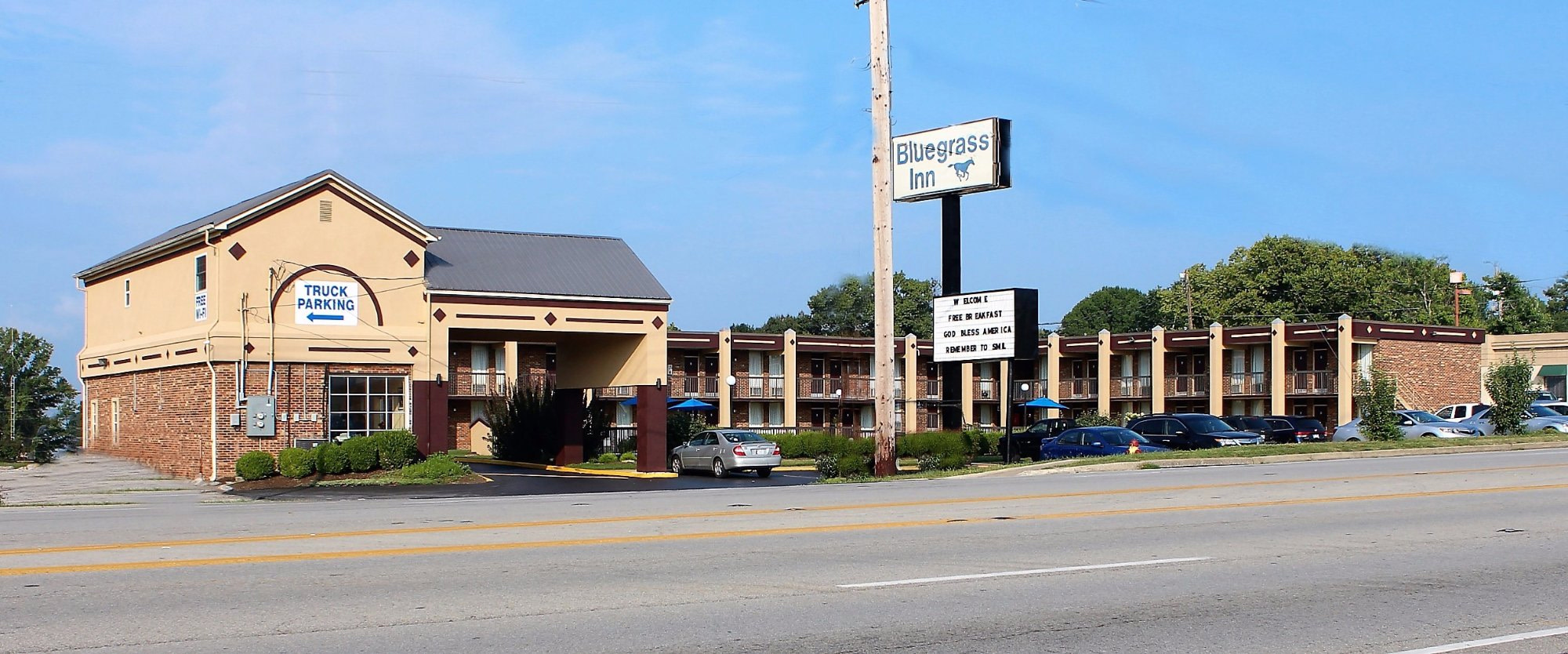
Bluegrass Inn
The Bluegrass Inn sits at 1835 Winchester Avenue in Ashland, Boyd County, Kentucky—a budget motel along the commercial stretch of U.S. Route 23 that most travelers pass without a second glance. It does not advertise its reputation. There are no ghost tours, no television crews, no plaques on the wall. It is the kind of place where rooms rent by the week, the parking lot is quiet by ten, and whatever happens behind the doors stays between the guest and the room. But for those who track haunted locations across Kentucky, the Bluegrass Inn carries a listing that punches above its weight—not because the claims are loud, but because they are strangely specific and consistent across people who have no connection to one another. Ashland dates to 1786, when the Poage family came through the Cumberland Gap and settled along the Ohio River. The community that grew around Poage's Landing remained small until the mid-nineteenth century, when iron production transformed the region. The Kentucky Iron, Coal and Manufacturing Company laid out the town in 1854, naming it after Henry Clay's estate in Lexington. Boyd County was formed in 1860, and Ashland became its largest city. By the early twentieth century, the American Rolling Mill Company had built a massive steel complex along the riverbank, employing thousands and anchoring the local economy for decades. Winchester Avenue developed as the city's main commercial artery—banks, theaters, shops, and lodging stretched along the route that connected Ashland to the broader Tri-State corridor where Kentucky, Ohio, and West Virginia converge. The Bluegrass Inn sits within that corridor, a quiet holdover from an era when roadside motels served the steady flow of workers and travelers moving through Appalachian Kentucky. No public record ties the property to a specific death, crime, or documented tragedy. But what the Bluegrass Inn lacks in backstory, it makes up for in the unnerving consistency of guest accounts. Rooms 127 and 129 are identified repeatedly as the source of activity. Guests in those rooms describe light blue orbs, roughly the size of a softball, drifting through the space. A pervasive feeling of dread settles in and does not lift for the duration of the stay. The physical sensation of hair standing on end—not momentarily, but continuously—has been reported by more than one visitor. One guest described waking to find three parallel scratches down their back, evenly spaced like fingernail marks, bright red and warm to the touch, with no explanation for how they got there. In room 205, a separate guest reported the persistent sound of someone else in the room each night—movement, presence, weight—when no one was there. What makes these accounts difficult to dismiss outright is not their drama but their restraint. These are not ghost stories told for entertainment. They read like the reluctant admissions of people who were not looking for anything and found something they could not explain. No investigation team has formally examined the property. No historical event has surfaced to explain why these rooms behave differently than the others. The Bluegrass Inn does not lean into its reputation or monetize it. It remains a working motel—affordable, unassuming, and open to anyone passing through Ashland who needs a place to sleep. Whether sleep is what they get may depend on the room.

Paramount Joe – Paramount Arts Center
The Paramount Arts Center stands as a distinguished monument to cinema's golden age in downtown Ashland, Kentucky, its ornate facade commanding the downtown streetscape. When it opened on September 5, 1931, it was conceived as a national model theater, designed by the celebrated architectural firm Rapp and Rapp, whose theatrical designs pioneered the lavish movie palace aesthetic. However, the Great Depression forced Paramount Pictures to scale back expansion, reducing the auditorium to one-third of originally planned dimensions. Despite this setback, the result was a venue of considerable architectural distinction that served the community for forty years as a commercial cinema before closing in 1971. The Greater Ashland Foundation acquired the property and established it as a performing arts center, a transformation reflecting broader national trends in cultural preservation as communities sought to save architectural treasures from demolition. During the early 1940s, a tragedy occurred establishing the theater's most enduring legend. According to paranormal accounts, four construction workers from Cincinnati were engaged in specialized work on the curtain rigging system. When three returned from lunch, they reportedly discovered one colleague—a man known as Joe—hanging from the rigging, dead. Whether accidental or intentional, the death seared itself into the theater's institutional memory and would generate decades of paranormal manifestation that persists into contemporary times. Since Joe's presumed death, the Paramount has been associated with persistent paranormal phenomena documented by staff, patrons, and paranormal investigators. Unexplained sounds echo through the building, objects have gone missing from secure locations, and cold drafts manifest in areas closed to public access. Apparitions of a male figure have been observed in dimly lit areas near the curtain rigging where the death occurred. Despite tragic circumstances, accounts consistently characterize Joe as a benevolent presence—a protective guardian rather than a malevolent force. The haunting manifests as low-level phenomena that has not escalated over decades. The most remarkable documented incident occurred during Billy Ray Cyrus's filming of his music video for "Achy Breaky Heart" at the theater. Cyrus was informed of the theater's resident ghost and the legend surrounding Joe. In response, he autographed posters for staff and signed a special one directly to Paramount Joe, which was hung in the box office as a tribute to the theater's resident entity. The following morning, all autographed posters previously affixed to walls were found scattered on the floor, their frames shattered and glass broken. The staff had removed Cyrus's poster inscribed to Joe the night before—a decision that seemingly precipitated this dramatic poltergeist-like response. The posters incident remains among the most well-documented paranormal events at the location, recorded through staff accounts and discussed in both local and paranormal research communities. Whether this incident resulted from structural settling, humidity, air currents, or genuine paranormal agency remains debated among investigators. The event established the theater's reputation as authentically haunted among paranormal investigators and paranormal tourism circles. The Paramount Arts Center continues functioning as a performing arts venue and cultural institution serving the Ashland community, hosting symphonies, Broadway productions, ballet, and other live entertainment. The building remains open to the public for performances and events, and both the architectural and paranormal heritage of the structure are acknowledged openly. Tourists and paranormal investigators have added the theater to regional haunted site itineraries. No reports of malevolent or dangerous activity have emerged across the decades of documented paranormal activity. Paramount Joe remains integrated into the theater's cultural identity and represents a significant case of benevolent haunting at a historic American performing arts venue.