
Haunted Places in Florida
515 haunted locations

Belleview-Biltmore Hotel
For more than a century, the Belleview-Biltmore Hotel commanded one of the highest points along Florida's Gulf Coast, its white clapboard exterior and green-shingled roofline visible for miles across Clearwater Bay. Known as the "White Queen of the Gulf," the massive Queen Anne–style structure was one of the largest occupied wooden buildings in the United States—a sprawling 350,000-square-foot monument to the Gilded Age ambition that transformed Florida from frontier into winter playground. Its story is one of opulence, slow decline, and a demolition that erased most of the original structure but could not, according to decades of witness accounts, erase everything that happened inside it. The hotel was the creation of Henry B. Plant, a railroad and shipping magnate who spent the late nineteenth century building a transportation empire along Florida's western coast. Plant purchased the Orange Belt Railway in 1895 and recognized that the rail line alone would not generate sufficient tourist traffic without significant accommodations. He commissioned a massive resort on a bluff overlooking the bay between Clearwater and St. Petersburg. Construction began in 1896, and the Hotel Belleview opened January 15, 1897. Built primarily of native Florida heart pine, it featured peaked gables, deep verandas, steam-generated electricity, Tiffany glass, and a resident orchestra. Three long wings fanned from a central core, creating an interior of seemingly endless corridors, stairwells, and hidden service passages. The hotel drew America's industrial aristocracy immediately. The Vanderbilts, DuPonts, and Studebakers were regular guests. Railroad presidents arrived in private cars on the hotel's own siding. Among the more colorful figures in the hotel's history was Maisie Plant, who married Henry Plant's son Morton after Morton reportedly offered her existing husband eight million dollars to step aside. Maisie later traded the Plant family mansion on Fifth Avenue to the jeweler Cartier in exchange for a double strand of Oriental pearls valued at over a million dollars. According to persistent local legend, she lost those pearls somewhere inside the Belleview—a story that has become inseparable from the hotel's paranormal lore. During World War II, the hotel was requisitioned to house servicemen stationed at MacDill Air Force Base, adding another layer of transience to the building's dense history. Through the decades, the guest list included Presidents Ford, Carter, George H. W. Bush, and Obama, along with Margaret Thatcher, the Duke of Windsor, Thomas Edison, Babe Ruth, and Bob Dylan, who rehearsed for his 1976 Rolling Thunder Revue tour in the hotel's Starlight Ballroom. Decline set in during the 1970s as newer beachfront properties drew tourists elsewhere. The hotel was added to the National Register of Historic Places in 1979 but closed in 2009. Despite efforts by preservation organizations, demolition began in 2015. A portion of the 1897 structure was saved, relocated, and restored as the Belleview Inn, a boutique hotel that opened in 2018. The paranormal reputation of the Belleview-Biltmore was among the most widely reported of any hotel in Florida, drawing national attention through a Travel Channel Weird Travels episode filmed in 2004 and regular ghost tours in its final years. The most iconic claim involves Maisie Plant herself—guests and staff reported an apparition in a white dress and hat drifting through corridors and ballrooms, seemingly searching for her lost pearls. At least one investigator described seeing a full-bodied apparition matching this description. Other recurring reports included transparent elevator operators who vanished before reaching their floor, poltergeist activity involving doors banging and lights switching on unprompted, and dresser drawers opening on their own in occupied rooms. Guests on the first floor frequently heard children running through hallways at night, consistent with the fourth floor's historical use as quarters for servants and children kept out of sight during the Gilded Age. Room 4336 carried a specific legend involving a bride who allegedly leapt from its balcony after her husband was killed. The sealed fifth floor was described by paranormal teams as the most active area in the building, home to an aggressive presence investigators called "the angry man," alongside equipment anomalies, cold spots, and unexplained footsteps. A couple photographed at the base of a stairway during a 2004 holiday party discovered, upon developing their film, a misty white figure hovering above them that had not been visible to the naked eye. Today the Belleview Inn preserves a fragment of the original building, restored with heart-pine flooring, wainscoting, and original Tiffany glass. Most of the hotel's immense footprint is gone—the sealed fifth floor, the service tunnels, the rooms where guests heard running children and felt unseen hands. Whether the spirits that reportedly inhabited the White Queen survived demolition is a question no one can answer. But for over a century, the Belleview-Biltmore carried the kind of accumulated presence—grief, glamour, war, and loss—that tends to leave traces deeper than any wrecking crew can reach.
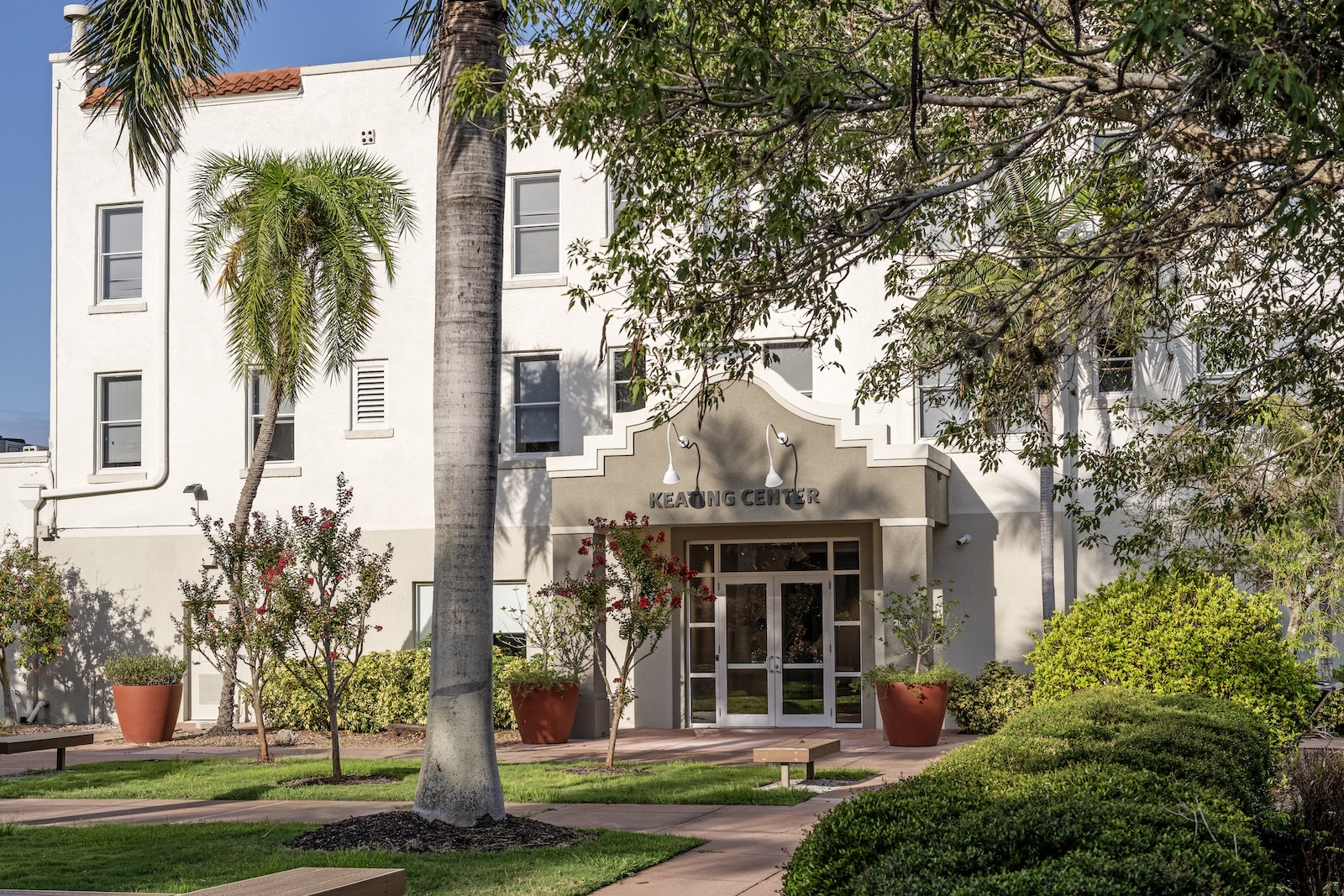
Ringling School of Art and Design
Along North Tamiami Trail in Sarasota, a short distance from the Ringling Museum estate and the circus money that shaped this stretch of Florida coastline, Ringling College of Art and Design sits on a campus that blends contemporary studio buildings with a handful of older structures carrying far heavier histories. At its center stands the Keating Center — a Spanish Mission Revival building constructed in 1925, listed on the National Register of Historic Places since 1984. Before it was an art school, it was a hotel. And before it was merely a hotel, it was something darker than that. The Bay Haven Hotel opened in the mid-1920s during the Florida land boom, a period when Sarasota was exploding with speculative wealth and circus-empire prestige. The Bay Haven was built to attract the traveling businessman and seasonal wealthy visitor. It was moderately successful for a few years. Then the boom crashed. By 1928, the man who developed the Bay Haven subdivision was killed in a car wreck near Arcadia, and his wife struggled to keep the hotel afloat. By 1930 the banks were closing, insurance payments lapsed, and the hotel fell into receivership. What replaced the original clientele, according to accounts passed through generations of students and staff, was a considerably different population: gamblers, Prohibition-era bootleggers, and women working in prostitution on the second floor. Into this compromised building, Dr. Ludd M. Spivey — president of Southern College in Lakeland — brought his plan for a Florida art school. He courted John Ringling, who was nearly bankrupt but agreed to lend his name and fund the $45,000 renovation. On October 2, 1931, the School of Fine and Applied Art of the John and Mable Ringling Art Museum opened with 75 students and 13 faculty. Students attended chapel daily and needed written permission to leave town. The school became independent in 1933 and eventually grew into Ringling College of Art and Design. The Keating Center has served as the campus heart ever since, housing administration below and student dormitory rooms above. The ghost came with the building. She is called Mary, and her legend is among the most consistently reported haunting accounts in Sarasota. The story holds that Mary was one of the women living and working on the second floor of the Bay Haven during its decline — a live-in prostitute who fell in love with a client who didn't return her feelings and took her life by hanging in the stairwell at the end of the second-floor corridor. Hotel management concealed the death. Alumni accounts from as far back as the 1960s reference a locked room off that hallway near the stairwell that was left unused. The manifestations are specific and consistent across decades. Students have described a young woman in her late teens or early twenties gazing down from a second-floor window at students below — sometimes smiling, sometimes not — wearing a cream-colored dress with ruffled armlets or a lavender flapper-style dress, a tight skull cap from the 1920s, with one foot bare and the other in a small blue shoe. Others report anguished sobbing from the stairwell at night with no visible source. Those who investigated described an overpowering smell of stale perfume and a crushing wave of sadness — shortness of breath, racing heart, an uncontrollable urge to weep. Former students from the 1970s and early 1980s described certain rooms on the haunted side as persistently thick and dark, prompting room transfers. A local priest reportedly performed an exorcism at the Keating Center in the 1990s — an event that those who claim ongoing encounters with Mary generally describe as unsuccessful. The Travel Channel featured the legend in 2004. Ringling College today is a thriving institution and the Keating Center is fully restored, its upper floors still active as student housing. Students still report seeing her at the window. The perfume still turns up where no one is wearing any.

Seven Sisters Inn
On East Fort King Street in Ocala's Historic District, surrounded by live oak canopies and a neighborhood of Victorian-era homes added to the National Register of Historic Places in 1984, the Seven Sisters Inn rises from the landscape exactly as it was meant to — ornate, commanding, and unapologetically excessive. The Gothic Queen Anne Victorian was built around 1890 by Linda B. and Joseph Lancaster and was known locally in its early years as the Painted Purple Lady, a nod to its distinctive original color. But the house's identity was defined by its second owners, and it bears their name in local memory to this day. Charles Rheinauer was born in Germany in 1846, the son of a Jewish cantor, and arrived in America with ambitions that proved more than adequate to the frontier city of Ocala. After marrying Emma Hohenberg in Alabama in 1890, he migrated to Florida and established a dry goods and clothing business with his brother Maurice under the name Rheinauer and Brothers. The enterprise grew into one of the finest clothier operations in the state, their flagship building on Ocala's town square so prominent it became known as the Rheinauer Block. Charles served as vice president of the Ocala Iron and Machine Works, founder of the Board of Trade — the forerunner of the Chamber of Commerce — and founder and director of the first bank in the city, the Merchants National Bank. He helped introduce Thomas Edison's incandescent electric lamp to the community. He served as presiding officer of the Hebrew Society of Ocala. In 1906, he became the second Jewish mayor in the city's history. And in a chapter that links the house to wider hemispheric history, Rheinauer collaborated with Cuban revolutionary José Martí to co-found La Criolla Cigar Company, which became one of the largest cigar factories in Florida and drew thousands of Cuban immigrants to the section of Ocala that became known as Marti City before the factory eventually relocated to Tampa's Ybor City. Charles and Emma moved into the Fort King Street house in 1895 and remained there for the rest of their lives. Charles died in the home on May 18, 1925, at age 79. Emma outlived him by nearly seventeen years, dying on May 7, 1942, at age 74. Both are buried in the Temple Beth Shalom Cemetery, the only Jewish cemetery in Ocala. After Emma's death, the property passed through various hands over the following decades, serving at different points as a private residence and office space before being purchased and restored as a bed and breakfast. Later owners — former international cargo airline pilots — filled the house with antiques and artifacts gathered from decades of travel: temple doors from Bali over four hundred years old, pieces from Egypt, India, China, Indonesia, and South America. The inn now offers suites themed by destination, including Madrid, Casablanca, Beijing, Paris, and Cairo, each one a densely layered room that feels more like a cabinet of curiosities than a hotel accommodation. The paranormal reputation is substantial and has attracted serious outside attention. In October 2008, The Atlantic Paranormal Society — TAPS, the group behind the SyFy Channel's Ghost Hunters — spent four days at the inn filming what aired as "The Ghosts of the Sunshine State." Their K2 meters registered unexplained electromagnetic spikes. Investigators reported seeing a shadow moving between rooms during nighttime sessions. A shoe left on the stairs turned up in a room no one had entered. Co-owner Bonnie Morehardt, who ran the inn with her husband Ken Oden for nearly twenty years, described the presence as consistently playful rather than threatening, and noted that a book had been found placed on a table and opened as though someone was in the middle of reading it. She said, pointedly, that she believed it was not the house itself that was haunted but the property underneath it — speculating about what may have occupied the land before the Victorian was built, possibly connected to the nearby site of Fort King. In the years following the Ghost Hunters episode, the inn hosted additional investigations by Chip Coffey, John Zaffis and Brian Cano of Haunted Collector, Scott Tepperman of Ghost Hunters International, and Steve DiShiavi of The Dead Files. The haunting is described around a cast of seven identified spirits. Charles and Emma Rheinauer are said to appear occasionally in Victorian dress, and guests have reported seeing the couple together in what was once a ballroom. Three children of unknown identity are associated with playful, disruptive activity — moving small objects, producing sounds, generating unexplained responses during EVP sessions. A well-dressed man identified only as George, said to project a 1950s sensibility, has reportedly made his presence known to female guests specifically. A seventh figure, an older man whose identity has never been determined, is sometimes connected to the sound of phantom piano music. A woman in white has been reported passing through bathroom walls. Staff and guests across different eras have described footsteps in empty hallways, whispers, the rustle of long period clothing, furniture relocated without explanation, knocks from the walls, and the persistent feeling of being watched from somewhere inside the rooms. The inn has changed hands more than once in the years since its peak ghost-hunting notoriety and has gone through additional restoration. It operates today as a boutique accommodation. The antiques are still there. The architecture is intact. The seven rooms in the guest registry that were never formally checked out appear to still be occupied.

Sunland Hospital Site – Orlando
Sunland Hospital no longer stands. The main building was demolished in 1999, the last administration building torn down in 2006, and the site in the Pine Hills neighborhood of Orlando now holds a children's playground. But the ground remembers what was built on it, and so does everyone who lived near it, explored it, or worked to shut it down. The facility began in 1938 as the Florida State Tuberculosis Sanitarium, part of a statewide chain of hospitals funded by benefactor W.T. Edwards. The building was constructed in the style common to TB hospitals of the era—long, thin, five stories tall, lined with enormous windows that could be cranked open to let in the fresh air believed to aid recovery. By 1960, antibiotics had conquered tuberculosis, and the State of Florida converted the Orlando facility into the Sunland Training Center, a residential institution for children and adults with profound mental and physical disabilities. The patients—most of them children, many of them wards of the state whose parents had surrendered custody on the advice of physicians—were supposed to receive expert care. What they received was something else entirely. Over two decades, conditions deteriorated into documented atrocity. Wards were severely overcrowded. Patients were bathed on bare concrete slabs. Staff and residents were bitten by rats. Gastric feeding tubes were surgically implanted in over four hundred patients, delivering a cereal-like gruel three times daily—a procedure performed here at rates far exceeding the national average. Investigators documented rampant infections, skin breakdown, and nutritional deficiencies. In 1979, the Association for Retarded Citizens filed a class-action lawsuit on behalf of the "Sunland Six," alleging gross neglect and abuse. The lawsuit succeeded. The hospital closed in 1983. One hundred and six Sunland patients are buried in Section Q of Orlando's Greenwood Cemetery. The building sat vacant for over fifteen years, and during that time it became the most infamous destination for urban explorers in Orlando. What they found inside was a decaying monument to institutional cruelty—wheelchairs left in corridors, medical equipment scattered across floors, old Disney characters painted on the walls of the children's ward, and an atmosphere that visitors described less as spooky and more as deeply, physically wrong. The reports were consistent and disturbing. Visitors heard screams and moaning, some distinctly childlike. Shadow figures moved through corridors and appeared in upper-story windows. Apparitions of small children were seen wandering the halls. A shadow resembling a figure hanging from the ceiling was reported more than once. In 1997, a twenty-three-year-old man exploring the building with friends fell three stories down an elevator shaft and was critically injured. When police arrived, an officer reported seeing a child peering through a window. The child was never found. The incident galvanized the Pine Hills community, and residents successfully lobbied for demolition. Today the site is a playground and open field where neighborhood children come to play in daylight. But visitors to the grounds after dark still report the presence of children who are not living ones—small figures seen at the edges of the field, the sound of laughter with no source, the unmistakable feeling of being watched by someone too short to see over the fence. The spirits attributed to Sunland are not vengeful or aggressive. They are small. And they are still there, playing on the ground where no one played when they were alive.
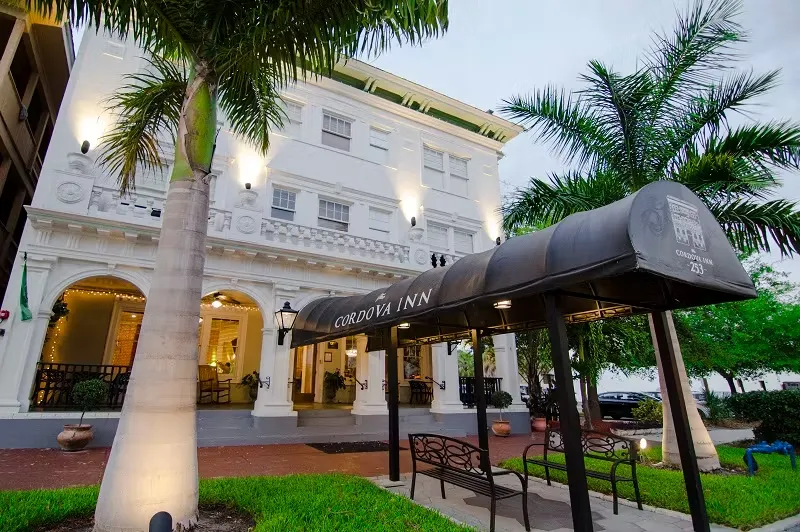
The Cordova Inn
At 253 Second Avenue North in downtown St. Petersburg, Florida, a three-story Renaissance Revival building sits half a block from the Sundial shopping district, looking much the way it did when it first opened in 1921. The Cordova Inn is not the grandest of St. Petersburg's boom-era hotels—it never competed with the Vinoy or the Don CeSar for celebrity guests—but it is among the oldest, and its quieter history carries a weight those larger landmarks don't always match. Built by Francis Scott during the opening surge of the Florida Land Boom, the hotel originally operated as The Hotel Scott. It arrived at the moment when rising postwar prosperity and the spread of the automobile turned Florida's Gulf Coast into one of the most frenzied real estate markets the country had ever seen. St. Petersburg's population exploded in the early 1920s, and small hotels like The Scott sprang up to house the tourists, speculators, and seasonal residents flooding the area. The building was constructed of masonry with scored stucco designed to resemble stone, its facade detailed with five keyed arches, a balustrade topped with decorative urns, and a projecting cornice along the roofline. Inside, thirty-two rooms were fitted with clawfoot soaking tubs—many of which survive today. By 1923, the hotel had changed hands and been renamed the Hotel Cordova, after the family that would operate it for three decades. The Cordovas sold in the early 1950s, and for the next half century the property passed through multiple owners. As downtown St. Petersburg declined through the 1970s and 1980s, the hotel declined with it. By the late 1990s the surrounding blocks were considered undesirable after dark, and the Cordova closed in 1999, sitting empty on a street it had anchored for nearly eighty years. A local investor completed a full restoration, reopening it as The Pier Hotel in 2001—earning the St. Petersburg Preservation Society's Restoration of the Year Award. In 2014 the property reclaimed its historic name. It is a contributing property to the Downtown St. Petersburg Historic District on the National Register of Historic Places. The central figure in the hotel's haunting is not a guest or an owner but a member of the staff—the Major-domo, the building's head butler. According to the hotel's own published history, this man devoted twenty years to the Cordova's guests before dying inside the building he had served. The circumstances of his death are not widely detailed, but the hotel does not shy from acknowledging the story. During the years the building sat vacant before restoration, schoolboys who broke in at night reportedly heard howling in the empty hallways—sounds attributed to the displaced Major-domo protesting the abandonment of his post. Ghost tours in St. Petersburg have included the Cordova on their routes for years, and local paranormal investigator Brandy Stark has featured the hotel in her downtown walking tours. Guest accounts have accumulated steadily since reopening. Visitors describe the apparition of a well-dressed man in an old-fashioned suit, widely believed to be the Major-domo. Some employees have concluded this figure has helped protect the building from neglect—a guardian rather than a threat. But overnight experiences suggest something more complicated. Multiple visitors describe being woken by a sharp burst of air or a whispered word in their ear. Others report sleep paralysis accompanied by sensations of being touched or held down. One guest described hearing two women standing over them discussing a man who would be displeased with their belongings. The second and third floors generate the most reports. The staircase between them is a recurring point of interest—visitors describe sudden heaviness or a feeling of presence while ascending. Cold spots appear without explanation. A sulfurous smell has been noted near Room 208. The building's age explains some of this. A century-old masonry structure without elevators, with original plumbing and narrow corridors, will produce sounds modern buildings do not. Guests primed by the hotel's openly acknowledged reputation may interpret ambiguous input accordingly. But the specificity of many accounts—the whispered names, the paralysis, the smell—pushes beyond what settling wood and old pipes typically produce. Today the Cordova Inn operates as a boutique hotel with its original thirty-two rooms, a lobby bar called The Scott, a fireplace, a small library, and a veranda. There is no elevator—guests climb the original staircases, just as they did in 1921. Whether the Major-domo is still making his rounds depends on who you ask and what floor you're sleeping on. But the building remains what it has been for over a century: a place built to welcome strangers, where at least one longtime resident appears unwilling to stop doing exactly that.
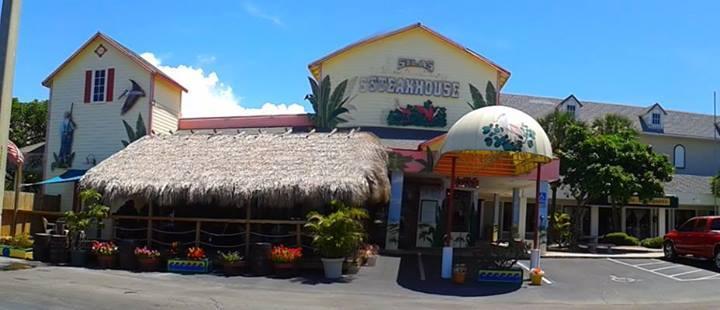
Silas Dent’s Steakhouse
Set just off Gulf Boulevard on St. Pete Beach, across from the long strip of sand and surf that made this stretch of Pinellas County a tourism corridor, the site known for decades as Silas Dent’s Steakhouse belonged to a distinctly local version of Old Florida. It was not an antebellum mansion or a grand Victorian hotel, but a busy beachside restaurant and bar at 5501 Gulf Boulevard whose identity was built around memory, regional folklore, and the image of a real man who had already passed into legend long before the first steak was served there. For many locals, that combination of commerce, nostalgia, and personality is exactly what gave the place its unusual atmosphere. The property itself had earlier lives before it became the restaurant most people remember. In the 1960s, this section of the beach was part of the fast-changing postwar tourist landscape, and the building at 5501 Gulf Boulevard stood adjacent to the London Wax Museum, one of St. Pete Beach’s best-known roadside attractions. The address also briefly housed the Suntan Art Center during that decade, when beachfront commercial spaces were still evolving into the mix of attractions, shops, restaurants, and entertainment venues that came to define the area. By the late 1970s, however, the space entered the chapter that fixed it in local memory. Silas Dent’s Steakhouse opened in 1979 under Rob Stambaugh, who named it for Silas Dent, the so-called “Happy Hermit of Cabbage Key,” a well-known figure in lower Pinellas history. Dent had lived for years on what later became part of Tierra Verde, in a palm-thatched shelter, cultivating an image that was half frontier holdout and half folk celebrity. He was remembered as a solitary but approachable island resident, associated with handmade grass skirts, boat travel, Christmas visits with children, and an older Florida that was already disappearing beneath dredging, development, and resort culture. By the time the restaurant opened, Dent had been dead for more than a quarter century, having died on Christmas Eve in 1952, but his name still carried enough local resonance to anchor an entire themed destination. Inside, the steakhouse leaned hard into that identity. It was known for Old Florida décor, historic memorabilia, waterfront views, late-night music, and a social scene that made it as much gathering place as restaurant. For much of the 1980s and beyond, it became a recognizable beach institution, the sort of place tourists discovered and locals returned to out of habit. The building’s history was never tied to a single notorious crime or headline-making tragedy, and that is part of what makes its haunted reputation different from many better-known paranormal sites. Its legend grew not from documented catastrophe, but from attachment to the man whose name it bore and the sense that his presence, or at least the story of him, had never really left. That is the origin of the haunting most commonly associated with Silas Dent’s Steakhouse. Local lore held that Silas Dent himself haunted the restaurant, less as a threatening apparition than as a familiar resident spirit. The most repeated claim centered on a rocking chair placed near the fish tanks, which staff and regulars said would move on its own. Over time, the story became so embedded in the restaurant’s identity that visitors reportedly asked about it, and longtime patrons were said to regard an unmoving chair as more disappointing than reassuring. Unlike locations known for violent manifestations, the claims here were comparatively gentle: an unseen presence, an object rocking without explanation, and the lingering impression that the restaurant’s namesake approved of the place built in his honor. As with many haunt legends attached to restaurants and bars, skepticism is easy to understand. A busy dining room creates drafts, vibration, uneven floors, and constant suggestion, especially once a ghost story becomes part of the brand. Yet that did not prevent the legend from persisting. The tale endured because it fit the setting so neatly: a beach establishment themed around a vanished local hermit, filled with memorabilia and memory, standing in a district shaped by reinvention and loss. In that context, the paranormal claim became less about fear than continuity. After nearly four decades in operation, Silas Dent’s Steakhouse was sold in 2018, and the longtime restaurant chapter came to an end. The property was reworked for other uses, including event space, and in more recent years new businesses have occupied parts of the address. Even so, the name Silas Dent remains one of the most recognizable pieces of folklore attached to St. Pete Beach. The original steakhouse is gone, but the story that made it memorable survives: a restaurant built to honor one of the region’s most colorful historical figures, and a quiet, persistent belief that the old hermit may still have lingered there, rocking gently beside the tanks while the crowd ate, drank, and watched the beach town change around him.

Beach Drive Inn Bed and Breakfast
Set along the palm-lined waterfront of Beach Drive in downtown St. Petersburg, Florida, the building now known as the Vinoy House Inn occupies a quiet but prominent place within one of the city’s most historic neighborhoods. Located just steps from Tampa Bay and the long-established waterfront parks of the Old Northeast district, the structure dates back to the early twentieth century, when St. Petersburg was rapidly developing into a winter destination for travelers escaping colder northern climates. During this period of expansion, large homes and guest properties were constructed along Beach Drive to accommodate seasonal residents and visitors drawn to the area’s warm weather and scenic waterfront. The house at 532 Beach Drive Northeast was built around 1910 as a private residence associated with the influential Vinoy family, whose name is closely tied to the development of the surrounding area and the nearby Vinoy Hotel. The structure reflected the coastal residential architecture common to the time, with broad porches designed to capture breezes from the bay and interior spaces arranged for long seasonal stays. Over the decades, as St. Petersburg evolved and many of its early waterfront homes were converted or replaced, the property transitioned from a private residence into a small hospitality business. Its location within walking distance of the city’s waterfront parks, museums, and cultural attractions made it well suited for use as a boutique lodging property. For many years the building operated as the Beach Drive Inn Bed and Breakfast, a small historic inn that preserved much of the original home’s character. Guests stayed in rooms that had once served as private bedrooms, and the structure retained details typical of early twentieth-century homes such as narrow staircases, wooden floors, and antique furnishings. In the early 2020s the property underwent renovations under new ownership and was reintroduced as the Vinoy House Inn, a name chosen to reconnect the building with the historic Vinoy district surrounding the nearby waterfront resort. While the branding changed, the structure itself remained the same historic house that had stood along Beach Drive for more than a century. Alongside its architectural history, the building has developed a reputation for unexplained occurrences that some visitors interpret as paranormal. Much of the reported activity centers around one of the upstairs guest rooms, commonly identified in earlier years as the Montego Room. According to widely repeated local accounts, a housekeeper who once worked at the property died there under unclear circumstances, and some believe her presence may still linger within the building. Guests staying in the room and nearby areas have described hearing unexplained footsteps in the hallway late at night, even when the inn is otherwise quiet. One of the most frequently mentioned claims involves a rocking chair that appears to move on its own without anyone nearby. Visitors have also reported faint music, doors opening or closing unexpectedly, and the sensation that someone is walking just outside their room during the night. Staff and guests occasionally describe subtle disturbances such as shifting shadows or the sound of movement on the stairs after the building has settled for the evening. While these reports remain anecdotal, the consistency of the stories over many years helped establish the inn’s reputation as one of the quietly haunted locations along the St. Petersburg waterfront. Local paranormal enthusiasts and curious travelers sometimes seek out the property because of these stories, and investigators have occasionally stayed at the inn hoping to experience the reported phenomena firsthand. Experiences vary widely. Some visitors report nothing unusual at all, while others describe small disturbances that they find difficult to explain. Skeptics often attribute the experiences to the age of the building itself, noting that historic homes can produce unusual sounds as wood expands and contracts and as air moves through older structures. Today the Vinoy House Inn continues to operate as a boutique bed and breakfast, offering guests a stay inside one of the surviving historic homes along Beach Drive. More than a century after it was first constructed, the house remains a physical link to St. Petersburg’s early development as a resort city. Whether visitors come for the architecture, the history of the waterfront district, or the lingering stories of unexplained activity within its rooms and hallways, the building remains a distinctive presence along one of the city’s most recognizable streets.
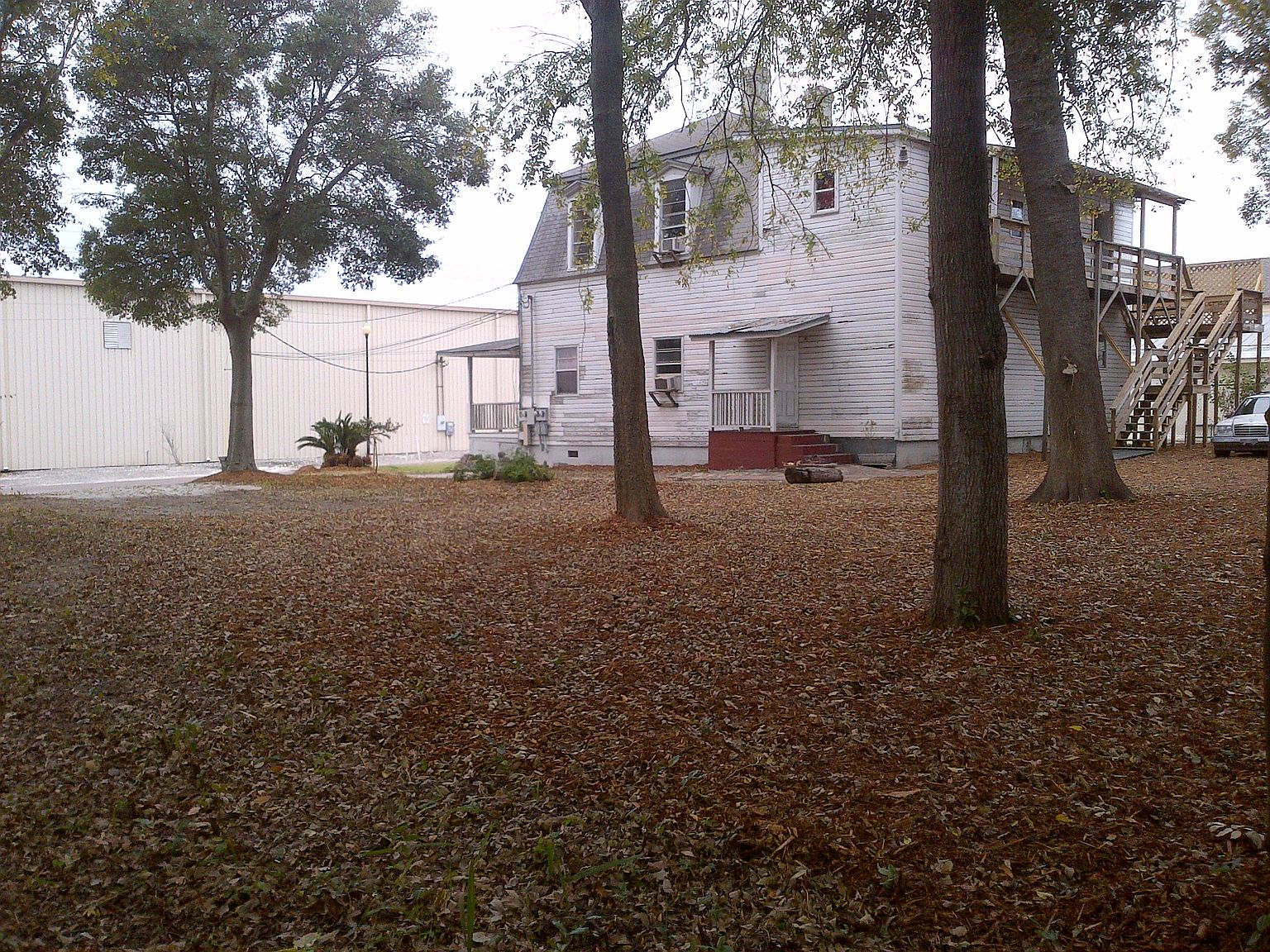
The White House Brothel
The building at 224 North Second Street in Fernandina Beach sits within one of the most historically layered towns in Florida—a place that has changed hands under eight different flags and spent much of the nineteenth century as a borderland haven for smugglers, pirates, and anyone else looking to operate outside the reach of organized law. That history is not incidental to what the building became. It is the reason the building existed at all. Amelia Island's deepwater harbor made Fernandina a strategic prize long before the town had paved streets. The Spanish platted Old Town in 1811 as the last Spanish city laid out in the Western Hemisphere, and almost immediately the settlement earned a reputation as what one contemporary account called a "festering fleshpot"—a free port where slaves, liquor, and foreign luxuries moved through with little interference. The bluffs overlooking the Amelia River were lined with bordellos. When Florida was ceded to the United States in 1821, the worst of the lawlessness was curtailed, but the character of the waterfront district did not vanish overnight. By the 1850s, Senator David Yulee's cross-state railroad had shifted the town south to its present location, and the new Fernandina that grew up around it attracted the same volatile mix of laborers, sailors, merchants, and opportunists that port towns have always drawn. Saloons, boarding houses, and brothels operated openly along the side streets near the waterfront, serving the men who built the railroad, worked the docks, and crewed the ships of the Mallory Steamship Line. The White House Brothel on North Second Street was part of that world—a private residence that operated as a house of prostitution during Fernandina's rougher years, catering to the sailors and dockworkers who moved through the port. The building is associated with the kind of transient, hard-living population that left few written records and even fewer names behind. What is known is that violence followed the trade. The property is said to be haunted by two spirits: a ghostly prostitute and a sailor who died in a fight at or near the premises. The details of neither death have been documented in the public historical record with specificity—no names, no dates, no coroner's reports have surfaced—but the claims have persisted long enough and consistently enough to appear across multiple paranormal databases and to feature on Fernandina Beach's popular ghost tours, which regularly pass the building. The reports themselves are sparse but pointed. The structure, now a private residence, carries a reputation among locals and tour guides as an active site. The spirits attributed to it are not described as residual impressions but as presences—figures associated with the building's past life, lingering in a structure that has long since been converted to domestic use. Fernandina Beach is a town saturated with haunted claims—Fort Clinch, the Palace Saloon, the Florida House Inn, Bosque Bello Cemetery, and the alleged witch's grave near the high school all feature prominently—but the White House Brothel occupies a different register. It is not a grand Victorian landmark or a civic institution. It is a small building on a side street where people lived hard, died violently, and were largely forgotten. The house is a private residence and is not open to the public.
Oviedo Baseball Fields
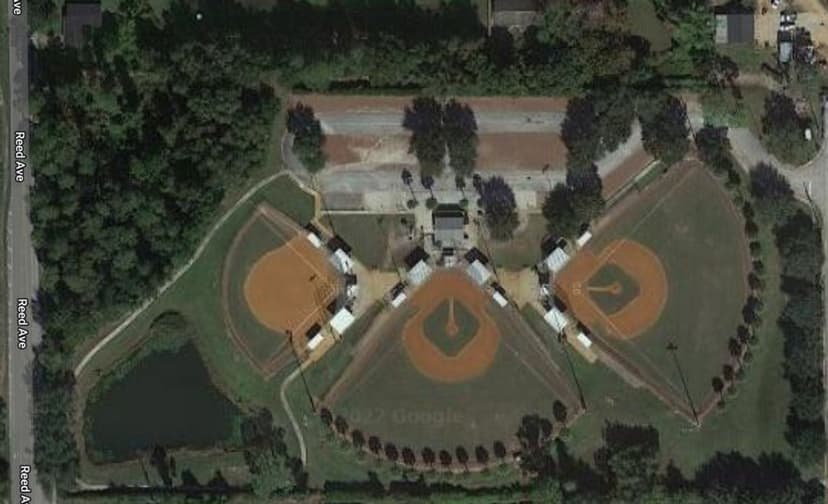
Located along East Broadway Street in the city of Oviedo, within Seminole County in central Florida, the Oviedo Baseball Fields sit within a community known for its blend of historic rural character and steady suburban growth tied to the greater Orlando metropolitan area. The land surrounding 1251 East Broadway Street was once part of a largely agricultural landscape that defined Oviedo through much of the nineteenth and early twentieth centuries. Early settlers in the region relied heavily on farming, particularly citrus groves and celery production, which helped establish the town as one of central Florida’s smaller agricultural hubs long before residential development began expanding outward from nearby Orlando. As Oviedo grew during the mid-to-late twentieth century, former farmland was gradually converted into public facilities, schools, and recreational spaces intended to serve the expanding population. Community baseball fields became a common feature of this transformation. Across Florida, youth sports complexes were developed by municipalities and local leagues to provide organized recreation for growing suburban communities. The fields at East Broadway Street emerged as part of this broader effort, eventually becoming a central location for youth baseball and softball leagues in Oviedo. Over time the site developed into a familiar gathering place for local families, with multiple diamonds, concession areas, and open fields used for practices, tournaments, and seasonal events. Despite its role as a modern sports complex, the area surrounding the baseball fields carries a quieter layer of local folklore tied to Oviedo’s rural past. Before the development of the recreational complex, much of the land consisted of wooded areas, drainage canals, and undeveloped agricultural parcels. Older residents of the region occasionally referenced stories associated with isolated roads and wooded tracts around the outskirts of town, where night travelers sometimes reported unusual sights or sounds long before the ball fields existed. In more recent decades, occasional paranormal stories have become attached to the Oviedo Baseball Fields themselves, largely circulating among local players, coaches, and teenagers who spent time at the complex after dark. The most frequently repeated claims involve unexplained lights or shadowy figures seen moving near the outfields or tree lines surrounding the fields late at night when the complex is otherwise empty. Some individuals have reported hearing footsteps or distant voices near the dugouts or bleachers after games have ended and the area has been cleared. A smaller number of reports describe the sensation of being watched while walking near the fields after dusk, particularly near the darker edges of the complex where wooded areas meet the cleared athletic spaces. Others claim that equipment left behind—such as balls or bats—has occasionally been found moved or disturbed the following day, though such accounts remain anecdotal and are often attributed to wildlife or late-night visitors. Local paranormal enthusiasts who have visited the fields after hours have occasionally reported unusual fluctuations in recording equipment or unexplained sounds captured during informal investigation attempts. However, the location lacks the documented tragedies or historical events often associated with more widely known haunted sites. Because of this, skeptics commonly suggest that the stories may be influenced by the natural quiet of the complex after dark, combined with the presence of surrounding woods, shifting shadows from field lighting, and the suggestive atmosphere that can develop in otherwise empty recreational spaces. Even so, the stories have persisted within local folklore, particularly among younger residents who grew up playing sports at the complex. Like many community athletic fields across the country, the Oviedo Baseball Fields transform dramatically after sunset, when the crowds disappear and the brightly lit diamonds fall silent. In that stillness, small unexplained moments—moving shadows, distant sounds, or flickers of light—have gradually shaped a reputation that blends modern community space with the quieter mysteries often attached to landscapes that were once rural and largely undeveloped.

Veterans Memorial Bridge – Orange Avenue Bridge
The Veterans Memorial Bridge, also known as the Orange Avenue Bridge, spans a waterway in the Daytona Beach and Port Orange area of Florida, serving as a functional transportation corridor while simultaneously hosting paranormal phenomena that have attracted attention from ghost hunters and local paranormal researchers. Bridges, as liminal spaces between geographic regions and as sites of transportation and transition, have long occupied prominent positions in paranormal folklore and documented hauntings across multiple cultures and historical periods. The bridge's structural engineering reflects twentieth-century transportation design, incorporating materials and construction techniques consistent with infrastructure development during the mid-twentieth century. The gazebo on the grounds adjacent to the bridge represents an additional architectural feature that contributes to the overall atmospheric and paranormal character of the location. The northeastern side of the bridge has been identified as the primary location of paranormal phenomena, with this specific geographic orientation apparently concentrating or facilitating supernatural manifestations. Paranormal investigation and eyewitness testimony document the presence of at least two distinct spirits associated with the Veterans Memorial Bridge and its immediate surroundings. A dark-haired woman wearing a robe appears as an apparition on the northeastern side of the bridge, her manifestation characterized by sufficient clarity that observers have noted specific details regarding her clothing and physical appearance. A man positioned within the gazebo on the bridge grounds represents a second spectral presence, apparently maintaining what might be characterized as a permanent vigil or habitual position within this outdoor structure. The circumstances of death and reasons for spiritual attachment for both entities remain historically unclear, though the bridge's proximity to water and the gazebo's liminal character as an outdoor shelter suggest circumstances potentially involving accidents, tragedy, or deliberate acts of self-harm. Paranormal phenomena at the Veterans Memorial Bridge encompass a relatively focused range of manifestations concentrated on the northeastern side of the structure. Objects mysteriously get thrown about in the area where the dark-haired woman in the robe manifests, suggesting that this particular spirit retains the capacity to interact with and manipulate physical matter in the material world. Disembodied voices materialize audibly, creating an acoustic environment that indicates the presence of intelligent paranormal entities capable of communication and expression. Shadows, distinct from the apparitional manifestations of the identifiable spirits, appear and disappear without logical explanation related to light sources or physical obstruction, suggesting either residual psychic energy impressed upon the location or additional paranormal entities whose presence does not rise to the level of full visual apparition. The Veterans Memorial Bridge has been documented among haunted locations in both the Port Orange and Edgewater areas, indicating that paranormal phenomena may extend along the bridge structure and into the surrounding geographic region rather than being confined to a single point of manifestation. Bridge hauntings documented across the eastern United States suggest that these transportation structures may inherently accumulate or amplify paranormal phenomena, perhaps because of their position as liminal spaces between geographic regions, the frequency of human movement and transit across them, and the historical tendency for bridges to become sites of accident, suicide, and tragic death. The Veterans Memorial Bridge continues to function as both a necessary transportation corridor and a destination for paranormal investigation, with the structure serving dual purposes as infrastructure and as a nexus of supernatural phenomena. Local paranormal research organizations and ghost tour operations have incorporated the bridge into their offerings, bringing attention to this location for those interested in documenting and understanding paranormal manifestations in liminal geographic spaces.
Trelles Clinic – Ybor Resort and Spa
The Trelles Clinic, now operating as the Ybor Resort and Spa, occupies a structure with a distinctive and troubling medical history rooted in late nineteenth and early twentieth century healthcare practices. The building originally functioned as a medical clinic offering surgical services and specialized medical treatment during a period when surgical procedures and medical technology remained imprecise and frequently fatal. The architecture incorporates specialized surgical facilities including operating rooms equipped with contemporary medical equipment, storage areas for medical supplies, and examination rooms. The basement included a morgue area reflective of the high mortality rates characteristic of medical practice in that historical period, with facilities for storage and preparation of human remains. A bone crusher, a disturbing piece of equipment for reducing human skeletal remains to powder for disposal, testifies to the industrial scale upon which the facility handled human death. The building's transformation into a spa and resort operation represents an attempt to sanitize its medical and death-associated history while preserving architectural structures that continue to resonate with trauma and tragedy. Paranormal phenomena at the Trelles Clinic appear to center on two distinct spirits whose deaths created profound spiritual attachment within the structure. Conchita, the wife of a doctor associated with the clinic, apparently died at or in very close proximity to the facility, with her spirit remaining present within the building. Juan, a young boy who died while being treated at the clinic, represents a particularly tragic death, with the child's death from medical intervention or inadequate treatment creating sufficient trauma to bind his essence to the location. The presence of both an adult woman and a young child among the spiritual entities suggests that paranormal phenomena may reflect a pattern of death and tragedy accumulating across the clinic's period of operation. Paranormal manifestations at the Trelles Clinic take multiple forms reflecting the emotional intensity of the building's death-associated history. A child, presumably Juan, has been reported tugging at the clothing of visitors and staff members, demonstrating direct interactive phenomena suggestive of intelligent haunting. Windows throughout the structure have been documented slamming unexpectedly and with apparent force, creating acoustic phenomena suggesting strong emotion or aggressive energy. The apparition of Conchita materializes visibly in various locations, suggesting her spirit maintains sufficient coherence to manifest as a distinct visual phenomenon. Unexplained voices emerge from various locations, sometimes intelligible and sometimes characterized by emotional distress. Electronic voice phenomena captured through EVP recording techniques have documented voices materialize on audio equipment despite the absence of visible sources. Equipment disturbances affect medical devices, electronic systems, and mechanical equipment throughout the building, suggesting paranormal entities capable of manipulating technological systems. The Trelles Clinic has achieved recognition as one of the most actively haunted locations in Tampa Bay, with particular prominence in Ybor City paranormal lore. The historical significance as a center of medical death has attracted paranormal researchers interested in understanding how death, trauma, and suffering associated with medical institutions create intense paranormal phenomena. Television programs investigating haunted locations have documented the paranormal phenomena at the Trelles Clinic, bringing national attention to this location. The facility's transformation into a spa and resort has necessitated accommodation between modern wellness practices and acknowledgment of the building's haunted reputation. The Trelles Clinic exemplifies how institutions associated with death and medical trauma become focal points for concentrated paranormal phenomena that persist long after the original purposes have been superseded.
Chief Theater
The Chief Theater stands as a cultural institution dedicated to theatrical performance and community entertainment, serving an important function in the civic and cultural life of its locality. The structure was built to accommodate audiences for dramatic presentations, musicals, and other stage productions that bring together performers and spectators in shared artistic experience. The theater's design incorporates elements essential to theatrical presentation, including a stage with appropriate dimensions for performance, seating arranged to provide viewing angles and acoustic properties conducive to audience engagement, and technical infrastructure supporting lighting, sound, and scenery requirements. The building's architecture reflects theatrical traditions and aesthetic conventions appropriate to its purpose, creating an environment deliberately designed to facilitate dramatic experience and emotional engagement through live performance. The facility has maintained its cultural function over the years, hosting theatrical productions and community events that utilize the performance space. The physical layout of the Chief Theater includes a stage platform where performers conduct their work, visible to audiences arranged in seating areas throughout the theater space. The stage area connects to backstage regions containing dressing rooms, storage for costumes and scenery, and technical support areas. The front-of-house spaces include lobby areas, concession facilities, and box office services supporting theatrical operations. Seating in the theater is typically arranged in orchestra and balcony sections, creating multiple viewing perspectives from different elevations. The theater's acoustic design incorporates elements intended to project performers' voices and stage sounds clearly to all audience members regardless of location. The lighting infrastructure provides capabilities for dramatic illumination effects essential to theatrical production. The combination of architectural elements creates a space dedicated specifically to theatrical performance and audience reception of that performance. The Chief Theater harbors paranormal phenomena associated with deceased individuals tied to the location through their lives and dramatic circumstances. An entity known as Tom inhabits the theatrical space, with historical records suggesting this individual had significant connection to the theater, possibly as a performer, technician, or member of the community who spent considerable time within the facility. Additionally, the spirit of a deceased woman is said to occupy the theater, her presence residual from dramatic events surrounding her death or emotional connection to the venue. The exact circumstances surrounding these individuals' deaths and their reasons for persisting as entities remain incompletely documented, though their paranormal presence is consistently reported by those who experience it. The theatrical environment itself may amplify paranormal manifestations, given the inherent emotional intensity and dramatic energy characteristic of theatrical performance and rehearsal. Paranormal activity has been reported with consistency, establishing the theater's reputation as genuinely haunted. Observers describe various phenomena during performances and rehearsals. Some reports reference apparitional sightings, others describe auditory phenomena and physical manifestations. Theater hauntings appear particularly prone to paranormal activity given the emotional intensity of theatrical spaces. The documented haunting contributes to the theater's cultural identity, showing the facility hosts not merely living audiences but also resident spirits. The Chief Theater continues to serve its cultural function, becoming known among paranormal enthusiasts as a location where theatrical experience merges with otherworldly presence. The coexistence of cultural programming with paranormal phenomena creates a distinctive identity where the theater's performance reputation becomes inseparable from its haunted status. Paranormal investigations contribute to documentation of phenomena and understanding of theater hauntings. The Chief Theater represents a location where artistic and paranormal elements converge, creating an environment charged with dramatic energy from both living performances and resident spirits.
Koreshan State Historic Site
Koreshan State Historic Site, situated in the subtropical landscape of southwestern Florida, preserves the remains of one of nineteenth-century America's most unusual religious communities. Founded in 1894 by the charismatic spiritual leader Cyrus Teed, the Koreshan Unity established itself in this remote region with the conviction that the Earth itself was hollow and that its inhabitants lived within a concave interior shell. Teed, who had experienced what he described as a divine revelation, developed a complex theological system combining mysticism, communalism, and radical reinterpretation of scripture. The settlement grew to include hundreds of followers who built an ordered community with specific geometric layouts intended to reflect spiritual principles, complete with ornate buildings, dormitories, gardens, and communal workspaces. The architectural legacy reflects the community's distinct vision, with structures featuring Queen Anne and Victorian design elements that stand in stark contrast to the surrounding Florida wetlands. At its height in the early twentieth century, the Koreshan settlement functioned as a self-contained society where members adhered to strict communal living arrangements and the guidance of Teed's increasingly absolute authority. The community maintained publishing operations, educational institutions, and agricultural enterprises intended to support their withdrawal from mainstream American society. Teed promoted celibacy among members and claimed that the community would experience collective spiritual ascension rather than traditional death. His teachings were meticulously documented in journals, pamphlets, and a communal newspaper. However, despite initial promise and rapid growth, the movement began to fracture following Teed's death in 1908, though the site itself continued to operate under diminished circumstances for decades. The remaining members gradually aged, and the community's unique vision faded into obscurity as the twentieth century progressed. Paranormal reports from Koreshan State Historic Site suggest an unusual persistence of spiritual activity across the grounds and structures. Visitors and caretakers have documented encounters with shadowy figures moving through the historic buildings and along the trails, apparitions that witnesses describe as wearing period-appropriate clothing from the late nineteenth century. Unexplained voices have been recorded at various locations, including whispers that seem to emanate from empty spaces within the former dormitory buildings and the mausoleum where Cyrus Teed and several followers were interred. Floating orbs and luminescent phenomena have been photographed with unusual frequency near the burial grounds and the central buildings of the settlement. The most compelling reports suggest that these manifestations intensify during twilight hours and appear to be concentrated in areas where the Koreshan community once gathered for spiritual ceremonies. Witnesses describe an overwhelming sense of presence throughout the site, as if the land itself retains an imprint of the fervent religious conviction that saturated it for generations. The phenomena have been attributed by some researchers to the intense emotional and spiritual investment of the community members who dedicated their lives to this unusual utopian vision. Unexplained movements of objects within the visitor areas and ghostly encounters near the mausoleum have contributed to the site's reputation among paranormal investigators. The most notable reports involve apparitions with an unmistakable quality of watchfulness, as though the spirits of former community members remain vigilant over their legacy. Today, Koreshan State Historic Site operates as a public park and museum, attracting both historical enthusiasts and those interested in paranormal phenomena, making it one of Florida's most enigmatic locations where documented history and spiritual mystery converge.
St Luke’s Cemetery – Slavia Cemetery
The Boston Conservatory occupies a location of significant historical layering, its current function built upon earlier structures that shaped the paranormal environment. The building housing dorm rooms and facilities once served as the Sherry Biltmore Hotel, an upscale hospitality establishment designed to accommodate travelers during an earlier era. The original structure featured guest accommodations, public spaces, and hospitality infrastructure providing comfort and luxury. The transition from hotel to educational institution involved structural modifications, converting guest rooms into dormitory spaces and repurposing common areas into classrooms. Despite modifications, the architectural character and psychical atmosphere of the original hotel remain embedded within the contemporary structure. Paranormal phenomena originating at the Boston Conservatory appear to derive from the hotel's operational history, specifically from individuals who died during their stays. Hospital patient spirits, possibly individuals occupying the hotel during illness or recuperation, remain present despite structural transformation. Deaths occurring within the establishment included guests succumbing to illness, accident, or other fatal circumstances. These circumstances, combined with emotional and physical vulnerability of ill individuals, created conditions conducive to haunting. Unidentified apparitions of men and women manifest throughout the building, spirits whose historical identities have been lost but whose emotional imprint remains powerful. Paranormal activity concentrates within dorm buildings, particularly in areas corresponding to original hotel guest accommodations. Disembodied voices echo through hallways and rooms without visible speakers. Footsteps of unseen occupants traverse corridors, their rhythmic cadence suggesting purposeful movement. Doors slam with force without drafts or visible causation. Objects mysteriously disappear or reappear in different locations. Violent object movement has been documented, suggesting poltergeist-like activity or spirits of considerable intensity. Apparitions appear solid and three-dimensional before vanishing, demonstrating obvious supernatural characteristics. Areas most affected correspond to the original hotel layout, with certain rooms serving as focal points for manifestation. Student residents have reported consistent phenomena in particular locations, suggesting hauntings maintain specific geographical anchors. The hotel's transformation may have intensified hauntings by introducing sensitive individuals—music students often exhibit heightened psychical sensitivity. The creative and emotional energy of musical study may resonate with and amplify emotional imprint from deaths occurring within the structure. The Boston Conservatory's haunted status has been established within paranormal research communities and local Boston awareness. Paranormal researchers have documented phenomena, creating records validating student and staff experiences. Ghost tour operators include the building in Boston's haunted location routes, educating tourists about architectural history and paranormal phenomena. The building exemplifies how locations carry paranormal consequences of past events despite significant transformation. For current residents, the Conservatory represents where historical tragedy and educational purpose coexist, where musical excellence shares space with lingering hotel guest presence.
The Hanging Tree
The Hanging Tree stands alone in an open field in Bernards Township, New Jersey, as a massive and gnarled oak tree whose sinister reputation and documented paranormal activity have made it one of the most notorious and actively haunted natural features in the northeastern United States. The tree's appearance is distinctive and immediately commanding, with its substantial size and twisted branches creating an appearance that conveys age and a certain forbidding quality even to casual observers unaware of its paranormal history. The solitary position of the tree within an open field, surrounded by empty landscape with no other trees nearby, creates an isolation that amplifies its haunting presence and makes it impossible to overlook or dismiss as merely another element of the natural landscape. The tree's longevity suggests it may have been present for centuries, standing silent witness to innumerable historical events and human tragedies. The local history and folklore surrounding the tree are deeply rooted in the earliest European settlement of the region, with accounts suggesting that early colonists used the tree as a location for executing accused witches and other individuals deemed threats to the community. The paranormal phenomena documented at the Hanging Tree are extensive and consistent across multiple decades of observation and investigation, suggesting a concentration of spiritual disturbance of substantial magnitude. Visitors consistently report an overwhelming sense of being watched from the shadows, a feeling of malevolent presence that creates psychological distress and emotional unease. Shadow movements have been observed flowing around the tree's trunk and branches, appearing to originate from the tree itself or from the immediate surrounding area, with movements that follow no obvious pattern related to changing light conditions or natural phenomena. Strange lights of unknown origin have been documented appearing around the tree, sometimes described as floating orbs or as diffuse luminescence emanating from the tree itself. Temperature fluctuations of dramatic magnitude occur unpredictably throughout the tree's immediate vicinity, with sudden cold spots developing and dissipating without meteorological explanation. Visitors and paranormal researchers have documented the sensation of pressure around the throat area occurring spontaneously and without physical contact, a disturbing phenomenon that some paranormal researchers associate with spiritual entities attempting to recreate the circumstances of hanging deaths. Disembodied footsteps have been heard walking around the tree and through the surrounding field, sometimes accompanied by the sound of breathing or other humanoid sounds occurring at locations where no physical persons were present. Urban legend claims that at 3 a.m., a ghostly apparition can sometimes be seen hanging from the branches of the tree itself, appearing briefly before vanishing, a phenomenon that has allegedly been witnessed by dozens of observers who journeyed specifically to the location to attempt to document the appearance. The combined documentation of paranormal phenomena at the Hanging Tree suggests that the location harbors not a single entity, but multiple spiritual presences, including the spirits of executed individuals and possibly others whose tragic deaths occurred in association with the tree. The tree's reputation has made it a destination for paranormal researchers and urban explorers seeking to encounter and document one of the most active supernatural locations in the northeastern United States.
King-Cromartie House
The King-Cromartie House in Fort Lauderdale, Florida stands as a historic structure built in 1907 by contractor Edwin T. King, representing early twentieth-century residential architecture and embodying the growing prosperity of the Florida region during the post-Reconstruction era. The house's construction during the Gilded Age reflected economic optimism and architectural ambition, with design elements and materials selected to demonstrate respectability and prosperity. The structure survives as a testament to early Fort Lauderdale's residential character, located in a neighborhood that has witnessed substantial urban development across subsequent decades. Edwin T. King's construction of this substantial residence suggested family wealth and commercial success, creating an environment where multiple generations could anticipate lives of relative privilege. The house was intended as a family dwelling, a private sanctuary where intimate life events would unfold across years and decades. Yet the structure's intended purpose as a refuge became complicated by tragedy that struck within its walls, transforming it into a location where suffering and loss left lasting spiritual imprints. The primary identified spirit haunting the King-Cromartie House is Louise King Cromartie, a female resident who suffered and ultimately died of yellow fever during the 1920s. Yellow fever, a devastating tropical disease transmitted by mosquitoes, claimed thousands of lives throughout Florida and the American South during the nineteenth and early twentieth centuries. Louise King Cromartie's death from this illness represented a tragedy that struck at the heart of family life, removing a woman presumably in her prime from her household and community. The circumstances surrounding her death, the suffering she endured from the disease, and the emotional trauma affecting her family apparently created sufficient spiritual disruption to bind her apparition to the house where she died. Louise King Cromartie's spirit apparently maintained attachment to spaces where she spent her final days, unable or unwilling to depart the physical location that defined her life and death. Beyond Louise King Cromartie's primary haunting, the house harbors spirits of child entities and orphan spirits whose identities and connections to the residence remain partially obscure in paranormal documentation. The presence of orphan spirits suggests that the house may have served additional purposes beyond private family residence, potentially functioning as a children's home or providing shelter to vulnerable youth. The child spirits apparently lack the focused consciousness of Louise King Cromartie, instead manifesting as distressed entities separated from parental care and security. The combined presence of a deceased adult woman and multiple child spirits created a complex spiritual environment within the structure. Paranormal phenomena manifest distinctly across different areas of the house, with the second-story bedroom window becoming a particular focal point for Louise King Cromartie's apparition. Witnesses reported seeing the distinct figure of a woman dressed in period clothing appearing at this window, her presence suggesting she remains connected to the location where she spent final days. The paranormal phenomena documented at the King-Cromartie House encompass diverse manifestations of spiritual activity. The porch swing outside the residence has been observed moving with vigorous motion despite absence of wind or human manipulation, rocking back and forth as though an invisible person occupied the seat. This phenomena has proven sufficiently consistent and dramatic that multiple witnesses independently reported similar occurrences. Ghostly curtain movement has been observed through windows, fabric billowing and undulating without natural air current. Phantom footsteps echo through the house's interior spaces, the sounds of feet moving across flooring suggesting purposeful movement by unseen inhabitants. Laughter and singing have been heard emanating from empty rooms, the voices carrying tones and intonation suggesting genuine human communication rather than structural noise. Apparitions have been glimpsed momentarily before vanishing into walls or closed doors. The children sounds, particularly of playful children engaged in innocent activity, suggest that the orphan spirits maintain emotional connection to the space as a sanctuary despite their traumatic separation from parental care. Many personal witnesses have claimed that the King-Cromartie House remains actively haunted, with documented paranormal phenomena supporting the assertion that Louise King Cromartie and the resident child spirits maintain presence within the historic structure.
Barkley House
The Clara Barkley Dorr House stands as a distinguished and architecturally significant residential structure within Pensacola, Florida, its imposing presence reflecting the refined tastes, economic status, and social aspirations of the prominent Barkley-Dorr family whose name it bears and whose legacy remains intertwined with the building's history. Built during the flourishing years of Pensacola's economic and cultural development, the residence exemplifies the domestic architectural conventions of its era, featuring classical proportions, period-appropriate detailing in wood and stone, generous spatial arrangements, and the refined aesthetic sensibilities characteristic of homes constructed for families of considerable means and prominent social standing within their community. The house occupies a significant position within the documented architectural heritage of Pensacola, maintaining much of its original character and structural integrity despite the inevitable passage of decades, the wear of accumulated years, and the varied uses and occupancies the structure has experienced under different ownership. The building possesses the distinctive quality common to historic residences—a palpable sense of accumulated history seeming to emanate from its walls and spaces, as though the emotional experiences and events that transpired within these rooms had left indelible impressions upon the very structure itself. Beginning in the 1940s and continuing with increasing frequency through the 1950s, residents and visitors to the Clara Barkley Dorr House began reporting experiences and phenomena that fundamentally defied conventional rational explanation, initiating a documented historical record of paranormal activity that has persisted, evolved, and intensified significantly across subsequent decades extending to the present day. The most characteristic and consistently reported haunting centers on the distinctive and emotionally powerful appearance of a mysterious woman whose luminous apparition has been repeatedly observed positioned at one of the high upper-story windows, gazing outward toward the streets and surrounding grounds with an expression of profound longing and melancholy. The woman's appearance and manner of dress suggest unmistakably that she belongs to an earlier historical period, her clothing, styling, and demeanor suggesting someone from the late nineteenth or early twentieth century rather than a contemporary figure. Witnesses have described being overwhelmed by an intense sensation of sadness and yearning emanating from the spectral figure, as though she remains bound to the house by some profound emotional attachment, unresolved personal tragedy, or matter of critical importance that continues to anchor her spirit to this physical location. Beyond the primary apparition of the woman in the window, visitors and residents have reported experiencing phantom laughter echoing hauntingly through hallways and rooms, disembodied voices engaged in cryptic and intelligible conversations, and the appearance of shadow figures that move with apparent purpose and demonstrable awareness of their surroundings. The front porch area and surrounding grounds have proven particularly active and productive in terms of documented paranormal manifestations, with visitors consistently reporting sudden temperature drops, sensations of distinct unseen presences, and encounters with spectral forms that appear briefly before dissipating. The Clara Barkley Dorr House has been the subject of focused paranormal investigation and detailed historical research by multiple independent investigators, with various theorists proposing alternative explanations for the haunting including tragic personal loss within the family structure, unresolved historical events connected to the Pensacola region and its complex multi-cultural past.
Florida State University – Cawthon Hall
Cawthon Hall at Florida State University exemplifies the phenomenon of American college dormitories becoming centers of concentrated paranormal activity, locations where the intense emotional energy of student life, academic ambition, personal development challenges, and the occasional tragic death create environmental conditions particularly susceptible to supernatural manifestation and spiritual residency. The residential hall's primary haunting entity is believed to be a female student who died during the 1940s under circumstances of particular tragedy—a lightning strike on the hall's rooftop that terminated her life with sudden violence and devastating finality, establishing a traumatic entry point for spiritual attachment and establishing conditions for paranormal residency within the building's structure. The structural features of Cawthon Hall—its distinctive roofline where tragedy occurred, upper floor architecture housing residential spaces, window configurations that frame views and access points, and internal corridor networks facilitating student movement—have accumulated the psychological and emotional residue of decades of student occupancy, countless individual emotional crises and personal triumphs, the development of lasting friendships and romantic relationships, and the psychological turbulence characteristic of adolescence and early adulthood during formative educational experiences. A second entity, identified as Sarah Cawthon—alternatively known as Tissie Landrum according to historical records—appears to exert protective oversight and maternal concern regarding the female students currently residing in the dormitory, suggesting a consciousness concerned with the welfare and security of younger women inhabiting the space, manifesting a maternal or sisterly concern that transcends death and biological distinction. The most dramatic and frequently documented paranormal phenomenon at Cawthon Hall consists of pounding on windows, described consistently as forceful, violent, and intentional, occurring from both interior and exterior perspectives simultaneously and particularly concentrated on the upper floor and roofline areas where the lightning strike that claimed the student's life occurred decades earlier in documented history. Students and visitors have reported observing a translucent female figure positioned outside windows on upper floors and roof-level areas, visible through glass as an apparition gazing inward with expressions suggesting sorrow, searching intent, emotional longing, or apparent distress, creating the compelling impression of a consciousness attempting communication or experiencing continued emotional trauma. Objects throughout the dormitory move spontaneously without human agency or visible cause—items shift position on shelves and surfaces, books fall from previously secured locations, personal possessions relocate in patterns that perplex residents and categorically rule out conventional explanations such as vibration or structural settling. Unexplained noises manifest throughout the dormitory with sufficient frequency and consistency to establish auditory phenomena as a defining characteristic of Cawthon Hall's paranormal signature, with sounds described as footsteps, voices, and mechanical noises occurring at times and locations where no corresponding human activity can explain their origin or provide reasonable explanation. Disembodied voices expressing emotional content—sadness, protective warning, or genuine maternal concern—have been documented by multiple student residents who describe instances where spectral utterances seemed to respond to direct queries or to provide cautionary communication regarding imminent danger or concerning circumstances. The established presence of intelligent, interactive supernatural entities combined with the concentration of documented phenomena and the consistency of reports across generations of Florida State University students have secured Cawthon Hall's position as one of the nation's most credibly documented haunted college dormitories and a location of serious academic and paranormal interest.
Smallwood Trading Post
The Smallwood Trading Post, also known and formally designated as the Ted Smallwood Store, occupies a unique and profoundly historically significant position within Chokoloskee, Florida, a remote and isolated island community settled within the lush mangrove ecosystems, shallow water channels, and distinctive ecological environment of the Everglades region extending into the Gulf of Mexico. Constructed in 1917 during an era of frontier settlement expansion and commercial development, the trading post served as the essential commercial hub and social gathering center of Chokoloskee, a place where isolated residents and visiting traders converged regularly to exchange goods, share critical information, conduct necessary business transactions, and sustain the commercial connections essential to survival and prosperity in an isolated frontier settlement. The building itself represents a distinctive and pragmatic architectural response to the challenging subtropical coastal environment, constructed with materials and innovative methods specifically suited to the intense heat, humidity, moisture exposure, and elevated terrain necessitated by the surrounding tidal wetlands and shallow water environments. The physical setting of the structure sits directly atop ancient shell mounds that constitute archaeological evidence of indigenous human habitation extending back many centuries before European contact and colonization, accumulated layers of shells and soil deposited through generations of coastal Native American settlement, subsistence practices, and cultural continuity. This profound historical context—the proximity to ancient indigenous burial grounds and the concentrated spiritual and cultural significance of indigenous peoples—appears intimately and directly connected to the powerful paranormal phenomena that have become increasingly documented and verified at the Smallwood Trading Post throughout recent decades. Within the trading post's interior spaces, visitors, staff members, and paranormal investigators report consistent and well-documented paranormal activity characterized by distinct sounds, physical sensations, and manifestations seemingly unconnected to ordinary conventional physical explanations or natural causes. Unexplained footsteps echo distinctly through the building's passages and rooms, the measured rhythm and deliberate pattern of footfalls suggesting purposeful movement by an unseen figure navigating the familiar spaces. Cold spots of intense and localized temperature reduction manifest suddenly in specific locations throughout the property, appearing and disappearing with equal abruptness, their presence defying rational explanation based on environmental conditions, structural factors, or ventilation patterns. Whispered conversations originating from empty rooms suggest communication and interaction between multiple disembodied entities engaging in private discourse beyond human comprehension or interpretation. Children's laughter rings through the building's interior spaces, the sound strikingly poignant and haunting, as though innocence itself has been somehow preserved in spectral form. Shadow figures move across walls and through doorways with apparent awareness, their movements deliberate and seemingly cognizant of their surroundings and the presence of living observers. Equipment and modern mechanical devices malfunction inexplicably within the structure, and visitors report witnessing their own reflections behaving independently within mirrors, as though a parallel reality exists just beyond the reflective surface. The phenomena intensifies significantly and noticeably after sunset, suggesting circadian or temporal patterns to the paranormal manifestations. Researchers and paranormal investigators point specifically to the historical presence of Edgar J. Watson, a controversial frontier figure strongly associated with mysterious deaths and enigmatic disappearances, and to multiple other spirits of early frontier settlers and indigenous peoples believed to remain attached to this historically layered location.
Bulow Plantation
Bulow Plantation stands as a haunting and historically significant archaeological site in the Flagler Beach area of Florida, the substantial and evocative ruins of what was once a prosperous and ambitious agricultural enterprise built upon significant capital investment and personal vision, positioned within the dense subtropical forest environment of the coastal region. The plantation was established during a period of significant European settlement expansion and agricultural development in Florida, representing a deliberate attempt to establish highly profitable agricultural operations within the distinctive ecological niche of the Florida landscape and utilizing the subtropical climate for cultivation of valuable commercial crops. The plantation complex included multiple substantial structures devoted sequentially to residence of the proprietor family, agricultural processing of harvested crops, secure storage of harvested goods and supplies, accommodations for enslaved labor, and administrative functions related to the complex business operations required to manage a large agricultural enterprise. The site was conceived and executed by John Joachim Bulow, a man of considerable means and ambitious vision who invested substantial personal capital, extensive effort, and significant planning resources in developing the property as a functioning and profitable economic enterprise designed to generate wealth through agricultural production. At its peak of development and prosperity, the plantation represented a major investment of capital, coordinated labor, and entrepreneurial aspiration in the agricultural future of the Florida region, its fields producing valuable commercial crops and its structures housing the administrative apparatus and material infrastructure of a substantial business operation. Yet the historical trajectory of Bulow Plantation was destined to be catastrophically altered and fundamentally transformed by tragedy and loss far exceeding the vicissitudes and challenges of ordinary agricultural enterprise and commercial operations. The plantation became a focal point of violent conflict and destruction during the Second Seminole War, a brutal and extended conflict that erupted during the 1830s and 1840s as native Seminole forces resisted displacement from their ancestral Florida territories and fought with determination to protect their homeland and cultural survival. The violence of this extended conflict reached directly to Bulow Plantation, with Seminole warrior forces engaging in coordinated warfare and systematic destruction that profoundly and permanently altered the trajectory of the site and the fate of its inhabitants, proprietors, and economic viability. The plantation structures were burned in coordinated attacks, the agricultural operations systematically destroyed, and much of the associated property rendered unusable or lost entirely to destruction. The plantation never recovered from this catastrophic interruption and overwhelming loss, and the site eventually passed beyond active use and continuous ownership, becoming progressively overgrown with the relentless vegetation of the subtropical environment. Today the ruins of Bulow Plantation stand as archaeological evidence and testament to this historical tragedy, foundation stones and partial walls remaining visible through the forest vegetation, physical testimony to structures that once represented significant human aspiration and substantial capital investment. The site itself, now encompassed within Bulow Creek State Park and protected as a historical resource, has become the subject of extensive paranormal investigation and substantial reporting by researchers and visitors. Visitors and paranormal researchers consistently report seeing apparitions of Seminole warrior spirits moving deliberately through and around the plantation ruins, their forms distinctive in traditional dress and bearing, their presence felt as a powerful and purposeful energy concentrated upon the site. Orbs of light have been documented moving through the surrounding forest and around the structural ruins, luminescent phenomena that defy conventional physical explanation or natural causation. Shadowy figures appear and vanish without warning, their movements deliberate and demonstrating apparent awareness. Cold spots of intense and localized temperature reduction manifest in specific locations throughout the property, regardless of ambient weather conditions or seasonal changes. The paranormal phenomena appears intimately connected to the historical trauma and violence inflicted upon the site during the Seminole War conflict, with visitors and researchers reporting the overwhelming sensation of residual anger, unresolved grief, and determination associated with the Seminole warrior spirits, as though their spiritual energy remains concentrated upon this location as testimony to historical injustice.