
Haunted Places in St Petersburg, Florida
9 haunted locations
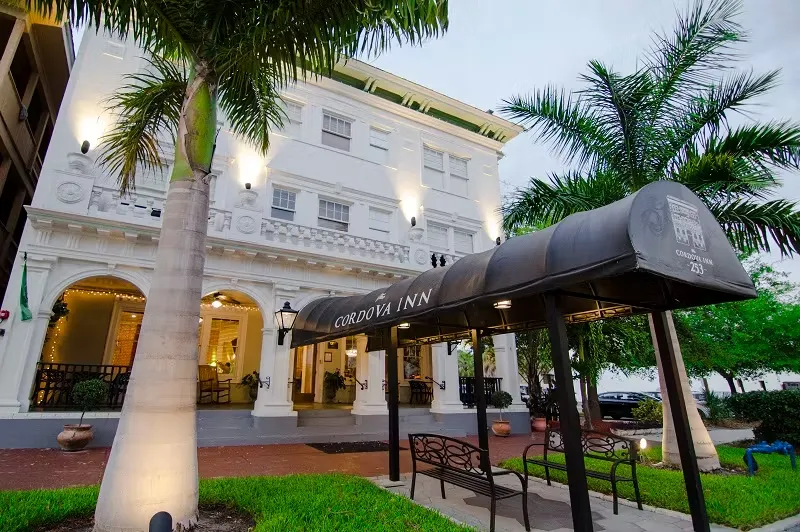
The Cordova Inn
At 253 Second Avenue North in downtown St. Petersburg, Florida, a three-story Renaissance Revival building sits half a block from the Sundial shopping district, looking much the way it did when it first opened in 1921. The Cordova Inn is not the grandest of St. Petersburg's boom-era hotels—it never competed with the Vinoy or the Don CeSar for celebrity guests—but it is among the oldest, and its quieter history carries a weight those larger landmarks don't always match. Built by Francis Scott during the opening surge of the Florida Land Boom, the hotel originally operated as The Hotel Scott. It arrived at the moment when rising postwar prosperity and the spread of the automobile turned Florida's Gulf Coast into one of the most frenzied real estate markets the country had ever seen. St. Petersburg's population exploded in the early 1920s, and small hotels like The Scott sprang up to house the tourists, speculators, and seasonal residents flooding the area. The building was constructed of masonry with scored stucco designed to resemble stone, its facade detailed with five keyed arches, a balustrade topped with decorative urns, and a projecting cornice along the roofline. Inside, thirty-two rooms were fitted with clawfoot soaking tubs—many of which survive today. By 1923, the hotel had changed hands and been renamed the Hotel Cordova, after the family that would operate it for three decades. The Cordovas sold in the early 1950s, and for the next half century the property passed through multiple owners. As downtown St. Petersburg declined through the 1970s and 1980s, the hotel declined with it. By the late 1990s the surrounding blocks were considered undesirable after dark, and the Cordova closed in 1999, sitting empty on a street it had anchored for nearly eighty years. A local investor completed a full restoration, reopening it as The Pier Hotel in 2001—earning the St. Petersburg Preservation Society's Restoration of the Year Award. In 2014 the property reclaimed its historic name. It is a contributing property to the Downtown St. Petersburg Historic District on the National Register of Historic Places. The central figure in the hotel's haunting is not a guest or an owner but a member of the staff—the Major-domo, the building's head butler. According to the hotel's own published history, this man devoted twenty years to the Cordova's guests before dying inside the building he had served. The circumstances of his death are not widely detailed, but the hotel does not shy from acknowledging the story. During the years the building sat vacant before restoration, schoolboys who broke in at night reportedly heard howling in the empty hallways—sounds attributed to the displaced Major-domo protesting the abandonment of his post. Ghost tours in St. Petersburg have included the Cordova on their routes for years, and local paranormal investigator Brandy Stark has featured the hotel in her downtown walking tours. Guest accounts have accumulated steadily since reopening. Visitors describe the apparition of a well-dressed man in an old-fashioned suit, widely believed to be the Major-domo. Some employees have concluded this figure has helped protect the building from neglect—a guardian rather than a threat. But overnight experiences suggest something more complicated. Multiple visitors describe being woken by a sharp burst of air or a whispered word in their ear. Others report sleep paralysis accompanied by sensations of being touched or held down. One guest described hearing two women standing over them discussing a man who would be displeased with their belongings. The second and third floors generate the most reports. The staircase between them is a recurring point of interest—visitors describe sudden heaviness or a feeling of presence while ascending. Cold spots appear without explanation. A sulfurous smell has been noted near Room 208. The building's age explains some of this. A century-old masonry structure without elevators, with original plumbing and narrow corridors, will produce sounds modern buildings do not. Guests primed by the hotel's openly acknowledged reputation may interpret ambiguous input accordingly. But the specificity of many accounts—the whispered names, the paralysis, the smell—pushes beyond what settling wood and old pipes typically produce. Today the Cordova Inn operates as a boutique hotel with its original thirty-two rooms, a lobby bar called The Scott, a fireplace, a small library, and a veranda. There is no elevator—guests climb the original staircases, just as they did in 1921. Whether the Major-domo is still making his rounds depends on who you ask and what floor you're sleeping on. But the building remains what it has been for over a century: a place built to welcome strangers, where at least one longtime resident appears unwilling to stop doing exactly that.

Beach Drive Inn Bed and Breakfast
Set along the palm-lined waterfront of Beach Drive in downtown St. Petersburg, Florida, the building now known as the Vinoy House Inn occupies a quiet but prominent place within one of the city’s most historic neighborhoods. Located just steps from Tampa Bay and the long-established waterfront parks of the Old Northeast district, the structure dates back to the early twentieth century, when St. Petersburg was rapidly developing into a winter destination for travelers escaping colder northern climates. During this period of expansion, large homes and guest properties were constructed along Beach Drive to accommodate seasonal residents and visitors drawn to the area’s warm weather and scenic waterfront. The house at 532 Beach Drive Northeast was built around 1910 as a private residence associated with the influential Vinoy family, whose name is closely tied to the development of the surrounding area and the nearby Vinoy Hotel. The structure reflected the coastal residential architecture common to the time, with broad porches designed to capture breezes from the bay and interior spaces arranged for long seasonal stays. Over the decades, as St. Petersburg evolved and many of its early waterfront homes were converted or replaced, the property transitioned from a private residence into a small hospitality business. Its location within walking distance of the city’s waterfront parks, museums, and cultural attractions made it well suited for use as a boutique lodging property. For many years the building operated as the Beach Drive Inn Bed and Breakfast, a small historic inn that preserved much of the original home’s character. Guests stayed in rooms that had once served as private bedrooms, and the structure retained details typical of early twentieth-century homes such as narrow staircases, wooden floors, and antique furnishings. In the early 2020s the property underwent renovations under new ownership and was reintroduced as the Vinoy House Inn, a name chosen to reconnect the building with the historic Vinoy district surrounding the nearby waterfront resort. While the branding changed, the structure itself remained the same historic house that had stood along Beach Drive for more than a century. Alongside its architectural history, the building has developed a reputation for unexplained occurrences that some visitors interpret as paranormal. Much of the reported activity centers around one of the upstairs guest rooms, commonly identified in earlier years as the Montego Room. According to widely repeated local accounts, a housekeeper who once worked at the property died there under unclear circumstances, and some believe her presence may still linger within the building. Guests staying in the room and nearby areas have described hearing unexplained footsteps in the hallway late at night, even when the inn is otherwise quiet. One of the most frequently mentioned claims involves a rocking chair that appears to move on its own without anyone nearby. Visitors have also reported faint music, doors opening or closing unexpectedly, and the sensation that someone is walking just outside their room during the night. Staff and guests occasionally describe subtle disturbances such as shifting shadows or the sound of movement on the stairs after the building has settled for the evening. While these reports remain anecdotal, the consistency of the stories over many years helped establish the inn’s reputation as one of the quietly haunted locations along the St. Petersburg waterfront. Local paranormal enthusiasts and curious travelers sometimes seek out the property because of these stories, and investigators have occasionally stayed at the inn hoping to experience the reported phenomena firsthand. Experiences vary widely. Some visitors report nothing unusual at all, while others describe small disturbances that they find difficult to explain. Skeptics often attribute the experiences to the age of the building itself, noting that historic homes can produce unusual sounds as wood expands and contracts and as air moves through older structures. Today the Vinoy House Inn continues to operate as a boutique bed and breakfast, offering guests a stay inside one of the surviving historic homes along Beach Drive. More than a century after it was first constructed, the house remains a physical link to St. Petersburg’s early development as a resort city. Whether visitors come for the architecture, the history of the waterfront district, or the lingering stories of unexplained activity within its rooms and hallways, the building remains a distinctive presence along one of the city’s most recognizable streets.

Fort De Soto State Park
Fort De Soto State Park occupies Mullet Key, a barrier island off the coast of St. Petersburg, Florida, where the Confederacy constructed a substantial military fortification during the American Civil War in the 1860s. The fort was built as a five-sided masonry structure designed to defend Tampa Bay and the surrounding coastal region against Union naval operations. Fort De Soto represented a significant engineering achievement for its era, with walls constructed from massive quantities of brick and mortar capable of withstanding cannon fire and naval assault. The fort was garrisoned by Confederate troops throughout much of the Civil War, though it saw limited direct military action compared to other coastal fortifications. The park infrastructure developed in the twentieth century converted the historic military site into a recreational destination featuring camping facilities, beaches, and historical interpretation. Beyond its role as a Civil War fortification, Fort De Soto and Mullet Key have a more significant history related to public health crises. During the nineteenth century, the fort served as a quarantine station for individuals suspected of carrying infectious diseases, particularly yellow fever, a mosquito-borne viral illness that periodically swept through Florida and the Gulf Coast region. Yellow fever caused acute febrile illness with high mortality rates reaching seventy percent or higher among those infected. The quarantine station was designed to isolate infected individuals from the general population, attempting to prevent disease spread to the broader Tampa Bay region. Individuals who arrived at the quarantine station often did so already seriously ill, with minimal hope of recovery. Many of those quarantined at Fort De Soto died of yellow fever, their bodies buried in graves that remain on the island. The paranormal phenomena documented at Fort De Soto State Park are numerous and multifaceted, suggesting multiple spiritual entities inhabiting the location and manifesting distinct characteristics. A male apparition has been reported by numerous visitors and park staff. Disembodied voices have been documented in various locations throughout the park. Phantom footsteps have been reported by multiple witnesses, particularly in the fort structure, suggesting entities engaged in repetitive movement patterns. Paranormal activity intensifies notably during night hours. A particularly disturbing apparition involves the manifestation of a soaking wet man, appearing as though recently emerged from the water. Another documented entity manifests as a phantom fisherman, complete with fishing activities. Most poignantly, witnesses have reported the presence of a grieving mother spirit, appearing to search desperately for her deceased children, suggesting the loss of family members during yellow fever epidemics. Fort De Soto State Park remains an active recreational facility, functioning as a campground and historical site where visitors can explore the Civil War era fortification and enjoy the Gulf Coast. The park service has preserved the fort structure and maintained interpretive materials explaining the historical significance. Paranormal researchers and ghost enthusiasts have conducted investigations and documentation, adding to the growing body of evidence regarding the supernatural phenomena. The park administration acknowledges the paranormal heritage, recognizing its significance for paranormal tourism while continuing to serve broader recreational needs. The spirits inhabiting Fort De Soto appear bound to the location through the trauma of their deaths, whether through military conflict, epidemic disease, or the despair of quarantine and separation from loved ones. The continuing manifestations suggest that the emotional suffering associated with the fort's history has created a spiritual atmosphere dense with unresolved trauma and longing, making the location one of Florida's most significantly haunted sites.
Sunshine Skyway Bridge
The Sunshine Skyway Bridge spanning the Tampa Bay area represents a major engineering achievement and essential transportation infrastructure component connecting the communities on either side of the bay. Completed during the latter twentieth century, the bridge stands as a monument to American infrastructure development and engineering capability, with its distinctive cable-stayed design and extensive length creating a visually prominent landmark visible across the bay region. The bridge carries vehicular traffic and represents a crucial connection in the regional transportation network, with thousands of vehicles traversing its length daily for commerce, commuting, and leisure travel. The structure's engineering complexity and the feat of its construction represent significant human achievement in transforming geographical barriers and creating convenient passage where none previously existed. The bridge's iconic status within the Tampa Bay region and its engineering distinction positioned it as a symbol of progress and connectivity within the broader narrative of Florida's development. The transformation of the Sunshine Skyway Bridge into one of the most actively haunted transportation structures in the United States originated with a series of tragic events that would establish the location as a gathering point for death and despair. The bridge became known as a suicide destination, with individuals facing personal crises, mental health challenges, and emotional desperation selecting it as the location where they would end their lives by jumping from its considerable height. The accumulation of suicides created a tragic pattern in which the bridge became associated with death and despair within the regional consciousness, with news reports periodically reinforcing this tragic association. Beyond the suicides, the bridge has been the location of serious vehicular accidents involving multiple fatalities, including a historic incident in which a barge struck the bridge structure itself, causing sections of the roadway to collapse and resulting in multiple vehicle and occupant deaths. The bridge's height, its exposure to weather conditions, and its psychological association with finality and ending created an environment conducive to suicide and tragedy. Paranormal manifestations at the Sunshine Skyway Bridge display remarkable consistency in their characteristics and present compelling evidence of spiritual entities remaining bound to the location where they experienced their violent deaths. The phantom woman with blonde hair represents the most frequently reported apparition, appearing to motorists traveling the bridge around midnight hours, materializing suddenly in the roadway before vanishing as mysteriously as she appeared. Multiple drivers have reported seeing this spectral female figure, with some describing her as appearing to flag vehicles down or to attempt to cross the roadway, while other witnesses describe her as distinctly ethereal and glowing with an unnatural luminescence. The phantom bus filled with terrified passengers represents another dramatic apparition, described by witnesses as a translucent or semi-transparent bus materializing on the bridge's roadway, its interior crowded with spectral passengers displaying expressions of fear and anguish. The apparition of the bus appears connected to the accumulated trauma of the bridge's many tragic deaths, as though the spirits of those who died there have manifested collectively. The Sunshine Skyway Bridge in contemporary times remains a functioning and heavily traveled transportation structure, yet its paranormal phenomena continue with undiminished intensity and frequency. The ongoing reports of paranormal phenomena, combined with the bridge's historical association with death and suicide, create a psychological atmosphere that influences traveler behavior and emotional responses to traversing the structure. Some motorists deliberately avoid traveling the bridge during nighttime hours, citing fear of paranormal encounters, while others seek out the location specifically to attempt to encounter the apparitions that have achieved near-legendary status within paranormal folklore. The bridge's extensive height and the open water below create an environment that amplifies psychological distress and emotional vulnerability, potentially facilitating the spiritual phenomena that occur there. The Sunshine Skyway Bridge stands as a location where engineering achievement and human tragedy converge, creating a structure that represents both technological progress and the persistent spiritual scars left by accumulated death and despair.
Comfort Station
Comfort Station No. 1 occupies distinctive architectural and historical position in St. Petersburg, Florida's urban landscape. The structure represents a preserved public facility from the early twentieth century when progressive urban planning resulted in construction of substantial public facilities serving sanitary and civic functions. The building's name reflects period euphemistic terminology for public restrooms. The Comfort Station's construction in brick and stone with decorative detailing reflects the era's commitment to public facilities with architectural dignity. The women's bathroom remains particularly active location for reported paranormal phenomena, with specific attention directed toward mirrors and stalls. St. Petersburg's development in the late nineteenth and early twentieth centuries reflected broader patterns of Florida's rapid urban growth and emergence as an attractive destination for northern tourists. Progressive municipal governance resulted in investments in public facilities designed to serve growing urban populations. The construction of public restrooms represented municipal commitment to sanitation and public health. These facilities were designed not merely as functional structures but as architecturally distinguished buildings conveying civic respectability. The Comfort Station was constructed during the early twentieth century as part of St. Petersburg's public infrastructure development program. The facility served the critical sanitary function of providing public restrooms for residents and visitors. The construction of substantial, architecturally distinctive public facilities reflected genuine public health concerns and progressive belief that municipalities should provide dignified public infrastructure. The building's downtown location made it an accessible municipal resource. Paranormal phenomena reported at the Comfort Station include manifestations centered on women's bathroom areas and mirrors. A female presence, identified in some accounts as Agnes, is reported manifesting within bathroom areas with apparent agency and intentionality. Cold spots, characterized as dramatically reduced temperature without mechanical cause, concentrate near bathroom mirrors. Door and object movement, including bathroom stall doors opening and closing without human agency, have been reported by staff and visitors. Disembodied voices described as whispers or vague vocalizations occur within bathroom spaces, particularly during quiet periods. Temperature fluctuations occur without identifiable mechanical causes. The strong presence felt at the Comfort Station, with concentration in women's bathroom areas, characterizes the overall energetic quality reported by sensitive individuals and paranormal investigators. This sensation of presence persists even when specific phenomena are not directly observed. The presence is frequently described by female visitors and staff as particularly noticeable in the women's bathroom, less prominent in other areas. This gendered aspect of reported phenomena, with manifestations concentrated in spaces designated for female use and with a reported female entity, suggests possible psychological or historical associations with the space's original function. Mirrors occupy culturally significant positions in paranormal folklore across multiple cultures, frequently being associated with liminal spaces where manifestations occur. The women's bathroom, containing multiple mirrors and enclosed stall structures, creates psychologically distinctive conditions. The intimate and private nature of bathroom spaces creates conditions distinctive from public areas. The preservation of the Comfort Station as a historical structure and its continued operation as a public facility creates juxtaposition between modern usage and historical significance. Contemporary use navigates the intersection of the building's architectural and historical heritage with ongoing functional purpose. The presence of modern conveniences within the original architectural envelope creates temporal layering where contemporary and historical elements coexist. The paranormal phenomena may reflect the building's accumulation of human usage across more than a century of operation.
Haslam’s Book Store
Haslam's Book Store in St. Petersburg, Florida, stands as one of the nation's most extensive independent bookstores, its vast inventory exceeding thirty thousand separate titles arranged across more than thirty thousand square feet of retail space dedicated to literature, knowledge, and intellectual pursuit and exploration of ideas. The store was established by Jack Haslam and has remained a cornerstone of the local literary community for generations, serving not merely as a commercial enterprise but as a cultural institution where readers of all backgrounds converge to discover, purchase, discuss, and celebrate books and ideas that shape understanding and consciousness. The physical space evolved organically over decades of operation, with sections devoted to fiction, non-fiction, poetry, metaphysical texts, local history, and countless specialized categories reflecting the diverse interests and reading habits of its clientele across generations of operation and community service. The store became a gathering place for writers, intellectuals, and casual readers alike, its aisles and reading nooks hosting countless conversations about literature, philosophy, and ideas that shape human understanding and consciousness throughout the world. Among the many notable figures associated with Haslam's is Jack Kerouac, the Beat Generation author whose literary works explored unconventional consciousness, spiritual seeking, and American identity during the mid-twentieth century revolutionary period. Kerouac was a frequent visitor to the store prior to his death in 1969, and his engagement with the space and its inventory created a meaningful personal connection between the author and the physical location that appears to have transcended his death and continued beyond his mortal existence. Since Kerouac's death decades ago, the book store has become the site of ongoing paranormal manifestations that many attribute to the author's unfinished relationship with the space and continued affinity for literary environments and intellectual discourse among readers and writers. Staff and customers report that books, particularly volumes of metaphysical texts and works authored by Kerouac himself, spontaneously leave shelves and fly through the air as though propelled by invisible force or conscious intention demonstrating selectivity and purpose. These poltergeist phenomena demonstrate remarkable selectivity, targeting specific types of materials rather than affecting volumes indiscriminately, suggesting intentional rather than random activity motivated by purpose and awareness of what is being moved. Beyond Kerouac, other spirits inhabit the bookstore's cavernous interior spaces and aisles throughout the location and its various rooms. A little boy moves books around the store, reorganizing inventory and interfering with shelf arrangements in playful rather than malevolent ways that suggest youthful mischief and curiosity about the extensive collection. A little girl, described as confused or disoriented by customers and staff, wanders the aisles as though searching for something or someone she cannot locate or remember from her previous life. Throughout the store, cold spots manifest without apparent cause, localized temperature anomalies that persist across different seasons and locations throughout the building. Sudden temperature drops occur spontaneously, sometimes accompanied by the appearance of shadow figures in peripheral vision and in darkened areas, creating a multi-sensory paranormal experience for visitors seeking books and knowledge.
Royal Palms Apartments
The Royal Palms Apartments stand as a mid-twentieth-century residential complex in St. Petersburg, Florida, representing the architectural development patterns characteristic of post-war residential construction expansion throughout the Sunshine State. Constructed during significant population growth when migration patterns created substantial demand for residential accommodations, the apartments reflect the architectural preferences of that era with designs emphasizing efficiency and affordability. The structure contains numerous individual units with bedroom spaces, living areas, and bathroom facilities, and throughout its operational history housed a constantly shifting population of residents, each bringing personal narratives into the spaces they occupied. The paranormal phenomena associated with the Royal Palms Apartments appear concentrated within bedroom spaces of individual units, where visitors and residents have consistently reported experiences suggesting the presence of an intelligent, non-corporeal entity interacting with the physical environment in targeted and purposeful ways. Witnesses have described a pattern wherein pillows supporting the heads of sleeping individuals are mysteriously pulled from their positions, often with sufficient force to disrupt sleep. This phenomenon has been reported with sufficient consistency across multiple units to establish a clear paranormal signature. The apparitional component manifests as the distinct visual impression of a male figure, typically observed standing at or near the foot of beds in darkness or dimly lit conditions. Witnesses describe this figure with sufficient consistency to suggest a genuine apparition, with reports noting the outline and general form of a human male. Additional phenomena include the spontaneous appearance of water or moisture within apartments, suggesting manifestation of water by paranormal means. The concentration of paranormal phenomena in bedroom spaces suggests that the entity may have particular attachment to intimate residential spaces or be attracted to the vulnerability of sleeping individuals. The targeting of pillows and positioning near beds suggests an entity engaged in interactive behavior with residents, demonstrating awareness of human presence and deliberate choice in manifestation. The phenomena do not follow a random pattern but rather suggest intentional engagement, with the entity apparently seeking to create disruption and awareness of its presence. Residents affected by these phenomena have reported varying emotional responses, from mild curiosity to pronounced anxiety and distress resulting from violation of personal space. Investigations into the Royal Palms Apartments' historical background have sought to establish potential origins for the paranormal phenomena, examining records regarding deaths, trauma, or unusual circumstances. The prevalence of phenomena in bedroom spaces suggests the entity has particular connection to intimate domestic spheres, potentially indicating a former resident with strong attachment to the building. The apparition of a male figure suggests the haunting centers on a specific individual. The consistent pattern across multiple units argues against isolated experiences but indicates ongoing manifestations suggesting permanent spiritual presence within the building's structure. Some researchers speculate the entity represents a former resident who died within the complex and whose consciousness remains tethered to their location of mortal existence.
St. Petersburg High School
St. Petersburg High School stands as a striking architectural monument in central Florida, its classical limestone facade and substantial brick construction marking it as a significant institutional building within the city's educational landscape. The school's physical presence is anchored by its multi-story design, with the third floor representing a section of the building that has become particularly notable in local paranormal lore. Located within the city of St. Petersburg, itself a community with deep roots in Florida's early twentieth-century development, the high school functions as a daily gathering place for hundreds of students and staff, yet certain areas of the building possess a distinctly uncanny quality that has drawn the attention of those attuned to unexplained phenomena. The origins of St. Petersburg High School trace back to the educational expansion movement that swept through Florida during the early twentieth century, a period when the state underwent rapid modernization and urban development. The construction of substantial public school buildings reflected community confidence in educational progress and the promise of structured institutional life. The architectural design incorporated the formal symmetry and imposing scale typical of schools built during this era, structures intended to project permanence, order, and civic importance. The school's location within St. Petersburg situated it within a community that was itself undergoing transformation from a modest fishing village into a growing urban center with significant winter tourism and commercial activity. Throughout the twentieth century, St. Petersburg High School served multiple generations of students, witnessing the social, cultural, and historical shifts that defined American public education. The building absorbed decades of daily activity—academic instruction, athletic competitions, theatrical performances, social gatherings, and the countless ordinary moments that constitute the life of an institution. The auditorium, with its acoustics and assembly space, became a focal point for school events, graduation ceremonies, and community gatherings. The passage of time within such buildings creates layers of human experience, emotional intensity, and psychological imprinting that some researchers suggest may contribute to paranormal manifestations. The third floor of St. Petersburg High School has become the locus of consistent paranormal reporting, distinguishing itself from other areas of the building through the frequency and character of reported phenomena. According to accounts from those who work and spend time in the building, the third floor exhibits distinct behavioral patterns that suggest an intelligent, interactive presence rather than mere residual haunting. Doors open and close without explanation, objects move from their original positions to places where they would not naturally settle, and an overall atmosphere of watchfulness pervades the space. The auditorium itself, with its cavernous interior and accumulated memories of countless human voices raised in song, speech, and expression, has become another focal point for activity, with janitorial staff reporting visual phenomena and sensations of being observed during evening hours when the building stands largely empty. Paranormal investigators and those sensitive to paranormal manifestations have documented the distinctive character of activity on the third floor, noting that the phenomena display qualities suggesting purposeful interaction rather than random disturbance. Objects reportedly move with deliberation, doors operate in ways that suggest intentional manipulation, and the ambient quality of the space shifts noticeably between periods of relative calm and heightened activity. Some accounts suggest the possibility of a former student or staff member whose emotional connection to the building remains sufficiently strong to generate detectable paranormal effects. The specificity of the haunting—concentrated on the third floor and the auditorium—suggests a localized attachment rather than diffuse, unfocused activity throughout the entire structure.
The Spontaneous Combustion of Mary Reeser
The case of Mary Reeser stands outside conventional paranormal documentation yet remains one of the most thoroughly investigated and medically perplexing incidents in American paranormal history. On July 2, 1951, in St. Petersburg, Florida, Mary Reeser, an elderly widow, was discovered burned to death under circumstances that defied standard explanation. Nearly complete body destruction occurred alongside minimal damage to the apartment environment, creating an anomaly captivating researchers for decades. Her remains—primarily a fragment of left foot in slipper and ash residue—presented forensic investigators with a puzzle challenging conventional fire science. The physical evidence created a paradox. Human bodies exposed to standard fire sources typically exhibit consistent burn patterns. The Reeser case presented anomalous patterns: extreme torso and extremity destruction while a single foot remained identifiable. The surrounding apartment showed some smoke damage but did not exhibit damage consistent with fire hot or sustained enough to produce the documented body destruction. Furniture remained largely intact, though discolored. This disparity between body destruction and apartment preservation created the scientific puzzle animating decades of debate. Firebase investigators proposed the "wick effect" as explanation. When a human body is exposed to relatively minor fire source—a cigarette—the body's own fat content can sustain burning. Combustible materials essentially transform the body into a biological candle, burning for extended periods while leaving surrounding environment comparatively undamaged. The theory relies on the body's own biological materials as fuel. Mary Reeser, being elderly, would have had sufficient body fat to potentially fuel such process. The theory gained credibility among fire science professionals as the most accepted conventional explanation. However, the wick effect theory does not fully explain every detail of the Reeser case. Bodies subjected to standard fires rarely exhibit the selective destruction pattern observed in Reeser remains. No obvious ignition source was definitively identified. The alternative explanation of spontaneous human combustion entered paranormal discourse through this case, becoming an iconic example cited by those arguing for its existence. Paranormal researchers interpret the Reeser case as potential evidence that spontaneous combustion can occur, arguing conventional fire science proves inadequate. They point to historical documentation of similar cases. They note the apparent impossibility of initiating fire hot enough to consume a human body without leaving obvious environmental traces. From this perspective, the Reeser case becomes paranormal documentation of a phenomenon defying conventional explanation. The St. Petersburg apartment where Mary Reeser died acquired paranormal associations. Some paranormal researchers have visited seeking evidence of residual haunting or continued spiritual presence. Reports describe unusual temperature fluctuations and electromagnetic anomalies. The case has attracted paranormal documentarians who featured the Reeser incident in films examining unsolved deaths. The apartment's address has become known to paranormal enthusiasts, representing a location where conventional death and paranormal possibility seem to intersect. Today, the Mary Reeser case remains one of the most referenced examples in discussions of spontaneous human combustion and unexplained paranormal phenomena. Whether her death resulted from spontaneous combustion, the wick effect, or some combination of conventional and paranormal factors, her death remains one of the most enigmatic cases in American paranormal history, serving as testimony to genuine mysteries in human experience.