
Haunted Places in Alabama
156 haunted locations
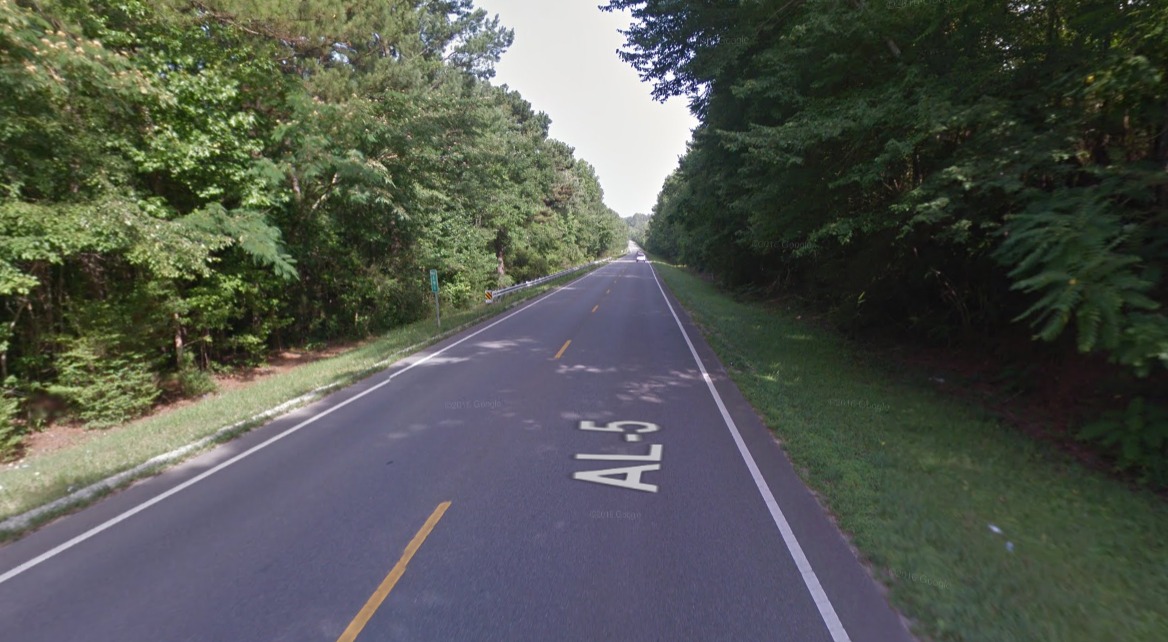
Highway 5 Ghost
Running through the piney hills of northwest Alabama, Highway 5 cuts a quiet and largely unremarkable path through Winston County, connecting communities like Natural Bridge to the north and Jasper to the south. The road passes directly through Lynn, a small town that today holds a population of just over 800 people and barely registers on most maps of the state. But among truck drivers who haul freight through this stretch of Alabama backroad, Lynn carries a reputation that has circulated for generations — and that reputation has nothing to do with farming, lumber mills, or the Northern Alabama Railroad that first gave the town its name. The area around what is now Lynn began to be settled as early as 1814, five years before Alabama achieved statehood. In 1888, a local landowner named John White Lynn donated land for a railroad right-of-way with the condition that the surrounding community bear his name. A post office followed that same year, and the lumber industry arrived behind the railroad, briefly expanding the population before the mills shuttered and the town settled into the quiet it has kept ever since. Lynn was not formally incorporated until 1952, a vote held largely to legitimize a local pool room under state law. By any measure, this is not a place built around drama or notoriety. Winston County itself was forged in isolation — its craggy hills and rocky terrain leaving settlers outside the mainstream geographically, economically, and politically. During the Civil War, residents famously resisted joining the Confederacy, having no large plantations and virtually no enslaved labor, and at one point attempted to declare themselves the independent Free State of Winston. It is the kind of place where independence runs deep, where stories are passed down through families rather than written into official records, and where a legend can take root on a rural highway and outlast every person who first told it. The ghost of Highway 5 belongs to that tradition. The story holds that many years ago, on a rainy night in Lynn, a teenage girl was traveling home from prom with her boyfriend when an argument broke out. She asked to be let out, he complied, and she walked the rest of the way alone. While making her way along the side of the highway, she was struck by an 18-wheeler. The driver fled the scene, and her body was found the next morning in a ditch. The details shift depending on who is telling it — some versions place the argument at a local dragstrip, others at a prom, and some name a coal truck rather than a semi. One researcher who spent years combing through county and state records reported finding no documentation of a girl killed on that road at all, leaving the origin story unverifiable and the legend untethered to any confirmed event. What cannot be dismissed as easily are the accounts themselves. The central claim is consistent across dozens of reports: if an 18-wheeler travels Highway 5 on a rainy night, the girl will climb onto the side of the truck and peer in through the cab window, searching for the face of the man who killed her. Many truckers, rather than risk the encounter, chose to reroute entirely onto Highway 13 — a significantly longer detour — rather than pass through that stretch after dark. Some accounts describe her appearing in a long white dress, standing clean and dry at the road's edge despite rain and mud, then vanishing completely from the side mirrors of passing trucks. Others describe a knock on the cab door, a face at the glass, a figure that simply disappears. One account from 1999 describes a trucker so convinced he had struck someone that he stopped, called 911, searched the entire undercarriage of his vehicle, and found nothing — no body, no damage, no sign of impact. Another driver described pulling alongside a young woman and offering her a ride, only to have her exit near the drag strip and dissolve into the dark. Some versions of the legend include a resolution: the driver who struck the girl eventually confessed his crime, and after that, the activity along the highway diminished noticeably. Whether that detail was added to give the story a clean ending it never had, or whether it reflects something that actually quieted a restless presence, depends entirely on what you believe is happening on that road. Skeptics have reasonable ground to stand on. A narrow, poorly lit rural highway in rainy conditions produces exactly the kinds of visual distortions and psychological pressure that generate sightings. The legend is old enough and well-traveled enough that any driver who knows it arrives already primed to see something. And without a verifiable death to anchor the story, the whole structure floats on folklore alone. But the accounts keep coming — from truckers who had never heard the legend before stopping, from locals who grew up miles from the spot and still won't drive it alone at night, from people whose experience of that road defies easy explanation. Highway 5 doesn't have a ruined building or a documented death toll. It has something simpler and in some ways harder to shake — a stretch of open road in a small Alabama town where the darkness feels occupied, and where the rain, when it comes, still makes certain drivers choose a longer way home.
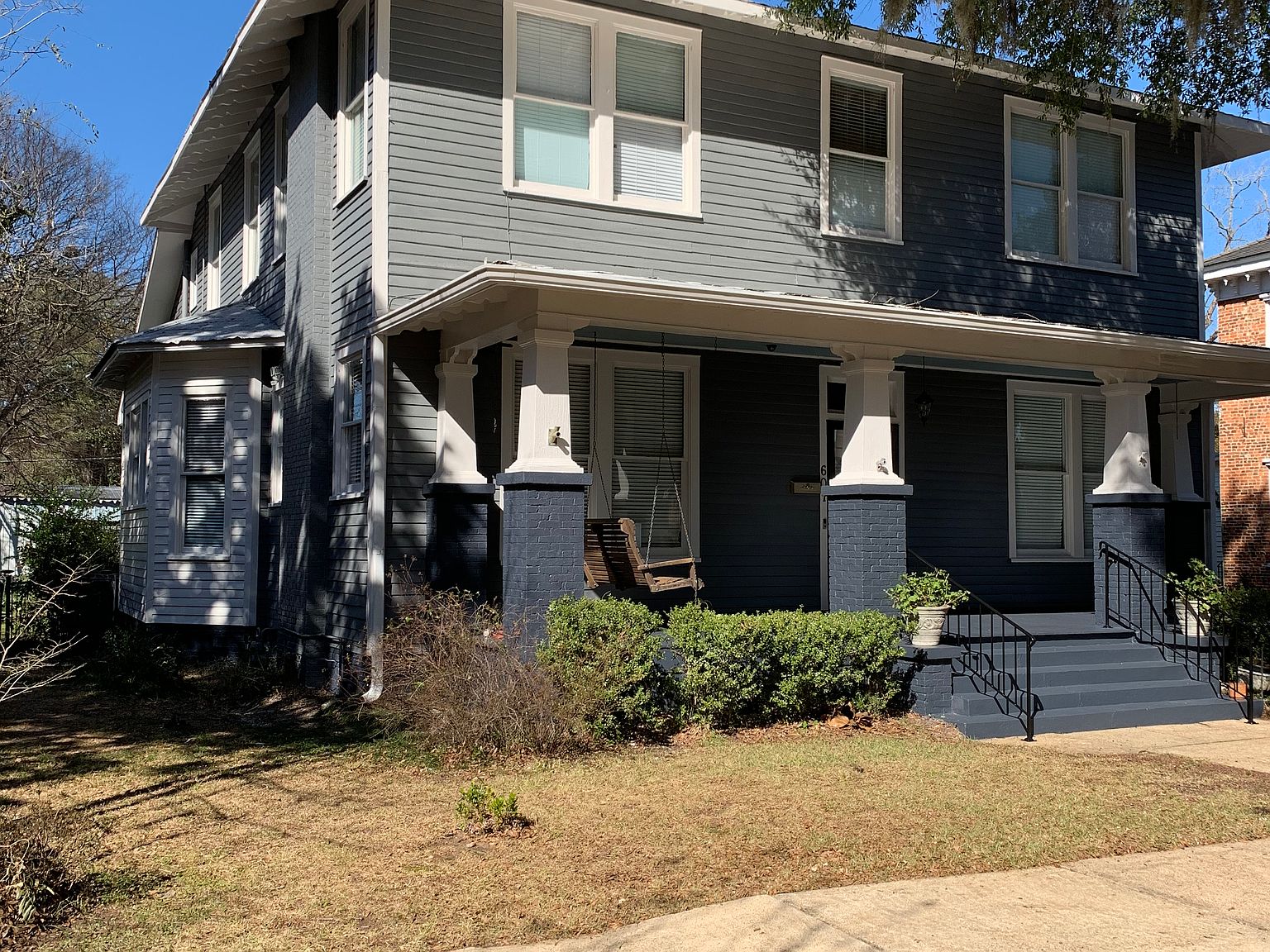
Trotter Home
On a tree-lined stretch of Selma Avenue in one of Alabama's most historically saturated cities, the Trotter Home sits as a quiet two-story Victorian-era residence that has accumulated, over the course of more than a century, a reputation that far exceeds its modest exterior. Built in the 1880s during the period of post-Reconstruction recovery that followed the Civil War's devastation of Selma, the house functioned for decades as a boarding house — one of the many private homes along its block that opened their doors to transient workers, young professionals, and families passing through a city still finding its footing in the New South. It is a structure defined less by grandeur than by longevity, the kind of house that absorbs lives rather than showcasing them, and it is precisely that quality of accumulated human experience that gives it its particular atmosphere. Selma itself provides the backdrop that makes stories like this one feel credible even to skeptics. The city sits in the heart of Alabama's Black Belt, on the banks of the Alabama River, with iron-rich bedrock running beneath its streets and centuries of layered history pressing down from above. It served as a Confederate industrial stronghold before Union forces swept through in the Battle of Selma on April 2, 1865, and it became the epicenter of the American civil rights movement a full century later. Paranormal investigators who have worked extensively in the area note that the combination of the city's geology — iron in the ground, a river running alongside, old structures holding old grief — creates what they describe as conditions unusually favorable to the retention and replay of energy. Whether or not that framework carries scientific weight, Selma produces more consistent accounts of unexplained phenomena per city block than almost anywhere in Alabama. The story at the heart of the Trotter Home's haunting begins in September 1941, when a twenty-one-year-old man named Robert Edgar was living in the house's upper front corner bedroom with his mother, the property then operating as a boarding house. He was driving near Marion Junction with his fiancée when the car tipped over and his arm was caught beneath it on the gravel road. The injury was severe enough to require amputation. Gangrene set in quickly. Surgeons removed the arm on September 16, 1941, but the infection had already progressed beyond saving. Three days later, on September 19, Robert Edgar died. His funeral was held in the home where he had lived, and his body was laid in state in the dining room for three days before burial. His gravestone, later discovered by the home's subsequent residents, reads: Although he sleeps, his memory doth live. The family that gives the house its current name — Norm Trotter, his late wife Pat, and their two teenage daughters — moved in on September 16, 1991, fifty years to the day that Robert Edgar's arm was amputated, and three days before the fiftieth anniversary of his death. They had no knowledge of Edgar when they purchased the house. The seller mentioned in passing, just before closing, that the home had a ghost. The Trotters moved in anyway. What followed was a sustained period of unexplained activity that the family documented carefully over years. Strange things began within weeks of their arrival. Guests sleeping in the home woke feeling a brush across their cheek with no one nearby. Coat hangers jangled loudly inside closed closets. A jar sitting on top of a kitchen cabinet with a raised lip fell and shattered without explanation. The daughters, getting ready for prom upstairs, heard the hangers going and opened the closet to find nothing disturbed. One of them woke in the night, saw a figure standing at the foot of the bed, assumed it was a friend staying over — and realized the friend was asleep beside her. In October 1992, during the World Series, a luminous ball of light floated down the staircase and into the foyer, where it lingered for several minutes while Pat watched it, unwilling to move for fear it would leave before she could make sense of it. The same experience was repeated years later by Norm's second wife, Jaclyn, who watched a glowing orb descend the stairs and pause in the foyer while she sat alone watching television. The spirit, when it appears visually, tends to present at the periphery — a shadow glimpsed at the edge of vision that disappears when turned toward directly. Lights switch on and off without anyone near the switch. Doors open on their own. Plants are knocked from their places. The activity was most concentrated when the daughters were living in the house, and diminished somewhat as they grew up and moved away, though occasional incidents have continued. Pat Trotter, who died in 2003, kept a running file of documented encounters during the years the family was most actively experiencing the phenomena. Research into the house's history eventually led Norm Trotter to newspaper accounts of Edgar's death and to the gravesite that confirmed the timing. The coincidence — that the family moved in on the precise anniversary of Edgar's amputation, and that his funeral had been held in the very dining room beneath their feet — struck the Trotters as something beyond accident, though Norm Trotter has consistently framed the situation with measured curiosity rather than fear. The activity, he has noted, was never threatening. It felt more like the presence of someone who remained attached to a place he knew, visiting the rooms he had occupied in life. The Trotter Home has been featured on Fox's Encounters television program and on Alabama Public Television, and has been included in the Selma and Dallas County Chamber of Commerce's Haunted History Tours for years. It remains a private residence, not open for public investigation. The dining room is still there. So, apparently, is Robert Edgar.
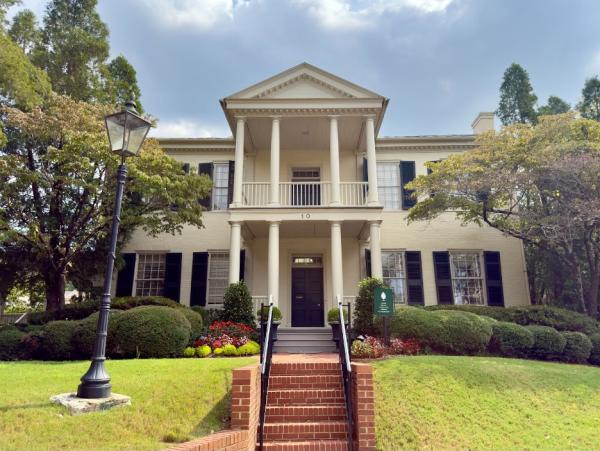
Cedarhurst Mansion
Tucked inside a quiet gated subdivision off Drake Avenue in Huntsville, Alabama, Cedarhurst Mansion doesn't announce itself the way haunted places often do. There are no rusted gates, no crumbling facades, no dramatic hilltop silhouette. What stands instead is a handsome two-story Federal-style structure built in 1823, its fifteen-inch-thick brick walls still solid after two centuries, now serving as a clubhouse for the surrounding residential community. It is a place that has aged gracefully on the outside while carrying, on the inside, one of the most persistently retold ghost stories in the entire state of Alabama. Stephen Ewing built Cedarhurst shortly after Alabama achieved statehood, making it one of the earliest substantial private residences in Huntsville. The Ewing family established themselves as prominent figures in the growing city, and the mansion reflected their standing — a well-proportioned, carefully constructed home in a region still finding its footing. By the 1820s and 1830s, Huntsville was developing rapidly, and properties like Cedarhurst represented the aspirations of its merchant and planter class. Ewing himself met an untimely end and did not enjoy his estate for long, leaving the mansion to pass through family hands. It was through those family connections that the defining event of Cedarhurst's history arrived. In 1837, a young woman named Sally Carter came to visit her sister Mary Ewing at the mansion. Sally was fifteen years old, just three weeks shy of her sixteenth birthday, when an unexpected illness overtook her during the stay. She became bedridden not long after arriving and died at Cedarhurst on November 28, 1837. She was buried on the property in the family cemetery plot, her grave marked with a stone that bore an epitaph reflecting the religious sensibilities of the era. The loss of a young woman in a household is not an uncommon tragedy for the antebellum South, but Sally Carter's story did not end with her burial. For decades, the grave sat quietly on the estate. The legend didn't fully ignite until 1919, when a seventeen-year-old boy from Dothan, Alabama, was visiting the mansion with his family and sleeping in the room that had once been Sally's. During a violent storm that night, he experienced what he described as a dream so vivid it barely felt like sleep. A tall girl with dark hair appeared before him and pleaded with him to help her — the wind had knocked her tombstone over, and she needed it set right. When he woke and told his family, they dismissed it as nothing more than a dream brought on by the weather. But the boy felt compelled enough to walk to the family cemetery and check. Sally Carter's headstone was face down in the grass. He returned to Dothan and, by most accounts, never came back to Huntsville again. That story became the foundation of a local legend that has only grown in the century since. Sally Carter became Huntsville's most famous ghost — a gentle, melancholy presence rather than a menacing one. Reports describe her spirit watching over children as they sleep, a behavior that tracks with the nature of her appearance in the 1919 account. Visitors and residents have described seeing a figure moving through the halls and across the grounds outside, always described as a young woman, always unhurried. Disembodied footsteps have been reported in empty corridors. Voices have been heard with no source. Electrical devices malfunction without explanation. Furniture has reportedly shifted position on its own. The cemetery itself became a focal point of curiosity for generations of Huntsville teenagers and paranormal enthusiasts, which eventually caused significant problems for the property. Repeated vandalism of Sally's grave led the family to make a difficult decision in 1982, when development of the surrounding subdivision began — they had her remains, along with others in the family plot, exhumed and relocated to Maple Hill Cemetery. The new location was never publicly disclosed. The vandalism stopped, but the sightings did not. Sally's presence, according to those who report it, seems tied to the house itself rather than to any grave. There is ongoing debate about the historical verifiability of Sally Carter's existence. Some researchers have found no official death records, birth records, or burial records under her name, pointing to this absence as evidence that the story is folklore rather than fact. Others note that record-keeping in rural Alabama in the 1830s was inconsistent at best, and that unmarked or poorly documented graves at Maple Hill are not unusual for that period. The epitaph on her original stone has been quoted in historical accounts, suggesting something physical once existed. Whether Sally Carter was a real person who died young or a legend that crystallized around a stone and a storm, the story has outlasted nearly everything else about the mansion's history. Today Cedarhurst is not open to the public. The gated community surrounding it means access is restricted to residents and their guests, and organized paranormal investigations of the property are not a regular feature. The mansion endures as a private space carrying a very public legend — a building that looks entirely ordinary from the outside and holds, according to the people who have spent time inside it, something that ordinary buildings do not. Whether that something is the restless spirit of a teenage girl who loved the estate enough to stay, or simply the accumulated weight of a story told for nearly two centuries, Cedarhurst Mansion remains one of the most quietly compelling haunted locations in the American South.
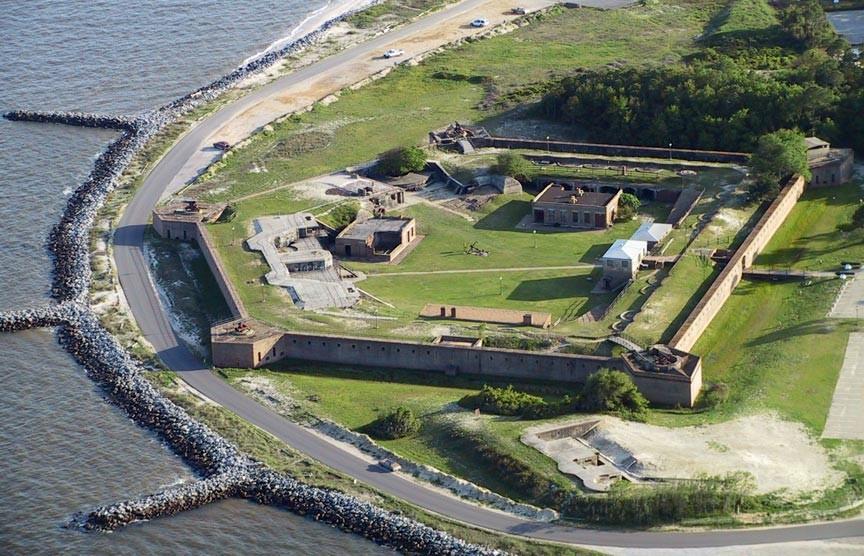
Fort Gaines
Sitting at the eastern tip of Dauphin Island where Mobile Bay meets the Gulf of Mexico, Fort Gaines occupies one of the most strategically loaded pieces of ground on the Alabama coast. The island itself carries death in its name. When French explorer Pierre Le Moyne d'Iberville arrived in 1699, he found so many sun-bleached human bones scattered across the shell mounds that he named the place Massacre Island. The name eventually softened to Dauphin Island, but the bones remained — remnants of Native American burial sites eroded and exposed by the sea. France, Spain, and Britain all used the island as a military platform at various points, each recognizing what the geography made obvious: whoever controlled this narrow strip of land controlled the entrance to Mobile Bay. The United States recognized it too. Following the War of 1812, Congress authorized a network of coastal fortifications along the southern shoreline, and Dauphin Island was identified as a critical position. Construction began in 1821 but lurched along for decades — plagued by poor engineering, flooded foundations, and funding gaps. A new design was ordered in the 1850s under chief engineer Joseph G. Totten, who drew up a five-sided masonry fort with 22.5-foot walls built to absorb artillery rather than shatter under it. Every one of the more than three million bricks had to be transported across the bay, since the island had no suitable clay. The fort was still incomplete when Alabama state militia seized it on January 5, 1861, six days before the state formally voted to leave the Union. Confederate engineers finished the work. Fort Gaines and Fort Morgan, sitting on opposite shores of the channel, formed a pair meant to strangle any naval approach to Mobile. By 1864, Mobile was one of the last Confederate ports open on the Gulf, and the Union was determined to close it. On August 5, Rear Admiral David Farragut led eighteen ships directly into the channel under the guns of both forts. When the ironclad USS Tecumseh struck a Confederate mine and sank almost instantly, Farragut reportedly shouted the order that has echoed through American history: "Damn the torpedoes — full speed ahead." The fleet punched through. Fort Gaines, pounded from sea and besieged from land, surrendered on August 8 with roughly 800 men taken prisoner — including a battalion of military cadets between twelve and sixteen years old from the Pelham Military Academy in Mobile. The fall of both forts sealed Mobile from the outside world and helped secure Abraham Lincoln's reelection that November. The fort remained in military use through both World Wars, serving as a coastal artillery installation and anti-aircraft gunnery school. It was sold to the City of Mobile in 1926, passed to the State of Alabama, and is now considered one of the best-preserved Civil War masonry forts in the country. The paranormal reputation of Fort Gaines draws from every layer of that long history. Visitors and investigators report a Confederate soldier seen standing at one of the cannons facing the water — motionless, as though still at his post. The old officers' quarters are cited as particularly active, with accounts of furniture moving, unexplained whispers filling empty rooms, and the persistent feeling of being watched. Cold spots appear without explanation in the tunnels connecting the bastions to the main courtyard. A dark shadowy figure has been reported following visitors through the inner buildings, vanishing when confronted. Paranormal researchers scouting for MTV's Fear series documented shadowy figures in photographs taken inside the walls, and the Mobile-based group SAPI has held annual ghost hunts at the fort for years. Beyond the fort itself, the ancient shell mounds on the island's eastern end — actual Native American burial sites used for centuries before European displacement — generate their own reports. Visitors describe faint drumming and chanting heard near the mounds after dark, and a blood-covered Native American apparition has been reported in the area. An older island legend speaks of a chief named Double Head who walked the beaches at night, leaving glowing phosphorescent footprints in the sand. Fort Gaines is open to the public. The guns still face the water. The brick walls still absorb the Gulf wind. And according to those who have spent time inside after the crowds leave, something in there hasn't fully stood down.
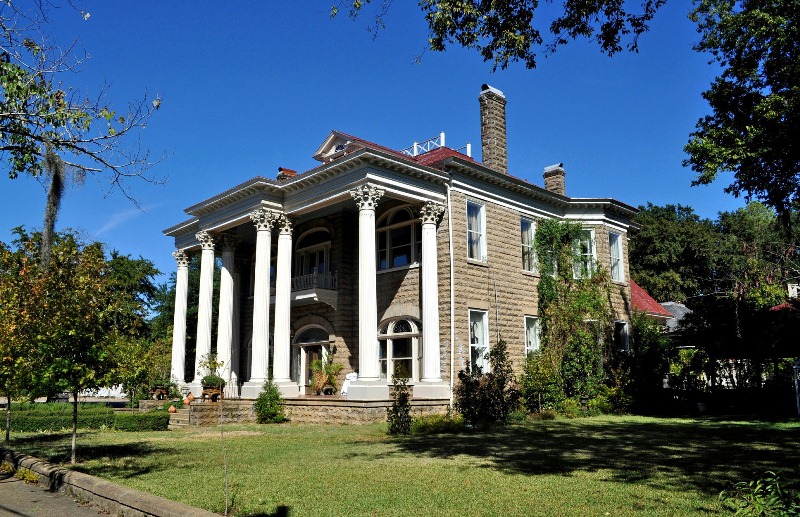
Brownstone Manor
Standing along the shaded stretch of Lapsley Street in Selma, Alabama, Brownstone Manor is a neoclassical mansion that carries itself with the quiet confidence of a house that has outlasted everything around it. Built in the late nineteenth century — sources place its construction variously between 1870 and 1904, with the most commonly cited date falling around 1898 — the home sits within Selma's Old Town Historic District, a nationally recognized collection of over 1,200 historic structures and the largest historic district in the state of Alabama. Lapsley Street itself was among the residential arteries that expanded westward from Selma's riverfront core, a neighborhood built by cotton wealth and defined by the social hierarchies of the antebellum and post-Civil War South. To understand Brownstone Manor, you have to understand Selma. Few American cities carry as much layered historical weight. In the nineteenth century, Selma was second only to Richmond, Virginia, as an industrial arsenal for Confederate forces, producing weapons, ammunition, and ironclad warships. On April 2, 1865, Union troops under Major General James H. Wilson swept through the city in what became known as the Battle of Selma, effectively destroying much of its industrial capacity. The neighborhoods around Lapsley Street survived largely intact, and in the decades following the war, the merchant class and professional families of Selma rebuilt and expanded — constructing the gracious homes that now line the Old Town streets, Brownstone Manor among them. A century later, Selma would again become a focal point of American history, this time as the epicenter of the Voting Rights Movement and the setting of the 1965 marches across the Edmund Pettus Bridge. The manor itself is a five-bedroom, three-bath structure spanning over 7,500 square feet, built in the neoclassical style with the proportions and presence typical of wealthy late-Victorian Alabama. The home gained a measure of literary distinction through its association with F. Scott Fitzgerald and his wife Zelda, who reportedly visited regularly because friends of theirs owned the property. Fitzgerald was already at work on the fiction that would define American modernism during those years, and Selma's drawing rooms and tree-lined avenues would have offered precisely the kind of faded Southern grandeur that runs through so much of his work. The mansion has served multiple purposes over the decades — private residence, bed and breakfast, and event venue — passing through various hands and earning a place on Alabama's Ghost Trail, a cultural initiative documenting the state's most storied haunted locations. The paranormal reputation of Brownstone Manor centers on a former owner known as Ms. Hooper. According to those who have visited and documented the property, her presence has never fully departed. The claims that circulate around the house are specific and consistent: paintings rearranged without explanation, disembodied footsteps moving through rooms when no one is present, and the apparition of a woman in period dress observed by visitors in and around the home. The spirit is described not as menacing but as proprietary — a woman who remains attached to her house and makes that attachment felt. Central Alabama Paranormal Investigations, a Selma-based group, has documented activity at the manor. Their lead investigator has noted the existence of a particularly compelling photograph taken at Brownstone Manor that remained under study. The group's broader work in Selma places the manor within a city they describe as exceptionally active, a characterization that local paranormal investigator Maggie Davies has reinforced over years of cemetery tours and investigations. Davies attributes Selma's unusual density of reported activity in part to the city's geology — iron-rich bedrock beneath an old river city, elements that some investigators believe contribute to the retention and replay of residual energies. Whether or not that theory holds scientific merit, it offers a framework for why Selma as a whole, and streets like Lapsley in particular, seem to generate more accounts than most places of comparable size. The manor today remains a private residence, observable from the street. It is part of the Old Town Historic District's contribution to the National Register of Historic Places. Selma is a city where the distance between the historical and the unexplained has always been thin — where soldiers died in the streets, where generations of families built and lost fortunes, and where the architecture of the past still stands close enough to touch. Brownstone Manor fits comfortably into that context: a grand house with a documented history, a literary footnote, and a former owner who, by most accounts, has never quite left.
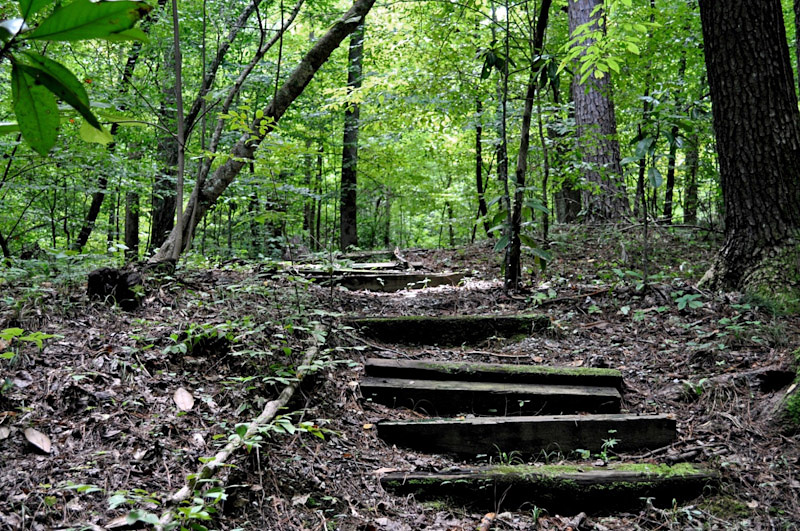
Nancy Mountain – Haines Mountain
Deep in the western reaches of Monroe County, Alabama, where the Alabama River bends through bottomland hardwood forest and the land rises in quiet, forested ridges above the water, there is a two-mile trail on a hill that locals have been calling Nancy's Mountain for generations. It sits within Haines Island Park, a 480-acre tract managed by the U.S. Army Corps of Engineers on the eastern bank of the Alabama River near the small community of Franklin. The park is not widely known outside the region. It has no dramatic overlooks, no landmark architecture, no interpretive museum. What it has is the river, the trees, a cable ferry that has been pulling vehicles across 300 yards of water since the 1830s, and a story that has outlasted every living person who first told it. The landscape itself is worth understanding before getting to the legend. This corner of Alabama sits in the Southern Red Hills, a geographic zone of steep, forested slopes rising above the river plain — unusual terrain for a state where much of the interior lies flat and open. Haines Island Park occupies that transitional ground, where the elevation climbs just enough above the Alabama River to create the kind of isolated, fog-wrapped ridge that naturally invites stories. The river has always been the arterial presence here. For most of American history, the Alabama River was the primary highway through this part of the state, carrying cotton downriver to Mobile and settlers upriver into the interior. Davis Ferry, which has operated at Haines Island in various forms for nearly two centuries, was one of the essential crossing points — a place where lives, cargo, and news traveled from one bank to the other. It was the kind of location that, in the mid-nineteenth century, a farming family might have settled specifically for the access it provided and the proximity to passing river traffic. The legend of Nancy begins in that period, set against the opening months of the Civil War. According to the oral tradition that has been passed down through Monroe County for well over a century, a woman named Nancy lived with her husband and their only son in a farmhouse on the mountain above the river. When the war came, the son enlisted in the Confederate Army and left. Months passed without word. Nancy, as the story goes, became increasingly distressed with each passing boat that arrived at the ferry landing without her boy aboard. Every day she walked down to the river to watch for him. Every day she returned without answers. Her husband, unable to watch her grief and unable to sit still, eventually left to search for the boy himself. Then the news came. Word reached Nancy that her husband had been found frozen to death near the grave of an unknown soldier somewhere in Tennessee — near Lookout Mountain, in some versions of the telling. He had died on his search, beside a grave that may or may not have held their son. No one ever confirmed the identity of the soldier buried there. The son's body was never recovered. Nancy, now alone on the mountain with neither husband nor child, reportedly continued walking — but the purpose of the walk changed. She carried a lantern and a pail of water, walking the trails of the mountain every night, waiting and searching and keeping vigil for a son who never came home. At some point Nancy herself disappeared. Her house fell to ruin and eventually vanished into the hillside. What remained was the mountain and the trail, and the accounts that began accumulating from people who walked it after dark. The reported phenomena at Nancy's Mountain are simple and consistent across decades of accounts. The most common sighting is a light — a lantern glow moving through the trees at night, bobbing as if carried by someone walking the trail, visible at a distance and then gone. Multiple visitors to the park, including local residents who grew up in the surrounding communities, have described seeing this light. Some have heard sounds that don't belong to the forest: footsteps on the trail, or something closer to a voice carried through the fog from the river. The apparition itself, when it appears to witnesses, presents as a woman in old-fashioned clothing moving through the trees, sometimes described as floating rather than walking, always carrying the lantern. Former park superintendent Ike Lyons documented multiple incidents over his tenure in which campers on the mountain abandoned their campsites in a panic after encountering what they described as a woman in period dress moving down the trail toward them. Animals have figured into the accounts as well. One writer who visited the trail with a large dog — a Labrador that had hiked dozens of trails without hesitation — found the animal refusing to move at the trailhead, sitting down and whimpering, unwilling to proceed up the mountain despite every encouragement. Whether that reflects something the dog sensed or simply the particular atmosphere of a foggy morning on a wooded hillside above the river is a question the story leaves open. The Nancy's Mountain Trail today is a two-mile loop within Haines Island Park, open from sunrise to sunset. The trailhead shares its parking area with the Davis Ferry landing, where the cable-guided boat still runs on weekdays, carrying a vehicle at a time across the Alabama River just as ferries have done at this spot since before Alabama was a state. The forest is dense and hardwood-heavy, particularly striking in autumn, and the trail climbs gradually through terrain that feels removed from the modern world in ways that go beyond simple quiet. The park is free. The ferry is free. The trail has no fee, no ranger station, no formal ghost tour. It is simply a path through the woods on a hill above an old river, in a county where the Civil War still echoes in the landscape and in the stories that people tell about it. Whether Nancy is out there or not, the mountain bears her name because something about this place, over many generations, has made the people who walk it feel like they are not entirely alone.

Bethlehem United Methodist Church
Sitting on McElderry Road in the rural northeast corner of Talladega County, Bethlehem United Methodist Church is the kind of small-town Alabama congregation that holds the bones of a community. Its attached cemetery has served the surrounding area for generations, and its burial records reach back into the 1800s, when the first settlers were still arriving in the region and the land was young enough that families lived and died within a few miles of where they were born. The church is still active, still holding Sunday services, still tending its grounds — which makes its quiet reputation for strange happenings at night feel more intimate than the usual deserted-ruin ghost story. Munford itself carries a particular weight in American history. First settled in the early 1830s, the town sits in northeastern Talladega County against the backdrop of Cheaha Mountain, the highest point in Alabama. It grew slowly through the antebellum period as a small farming community, surrounded by the kind of Appalachian foothills landscape that kept large plantation agriculture limited but did not insulate it from the broader cruelties of the era. What Munford is best known for historically is an event that happened fourteen days after the Civil War should have already been over. On April 23, 1865 — two weeks after Robert E. Lee's surrender at Appomattox — roughly 150 exhausted Confederate soldiers, described in accounts as convalescents, home guards, and pardoned deserters, faced off against 1,500 veteran Union cavalrymen under General John T. Croxton, armed with repeating carbines. The skirmish lasted only minutes before the Confederate position collapsed. One soldier died on each side, and Lieutenant Andrew Jackson Buttram became what many historians consider the last Confederate soldier killed in battle east of the Mississippi River. The fight at Munford is widely regarded as the final engagement of the Civil War in the Eastern Theater — a war that ended, in part, right here on this ground. That history hangs over the entire area. A community that absorbed the last shots of the Civil War and carried forward its dead through Reconstruction, through the mill era, through the industrial decline of the 20th century, accumulates a particular kind of layered grief. Church cemeteries like Bethlehem's are repositories for all of it — the marked graves and the unmarked ones alike. A regular churchgoer noted in one account that the cemetery contains unmarked graves of families whose descendants still remember them, tracing names like Nabors back to the 1800s through Decoration Day visits, the Southern tradition of gathering at church graveyards each spring to clean and decorate the graves of the dead. The paranormal claims at Bethlehem are modest but consistent. Visitors and passersby report seeing orbs rising over the cemetery after dark — soft, hovering lights that lift above the headstones and dissipate. The accounts come from multiple unrelated sources over time, spanning casual visitors and people who know the property well. One regular churchgoer offered a rational interpretation, suggesting the lights result from moonlight or passing headlights reflecting off certain headstones at specific angles, visible only at the right position. Others who visited on Halloween captured balls of light in photographs that were invisible to the naked eye at the time of shooting, a detail they described as disorienting. Whether the orbs at Bethlehem reflect something genuinely unexplained or are a product of old reflective stone and the human tendency to see meaning in light and shadow, the cemetery has earned its quiet local reputation. It is a functioning sacred space, maintained and attended by a congregation that has gathered here across generations, and the dead buried within it are not strangers — they are neighbors, relatives, and the people who built this community. The church remains open to its members. The cemetery asks for respect.

State Capitol Building
Rising at the end of Dexter Avenue at the top of a hill originally called Goat Hill, the Alabama State Capitol building has presided over Montgomery since 1851 — a Greek Revival structure of white columns and a central dome that has witnessed more pivotal and painful moments in American history than almost any comparable building in the country. It has served as the seat of state government, the cradle of the Confederacy, the backdrop of the Civil Rights Movement, and the site of a blood feud murder. That it carries a haunted reputation is almost difficult to avoid. The current building is the second capitol on this ground. The first, completed in 1847, burned down two years later. The current structure was completed in 1851, built partly by enslaved laborers, with its famous cantilevered spiral staircases crafted by Horace King, a formerly enslaved man who became one of the most accomplished builders in the antebellum South. The building immediately became the center of enormous historical forces. On January 11, 1861, Alabama voted to secede from the Union in the old Senate Chamber. Within weeks, delegates from six seceding states gathered in that same room and drafted the Provisional Constitution of the Confederate States of America. On February 18, 1861, Jefferson Davis arrived by carriage and was inaugurated as the Confederacy's only president on the front portico — the exact spot now marked by a brass six-pointed star embedded in the marble. Montgomery served as the Confederate capital for just over three months before the government relocated to Richmond. What remained was a building soaked in the weight of a nation's collapse. More than a century later, the Capitol stood at the center of history again. The third Selma to Montgomery Voting Rights March ended on its steps on March 25, 1965, with 25,000 protesters gathered on Dexter Avenue as Martin Luther King Jr. addressed the crowd. The building had once been the seat of the government that institutionalized slavery. Now it was the terminus of a march demanding the right of Black Americans to vote. That collision of meanings is embedded in the architecture itself. The most documented paranormal claim involves a murder committed inside the building on Halloween 1912. A property dispute between a young man named Will Oakley and his stepfather P.A. Woods came to a head in the Capitol offices of the state convict board president. Oakley produced two pistols, offered one to his stepfather for a duel, and when Woods refused, shot him four times. Oakley fled down the Capitol stairs, walked to the county jail, and surrendered. He was eventually committed to Bryce Hospital in Tuscaloosa, escaped, and was never heard from again. Since then, employees and security guards have repeatedly reported bathroom faucets turning on by themselves in the offices near the old convict board rooms — water running from fixtures with no one present, stopping only when manually shut off. Renovations over the decades have done nothing to stop it. The prevailing legend holds that Oakley's spirit returns endlessly to wash his stepfather's blood from his hands. The building's Civil War associations generate a separate layer of claims. A security guard quoted in a 1994 Birmingham News article reported seeing a female apparition near the statue of Governor Lurleen Wallace, wearing white opera-length gloves that matched those in Wallace's official portrait. Ghost tour operators describe the figure as a Civil War widow roaming the upper offices, wailing for a husband lost to the war. Cold spots and unexplained sounds have been attributed to the presence of Jefferson Davis, Civil War surgeon John Allan Wyeth — whose statue stands on the Capitol grounds — and an unidentified Confederate soldier. The Alabama State Capitol is open to the public Monday through Saturday and offers free guided tours. The governor's office still operates here. The old Senate Chamber where the Confederacy was born still stands. The brass star still marks where Davis took his oath. And somewhere in the building, according to those who have worked the late shifts, the water still runs.
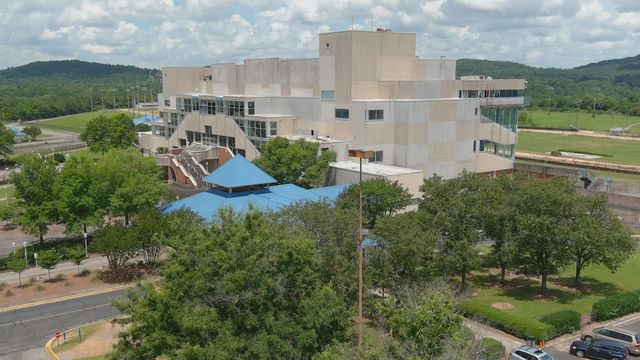
Birmingham Racecourse
Sitting on a sprawling 330-acre parcel just east of downtown Birmingham, the Birmingham Race Course doesn't look like a place that carries much mystery. Its grandstand is utilitarian, its parking lot vast and often half-empty. But the track has a history shaped more by ambition, disappointment, and collapse than by the pageantry of the sport it was built to celebrate — and beneath that history runs a thread of paranormal lore anchored to the land itself. The facility opened on March 4, 1987 under the name the Birmingham Turf Club, conceived as a showcase for thoroughbred horse racing in the Deep South. Backers envisioned a destination drawing gamblers and racing fans from across the region. Legendary jockey Willie Shoemaker recorded TV commercials from the winner's circle. The Birmingham Inaugural Stakes drew more than 13,000 fans on opening night, and the $85 million facility was heralded as a new era for Alabama entertainment. But the momentum collapsed almost immediately. Only a fraction of that opening crowd returned the following night, and the track bled money — reportedly losing up to $100,000 a day in its early weeks. It went bankrupt and shuttered within its first year. Delaware North Companies bought the property and reopened it in 1989, but it closed again by 1991. Greyhound racing magnate Milton McGregor purchased the course the following year and lobbied successfully to bring dog racing to the facility. For a few years, horses and greyhounds ran in alternating races on the same track. The combined betting handle peaked at $163 million in 1993, then began a long, steady decline. Live horse racing was abandoned entirely in 1995. The track reinvented itself multiple times — nightclub, boxing venue, home to the Alabama State Fair, and eventually a facility relying on simulcast wagering and slot-like historical racing machines. McGregor died in 2018. Live greyhound racing ended March 18, 2020. In April 2025, the Poarch Band of Creek Indians completed the purchase through their gaming arm, Wind Creek Hospitality, with plans to redevelop it into a destination resort. The paranormal claims trace back to the facility's very foundation. Accounts circulating for decades hold that the Race Course was constructed over an ancient Native American burial ground. Whether that claim can be formally verified, the land sits in a region deeply marked by Indigenous history — Creek and Cherokee peoples inhabited central Alabama for centuries before European settlement, and the broader Jefferson County area contains numerous known and undocumented ancestral sites. That history has shaped how visitors and staff interpret what they experience there. Employees working late hours have reported shadowy figures standing out on the darkened racecourse — present one moment, gone the next. The stables have drawn particular attention, with accounts of maniacal laughter and disembodied voices coming from areas where no one is present. Phantom hoofbeats have been reported on various parts of the property, a detail that carries specific weight in a place built around the sound of animals running. Visitors describe feeling suddenly and inexplicably watched, an ambient unease with no visible source. What gives the Birmingham Race Course an unusual quality among haunted locations is the layering of its story. The land may predate American settlement by centuries. The facility built upon it was born amid grand promises and failed almost immediately, repeating that cycle several times over three decades. And its new owners are the Poarch Creek Indians — the only federally recognized tribe in Alabama, and the direct descendants of the peoples whose ancestral territory once included this very ground. Whether that represents a closing of a circle is a matter of interpretation. The grandstand still stands, the racing machines still run around the clock, and the long corridors between the old stables sit in the particular silence of places that once held much more life than they do now.
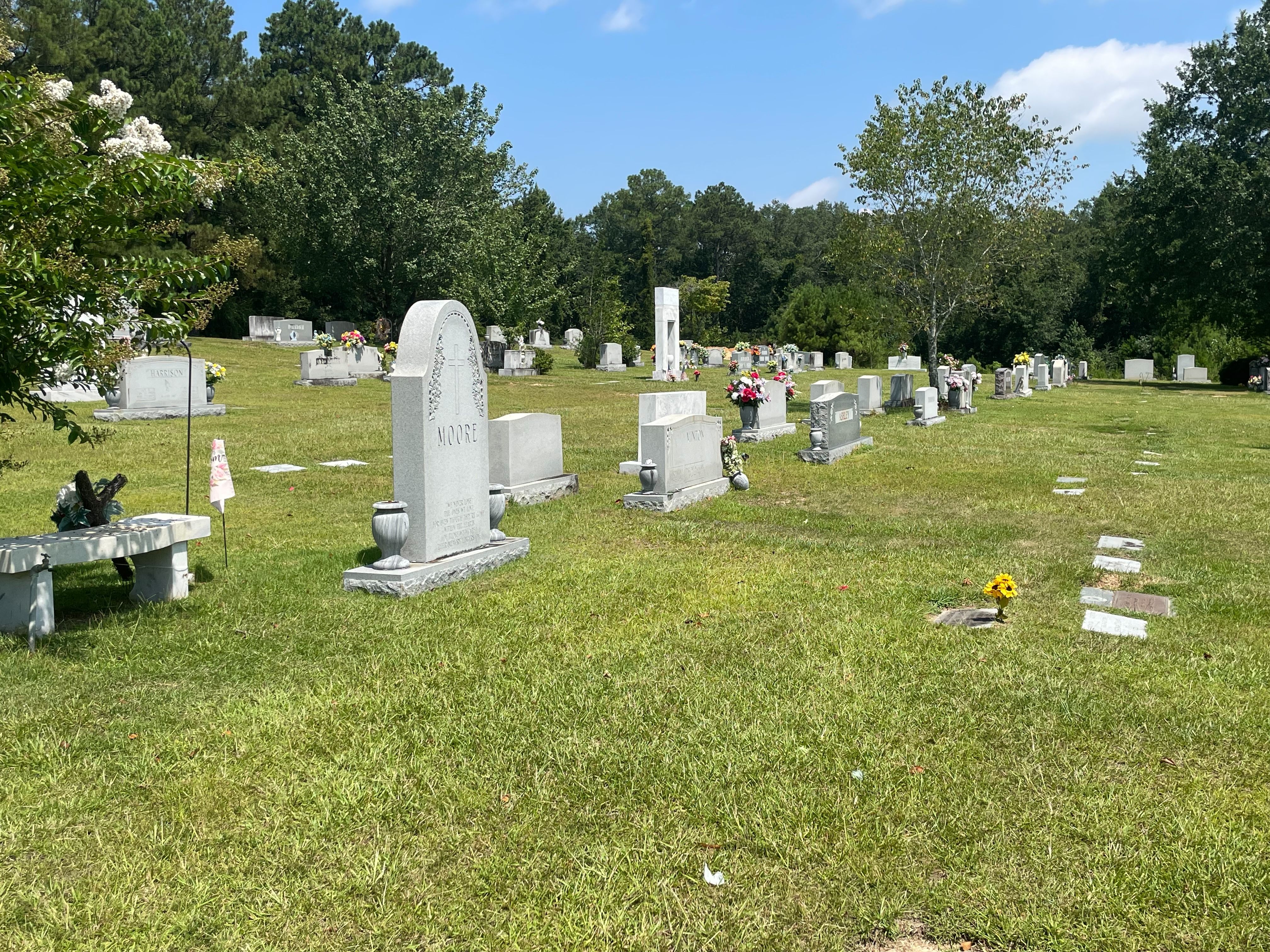
Crestwood Cemetery
Settled into a quiet stretch of East Broad Street in Gadsden, Alabama, Crestwood Cemetery occupies land that sits near the banks of the Coosa River in Etowah County — a region with deep and often troubled roots stretching back through the Civil War era and beyond. Established in 1940 and operated in connection with the Crestwood Funeral Home on the same grounds, the cemetery has served the East Gadsden community for generations, its plots home to veterans, longtime residents, and ordinary families whose lives were woven into the fabric of a city built on river commerce and heavy industry. Gadsden itself grew from a steamboat landing in the 1840s into one of Alabama's most significant industrial centers, second only to Mobile in commercial importance through much of the 19th century. The east side of town, where Crestwood sits, was a site of active movement during the Civil War — Confederate forces encamped along the Coosa River's east bank, and the area saw both skirmishes and the passage of large troop movements as Hood's Army of Tennessee crossed through in October 1864. The broader Etowah County landscape was shaped by plantation agriculture before the war, with enslaved labor woven into the region's economy, and with those histories largely undocumented and unmarked in the historical record. It is that older, harder history that forms the core of Crestwood's paranormal reputation. The cemetery is rumored to sit on the grounds of a former slave plantation, with accounts suggesting that the land carries the unresolved weight of that history. The most specific and persistently repeated claim is the apparition of a hanged enslaved man appearing in the trees on the property — a figure glimpsed at the edge of visibility, present in the branches and then gone. Whether rooted in documented history or passed down through neighborhood legend, the image is a stark one, and it endures in local accounts with a consistency that separates it from vague general unease. Beyond that central figure, visitors have reported shadowy movement along the cemetery's perimeter and the feeling of being watched from the tree line after dark. The cemetery borders a long-established Black neighborhood on its east and south sides, and some observers have noted that reported figures near the fence line could have rational explanations — though accounts of the hanged apparition in the trees don't yield as easily to those interpretations. Crestwood is a functioning cemetery, still accepting burials and maintained as an active place of rest for the Gadsden community. It is not a tourist destination, and no organized paranormal investigation access exists. What lingers around the property is less the structured mythology of a famous haunted location and more the quiet, unsettled weight of land that may carry histories older and darker than the headstones placed upon it. In a county where Cherokee removal, plantation slavery, Civil War encampments, and Jim Crow all left marks on the same soil within decades of each other, the idea that certain ground holds something unresolved is not difficult to understand.
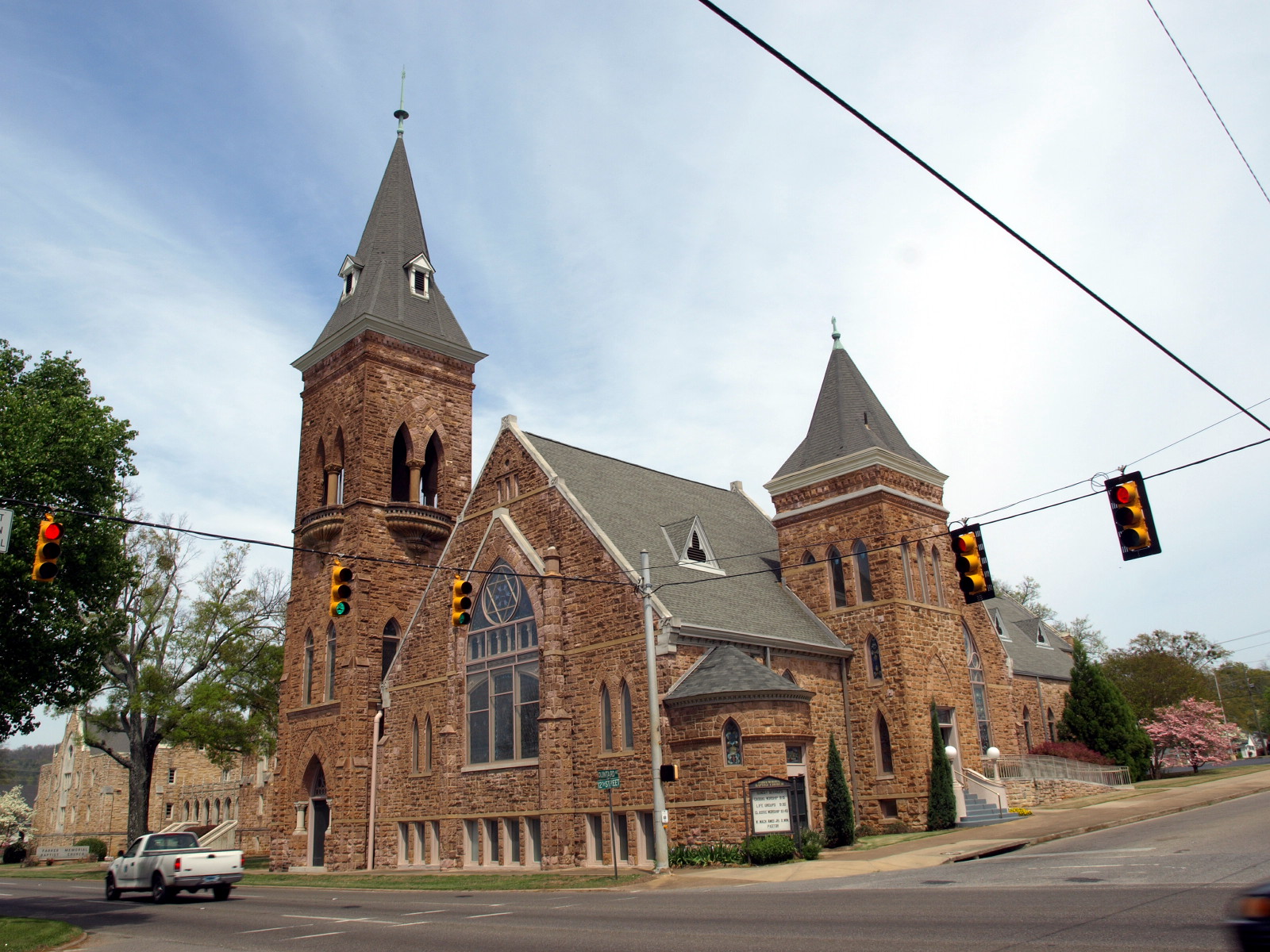
Parker Memorial Baptist Church
Standing along Quintard Avenue in Anniston, Alabama, Parker Memorial Baptist Church cuts a striking silhouette against the Calhoun County sky—a massive Victorian Gothic structure built of native pink sandstone, its corner tower and arched entryway pulling the eye upward in the tradition of grand 19th-century ecclesiastical architecture. It is a building that was never meant to project fear. It was built out of grief, funded by a man who lost everything he loved in the span of a few devastating months, and the weight of that origin has never fully left its walls. The congregation that would eventually call this building home first gathered on July 3, 1887, when 45 people met at the Opera House on Noble Street to organize a new church, originally called Second Baptist Church, before being renamed Twelfth Street Baptist when its location changed. The story of how it became Parker Memorial is one of the most quietly tragic founding narratives of any church in the state. Duncan T. Parker, founder and first president of First National Bank in Anniston, suffered a catastrophic personal loss in 1889. His young son died of pneumonia, and his wife Cornelia—who had served as the church's first organist—died of the same disease shortly after, her resistance already worn down from nursing a sick daughter through her own illness. Parker, devastated, offered to fund the construction of a new sanctuary as a memorial to his wife. The stained glass windows on the north and south sides of the sanctuary were his personal gifts to the congregation. Parker died shortly after construction began, but left instructions with his three daughters for the building's completion. The new building was dedicated in March of 1891. The result is a large masonry structure built in a late Victorian Gothic style, its exterior of randomly coursed native pink sandstone with belt courses, sills, coping, and steps of Kentucky blue stone. The arched main entrance is found in the northwest corner tower. Inside, the sanctuary retains the proportions and atmosphere of its era—soaring ceilings, rich woodwork, and the pipe organ that has become, over more than a century, one of the building's most persistently discussed features. The church was added to the Alabama Register of Landmarks and Heritage in 1981 and to the National Register of Historic Places in 1985. The paranormal claims surrounding Parker Memorial are modest by the standards of more widely documented haunted locations, but they carry an internal logic that connects directly to the building's founding story. The church has been described as reportedly haunted by a ghostly organ player who plays the chapel organ in the wee hours of the morning. Given that Cornelia Parker was herself the congregation's first organist—and that the church was built in her memory by a husband who died before seeing it completed—the specificity of that particular claim is difficult to dismiss entirely as random legend-making. Whether or not music actually drifts through the sanctuary after midnight, the image of a Victorian organist who never lived to see the church dedicated, tied forever to an instrument in a building raised in her honor, carries its own peculiar emotional resonance. The other claim in circulation is considerably less credible. At least one ghost website has proclaimed that the church is haunted by a nun who took her own life in the main hallway—a detail that doesn't survive even casual scrutiny given that this is a Southern Baptist congregation with no historic connection to Catholic religious life whatsoever. It is the kind of story that accumulates around old buildings the way moss does around stone, indifferent to whether it makes any sense. What gives Parker Memorial its genuine atmosphere isn't the folklore. It's the circumstances of its creation. A man who helped build a city lost his son and his wife to the same disease within weeks of each other, and responded by commissioning an $85,000 sandstone church he would never live to enter. His daughters completed it. His wife's organ was placed inside. The stained glass he paid for still filters the Alabama light. There is something melancholy and unresolved embedded in that sequence of events that no amount of skepticism can fully dispel. Buildings built to memorialize the dead have a different quality than buildings built for the living, and Parker Memorial Baptist Church has been, in a very literal sense, a monument to grief from the day its cornerstone was laid. Today the church remains an active Southern Baptist congregation and a legitimate piece of Anniston's architectural and civic heritage. The pink sandstone tower still anchors the Quintard Avenue streetscape. The stained glass still holds. Whether the organ plays on its own in the small hours is a question the congregation leaves largely unanswered. But for a building whose very name was spoken first in mourning, a little unresolved mystery seems entirely appropriate.

Death Masks of Mt. Nebo Cemetery
Mount Nebo Cemetery, located in Carlton, Alabama, represents a unique archaeological and folkloristic phenomenon within American burial practice, distinguished by its collection of life-sized death mask sculptures that serve as grave markers for the deceased individuals interred within its grounds. The cemetery itself is registered on the National Register of Historic Places, acknowledging its significance as a cultural and historical resource worthy of preservation and scholarly study. The burial ground dates to the nineteenth century and contains graves spanning multiple generations, with the surrounding landscape reflecting the natural topography of central Alabama's rolling terrain. The cemetery has been maintained as an active burial ground for generations of families, continuing to serve the local community's need for respectful interment of deceased individuals. The physical landscape of Mount Nebo combines natural elements of forest and open ground with the constructed human elements of grave markers, paths, and commemorative structures that individuals and families have added to mark and remember their deceased. The cemetery retains an atmosphere that many visitors describe as peaceful yet somehow suspended in time, as though the accumulated presence of the dead has created a quality of stillness and historical weight that penetrates the contemporary experience of individuals moving through the grounds. The distinctive feature of Mount Nebo Cemetery that has attracted scholarly attention and contributed to its reputation is the presence of plaster or ceramic death mask sculptures that serve as grave markers for selected burials. These masks appear to have been created by Issac "Ike" Nettles, an artist and craftsman who worked in the late nineteenth or early twentieth century, producing life-sized representations of deceased individuals's faces based on death-related sculptural traditions and folk art practices. The masks are positioned upright at grave sites, creating an uncanny visual experience in which the cemetery becomes populated by stone or ceramic faces of the deceased gazing outward from their burial locations. Each mask preserves the distinctive facial characteristics of the individual it represents, with variations in age, expression, and individual features creating a gallery of death representations. Some masks display serene or peaceful expressions, while others appear to preserve evidence of illness, age, or the ravages of time upon physical features. The creation of these masks by Ike Nettles represented a significant artistic and cultural undertaking, with the artist apparently working with families to create commemorative sculptures that served both aesthetic and memorial functions. The death masks represent folk art of considerable sophistication, preserving artistic traditions from earlier centuries while adapting them to the specific cultural and social contexts of nineteenth-century Alabama communities. The death masks of Mount Nebo Cemetery have generated scholarly interest from multiple disciplinary perspectives including art history, folklore studies, archaeology, and cultural anthropology. Researchers have studied the masks as examples of folk art production and as evidence of cultural practices surrounding memorialization and representation of the deceased. The masks preserve individual identities through their distinctive facial representations, creating a permanent visual record of how specific individuals appeared at or near the time of death. Archaeological investigations have examined the masks' construction methods, materials, and artistic techniques, determining that they reflect skilled craftsmanship and artistic sophistication beyond simple folk production. The masks have been photographed and documented extensively, with these records serving to preserve the artistic and cultural significance of the cemetery for future generations. Academic publications have examined the masks within broader contexts of American folk art traditions, memorial practices, and nineteenth-century cultural beliefs regarding death and commemoration. The cemetery has attracted the attention of students of unusual burial practices and American graveyards, with the death masks establishing Mount Nebo as a distinctive and archaeologically significant location. Paranormal reports associated with Mount Nebo Cemetery remain limited in documentation compared to more actively haunted locations, yet the cemetery's unique character and the presence of the uncanny death mask sculptures have generated speculation regarding supernatural phenomena. Visitors to the cemetery have occasionally reported encounters with what they describe as spiritual presences or unexplained phenomena, though these accounts remain anecdotal and lack the consistency and documentation associated with more actively paranormal locations. The psychological impact of encountering the death masks creates conditions in which it becomes difficult to distinguish between genuine paranormal experience and the effects of the masks' visual strangeness and psychological resonance. Local folklore includes references to the cemetery as a location of spiritual significance, with traditional narratives suggesting that the spirits of the deceased remain unusually present within the cemetery grounds, their awareness somehow preserved or intensified by the presence of the masks that bear their likenesses. Some investigators have speculated that the artistic representation of the deceased through the masks might create a focal point for spiritual manifestation or communication, though such theories remain speculative and unsupported by systematic investigation. Mount Nebo Cemetery remains primarily significant for its historical, artistic, and cultural value as an example of folk art memorial practice, while its paranormal character remains secondary and uncertain. The death masks themselves represent a profound meditation on mortality, memory, and the human impulse to preserve representation of the deceased against the inexorable erasure of time, creating a location where the living confront the reality of death through artistic representation and where the distinction between aesthetic experience and supernatural encounter becomes productively ambiguous.
White Lion Inn
The White Lion Inn represents one of England's finest examples of Elizabethan architecture, constructed in 1591 as a coaching inn in Stratford-upon-Avon during a period when such establishments served as vital waypoints for travelers navigating the English countryside. The building exhibits the characteristic timber-framing and multi-story construction typical of the era, with its substantial structure designed to accommodate both the animals and passengers that constituted the regular traffic of the coaching trade. Located in a historic region synonymous with William Shakespeare and English literary tradition, the White Lion Inn carries the weight of more than four centuries of human habitation, commerce, and social interaction. The building has undergone numerous modifications and repairs over the centuries while maintaining its essential Elizabethan character, making it a valuable archeological and architectural record of period construction techniques and domestic living arrangements. The inn's longevity and status as one of the region's most recognizable buildings have made it a consistent drawing point for historians, tourists, and those interested in paranormal phenomena associated with ancient English structures. The historical record indicates that multiple individuals and families have left indelible marks on the White Lion Inn's fabric, their stories woven into the building's reputation and character. Robert, known only by his first name in most paranormal accounts, appears to have died within the inn's walls and remained behind, his spirit choosing or becoming unable to depart from the location of his death. Isabella White, whose surname may derive from the inn's name or represent an ironic connection, has been most frequently sighted in the kitchen and specific guest rooms identified as 264 and 314. The presence of a child designated as Little Charlie, believed to gaze from the attic windows particularly in the Pailton locality, suggests that families with children passed through or resided at the inn, with at least one child departing this life while associated with the location. The cumulative effect of these multiple presences creates an impression of the inn not as a haunted site populated by a single tragic figure, but rather as a location where normal human life and death have occurred so regularly that some inhabitants have declined to depart even after their biological existence has concluded. The paranormal manifestations documented at the White Lion Inn span a range of phenomena consistent with traditional ghost accounts from historic English locations. Apparitions of identifiable individuals, most notably Isabella White in her kitchen domain and the child figure in the attic windows, represent the most visually compelling evidence of non-corporeal presences. Ghost sightings more broadly occur throughout the structure, suggesting activity not confined to specific rooms but rather distributed across the inn's multiple levels and spaces. Unexplained noises, characteristic of many haunted locations, manifest as sounds without identifiable sources or mechanical explanations. Doors slam spontaneously with sufficient force to suggest physical agency rather than drafts or settling, a phenomenon common to many historic English haunted sites. The combination of visual apparitions, auditory phenomena, and the broader category of unexplained manifestations creates a comprehensive portrait of paranormal activity that has been documented by multiple independent sources. The White Lion Inn stands today as one of England's most extensively documented paranormal locations, with its Elizabethan heritage and multiple ghost accounts making it a destination for paranormal researchers, ghost tour operators, and history enthusiasts. The building's integration into modern Stratford-upon-Avon while maintaining its ancient character has allowed it to function simultaneously as a living business, a historical monument, and a paranormal site. Visitors report their experiences with the spirits, guides lead ghost tours through the ancient corridors, and researchers continue to attempt to identify and understand the individuals whose spirits appear to remain bound to this four-hundred-year-old structure. The White Lion Inn exemplifies how historic buildings can accumulate not merely physical layers of modification and repair but also psychological and paranormal dimensions that persist across centuries, creating locations where past and present interpenetrate in ways that conventional explanations struggle to accommodate. The inn remains open to visitors, its ancient beams and period features still visible to those who come to experience both its architectural heritage and its reputation as one of Britain's most authentically and extensively haunted buildings.
CEPA Building
The Cepa Building, located in Pell City, Alabama, represents a commercial or mixed-use structure within this smaller American city, constructed during a period that reflects the architectural and economic conditions of its era. The building designation CEPA likely represents an acronym or the building's historical name, potentially standing for a civic organization, business entity, or cultural institution that occupied or owned the structure during a particular historical period. Pell City, situated in Saint Clair County in east-central Alabama, developed as an industrial and residential community along the Coosa River, and its urban infrastructure reflects the economic activities and cultural values typical of Alabama communities of its size and region. The Cepa Building presumably contributed to the commercial viability and cultural functions of downtown Pell City, providing space for business operations, entertainment, or civic activities that served the surrounding community. The structure likely features distinctive architectural characteristics reflecting period building practices, materials, and design aesthetics appropriate to early twentieth century Alabama commercial construction. The presence of performing arts spaces within the building suggests it may have functioned as a theater, concert hall, or entertainment venue, or contained spaces rented to performance companies and cultural organizations serving the Pell City area. The lobby area, mentioned in paranormal documentation, represents the primary public entrance and circulation space, the location where visitors first encountered the building's interior and where public performances or events may have been announced and promoted. The historical context surrounding the Cepa Building haunting likely involves specific tragic events or deaths that occurred within the structure, events significant enough to create lasting psychological and spiritual impressions within the paranormal landscape of the building. The documentation available regarding the Cepa Building haunting identifies multiple distinct spirits inhabiting the structure, including a child spirit characterized as a little girl and the spirit of a man whose death circumstances involved hanging or strangulation. The specific identities of these deceased individuals remain incompletely documented in available sources, though their continued presence within the building suggests either violent deaths, unexpected tragic circumstances, or unresolved trauma creating the psychological conditions favorable to persistent spiritual manifestation. The tragic nature of deaths apparently occurring within the building, particularly the death of a child and the apparent violent demise of an adult male, suggests a location marked by tragedy and suffering capable of imprinting itself upon the spiritual landscape. The Cepa Building's period of primary historical significance and the presumed dates of the deaths that generated the haunting remain unclear, though the consistency and intensity of reported paranormal phenomena suggest the entities have established relatively permanent residence within the building's psychic environment. The paranormal manifestations at the Cepa Building present a distinctive pattern involving auditory phenomena and emotionally resonant spiritual expressions suggesting entities with specific identities and historical circumstances. The most distinctive and heartbreaking manifestation involves the crying of a little girl heard emanating from areas within the building, particularly within the performing arts spaces and lobby areas. The quality of the crying has been consistently described as genuinely resembling that of a distressed child, rather than wind sounds, mechanical noises, or other natural phenomena that might superficially resemble infant or child vocalizations. The persistent manifestation of child crying over an extended period suggests either the spirit of a deceased girl expressing ongoing distress or a traumatic incident involving child suffering that has imprinted itself upon the building's psychic landscape. The second major paranormal manifestation involves phenomena attributed to the spirit of a man who died by hanging, suggesting his death was either murder, suicide, or accidental strangulation occurring within or near the building. The haunting associated with this male spirit includes a distinctive low hum or moan sound described as emanating from the lobby area, a vocalic phenomenon suggesting either the death cry preserved as residual psychic energy or an intentional expression of emotional content from the spirit. The low, resonant quality of the sound creates an unsettling atmosphere distinct from the higher-pitched crying of the child spirit, suggesting different emotional states and possibly different historical time periods or circumstances associated with the two entities. Paranormal investigation teams have conducted formal investigations at the building, documenting phenomena and collecting electromagnetic data and audio recordings that contribute to the accumulated evidence base regarding the Cepa Building's paranormal characteristics. The Cepa Building continues to exist within Pell City's urban landscape, though its contemporary functions and current use status remain incompletely documented in available paranormal research sources. The building's documented paranormal activity has contributed to its recognition within paranormal research and ghost hunting communities, attracting investigative attention and inclusion in comprehensive databases of American haunted locations. Paranormal investigation events have been organized at the Cepa Building, providing opportunities for dedicated paranormal researchers to document phenomena and collect firsthand eyewitness testimony from participants experiencing the building's supernatural manifestations. The specific emotional intensity associated with the crying of the child and the moaning of the male spirit creates a particularly poignant paranormal environment, one where human tragedy and suffering have left indelible marks upon the physical structure and its spiritual landscape. The Cepa Building exemplifies how commercial structures and public buildings can become repositories for spiritual unrest and emotional trauma, locations where historical tragedy continues to manifest in forms perceptible to sensitive individuals and equipped investigators. The building stands as a testament to the vulnerability of children and the capacity for violent tragedy to leave lasting psychic impressions, phenomena that persist within the Cepa Building and continue to intrigue paranormal researchers seeking to understand the mechanisms and manifestations of spiritual haunting in American urban environments.
Wesleyan Hall – University of North Alabama
Wesleyan Hall stands as one of the oldest and most historically significant academic buildings on the campus of the University of North Alabama, a institution founded in the nineteenth century in the city of Florence within the northern reaches of the state. The structure itself represents an architectural artifact of an era when higher education in the American South was undergoing profound transformation, having been constructed during a period of considerable institutional expansion and growth at the university. Throughout its lengthy existence spanning more than a century and a half, the building has served as a classroom facility, administrative center, and dormitory space for countless students who have walked its hallways in pursuit of academic achievement and intellectual development. The university itself carries deep historical significance as one of the South's oldest continuously operating institutions of higher learning, and Wesleyan Hall has remained central to its academic mission throughout generation after generation of students and faculty. The building's particular connection to paranormal phenomena centers on the spiritual presence of a young drummer boy named Jeremiah, believed to have died during the Civil War era while serving in a military capacity associated with the university or the surrounding region during those turbulent years of the American conflict. Historical accounts and oral traditions passed down through generations of students and faculty members suggest that the boy's spirit has remained bound to the halls of Wesleyan, unable or unwilling to depart from the location where his life came to an abrupt and tragic end during wartime circumstances. The entity is said to have maintained a particular attachment to the building's interior spaces, with multiple reports describing his ghostly presence manifesting throughout the corridors and offices that comprise the structure's layout. The temporal nature of the hauntings suggests that the spirit may be replaying moments from his final days or desperately attempting to communicate some message or memory that remains unresolved within his consciousness. Numerical accounts from students, faculty, and maintenance personnel over the decades have documented an array of paranormal phenomena consistently attributed to the presence of Jeremiah's restless spirit. Witnesses report experiencing disembodied footsteps echoing through the hallways during late evening and night hours when the building should be completely empty of human activity, accompanied frequently by rhythmic banging sounds that suggest the use of drumsticks or percussion implements against various surfaces throughout the structure. The manifestations include the spontaneous opening and closing of doors with no observable cause, sudden and unexplained activation of computer equipment that has been switched off, and the mysterious power-down of electronic devices despite being in proper working order. Investigators and paranormal researchers have documented these phenomena on multiple occasions through careful observation and through the use of specialized recording equipment designed to detect electromagnetic fluctuations and other markers of supernatural activity. The consistency and specificity of these accounts across multiple independent witnesses suggest a genuine paranormal presence rather than misinterpretation or coincidence. The building's reputation as a haunted academic space has become something of a fixture within campus culture and local folklore surrounding the University of North Alabama. Paranormal investigation teams have visited Wesleyan Hall on numerous documented occasions, bringing technical equipment and expertise in the study of unexplained phenomena to attempt to understand the nature and origin of the manifestations occurring within its walls. The entity associated with the building appears to maintain a consistent behavioral pattern, suggesting a spirit bound by circumstance or emotion rather than one that drifts aimlessly through multiple locations. Campus tours and historical accounts frequently reference the haunting, and the building has become something of a point of interest for visitors and students fascinated by the intersection of history, tragedy, and the unexplained. Wesleyan Hall continues to function as an active part of the university community while maintaining its reputation as one of the most reliably haunted structures within the institution's extensive campus grounds, attracting both scholarly interest and casual curiosity from those intrigued by paranormal phenomena.
Crybaby Bridge
Crybaby Bridge in Saraland, Alabama represents a regional manifestation of one of the most geographically dispersed paranormal phenomena in North America, a legend and documented haunting spanning virtually every continental state. The phenomenon of crybaby bridges has established itself as one of the most recognizable categories of American folklore and paranormal tradition, with basic narrative structure remaining consistent across geographical regions despite variations in specific circumstances and local details. The Alabama location occupies a significant position within this broader paranormal pattern, representing both a unique local manifestation and a node in a continental network of comparable hauntings. The bridge itself likely dates to the nineteenth or early twentieth century, constructed as a conventional infrastructure element to facilitate transportation. The paranormal reputation acquired through decades of documented phenomena has transformed the bridge into a location of substantial paranormal significance and cultural meaning. The core narrative underlying the Crybaby Bridge legend involves tragedy centered upon a vulnerable infant, creating an emotional foundation of loss, abandonment, and death that generates psychologically profound responses from contemporary visitors. Variations of the legend propose different specific circumstances accounting for the infant's death, including scenarios involving accidental drowning, deliberate infanticide, and abandonment in severe weather. The consistency of the legend's basic structure across the continent suggests either cultural transmission of a single narrative or independent parallel development of similar psychological and paranormal patterns across diverse geographical contexts. The specifics of Crybaby Bridge in Saraland align with the generalized legend pattern while potentially embodying unique local elements warranting investigation and documentation. The bridge location appears to have become a focal point for spectral manifestations related to infantile death and maternal loss. The primary paranormal manifestations at Crybaby Bridge involve disembodied sounds of infants crying with such clarity and emotional intensity that listeners initially question whether an actual abandoned child might be present. Numerous documented instances exist of visitors responding to the apparent cries by searching the bridge vicinity for a living infant, with subsequent realization that no physical child could account for the auditory phenomenon. The cries have been recorded by paranormal investigators using digital audio equipment, with captured sounds displaying acoustic characteristics consistent with infant vocalizations despite the absence of any conventional source. The phenomenon appears activated particularly during nighttime hours and under conditions of reduced visibility, suggesting potential sensitivity to ambient light levels. Apparitions of unidentified women have been documented at the location, with witness descriptions suggesting individuals dressed in period clothing consistent with nineteenth-century styles. The haunting at Crybaby Bridge has expanded beyond purely paranormal manifestations to encompass phenomena involving mechanical malfunction and vehicle anomalies. Multiple documented instances exist of vehicles experiencing electrical failures, engine problems, or other mechanical disruptions while crossing or in proximity to the bridge, with repairs revealing no mechanical cause. These incidents have generated folklore suggesting that the paranormal presence actively interacts with contemporary technology, though alternative explanations involving perceptual errors or confirmation bias cannot be entirely excluded. Summoning rituals developed by paranormal enthusiasts propose specific actions believed to activate or intensify the paranormal phenomena, including particular incantations or behaviors performed on the bridge. The legend of Crybaby Bridge has established itself as a central narrative in American paranormal folklore and youth popular culture, with the Saraland location becoming a destination for paranormal enthusiasts, folklore collectors, and verification-seeking individuals. The combination of accessible location, documented paranormal activity, and powerful emotional narrative foundation makes the site particularly compelling for contemporary visitors. The bridge remains functional for its original transportation purpose while simultaneously operating as an informal paranormal attraction accessible to the public. The paranormal activity at Crybaby Bridge appears to persist with notable consistency despite the passage of time and changes to surrounding infrastructure and development patterns.
Aunt B’s – Southern Hospitality
Aunt B's Southern Hospitality occupies a distinctive and historically significant position within the small community of Elba, Alabama, established as a bed-and-breakfast accommodation dedicated to providing travelers with Southern hospitality in the tradition of gracious regional customs and warm personal attention. The facility operates within a building of considerable historical significance, likely constructed during the late nineteenth or early twentieth century and subsequently preserved and adapted for contemporary use as a hospitality business serving transient guests and extended visitors to the region. The architectural character of the building reflects the vernacular traditions of rural Alabama construction, with spatial arrangements designed to maximize comfort and provide the privacy expected by overnight guests while maintaining the elegant ambiance appropriate to hospitality establishments catering to individuals seeking authentic regional experiences and atmospheric immersion in traditional Southern culture and environment. The paranormal phenomena documented at Aunt B's Southern Hospitality present a complex and multifaceted manifestation that extends beyond conventional single-entity hauntings, encompassing multiple distinct apparitions and forms of spectral activity that suggest a location inhabited simultaneously by several distinct spiritual presences with apparent different characteristics and behavioral patterns. The primary manifestations consist of multiple ghostly figures including male apparitions displaying aggressive or threatening demeanor, female apparitions accompanying these male entities, and distinctly separate manifestations involving a child apparition described as appearing in old-fashioned clothing indicative of historical periods antedating the contemporary era. The male apparitions are reported as particularly unsettling in their apparent intentionality and aggression, with witnesses describing apparitions of men attempting to force entry through windows and doors, creating the disturbing impression of attempted intrusion by malevolent entities rather than simple neutral ghostly manifestation or passive haunting phenomena. The specific locations within the Aunt B's structure where paranormal activity concentrates appear to correlate with the building's external perimeter and access points, with significant manifestation reported along windows and at doors where the male apparitions appear to attempt unauthorized entry and intrusion into the interior spaces of the accommodation. The patio area external to the primary structure appears to serve as a location of frequent manifestation, particularly for the child apparition whose appearance in old-fashioned historical clothing suggests connection to an earlier period in the building's history when different occupants and purposes characterized the space. The psychological response of guests and staff to the paranormal phenomena includes elevated anxiety, unsettling feelings of violation and threat in response to the aggressive male apparitions, and the general development of an atmosphere of unease that permeates the building despite its otherwise hospitable and welcoming decorative and functional environment. The apparitions appear responsive to human attention and awareness, with manifestations intensifying when observers actively acknowledge the spiritual presences or direct attention toward them. The contemporary operation of Aunt B's Southern Hospitality as an active hospitality business accommodating paying guests has created a complex situation in which the establishment must balance its mission to provide welcoming and safe accommodation with the acknowledgment and accommodation of persistent paranormal phenomena that guests may encounter during their stays. The management and staff have developed pragmatic approaches to addressing guest concerns about supernatural activity while avoiding sensationalized exploitation of the location's paranormal reputation that might undermine the establishment's primary function as a comfortable hospitality destination. The historical context of the building and any traumatic events that may have occurred at the location remain subject to investigation, with paranormal researchers suggesting that the aggressive male apparitions may represent spirits connected to violent historical incidents potentially including criminal activity, conflict, or deaths occurring under traumatic or violent circumstances. Aunt B's Southern Hospitality thus stands as an example of a contemporary hospitality business operating in conscious coexistence with well-documented paranormal phenomena, maintaining its function while acknowledging and respecting the apparent spiritual forces that appear to inhabit its spaces and interact with those who temporarily occupy its rooms.
Bass Cemetery
Bass Cemetery stands as one of Birmingham, Alabama's oldest burial grounds serving successive generations as final resting place spanning more than century and half. Established when Birmingham transitioned from rural settlement to industrial center powered by coal and steel, the cemetery reflected community's aspirations toward permanence in rapidly transforming landscape. Cemetery grounds encompass numerous generations of burials including individuals dying during historical upheaval and military conflict. Among earliest interments are remains of Burwell Bass, Revolutionary War veteran whose extended life allowed witnessing nation's founding. The cemetery contains remains of Montezuma Goodwin, farmer whose violent death became central to paranormal accounts. Accumulated weight of history, tragedy, and loss created conditions conducive to persistent intense paranormal manifestations. Paranormal phenomena at Bass Cemetery documented extensively by investigation teams and historians demonstrate characteristics consistent with complex multi-entity haunting with distinct phenomena attributable to different spiritual presences. Most prominent disturbing phenomena reported are unexplained screams echoing with intensity and clarity often mistaken for living individuals in distress. These vocal manifestations typically occur during evening and night hours becoming increasingly frequent as darkness deepens. Screams carry emotional content suggesting agony, terror, or profound despair often followed by abrupt silence creating profoundly unsettling suspended dread. Numerous visitors report checking on scream sources only to find cemetery deserted with no evidence of living person. Beyond unexplained screams, Bass Cemetery notable for pervasive emotional atmosphere affecting visitors regardless of skepticism. Individuals entering grounds frequently report overwhelming sensations of dread, uneasiness, and psychological distress unexplained by environmental factors. Emotional phenomena intensify in specific locations creating areas of exceptional psychological pressure that many find intolerable. Paranormal researchers note individuals with psychic sensitivity report particularly intense responses suggesting uneasiness manifests perceived spiritual presence rather than simple environmental psychology. Visual phenomena include documented sightings of mysterious orbs and luminescent masses manifesting frequently during evening and low ambient light. Phenomena captured in still photography, video, and eyewitness testimony from observers without paranormal investment. Orbs range in size from small pinpoints to several feet diameter displaying movement patterns suggesting intentional navigation. Mists appear with particular frequency following rainfall yet display characteristics inconsistent with conventional fog. Witnesses describe mists appearing and vanishing instantaneously moving against wind direction without topographical regard. Compelling evidence suggests Bass Cemetery became focal point for occult ritualistic activity with accounts from neighbors describing candlelit gatherings and chanting in unknown languages explicitly counter to Judeo-Christian tradition. Concentration of reports suggests cemetery established as location of significance for occult practitioners whose activities potentially intensified existing paranormal phenomena. Archaeological evidence proved difficult to substantiate yet consistency of reports across witnesses lends credibility. Paranormal manifestations escalated noticeably during periods of intense ritualistic activity suggesting correlation. Bass Cemetery remains active burial ground serving Birmingham while maintaining reputation as Alabama's most intensely haunted location. Cemetery grounds became destination for paranormal researchers conducting investigations documenting phenomena and identifying specific spiritual entities. Family members learned conducting visits during daylight hours remaining alert to distinctive atmospheric conditions. Local authorities implemented public access policies though enforcement remains challenging given grounds extent and investigator commitment. Historical societies continue identifying specific traumas associated with burials seeking explanations for paranormal intensity and persistence. Cemetery exemplifies how accumulated human tragedy across generations creates conditions for exceptional paranormal manifestations.
Pondtown Road
Pondtown Road in Hartford, Alabama, winds through the state's interior, a remote stretch of pavement connecting scattered communities through areas of natural beauty and geographical isolation characteristic of rural Appalachian and Deep South terrain. Justice Mills Creek runs parallel through sections, its waters having carved valleys over geological timescales while serving indigenous peoples and settlers as a water, power, and transportation source. The road represents a relatively recent human imposition on landscape, a modern asphalt strip connecting isolated homes while cutting through terrain that for millennia existed without such infrastructure. The area contains rich biodiversity of wildlife and forests logged and regrown multiple times, maintaining a sense of remoteness despite contemporary roads and communication technology. Alabama's landscape and settlement history reflect the convergence of multiple cultural traditions, economic systems, and ecological realities shaping human experience across centuries. Native peoples inhabited these lands long before European contact, developing sophisticated cultures adapted to regional conditions. When European settlers arrived, they brought disease, different economic systems, and different land relationships, creating profound disruptions and eventual displacement. The land itself retained qualities many found unsettling, a sense of otherness and ancient presence persisting despite settlement and development. Certain locations became known as places where unusual phenomena occurred, where travelers reported strange encounters defying easy explanation. Pondtown Road has become recognized within paranormal and cryptozoological communities as a location associated with unusual animal sightings not conforming to known regional fauna or documented species behavior. The most prominent entity is identified as a German Shepherd, described in paranormal literature and eyewitness accounts as having characteristics defying straightforward identification. Whether this entity represents a genuine spectral animal, a cryptid misidentified as a familiar domestic animal, or a genuine but unusual canine creature remains subject to ongoing research debate. The historical human activity associated with mills and water power suggests the possibility of historical tragedy that may have created conditions for spiritual manifestations. The German Shepherd manifests in ways suggesting paranormal rather than purely biological nature. Witnesses describe unusual characteristics and behaviors not matching documented German Shepherd temperament or physiology. The creature appears on roadways at night, observed in headlights, and subsequently vanishes when pursued, suggesting ethereal rather than physical nature. Some accounts describe aggressive stances while others report watchful, observational demeanor as though monitoring human activity. The concentration of sightings along specific stretches suggests the entity may be bound to particular locations or respond to specific environmental or temporal conditions. Pondtown Road has achieved recognition in paranormal folklore and cryptozoological databases as one of Alabama's genuinely unusual locations, cited alongside more famous haunted highways. Researchers have attempted documenting sightings through wildlife cameras, road surveys, and eyewitness collection from local residents and travelers. The Alabama countryside contains multiple paranormal legends and cryptid reports, but Pondtown Road's German Shepherd phenomenon makes it a specific point of interest for studying anomalous animal phenomena. The road continues functioning as a normal transportation route while simultaneously serving as a location where the boundary between ordinary animal encounters and paranormal phenomena blurs. The entity's identity, nature, connection to historical events, and explanation for persistent manifestation remain open questions for continuing research.
Railroad Tracks
Maco Light represents one of most enduring and widely documented paranormal phenomena associated with American railroad history, a ghost light phenomenon capturing imagination of paranormal researchers, folklorists, and observers for nearly one hundred sixty years. The phenomenon manifests along railroad tracks in North Carolina, intimately connected to commercial and social history of rail transportation defining American industrial development. The railroad itself embodied technological achievement and economic transformations reshaping American landscape and society. The specific location achieved recognition within paranormal networks not as isolated oddity but as case study in intersection between traumatic historical events, technological modernity, and supernatural manifestation. Railroad transportation, despite commercial benefits, exacted profound human costs through workplace accidents, equipment failures, and catastrophic collisions claiming multiple lives simultaneously. The North Carolina location associated with Maco Light derives paranormal significance from tragic event when accident or accidents involving railroad workers resulted in deaths embedding themselves within consciousness of location. The precise historical circumstances have become obscured by time and transition of oral history through multiple iterations. The spirits of dead railroad workers remained anchored to location of demise, continuing to manifest presence across decades and centuries. The technological modernity of railroad context, rather than making paranormal manifestation incongruous, perhaps intensified it, as massive forces involved in transportation and sudden violent deaths produced psychological trauma of extraordinary intensity. The phenomenon of Maco Light itself, understood as observable manifestation of haunting, has generated extensive description and speculation across paranormal literature and folklore documentation. The light phenomena manifest as visible luminescence moving along railroad tracks, typically described as possessing ghostly quality distinct from ordinary electric or flame-based illumination. The lights display colors variously described as blue, green, white, or orange, with observers reporting shifts in coloration during manifestations. The movement of lights includes bobbing and swaying motions not corresponding to ordinary physical objects, creating kinetic properties suggesting conscious animation. Witnesses report observing lights approaching with apparent purposefulness, growing larger and brighter as they draw nearer, before abruptly fading when reaching certain proximity to observers. The broader ecosystem of American railroad ghost lights includes comparable phenomena in other locations, most notably Gurdon Light in Arkansas and phenomena associated with Chapel Hill, Tennessee railroad tracks. The Gurdon Light exhibits characteristics remarkably similar to Maco Light, including colored apparitional lights moving along tracks in patterns suggesting intelligence and purpose. Skip Adjent's death at Chapel Hill, Tennessee precipitated ghost light phenomenon representing documented instance of railroad worker death producing persisting paranormal manifestation. A railroad worker who died in 1931 in Gurdon, Arkansas in railroad circumstances similarly generated ghost light phenomena. These comparative cases suggest either genuine paranormal phenomenon with multiple independent manifestations or folkloric pattern generating similar narratives across communities. Contemporary documentation of Maco Light continues through systematic paranormal investigation and casual observation, with location remaining accessible to researchers and enthusiasts. The railroad infrastructure itself has evolved since original nineteenth-century operations, with track maintenance and modernization transforming physical context while paranormal manifestations reportedly persist. The area surrounding tracks retains essential character as rail corridor cutting through landscape, though vegetation, surrounding environment, and broader context of rail transportation have transformed. Investigators attempting to document phenomena face challenges related to public nature of railroad property and operational dangers of proximity to active tracks. Nevertheless, paranormal researchers have conducted documented investigations resulting in photographic evidence, audio recordings, and eyewitness accounts maintaining Maco Light within contemporary paranormal discourse as legitimate phenomenon.