
Haunted Places in Selma, Alabama
11 haunted locations
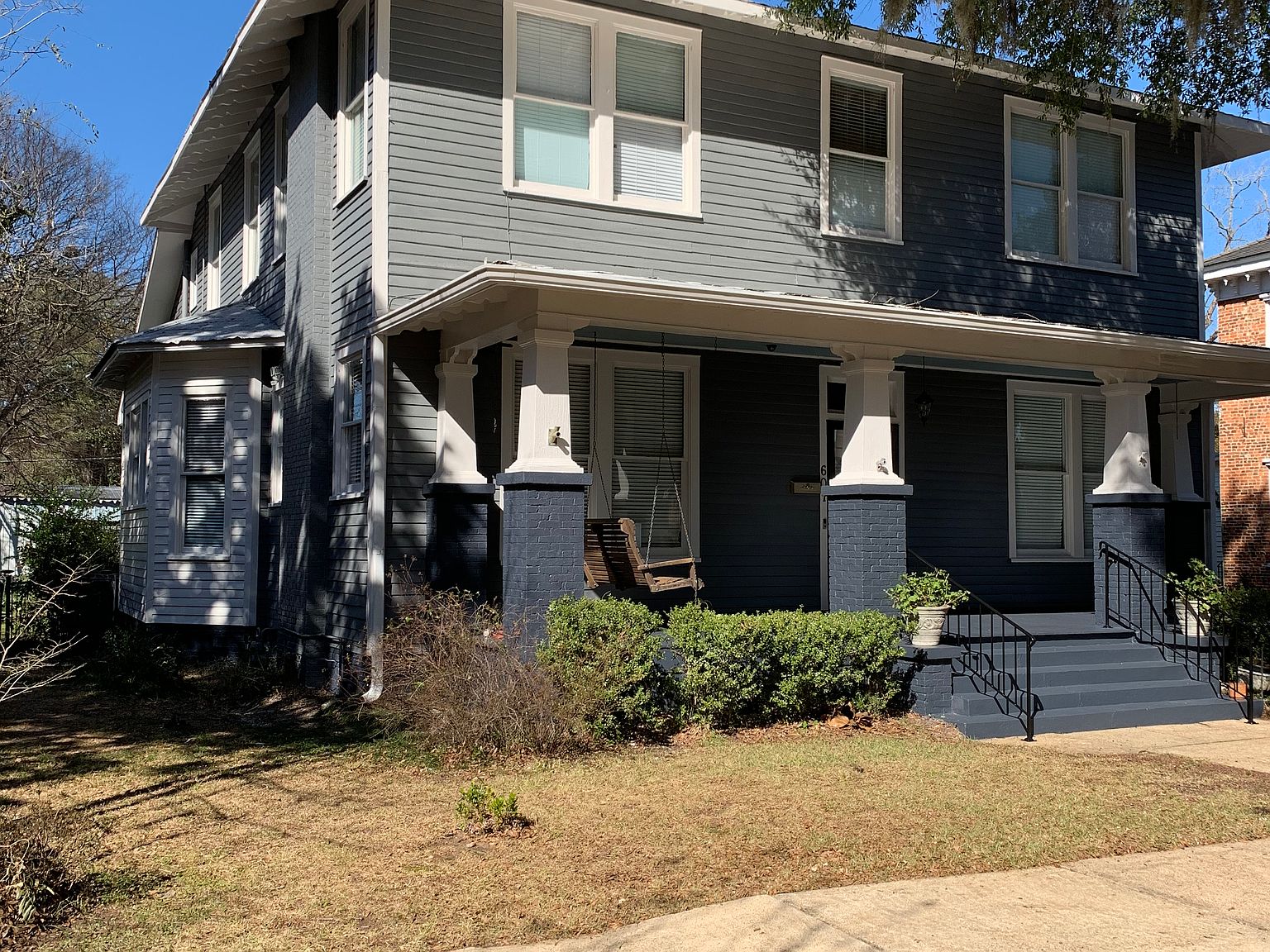
Trotter Home
On a tree-lined stretch of Selma Avenue in one of Alabama's most historically saturated cities, the Trotter Home sits as a quiet two-story Victorian-era residence that has accumulated, over the course of more than a century, a reputation that far exceeds its modest exterior. Built in the 1880s during the period of post-Reconstruction recovery that followed the Civil War's devastation of Selma, the house functioned for decades as a boarding house — one of the many private homes along its block that opened their doors to transient workers, young professionals, and families passing through a city still finding its footing in the New South. It is a structure defined less by grandeur than by longevity, the kind of house that absorbs lives rather than showcasing them, and it is precisely that quality of accumulated human experience that gives it its particular atmosphere. Selma itself provides the backdrop that makes stories like this one feel credible even to skeptics. The city sits in the heart of Alabama's Black Belt, on the banks of the Alabama River, with iron-rich bedrock running beneath its streets and centuries of layered history pressing down from above. It served as a Confederate industrial stronghold before Union forces swept through in the Battle of Selma on April 2, 1865, and it became the epicenter of the American civil rights movement a full century later. Paranormal investigators who have worked extensively in the area note that the combination of the city's geology — iron in the ground, a river running alongside, old structures holding old grief — creates what they describe as conditions unusually favorable to the retention and replay of energy. Whether or not that framework carries scientific weight, Selma produces more consistent accounts of unexplained phenomena per city block than almost anywhere in Alabama. The story at the heart of the Trotter Home's haunting begins in September 1941, when a twenty-one-year-old man named Robert Edgar was living in the house's upper front corner bedroom with his mother, the property then operating as a boarding house. He was driving near Marion Junction with his fiancée when the car tipped over and his arm was caught beneath it on the gravel road. The injury was severe enough to require amputation. Gangrene set in quickly. Surgeons removed the arm on September 16, 1941, but the infection had already progressed beyond saving. Three days later, on September 19, Robert Edgar died. His funeral was held in the home where he had lived, and his body was laid in state in the dining room for three days before burial. His gravestone, later discovered by the home's subsequent residents, reads: Although he sleeps, his memory doth live. The family that gives the house its current name — Norm Trotter, his late wife Pat, and their two teenage daughters — moved in on September 16, 1991, fifty years to the day that Robert Edgar's arm was amputated, and three days before the fiftieth anniversary of his death. They had no knowledge of Edgar when they purchased the house. The seller mentioned in passing, just before closing, that the home had a ghost. The Trotters moved in anyway. What followed was a sustained period of unexplained activity that the family documented carefully over years. Strange things began within weeks of their arrival. Guests sleeping in the home woke feeling a brush across their cheek with no one nearby. Coat hangers jangled loudly inside closed closets. A jar sitting on top of a kitchen cabinet with a raised lip fell and shattered without explanation. The daughters, getting ready for prom upstairs, heard the hangers going and opened the closet to find nothing disturbed. One of them woke in the night, saw a figure standing at the foot of the bed, assumed it was a friend staying over — and realized the friend was asleep beside her. In October 1992, during the World Series, a luminous ball of light floated down the staircase and into the foyer, where it lingered for several minutes while Pat watched it, unwilling to move for fear it would leave before she could make sense of it. The same experience was repeated years later by Norm's second wife, Jaclyn, who watched a glowing orb descend the stairs and pause in the foyer while she sat alone watching television. The spirit, when it appears visually, tends to present at the periphery — a shadow glimpsed at the edge of vision that disappears when turned toward directly. Lights switch on and off without anyone near the switch. Doors open on their own. Plants are knocked from their places. The activity was most concentrated when the daughters were living in the house, and diminished somewhat as they grew up and moved away, though occasional incidents have continued. Pat Trotter, who died in 2003, kept a running file of documented encounters during the years the family was most actively experiencing the phenomena. Research into the house's history eventually led Norm Trotter to newspaper accounts of Edgar's death and to the gravesite that confirmed the timing. The coincidence — that the family moved in on the precise anniversary of Edgar's amputation, and that his funeral had been held in the very dining room beneath their feet — struck the Trotters as something beyond accident, though Norm Trotter has consistently framed the situation with measured curiosity rather than fear. The activity, he has noted, was never threatening. It felt more like the presence of someone who remained attached to a place he knew, visiting the rooms he had occupied in life. The Trotter Home has been featured on Fox's Encounters television program and on Alabama Public Television, and has been included in the Selma and Dallas County Chamber of Commerce's Haunted History Tours for years. It remains a private residence, not open for public investigation. The dining room is still there. So, apparently, is Robert Edgar.
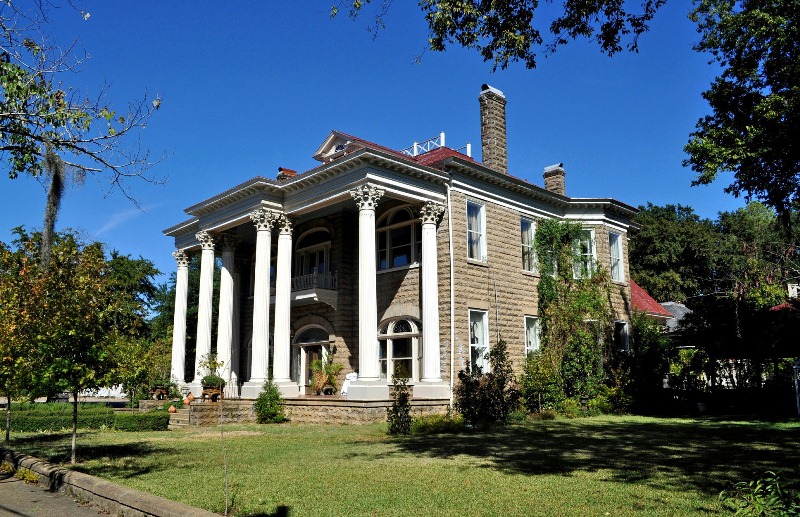
Brownstone Manor
Standing along the shaded stretch of Lapsley Street in Selma, Alabama, Brownstone Manor is a neoclassical mansion that carries itself with the quiet confidence of a house that has outlasted everything around it. Built in the late nineteenth century — sources place its construction variously between 1870 and 1904, with the most commonly cited date falling around 1898 — the home sits within Selma's Old Town Historic District, a nationally recognized collection of over 1,200 historic structures and the largest historic district in the state of Alabama. Lapsley Street itself was among the residential arteries that expanded westward from Selma's riverfront core, a neighborhood built by cotton wealth and defined by the social hierarchies of the antebellum and post-Civil War South. To understand Brownstone Manor, you have to understand Selma. Few American cities carry as much layered historical weight. In the nineteenth century, Selma was second only to Richmond, Virginia, as an industrial arsenal for Confederate forces, producing weapons, ammunition, and ironclad warships. On April 2, 1865, Union troops under Major General James H. Wilson swept through the city in what became known as the Battle of Selma, effectively destroying much of its industrial capacity. The neighborhoods around Lapsley Street survived largely intact, and in the decades following the war, the merchant class and professional families of Selma rebuilt and expanded — constructing the gracious homes that now line the Old Town streets, Brownstone Manor among them. A century later, Selma would again become a focal point of American history, this time as the epicenter of the Voting Rights Movement and the setting of the 1965 marches across the Edmund Pettus Bridge. The manor itself is a five-bedroom, three-bath structure spanning over 7,500 square feet, built in the neoclassical style with the proportions and presence typical of wealthy late-Victorian Alabama. The home gained a measure of literary distinction through its association with F. Scott Fitzgerald and his wife Zelda, who reportedly visited regularly because friends of theirs owned the property. Fitzgerald was already at work on the fiction that would define American modernism during those years, and Selma's drawing rooms and tree-lined avenues would have offered precisely the kind of faded Southern grandeur that runs through so much of his work. The mansion has served multiple purposes over the decades — private residence, bed and breakfast, and event venue — passing through various hands and earning a place on Alabama's Ghost Trail, a cultural initiative documenting the state's most storied haunted locations. The paranormal reputation of Brownstone Manor centers on a former owner known as Ms. Hooper. According to those who have visited and documented the property, her presence has never fully departed. The claims that circulate around the house are specific and consistent: paintings rearranged without explanation, disembodied footsteps moving through rooms when no one is present, and the apparition of a woman in period dress observed by visitors in and around the home. The spirit is described not as menacing but as proprietary — a woman who remains attached to her house and makes that attachment felt. Central Alabama Paranormal Investigations, a Selma-based group, has documented activity at the manor. Their lead investigator has noted the existence of a particularly compelling photograph taken at Brownstone Manor that remained under study. The group's broader work in Selma places the manor within a city they describe as exceptionally active, a characterization that local paranormal investigator Maggie Davies has reinforced over years of cemetery tours and investigations. Davies attributes Selma's unusual density of reported activity in part to the city's geology — iron-rich bedrock beneath an old river city, elements that some investigators believe contribute to the retention and replay of residual energies. Whether or not that theory holds scientific merit, it offers a framework for why Selma as a whole, and streets like Lapsley in particular, seem to generate more accounts than most places of comparable size. The manor today remains a private residence, observable from the street. It is part of the Old Town Historic District's contribution to the National Register of Historic Places. Selma is a city where the distance between the historical and the unexplained has always been thin — where soldiers died in the streets, where generations of families built and lost fortunes, and where the architecture of the past still stands close enough to touch. Brownstone Manor fits comfortably into that context: a grand house with a documented history, a literary footnote, and a former owner who, by most accounts, has never quite left.

The Castle – Weaver House
The Weaver House, known throughout Selma, Alabama as simply "The Castle," commands attention as one of the most architecturally distinctive and historically significant residences in the city's downtown district, occupying a position of prominence on Lauderdale Street that speaks to wealth, ambition, and an unmistakable Gothic sensibility that was unusual even for its era. Constructed in 1868 by William Weaver, a prominent landowner and descendant of one of Selma's founding families, the house emerged from a visionary conception that literally transplanted European architectural traditions to the American South during the Reconstruction period following the Civil War. Weaver commissioned Richard Michell Upjohn, a distinguished architect of New York based international reputation, to design the structure—a remarkable decision that reflected both Weaver's ambitions and his access to substantial financial resources during a period when much of the South struggled economically in war's aftermath. The castle design was reportedly inspired by a Rhine castle in Germany, introducing European Gothic Revival aesthetics into the landscape of central Alabama in a manner that was simultaneously ambitious and somewhat incongruous with its regional context. The physical construction of the Weaver House itself demanded extraordinary resourcefulness and local craftsmanship. Rather than importing brick or stone from distant sources, William Weaver established a brick kiln on his estate specifically to manufacture the sand bricks used in the structure, undertaking the kind of comprehensive control over his project that was available only to the wealthiest and most determined landowners of his period. The resulting five-story Gothic structure, with its distinctive castle-like towers, crenellated walls, and period-appropriate ornamentation, must have appeared almost fantastical to Selma residents of the 1870s, an Old World stronghold rising improbably from the Alabama landscape as a monument to one family's pride and commercial success. The Weaver House remained within the Weaver family's possession through most of the nineteenth century, but by 1934, family circumstances had shifted sufficiently that the property left Weaver control, beginning a long succession of different owners and uses that would characterize the subsequent decades. The Weaver House has been recognized for its architectural and historical significance through inclusion in Selma's Old Town Historic District and its listing on the National Register of Historic Places, designations that acknowledge its importance as a physical artifact and cultural monument from the Reconstruction era. Yet alongside these formal historical recognitions exists a darker narrative of paranormal activity and unexplained phenomena that appears to have accumulated within the castle's Gothic spaces over more than a century and a half. Residents and visitors have consistently reported the faint but unmistakable sound of music emanating from within the structure, particularly at night when the house should be empty and silent—mysterious melodies that appear to have no identifiable source or mechanical explanation. Equally perplexing are reports of inexplicable lights appearing within the attic room, visible to witnesses outside the structure, despite historical records indicating that area was never equipped with electrical wiring, a particularly unsettling detail that defies conventional explanation. Disembodied voices have become perhaps the most frequently documented paranormal phenomenon within the Weaver House, with multiple independent accounts describing intelligible speech and communication from sources that cannot be visually identified or logically explained. A family dog resident in the house allegedly received a disembodied command from an unknown source—a stern voice telling the animal to cease barking—an incident that speaks to an intelligence behind the phenomena, an entity capable of perception and capable of attempting communication with living inhabitants. A repair worker conducting maintenance within the structure was allegedly startled and frightened by a disembodied voice of such clarity and apparent proximity that he felt compelled to abandon his work and leave the premises entirely. Most intriguingly, witnesses outside the structure have reported seeing the apparition of a woman visible within an attic window, her form peering downward as if watching the grounds below, a figure that vanishes immediately when directly observed or when those who encounter it attempt closer investigation. The identity of the spirits apparently inhabiting the Weaver House remains a matter of speculation and historical uncertainty. Whether these phenomena represent William Weaver himself, unable or unwilling to relinquish his grand architectural achievement even after death, or whether the castle has attracted other entities drawn to its Gothic atmosphere and historical weight, remains unknown. In recent decades, the Weaver House has become a point of interest for paranormal enthusiasts and those documenting haunted locations throughout Alabama, featured in the digital paranormal documentary series Alabama's Ghost Trail and referenced in various collections of Southern haunted places. The castle continues to exist as a physical structure, a testament to nineteenth-century ambition and aesthetic vision, while simultaneously functioning as what many believe to be a genuine haunted location where the living past and spiritual present apparently coexist within its walls, where voices continue to speak and apparitions continue to move through spaces built by someone who may have been unwilling to fully depart from his monumental creation.
Grace Hall
Grace Hall, constructed in 1859, represents one of the most historically significant private residences in Selma, Alabama, its architecture and aesthetic reflecting the cultural aspirations of the antebellum South during a period of considerable prosperity and profound moral complexity. The mansion stands as a testament to the period's craftsmanship and ambition, its substantial structure positioned to command attention within its residential context. Built during the final years before the Civil War, the house was constructed as an expression of wealth and permanence, a physical manifestation of the stability and continuity its original builders anticipated for themselves and their descendants. Yet the historical forces that were already reshaping the nation would irrevocably alter the trajectory of Selma itself, transforming the city from a center of commercial prosperity into a location marked by the devastating consequences of war, Reconstruction, and social upheaval. Grace Hall endured through these transformations, its physical structure persisting across more than a century and a half of historical change. It is perhaps unsurprising that a structure that witnessed such profound historical transitions has become a location where the boundary between past and present appears to have become permanently blurred. Grace Hall has emerged as one of the most actively haunted locations in Alabama, with accounts indicating that the residence harbors not one but multiple spiritual entities, each associated with different individuals whose lives became interwoven with the house's history. The primary entities documented at Grace Hall include a figure known as Miz Eliza, whose historical identity and biographical details remain somewhat obscured by time and the passage of generations, but whose presence at the location has been confirmed through consistent witness testimony. Miss Evans appears as another significant spiritual presence, her manifestations documented across decades of reported paranormal activity. Pappy King constitutes the third member of this unusual assemblage of resident spirits, suggesting a history of profound connections formed within the walls of the residence—connections so enduring that they apparently persisted beyond the conventional boundary between life and death. The collective presence of these multiple entities has transformed Grace Hall into a location of complex paranormal activity, where different spirits interact with the living environment and, potentially, with each other in ways that defray simple categorization or explanation. The supernatural phenomena concentrated most intensely upon the staircase at Grace Hall, a feature that has become the focal point for paranormal investigation and witness testimony. This physical specificity is significant; staircases in historical hauntings frequently emerge as locations of particular activity, often associated with fatal falls, dramatic confrontations, or moments of profound emotional intensity. The staircase at Grace Hall appears to function as a kind of dimensional threshold where the manifestations of the resident spirits most frequently occur. Witnesses have reported encounters with apparitions on the stairs, disembodied voices emanating from the stairwell, and physical sensations ranging from unexplained pressure to distinct tactile contact. The staircase has become recognized as a location where the living and the dead appear to maintain a degree of proximity or interaction that proves less common in other areas of the house. The reasons for this concentration remain subject to speculation—whether the staircase was the location of specific tragic events, whether it represents a place where emotional intensity created lasting impressions upon the physical environment, or whether something about the architecture itself facilitates communication between the living and the dead. The paranormal experiences documented at Grace Hall extend across multiple categories of manifestation, suggesting both residual haunting phenomena and intelligent interaction. Apparitions constitute the most dramatically documented type of experience, with witnesses reporting the visual manifestation of human figures dressed in period-appropriate clothing, moving through the residence with apparent purpose or interaction with the living environment. These visual encounters possess sufficient clarity and consistency that descriptions from different witnesses align in significant details, suggesting genuine perceptual experiences rather than fantasy or misinterpretation. Physical sensations represent another significant category of reported phenomenon, with experiences ranging from inexplicable coldness to distinct tactile contact—feelings of being touched, pushed, or guided by invisible presences. A particularly notable aspect of reported experiences at Grace Hall involves feelings of profound dread or emotional disturbance, suggesting that the resident spirits may exert influence not merely upon the physical environment but upon the emotional and psychological states of living individuals. Some witnesses describe entering particular rooms and being overwhelmed by inexplicable sadness, anger, or despair—emotions that dissipate when the individual leaves the location, suggesting psychosomatic transmission of emotional content from the dead to the living. The historical significance of Grace Hall extends beyond its architectural merits and its status as a documented paranormal location; the residence represents a physical anchor for exploring the emotional and spiritual dimensions of historical trauma and loss. The individuals whose spirits apparently remain at Grace Hall lived through one of the most convulsive periods in American history—a period that fractured families, destroyed communities, and left persistent psychological and spiritual wounds across multiple generations. The presence of these spirits at the location might be understood not merely as paranormal curiosity but as a manifestation of the profound ways that historical trauma can imprint itself upon specific locations, creating persistent impressions or energetic disturbances that transcend rational explanation. Grace Hall continues to function as a private residence and historical landmark, its proprietors and visitors living alongside the presence of Miz Eliza, Miss Evans, and Pappy King as if the boundary between the living and the dead exists not as an absolute boundary but as a permeable membrane allowing for continued connection, interaction, and coexistence across the threshold of mortality. The residence stands as a powerful reminder that places can be haunted not merely by random spirits or malevolent entities but by the powerful attachments of individuals whose lives became so thoroughly enmeshed with specific locations that they apparently could not relinquish their connection even in death.
St. James Hotel
The St. James Hotel stands as a historic hospitality establishment located in Cimarron, New Mexico, a small community situated in the northern New Mexico region near the Colorado border within mountainous terrain that characterizes the area. The hotel represents a significant historical structure within Cimarron, dating to an earlier period of the town's development when the community served important functions within the broader regional economic and social landscape of northern New Mexico during the late nineteenth and early twentieth centuries. The building itself incorporates architectural elements and construction methods typical of Western commercial structures from its historical period, with materials and design reflecting the preferences and practical considerations of frontier era hospitality establishments. The St. James Hotel has been operated as a hospitality establishment across extended periods of its existence, welcoming travelers, businessmen, miners, and other visitors seeking overnight accommodations during their presence in the Cimarron area. The hotel has maintained its essential function as a guest accommodation across the decades while undergoing necessary renovations and modernizations to maintain operational standards. The location of the hotel within Cimarron places it within a community with substantial mining history and frontier heritage, contributing to the broader historical context of northern New Mexico regional development. The paranormal phenomena at the St. James Hotel centers primarily on a specific room—Room 18—which has been identified as the locus of the most intense and consistently documented paranormal activity at the entire facility. Room 18 has reportedly been kept locked for extended periods, with access restricted due to the severity and frequency of paranormal phenomena occurring within that particular space. The restriction of access to the room itself suggests that management of the hotel has determined that the paranormal phenomena in that location warrants limiting guest exposure to the space to prevent negative guest experiences or safety concerns. The specific entity associated with Room 18 has been identified as Thomas James Wright, a man who died violently at the hotel under circumstances involving a fatal altercation during a poker game. According to historical accounts, Thomas James Wright engaged in a dispute over a poker game within the hotel, with the disagreement escalating to violence resulting in his death at the location. This violent and unexpected death, occurring during a dispute over gambling, appears to have created powerful spiritual attachment to the location, with the spirit of Thomas James Wright remaining bound to the hotel despite the passage of extensive time since his death. The specific room where Wright died, Room 18, retained his presence and has become the primary location of paranormal manifestations associated with his spirit. The paranormal phenomena documented at Room 18 and other areas of the St. James Hotel manifests in multiple distinct forms that collectively create one of the most extensively documented haunting cases in Western paranormal history. Apparitions have been reported by guests and staff, with the ghostly form of a male entity visible in various areas of the hotel, appearing with sufficient clarity to suggest identification as a specific historical person. Spectral figures have been observed in the hallways, common areas, and guest rooms throughout the hotel, with varying degrees of clarity and duration of manifestation. Cold spots have been consistently reported in specific locations, with sudden temperature drops suggesting paranormal influence on the atmospheric conditions of particular spaces. The distinctive smell of cigar smoke has been reported in areas where no smoking occurs and where no living person is present to account for the odor, suggesting the spirit's continued engagement with sensory experiences and habits from life. Physical objects within the hotel have reportedly fallen or been moved by invisible forces, with items displaced from their intended locations without apparent human action. Electrical anomalies have been documented at the hotel, with lights activating or deactivating without physical interaction with switches, suggesting influence on electronic systems by the paranormal entity. Visitors attempting to photograph or record at the hotel have reported equipment malfunctions, camera failures, and anomalies in electronic recording devices that occur more frequently at the St. James than at typical locations, suggesting that the spiritual presence may interact with or interfere with electronic and photographic equipment. Guests and staff have consistently reported feelings of being watched or observed by an unseen presence, with sensations of invisible eyes tracking movement and activity within the hotel spaces. The intensity and consistency of these varied phenomena at the St. James Hotel have made it sufficiently notable to attract attention from paranormal research organizations and to be featured on the television program Unsolved Mysteries, which documented the paranormal phenomena and the historical background of the location. The St. James Hotel continues to operate as a functional hospitality establishment despite the ongoing paranormal phenomena, with the documented and somewhat famous haunting actually contributing positively to the hotel's reputation and guest interest. Many visitors specifically seek accommodations at the St. James because of its known paranormal activity and the opportunity to potentially experience documented supernatural phenomena. The historical significance of the location, combined with the well-documented ghost story of Thomas James Wright and the extensive paranormal phenomena occurring at the site, creates the St. James Hotel as a destination for paranormal enthusiasts, historical researchers, and visitors interested in experiencing one of America's most actively haunted lodging establishments. Staff members are experienced in addressing guest concerns regarding paranormal encounters and are familiar with the historical narratives and paranormal documentation associated with the hotel. The hotel has preserved Room 18 as a locked and inaccessible space, with the restriction representing an acknowledgment of the intensity of paranormal phenomena at that location. The St. James Hotel stands as a remarkable example of how historical tragedy, violent death, and spiritual attachment can create paranormal phenomena that persists across extensive time periods and manifests with remarkable consistency and diversity of manifestation forms.
George Baker House
The George Baker House stands in Selma, Alabama, as a residence constructed in 1854, representing the architectural and domestic traditions of the mid-nineteenth century American South. Built during the antebellum period, when slavery remained a dominant institution throughout the southern states, the Baker House reflects the historical context of its construction and the profound changes that would sweep across the nation in the years immediately following its completion. The structure embodies the architectural styles prevalent in central Alabama during the 1850s, with design elements reflecting both practical considerations for living in the southern climate and aesthetic sensibilities of the Victorian era then emerging in American domestic architecture. The house maintained its role as a residence throughout the dramatic upheavals of the American Civil War, when Alabama became a battleground and Selma transformed into a significant military location due to its position on the Alabama River and its strategic importance to the Confederacy. The physical transformation of the house through decades of use and modification has not diminished its historical significance as a structure that existed prior to the Civil War and witnessed the cataclysmic conflict that would reshape the nation and define the subsequent course of American history. The paranormal history of the George Baker House appears intrinsically connected to events occurring during the American Civil War, particularly to the presence of a Union soldier who died within the structure under circumstances that remain historically obscure yet supernaturally persistent in the location. The soldier's death beneath the staircase of the house created physical evidence that persists even in contemporary times, with investigators and visitors reporting the observation of faint bloodstains on the wooden flooring beneath the stairs that appear resistant to cleaning or environmental degradation. The location of the soldier's death, directly beneath the prominent staircase structure within the house, has become the focal point of paranormal activity and the apparent anchor for the soldier's spiritual presence that continues to manifest within the residential space. Witnesses have consistently reported experiencing rhythmic footsteps on the stairs during nighttime hours, as if an invisible presence is pacing up and down the staircase repeatedly, creating a pattern of paranormal activity that suggests the soldier may be reenacting final moments or movements occurring at the time of his death. The reports of rhythmic footsteps have persisted across multiple decades and multiple residents, suggesting genuine paranormal phenomena rather than misinterpretation of natural sounds or structural settling. The physical and sensory phenomena associated with the haunting of the George Baker House extend beyond the auditory manifestations occurring on the staircase to include additional paranormal events occurring throughout the residential space. Residents and investigators have reported experiencing sudden and unexplained cold drafts emanating from the crawlspace located beneath the house, with temperatures dropping precipitously in areas adjacent to the under-house areas where the soldier may have died or where other wartime events may have occurred. Shadowy forms have been observed moving through interior spaces and appearing in doorways, manifesting with sufficient clarity that witnesses have described them as humanoid figures despite their translucent or obscured nature. Most significantly, paranormal research groups investigating the property have recorded electronic voice phenomena, capturing audio recordings of disembodied voices appearing to plead for assistance or aid, utterances that suggest the soldier may remain aware of his circumstances and may be attempting to communicate with the living world across the boundaries separating physical and paranormal existence. The George Baker House has attracted considerable attention from paranormal research organizations focused on Civil War era hauntings and locations where soldiers died far from home and family. The Tuscaloosa Paranormal Research Group conducted a thorough investigation of the property and documented their findings regarding the paranormal activity occurring within the structure, providing credible evidence from experienced paranormal researchers that supports the anecdotal reports from residents and casual visitors. Multiple paranormal teams have investigated the George Baker House over the years, and the convergence of their independent findings has established the location as a verified haunted site with multiple distinct paranormal phenomena occurring within its walls. The historical tragedy of a soldier dying within a private residence far from his home and family, combined with the apparent persistence of his spiritual presence, has made the George Baker House a location of substantial significance to paranormal researchers interested in Civil War era hauntings and understanding the nature of unquiet spirits.
Old Depot Museum
The Old Depot Museum, situated in Selma, Alabama, occupies a location of profound historical significance relating to the American Civil War and the industrial manufacturing capabilities mobilized by Confederate forces during their struggle for national independence. Selma emerged as a crucial center of Confederate military production, with numerous manufacturing facilities including foundries, gunpowder plants, and ordnance workshops operating throughout the war years. The Confederate Naval Foundry, dedicated to producing cast iron components for Confederate naval vessels, represented one of the most significant industrial facilities in the region, employing hundreds of workers despite resource constraints and Union threats. The foundry's location on the outskirts of Selma placed it within the broader landscape of Civil War conflict and industrial competition. The Old Depot Museum was constructed upon the ruins of the Confederate Naval Foundry following the war's conclusion, a location that literally embodies the layering of American history across multiple eras. The strategic importance of Selma and its industrial facilities attracted the attention of Union military commanders determined to disable Confederate military production capacity. Union cavalry forces, including detachments commanded by Major General James H. Wilson, launched an assault on Selma in March 1865, during the final months of the war. The battle for control of Selma represented one of the largest cavalry engagements of the Civil War, with thousands of mounted soldiers engaged in combat across the landscape surrounding the city. The Union victory at Selma resulted in the capture and destruction of Confederate manufacturing facilities, including the Naval Foundry, eliminating significant portions of the remaining Confederate capacity to produce military equipment and supplies. The ruins of the foundry remained visible for decades following the war's conclusion, serving as a physical reminder of the conflict's industrial dimensions. The construction of the Old Depot Museum upon the archaeological and historical foundations of the Confederate Naval Foundry created a building that literally exists at the intersection of separate historical eras and accumulated historical experience. Museum staff and visitors have reported anomalous phenomena consistent with the traumatic historical events associated with the location. The most prominent paranormal manifestation involves the behavior of the building's elevator system, which has been documented as operating autonomously, traveling between floors without human activation or control. Witnesses have reported entering the elevator and observing it ascend or descend independently, without anyone having pressed buttons or operated the control mechanisms. Staff members have reportedly become sufficiently uncomfortable with the persistent paranormal phenomena that they have established a practice of departing the museum before nightfall. The paranormal phenomena at the Old Depot Museum, particularly the autonomous elevator activity, may represent manifestations related to the historical trauma, industrial labor, and Civil War violence that occurred upon the site. The elevator, a technological artifact associated with modern museum operations, has become an interface through which paranormal forces demonstrate agency and awareness. The geographical location of Selma as a Civil War battlefield, combined with the destruction of the foundry and loss of life during the Union assault, suggests that the Old Depot Museum exists within a landscape saturated with historical suffering and trauma. The reported discomfort of staff members after dark indicates that sensitive individuals remain consciously or unconsciously aware of the spiritual presences inhabiting the location.
Sturdivant Museum
Sturdivant Museum, formally known as Sturdivant Hall, stands as one of Alabama's most architecturally significant antebellum residences, a Greek Revival mansion constructed in 1856 on the outskirts of Selma, Alabama. The mansion was built during the final years of slavery and the antebellum South, reflecting the wealth, aesthetic aspirations, and social dominance of the planter aristocracy that controlled Alabama's economy and political structures. Designed with the classical proportions and refined ornamentation characteristic of Greek Revival architecture, the mansion exemplified the status and cultural pretensions of Alabama's elite during a period of intense internal contradictions between the region's articulated democratic ideals and its dependence upon enslaved labor. The building's architectural quality and historical significance have earned it recognition as an important example of antebellum residential architecture, and it has been maintained as a museum by the City of Selma, preserving the structure as a cultural and educational resource. The construction of Sturdivant Hall in 1856 occurred amid the rising sectional tensions that would culminate in the Civil War just five years later, when Alabama seceded from the Union and committed itself to the doomed cause of the Confederacy. The mansion was completed during a moment of seeming Southern confidence and economic strength, even as the historical forces that would lead to catastrophic regional conflict were already in motion. The building survived the destruction and deprivation of the Civil War, though the broader Southern society it represented experienced profound transformation through military defeat, reconstruction, and the dismantling of slavery. Sturdivant Hall thus stands as a physical monument to a vanished world, preserving architectural and cultural evidence of antebellum Southern elite society while embodying the moral contradictions inherent in that society's foundations. John Parkman was a resident of Sturdivant Hall who died in 1867, in the immediate aftermath of the Civil War and during the early years of Reconstruction when the South was undergoing profound social and economic reorganization. Parkman's death occurred at a moment of intense regional trauma and personal disruption, when the Civil War's conclusion had destroyed the economic foundation of plantation society and displaced countless Southern families from positions of social and economic dominance. The circumstances of Parkman's demise and the emotional tenor of his death remain imperfectly documented, yet the intensity and persistence of his supernatural manifestation suggest an individual whose relationship to the house and to the transformative historical moment of his death created profound spiritual attachment. Paranormal activity associated with John Parkman's ghost has been extensively documented within the mansion, attracting paranormal researchers, historians, and ghost investigation teams committed to studying the phenomenon. Parkman's apparition appears particularly on the second floor and near an upstairs window, suggesting specific spatial attachments within the mansion's layout. Witnesses describe encountering a full-bodied apparitional figure consistent with a nineteenth-century gentleman, appearing in locations and at times that suggest autonomous movement and awareness rather than purely mechanical repetition. The apparition's concentration on the upper floors and particular fascination with windows suggests possible patterns of behavior—perhaps vigilant observation or attempted escape—that may have characterized Parkman's final days or emotional preoccupations. The paranormal manifestations attributed to John Parkman include objects that move independently of any apparent physical force, most notably rocking chairs that rock of their own accord without any living person sitting upon them or setting them in motion. The sensation of invisible presences has been reported by residents and visitors, and unexplained temperature variations occur in specific locations throughout the mansion. Most dramatically, doors throughout the building open and close mysteriously, with locked and latched doors nonetheless swinging open despite efforts to secure them. These phenomena collectively suggest an active, intelligent presence capable of manipulating the physical environment and demonstrating apparent intention through selective manifestation in particular locations and through focused interaction with specific objects. Sturdivant Hall's haunting has been documented in paranormal research publications and notably featured in the book "13 Alabama Ghosts and Jeffrey," which collected and chronicled documented paranormal activity throughout Alabama. The mansion's status as an officially maintained museum building has allowed for ongoing observation and documentation of paranormal phenomena by visitors, staff, and research teams, creating a substantial historical record of reported supernatural activity. The combination of architectural significance, historical importance, and well-documented paranormal activity has established Sturdivant Hall as one of Alabama's most prominent haunted locations. Today, Sturdivant Museum remains open to the public, functioning simultaneously as a historical preservation site, educational institution, and active paranormal location where visitors frequently encounter or report manifestations of John Parkman's continuing presence. The combination of authentic architectural beauty, significant Civil War and Reconstruction history, and persistent supernatural phenomena creates a location of multifaceted interest to historians, architectural enthusiasts, and paranormal investigators. The museum's commitment to preserving the building and facilitating access to the site has ensured that both the historical record and the paranormal phenomena remain available for study and experience by contemporary audiences.
Vaughan Smitherman Museum
The Vaughan-Smitherman Museum in Selma, Alabama stands as a significant historical landmark, a building whose architectural presence and institutional function represent important chapters in Alabama's urban and cultural development. The museum's name commemorates prominent Selma families, while the building serves as a repository for artifacts, documents, and materials representing Selma's heritage across multiple historical periods. The structure's physical layout includes extensive floor spaces, stairs connecting multiple levels, an elevator system, and various specialized rooms designed to display historical materials and accommodate visitors. The third floor, stairs, and elevator systems have emerged as primary focal points for paranormal phenomena. Selma's historical significance within Alabama extends across multiple periods, from nineteenth-century commerce through the Civil War and Reconstruction, to twentieth-century industrial development and civil rights conflicts. The Vaughan and Smitherman families presumably accumulated wealth, property, and cultural influence within this complex historical context. The museum establishment bearing these family names suggests their prominence in Selma's historical memory and role in preserving heritage for public education. The building's architectural evolution reflects modifications necessary for museum function. Original elements remain visible, while preservation efforts maintain structural integrity. The combination of preserved original features and necessary modernizations creates a structure bridging temporal periods, with nineteenth or early twentieth-century architectural language integrated with contemporary systems. Paranormal investigations at the museum documented apparent phenomena through contemporary methodologies and equipment. Electronic field (EMF) detectors flashed and compass needles spun during investigation sessions, suggesting either genuine paranormal electromagnetic effects or misinterpretation of environmental sources such as electrical systems or communications equipment. Paranormal accounts focus on specific areas, particularly the third floor and stairwell systems. Visitors and staff report unexplained footsteps on upper floors, with witnesses unable to identify conventional sources or visible individuals creating noises. Stairwell systems appear to function as loci for activity, with vertical architecture apparently hosting anomalous phenomena. Electric equipment throughout the museum reportedly malfunctions inexplicably—lights flicker without conventional electrical cause, and electronic systems display unusual behavior. Toilets allegedly flush without activation. Doors open or close without visible cause, and objects reposition themselves within display spaces. Disembodied voices allegedly captured during investigations have been interpreted as paranormal auditory manifestations. Voice phenomena vary in clarity and intelligibility, with some accounts suggesting coherent communication and others describing less distinct vocalizations. The combination of auditory experiences creates complex auditory paranormal signature. The portrait area within the museum, displaying images of significant historical figures including Vaughan and Smitherman family members, has acquired paranormal associations. Objects near portrait displays have reportedly moved, and unusual electromagnetic activity has been documented in these areas. The visual representation of the deceased may function as focal points for paranormal manifestation. The museum's paranormal reputation has generated visitor interest and paranormal investigator attention, establishing it as a paranormal hotspot within Selma. The building's role as institutional repository of historical memory combined with apparent paranormal phenomena suggests a spatial intersection where artifacts of the dead and documented historical events generate or concentrate paranormal activity. The building's function as space dedicated to remembering, preserving, and displaying materials associated with deceased individuals creates thematic consistency with paranormal manifestation.
Tally-Ho Restaurant
The Tally Ho Restaurant occupies a historic log cabin structure at 509 Mangum Avenue in Selma, Alabama, tracing origins to the early 1920s. Originally constructed as a summer retreat for the Thrash family, the cabin was subsequently repurposed as a tea room, hunting lodge, and military officers' club before its transformation into a fine-dining steakhouse and seafood restaurant. The designation "Tally Ho" was reportedly selected by drawing from a hat, a peculiar decision that would prove fateful in naming a location destined for paranormal significance. During the mid-twentieth century, the Tally Ho evolved into a hunting lodge catering to officers stationed at nearby Craig Air Force Base. This military clientele brought sophisticated tastes and substantial economic investment, prompting architectural expansion beyond the original log cabin structure. Materials salvaged from Old Cahawba—Alabama's first state capital—were incorporated into flooring and finishes, creating connection between the restaurant and the region's broader historical landscape. Paranormal accounts center on the presence attributed to a young woman known as Betty, reportedly murdered within the building. Witness accounts describe manifestations involving chandelier movement despite absence of apparent mechanical explanation. Staff and diners have independently reported detecting distinctive lilac perfume scent emanating from unoccupied areas where no persons wearing fragrance were present, occurring with sufficient consistency that multiple observers associated it with Betty's alleged presence. The poltergeist activity extends beyond sensory manifestations to kinetic phenomena. Light fixtures have reportedly repositioned themselves or altered suspension angles independent of manipulation. Objects on shelves and mantels have shifted position or fallen without disturbance to surroundings. Staff have documented materials being relocated from secured positions, creating an impression of unseen force exerting deliberate, selective influence over the physical environment. The identity of the murdered woman designated Betty remains shrouded in historical obscurity. Research into Selma's archival records and newspaper documentation has not definitively established the circumstances or timeline of the alleged homicide. This ambiguity raises questions about whether the account derives from a documented historical event subsequently obscured by time, or represents community narrative constructed through unexplained phenomena requiring supernatural explanation. The Tally Ho maintains active operations as a fine dining establishment, remaining open to both culinary patrons and those interested in paranormal reputation. The log cabin architecture preserves structural integrity and aesthetic character defining the property for over a century. Staff continue documenting paranormal occurrences, contributing to accumulated accounts establishing the restaurant's contemporary haunted reputation. The Tally Ho exemplifies how historic structures accumulate multivalent meanings across generations of use and cultural interpretation. The building's documented architectural history provides verifiable context for its contemporary identity as a restaurant venue layered with paranormal significance. Whether understood as location of unrecorded historical tragedy, repository of residual energy, or community space where collective imagination invested supernatural meaning, the Tally Ho has transcended its commercial role to become a site of cultural significance where Selma residents and visitors engage with questions of history, memory, and the boundaries between material and immaterial reality.
501 Tremont Street
The building at 501 Tremont Street in Selma, Alabama, carries a complex history reflective of the city's social and educational transformations throughout the twentieth century. Originally constructed to serve as the Tremont School, the structure was built during a period when segregated educational systems organized American schooling along racial lines, and it operated under those conditions for several decades. The building itself represents standard early twentieth-century school architecture, with brick construction, large window bays designed to maximize natural light in classrooms, and an organizational layout typical of institutional structures from that era. Over time, as educational policies shifted and school consolidation occurred across Alabama, the Tremont School ceased operations in its original capacity, and the building was repurposed for various community functions and private uses. Despite these transitions, the structure retained its essential architectural character and continued to serve residents of Selma through different incarnations. The transition of the building from its original educational purpose marked a significant shift in its social function and the daily activities occurring within its walls. What had once been a space designed for childhood learning and instruction became adapted for adult activities and community gatherings. The reconfiguration of interior spaces, the installation of different fixtures and utilities, and the change in the population of individuals occupying the building created a new temporal layer superimposed upon the original institutional purpose. Local historians and longtime Selma residents maintain collective memories of the building's various occupants and the different eras it has served, contributing to a rich if fragmented historical record of the structure's multiple lives. Beginning in the early 2000s, reports emerged from individuals working in or visiting the building describing unusual auditory and kinetic phenomena that defied conventional explanation. Witnesses documented hearing disembodied voices apparently speaking in conversational tones, with some observers describing the speech as intelligible, suggesting intentional communication rather than random environmental noise. Objects reported moving without visible causation, including doors opening and closing in the absence of drafts or mechanical triggers, items being displaced from their original positions, and other instances of apparent physical manipulation. The paranormal activity appeared to concentrate in specific areas of the building, suggesting possible focal points of supernatural manifestation rather than generalized phenomena distributed evenly throughout the structure. Investigations conducted by paranormal research organizations equipped with contemporary recording technology captured digital audio evidence of voices, mechanical sounds, and acoustic phenomena inconsistent with standard environmental noise or building operation. Analysis of these recordings by experienced investigators suggested patterns consistent with what researchers term intelligent hauntings, wherein disembodied entities appeared to respond to questions or interact with living investigators in ways suggesting awareness and intentionality. The evidence accumulated over multiple investigations contributed to the building's recognition as one of Selma's most actively paranormally active locations, attracting the interest of serious researchers focused on documenting and understanding anomalous phenomena. The specific nature of the intelligence behind the manifestations, whether tied to the building's educational origins or to other historical events occurring within its walls, remained subject to interpretation and ongoing investigation. In contemporary times, 501 Tremont Street is recognized locally as a significant paranormal location, referenced in Alabama ghost trails and paranormal tourism materials as a reliable site for documented unusual phenomena. The building's historical importance in Selma's educational and community history intersects productively with its reputation for paranormal activity, creating a location where students of both history and the paranormal find substantive material for investigation. The accumulated accounts of witnesses, the technological documentation from paranormal research teams, and the building's proven responsiveness to investigative methodology have collectively established the Tremont Street location as a credible location for paranormal study, a place where the documented phenomena warrant serious consideration rather than dismissal as folklore or misinterpretation.