
Haunted Places in Washington
94 haunted locations
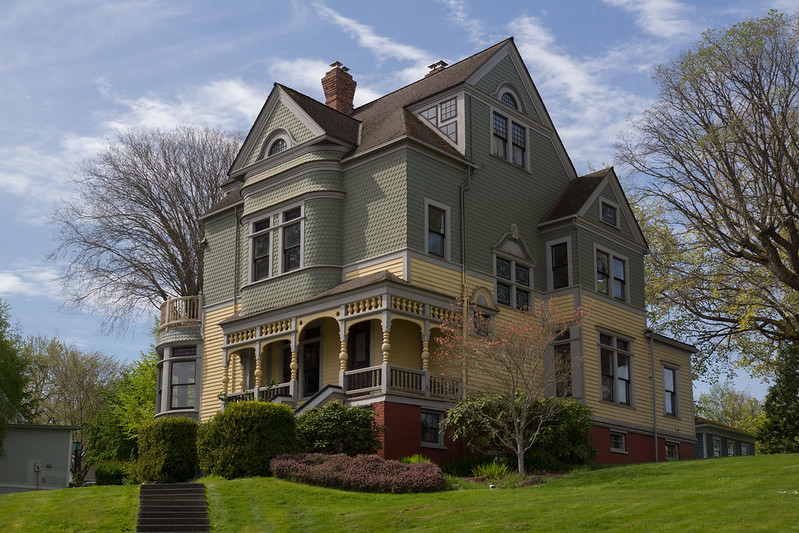
Walker-Ames House
The Walker-Ames House rises from a wooded hillside on Rainier Avenue in Port Gamble, Washington, a Victorian-era residence overlooking one of the most remarkably preserved company towns in the Pacific Northwest. The house is empty. It has been empty since the sawmill that built the town shut down in 1995. No one lives there, no one has lived there for decades, and yet by nearly every account available—from casual passersby to seasoned paranormal investigators—it is anything but unoccupied. Widely regarded as the most haunted house in Washington State, and possibly the entire West Coast, the Walker-Ames House sits at the center of a town where the dead, by persistent report, have simply chosen not to leave. Port Gamble was founded in 1853 when William Talbot and Andrew Pope established a sawmill on the shores of Hood Canal on the Kitsap Peninsula. The mill operated continuously for 142 years—the longest-running sawmill in the United States at the time of its closure in December 1995. Around the mill, the Puget Mill Company built a town modeled on the New England villages its founders had known, with tidy clapboard houses, a white-steepled church, a general store, and tree-lined streets arranged along the waterfront. Port Gamble was a company town in the fullest sense: the mill provided the livelihood, the company owned the homes, and the families who lived there were bound to the rhythms of timber, tide, and the company's fortunes. The original Walker-Ames House was destroyed in a fire in 1885. The current structure was built in 1888 for William Walker, the mill's master mechanic—a position of significant standing in a community organized entirely around the operation of the saw. Walker's daughter Maude married Edwin G. Ames, who served as the mill's resident manager and later its general manager. The house thus became the Walker-Ames, the most prominent and expensive residence in town, occupied by two generations of the family that ran the operation. After the mill closed, the house sat vacant, used occasionally for weddings, events, and eventually as a setting for films and fiction. Paranormal reports at the Walker-Ames House date back to at least the 1950s, well before the property gained any organized attention from investigators. Former town manager Shana Smith began actively collecting accounts from current and former tenants in 2006, after a paranormal group called Evergreen Paranormal requested permission to investigate. What struck Smith was the consistency across accounts separated by years and offered by people with no knowledge of one another's experiences. The house produces a range of reported phenomena. Pedestrians walking past have looked up to see the faces of small children peering from the upper-story windows of a house they know to be locked and empty. Attic lights flicker on and off with no one inside. Footsteps are heard running across floors above visitors standing in lower rooms. Disembodied voices have been recorded on electronic equipment. Visitors report being physically touched—one investigator emerged from the basement with a dusty handprint on her leg, claiming she had been grabbed. The basement generates the most intense reactions, with sensitives and casual visitors alike reporting feelings of sadness, heaviness, and an oppressive presence that several have described as darker in character than the rest of the house. The attic produces its own distinct atmosphere, with investigators reporting contact through electronic devices and the sense of a childlike energy. The most frequently described apparition is a female figure in a long dark dress with her hair pulled back in a bun—identified by some psychics as a nanny, though her name and specific history remain unknown. Paranormal investigator Pete Orbea, who has led guided tours and investigations of the house since 2012, described an encounter in which he heard a scuffle in a hallway, turned around, and found the woman standing expressionless behind him. She vanished the moment others in his group saw her, but not before someone captured a photograph of a form in the doorway. A male figure believed by some to be Edwin Ames has also been described, along with a boy with curly light brown hair in period clothing. The Walker-Ames House has been featured on A&E's "My Ghost Story" and serves as the centerpiece of the annual Port Gamble Ghost Conference, launched in 2010. Organized investigations are available by reservation, led by Orbea and visiting paranormal teams. One investigator's summary captures the paradox of the house well: despite having no dramatic history of violence or tragedy, the Walker-Ames produces an abundance of unexplainable activity—physical contact, electronic responses, apparitions, and EVP recordings that have left even skeptical visitors unsettled. Today, Port Gamble itself is a quiet tourist village of galleries, shops, and cafes housed in the old company buildings. The Buena Vista Cemetery on the hill above town holds its own reputation for activity. The Walker-Ames House stands on Rainier Avenue, locked and unrestored, its Victorian facade watching over a town that outlived its industry but not, apparently, all of its inhabitants. Whatever draws the spirits to this particular house—whether it is love of place, unfinished duty, or something less easily named—the Walker-Ames remains what it has been for over a century: a family home, still occupied by a family that no longer needs the door.

Hannan Playhouse
Raymond, Washington sits at the head of the Willapa River estuary in Pacific County, about as far into the rainy, timber-shadowed southwest corner of the state as you can get without running out of land. The town was built starting in 1903 on stilts above the tidelands and sloughs of the river delta, its original boardwalks spanning water twice a day as the tides moved beneath them. Old-growth fir and cedar blanketed the surrounding Willapa Hills, and the mills ran twenty-four hours a day converting that forest into lumber destined for San Francisco, South America, and Hawaii. At its peak around 1913, Raymond claimed a population of six thousand — workers and merchants and the immigrant families who followed the work — and billed itself with characteristic Pacific Northwest optimism as the Empire City of Willapa Harbor. Among those immigrant communities were German, Greek, Finnish, and Polish workers, each establishing the social institutions that working-class immigrant populations built wherever they settled: churches, fraternal orders, mutual aid societies, and, in the Polish community's case, a hall. That hall — the Raymond Polish Hall — stood at 518 Eighth Street, a modest building serving as the social and cultural center for the Polish community that had come to the Willapa Valley to work the mills. Polish fraternal halls were a fixture of industrial immigrant life across the American Northwest and Midwest, providing gathering space for dances, meetings, weddings, and the kind of communal maintenance of culture that helped people remain coherent as a community far from home. The building served the Polish community through the first half of the twentieth century, through the boom years and through the Depression, through the decline of the old-growth harvest and the gradual softening of the industrial roar that had drawn those families to Raymond in the first place. By the time the timber economy began its long contraction in the mid-twentieth century, the community institutions built to serve it had aged alongside the town itself. The Willapa Players, a community theater group with roots going back to the 1930s and a formal resurgence in 1956, had been putting on productions in the Raymond area for years. The group was partly the creation of the Hannan family — a Raymond attorney named Hannan had been among its organizers in the early years, directing productions and building the troupe into a Pacific County institution. His wife had trained at the Cornish School in Seattle and the San Francisco Opera Ballet School and had spent her career as a dance instructor and choreographer throughout the region. In 1969, the Willapa Players acquired the old Polish Hall on Eighth Street and began converting it into a proper playhouse, which they named for the family most associated with its founding. The renovation was straightforward enough in conception — a community theater carved from a fraternal lodge — but it did not proceed quietly. The building that emerged from the conversion is a small, functional playhouse: a main stage, a seating house, dressing rooms, an attic above the stage, and the particular acoustic intimacy of a space designed for community gathering rather than professional performance. The Hannan seated audiences in close proximity to the stage, the kind of theater where the actors and the house are genuinely in the same room. For decades it served as the only dedicated performance venue in Pacific County, and the Willapa Players used it for adult productions, youth shows, and concerts that brought the region together in the way the Polish Hall had done for the immigrant community before them. The paranormal reports at the Hannan began during the 1969 renovation itself, before the theater had opened. Construction crew members heard footsteps in the attic when no one was up there. Props shifted position on the stage overnight. Doors opened and closed without explanation. Dusty footprints appeared on surfaces that had not been walked. A cat appeared inside the building and vanished. When the Willapa Players held their grand reopening, a company member found a set of footprints pressed into several inches of accumulated dust on the main stage — the building had been locked for years, and no one had been on that stage. Reports multiplied once the theater was in regular operation. Four distinct presences have been described by actors, crew members, and audience members across the decades: a laughing caretaker figure seen in the main house; a female costume designer appearing in the dressing rooms; a black cat observed crossing the stage during live productions; and a spirit called Oscar, understood in the theater's tradition to be the ghost of a Polish immigrant who died in the building during its years as the Polish Hall, and who has become the resident personality of the Hannan — protective, theatrical, watching over the actors as productions unfold in what was, in its earlier life, his community's gathering place. Paranormal investigators from Love the Dead Paranormal conducted multiple formal sessions at the theater, capturing an EVP of a voice saying the name "Chester," recording orb activity on video, and noting persistent EMF spikes in the dressing rooms and in the seats of the stage area. Actors who have worked multiple productions at the Hannan describe a specific accumulation of experience: cold spots appearing suddenly at stage right, objects seen moving on the rafters, shadows near the dressing room corridor, and an oppressive heaviness reported in the upper reaches of the building after hours. House lights have switched on after the lighting crew has left. In one well-documented account, an actor mid-scene looked up to see an object slide off a rafter above the stage, seconds before a cold zone settled across the right side of the stage and two people reported being physically touched. The experiences are specific enough and consistent enough across productions that the Willapa Players eventually leaned into them — local playwright and troupe president Russell Wiitala wrote an original musical called The Haunted Hannan Playhouse, drawing on sixty years of accumulated first-person accounts from people who had worked and performed in the building. The Willapa Players sold the Hannan Playhouse in 2020 and relocated to a former Methodist church in nearby South Bend, leaving the Eighth Street building behind. The move was practical — the old seats were, in Wiitala's words, like a torture chamber, and the lighting booth was the size of a fighter-plane cockpit. Whatever the practical case for leaving, the Hannan itself remains on the corner across from the park, its stage dark, its dressing rooms empty, its attic sitting above a building that began as a gathering place for people far from home and ended as the most haunted theater in the Pacific Northwest by the honest testimony of the people who spent decades performing inside it. Oscar, if he is still there, is watching an empty house.

Shelburne Inn
The Shelburne Inn occupies a substantial historic building situated on the Long Beach Peninsula of Washington state, a geographic location characterized by dramatic coastal scenery, isolated communities, and the maritime traditions that shaped settlement patterns in the Pacific Northwest. The building dates to the early twentieth century, constructed during the era when transportation improvements and resort development brought increased tourism to previously isolated coastal regions. The inn represents the architectural styles and hospitality standards of that period, designed to accommodate travelers and visitors seeking escape from urban centers to the natural beauty and restorative qualities of coastal landscapes. The structural design incorporates coastal architectural elements suited to the challenging weather patterns and marine environment characteristic of the peninsula. The structure has operated continuously or intermittently as a lodging establishment for more than a century, housing countless guests, accommodating family celebrations and gatherings, and functioning as a gathering place for local residents and visiting tourists. The building absorbed the emotional imprint of human connection, celebration, and the interpersonal dramas that characterize any location devoted to hospitality and temporary residence. Multiple generations of travelers have passed through its doors, leaving impressions of joy, sorrow, anticipation, and resolve. The paranormal history of the Shelburne Inn centers on multiple entities whose presence generates distinct manifestations and whose identities have been determined through investigation and research. The primary spirit known as The Man Upstairs or identified as Charles Beaver, a previous owner and operator of the inn whose attachment to the property appears absolute despite his physical death. Charles Beaver's tenure as proprietor instilled in him a deep sense of responsibility and investment in the inn's successful operation and the comfort of its guests, a dedication so profound that it apparently transcended the boundary between life and death. An additional female entity known as Georgina also inhabits the location, a spirit whose presence manifests with sufficient strength to suggest she was significant in the building's history, though historical records regarding her identity remain uncertain. A third entity identified as a grouchy male specter adds to the complex paranormal ecology of the property, suggesting multiple spiritual inhabitants with distinct personalities and behavioral patterns. Paranormal activity throughout the Shelburne Inn occurs with consistency and pattern, indicating well-established spiritual presences engaged in ongoing interactions with the living and with each other. The spirits appear to maintain the social hierarchies and relationships established during life. Footsteps sound throughout hallways and upper floors, the clear sound of deliberate human walking audible even when the building is known to be empty of living inhabitants, as though the spirits maintain the patterns of movement established during life. Whispers and disembodied voices emerge from empty rooms, sometimes intelligible and sometimes consisting of indistinct murmuring that conveys presence without clear communication. Cold chills sweep through areas with no apparent physical cause, creating localized temperature anomalies that persist despite environmental conditions that should maintain consistent warmth. Apparitions of both male and female entities have been sighted by guests and staff in various locations throughout the inn, with Charles Beaver reportedly appearing to check on guest rooms as though maintaining his proprietorial duties even after death. In the bar area, glasses inexplicably fall from tables and shelves despite being securely positioned, shattering on floors with violent force that suggests deliberate action rather than accidental displacement. Items throughout the building move from their original positions to entirely different locations, with the movement occurring during periods when the inn is unoccupied and no physical explanation can account for the relocations. The paranormal investigation community has conducted extensive research at the Shelburne Inn, documenting equipment readings, photographic anomalies, and witness testimony that accumulate into a compelling case for genuine paranormal phenomena and intelligent spiritual agency.
Tokeland Hotel
The Tokeland Hotel in Tokeland, Washington stands as a historic hospitality establishment whose elegant design and long operational history contrast sharply with the substantial and well-documented paranormal phenomena that have earned the location recognition as one of the Pacific Northwest's most actively haunted hotels. Built during the late nineteenth century or early twentieth century, the Tokeland Hotel represents a significant architectural achievement that reflects the aesthetic preferences and construction capabilities of its era. The hotel features multiple stories, numerous guest rooms carefully appointed for visitor comfort, public spaces including dining rooms and parlors designed for social gatherings, and restaurants that have served the local community and traveling guests for generations. The hotel's architectural detailing, including period furnishings and decorative elements, creates an atmosphere that transports visitors backward in time, even as modern amenities ensure contemporary comfort and convenience. The paranormal phenomena at Tokeland Hotel is directly connected to tragic historical events that occurred within and around the building, creating a psychic imprint that continues to manifest through consistent and repeatable phenomena observed across many decades. The primary entity responsible for persistent paranormal activity at the hotel is identified as Charley, a Chinese immigrant who worked at the hotel during the late nineteenth or early twentieth century. Charley's fate remains somewhat unclear from historical records, though the nature of subsequent paranormal phenomena suggests that his death was violent or traumatic in nature. The manifestations attributed to Charley's presence include poltergeist-type phenomena such as the spontaneous spinning and movement of dinner plates within the hotel's dining and restaurant areas, suggesting some form of residual activity connected to food service or dining activities. Visitors and staff report experiencing disembodied vocalizations, shadow apparitions, and sensations of overwhelming dread concentrated in particular areas of the building. Beyond the haunting attributed to Charley, the Tokeland Hotel experiences additional paranormal phenomena believed to derive from other tragic events. Room Seven has become particularly notorious as the site of the most intense paranormal activity, with reports of a murdered guest whose death within that space created a psychic wound that continues to manifest through persistent phenomena. Visitors to Room Seven report experiencing night terrors, witnessing dark shadow apparitions moving with apparent purpose, and sensing the emotional residue of violence and sudden death. Guests have reported bed vibrations without mechanical cause, objects being manipulated or moved while occupants watched, and the sensation of invisible presences engaging in threatening behavior. Additionally, Tokeland Hotel has become recognized for phenomena involving what witnesses describe as a ghost cat or wildcat, an apparition of a feline creature that manifests with particular frequency in hallways, the parlor area, and guest rooms. Some investigators believe the ghost cat phenomenon may derive from a separate tragic incident, while others speculate that the apparition represents an emotional fixation of one of the primary haunting entities. The cumulative effect of these phenomena has transformed Tokeland Hotel into a destination for paranormal tourism and serious investigation, with the hotel occasionally permitting organized paranormal research activities within its structure.
The Oxford Saloon
The Oxford Saloon stands as a landmark establishment in Snohomish, Washington, representing the rough-and-tumble character of frontier saloon culture that defined the Pacific Northwest during the late nineteenth and early twentieth centuries. The building itself reflects the architectural style typical of its era, featuring multiple floors including a main level dedicated to the saloon and dining operations, upper floors containing private rooms and lodgings, basement spaces including a cardroom where high-stakes gambling occurred, and a staircase serving as the central vertical connector throughout the structure. The saloon operated as a social hub for the community, attracting locals, travelers, and individuals from all walks of life seeking drink, entertainment, and companionship. The establishment witnessed countless human dramas unfold within its walls, providing both refuge and tragedy for its patrons across the generations. The violent history that has resulted in Cazenovia Lake remaining haunted began with the tragic death of Katherine, a woman whose corpse was discovered under deeply disturbing circumstances that suggested malice and brutality. Katherine was found decapitated in a bathtub on the second floor of the establishment, her death representing a crime of such savagery that it shocked even the hardened mining town residents accustomed to frontier violence. The circumstances surrounding her death remain partially obscured by history, with some accounts suggesting a crime of passion while others propose a more deliberate and calculated murder. The shock of her violent end and the violation of her body appear to have left Katherine unable to rest, with her spirit allegedly remaining trapped within the building where she suffered her final moments. Another victim, a woman named Amelia who worked as a prostitute in the establishment, met an equally tragic end when she was found dead in a closet, her body hidden and her death initially going unnoticed. The discovery of her remains raised additional questions about the safety and protection available to workers within the establishment. The third major haunting involves Henry, a police officer who was brutally stabbed on the staircase during an incident that reflected the violent conflicts between law enforcement and criminal elements in the town. Henry was found on the stairs where he fell after sustaining fatal injuries, his blood likely staining the steps where modern visitors have reported unusual phenomena. These three violent deaths created a concentration of traumatic energy within the building that appears to have anchored multiple spirits to the location. The paranormal activity manifests in diverse ways, with witnesses reporting sudden cold breezes that appear without corresponding drafts, physical sensations of being grabbed by invisible hands, and flickering electrical lights that turn on and off without explanation. Objects are reported to move spontaneously from one location to another without human intervention, suggesting an active poltergeist phenomenon rather than passive haunting. The paranormal activity at the Oxford Saloon is most concentrated on the second floor where Katherine's death occurred, though manifestations have been documented throughout the building, particularly on the main staircase where Henry was killed and in the basement cardroom. The spirits appear reactive and sometimes hostile, with some witnesses describing an aggressive presence that communicates through physical contact and electromagnetic disturbances. Katherine is reportedly the most active entity, with guests and staff describing an apparition dressed in a purple dress, her appearance often preceding moments of extreme cold or sudden feelings of dread. The combination of three separate violent deaths occurring within the same structure suggests that multiple spirits may be interacting with living individuals and with each other, creating a complex haunted environment where different phenomena may be attributed to different entities. Paranormal investigators have documented significant electromagnetic fluctuations, particularly in areas associated with the specific deaths. The Oxford Saloon continues to operate as a bar and restaurant, acknowledging its haunted reputation while maintaining normal business operations. The establishment has been featured extensively in paranormal investigation television programs and documentaries, with researchers conducting formal investigations that have captured evidence supporting the haunting claims. The owners and staff have become accustomed to the paranormal activity, with some workers reporting they no longer find the phenomena shocking or frightening. The location has become renowned as one of the most actively haunted bars in Washington state, attracting both paranormal enthusiasts and casual visitors curious about the building's violent history. The Oxford Saloon represents a unique intersection of functional business operations and well-documented paranormal activity, where the past refuses to remain fully past and where the spirits of the violently deceased apparently maintain an active presence among the living.
Bush House Country Inn
The Bush House Country Inn in Index, Washington represents a historic lodging establishment situated in a remote mountain community with significant paranormal activity centered upon tragic historical events. The structure was constructed during an era when regional transportation and commerce relied upon railroad infrastructure connecting remote communities to broader economic networks. The building served lodging needs of railroad workers, traveling businessmen, and other transient populations moving through mountain passes and developing communities. The architectural style and construction methods reflect practical building approaches of the late nineteenth and early twentieth centuries, with materials and designs suited to challenging mountain climate and geographic isolation. The Bush House Country Inn's history is inextricably linked to the tragic death of Annabelle, a young woman who met her end through hanging in the stairwell connecting the third floor to lower building levels. The exact circumstances surrounding Annabelle's death remain embedded in historical records with varying degrees of clarity, creating ambiguity regarding whether death resulted from suicide, murder, or accident under circumstances clouded by historical distance. Regardless of precise manner, the traumatic nature of Annabelle's demise created a spiritual imprint manifesting continuously through paranormal phenomena concentrated in areas directly associated with her final moments. The presence of a male laborer or railroad worker apparition suggests additional tragic deaths or spiritual unrest associated with working-class populations frequenting the inn. The most dramatic paranormal manifestation involves Annabelle's apparition, whose ghostly form appears in the third floor stairwell where her body was discovered hanging. Witnesses describe encountering the spectral figure of a young woman who manifests most prominently in areas immediately surrounding the location of her death, appearing to reenact or replay elements of the tragic event. The intensity of her manifestations has increased over decades as the location's paranormal reputation became more widely known. Beyond the visual apparition, the inn experiences persistent olfactory phenomena associated with Annabelle's residual spiritual presence, with visitors reporting distinct scents of cigar smoke and feminine perfume concentrated in second floor guest areas where she may have spent time during living days. Paranormal investigators conducting formal investigations have documented extensive electronic evidence supporting witness testimony of supernatural activity. Disembodied voices captured on digital recording call guests by personal names, suggesting either telepathic communication or acquired knowledge of visitor identities. Electromagnetic field fluctuations concentrated in specific areas indicate concentrated spiritual energy presence consistent with documented apparitions and manifestation patterns. EVP recordings have captured speech in human voices speaking in apparent attempts at communication with living visitors. These electronic manifestations suggest spirits retain some awareness of the contemporary world and active interest in communicating with living inhabitants. The paranormal activity appears to intensify during evening and nighttime hours when fewer living occupants are present and contrast between spiritual and physical presence becomes pronounced. The Bush House Country Inn continues operating as a lodging establishment and paranormal investigation destination, attracting visitors interested in historical tourism and supernatural experiences. Staff members have developed familiarity with paranormal phenomena and report adapting to coexistence with resident entities. Guests selecting the inn specifically for paranormal activity often report vivid dreams, sensing presences in their rooms, and feeling emotional heaviness concentrated in particular areas. Paranormal investigation groups conduct regular formal investigations with inn permission and cooperation, accumulating extensive documentation spanning multiple investigation sessions across years. The location has gained recognition as one of Washington's most active paranormal sites, where tragic history of Annabelle's death and continuing spiritual manifestations create actively documentable paranormal phenomena.
Point Defiance Park
Point Defiance Park, sprawling across nearly seven hundred acres of forested terrain overlooking Puget Sound in Tacoma, Washington, represents one of the Pacific Northwest's premier urban natural spaces and recreational destinations. The park was formally established in the late nineteenth century, incorporating land that had previously been the site of Native American settlements and later colonial-era military fortifications. The distinctive Five Mile Drive meanders through old-growth forest and along coastal bluffs, offering panoramic vistas of the Cascade Mountains and the waters below. Over the decades, the park has been expanded with botanical gardens, zoo facilities, aquarium installations, and various recreational amenities that have made it a destination for hundreds of thousands of visitors annually. The landscape itself bears the marks of its complex geological and human history, with trails winding through forest ecosystems that have existed for centuries and offering glimpses of the region's pristine pre-development character. The reputation of Point Defiance Park as a location of paranormal significance emerged gradually through anecdotal reports collected from park visitors, maintenance staff, and regular users of the trails spanning several decades. These reports cluster around specific areas within the park, particularly the Five Mile Drive scenic route and the regions near the botanical Pagoda structures. The phenomena are not uniformly distributed across the entire park but rather appear concentrated in locations with particularly tragic histories or unusual atmospheric qualities. Local folklore and contemporary paranormal investigation documentation trace many of the reported phenomena to specific historical events that occurred within park boundaries. The park's remote areas, particularly dense forest sections and isolated vistas, have become known as locations where unusual experiences have been reported with sufficient frequency to attract serious paranormal research attention and documentation efforts. The most prominent paranormal reports at Point Defiance Park involve the apparition of Jennifer Bastian, whose tragic death decades ago left an indelible mark on the location's spiritual landscape. Witnesses describe encountering the ghostly form of a young woman with a peculiar, unsettling appearance characterized by a blank stare and an incongruous smile that observers find deeply disquieting. The apparition is most frequently reported along specific sections of the Five Mile Drive and in forest clearings near the Pagoda, manifesting with greatest frequency during twilight hours or in fog-shrouded conditions that reduce visibility. Additional paranormal phenomena include reports of a ghostly homeless man whose apparition has been observed by multiple independent witnesses in various locations throughout the park, particularly near wooded areas distant from main pathways and recreational facilities. These entities appear to remain attached to specific locations rather than demonstrating the mobile behavior sometimes reported at other paranormal sites. Paranormal investigators conducting formal research at Point Defiance Park have documented electromagnetic anomalies, temperature fluctuations, and audio phenomena including unexplained voices and footsteps following no discernible pattern of human activity. The emotional tenor of reported paranormal experiences often involves feelings of distress, melancholy, and inexplicable apprehension that visitors attribute to the spiritual presence rather than to the natural atmosphere of isolated forest areas. Some researchers theorize that the park's natural beauty and recreational popularity create a stark contrast with its hidden tragic history, potentially amplifying the spiritual imprint of those who died under circumstances of violence or desperation. Despite its reputation as one of Tacoma's most valued recreational spaces, Point Defiance Park has earned recognition among paranormal communities as a location where the boundary between the material and spiritual realms appears remarkably permeable, making it a subject of ongoing investigation and documentation.
St. Ignatius Hospital
St. Ignatius Hospital in Colfax, Washington holds complex significance in the medical and social history of the Palouse region, its founding and development intertwined with railroad transportation expansion and industrial advancement. The hospital's cornerstone was laid in June 1893, marking the community's commitment to establishing modern medical facilities in a region where healthcare access was severely limited. The building reflects late nineteenth century architectural sensibilities with solid construction designed to accommodate patient care, medical procedures, surgical operations, and administrative functions. The hospital was designed to serve a region characterized by resource extraction industries, agricultural labor, railroad operations, and associated industrial hazards. The early years of hospital operation coincided with significant danger and tragedy related to railroad expansion and industrial development. The first recorded fatality occurred in 1893 when F. E. Martin was struck by railroad cars, his death becoming emblematic of industrial hazards the hospital was designed to address but ultimately could not prevent. The hospital accumulated comprehensive medical care history over decades of operation, treating severely injured workers alongside patients with illnesses and injuries. Many patients did not survive despite receiving professional medical care and treatment. The hospital became associated with both life preservation efforts and death, functioning as a concentrated location of human suffering where medical intervention outcomes determined whether individuals survived or experienced fatal consequences. Beginning in the early twenty-first century, St. Ignatius Hospital emerged as a location of considerable paranormal significance, with paranormal investigators and visitors documenting spiritual presences inhabiting the building. Manifestations include disembodied voices emanating from empty spaces, physical contact from unseen entities, and full-body apparitions appearing in patient wards and hallways. Visitors report being touched, pulled, and struck by invisible forces, suggesting aggressive or at least interactive paranormal presence. Strange growls and other vocalizations occur particularly in former intensive care or terminal care zones where patient deaths concentrated. Physical attacks reported by visitors indicate hostile spiritual presences possibly from individuals who experienced traumatic hospital deaths. In 2015, the hospital opened to the general public for guided paranormal tours based on accumulated supernatural activity evidence and investigation findings. More than twenty-five thousand individuals have visited the hospital since tours began, with many reporting paranormal experiences consistent with documented patterns. Tours provided systematic documentation opportunities, with narrative visitor accounts establishing patterns suggesting specific entities associate with particular areas and rooms. The hospital's paranormal reputation attracted professional paranormal investigators and paranormal television programs, providing unprecedented data on manifestation patterns in medical settings. Today, St. Ignatius Hospital stands as one of the most documented paranormal sites in the Pacific Northwest, recognized as both a significant historical medical structure and location of genuine supernatural activity. The hospital remains partially operational for paranormal investigation and public visitation, functioning uniquely as both medical facility and paranormal tourism destination. The building's history of medical treatment, death, and industrial tragedy created conditions allowing spiritual presences to manifest consistently.
Calamity Jane’s
Calamity Janes operates as restaurant and bar establishment in Seattle, Washington, representing American hospitality venues serving social and recreational needs of urban populations. The venue combines dining and drinking functions, providing spaces for patrons seeking refreshment and groups gathering for social occasions. The interior architecture emphasizes ambiance and communal gathering, with bar counters serving as focal points where patrons interact. Calamity Janes adopted thematic character referencing Calamity Jane, historical frontier woman achieving fame during American western frontier period. The name and iconography created thematic context influencing interior decoration, visual presentation, and cultural atmosphere, evoking historical periods and cultural narratives of American West. The paranormal haunting centers on apparition of man dressed in period clothing, specifically figure wearing bowler hat identifying him as entity from historical era. The apparition appears most frequently in main bar area, central social space where patrons congregate. The bowler hat suggests era roughly corresponding to late nineteenth or early twentieth century, period encompassing tail end of American frontier and emerging urban commercial modernity. The consistent appearance in bar area rather than randomly throughout venue suggests connection between spirit's presence and social dynamics of bar space itself. The specific visual signature of apparition, bowler-hatted male form, has become iconic within paranormal accounts, allowing witnesses to recognize entity across observations. The historical context of venue, name Calamity Jane, and appearance of bowler-hatted apparition create suggestive circumstances for interpretation, though definitive historical documentation establishing identity of ghost remains unclear. The thematic association with frontier history might suggest connection between haunting and historical frontier figures, though thematic resonance need not indicate actual relationship. The bowler hat suggests figure oriented toward urban civilization rather than rough frontier imagery. The juxtaposition of frontier-themed establishment and urban-coded apparition creates productive tension, suggesting interesting historical narratives about relationship between frontier mythology and urban modernity. The paranormal phenomena extend beyond visual apparition into broader category of paranormal presences characteristic of haunted hospitality venues. Patrons and staff have reported impressions of presences and awareness of non-human entities sharing bar space. The bowler-hatted apparition manifests with sufficient consistency to create patterns recognizable to regular patrons and staff. Some accounts describe apparition appearing over extended observation periods, allowing multiple witnesses to see similar figures across repeated incidents. The concentration of phenomena in main bar area creates focused hotspot rather than phenomena distributed randomly throughout establishment. Contemporary experience reflects integration of paranormal reputation into cultural economics of hospitality establishments, with ghost story functioning as historical curiosity, marketing asset, and genuine phenomenon affecting lived experience of venue. Regular patrons may become invested in ghost story, developing personal relationships with entity. Staff working in venue develop experiential knowledge of paranormal phenomena. The haunting contributes to distinctive character and memorable quality, differentiating it within competitive landscape of Seattle hospitality. The connection between venue's Calamity Jane branding and paranormal phenomena creates layered cultural experience.
Maltby Cemetery
Maltby Cemetery in Bothell, Washington, represents a burial ground established during the late nineteenth century as a final resting place for community members and serves as a significant repository of regional history and genealogical information. The cemetery's physical layout and spatial organization reflect Victorian-era aesthetic preferences regarding landscape design, with careful attention paid to pathways, plantings, and monuments that create a contemplative atmosphere intended to facilitate respectful remembrance of the deceased. The geographic location within the broader Bothell region positions the cemetery in proximity to natural water features and forested areas that create distinctive environmental conditions and atmospheric qualities throughout the seasons. The cemetery's age, spanning more than a century of continuous use as a burial ground, has resulted in the accumulation of considerable historical significance and the interment of multiple generations of community members. The paranormal phenomena documented at Maltby Cemetery have achieved substantial recognition within Pacific Northwest paranormal research circles, generating extensive documentation through both formal paranormal investigation efforts and the accumulated testimony of visitors, cemetery staff, and local residents who have experienced unusual phenomena within its boundaries. The consistency and intensity of reported paranormal activity at this particular location have elevated it to prominence within regional paranormal databases and established it as a destination for paranormal researchers seeking to examine concentrated zones of supernatural phenomena. The cemetery's reputation extends beyond mere historical significance to encompass recognition as one of the most actively haunted locations within the greater Seattle metropolitan region, with phenomena documented across diverse areas of the cemetery grounds. The primary paranormal manifestations documented at Maltby Cemetery involve the apparitions of ghostly women and children dressed in Victorian-era clothing, suggesting spiritual presences dating to the cemetery's earliest operational period or to individuals who had strong personal or familial connections to specific burial locations. Multiple independent witnesses have reported encounters with these apparitions throughout various sections of the cemetery, with descriptions demonstrating consistency regarding appearance, clothing, and apparent emotional state. The manifestations of children's spirits suggest either accidental deaths affecting younger community members during the cemetery's operational history or the possibility that children accompanied deceased adults through spiritually significant bonds transcending death. Among the most distinctive paranormal phenomena associated with Maltby Cemetery is the legendary "13 Steps to Hell," a folklore element that has achieved substantial prominence within regional paranormal culture and represents a specific geographic location within the cemetery grounds associated with particularly intense supernatural phenomena. The legend centers upon a specific stairway location comprising thirteen steps that, according to paranormal folklore, leads to a gateway or threshold connecting the material world with demonic or infernal dimensions. Documentation of paranormal experiences at this specific location describes encounters with entities far more malevolent and disturbing than the ghostly apparitions of women and children reported elsewhere. Investigators and visitors who have approached or descended the legendary thirteen steps have reported sensations of dread and encounters with entities described as demonic. Maltby Cemetery continues to function as an active burial ground within contemporary Bothell, serving ongoing funeral and interment functions for the surrounding community while maintaining its status as a documented paranormal hotspot. The cemetery has achieved substantial prominence within paranormal tourism and research communities, attracting investigators and enthusiasts interested in examining concentrated zones of supernatural activity. Visitors and paranormal research groups continue to document experiences consistent with historical accounts, suggesting that the apparitions and entities inhabiting the cemetery grounds remain actively present and capable of manifesting to contemporary observers. The combination of benevolent apparitions and malevolent entities within Maltby Cemetery creates a complex paranormal environment reflecting the full spectrum of spiritual phenomena documented at intensely haunted locations.
Hotel de Haro
Hotel de Haro stands on San Juan Island near Friday Harbor, Washington, as a cornerstone of the island's Victorian-era commercial development and one of the Pacific Northwest's most persistently active paranormal locations. Established in the late nineteenth century as a luxury establishment to serve the burgeoning populations of wealthy merchants, shipping magnates, and travelers exploring the San Juan Islands, the hotel evolved into a cultural institution that witnessed the region's transformation from frontier outpost to established community. The building's distinctive architecture, characterized by period-appropriate woodwork and furnishings, preserves the aesthetic and spiritual atmosphere of an earlier age, creating an environment particularly conducive to residual hauntings and intelligent spiritual phenomena. The most prominent spectral inhabitant of Hotel de Haro is identified as Adah Beeny, a governess and secretary employed at the establishment during its early operational decades. Beeny's tenure at the hotel coincided with a period of significant growth and renovation, during which she maintained extensive responsibilities coordinating household and administrative matters. Her dedication to the institution and the relationships she formed during her years of service are believed to have created a profound emotional attachment to the property, an attachment that persists well beyond her physical death. Numerous accounts suggest that Beeny's consciousness remained bound to the hotel, unable or unwilling to relinquish her former position and the roles she had occupied with such devotion. Paranormal investigators and guests have documented an extensive array of phenomena throughout the building's interior spaces and upper levels. Doors open and close of their own volition, with particular incidents occurring in the store rooms and hallways where Beeny likely conducted much of her daily work. Electrical appliances in the kitchen and service areas activate and deactivate without human intervention, a pattern suggesting either residual energy replay or active manipulation by the entity. Items stored in the back rooms shift inexplicably, sometimes appearing displaced or arranged differently despite secure storage conditions. Witnesses report auditory phenomena including rustling sounds reminiscent of period clothing and fabric, consistent with the garments worn during the late nineteenth and early twentieth centuries. Cold spots manifest unexpectedly throughout various areas of the structure, creating localized temperature anomalies that defy conventional explanation. Additionally, some guests and staff members report encountering an undefined malevolent presence distinct from the benign activity attributed to Beeny, suggesting that the hotel may harbor multiple spiritual entities with different characteristics and intentions. The hotel continues to operate as an active establishment while maintaining awareness of its paranormal reputation. Staff members have become accustomed to the presence of unseen activity and generally interpret such occurrences as manifestations of Adah Beeny's continued guardianship over the property. Paranormal investigation teams have conducted multiple documented studies within the hotel's rooms and corridors, recording electromagnetic fluctuations and audio anomalies supporting the historical accounts. The establishment has embraced its identity as a haunted location, recognizing that authentic paranormal activity has become integral to its character and historical significance. Hotel de Haro remains one of Washington's most actively haunted hotels, attracting researchers, curious travelers, and paranormal enthusiasts seeking direct experience with legitimate supernatural phenomena occurring within documented architectural and historical contexts.
Central Saloon – Central Tavern
Central Saloon, also known as Central Tavern, operates as an active music venue and bar establishment in Seattle, Washington at a location that has accumulated substantial historical significance within the narrative of Seattle's music scene and the emergence of the distinctive musical aesthetic known as the Seattle Sound during the 1980s and 1990s. The venue's physical location positions it within the Pike Place Market historic district, an area notable for its dense concentration of music venues, recording studios, and cultural establishments that collectively defined Seattle's identity as a center for musical innovation and artistic expression. The building housing the venue dates to the early twentieth century, reflecting architectural styles and construction techniques prevalent during that period while having undergone multiple renovations and adaptations to accommodate its current function as a performance and hospitality space. The venue's stage has hosted countless musical performances across decades of operation, making it a location where the physical space itself carries the accumulated resonance of thousands of creative performances and the emotional intensity associated with live musical expression. The historical significance of Central Saloon within Seattle's music history extends beyond its simple function as a performance venue, with the location bearing direct association to key figures in the emergence of grunge and the broader Seattle Sound musical movement. The venue's stage and interior spaces have been traversed by musicians who would become internationally significant cultural figures, with the physical locations where early performances occurred now carrying historical weight within the narrative of late twentieth century American popular music. The building's accumulated history encompasses not merely the performances that occurred on its stage but also the social interactions, relationships, and creative collaborations that emerged within its interior spaces during periods when Seattle's music scene experienced rapid evolution and international recognition. The multiple renovations and ownership transitions that the venue has undergone have preserved essential character elements while adapting infrastructure to support contemporary operational requirements, creating a balance between historical authenticity and functional modernity. The paranormal phenomena documented at Central Saloon possess particular dimensions of cultural and historical interest given the venue's significance within music history and the reported manifestations centering on figures of substantial musical importance. Ghost hunters and paranormal investigators have documented apparitional phenomena including the figure of a woman in white dress appearing in interior spaces, typically in the mezzanine areas and stage vicinity where musical performances occur. A black shadow figure with distinctly masculine frame characteristics has been consistently reported by multiple independent witnesses, appearing in locations throughout the venue including staff areas, restrooms, and back regions rarely frequented by casual patrons. Ghostly footsteps crossing the stage surface have been documented by staff members and paranormal investigation teams, occurring at times when no visible human presence would account for the sounds. Strange shadows and disembodied voices have been captured both by paranormal research equipment and in the sensory experiences of visitors and staff members, with voices often difficult to attribute to any visible source within the venue's current occupancy. Most distinctively, multiple paranormal researchers and casual witnesses have reported experiences consistent with the apparition of Jimi Hendrix himself appearing on the venue's stage, described as a translucent or semi-corporeal figure apparently engaged in playing guitar in apparent reenactment of historical performances or perpetual artistic expression. The manifestation of the Jimi Hendrix apparition represents a phenomenon of particular interest to paranormal researchers and music historians interested in understanding the spiritual dimensions of artistic legacy and creative practice. Witnesses describing the transparent silhouette of a guitarist on stage, performing instrumental passages characteristic of Hendrix's distinctive technique, have led some paranormal researchers to hypothesize that the spiritual essence of a profoundly creative individual may become bound to locations where their artistic expression achieved particular intensity or significance. The presence of multiple distinct apparitions at Central Saloon, combined with the historical significance of the venue and the documented manifestation of a figure of major cultural importance, has made the location a destination for paranormal investigators interested in the intersection of artistic creativity and paranormal phenomena. The venue continues its operations as a functioning music establishment, with live performances occurring regularly and paranormal activity continuing to manifest in ways consistent with decades of documented phenomena. The combination of Seattle's distinctive music history, the venue's role within that history, and the documented presence of multiple paranormal entities including a figure of substantial cultural significance has established Central Saloon as a unique location where music, history, and the paranormal dimensions of human experience converge in distinctive and measurable ways.
Madison’s Diner
Madison's Diner represents a quintessential example of twentieth-century American diner architecture and culture, representing the type of modest neighborhood establishment that served as a social and economic anchor for many small communities across the United States throughout much of the past century. The diner itself reflects the styling and functional design of its era, with classic architectural elements that communicate the hopeful modernism and democratic accessibility that characterized diner culture during its golden age. Madison's Diner became known not only for the quality of its food and service but for the particular character and personality imparted by its ownership and management, particularly through the longtime presence of an individual known locally as Harry, whose decades of involvement with the establishment left an indelible mark on its community identity and character. The diner's operational history reflects the broader transformations that reshaped American small-town commerce throughout the latter twentieth century, as changing demographics, highway construction and redirection of traffic, suburban expansion, and evolution of consumer preferences affected the viability of traditional neighborhood dining establishments. Like many historic diners, Madison's Diner experienced periods of robust activity interspersed with more challenging years when economic pressures and changing recreational patterns threatened the establishment's continued viability. The physical structure itself carries the accumulated wear and modifications of decades of continuous use, with interior renovations and equipment upgrades reflecting the effort to maintain contemporary functionality while preserving the essential character that made the location distinctive within its community. The paranormal phenomena documented at Madison's Diner appear concentrated within the interior spaces of the establishment and manifest primarily through auditory rather than visual phenomena, suggesting a form of haunting focused on communication rather than manifestation. Staff members and occasional witnesses have reported the occurrence of ghostly calling of staff names, with disembodied voices distinctly pronouncing individual employee names in the characteristic tone and manner reminiscent of Harry's customary way of addressing those who worked under his supervision. The phenomenon occurs in the absence of any physical source for the voices and frequently at times when only a few individuals occupy the diner's interior, making alternative explanations involving pranksters or misidentification difficult to sustain. Beyond the calling of names, staff and owners have reported various unexplained occurrences and disturbances within the diner that resist straightforward explanation and align with patterns of paranormal activity at other historic establishments. The identity and nature of the primary entity responsible for paranormal phenomena at Madison's Diner appears connected to Harry himself, whose decades-long association with the establishment and presumably his death created a spiritual attachment to the location itself. Various accounts characterize Harry as a friendly presence, suggesting that the paranormal manifestations do not involve hostile or aggressive entities but rather represent the continued presence of someone whose connection to the place and its operations proved too strong to be severed by death itself. The phenomenon of calling staff by name aligns with patterns documented at other locations where deceased authority figures or long-term residents continue behaviors and relationships that defined their life experience, essentially repeating familiar actions from their earthly existence. Madison's Diner continues to operate in its location, maintaining its function as a neighborhood dining establishment while simultaneously hosting paranormal activity that has become recognized among paranormal investigation communities and amateur ghost enthusiasts throughout the region. The diner's owners and staff have adopted an accepting attitude toward the paranormal phenomena, viewing the friendly manifestations of Harry's continued presence as a form of respectful haunting rather than a disturbing situation. The location has become documented on paranormal location databases and appears on ghost tours and paranormal investigation itineraries for the region, contributing to a tourism dimension that augments the establishment's traditional income streams from food service and dining patronage, while maintaining the essential character and function of the original diner.
The Museum Of North Beach
The Museum of the North Beach in Moclips, Washington occupies a distinctive position within the cultural landscape of the Pacific Coast, preserving and presenting the history of human settlement, economic activity, and environmental interaction that has characterized the region for centuries extending back into pre-Columbian times and continuing through successive waves of indigenous settlement, European exploration, commercial development, and modern transformation. The museum building itself embodies these historical dimensions, housed within a structure that contains artifacts, documents, and physical evidence of the diverse human experiences and activities that have shaped the North Beach region of Washington State. The setting within the coastal environment of the Pacific Northwest provides a distinctive context for the museum's mission, as the proximity to ocean, forestry resources, and the industrial infrastructure that developed to exploit these natural endowments became central to the region's economic development and social organization across multiple historical periods. The museum serves as a repository of community memory and historical documentation, preserving narratives and artifacts that might otherwise be lost to the passage of time and the transformative forces of ongoing economic and social change. The historical narratives preserved within the Museum of the North Beach encompass the experiences of diverse populations whose interactions with the region created the layers of human activity and significance that characterize North Beach. The region's development involved timber mills and logging operations that extracted forest resources and created employment for numerous workers over generations, commercial fishing enterprises that exploited marine resources and contributed to the economic base of coastal communities, maritime activities including shipwrecks and water-based commerce that brought both economic benefit and tragic loss to the region, and the establishment of permanent settlements and communities that attempted to build stable social structures in this challenging and dynamic environment. The museum preserves material and documentary evidence of these diverse historical processes, creating a comprehensive chronicle of human experience that extends across multiple dimensions of activity and social organization. The paranormal phenomena documented at the Museum of the North Beach by the Paranormal Investigators of Historic America include a diverse constellation of manifestations that suggest the presence of multiple spiritual entities associated with different aspects of the region's historical development and human tragedy. Investigators have recorded and documented ghostly voices emanating from within the museum building, disembodied footsteps that move through the space without visible human sources, faint and unusual musical sounds that cannot be attributed to contemporary sound equipment or expected environmental sources, and orbs of light appearing in photographs and direct observation that suggest unusual energy or presence within the space. The multiplicity of different phenomena types and the apparent presence of multiple distinct spiritual entities suggest that the museum building harbors a complex paranormal environment reflecting its function as a repository of historical narratives and artifacts connected to the diverse human experiences that shaped the region. Research conducted by professional paranormal investigators has suggested that the reported phenomena at the Museum of the North Beach may be associated with specific historical figures and tragic events that are documented in the region's history. The potential presence of a mill employee, a blind woman, a fireman, and an engineer among the spiritual entities inhabiting the space suggests associations between the documented paranormal activity and specific roles and professions that were central to the region's historical development. The presence of spirits potentially connected to shipwreck casualties, individuals who lost their lives in maritime disasters that claimed multiple victims across the region's history, suggests a particularly tragic dimension to the paranormal activity, with loss and suffering apparently leaving indelible marks on the spiritual environment of the location. The documentation of these phenomena through video recordings and systematic investigation has created a substantial body of evidence supporting the reality and consistency of the paranormal activity at the location. The Museum of the North Beach continues to operate as a historical and cultural institution, preserving and presenting the region's history to visitors and community members while simultaneously harboring documented paranormal phenomena that add a distinctive dimension to the museum experience. The paranormal research conducted at the location has generated interest among investigators and enthusiasts seeking to understand how traumatic historical events and significant human experiences may create spiritual residues that persist within physical locations. The museum building serves the dual function of documentary institution and paranormal site, with visitors potentially encountering both traditional museum exhibits and the manifestations of spiritual entities associated with the region's tragic and significant historical moments. The ongoing investigation and documentation of paranormal phenomena at the Museum of the North Beach contributes to the broader understanding of how places accumulate spiritual significance through the concentration of human experience, tragedy, and cultural memory that occurs within particular geographical locations across historical time.
Mirabeau Park Hotel
The Mirabeau Park Hotel stands as distinctive early twentieth-century American hospitality architecture, welcoming guests during the height of the hotel boom when grand lodging establishments served as symbols of civic pride. The structure's architectural design reflected contemporary preferences for comfort and elegance that distinguished quality establishments from ordinary boarding houses. Originally constructed to serve travelers and businesspeople, the hotel became a gathering place for the community, hosting celebrations and family occasions within its walls. During its operational years, the hotel developed tragic history involving multiple devastating incidents establishing it as one of the region's most actively haunted locations. A particularly tragic event involving a woman and two children resulted in suicide tragedy that shocked the community, leaving behind emotional residue and supernatural consequences persisting for decades. The third floor became the focal point of intense paranormal activity, with guest rooms and the landing area serving as epicenters of unexplained phenomena that mystified guests and staff. Additional tragic events created an environment rich with traumatic energy, establishing conditions for sustained paranormal activity. Paranormal investigations documented extensive evidence of multiple distinct entities inhabiting the space, including apparitions of the woman and two children, along with the restless spirit of another suicide victim. Visitors and staff reported encounters with these entities manifesting as full-bodied apparitions, partial materializations, and shadowy figures in peripheral vision, accompanied by sudden temperature fluctuations and unexplained cold spots. Mischievous poltergeist activity has been documented throughout guest rooms, with objects relocating without human intervention and doors opening or closing on their own. Electronic voice phenomenon recordings captured disembodied voices speaking into recording devices, some expressing distress or confusion, providing compelling audio evidence of the entities' continued existence. During night hours when living guests retreat to their rooms, the hotel's paranormal presence becomes increasingly pronounced and accessible. Third-floor hallways have become sites of frequent paranormal encounters, with guests and staff reporting unseen presences, invisible touching sensations, and the distinct feeling of being observed. Room-specific activity patterns have emerged through systematic investigation, with certain guest quarters generating consistent reports suggesting tragic events created lasting energetic imprints. The friendly third-floor ghost mentioned in witness accounts distinguishes itself through non-threatening behavior and seeming awareness of visitors. In its present-day existence, the Mirabeau Park Hotel remains operational as a commercial lodging establishment while functioning as one of the region's most reliably haunted locations, transformed into a destination for paranormal tourism and serious investigation. The hotel's management and staff have adapted to persistent supernatural phenomena while maintaining professional hospitality standards. Paranormal investigation teams continue conducting documented research within guest rooms and corridors, systematically building comprehensive records of entity interactions and manifestation patterns. The Mirabeau Park Hotel represents a convergence point between mundane business operations and persistent supernatural mysteries that refuse conventional rational explanation.
Thornewood Castle Inn
Thornewood Castle stands as one of the most distinctive and architecturally ambitious residential structures in the Pacific Northwest, located in Tacoma, Washington, representing an extraordinary expression of early twentieth-century wealth and romantic architectural vision. The castle was constructed beginning in 1911 by William Thorne, a wealthy businessman whose fortune derived from commercial ventures in the Pacific region. His personal aesthetic preferences led him to commission a residence evoking romantic grandeur of European castle architecture within the American landscape. The structure's construction involved substantial resources, sophisticated architectural expertise, and specialized materials and craftsmen, resulting in a mansion incorporating genuine castle elements including towers, crenellations, and medieval-inspired details alongside contemporary residential amenities. The design demonstrates an owner's capacity to manifest personal romantic aesthetic visions into physical form, creating a distinctive residence transcending typical architectural categories. Thornewood Castle's interior spaces are organized on a scale reflecting original owner's wealth and sensibilities. The great hall serves as interior centerpiece, featuring soaring ceilings, elaborate decoration, and dimensions designed to impress and overwhelm visitors with displays of wealth and cultural refinement. Multiple bedrooms, each with individual character and aesthetic attention, provided accommodation for family and guests. The castle contains specialized rooms reflecting owner's interests and lifestyle preferences. A notable bedroom identified as Anna's room appears throughout property history and paranormal documentation, suggesting a significant female resident occupied this particular chamber. Property grounds and gardens were designed with equivalent ambition and resources, creating estate environment enhancing the castle's romantic presence. William Thorne's wife Anna Thorne became the most prominent female resident of Thornewood Castle during the early twentieth-century operation as a private residence. Anna Thorne enjoyed considerable social prominence and participated in the region's cultural and social events, establishing herself as a woman of refined taste within Tacoma's emerging society. The castle became known as venue for elaborate entertainments and social gatherings, where prominent citizens gathered for parties establishing Thornewood as a center of social prestige. Anna Thorne's presence within the castle and roles as hostess created associations between her identity and the building's physical space, making her significant in the property's historical trajectory. The circumstances of Anna Thorne's death created the foundation for understanding the property's well-documented paranormal phenomena. Tornewood Castle has developed an extensive reputation for paranormal phenomena that visitors and staff have consistently documented over many decades. The great hall has been location of repeated reports of phantom cocktail party sounds and sights, with witnesses describing voices engaged in social conversation, clinking glasses, and musical accompaniment consistent with formal entertainment. These phenomena have been reported particularly in evening hours when the castle is empty, suggesting intelligent entities engaged in activities consistent with Anna Thorne's known social interests. Apparitions have been described appearing within spaces, with reports of mysterious shadows and translucent figures. Music has been documented occurring without identifiable source, with witnesses describing piano music suggesting skilled and intentional performance. Electrical phenomena have been reported, with lights turning off mysteriously and lightbulbs unscrewing of their own accord. Thornewood Castle presently operates as the Thornewood Castle Inn, a bed and breakfast welcoming guests to experience extraordinary architectural space and potentially encounter paranormal phenomena. The conversion to hospitality use has preserved exterior appearance and interior design while adapting spaces to contemporary hospitality standards. The property has become renowned among paranormal investigators seeking to document supernatural activity. Guests are informed of paranormal reputation, and proprietors acknowledge documented phenomena as integral to property identity. The combination of architectural grandeur, historical significance, and well-documented supernatural phenomena has established Thornewood Castle Inn as premier paranormal tourism destination in the Pacific Northwest.
Bayview Cemetery
Bayview Cemetery in Bellingham, Washington represents one of the Pacific Northwest's most significant paranormal locations, distinguished by the quantity and variety of phenomena consistently reported by visitors and paranormal investigators. The cemetery was established during the late nineteenth century as a municipal burial ground for Bellingham's growing population, serving the community through subsequent decades as a final resting place for prominent citizens, ordinary residents, and notably the pioneering Bland family whose members shaped the early development of the region. The grounds encompass several acres of landscaped burial terrain interspersed with mature trees, monuments ranging from simple grave markers to elaborate Victorian headstones, and pathways that have guided mourners and later paranormal enthusiasts through the maze of departed souls. The cemetery's architecture and layout reflect the aesthetic conventions of late nineteenth-century burial practices, with monuments arranged according to family plots and chronological development patterns typical of American cemeteries from that era. The most celebrated paranormal feature of Bayview Cemetery consists of two distinctive monuments whose locations and characteristics have become the focus of decades of supernatural legend and investigation. The first, referred to locally as the "Death Bed" monument, displays artistic elements suggesting a recumbent figure and has been associated with numerous reports of electromagnetic fluctuations, cold spots of unusual intensity, and the overwhelming sensation of being touched or contacted by unseen forces. The second prominent monument, known as the "Angel Eyes" monument, depicts an angelic figure whose stone visage has become legendary in paranormal circles for its apparent ability to attract spiritual manifestations and apparitional activity. Accounts spanning decades describe visitors being touched, poked, bumped, and even breathed upon in close proximity to these monuments, with the experiences often occurring even when the cemetery was otherwise empty and no living persons could explain the phenomena through conventional means. Paranormal activity at Bayview Cemetery extends far beyond the specific monuments, encompassing phenomena distributed throughout the burial grounds that suggest a widespread spiritual presence or residual energy concentrated at the location. Visitors regularly report encountering shadowy figures that appear and vanish without logical explanation, often moving between monuments in ways that defy conventional understanding of human movement or visibility. Strange vocalizations including inexplicable sounds, muffled voices, and low-frequency rumbles have been documented by paranormal investigators using audio recording equipment during nighttime investigations. Multiple witnesses have reported observing what they described as fully-formed floating apparitions, complete entities visible in three dimensions moving through the cemetery in ways that defied explanation through conventional means. Electromagnetic anomalies including unusual fluctuations in meters designed to detect electrical fields suggest the presence of energy forms not readily explainable by standard electromagnetic theory or ordinary electrical infrastructure. The William H. Bland family, whose burial plots occupy a prominent position within Bayview Cemetery, appears central to understanding the location's paranormal characteristics. Bland served as a significant figure in Bellingham's early development and prosperity, and family members including those of his immediate household found final rest within the cemetery grounds. Paranormal researchers have theorized that the intensity and variety of phenomena may relate to the emotional attachments and unresolved circumstances surrounding the Bland family's history, though definitive explanation remains elusive. Reports of cryptid sightings and other unexplained phenomena in proximity to the cemetery suggest that paranormal activity may extend beyond human spirits to encompass other categories of entities or manifestations not fully understood through conventional frameworks of ghost investigation and analysis.
Brick Saloon
The Brick Saloon of Roslyn, Washington represents one of the Pacific Northwest's most enduring examples of frontier-era commercial architecture, constructed in 1889 during the pivotal year when Washington achieved statehood and the nation's economic landscape underwent dramatic transformation. Built during the height of the regional coal mining boom that sustained Roslyn's economy and attracted workers from across North America and Europe, the saloon served as the social and commercial heart of this industrial community for more than a century. The distinctive brick structure, which gives the establishment its enduring name, was erected to withstand the rigorous demands of frontier commerce and the rough-and-tumble social dynamics of a mining town. The architectural character of the building reflects the pragmatic aesthetic of the period, prioritizing durability and utility while maintaining sufficient visual distinction to mark the saloon as a place of significance within Roslyn's urban landscape. Throughout its operational history, the Brick Saloon functioned as far more than simply a drinking establishment; it served as a gathering place where miners, railroad workers, business proprietors, and transient laborers congregated to socialize, conduct informal commerce, and seek respite from the demanding physical labor that characterized industrial life in the early twentieth century. The establishment became deeply woven into the social fabric of Roslyn, hosting celebrations, political discussions, and the informal exchanges that defined frontier community life. The saloon's back room, with its distinctive piano, became legendary as a venue for entertainment and musical performances that provided cultural enrichment to a community where opportunities for such diversions were limited. The structure's basement, containing jail cells, reflected the establishment's role in the enforcement of local order and justice during periods when formal governmental authority remained nascent and community institutions bore responsibility for maintaining civil compliance. The paranormal phenomena at the Brick Saloon manifests with remarkable consistency and has been extensively documented by staff members, customers, and paranormal investigation teams who have conducted formal studies of the property. A distinctive apparition of a cowboy has been observed multiple times by independent witnesses who describe a phantom figure dressed in period-appropriate clothing characteristic of late nineteenth-century attire. Equally compelling are the repeated observations of a young girl's apparition, whose tragic death during the establishment's violent early history appears to have resulted in a persistent spiritual presence unable to transcend the circumstances of her demise. Most remarkably, the piano in the back room has produced unexplained musical sounds and melodies despite the absence of any visible human musician, suggesting the presence of a spectral performer whose musical gifts transcended the boundary between life and death. Investigation with K-2 meter devices in the basement jail cells has revealed significant electromagnetic anomalies suggesting concentrated spiritual presence in those confined spaces. The convergence of multiple categories of paranormal phenomena at the Brick Saloon suggests the presence of several distinct entities whose tragic experiences became bound to this location through violent or traumatic circumstances. The psychic impression of historical violence, compounded by the documented deaths occurring within the structure, appears to have created conditions conducive to sustained paranormal manifestation. Staff and customers alike continue to report encounters with these entities, describing sensations of being observed, inexplicable temperature fluctuations, and encounters with apparitions that appear fully formed and capable of direct interaction with the living. The saloon remains operational today, maintaining its role as a community gathering place while simultaneously functioning as one of Washington's most actively haunted commercial establishments, where the past continues to intersect visibly with the present.
Rothschild House Museum
The Rothschild House stands as one of the finest examples of Victorian maritime architecture in the Pacific Northwest, its three-story Queen Anne structure dominating the historic district of Port Townsend, Washington with commanding views of the Puget Sound and the Olympic Mountains beyond. Built in 1868 by Henry Tolman, a wealthy merchant and customs house official, the residence was later acquired by the Rothschild family, a prominent Jewish merchant clan whose mercantile ventures shaped the economic fortunes of this thriving port city during the height of the Victorian era. The house exemplifies the architectural opulence characteristic of Port Townsend during its boom period as a major shipping and timber export hub, featuring ornate interior woodwork, period furnishings, and details that reflect the cultural sophistication of the era's elite merchant class. During the late nineteenth and early twentieth centuries, the Rothschild House served as a center of social and commercial life for Port Townsend's Jewish community and the broader merchant elite. The family maintained the residence as both a family home and a gathering place for prominent citizens and visiting dignitaries involved in maritime commerce and civic affairs. The upper floors contained private family quarters, bedrooms, and personal spaces where multiple generations of the family lived, conducted business, and marked the significant milestones of their lives within these walls. The meticulous maintenance and refinement of the property reflected the values and aspirations of a family deeply invested in their community's prosperity and cultural standing. The house became the locus of a profound tragedy involving a family member whose death under mysterious circumstances left deep emotional resonances within the structure. A suicide within the household created a moment of devastating loss that would remain imprinted upon the building's history and the memories of those who knew of the family's private anguish during that dark period. The exact details of this tragedy have become somewhat obscured by time and the passage of generations, but the emotional weight of the event appears to have permanently altered the spiritual atmosphere of the residence, particularly affecting the upper floor rooms where family life had once been most intimate and joyful. Paranormal investigators and visitors have reported consistent phenomena throughout the house, particularly concentrated on the upper floors where the tragic death occurred. Witnesses describe the sudden slamming of doors with apparent force when no natural breeze or physical explanation exists, inexplicable cold spots that materialize in specific rooms regardless of season or weather conditions, and recurring accounts of shadowy figures glimpsed moving through multiple rooms of the structure. A predominantly melancholic and sorrowful presence has been documented on the upper level, described by sensitive individuals as a sad entity that seems to be revisiting or lingering within spaces of former family life. These experiences have accumulated over decades of documented observations and have made the Rothschild House a significant location for paranormal research and historical preservation efforts. Today the Rothschild House operates as a museum and historical landmark, welcoming visitors to explore its meticulously preserved Victorian interiors and learn about Port Townsend's maritime heritage and cultural diversity. The museum has become increasingly attentive to its reputation as a location of paranormal significance, incorporating information about reported supernatural activities into interpretive materials and educational programs. Paranormal tour operators regularly include the Rothschild House on their itineraries of Port Townsend's haunted locations, and the site has attracted researchers studying the intersection of historical trauma and reported paranormal phenomena in well-documented residential structures.
Kalamunda Hotel
The Kalamunda Hotel, constructed in 1928 in the Perth hills of Western Australia, stands as a significant example of 1920s Australian hospitality architecture and represents a period of economic expansion and development in Western Australia following the discovery of precious mineral resources in the region's interior. Built during the interwar period, the hotel reflects architectural sensibilities that blended Victorian-era decorative traditions with twentieth-century construction practices and design innovations, creating a structure that balanced historical aesthetic references with contemporary comfort and functionality. The building's location in the Kalamunda region, situated in Perth's eastern hills, positioned it to serve visitors drawn to the area by both leisure pursuits and business interests as Western Australia's economy expanded and developed. The ornate Victorian-era architectural elements incorporated into the building's design, including detailed woodwork, period-appropriate fixtures, and lavish interior decoration, reflected the prosperity of the era and the aspiration to create a hospitality establishment worthy of affluent patrons accustomed to quality accommodations and refined service. Throughout the subsequent decades of the twentieth century, the Kalamunda Hotel continued to serve the Perth hills region as a hospitality and social venue, adapting to evolving travel patterns and accommodation expectations as Australian tourism developed. The building witnessed decades of human habitation and social interaction, its rooms and common spaces hosting celebrations, business gatherings, intimate encounters, and countless individual experiences that accumulated emotional resonance within the physical structure. The hotel's particular architectural character, with its ornate decorative traditions and period furnishings, created an atmosphere distinctive from more modern hospitality establishments, generating considerable appeal among visitors seeking accommodation with historical ambiance and distinctive character. The building's survival through the latter twentieth century and its preservation in contemporary times reflects community recognition of its architectural and historical significance. The Kalamunda Hotel has become established within Australian paranormal research and ghost tour communities as a location of particular interest and significance, known for its reported haunting phenomena and inclusion in regional paranormal investigation programs. The Kalamunda Hotel has acquired a well-documented reputation as one of the most actively haunted buildings in the Perth metropolitan region, with multiple categories of paranormal phenomena reported by guests, staff, paranormal investigators, and tour participants. Room 024 located on the second floor has emerged as the focal point of reported paranormal activity, with visitors and investigators reporting diverse manifestations of supernatural phenomena concentrated within this particular space. The apparitions reported within the hotel include both full-body and partial manifestations, with witnesses describing encountering ghostly forms of individuals who appear to be dressed in clothing consistent with early twentieth-century fashion. Shadow figures have been observed by multiple independent witnesses, entities that appear as dark silhouettes moving through hallways and rooms without apparent physical substance or visible features. Disembodied voices emanate from unoccupied spaces, with reports ranging from whispered conversations to clear audible statements and greetings directed at living witnesses. Visitors and investigators have documented cold spots throughout the building, areas where temperature suddenly drops to uncomfortable levels regardless of ambient temperature or season, suggesting spiritual entities drawing thermal energy from the surrounding environment. Strange lights and luminous phenomena have been reported by guests and investigators, particularly concentrated around the most actively haunted second floor and within Room 024, ranging from faint glowing orbs to unexplained light displays without obvious electrical source. Visitors have reported profound feelings of being watched and scrutinized by unseen entities, sensations that suggest conscious awareness of the living individuals occupying the space. The diverse range of documented phenomena and the consistency of reports across independent witnesses and paranormal investigation teams suggest authentic paranormal activity. The Kalamunda Hotel operates in contemporary times as both a functioning hospitality establishment and an intentional paranormal attraction, with the building's owners and managers explicitly acknowledging and marketing the location's haunted reputation, offering specialized ghost tour experiences for visitors interested in paranormal investigation and apparition sightings.