
Haunted Places in Texas
310 haunted locations
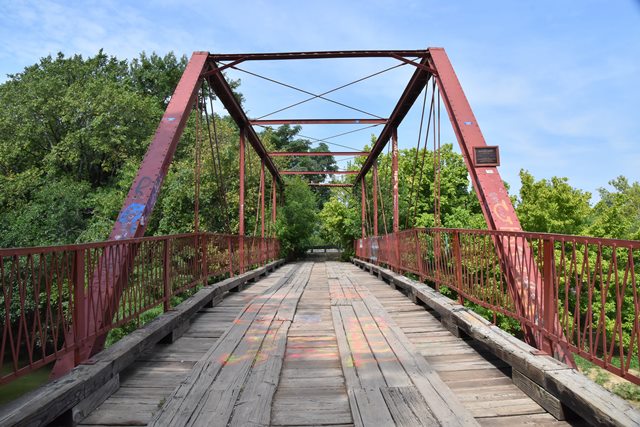
Goatman’s Bridge
Just outside Denton, Texas, tucked between trees and hovering over Hickory Creek, stands the Old Alton Bridge—better known today as Goatman’s Bridge. What looks like a quiet iron truss bridge from the late 1800s has become one of the most infamous legend-laden locations in the state. Part history, part folklore, part modern paranormal hotspot, Goatman’s Bridge sits at the crossroads of documented past and deeply rooted local myth. The bridge was built in 1884 to connect the towns of Denton and Copper Canyon, replacing an earlier wooden structure. For decades, it served farmers, travelers, and livestock drivers moving through the area. The surrounding woods and creek bottom were rural, isolated, and—especially at night—pitch black. Even without a legend attached, it’s the kind of place that feels removed from the modern world once the sun goes down. The haunting reputation largely centers around the story of a Black goat farmer named Oscar Washburn. According to the legend, Washburn successfully raised goats near the bridge and even hung a sign reading “This way to the Goatman.” As the story goes, members of a local Ku Klux Klan group resented his success and presence in the area. One night, they allegedly dragged him onto the bridge and hanged him from the iron supports. When they looked over the edge to see his body, it was gone. In retaliation, the legend claims the mob murdered his wife and children at their cabin nearby. The problem is that historians have found little concrete evidence confirming the Washburn story as it’s commonly told. While racial violence was tragically common in Texas during that era, records directly tying this specific lynching to the bridge remain debated. Like many American ghost stories, the narrative appears to have evolved over time, blending fragments of possible history with escalating folklore. Beyond the Goatman legend, the surrounding woods have their own dark reputation. Some accounts claim the area was once a gathering site for the KKK. Others say occult rituals took place in the forest clearing near the bridge. Stories circulate of satanic symbols, animal remains, and strange ceremonies—though many of these reports are difficult to verify and may stem from trespassing, vandalism, or modern thrill-seekers attempting to add fuel to the myth. Paranormal claims at Goatman’s Bridge are intense and varied. Visitors report hearing growls or heavy footsteps pacing along the bridge at night. Some claim to see a tall, shadowy figure with glowing eyes moving between the trees. Others describe feeling sudden dread or being pushed, scratched, or followed. Electronic voice phenomena sessions allegedly capture aggressive responses. There are even reports of car malfunctions and battery drain near the bridge—common claims at high-profile paranormal sites. One of the most persistent experiences reported is a feeling of being watched from the treeline. Investigators often describe the woods as more active than the bridge itself. Disembodied voices, distant chanting, and unexplained knocks are frequently cited. Skeptics argue that the area’s wildlife—deer, coyotes, wild hogs—and the acoustics of the creek valley can easily account for many of the sounds. The power of suggestion also plays a significant role; when people walk into a place expecting a demonic goat creature, adrenaline tends to do the rest. Despite the debate over its historical accuracy, Goatman’s Bridge has cemented itself in Texas paranormal culture. It has been featured in documentaries, YouTube investigations, podcasts, and television ghost-hunting shows. The combination of racial tragedy, alleged occult activity, and a creature-based legend gives it a uniquely layered mythology compared to traditional “haunted house” locations. Today, the Old Alton Bridge is part of a public trail system, and visitors can legally walk the bridge during park hours. By day, it’s a scenic historic structure surrounded by greenbelt trails. By night, it transforms into something entirely different in the public imagination—a place where history, fear, and folklore blur together. Whether the Goatman is a vengeful spirit, a demon born from rumor, or simply a campfire story that grew too large to contain, the bridge remains one of Texas’ most talked-about haunted locations. It’s a reminder that sometimes the most powerful hauntings aren’t built on documented facts alone—but on the stories communities tell, retell, and refuse to let die.
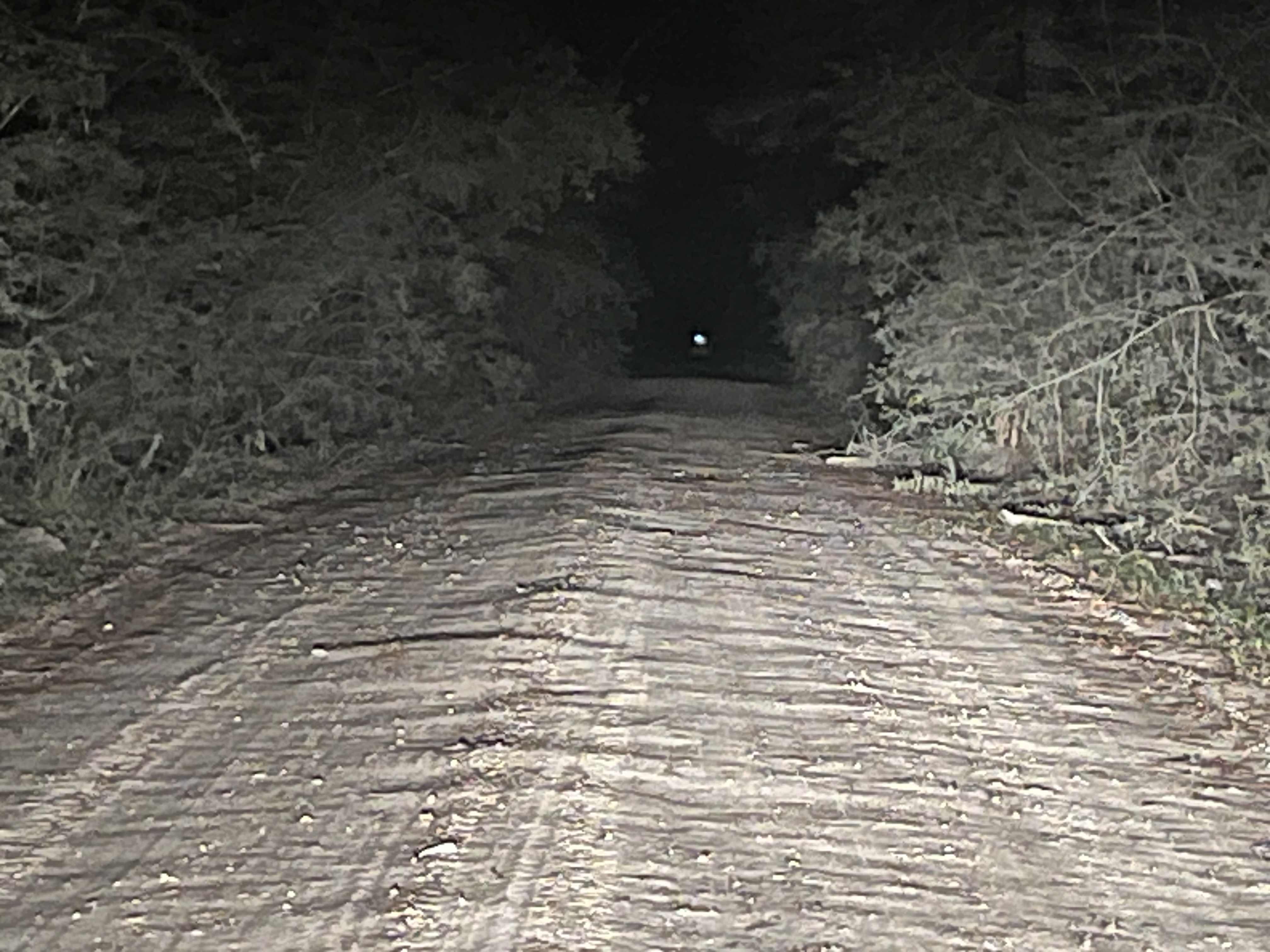
Light of Saratoga – Bragg Road Ghost Lights
Bragg Road cuts eight miles through the Big Thicket of Southeast Texas in a line so straight it looks drawn with a ruler, a dirt track running north-south between Farm-to-Market Road 787 near Saratoga and Farm-to-Market Road 1293 near the ghost town of Bragg Station in Hardin County. During the day it is an unremarkable passage through dense piney woods, the canopy closing overhead in a green tunnel, the sandy road wide enough for two cars with a few small turnouts along its length. At night it becomes something else entirely. The trees block out all ambient light. The darkness is absolute. And somewhere down the road, almost every time someone drives it after dark, a light appears—a single orb, roughly the size of a small pumpkin, hovering at an indeterminate distance, shifting in color from pale yellow to green to blue, bobbing gently, approaching and retreating but never arriving. It is called the Light of Saratoga, and it has been reported for over a century. The road exists because of the railroad. In 1902, the Gulf, Colorado and Santa Fe Railway cut a survey line through the Big Thicket from Bragg Station to Saratoga, bought right-of-way, and laid tracks to serve the booming East Texas oil fields and the timber industry that was stripping the region's longleaf pine. The Saratoga train made daily trips to Beaumont, hauling oil, logs, cattle, and passengers through some of the densest and most inhospitable forest in the American South. The Big Thicket was swamp and wilderness, thick with cypress sloughs, alive with snakes, mosquitoes, and malaria. Railroad crews suffered casualties from accidents and disease, and the work of maintaining the line was brutal. By 1934, the railroad had become obsolete. The rails and ties were pulled up, but the roadbed remained—arrow-straight, flat, and useful enough that it became a link road for local traffic. No one built along it. No one claimed it. The road simply existed, a corridor through darkness that no longer served any industrial purpose. The ghost light was reported while the tracks were still down. The earliest accounts predate automobile traffic in the area, which eliminates the most common skeptical explanation—that the light is a refraction of headlights from a nearby highway. The highway in question, FM 787, can only be seen from the south end of the road, while the light is typically observed facing north. Reports increased after the rails were removed, and in the summer of 1960, Archer Fullingim, the editor of the Kountze News, began running front-page stories about the phenomenon. Metropolitan newspapers across Texas picked up the coverage, and Bragg Road entered the broader public consciousness as one of the most persistently haunted locations in the state. The legends that have attached themselves to the light share a common architecture. The most widely told involves a railroad worker—sometimes a brakeman, sometimes a conductor—who was decapitated in a train accident on the Saratoga line. His body was recovered but his head was never found, and the light is his lantern, still swinging as his headless ghost walks the roadbed searching for what was taken from him. A second story involves a newlywed bride who wandered away from a nearby hotel after her wedding and never returned. Her groom seized a lantern and spent every night of his remaining life walking Bragg Road looking for her, and the light is the residue of that search, carried forward past his death. A third, grimmer tale holds that a Mexican road crew was murdered by their foreman rather than paid their accumulated wages. The workers were buried hastily in the dense woods alongside the road, and their restless spirits haunt the ground that cost them their lives. None of these stories have been historically corroborated. What has been corroborated, by generations of witnesses, is the light itself. Visitors describe it appearing most often in the early evening, hovering at a distance that makes it impossible to judge size or proximity. It shifts color. It moves laterally and vertically in ways inconsistent with a fixed light source. It does not grow larger or brighter as one approaches—a behavior incompatible with oncoming headlights. Some witnesses describe it darting toward their vehicles at startling speed before vanishing. Others watch it bob gently for minutes before winking out. The experience is consistent enough to constitute a rite of passage for East Texans, who have been driving their friends and children out to Bragg Road after dark for as long as anyone can remember. The scientific explanations are plausible but incomplete. Will-o'-the-wisp—the combustion of swamp gases such as methane and phosphine—is a documented phenomenon in wetlands worldwide, but no laboratory has successfully reproduced it under controlled conditions, and some observers note that Bragg Road does not run through active swampland. Atmospheric refraction of distant light sources is possible along a straight, flat corridor, but the light's behavior does not match the predictable characteristics of refracted headlights. The road is maintained as a park by Hardin County, with weathered historical signs at each end describing the railroad era and the oil boom that brought it into being. Four cemeteries sit in the surrounding woods. Today, Bragg Road remains open and drivable, though it is unpaved and can become impassable after heavy rain. The nearest town is Saratoga, birthplace of country legend George Jones, roughly sixteen miles west of Kountze. There is no admission, no gate, no guide. You drive in from one end, kill your headlights if you dare, and wait. The peepers sing. The fireflies drift. And somewhere ahead, more often than not, a light appears in the darkness that has no business being there—steady, shifting, patient, and impossible to reach. Whether it belongs to a headless brakeman, a heartbroken groom, a murdered road crew, or a pocket of burning gas that science cannot quite replicate, the Light of Saratoga has been answering the darkness on Bragg Road for over a hundred years, and it shows no sign of going out.
Devil’s Bridge
On the south side of San Antonio, where the city thins out into scrubby ranchland and the San Antonio River bends through old mission territory, a small bridge on East Ashley Road crosses a ravine deep enough that locals say if you drop a rock from the railing, you'll never hear it land. The bridge sits near 2454 East Ashley Road, not far from Mission San Juan Capistrano—one of the chain of eighteenth-century Spanish missions that line the river and now form a UNESCO World Heritage Site. The area has been continuously inhabited for thousands of years. Native Americans camped along this stretch of river long before the Spanish arrived. The missions themselves, established in the 1730s, were built with Indigenous labor and sustained by an elaborate acequia system that still carries water through the surrounding farmland today. The ground here is layered with centuries of human presence, conflict, disease, conversion, and death. It is old land, even by Texas standards. Devil's Bridge is not an ancient structure. It is a modest roadway bridge, unremarkable in engineering, crossing a steep ravine in an area that goes very dark after sundown. The name belongs to a global tradition—there are dozens of Devil's Bridges across Europe, most of them medieval, each carrying its own legend about a pact with Satan in exchange for construction. San Antonio's version doesn't have a clear origin story for the name itself. Some say it refers to supernatural happenings at the site. Others suggest it simply describes the danger of crossing the ravine at night on an unlit road, in an era before guardrails and headlights made such crossings routine. The bridge did claim at least one documented life: on March 7, 1965, shortly after midnight, a forty-one-year-old woman named Victoria Ann Broussard was fatally injured when the car her husband was driving struck the bridge's guardrail head-on. He told the responding patrolman he hadn't seen the bridge. She was pronounced dead at Baptist Memorial Hospital and buried at San Fernando Cemetery No. 2. The paranormal claims at Devil's Bridge draw from multiple threads, none of them cleanly verifiable but all of them persistent. One account ties the haunting to the Spanish colonial period, claiming a priest whose parishioners were killed during the Inquisition hanged himself from a tree near the bridge. Visitors have reported hearing the sound of a creaking rope in the surrounding trees—rhythmic, deliberate, like a body swinging from a noose. A priest at the nearby San Juan Church reportedly warned a young man in the early 1970s to be careful exploring the riverbank near the bridge, telling him he had personally seen spirits walking the grounds where Native Americans once camped. The young man had found pottery shards and square nails in the area, artifacts consistent with centuries of habitation along the river. A paranormal investigator named Joe recorded EVP sessions at the bridge and claimed to capture a voice responding to the question "Who are you?" with the name "Melvin," along with a separate recording of a voice saying "I'm here." No historical records have been found for anyone named Melvin connected to the site. Visitors have also reported the apparition of a headless woman who approaches from behind, white smoke-like figures, and the smell of sulfur—rotten eggs—hanging in the air around the bridge at night. The claim about the impenetrable darkness is among the most frequently repeated: that after sundown, the area around the ravine becomes so dark that headlights and flashlights seem to penetrate only a few feet, as if the light itself is being absorbed. The most unsettling recurring detail involves the ravine itself. Multiple accounts describe throwing rocks off the bridge and never hearing them hit water or ground—as though something catches them, or the ravine simply has no bottom. One version of the legend attributes this to the spirit of a little girl. The depth of the ravine is real and measurable, but the acoustic effect in a steep, vegetation-choked gully at night, combined with ambient insect noise and the psychology of expectation, could plausibly account for the phenomenon. Or it couldn't. The people who've stood on that bridge in the dark tend to find the explanation less comforting than the mystery. Today Devil's Bridge remains a functioning road bridge on East Ashley Road, accessible by car, with no signage or formal acknowledgment of its reputation. Mission San Juan sits nearby, its stone walls and flowing acequias drawing tourists and pilgrims. The San Antonio Food Bank farms the old mission fields just down the road. It is a landscape where the sacred, the agricultural, and the spectral exist in close proximity—where a UNESCO site and a haunted bridge share the same stretch of river, and where the oldest water rights in Texas still flow through ditches dug by hands that have been gone for three hundred years.

The Crazy Water Hotel
Nestled in a valley between the rolling hills of Palo Pinto County, about an hour west of Fort Worth, the Crazy Water Hotel rises seven stories over downtown Mineral Wells, Texas—a Spanish Colonial Revival monument to one of the strangest chapters in American health tourism. The building at 401 North Oak Avenue dates to 1927, but the story beneath it reaches back to 1881, when a settler named James Alvis Lynch drilled a well on his property and discovered the water tasted foul. His wife drank it anyway. Her arthritis improved. Word spread. By 1888 a third well had been dug on nearby land, and from it a woman suffering from apparent dementia reportedly drank daily until her condition seemed to lift. Local schoolchildren began calling it the Crazy Well. The name stuck, the woman vanished unnamed into history, and Mineral Wells was born. By the early 1900s the town was a full-blown health resort, with bathhouses, spas, and pavilions serving over a hundred thousand visitors a year. The original Crazy Hotel was built atop the old well site in 1912, completed by 1914. On March 15, 1925, a fire that started in an adjacent drugstore leveled the entire block. Dallas insurance magnate Carr Collins and his brother Hal purchased the ruins and commissioned architects Lang and Witchell to rebuild. The new seven-story Crazy Water Hotel opened March 11, 1927, with over two hundred rooms, a semi-Moorish pavilion advertised as having the largest mineral water counter in the world, a rooftop ballroom, basement bathhouses, and bowling lanes. Filmmaker D.W. Griffith stayed in 1929. Judy Garland visited on a USO tour in 1942. Rumors persisted that Bonnie and Clyde passed through. By the late 1940s, advances in medicine had rendered mineral water cures obsolete, and Mineral Wells' tourism collapsed. The Crazy Water survived where most others didn't, converting to a retirement and assisted-living center. It served in that capacity for decades before closing in 2010. The building sat empty until local developers rallied eighty-eight Texas investors to fund a restoration. The Crazy Water Hotel reopened in October 2021 as a boutique hotel, its first guests the crew of Paramount's 1883. It is listed on the National Register of Historic Places. The paranormal claims center on the kitchen and basement areas, anchored by named witnesses and specific incidents. In the early 1990s, reconstruction of the first-floor kitchen seemed to stir something. Employee Amy Harris reported that in 1994, while preparing breakfast, a little girl in an old-fashioned pink dress with white stockings appeared at her side, hands perched on the table, watching her work. The figure was visible for seconds before vanishing. At Christmas 1999, Harris felt something pass directly through her while entering the kitchen. Another employee, Isabel Hernandez, described a little girl's spirit that followed her through the kitchen and once called her by a family nickname known to no one outside her relatives. She also reported being touched while working the serving line. An employee named Walter heard the child sobbing in the basement and encountered a cold spot at the source of the sound. Linda Ruiz reported seeing in April 2000 a man in a long trench coat in the kitchen, dressed as if from the 1930s or 1940s, who appeared briefly and vanished. Maintenance worker Richard Curtis spotted the little girl near the basement elevators—in the oldest section of the building, where charred brick walls from the 1925 fire still survive. A visitor to the former rooftop ballroom described seeing the figure of a woman in a long red 1930s-style dress near a window. The figure disappeared instantly and no one else was on the floor. The accounts share a common texture: figures in period clothing, visible for only seconds, vanishing without interaction or menace. No one has identified the little girl, the man in the trench coat, or the woman in red. The hotel's century of history encompasses tens of thousands of guests, many of whom arrived sick and desperate, and its later use as a retirement facility adds another layer of human passage. The basement, which predates the current structure and retains fire-scarred walls from the original hotel, is the area most consistently associated with unexplained sounds and cold spots. Today the Crazy Water Hotel operates as a restored boutique property with retail shops and a coffee bar serving the same mineral water that started everything. The pavilion floor has been restored to its original terrazzo. The rooftop still offers views of the Palo Pinto hills. Whether the little girl in the pink dress is still watching from the kitchen doorway is a question the hotel does not discourage guests from exploring for themselves.

Armstrong Browning Library
The Governor's Cafe in Dover, Delaware stands as a historic establishment steeped in the cultural heritage of the state capital. Located in a building with significant architectural merit, the cafe has long served as a gathering place for residents and visitors seeking refreshment and conversation in the heart of Delaware's downtown corridor. The structure itself bears witness to decades of social interaction, commercial activity, and the stories of countless individuals who have passed through its doors. The cafe's interior features period furnishings and decor that evoke the charm of earlier eras, with particular attention paid to the preservation of historic paintings that line the walls and add character to the dining spaces. These artworks represent investments in cultural preservation and aesthetic refinement that the establishment's proprietors have maintained with care over the years. The visual appeal of these pieces has made them focal points within the cafe, drawing the eyes of patrons and creating focal points for contemplation during meals. The origins of the hauntings at The Governor's Cafe remain somewhat obscure, with paranormal researchers unable to definitively connect the spiritual manifestations to specific historical events or tragic circumstances. Various theories have emerged among those interested in the paranormal, with some suggesting connections to the building's long commercial history and the unknown spirits that may have developed attachments to the location. The cafe's role as a community gathering space means it has absorbed the impressions of innumerable human experiences, emotions, and interactions over its years of operation. Some have speculated that intense emotional residue left by past patrons or staff members might contribute to the supernatural phenomena reported within the establishment. The nature of the haunting appears focused specifically on the areas where the historic paintings are displayed, suggesting a possible connection between the artwork and the paranormal manifestations that have been documented there. Paranormal activity at The Governor's Cafe centers on unexplained phenomena occurring in proximity to the displayed paintings. Visitors and staff members have reported sensing unusual presences in these areas, with sensations of being watched or observed while viewing the artwork becoming increasingly common among those who frequent the establishment. Some individuals have described experiencing sudden temperature fluctuations in the immediate vicinity of certain paintings, while others have reported seeing shadows or indistinct figures moving among the frames. The activity tends to be subtle and non-threatening, characterized more by feelings of presence and awareness than by overtly frightening manifestations. Paranormal investigation groups have documented instances of electromagnetic anomalies in the areas where the paintings hang, though definitive explanations for these readings remain elusive. The consistency of reports from independent witnesses, combined with the localized nature of the phenomena, has earned The Governor's Cafe recognition in paranormal research circles as a location worthy of continued study and documentation. Today, The Governor's Cafe continues to operate as a functional restaurant and social venue, with management maintaining a practical stance toward the paranormal reports while acknowledging the experiences shared by patrons. The establishment has neither attempted to exploit nor dismiss the stories associated with its location, instead allowing the paintings and their mysterious properties to remain part of the venue's natural character. Visitors curious about the paranormal history of Dover and the surrounding region continue to visit the cafe, drawn by both the quality of its food and service and the subtle supernatural reputation it has developed. The paintings remain on display as originally arranged, continuing to serve as focal points for the strange sensations and unexplained phenomena that characterize the haunting. The cafe maintains its role as a community institution while existing comfortably alongside the mysteries that seem to inhabit its spaces, creating an atmosphere that blends historical preservation with contemporary curiosity about the paranormal.
Gravity Hill – Thunderbird Drive
Gravity Hill on Thunderbird Drive in El Paso, Texas represents one of the most thoroughly documented and scientifically examined paranormal locations in the American Southwest, situated along a specific road segment that has accumulated both scientific interest and paranormal folklore spanning decades of investigation and witness testimony from credible and skeptical observers alike. The location occupies the stretch of Thunderbird Drive between Twin Hills Drive and Singing Hills Drive, where the topography and road configuration create optical illusions that have intrigued observers for generations alongside genuinely paranormal phenomena that defy conventional explanation and challenge established scientific understanding. The physical phenomenon most commonly reported at Gravity Hill involves vehicles appearing to roll uphill against gravity, defying fundamental laws of physics in a manner that continues to perplex researchers and attract visitors from across the region seeking to experience the anomaly firsthand and document evidence of paranormal interference. The paranormal entities believed responsible for the phenomena include the spirits of ghost children who are reported to push vehicles along the roadway with supernatural force, their efforts directed toward some unknown purpose or destination lost to historical record but presumably significant to their eternal existence in the location. Local legend further attributes certain manifestations to a mother spirit believed to be searching for her lost children or attempting to prevent vehicles from passing through her eternal domain, her maternal instinct transcending death to exercise protection or control over the thoroughfare with fierce determination and purposeful engagement. The most frequent reports describe vehicles coming to inexplicable stops or beginning to reverse uphill despite the driver's efforts to maintain forward momentum, a phenomenon that defies explanation through conventional mechanical or gravitational principles and suggests intelligent paranormal intervention motivated by specific purpose known only to the spirits. Witnesses describe a tactile sensation of pressure against their vehicles, as though unseen hands are literally pushing the automobile uphill with determined force, the sensation consistent across multiple independent reports despite variations in observer perspective and skepticism regarding paranormal phenomena in general. The phenomenon occurs most reliably during nighttime hours, particularly in the hours immediately after sunset and before dawn when the boundary between the physical and paranormal realms appears most permeable and responsive to human presence and consciousness engaging the location directly. Paranormal investigators have documented electromagnetic anomalies concentrated in specific areas along the roadway, suggesting that the location may represent a thin place where spiritual energy concentrates and achieves sufficient power to manifest through physical phenomena and mechanical interference with vehicles traveling through the zone. The grief-stricken spirits believed responsible for Gravity Hill's phenomena persist in their tragic purpose decades or centuries after the events that bound them to the location, continuing their efforts to manipulate vehicles and interact with the living world through physical force and electromagnetic manifestation that remains responsive to human presence traveling the roadway with apparent perception.
Angel Rose Bed and Breakfast Inn
The Angel Rose Bed and Breakfast Inn occupies a Victorian home in Rockport, Texas, a picturesque location in the Gulf Coast region that attracted residents seeking the aesthetic and cultural experiences promised by this charming coastal town. The Victorian structure embodies architectural elements characteristic of late nineteenth-century residential design, with decorative details, ornate woodwork, and spatial arrangements that reflect the sophistication and taste of its original owner. The building underwent transformation from private residence to commercial hospitality establishment, modifications that preserved the Victorian character while creating spaces designed to welcome and accommodate guests seeking authentic period hospitality. The conversion maintained the historical integrity of the structure while introducing modern amenities necessary for contemporary bed and breakfast operations. The name Angel Rose suggests aesthetic and romantic aspirations, marketing language designed to appeal to visitors seeking supernatural experiences combined with Southern hospitality and Victorian charm. Within the bed and breakfast's Victorian interior spaces, multiple spirit entities are documented as inhabiting the structure. A woman dressed in old-fashioned clothing consistent with late nineteenth-century fashion is seen repeatedly within the building, appearing as an apparition that materializes and vanishes without conventional explanation. The nature and identity of this female spirit remain unclear, though her repeated manifestations suggest an attachment to the property and resistance to spiritual departure. An additional unknown spirit demonstrates distinctive characteristics and preferences that have become incorporated into the location's paranormal reputation. This entity exhibits a preference for saltwater taffy, a nineteenth-century confection that remains available in modern form. The spirit's taffy-related phenomena have become a documented aspect of the Angel Rose's paranormal activity, distinguishing it from other haunted locations through this peculiar manifestation. The paranormal phenomena at the Angel Rose Bed and Breakfast centers on multiple categories of activity. Lights throughout the Victorian home turn on and off autonomously, activating and deactivating without human intervention or mechanical explanation. Apparitions appear in mirrors and reflective surfaces throughout the interior, with visitors encountering ghostly forms within glass and mirrored areas that vanish when approached. Disembodied footsteps traverse the hardwood floors of the Victorian home, the sound of invisible feet walking purposefully through hallways and rooms creating an unmistakable auditory presence. The taffy-related phenomena manifest in several documented ways, with guests and staff reporting finding saltwater taffy in unexpected locations, confections that appear in rooms without anyone placing them there. The spirits seem to engage with guests through these phenomena, creating interactions that suggest awareness and deliberate communication rather than simple residual haunting activity. The Angel Rose Bed and Breakfast has become established as a paranormal destination, attracting guests specifically interested in experiencing haunted accommodations and direct contact with spirit entities. The combination of Victorian charm, documented ghost stories, and interactive paranormal phenomena has established the property as a distinctive attraction within Texas paranormal tourism circles.
Marfa Lights
The Marfa Lights phenomenon represents one of the most extensively documented and studied unexplained light displays in North America, occurring in the desert landscape near the remote west Texas town of Marfa. The lights appear in the Mitchell Flat region east of Marfa, with observations recorded from various vantage points including designated viewing areas established specifically for this purpose. The phenomenon has been observed with consistency spanning over a century, creating one of the longest-documented paranormal occurrences in the United States. The geographic setting is characterized by vast open desert, sparse vegetation, and minimal light pollution, providing ideal conditions for observation of the aerial manifestations. The lights have attracted scientific researchers, paranormal investigators, and curious visitors seeking to witness and understand the nature of these recurring apparitions. The specific geography of Marfa Lights sightings includes the Mitchell Flat, an expansive desert plain offering unobstructed views of the eastern horizon, and Paisano Pass, a mountain passage where lights have also been documented. The area surrounding Marfa is inhabited sparsely, with vast stretches of uninhabited desert creating isolation that enhances the distinctiveness of the phenomenon. The landscape has remained largely unchanged over the past century, providing consistency in the observation environment. The climate of the region—characterized by clear night skies and minimal cloud cover—creates optimal conditions for visibility of the phenomena. The established viewing area, known as the Marfa Lights Viewing Area, provides organized access for interested observers seeking to experience the lights firsthand. Historical documentation of the Marfa Lights extends back to reports from Spanish conquistador expeditions in the territorial period, with accounts suggesting that these lights were observed for centuries prior to modern scientific study. The legends and oral traditions of indigenous peoples and early Spanish settlers contain references to mysterious lights in the region, suggesting that the phenomenon may have cultural and spiritual significance extending deep into the past. Spanish conquistador spirits are said by some paranormal theorists to be associated with the lights, possibly explaining certain characteristics and the apparent intelligence attributed to the manifestations. The phenomenon gained widespread attention in the modern era following increased tourism and systematic documentation, though accounts from earlier centuries establish a long historical record of observations. The physical characteristics of the Marfa Lights have been consistently described by witnesses across generations of observations. The manifestations typically appear as glowing orbs or spheres of light, varying in intensity from barely visible to remarkably bright. The predominant coloration is described as yellow-orange, creating a warm-toned luminescence visible across considerable distances. However, witnesses have also reported occasional variations in color, with green, blue, and red hues documented in specific sightings. The lights display remarkable behavior patterns that defy simple mechanical or natural explanation. Some observed lights remain stationary for extended periods, while others move across the landscape with apparent purpose and direction. The movement patterns are sometimes described as purposeful and intelligent, with reports of lights appearing to respond to observers or changing behavior based on external stimuli. Lights have been observed splitting into multiple separate orbs and merging back into unified forms, suggesting a degree of control or coordination inconsistent with natural phenomena. The intensity of individual lights fluctuates, brightening and dimming in patterns that sometimes appear rhythmic or pulsating. The Marfa Lights continue to appear regularly. Various scientific explanations have been proposed, including temperature gradient mirages and natural gas phenomena, though none fully account for the intelligent behavior and documented responses to observer presence. Paranormal researchers have proposed alternative theories including extraterrestrial visitation and spiritual manifestations. The phenomenon remains officially unexplained, continuing to generate interest from scientists and paranormal enthusiasts. The Marfa Lights represent genuinely unexplained phenomena where observation remains possible for any visitor.
Snuffer’s Restaurant
Snuffers Restaurant occupies a building with a complex and layered history in the Dallas-Fort Worth metropolitan area, earning a reputation as the most intensely haunted dining establishment in the region. The structure itself contains physical and spiritual remnants of multiple eras, with paranormal activity concentrated throughout the restaurant's dining and service areas. The property's history includes occupation as a pool hall during earlier decades, a social space where men gathered to play billiards, socialize, and occasionally engage in disputes. The transition from pool hall to restaurant did not erase the energy imprinted upon the location by previous activities and tragic events that unfolded within its walls. Beneath the restaurant's foundations lie the remains of what was once a cemetery, a graveyard displaced during urban development as the Dallas-Fort Worth area underwent rapid expansion and redevelopment. The disturbance of burial grounds and removal of human remains, even through officially sanctioned processes, often results in significant paranormal consequences. Many cultures and spiritual traditions recognize that displacing the dead creates unrest in the spiritual realm, and this location bears testament to that principle. The cemetery's former occupants, including children whose small bodies were laid to rest in this now-vanished burial ground, appear to have remained attached to the location despite the transformation of the surface landscape. Multiple spirit entities inhabit Snuffers Restaurant, their presence documented through consistent witness testimony and paranormal investigation records. A murdered man from the pool hall era roams the restaurant, his violent death creating a restless spirit unable to find peace. Numerous children, possibly cemetery remains disturbed during construction, are believed to occupy various areas of the establishment. These juvenile spirits appear to interact playfully and mischievously with the living environment, creating phenomena distinct from the darker energy of the murdered adult entity. The paranormal manifestations at Snuffers represent some of the most dramatic and varied encountered in commercial establishments. Electronic equipment throughout the restaurant malfunctions inexplicably, with computers, lighting systems, and kitchen equipment experiencing failures without mechanical explanation. Dramatic temperature fluctuations create localized cold spots in dining areas, with patrons and staff experiencing sudden chills despite climate controls operating normally. Lights sway and swing despite absence of air movement or physical contact. Disembodied footsteps echo through dining areas and kitchen spaces during periods when no humans are moving through those locations. Children's voices speak, laugh, and call out, their youthful tones unmistakable to adult listeners who encounter these sounds. Objects levitate or move independently, with glasses, utensils, and other items shifting positions or falling without natural causation. Shadowy figures manifest throughout the restaurant, appearing as dark humanoid shapes that dissipate before close examination. Strange, unidentifiable voices produce sounds that bear no relation to normal human speech or the ambient restaurant noise. The intensity of paranormal activity at Snuffers has made it a destination for paranormal investigators, ghost hunters, and curiosity seekers from throughout the United States, solidifying its status as a location of exceptional and documented supernatural significance.
Baker Hotel
Culbertson Mansion stands as one of New Albany, Indiana's most architecturally distinguished private residences, a Victorian masterpiece constructed in the nineteenth century by a prominent local businessman who accumulated considerable wealth through mercantile enterprise and real estate development. The mansion showcases the refined aesthetic preferences of its era, featuring ornate woodwork, period furnishings, and architectural details that reflect the prosperity and social aspirations of the industrial age. Built during a time when New Albany served as a significant Ohio River trading post, the mansion represented the pinnacle of regional wealth and status, dominating its neighborhood with imposing Victorian elegance and commanding presence. The structure has been meticulously preserved and maintained through successive generations, becoming a significant historical landmark that attracts architectural enthusiasts and history scholars interested in nineteenth-century domestic design and regional social history. The property encompasses not only the main residence but also auxiliary structures including a carriage house, reflecting the comprehensive domestic landscape of a substantial Victorian estate. The building's multiple floors, grand staircases, and numerous chambers created an environment of substantial complexity where household operations required coordinated effort from multiple servants and staff members. The interior decorations and furnishings represent substantial financial investment in aesthetic refinement and comfort, with each room designed according to Victorian conventions regarding purpose-specific decoration and function. Over more than a century since its construction, the Culbertson Mansion has developed a substantial reputation for paranormal activity documented by multiple witnesses and paranormal investigation teams. Visitors and staff have consistently reported experiencing self-closing doors throughout the mansion's upper floors, with doors shutting silently and locking firmly despite no evidence of mechanical malfunction or air currents sufficient to explain the phenomena. The doors close with deliberate precision, sometimes catching individuals as they pass through doorways, suggesting intentional actions rather than mechanical accident. Phantom footsteps echo through hallways and across wooden floors, particularly concentrated on the upper levels, described as the deliberate, measured steps of an unseen presence moving through the residence. The footsteps follow recognizable patterns, often ascending and descending staircases, suggesting the entity follows familiar routes through the mansion's interior. Unpleasant odors appear spontaneously in various rooms without identifiable source, often manifesting as overwhelming stench that dissipates as suddenly as it arrived. Witnesses describe the odors as musty, acrid, or resembling decay, suggesting phenomena potentially connected to death or disease. Electrical systems throughout the mansion exhibit inexplicable malfunctions, with lights fluctuating, power surging through outlets, and equipment activating without manual intervention or electrical explanation. The phenomena concentrate particularly in certain rooms, suggesting localized spiritual presence rather than systematic electrical failure. Apparitions of unknown spirits have been visually documented and reported by multiple credible witnesses, including reports of a dark-featured man observed in various locations throughout the residence. The apparition possesses distinctive features allowing multiple witnesses to describe consistent identifying characteristics across different observation periods. Clanging metallic sounds reverberate through the mansion seemingly originating from the carriage house or adjacent structures, often interpreted as the movement of phantom horses or equipment from the estate's earlier working period. The nature of the haunting suggests former residents who maintained strong attachment to the property, possibly including servants or household staff whose lives were intimately connected to the mansion's operations. The Culbertson Mansion continues to serve as a historic house museum and has established itself as a primary regional paranormal investigation site, with paranormal investigation teams conducting formal investigative events, particularly during autumn months when paranormal activity allegedly intensifies. The mansion maintains rigorous historical interpretation standards while accommodating paranormal researchers, creating a unique environment where architectural history and supernatural phenomena coexist.
Office Building
The Eisenhower Executive Office Building in Washington, District of Columbia stands as a monumental example of Gilded Age governmental architecture, its imposing Victorian exterior and elaborate interior detailing reflecting the aesthetic ambitions and political power of late nineteenth-century American leadership. Originally constructed to house executive branch offices during a period of substantial governmental expansion, the building represents one of the most significant architectural achievements of its era, featuring innovative design solutions and construction techniques that were cutting-edge at the time of its completion. The structure encompasses multiple stories, numerous office spaces, conference rooms, and corridors that have served as workspaces for thousands of government employees across more than a century of continuous operation. The building's architectural significance has been repeatedly recognized through formal historical designations and conservation efforts aimed at preserving its structural and aesthetic integrity for future generations. Throughout its long history of governmental service, the Eisenhower Executive Office Building has housed numerous agencies, departments, and officials responsible for administering federal government operations and formulating national policy. The work conducted within its walls has shaped American history, with decisions made by occupants influencing national and international affairs across multiple decades. However, the building's reputation increasingly centers on the paranormal phenomena that investigators have documented occurring within its spaces, particularly during night hours when the corridors fall silent and most staff members have departed. The paranormal activity at the Eisenhower Executive Office Building is attributed to the spirits of former employees whose strong attachment to their work or emotional investment in governmental service appears to have bound them to the physical location after death. These spirits appear to manifest a work-oriented mentality even in their postmortem existence, continuing patterns of behavior and emotional engagement consistent with their careers when alive. The most frequently reported phenomena involve unexplained voices emanating from empty office spaces, some clearly engaged in conversation with unseen interlocutors, others issuing directives consistent with governmental or military protocols. Footsteps have been documented moving through hallways and corridors at times when no living persons occupy the space, suggesting the presence of ambulatory spirits retracing the paths they walked in life. Doors throughout the building have been observed slamming with tremendous force in the absence of wind or mechanical cause, and observers describe the sensations as intentional rather than accidental, as though the spirits are expressing frustration or attempting to draw attention. Furniture within offices has been documented moving from its previous position to new locations, and papers organized on desks have been found scattered in apparent disarray by staff members arriving for morning duties. Typing sounds emanating from empty offices suggest spirits continuing to engage in their governmental administrative duties even after death. Apparitions observed by night shift security personnel and paranormal investigators have been described as transparent or partially visible, dressed in formal business attire consistent with different historical periods, suggesting that the building has accumulated multiple layers of paranormal residents across its long operational history. The cumulative paranormal phenomena at the Eisenhower Executive Office Building has transformed it from a purely governmental structure into a location of substantial interest for paranormal researchers investigating the connection between intense workplace attachment and postmortem spiritual manifestation.
USS Lexington
The USS Lexington stands as a monumental artifact of American naval history and technological achievement, a full-scale aircraft carrier that operated as an active combatant warship throughout multiple decades of military service before being preserved and transformed into a publicly accessible maritime museum and tourist attraction. Launched during the middle years of the twentieth century during a period of intensive naval buildup and technological innovation, the vessel served with distinction during multiple military operations and exercises, its flight decks witness to countless combat operations, personnel transfers, training evolutions, and the daily routines essential to maintaining a complex floating community capable of projecting military force across vast ocean distances. The carrier's enormous and sophisticated internal structure encompasses multiple flight and hangar decks, numerous specialized compartments devoted to specific operational functions, and an intricate labyrinthine system of passages and engineering spaces that allowed the entire vessel to function as a self-contained floating city at sea, housing hundreds of naval personnel and airwing staff in relatively confined quarters under demanding operational conditions. Following its retirement from active military service after decades of operational deployment and combat experience, the USS Lexington has been permanently moored at a Texas port facility and methodically converted into a dynamic museum where civilian visitors and naval history enthusiasts can explore the vessel's historical spaces and learn comprehensively about naval aviation, naval technology, carrier operations, and the historical role of aircraft carrier warfare in twentieth-century military conflicts. Yet within this transformation from active warship to civilian tourist destination, the ship has acquired and maintained a formidable reputation among paranormal researchers, ghost hunters, and casual visitors alike as one of the most actively and consistently haunted naval vessels in the entire United States, a paranormal distinction that has led the vessel to be affectionately nicknamed the Blue Ghost within paranormal research circles and among seasoned paranormal investigators. The most frequently reported and intensely documented paranormal phenomena centers specifically on the engine room compartments and all related mechanical and engineering spaces, where an entity identified as Charlie, believed to be a deceased career engine room operator who served aboard the vessel during active military operations, is thought to remain present in spirit form just as he remained devoted in life—perpetually maintaining watch and vigilance over the intricate engineering spaces that represented the vital heart of the vessel's operational capabilities and power generation systems. Visitors and professional paranormal investigators report consistent experiences of hearing disembodied voices calling out in recognizable military terminology within the engine compartments, witnessing sudden temperature fluctuations that defy environmental explanation, encountering unexplained mechanical sounds and noises despite the vessel's permanently inert and deactivated state, and sensing a palpable presence of an unseen observer or guardian figure monitoring activities within the engineering spaces. Apparitions have been glimpsed moving deliberately through corridors and compartments with apparent awareness of their surroundings, their forms translucent and distinctly ephemeral in character, vanishing when directly confronted or pursued by observers seeking closer confirmation of their presence. The USS Lexington has become an officially recognized paranormal attraction, regularly hosting overnight ghost-hunting adventures and structured paranormal investigation programs where participants equipped with sophisticated detection equipment attempt methodically to document and communicate with the spirits believed to inhabit the vessel.
Log Cabin Village
Log Cabin Village in Fort Worth, Texas represents a carefully curated collection of authentic frontier dwellings relocated from across north-central Texas, preserving structures that once housed settlers and ranchers during the region's formative years. The village, established to commemorate the architectural heritage and daily lives of early Texas pioneers, encompasses multiple cabins and outbuildings dating primarily to the late nineteenth and early twentieth centuries. Each structure within the village has been restored to reflect historical accuracy, complete with period furnishings and implements that transport visitors back to an era when log construction represented both practicality and architectural sophistication on the expanding frontier. Among these preserved buildings stands the Foster Cabin, a structure whose dark history transcends ordinary frontier settlement narratives, becoming intertwined with a tragic tale of domestic discord and paranormal consequence that has persisted for more than a century. The most significant paranormal focus centers on the Foster Cabin's second floor, where the documented spirit of Jane Holt, former nanny and wife of the cabin's original owner, manifests with particular intensity and frequency. Historical records indicate that Jane Holt's time in the household was marked by emotional turmoil and unresolved conflict, circumstances that allegedly culminated in her death under circumstances that remain disputed and somewhat unclear even to modern historians. Her presence has been reported consistently by visitors and staff members who describe cold spots appearing spontaneously in certain areas of the second floor, temperature fluctuations that defy conventional explanation despite the structure's age and exposure to natural elements. The scent of lilacs, a flower particularly associated with Jane's personal preference and memory, materializes within the cabin with uncanny regularity, often occurring in spaces where floral arrangements have not been present and where such aromas should not logically appear. Various witnesses have documented their experiences with the Foster Cabin's paranormal phenomena, creating a substantial archive of contemporary accounts that corroborate earlier historical testimonies about the location's haunted nature. Visitors report hearing strange noises emanating from the second floor during daytime hours when the cabin should be empty or occupied only by staff members in other areas, sounds that range from footsteps and soft whispers to the distinctive rustling of long skirts moving across wooden flooring. Multiple observers have reported witnessing apparitions, translucent figures that typically appear in period dress consistent with early twentieth-century clothing, manifesting briefly before fading from view within seconds. Objects within the cabin have been documented moving inexplicably, with items displaced from their usual positions despite secure doors and windows, suggesting an intelligence deliberately rearranging the physical environment. These manifestations collectively suggest Jane Holt's presence remains attached to the location where her earthly suffering was most concentrated, her spectral form continuing to express the emotional intensity that characterized her troubled mortal existence. Log Cabin Village continues to operate as a significant historical and educational resource for Fort Worth and the broader Texas community, attracting thousands of visitors annually who seek both historical knowledge and potential paranormal encounters. The village managers and historical preservation staff maintain the structures with meticulous attention to historical detail while simultaneously documenting the ongoing paranormal activity that occurs within certain buildings. The Foster Cabin remains open to public tours despite its haunted reputation, and many visitors specifically request access to the second floor, hoping to experience or photograph manifestations of the resident spirit. The location has been featured in various paranormal investigation programs and historical documentaries, establishing Log Cabin Village as one of Fort Worth's most notable haunted sites and a destination where frontier history intersects with unexplained phenomena, creating a unique attraction that satisfies both historical curiosity and supernatural intrigue.
The Grove
The Grove in Jefferson, Texas, stands as a haunting reminder of one of the darkest chapters in American history, its elegant structure and grounds concealing a legacy of racial violence, systematic oppression, and tragic death that continues to resonate through its paranormal phenomena. The building itself is a substantial plantation mansion constructed during the antebellum period when the institution of slavery formed the foundation of Southern economic and social systems. The Grove served as the residence of a wealthy planter family whose prosperity derived entirely from enslaved human labor, with the mansion's opulent furnishings and architectural elaboration representing wealth accumulated through the exploitation and suffering of enslaved individuals. The structure's elegant design includes numerous rooms, gardens, and outbuildings typical of substantial antebellum plantations, and these spaces bear witness to decades of human bondage and brutality. The back porch of The Grove holds particular significance in the plantation's paranormal history, as it was the location associated with the tragic deaths that would come to define the property's spiritual legacy. The upstairs rooms of the mansion contained the private quarters of the planter family, while enslaved individuals occupied servant quarters and less visible areas of the property. The documented history of The Grove includes accounts of slavery's brutalities, including corporal punishment, family separation, and the denial of basic human rights and dignities that characterized the plantation system. The paranormal phenomena at The Grove are directly connected to the documented history of four enslaved individuals who were hanged at the property, creating a tragic focal point for spiritual manifestation and residual haunting phenomena. The historical accounts of these deaths are sparse and incomplete, as records from the antebellum period frequently failed to document the deaths of enslaved people with detail or care. The specific circumstances of the hangings, including the identities of the victims, the charges brought against them, and the dates of their deaths, remain partially obscure, preserved only in fragmentary historical accounts and local oral tradition. However, the reality of these tragic deaths is undeniable, and the spiritual consequences of this violence appear to have created permanent alterations to the property's psychic character. The spirits of these four individuals appear to have become bound to The Grove, unable or unwilling to depart from the location where they were violently executed. Their continued presence manifests through various paranormal phenomena that suggest ongoing anguish and unresolved trauma related to their deaths. The psychological weight of racial violence and the psychological imprints of unjust death appear to have created powerful spiritual presences that modern paranormal investigators can detect and document. The paranormal manifestations at The Grove present a complex and troubling picture of spiritual phenomena rooted in historical injustice and racial violence. Phantom odors have been reported throughout the property, with witnesses describing scents that appear without identifiable source and that linger despite attempts to locate their origin. Shadowy figures move through various rooms and outdoor areas of the property, appearing with enough clarity to be observed but maintaining a translucent or semi-transparent quality that identifies them as non-corporeal entities. Moving objects represent another documented phenomenon, with small items relocating without physical explanation and larger objects shifting position in ways that defy conventional understanding. Apparitions of full human figures have been reported by multiple witnesses, appearing primarily in areas associated with the tragic deaths of the enslaved individuals. Lights turning on and off without human intervention occur throughout the property, suggesting the presence of non-corporeal entities capable of interacting with the physical world. Mirrors mysteriously fall from walls and positioning, an unusual phenomenon that may reflect the disrupted nature of the spirits' manifestation. Loud wails emanate from empty rooms and outdoor areas, sounds that witness accounts describe as expressing profound suffering and anguish. Unexplained moisture appears on walls and surfaces without evident source, a phenomenon that some researchers interpret as residual energy from the violent deaths occurring at the property. Most pervasive of all is the consistent report of feeling watched while on the property, a sensation that visitors experience in specific locations and that intensifies during evening and nighttime hours. The combination of multiple types of paranormal phenomena, documented by numerous witnesses over an extended period, suggests that The Grove remains a location where the spirits of the unjustly executed continue to express their presence, their anguish, and their connection to the place where their lives were violently terminated.
Masonic Building – Gumbo’s North
The Square, located in an unspecified downtown area of a mid-sized American city, represents a distinctive architectural and commercial landmark that likely developed during the late nineteenth or early twentieth century when downtown squares served as the civic, commercial, and social heart of American communities. The building associated with this haunting appears to have functioned as a multipurpose structure, containing retail spaces, dining establishments, and office areas that would have served the surrounding downtown business district. Historic downtown squares in American cities typically feature distinctive architecture, often Victorian or early Modern styles, with varied interior configurations adapted to different commercial purposes over the course of decades. The Square building shows evidence of substantial alterations and renovations across its lifetime, including modernization of mechanical systems, conversion of interior spaces to accommodate changing commercial needs, and modifications to facades and entryways reflecting evolving architectural tastes. The existence of a bar room within the structure suggests it operated, at least during certain historical periods, as an entertainment and social gathering venue where customers congregated for alcoholic beverages and social interaction. The presence of a staircase connecting multiple floors indicates vertical organization of space, a common feature in urban commercial buildings designed to maximize the utilization of limited downtown real estate. The historical context of The Square building suggests it likely witnessed significant cultural and social changes across the decades or even centuries of its operation, experiencing economic prosperity during boom periods and financial challenges during economic downturns, shifting demographics, and changes in urban commercial patterns. The structure may have been part of a deliberate urban renewal or historic preservation initiative in recent decades, as many American downtown squares have experienced revitalization efforts aimed at restoring vitality to aging commercial districts. The presence of documented Masonic lodge connections in the historical accounts of similar haunted downtown square buildings suggests that The Square may have served fraternal organizations or maintained connections to Masonic philosophical traditions that were influential in American civic life during the nineteenth and twentieth centuries. The physical layout of the building, with its bar room at ground level and upper floor spaces accessible via the prominent staircase, reflects spatial hierarchies common in period commercial architecture, with public commercial spaces on lower floors and more private or specialized spaces occupying upper stories. The paranormal phenomena documented at The Square present a classic pattern of residual haunting characterized by repeated, autonomous physical manifestations that do not appear to indicate conscious, intentional interaction from the haunting entity. The most commonly reported manifestations involve doors opening and closing of their own volition, independent of wind currents or obvious mechanical explanations, occurring with particular frequency in the bar room and staircase areas. These door movements appear to follow no consistent pattern in terms of timing or specific doors affected, suggesting they may represent recurring imprints of daily activities from periods when the building experienced higher occupancy and more frequent use. Cold spots, areas of localized temperature reduction that cannot be attributed to mechanical cooling systems or air circulation patterns, are reported throughout the building, with particular concentration in the bar room and second floor areas. Lights flickering or extinguishing without apparent electrical malfunction have been documented multiple times, consistent with electromagnetic disturbances that paranormal researchers often associate with spiritual manifestations and energy fluctuations. The most compelling evidence of intentional haunting manifestations involves the apparition of a spectral female figure observed at or near the staircase, described as dressed in period clothing and appearing somewhat translucent or indistinct. The presence of this ghostly lady suggests an entity with a specific identity and historical connection to the building, though her specific identity and the circumstances of her demise remain unclear based on available documentation. The Square continues to function as a commercial and/or entertainment venue in the contemporary era, though the nature and vitality of downtown commercial districts have changed substantially since the building's construction. Modern investigators visiting the location have documented paranormal phenomena using contemporary investigative equipment, including electromagnetic field meters, thermal imaging cameras, and audio recording devices designed to capture disembodied voices or unexplained sounds. The documented physical manifestations suggest a building rich with spiritual history and layered with impressions of past inhabitants and visitors. Historic preservation efforts may have contributed to increased awareness of and interest in the paranormal history of The Square, as communities across America increasingly recognize haunted historic buildings as valuable resources for cultural tourism and historical education. The building's location on a downtown square likely positioned it as a focal point for community activity across generations, potentially creating the accumulated psychological and emotional energy that some paranormal theorists believe contributes to haunting manifestations. The Square remains accessible for investigation and visitation, contributing to ongoing documentation of paranormal phenomena in American historic buildings and continuing to intrigue researchers and enthusiasts fascinated by the intersection of architectural history, urban development, and the unexplained manifestations that persist in locations marked by significant human activity and historical tragedy.
Catfish Plantation
The Catfish Plantation Restaurant occupies an 1895 Victorian house located on Water Street in Waxahachie, Texas, a structure that exemplifies the architectural pretensions of the Gilded Age. Built during the height of Victorian-era prosperity when Texas was emerging as a wealthy commercial center, the building features the ornate details and sophisticated design characteristic of homes constructed for families of substantial means during this period. The residence was constructed with quality materials and meticulous craftsmanship, incorporating multiple stories, elaborate woodwork, and spacious rooms designed to accommodate both family life and social entertainment on a grand scale. For approximately one century, the building functioned as a residential property, witness to the daily lives of successive generations of Waxahachie families who witnessed the transformation of Texas from frontier state to modern commonwealth. Its conversion to a restaurant operation in the late twentieth century represented an adaptive reuse that preserved the historical structure while reinventing its purpose for contemporary commercial use. The restaurant's resident spirits are believed to include at least four distinct entities, each with particular characteristics and apparent reasons for remaining in the structure. Elizabeth, whose full history remains somewhat unclear, manifests as a ghostly figure within the dining rooms and kitchen areas. Will, another spectral presence, appears to inhabit the establishment with persistent regularity. Caroline Mooney, who served as a previous owner of the property during its operation as a restaurant, is believed to have become so attached to her business that she remained after her death, continuing to maintain her presence within the building she once managed. Most notably, Lola Roller, who became victim of a violent murder, is thought to have met her tragic end within or in immediate proximity to the building, and her untimely death may explain the intensity of paranormal phenomena associated with her spirit. Paranormal manifestations at the Catfish Plantation have earned the establishment widespread recognition as possibly the most actively haunted restaurant in the entire state of Texas. A clock in the building has been observed to chime at irregular intervals despite having been stopped for extended periods, suggesting intelligent manipulation of an inanimate object. Doors, particularly those leading to offices and storage areas, have been reported to unlock themselves spontaneously, sometimes opening and closing repeatedly as if an invisible entity moves deliberately through the spaces. Lighting systems activate and deactivate without human intervention, and water faucets turn on autonomously at various locations throughout the building, creating the persistent impression of active presence and deliberate intent. Wine glasses have mysteriously shattered under circumstances that defy logical explanation, breaking into pieces when handled with care by restaurant staff. Most remarkably, refrigerator doors positioned within the kitchen have been observed opening and closing repeatedly, creating a rhythm that suggests habitual behavior persisting from life into death, as if the deceased residents continue performing the daily tasks that occupied their earthly existence. CBS News and other major media outlets have documented the paranormal phenomena at the Catfish Plantation, bringing national attention to the restaurant's haunted reputation. Firsthand accounts from restaurant staff, owners, and guests provide consistent corroboration of paranormal activity spanning decades of operation. The restaurant's proprietors have chosen to acknowledge the supernatural reputation while maintaining professional hospitality standards, understanding that the haunted narrative has become integral to the establishment's identity and appeal. Paranormal investigation teams have conducted extensive examinations within the structure, documenting evidence that supports the testimonies of those who work and dine within its walls. The Catfish Plantation exemplifies how historical tragedy, violent death, and spiritual attachment can transform a physical location into a nexus of paranormal activity that persists across generations and continues to manifest in the present day.
Ghost Tracks
The railroad tracks in San Antonio, Texas, mark a location where tragedy of devastating proportions left an indelible paranormal imprint upon the landscape. A railroad crossing like countless others across America, this location marks the intersection of daily transportation and a catastrophic moment that claimed multiple young lives in a single violent incident. Beneath this surface normalcy lies a localized concentration of paranormal activity and legend that has persisted for decades, drawing ghost hunters and paranormal enthusiasts from across the region and beyond. The tragic event occurred when a school bus filled with children encountered the railroad crossing at a catastrophic moment in time, resulting in a collision with a train and multiple fatalities that shocked the community. Children perished in this accident, their deaths sudden and violent, cutting short promising futures and disrupting countless families. The precise date and details of the incident have become somewhat obscured by time and varying accounts, though its emotional and paranormal consequences remain vividly documented in paranormal literature. The deaths of multiple children at a single location created a psychical imprint of tremendous emotional weight upon the physical space. The interruption of young lives, the overwhelming grief of families and community, and the trauma experienced by witnesses created circumstances profoundly conducive to paranormal manifestation. These spirits, removed from life before their natural time, appear to remain connected to the location of their collective demise. The paranormal phenomena at the Ghost Tracks have become legendary in paranormal circles, with multiple documented accounts confirming ongoing activity. The most famous manifestation involves ghostly hands pushing vehicles to safety—vehicles that stall on the tracks often report being pushed backward by invisible forces preventing tragedy. Witnesses have found unexplained handprints upon automobile bumpers and windows. A phantom school bus has been sighted appearing and disappearing with impossible speed, manifesting the vehicle that carried victims. Children playing and laughing can be heard—disembodied voices of young ones whose earthly games were interrupted by death. Visitors report cold sensations despite warm weather, pockets of temperature anomaly accompanying paranormal activity. Shadowy figures appear in peripheral vision, dark silhouettes vanishing when directly observed. Automotive equipment failures increase when vehicles approach the tracks, engines stalling inexplicably and electrical systems malfunctioning. The ghostly pushing phenomenon is interpreted by many as intervention designed to prevent additional deaths, suggesting child spirits maintain protective intentions toward the living. This benevolent aspect distinguishes the Ghost Tracks from more malevolent paranormal locations, indicating that despite trauma, the child entities retain concern for human welfare. Temporal patterns of activity suggest certain times produce more pronounced phenomena. The San Antonio Ghost Tracks have become one of Texas's most famous paranormal locations, attracting investigation teams, television documentaries, and paranormal tourism. Ghost tour operators include the Ghost Tracks in their itineraries throughout San Antonio. Local awareness remains strong through paranormal databases documenting the phenomena. The Ghost Tracks represent where human tragedy and paranormal manifestation intersect, where deaths created permanent haunting continuing across generations. The protective nature of child spirits' interventions has transformed a site of tragedy into a location of potential grace, where the deceased continue demonstrating concern for the living.
The Alamodome
The Alamodome stands as a defining architectural landmark in San Antonio, Texas, its distinctive dome-shaped structure dominating the city's skyline since completion in 1993. This multi-purpose arena serves as a premier venue for sports events, concerts, and major exhibitions, becoming a symbol of municipal pride and urban revitalization in South Texas. The facility was constructed on land that had witnessed centuries of cultural and military significance, though its development brought with it an unexpected and lingering supernatural presence that would persist after the facility's completion. Workers during the building phase experienced numerous unexplained incidents, with the project marked by tragedy when a construction laborer lost his life in a fatal accident during the facility's construction, an event that would come to define much of the venue's paranormal reputation. The dome structure itself represents a significant engineering achievement, requiring innovative construction techniques and careful workforce coordination throughout the project. Since opening, the Alamodome has hosted countless high-profile events, from major sporting competitions to elaborate concert productions, attracting millions of visitors from around the world who remain unaware of the active paranormal activity. The venue features expansive interior spaces, multiple seating levels, and an extensive underground parking structure that has become the focus of most paranormal reports. Witnesses have documented unusual phenomena in the parking areas, with security personnel and visitors frequently reporting encounters with unexplained shadows and disembodied figures moving through concrete corridors with apparent purpose. The most commonly reported entity is a woman described as wandering through the parking lot, her apparition appearing distinctly corporeal to those who encounter her, only to vanish without explanation when approached or followed. The parking area's subterranean character creates a psychologically distinct environment where spiritual manifestations appear particularly concentrated. Paranormal investigators have documented multiple categories of activity throughout the facility, with the parking lot emerging as the epicenter of paranormal manifestations. Witnesses describe a woman in period clothing moving through vehicle rows, pausing at specific locations before resuming her ethereal patrol with deliberate intention. The construction worker who died is believed to account for some of the activity, with phantom footsteps and disembodied voices emanating from areas where heavy machinery once operated during construction. Cold spots have been recorded in interior hallways connecting the main arena to auxiliary facilities, suggesting residual energy from tragic events and spiritual attachments to the location. The phenomenon intensifies during evening hours and late-night events when fewer visitors are present to disrupt the subtle manifestations. The Alamodome continues operating as a major entertainment and sports venue, welcoming visitors largely unaware of documented paranormal phenomena within its walls. The venue's operators have maintained a professional stance regarding reports while providing world-class entertainment services to guests and athletes. For paranormal researchers and ghost enthusiasts, the Alamodome represents a significant location of ongoing investigation where the boundary between the living world and the supernatural remains demonstrably thin, particularly in the vast underground parking areas where visitors occasionally glimpse figures that cannot be explained through conventional means.
Chinese Graveyard
The Chinese Graveyard in San Antonio, Texas, represents a significant and often overlooked component of the region's multicultural history, serving as the burial ground for Chinese immigrants and their descendants who settled in Texas during the nineteenth and early twentieth centuries. The cemetery contains graves marking the final resting places of individuals who journeyed from China seeking economic opportunity in America, though their experiences frequently involved discrimination, exploitation, and marginalization by the broader American society. The graveyard's physical layout includes burial stones, grave markers, and areas of significant historical and genealogical importance to descendants of the buried individuals. The maintenance and preservation of the Chinese Graveyard has been the subject of ongoing efforts by cultural organizations and community members committed to preserving the memory of San Antonio's Chinese population and their contributions to the region's development. The cemetery's location within San Antonio and its accessibility to visitors and paranormal investigators have made it a site of contemporary paranormal investigation and documentation. The graveyard serves as both a memorial to the deceased and a location associated with one of San Antonio's most compelling paranormal narratives, a tragic love story that has become embedded in the location's spiritual legacy. The paranormal phenomena reported at the Chinese Graveyard center on the apparition and spiritual manifestations of a Chinese woman whose death appears to have been connected to a tragic romantic relationship. According to local accounts and paranormal documentation, a Chinese woman and her lover were separated by social and cultural circumstances that made their relationship impossible to continue openly. The lover's death, which preceded the woman's own death, appears to have created profound emotional trauma and despair that ultimately resulted in the woman's death and burial in the graveyard. The circumstances of her death are not fully documented in available historical records, though paranormal investigators suggest that the emotional anguish and grief following her lover's death may have precipitated her end. The tragic nature of this love story, involving separation by circumstance, death of the beloved, and the surviving partner's grief and subsequent passing, appears to have created powerful spiritual residues at the cemetery location. The woman's spirit appears to have focused her presence particularly on her lover's grave site, suggesting an ongoing spiritual connection that transcends physical death and continues to bind her consciousness to the location of burial. The paranormal phenomena suggest that her death, rather than bringing closure to her emotional experience, instead fixed her consciousness to a location where she can perpetually maintain her relationship with her departed lover. The paranormal manifestations at the Chinese Graveyard take distinctive forms that reflect the particular nature of the spiritual presence reported at the location. White mist apparitions appear in the cemetery, sometimes concentrating around particular grave sites and sometimes diffusing throughout the graveyard's accessible areas. These mists are described as having some degree of coherence and directionality, suggesting purposeful movement rather than random diffusion of atmospheric phenomena. Most dramatically, witnesses have reported the appearance of a seven-foot-tall Asian woman apparition, a figure of imposing height and stature that appears as a full-bodied apparition rather than the more diffuse manifestations typical of some haunted locations. This tall female figure has been reported primarily in the grave area associated with the tragic love story, appearing most frequently following specific light rituals or during paranormal investigation sessions that focus attention on this particular portion of the cemetery. The apparition appears to respond to or manifest in connection with intentional invocation or ceremonial activity, suggesting a level of responsiveness to the attention and intention of the living. The appearance of the seven-foot tall apparition is particularly striking given that such imposing spectral figures are relatively uncommon in paranormal accounts, suggesting either an unusual manifestation of the woman's spiritual form or possibly a protective spirit entity associated with the cemetery location. Ghost tours of San Antonio frequently include the Chinese Graveyard in their itineraries, with tour guides providing accounts of the tragic love story and the documented paranormal phenomena. The combination of cultural significance, tragic history, and consistent paranormal reports has made the Chinese Graveyard an important location in San Antonio's paranormal heritage and a compelling destination for those interested in the intersection of cultural history and supernatural phenomena.
The Grace Museum
The Grace Museum, formerly known as the Grace Hotel, stands as a significant architectural and historical landmark in a location yet to be fully specified in available documentation, though historical records indicate it functioned as a prominent hospitality establishment during a specific historical period. The building represents the architectural and commercial aspirations of its era, likely constructed during the late nineteenth or early twentieth century when grand hotels served as symbols of civic pride and economic vitality in American cities. The physical structure exhibits multi-story construction with elaborate interior spaces designed to accommodate guests and facilitate social gatherings, banquets, and other formal events that were central to hotel operations in the pre-modern hospitality industry. The hotel featured distinctive amenities including ballroom facilities, presumably used for weddings, business gatherings, and formal social events that generated significant revenue and enhanced the establishment's reputation as a prestigious destination. The architectural configuration included basement areas, likely housing mechanical systems, storage facilities, and staff working areas, typical of hotels constructed during the era when guest-facing spaces required substantial support infrastructure. The third and fourth floors contained guest sleeping rooms, suggesting the building rose to at least this height and potentially higher, providing accommodation for the numerous travelers and social visitors who patronized the establishment during its operational heyday. The historical evolution of the Grace Hotel reflects broader patterns in American hospitality and urban development, as cities that experienced rapid industrialization and growth during the late nineteenth century required substantial hotel infrastructure to accommodate traveling businessmen, tourists, and participants in civic functions and social events. The hotel likely operated continuously through the twentieth century, experiencing changes in management, renovation of interior spaces, and adaptation to evolving hospitality standards and guest expectations. The transition from functioning hotel to museum institution represents a form of adaptive reuse that preserves the building as a historical document while providing new purposes and functions that serve contemporary communities and visitors. This transformation, while preserving the physical structure, fundamentally altered the nature of human activity within the building, converting it from a space of transient habitation and social gathering into a venue for historical education and cultural exhibition. The conversion to museum status may have involved substantial restoration efforts aimed at recovering historical accuracy in architectural details, interior furnishings, and spatial configurations, potentially heightening the building's appeal to paranormal researchers who theorize that restoration and renewed human attention can amplify spiritual manifestations. The paranormal activity at The Grace Museum, despite its historical transformation, appears to maintain continuity with the building's earlier incarnation as a hotel, suggesting the spirits of former guests and employees remain emotionally bound to the location and its functions. The manifestations documented at the museum encompass several distinct phenomena concentrated in specific areas of the building. Footsteps and unexplained noises attributed to human activity are reported throughout the structure, particularly in areas historically associated with guest circulation, staff movement, and operational functions. The most unsettling phenomena occur in the ballroom, the most elaborate and emotionally significant space within the historical hotel, where the building's social and economic functions reached their apex during special events. Paranormal activity in ballroom spaces is theoretically consistent with the intense human emotion and activity historically associated with these venues, as celebrations, romantic occasions, and major social gatherings generated intense emotional energy that some researchers believe contributes to residual haunting manifestations. Doorknobs and doors manifesting autonomous movement, turning and opening without apparent mechanical cause, suggest either residual imprints of repeated human activities or intentional manifestations from entities aware of and responsive to contemporary observers. The concentration of activity on the third and fourth floors, areas historically devoted to guest accommodation, suggests the spirits of former hotel patrons may constitute the primary source of the documented paranormal phenomena, with their consciousness or emotional imprint persisting within the spaces they occupied during their earthly visits. The Grace Museum in its contemporary form continues to attract both historical researchers and paranormal investigators drawn by the building's documented history and persistent spiritual manifestations. The transformation into a museum institution provides ongoing foot traffic, renewed human attention, and the opportunity for systematic investigation and documentation of paranormal phenomena under controlled conditions. Museum staff and visitors have contributed numerous accounts of unexplained experiences, which have been compiled into institutional records and shared with paranormal research communities. The ballroom, the most architecturally impressive and psychologically resonant space within the building, has become a focal point for both educational events and paranormal investigation gatherings. Ghost tour companies and paranormal investigation organizations have incorporated The Grace Museum into their standard tour routes, recognizing it as a prime location for documenting authentic spiritual manifestations in a building whose historical documentation provides context for understanding the entities and their motivations. The building stands as a testament to the persistence of human consciousness and emotion beyond the threshold of death, while simultaneously serving as a valuable historical resource documenting the architectural styles, social practices, and hospitality standards of its era. The Grace Museum remains a functioning cultural institution, welcoming both conventional visitors interested in local history and paranormal enthusiasts seeking to encounter and document the spirits of those who inhabited the building during its storied past.