
Haunted Places in Rhode Island
35 haunted locations
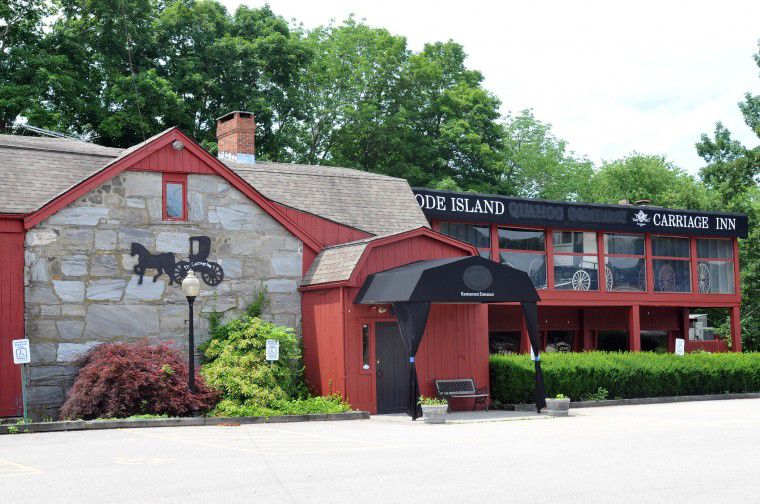
Hoof-Fin-Feathers – Carriage Inn and Saloon
Along Tower Hill Road in North Kingstown, Rhode Island, the structure known today as Hoof-Fin-Feathers—also referred to historically as the Carriage Inn and Saloon—stands along one of the oldest travel corridors in the region. The road itself traces the route of the colonial-era Post Road, a heavily used passage connecting Providence with coastal communities to the south. For centuries this stretch of Washington County functioned as a stopping point for travelers moving between ports, farms, and inland towns, and the building at 1065 Tower Hill Road developed alongside that flow of movement. The core of the structure dates back to the late eighteenth century, when the property operated as a roadside tavern and stagecoach stop serving people traveling through southern Rhode Island. At a time when journeys between towns could take days, establishments like this were essential infrastructure. Travelers could find food, drink, and lodging while horses were watered and rested in nearby stables. The building’s layout reflected those needs: large common rooms, low ceilings supported by heavy timber beams, and fireplaces capable of heating wide gathering spaces during the long New England winters. During the nineteenth century the inn continued to serve the changing traffic along the Post Road. Farmers, merchants, sailors traveling between Narragansett Bay ports, and stagecoach drivers passed through its doors. Taverns of this era were often the social centers of rural communities, functioning not only as lodging houses but also as places where news traveled, business was conducted, and local politics were debated. As railroads and later automobile travel transformed the region, the building’s role evolved but its hospitality function remained largely intact. The property moved through several owners and identities across the late nineteenth and early twentieth centuries, continuing as a tavern, restaurant, and gathering place for the surrounding community. By the mid-twentieth century the establishment became widely known as Hoof-Fin-Feathers, a name reflecting the restaurant’s focus on meat, seafood, and game dishes. Under that identity it developed a reputation as a long-running local dining destination. The interior retained many of the building’s historic features—exposed beams darkened by centuries of smoke, uneven floorboards, and rooms whose shapes reflected generations of additions and modifications. Like many colonial-era taverns that remained in continuous use, the structure accumulated layers of history rather than preserving a single moment in time. It was within that atmosphere that stories of unexplained activity began circulating among staff and visitors. Reports most commonly focused on what employees described as a lingering presence connected to the building’s earliest tavern years. Workers closing the restaurant late at night occasionally reported hearing footsteps in empty hallways or the sound of chairs shifting after the dining rooms had been cleared. Some staff members described glasses or small objects being moved or found out of place the following morning. One of the most frequently repeated claims involves the apparition of a man dressed in what witnesses interpret as colonial-era clothing. Accounts vary, but the figure is typically described as appearing briefly near the bar area or along interior doorways before disappearing. Other reports center on colder patches of air moving through rooms without an obvious source, or the feeling of being watched while working alone in the older sections of the building. Paranormal investigators who have visited the property over the years have sometimes reported electronic voice phenomena captured during recording sessions or unexplained fluctuations in equipment readings. As with many historic taverns, skeptics point out that the building’s age, irregular architecture, and constant creaking of old wood can easily create sounds that mimic footsteps or movement. The suggestion created by a long history and dim interior lighting can also influence how ordinary events are interpreted. Despite those explanations, the reputation has endured as part of the inn’s identity. The combination of colonial architecture, centuries of travelers passing through its doors, and the lingering folklore of a stagecoach-era tavern has made Hoof-Fin-Feathers one of Rhode Island’s more frequently discussed haunted restaurants. Whether the reports reflect environmental quirks of an eighteenth-century structure or something less easily explained, the building remains a place where local history and ghost lore have become closely intertwined. Today the property continues to operate as a restaurant and gathering place along Tower Hill Road, maintaining the hospitality tradition that began there more than two hundred years ago. Visitors come for the historic setting as much as for the food, stepping into rooms that have hosted travelers since the earliest days of Rhode Island’s coastal trade routes. With that deep continuity comes the persistent belief among some employees and patrons that the inn’s oldest guests may never have completely checked out.

Warwick City Hall
Warwick City Hall occupies a significant position as the administrative center for Warwick, Rhode Island, representing the architectural ambitions of nineteenth-century civic design. The building was designed and constructed to house municipal offices, legislative chambers, and various civic functions defining local government operation. The architectural style reflects standards of civic design emphasizing imposing structures that represent governmental authority and permanence. The building has served continuously as the seat of government administration and public gathering throughout its operational history, incorporating multiple levels, council chambers, and office spaces contributing to its institutional character. The historical development of Warwick City Hall is intertwined with the city's growth as a municipal entity. Constructed to replace earlier administrative facilities, the building represented commitment to creating a permanent structure for civic governance. Over decades following its construction, the building underwent renovations and modifications to accommodate changing governmental needs while preserving historical character. The building's tenure as civic center has spanned multiple centuries of Warwick's development, witnessing the evolution of local government practices and the changing political landscape of Rhode Island. A former jail facility located within the building is directly connected to paranormal phenomena documented at the location. The facility housed prisoners awaiting trial or serving sentences within the municipal justice system, creating a space where individuals experienced confinement and distress. A woman's crying voice has been reported emanating from the former jail area with considerable frequency, captured on paranormal investigation recordings and witnessed by multiple individuals. Children's voices have been documented on the upper balcony level, with sounds of laughter apparent in audio recordings despite the absence of any children. A phantom cigar smoke odor has been reported in various sections, with witnesses describing distinctive scent materializing and dissipating without apparent source. Paranormal phenomena at Warwick City Hall intensified during the latter twentieth century when the building was featured in an episode of Ghost Hunters television series. Feelings of being watched have been consistently reported in the former jail areas and council chambers. Unexplained noises ranging from disembodied footsteps to unidentifiable sounds have been documented by investigators and staff. Fleeting apparitions have been observed throughout the building, with witnesses describing brief appearances of shadowy human forms. Apparitions have allegedly appeared on video surveillance equipment, with technical documentation suggesting unexplained figures visible on security camera feeds. The cumulative effect has established Warwick City Hall as a location of significant paranormal interest within New England research communities. The intersection of Warwick City Hall's civic function with paranormal phenomena has created an environment where governmental administration operates alongside reported supernatural manifestation. The building continues serving municipal functions while hosting paranormal investigation activities and ghost tours. The documented hauntings suggest connection to historical suffering and confinement within the former jail, with emotional weight of institutional history potentially contributing to paranormal phenomena. The building remains a subject of ongoing paranormal investigation and documentation.
Rose Island Lighthouse
Rose Island Lighthouse stands as an iconic sentinel on the waters off Newport, Rhode Island, its distinctive tower and attached buildings representing a crucial piece of maritime safety infrastructure that has guided countless vessels safely to harbor over more than a century of operation. The lighthouse was constructed during the latter part of the nineteenth century, when maritime traffic through Newport waters required reliable navigational aids and skilled lighthouse keepers to maintain the station around the clock. Charles Curtis served as the lighthouse keeper from 1887 to 1908, establishing a long tenure managing the station during a period when lighthouse keeping was a demanding and often isolating profession. The tower stairs that Curtis climbed thousands of times during his years of service have become one of the most active sites of paranormal phenomena on the island. Beyond the lighthouse proper, the island complex contained additional structures including residential barracks for lighthouse personnel, storage facilities for supplies and equipment, and the remains of a quarantine station that had been established years earlier to isolate individuals suffering from contagious diseases. The quarantine station's history adds a layer of tragedy to the island's overall narrative. Disease victims from the surrounding area were brought to the isolated island location to prevent transmission to mainland populations, creating a space of forced separation and medical helplessness. Many of those quarantined did not survive their isolation, succumbing to the very diseases they had been brought to the island to contain. The combination of isolation, disease, and death created conditions that appear to have left profound psychic impressions on the location. The spirits of those who died in the quarantine station, along with the enduring presence of Charles Curtis himself, seem to have become permanent residents of Rose Island. Investigations conducted at the lighthouse have documented consistent patterns of paranormal activity concentrated in specific areas that align with historical accounts of the station's use and the most likely locations of deaths. The paranormal phenomena at Rose Island Lighthouse are among the most well-documented and consistent in Rhode Island's haunted history. Visitors and investigators have repeatedly heard the sound of footsteps descending the tower stairs when no living person is moving through that location. The footsteps are described as deliberate and purposeful, suggesting the repetitive action of someone performing a routine task, which aligns with Curtis's decades of daily ascents and descents of the tower stairs. Disembodied voices have been captured on audio equipment throughout the lighthouse, with some voices speaking in patterns consistent with historical pronunciations and accents from Curtis's era. The kitchen area of the lighthouse building has been a focal point for paranormal activity, with investigators reporting phantom footsteps in this location and the sensation of a non-corporeal presence observing their activities. The barracks area shows similar patterns of spectral phenomena, suggesting that multiple spirits inhabit different areas of the island complex. One of the most compelling phenomena documented at Rose Island is the appearance of a light apparition near the tower during evening investigations, which witnesses describe as resembling a luminous figure walking along the catwalk or upper levels of the structure. Spirit photographs taken at the location frequently capture images of ghostly reflections in windows and transparent forms appearing in areas that were photographed in daylight but contain no visible objects that could create such reflections. The intensity of paranormal activity has made Rose Island Lighthouse a destination for paranormal researchers and overnight visitors seeking direct experience with the phenomena, and the island offers limited overnight accommodations specifically for individuals interested in conducting personal paranormal investigations in this historically significant and genuinely haunted location.
Castle Hill Inn
Castle Hill Inn stands on a picturesque forty-acre peninsula in Newport, Rhode Island, overlooking the Atlantic Ocean with commanding views of the rocky coastline and azure waters below. Built in 1874 by Alexander Agassiz, a prominent zoologist and wealthy industrialist, the property was originally conceived as a luxurious summer residence combining Victorian architecture with Romantic-era sensibilities, reflecting both the aesthetic ambitions and considerable resources of the Gilded Age magnate who commissioned its construction. The main building features elegant period details, distinctive coastal architecture, and has been carefully maintained as an upscale inn at 590 Ocean Drive, where guests have access to meticulously manicured gardens, dramatic oceanside terraces, and the enduring presence of history within its rooms and hallways. The property's haunting began decades ago and has persisted for over twenty-five years with consistent, well-documented paranormal reports. The primary entity is believed to be the spirit of a young girl connected to Agassiz's family, who appears to staff members and guests throughout the building with startling frequency and clarity. This young apparition is not a benign or curious spirit but rather demonstrates aggressive poltergeist activity, including the inexplicable throwing of fine china and glassware from shelves and tables, despite no living occupants being present to cause such disturbances. Multiple credible witnesses, including long-term staff members and visiting guests, have reported seeing the girl's translucent form distinct and visible enough to describe her clothing and approximate age. The haunting phenomenon extends beyond mere apparition sightings to include sustained poltergeist activity that creates genuine operational concerns for the inn's management. Objects move across surfaces with apparent intent, dishes shatter against walls in patterns that suggest deliberate action rather than accidental displacement, and the phenomena occur most frequently during evening hours when occupancy is highest. Staff members report that the activity intensifies in certain areas of the building, suggesting the girl's spirit may be confined to or particularly attached to specific rooms and corridors. The apparition has been observed by multiple independent witnesses who did not initially know of the haunting, lending credibility to the reports beyond the realm of expectation bias or suggestion. Guests and paranormal investigators have documented the phenomenon through photographs showing anomalous orbs and mists that appear near doorways and bedroom areas where the young girl spirit is most active. The temporal pattern of the haunting suggests connection to traumatic events rather than random supernatural noise, with incidents often clustering around particular times of year and specific locations within the inn. The property has become something of a destination for paranormal researchers and believers seeking to witness or document evidence of genuine spectral activity in an otherwise welcoming and elegant hotel environment. Today, Castle Hill Inn operates as a successful luxury accommodations facility while openly acknowledging and documenting its paranormal history. The management has not attempted to hide or minimize the haunting, recognizing that the property's supernatural reputation adds to its historical significance and cultural interest. Guests are informed of the haunting upon booking, and many explicitly choose the inn because of its paranormal activity rather than in spite of it. The inn represents a unique intersection of Gilded Age hospitality, coastal elegance, and well-documented supernatural phenomena, where visitors may experience both the comforts of refined accommodations and the distinct possibility of encountering the spirit of a young girl whose presence has transcended the boundary between life and death for more than a quarter century.
General Nathanael Greene Homestead
The General Nathanael Greene Homestead stands in Coventry, Rhode Island as a significant historical property associated with one of the American Revolution's most notable military figures and as a testament to the domestic life and family relationships that existed parallel to his celebrated military career. General Nathanael Greene served as a commander of the Southern Department of the Continental Army during the American Revolution and played a critical role in the military campaigns and strategic operations that shaped the outcome of the revolutionary conflict in the southern colonies. The homestead represents the physical manifestation of Greene's domestic identity, the space where he retired from his military duties and where he sought to establish himself as a family man and property owner engaged in agricultural and commercial pursuits. The structure itself reflects the architectural traditions and building practices of eighteenth-century Rhode Island, featuring period details and construction methods characteristic of substantial residential properties built for families of military prominence and economic means. The Greene Homestead served as the center of family life for General Greene and his wife, who shared the burdens and joys of establishing a household in rural Rhode Island during a period following the conclusion of military conflict and the establishment of a new nation. The property contained not only residential spaces but also agricultural facilities, outbuildings, and landscape features that supported the household's self-sufficiency and connected the family to the land. The daily routines of the household unfolded within the structure, from the preparation of meals in the kitchen to the formal entertaining of guests in reception rooms designed to display the family's social status and refinement. The master bedroom witnessed intimate moments of the marriage, conversations between spouses planning their future, and the vulnerability that occurs within relationships conducted in private spaces. The family cemetery, containing the graves of previous generations and those family members who died during the Greenes' tenure, represented a continuous link to ancestral history and a physical manifestation of family continuity extending into the future through the memorialization of the dead. General Greene's death represented a significant loss to the family and to the nation, concluding his substantial contributions to American independence while leaving his widow to manage the household and property alone. The management of the homestead became the responsibility of family members, particularly the surviving female members of the household whose obligations included maintaining the property, overseeing agricultural operations, and preserving the family's legacy and reputation. Elizabeth Margaret Warner, a female family member who lived through successive generations of the family's history, ultimately became the last family member actively residing at the homestead, a status that gave her decades of intimate familiarity with the property's spaces and routines. Her death in 1899 marked the conclusion of the family's direct occupation of the property and initiated a period of transition in which the homestead transitioned to non-family ownership. Paranormal phenomena documented at the General Nathanael Greene Homestead demonstrate remarkable consistency and purposeful manifestation, suggesting intelligent spiritual entities remaining emotionally and psychologically attached to the property that dominated their lived experience. Disembodied voices have been audibly documented by investigation teams and visitors within the homestead, utterances captured through audio recording equipment that provide evidence of verbal communication occurring in the absence of identifiable living speakers. Apparitions have been documented materializing and moving through the interior spaces of the house in patterns suggesting purposeful movement and engagement with the physical environment. Footsteps have been audibly documented in empty areas of the house, the distinctive sounds of individuals walking on wooden floors moving through the structure during times when no living persons occupy those spaces. The smell of freshly baked bread has been reported by multiple visitors and investigation teams, an olfactory manifestation suggesting the presence of culinary activity that once characterized the kitchen's daily operations. Elizabeth Margaret Warner appears to remain particularly present within the structure, continuing the management and oversight of household affairs through spiritual manifestations.
Old Brook Farm – Perron Family House
The Old Brook Farm stands as a fourteen-room farmhouse situated in the rural landscape of Rhode Island, a property that would become one of the most documented cases of alleged supernatural phenomena in American paranormal investigation history. Built in the nineteenth century as a working agricultural property, the structure served for generations as a family home, its thick colonial-era walls and sprawling interior accommodating the daily lives of successive generations. The farmhouse existed in relative obscurity until 1971, when the Perron family relocated to the property with no forewarning of the malevolent supernatural events that would plague their residency over the following decade. The documented paranormal activity at the Old Brook Farm began subtly but escalated into overt and terrifying manifestations that fundamentally transformed the family's understanding of their home. Within weeks of the family's arrival, reports emerged of unexplained noises, shadowy figures appearing in peripheral vision, and objects moving spontaneously without human intervention. The phenomena intensified dramatically as months progressed, with family members experiencing violent physical attacks, sudden temperature drops, and psychological disturbances that affected particularly Carolyn Perron, who became the apparent focal point of malevolent activity. The barn and outlying structures also exhibited paranormal behavior, contributing to an overwhelming sense of dread that permeated the entire property. The supernatural presence at the farmhouse was ultimately attributed to the tragic history of the land itself, with investigators discovering that multiple deaths had occurred on the property throughout its history. Among the entities believed responsible was the spirit of John Arnold's wife, hanged at the age of ninety-three, as well as numerous other victims whose deaths had marked the location with spiritual residue. The malevolent force targeting the Perron family was particularly focused on Carolyn, subjecting her to what witnesses described as demonological assault including violent manifestations and psychological torment. The intensity and documented nature of the phenomena attracted renowned paranormal investigators Ed and Lorraine Warren, who conducted extensive investigations and recorded details that helped establish the house as a significant case study in paranormal research. During the Warren investigations, multiple varieties of supernatural experiences were documented with unusual specificity. Witnesses reported observing poltergeist activity including objects being hurled across rooms with considerable force, doors opening and closing of their own accord, and unseen entities physically assaulting family members. The experiences included encounters with malevolent presences that seemed to manifest with intention and apparent awareness. Over the period from 1971 to 1980, the Perron family endured continuous supernatural harassment, eventually necessitating their departure after nine years of documented disturbance. Following the Perron family's departure, the Old Brook Farm has remained a location of enduring paranormal intrigue and investigation. Subsequent owners have consistently reported ongoing paranormal activity, corroborating the original accounts and suggesting the supernatural presence was inherent to the location itself. The property gained broader public awareness through its association with the paranormal investigation field and popular media treatments, though skeptical analysis has attributed some experiences to psychological factors. Nevertheless, documented evidence from the Warrens' investigation and consistent reports from multiple occupants have sustained the farm's reputation as genuinely haunted by supernatural forces.
White Horse Tavern
The White Horse Tavern of Newport, Rhode Island represents one of the most extraordinary surviving examples of seventeenth-century American colonial architecture and continuous hospitality operations. Originally constructed in 1652, the building was erected during the early period of Rhode Island's European settlement. The tavern began serving beverages and food in 1672, establishing a tradition of hospitality that would endure uninterrupted across more than three and a half centuries. The building's tenure and longevity earned it recognition as the oldest tavern building still operating in the entire United States, a distinction unmatched by any competitor. Its historical significance extends internationally, as the White Horse ranks among the ten oldest continuously operating bars in the entire world, a remarkable achievement speaking to its resilience and importance across different historical epochs. The architectural and social fabric of the White Horse Tavern is intertwined with Newport's development as a major colonial port and commercial center. The structure exhibits sturdy craftsmanship characteristic of seventeenth-century construction, with thick wooden beams, period-appropriate joinery, and interior configurations reflecting colonial and post-colonial American tavern culture. The main dining room features traditional colonial-era furnishings and decor, while the second floor near the bathrooms presents darker, intimate spaces evoking the building's ancient origins. The tavern's layout and design have been meticulously preserved and restored to maintain historical accuracy while accommodating modern guests seeking to experience hospitality in surroundings steeped in American history. The White Horse Tavern's paranormal reputation emerged from a tragic incident during the destructive smallpox epidemic of the 1720s, when the disease swept through colonial settlements. A man, likely a patron or temporary resident, succumbed to the virulent disease within the building's walls. Dressed in shabby colonial-era garments, this unfortunate victim died under uncertain circumstances, his identity lost to intervening centuries. The circumstances of his death, the location's significance as a social gathering place, and the traumatic nature of his demise established conditions for his spirit to remain earthbound, anchored to where his mortal suffering concluded. Beginning in the twentieth century and intensifying in recent decades, the White Horse Tavern has become recognized as one of America's most actively haunted drinking establishments, featured among the ten most haunted bars in the nation. Guests and staff have reported encounters with a ghostly figure dressed in shabby colonial garments near the bathroom area on the second floor, consistent with the individual who perished from smallpox. Witnesses describe observing the apparition's reflective image in mirrors, experiencing unexplained tapping sensations on shoulders, and hearing disembodied voices. Footsteps traverse ancient floors without visible source, and dishes and glasses move independently across tables and bar surfaces. An additional older male ghost has been documented by numerous witnesses. The White Horse Tavern today maintains its position as both a functioning restaurant and bar serving Newport and as one of America's most authenticated haunted locations. The property attracts visitors interested in paranormal phenomena and historical tourism, offering the unique opportunity to dine in America's oldest operating tavern building while potentially encountering supernatural residents. Professional paranormal investigation teams have conducted multiple investigations, capturing evidence supporting the presence of haunting activity. The tavern's proprietors acknowledge the haunted reputation while maintaining the establishment's primary function, allowing visitors to experience both remarkable historical ambiance and distinctive paranormal phenomena that have made the White Horse Tavern a nationally recognized haunted location.
Aldrich Mansion
The Aldrich Mansion in Warwick, Rhode Island stands as one of New England's most architecturally ambitious residential structures, a testament to the immense wealth and cultural aspirations of Senator Nelson W. Aldrich, one of the most powerful and influential politicians of the American Gilded Age. Constructed between 1896 and 1912, the mansion encompasses seventy distinct rooms arranged across multiple levels, each meticulously designed and finished to reflect the finest craftsmanship and architectural aesthetics available during the period of its construction. The sheer scale of the estate, the sophistication of its design, and the substantial resources devoted to its creation reflect the extraordinary economic power accumulated by Aldrich through his business enterprises and his political prominence as a United States Senator whose legislative activities significantly shaped the financial and industrial policies of the nation. The mansion's prominent setting in Warwick, positioned to command views of the surrounding landscape while asserting the presence of its owner through its substantial architecture, exemplified the tradition of grand estates that marked the concentration of wealth during the Gilded Age. As a family residence, the Aldrich Mansion served as the private sanctuary and social center for one of America's most prominent families, hosting elaborate gatherings and entertaining distinguished guests from across the nation and internationally. The mansion's sprawling interior accommodated not only the residential needs of the immediate family members but also provided spaces for formal entertaining, private pursuits, and the management of the substantial household operations required to maintain such a complex structure. The interiors were adorned with works of art, fine furnishings, and architectural details reflecting the refined aesthetic sensibilities of the family, creating an environment designed to impress and demonstrate cultural sophistication. The multiplicity of rooms and spaces within the seventy-room structure meant that different family members could pursue separate activities, maintain private domains, and engage in the social rituals that structured daily life among the wealthy elite of the period. The paranormal phenomena documented at the Aldrich Mansion center on the manifestation of a female apparition, believed by researchers and investigators to be one of the Aldrich daughters who died by suicide, jumping from the front balcony of the mansion in a tragic event that became part of the family's private history and the building's accumulated narratives. Employees working at the mansion and occasional visitors have reported multiple encounters with this apparition, consistently described as a woman appearing to be in her late twenties or early thirties, dressed in a manner consistent with the historical period of the mansion's early operational years. The apparition has been observed roaming through the hallways and rooms of the mansion, with witnesses noting a distinctive pattern to her movements, as if she is traveling with a specific destination or purpose in mind, always moving toward the balcony doors from which she presumably fell during the traumatic event that resulted in her death. The consistency of reports regarding the female apparition at the Aldrich Mansion is remarkable, with employees describing similar sightings across decades of operation and multiple independent witnesses providing testimony that corroborates essential details about the apparition's appearance and behavioral patterns. The phenomenon of an apparition traveling repeatedly toward the same location, the balcony doors, suggests a possible reenactment of the tragic event that resulted in death, with the spirit appearing to repeat the journey associated with her final moments in physical life. Staff members have become accustomed to the presence of the apparition, treating encounters as part of the distinctive character of the mansion rather than phenomena that generate excessive alarm or require intervention. The apparition's apparent lack of awareness or hostile intent toward the living occupants of the space suggests a spirit consciousness that remains focused on its own internal experiences and trajectory rather than actively engaging with or threatening the living inhabitants. The Aldrich Mansion remains accessible to visitors and continues to function as a historic site, allowing public access to the architectural and historical significance of this extraordinary Gilded Age estate. The building has been preserved and maintained to standards intended to respect its historical and architectural importance, with management committed to presenting the mansion's history and significance to interested visitors and researchers. The paranormal dimensions of the Aldrich Mansion's history are acknowledged as part of the building's complete narrative, with informed guides able to discuss the apparition and the tragic event associated with one of the Aldrich daughters when discussing the mansion's social and family history. The continued presence of the apparent apparition across generations of staff and visitors maintains the reality of the haunting within the consciousness of those who interact with the location, ensuring that the extraordinary spiritual dimension remains integrated into the ongoing experience of the Aldrich Mansion as both a historical structure and a location where the boundary between past tragedy and present experience appears to remain actively and visibly permeable.
The Ladd School
The Ladd School in Exeter, Rhode Island operated as an institution for individuals with developmental and intellectual disabilities during much of the twentieth century, serving the community as a residential facility that housed hundreds of patients across its extensive grounds and multiple buildings. Founded with progressive intentions reflecting the era's approaches to institutional care, the school occupied a substantial campus in rural Rhode Island, comprising multiple dormitories, administrative buildings, treatment facilities, and grounds that expanded considerably during the facility's peak operational years. The institution functioned during a period when residential schools represented the standard approach to managing individuals deemed unable to live independently within the broader community, and the Ladd School reflected both the genuine care of some staff members and the systemic inadequacies that plagued such institutions throughout the American healthcare system. Conditions within the facility deteriorated significantly over its later decades of operation, with documented accounts of neglect, abuse, and inadequate medical treatment becoming increasingly evident to investigators and families visiting their institutionalized relatives. The school eventually closed after decades of operation, but not before numerous patients had died within its walls under circumstances that ranged from natural causes to complications arising from the very poor conditions under which they were confined. The deaths of these vulnerable individuals, many of whom had no family members advocating for their welfare, left a tragic imprint upon the location that many believe manifests in the form of persistent paranormal activity throughout the campus. Paranormal investigators and casual visitors have reported extraordinarily diverse and intense manifestations across the Ladd School grounds and buildings, with disembodied voices calling out from empty rooms and hallways, doors opening and closing of their own accord despite being locked or blocked, and unexplained instances of physical contact in which invisible entities appear to touch or grasp startled visitors. Shadow figures that move with apparent purpose have been observed traversing corridors and entering rooms, while glowing orbs of light have materialized and moved through the interior spaces in patterns suggesting some form of conscious intelligence directing their motion. Electronic voice phenomena recorded during paranormal investigations have captured what appear to be voices and sounds of distressed individuals, crying, moaning, and desperate pleas echoing from decades past. Investigators have theorized that the particular intensity of paranormal activity at the Ladd School may reflect the collective suffering and trauma experienced by countless vulnerable individuals who were confined within institutional walls against their will or without adequate protection and care. The experiences reported at the Ladd School suggest a location profoundly haunted by the spirits of those who suffered and perished within its walls, their restless presences apparently unable to move beyond the site of their institutional confinement and the circumstances of their tragic deaths. In recent years, the Ladd School has been partially preserved as a historical site while remaining largely closed to the general public due to structural deterioration and the sensitive nature of the location's history. Paranormal investigation groups have been permitted limited access to document the haunting phenomena, and their reports consistently describe one of the most actively haunted institutional sites in New England, a place where the veil between living and dead appears particularly thin and permeable to spiritual manifestations.
Slater Mill Historic Site
Slater Mill Historic Site stands as the foundational landmark of American industrial manufacturing, its restored buildings preserving the physical legacy of the textile revolution that transformed the United States economy in the early nineteenth century. Located in Pawtucket, Rhode Island, the mill complex originated in 1790 when Samuel Slater, a British-trained mill worker, established the first successful water-powered cotton spinning mill in America, reproducing textile technology that had previously been closely guarded British secrets. The site's historic designation acknowledges its role as the birthplace of American manufacturing, marking the transition from agrarian economy to industrial production. The original mill building, powered by the Blackstone River, operated continuously as a working textile facility for nearly two centuries, processing raw cotton into finished yarn through increasingly complex mechanized processes that demanded both skilled oversight and relentless human labor. By the early nineteenth century, Slater Mill had expanded dramatically across multiple buildings including spinning mills, storage facilities, and the Sylvanus Brown House, which served as company offices and residential quarters. The expansion reflected the mill's economic success and growing prominence as textile production became central to Rhode Island's prosperity. Working conditions were notoriously harsh, particularly for the mill's extensive workforce of children, many as young as seven or eight years old, who operated spinning frames and other machinery for fourteen-hour workdays. The site became emblematic of American child labor practices, with generations of young workers suffering injuries from unguarded equipment, repetitive stress injuries, and the general hazards of nineteenth-century factory work. Adult workers faced equally dangerous conditions, with inadequate safety standards and machinery designed to maximize production efficiency rather than worker protection. The mill's operational history is darkened by numerous fatal accidents involving workers, particularly those crushed, mangled, or decapitated by unguarded textile machinery. Children's voices and disembodied sounds of distress have been reported throughout the complex for generations, with particular activity centered in the machine rooms where the most dangerous equipment operated. Staff members working at the site have documented unexplained footsteps echoing through empty buildings, items mysteriously displaced in the Sylvanus Brown House despite being secured the previous evening, and the apparition of a young girl identified through paranormal investigation as Becca. The paranormal phenomena intensified during the restoration of the historic site in the late twentieth century, as construction work and renewed human activity appeared to stir residual spiritual energy from the building's traumatic past. Paranormal investigations conducted at Slater Mill have documented shadow figures moving through the spinning rooms, apparitions of workers in period clothing, and full-bodied manifestations of what investigators believe are victims of fatal machinery accidents. Cold spots appear suddenly in areas where serious injuries occurred, and poltergeist-type activity has been recorded including objects moving across surfaces and doors opening and closing without explanation. The phenomena suggest residual hauntings tied to traumatic deaths, with spiritual presences seemingly reenacting final moments of industrial accidents. Visitors and staff frequently report sudden overwhelming feelings of sadness or dread in specific locations, accompanied by the sensation of being watched by unseen observers. The Sylvanus Brown House exhibits particularly strong activity, with investigators documenting unexplained noises in upper floors and the recurring displacement of period furnishings. Today, Slater Mill Historic Site operates as a National Historic Landmark and museum, welcoming thousands of visitors annually to learn about American industrial history and the human cost of the textile revolution. The preservation efforts have transformed the facility into an important educational institution, while simultaneously attracting paranormal researchers and ghost hunters drawn to investigate the persistent supernatural phenomena. The site openly acknowledges its haunted reputation, with tour guides trained to discuss both the historical realities of industrial accident victims and the contemporary paranormal experiences reported by visitors and staff.
University of Rhode Island
The University of Rhode Island, situated in Kingston, Rhode Island, represents one of the major institutional centers of higher education in New England, with a campus that incorporates historic buildings dating to the nineteenth century alongside modern educational and residential facilities constructed throughout the twentieth and twenty-first centuries. The institution traces its origins to 1892 as the Rhode Island College of Agriculture and Mechanical Arts, evolving through multiple phases of expansion and academic development to become a comprehensive state university serving the region. The Kingston campus encompasses several distinct architectural zones, including historic academic buildings constructed during the institution's early decades, residential halls housing student populations, specialized facilities for laboratory and technical instruction, and recreational and cultural facilities serving the university community. The campus's long history of human occupation, spanning more than a century of student residency, academic activity, and institutional change, has created an environment rich in accumulated human experience and emotional intensity. This concentration of human activity and emotion over extended periods has contributed to reports of paranormal activity across multiple campus locations. Among the university's residential facilities, the fraternity and sorority houses have become the focal points of documented paranormal phenomena, suggesting that the concentrated human experience of students living in close quarters over extended periods may contribute to paranormal activity manifestations. The Lambda Chi Alpha fraternity house has developed a reputation as one of the most extensively haunted locations on campus, with consistent documentation of paranormal phenomena spanning decades of student occupancy. In the stairwell of the fraternity house, handprints have repeatedly appeared on painted surfaces, with witnesses describing marks that bleed through fresh paint applications repeatedly, suggesting an origin not attributable to conventional causes. The handprints are attributed in fraternity tradition to a spirit entity known as "Abigail," whose identity and historical connection to the building remain unclear. The Chi Omega sorority house similarly reports concentrated paranormal activity, particularly in a designated new member room that is consistently described as the coldest room in the facility, maintaining temperatures noticeably lower than surrounding spaces despite identical heating systems. Beyond the residential fraternity and sorority houses, other campus facilities have developed paranormal reputations through consistent staff and visitor accounts of unusual phenomena. The Will Theatre, a performance venue hosting university theatrical productions and cultural events, has developed a reputation for shadow phenomena that exceed the number of individuals physically present in the performance space. During theatrical performances and rehearsals, audience members and performers have documented the presence of shadow figures moving through the audience area or backstage when no corresponding physical individuals are present. The campus library has generated paranormal reports centered on visual phenomena including muddy footprints appearing on floors and staircases where no corresponding source can be identified, as well as disembodied voices and unexplained sounds emanating from vacant areas. The University of Rhode Island's extensive paranormal activity across multiple campus locations suggests that the concentrated human experience of a functioning educational institution may create environments conducive to paranormal phenomena or that historical events—potentially including accidents, deaths, or emotional trauma—associated with the campus may generate lasting paranormal manifestations. The consistent documentation of phenomena by independent witnesses across decades of student occupation has established the Kingston campus as one of the most substantially haunted university facilities in New England.
Ruffstone Tavern
Ruffstone Tavern stands as a historic establishment in North Providence, Rhode Island, occupying a physical and cultural space within the community's long-standing tradition of hospitality and social gathering. The tavern's origins trace back to the colonial and early American periods, when taverns served essential functions as gathering places for commercial transactions, social interaction, and civic discourse. Rhode Island's dense settlement patterns and proximity to major transportation corridors made taverns critical institutions in community life, and establishments like Ruffstone served as meeting places where merchants, farmers, and travelers intersected. The building itself reflects architectural styles and construction methods consistent with eighteenth or nineteenth-century construction, though subsequent renovations and modifications have altered its appearance over the decades. The tavern has maintained continuous or near-continuous operation as a hospitality establishment throughout much of its existence, serving alcohol, food, and shelter to multiple generations of Rhode Island residents and visitors. The physical structure of Ruffstone Tavern contains spaces typical of historic tavern operations, including a main bar and serving area, dining or gathering spaces for patrons, and a basement that may have served various functions over the centuries including storage, preparation areas, or shelter. The basement particularly has become associated with paranormal reports, with its cool, partially underground environment creating an atmosphere conducive to supernatural folklore and documented phenomena. Historic taverns throughout New England accumulated significant human histories during their long operational lives, witnessing celebrations and sorrows, transactions both legitimate and questionable, and countless personal dramas embedded in the stories of patrons and proprietors. The structure itself represents layers of historical accretion, with modifications and additions reflecting changing times, tastes, and needs of successive owners and communities who have utilized the space. The paranormal reputation of Ruffstone Tavern centers on two principal entities whose presence has been reported by visitors, staff, and paranormal investigators. A distinguished male figure, characteristically described as wearing a formal top hat and smoking a pipe, has appeared to multiple witnesses in various locations throughout the building, particularly in areas such as basement shelves and storage spaces. This apparition presents as a genteel figure from an earlier era, suggesting a particular attachment to the tavern environment and possibly to a specific role or identity maintained during his living years. A female entity, notable for an overwhelming fragrance described as musky perfume, has also been encountered repeatedly, her presence sometimes announced by the distinctive olfactory signature before any visual manifestation. The combined reports of these apparitions, alongside documentation of poltergeist activity, unexplained sounds, and displacement of objects, have established Ruffstone Tavern as a recognized paranormal location within Rhode Island's supernatural geography. The basement area in particular has become a focus for paranormal investigation, with researchers documenting activity and attempting to establish connections between the entities and possible historical events or deaths. Ruffstone Tavern's current status reflects its position as both an active hospitality business and a documented paranormal location that has attracted regional and national paranormal investigation groups. The establishment has been featured on paranormal investigation television programs and has been included in regional ghost tourism guides, bringing renewed attention to its supernatural reputation. Local news coverage has examined both the historical significance of the tavern and contemporary reports of paranormal activity, situating the location within broader discussions of New England's haunted heritage. Staff members and regular patrons have become familiar with the tavern's paranormal reputation, and the haunting has become part of the establishment's public identity and appeal to certain categories of visitors. The tavern continues to operate as a functional bar and restaurant while simultaneously serving as a recognized location on paranormal tourism itineraries, embodying the contemporary intersection of commercial hospitality, historical preservation, and supernatural interest in American cultural spaces.
Cumberland Public Library
The Cumberland Public Library in Cumberland, Rhode Island occupies a building with a unique and spiritually charged history. The structure that now houses the library was originally constructed as a monastery building in 1900, a religious edifice designed to serve the contemplative and communal purposes of monastic life. The building's initial function as a monastery created a spiritual atmosphere and purpose that imbued the physical structure with particular qualities and intentions. The transition from religious monastery to public library represented a significant shift in the building's function, yet the architectural features and spatial organization designed for monastic life remained largely intact. This transformation from sacred space to secular civic institution created an unusual juxtaposition of historical purposes and spiritual intentions within a single physical structure. The paranormal activity documented at the Cumberland Public Library centers upon phenomena consistent with the building's monastic origins. Witnesses and staff members have experienced ghostly voices echoing through the library spaces, disembodied utterances that carry the quality of monastic chanting, prayer, or contemplative murmuring. These voices appear without visible speakers and often carry an otherworldly quality that distinguishes them clearly from ordinary human speech. Door and window activity manifests through these portals opening and closing without human agency, locks engaging and disengaging mysteriously, and the sense of presence indicated by movements of these architectural features. Apparitions have materialized within the building, described as figure-like forms dressed in monastic robes or religious vestments, suggesting the persistence of the building's original residents beyond death. The building is said to be haunted by monks, likely multiple individuals whose lives were bound to the monastery and whose spirits appear unable or unwilling to abandon the sacred space that once defined their existence. The specificity and consistency of phenomena connected to monastic life suggest that the building's original purpose left a deep imprint upon its physical and spiritual character. The monks whose presence appears to persist at the location may have been particularly devoted to their religious life, with their attachment to the monastery transcending the boundary between life and death. Alternatively, the long years of prayer, contemplation, and spiritual practice conducted within the building's walls may have created an environment saturated with spiritual energy and presence that continues to manifest in paranormal phenomena. One particularly notable incident involves a staff member who heard someone calling her full name, an experience that proved unusual and unsettling because the staff members at the library never address one another by full names in the course of their daily work. This specific phenomenon suggests that the manifestations possess awareness of the individuals present, knowledge of their names, and the ability to interact in ways that transcend simple residual haunting. The naming phenomenon implies intentional communication or acknowledgment, suggesting a consciousness directing the paranormal manifestations rather than mere mechanical repetition of past events. Such phenomena create profound disquiet in those who experience them, as they challenge the presumption that haunted locations represent passive repetitions of the past rather than active intelligences. The Cumberland Public Library represents an unusual case of a building whose haunting appears directly connected to its original purpose and history. The transformation of the space from monastery to library created a permanent record of its original function through the continuing manifestations of its monastic inhabitants. Patrons of the library who experience the paranormal phenomena encounter not merely the physical books and information resources of a civic institution, but also the spiritual presences that predate and transcend the library's current function. The building serves as a tangible reminder that some spaces retain their essential character despite changes in their designated purpose, and that the individuals who devoted their lives to particular locations may leave imprints that persist beyond the termination of their physical existence.
Seaview Terrace – Carey Mansion
Seaview Terrace, more commonly referred to as the Carey Mansion, stands as the fifth-largest mansion in Newport, Rhode Island, a city renowned for its Gilded Age estates and architectural grandeur. Completed in 1925, the mansion exemplifies the Châteauesque architectural style popular among wealthy American industrialists and entrepreneurs during the early twentieth century. The estate was constructed during a period of remarkable economic prosperity, when Newport served as the summer retreat for the nation's most prominent families, and the architectural competitions between wealthy residents led to increasingly elaborate and magnificent structures. Seaview Terrace was designed to showcase the refined tastes and boundless resources of its original owners, featuring multiple rooms, extensive grounds, and sophisticated architectural details characteristic of the period's most prestigious residential properties. The mansion's location overlooking the Atlantic Ocean has made it one of Newport's most visually striking estates, and its cultural significance extends far beyond its architectural merits to include its documented status as one of New England's most actively haunted structures. The paranormal activity documented within Seaview Terrace has attracted substantial attention from both paranormal researchers and television production companies focused on documenting supernatural phenomena. The mansion's chapel, basement, and multiple interior rooms have all been locations where unexplained events have been reported by residents, staff, and visitors over the decades. Most prominently, witnesses have reported the extraordinary phenomenon of organ music emanating from the chapel when no one is operating the instrument, a manifestation that has been described as hauntingly beautiful and unmistakably deliberate in its musical quality. Beyond the organ manifestations, documented paranormal activity has included smoke detectors activating inexplicably, bottles flying off desks with apparent force, radios turning on and off without human intervention, disembodied voices speaking from unseen sources, and mysterious temperature fluctuations occurring throughout the building. Additional phenomena have involved door handles moving on their own and other physical interactions with the material world that suggest the presence of an intelligent, non-corporeal entity capable of manipulating physical objects. The haunting of Seaview Terrace is attributed by paranormal researchers and local historians to Julia Williams Bradley, the wife of the mansion's original owner Edson, whose presence appears to remain connected to the building long after her physical death. The mansion's paranormal reputation reached wider public awareness when it was featured prominently on the television series Ghost Hunters, during which professional paranormal investigators documented evidence of supernatural activity and attempted to communicate with the entities present within the structure. The Atlantic Paranormal Society, a group of experienced paranormal investigators, conducted a thorough investigation of the property and reported finding compelling evidence of paranormal activity, including recordings and documentation that strengthened the case for genuine supernatural presence. The multiple rooms and spaces within the mansion have each produced distinct paranormal phenomena, suggesting that the haunting may involve more than a single entity or that the spiritual presence may manifest differently depending on location within the building. Seaview Terrace remains an iconic haunted location within Newport's historical and paranormal landscape, representing one of the most thoroughly documented and investigated haunted estates in New England. The mansion continues to attract paranormal researchers, ghost tour participants, and individuals interested in exploring the intersection of architectural history and supernatural phenomena. The documented paranormal activity occurring within Seaview Terrace has provided paranormal researchers with substantial data and evidence regarding the nature of intelligent hauntings and the persistence of spiritual presence in locations of significant historical and emotional importance. The mansion's status as a prominent Newport landmark and haunted location has been firmly established through years of consistent reports, professional investigations, and media documentation. Today, Seaview Terrace stands as a testament to both the grandeur of the Gilded Age and the enduring mysteries of the paranormal world, a place where the architectural achievements of past centuries coexist with the unexplained manifestations of apparent spiritual presence.
Chestnut Hill Cemetery
Chestnut Hill Cemetery in Exeter, Rhode Island occupies a significant place in American paranormal folklore and medical history, its graves and monuments situated upon soil that has witnessed one of history's most peculiar and chilling incidents involving suspected vampirism documented in a modern context. The cemetery opened in 1838 and has served the families of Exeter and surrounding communities for nearly two centuries, its approximately one thousand interments representing generations of Rhode Island residents from the earliest settler families through the twentieth century. During the nineteenth century, Rhode Island experienced recurring tuberculosis epidemics that claimed countless lives, their families seeking solace and respite in quiet cemeteries while grieving the devastating loss of beloved relatives to consumption, as the disease was then called by the medical community and general population. Entire families were sometimes wiped out within months as tuberculosis spread through households, killing young and old alike and prompting desperate searches for remedies and explanations for the disease's relentless progression through populations. Among those buried in Chestnut Hill Cemetery is Mercy Brown, a young woman whose story became the focus of one of America's most documented supernatural investigations and possibly the inspiration for modern vampire mythology and literary interpretations of the vampire archetype. Mercy Brown died of tuberculosis in 1892 at the untimely age of nineteen, her youth and physical vitality extinguished by the relentless wasting disease that ravaged her body despite all available medical interventions and treatments offered by contemporary physicians. When her coffin was opened during a community health investigation into the cause of tuberculosis within the Brown family and the persistence of the disease across multiple family members, cemetery officials and medical authorities made a discovery that sparked immediate fears of vampirism and supernatural feeding. Mercy's body had failed to decompose normally, apparently due to the acidic soil composition of the cemetery and the sealed casket environment that had preserved her remains in a state of unusual preservation. Her heart still contained liquid blood rather than having liquefied and decomposed as expected after months in the ground, and her general appearance suggested to superstitious onlookers that she had somehow fed upon her family members while in her grave, draining their life essence through supernatural means. Her appearance suggested the undead condition described in vampire folklore, prompting fears that she had become a vampire feeding on living relatives who subsequently contracted the disease. This incident became one of the most famous vampire investigations in American history, prompting intense scrutiny from medical professionals, community leaders, and supernatural enthusiasts who sought to understand the unusual preservation and the liquid blood. Since that fateful exhumation and Mercy's subsequent reinterment, Chestnut Hill Cemetery has become increasingly active with paranormal phenomena that visitors and paranormal investigators consistently attribute to her restless and potentially angry spirit. Visitors approaching her gravestone have reported being forcefully pushed away by invisible hands, experiencing impacts against their bodies despite standing alone, and sensing overwhelming hostility from the spiritual presence guarding her resting place. Strange and unexplained noises resound through the cemetery, including disembodied voices, whispered conversations without visible speakers, and unidentifiable sounds that seem to originate from beneath the ground itself as if calling from the grave. Witnesses have documented sightings of mysterious blue lights that hover near her grave, appearing without apparent source or explanation and vanishing suddenly when approached directly by curious observers. Other visitors have captured images of glowing orbs on photographs taken within the cemetery grounds, spectral manifestations caught by cameras but invisible to the naked human eye. Following prayer at her gravestone, visitors have reported smelling an overwhelming and unmistakable scent of roses that appears suddenly and dissipates without natural explanation or identifiable botanical source.
Belcourt Castle
Belcourt Castle, situated in Newport, Rhode Island, represents one of the most significant examples of Gilded Age mansion architecture, constructed as a residence for wealthy individuals during the period of American industrial prosperity and unprecedented accumulation of personal fortunes by the nation's elite classes. The castle-style mansion features numerous rooms designed for entertainment, residence, and display of accumulated treasures from around the world, reflecting the architectural ambitions and financial means of its original owners. The ballroom served as a formal space for elaborate social gatherings and entertainment events, while the private bedrooms and personal quarters housed the castle's residents and guests in opulent surroundings. Over its long history of occupation and later institutional use, the building has accumulated one of the most complex and intensely documented paranormal histories of any location in the northeastern United States. The castle has earned the reputation as the most haunted house in Newport based on the consistency and intensity of reported supernatural phenomena occurring throughout the structure. The most distinctly localized phenomena concentrate in the ballroom, where multiple witnesses have reported a palpable presence behind visitors and observers, a sensation of a distinct entity positioned directly behind the shoulder of people in the space. This phenomenon has been documented by numerous independent observers in such consistent fashion as to suggest a clearly defined spiritual presence occupying a specific location within the ballroom. The castle features antique furnishings and decorative objects associated with the paranormal activity, most notably a set of antique chairs identified as "salt chairs" that have become infamous for what witnesses describe as violent and uncontrolled ejection of persons who sit upon them. Visitors and staff who have sat in these chairs have reported being suddenly and forcefully pushed or thrown from the seating, an experience replicated numerous times with sufficient consistency to suggest deliberate supernatural action. Suits of armor displayed throughout the castle serve as focal points for intense paranormal manifestation, with witnesses reporting hearing moans and screams emanating from the armor pieces, and documented observations of the right arm of armor suits moving before audible screams occur, suggesting animated supernatural activity within the inanimate metal. A monk statue or representation in the castle has become associated with the appearance of a brown-robed monk apparition in the same room, with investigators theorizing that the spiritual presence of an actual monk entity may be attracted to or bonded with the object. The castle exhibits additional phenomena including shadow figures moving through the spaces, disembodied voices speaking in various tones, oppressive feelings of dread and malevolence in certain areas, moving objects, and instances of unseen forces throwing objects across rooms. Physical contact phenomena have been documented, with visitors reporting being pushed, shoved, or touched by unseen forces. The castle now offers candlelit guided tours conducted by staff who narrate the spooky tales and paranormal history associated with the spirits that populate the mansion. Paranormal investigation groups including the television program Ghost Hunters have conducted formal investigations of the location, documenting phenomena that corroborate visitor accounts. Belcourt Castle stands as a monument to both Gilded Age opulence and to the persistent spiritual phenomena that continues to inhabit one of America's most actively haunted residential structures.
Providence City Hall
Providence City Hall stands as a monumental architectural achievement constructed during the flowering of American public building design, when cities invested substantial capital in civic structures expressing civic pride and municipal authority. The cornerstone of this ornate five-story building was laid in 1875, establishing it as a post-Civil War project during aggressive civic modernization. The construction proved tragically costly: twelve men lost their lives through accidents, structural failures, or workplace disasters inherent to nineteenth-century construction. These deaths established City Hall from its inception as a location of human suffering and loss, where the physical structure was purchased through workers' sacrifice. The twelve construction workers became the first of many individuals characterizing City Hall as a location of accumulated human tragedy. The building's architectural significance was formally recognized when added to the National Register of Historic Places in January 1975, acknowledging its historical importance as a representative example of American civic architecture. The listing ensured formal preservation and protection as a documented artifact worthy of perpetual maintenance and study. The ornate design incorporated Renaissance Revival and classical architectural traditions, creating an interior and exterior environment of considerable aesthetic complexity. The five-story structure provided substantial space for city government operations, courtrooms, clerical offices, and administrative functions essential to urban governance. Over its more than one-hundred-year operational history, the building has housed countless government employees and citizens conducting municipal business. Paranormal phenomena at Providence City Hall represent some of the most extensively recorded supernatural manifestations in American municipal buildings, attracting professional paranormal research teams and academic investigators. The primary focus centers on an entity operating the building's elevator system, demonstrating apparent awareness and ability to manipulate it independently of human direction. This elevator-haunting entity exhibits apparent agency and intentionality, moving the elevator between floors without human input, creating disturbance for building occupants and concern among employees. Beyond elevator manipulation, the entity engages in broader phenomena including moving chairs and furniture, slamming doors, opening drawers autonomously, and physically touching occupants. These manifestations suggest not a vague residual presence but a deliberate entity engaging with the physical environment. Supernatural phenomena have been attributed to Mayor Thomas Doyle, whose body lay in state at City Hall following his death, creating a ceremonial context potentially conducive to spiritual attachment. His presence during funeral proceedings may have created circumstances through which his spirit became attached to the building. Beyond Doyle's entity, City Hall staff and custodial workers report numerous phenomena suggesting multiple distinct supernatural presences. Footsteps have been heard during late hours in areas where no human activity could account for sounds. Distinctive cigar smoke odor has been reported by coworkers at their desks, appearing and disappearing without identifiable source. Custodial workers have expressed profound unease regarding basement areas, with some refusing entry, suggesting familiarity with documented phenomena or experiences generating legitimate fear. Paranormal activity received broader recognition when Ghost Hunters television program featured the building in a season eight episode titled "City Hell" broadcast in 2012. This television exposure brought Providence City Hall's paranormal reputation to national audiences, transforming locally known phenomena into broader paranormal entertainment culture. The building continues functioning as an active Providence city government facility, housing municipal offices and conducting ordinary business despite ongoing paranormal reports. Providence City Hall represents an intersection of significant architectural heritage, documented governmental history, tragic workers' deaths, and ongoing paranormal manifestation, establishing it as one of New England's most thoroughly documented haunted municipal buildings.
Cady’s Tavern
Cady's Tavern in Gloucester, Rhode Island, represents a continuously operating hospitality establishment with documented roots extending back to the eighteenth century, when the original Cady's Stand facility served travelers and community members on the colonial transportation network. The building itself dates from approximately 1810, demonstrating the architectural character and construction standards of the early nineteenth century, though the location's significance as a tavern facility extends backward into the colonial period. The Cady family operated the establishment through successive generations, maintaining the business continuously for more than a century until 1921, when family operations concluded and the tavern transitioned to non-family proprietorship. The extended family management across multiple generations created unique historical continuity, as different family members occupied the same spaces and perpetuated the same business functions across more than a century of family tenure. The contemporary proprietor, Robin Tyo, acquired the establishment in 2008, continuing the tradition of tavern operation while adapting the space to contemporary customer expectations and commercial practices. The paranormal phenomena documented at Cady's Tavern encompass multiple categories of supernatural manifestation, suggesting a location where the boundary between physical and spiritual realms has become unusually permeable. Items spontaneously fall from shelves in the kitchen area, suggesting poltergeist activity that targets objects in states of storage or display. Faucets activate autonomously, delivering water without human intervention, indicating that mechanical systems may become targets for paranormal manipulation. A large television has been reported flying off its shelf with apparent projectile force, suggesting poltergeist phenomena of sufficient intensity to move substantial objects. An iron decoration has been documented flying off a table during paranormal investigation activities, indicating that the phenomena may intensify in response to explicit paranormal investigation attempts. These object movement phenomena display apparent intelligence and intentionality, suggesting that spectral entities deliberately interact with the physical environment rather than producing random poltergeist effects. Disembodied voices have been documented in empty dining room spaces, with evidence gathering activities during paranormal investigations recording vocal phenomena without corresponding physical persons. The historical record indicates that the famous author H.P. Lovecraft visited Cady's Tavern in 1923, potentially during the period following the Cady family's relinquishment of the business. Lovecraft's documented interest in paranormal phenomena and his literary exploration of supernatural themes suggest a possible connection between his visit and the building's paranormal reputation, though direct causality remains speculative. Child laughter, apparently disembodied and originating from the upstairs ballroom, has been recorded during paranormal investigation activities, suggesting the presence of juvenile spirits within the building's upper spaces. This phenomenon of children's laughter represents a common paranormal manifestation category, often associated with residual hauntings or spirits of deceased children maintaining awareness of their former environments. Kitchen pans have been documented swinging autonomously without human manipulation, suggesting paranormal activity concentrated in the building's food preparation spaces. Electromagnetic voice phenomena equipment has captured evidence of what investigators attribute to paranormal sources during investigation events, with recorded compass spinning and beer bottle spinning suggesting physical object movement initiated by paranormal agents. The specific targeting of objects associated with the tavern's historical functions and the building's historical periods suggests that the paranormal phenomena maintain connections to the location's established identity and historical operations. The intensity of phenomena documented during organized paranormal investigation activities suggests that the presence of electronic detection equipment and explicit investigation intentions may amplify or trigger intensified paranormal manifestations, creating feedback loops between investigator attention and supernatural phenomena. The basement of Cady's Tavern represents a particular focus of paranormal investigation activities and historical research attention, suggesting that subterranean spaces may concentrate phenomena with particular intensity. The architectural and functional significance of basement spaces in colonial and early nineteenth-century tavern operations, combined with their association with storage, smuggling, and illicit activities, may have created conditions facilitating paranormal manifestations. The Prohibition era, despite occurring after the original Cady family's tenure had concluded, may have introduced additional criminal activity or historical trauma to the location if the tavern was utilized for illegal alcohol distribution. The complex layering of historical functions, the extended period of family occupation, and the tavern's documented role in community social life across multiple generations created accumulated emotional resonance sufficient to generate substantial paranormal activity. Today, Cady's Tavern continues its historical function as a tavern and dining establishment, operating continuously under contemporary proprietorship while maintaining its physical spaces and historical character. The building's ongoing commercial operation has positioned it as an accessible location for paranormal research groups conducting investigation activities, creating opportunities for systematic documentation of phenomena previously confined to isolated customer experiences. Organized paranormal research teams have conducted investigations within the establishment, producing documentary evidence attributed to paranormal sources and accumulating detailed records of the manifestations occurring within the space. The tavern's documented paranormal phenomena have contributed to its contemporary prominence as a destination for paranormal tourism, with individuals seeking both authentic tavern experiences and opportunities for paranormal encounter. Cady's Tavern represents a location where continuously functioning commercial operations have coexisted with active paranormal phenomena across extended periods, suggesting that paranormal manifestations need not necessarily be confined to abandoned or infrequently occupied structures.
General Stanton Inn
The General Stanton Inn in Charlestown, Rhode Island, represents a significant example of eighteenth-century domestic architecture and hospitality infrastructure in the northeastern United States, with origins tracing to the period when Rhode Island was actively engaged in colonial commerce and cultural development. The structure itself, built as a private residence before being converted to accommodate travelers and guests, reflects the architectural standards and design conventions of the eighteenth century, incorporating elements that would facilitate both residential living and commercial hospitality operations. Named for General Stanton, a military figure whose presence left a permanent imprint on the building's history and identity, the inn occupies a location within the town of Charlestown that has served various purposes and hosted diverse populations across more than two centuries. The building's physical layout includes distinctive architectural features such as the Washington Room, second-floor accommodations, upstairs hallways providing access to guest quarters, the Narragansett dining room serving as a communal eating space, and servant's staircases reflecting the domestic labor structures of eighteenth and nineteenth-century households. The documented history of the General Stanton Inn encompasses periods of residential use, deliberate conversion to commercial hospitality operations, and transitions through multiple ownership and occupancy phases across its lengthy history. The structure was adapted for inn operations to take advantage of Charlestown's location along travel corridors connecting major northeastern metropolitan and commercial centers. The building would have served as an overnight accommodation facility for merchants, government officials, military personnel, and other travelers requiring lodging in the region. The Narragansett dining room functioned as a public eating space where guests could gather for meals, and the inn's various private and semi-private rooms accommodated the differentiated needs of guests with varying means and social standing. The layout of the building, with servant's staircases and service spaces distinct from guest-facing areas, reflects the social hierarchies and labor structures characteristic of eighteenth and nineteenth-century establishments. Among the most historically significant aspects of the General Stanton Inn's documented past is the presence of General Stanton himself, a military figure associated with Rhode Island's colonial and Revolutionary War period history. General Stanton's death at the inn in 1821 created a historical anchor for understanding the building's significance and a spiritual anchor for understanding its paranormal reputation. The general's long association with the structure, his death within its walls, and his prominence in regional history appear to have established a powerful connection between his identity and the inn's subsequent paranormal phenomena. The name of the establishment itself perpetually references this historical figure, ensuring that his presence remains woven into the institution's identity across generations. The specific circumstances of his death and the exact locations within the inn where he spent his final years or final moments have become obscured by historical passage, but the general association between his death at the inn and subsequent paranormal activity remains a consistent element of the building's documented folklore. Paranormal phenomena at the General Stanton Inn have been documented through multiple methodologies including eyewitness testimony, paranormal investigation group activities, and media appearances on paranormal documentary programming. Phenomena reported at the inn encompass several distinct categories and affect multiple locations within the structure. Apparitions of full human forms have been reported, most frequently in the Washington Room located on the second floor, where witnesses have described seeing figures that vanish when viewed directly or when the observer attempts to approach them. The apparition of a small child has been documented at multiple locations within the inn, with reports particularly concentrated in upstairs areas. A phantom cat, described as a full-bodied feline apparition, has also been consistently referenced in accounts from guests and staff members. Disembodied voices and vocalizations have been reported throughout the inn, with some witnesses characterizing these as conversational in nature while others describe indistinct sounds or whispers. Physical contact phenomena have been documented, including reports of tapping on shoulders and other forms of physical contact initiated by apparent non-corporeal entities, and accounts of objects being thrown or forcefully displaced. The Washington Room, located on the second floor of the inn, has emerged as a particular focal point for paranormal activity and investigation. Witnesses have reported feeling physical sensations localized to this room, including the sensation of being touched or tapped on the shoulder by an invisible presence. Apparitions have been most frequently observed in this location, and guests have reported experiences of disorientation and temporal disturbance consistent with phenomena associated with paranormal hotspots. The room's specific historical significance—its potential connection to General Stanton or to other prominent figures from the inn's documented past—may account for the concentration of phenomena in this location. Upstairs hallways and other second-floor areas have similarly generated reports of apparitions, footsteps, and physical contact phenomena. The public areas of the inn, including the Narragansett dining room, have also produced reports of paranormal activity, suggesting that phenomena are not restricted to private quarters but extend throughout the structure. In contemporary times, the General Stanton Inn continues to operate as a commercial establishment serving Charlestown and the surrounding region, combining its function as a restaurant and gathering place with explicit acknowledgment of its paranormal reputation. The inn has participated in paranormal television programming, notably appearing on the widely-viewed Ghost Hunters television series in 2007, an appearance that substantially elevated awareness of the location among paranormal enthusiasts and the general public. The inn actively markets its paranormal history and reputation while maintaining professional standards of hospitality and service, recognizing that the documented phenomena and historical significance constitute valuable assets in contemporary cultural and tourism contexts. Staff members and long-time patrons of the inn have become conversant with reports of paranormal activity, and many view the experiences and phenomena as an intrinsic aspect of dining or lodging at this historic location, creating a synthesis of historical narrative, paranormal investigation, and contemporary commercial hospitality.
Colt State Park
Colt State Park in Bristol, Rhode Island encompasses 464 acres of waterfront land and historic structures, representing both a recreational destination serving the contemporary community and a location with documented paranormal phenomena rooted in its complex historical past. The park's beautiful setting along Narragansett Bay creates an environment of natural beauty and scenic appeal that masks the darker historical currents that flow beneath its contemporary recreational function. The park encompasses multiple specific areas of documented paranormal activity, including a historic barn, a pathway leading to the beach, and a location known as Suicide Hill, each with distinct apparitions and phenomena suggesting multiple tragic events that have left their spiritual imprint upon the landscape. The paranormal phenomena at Colt State Park are centered on tragic deaths that occurred within the park's boundaries, deaths that were connected to the land itself and to the structures that predate the park's establishment as a public recreational facility. The park's history encompasses the transition from private estate land to public park, a shift that did not erase the spiritual consequences of the deaths that occurred there during both eras. The stable barn that remains part of the park's infrastructure stands as the focal point for one particular haunting—the spirit of a stable hand who died within the structure. The circumstances of the stable hand's death, occurring in the context of his work with horses and farm animals, created conditions favorable to spirit manifestation according to paranormal research principles. The apparition of the stable hand has been reported multiple times by visitors and park staff moving about the barn area with apparent purpose. The spirit appears to be engaged in the labor associated with his former occupation—tending to animals, moving about the structure, interacting with the physical environment in ways that suggest an active presence rather than a residual energy recording. The stable hand's manifestation is concentrated in and around the barn structure itself, suggesting a powerful attachment to the location where his death occurred or where his work life was primarily conducted. The specificity of the apparition and the consistency of reports suggest a genuine paranormal phenomenon rather than folklore or imaginative interpretation. A second, more tragic series of manifestations occurs along the pathway that leads from the main park areas down toward the beach and the waters of Narragansett Bay. Two young girls, their identities lost to historical documentation or preserved in ways not readily accessible to contemporary researchers, drowned in the waters of the bay. The circumstances of their deaths—whether accidental, suicidal, or the result of some other tragedy—remain matters of speculation, though the fact of their drowning is consistently reported across paranormal documentation. The apparitions of the two girls have been sighted multiple times along the pathway that connects the park to the beach, their presence suggesting a spiritual attachment to the location of their death or to the journey that led them to the water's edge. Some witnesses have described the apparitions as appearing wet or in states of distress, though the consistency and specificity of these details across multiple independent reports remains matters for further investigation. The location known as Suicide Hill within Colt State Park carries implications in its very name regarding the tragic events that have occurred there. While detailed historical documentation of specific deaths at this location remains limited in accessible sources, the name itself suggests a history of suicides or other tragic deaths concentrated at this particular topographic feature. The presence of the name within the park's contemporary designation reflects an acknowledgment of the location's tragic history, even as the reasons for the tragedies themselves remain obscured by time and limited historical record. Paranormal activity has been documented at Suicide Hill, though the specific nature of these phenomena and the identity of any particular entities manifesting there require further investigation and documentation. The three specific locations within Colt State Park—the barn with its stable hand, the beach pathway with its drowned girls, and Suicide Hill—create a paranormal geography within the park suggesting multiple distinct events and entities rather than a single unified haunting. This multiplicity reflects the reality that publicly accessible parks and historical sites often accumulate multiple tragic events across their histories, each potentially creating lasting paranormal consequences. The concentration of documented phenomena across multiple locations suggests that Colt State Park, despite its contemporary function as a peaceful recreational destination, occupies land saturated with tragic history. The park's recreational function as a public space creates particular challenges and opportunities for paranormal investigation. The regular presence of visitors and park staff during daylight hours limits the times available for serious paranormal research, while the park's official status as a public facility may limit access to specific structures or areas for investigative purposes. Nevertheless, sufficient documentation and witness reports have accumulated to establish Colt State Park as a recognized location within New England paranormal research circles. The apparitions and phenomena documented there have become part of the broader catalog of Rhode Island's haunted locations, which include numerous sites connected to the state's maritime history and its long settlement history. The natural beauty of Colt State Park—its waterfront location, its preserved historic structures, and its recreational amenities—serves as a contrast to the paranormal phenomena that visitors occasionally encounter there. The coexistence of beauty, recreation, and tragedy within the park's boundaries reflects a broader human reality: that the spaces we inhabit, particularly those with long settlement histories, are often layered with both joy and sorrow, prosperity and tragedy. For the stable hand who appears to remain working in the barn, for the two young girls whose apparitions manifest along the path to the water, and for any other entities occupying the park, Colt State Park remains a location where their tragic conclusions continue to manifest and communicate with the living who walk its paths.