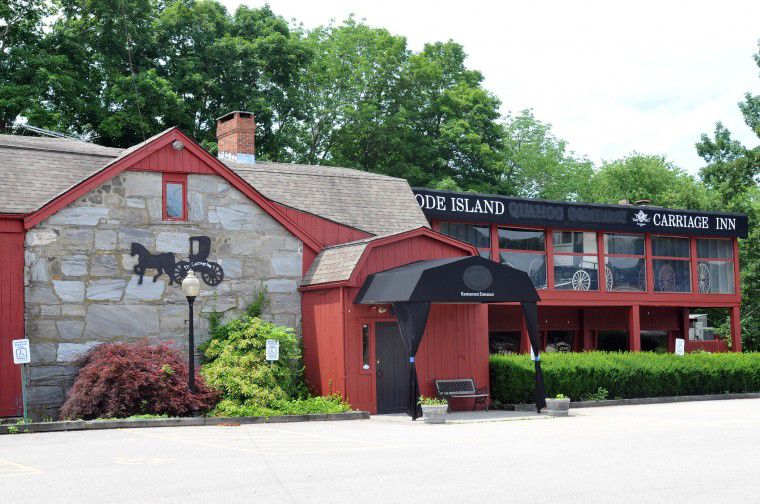
Hoof-Fin-Feathers – Carriage Inn and Saloon
North Kingstown, Rhode Island·bar restaurant Along Tower Hill Road in North Kingstown, Rhode Island, the structure known today as Hoof-Fin-Feathers—also referred to historically as the Carriage Inn and Saloon—stands along one of the oldest travel corridors in the region. The road itself traces the route of the colonial-era Post Road, a heavily used passage connecting Providence with coastal communities to the south. For centuries this stretch of Washington County functioned as a stopping point for travelers moving between ports, farms, and inland towns, and the building at 1065 Tower Hill Road developed alongside that flow of movement.
The core of the structure dates back to the late eighteenth century, when the property operated as a roadside tavern and stagecoach stop serving people traveling through southern Rhode Island. At a time when journeys between towns could take days, establishments like this were essential infrastructure. Travelers could find food, drink, and lodging while horses were watered and rested in nearby stables. The building’s layout reflected those needs: large common rooms, low ceilings supported by heavy timber beams, and fireplaces capable of heating wide gathering spaces during the long New England winters.
During the nineteenth century the inn continued to serve the changing traffic along the Post Road. Farmers, merchants, sailors traveling between Narragansett Bay ports, and stagecoach drivers passed through its doors. Taverns of this era were often the social centers of rural communities, functioning not only as lodging houses but also as places where news traveled, business was conducted, and local politics were debated. As railroads and later automobile travel transformed the region, the building’s role evolved but its hospitality function remained largely intact. The property moved through several owners and identities across the late nineteenth and early twentieth centuries, continuing as a tavern, restaurant, and gathering place for the surrounding community.
By the mid-twentieth century the establishment became widely known as Hoof-Fin-Feathers, a name reflecting the restaurant’s focus on meat, seafood, and game dishes. Under that identity it developed a reputation as a long-running local dining destination. The interior retained many of the building’s historic features—exposed beams darkened by centuries of smoke, uneven floorboards, and rooms whose shapes reflected generations of additions and modifications. Like many colonial-era taverns that remained in continuous use, the structure accumulated layers of history rather than preserving a single moment in time.
It was within that atmosphere that stories of unexplained activity began circulating among staff and visitors. Reports most commonly focused on what employees described as a lingering presence connected to the building’s earliest tavern years. Workers closing the restaurant late at night occasionally reported hearing footsteps in empty hallways or the sound of chairs shifting after the dining rooms had been cleared. Some staff members described glasses or small objects being moved or found out of place the following morning.
One of the most frequently repeated claims involves the apparition of a man dressed in what witnesses interpret as colonial-era clothing. Accounts vary, but the figure is typically described as appearing briefly near the bar area or along interior doorways before disappearing. Other reports center on colder patches of air moving through rooms without an obvious source, or the feeling of being watched while working alone in the older sections of the building.
Paranormal investigators who have visited the property over the years have sometimes reported electronic voice phenomena captured during recording sessions or unexplained fluctuations in equipment readings. As with many historic taverns, skeptics point out that the building’s age, irregular architecture, and constant creaking of old wood can easily create sounds that mimic footsteps or movement. The suggestion created by a long history and dim interior lighting can also influence how ordinary events are interpreted.
Despite those explanations, the reputation has endured as part of the inn’s identity. The combination of colonial architecture, centuries of travelers passing through its doors, and the lingering folklore of a stagecoach-era tavern has made Hoof-Fin-Feathers one of Rhode Island’s more frequently discussed haunted restaurants. Whether the reports reflect environmental quirks of an eighteenth-century structure or something less easily explained, the building remains a place where local history and ghost lore have become closely intertwined.
Today the property continues to operate as a restaurant and gathering place along Tower Hill Road, maintaining the hospitality tradition that began there more than two hundred years ago. Visitors come for the historic setting as much as for the food, stepping into rooms that have hosted travelers since the earliest days of Rhode Island’s coastal trade routes. With that deep continuity comes the persistent belief among some employees and patrons that the inn’s oldest guests may never have completely checked out.
Cold Spots
Apparitions
Disembodied Voices
Unexplained Footsteps / Knockings