
Haunted Places in Pennsylvania
163 haunted locations

Gettysburg Battlefield
Spread across more than six thousand acres of rolling Pennsylvania farmland, the Gettysburg Battlefield does not look like a place where over fifty thousand men were killed, wounded, or went missing in three days. It looks like what it was before the armies arrived—a patchwork of wheat fields, orchards, low stone walls, and gentle ridges converging on a small crossroads town in Adams County. That ordinariness is part of what makes it so unsettling. In the summer of 1863, Confederate General Robert E. Lee launched his second invasion of the North, hoping to win a decisive battle on Union soil that might break Northern morale and force a negotiated end to the war. The armies collided at Gettysburg almost by accident on July 1, and over three days more than 165,000 soldiers fought across farms, hills, and streets in engagements that became legend—the defense of Little Round Top, the carnage at Devil's Den and the Wheatfield, and the doomed Confederate assault known as Pickett's Charge. The estimated 51,000 casualties included over 7,000 dead left on the field. It was the bloodiest single battle in American military history and the turning point of the Civil War. What followed was nearly as harrowing. Gettysburg's 2,400 residents were left with roughly 21,000 wounded, thousands of dead horses rotting in the July heat, and bodies everywhere. Homes, churches, and barns became hospitals. Burial parties worked by lantern light, digging trenches sometimes only ten inches deep, leaving hands and feet exposed. Rain on July 4 unearthed shallow graves. The stench hung over the town for months. One family left for nine years because the smell made their home uninhabitable. Of the 3,354 Union dead eventually interred in the Soldiers' National Cemetery—dedicated by Lincoln that November—979 remain unknown. The paranormal reputation of Gettysburg is as vast as the battlefield itself. Devil's Den produces some of the most consistent accounts—cameras and electronics malfunctioning, mysterious figures appearing in photographs, distant gunfire echoing off the rocks, and encounters with a barefoot man in ragged clothing who speaks briefly before vanishing. At Little Round Top, visitors report apparitions and phantom drumbeats. Across the Pickett's Charge fields, witnesses describe formations of soldiers still marching toward the ridge. Iverson's Pits—the site of a mass grave—has long been associated with apparitions and impressions of bodies in the grass. At Sachs Covered Bridge, visitors report phantom cigar smoke, distant cannon fire, and the sensation of being tapped on the shoulder by no one. Inside Gettysburg College's Pennsylvania Hall, which served as a Confederate field hospital, reports describe an elevator bypassing the first floor to open on a basement scene of Civil War-era surgical operations. Park rangers have privately described hearing crying, footsteps, and the smell of tobacco in battlefield structures, though the National Park Service issues no official statements on the subject. Skeptics rightly note that a landscape this saturated with historical narrative will prime visitors to interpret ordinary stimuli as extraordinary. But the sheer volume and consistency of reports—from tourists, historians, park employees, and investigators with no particular agenda—gives the place a reputation that resists easy dismissal. Today, Gettysburg National Military Park includes over 1,300 monuments and memorials. The Soldiers' National Cemetery holds over 6,000 burials spanning six American conflicts. The fields are walkable. The stone walls still stand. And for a place where the dead were once measured not in names but in trenches, the quiet has never entirely settled.
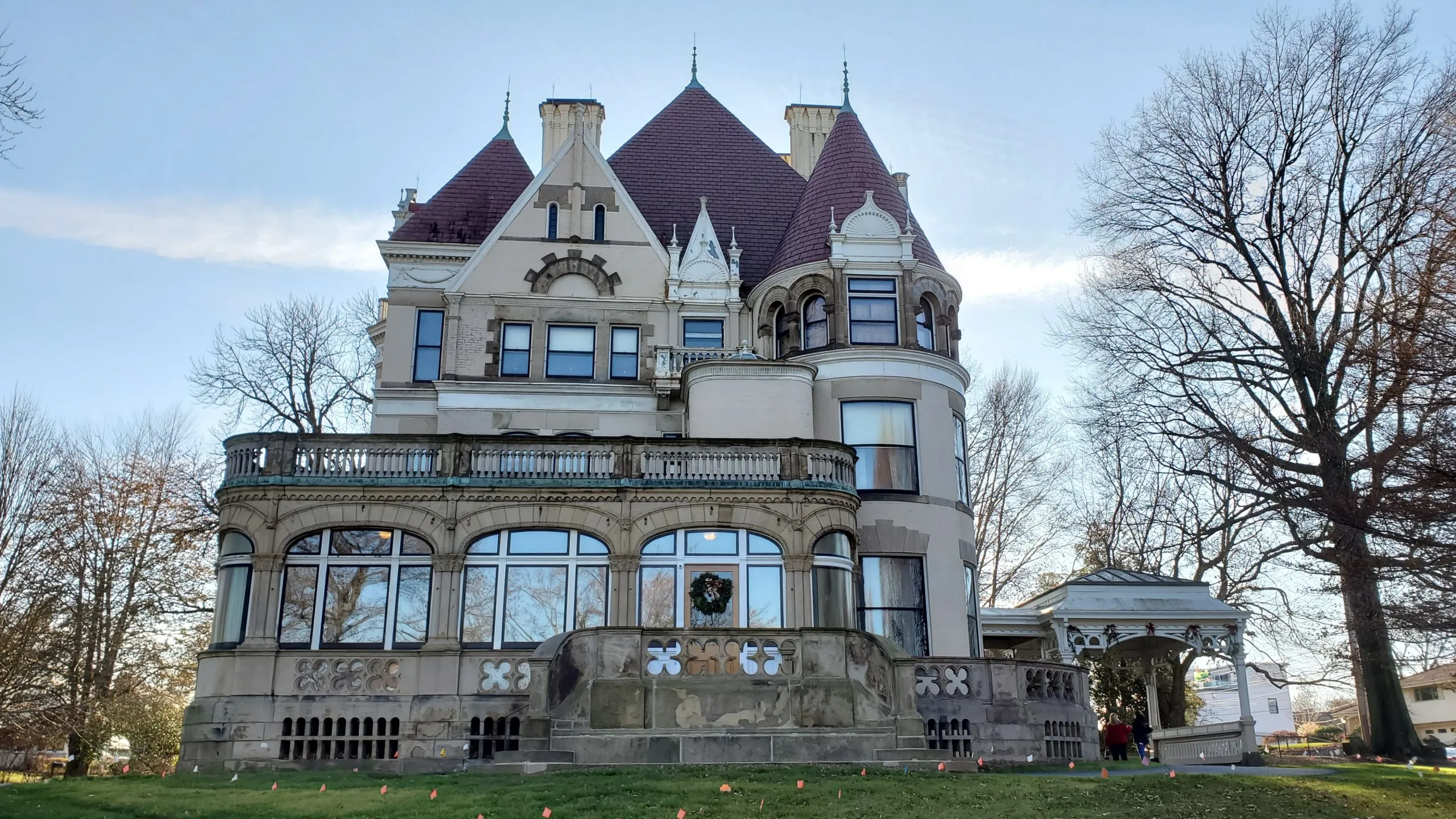
Frick Mansion – Clayton
Tucked into Pittsburgh's Point Breeze neighborhood on a tree-lined stretch of Reynolds Street, Clayton looks less like a museum and more like a home someone simply stepped out of — and may never have fully left. The 23-room mansion, now the centerpiece of the Frick Pittsburgh complex, was purchased in 1882 by Henry Clay Frick for $25,000 as an eleven-room Italianate house. Frick was already one of the most powerful men in American industry, having built a near-monopoly on coke production in the Pittsburgh region before aligning with Andrew Carnegie to help build the largest steel company the world had ever seen. He moved into Clayton with his new wife, Adelaide Howard Childs, and expanded it over the following decade into the Loire château-style mansion visitors see today, with Thomas Edison's company installing its electric lighting. The house carries the weight of the man who built it. Frick's name is inseparable from the Homestead Strike of 1892, one of the bloodiest labor confrontations in American history. When workers at the Carnegie Steel Homestead Works walked out over wage cuts, Frick surrounded the mill with barbed wire — workers called it "Fort Frick" — and hired 300 Pinkerton agents who arrived by barge on the Monongahela River. The resulting battle left ten men dead and dozens wounded. That same month, a 25-year-old anarchist named Alexander Berkman forced his way into Frick's office on the fourth floor of his Pittsburgh building and shot him twice, then stabbed him with a steel file before being subdued. Frick cabled Carnegie: "Was twice shot, but not dangerously." He finished his workday. The man was not easily stopped. But inside Clayton, beneath the public image of the ruthless industrialist, lived a father who suffered losses that money and power couldn't touch. In 1891, his six-year-old daughter Martha died at Clayton after swallowing a pin that caused a fatal infection, despite a specialist summoned from New York. Adelaide, her mother, fell into chronic illness and depression and never fully recovered. The following summer, infant son Henry Clay Jr. died shortly after birth. The two deaths in consecutive years, combined with the violence of the Homestead Strike and the assassination attempt, broke something in the family's relationship to Clayton. In 1905, they left for New York, taking almost nothing with them. The possessions stayed behind as though waiting for a return that never fully came. The house sat largely preserved in that frozen state for decades. Helen Clay Frick, the one surviving daughter, returned in 1981 and lived in Clayton until her death in 1984, having arranged in advance for the estate to be restored and opened to the public. The Frick Art & Historical Center opened in 1990 with 93 percent of the original family furnishings still in place — furniture, artwork, and personal items untouched across a century. That extraordinary preservation is itself central to the haunted reputation. Staff and visitors report hearing a child's laughter in the upstairs hallways and the sound of small feet running across floors when no children are present. A young girl in a white dress has been described at the end of corridors and on staircases, glimpsed briefly before vanishing — appearing to be around five years old, the age Martha was when she died. Security guards report women's footsteps on the third floor after hours, steady and deliberate, moving through rooms that stand empty. Adelaide's bed is regularly found with a deep impression in it, as though someone has lain down and risen again. Some accounts describe the scent of cigar smoke drifting through rooms where no one smokes. The spirit of Helen — who devoted her final years to keeping the house exactly as it was — is believed by many staff members to have never left the third floor where she slept. Clayton is open to the public for tours. The beds are made. The rooms are still. But the impressions keep returning.

Historic York Prison
Historic York Prison stands as a formidable institution whose physical structure encapsulates centuries of incarceration, criminal history, and the accumulated trauma of countless inmates whose lives intersected within its walls in experiences ranging from minor infractions to major criminal histories. The facility operated as an active penitentiary for an extended period, warehousing individuals convicted of crimes ranging from petty offenses to serious felonies within its secure cells and corridors, creating an institutional environment characterized by conflict, suffering, and the concentration of humanity's darker impulses. The architecture of Historic York Prison reflects pragmatic design principles oriented toward containment and control, with thick stone walls, barred windows, and multiple security layers that characterize institutional detention facilities of its era, creating an environment intentionally designed to minimize escape and suppress human agency. The paranormal activity documented at the prison appears directly connected to the violent histories of its former residents and the concentrated suffering endured within the structure over decades of operation, suggesting that trauma imprints itself upon physical space in ways that persist long after the source of suffering has ended. Among the most commonly reported entities are the spirits of former prisoners who persist in their unquiet existence within the prison's corridors and cells, their manifestations including full-bodied apparitions materializing in historically significant locations and the sensation of being followed by unseen presences through accessible spaces with deliberate purpose. Witnesses describe encounters with spectral criminals who appear to have retained their aggressive demeanor and criminal inclinations even in death, manifesting as threatening presences that follow visitors through the facility with hostile intent and territorial aggression. A particularly poignant paranormal phenomenon involves the apparition of a ghostly child believed to have perished within the prison under circumstances now lost to time, the young spirit remaining bound to the location in a tragic echo of innocence lost to institutional violence or disease during institutional care. Additional paranormal activity includes reports of phantom cigarette lighting, wherein visitors experience the sensation of cigarettes being mysteriously ignited in their immediate vicinity despite no ignition source being present and no observers nearby to create the phenomenon. Apparitions of smoking spirits have been documented in multiple areas of the prison, their translucent forms engaging in the mundane act of smoking as though perpetually reenacting habits from their living days, their routines continuing unchanged across the barrier separating life from death in eternal repetition. The area directly beneath and to the right of the prison's no trespassing sign has emerged as a particular focal point for paranormal activity, suggesting concentrated spiritual energy or a significant location of historical trauma where multiple spirits converge and interact. Paranormal investigators have documented electromagnetic anomalies, temperature variations, and responsive phenomena concentrated in areas associated with violent incidents or prolonged imprisonment, suggesting that the location represents a nexus of spiritual disturbance. Historic York Prison continues to attract paranormal investigators and curiosity seekers interested in experiencing the intersection of criminal history and supernatural manifestation within its haunted corridors and cells, making it a destination for those researching paranormal phenomena in institutional settings.
Rising Sun Inn
The Rising Sun Inn occupies a historic building in Pennsylvania whose architecture and structural elements date to the nineteenth century, when inns and taverns formed the commercial and social nuclei of small communities throughout the eastern states. The building retains period architectural details and maintains its function as a lodging establishment, preserving the character and atmosphere that would have defined such establishments during the nineteenth and early twentieth centuries. The inn's layout reflects the functional requirements of hospitality, with common areas designed to encourage sociability and private chambers arranged for guest accommodation and rest. The inn served as a waystation for travelers, a gathering place for local residents, and a site of commercial transaction central to the economic life of its community. The structure absorbed decades of human activity, conversations, transactions, and the daily rhythms of community life that accumulated within its walls, creating an environment rich in accumulated human experience and emotional resonance. The building witnessed prosperity and decline, periods of bustling activity and seasons of relative quiet that marked the shifting fortunes of the traveling public. The paranormal history of the Rising Sun Inn centers on Scary Mary, a woman whose tenure as innkeeper and subsequent death at the property became the focus of extensive paranormal investigation and documentation. Accounts describe Mary as a figure of some notoriety and tragic circumstances, a woman whose life encompassed both professional competence in managing the inn and personal suffering or conflict that may have contributed to her demise. The nickname Scary Mary suggests a woman whose personality or appearance generated fear or unease in observers, though historical sources remain somewhat ambiguous regarding the exact nature of her life and the circumstances of her death. Her identity became intertwined with the inn's reputation and spiritual character. Paranormal manifestations throughout the Rising Sun Inn occur with remarkable intensity and frequency, suggesting a spirit profoundly attached to the location and unwilling to relinquish presence even after physical death. Apparitions of Mary herself have been reported throughout the building, with witnesses describing a translucent female figure visible in various locations, sometimes in period clothing and sometimes in more indistinct forms that convey presence and intent without clear physical definition. Footsteps resound through the hallways and staircase areas, the sound of deliberate human locomotion occurring in empty spaces where no physical person could be present, suggesting a spirit continuing the patterns of movement established during life. The footfalls indicate a specter engaged in the familiar routines of managing the property. Voices emanate from empty rooms, sometimes coherent conversation between multiple spectral entities, sometimes moaning or expressions of distress that convey emotional anguish. The paranormal research community has conducted extensive investigations of the Rising Sun Inn, utilizing electronic voice phenomenon recording equipment, electromagnetic field sensors, and thermal imaging technology to document evidence of unexplained phenomena. These investigations have captured compelling audio evidence of disembodied voices, fluctuations in environmental readings corresponding to reported apparition sightings, and thermal anomalies that defy conventional physical explanation. Furniture within the inn rearranges itself between observational periods, items move without human intervention, and guests report encounters with spectral figures that suggest the living remain not alone during their stays at this historic establishment.
Selma Mansion
The Selma Mansion, located in Norristown, Pennsylvania, represents a significant example of American domestic architecture whose aesthetic and historical merits are eclipsed by the persistent and well-documented paranormal phenomena that define the property's contemporary reputation. The mansion was constructed during a period of substantial economic growth in the nineteenth century, built by members of families whose names appear repeatedly in the region's historical records as major landholders and commercial entrepreneurs. The architectural design reflects the influence of contemporary aesthetic movements and incorporates materials and construction techniques consistent with the period of its construction. Interior spaces reveal careful attention to domestic comfort and aesthetic refinement, with decorative elements and structural features that indicate substantial financial resources dedicated to the property's creation and maintenance. The mansion has served various purposes over its long history, functioning at different periods as a private residence, institutional facility, and currently as a location available for private investigation and historical tourism. The paranormal activity at Selma Mansion is directly connected to the building's history as the residence of multiple family lines whose members lived, loved, and died within its walls. Members of the Porter, Knox, and Fornance families all occupied the mansion during different historical periods, each generation leaving behind emotional imprints and spiritual residues that appear to persist in the structure's physical fabric. When deaths occurred within the mansion, whether from natural causes or unexpected tragedy, the location seemed to retain the energetic signature of those departures. Contemporary paranormal investigators operating within the mansion have documented an extraordinarily dense concentration of paranormal phenomena that suggests the simultaneous presence of multiple distinct spiritual entities rather than a single haunting. The most prominent of these entities appears to respond to the name John, based on documented evidence gathered through electronic voice phenomena recording and direct communication attempts by experienced paranormal researchers. This entity demonstrates interactive capabilities and appears to serve as a form of psychic anchor within the mansion, perhaps responsible for the maintenance or attraction of other spiritual presences. Disembodied voices throughout the mansion express themselves in ways that range from casual conversation to expressions of distress and anguish. Some vocalizations appear in languages or dialects consistent with historical periods preceding contemporary American English, suggesting that the voices may derive from residents of the mansion during earlier historical eras. Poltergeist activity throughout the mansion includes the spontaneous movement of objects, the creation of eerie sounds with no visible source, and the manipulation of the physical environment in ways that suggest intentional rather than merely residual haunting phenomena. Electronic voice phenomena recordings conducted at Selma Mansion have captured clear vocalizations on multiple occasions, providing evidence that investigators believe supports the reality of the phenomena rather than resulting from misinterpretation of environmental sounds. Paranormal investigation groups from across the region have conducted extensive research at Selma Mansion, and the property has become a destination for those interested in serious investigation of documented hauntings. The mansion's availability for private paranormal investigations ensures that researchers will continue to accumulate evidence regarding the nature and extent of the supernatural activity occurring there.
Bishop White House
The Bishop White House stands as a significant historical residence in Philadelphia, Pennsylvania, its Federal-era architecture reflecting the refined aesthetic preferences of the early American republic during the late eighteenth century. The residence was home to Bishop William White, a prominent religious and civic figure whose contributions to American ecclesiastical history and his long tenure as a Philadelphia community leader left an indelible mark on the city's cultural landscape. Located in an area rich with colonial history, the Bishop White House is situated among other notable historic properties that collectively preserve the architectural and social heritage of Philadelphia's early years as the nation's capital. The building's design incorporates period-appropriate features including multiple floors, formal reception rooms, service areas, and residential quarters arranged in a manner typical of affluent households during the Federal era. The interior of the Bishop White House features a layout that reflects the social hierarchies and practical necessities of late eighteenth-century urban living, with formal public spaces on the first floor and more intimate family quarters distributed across upper levels. The third-floor windows command views across the Philadelphia street grid, offering perspectives that were significant during the building's original occupancy. Hallways throughout the structure connect various rooms, creating a network of passageways whose proportions and architectural details remain largely intact from the period of original construction. The residence has been carefully preserved and maintained to reflect its historical significance, with restoration efforts undertaken to ensure that original architectural elements remain visible to contemporary visitors and researchers. The building now functions as a museum property accessible to the public, allowing modern-day visitors to experience the spatial configurations and material culture of a prosperous urban household during the republic's foundational era. Paranormal phenomena documented at the Bishop White House suggests the presence of multiple spiritual entities whose attachment to the residence appears deeply rooted in the building's historical occupants and residents. The most prominent entity is believed to be the ghost of an elderly housekeeper associated with Bishop White's household, whose apparition has been witnessed moving through first-floor areas and appearing at third-floor windows as if maintaining her domestic responsibilities even in death. Visitors and staff have reported hearing disembodied voices, phantom footsteps echoing through hallways when no living persons are present, and cold spots that manifest suddenly in specific locations. The entity known as John, identified as a coachman and free African-American who worked at the residence, is believed responsible for some of the paranormal activity, with shadow figures reported moving deliberately across rooms and observers noting the presence of an invisible entity whose movements can be tracked through space. Additionally, staff members have reported hearing mysterious meowing sounds emanating from vacant rooms, attributed to a phantom cat associated with the household. The Bishop White House represents a unique intersection between documented historical significance and active paranormal phenomena, making it a subject of ongoing interest to both academic historians and paranormal researchers. The entities inhabiting the residence appear benign in nature, with manifestations suggesting these spiritual presences continue to perform actions consistent with their roles during their lifetimes. The elderly housekeeper's apparent attention to domestic duties, John's deliberate movements through the structure, and the phantom cat's presence all suggest a form of residual haunting where spirits replay patterns of behavior from their previous existence. The residence continues to attract visitors interested in both its architectural and historical significance and those seeking to experience the documented paranormal phenomena firsthand. The Bishop White House stands as evidence that profound attachments to place can transcend death itself, with multiple generations of residents choosing to remain connected to a location that provided them with purpose, responsibility, and community during their earthly lives.
Thornbury Farm
The Cuban Club, formally designated as the Circulo Cubano de Tampa, stands as one of the most significant and paranormally active structures in Tampa's historic Ybor City neighborhood, representing both architectural achievement and complex social history. The building was originally established as a social and cultural organization dedicated exclusively to light-skinned Cubans during an era of strict social segregation within immigrant communities. The structure embodies early twentieth-century Tampa architecture, incorporating design elements reflective of Spanish colonial influences and emerging American commercial architecture. The building encompasses multiple stories with numerous specialized rooms designed for diverse social and entertainment functions, from intimate gathering spaces to grand ballrooms capable of hosting hundreds of attendees. The basement features a pool area that operated as an exclusive recreational facility, while upper floors contained theatrical performance spaces, dining rooms, and residential accommodations for members and staff. The building's historical significance extends beyond architectural features to encompass its role as a center for Cuban cultural expression and community organization during a period of profound demographic transformation. Paranormal investigation and eyewitness testimony suggest the Cuban Club harbors an extraordinarily dense concentration of supernatural entities, with paranormal investigators documenting evidence of approximately three hundred distinct spirits inhabiting the structure. This represents one of the highest concentrations of reported paranormal activity documented at any single location in the continental United States. Little Jimmy, an eight-year-old boy who drowned in the basement pool area, remains spiritually attached to the location of his tragic death, manifesting through giggles and child-like sounds that observers report hearing in the absence of any visible source. Victorio, identified as a playwright, continues to inhabit the theatrical areas of the building, his spirit apparently retaining interest in dramatic performance and theatrical arts. Rosalita, a woman believed to have been pushed from an elevated balcony in a violent act, remains present within the structure, her trauma binding her spiritual essence to the location of her violent death. Paranormal phenomena at the Cuban Club encompass a remarkable range of manifestations reflecting the diversity of spirits inhabiting the structure. Water-like sounds emerge from areas near the basement pool, echoing as if the aqueous environment continues to resonate with the tragic events of Jimmy's drowning. Theatrical lines manifest audibly within the second-floor stage area, suggesting Victorio continues to perform forgotten roles and scripts. Piano music sounds autonomously within the ballroom, with melodies being played without visible human agency, creating an eerie environment. The wails of a woman echo through portions of the building, particularly in upper floor and balcony areas. Ghostly footsteps traverse corridors and staircases throughout the structure at all hours. A woman in a white dress has been observed climbing the main staircase with sufficient clarity for detailed physical description. The elevator operates independently of user input, traveling between floors and opening doors autonomously. Sounds of drums reverberate from no visible source, creating an auditory environment suggesting cultural or musical traditions important to the building's historical occupants. The Cuban Club has become widely recognized as one of the most actively haunted buildings in the United States, drawing paranormal investigators and ghost hunters from across the country. Local media outlets and paranormal research organizations have extensively documented the phenomena, creating a substantial body of corroborating testimony. The building operates as a cultural center and event venue while functioning as a destination for paranormal investigation and ghost tours. The dense concentration of reported spiritual presences continues to fascinate paranormal researchers seeking to understand why certain locations accumulate such extraordinary concentrations of supernatural activity.
Soldiers National Museum
The Mine Shaft Tavern in Madrid, New Mexico occupies a historic mining town structure with paranormal reputation reflecting centuries of exploitation, hardship, and tragic death characterizing the region's mining industry and resource extraction activities. Madrid developed as a mining settlement centered upon intensive coal extraction operations that dramatically transformed the landscape and attracted workers from across the nation and international immigrant populations seeking economic opportunity. The tavern structure represents a gathering place integral to mining community social and economic life, where workers assembled following exhausting shifts to consume alcohol, socialize, participate in gambling, and temporarily escape the difficult physical and psychological demands of extraction labor. The building's construction reflects frontier-era commercial architecture and functional design appropriate to remote mining communities lacking urban amenities and conventional entertainment options. The tavern continues operating as a bar and restaurant while simultaneously functioning as a paranormal attraction drawing tourists and paranormal researchers interested in the location's thoroughly documented haunting phenomena. The paranormal reputation centers upon the presence of Madaline, a woman spirit whose identity, background, and historical circumstances remain partially obscured, though her powerful paranormal manifestations indicate intense emotional attachment. The paranormal phenomena at The Mine Shaft Tavern concentrate with particular intensity within the bar area, adjacent museum property housing historical artifacts and mining-related displays, and notably at mirrors positioned strategically throughout the structure. Glasses spontaneously fall from shelves positioned behind the bar without apparent physical disturbance or mechanical cause, shattering upon impact with the floor in dramatic displays of poltergeist activity that occur multiple times daily. These falling glasses represent one of the most frequently documented and consistently reported paranormal phenomena, suggesting either habitual manifestation of emotional distress or deliberate attempts at capturing attention and demonstrating spiritual presence to patrons and staff. Doors open and close autonomously throughout the tavern including exterior doors, interior partition doors, and cabinet doors, with movement patterns suggesting either residual energy replaying habitual activities or intentional manipulation of the physical environment by Madaline's spirit. Mysterious sounds of unidentifiable origin emanate from various locations, ranging from subtle noises to dramatic disturbances. Furniture moves unexpectedly on its own, with chairs, tables, and barstools reporting shifts in position without human agency. Paranormal investigators utilizing advanced photographic equipment have documented orbs—spheres of light without conventional source—appearing within photographs taken throughout the tavern, with concentrations particularly intense within the bar area and near Madaline's presumed locations of primary activity. Mirror reflections allegedly display apparitions and ghostly figures not visible in direct observation or reflected properly according to conventional mirror optics, suggesting mirrors may serve as portals or focal points for spiritual manifestations. Witnesses report seeing faces, humanoid figures, and apparitions reflected in mirrors where direct observation reveals only empty space. Some paranormal researchers propose mirrors represent thresholds between physical and spiritual dimensions, potentially facilitating manifestation of entities otherwise invisible. The concentration of paranormal phenomena around the bar area suggests Madaline's strong association with this primary space, suggesting her life and death held profound significance relating to bar environment activities. Today, The Mine Shaft Tavern continues successful operation as a functioning bar and restaurant while maintaining its reputation as one of New Mexico's most actively haunted commercial establishments requiring continuous paranormal documentation. The paranormal phenomena persist with remarkable consistency, with daily reports of falling glasses, door movements, and other manifestations ensuring ongoing paranormal activity documentation and investigation. The tavern has cultivated its paranormal reputation through marketing and promotional activities, attracting paranormal enthusiasts, tourists seeking haunted location experiences, and serious paranormal researchers interested in documenting genuine spiritual phenomena. Madaline's presence within the tavern shows no indication of diminishing or changing character despite decades of continuous paranormal documentation efforts. The spirit appears capable of sustained manifestation and ongoing interaction with both living patrons and paranormal investigators, suggesting powerful emotional attachment and unresolved spiritual concerns. The Mine Shaft Tavern represents one of the most thoroughly documented and actively manifesting paranormal locations in the American Southwest.
Ridgewood Winery
Ridgewood Winery represents a distinctive blend of agricultural heritage and paranormal intrigue situated along the Schuylkill River valley in Pennsylvania, a region long celebrated for its wine production and its equally rich history of folklore and legend. The winery's operational identity as a contemporary venue for wine enthusiasts and social gatherings exists in constant tension with its deeper historical identity as a location bearing witness to death, loss, and the enduring cultural narratives that subsequently developed around it. The property itself retains architectural elements from its earlier incarnations, with its mansion structure and associated buildings serving as physical repositories of decades of accumulated history. The scenic beauty of the location along the Schuylkill, known in local folklore as a landscape of supernatural significance, has contributed to the winery's profile as a place where paranormal claims achieve a particular resonance among visitors. The historical foundation of Ridgewood Winery's paranormal reputation centers on Jacob "Jakie" Dick, a former owner whose biography intersects in complex ways with the property's present identity. Details surrounding Jakie Dick's tenure, the circumstances of his departure from the property, and the subsequent fates of family members including Susannah Dick remain central to the narrative constructed around the location. The property itself has accumulated paranormal associations extending beyond these documented historical figures, with local lore making reference to the Headless Horseman figure—a mythological entity deeply embedded in the cultural consciousness of the broader Pennsylvania and Mid-Atlantic region. This intersection of documented history, family tragedy, and regional folklore creates a layered interpretive framework through which visitors understand and experience the winery. The trunk room and office spaces within the mansion have emerged as the primary locations where paranormal phenomena are reported with greatest frequency. Visitors and investigators have documented experiences including thrown objects appearing to move without physical agency, orbs captured in photographic documentation, and full-body apparitions identified as resembling Jakie Dick in his distinctive period clothing. The headless horseman figure has also allegedly been sighted on the property, particularly in outdoor areas surrounding the mansion. These reports have contributed to Ridgewood Winery's contemporary identity as a paranormal investigation destination, with organized events hosted specifically to document and investigate reported phenomena. The winery explicitly acknowledges and markets these aspects of its historical identity, hosting scheduled paranormal investigation events that attract enthusiasts and researchers seeking direct experience with reported manifestations. The winery's integration of paranormal experience into its contemporary operations represents a distinctive business model that leverages historical trauma and cultural legend into visitor engagement and attraction. Regular paranormal investigation events draw visitors who arrive specifically to participate in overnight investigations, photography documentation sessions, and historical tours focused on the property's troubled past. This approach has secured Ridgewood Winery's position among recognized haunted locations in the region, featured in compilations of notable paranormal sites and attracting regular media attention. The property maintains its primary function as a wine production and hospitality venue while simultaneously hosting these specialized paranormal experiences, creating a unique hybrid identity that acknowledges both the location's agricultural heritage and its supernatural reputation. Ridgewood Winery stands as a contemporary example of how locations bearing historical tragedy can be consciously transformed into venues explicitly designed to facilitate visitor engagement with paranormal possibilities.
General Wayne Inn
The General Wayne Inn in Merion Station, Pennsylvania occupies a position of singular historical significance within American colonial and Revolutionary War era architecture. Constructed during a period when the young United States was transitioning from colonial administration to independent nationhood, the inn functioned as a meeting point for travelers, merchants, and political figures navigating the complex landscape of eighteenth-century Pennsylvania. The building itself represents architectural conventions of its era, designed to accommodate lodgers, serve meals, and function as a gathering space for community commerce and social interaction. The inn's strategic location along major travel routes made it a natural crossroads for diverse populations converging on the Philadelphia region during a period of unprecedented historical transformation. Over nearly three centuries of continuous operation, the General Wayne Inn has witnessed the evolution of American society while maintaining its essential function as a hospitality venue. The Revolutionary War period left an indelible mark on the property's history, with documented military engagements occurring in proximity to the inn and credible evidence suggesting that wounded soldiers, both American and Hessian combatants, received treatment within the building. The presence of at least eight Hessian soldiers—troops from Germanic territories serving under British command—has been established through historical documentation and archaeological investigation. Beyond these documented military casualties, historical accounts and oral traditions describe the deaths of young women and at least one young boy within the inn's confines, though precise circumstances and dating of these events remain ambiguous. A Native American spirit has also been incorporated into the paranormal narrative surrounding the location, reflecting broader patterns of cultural displacement and violence that characterized colonial Pennsylvania. These multiple entities, representing different historical periods and demographic groups, create a complex tableau of historical trauma concentrated within a single structure. The basement and bar areas of the General Wayne Inn have emerged as primary locations where paranormal activity is reported with greatest intensity and frequency. Contemporary visitors and paranormal investigators have documented sightings of multiple distinct apparitions, described with sufficient consistency to suggest recurring manifestations rather than isolated incidents. Among the most distinctive reported phenomena is the sensation of unexplained breath or wind across visitors' necks, a tactile experience that contrasts with visual apparitions and suggests a more multisensory paranormal environment. Disembodied screams, poltergeist activity involving inexplicable object movement, and the presence of undefined presences have all been documented in formal investigation reports and visitor accounts. The diversity and specificity of these reported experiences has contributed to the inn's recognition as one of the most actively haunted locations in the Philadelphia region, with investigators identifying approximately seventeen distinct spirits. The sheer number of alleged entities reflects the inn's long history and the multiple tragic events that have occurred within its structure. The General Wayne Inn continues to function as a restaurant and bar, serving its original purpose while simultaneously accommodating the contemporary fascination with its paranormal dimensions. Modern visitors arrive both for conventional dining and drinking experiences and specifically to participate in the location's supernatural narrative. Paranormal investigation groups have conducted formal investigations yielding documented photographic evidence and electromagnetic field recordings that suggest unusual environmental anomalies consistent with reported phenomena. The inn's management acknowledges its paranormal reputation while maintaining focus on hospitality operations, creating an environment where historical consciousness and contemporary commerce coexist. The General Wayne Inn stands as a remarkable convergence of documented American history, documented violent tragedy, and contemporary paranormal narrative, embodying the complex relationship between historical consciousness and paranormal belief in American cultural spaces.
Washington Square
Washington Square in Philadelphia represents one of the most historically significant public spaces in the United States, serving throughout the nation's founding era as a multifunctional gathering place that witnessed momentous events and embodied the aspirations of the emerging American republic. The square's origins trace to the founding of Philadelphia by William Penn, who designated the area as one of the five public squares that would define the city's urban planning philosophy, creating green spaces for recreational and civic functions. The location's history encompasses epochs from the colonial period through the American Revolution and subsequent centuries of development, with each era inscribing itself upon the square through monuments and commemorative features. Beneath this celebrated history lies a darker dimension documented through generations of accounts describing paranormal phenomena of remarkable intensity, suggesting that the square has absorbed spiritual residues of deaths and tragedies across multiple centuries. The paranormal phenomena most consistently reported within Washington Square involve auditory manifestations of disembodied whispers and screams that echo through the park, particularly during evening hours when fewer living visitors occupy the space. Witnesses describe these vocalizations as carrying unmistakable qualities of human suffering, representing emotional imprints of individuals who experienced traumatic deaths or extreme distress. Full-body apparitions of soldiers have been documented by multiple witnesses, manifestations suggesting the presence of individuals associated with the Revolutionary War era and subsequent conflicts in which Philadelphia served as a critical military site. One particularly distinctive apparition involves the full-body form of a soldier from the War of 1812, appearing in tattered uniform while pacing near the southern edge of the park, suggesting a figure locked in perpetual cyclical activity. Young children appearing in historical eighteenth-century clothing have been documented by visitors and paranormal investigators within Washington Square, manifestations suggesting juveniles who died from epidemiological disasters that devastated Philadelphia's population during colonial and early American periods. An eerie blue fog has been described by multiple witnesses as manifesting within the square during nighttime hours, creating an atmospheric phenomenon that appears neither to conform to normal meteorological patterns nor to result from conventional sources. The blue fog's appearance frequently precedes or accompanies other paranormal phenomena, suggesting that it may represent a visible manifestation of whatever supernatural force has become concentrated within Washington Square's boundaries. Historical research indicates the square functioned during certain periods as a burial ground and mass grave location where victims of yellow fever were interred, explaining the intensity and persistence of paranormal phenomena. The paranormal dimensions of Washington Square have become increasingly acknowledged by official historical preservation efforts and the general public, with the location's haunted reputation integrated into popular understanding of the site's historical significance. The manifestations demonstrate characteristics suggesting multiple distinct entities or spiritual presences coexisting within the same geographic space, each associated with different historical traumas and temporal periods spanning from the colonial era through the nineteenth century. Despite its status as a major urban park, Washington Square continues generating consistent paranormal reports from visitors and investigators who document manifestations with increasing sophistication. The totality of accounts regarding paranormal activity at Washington Square establishes it as a location of undeniable and persistent supernatural significance.
Aaron Burr House
The Aaron Burr House stands as one of New Hope, Pennsylvania's most historically significant residential properties, deeply intertwined with the legacy of Aaron Burr, the controversial third Vice President of the United States and central figure in one of early America's most notorious scandals. Constructed during the early colonial period in the picturesque Bucks County region, the house served as a residence for influential families, but its modern notoriety derives almost entirely from its connection to Burr's final years and the supernatural manifestations that residents and visitors have reported throughout its halls and chambers. The structure itself reflects the architectural traditions of Pennsylvania's colonial gentry, featuring period-appropriate construction and multiple stories characteristic of homes built for merchant and political families during the eighteenth century. Aaron Burr's life represents one of the most tumultuous chapters in American political history, marked by rising prominence followed by irreversible downfall and social exile. Born into privilege and political connections, Burr achieved the high office of Vice President under Thomas Jefferson but is most remembered for the fatal duel he conducted with Alexander Hamilton in 1804, an event that effectively ended his political career and forced him into years of self-imposed isolation from mainstream American society. Following the duel, Burr spent considerable time attempting to rehabilitate his reputation, eventually settling in New Hope where he maintained residence and conducted business dealings. The house became a sanctuary of sorts for a man whose public standing had been irreparably damaged, serving as both a home and a symbol of his attempt to move beyond the shadow of the Hamilton duel. The paranormal phenomena documented at the Aaron Burr House center predominantly upon the manifestations of what researchers believe to be Burr's restless spirit, suggesting an entity trapped in cycles of anxious behavior and unresolved emotional disturbance. Visitors and residents have reported encounters with a ghostly figure matching descriptions consistent with Burr's known appearance, typically observed on the second floor and along the central staircase. The specter exhibits characteristic behaviors that suggest deep psychological distress, including peering around corners with evident caution, an action interpreted by paranormal investigators as reflective of Burr's documented paranoia and fear of assassination or violent retribution for the Hamilton duel. Multiple accounts describe guests experiencing physical contact from the apparition, with visitors reporting that the spirit tugs upon their clothing, seemingly attempting to prevent them from leaving specific areas or the house entirely. These gestures have been interpreted as manifestations of Burr's desperation and his inability to accept the finality of his ostracization. The presence of other unidentified spirits within the Aaron Burr House suggests that the property may have accumulated additional supernatural residents over the centuries, either through the tragic or untimely deaths of other occupants or through the spiritual residue left by significant events that have occurred within its walls. Some paranormal researchers theorize that subsequent historical residents and owners of the property may have contributed their own spiritual presences to the location, creating a layering of supernatural entities whose influences occasionally overlap or interact. The intensity of paranormal activity at the site appears to fluctuate seasonally and in response to conditions within the house, with some periods marked by heightened manifestations while others present relative quiet. In the contemporary era, the Aaron Burr House remains a private residence while simultaneously serving as a recognized paranormal investigation site and historical landmark.
Courthouse Square
The Fayetteville Square in Granbury, Texas serves as a historic civic, legal, and commercial center, with its defining feature being a prominent courthouse designed to embody the authority of law in a region historically characterized by frontier conditions and complex social dynamics. The courthouse was constructed as a symbol of lawful governance and civilization in an area where such principles were frequently contested by frontier elements and resistance to institutional authority. The surrounding square developed organically as merchants, citizens, and officials gathered around this central authority, creating a bustling hub of commercial and civic activity reflecting community growth and increasing sophistication. Throughout the nineteenth and early twentieth centuries, the square served as the locus of significant legal proceedings, many concluding with capital punishment and severe forms of judicial retribution characteristic of frontier justice systems. The courthouse witnessed trials that captured regional attention and executions sometimes carried out in public view as demonstrations of legal authority and power. The old jail cells adjacent to the courthouse held prisoners awaiting trial and execution, creating zones of confinement, desperation, and hopelessness. These procedures conducted over decades resulted in numerous deaths and profound trauma for individuals and families affected by judicial outcomes. The square became a place where life-or-death decisions were made and individuals experienced the ultimate consequences of the legal system's determinations. Paranormal investigators have documented compelling evidence of ongoing spiritual disturbance, particularly around the courthouse and execution grounds where injustice and violence occurred. The courthouse phantom appears as a recurring apparition manifesting in ways consistent with historical legal and penal activities conducted within the building. Audio recordings captured disembodied voices emanating from old jail cells, with some interpreted as pleas or expressions of anguish and despair. Shadow figures move through corridors in areas associated with holding cells, courtrooms, trials, and execution sites, suggesting multiple entities attached to different traumatic historical aspects. Visitors report sudden emotional disturbances, experiencing intense feelings of dread, anger, or despair emanating from specific locations. Unexplained screams occur during unoccupied hours, with some reports suggesting vocalizations correspond to historical execution dates. Downtown walking tours have incorporated the courthouse phantom and paranormal phenomena as essential components of the community's historical narrative and tourist offerings. Professional paranormal investigation groups have conducted detailed studies deploying equipment to detect electromagnetic anomalies, temperature variations, and spiritual presence, consistently producing evidence of entities bound to location by trauma. The square's architectural features serve as focal points for paranormal manifestation, suggesting physical trauma locations maintain energetic resonance. Today, the Fayetteville Square remains an active community space and documented paranormal site of considerable significance. Historical tragedy and contemporary spiritual phenomena are presented as essential components of town identity. The courthouse stands as reminder of frontier justice's complicated history and the human experiences that created the square's paranormal reputation.
Lehigh University – Linderman Library
Lehigh University's Linderman Library stands as a prominent architectural and institutional landmark within the Lehigh Valley region of Pennsylvania, a structure representing significant philanthropic investment in educational infrastructure during the early twentieth century. The library building was constructed as a modern facility supporting the university's intellectual mission and growth, designed to house extensive collections of books and scholarly resources required for comprehensive university education in sciences, humanities, and professions. The naming of the library honors the Linderman family, major philanthropists and industrial figures whose wealth derived from nineteenth-century industrial enterprises and whose descendants maintained significant influence over university operations. The architectural design incorporates elements considered cutting-edge in library architecture including specialized catalog facilities, reading rooms for different academic disciplines, and infrastructure for climate control and preservation of valuable manuscripts and rare books. The early twentieth-century period encompassed significant transitions in American higher education, with universities rapidly expanding institutional scope, enrollment, and academic specialization. Lehigh University developed increasingly prominent academic programs and attracted growing populations of students and faculty, requiring expanded library facilities. The library became central to campus intellectual life, a location where students and faculty congregated for research, study, and scholarly interaction. The building's physical circulation through library stacks, reading rooms, and study areas created spaces of quiet contemplation, intellectual engagement, and personal achievement, with students spending countless hours pursuing their academic development. Faculty members conducted research utilizing the library's collections and established themselves as intellectual authority figures. The library became saturated with emotional content associated with intellectual development, personal ambition, academic achievement, and human interaction structured around the pursuit of knowledge. The most persistently documented paranormal phenomenon at Linderman Library involves the manifestation of an elderly male figure believed to represent the spirit of a library patron, described as a cantankerous or grumpy entity whose behavioral characteristics suggest a disagreeable personality or propensity for creating conflict. The apparition manifests within the library stacks, the areas where books are shelved and where patrons access materials for research and study. The characterization suggests manifestations involving audible expressions of disapproval, grumbling vocalizations, or behavioral patterns interpreted as confrontational. Some descriptions identify the spirit as Lucy Packer, daughter of Asa Packer, the railroad magnate whose wealth and influence founded Lehigh University. The manifestations primarily occur within library stacks and reading areas, locations where this individual would have spent significant time. The emotional attachment of the library patron spirit to Linderman Library may reflect several possible motivations or circumstances. An individual who spent significant portions of their life conducting research or intellectual work within the library might develop such strong psychological attachment that departing from the physical location becomes impossible upon death. The pursuit of knowledge and intellectual development can constitute profound sources of personal meaning, particularly for academics and serious scholars. Alternatively, the cantankerous characterization might suggest an individual whose personality traits—irritability, difficulty relating to others—became particularly evident in the library study environment, creating negative emotional associations. Linderman Library's contemporary recognition of paranormal phenomena represents pragmatic acknowledgment by institutional leadership of documented reports and experiences occurring within the building. Contemporary paranormal investigation groups have conducted visits and investigations, documenting electromagnetic anomalies and audio phenomena potentially consistent with the presence of disembodied entities. The library continues operating as a primary scholarly resource with student study populations regularly present.
Riverside Cabaret
The Riverside Cabaret stands as an entertainment establishment located in the Susquehanna River valley region of Pennsylvania, situated within a geographic area increasingly recognized for its concentrated paranormal phenomena and elevated frequency of documented supernatural manifestations. The venue's construction during the mid-twentieth century reflected the regional entertainment culture's popularity and the demand for performance spaces catering to audiences seeking live entertainment and social gathering opportunities. The Riverside Cabaret operated across multiple decades as an active entertainment venue, hosting musicians, performers, and clientele who came to experience characteristic cabaret-style entertainment during the twentieth century. Over its operational history, the venue gradually became recognized as harboring distinctive paranormal phenomena of sufficient consistency to warrant documentation and investigation by paranormal researchers. The paranormal manifestations documented at the Riverside Cabaret primarily involve the appearance of orbs observed through direct visual observation by witnesses and through analysis of closed-circuit television recordings capturing the phenomena on video. These orbs have been documented repeatedly across multiple occasions, manifesting throughout the interior of the establishment as luminescent spheres moving through space without apparent physical propulsion. Multiple staff members have reported hearing a distinctive male voice conversing with them during work activities, a phenomenon many employees recognize as the presence of a deceased individual whose attachment to the establishment's physical space has persisted indefinitely beyond his natural death. The male voice communications appear to exhibit intelligence and intentionality, suggesting attempts at meaningful contact between the living and a deceased entity whose consciousness appears engaged with the venue's operations. Paranormal activity at the Riverside Cabaret manifests with remarkable regularity and frequency, with employees documenting ongoing phenomena occurring almost weekly across extended periods. The consistency of these manifestations suggests the haunting represents a fundamental and permanent characteristic of the location rather than an episodic phenomenon. The geographic context of the Riverside Cabaret's location within the paranormal hotbed region extending from Liverpool to Selinsgrove, Pennsylvania, suggests that broader paranormal forces or environmental factors may contribute to the intensity and persistence of phenomena at this specific venue. The concentration of paranormal activity in the area surrounding Port Trevorton and the Susquehanna River valley indicates a pattern of supernatural manifestations that transcends individual locations. The continued documentation of paranormal phenomena by staff members and paranormal investigators has contributed to the venue's recognition within paranormal investigation circles as a significant location worthy of systematic study and research. The nature of the phenomena occurring at the Riverside Cabaret, characterized by visible orbs and audible communications from a male voice entity, suggests the presence of an intelligent haunting rather than merely residual imprints of past events. Staff members have adapted to working within an environment where paranormal activity occurs with regularity, developing acceptance and accommodation of the phenomena. The totality of accounts regarding paranormal activity, combined with video evidence documenting the appearance of orbs and consistent reports of male voice communications, establishes the venue as a location of documented and persistent paranormal significance.
Ship Inn
The RMS Queen Mary stands as one of the most iconic oceangoing vessels in maritime history, representing the absolute pinnacle of early twentieth-century naval engineering and design achievements. Launched in 1934, this massive ocean liner embodied luxury, prestige, and technological achievement during an era when transatlantic travel epitomized sophistication and refinement for the world's most distinguished travelers. The ship's maiden voyage became a celebrated moment in maritime history and the history of technological achievement. Throughout the 1930s and 1940s, the Queen Mary served as a floating palace, hosting royalty, dignitaries, international celebrities, and thousands of ordinary passengers all experiencing the heights of nautical comfort and elegance. The vessel's sophisticated design incorporated state-of-the-art safety features and luxurious accommodations distributed across all passenger classes with meticulous attention to detail. Despite its well-earned reputation for safety and luxury, the Queen Mary experienced multiple tragic incidents that would ultimately contribute to its transformation into one of the world's most actively haunted vessels. During World War II, the ship collided catastrophically with HMS Curacoa, a British military cruiser, resulting in the deaths of over three hundred sailors in an unprecedented wartime maritime disaster. The collision left the Queen Mary's bow severely damaged yet the resilient vessel continued operating despite its grievous injuries. Additionally, a young girl named Jackie drowned in the ship's swimming pools during the 1940s, an incident creating ongoing supernatural consequences. An eighteen-year-old crew member in blue coveralls was crushed by the massive watertight Door 13. These deaths combined with numerous other casualties and accidents created an overwhelming accumulation of tragic loss that permanently marked the vessel's spiritual dimensions and character. Following its conversion to a hotel and tourist attraction, the Queen Mary's paranormal manifestations became subject to systematic documentation and investigation. Stateroom B340 emerged as the most actively haunted space aboard the vessel, where guests consistently report bedsheets being violently pulled from beds by unseen forces, faucets spontaneously activating without human intervention, and overwhelming sensations of being observed by unseen presences. The First-Class Swimming Pool produces splashing sounds and water disturbances despite being permanently drained and sealed for many years. Engine rooms emanate strange voices and unexplained vocalizations, while footsteps traverse corridors with purposeful patterns suggesting intelligent entities. Door 13 remains a significant paranormal focal point with shadowy figures and crushing pressure sensations. Apparitions manifest in galley and officers' quarters areas throughout the vessel. Comprehensive paranormal documentation suggests more than one hundred distinct spirits inhabit the vessel, each apparently maintaining individual consciousness and intentionality. Investigators identified specific entities including a bearded man in blue coveralls communicating through mysterious popping and tapping noises on bulkheads and compartment walls. Jackie manifests through splashing sounds, water movement disturbances, and childish laughter echoing from sealed pool areas. Collective spirits of HMS Curacoa collision survivors appear in coordinated manifestation patterns throughout the ship. The widespread and consistent phenomenon of being watched suggests these entities remain keenly aware of living visitors and maintain ongoing interest in the corporeal world. Today, the Queen Mary operates as a hotel, museum, and paranormal tourist attraction with management openly acknowledging and promoting the vessel's supernatural reputation and paranormal significance. Paranormal investigation teams regularly conduct overnight research missions documenting ghostly phenomena for academic and commercial purposes. The vessel has become a pilgrimage site for those fascinated by maritime history, historical tragedy, and paranormal phenomena. Thousands of visitors annually hope to experience direct contact with the entities inhabiting the ship's spaces. The Queen Mary exemplifies how places saturated with human suffering become permeable to supernatural influence, transforming a vessel designed for elegance and comfort into a floating monument to consciousness beyond death.
Fishing Creek Lodge Bed and Breakfast
The Fishing Creek Lodge Bed and Breakfast occupies a historic structure situated in the rural landscape of Benton, Pennsylvania, positioned near the waterways that define this region's natural features and historical significance. The building itself dates to the nineteenth century and was originally constructed as a private residence for a family of some means and standing within the local community, a structure that reflected the architectural sensibilities and building practices of its era with its Victorian and period-appropriate design elements. Over the course of the subsequent decades, the property changed hands multiple times, serving variously as a family residence, a temporary boarding house, and eventually a more formal commercial establishment offering lodging services to travelers passing through the region or those visiting the area for recreational purposes related to the nearby creek and natural surroundings. The transition of the structure from a private residence to a commercial establishment brought significant modifications to the interior layout and functions, with multiple rooms subdivided or reconfigured to accommodate the requirements of transient guests, and common areas reorganized to facilitate the efficient operation of hospitality services. Despite these alterations and the passage of time since the building's original construction, the structure retains many features characteristic of its historical period, including original woodwork, period architectural details, and spatial configurations that preserve something of its original domestic character even as it has been repurposed for commercial lodging. The paranormal phenomena occurring at the Fishing Creek Lodge manifest across multiple areas of the building and appear to involve more than a single spiritual entity, suggesting a location that has accumulated haunting presences over an extended historical period rather than a site defined by a single tragic event or individual consciousness. Guest reports consistently describe experiences of visual apparitions, though the descriptions of these ghostly figures remain fragmentary and inconsistent, suggesting multiple distinct entities rather than a single recurring apparition that visitors encounter repeatedly. The paranormal manifestations also include auditory phenomena that guests characterize as unexplained noises occurring throughout the building, sounds that lack any clear source or rational explanation and that frequently occur during the late evening and early morning hours when guests would be either retiring to sleep or beginning their day. Perhaps most notably, multiple independent guests have reported the phenomenon of doors opening on their own throughout the lodge, doors that were closed and often locked that subsequently appear open despite no person having intervened to open them, an unsettling manifestation that suggests active agency and intentional interaction with the physical environment. Guest reviews and accounts of paranormal experiences at the lodge present a picture of a building inhabited by multiple distinct spiritual presences, entities that seem to take particular interest in the activities and presence of living guests within their space. The cumulative effect of these paranormal reports has transformed the Fishing Creek Lodge from an ordinary bed and breakfast establishment into a destination venue for paranormal enthusiasts and ghost hunters drawn to the site specifically because of its haunted reputation and the documented accounts of paranormal activity occurring within its walls. Some guests return to the lodge specifically seeking paranormal encounters, deliberately choosing the establishment precisely because of the likelihood of experiencing supernatural phenomena during their stay. Others arrive without prior knowledge of the building's haunted reputation and find themselves surprised and unsettled by experiences that seem to contradict normal rational explanation, only afterward learning through conversation with proprietors or consultation of online sources that their experiences align with a pattern of documented paranormal activity extending back years or decades. The lodge continues to operate as a functional bed and breakfast establishment, offering hospitality services to anyone wishing to stay, though the proprietors appear to be generally forthcoming about the building's paranormal reputation and the likelihood that guests may encounter unexplained phenomena during their visit. The paranormal activity occurring at Fishing Creek Lodge appears to persist regardless of season or time of year, suggesting that the haunting represents a permanent or nearly permanent feature of the location rather than an occasional manifestation tied to specific temporal or seasonal factors.
Phillips’ Rangers Monument
The Phillips Ranger Monument stands in rural Pennsylvania as a historical marker commemorating the brave military expeditions led by Captain James Phillips during the American frontier era. The monument, erected to honor the soldiers and rangers who served under Phillips's command, rises from ground that witnessed significant military activity during a period of colonial conflict and native displacement. The location occupies a rural setting surrounded by woods and natural landscape that characterize the Pennsylvania frontier, far from the urbanized centers of colonial society yet intimately connected to the violent historical processes that shaped the region's settlement and development. The monument itself serves as a focal point for remembrance, though it also serves as a gathering place for those interested in the paranormal dimensions of American history, particularly events involving conflict between European settlers and native peoples. The surrounding woods and grounds maintain the character of the frontier landscape, with dense vegetation, wildlife habitats, and the sounds of nature that would have been familiar to those who traversed this region centuries ago. The monument stands as both a celebration of military valor and, for many sensitive to paranormal phenomena, as a marker of profound spiritual disturbance resulting from historical trauma. Captain James Phillips led military expeditions during a particularly turbulent period of frontier history, when European colonial interests were consolidating control over lands traditionally occupied by indigenous nations. The rangers under his command engaged in military campaigns designed to protect colonial settlements and advance the frontier of European expansion. These campaigns inevitably involved violence and conflict with native peoples who were defending their territorial rights and resisting displacement from ancestral lands. The expeditions led by Phillips resulted in the deaths of numerous individuals, both rangers under his command and native warriors and civilians who stood in opposition to colonial advancement. The conflicts that occurred in the vicinity of the monument's location were characterized by the intensity and brutality typical of frontier warfare, with little quarter given and survival depending on military prowess and tactical advantage. The date of the monument's dedication and the specifics of the campaigns it commemorates are matters of historical record, yet the spiritual legacy of the violence that occurred in the region appears to extend far beyond what standard historical documentation captures. In contemporary accounts from visitors to the Phillips Ranger Monument, numerous paranormal phenomena suggest that the spirits of those who died in frontier conflicts remain present and active in the location. The woods surrounding the monument frequently generate reports of unexplained drumming sounds that seem to emerge from the forest depths, with the rhythmic patterns consistent with military or ceremonial drumming practices that would have been familiar to both the rangers and the indigenous peoples of the region. Shadow people, dark humanoid figures that appear and vanish without apparent physical explanation, have been observed moving through the wooded areas around the monument by multiple independent witnesses. Ghostly lanterns or lights of unexplained origin have been observed floating through the woods, particularly during evening and nighttime hours when the natural landscape is shrouded in darkness. The sound of spectral horse hooves has been heard by numerous individuals who have spent time at or near the monument, suggesting the presence of mounted riders whose physical forms are no longer visible to living observers. Remarkably, faces have been perceived forming in the bark and texture of trees surrounding the monument, with multiple witnesses reporting the appearance of distinct human features in wood grain and tree structure. These phenomena appear particularly intensified on dates corresponding to significant historical events or the anniversary dates when major conflicts occurred in the region. Today, the Phillips Ranger Monument remains a location of significant paranormal activity, attracting ghost hunters, paranormal researchers, and those interested in the intersection of history and the supernatural. The monument has been featured in paranormal investigation documentation and ghost hunting expeditions focused on the Pennsylvania frontier region, with investigators reporting consistent and reproducible paranormal phenomena across multiple investigation sessions. The spirits that haunt this location appear to represent those who died in the frontier conflicts, both the rangers who served under Phillips's command and the native warriors who resisted colonial expansion. The intensity and variety of the paranormal manifestations suggest that the trauma and violence of historical conflict can create spiritual disturbances that persist for centuries, long after the original combatants have passed from the living world. The woods surrounding the monument maintain an unsettling atmosphere for many visitors, who report feelings of being watched, sensations of cold, and an overwhelming awareness of presences that should not be visible to human eyes. The Phillips Ranger Monument stands as a place where American colonial history manifests not only through commemorative stone but through the continued spiritual presence of those whose deaths were the price of frontier expansion and the displacement of indigenous peoples from their homeland.
Lebanon Valley College
Lebanon Valley College, situated in Annville, Pennsylvania, occupies a picturesque campus that has served generations of students pursuing higher education in the heart of the Pennsylvania landscape. The institution's Gothic Revival architecture and traditional collegiate aesthetic create an atmosphere of academic tradition and institutional continuity. Among the college's residential and academic buildings, Mary Capp Green Hall stands as a structure of particular significance, both architecturally and historically. The building was named to honor someone meaningful to the institution's legacy, and it has served multiple roles throughout its existence, housing student residences, academic offices, and various campus functions. The hallways of this facility have witnessed countless footsteps of students and faculty moving between classes and living spaces, creating an atmosphere rich with human activity and interaction. The building's third floor holds particular significance in the paranormal phenomena associated with Lebanon Valley College, with experiences concentrated in this upper section of the residential hall. During the college's history, a young girl met her death in circumstances involving an automobile accident in proximity to the Mary Capp Green Hall or on the college's campus grounds. The child, whose exact age and full identity have been obscured by the passage of years and the natural tendency to distance ourselves from tragic events, died at an age when life should have been filled with possibility and growth. The death occurred in an era when traffic safety consciousness was not as developed as in contemporary times, and the collision between vehicle and pedestrian resulted in fatal injuries. The child's final moments likely involved fear, pain, and the sudden catastrophic interruption of a young life. The traumatic nature of her death, combined with the innocence and vulnerability of childhood, created conditions that many paranormal researchers suggest are conducive to spiritual manifestations. The impact of her death extended beyond her immediate family to affect the broader college community, particularly those students and staff members who witnessed the accident or knew the child or her family connections. Over the decades following her death, the ghost of the young girl has become one of Lebanon Valley College's most recognizable and well-documented paranormal presences. Her manifestations center primarily on Mary Capp Green Hall, particularly the third floor and the hallway spaces where students traverse between dormitory rooms and common areas. The most frequently reported paranormal phenomena involve auditory manifestations consistent with a child's presence and activities. Witnesses have reported hearing the distinctive sound of giggling emanating from empty hallways, with the quality of the sound suggesting a young girl finding amusement in activities or circumstances unknown to living observers. The sound of a bouncing ball echoes through the third-floor hallway with remarkable consistency, as if the ghost child continues to engage in the simple play and recreation that would have been normal for her in life. These auditory phenomena are particularly pronounced during evening hours and times of reduced activity, when the college community is focused elsewhere and the hallways of the dormitory become quiet and less populated. Students and resident assistants have grown accustomed to these manifestations, understanding them as evidence of the girl's continued presence within the building. In the present day, Lebanon Valley College's administration acknowledges the paranormal phenomena associated with Mary Capp Green Hall, and the haunting has become an established part of the college's institutional identity and folklore. New residents moving into the dormitory are often informed about the ghost girl by returning students, creating a sense of shared knowledge and collective cultural understanding about the space they inhabit. The phenomenon has been treated seriously enough that the college has maintained documentation and awareness of the manifestations, and ghost tours of the campus frequently include Mary Capp Green Hall as a featured location due to the consistency and recognizability of the haunting. The girl's spirit appears content in her haunting, engaging in innocent forms of play and interaction rather than malevolent or threatening manifestations. Her continued presence serves as a poignant reminder of tragedy cut short and the ways that innocent lives, however briefly lived, can leave indelible marks on the physical and spiritual environments they inhabited. The ghost of the girl who died in the automobile accident has become an permanent resident of Lebanon Valley College, forever young and forever engaged in the play and joy that death interrupted so abruptly.
Holiday Inn Harrisburg/Hershey
The Holiday Inn Harrisburg/Hershey represents a modern hotel facility serving the accommodation needs of travelers visiting central Pennsylvania's historic region and the attractions of the greater Harrisburg and Hershey areas. The hotel was constructed and operates as part of a major national hotel chain, designed to provide standardized lodging facilities that meet contemporary hospitality industry standards and guest expectations. The location occupies a position within Pennsylvania's network of commercial lodging establishments, serving business travelers, tourists, and visitors to the region's historical sites, cultural attractions, and recreational opportunities. The transformation of this contemporary commercial facility into a recognized paranormal location has occurred through the documented manifestations of supernatural phenomena that appear to be concentrated in the guest room areas of the building, suggesting attachments to specific locations within the hotel structure. The paranormal phenomena documented at the Holiday Inn Harrisburg/Hershey primarily involve the manifestations of what has been described as a girl apparition, whose presence within the guest room areas of the hotel has been reported consistently by multiple independent visitors and paranormal researchers. The most distinctive characteristics of this apparition include her apparent ability to move through solid physical barriers, including room walls and doors, demonstrating a level of interaction with the physical environment that transcends conventional understanding of material properties. The figure has been observed walking through both exterior and interior walls of guest rooms, suggesting either a profound detachment from physical laws or a manifestation that operates according to principles fundamentally different from those governing ordinary matter and energy. Additionally, multiple witnesses have reported observing a figure with distinctly bright red eyes appearing in guest rooms, staring from across the room in ways that create profound psychological distress in the witnesses. The paranormal manifestations documented at the Holiday Inn Harrisburg/Hershey suggest the presence of a spiritual entity with either a traumatic history or unusual characteristics that distinguish this haunting from typical apparitional phenomena. The apparent youth of the apparition and the unusual characteristics of the manifestations, particularly the bright red eyes, suggest either exceptional circumstances surrounding her death or spiritual conditions that remain incompletely understood by paranormal researchers. The pattern of manifestations centered in guest rooms rather than common areas or specific locations within the building structure suggests either that the entity has attachment to the physical spaces of the hotel, or that living visitors traveling through the guest room areas create conditions favorable for the manifestation of paranormal phenomena. The consistent reports from multiple independent witnesses provide substantial documentation of genuine paranormal activity. Paranormal research organizations have documented the phenomena at the Holiday Inn Harrisburg/Hershey as part of broader investigations into contemporary haunted locations and the manifestation of paranormal phenomena in modern commercial facilities. The appearance of a child-like apparition in a contemporary hotel setting demonstrates that paranormal phenomena are not limited to historical buildings or locations with ancient tragedies, but may manifest in modern structures as well. The unusual characteristics of the apparition, particularly the distinctive bright red eyes, have sparked speculation among paranormal researchers regarding the nature of the entity and the mechanisms through which such unusual manifestations occur. The willingness of the apparition to interact with living individuals through visual manifestations suggests either awareness of the physical world or purposeful engagement with living persons within the hotel environment. The Holiday Inn Harrisburg/Hershey continues to operate as a standard commercial lodging facility while simultaneously serving as a documented paranormal research site. Guests booking rooms at the facility should be aware of the documented paranormal phenomena, with particular attention to the reported apparitions in guest room areas. The ongoing occurrence of paranormal phenomena at the hotel has led to inclusion on paranormal research resource lists and references in broader investigations into contemporary American haunted locations. The manifestation of a young girl apparition with unusual characteristics at this location contributes to the broader understanding of pediatric paranormal phenomena and raises important questions regarding the causes, mechanisms, and nature of supernatural manifestations in modern commercial structures. The continued investigation and documentation of paranormal activity at this location provide valuable data for paranormal researchers studying the intersection of contemporary architecture and supernatural phenomena.