
Haunted Places in Pittsburgh, Pennsylvania
5 haunted locations
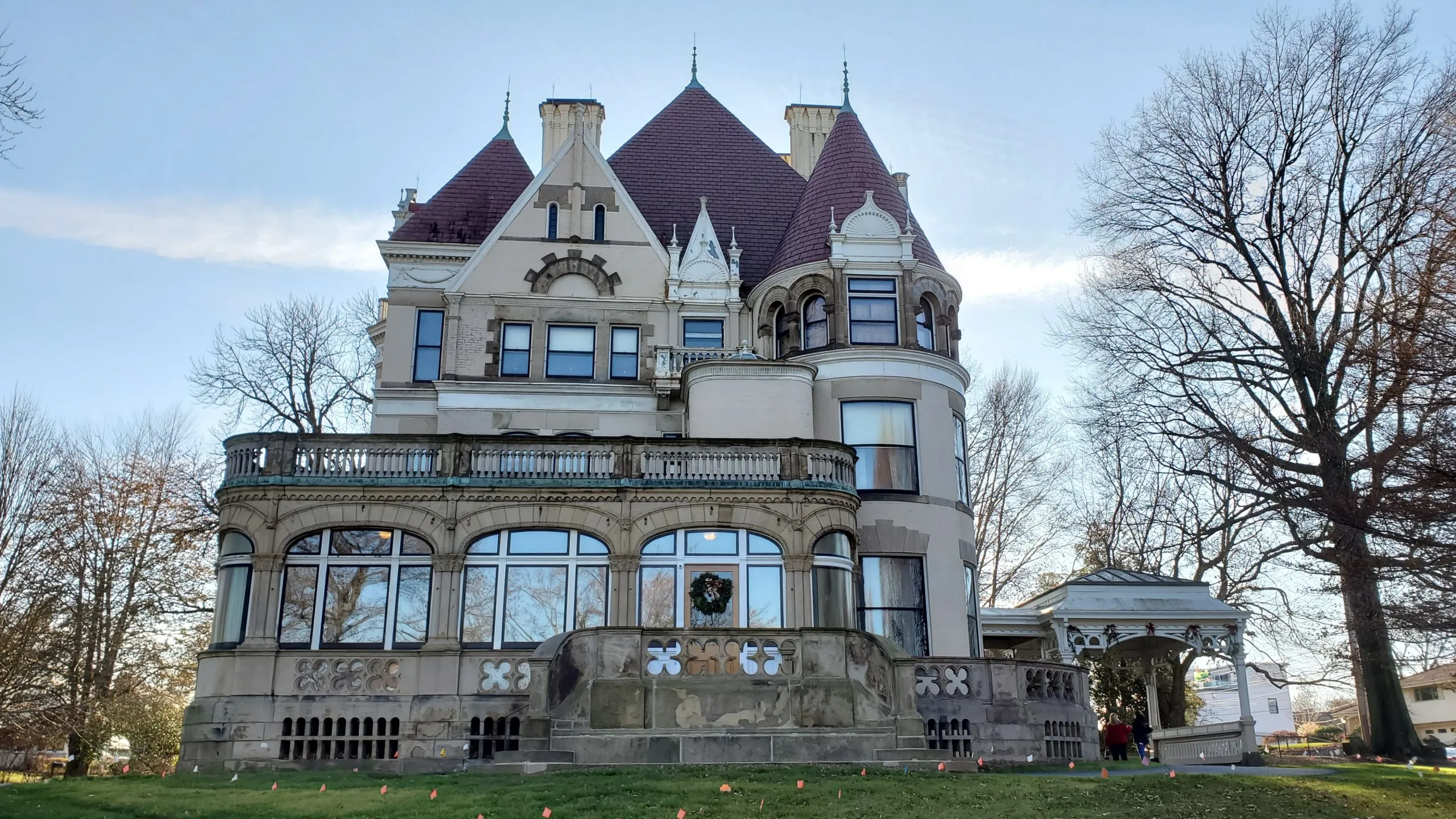
Frick Mansion – Clayton
Tucked into Pittsburgh's Point Breeze neighborhood on a tree-lined stretch of Reynolds Street, Clayton looks less like a museum and more like a home someone simply stepped out of — and may never have fully left. The 23-room mansion, now the centerpiece of the Frick Pittsburgh complex, was purchased in 1882 by Henry Clay Frick for $25,000 as an eleven-room Italianate house. Frick was already one of the most powerful men in American industry, having built a near-monopoly on coke production in the Pittsburgh region before aligning with Andrew Carnegie to help build the largest steel company the world had ever seen. He moved into Clayton with his new wife, Adelaide Howard Childs, and expanded it over the following decade into the Loire château-style mansion visitors see today, with Thomas Edison's company installing its electric lighting. The house carries the weight of the man who built it. Frick's name is inseparable from the Homestead Strike of 1892, one of the bloodiest labor confrontations in American history. When workers at the Carnegie Steel Homestead Works walked out over wage cuts, Frick surrounded the mill with barbed wire — workers called it "Fort Frick" — and hired 300 Pinkerton agents who arrived by barge on the Monongahela River. The resulting battle left ten men dead and dozens wounded. That same month, a 25-year-old anarchist named Alexander Berkman forced his way into Frick's office on the fourth floor of his Pittsburgh building and shot him twice, then stabbed him with a steel file before being subdued. Frick cabled Carnegie: "Was twice shot, but not dangerously." He finished his workday. The man was not easily stopped. But inside Clayton, beneath the public image of the ruthless industrialist, lived a father who suffered losses that money and power couldn't touch. In 1891, his six-year-old daughter Martha died at Clayton after swallowing a pin that caused a fatal infection, despite a specialist summoned from New York. Adelaide, her mother, fell into chronic illness and depression and never fully recovered. The following summer, infant son Henry Clay Jr. died shortly after birth. The two deaths in consecutive years, combined with the violence of the Homestead Strike and the assassination attempt, broke something in the family's relationship to Clayton. In 1905, they left for New York, taking almost nothing with them. The possessions stayed behind as though waiting for a return that never fully came. The house sat largely preserved in that frozen state for decades. Helen Clay Frick, the one surviving daughter, returned in 1981 and lived in Clayton until her death in 1984, having arranged in advance for the estate to be restored and opened to the public. The Frick Art & Historical Center opened in 1990 with 93 percent of the original family furnishings still in place — furniture, artwork, and personal items untouched across a century. That extraordinary preservation is itself central to the haunted reputation. Staff and visitors report hearing a child's laughter in the upstairs hallways and the sound of small feet running across floors when no children are present. A young girl in a white dress has been described at the end of corridors and on staircases, glimpsed briefly before vanishing — appearing to be around five years old, the age Martha was when she died. Security guards report women's footsteps on the third floor after hours, steady and deliberate, moving through rooms that stand empty. Adelaide's bed is regularly found with a deep impression in it, as though someone has lain down and risen again. Some accounts describe the scent of cigar smoke drifting through rooms where no one smokes. The spirit of Helen — who devoted her final years to keeping the house exactly as it was — is believed by many staff members to have never left the third floor where she slept. Clayton is open to the public for tours. The beds are made. The rooms are still. But the impressions keep returning.

University of Pittsburgh
The University of Pittsburgh's campus comprises multiple buildings, specialized facilities, and academic spaces distributed across institutional physical footprint within the city. BOO! Haunted Pitt represents institutional paranormal phenomena acknowledgment and documentation recognized and reported across university's 225-year history. The campus functions simultaneously as educational institution, historical artifact, architectural landmark, and, according to extensive accounts, sustained paranormal activity location. The university's institutional willingness to document and discuss campus hauntings distinguishes it from educational institutions that might suppress or minimize paranormal narratives affecting enrollment, reputation, or student and staff comfort. Instead, the university created paranormal folklore space within official narrative, transforming ghostly presences into institutional identity and historical continuity elements. The University of Pittsburgh's historical trajectory spans more than two centuries of development, expansion, and institutional evolution. The institution began as smaller educational establishment and grew into major national prominence research university. This extended history created accumulated institutional experience layers, notable figures, significant events, and multiple generation occupying same physical spaces' accumulated emotional weight. Universities inherently carry historical consciousness—deceased benefactor-dedicated buildings or significant historical figure-named buildings; university history-commemorating monuments and memorials; institutional documents and memory-preserving archives and libraries. University physical infrastructure, frequently spanning generations with some buildings maintained in near-original form while others undergo substantial modification, creates landscape where past and present coexist visibly. Such conditions create paranormal manifestation and supernatural folklore favorable environments. Bruce Hall represents university's most actively haunted locations, containing multiple reported paranormal phenomena distributed across the building. Bruce Hall's Suite 1201, large banquet hall serving institutional functions, generated particularly extensive paranormal accounts. Staff members report unexplained footsteps echoing through corridors, unoccupied space-emanating disembodied voices, and objects moving or rearranging without discernible cause. Auditory phenomena—footsteps and voices—suggest human-scale paranormal activity creating another human presence occupation impression. Object movement reports independently indicate poltergeist-type activity suggesting consciousness or intentionality manipulating physical environment. Suite 1201's banquet hall status adds phenomenon meaning dimensions—human celebration and gathering space becomes paranormal activity site, suggesting concentrated human emotional energy and paranormal manifestation possible connection. Recognized University of Pittsburgh campus paranormal entities include four distinct ghosts reportedly associated with specific locations and historical narratives. Bruce Hall ghosts manifest most prominently in Suite 1201, described primarily through phenomenon accounts rather than specific entity characteristics. William Pitt Union harbors second ghost, social and administrative function-serving building. Croghan-Schenley Room contains third paranormal presence, space apparently named for historical figures or donors. Early American Nationality Room, another campus location, hosts fourth paranormal entity. The specificity of distinct ghost-particular location associations suggests either multiple genuinely distinct distributed campus entities, or institutional narrative structure where different locations accumulated distinct paranormal stories formalized through repetition and documentation. Woman spirit haunting Bruce Hall Suite 1201 represents detailed paranormal account focal point. Reports describe unexplained footsteps suggesting female gait or presence, female voice potentially representing disembodied vocalizations, and objects shifting or moving as conscious entity rearrangement. Some accounts speculate regarding woman's historical identity, building and university relationship, and possible death circumstances or paranormal presence source. Gender identification specificity without corresponding historical identity specificity creates interesting dynamic where woman ghost exists as recognized paranormal presence whose actual historical circumstances remain obscure or disputed. She persists as active paranormal agent whose historical context became secondary to contemporary recognized campus ghost status.
3406 Brownsville Road
The house at 3406 Brownsville Road in Pittsburgh, Pennsylvania, presents an ordinary suburban appearance—a residential structure in a residential neighborhood, distinguished primarily by the concentrated paranormal violence that occurred within its walls between 1988 and 2006. The property itself offers no external indication of the extraordinary and terrifying phenomena that unfolded inside, a disconnect between appearance and reality that characterizes many intensely haunted locations. What transpired within this house represents one of the most thoroughly documented cases of demonic possession and paranormal assault in contemporary American history, a case that attracted the attention of paranormal researchers, Catholic Church officials, and media outlets seeking to understand the nature of supernatural evil and the limits of human endurance. The family that moved into the house on Brownsville Road in December 1988 encountered paranormal phenomena almost immediately upon taking occupancy. The initial manifestations were subtle—objects moving on their own, unexplained sounds emanating from walls and empty rooms, phenomena that could be explained away as structural settling or environmental factors. Yet the phenomena intensified rapidly, escalating from subtle disturbance to violent assault. Over the course of months and years, the family experienced a comprehensive assault on their physical safety, mental health, and spiritual wellbeing. The entity that haunted the Brownsville Road house manifested in increasingly violent and frightening ways. Objects did not merely move; they were hurled with force. Disembodied voices spoke from empty spaces, their tone often hostile or threatening. Physical contact occurred—not the gentle brushing or touching reported at other haunted locations, but violent assaults. Family members reported being scratched, bitten, and struck by invisible forces. The marks left by these assaults were visible, documented, photographed, and verified by multiple witnesses. Bleeding appeared on walls in a manner consistent with paranormal phenomena documented in Catholic exorcism literature. Rosaries were destroyed in the presence of the family, broken and defaced by unseen hands. The intensity and directed nature of the phenomena suggested not the residual haunting of a deceased individual trapped in trauma but rather the active presence of a conscious, malevolent entity—what paranormal researchers and Catholic theology term a demonic presence. The distinction matters: residual hauntings are thought to be unconscious repetitions of traumatic moments or behavioral patterns, while demonic possession implies an active, intelligent, hostile entity that deliberately causes harm and responds to the presence of the living. The phenomena at Brownsville Road appeared to fit the demonic model—the violence seemed intentional, the entity seemed aware of the family and reactive to their presence, and the escalation suggested a consciousness enjoying or deriving satisfaction from the family's terror and suffering. Paranormal investigators from Penn State University visited the property and conducted investigations, documenting their findings and contributing to the academic record of the case. The Pennsylvania paranormal research community recognized Brownsville Road as one of the most active and dangerous haunted locations in the state. The case attracted media attention, with news outlets and documentary programs covering the family's experiences and the authorities' responses. The intensity of the situation eventually prompted intervention by the Catholic Diocese of Pittsburgh, which authorized an exorcism—a religious ritual designed to remove demonic presences from locations and individuals. The exorcism was performed in 2006, more than seventeen years after the family first moved into the house. The ritual, conducted according to Catholic protocols by authorized Church officials, appears to have been effective in reducing or eliminating the most violent and dangerous phenomena. Following the exorcism, the intensity of paranormal activity diminished substantially, and the family's experience of torment ceased. The house was subsequently converted to the Brownsville Roadhouse Bed & Breakfast, transforming what had been a site of horror into a commercial hospitality establishment. Yet questions remain about the nature of the entity that occupied the space, the source of its malevolence, and whether the exorcism truly eliminated it or merely suppressed its manifestations. The case stands as testimony to the possibility of evil in physical form, to the capacity of demonic forces to concentrate their attention on specific locations and families, and to the continuing relevance of ancient religious practices in responding to contemporary supernatural phenomena.
Allegheny General Hospital
Allegheny General Hospital was chartered on October 18, 1882, in Allegheny City, Pennsylvania, establishing a medical institution dedicated to providing healthcare services to the growing industrial population of the region during an era of rapid urban expansion and development. The hospital opened its doors for patient care on February 15, 1886, with facilities designed to address acute medical needs in a community expanding rapidly due to manufacturing and steel production that drew thousands of workers to western Pennsylvania. The original structure underwent substantial modernization and expansion throughout the late nineteenth and early twentieth centuries as medical technologies advanced from basic surgical facilities to sophisticated diagnostic and treatment centers. The current physical structure was completed in 1936, designed by the prestigious New York architecture firm York and Sawyer, constructed with financial assistance from the federal Public Works Administration during the economic hardships of the Great Depression. This Art Deco-influenced building incorporated contemporary medical facility standards and represented a significant investment in regional healthcare infrastructure spanning multiple city blocks. The South Tower of Allegheny General Hospital stands as the oldest section of the complex, with its architectural features and physical layout reflecting the earliest phase of the hospital's development when medical practice operated under far different standards and understandings of disease and treatment. Within this section, staff members and visitors have reported a range of unexplained acoustic phenomena, including disembodied voices speaking words or phrases that cannot be attributed to any living person present in the immediate vicinity or observable through any mechanical device. Strange noises reverberate through corridors and patient areas without identifiable mechanical or structural sources, with witnesses describing voices apparently engaged in conversation or emotional expression. The South Wing in particular has become known as a focus of reported paranormal activity, with accounts of voices and unusual sounds documented by hospital employees across multiple shifts and time periods, suggesting consistent rather than random phenomena. Former and current staff have described experiencing unsettling sensations in certain locations, particularly in areas where patient mortality has been historically high, suggesting a connection between locations of death and subsequent paranormal manifestation. The basement level of Allegheny General Hospital, where the hospital morgue was historically located, has acquired a reputation among staff as a site of intense paranormal phenomena that far exceeds activity levels reported elsewhere in the building. Visitors and employees consistently report experiencing profound cold spots in this area, with temperatures dropping dramatically in localized regions that cannot be explained by the building's heating and ventilation systems despite thorough inspection. The morgue location itself has become a focal point of paranormal investigation and speculation, with researchers theorizing that the accumulation of deaths and the handling of human remains in this space over decades may have created conditions conducive to residual paranormal phenomena and the anchoring of multiple spirit entities. Apparitions have been reported in the basement area, with witnesses describing shadowy figures that move through spaces with deliberate purpose and apparent awareness of their surroundings. The hospital continues to operate as a major medical institution serving the Pittsburgh region, though staff members and paranormal investigators maintain ongoing interest in documenting and understanding the unexplained phenomena that persist within its oldest sections.
Allegheny Center, Building #7
Allegheny Center Building 7 in Pittsburgh, Pennsylvania, has earned a distinctly notorious reputation within the city's paranormal community and among paranormal researchers investigating poltergeist phenomena, garnering the colloquial nickname Agony Seven that explicitly reflects the building's malevolent reputation and the profound distress experienced by those working within its spaces. The structure comprises a portion of a larger commercial complex that substantially transformed Pittsburgh's downtown landscape during the latter twentieth century as the city underwent a dramatic transition from heavy industrial manufacturing toward service-based and office economies. Building Seven specifically houses office spaces, administrative functions, and commercial operations that cycle through various temporary tenants seeking affordable rental space within Pittsburgh's downtown area seeking business opportunity. The architectural design follows the utilitarian principles common to mid-twentieth-century commercial construction, prioritizing operational efficiency and cost-effectiveness over aesthetic flourishes or distinctive architectural features that might characterize older civic buildings. The building's documented history prior to its contemporary association with paranormal phenomena appears remarkably unremarkable in available historical records, suggesting that the disturbances may be linked to events that were not formally recorded or acknowledged in public historical accounts. The paranormal reputation of Building Seven appears to originate from multiple converging factors including environmental conditions, undocumented prior incidents, workplace tragedies, or unresolved psychological or spiritual traumas whose origins remain obscure and difficult to establish through conventional investigation. Employees and temporary tenants report consistently high turnover rates, with staff members requesting immediate transfers or resignations due to what they consistently describe as the building's pervasive bad vibe, an intangible but undeniable sense of wrongness that profoundly affects those working within its spaces. Temperature anomalies plague specific interior areas of the building, with sudden cold spots occurring in rooms and hallways where heating systems function normally and environmental conditions appear otherwise stable and unremarkable. Disembodied voices manifest throughout the building structure, captured on paranormal investigation recordings and reported by witnesses as whispers, indistinct murmurs, and occasionally intelligible speech fragments that suggest attempted communication between dimensions. Knocking sounds emanate from interior walls, doors, and ceilings without apparent physical cause, creating rhythmic patterns that suggest intentional communication or warning messages to occupants. Witnesses report unexplained physical sensations including touches from invisible sources, pressure sensations on the body, and the overwhelming feeling of unseen presences in close proximity. Shadow figures manifest in hallways, stairwells, and office spaces, their silhouettes distinctive enough to suggest clearly humanoid forms despite their obvious lack of physical substance or visible features. Poltergeist activity has been extensively documented by investigators, with objects moving, falling, and being manipulated without any visible physical cause or logical explanation for the phenomena. The cumulative weight of these phenomena has effectively made Building Seven a recognized paranormal landmark within Pittsburgh paranormal research circles.