
Haunted Places in Dayton, Ohio
6 haunted locations
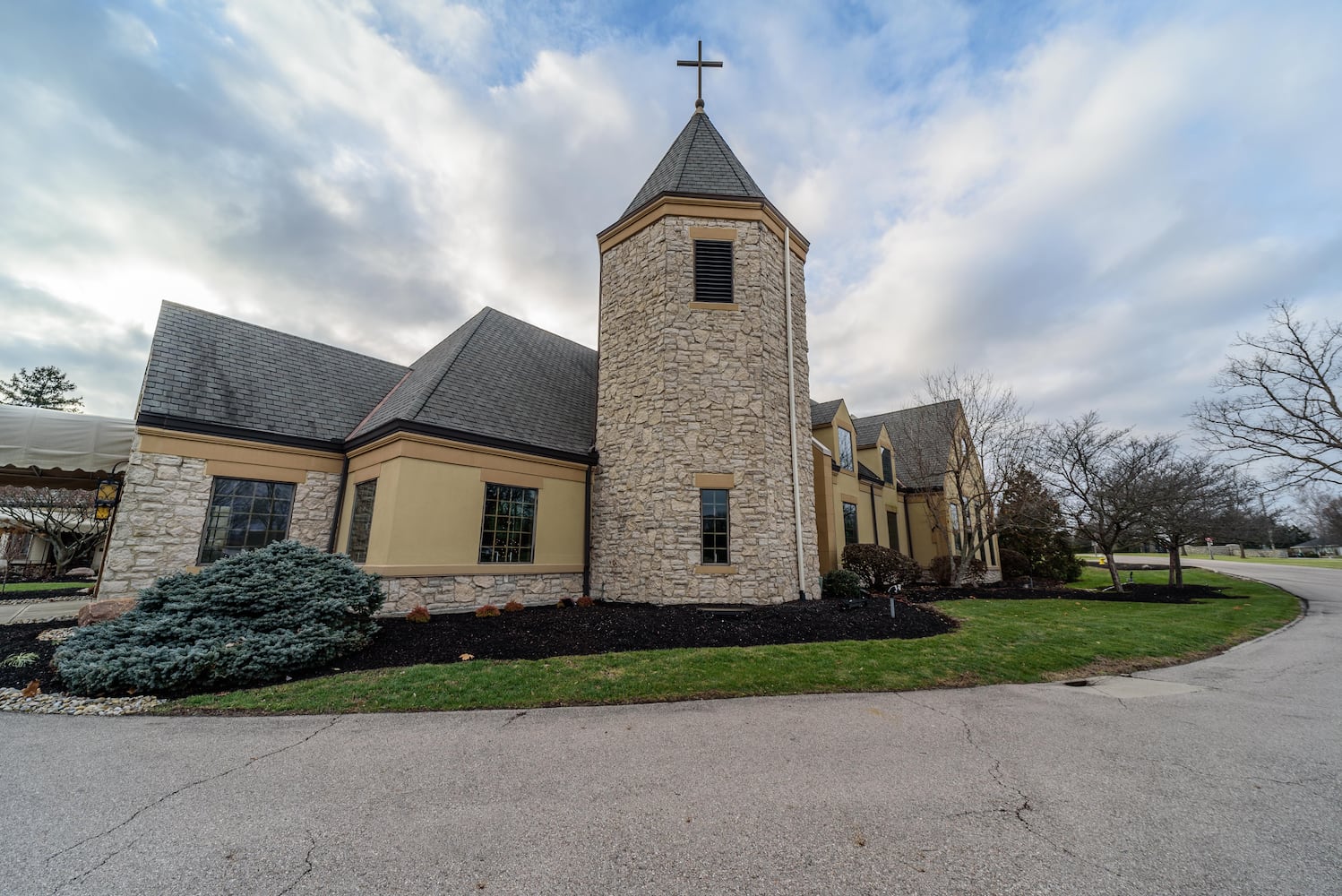
Normandy United Methodist Church
Normandy United Methodist Church sits at 450 West Alex Bell Road in Washington Township near Dayton, Ohio, but the building at its heart is not a church at all—it is a million-dollar English Manor estate built in the late 1920s by one of the most powerful automobile executives in the country. The mansion, known as Normandy Farms, was the home of Richard Hallam Grant Sr., a Harvard-educated industrialist who rose from a clerk's position at National Cash Register in 1904 to Vice President and General Sales Manager of Chevrolet and eventually a member of the General Motors Board of Directors. The Grants had traveled extensively in Europe and were particularly taken with the Normandy region of France, so in 1924 they hired a New York architectural firm to design a residence worthy of the name. Construction began in 1927 and was completed in 1930 at a reported cost of one million dollars—a staggering sum at the height of the Depression. The house was remarkable not just for its scale but for its innovation. It was reportedly the first fully air-conditioned private residence in the United States. Grant, an inventor by temperament, outfitted the home with automatic closet lights that activated when doors were opened—a concept he later carried over to the Chevrolet automobile. The estate featured dual furnaces and water systems, concealed closets, a private gymnasium, a two-story pewter chandelier, nickel-silver stair railings, four built-in safes, one of the first push-button radios, and an automatic push-button garage door opener. A swimming pool and diving platform graced the grounds. The rooftop promenade overlooked the rolling farmland of Montgomery County. It was a house built by a man accustomed to thinking on an industrial scale, applied to domestic life. Grant lived at Normandy Farms until 1955. In 1938, he had acquired controlling interest in the Reynolds & Reynolds Company, which he headed until his death in 1957. His wife Laura Williams Grant, whom he had married in 1906, was by all accounts deeply attached to the estate. When the Grants decided to leave, they sold or gifted the property to form the Normandy United Methodist Church. Services were originally held in the Grant living room, which became the chapel. A 1963 addition provided a sanctuary, education space, and kitchen—now known as Fellowship Hall. The church's present-day sanctuary was built in 1997. The mansion itself remains the architectural centerpiece of the campus, listed on the National Register of Historic Places since 1983. It is Laura Grant, by most accounts, who never left. Custodians and cleaning crews working late at night in the mansion have reported the unmistakable scent of perfume drifting through empty rooms when no one else is in the building. The fragrance appears without source, lingers briefly, and dissipates. Mysterious noises have accompanied the scent—sounds without clear origin in the old residence and staff quarters. One account from a person who grew up around the church in the 1980s describes seeing a woman in white watching from an attic window of the mansion during a snow day while children sledded on the hill behind the property. The figure was visible and distinct enough to send the witness running home. The same person reported multiple unexplained experiences over several years, spanning both the main residence and the staff quarters. Other accounts describe the family who once owned the estate haunting the grounds and buildings more broadly, though the perfume and the woman in white remain the most consistently reported phenomena. The claims are modest in number but striking in their domestic quality. There are no reports of malevolence, no violent history to anchor the haunting to a specific trauma. What people describe is the presence of someone who loved the house and apparently has no intention of leaving it—a woman whose perfume still fills rooms she furnished, whose silhouette still appears in windows she once looked through. If suggestion plays a role, the mansion itself provides ample material. The original architecture is extraordinarily well preserved, and the transition from private estate to church left much of the interior character intact. Walking through the Grant mansion is walking through a space that still feels owned—not by a congregation, but by the people who built it. Today Normandy United Methodist Church is an active congregation with roughly 490 in weekly attendance. The historic mansion hosts a popular annual Christmas open house featuring decorated trees, carolers, and tours of the original rooms. The property is surrounded by what is now Grant Park, where the farmland that once belonged to the estate is open to the public. The church does not trade on its haunted reputation, and the building's primary identity remains firmly rooted in community worship and service. But the perfume still comes, and the woman in white still watches from the attic, and the house that Richard Grant built for a million dollars and filled with every innovation of the modern age remains, by quiet account, occupied by someone who was there before any of the congregants arrived.

Victoria Theatre
Standing at 138 North Main Street, the Victoria Theatre embodies the architectural grandeur of nineteenth-century performing arts palaces. Originally opened January 1, 1866, as the Turner Opera House, this Italianate-style structure features ornate plasterwork, a soaring proscenium arch, and intimate balcony seating. The 1,154-seat venue, now operated by Dayton Live, continues hosting Broadway productions, concerts, and performances while preserving the atmospheric character that defined it for over 150 years. The theater's origins in the post-Civil War period coincided with Dayton's rapid expansion as a manufacturing hub. The Turner Opera House gained prominence during the late nineteenth century as a venue hosting traveling theatrical companies, classical drama, and vaudeville entertainment. By the early twentieth century, the building had been renamed the Victoria Theatre, reflecting evolving tastes and the venue's adaptation to contemporary entertainment including silent film presentations accompanied by pipe organ performances. The 1920s marked a particularly vibrant era for the Victoria Theatre, when silent film dominated entertainment and the venue became known for premieres and special events. The theater's prestigious status attracted nationally recognized artists, and its ornate interior made it a cultural cornerstone for Dayton's elite. The theater successfully navigated the transition to sound film in the late 1920s and 1930s, installing modern projection equipment while retaining Victorian-era architectural integrity. During the mid-twentieth century, the Victoria Theatre experienced fluctuating fortune as suburban expansion and television altered entertainment patterns. Yet the theater retained dedicated patrons and continued hosting live performances alongside films. The interior underwent selective modernization while preserving historical features. Staff and performers from this era occasionally reported unusual experiences within the older sections. Paranormal accounts have accumulated over decades of operation. A prominent entity known as "Miss Vicky," reportedly a 1920s-era actress, is said to manifest throughout the building. Witnesses describe experiencing cold spots in the orchestra pit and galleries, accompanied by the sensation of an unseen presence observing performances. Auditory phenomena including disembodied voices in dressing rooms and backstage areas, unexplained footsteps on upper galleries, and mysterious knockings occur when the theater is closed. Another apparition, reportedly a man from the 1950s era, has been sighted in various locations. Full-body apparitions have allegedly appeared in the upper balcony during performances, then vanished. Unexplained lights are reported in the projection booth and lighting grid. Investigators note that paranormal activity appears concentrated in the oldest building sections, particularly around the stage and original projection booth. Some witnesses report that phenomena intensify during active theatrical rehearsal and performance, suggesting possible responsiveness to human activity. Temperature fluctuations are particularly pronounced near original ornate fixtures and architectural elements from the 1866 opening. The consistency of reports from independent sources unfamiliar with documented accounts lends credibility to experiences described. The Victoria Theatre underwent significant restoration beginning in the 1980s as part of downtown Dayton's revitalization. These restoration projects carefully preserved original architectural elements while upgrading mechanical systems. The theater has since become increasingly active culturally, hosting more frequent events than in several previous decades. Despite modernization, the building has retained the atmospheric qualities that characterize older theaters, with shadowed backstage areas and narrow corridors echoing with history. Today, the Victoria Theatre remains an active performing arts venue and documented haunted location within Ohio's paranormal landscape. The theater's dual identity as both a thriving cultural institution and a location of persistent paranormal accounts has made it a subject of interest for paranormal enthusiasts and theater historians alike. Whether interpreted through a supernatural lens or understood as atmospheric impression from over 150 years of emotional performance and human presence, the Victoria Theatre exemplifies buildings that bear imprints of their histories in ways transcending conventional explanation.
Patterson Tower
Patterson Tower, known colloquially as the "Witch's Tower," rises prominently from the landscape near Kettering, Ohio, presenting an architectural anomaly that stands isolated and forbidding in the surrounding terrain. The tower's distinctive silhouette and historical reputation have earned it prominent placement in regional paranormal documentation and haunted location surveys, attracting both academic researchers investigating paranormal phenomena and casual visitors seeking to witness one of Ohio's most visibly active supernatural sites. The tower's location near Kettering places it within the broader context of Ohio's extensive paranormal history, a state containing numerous documented haunted locations spanning centuries of human settlement. The architectural design and construction of Patterson Tower reflect late nineteenth-century engineering practices combined with symbolic elements that suggest its builder may have incorporated esoteric or spiritual considerations into the structure's physical form and orientation. The tragic death of Peggy Ann Harmeson in 1967 represents the seminal event that appears to have triggered or intensified the tower's paranormal phenomena, with her death occurring under circumstances that remain incompletely documented in historical records and local archives. Harmeson's death at the tower prompted its immediate closure to public access, a restriction that remains in effect through the present day despite repeated advocacy from paranormal researchers and historical preservation advocates seeking to document and study the location. The specific circumstances of Harmeson's death appear to have created profound supernatural consequences, as the tower's paranormal manifestations intensified dramatically following this tragic incident. Local records and contemporary accounts suggest that Harmeson's death was not a simple accident but involved circumstances that generated lasting emotional and spiritual trauma concentrated within the tower's physical structure. The paranormal phenomena documented at Patterson Tower demonstrates remarkable consistency and intensity, with multiple independent investigators and witnesses providing corroborated accounts of the same phenomena manifesting across different time periods. A distinctive black mist frequently surrounds the tower's exterior, an atmospheric phenomenon that investigators note appears to behave with apparent intelligence, dissipating when approached by visitors and reconstituting after observers retreat from the location. The black mist phenomenon has achieved particular notoriety within paranormal investigation communities, with multiple infrared and thermal imaging investigations documenting the mist's behavior and demonstrating that the phenomenon produces measurable thermal signatures inconsistent with conventional meteorological or atmospheric events. Witnesses describe the mist as profoundly unnerving and disorienting, with many visitors reporting overwhelming feelings of dread and fear upon encountering it, often prompting rapid retreat from the tower's vicinity. The apparitions documented at Patterson Tower appear with sufficient frequency and consistency to suggest the tower serves as a focal point for concentrated paranormal energy rather than isolated incidents of spectral manifestation. Glowing, shadowy apparitions have been observed standing near the tower's base, particularly during stormy nights when atmospheric conditions may amplify or facilitate paranormal manifestations. These apparitions appear humanoid in form but possess characteristics that witnesses describe as distinctly alien or inhuman, with an otherworldly quality that distinguishes them from typical ghostly apparitions documented at other haunted locations. The apparitions interact with their environment in ways that suggest rudimentary consciousness or intentionality, turning to face approaching observers and occasionally moving toward witnesses before vanishing. A woman dressed in a black robe has been documented by multiple independent observers, appearing to circle the tower's exterior with apparent purpose or ritual intent, manifesting primarily during twilight hours and periods of significant paranormal activity. The most distinctive and persistent evidence of paranormal activity at Patterson Tower consists of charred markings on the tower's exterior walls that appear to depict human-like figures despite repeated attempts by maintenance workers and historical preservationists to remove or cleanse them. These markings possess characteristics inconsistent with conventional explanations such as weathering, fire damage, or artistic vandalism, appearing instead as if burned into the masonry from an interior source or through some mechanism that conventional fire behavior cannot fully explain. Researchers theorize that these charred figures may represent manifestations of souls trapped within or unable to fully transition beyond the tower's physical structure, their desperate attempts to communicate or escape from their supernatural imprisonment manifesting as visible marks upon the building's exterior. Patterson Tower remains inaccessible to the public, standing as an isolated structure preserved in its historical condition as both a memorial to the tragic events that occurred there and as one of Ohio's most visibly active paranormal sites.
Sinclair Community College
Sinclair Community College in Dayton, Ohio stands as a comprehensive community college institution providing educational opportunities, vocational training, and academic preparation to thousands of students annually across the Miami Valley region, a facility that encompasses multiple buildings and structures constructed during different historical periods spanning from the early twentieth century through contemporary times. The college campus includes Blair Hall, a historic structure originally constructed and designed as a theater and performance venue during an earlier era before its incorporation into the college infrastructure and adaptation to educational purposes, the building's original theatrical spaces, stage mechanisms, and architectural features remaining partially intact despite decades of continuous educational use and institutional modification and renovation. Blair Hall's theater space operated throughout the twentieth century as a community and academic performance venue of considerable significance, hosting theatrical productions ranging from contemporary plays to classical dramas, musical concerts by accomplished performers, lectures by visiting scholars, and cultural events that served as vital focal points for intellectual and artistic life within the college and broader Dayton community. Beginning at least three decades ago and continuing with remarkable persistence and consistency through contemporary times, student performers, technical staff, theater faculty, and other individuals working within Blair Hall's theater spaces have consistently documented extensive paranormal phenomena attributed to a spirit identified as Hamlet, a presence that demonstrates apparent attachment to theatrical operations and the quality of performance activities occurring within the building. The Hamlet entity appears to possess sophisticated theatrical knowledge and emotional investment in the quality and execution of productions occurring in the space, sometimes tugging at performers' clothing during rehearsals or actual performances in ways that seem deliberate rather than accidental, influencing lighting and sound equipment in ways that seem to enhance rather than disrupt productions, and occasionally manifesting as phantom laughter or spontaneous applause at moments that suggest appreciation for particular performances or technical achievements. Building 13 of the Sinclair campus contains its own distinct and separate paranormal presence identified as Joshua, a spirit apparently associated with this particular section of the college whose manifestations include phantom sounds of unclear origin, unexplained tugging sensations directed toward students and staff members, and persistent unexplained phenomena and malfunctions in elevator systems throughout the building that frustrate contemporary engineering explanations. Additional paranormal phenomena documented throughout the Sinclair campus include apparitions of a ghostly couple appearing repeatedly in various campus locations, phantom sounds including disembodied cries of cats and human babies, footsteps in empty hallways, inexplicable music emanating from empty rooms, sudden temperature fluctuations without source, and systematic malfunctions of electrical systems particularly concentrated in elevators and lighting fixtures. The comprehensive and widespread nature of paranormal activity documented at Sinclair suggests that multiple distinct spirits occupy and inhabit the campus simultaneously, each with particular areas of emotional attachment and distinctive manifestation patterns that allow researchers to differentiate between entities, a phenomenon that student newspapers and paranormal organizations have documented extensively through detailed interviews with witnesses and on-site investigations using contemporary paranormal research methodologies. Sinclair Community College continues its educational mission and serves its student population while openly acknowledging and systematically documenting the paranormal phenomena that remain persistent and undeniable aspects of the institution's demonstrated historical character and current ongoing operations.
Woodland Cemetery
Woodland Cemetery was established in 1841 in Dayton, Ohio, during a period when American cities expanded rapidly and burial ground management transitioned from church-controlled graveyards to civic enterprises. The cemetery was constructed on elevated acreage accessible to Dayton, with landscaping and pathways designed to permit family visitation and maintenance. The grounds feature mature trees, monuments, and grave markers from its earliest years through contemporary times, creating a physical record of over 180 years of death and burial. The landscape reflects changing attitudes toward death, mourning, and commemoration across American cultural and social evolution. Within these grounds dedicated to the dead, sustained paranormal phenomena have been documented for decades, suggesting that the concentration of human remains and emotional intensity surrounding death and loss have created conditions particularly conducive to paranormal manifestation. The cemetery serves as final resting place for thousands of Dayton residents representing all social classes. The specific spirits documented as manifesting at Woodland Cemetery reflect diverse circumstances of death creating psychological intensity sufficient to anchor consciousness to burial locations. Johnny Morehouse, a child, continues to manifest with his dog engaged in playful activity among graves, replicating living behaviors. The emotional bonds between child and pet, and the tragic termination through death, may have created sufficient intensity for sustained manifestation. A blonde girl ghost has been reported sitting upon her grave weeping, appearing profoundly sad and withdrawn, tied to emotional states of grief and loss. Civil War soldiers are documented manifesting throughout the grounds in military uniforms, sometimes engaged in combat-related behaviors, suggesting residual trauma manifestation. Adam Schantz, an early Dayton businessman, appears as a restless spirit with manifestations suggesting attachment to the location or unfinished business. Multiple distinct entities suggest the cemetery concentrates paranormal phenomena through human remains proximity, family grief intensity, and vast temporal spans. Paranormal manifestations include apparitions of varying visibility from shadowy figures to clearly defined humanoid forms permitting period clothing identification. Disembodied voices have been documented throughout with visitors reporting audible communications and spectral utterances. A child's voice has been reported calling in the cemetery. Footsteps sound along pathways despite absent visible walkers, sometimes in groups. Temperature anomalies manifest with localized cold zones appearing without meteorological explanation. Phenomena concentrate in areas where violent deaths occurred or particularly traumatic losses were sustained. A stone with blue light emanating from or surrounding it has been repeatedly documented by multiple observers, suggesting particularly intense paranormal concentration. The blue light has not been adequately explained through conventional methodology, with investigators speculating it represents spiritual energy. Smells have been reported from various locations with witnesses describing pleasant fragrances or unpleasant odors without identifiable sources. Woodland Cemetery continues operating as an active burial ground and historical landmark welcoming visitors for grave visitation and genealogical research. The paranormal reputation has attracted investigation teams and enthusiasts seeking to document and understand consistently reported phenomena. Walking tours led by historians and investigators educate visitors about the cemetery's history and documented supernatural phenomena. The location represents a well-preserved example of nineteenth-century American cemetery design while serving as a location of sustained paranormal activity reflecting spiritual and emotional intensity associated with human death and burial.
Patterson Homestead
The Patterson Homestead stands as a significant historical structure in Dayton, Ohio, representing the domestic life and military legacy of Colonel Robert Patterson, a figure whose prominence in early American military and civic affairs left an indelible mark upon the region. The restored farmhouse occupies a landscape that has transformed dramatically since its construction during the early nineteenth century, yet the building itself preserves architectural details and spatial arrangements that reflect the living conditions and family dynamics of its original inhabitants. Colonel Robert Patterson, a decorated military officer whose service extended across multiple campaigns and decades of American expansion, established his family residence in the Miami Valley region. The Patterson family lineage extended through multiple generations within this homestead, with children born and raised within its walls, their lives intertwined with the broader historical currents sweeping through Ohio. Throughout the nineteenth century, the Patterson Homestead served as more than a residence; it functioned as a center of military family life and a location where decisions regarding Ohio\'s development were influenced by a figure of considerable social standing. Colonel Patterson\'s military career created connections to national political figures and military leadership, elevating the homestead beyond a simple farmhouse to a location of regional significance. Family members experienced the rhythms of agricultural life while maintaining awareness of their elevated social position within Dayton society. The kitchen witnessed daily routines of cooking and meal preparation that connected the Patterson family to broader domestic patterns of their era. Paranormal phenomena associated with the Patterson Homestead suggest that the spirits of family members, including Colonel Robert Patterson himself, remain present within the structure and its surrounding grounds. Apparitions of full-body form have been documented during paranormal investigations, with witnesses describing clear manifestations of human figures appearing in various rooms and locations throughout the homestead. Footsteps resound through hallways and corridors without identifiable source, suggesting the movement of unseen figures traversing familiar pathways within the structure they once inhabited. Doors throughout the homestead open and close of their own volition, with investigators documenting multiple instances of this phenomenon occurring without any mechanical explanation. Objects within the homestead have been reported to move from their established positions, with furniture rearranging without human intervention. Perhaps most intriguingly, reports describe phantom cooking odors and the sensations of elaborate meals being prepared in the kitchen despite the absence of any physical cooking activity, suggesting the reenactment of cherished domestic routines by spirits bound to their former home. Paranormal investigators consider the Patterson Homestead among the most actively haunted locations in Ohio\'s Miami Valley region, with repeated investigations documenting consistent and repeatable paranormal phenomena. A thirteen-year-old boy is believed to be among the spirits present within the homestead, his youthful energy manifesting in various forms of paranormal activity. The presence of multiple spirits suggests a family unit bound together even in death, their attachment to the homestead transcending the boundaries between the living and deceased worlds. Paranormal activity concentrates in specific areas including Patterson\'s personal bedroom, the kitchen where family meals were prepared, and the third-floor chambers where children once slept and played. The intensity of documented phenomena suggests purposeful manifestation by entities with deep connection to the structure and its domestic routines. Contemporary paranormal researchers continue to document and study the Patterson Homestead, seeking to understand how family bonds persist beyond death and manifest within physical space.