
Haunted Places in New Mexico
84 haunted locations
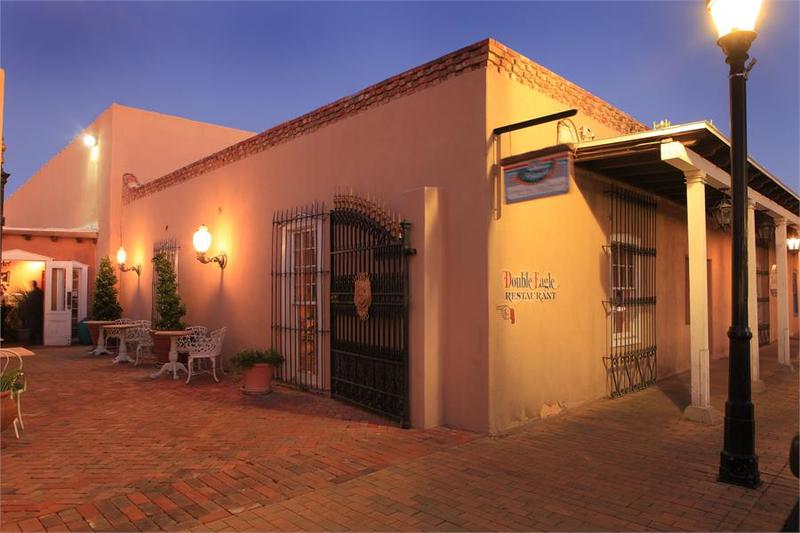
Double Eagle Restaurant
Standing just off the historic plaza in Mesilla, New Mexico, the Double Eagle Restaurant occupies one of the oldest surviving buildings in the region. With thick adobe walls, carved wood beams, chandeliers, and richly decorated dining rooms filled with antiques, the structure feels less like a restaurant and more like a preserved nineteenth-century estate. The original home was constructed in 1849, during a time when Mesilla was emerging as a major settlement along trade routes connecting Mexico, Texas, and the American Southwest. The town itself would soon become the backdrop for several pivotal moments in frontier history. The Gadsden Purchase was confirmed on the Mesilla plaza in 1853, bringing the region formally under United States control. During the Civil War, Mesilla was briefly declared the capital of the Confederate Arizona Territory in 1861. By the late nineteenth century, the town also gained notoriety when Billy the Kid was tried and briefly imprisoned there in 1881. The Double Eagle building stood through all of it, quietly watching the territory around it transform. The haunting legend most closely tied to the property centers on the Maese family, early owners of the home, and a tragic romance that has become one of the most enduring ghost stories in New Mexico. According to local accounts, the family’s teenage son Armando fell deeply in love with Inez, a young servant who worked in the household. Their relationship was forbidden by Armando’s mother, who believed her son should marry into a wealthier and more socially acceptable family. One evening she reportedly discovered the two together in Armando’s bedroom. Enraged, she seized a pair of sewing shears and attacked them. Inez was killed immediately, while Armando was fatally wounded and died days later. The room where the attack is said to have occurred is now known as the Carlotta Room, named after Armando’s mother, and it has become the focal point of nearly every haunting claim connected to the building. Unlike many haunted locations that sit abandoned, the Double Eagle remains active and carefully preserved. Dining rooms branch from one another through narrow passages and archways, still following the layout of the original home. The Carlotta Room in particular carries an atmosphere many visitors describe as unusually heavy or still. In one corner sit two Victorian chairs that have become central to the building’s ghost lore. Reports of paranormal activity at the Double Eagle have circulated for decades among staff and visitors. Many of the experiences center around the Carlotta Room, where Armando and Inez are said to remain. Employees have described chairs and tables shifting slightly, wine glasses breaking without an obvious cause, lights flickering, and unexplained cold spots drifting through the room. Some guests claim to hear whispers or their names spoken when no one else is nearby, while others report seeing shadowy figures near the corner chairs. Those chairs are the most famous detail of the haunting. According to local tradition, the seats show impressions shaped like two people sitting side by side despite rarely being used. Visitors are often warned not to sit in them. Over the years, several people who ignored the warning have reported sudden nausea, overwhelming sadness, or vivid nightmares afterward, reinforcing the belief that the spirits of Armando and Inez still occupy that space. Skeptics note that historic adobe buildings creak, settle, and carry sound in unusual ways, and that powerful stories can shape how visitors interpret ordinary events. But the Double Eagle’s reputation has endured because the reports are remarkably consistent across decades of unrelated visitors. Today the Double Eagle Restaurant operates as both a fine dining destination and one of the most famous haunted locations in the American Southwest. Guests come for the elaborate interior, the preserved frontier architecture, and the deep historical ties to Mesilla’s past. Yet many leave remembering something else entirely—the strange quiet of the Carlotta Room, the chairs in the corner, and the lingering sense that whatever tragedy once unfolded inside the house may not have completely faded with time.
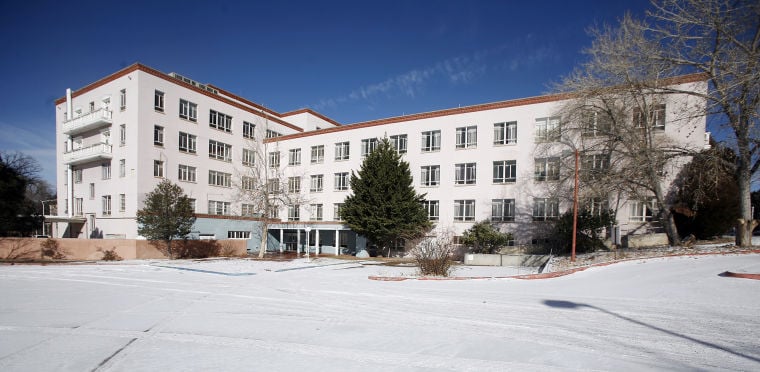
Old St. Vincent’s Hospital (Drury Inn)
The corner of Palace Avenue and Paseo de Peralta in downtown Santa Fe is one of the most historically saturated pieces of ground in the American Southwest. Before European contact, it sat within the territory of ancestral Pueblo peoples. After Spanish colonization established Santa Fe as a capital in 1610, it cycled through two centuries of colonial administration, conflict, and change. By the time Archbishop Jean Baptiste Lamy arrived in the mid-1800s to transform the church's presence in New Mexico, this corner was already ancient by American standards. The building that now operates as the Drury Plaza Hotel carries that entire weight — plus decades of hospital death, a nursing home, state offices, film sets, and years of abandonment — inside a structure that still looks, to many guests, like it remembers everything. The hospital's origin traces directly to Lamy. After his arrival, he invited the Sisters of Charity to New Mexico to help care for the sick. In 1865, Lamy sold them a building originally constructed as a rectory adjacent to what would become St. Francis Cathedral, and the Sisters opened Santa Fe's first hospital inside it. That original structure and the 1911 Craftsman-style Marian Hall built next door served the community for nearly a century before the Sisters outgrew them entirely. In 1953, renowned architect John Gaw Meem — known for the Zimmerman Library at the University of New Mexico and the Cristo Rey Church in Santa Fe — was commissioned to design a proper city hospital on the site. The resulting building was notably austere for Meem: yellow brick, sharp corners, large windows, only a faint nod to Territorial style. It opened as the new St. Vincent Hospital and served Santa Fe for roughly two decades before the hospital relocated to St. Michael's Drive in 1977. The state of New Mexico then took over the buildings for use as offices for the Department of Cultural Affairs and, eventually, a nursing home. That nursing home, which locals called La Residencia, occupied the old hospital until the early 1980s. The building then sat largely empty for years — used occasionally as a film location, including Jeff Bridges' 2009 film Crazy Heart — before Drury Hotels purchased it in 2007 and began a years-long adaptive reuse project. Archaeologists working the site in 2008 uncovered what appeared to be an underground vault of unknown origin before the economic collapse shut the project down. The Drury Plaza Hotel finally opened in 2014. The paranormal reputation of the building predates the hotel by decades and is concentrated in two areas: the basement and the third floor. During the La Residencia years, the basement became so unsettling to staff that sending new employees down there alone at night became a formal initiation ritual — a rite of passage that the longtime employees themselves refused to repeat solo under any circumstances. Multiple accounts describe the basement walls appearing to ooze blood, particularly near a storage room that had once been used to incinerate amputated limbs and surgical remains. A nurse coordinator investigating a disturbance in that room reported finding what looked like fresh blood on a wall surface. A former candy striper who worked at the original St. Vincent Hospital in the 1970s recalled that the area near the basement incinerator produced intense cold, a sense of presence, and disembodied voices — and that hospital staff uniformly avoided it after dark. During the Drury renovation, a security guard working nights described refusing to enter an adjacent structure called Marian Hall, reporting consistent unease throughout the basement level. The state museum's use of the building added another layer: Native American artifacts, and reportedly skeletal remains in cardboard boxes, were stored in the basement hallways during the state offices era. That detail appears in documented interviews with former employees and has fed persistent theories about the nature of the activity. Room 311 — or the fourth floor, depending on the account — carries its own specific legend. A young boy brought into the hospital on Christmas Eve after a severe car crash is said to have died crying for his deceased father throughout the night. Long after the hospital years, nurses at La Residencia reported hearing a baby crying in that room with no source, eventually keeping it vacant unless the census demanded otherwise. The sound has been reported by visitors as recently as the hotel era. A nurse who worked the top floor during the hospital years described a short Hispanic man in old-fashioned clothing appearing alongside a woman in a black mantilla — both seeming confused and in need of something they couldn't name. A worker who accidentally rode the elevator to the basement described the doors refusing to close until he stepped out, then ascending without him while a shadowy presence moved nearby. The Drury Plaza Hotel operates today as a functioning boutique hotel in one of Santa Fe's most storied locations. The basement is there. Room 311 is numbered. The history goes back further than the building — and, by most accounts, it hasn't stopped moving.

Bottger Mansion of Old Town
The Bottger Mansion sits at 110 San Felipe Street Northwest in Old Town Albuquerque, half a block from the historic plaza where the city's story began in 1706. It is the last of the four original mansions that once anchored this neighborhood—the only one still standing virtually as it was built—and it operates today as Old Town's sole bed and breakfast, an intimate inn surrounded by adobe walls, cottonwood shade, and three centuries of layered New Mexico history. The current owners will tell you plainly that the house is not haunted. Ghost tour operators, paranormal investigators, and a steady procession of overnight guests disagree. The truth, as with most things in Albuquerque, probably lives somewhere in the space between. The property's history predates the mansion itself. In the 1700s, a sprawling 40-room adobe complex occupied this site, serving at various points as a residential compound and, according to some accounts, as the governor's mansion during territorial New Mexico. That structure was long gone by the time Charles Bottger arrived. Bottger was a German-born wool exporter who had made his fortune after immigrating to New Jersey. He relocated to New Mexico to position himself closer to the Native American sheep ranchers who supplied his trade. He acquired the property in the 1890s, and construction on the current American Foursquare-style mansion began in 1905, finishing around 1907. In addition to the house, Bottger owned a saloon just west of the property—now a parking lot—and a toll bridge over the Rio Grande. He was, by the standards of early twentieth-century Old Town, a man of considerable reach. Three generations of the Bottger family lived in the mansion before it was sold and began passing through a series of owners and uses that read like a compressed history of Albuquerque itself. During the 1940s, a small colony of Buddhists occupied the house. Later it housed a restaurant on the ground floor, a boarding house and beauty salon upstairs. The guest list over the decades was improbable. In 1955, a young Elvis Presley, traveling with Bill Black and Scotty Moore, performed two shows in Albuquerque and stayed at the Bottger before heading to Amarillo. In the late 1950s, Frank Sinatra attended a wedding at the mansion and performed in the courtyard after dinner. And in the 1940s, FBI most-wanted fugitive George "Machine Gun" Kelly, along with his girlfriend and gang members, checked in under assumed names while on the run from California to Memphis. They had dyed their hair and bought new clothes as disguises, but the owners grew suspicious when the group refused to leave their rooms, instead sending a neighborhood boy out to fetch all their meals. The owners moved to notify police, but a gang member overheard and the group fled just ahead of the law. They were captured shortly afterward. The paranormal reputation of the Bottger Mansion centers on three reported presences. The first is Charles Bottger himself, whose spirit is said to linger in the halls of the house he built, felt rather than seen—a residual sense of ownership that visitors describe as watchful but not hostile. The second is a female figure known simply as the sighing woman, whose audible sighs have been reported echoing through rooms at odd hours, evoking grief or longing from a period no living person can identify. The third, and most discussed, is an entity referred to as "the Lover"—a figure reported by female guests who describe the sensation of someone sitting on the edge of their bed while they sleep. The identity of this presence has never been established, and the accounts, while consistent in their description, resist easy historical attribution. Other reports include disembodied footsteps, the feeling of being watched in otherwise empty rooms, and a general atmosphere that some visitors describe as heavy or charged, particularly in the older sections of the building. One person who grew up near Old Town in the 1980s reported seeing apparitions and hearing unexplained sounds in and around the mansion over a period of years. Paranormal investigators, including Cody Polston of the Southwest Ghost Hunter's Association, have documented the site extensively, and it features prominently in walking ghost tours of Old Town. The current owners take a measured and somewhat bemused position. Their website states flatly that the Bottger Mansion has had no ghosts since 1912, and they ask that guests refrain from conducting ghost hunts that might disturb other visitors. They also note, with evident frustration, that nearly every published history of the mansion contains factual errors—a 1978 survey of Albuquerque landmarks reportedly got everything wrong except the street address. Practitioners of feng shui who have stayed at the property describe the house as having good energy and a peaceful atmosphere, which either contradicts the haunting claims or suggests that whatever occupies the Bottger has no particular quarrel with the living. Today the Bottger Mansion operates as an award-winning bed and breakfast, offering individually appointed rooms, house-made cookies, and locally inspired breakfasts within steps of Old Town Plaza. The San Felipe de Neri Church, founded in 1706, stands nearby. The Sandia Mountains rise to the east. The house itself remains structurally intact from its original construction, the last of Old Town's great mansions still standing in its original form. Whether its halls hold the residue of Charles Bottger, a sighing woman, a boundary-challenged Lover, or simply the accumulated weight of three centuries of human occupation on a single piece of high-desert ground, the Bottger Mansion remains a place where Albuquerque's past is not abstract—it is the floor beneath your feet and, by some accounts, the presence at the edge of your bed.
Miss Gail’s Inn
Standing on the main commercial avenue of one of New Mexico's quietest county seats, Miss Gail's Inn doesn't announce itself the way most reputedly haunted locations do. There are no wrought iron gates or Gothic turrets—just a two-story brick building with segmented-arch windows and a broad front porch, set among the handful of turn-of-the-century structures that line Aztec's historic downtown. But this building has been collecting stories for well over a century, and not all of them belong to the living. The structure was originally built during 1906–1907 as the American Hotel, constructed of brick laid in Flemish and common bond, and opened with a grand reception in March 1907. Its timing was not accidental. The Denver & Rio Grande Railroad had completed a narrow-gauge line from Durango, Colorado to Aztec in 1905, transforming the small agricultural settlement on the banks of the Animas River into a regional hub for commerce and livestock shipping. Aztec had been formally established in 1887 after San Juan County split from Rio Arriba County, and by the turn of the century it was a town of picket fences, vegetable gardens, and cottonwood-lined streets—a place where children played on wooden board sidewalks and wandered freely in and out of storefronts. The American Hotel rose to meet the influx of travelers arriving by rail, its guests ferried from the station to the front door by a horse-drawn buggy known as the Red Apple Flyer Taxi. A one-story rear wing housed the dining room, kitchen, and laundry, and the hotel quickly earned a reputation for serving some of the finest meals in the region. Its comfortable porch became a gathering point where news of the wider world was exchanged and business deals struck. The town itself sits in the Four Corners region of the Colorado Plateau, named for the massive ancestral Puebloan ruins nearby that early Spanish explorers mistakenly attributed to the Aztec civilization of Mexico. The Animas River—its full Spanish name, Río de las Ánimas Perdidas, translating to "River of Lost Souls"—runs through the heart of the community, a detail that lends an almost literary quality to the landscape surrounding the inn. Over the decades the American Hotel changed hands and purposes. It was refurbished in 1981, when bricked-in second-floor windows were reopened and a porch was reconstructed. It was listed on the National Register of Historic Places in 1985 as part of the Aztec Historic District. At some point it was renamed Miss Gail's Inn and operated as a bed and breakfast, before eventually converting to rental units and, by most accounts, ceasing active hospitality operations altogether. It is the building's paranormal reputation, however, that has kept its name circulating long after the bed and breakfast closed its guest book. Multiple entities are said to occupy the premises, and the reports span decades and come from residents, guests, visitors, and at least one law enforcement officer. The most persistent figure is a hostile male presence concentrated in Room 7 on the upper floor—described by those who have encountered it as irritable and territorial. Local legend ties this spirit to a man allegedly hanged from a tree in the building's backyard, though the historical record on that event remains thin. Whether the hanging victim and the Room 7 presence are the same entity is a matter of speculation, but the geographic overlap between the two stories has not gone unnoticed by those who track the inn's history. Other reported figures include a woman in white seen drifting through the upper hallways, and a young boy heard playing in the corridor on the second floor. One former resident who stayed at the inn in the late 2000s described the lady in white and recalled a disembodied male voice whispering a gentle goodnight as she lay in bed. A retired Aztec police officer recounted a mid-1970s incident in which he and his partner responded to a disturbance on the upper floor. As they descended the large interior stairway, a strong male voice between the two men said clearly, "Get out," followed by a physical shove to the partner's lower back. No one else was on the stairs. Visitors have reported sudden and intense cold spots upon entering the building, the sensation of being watched, and an overall atmosphere of unease that seems to persist regardless of the time of day. A separate account from a neighborhood resident recalls a stabbing death on the sidewalk outside the building's lower-level apartments—a real and documented act of violence that added another layer of grief to a property already saturated with local lore. Skeptics can reasonably note that a building of this age, with shifting tenants and an evolving identity, will accumulate stories almost by inertia. Old brick structures settle and groan. Stairwells amplify sound. The power of suggestion runs strong in a town that already bears the name of a misidentified ancient civilization and sits along a river literally named for lost souls. But the consistency of certain details—the male aggression concentrated on the upper floor, the female apparition in white, the unsolicited physical contact reported by unrelated witnesses across decades—gives the accounts a cumulative weight that resists easy dismissal. Today the building at 300 South Main Avenue still stands, its brick facade and arched windows largely intact, a quiet survivor on a street full of them. It is no longer operating as an inn or bed and breakfast, and access depends entirely on the current property status and the willingness of whoever holds the keys. Whether the spirits inside have noticed the change in management is, as always, an open question.

San Pedro Public Library
The San Pedro Public Library serves the community of San Pedro in New Mexico as a municipal public library facility dedicated to providing reading materials, research resources, and community gathering spaces for residents of all ages. The building, constructed during the twentieth century, was designed to fulfill the fundamental function of public library service, providing free access to books, periodicals, reference materials, and educational resources. Library buildings typically incorporate extensive shelving systems, reading areas, circulation desks, and administrative spaces organized to facilitate efficient distribution and management of library materials. The San Pedro Public Library represents public commitment to providing educational access and intellectual resources regardless of economic status. The San Pedro Public Library emerged from community educational and civic aspirations, reflecting broader American traditions of public library service developed as essential components of democratic society and community infrastructure. Public libraries serve multiple functions including educational support, recreational reading, research facilitation, and community gathering, making them significant social institutions. The library's collections, developed over decades of acquisitions, reflect the evolving interests and needs of the San Pedro community, with materials selected to serve diverse reading preferences and educational levels. Library staff members worked to organize, maintain, and facilitate access to the collection while managing administrative functions necessary to maintain library operations. Paranormal activity reported at the San Pedro Public Library centers on phenomena apparently connected to a former librarian spirit continuing to manifest within the building despite the individual's death. The former librarian's presence is most prominently indicated by repeated disembodied shushing sounds, a distinctly library-specific manifestation reflecting the deceased librarian's emphasis on maintaining quiet within reading spaces. These vocalizations have been documented by multiple witnesses and represent behavioral manifestation characteristic of the individual's professional role and occupational habits. Phantom footsteps echoing through library aisles have been reported with considerable frequency, suggesting the spirit walking through collection areas as if performing rounds. Objects, particularly books, disappear from shelves and subsequently reappear in different locations, suggesting either intentional rearrangement by the deceased librarian or manifestation of residual behavior patterns. Children's spirits have been documented within the San Pedro Public Library, with multiple witnesses reporting disembodied giggling sounds within the children's section. These vocalizations suggest the presence of youthful spirits, potentially former patrons forming emotional attachments to the space. Full-bodied apparitions of children have allegedly been observed by multiple witnesses, with descriptions suggesting young individuals in period clothing not corresponding to contemporary attire. Strange glowing lights have been reported appearing within darkened library sections, particularly in areas with extensive shelving. Books are frequently discovered in wrong shelf locations, suggesting either intentional rearrangement by paranormal entities or manifestation of residual behavior. The San Pedro Public Library represents institutional space where multiple layers of human experience converge, from the educational aspirations of the library's founding through everyday interactions between librarians and community members. The paranormal phenomena suggest that both the deceased librarian and child spirits maintain attachments to the space, continuing to manifest despite physical death. The documented phenomena combine behaviors characteristic of the deceased librarian's professional duties with manifestations suggesting childlike spirits exploring library resources. The library continues serving its public function, with documented paranormal phenomena representing an additional layer of the institution's social and spiritual complexity coexisting with its primary educational and recreational functions.
Hotel Andaluz
The Hotel Andaluz in Albuquerque, New Mexico represents a striking example of contemporary hospitality architecture adapted from a historic building, its elegant design and modern amenities masking the substantial paranormal activity that has become an established and documented feature of the guest experience. The hotel occupies a prominent position within Albuquerque's downtown area and functions as a significant destination for both business travelers and tourists seeking accommodations within the city center and near cultural attractions. The building's architectural aesthetic reflects Southwestern design influences, with careful attention paid to the integration of local materials, artistic elements, and historical references that connect the hotel to the broader cultural context of New Mexico and its distinctive heritage. Interior design throughout the facility emphasizes comfort and elegance, with carefully appointed guest rooms, fine dining establishments, and event spaces that have become popular venues for weddings, conferences, celebrations, and corporate gatherings throughout the year. The renovation and restoration of this historic property into a contemporary hotel required substantial architectural modifications while maintaining connections to the building's original character and historical significance. However, the Hotel Andaluz has acquired an alternative reputation as one of Albuquerque's most actively haunted locations, with documented reports of paranormal phenomena spanning years of consistent observation, investigation, and documentation by both staff and paranormal research organizations. The supernatural activity at the hotel centers around multiple distinct entities, each concentrated in particular geographical areas within the building's structure, suggesting a complex layering of hauntings associated with different historical periods and tragic events. The fourth floor has become notorious for manifestations involving an older woman dressed in a pink dress, whose apparition has been observed by numerous guests and staff members moving through the hallways and appearing in guest rooms with apparent purposefulness and awareness. The seventh floor presents even more dramatic phenomena, with documented sightings of a female apparition dressed in distinctive clothing from the 1940s era, suggesting a haunting rooted in that historical period and potentially connected to events occurring during the wartime and postwar periods. The identity and circumstances surrounding this spirit's death remain unclear from historical records, though her apparition is described as clearly visible and distinctly interactive with the living world, engaging in behaviors that suggest awareness and intentional communication. Beyond the identifiable apparitions, the Hotel Andaluz experiences widespread poltergeist phenomena including the spontaneous movement of objects from one location to another, unexplained flickering of electrical lighting systems, and the operation of devices without human intervention or mechanical malfunction. Guests and staff report hearing disembodied voices emanating from empty rooms and corridors, sometimes conversational in nature and apparently engaging in dialogue, other times expressing emotion or distress consistent with psychological trauma. Most disturbing to contemporary visitors are reports of child spirits whose presence is announced by the sound of laughter and play emanating from areas where no children are present, suggesting the participation of younger entities in the complex paranormal phenomena occurring throughout the facility. The upper floors, particularly the ninth and tenth levels, experience phenomena attributed to a collective haunting by spirits associated with past events at the hotel, with reports of multiple simultaneous manifestations and interactive phenomena. The ballroom space generates reports of apparitions moving as though engaged in dancing and social interaction, despite the absence of music or visible orchestra, suggesting residual manifestations of joyful or celebratory events from the building's historical use. The cumulative effect of these phenomena has transformed the Hotel Andaluz from a simple hospitality venue into a paranormal location of substantial interest, drawing both legitimate guests who knowingly accept the unusual circumstances and paranormal investigators interested in documenting the extensive supernatural activity occurring within its walls.
The Mine Shaft Tavern
Evergreen Cemetery in Gettysburg, Pennsylvania stands as one of America's most profoundly haunted cemeteries, distinguished by its historical significance as a burial ground for Civil War casualties and civilian populations and its extraordinary paranormal reputation spanning decades of consistent and well-documented supernatural phenomena. The cemetery was established reflecting mid-nineteenth century design principles emphasizing natural aesthetics, peaceful contemplative spaces, and integrated burial landscapes throughout the property grounds. Evergreen Cemetery received profound historical significance following the Battle of Gettysburg in July 1863, with the institution transforming immediately into a repository for thousands of casualties from the devastating three-day conflict. The cemetery was expanded substantially and continuously following the battle to accommodate the overwhelming number of burials required to respectfully inter the casualties. The cemetery represents American commemoration of Civil War sacrifice, with numerous monuments, markers, and memorials documenting the names and service records of the deceased soldiers and civilians buried within its sacred grounds. The paranormal reputation of Evergreen Cemetery reflects the cemetery's profound historical associations with mass death, battlefield casualties, and the emotional devastation experienced by families throughout the nation following the Civil War conflict. The spiritual entities haunting the cemetery include Civil War soldiers representing multiple military branches and regiments, the Lady in White appearing throughout the grounds, and numerous unmarked spirits lacking specific identification and history. The concentration of paranormal phenomena at Evergreen Cemetery substantially exceeds most American cemetery hauntings, suggesting particular spiritual intensity resulting from the specific historical circumstances of the burial grounds and the mass casualties interred there. The paranormal manifestations concentrate throughout the cemetery grounds and at specific grave sites associated with prominent casualties or historically significant burials and military units. Apparitions of soldiers materializing across the cemetery landscape represent the most frequently reported paranormal phenomena documented across decades, with witnesses describing uniformed figures appearing briefly and vanishing when approached directly by investigators and visitors. These soldier apparitions manifest in various seasons and temporal conditions, suggesting residual energy recordings rather than intelligent spirit interaction, though some appearances exhibit characteristics suggesting conscious manifestation and awareness of living observers. The Lady in White, one of the cemetery's most recognized and thoroughly documented paranormal entities, has been observed by numerous witnesses across many decades, described consistently as a female apparition wearing period-appropriate white or light-colored clothing consistent with nineteenth-century fashion conventions. Cold spots—sudden temperature drops without meteorological explanation—have been documented throughout the cemetery grounds, typically concentrated in areas where apparitions have been observed with greatest frequency by investigators. Electronic voice phenomena captured on recording equipment articulate intelligible words, fragmented phrases, and emotional vocalizations suggesting spirit communication or expression of unresolved emotions from the deceased. Today, Evergreen Cemetery remains an active burial ground while simultaneously serving as one of America's most visited paranormal investigation sites and primary destinations for Civil War historical tourism and educational programs attracting visitors from across the nation. The cemetery's paranormal reputation has been extensively documented in paranormal research literature, paranormal television programs, and paranormal media productions focusing on American haunted locations and Civil War history. Cemetery management has accommodated paranormal research conducted respectfully within the property, recognizing the historical significance of the site and the research value of documenting the paranormal phenomena occurring continuously. The spirits of Civil War soldiers and the Lady in White show no indication of diminished activity or spiritual departure despite the passage of more than 150 years since the battle and continuing evolution of American society and historical interpretation.
Palace of the Governors
The Spanish Governor's Palace in San Antonio, Texas stands as one of the oldest surviving structures within Texas territorial boundaries, representing colonial Spanish governmental and residential architecture that characterized the region during the Spanish colonial period. Constructed during the eighteenth century and continuously maintained across more than two hundred and fifty years of historical change, the palace embodies Spanish colonial administration, indigenous populations, and frontier society that characterized early Texas history. The building's architectural style reflects Spanish colonial design principles adapted to Texas frontier conditions, incorporating fortress-like elements with residential spaces designed to accommodate governmental functions and provide secure quarters for officials representing Spanish authority in distant frontier territories. The palace's location within San Antonio's core district established it as a central focus of colonial governmental authority. The building's transition through multiple political regimes, including Spanish colonial rule, Mexican independence, and American annexation, created a structure that symbolizes the complex historical processes transforming Texas from Spanish frontier into American state. The paranormal phenomena documented within the Spanish Governor's Palace reflect the complex human history embodied within the structure, including experiences of Spanish colonial administrators and enslaved and indigenous peoples whose labor sustained the colonial system. Ghostly children manifest with particular frequency throughout the palace's interior spaces, spectral presences suggesting the spirits of young individuals who experienced death or significant emotional trauma during colonial or later historical periods. Native American spirits inhabit multiple areas of the palace, paranormal manifestations reflecting the indigenous populations whose labor and subjugation formed the foundation of Spanish colonial society in Texas, their spectral presence suggesting unresolved trauma. Spanish colonial apparitions materialize in various chambers and hallways, translucent figures dressed in period appropriate clothing. A small girl ghost has been specifically documented and named in regional paranormal traditions, a particular child spirit whose manifestations occur with sufficient frequency to establish her as an individually recognized paranormal entity. The paranormal manifestations documented within the palace encompass visual apparitions, auditory phenomena, emotional sensations, and electronic evidence that collectively establish a comprehensive paranormal tradition. Screams echo from within the building's interior spaces with frightening intensity, sounds of human distress and terror captured by visitors and paranormal investigators, suggesting ongoing emotional trauma expressed through spectral vocalization. Ghostly children appear visually as translucent or fully formed apparitions moving through hallways and rooms. Apparitions of Native Americans manifest as dignified but sorrowful figures appearing in various palace spaces, their spectral presence conveying profound historical injustice experienced by indigenous peoples. Translucent figures of Spanish colonials move through colonial-period rooms and administrative chambers, ghostly inhabitants who appear to continue occupying the spaces where their mortal lives centered. Cold spots materialize randomly throughout the palace's various chambers and hallways. Sensations of not being alone pervade visitor experiences within the palace. Electronic Voice Phenomena recordings have documented disembodied voices and recordings of child giggles emanating from seemingly empty spaces. The Spanish Governor's Palace has achieved prominence within the broader landscape of American haunted historical sites, functioning simultaneously as a museum dedicated to Texas colonial history and as a recognized location of significant paranormal activity. The palace's paranormal reputation has enhanced its appeal to visitors interested in experiencing authentic historical spaces infused with ghostly presence. Multiple paranormal investigation teams have conducted research within the palace, documenting findings that corroborate visitor reports. The combination of the palace's extraordinary historical significance as a surviving Spanish colonial structure, its architectural and cultural importance within Texas historical tradition, and its thoroughly documented paranormal phenomena creates a compelling location where American history, cultural complexity, and the supernatural intersect in profound and meaningful ways.
The Lodge Resort and Spa
The Lodge Resort and Spa in Cloudcroft, New Mexico, represents a premiere mountain hospitality destination situated at high elevation in the Sacramento Mountains of south-central New Mexico, combining resort amenities with regional recreational opportunities and serving as a destination for tourists seeking mountain respite and luxury accommodations. The structure was developed during the early twentieth century as a commercial hospitality venture designed to capitalize on the region's scenic beauty, pleasant mountain climate, and growing popularity of mountain resorts as vacation destinations for wealthy Americans seeking escape from urban heat and congestion. The building incorporates architectural elements reflecting early-twentieth-century resort design sensibilities, with attention to comfort, aesthetic refinement, and the creation of an environment that appeals to guests seeking leisure and luxury. The lodge includes extensive facilities encompassing guest rooms distributed across multiple stories, dining establishments, recreational areas, and spa facilities designed to provide comprehensive hospitality services. The building maintains the rustic elegance characteristic of mountain resort architecture, with emphasis on natural materials, expansive windows offering mountain vistas, and interior design creating an atmosphere of refined comfort adapted to mountain environmental conditions. The operational history of the Lodge Resort and Spa encompasses more than a century of continuous hospitality operations, hosting hundreds of thousands of guests across its tenure as a commercial establishment. The facility has been periodically renovated and updated to maintain contemporary standards of comfort and service while preserving architectural elements and design characteristics that establish its historical identity and distinctive character. The location's popularity as a resort destination has resulted in the accumulation of extensive human presence, with staff members dedicating substantial portions of their working lives to the facility and guests experiencing significant moments of personal celebration, relaxation, and family connection within the building's spaces. The saloon and bar area, historically significant as a social nexus and recreational facility, represents a particular concentration of human activity, entertainment, and the convivial interactions characteristic of resort hospitality establishments. The dining facilities have hosted celebrations, family gatherings, business functions, and the ordinary meals of countless guests across the facility's operational span, making these spaces repositories of emotional and social significance. Paranormal phenomena at the Lodge Resort and Spa are extensively documented and attributed by paranormal researchers and local tradition to multiple spiritual entities with distinct personalities and behavioral patterns. The most prominent and well-documented entity is identified as Rebecca, described as a female spirit manifesting mischievous and playful characteristics rather than hostile or threatening behavior. Rebecca is claimed to deliberately interact with living guests and staff by taking beverages that have been served to living guests and subsequently leaving antique poker chips or other small objects as apparent acknowledgment of her actions and presence. The manifestations attributed to Rebecca suggest a spirit maintained distinctive personality traits and preferred modes of interaction with the living, creating a relationship that transcends simple haunting to constitute something approaching playful cohabitation. Additional paranormal entities are reported throughout the facility, including a red-haired woman apparition observed in the dining room and described as maintaining distinct physical characteristics and behavioral patterns. The most tragic entity is identified as the spirit of a murdered maid, whose violent death in service to the resort remains part of the building's traumatic history. The paranormal manifestations at the Lodge Resort and Spa extend beyond apparition sightings to encompass extensive poltergeist-type phenomena and direct interactive activity. Apparitions are reported to appear in mirrors and reflective surfaces, suggesting entities that maintain awareness of their incorporeal condition and deliberately reveal themselves to the living. Moving beverages and displaced objects constitute a pattern of activity suggesting consciousness and intentional agency in paranormal manifestations. Disembodied activity manifests as unexplained movements of physical objects, rearrangement of furniture and fixtures, and object movement that appears responsive to human presence and activity. Bed disturbances during night hours suggest intimate engagement with guest spaces and sleeping individuals, creating paranormal experiences of heightened personal intimacy. The paranormal activity is concentrated but not exclusively localized within the bar and basement saloon areas, the historical center of recreational activity and entertainment within the resort. Today, the Lodge Resort and Spa continues to operate as a premier mountain hospitality destination while simultaneously serving as one of New Mexico's most extensively documented paranormal investigation sites, where visitors seeking relaxation and mountain recreation may encounter verified supernatural phenomena and the resident spirits who appear to have claimed the facility as their eternal home.
Las Cruces Railroad Museum
The Las Cruces Railroad Museum occupies a historic depot building in Las Cruces, New Mexico, a structure that represents a crucial chapter in the region's transportation and economic development during America's railroad expansion era in the late nineteenth and early twentieth centuries. Constructed to serve the Santa Fe Railroad, this depot building stands as a testament to the ambitious infrastructure projects that connected isolated communities to the wider American network of commerce and communication. The structure represented a significant investment of capital and engineering expertise, designed to facilitate the movement of thousands of people and millions of tons of freight across the American Southwest. The building's architectural design reflects the practical elegance of railroad station architecture, combining aesthetic considerations with functional requirements, featuring elements designed to accommodate the heavy foot traffic of passengers, freight handlers, and railroad personnel throughout operating hours. The depot witnessed the arrival and departure of countless trains, each carrying travelers, immigrants, and goods that shaped the development of Las Cruces and surrounding communities profoundly and permanently. Within its walls, significant historical events unfolded repeatedly, moments that changed the trajectory of people's lives including tearful goodbyes between loved ones separated by distance, excited arrivals of settlers seeking new lives in promising frontier territories, and the steady, relentless rhythm of commerce that defined the railroad era. The museum now preserves this history through carefully curated exhibits, historical artifacts, and comprehensive documentation of the railroad's transformative impact on regional culture, economy, and settlement patterns. The building's transition from working railroad station to museum and historical space has not diminished the presence of those whose stories remain fundamentally intertwined with its physical foundations and spiritual energy. Multiple spirit entities are documented within the depot structure, their identities and origins preserved through careful historical records and consistent witness accounts from visitors and museum staff. Two men and one woman, all dressed in clothing styles consistent with the late nineteenth and early twentieth centuries, have appeared repeatedly within the building's interior spaces across multiple decades of reported sightings. A possible child entity, described as a small boy, is also believed to inhabit the structure, perhaps the child of a passenger or railroad employee. These spirits seem to remain connected to their experiences during the railroad's operational heyday, unable or unwilling to depart from a location that held profound personal significance in their lives. Paranormal manifestations within the museum center on auditory and physical phenomena consistent with conscious spiritual presence. Disembodied voices echo through the depot building persistently, speaking words that occasionally become clear enough for witnesses to discern actual phrases and entire conversations with unmistakable meaning. A persistent doorway experiences repeated slamming and closing without human intervention, as if an unseen presence continually moves between rooms and communicates its movements through this singular portal. The female spirit is particularly associated with whispering sounds, often described as a woman's voice producing soft, indistinct murmurings that create an intimate yet decidedly eerie atmosphere within the spaces she frequents. Objects throughout the museum move independently, with visitors and staff reporting items shifted from their expected positions without apparent natural cause or mechanical explanation. The paranormal activity intensifies during late evening hours and early morning periods when few visitors occupy the building, particularly in areas that once served critical functions during the railroad's operational era.
Espanola Police Station
The Espanola Police Station in Espanola, New Mexico, represents a law enforcement facility serving public safety functions within the community. The building houses police administrative offices, dispatch operations, evidence storage, and detention facilities necessary to conduct police operations. The station architecture reflects institutional design standards appropriate to police operations, incorporating security features and functional spaces designed to support law enforcement work. The facility's location within the town provides accessible positioning for responding to emergency calls and serving community policing functions. The building's interior organization separates public-facing areas including lobby and reception from operational and administrative spaces restricted to authorized personnel. The station represents an institutional space dedicated to enforcing law and protecting public safety, creating an environment fundamentally oriented toward order and official authority. The physical layout of the Espanola Police Station includes a sally port—a secure entry area designed to control access and provide security screening for individuals entering or exiting the facility—which has become a particular focus of paranormal phenomena and investigation. The lobby area provides public access and serves as the interface between community members and law enforcement personnel. Offices throughout the building accommodate administrative staff, detectives, and leadership personnel conducting police operations. The facility includes secured areas containing evidence, records, and other materials requiring restricted access and environmental control. Dispatch centers coordinate emergency response and communication throughout the policing system. The combination of public-facing and restricted spaces creates a complex institutional environment serving multiple functions beyond simple building operation. The paranormal phenomena at the Espanola Police Station are associated with multiple unsolved murders and violent deaths that have created unresolved justice and emotional trauma within the police jurisdiction. The concentration of unsolved homicides and the lack of closure for victim families and law enforcement personnel has apparently created sufficient psychological and emotional energy to generate paranormal manifestations at the police station. The specific entity associated with the haunting remains unidentified, though its presence is documented through multiple witness accounts and electronic evidence captured by security surveillance systems. The nature of violent crime and unresolved murder investigations may create particularly fertile conditions for paranormal phenomena, given the emotional intensity surrounding loss, injustice, and the pursuit of closure through investigation and prosecution. Paranormal phenomena have received attention from law enforcement personnel, with police officers and detectives reporting consistent observations. Ghost sightings have been reported by credible witnesses in professional context. Significantly, security cameras documented paranormal phenomena, providing visual evidence. The sally port is the primary location of documented phenomena, with a blurry whitish figure captured on CCTV. Detective Solomon Romero publicly stated his belief that a ghost haunts the station. Officer Karl Romero reported witnessing a ghostly apparition on CCTV. The combination of video evidence and credible witness accounts from law enforcement sources creates an unusual situation where official institutions have validated paranormal claims ordinarily treated with skepticism. The Espanola Police Station continues to serve law enforcement functions despite acknowledged paranormal presence. The station's willingness to publicly discuss its haunting represents an unusual institutional posture, departing from typical denial or suppression. Law enforcement professionals recognize that paranormal phenomena exist within their work environment, creating a distinctive character where official functions coexist with supernatural presence. The paranormal reputation has attracted investigators interested in institutional hauntings, contributing to documentation and research. The station's haunting reminds that even institutions dedicated to order and rational investigation cannot escape the reality of paranormal phenomena witnessed by their own personnel.
Pueblo Auditorium
Pueblo Auditorium stands as one of Colorado's most prominently haunted entertainment venues, occupying a distinctive position within Pueblo's historic downtown district. The facility was constructed as a cultural and entertainment center, hosting theatrical productions, concerts, lectures, and community gatherings throughout its decades of operation. The building represents significant civic investment during the early twentieth century, when expanding cities throughout the American West invested in grand theaters to demonstrate pride and economic vitality. The auditorium's multi-level design, including basement areas, ground-level seating, and elevated balconies, creates spatial complexity conducive to paranormal manifestations. The accumulated emotional energy generated by countless performances and gatherings over decades has likely contributed to the building's reputation as a nexus for spectral activity. The paranormal residents of Pueblo Auditorium center primarily around child entities, including a young girl whose death remains historically documented in paranormal literature. Multiple investigations have suggested additional child spirits inhabiting the structure, raising questions about whether a specific traumatic incident claimed multiple lives or whether unrelated deaths across different time periods created accumulated child ghosts. The basement areas harbor unknown entities whose origin and nature remain subjects of active investigation within the paranormal research community, generating phenomena distinct from those associated with the documented child spirits and suggesting potentially violent or traumatic origins that impressed powerful emotional imprints upon the physical location. Paranormal activity manifests across multiple sensory modalities throughout different building sections. The basement has produced compelling phenomena including footsteps without visible sources and audible evidence of movement. Disembodied laughter of children has been recorded with clear juvenile voice tones distinguishing these phenomena from building settling sounds. Shadowy figures manifest in peripheral vision or photographic documentation, appearing most frequently adjacent to basement entrances and in upper balcony sections. Loud bangs and percussive sounds emanate from apparently empty sections, with investigators unable to identify mechanical causes. The apparition of a small girl has been observed repeatedly in the upper balcony, occasionally accompanied by a spectral young boy, suggesting possible sibling spirits or separate entities drawn through unknown connections. Pueblo has established itself as one of Colorado's premier paranormal tourism destinations, with the auditorium serving as a centerpiece attraction for organized ghost tours and paranormal investigation groups. The building's operational history combined with documented spectral activity has generated substantial interest among paranormal researchers. Several paranormal research organizations have conducted formal investigations, deploying thermal imaging systems, digital audio recorders optimized for capturing disembodied voices, and electromagnetic field meters designed to detect localized energy anomalies. These investigations have produced data consistent with spectral manifestation patterns observed at other major haunted locations. Pueblo Auditorium continues operating as an entertainment venue while maintaining its status as one of the region's most active paranormal sites. Management has accommodated paranormal investigators and tour operators seeking building access during non-operational hours, recognizing cultural interest generated by the haunted reputation. The coexistence of entertainment programming with documented supernatural activity creates an environment where the living and deceased share physical space in apparent equilibrium. The spirits inhabiting Pueblo Auditorium persist in generating phenomena that continue to intrigue paranormal researchers and attract visitors.
New Mexico Military Institute
The New Mexico Military Institute stands as a significant educational and military institution in Roswell, New Mexico, occupying a substantial campus that has served as a training ground and residential facility for military cadets and students for multiple generations. The institution was established with the purpose of providing structured military education, discipline, and preparation for young people pursuing military careers or seeking the benefits of military-style academy training within the United States educational system. The campus encompasses multiple academic buildings, residential dormitories, administrative offices, and recreational facilities designed to accommodate the needs of a functioning military academy. The architectural character of the campus reflects both historical construction from the institution's founding era and subsequent modernization efforts undertaken to maintain and upgrade facilities in accordance with contemporary educational standards. The sprawling grounds have witnessed the passage of hundreds of cadets through the institution's programs, each contributing their own experiences and memories to the collective history of the academy. The New Mexico Military Institute occupies a distinctive position within the military educational landscape of the American Southwest, representing institutional continuity and the transmission of military values and training across multiple decades of operation. Underlying the institution's role as an educational facility is a tragic history marked by multiple deaths and unexplained phenomena that have come to define the paranormal reputation of the campus. The swimming pool area, a facility designed for recreational purposes and swimming instruction, became the site of multiple drowning incidents involving cadets who lost their lives while utilizing the facility. The circumstances surrounding these drowning deaths, whether attributable to currents, accidents, health emergencies, or other factors, resulted in the permanent loss of young lives and the anguish of their families and fellow cadets. Beyond the drowning deaths in the pool area, the paranormal history of the institute includes the death of a cadet who hanged himself in the bell tower, suggesting circumstances of profound psychological despair or trauma that culminated in self-inflicted death. The bell tower, a prominent campus structure typically serving symbolic and functional purposes, became forever associated with this tragedy and with the lingering spiritual consequences understood to follow violent or traumatic death. These multiple deaths, each representing human tragedy and loss, have created what is understood to be a spiritually charged environment in which the spirits of those who died prematurely remain present and engaged in various paranormal phenomena. The paranormal activity documented at New Mexico Military Institute expresses itself through multiple phenomena occurring across different locations within the campus grounds. Within the swimming pool area where the drowning deaths occurred, investigators and campus residents have documented unexplained phenomena consistent with the presence of the drowned cadets, though specific manifestations vary in documentation. The bell tower, site of the cadet's suicide, has become a location of particular paranormal intensity, with phenomena suggesting the continued presence of the spirit of the cadet who took his own life in that location. The auditorium, a large gathering space utilized for academic and ceremonial events, has become known for the phenomenon of a particular seat that repeatedly moves to the floor despite being stationary beforehand, suggesting some form of non-physical force or energy manipulating the physical object. Multiple investigators and campus residents have documented this specific phenomena across numerous observations, establishing it as one of the most consistent and documented paranormal manifestations at the institute. The collective phenomena suggest that the institute functions as a location where the boundary between the living and the deceased has been compromised by trauma and tragedy, creating conditions under which active paranormal activity persists and manifests across multiple campus locations. In contemporary times, New Mexico Military Institute continues to function as an educational institution while carrying within its physical and energetic landscape the legacies of the tragic deaths and paranormal activity that have defined its paranormal reputation. The campus remains a functioning academy, with cadets currently attending classes and residing in dormitories alongside the spiritual entities whose presence is documented through ongoing paranormal investigation and experiential reports. The institute has become a destination for paranormal investigators interested in documenting and understanding the phenomena present within a military academy setting. The swimming pool, bell tower, auditorium, and surrounding campus grounds continue to manifest the paranormal activity associated with the tragic events of the past, creating an ongoing dialogue between the present-day functioning institution and the supernatural forces embedded within its environment.
Norman Petty Studios
Norman Petty Studios, located in Clovis, New Mexico, represents a significant landmark in American popular music history as a recording facility and production center that became instrumental in shaping the sound of mid-twentieth-century music. Founded by Norman Petty, a talented musician, engineer, and producer, the studios began operations during a period of rapid technological advancement in recording and music production. The facility itself was constructed as a specialized space designed to accommodate the technical requirements of professional music recording, featuring equipment and acoustic treatments necessary for producing high-quality sound recordings. The building incorporated multiple recording spaces, mixing facilities, and office areas supporting the operations of a professional recording studio. Norman Petty's vision for the studios was to create a regional music production center that could rival facilities in major metropolitan areas, bringing professional recording opportunities to the New Mexico region. The studios attracted musicians from across the Southwest and beyond, with recording sessions conducted by aspiring artists seeking Petty's expertise in music production and arrangement. The physical space and equipment within the studios became imbued with the energy and emotion of creative endeavor, with hundreds of artists contributing their artistic efforts within the facility's walls. Norman Petty established himself as a musician, engineer, and producer of considerable talent and vision, working with various artists and contributing to the development of their musical careers. His own recording career and production work resulted in numerous successful recordings that achieved regional and national success. The studios became a focal point for musical creativity in the Southwest, with Petty's expertise and the facility's technical capabilities attracting artists across multiple genres. The physical environment within the recording spaces absorbed the emotional content of hundreds of recording sessions, with artists expressing themselves creatively, emotionally, and artistically through their performances. The archive of recordings produced at the studios represents decades of musical creativity, with some recordings achieving significant commercial success and cultural impact. Musicians collaborated with Petty and his team to develop arrangements, refine performances, and achieve the sonic qualities desired for their recordings. The daily operations of the studios involved technical work, artistic direction, and the management of the creative process that transforms raw musical talent into finished recordings. While specific documented paranormal phenomena at Norman Petty Studios have not been extensively detailed in readily available sources, the location has been noted as a site of paranormal activity within paranormal research databases and regional paranormal documentation. The nature of the paranormal manifestations remains somewhat unclear from the available information, though reports suggest the presence of apparitions within the photography areas and studio spaces. The concentration of creative energy, emotional expression, and human presence within the recording studios over decades of operation may have contributed to the development of paranormal phenomena at the location. Recording studios, by their nature, involve intensive human emotional engagement, as artists pour their feelings, experiences, and artistic vision into performances captured by microphones and recording equipment. The psychological intensity of the creative process, combined with the physical space's absorbing properties, may facilitate the development of spiritual phenomena tied to the location. The identity and origin of the apparitions reported at Norman Petty Studios remain undocumented in available information, though the apparitions have been described as manifesting within the photography and studio areas of the facility. Possibilities include the spirit of a musician or artist associated with the studios during a significant period of the facility's operation, or the residual manifestation of intense emotional or creative energy from the many recording sessions conducted within the space. The spiritual phenomena at the studios appear distinct from paranormal activity at other locations, potentially reflecting the unique character of a creative space dedicated to artistic expression and technical musical work. Some paranormal researchers have speculated that creative energy and emotional intensity might be particularly conducive to paranormal phenomena, though scientific understanding of such relationships remains limited. In the contemporary era, Norman Petty Studios continues to operate as a recording facility and has become recognized as a significant historical landmark in American music history. The studios have been preserved and maintained as operational recording spaces, allowing contemporary artists to record within the same facility that produced historically significant recordings. The location has gained recognition as a paranormal site in addition to its reputation as a historically and musically significant facility. Visitors to the studios, whether recording artists, touring music enthusiasts, or paranormal investigators, encounter both the historical legacy of mid-twentieth-century music production and the reported paranormal phenomena that appear to persist within the location. The facility stands as a testament to Norman Petty's contributions to American music and as an example of how creative spaces may develop paranormal characteristics. Tours of the studios and paranormal investigations have made the location accessible to those interested in its musical history and paranormal reputation. Norman Petty Studios represents a unique intersection of musical significance and paranormal activity, making it a destination for those interested in both aspects of the location's legacy and contemporary presence.
Dawson Cemetery
Dawson Cemetery stands in the high desert region of northern New Mexico near the town of Dawson, a historic location characterized by canyon formations and dramatic geological features of the American Southwest. The cemetery and adjacent ghost town of Dawson represent remnants of a once-thriving coal mining community that flourished during the late nineteenth and early twentieth centuries. The coal mining industry transformed the region from sparsely populated wilderness into a bustling industrial settlement, with hundreds of workers and families establishing community infrastructure. The coal mines of Dawson represented significant capital investment, with mining operations extracting millions of tons of coal destined for regional markets and providing steady employment through the early twentieth century. The paranormal significance of Dawson Cemetery is connected to a series of catastrophic mining explosions that occurred during the early twentieth century, disasters resulting in the deaths of hundreds of miners in sudden, violent explosions deep within mine shafts. The mining industry of that era was characterized by dangerous working conditions and minimal safety features. The Dawson operations experienced at least two major explosions within a relatively short time period. The first major explosion occurred in 1913, killing over two hundred miners in a single incident, with the second occurring in 1923, claiming additional hundreds of lives and representing one of the deadliest mining disasters in American history. The violent deaths of so many workers in traumatic circumstances created profound psychological and spiritual impact. Following the mining disasters, the cemetery at Dawson became the final resting place for many victims, with burial grounds expanded to accommodate the massive loss of life. The cemetery expanded to contain hundreds of graves of miners killed in the explosions, becoming a physical representation of the tragedy that transformed the community and eventually led to abandonment as a viable settlement. The concentration of violent deaths, traumatic circumstances, and large number of graves created conditions that paranormal researchers believe may be conducive to manifestations and persistence of restless spirits unable to achieve peace. Paranormal investigators studying Dawson Cemetery have documented numerous accounts from visitors describing unusual phenomena. The most consistently reported manifestation involves bobbing lights appearing above the cemetery grounds and surrounding canyons, described as glowing orbs or points of light moving independently through darkness and vanishing when approached. Witnesses have reported apparitions of miners wearing period clothing and mining helmets visible in the cemetery and surrounding landscape, appearing translucent and ethereal in nature. Moaning sounds and whispered voices have been documented throughout the cemetery, expressing distress or anguish and suggesting unresolved emotional trauma attached to the location. Dawson Cemetery has become one of the most recognized paranormal locations in New Mexico, attracting paranormal enthusiasts, investigation teams, and tourism companies interested in documenting manifestations and investigating the connection between mining disasters and persistent activity. The ghost town and cemetery represent a unique location where violent deaths of hundreds of workers, combined with community abandonment and persistence of graves in the remote landscape, created conditions for sustained manifestations persisting over a century. The unresolved nature of miners' deaths, lack of adequate recognition to their sacrifice, and abandonment of the dependent community may have contributed to spiritual restlessness manifesting as paranormal phenomena.
Trinity Hotel and Restaurant
The Trinity Hotel and Restaurant in Carlsbad, New Mexico, occupies a space rich with historical significance and commercial evolution, having served multiple purposes across its existence. Originally constructed during a period of development in the Eddy County region, the building was initially designed and utilized as a bank, reflecting the commercial aspirations and financial development of the Carlsbad area during the late nineteenth and early twentieth centuries. The structure was built with the solidity and architectural distinction appropriate to an institution entrusted with community finances and valuables, featuring interior design elements meant to inspire confidence and permanence. When the banking enterprise concluded or relocated, the building underwent conversion to hospitality purposes, being reimagined and renovated to serve as a hotel and restaurant establishment capable of accommodating travelers and diners seeking services in the Carlsbad region. The building's transition from bank to hospitality establishment marked a shift in its social function but not a break from its significance as a gathering place and center of community interaction. The hotel and restaurant became known for providing comfortable accommodations and quality dining experiences to visitors, locals, and travelers passing through southeastern New Mexico. The establishment developed a reputation for hospitality and service, with staff and management creating an environment meant to be welcoming to guests regardless of their origin or purpose for visiting Carlsbad. Room 206, in particular, became recognized as a notable space within the hotel, though the specific reasons for its distinction were not immediately apparent to casual visitors unfamiliar with the building's paranormal history. The hotel became home to one of the most well-documented and active paranormal entities in the region, a female spirit known to residents, staff, and regular visitors as Ruby, who is believed to have been a secretary or administrative employee working at the establishment during the late nineteenth century. Ruby's continued presence manifests through multiple forms of phenomena that exhibit playful and prankish characteristics rather than malevolent intent. She displays particular interest in single females visiting the hotel, directing pranks and attention toward these guests in ways that range from mildly annoying to humorous. Ruby similarly focuses her energies on couples experiencing conflict or discord, seemingly taking amusement in the complications arising from their arguments and disagreements. Paranormal investigators and hotel staff have documented numerous instances of objects moving independently, items flying off tables with no apparent physical cause, playful knocking sounds originating from empty spaces, and other manifestations suggesting an intelligent consciousness engaging with the living inhabitants and guests. The entity's interactions appear designed to provoke reaction and response rather than to cause lasting harm or serious disturbance. The Trinity Hotel and Restaurant continues to operate as an active business establishment in Carlsbad, accommodating guests who may arrive expecting paranormal encounters or who experience unexpected supernatural phenomena during their stay. The building's dual reputation as a quality dining and hospitality establishment and as a documented paranormal location has become part of its marketing identity and cultural significance. Staff members have developed familiarity with Ruby's patterns and behaviors, often attributing specific incidents to her presence rather than treating them as mysteries or anomalies. The hotel has hosted paranormal investigation teams, documented guest experiences through testimonials and reviews, and embraced its supernatural notoriety as an integral part of its character and appeal to visitors interested in experiencing authentic haunted locations while enjoying conventional hospitality services.
Wool Warehouse Theatre
The Wool Warehouse Theatre in Albuquerque, New Mexico, occupies a structure with a complex industrial and commercial past stretching back to the early twentieth century when the building served as a textile warehouse in the heart of the city's manufacturing district. The imposing brick edifice was constructed to house the region's growing wool processing industry, which had become a significant economic driver for Albuquerque during the era of territorial expansion and commercial development. The warehouse functioned as both storage and processing facility for raw wool shipments that arrived via rail lines connecting the Rio Grande Valley to markets throughout the Southwest, making it a vital node in the regional trade network. The building's utilitarian design reflected its industrial purpose, with heavy timber framing, expansive floor spaces, and industrial-grade electrical systems installed throughout to accommodate machinery and worker activity. When the wool industry eventually declined and the building's primary commercial function became obsolete, the structure was repurposed for entertainment and cultural use, eventually becoming the venue now known as the Wool Warehouse Theatre, which adapted the cavernous interior spaces for theatrical performances and public gatherings. The transition from industrial warehouse to theatre venue involved significant renovations that preserved much of the building's original character while creating performance spaces from what had been loading areas and storage chambers. During these renovations and in the years following the theatre's opening, staff and visitors began reporting unusual phenomena concentrated in specific areas of the venue, particularly near the stage area and the basement stairs leading to the lower levels. Reports describe an apparition of a man dressed in a cream-colored double-breasted suit who has been observed on stage during otherwise empty hours, appearing with such clarity and presence that witnesses have initially mistaken the figure for an actual performer. The phantom is believed to be connected to a tragic electrical accident that occurred during the building's industrial period, when a worker was fatally electrocuted while attempting repairs to the warehouse's antiquated electrical infrastructure. Paranormal activity within the Wool Warehouse Theatre manifests with remarkable consistency and intensity, particularly in areas associated with the building's electrical systems and the tragedy that claimed the worker's life. Visitors and staff members report experiencing sudden, forceful pushing sensations from invisible sources while moving through backstage areas and near the stage proper, with multiple witnesses describing the unmistakable feeling of being shoved by unseen hands when no other individuals are present in the vicinity. Additional manifestations include disturbing tactile experiences in the basement stairs, where visitors have reported their ankles being grabbed by invisible entities, along with strange wall noises that seem to originate from within the structure itself, producing sounds that do not correspond to any identifiable mechanical or environmental source. The entity or entities responsible for this activity are characterized by witnesses as possessing a malevolent presence, emanating an overwhelming sense of hostility and menace that affects the emotional and physical well-being of those who encounter it. The basement areas have become focal points for intensive paranormal activity, with researchers documenting repeated instances of unexplained phenomena. The Wool Warehouse Theatre has become recognized as a significant location within paranormal research and investigation communities, attracting researchers and enthusiasts who seek to document and understand the phenomena occurring within its walls. The consistency of reports across different time periods and multiple independent witnesses has lent credibility to the accounts, which detail experiences ranging from visual apparitions to aggressive physical contact. The theatre continues to operate as a venue for performances and public events, creating a unique situation where entertainment and paranormal activity coexist within the same physical space. The building's history as an industrial facility coupled with its documented tragedy has contributed to local folklore and paranormal literature, establishing the Wool Warehouse Theatre as a landmark location within Albuquerque's supernatural heritage and securing its place in regional hauntings databases and paranormal tourism.
Church Street Cafe
The Church Street Cafe occupies the site of the Casa de Ruiz, an eighteen-room hacienda that stands as one of Albuquerque's oldest surviving residential structures, with documented origins dating to 1709 during the early Spanish colonial period in New Mexico. This exceptional longevity places the building among the most historically significant residential properties in the American Southwest, representing nearly three centuries of continuous occupation and cultural transition from Spanish to Mexican to American sovereignty. The hacienda's architectural style reflects the defensive needs of colonial households, with thick adobe walls, small windows, and interior courtyards designed to provide protection against the arid environment and the conflicts characteristic of frontier life in North America. The Casa de Ruiz was constructed during a period when European settlement in what would become New Mexico was precarious and contested, with security and self-sufficiency being paramount concerns for property owners. The expansion to eighteen rooms suggests the original builders achieved considerable wealth and status through trade, land ownership, or civic authority within the Spanish colonial administration that governed the region. The property is most strongly associated with Sara Ruiz, identified within paranormal traditions as a curandera or traditional healer whose skills in herbalism, midwifery, and the treatment of illness earned her respect and reliance among community members throughout the Albuquerque area. The spiritual imprint that Sara Ruiz has left upon the property appears to be extraordinarily strong, manifesting with a frequency and intensity that exceeds many other documented hauntings in the region. Documentation indicates that Sara Ruiz continues to make her presence known through various forms of paranormal activity, including phenomena that suggest she remains protective and even aggressive in defense of her space. Contractors working within the building have reported hearing a ghostly voice yelling at them, interpreted by some as Sara's attempt to protect the building from unwanted intrusion or modification. Additionally, mysterious buckets have been kicked across floors with no apparent human agency, dolls stored within a china closet have moved themselves inexplicably, and a distinct apparition dressed entirely in black has been observed within interior rooms. The identity of a secondary spirit, Rufina Ruiz, remains less clearly defined in the available documentation, though her presence appears to support or complement the haunting manifestations associated with Sara. The paranormal activity at the Church Street Cafe has been substantial enough to attract professional paranormal investigation and documentation through multiple paranormal tour companies that specialize in Albuquerque ghost tours. The location has become recognized as one of Albuquerque's most haunted places, with the haunting receiving official acknowledgment from the current proprietors and inclusion in published guides to paranormal locations throughout New Mexico. The specificity of the reported phenomena suggests documentation of genuine paranormal experiences rather than fabricated folklore, as multiple independent witnesses separated by time have reported consistent manifestations of Sara's presence and activities. The curandera's continued occupation of the physical space nearly three centuries after her death indicates a form of spiritual persistence that defies conventional death and suggests extraordinary emotional attachment to the property and its occupants. The Church Street Cafe operates today as a restaurant and gathering place within Albuquerque's historic downtown district, with the paranormal legacy of Sara Ruiz and the Casa de Ruiz hacienda remaining central to the establishment's identity and appeal. Visitors dining at the cafe frequently inquire about the paranormal history, and the proprietors have embraced the haunting as part of the location's authentic historical character. The building itself continues to serve a community function not entirely dissimilar from Sara Ruiz's original purpose as a healer and helper within her community, as the cafe provides nourishment, gathering space, and comfort to contemporary residents. The convergence of genuine historical significance, documented architectural antiquity, and sustained paranormal phenomena makes the Church Street Cafe one of the most thoroughly documented haunted properties in the American Southwest, offering researchers and paranormal enthusiasts an opportunity to investigate and experience phenomena within an authentic historical context stretching back more than three centuries.
La Luz Water Treatment Plant
La Luz Water Treatment Plant stands in the context of New Mexico's complex and challenging relationship with water resource management and infrastructure development across the arid and semi-arid terrain of southern New Mexico. The Otero County region encompassing La Luz has historically depended upon careful stewardship of limited water resources, with treatment and distribution facilities representing critical infrastructure supporting residential, agricultural, and industrial needs throughout the area and surrounding communities. The water treatment facility itself represents the technical application of modern engineering and chemistry to ensure public health and water safety for the surrounding community, fulfilling essential responsibilities that extend across decades of continuous operation and careful resource management. Water infrastructure in New Mexico constitutes a matter of significant public importance, with treatment facilities representing monuments to human determination to establish sustainable civilization in an environment where water availability remains perpetually constrained. Water treatment operations demand constant vigilance, technical expertise, and careful monitoring throughout all operational periods, with facility personnel monitoring chemical processes, equipment performance, and system integrity throughout extended operational shifts and seasonal variations. The work environment encompasses mechanical rooms, filtration systems, chemical storage areas, and monitoring stations where trained technicians maintain the complex infrastructure upon which thousands of residents depend daily for essential water access. Facility workers operate within industrial environments combining mechanical hazards, chemical exposure risks, and the responsibility for maintaining uninterrupted service to dependent communities. The facility has operated within the broader context of Otero County's environmental and civic development, serving as an essential but often unseen component of modern community infrastructure, located away from residential areas yet fundamentally important to daily life and continuous community functioning. Paranormal activity throughout the La Luz Water Treatment Plant has been characterized by eerie sensations, temperature fluctuations, and unexplained physical experiences rather than distinct apparitions or identifiable entities with clear historical backgrounds. Facility workers and paranormal researchers documenting the location have reported cold and hot spots distributed throughout different sections of the plant, with thermal variations appearing unconnected to mechanical equipment operations or seasonal weather patterns and atmospheric conditions. Visitors and employees have described vague feelings of unease, sensations of being watched, and generalized paranormal impressions distributed across the facility rather than concentrated in specific areas, suggesting diffuse spiritual activity rather than localized haunting phenomena centered on particular locations. The distributed nature of paranormal activity suggests either multiple entities or generalized spiritual disturbance throughout the entire facility. The entity or entities responsible for reported activity at the water treatment plant have remained unidentified despite investigation and documentation efforts by New Mexico paranormal research groups and local investigators. No specific historical tragedy, workplace accident, or documented death has been definitively linked to the paranormal manifestations occurring throughout the facility. The lack of clear historical context surrounding the hauntings has led some researchers to theorize that the activity may relate to pre-historical or indigenous spiritual presence in the area, psychic residue from unrecorded incidents, environmental sensitivity to geological features, or paranormal phenomena operating according to principles not yet understood by contemporary investigation methodology. The facility continues operating with these unexplained phenomena documented but not fully explained, maintaining its critical function as essential municipal infrastructure while simultaneously hosting paranormal activity that defies straightforward historical explanation and challenges conventional understanding of haunting phenomena.
Laguna Vista Lodge
The Laguna Vista Lodge in Eagle Nest, New Mexico, stands as a repository of frontier history, romantic tragedy, and extraordinary paranormal activity, a location whose haunting has become legendary within paranormal research circles due to the unusually large number and diversity of entities documented there. The structure originated as a saloon establishment in 1898, a period during which the territory that would become New Mexico was transitioning from frontier settlement to state development and urbanization. The saloon functioned as a center of social and commercial activity, a space where miners, ranchers, travelers, and local residents gathered for alcohol, entertainment, food, and the informal exchanges of information and culture that characterized frontier-era community life. The saloon proprietors, including Gene Wilson and his wife Pearl Wilson, operated an establishment that became a notable fixture within the Eagle Nest community. The physical structure was built with the durability and defensive characteristics required to withstand frontier conditions. The saloon's upper level, consistent with widespread frontier practice, housed a brothel operation, a commercial enterprise that operated alongside the saloon and that attracted workers and transient clientele. The women employed within this enterprise occupied a liminal social status within frontier society, simultaneously essential to the commercial life of frontier communities and socially marginalized by the polite society that nonetheless patronized their services. One particularly notable spirit believed to inhabit the location is a former saloon girl whose continued presence suggests her inability or unwillingness to depart from the location where she spent significant portions of her life. Among the most poignant entities documented is the spirit of a honeymoon bride whose husband departed for a hunting expedition and never returned, a loss that presumably occurred at or shortly after their time in the saloon. The woman's apparent inability to depart from the location where she last saw her husband alive suggests that grief and romantic loss may anchor spirits to particular locations with particular potency. The Laguna Vista Lodge is believed to harbor approximately twenty-two distinct entities, a number suggesting not merely a haunted location but rather a place that has become a repository for spirits with diverse histories and relationships to the physical space. These entities include former brothel workers, saloon employees, customers, and residents who died or experienced significant trauma within the structure. The paranormal activity is characterized as remarkably active, with reports of objects moving spontaneously, pots and pans clattering from invisible hands, and marble rolling pins being thrown through the air without visible agency. The spiritual magnetism of this location appears to have captured not merely a single bride, but multiple women whose romantic hopes were thwarted or whose lives were disrupted by frontier existence. The Laguna Vista Lodge continues to operate as a functioning business establishment, with proprietors and guests regularly experiencing the extensive paranormal phenomena for which the location has become increasingly well known. Professional paranormal investigation teams have conducted multiple investigations, documenting audio, visual, and experiential evidence supporting the claims of extensive spiritual occupation. The lodge represents one of the most comprehensively documented cases of multiple entity haunting in North America, with phenomena suggesting a location that has become fundamentally permeable to paranormal manifestation and continued spiritual presence. The building's frontier heritage, its role in the lives of socially marginalized populations, and the emotional intensity of experiences occurring within its walls appear to have created conditions under which multiple spirits have established persistent, active presence.