
Haunted Places in Santa Fe, New Mexico
7 haunted locations
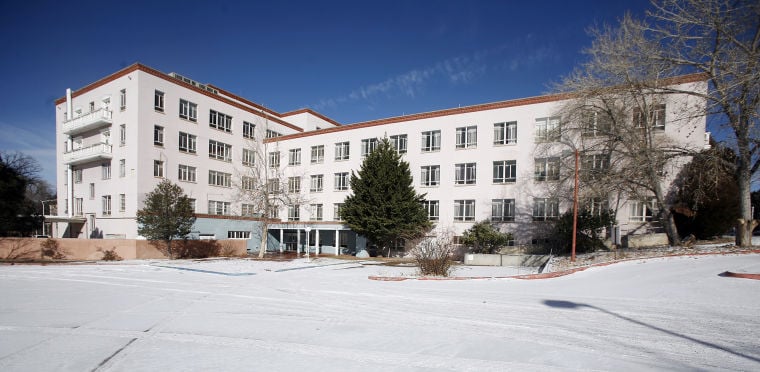
Old St. Vincent’s Hospital (Drury Inn)
The corner of Palace Avenue and Paseo de Peralta in downtown Santa Fe is one of the most historically saturated pieces of ground in the American Southwest. Before European contact, it sat within the territory of ancestral Pueblo peoples. After Spanish colonization established Santa Fe as a capital in 1610, it cycled through two centuries of colonial administration, conflict, and change. By the time Archbishop Jean Baptiste Lamy arrived in the mid-1800s to transform the church's presence in New Mexico, this corner was already ancient by American standards. The building that now operates as the Drury Plaza Hotel carries that entire weight — plus decades of hospital death, a nursing home, state offices, film sets, and years of abandonment — inside a structure that still looks, to many guests, like it remembers everything. The hospital's origin traces directly to Lamy. After his arrival, he invited the Sisters of Charity to New Mexico to help care for the sick. In 1865, Lamy sold them a building originally constructed as a rectory adjacent to what would become St. Francis Cathedral, and the Sisters opened Santa Fe's first hospital inside it. That original structure and the 1911 Craftsman-style Marian Hall built next door served the community for nearly a century before the Sisters outgrew them entirely. In 1953, renowned architect John Gaw Meem — known for the Zimmerman Library at the University of New Mexico and the Cristo Rey Church in Santa Fe — was commissioned to design a proper city hospital on the site. The resulting building was notably austere for Meem: yellow brick, sharp corners, large windows, only a faint nod to Territorial style. It opened as the new St. Vincent Hospital and served Santa Fe for roughly two decades before the hospital relocated to St. Michael's Drive in 1977. The state of New Mexico then took over the buildings for use as offices for the Department of Cultural Affairs and, eventually, a nursing home. That nursing home, which locals called La Residencia, occupied the old hospital until the early 1980s. The building then sat largely empty for years — used occasionally as a film location, including Jeff Bridges' 2009 film Crazy Heart — before Drury Hotels purchased it in 2007 and began a years-long adaptive reuse project. Archaeologists working the site in 2008 uncovered what appeared to be an underground vault of unknown origin before the economic collapse shut the project down. The Drury Plaza Hotel finally opened in 2014. The paranormal reputation of the building predates the hotel by decades and is concentrated in two areas: the basement and the third floor. During the La Residencia years, the basement became so unsettling to staff that sending new employees down there alone at night became a formal initiation ritual — a rite of passage that the longtime employees themselves refused to repeat solo under any circumstances. Multiple accounts describe the basement walls appearing to ooze blood, particularly near a storage room that had once been used to incinerate amputated limbs and surgical remains. A nurse coordinator investigating a disturbance in that room reported finding what looked like fresh blood on a wall surface. A former candy striper who worked at the original St. Vincent Hospital in the 1970s recalled that the area near the basement incinerator produced intense cold, a sense of presence, and disembodied voices — and that hospital staff uniformly avoided it after dark. During the Drury renovation, a security guard working nights described refusing to enter an adjacent structure called Marian Hall, reporting consistent unease throughout the basement level. The state museum's use of the building added another layer: Native American artifacts, and reportedly skeletal remains in cardboard boxes, were stored in the basement hallways during the state offices era. That detail appears in documented interviews with former employees and has fed persistent theories about the nature of the activity. Room 311 — or the fourth floor, depending on the account — carries its own specific legend. A young boy brought into the hospital on Christmas Eve after a severe car crash is said to have died crying for his deceased father throughout the night. Long after the hospital years, nurses at La Residencia reported hearing a baby crying in that room with no source, eventually keeping it vacant unless the census demanded otherwise. The sound has been reported by visitors as recently as the hotel era. A nurse who worked the top floor during the hospital years described a short Hispanic man in old-fashioned clothing appearing alongside a woman in a black mantilla — both seeming confused and in need of something they couldn't name. A worker who accidentally rode the elevator to the basement described the doors refusing to close until he stepped out, then ascending without him while a shadowy presence moved nearby. The Drury Plaza Hotel operates today as a functioning boutique hotel in one of Santa Fe's most storied locations. The basement is there. Room 311 is numbered. The history goes back further than the building — and, by most accounts, it hasn't stopped moving.

Palace of the Governors
The Spanish Governor's Palace in San Antonio, Texas stands as one of the oldest surviving structures within Texas territorial boundaries, representing colonial Spanish governmental and residential architecture that characterized the region during the Spanish colonial period. Constructed during the eighteenth century and continuously maintained across more than two hundred and fifty years of historical change, the palace embodies Spanish colonial administration, indigenous populations, and frontier society that characterized early Texas history. The building's architectural style reflects Spanish colonial design principles adapted to Texas frontier conditions, incorporating fortress-like elements with residential spaces designed to accommodate governmental functions and provide secure quarters for officials representing Spanish authority in distant frontier territories. The palace's location within San Antonio's core district established it as a central focus of colonial governmental authority. The building's transition through multiple political regimes, including Spanish colonial rule, Mexican independence, and American annexation, created a structure that symbolizes the complex historical processes transforming Texas from Spanish frontier into American state. The paranormal phenomena documented within the Spanish Governor's Palace reflect the complex human history embodied within the structure, including experiences of Spanish colonial administrators and enslaved and indigenous peoples whose labor sustained the colonial system. Ghostly children manifest with particular frequency throughout the palace's interior spaces, spectral presences suggesting the spirits of young individuals who experienced death or significant emotional trauma during colonial or later historical periods. Native American spirits inhabit multiple areas of the palace, paranormal manifestations reflecting the indigenous populations whose labor and subjugation formed the foundation of Spanish colonial society in Texas, their spectral presence suggesting unresolved trauma. Spanish colonial apparitions materialize in various chambers and hallways, translucent figures dressed in period appropriate clothing. A small girl ghost has been specifically documented and named in regional paranormal traditions, a particular child spirit whose manifestations occur with sufficient frequency to establish her as an individually recognized paranormal entity. The paranormal manifestations documented within the palace encompass visual apparitions, auditory phenomena, emotional sensations, and electronic evidence that collectively establish a comprehensive paranormal tradition. Screams echo from within the building's interior spaces with frightening intensity, sounds of human distress and terror captured by visitors and paranormal investigators, suggesting ongoing emotional trauma expressed through spectral vocalization. Ghostly children appear visually as translucent or fully formed apparitions moving through hallways and rooms. Apparitions of Native Americans manifest as dignified but sorrowful figures appearing in various palace spaces, their spectral presence conveying profound historical injustice experienced by indigenous peoples. Translucent figures of Spanish colonials move through colonial-period rooms and administrative chambers, ghostly inhabitants who appear to continue occupying the spaces where their mortal lives centered. Cold spots materialize randomly throughout the palace's various chambers and hallways. Sensations of not being alone pervade visitor experiences within the palace. Electronic Voice Phenomena recordings have documented disembodied voices and recordings of child giggles emanating from seemingly empty spaces. The Spanish Governor's Palace has achieved prominence within the broader landscape of American haunted historical sites, functioning simultaneously as a museum dedicated to Texas colonial history and as a recognized location of significant paranormal activity. The palace's paranormal reputation has enhanced its appeal to visitors interested in experiencing authentic historical spaces infused with ghostly presence. Multiple paranormal investigation teams have conducted research within the palace, documenting findings that corroborate visitor reports. The combination of the palace's extraordinary historical significance as a surviving Spanish colonial structure, its architectural and cultural importance within Texas historical tradition, and its thoroughly documented paranormal phenomena creates a compelling location where American history, cultural complexity, and the supernatural intersect in profound and meaningful ways.
La Fonda Hotel
La Fonda Hotel, situated in the heart of Santa Fe's historic plaza, represents one of the Southwest's most iconic and longest continuously operating hotels, a establishment whose elegant colonial architecture and deep roots in the region's complex history have made it a focal point of cultural significance and paranormal legend for nearly two centuries. The original structure on this site was constructed during the Mexican period, before the American occupation following the Treaty of Guadalupe Hidalgo in 1848, and the building has undergone numerous reconstructions and expansions reflecting the region's shifting political and economic fortunes. The current structure, rebuilt and modernized in the early twentieth century while maintaining the essential character of Spanish colonial design, reflects the grandeur of the territorial period when Santa Fe served as a crossroads of commerce, politics, and cultural exchange in the American Southwest. The hotel has continuously operated as a center of hospitality and gathering for nearly two centuries, hosting politicians, military officers, merchant traders, adventurers, and ordinary travelers who sought rest and sustenance on the arduous Santa Fe Trail. The very walls of La Fonda seem to absorb the narratives of all who have passed through them, creating an almost tangible historical density that resonates with anyone sensitive to such currents. The building's physical structure reflects the architectural vernacular of the Spanish colonial period, with thick adobe walls, wooden vigas supporting the ceilings, and interior courtyards that provided ventilation and light in the pre-air-conditioning era. The hotel's original well, located in the inner courtyard, served as the lifeline for residents and guests throughout much of its operational history, drawing water from underground sources that sustained the community. The restaurant and dining areas retain period features, while the various room configurations and levels of the building create an almost labyrinthine quality, with narrow corridors, unexpected staircases, and intimate alcoves that suggest centuries of continuous occupation and modification. The bar area maintains its traditional character, and the lobby continues to serve as the social heart of the establishment, a gathering place where countless conversations, transactions, and chance encounters have unfolded. The elevator, a relatively modern addition to the historic structure, shares space with more ancient architectural elements, creating a temporal collage within the building's framework. La Fonda's paranormal reputation is inextricably linked to several specific tragic incidents that have become embedded in the hotel's cultural memory and in the narratives of paranormal investigation. The most prominent legend involves Judge John P. Slough, a controversial territorial figure of the Reconstruction era whose violent death had profound implications for Santa Fe's political landscape. Another persistent narrative concerns a distraught salesman whose personal despair culminated in tragedy within the hotel, a figure whose final moments appear to have imprinted themselves upon the spaces where they occurred. Perhaps most compelling is the legend of a young bride murdered on her wedding night, a romantic tragedy of passion and violence whose details have been contested and reinterpreted over generations, yet which continues to resonate in the collective memory of the hotel. These narratives of sudden death, personal turmoil, and unresolved conflicts have created a foundation for the paranormal traditions associated with La Fonda, suggesting that certain traumas can leave traces that persist beyond the conventional boundaries of temporal existence. The paranormal phenomena reported at La Fonda Hotel encompass a range of experiences consistent with other haunted locations of similar age and historical significance, but with distinct characteristics reflecting the specific narratives and contexts of the hotel. Full-body apparitions have been reported by staff members and guests in various locations throughout the building, most notably in the Wedding Suite known as Room 510, where the bride murdered on her wedding night is believed to reside. These apparitions typically appear dressed in clothing suggestive of past eras, moving through the spaces with apparent purpose and solidity before vanishing. Apparition sightings of male figures in business attire have been reported in various rooms and corridors, possibly representing the distraught salesman or other historical figures associated with tragic events. The elevator area has been the focus of numerous reports of unusual activity, with witnesses describing the elevator moving to different floors without being called, doors opening and closing inexplicably, and a general sense of presence or awareness accompanying elevator journeys. The hotel lobby and restaurant areas have been locations of residual haunting phenomena, where witnesses report witnessing reenactments of historical activities or observing shadowy figures engaged in indistinct activities characteristic of residual haunting patterns. Guests and staff have reported persistent feelings of being watched in specific areas of the hotel, a sensation that is particularly acute in certain rooms and corridors. Disembodied voices have been heard in the inner courtyard near the location of the original well, and some investigators have interpreted these sounds as connected to the profound historical significance of water and survival in the region's colonial period. Cold spots appear spontaneously in various locations throughout the hotel, with the most pronounced temperature anomalies consistently appearing in the Wedding Suite and certain areas of the restaurant. The basement level and the lower floors of the hotel appear to concentrate a higher frequency of reported paranormal phenomena, suggesting that the oldest portions of the structure may carry the heaviest imprint of historical events. The Room 510 Wedding Suite has achieved legendary status in paranormal circles, becoming the most actively investigated and reported location within La Fonda Hotel. The murder of the young bride—accounts vary regarding the precise historical circumstances, with some sources suggesting the tragedy occurred during the Mexican period while others place it during the American territorial era—has created a narrative of thwarted happiness and violent interruption that resonates powerfully with contemporary paranormal investigators. Guests who have stayed in Room 510 have reported unusual dreams, the sensation of a female presence, inexplicable emotional reactions, and in some cases, apparitional encounters. The room's windows overlook the plaza, and the intimate scale and period furnishings create an atmosphere that many report as simultaneously beautiful and unsettling. Staff members tasked with cleaning and maintaining Room 510 frequently report heightened emotional sensitivity and awareness while working in this particular space. The historical record and folklore surrounding La Fonda converge with modern paranormal investigation to create a complex narrative of a building that has served continuously as a witness to human drama, personal tragedy, and the collision of cultures that characterizes Santa Fe's history. The hotel's location at the terminus of the Santa Fe Trail positioned it as a place where travelers encountered the culmination of their journeys, where fortunes were made and lost, where romantic adventures found their resolution, and where personal crises reached their denouement. This concentration of human intensity—the hopes and fears, conflicts and resolutions—may contribute to the persistent reports of paranormal activity. Contemporary paranormal investigation teams regularly conduct overnight investigations at La Fonda, focusing particular attention on the Wedding Suite, the elevator, the restaurant, and the inner courtyard. These investigations have produced recordings of unexplained voices, thermal anomalies, and electromagnetic fluctuations that researchers interpret as evidence supporting the traditional paranormal narratives associated with the hotel. La Fonda Hotel continues to operate as a fully functional boutique hotel and restaurant, maintaining its historical character while accommodating the expectations of modern guests. The hotel's proprietors and staff acknowledge the paranormal traditions associated with the establishment, and some guests specifically seek rooms and experiences that might provide opportunities for paranormal encounters. The convergence of commercial hospitality operations with paranormal investigation has created an interesting dynamic where historical significance, cultural heritage, and supernatural narrative coexist and reinforce one another. The hotel stands as a testament to the layered history of Santa Fe and the American Southwest, a place where centuries of human experience have been compressed into a single structure that continues to function as a gathering place and a subject of paranormal fascination.
Grant Corner Inn – Andrew Smith Gallery
Grant Corner Inn, constructed in 1905 as a three-story residential dwelling, stands in the heart of Santa Fe, New Mexico, with architecture reflecting distinctive Pueblo Revival and Territorial styles defining Santa Fe's architectural character and cultural identity. Built during an era of relative prosperity when railroad arrival began reshaping the city's economy and cultural orientation, the structure was designed with careful attention to architectural details and decorative elements reflecting contemporary Santa Fe aesthetics and owners' economic aspirations. Its location in the historic district placed it within immediate context of the city's most important cultural institutions, galleries, and historical sites. The conversion from private residence to hospitality and cultural venue occurred throughout the twentieth century, ultimately becoming established as a bed and breakfast facility and incorporating the Andrew Smith Gallery, an art space dedicated to photography and visual arts serving the growing tourist economy and attracting collectors and enthusiasts from around the world. Paranormal activity documented within Grant Corner Inn centers on the tragic death of a young boy confined to a wheelchair who rolled down the stairwell and suffered fatal injuries creating a spiritual imprint persisting indefinitely within the building's structure. The boy, identified as an invalid and wheelchair user, experienced a catastrophic fall whose traumatic nature and innocent victim status created unusual psychic energy binding the spirit permanently to the death location. The boy's mother appears to remain spiritually connected as well, suggesting that maternal bonds and emotional attachments can extend across the life-death boundary, keeping the spirit anchored to a location of significant personal tragedy and loss. Paranormal manifestations concentrate in specific building areas, with particular focus on rooms and hallway areas associated with the boy's residence and the stairwell where the fatal accident occurred. Paranormal phenomena manifest through multiple distinct channels creating a comprehensive haunting environment recognizable to paranormal investigators and casual visitors. Objects fall inexplicably from shelves and surfaces in rooms identified as rooms four and eight, locations where the boy spent considerable time during his residence, suggesting the spirit may attempt physical environment interaction through poltergeist phenomena. Footsteps traverse corridors and rooms without apparent origin, concentrating in the second floor hallway and areas surrounding the boy's former living spaces. Doors slam shut suddenly without detectable cause, a poltergeist phenomenon possibly representing attempts to attract attention or communicate with living occupants. A grayish figure appears in the second floor hallway, an indistinct and somewhat translucent apparition whose appearance correlates with increased paranormal activity in the area. Behavioral anomalies in domestic animals, particularly cats, suggest sensitivity to paranormal phenomena and invisible presences that living humans may not consciously perceive but animals detect through unknown mechanisms. Today, Grant Corner Inn operates as a boutique bed and breakfast and cultural venue housing the Andrew Smith Gallery, maintaining roles as both hospitality facility and contemporary art space while acknowledging the paranormal reputation inseparable from the property's historical and cultural identity. Staff and guests are familiar with paranormal phenomena, with the haunting incorporated into the building's narrative identity in ways that enhance rather than diminish visitor interest and engagement. The boy's spirit, bound to the location through tragic accident and untimely death trauma, continues manifesting through multiple paranormal phenomena, serving as a permanent memorial to a child whose life was interrupted and whose spirit appears unable or unwilling to depart from the location where the defining tragedy of his existence occurred.
La Posada de Santa Fe
La Posada de Santa Fe in Santa Fe, New Mexico represents one of the American Southwest's most luxurious and historically significant hotel properties, with origins rooted in the residence known as the Staab House, built in 1882. The house was constructed by Abraham Staab, a wealthy German Jewish merchant who had established himself as a prominent figure in Santa Fe's mercantile community during the territorial period. The mansion was designed to reflect the prosperity of its owner, incorporating Victorian architectural elements adapted to the New Mexico landscape and climate. The structure was constructed of substantial local materials and featured the elaborate interior appointments characteristic of wealthy residential property during the late nineteenth century. The residence served as both a private home and a gathering place for Santa Fe's merchant and professional elite, with the house hosting social events and entertaining prominent visitors. The architectural quality and historical significance of the Staab House reflected both personal achievement and broader patterns of settlement, commerce, and cultural development in the American Southwest during the territorial and early statehood periods. The haunting of La Posada de Santa Fe centers specifically on Julia Staab, Abraham Staab's wife and a member of the Staab household during the late nineteenth century. Julia appears to have maintained a powerful emotional and spiritual attachment to the house that has persisted across more than a century since her death. The paranormal phenomena associated with Julia Staab became publicly documented in 1979 when she appeared to staff members in full-bodied apparition form, wearing a black Victorian dress consistent with the period in which she lived. The appearance of Julia Staab to contemporary witnesses during the twentieth century represents extraordinary documentation of paranormal phenomena, as the apparition was described with sufficient specificity that staff members recognized her as a historical figure associated with the house. The visibility and recognition of Julia's apparition led to broader investigation and documentation of her haunting, eventually resulting in features on paranormal television programs including "Unsolved Mysteries" and "Weird Travels." The paranormal phenomena associated with Julia Staab at La Posada de Santa Fe manifest across multiple areas of the property and through various mechanisms. Her apparition has been observed primarily in Room 256, identified as the space where Julia lived during her lifetime in the original Staab House. The apparition appears as a translucent figure wearing period-appropriate Victorian clothing, with witnesses describing the figure with consistent details across multiple sightings. Beyond apparitional phenomena, Julia's presence manifests through environmental effects on the property. Gas fireplaces throughout the hotel turn on and off without visible human agency, with activation occurring particularly frequently in areas associated with Julia's living spaces. Chandeliers sway and move despite the absence of air currents or physical contact. Unexplained scents, particularly the fragrance of roses, appear spontaneously in rooms and hallways, creating olfactory evidence of paranormal presence. Lights flicker in specific areas, and moving objects have been documented as shifting position in ways not attributable to natural causes. The cumulative effect of these phenomena creates an environment in which Julia's presence is actively and repeatedly demonstrated. The reasons for Julia Staab's powerful attachment to the location appear rooted in her significant emotional and personal investment in the house as her primary residence and center of domestic life. The decades she spent within the walls of the mansion, managing household affairs, raising family, and establishing herself as a prominent figure in Santa Fe society created deep connections to specific rooms and spaces within the property. The particularity of her phenomena—manifestation in Room 256 where she lived, appearance in her characteristic Victorian dress, the scent of roses possibly associated with her personal preferences—suggests a consciousness maintaining connection to specific aspects of her former life. The house may have represented the primary locus of Julia's identity and happiness, creating the conditions for her spiritual attachment to persist indefinitely. Alternatively, she may have experienced unfinished business or regrets during her lifetime that continue to anchor her consciousness to the location. La Posada de Santa Fe has embraced its status as a haunted hotel, incorporating Julia Staab's presence into its contemporary marketing and operations. The hotel offers special ghost packages for guests interested in experiencing Julia's haunting and learning about the history of the Staab House mansion. Room 256 remains the most actively haunted space and the primary focus of guests seeking paranormal experiences. The historical significance of the Staab House and the documented presence of Julia's apparition have made La Posada one of the most famous haunted hotels in the American Southwest. Guests encounter Julia's phenomena as part of their stay, with reports of apparitions in mirrors, manifestations of rose scents, and electrical phenomena affecting fireplaces and lighting. The combination of Victorian luxury accommodations, the historical significance of the building, and the actively documented paranormal presence of Julia Staab create a unique hospitality experience. La Posada de Santa Fe stands as a location where paranormal phenomena are not merely tolerated but actively integrated into the property's identity and appeal, creating a destination for both luxury travelers and those seeking encounters with the supernatural.
Coronado Building
The Coronado Building in Santa Fe, New Mexico occupies a prominent position within the historic district, its presence intertwined with the city's Spanish colonial heritage and the broader narrative of territorial governance and justice administration in the American Southwest. The structure functioned historically as a courthouse, a role that placed it at the center of legal proceedings, adjudication of disputes, and administration of judicial authority during the territorial period. The building's architectural character reflects Santa Fe's distinctive cultural heritage, with design elements informed by Spanish colonial traditions adapted to the regional environment and available materials. The transformation of the former courthouse into an office building represents a common evolution for institutional structures whose original purpose becomes superseded by changing governmental and administrative needs. The building's location within the historic district ensures its preservation as a significant cultural landmark and architectural reference point within the community. During the courthouse's operational period, the building served as the venue for the adjudication of cases involving significant criminal activity and grave offenses against persons and property. The jail cells contained within the building housed individuals accused and convicted of serious crimes, creating spaces of confinement, despair, and human suffering. The grisly nature of some of the cases heard within the building's courtrooms and the fates of certain defendants who were convicted within its walls created a legacy of violent history embedded within the physical structure. The judicial proceedings conducted within the building addressed matters of life and death, punishment and retribution, guilt and innocence determination. These profound human dramas, many involving the most severe circumstances that the legal system addresses, created emotional imprints that appear to have persisted into the present era despite the building's change of purpose and function. The paranormal manifestations within the Coronado Building center on auditory and visual phenomena that reflect the building's tragic judicial history. Ghostly screams and disembodied moans emanate from within the structure, particularly concentrated in areas that served judicial and detention functions. Apparitions have been documented by visitors and staff, with full body manifestations reported in various locations throughout the building. These spectral presences appear to manifest distress and anguish, emotional states consistent with individuals experiencing incarceration, trial, or punishment within the institutional context. The paranormal activity suggests that certain individuals whose cases were adjudicated within the building retained sufficient emotional connection and unresolved trauma to maintain spectral presence after physical death. The phenomena have been documented with sufficient consistency and by multiple independent witnesses to establish credible paranormal reputation for the location. Today the Coronado Building operates as a commercial office space, its transformation from courthouse to modern office environment representing a practical adaptation while preserving its historical significance. The documented paranormal reputation remains integrated into the building's broader historical narrative, with awareness of the haunting documented in paranormal investigation communities and local historical societies. The building's location within Santa Fe's historic district and its continued operational status as a commercial facility ensure its accessibility to paranormal investigators, staff, and visitors interested in experiencing the documented supernatural phenomena. The screams and apparitions that continue to manifest within the building serve as echoes of a tragic historical period when the justice system's application within these walls created profound human suffering. The Coronado Building remains one of Santa Fe's most actively haunted public buildings, where the boundaries between historical documentation and paranormal reality remain ambiguous and contested.
La Casa Mas Antigua
Casa embrujada, which translates directly as "haunted house" in Spanish, represents a distinctive category of paranormal phenomenon within Latin American folklore and contemporary supernatural documentation, encompassing various residences and properties throughout the Spanish-speaking world that have accumulated reputations for intense and persistent paranormal activity. The designation "Casa embrujada" carries cultural significance beyond mere paranormal designation, reflecting deep-rooted traditions within Spanish and Latin American folklore that recognize certain physical spaces as repositories of supernatural energy and spiritual activity. These haunted houses appear throughout the historical record of Latin American culture, from colonial-era accounts documented by European chroniclers to contemporary paranormal reports gathered through modern investigative techniques, suggesting a continuous thread of supernatural experience and cultural understanding stretching across centuries of settlement and cultural development. The architectural diversity of properties bearing this designation prevents any single characterization, as haunted houses emerge across the entire spectrum of Latin American building types, from modest rural residences to substantial urban mansions, each carrying unique historical burdens and paranormal manifestations. The origins of Casa embrujada phenomena often trace to specific historical events or personal tragedies that imprinted themselves indelibly upon the physical structures where they occurred, creating residual paranormal energy that continues reverberating through subsequent generations of inhabitants. Documented instances frequently involve sudden deaths, violent acts, or profound emotional trauma concentrated within a specific location, though other cases reveal paranormal activity without any apparent historical trauma that might explain the phenomena. The concept of Casa embrujada sits comfortably within broader Latin American spiritual traditions that acknowledge the permeability of boundaries between the material and spiritual realms, traditions that predate European colonization and survived the imposition of Catholicism to create syncretic belief systems incorporating both indigenous spiritual practices and European supernatural traditions. Properties designated as Casa embrujada frequently become sites of pilgrimage for paranormal enthusiasts, spiritual seekers, and genuine believers in supernatural phenomena who visit specifically to witness or experience the documented paranormal manifestations. Within the interior spaces of recognized Casa embrujada properties, residents and visitors report experiencing phenomena spanning the entire spectrum of paranormal activity, including apparitions of human figures who communicate through gesture and occasionally through audible speech, mysterious sounds emanating from empty rooms and sealed corridors, unexplained temperature variations and cold spots, objects moving of their own apparent volition, and the distinctive sensations of unseen presences pressing against the boundaries of human perception. Poltergeist-type phenomena appear frequently in documented Casa embrujada cases, with objects levitating, moving through space in violation of physical laws, or striking inhabitants with apparent intentionality, suggesting entities capable of directly manipulating the material world. Some properties have been subjected to formal exorcism rites conducted by Catholic priests or other spiritual practitioners, though the persistence of paranormal activity following such interventions suggests that the underlying causes of hauntings may transcend simple demonic possession or require more sustained spiritual engagement than single ritual interventions can provide. The Casa embrujada designation has become embedded within contemporary Latin American popular culture, appearing in folklore narratives, entertainment media, tourism marketing materials, and urban legends that circulate through communities and increasingly through digital social networks. Paranormal investigation teams operating throughout Latin America frequently direct their attention toward properties bearing the Casa embrujada reputation, and numerous documented investigations have generated video evidence, photographic records, and testimony from witnesses claiming direct encounter with paranormal phenomena. The persistence of Casa embrujada phenomena across centuries and throughout geographically disparate regions suggests underlying principles governing the relationship between location, history, and the manifestation of supernatural activity that current scientific methodology remains inadequate to explain or falsify. For many within Latin American cultures, Casa embrujada represents not supernatural anomaly but rather a natural expression of the sacred dimension of reality, a recognition that certain spaces carry spiritual charge and that the boundaries between living and dead remain permeable in ways that contemporary Western scientific worldviews have failed to adequately acknowledge or incorporate.