
Haunted Places in New Hampshire
51 haunted locations
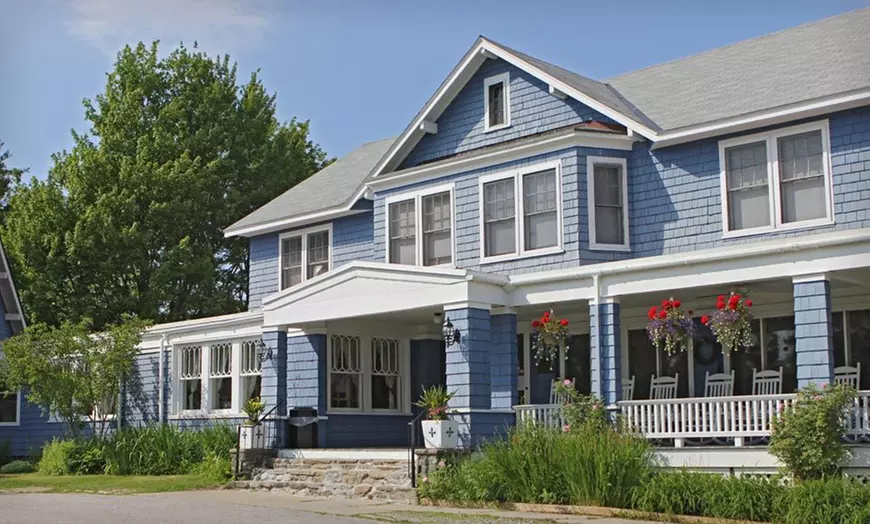
The Spalding Inn
Set on nearly eight acres of rolling land along Mountain View Road in Whitefield, New Hampshire, the Spalding Inn looks out across orchards and perennial gardens toward the smoky ridgeline of the Presidential Range. It is the kind of White Mountains property that seems to have always been there—a sprawling, white-columned Victorian structure flanked by a carriage house and framed by the kind of landscape that drew Bostonians and New Yorkers north by rail during the Gilded Age, when the region's grand resort hotels were at the peak of their influence. The building dates to the 1860s, when it was known as the Cherry Hill House—a modest structure with an attic that was later expanded by lifting the roof and adding a full second floor. It began its life as a private residence, and like many properties in northern New Hampshire's hotel corridor, it eventually transitioned into lodging as the White Mountains tourism trade grew. By 1926, the property had been formally established as the Spalding Inn, operating as a seasonal resort that welcomed guests for the spring and summer months, with some visitors staying the entire season. For a time it functioned as a private members-only establishment, a country club of sorts, offering tennis, a heated pool, golf, and formal dining against a backdrop of mountain scenery. Brochures from the mid-twentieth century advertise it as a gracious retreat—the kind of place where guests dressed for dinner and rocked on the veranda in the long northern twilight. Over the decades the property changed hands several times, and like many of the grand old lodging houses of the White Mountains, it experienced cycles of prosperity and decline. By the early 2000s the building was aging and in need of significant attention, its long history beginning to show in the bones of the structure. Reports of unusual activity inside the inn, however, had been circulating for far longer than anyone could precisely date. Guests and staff described shadow figures drifting through hallways, doors opening and closing without explanation, and a pervasive sense of unease in certain parts of the building—particularly the carriage house and the basement bar area. The stories were persistent enough that the inn had acquired a reputation for being haunted well before it attracted national attention. Local tradition holds that a former owner took his own life in the carriage house, and that a woman and a child also died on the property under circumstances that have blurred with time into the kind of half-documented, half-whispered accounts that cling to old New England buildings like woodsmoke. In 2008, the property was purchased by Jason Hawes and Grant Wilson, the co-founders of The Atlantic Paranormal Society and stars of Syfy's Ghost Hunters. The purchase was not incidental to the inn's reputation—both men were drawn to it precisely because of the paranormal claims that predated their ownership. They invested heavily in restoring the building, reopening it as a working inn with 36 rooms across the main house and carriage house, a main dining room, and a basement pub called 2 Kings. The inn debuted on Ghost Hunters in April 2009, in a Season 5 episode titled "Crossing Over," in which Hawes and Wilson brought in the Ghost Hunters International team to conduct an independent investigation. The results were striking. Digital recorders in the carriage house captured what investigators described as the sound of a door opening and closing on its own and a male voice saying a single word. In the bar area, a female voice with what was described as an English accent was captured—a detail investigators noted as significant given the inn's long history of hosting British guests. In the kitchen, where a dark shadow had been observed moving through the room, a recorder picked up a voice speaking the word "cherry," an apparent reference to the building's original name. The team's conclusion was unequivocal: they deemed the inn haunted. Subsequent investigations by other paranormal groups and by visitors attending the TAPS ghost-hunting events held at the property produced additional accounts. The carriage house consistently generated the most activity. Rooms 15, 16, and 17 on the upper floor were identified as hotspots, with Room 16 reportedly carrying a heavy male energy and Room 17 producing sightings of a shadowy female figure wearing what appeared to be a pearl necklace. One investigator who observed the figure from outside later learned that a former owner of the inn had been known for always wearing pearls. Room 33 in the main house drew reports from guests who described being awakened by unexplained disturbances in the night. In the main building, a hunched figure was reportedly observed moving slowly across the first floor, and investigators noted that nearly every room in the inn seemed to carry its own distinct energy. A massive dark mass was repeatedly witnessed in the bar and kitchen areas by both staff and guests. One visitor reported being tapped on the shoulder three times while sitting with his back to an empty room. Hawes's wife described an occasion when she and her son looked out a window of the main house and saw a woman standing in an upstairs carriage house window, staring back at them before vanishing. The inn also appeared in Ghost Hunters Season 8, in an episode titled "Sign the Ghostbook," which served as Grant Wilson's final investigation before departing the show. Hawes and Wilson listed the property for sale in 2013 at $795,000, noting that while they loved the building, they no longer had the time to operate it. The inn changed hands again and continued to operate on a limited basis in subsequent years, though its status has remained uncertain. As of recent reports, the Spalding Inn is not currently open to guests, and its future remains unclear. The building still stands on its hillside, the carriage house still flanks the main structure, and the view of the Presidential Range from the front porch has not changed. Whether the property will be restored again or allowed to continue its slow drift toward silence is an open question. What is less open to debate is the volume and consistency of the accounts that have accumulated within its walls—reports spanning casual visitors, seasoned investigators, and the families of the men who made their careers studying exactly this kind of thing, and who chose this particular building to call their own.

Lorden Plaza
The Plaza Theatre emerged as an architectural and cultural landmark in Kansas City, Missouri, during the early twentieth century when motion picture technology transformed entertainment and leisure practices. The theatrical establishment represented an investment in public amusement infrastructure, providing a space where diverse audiences could gather to experience cinema and vaudeville performances. The building's architecture reflected the grandiose aesthetic sensibilities characteristic of early cinema palaces, designed to create an atmosphere of luxury and escape from daily existence. The theatre occupied a prominent location within Kansas City's commercial and entertainment district, positioned to attract substantial foot traffic and serve as a community gathering place. The establishment's operations extended across much of the twentieth century, though like many independent theatres, it eventually encountered economic pressures and changing entertainment preferences. The physical structure persisted as a reminder of an earlier era's cultural values and architectural ambitions, retaining distinctive character. The geographical location of the Plaza Theatre positioned it within a region carrying deep historical significance extending back to pre-Columbian indigenous habitation. The area that would become Kansas City served as home to Native American peoples including the Kansas and Osage nations, who developed sophisticated cultural systems and territorial relationships with the natural environment. The arrival of European traders, settlers, and military forces during the nineteenth century fundamentally disrupted indigenous societies, resulting in displacement, disease, warfare, and cultural transformation. The theatre building, constructed during the twentieth century, occupied territory that had been the site of centuries of indigenous occupation and cultural activity. This historical context of native peoples' displacement and territorial erasure created a foundation of unresolved historical trauma and spiritual disruption that paranormal researchers suggest contributed to the location's emergence as a haunted site. Paranormal investigations at the Plaza Theatre have documented the presence of multiple spiritual entities and manifestations suggesting complex layers of supernatural activity. Most prominently, paranormal researchers have identified Native American spirits seemingly attached to the location, their continued presence interpreted as a manifestation of historical trauma and spiritual connection to the geographic area. These entities appear to represent indigenous peoples whose lives were disrupted by colonial expansion and whose deaths occurred within or near the location. The manifestations are described as disembodied spirits and apparitions capable of interaction and communication with living individuals. Additional paranormal entities appear to represent individuals who died during the theatre's operational period, their spirits seemingly attracted to or trapped within the space. Visitors have reported diverse paranormal experiences including temperature drops, sensations of emotional distress, apparitions in doorways and empty seats, disembodied voices, and manifestations suggesting multiple non-corporeal entities inhabiting the space simultaneously. The theatre's historical architecture and cultural significance have made it a destination for paranormal researchers seeking to understand how historical trauma, indigenous spiritual presence, and theatrical space intersect to create paranormal manifestation conditions. The location exemplifies how American sites of historical indigenous displacement have become recognized as locations of elevated paranormal activity, suggesting spiritual consciousness carries memory of historical injustice and persists across temporal boundaries. The Plaza Theatre stands as a testament to how architectural preservation can create spaces where multiple historical periods and spiritual realities appear to coexist simultaneously, accessible to those investigating paranormal phenomena.
Benson Road Cemetery
Benson Road Cemetery occupies a rural location in Richmond, New Hampshire, representing a specific category of burial ground that has accumulated significant paranormal attention despite lacking the architectural grandeur or historical prominence of larger institutional cemeteries. The burial ground itself reflects patterns typical of rural American cemeteries from the nineteenth and twentieth centuries, serving the practical function of providing interment space for community members across generations. The cemetery's setting within forested terrain contributes to its atmospheric qualities, with natural features including open woodland areas, overgrown sections, and environmental conditions that create distinctive sensory experiences for visitors. The road itself represents a major thorough-fare, creating an unusual urban-rural interface where a public cemetery exists in close proximity to significant traffic patterns and contemporary development. This intersection of modern infrastructure with historical burial grounds creates distinctive conditions that may contribute to the reported phenomena and visitor experiences. The documented history of Benson Road Cemetery includes burial of members of the Ballou family, a prominent local lineage whose family plots remain visible throughout the cemetery grounds. The Ballou family narrative, extending across multiple generations and centuries of American history, provides documented historical context distinct from the paranormal accounts that have subsequently developed around the location. Among the reported phenomena most distinctive to Benson Road Cemetery is the manifestation associated with a young boy whose specific identity and historical details remain partially obscured in contemporary accounts. This spirit has allegedly been observed attempting to flag down passing automobiles along the adjacent road, a manifestation reflecting the intersection of historical burial ground and contemporary transportation corridors. Shadow figures have also been reported throughout the cemetery, appearing and disappearing in ways that defy conventional explanation and suggesting paranormal presences not clearly identifiable with specific historical individuals. Paranormal investigation teams have conducted systematic documentation at Benson Road Cemetery, employing electronic voice phenomenon recording equipment and thermal imaging cameras. These investigations have yielded audio recordings interpreted as disembodied voices, referred to as EVP evidence by paranormal research communities. Unusual light anomalies have been documented in photographs taken within the cemetery, with investigators reporting unexplained photographic artifacts and luminous phenomena not readily attributable to natural light sources. The most striking documented phenomenon involves a full-body apparition captured on trail camera equipment, providing visual evidence interpreted by believers as confirmation of paranormal activity at the location. Additional reported phenomena include the unexplained cracking of a specific tombstone when the name of the deceased individual is spoken aloud, suggesting a responsive paranormal presence directly linked to specific graves and identifiable individuals. Benson Road Cemetery remains an active burial ground serving its original practical function while simultaneously functioning as a paranormal investigation destination. Researchers and paranormal enthusiasts visit regularly to conduct investigations, photograph unusual phenomena, and document reported experiences. The cemetery's accessibility and location along a major public road make it a convenient paranormal investigation site for regional researchers and enthusiasts. The combination of documented paranormal evidence, distinctive historical associations, and ongoing reports of unusual phenomena has secured Benson Road Cemetery's position among recognized paranormally active locations in New England. The location exemplifies how rural cemeteries, traditionally understood as spaces of solemn remembrance, can become focal points for contemporary paranormal investigation and supernatural narrative when paired with accumulated accounts of unusual phenomena and compelling documentary evidence.
Stark Cemetery
Stark Cemetery in Conway, New Hampshire occupies a historical burial ground whose purpose as a repository for the deceased may have been complicated by the paranormal phenomena that continue to manifest within its boundaries and along the adjacent roadway with increasing intensity and visibility throughout the year. The cemetery represents centuries of community burial practice, containing the grave markers and remains of individuals whose lives spanned multiple generations and whose deaths occurred under varying circumstances across a wide temporal span, creating a complex archaeological record of mortality spanning centuries. The physical landscape of Stark Cemetery encompasses rolling terrain, mature vegetation, and the architectural archaeology of grave markers representing different periods of stonecraft and memorial tradition, from simple unmarked stones to elaborate Victorian monuments reflecting changing attitudes toward memorialization. The access route to the cemetery via Stark Road extends the paranormal influence beyond the cemetery proper into the roadway itself, creating an extended zone of active supernatural manifestation that affects travelers who traverse the road at various times and seasons. Among the most extraordinary phenomena documented at Stark Cemetery is the appearance of glowing tombstones, wherein grave markers emit unexplained luminescence visible particularly during nighttime hours when ambient light levels are reduced and the contrast becomes visually apparent to multiple observers. The glowing effects display colors and intensities that vary with observation and environmental conditions, sometimes appearing as gentle phosphorescence reminiscent of bioluminescent organisms and at other times manifesting as intense radiance without apparent source or conventional explanation whatsoever. These luminous phenomena have been attributed to various causes including bioluminescent organisms present in the soil, phosphorescent mineral content in the stone itself, and supernatural emanation from the graves themselves suggesting spiritual energy manifesting through light and radiance. The most striking and disturbing paranormal activity at Stark Cemetery involves the appearance of large red eyes that manifest in the darkened areas surrounding the cemetery and along Stark Road itself, appearing and disappearing with unnerving unpredictability that confounds prediction. Witnesses describe these eyes as appearing suddenly in the darkness, glowing with an unnatural crimson hue of unusual intensity, and most disturbingly, appearing to follow observers as they move through the cemetery or along the adjacent roadway with deliberate purpose and predatory intent. The entity or entities responsible for these manifestations remain unidentified through conventional investigation, though the predatory quality of the experience suggests intelligent paranormal consciousness rather than residual phenomena or simple manifestations of deceased individuals. Paranormal activity intensifies dramatically during nighttime hours, creating an environment of palpable dread that has deterred casual cemetery visits and confined most paranormal investigation to dedicated research teams equipped with protective protocols and communication equipment monitored throughout investigations. The nature of the haunting at Stark Cemetery remains unexplained, as records do not document specific traumatic events or mass casualties that would explain the intensity and unusual character of the paranormal manifestations, suggesting potentially ancient spiritual activity predating cemetery establishment by centuries or more.
Beal House Inn
The Beal House Inn operates in Littleton, New Hampshire as a bed-and-breakfast establishment functioning as a working historical hotel while simultaneously operating as one of the most actively paranormally engaged locations in the New England region, where the boundary between hospitality operations and supernatural phenomena has created a unique intersection of guest experience and paranormal activity. The inn's historical architecture reflects its origins in the nineteenth century, with subsequent renovations and modifications designed to provide modern amenities while maintaining period character consistent with its function as a heritage accommodation. The building's physical layout encompasses multiple floors, numerous guest bedrooms, common areas designed for guest interaction, hallways connecting various rooms, and servants' stairs that communicate between floors in patterns typical of period construction reflecting household hierarchies and functional spatial organization. The inn's public reputation extends throughout paranormal circles as a location where paranormal activity coexists peacefully with guest accommodations, with staff and management maintaining an open and matter-of-fact attitude toward the supernatural phenomena that occur regularly throughout the building. The historical development of the Beal House Inn across its operational lifespan encompasses the typical evolution of such properties, beginning as a private residential dwelling in the nineteenth century and subsequently transitioning through various ownership and functional arrangements before being established as an inn serving travelers and guests seeking New England historical experiences. The building's accumulation of residents, workers, and visitors across generations of operation has created what paranormal researchers describe as a palimpsest of human presence, with multiple entities appearing to have become attached to the location through extended residence, dramatic events, or deep emotional investment in the space. The current operators and staff have documented paranormal phenomena across decades of operations, with consistent reports from guests and employees suggesting multiple distinct intelligences or presences operating independently within the building's various spaces. The inn's management has embraced the paranormal dimensions of the property rather than attempting to minimize or dismiss them, incorporating ghost stories into promotional materials and actively encouraging guests with paranormal interests to experience the location's supernatural character. The paranormal activity documented at the Beal House Inn encompasses phenomena characteristic of a benevolent or protective haunting, with multiple investigators and guests reporting experiences suggesting that resident spirits maintain a genuine affection for the building and concern for the welfare of its human inhabitants. Objects reported to move spontaneously from their placed locations have reportedly been repositioned in ways suggesting intentional arrangement rather than random movement, implying intelligent agency and possible awareness of human purpose and benefit. Doors described as slamming forcefully have been experienced by guests in patterns suggesting possible warning or attention-getting behavior rather than destructive or malicious intent, with many incidents occurring when guests were engaging in activities that might result in injury or discomfort. Staff members have reported experiences of inexplicable pressure sensations on their hips while engaged in painting work, leading to the hypothesis that spirit entities are attempting to physically prevent falls or guide workers away from dangerous positions. Strange male voices have been documented by both guests and staff in conversations among themselves, discussing topics relating to the inn's operations or guest welfare, suggesting the presence of intelligent consciousness concerned with the building's function. Heavy footsteps ascending and descending the stairs have been heard repeatedly by multiple independent witnesses, occurring in patterns that suggest systematic movement through the building rather than random phenomena. The protective and beneficent nature of the paranormal manifestations at the Beal House Inn has led paranormal researchers to classify the location as a positive haunting environment, where spirit presences appear to have remained at the location out of affection rather than tragic attachment or unresolved trauma. The documented case where a staff member who fell from a ladder was reported to have been caught and lowered gently by an unseen force, preventing injury from what should have been a serious fall, exemplifies the protective dimensions of the entities inhabiting the space. The inn continues to operate as both a functional hospitality business and a paranormally active historical site, with guests and staff members continuing to report encounters that suggest ongoing presence and concern from the spirits that have made the Beal House Inn their permanent residence. The location's unique status as an operating inn that embraces rather than denies its paranormal character has made it a significant destination for both ghost hunters seeking evidence and travelers interested in experiencing authentic historical paranormal phenomena. The combination of warm hospitality, historical authenticity, and consistent paranormal activity has established the Beal House Inn as a distinctive location where the supernatural and mundane dimensions of guest experience coexist in harmony.
Fort Constitution
Fort Constitution stands as a military fortification located on Wentworth Road in New Castle, New Hampshire, occupying a strategic position overlooking Portsmouth Harbor and the approaches to Portsmouth from the Atlantic Ocean. Established during the early history of the American colonies, the fort served as a military installation charged with defense of the harbor and protection of Portsmouth's commercial interests and maritime activities. The fortification represents centuries of military occupation and function, with its construction and modifications reflecting evolving technologies and strategies of military defense across the seventeenth, eighteenth, and nineteenth centuries. The physical structure includes barracks, powder magazines, walls, and defensive installations designed to mount artillery pieces and maintain military readiness. Adjacent to the main fortification stands the Portsmouth Harbor Lighthouse, a navigational beacon constructed to guide maritime traffic entering the harbor, serving dual functions of both maritime navigation and military observation. The paranormal history of Fort Constitution dates to a catastrophic explosion occurring during the early nineteenth century, an incident resulting in the deaths of multiple soldiers and military personnel stationed at the fort. The explosion is believed to have involved the detonation of powder stores or ammunition magazines, though specific details regarding the exact cause and precise circumstances remain incompletely documented in available historical records. The explosion resulted in casualties numbering in the dozens according to some accounts, though the exact death toll remains ambiguous. The violence of the explosion, the nature of deaths by violent blast injury, and the traumatic circumstances surrounding the incident appear to have created the conditions for paranormal manifestation. The spirits believed responsible for ongoing paranormal activity are identified as victims of the explosion, multiple soldiers and military personnel who died as a result. The paranormal phenomena documented at Fort Constitution encompass multiple distinct categories of supernatural activity, with investigations establishing the location as possessing a firm reputation for paranormal manifestation. The apparition of dark figures has been documented by paranormal investigators and visitors, described as humanoid shapes of unknown origin appearing and vanishing within the fort grounds and surrounding areas. These dark figures lack the clarity and detail of fully formed apparitions, instead appearing as shadowy or translucent shapes suggesting partial manifestation of spiritual entities. Oily footprints have been reported appearing spontaneously on surfaces throughout the fort, linear patterns of residue suggesting the passage of invisible entities. Disembodied voices have been recorded by paranormal investigators, audio evidence of disembodied communication captured through electronic recording devices, with some voices appearing to respond to investigative questions. Paranormal investigators have documented photographic evidence of apparitions and anomalous visual phenomena not perceptible to the naked eye. Paranormal investigations conducted at Fort Constitution have been conducted by paranormal investigation teams and individual researchers. The fort has become a destination for paranormal tourism, with regular haunted tours offered to the public by paranormal investigation organizations. The lighthouse area appears particularly active paranormally, with investigators reporting concentrated paranormal phenomena within and around the lighthouse structure. The consistent documentation of paranormal phenomena across multiple investigations has established Fort Constitution as one of the most verified haunted military fortifications in New England. Fort Constitution continues functioning as a historical site and paranormal investigation location, with contemporary access available to visitors and paranormal investigators seeking to document or experience the paranormal phenomena at the location. The fort maintains its historical function as a military installation of historical significance while simultaneously serving as a destination for paranormal tourism and paranormal investigation. The spirits of soldiers who died in the explosion appear to have become permanently bound to the location, their continued manifestation suggesting that the violent and unexpected nature of their deaths created an enduring supernatural attachment. The paranormal phenomena at Fort Constitution demonstrate that military installations, like other locations associated with human tragedy and violent death, can become focal points for paranormal activity and manifestation.
The Inn at Jackson
The Inn at Jackson, situated at 12 Thorn Hill Road in Jackson, New Hampshire, functions as a bed and breakfast establishment that serves visitors seeking accommodation in the scenic White Mountains region of northern New England. The property represents the type of intimate, historic inn that has become characteristic of New Hampshire's tourist-oriented hospitality infrastructure, offering guests the combination of regional history, natural beauty, and personalized service associated with small family-owned establishments. The inn's architectural character and location in a region known for both natural grandeur and historical significance have contributed to its appeal as a destination for visitors seeking authentic New England experiences. However, beyond its conventional function as a commercial lodging operation, The Inn at Jackson has also developed a reputation among paranormal researchers and enthusiasts as a location where supernatural activity occurs with sufficient frequency and consistency to warrant documentation and investigation by those interested in the paranormal. The most distinctive aspect of The Inn at Jackson's paranormal activity involves the identification of a specific spirit entity associated with the location, a spirit known and named as Jason. This naming of the spirit, unusual among many haunted locations where spirits remain unnamed or referred to only by generic descriptions, suggests a level of familiarity or interaction between the spirit entity and living inhabitants or investigators who have encountered the presence over multiple instances. The spirit of Jason appears to exercise some form of agency or intentional behavior, suggesting a consciousness capable of cognition and decision-making rather than a mere imprint or recording of past events repeatedly playing out in the present. The choice to name the entity Jason implies that researchers and witnesses have developed sufficient familiarity with the manifestations to conceptualize the spirit as a distinct personality rather than merely as a paranormal phenomenon. The paranormal activity attributed to Jason at The Inn at Jackson has manifested through several distinctive categories of phenomena that witnesses have consistently reported across multiple decades. Most prominently, numerous accounts describe the occurrence of unexplained glowing lights appearing within the building at various locations and times. These manifestations of luminescence cannot readily be attributed to conventional light sources such as electrical fixtures or external illumination, and the behavior of the lights suggests conscious control or intentional display rather than random or meaningless phenomena. The glowing lights have been observed with sufficient frequency and clarity that they have become one of the inn's most significant paranormal signatures. The specific characteristics of these lights, including their color, intensity, duration, and patterns of appearance and disappearance, provide clues regarding the nature and intentions of the spirit entity responsible for their manifestation. The intensity and distribution of paranormal activity at The Inn at Jackson have been observed to vary across different locations within the structure, with Room 2 emerging as a particularly significant locus of supernatural manifestation. Witnesses have consistently reported that paranormal activity occurs with heightened frequency and intensity in Room 2 compared to other areas of the inn, suggesting that either the spirit of Jason maintains a special association with that specific space or that the environmental or architectural characteristics of Room 2 facilitate heightened paranormal manifestations. The identification of specific 'hot spots' or areas of concentrated activity is typical of many haunted locations, and such variation in paranormal intensity often correlates with historical events that occurred in those particular spaces or with the specific attachments and memories of the spirit entities inhabiting the location. The concentration of activity in Room 2 implies that investigations focused specifically on the history and previous uses of that particular room might yield valuable insights into the nature and origins of Jason's haunting. The Inn at Jackson has managed to maintain its operational status as an active bed and breakfast despite the documented paranormal activity, suggesting that the manifestations associated with Jason, while undeniably unusual and supernatural in character, lack the aggressive or hostile quality that has motivated the abandonment or destruction of other haunted locations. Contemporary guests and proprietors of the inn have apparently determined that the paranormal activity, while noteworthy, does not present a sufficient impediment to the operation of a hospitality business or to the safety and comfort of visitors. This coexistence of commercial operation and paranormal activity has resulted in The Inn at Jackson developing a dual identity, functioning simultaneously as a conventional lodging establishment and as a recognized paranormal destination for enthusiasts interested in investigating supernatural phenomena. The inn's location in New Hampshire has contributed to its inclusion in various catalogs and guides of haunted hotels and paranormal locations throughout the northeastern United States, and the consistency of witness reports regarding the unexplained glowing lights and the spirit named Jason has established the location as one of the region's more reliably documented haunted establishments.
Gilson Road Cemetery
Gilson Road Cemetery in Nashua, New Hampshire represents one of the most extensively documented paranormal locations in the American Northeast, distinguished by an unusual concentration of reported supernatural phenomena that far exceeds the paranormal activity levels documented at most other burial grounds. The cemetery functions as both a repository for the deceased and a focal point for intense paranormal investigative activity, with researchers and paranormal enthusiasts regularly visiting the location to document evidence of spiritual manifestation. Historical records indicate that the cemetery developed from the burial ground associated with the Gilson family, early settlers who established themselves in the region during the colonial period. The cemetery's oldest graves reflect the mortality patterns of frontier communities where disease, accidents, and harsh living conditions created high death rates among both children and adults. Over subsequent centuries, the cemetery expanded as the Nashua region developed from a rural frontier settlement into an established town with growing population and commercial activity. The Gilson family maintained a particularly prominent presence in Nashua's colonial history, with multiple family members serving in various civic roles and establishing themselves as prominent community figures. Joseph Gilson, Betty Gilson, and Walter Gilson (a child) represent family members whose graves have become focal points for intensive paranormal investigation and activity. The graves themselves demonstrate unusual characteristics that researchers have documented photographically and scientifically. Above Joseph Gilson's grave, paranormal investigators have recorded unusual luminescent effects described as a distinctive green glow or aura emanating from the burial location. Multiple documented photographic investigations have captured anomalous orbs of light appearing near graves and among the cemetery's headstones and monuments. These visual anomalies, captured using various photographic and thermal imaging techniques, suggest energy manifestations that conventional scientific explanation has not adequately accounted for. Paranormal phenomena documented at Gilson Road Cemetery include an extraordinary diversity of reported experiences that extend beyond the typical apparition or disembodied voice phenomena associated with haunted locations. Strange lights flicker and move throughout the cemetery, particularly during evening hours, appearing as independent sources of luminescence without apparent connection to moonlight, automobile headlights, or other conventional light sources. Disembodied voices manifest as clearly audible speech without identifiable human speakers, expressing communications that range from comprehensible to incomprehensible. Screaming sounds emanate from the cemetery without source identification, creating psychological distress in visitors unprepared for such phenomena. Mysterious fog appears in localized areas despite weather conditions that would not typically produce fog formation. Multiple visitors report witnessing a man dressed in eighteen hundreds-era clothing moving through the cemetery grounds, maintaining an anachronistic appearance inconsistent with contemporary dress. A woman in a white dress apparition appears to multiple witnesses independently, suggesting either a well-known spirit or multiple manifestations of similar entities. Most unusual, visitors describe seeing an apparition of a baby wandering the cemetery, a phenomenon that raises questions about the spiritual manifestation of very young children. Paranormal investigators have documented physical phenomena including cold spots representing localized temperature reductions that cannot be explained by conventional environmental factors. Many visitors report experiencing physical contact with unseen entities, describing sensations of being pushed or touched by invisible presences. According to local tradition, visitors who shout the phrase 'Betty Gilson, I have your baby!' allegedly summon the apparition of a Colonial-era woman, suggesting that Betty Gilson's spiritual manifestation responds to communications referencing lost children or family separation. The intensity and consistency of paranormal phenomena at Gilson Road Cemetery has established it as the most actively haunted cemetery in New Hampshire, attracting paranormal researchers and enthusiasts seeking to document and understand the unusual spiritual activity concentrated at this burial ground.
Ray’s Seafood Restaurant
Ray's Seafood Restaurant in Rye, New Hampshire, has operated continuously as a dining establishment for more than five decades, establishing itself as one of the oldest continually operating seafood restaurants in the Seacoast New Hampshire region. The restaurant is located in Rye, a coastal community in Rockingham County, providing geographic proximity to Atlantic Ocean fishing activities and marine resources that supply fresh seafood for the dining establishment. Rye's location on New Hampshire's Atlantic coastline made it a natural center for commercial fishing operations and related hospitality businesses serving both residents and tourists attracted to the coastal region. Ray's Seafood Restaurant developed a reputation for quality seafood preparation and service, becoming an established destination for diners seeking fresh ocean-sourced proteins and traditional New England seafood preparations. The restaurant's longevity in a competitive hospitality market reflects sustained quality, community support, and successful business management. The paranormal presence at Ray's Seafood Restaurant is associated with a female spirit identified as Goldie, whose identity and relationship to the restaurant location have been documented through historical research and paranormal investigation. Goldie's life became intertwined with the restaurant location when she and her sister Blanche moved into the building during the 1960s, establishing residential space within the same structure that housed the commercial dining operations. The decision to reside within or above the restaurant building was not uncommon in hospitality businesses, where owners and staff members often maintained residential quarters in close proximity to commercial operations. Goldie and Blanche maintained their personal belongings and furnishings in the attic space of the building, creating a storage area for items they had accumulated and valued. The extended occupancy of these residential spaces by Goldie and Blanche created deep personal connections to the building and its interior environment. Goldie's paranormal manifestations suggest she remains emotionally connected to the restaurant building and to the personal possessions she stored in the attic during her residence. Her spiritual activity includes manipulation of locked windows, which she has opened spontaneously despite physical locks being engaged, suggesting deliberate action by a conscious entity aware of door and window mechanics. The attic light has been observed turning on independently, with multiple witnesses documenting illumination in the attic space when no staff members were present and no apparent electrical malfunction occurred. Cold chills have been reported by visitors and staff in specific locations throughout the restaurant, with temperature variations concentrated in areas associated with Goldie's previous occupation. Goldie has reportedly caused the restaurant's telephone to ring without incoming calls, suggesting attempts at communication or notification of her presence. Ray's Seafood Restaurant continues to operate as an active dining establishment and hospitality business, providing an environment where paranormal phenomena occur alongside routine customer service and food preparation activities. The coexistence of active commercial operations and paranormal activity creates a unique situation where customers and staff members may encounter evidence of Goldie's continuing presence while dining or working at the establishment. Paranormal enthusiasts have been drawn to the restaurant specifically because of the documented haunting, adding paranormal tourism elements to the restaurant's customer base and cultural identity. The relationship between Ray's Seafood Restaurant and its ghost represents a benign cohabitation scenario where paranormal activity does not significantly interfere with commercial operations.
Portsmouth Harbor Lighthouse
Portsmouth Harbor Lighthouse, situated on an island in New Castle, New Hampshire, represents a maritime sentinel of the New England coast and a structure of profound historical and architectural significance. Established as part of the early American navigation system, the lighthouse marked hazardous waters and rocky outcrops critical to maritime safety. The original structure, constructed in the late eighteenth century, provided essential guidance to ships entering and departing Portsmouth Harbor, one of the most significant colonial and early American New England ports. Lighthouse operation required dedicated keepers who maintained light mechanisms and lived on the island, creating a unique occupational community isolated from the mainland by water. The isolation created particular hardships including separation from family, limited supply access, and dangerous conditions inherent in maintaining maritime infrastructure. The most significant historical event occurred on Fourth of July 1809 when a catastrophic explosion devastated the facility. The explosion occurred during service or repair operations, resulting in immediate deaths of ten individuals, making it one of the most significant maritime disasters in regional history. Exact circumstances leading to the explosion have been preserved in historical records and local tradition, with accounts attributing the disaster to gunpowder storage, equipment malfunction, or material mishandling during maintenance activities. The death toll and sudden nature left profound impression on regional consciousness, particularly among maritime communities depending on lighthouse guidance for navigation safety. Among individuals killed in the explosion was Joshua Card, a lighthouse keeper whose name and image became linked to paranormal phenomena reported at the site. According to witness accounts and paranormal investigation records, Joshua Card\'s spirit remained bound to the lighthouse, apparently continuing his former duties even in death. Witnesses reported encountering a translucent figure dressed in nineteenth-century maritime attire, specifically a pea coat matching early American nautical dress from the period. Professional paranormal investigators documented unexplained auditory phenomena including disembodied voices, mysterious knocking, and footsteps on lighthouse stairs when no living person was present. The keeper\'s quarters consistently yielded paranormal evidence across multiple independent investigations. Paranormal investigation gained significant public attention when SyFy\'s Ghost Hunters conducted documented investigations of the site. The team employed technical equipment to detect and record paranormal manifestations through audio and video recording. During investigation, the Ghost Hunters team reported recording disembodied voices and mysterious sounds consistent with previous reports from other investigators and visitors. One witness reported visual encounter with a male figure dressed in pea coat, significant because of apparent correspondence between apparition\'s clothing and documented historical dress of Joshua Card from the early nineteenth century. Present-day Portsmouth Harbor Lighthouse operates as both functional maritime beacon and significant historical tourist destination, actively promoted for paranormal investigation potential. The lighthouse authority has embraced rather than avoided the haunting reputation, offering special programs and tours during Halloween and other occasions. The facility remains accessible through guided tours and investigative programs. Joshua Card\'s apparent continued presence manifests through sounds, apparitions, and ongoing light maintenance, offering compelling narrative of dedication transcending mortality.
Vale End Cemetery
Vale End Cemetery in Wilton, New Hampshire stands as one of the town's oldest burial grounds, a quiet repository of local history that dates back centuries. The cemetery's landscape of weathered headstones and established grave markers chronicles the lives and deaths of generations of Wilton residents, from the early colonial period through the modern era. Among these graves rests Mary Ritter Spaulding, who died in 1808 at age thirty-five under circumstances that remain shrouded in mystery and local folklore. The circumstances of her death have become the subject of considerable speculation over the intervening two centuries, with historical records offering limited clarity regarding the precise cause or nature of her passing. What is known is that her death occurred at an age when most residents would have expected decades more of life, suggesting a sudden or unexpected demise that impressed itself upon the community consciousness. The reputation of Vale End Cemetery has evolved considerably over time, particularly throughout the twentieth and twenty-first centuries as paranormal investigation and documentation have become increasingly accessible pursuits. The cemetery's atmosphere has attracted the attention of paranormal researchers and local enthusiasts who have reported experiences suggesting continued activity at the site. The historical record preserves accounts of inexplicable phenomena, including sightings of unusual luminescence above particular gravesites, particularly above the grave of Mary Ritter Spaulding, who has become popularly known as the Blue Lady of Vale End. Witnesses have described observing a distinctive column of blue light manifesting above her final resting place, appearing most frequently during evening and night hours. On less common occasions, investigators report encountering what they describe as a full apparition, a figure dressed in old-fashioned attire consistent with early nineteenth-century clothing, believed to represent the earthbound presence of Mary Ritter Spaulding herself. Paranormal activity at Vale End extends beyond the manifestations associated with the Blue Lady, with investigators reporting a broad spectrum of unexplained phenomena throughout the cemetery grounds. Equipment typically employed in paranormal investigations, such as electromagnetic field meters and thermal imaging devices, reportedly exhibit anomalous behavior and unexpected triggers at the site. Battery drain affecting investigative equipment occurs with regularity, suggesting the presence of forces or energies capable of depleting electrical power sources rapidly and without apparent explanation. Beyond the technological indicators, direct sensory experiences have been documented by visitors and investigators, including observations of orbs of light moving independently through the cemetery and sightings of shadowy figures traversing the grounds, particularly during hours of darkness. Cold spots of marked intensity have been reported at specific locations throughout the burial ground, with temperature differentials suggesting localized environmental anomalies inconsistent with normal meteorological conditions. The paranormal experiences documented at Vale End Cemetery have broadened in scope and complexity beyond the initial manifestations attributed to Mary Ritter Spaulding. Investigators and visitors have reported encounters with entities that suggest a more diverse and potentially menacing population of spirits inhabiting the grounds. References to pukwudgies, a creature from Native American folklore described as small, hairy, and distinctly humanoid in appearance, have emerged in recent accounts, with witnesses describing three-foot-tall entities displaying reddish coloration and animal-like features. Alongside these indigenous cryptid references come reports of demonic presences and malevolent spirits that suggest forces far darker and more unsettling than the melancholic manifestations of Mary Ritter Spaulding. Additional accounts describe shadowy figures of indeterminate origin wandering the cemetery grounds, as well as reports of individuals searching desperately among the graves, seemingly seeking a particular burial site. These encounters have contributed to Vale End's evolution from a simple historical cemetery into a location associated with supernatural forces of considerable complexity and apparent danger. The transformation of Vale End Cemetery's reputation from a peaceful burial ground to one of New England's more actively haunted cemeteries reflects both the documented experiences of paranormal investigators and the evolution of local folklore and community awareness. Wilton remains a beautiful New England town with considerable historical charm, yet Vale End has acquired an increasingly ominous reputation within paranormal and cryptozoological circles. The cemetery's history as a burial place for the town's earliest settlers continues to anchor its identity, while the mounting contemporary accounts of supernatural activity have positioned it as a significant location of paranormal interest in southern New Hampshire. The dichotomy between the peaceful historical function of the cemetery and its current reputation for intense paranormal manifestations underscores the complex relationship between past and present at Vale End, suggesting that the boundary between the living and the dead at this location remains remarkably permeable and active.
Palace Theatre
The Palace Theatre in Manchester, New Hampshire represents a significant example of early twentieth-century entertainment architecture, having been opened to the public in 1915 during the golden age of American vaudeville and theatrical performance. The building was constructed to serve as a venue for live theatrical productions, musical performances, and other forms of entertainment that characterized the vibrant cultural life of early twentieth-century American cities and towns. The Palace Theatre's design reflected the grandeur and architectural ambition typical of theaters built during this era, with ornate interior decoration, sophisticated lighting and acoustical systems, and significant investments in audience comfort and visual spectacle. The venue hosted numerous theatrical productions and musical performances throughout its operational history, establishing itself as an important cultural institution within the Manchester community. Over more than one hundred years of continuous operation, the Palace Theatre has accumulated not only a rich history of entertainment and cultural significance but also an extensive body of documentation regarding paranormal phenomena. The paranormal phenomena at the Palace Theatre have been extensively investigated by professional paranormal research teams, including the New Hampshire Paranormal Investigators, whose work at the location has been featured on paranormal investigation television programs. The most prominent and well-documented apparition at the Palace Theatre is that of a female entity, identified by investigators and theater staff as Mary, whose ghostly presence has been repeatedly observed in backstage areas and other interior spaces of the theater. Witnesses describe encountering a female apparition dressed in what appears to be early twentieth-century clothing, consistent with the era when the theater first opened and when Mary's presence is believed to have become established. The apparition of Mary has been observed by multiple independent witnesses and has been documented with sufficient consistency to be considered one of the most credible female ghost sightings at an American theater. The concentration of Mary's manifestations in backstage areas suggests a strong connection to the theatrical production aspects of the building, potentially indicating that her death or most significant life experiences were connected to theater work or entertainment activities. Beyond the apparition of Mary, the Palace Theatre has become known for additional paranormal phenomena documented throughout the building, particularly in the balcony section and backstage areas where much of the theatrical infrastructure and equipment is located. Witnesses have reported encountering a mysterious apparition of an unidentified man, whose purpose and identity remain subjects of speculation among paranormal researchers. Disembodied voices and unexplained sounds have been frequently reported throughout the theater, including vocalizations that appear to be connected to theatrical performances or audience reactions, suggesting spirits reenacting scenes from the theater's past. Electronic voice phenomena recordings have captured voices and utterances that appear to originate from paranormal entities rather than identifiable human sources. Moving objects, including theater props and equipment, have been observed to shift position or animate without visible cause, while stage lighting and other technical equipment display erratic behavior interpreted as paranormal interference. Cold spots have been consistently documented in particular areas of the theater. The paranormal investigation and documentation of the Palace Theatre has contributed significantly to the body of evidence regarding haunted theaters in the United States, establishing the location as one of the most credible and thoroughly researched haunted entertainment venues. The involvement of professional paranormal research teams in documenting the phenomena has elevated the credibility of accounts beyond anecdotal reports, introducing systematic investigation protocols and technical monitoring equipment that provide objective documentation of paranormal activity. Television paranormal investigation programs have featured the Palace Theatre, bringing broader public attention to the phenomena and contributing to the location's reputation as one of the most actively haunted theaters in America.
The Nutmeg Inn
The Nutmeg Inn, constructed in 1763, stands as one of New Hampshire's oldest continuously operating establishments, its substantial colonial structure embodying the architectural and construction practices of the late eighteenth century. Located in Meredith, New Hampshire, the inn occupies a position of significance within the region's historical narrative, having served as a waystation for travelers, a gathering place for local community, and a witness to the full span of American history from the colonial period through the contemporary era. The building's longevity—more than two and a half centuries of continuous operation—suggests a particular stability and resistance to the forces of deterioration, abandonment, or radical transformation that have claimed so many structures from its era. The architectural integrity of the building has been maintained across centuries, with renovations and modifications introduced with careful attention to historical preservation. Yet despite its status as a well-maintained historic landmark and functioning commercial establishment, the Nutmeg Inn has become recognized throughout paranormal circles as a location of documented and persistent haunting—a reputation that has proven surprisingly compatible with its contemporary operation as a bed and breakfast and restaurant. The primary entity associated with the Nutmeg Inn's paranormal reputation is known to staff and long-term guests as Charlie, an affectionate designation that reflects the relationship that has developed between the living occupants of the inn and the spirit that has apparently made it his permanent residence. Charlie's historical identity—the specific individual whose consciousness or spiritual essence has remained bound to the location—appears to represent someone connected to the inn's operations during its early history, possibly a worker, employee, or permanent resident who became so thoroughly integrated into the inn's community and daily life that he could not relinquish his attachment even in death. The historical details of Charlie's life and death remain somewhat obscured by the passage of time, yet his presence at the inn has become sufficiently established and recognized that staff members and guests have developed a working understanding of his character and behavioral patterns. Charlie has acquired a notable reputation for benevolence—unlike many documented hauntings characterized by disturbance or malevolence, Charlie is widely described as a kind and helpful spirit whose manifestations appear motivated by helpfulness rather than hostility. This positive characterization has resulted in the inn's proprietors and staff viewing Charlie not as a liability but as an integral and valued element of the establishment's identity. Charlie's manifestations concentrate most prominently within the Teaberry room, a particular guest room within the inn where his presence appears most frequently and most intensely concentrated. This room has become recognized both as the location of Charlie's most consistent paranormal activity and as a location where guests willing to engage with paranormal phenomena have the greatest likelihood of experiencing direct encounters with his spirit. The Teaberry room possesses an atmosphere that multiple independent witnesses have described as distinctive—a quality that some attribute to Charlie's presence and activity within that particular space. Guests and staff who have spent time in the Teaberry room report a range of experiences suggesting active paranormal presence: the sensation of being observed or accompanied by an unseen entity, experiences of objects being moved or rearranged without obvious agency, and more dramatically, apparitional sightings in which Charlie's figure manifests with sufficient clarity that observers can describe his appearance and clothing. The consistency of reports from the Teaberry room suggests that this particular location represents a focal point where the boundary between the living world and Charlie's spectral existence becomes particularly permeable. The nature of the paranormal phenomena associated with Charlie encompasses multiple categories of manifestation distributed across the inn's physical space, though concentrated most intensely within the Teaberry room. Apparitional sightings constitute the most dramatic documented phenomena, with guests and staff reporting visual encounters with a spectral figure manifesting with sufficient clarity that physical details can be observed and described. Cold spots—localized areas of dramatic temperature reduction without obvious meteorological cause—have been reported with particular frequency, suggesting either residual energy manifestation or intelligent regulation of temperature by the spirit. Moving objects represent another significant category, with reports of items being displaced from their original positions, rearranged, or even propelled through space without any visible agent. Poltergeist activity—the more dramatic and potentially disruptive form of object manipulation—has been documented with sufficient frequency to confirm that Charlie's paranormal manifestations extend beyond the relatively benign category of cold spots and gentle apparitional sightings into the more active realm of environmental manipulation. What distinguishes the poltergeist activity at the Nutmeg Inn from the more traditionally negative manifestations of such phenomena is the apparent benevolence of Charlie's intentions; object displacement appears motivated not by malice or disturbance but rather by manifestation of presence or, in some interpretations, by helpful intervention in guests' affairs. The Nutmeg Inn represents a remarkable convergence of paranormal activity and successful commercial operation. Rather than treating Charlie's presence as an obstacle to the inn's functioning, proprietors and staff have incorporated his presence into the establishment's identity and marketing. The location has achieved recognition as a destination for paranormal enthusiasts willing to pay premium rates for the opportunity to occupy the Teaberry room or to stay at an inn where documented paranormal phenomena occur with particular frequency and clarity. This integration of paranormal reputation into commercial presentation suggests a sophisticated understanding of contemporary cultural interest in the paranormal and a pragmatic recognition that Charlie's presence, far from detracting from the inn's value, has become a significant asset. Contemporary visitors to the Nutmeg Inn occupy historical space alongside an apparent spirit whose consciousness has remained bound to the location across more than two centuries, suggesting that the boundary between past and present, between life and death, has become so thoroughly dissolved at this location that the distinction no longer carries practical significance. The inn stands as an unusual example of successful coexistence between the living and the dead, a location where paranormal phenomena have become normalized and integrated into the ordinary operations of a historic establishment.
The 1875 Inn – Tilton Inn
The 1875 Inn in Tilton, New Hampshire stands as a historic property that has been thoroughly documented in paranormal investigation literature and television paranormal reality programming, a distinction that reflects both the intensity and consistency of the phenomena associated with the location. Originally established during the period that gives the inn its name, the structure reflects the architectural and commercial sensibilities of the late nineteenth century when Tilton was establishing itself as a regional center of commerce and hospitality. The inn's reputation derives not from abstract or disputed accounts but from remarkably specific and well-documented paranormal activity centered on two distinct entities: a young girl named Laura, who perished in a catastrophic fire during the early twentieth century, and an unnamed man whose suicide at the property created a second layer of tragedy within the building's history. Laura's story emerges from the early 1800s, during the period when her parents operated the inn as a commercial lodging establishment. The management of such a property during this era required constant attention and labor, and as Laura matured into adolescence, she increasingly took on responsibilities for managing the day-to-day operations of the inn while her parents attended to other business matters or traveled on commercial ventures. At approximately twelve years of age, during a period when she was minding the inn and managing its operations independently, a catastrophic fire broke out within the structure. The fire spread with the rapidity characteristic of flames in wooden nineteenth-century buildings, overwhelming the limited firefighting capabilities of the era. Laura, trapped within the building, attempted to escape but became overwhelmed by smoke and flame, succumbing to the fire within the Sanborn room, a specific chamber that would become permanently associated with her tragic death. The loss of a child to such a violent and sudden death in a public or semi-public space creates psychological trauma that radiates through decades and generations. Laura's parents, who had entrusted their young daughter with the management of their commercial enterprise and who witnessed the destruction of their property and the death of their child simultaneously, experienced a catastrophe of devastating proportions. The fire itself, with its attendant destruction and suffering, became embedded in the building's history as a moment of profound rupture, a boundary between the normal operations of the inn and a permanent shadow of tragedy. What followed was decades of documented paranormal activity centered on the presence of this young girl who had perished in such traumatic circumstances. Multiple guests and staff members have reported witnessing the apparition of a young girl moving through the inn, particularly in hallways, the Sanborn room where she perished, and various guest accommodations. According to these accounts, Laura's spirit appears not as a vengeful or malevolent entity but as a playful, mischievous presence—a consciousness that has retained the qualities of childhood even in death. Witnesses have described Laura as engaging in typical pranks and mischievous behavior: opening and closing doors without human agency, moving objects from their original positions, and in one remarkable documented instance, jumping over a male guest's head as she moved rapidly through a room, suggesting some form of physical manifestation capable of interacting with the material world. Some guests have reported the sensation of being touched, with witnesses describing the experience as gentle stroking of their hair, a tactile interaction that suggests not malevolence but perhaps an attempt at connection or play by a spirit unable to accept her separation from the living world. The paranormal activity associated with Laura has been comprehensively documented through electronic voice phenomena recordings, which captured her voice saying identifiable words and phrases, and through digital photography that allegedly captured her image. The 1875 Inn became sufficiently renowned for its paranormal activity to be featured on Ghost Hunters, a television program dedicated to paranormal investigation, providing mainstream media validation for the accounts of otherworldly presence. Beyond Laura, the inn has been associated with an additional entity—an unnamed man who committed suicide at the location, creating a second layer of trauma and death within the building. The documented paranormal activity associated with this additional entity remains less specific than that associated with Laura, though witnesses have reported experiencing the strong presence of another consciousness occupying certain areas of the inn. What distinguishes the 1875 Inn from more speculative paranormal locations is the exceptional documentation of activity through multiple investigative methodologies and the consistency of accounts across decades of reports. Laura's presence appears to be particularly concentrated in the Sanborn room, the guest rooms, hallways, and other areas of the inn's public and semi-public spaces. The inn continues to operate as a bed and breakfast establishment, allowing contemporary guests to potentially encounter the phenomena that have been documented throughout its history. Whether interpreted as the persistent consciousness of a traumatized child unable to accept her violent death, as a residual energy imprint of the catastrophic fire, or as some other manifestation of paranormal force, the 1875 Inn represents a location where a documented tragedy of exceptional intensity has apparently generated ongoing paranormal phenomena of remarkable consistency and specificity, making it one of the most thoroughly documented cases of child-centered haunting in contemporary paranormal investigation.
Pine Hill Cemetery – Blood Cemetery
Reported haunted cemetery in Hollis, NH.
The Notchland Inn
Reported haunted cemetery in Hart's Location, NH.
Steele Hill Resort
Steele Hill Resort in Sanbornton, New Hampshire, represents a tragic convergence of hospitality ambitions and unforesolved criminal violence, creating an environment where contemporary tourism operations intersect with paranormal manifestations tied to a decades-old murder case that has never been adequately resolved in the minds of paranormal researchers and local communities. The resort, situated in the scenic foothills of central New Hampshire where mountain vistas and natural landscapes attract recreational visitors and business travelers seeking respite from urban environments, was developed as a comprehensive destination property. The facility encompasses multiple buildings housing guest accommodations ranging from standard rooms to luxury suites, corporate office spaces designed for business conferences, dining facilities serving guests and visitors, and recreational amenities including pools and entertainment venues designed to attract families and corporate retreats throughout the year. The resort has maintained a reputation for luxury accommodations and professional service despite persistent awareness among management and staff of the dark historical currents flowing beneath its operational veneer. The paranormal disturbances documented at Steele Hill Resort are definitively connected to a murder case from the 1980s, a violent crime that left both legal and apparently spiritual imprints upon the location that continue to manifest decades later. The apparition of a man directly connected to this violent crime has been repeatedly witnessed by credible observers walking through the corridors and common areas of the facility, observed consistently by numerous guests and staff members across multiple decades and years of operation. The manifestation appears most active in the hallways, offices, corporate spaces, and check-in areas where administrative functions occur and where the victim or perpetrator may have spent significant time. Disembodied voices have been captured during professional paranormal investigations, with audio recordings suggesting the presence of a consciousness attempting to communicate distress or express anguish related to the crime. Witnesses report doors opening and closing throughout affected areas without physical explanation, creating an unsettling atmosphere for overnight guests and employees working late shifts who must navigate darkened corridors. Electrical interference disrupts power systems and electronic equipment in specific zones of the building, phenomena that electricians and technical personnel struggle to remediate despite numerous expensive attempts to modernize and repair electrical systems. Perhaps most disturbing are accounts from guests reporting severe physical sensations including being pushed forcefully from beds during the night, experiences that have been corroborated by multiple independent visitors across different time periods and seasons. Objects shift location, disappear, and reappear in different rooms and spaces, suggesting telekinetic activity or external manipulation of the physical environment. The cumulative effect of these paranormal incidents has created a reputation that precedes the resort, influencing guest expectations and contributing substantially to the broader narrative of New Hampshire's haunted hospitality locations. The spirit of the murdered man appears reluctant to find peace, his presence a persistent reminder of the violence that preceded the resort's development.
Colonial Theater
The Colonial Theater in Laconia, New Hampshire, opened its doors in 1914, a period when motion picture exhibition was emerging as a dominant form of entertainment in American towns of all sizes. The construction of the theater reflected the community's confidence in its economic future and in the viability of theatrical presentation as a sustainable business model. The architectural design and layout of the Colonial Theater exemplified the standards of early twentieth-century theater construction, with a primary performance space, balconies for seating, and ornamental elements that conveyed respectability and cultural importance to the community. The theater served as a significant social gathering place throughout its operational decades, hosting not only motion picture presentations but also live theatrical performances, community events, and various cultural activities. The Colonial Theater operated continuously through much of the twentieth century, weathering economic fluctuations, changes in entertainment preferences, and the gradual decline of downtown commercial districts that affected many American communities. However, by the early twenty-first century, the theater could no longer sustain operations under traditional business models. The theater closed in 2002, ending more than eighty years of continuous operation and leaving the building standing vacant while the community debated its future use and preservation. For nearly two decades, the structure remained largely unused, its once-vibrant interior spaces falling into disrepair and obscurity, visited primarily by urban explorers and those interested in abandoned buildings. In July 2021, the Colonial Theater underwent a reopening and revitalization following renovation efforts and the commitment of community members to restore the venue to functional status. The reopening represented a moment of cultural recovery, an attempt to reclaim and reinvest in the space after years of abandonment and decline. However, the revival of the theater brought renewed attention to paranormal phenomena that had been reported sporadically throughout the building's entire operational history and that appeared to intensify following the renovation and reopening. Witnesses and staff members at the reopened Colonial Theater have reported experiencing consistent paranormal phenomena throughout the building. Footsteps are regularly heard in areas where no individuals are present, creating the distinct impression that an unseen person is moving through the space. Lights flicker unpredictably, especially in the staircase areas and throughout the seating sections. Doors open and close without any visible cause, and visitors have reported an unsettling sensation that compels them to leave areas or the building entirely, even when they initially intended to remain. The experiences are sufficiently consistent that they have been documented by multiple witnesses across different time periods and occasions. Paranormal researchers have proposed various theories regarding the source of the activity. One hypothesis suggests that an unidentified male spirit, possibly connected to the original construction or early operation of the theater, remains present within the building. This spirit might be an actor or theater worker who had a profound connection to the space, or an individual who died within the theater during its operational years. Another theory proposes that multiple spirits may be present, representing different time periods and different associations with the building. The identity and specific circumstances of the suspected spirit or spirits remain undetermined, as historical documentation of deaths or traumatic events at the theater has not been extensively compiled or publicly available. The paranormal activity at the Colonial Theater presents a fascinating case study of how the closure and abandonment of historically significant buildings may intensify or alter paranormal phenomena. Some researchers have suggested that the long period of vacancy and the subsequent renovation may have disturbed spiritual presences, leading to increased manifestation. The reopening of the theater as a functional venue has created renewed human activity and attention within the space, possibly triggering or intensifying paranormal responses. The theater continues to operate and remains accessible to both the general public and paranormal researchers, making it an ongoing site for investigation and documentation of unexplained phenomena in a publicly accessible setting.
Sumner Knight Chapel – Woodland Cemetery
Sumner Knight Chapel, situated within Woodland Cemetery in Keene, New Hampshire, represents a significant example of nineteenth-century American cemetery architecture and the commemorative structures built to honor the dead and facilitate spiritual reflection. The chapel structure was constructed as a functional and symbolic center for Woodland Cemetery, serving as a place where visitors could engage in quiet contemplation, participate in funeral services, and access religious facilities in connection with cemetery visits. The building embodied architectural and aesthetic standards characteristic of the Victorian era, incorporating design elements intended to create an atmosphere conducive to mourning, remembrance, and spiritual meditation. The chapel's placement within the cemetery created a spatial and functional relationship between the living and the dead, making the structure a liminal space where mourning rituals and spiritual practices intersected with the physical presence of human remains and graves. Woodland Cemetery itself represents one of the significant burial grounds in the Keene region, accumulating burials across generations and representing the community's relationship with death, remembrance, and commemoration. The cemetery's long history of internment and the accumulation of graves spanning multiple centuries created a physical environment dense with human remains and emotional historical weight. Within this context of death, remembrance, and spiritual significance, the chapel developed a reputation for paranormal phenomena that elevated it beyond a conventional cemetery structure into a location of particular supernatural intensity. The chapel's function as a spiritual and commemorative space, combined with its physical location amid graves and burial sites, created an environment potentially conducive to paranormal manifestation. Visitors and staff reported encounters within and around the chapel structure that suggested the presence of unseen entities whose attachment to the location appeared connected to the cemetery's historical significance and the death experiences of those buried there. The chapel became identified as a focal point for paranormal activity within the broader cemetery complex, suggesting that the structure's spiritual and commemorative purpose may have intensified whatever forces generated paranormal phenomena at the location. Paranormal reports from Sumner Knight Chapel document the presence of multiple distinct entities within the building and surrounding cemetery grounds. An unhappy or disturbed spirit appears to manifest within the chapel itself, with witnesses describing an overwhelming sense of sadness, despair, or emotional distress emanating from the space. This entity appears distinct in character from typical residual hauntings, suggesting consciousness and emotional capacity rather than merely replayed historical events. A little girl has also been documented through eyewitness accounts and paranormal investigation, with visitors reporting the sound of giggling outside the chapel structure. The contrast between the child's playful laughter and the despair associated with other manifestations suggests multiple distinct entities with different emotional states and behavioral patterns. The paranormal energy at the location has been described as particularly strong and palpable, with multiple witnesses reporting intense emotional responses upon entering the chapel and experiencing physical sensations consistent with paranormal phenomena. Formalized paranormal investigations conducted at Sumner Knight Chapel documented phenomena consistent with eyewitness accounts provided by visitors and cemetery staff. Investigative teams recorded auditory phenomena and documented energy readings consistent with reported paranormal activity. Video documentation captured instances that the investigators interpreted as evidence of paranormal phenomena, providing visual records that complemented the testimonial evidence and investigative findings. These formal investigations elevated the paranormal reputation of the location by providing systematic documentation and scientific methodology applied to the reported phenomena. The investigations conducted at Woodland Cemetery and Sumner Knight Chapel contributed to the location's recognition as one of New Hampshire's most authentically haunted cemetery properties, with paranormal researchers and paranormal enthusiasts acknowledging the location's significance. Sumner Knight Chapel and Woodland Cemetery in Keene, New Hampshire, continue to function as a cemetery and commemorative space while maintaining their prominence as documented paranormal locations. The chapel remains accessible to cemetery visitors and serves its historical function as a contemplative and spiritual structure within the cemetery complex. The documented paranormal phenomena, including both the unhappy spirit within the chapel and the gigging child outside, persist as part of the location's contemporary reality, creating an environment where the commemoration of the dead intersects with evidence of consciousness extending beyond mortality. Whether the manifestations result from specific individuals buried within the cemetery, general accumulated spiritual energy associated with death and mourning, or entities with particular attachments to the cemetery location, the paranormal character of Sumner Knight Chapel has become an integral aspect of its identity. Woodland Cemetery and its central chapel structure thus exist as a location where the living commemorate the dead while simultaneously encountering evidence suggesting that death may not constitute the complete cessation of consciousness or the full departure of those who have died.
Indian Rock Road
Indian Rock Road in Nashua, New Hampshire, runs through a landscape that carries the profound and unresolved history of the Pennacook people and other Native American nations whose presence in this region predates European settlement by centuries. The road itself is relatively unremarkable in appearance—a rural thoroughfare connecting communities in southeastern New Hampshire—yet it has become recognized in paranormal literature and folklore as a location of particularly intense and consistent supernatural phenomena. The specific field at the end of Indian Rock Road, marked by distinctive trees and bordered by surrounding woods, has accumulated numerous accounts of paranormal activity that suggest the presence of spiritual forces linked to the displacement and suffering of indigenous peoples who once inhabited this land. The history of the Nashua region is fundamentally bound up with the presence of the Pennacook Confederacy, a coalition of Algonquian-speaking peoples who maintained settlements, agricultural lands, and hunting territories throughout what is now southern New Hampshire and northern Massachusetts. The Pennacook, led by sachems of considerable influence, maintained trade relationships, agricultural practices, and spiritual traditions that were intimately connected to the landscape for generations before European colonial expansion began to transform the region. The arrival of European settlers in the seventeenth century initiated a process of gradual displacement that would ultimately result in the removal or death of most indigenous peoples from the region, disrupting centuries of established patterns of habitation and cultural practice. The specific locations where traumatic events occurred during this process of displacement and conflict have often become sites where paranormal phenomena cluster, as if the intensity of suffering and loss created spiritual echoes that persist across centuries. The field at the end of Indian Rock Road appears to represent one such location where the historical tragedy of indigenous displacement has manifested in persistent paranormal phenomena. The field itself is characterized by several distinctive trees that have become focal points for reports of unusual activity. The surrounding woods add to the isolation and remoteness of the location, creating an environment that feels removed from contemporary civilization and perhaps more accessible to manifestations of spiritual or paranormal origin. Local folklore and paranormal investigation records suggest that multiple distinct entities or spiritual presences inhabit the location, including the apparition of a tall man of imposing stature and the figure of a small child. These two entities appear to manifest frequently to visitors and investigators, suggesting a consistent spiritual attachment to this particular place. The paranormal phenomena reported at Indian Rock Road and the field at its terminus have been documented with consistent frequency and remarkable consistency in their characteristics. Visitors and paranormal investigators have repeatedly reported experiencing sudden and severe cold spots in specific areas of the field, temperature drops that cannot be explained through meteorological or environmental factors and that occur regardless of the season or ambient weather conditions. The sensation of being watched or observed has been reported by numerous visitors, a feeling of intense scrutiny that creates psychological distress even when no visible source of the observation can be identified. Apparitions have materialized both as full-body figures and as partial manifestations, with the tall man apparition being one of the most consistently reported entities. The figure of a small child has also been sighted by multiple independent witnesses who were unaware of previous reports, lending credibility to the accounts through corroboration from sources without knowledge of each other's experiences. Footsteps have been heard moving through the field and surrounding areas, sounds that suggest purposeful movement and awareness of the environment, yet they have never been traced to any visible source. Perhaps most disturbing to visitors are the reports of overwhelming feelings of dread that descend upon individuals who venture into certain areas of the field, particularly near the base of the distinctive trees. These emotional manifestations seem to suggest a presence of profound sadness or despair, as if the spiritual entities present are expressing or transmitting the emotional residue of historical trauma and loss. Some paranormal researchers and Native American cultural advocates have theorized that the phenomena at Indian Rock Road represent a form of spiritual memory—a persistence of the profound disruption and loss experienced by the Pennacook and other indigenous peoples who were removed from these lands. The field at Indian Rock Road has become a destination for paranormal investigators, amateur ghost hunters, and those with interest in indigenous American history and its connection to paranormal phenomena. The location remains accessible to the public, though it is privately owned property, and visitors who seek to experience the phenomena are advised to approach with respect and appropriate caution. Paranormal investigation schools and research organizations operating in the Nashua area have documented the location extensively, compiling databases of reports and conducting systematic investigations using electronic equipment designed to detect temperature fluctuations, electromagnetic anomalies, and other indicators of paranormal activity. The consistent nature of the reports and the corroboration between independent witnesses separated by years or decades lends considerable credibility to the accounts, suggesting that whatever forces animate the paranormal activity at this location represent a genuine phenomenon worthy of serious consideration and ongoing investigation. For many, Indian Rock Road stands as a location where the historical and the paranormal become inseparable, where the suffering of indigenous peoples appears to have left a spiritual imprint that persists in the contemporary landscape.