
Haunted Places in Kansas
59 haunted locations
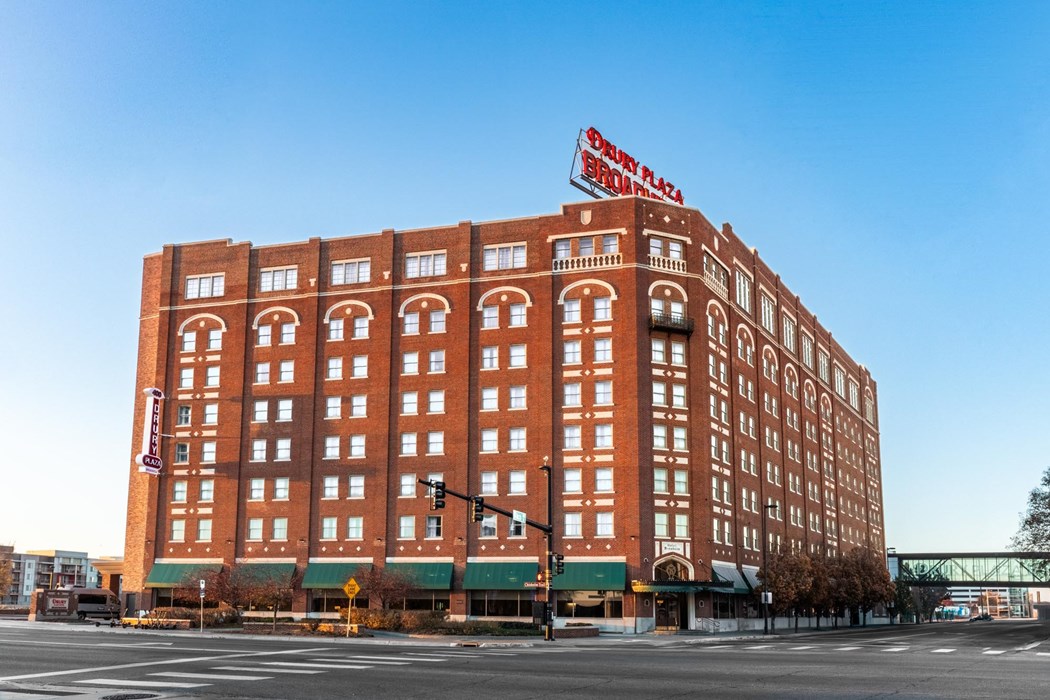
Drury Plaza Hotel Broadview
The Drury Plaza Hotel Broadview stands eight stories above the banks of the Arkansas River at the corner of West Douglas Avenue and North Waco Street in downtown Wichita, Kansas—a massive brick landmark that has anchored the city's skyline since the early days of the oil boom and the aviation industry that would come to define it. Built in 1922 by George H. Siedhoff, one of Wichita's most prolific contractors, the hotel was conceived as a first-class destination for railroad passengers and travelers moving through the central Plains. Its name came from Siedhoff's wife, who stood in the rooftop garden shortly before the grand opening on May 15, 1922, looked out over the city and the river below, and suggested it simply be called the Broadview. The name fit. The building sat at the intersection of two major avenues, and its unusual placement on an angled lot meant that passersby could see two full sides of the facade at once—a broad view in both directions. The Broadview opened during Prohibition, and like many grand hotels of the era, it adapted quietly. The basement housed what was reportedly Wichita's only speakeasy, where liquor and gambling ran uninterrupted behind closed doors. Upstairs, the rooftop promenade offered dining, dancing, and a 360-degree panorama of the prairie horizon. A restaurant on the main floor seated six hundred. The guest list over the decades read like a cross-section of American ambition: Charles Lindbergh, aviation pioneer Clyde Cessna, and Al Capone all passed through the Broadview's doors. A north wing was added in 1929, and in 1948, the Crystal Ballroom was constructed on the ground floor, featuring a 1,500-square-foot mosaic mural by renowned Kiowa-Comanche artist Blackbear Bosin—the same artist responsible for Wichita's iconic Keeper of the Plains sculpture. The mosaic depicts the settlement of Kansas, with panels showing Native Americans, early pioneers, wildlife, and the railroad that brought them all together. The hotel's most persistent ghost story centers on a man known only as Clarence. According to accounts passed down through decades of staff and guests, Clarence checked into the Broadview with his wife for an evening event. At some point during their stay, he discovered she was having an affair with another guest. In a fit of rage, Clarence shot and killed his wife, then threw himself from an eighth-floor balcony. The story has never been independently verified through historical records, and the details shift depending on who tells it—sometimes the affair is discovered in a hallway, sometimes in the room itself, sometimes the fall is from a window rather than a balcony. But the name Clarence has attached itself to the building with a permanence that suggests either a real event or a remarkably durable piece of hotel folklore. Paranormal reports at the Broadview are varied and have been consistent across decades. Guests report lights flickering in their rooms with no electrical explanation, telephones ringing repeatedly with no caller on the line, and doors shaking violently as though someone is trying to force entry. Furniture has reportedly been rearranged within seconds of a guest stepping out of a room. Cold spots appear without warning in otherwise climate-controlled spaces. Former employees from the 1960s and 1970s recall long, dark hallways and abandoned rooms in the basement—remnants of the old speakeasy era—where the atmosphere was dense and unsettling. One former bellboy described tunnels in the basement whose purpose no one could explain. A particular room was known among staff for a lamp that perpetually blew its bulbs and delivered an electric shock to anyone who replaced them. In the Crystal Ballroom, guests have reported seeing figures dressed in 1920s attire dancing when the room is otherwise empty. One of the stranger recurring reports involves the sound of wings flapping down a long, vacant hallway—a phenomenon no one has been able to attribute to birds, bats, or ventilation. Kitchen staff have reported equipment activating on its own, including a disused soap dispenser that began clicking rhythmically with no one near it. Ghost hunters who have investigated the property report capturing EVP recordings throughout the building. Skeptics will note that a century-old building with a complicated electrical history, a basement full of disused infrastructure, and a rooftop exposed to Kansas wind will produce its share of odd noises and mechanical quirks. The Clarence story, lacking firm documentation, may be an invention that calcified into local fact through repetition. But the range of the reports—from visual apparitions in period clothing to physical disturbances with furniture and electronics—extends well beyond what aging wiring and drafty hallways typically explain. Today the Broadview operates as a Drury Plaza Hotel, having been renovated in 2011 with careful attention to preserving its historic character. The original lobby tile, hand-crafted moldings, and Bosin mosaic remain intact. The building earned LEED Green certification during the renovation, and the surrounding riverfront park hosts community events throughout the year. The hotel is listed on the National Register of Historic Places. It sits within walking distance of Wichita's Old Town entertainment district and the Douglas Avenue corridor, and the St. Charles streetcar archway from the original rail depot is still visible on the building's east side. Whether you come for the architecture, the history, or the chance to meet Clarence, the Broadview remains what it has been for over a century—a building that holds on to everything, including, by many accounts, the people who never checked out.
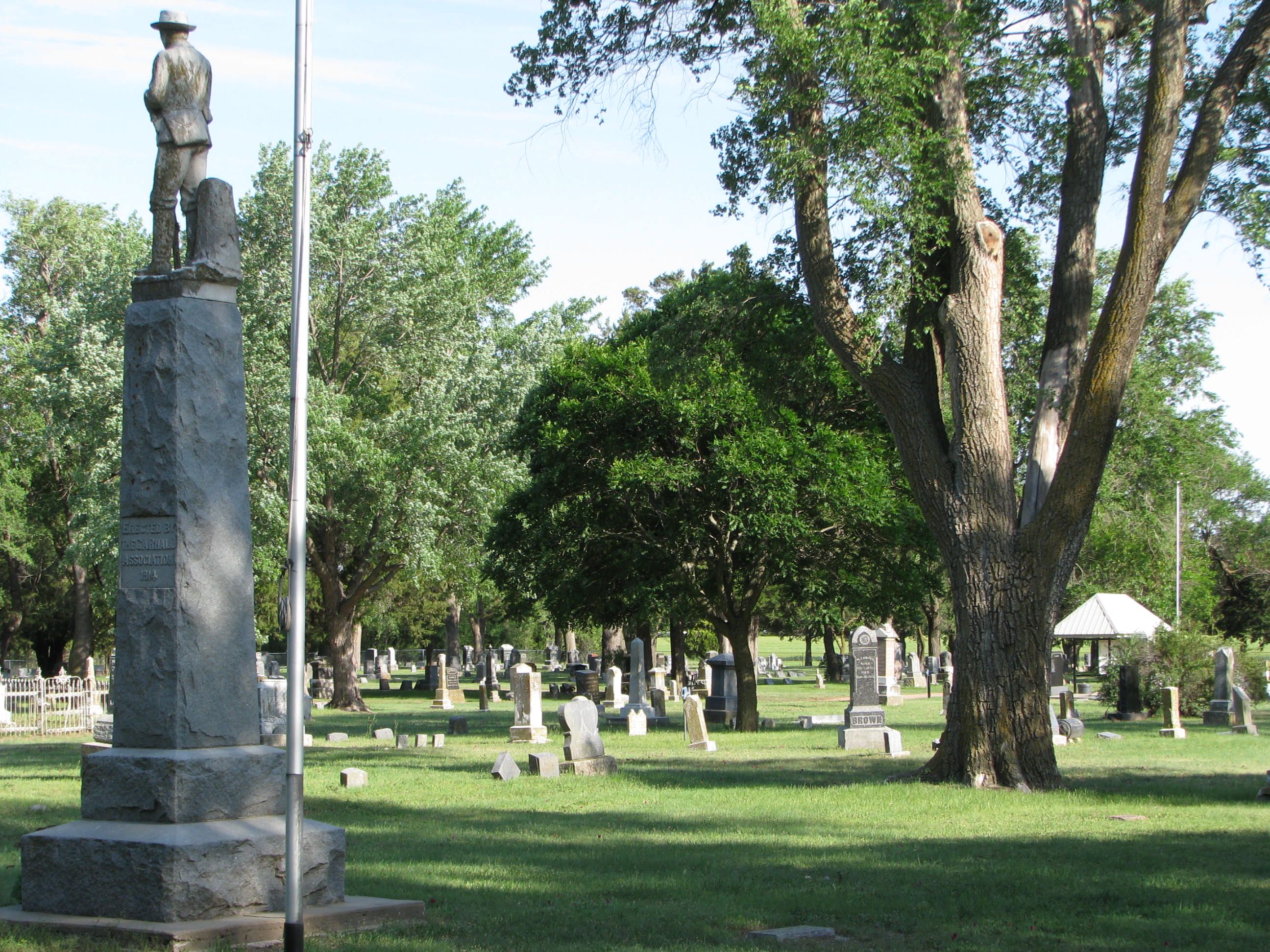
Wildmead Cemetery
Out on the flat central Kansas prairie, roughly a dozen miles northwest of Hutchinson along the Arkansas River lowlands, the small town of Nickerson came into being the way most of this part of the country did — by rail. The Atchison, Topeka and Santa Fe Railway laid its line through Reno County in 1872, and the town platted along that corridor was named in honor of Thomas Nickerson, then president of the railroad. First houses followed in 1875, incorporation came in 1879, and by the turn of the century Nickerson had banks, mills, a newspaper, an opera house, and Nickerson College. It was a proper little prairie city, built by homesteaders and Mennonite farmers working some of the richest wheat land in the country. Wildmead Cemetery sits just outside the town as a record of that community — nearly two thousand documented burials accumulated across generations of Reno County life. The headstones range from weathered frontier-era markers to mid-century monuments, and the grounds are shaded by old trees that give the place a stillness rare in the treeless Kansas landscape. Burials span the full arc of regional history, including at least one veteran of the Spanish-American War of 1898 whose grave has been noted by visitors as a point of quiet reflection. The paranormal reputation of Wildmead is anchored to a single dominant figure known locally as the White Lady — a female apparition said to move through the cemetery, particularly at night. Regional legend frames her not merely as a ghost but as something closer to a guardian, a presence that distinguishes between those who visit out of grief or genuine curiosity and those who come only to cause trouble or disrespect the grounds. The distinction matters in local telling: families and respectful visitors are said to fall under her protection, while those who arrive with bad intentions are not extended the same courtesy. Whether she is connected to a specific grave has never been established. The cemetery gate has its own piece of local lore. Multiple accounts describe the entrance as bent from the inside, and the gate itself is said to resist visitors — closing on those inside and refusing to open when it shouldn't. In one widely circulated account from around 1980, two carloads of teenagers drove into Wildmead late at night specifically hoping to catch a glimpse of the White Lady. During a slow loop through the grounds, both vehicles experienced headlights cutting out simultaneously with no mechanical explanation. One car stalled partway through the gate, blocking the exit. The group pushed it nearly half a mile down the road before both vehicles resumed normal function on their own. No apparition was seen that night, but the account circulated in Nickerson for decades afterward. More recent accounts have concentrated on the cemetery's maintenance building. Investigators reported hearing a generator inside the structure power on while they were nearby. When they approached, it shut off. One member of the group asked aloud for it to start again. It did, and the moment was captured on a recording device. Other visitors have described unexplained knocking sounds coming from trees within the grounds, temperature fluctuations on hot summer days, and an intermittent feeling of being observed from somewhere within the tree line. A self-described psychic sensitive who visited on a July afternoon in 2017 reported sudden, intense goosebumps near the grave of a Spanish-American War veteran — an experience she noted specifically because of the triple-digit heat that day. Wildmead is an active cemetery, open and accessible to the public. The headstones are readable, the trees still stand, and the gate is still there. Whether you arrive in daylight to trace family names or after dark looking for something harder to explain, the grounds have a weight to them that most visitors remark on before they leave.

Kansas State University
Kansas State University's sprawling Manhattan campus encompasses numerous historic buildings and facilities that collectively form one of the Great Plains' most documented centers of paranormal activity, with reported supernatural phenomena concentrated in specific academic and athletic structures. The university, founded in 1863 as the Kansas State Agricultural College, has evolved into a major research institution while simultaneously accumulating one of the Midwest's most thoroughly documented collections of ghost stories and paranormal encounter accounts from students, faculty, and staff members. The Purple Masque Theatre, housed within the university's Fine Arts complex, has become the focal point of the campus's most famous haunting, attributed to the restless spirit of Nick, a football player who died under circumstances that remain partially shrouded in historical uncertainty. The Bell Tower, visible across the campus and serving as a symbol of university identity, has generated numerous reports of inexplicable sounds, shadows, and apparitions that appear particularly active during twilight hours and periods of low light. The paranormal manifestations documented across Kansas State's campus demonstrate remarkable consistency and specificity, with investigators cataloging experiences that span multiple decades and involve numerous independent witnesses. Nick, the phantom football player, is credited with a series of incidents in the Purple Masque Theatre that include equipment mysteriously being knocked over, doors slamming with violent force despite being manually held closed, and witnesses reporting the distinct feeling of an unseen presence moving through the theatrical space during performances and rehearsals. Multiple accounts describe a white hazy shadow that materializes in the theatre, often in the form of a humanoid silhouette that observers associate with a tall, athletic figure matching descriptions of Nick in life. The presence sensed by multiple independent witnesses includes an overwhelming feeling of territorial ownership, as if the entity resents the use of its former domain for theatrical productions and student activities. Faculty and students have reported eerie feelings of being watched or followed within the theatre, accompanied by disembodied screams that echo through the building despite no apparent source or human presence. Beyond the Purple Masque Theatre, paranormal activity at Kansas State extends to other significant campus locations including the university's fraternity and sorority houses, which have generated their own distinct hauntings attributed to different entities. The Pi Kappa Phi Fraternity House contains reports of a spirit associated with a fraternity brother named Duncan, with accounts describing doors slamming throughout the residence, equipment being mysteriously displaced, and an overwhelming sense of malevolent presence in specific rooms. The Gamma Phi Beta Sorority House harbors equally disturbing reports, including the documented ghost of a house mother who was murdered on the premises during the early twentieth century, an event that appears to have left a lasting supernatural imprint. Witnesses describe disembodied screams and cries emanating from the sorority house during late evening hours, with particular intensity during stormy weather conditions that appear to amplify paranormal phenomena. The specificity of these reports, corroborated by multiple witnesses across different time periods, suggests that traumatic deaths at these locations may have generated persistent hauntings that continue to manifest in contemporary times. The Bell Tower, rising prominently above the campus landscape, has accumulated its own collection of unexplained phenomena that investigators attribute to accumulated paranormal energy concentrated within the structure's confined space. Campus visitors and students report seeing unexplained shadows moving within the bell tower windows during both day and night, along with hearing disembodied voices and the sound of footsteps climbing the internal stairs despite the tower being locked and inaccessible to the public. Audio equipment deployed by paranormal investigators has detected inexplicable sounds and what researchers describe as "presence phenomena" concentrated around the bell mechanism itself. The tower's history as a venue for both celebratory bell-ringing ceremonies and more troubling incidents has accumulated what researchers theorize is residual haunting energy, manifesting as apparitions and phenomena that recur with predictable regularity. Kansas State University maintains a measured but acknowledged relationship with its paranormal reputation, with the institution providing limited official documentation of campus hauntings while neither denying nor sensationalizing the reported phenomena. Contemporary accounts continue to emerge from students living in historically haunted facilities, with modern investigative teams deploying sophisticated equipment to document electromagnetic fluctuations, temperature anomalies, and audio phenomena consistent with earlier historical reports. The university's archives contain extensive documentation of historical incidents on campus, some of which correlate directly with specific hauntings reported by residents of affected buildings. The campus stands as a living institutional repository of paranormal history, where academic pursuit coexists with the documented supernatural phenomena that appear to have persisted across more than a century and a half of continuous university operations.
Fort Riley
Fort Riley, established in Kansas during the nineteenth century, stands as one of the most historically significant military installations in the United States, a sprawling facility that has housed countless soldiers, witnessed military innovation, and absorbed the emotional energy of generations of military personnel. The fort represents a critical intersection between westward expansion, Native American displacement, and American military development. As one of the nation's most important cavalry training centers, Fort Riley prepared officers and enlisted men for decades of conflict, from frontier operations against indigenous populations through both World Wars and into modern military engagements. The fort's 155-year history encompasses triumph and tragedy, sacrifice and loss, creating conditions that paranormal researchers suggest facilitate spiritual manifestation. The combination of military authority, human suffering, and deaths occurring under extraordinary circumstances apparently created resonances that persist despite the passage of time and the turnover of personnel. The Historical and Archaeological Society of Fort Riley acknowledges the location's paranormal reputation sufficiently to provide official Ghost Tours to visitors interested in the fort's haunted history. Among the numerous reported spirits inhabiting Fort Riley, General Lewis Armistead stands out as a particularly prominent entity. Armistead's death during the American Civil War created unresolved questions and emotional turbulence that apparently prevented his spirit from achieving complete spiritual rest. Other reported entities include the apparition of a drowned woman whose circumstances and identity remain partially obscure in paranormal documentation, an old nurse who apparently served within the fort's medical facilities, and a lone rider whose ghostly form has become iconic within Fort Riley's paranormal folklore. Soldiers from various eras apparently remained bound to the location, their spirits continuing to maintain presence on grounds where they served, trained, or suffered injury. The fort's cemetery contains graves of numerous individuals, many of whom may have lacked strong connections to families or communities outside military service, potentially facilitating spiritual attachment to the fort rather than spiritual movement toward other realms. The paranormal phenomena at Fort Riley manifest with particular intensity in specific locations throughout the sprawling military complex. The Lower Parade Field emerged as a focal point for paranormal activity, with witnesses reporting the distinct apparition of a lone rider on horseback, moving across the field in patterns suggesting military drill or patrol. This ghostly rider would appear solid and three-dimensional before vanishing when approached, leaving witnesses stunned by the apparent solidity of the manifestation. The Custer House, a historic structure bearing the name of the famous cavalry officer, developed a reputation for intense paranormal activity. Doors would open spontaneously when no human hand touched them, voices echoed through empty rooms, and apparitions of uniformed soldiers appeared and vanished without warning. Quarters 124 became another significant location, with reports of physical phenomena including objects moving without visible cause and the appearance of spectral figures. The fort's NCO Club and Main Post areas also generated consistent paranormal reports. The specific phenomena documented at Fort Riley include apparitions of weeping women, ghostly figures appearing in doorways and hallways, and a nurse apparition in medical clothing moving through spaces as though performing duties from an earlier era. Witnesses described a palpable sense of unease and melancholy in certain locations, accompanied by cold spots and unexplained temperature fluctuations. The fort's military history of conflict, training accidents, illness, and injury apparently created sufficient emotional resonance that spirits of deceased military personnel became unable to transition completely from the physical realm. The location attracted paranormal researchers and investigation teams who documented electromagnetic anomalies consistent with spiritual manifestation. Fort Riley stands as a compelling example of how locations steeped in military history and human suffering can develop robust paranormal activity, becoming historical sites where visitors encounter not only artifacts and structures from past eras but also the apparent spiritual presence of those whose lives defined those periods.
Central Plains Novelty Store
The Central Plains Novelty Store in Wichita, Kansas presents a distinctive haunted location distinguished by the specificity of its resident spirit and the unusual commercial context of its paranormal activity occurring within a functioning retail business. This historic novelty shop, with merchandise displays and vintage fixtures typical of regional variety stores serving their communities, became known through consistent reports of supernatural phenomena occurring across its interior spaces and merchandise areas. The building carries architectural significance reflecting early twentieth-century commercial construction methods and design principles common to retail establishments. Unlike many haunted locations featuring tragic historical events occurring on their grounds during construction or operation, this store's haunting centers upon a Victorian-era woman spirit whose identity and background remain subjects of ongoing speculation among paranormal investigators and historians. The manifestation within a twentieth-century novelty shop presents an intriguing anachronism suggesting complex historical connections to the building's location or the spirit's powerful attachment to specific retail activities and social functions. Paranormal activity distributes across multiple interior zones, with particular intensity concentrated in the back section near the manicure service area where professional beauty services operate. Witnesses have documented disembodied footsteps crossing various floors at irregular intervals, described as deliberate and purposeful movements lacking any visible sources to explain their origin. Perfume smells with absolutely no identifiable origin represent one of the most frequently corroborated paranormal experiences reported consistently by multiple independent witnesses over extended time periods and seasons. These fragrance manifestations occur unexpectedly within specific locations throughout the store and dissipate just as suddenly without explanation. Apparitions clothed in Victorian period clothing have been observed by both staff members and customers, typically appearing in dimly lit areas and vanishing when approached directly. Furniture moves spontaneously without mechanical cause or human intervention, with merchandise displays and furnishings shifting positions without any rational explanation. Paranormal investigators conducting multiple rigorous investigations within the store have documented unusual electromagnetic activity, temperature fluctuations consistent with paranormal phenomena, and other evidence supporting genuine supernatural activity. The Victorian-era woman spirit appears to engage intentionally with the physical space around her, suggesting conscious awareness and deliberate interaction rather than purely residual or automatic paranormal phenomena. Her manifestations seem strongest during business hours when customer activity increases, possibly indicating attraction to human presence or emotional resonance with living individuals. The spirit's association with the manicure service area suggests potential historical connection to personal grooming, beauty standards, or social activities prominent during the Victorian era, though direct causal relationships remain speculative. The Central Plains Novelty Store continues operating successfully as a functional retail business while simultaneously serving as an active paranormal site of considerable investigative interest and paranormal tourism appeal. Staff members have become accustomed to the paranormal phenomena occurring within their workplace, treating the haunting as an established aspect of their daily working environment rather than a disturbance requiring intervention. Paranormal researchers from regional organizations continue conducting investigations and documentation efforts at the location. The presence of this active haunting has not significantly impacted commercial viability or customer base, with the store continuing to attract curious visitors interested in both retail merchandise and the location's well-established paranormal reputation.
Old Saint Mary Hospital
Old Saint Mary Hospital in Manhattan, Kansas stands as a remnant of nineteenth-century hospital architecture built to serve rural American communities, embodying both the medical optimism and practical constraints of frontier healthcare provision. The hospital was constructed during an era when medical science advanced rapidly but when rural areas lacked resources to provide sophisticated care comparable to urban centers. The building represents an important part of Manhattan's civic and cultural history, a physical embodiment of the community's commitment to caring for the sick and injured regardless of economic status. Hospital architecture of this period reflects assumptions about disease transmission, the therapeutic effects of light and ventilation, and the moral and spiritual dimensions of healing that differ substantially from contemporary medical facility design. The hospital operated for decades before eventually being superseded by more modern facilities, leaving behind a structure heavy with the accumulated weight of countless births, deaths, recoveries, and medical tragedies. The paranormal phenomena reported at Old Saint Mary Hospital are directly connected to identifiable individuals whose deaths appear to have left spiritual imprints resistant to the passage of time. The most well-documented spectral presence is believed to be a nurse who fell down an elevator shaft around 1968, an accident that would have been sudden, unexpected, and tragic. The specificity of this account and temporal anchor suggest either basis in historical records or a consistent legend transmitted across generations. A second identified spirit, known as "George," is believed to be a male entity whose identity as a fraternity member suggests he was a younger individual connected to the nearby university, though the circumstances of his death or attachment remain obscure. The presence of identifiable spirits with names and histories distinguishes Old Saint Mary Hospital from many haunted locations where entities remain entirely anonymous. Paranormal activity at Old Saint Mary Hospital manifests across multiple categories of phenomena focused on areas associated with elevator systems and electrical infrastructure. Unexplained noises have been documented throughout the building, sounds that resist conventional explanation and cannot be traced to mechanical systems or structural settling. Apparitions have been witnessed by multiple independent observers, visual manifestations of spectral forms consistent with the hospital's historical period. Peculiar manipulation of electrical systems has been extensively documented, with lights flickering without corresponding electrical supply changes. Doors and windows have been observed opening and closing without human agency, anomalies that witnesses interpret as intentional communication or movement by spiritual entities. Most remarkably, clocks within the building have allegedly been fixed by unseen hands, advancing after becoming stopped or damaged, suggesting a spirit with ability to manipulate physical objects. These phenomena suggest either concentrated paranormal activity or compelling folklore narrative elaborated across generations. Old Saint Mary Hospital no longer operates as an active medical facility but remains available for paranormal investigations and ghost tours. The building's transformation from functioning hospital to historical artifact has not diminished paranormal reports but may have intensified the attachment of spirits no longer distracted by ongoing medical operations. The spirits persist in locations where they met their deaths or maintained their identities during life, suggesting consciousness can become profoundly anchored to specific locations when death occurs suddenly.
Doctor W.B. Jones House
The Doctor W.B. Jones House occupies a position of historical and medical significance within Florence, Kansas, a region of the American Midwest distinguished by its frontier heritage and complex medical history. Doctor William B. Jones represented the class of medical practitioners who established professional practice in small frontier towns during the nineteenth and early twentieth centuries, bringing formal medical training to communities previously reliant on folk remedies and limited access to physicians. The house itself served a dual function as both residential space for the doctor's family and professional office where consultations, treatments, and medical procedures would have been conducted. Architectural features typical of frontier-era professional residences are present, including room configurations designed to accommodate both family life and professional medical practice. The structure reflects construction standards and design conventions of its era, representing the material conditions of frontier professional life and the integration of medical practice into domestic space. Doctor William B. Jones established himself as a medical figure within Florence, serving the community during a period when formal medical practice was establishing itself across the American frontier. The precise dates of Jones's medical practice, his educational background, and the scope of his professional activities remain partially documented in historical records, with significant details maintained in local archives and historical societies. The doctor's tenure in Florence likely spanned multiple decades, with his residence becoming a recognized landmark within the community associated with professional medical expertise and the emergent legitimization of Western medical practice across frontier regions. The circumstances surrounding the end of Jones's life and the subsequent fate of his residence contributed to the narratives that would eventually coalesce around paranormal claims. His death, whenever it occurred, marked the conclusion of an active professional life and the beginning of a different relationship between the living community and the physical space he had inhabited. The most prominently reported paranormal phenomenon associated with the Doctor W.B. Jones House involves the apparition of the doctor himself, appearing at the upper floor windows as if continuing to observe the streets and surroundings below in the manner he apparently conducted during his lifetime. Witnesses have described seeing the figure of a man in period-appropriate clothing positioned at the windows, gazing outward with apparent awareness and intention. The specificity of this manifestation—concentrated at particular windows and consistent in its appearance across multiple independent accounts—suggests either a distinctive pattern in paranormal activity or a culturally constructed narrative that has achieved coherence through retelling and shared expectation. The upper floor location of the manifestation contrasts with the professional functions that would have occurred in lower-level rooms, suggesting possible connections to personal domestic space and private areas of the residence. The Doctor W.B. Jones House stands abandoned or minimally maintained, its architectural integrity gradually compromised by decades of limited upkeep and exposure to environmental conditions. The decaying condition of the structure contributes to its atmospheric qualities and has made it a destination for paranormal investigators and urban explorers interested in both historical documentation and alleged supernatural phenomena. The house exists as a material reminder of frontier medical history and the lives of figures like Doctor Jones who established professional practice in remote communities. Local historical documentation and photographic surveys have recorded the building's appearance and deterioration, preserving visual record of its architectural features for contemporary study. The Doctor W.B. Jones House exemplifies how abandoned properties bearing associations with individual historical figures can accumulate paranormal narratives, with apparitional sightings representing enduring cultural memory of persons whose lives significantly impacted their communities and whose deaths marked the conclusion of distinctive historical chapters within small American towns.
Kansas State University – East Stadium – Purple Masque Theatre
The Purple Masque Theatre at East Stadium on the Kansas State University campus represents one of the institution's most storied performance venues, serving as a cultural hub for dramatic arts since its integration into the athletic complex during the early twentieth century. This theater, named for the theatrical masks that embody both comedy and tragedy, was designed to accommodate the growing dramatic programs at Kansas State and quickly became a focal point for university performances, student theatrical productions, and visiting artists who graced its stage over the decades. The facility witnessed countless performances spanning nearly a century of theatrical tradition, from student productions to professional tours, establishing itself as an integral component of Kansas State's cultural infrastructure and academic mission. The architecture of the theater reflects the modernist ideals of mid-twentieth century institutional design, with its rectangular stage house, integrated backstage facilities, and multiple dressing rooms designed to support complex theatrical productions and the needs of actors and technical staff who worked within its walls. During its long operational history, the Purple Masque Theatre developed a reputation that extended beyond its legitimate theatrical performances, with documented accounts of unusual phenomena that suggested the presence of supernatural entities within the building. A football player named Nick, whose connection to the theater remains historically ambiguous, is believed to have experienced a transformative or tragic event during his time associated with the facility, and his spirit is thought to remain connected to the space. Additionally, some accounts reference Eddie Wells, a World War One veteran, as another entity allegedly present within the theater, suggesting that multiple individuals from different eras may have anchored their spiritual presences to this location. The temporal range of these alleged spirit entities spans several decades, with connections to both the athletic and theatrical communities of the university during different historical periods. Paranormal experiences reported by theater staff, students, and performers have centered primarily on the stage area, backstage regions, hallways connecting various sections of the facility, and the dressing rooms where actors prepared for performances. Witnesses have consistently reported rhythmic stomping sounds that emanate from seemingly empty areas of the theater, particularly on the stage and in backstage regions where activity should logically be absent during closed hours. Equipment used in theatrical productions has been observed falling over or being knocked aside despite securing measures, with objects moved from their established positions to alternate locations with no apparent physical cause. Most intriguingly, boxes and containers of various types have been reported as mysteriously stacked and then unstacked, sometimes overnight, suggesting intelligent arrangement rather than random disturbance. Witnesses have described encountering a white, hazy shadowlike form that appears behind stage curtains and in the darkened areas of the theater, particularly during evening hours or when the theater is operating with minimal lighting. Doors throughout the facility have been frequently reported as slamming with considerable force during times when no individuals were present to account for the physical impact. The theater maintains its position as an active performance venue within the university's dramatic arts program, though its paranormal reputation has become increasingly integrated into the institution's folklore and student culture. The documented accounts of supernatural activity at the Purple Masque Theatre have drawn the attention of paranormal researchers and enthusiasts, contributing to its status as a recognized haunted location within Kansas academic circles. The theater's significance in university history, combined with the persistent reports of paranormal phenomena spanning multiple decades, continues to generate interest among both theatrical performers and paranormal investigators who seek to understand the nature of the entities allegedly inhabiting the space. Students and staff continue to work and perform within the venue, treating the reported hauntings with a mixture of skepticism and respectful acknowledgment of the historical narratives that have accumulated around the facility.
Atchison Daily Globe
The Atchison Daily Globe newspaper office represents a significant cultural institution in Atchison, Kansas, having served for generations as the primary source of local news and journalistic documentation of regional events. The newspaper itself symbolizes the importance placed by American communities on reliable information distribution and the preservation of community record-keeping through print journalism. The physical office spaces where journalists, editors, and support staff conducted their daily work created an environment of intellectual labor. Newspaper offices of the late nineteenth and twentieth centuries operated as bustling centers of activity, places where stories were gathered, written, edited, and prepared for publication. The specific circumstances surrounding the death of the newspaper editor who now manifests paranormally within the office spaces remain unclear based on available historical records, yet the emotional intensity surrounding the event appears to have created sufficient spiritual imprint to generate persistent paranormal manifestations. The mysteries surrounding the editor's death have established the Atchison Daily Globe as a location of paranormal significance. The primary paranormal entity documented at the Atchison Daily Globe is identified as a newspaper editor who died under circumstances that remain mysterious. The editor's identity and biographical details are preserved in newspaper archives and historical records, yet the exact circumstances of his death have resisted definitive historical resolution. The spirit's apparent attachment to the office location suggests that the death may have occurred within the newspaper premises, or that the editor's emotional investment in journalistic work created a spiritual bond sufficiently powerful to anchor his presence to the physical location. The manifestation of the editor's spirit suggests both awareness of his continued existence and unwillingness to progress beyond the physical space that defined his professional identity. Paranormal phenomena documented at the Atchison Daily Globe center particularly on manifestations occurring in the back door area and the office spaces where editorial work was conducted. The back door, a practical entry and exit point for building access, has become a focal point for paranormal manifestation. Witnesses have reported the phenomena of the back door opening and closing of its own accord, with the mechanical action occurring without any visible cause or human agency. The door's activity appears autonomous, with the opening and closing occurring at apparently random intervals or potentially in response to investigator presence. The inconsistency and unpredictability of the door manifestation adds to its paranormal character. Staff and visitors have reported witnessing the door activity directly, creating reliable anecdotal evidence beyond mere folklore. The office spaces where the deceased editor conducted his professional duties have become secondary focal points for paranormal manifestation. The editor's spirit appears to maintain presence within the spaces where his professional work was conducted, suggesting either an unwillingness to abandon the location or a profound attachment to the work. The concentration of phenomena in specific areas of the building suggests localized manifestation associated with particular memories or significant events. Paranormal investigations have documented electromagnetic anomalies, temperature variations, and other phenomena consistent with active spiritual presence. Electronic Voice Phenomena recordings conducted within the office spaces have captured disembodied voices, with some recordings suggesting editorial commands or communication consistent with newspaper operations. The Atchison Daily Globe continues to function as a historical landmark and paranormal investigation location, representing both the importance of local journalism and the phenomenon of spirits maintaining attachment to locations of professional significance. The newspaper has become integrated into Atchison's paranormal tourism, with visitors specifically seeking to experience the documented phenomena alongside learning the history of the institution. The mysterious circumstances of the editor's death remain unresolved, adding intrigue to the paranormal manifestations. The spirit of the newspaper editor continues to manifest within the back door area and office spaces, his presence serving as a permanent testament to his professional dedication and the mysterious nature of his death.
The Eldridge Hotel
The Eldridge Hotel occupies a distinctive position in the architectural and paranormal history of Lawrence, Kansas, representing both a symbol of American resilience and a focal point of documented paranormal activity that has persisted across multiple centuries of the structure's existence. Constructed during the territorial period of Kansas history, the hotel served as a gathering place for prominent citizens, military officers, political figures, and traveling merchants who recognized Lawrence as a critical junction on the frontier economy. The institution underwent dramatic reconstruction following Civil War destruction that devastated much of Lawrence during guerrilla raid campaigns, with rebuilding efforts yielding the Victorian-era structure that remains the dominant landmark on the town's historic main street. Colonel Shalor Eldridge, the entrepreneur who envisioned and established the hotel, invested considerable resources in creating a hospitality establishment that would rival accommodations in major eastern metropolitan centers, incorporating architectural elements and interior appointments that reflected contemporary standards of elegance and comfort. The hotel's original cornerstone, preserved within the structure and particularly associated with reported paranormal phenomena, contains material remnants of the institution's foundational period and the historical narrative surrounding the property. The Civil War period and its immediate aftermath proved to be formative moments in the development of the location's supernatural reputation, with violent confrontations and civilian casualties directly impacting the building during and after reconstruction. Lawrence residents and historical records document intense conflict, property destruction, and loss of life that occurred throughout the town during the war's progression, with the hotel serving as a gathering point for both civilian and military personnel navigating the turbulent period. The violent historical context established a foundation for subsequent paranormal reports, with documented accounts suggesting that traumatic events occurring within the structure left residual energy or consciousness manifestations that persisted across subsequent decades. Historians have noted that psychological and emotional trauma of such magnitude often correlates with intensified paranormal activity at affected locations, creating environments where the boundary between temporal dimensions appears compromised or destabilized. Paranormal activity at The Eldridge Hotel has been systematically documented through guest accounts, paranormal investigations, and historical records accumulated across multiple decades of the establishment's operation as a commercial hospitality venue. Room 506 has emerged as a particular nexus of reported phenomena, with guests and investigators reporting audible voices, presence sensations, and direct physical evidence of paranormal interaction. The hotel's elevator system represents another documented area of unusual activity, with reports of the mechanical device operating independently without passenger activation, doors opening and closing without corresponding electrical signals, and the sensation of unseen entities occupying the elevator's interior space. Additional reported phenomena throughout various rooms include water bottles spontaneously opening, releasing their contents into the surrounding environment, decorative candles illuminating without external ignition source, bedding being pulled from sleeping guests, and electrical fixtures cycling on and off in patterns inconsistent with normal mechanical function. Multiple guests have documented audible voices, whispers, and conversation fragments emanating from empty rooms and hallways, with the presence sensation intensifying in proximity to the hotel's original architectural elements. The ghost of Shalor Eldridge, the hotel's founder, is believed by paranormal researchers and historical observers to remain attached to the property, with manifestations intensifying around his burial location and the areas he frequented during his terrestrial lifetime. His presence is often associated with room 506, where the original cornerstone materials are incorporated into the room's structure, creating a focal point for paranormal manifestation. The Eldridge Hotel continues to operate as a commercial hospitality establishment while simultaneously functioning as an informal paranormal investigation venue, with the hotel's management acknowledging the property's reputation for supernatural phenomena. Visitors to the establishment frequently report personal experiences consistent with the documented paranormal phenomena, with photographic and electronic evidence continuing to accumulate. The hotel remains an active location for paranormal researchers, tourists seeking haunted accommodations, and historians exploring the intersection of violent history and paranormal manifestation, establishing The Eldridge as a significant location within the broader landscape of American haunted sites.
Tuck U Inn At Glick Mansion
The Tuck U Inn at Glick Mansion occupies one of Atchison, Kansas's most historically significant residences, a Victorian-era mansion constructed in 1873 by entrepreneur and politician George Glick. The mansion represents the architectural and aesthetic standards of Victorian wealth, featuring elaborate decorative details and period furnishings characteristic of upper-class residences in nineteenth-century America. George Glick, who served as Governor of Kansas from 1883 to 1885, commissioned this impressive residence as a demonstration of his business success and social prominence. The building emerged during Atchison's development as a prosperous river town on the Missouri River, serving as a transportation and commercial hub. The mansion's construction employed skilled craftspeople and utilized fine materials imported from across the country. The Glick Mansion functioned as a private residence for the Glick family and subsequent owners throughout the late nineteenth and twentieth centuries, serving as both a domestic space and a social focal point for Atchison's prominent citizens. The building's interior spaces were designed to facilitate entertaining and social gatherings, with large parlors and reception areas suitable for hosting community events. Generations of Atchison residents lived within the mansion, leaving behind emotional impressions embedded in the structure. The mansion underwent various modifications across its history, with Victorian-era elements supplemented by later additions and renovations reflecting changing standards. The building's upper floors contained numerous bedrooms and private spaces, while lower levels housed public-facing rooms and service areas. Atchison, Kansas, has earned a reputation as the most haunted town in Kansas, resulting from a concentration of paranormal phenomena and historical tragedies throughout the community. The Glick Mansion operates as part of the broader Atchison paranormal landscape, occupying a prominent position in the town's haunted history alongside the Sallie House. The mansion's proximity to the Sallie House created unique opportunities for comparative paranormal study and investigation. The Glick Mansion was restored and converted into the Tuck U Inn, a boutique bed and breakfast hotel that transformed the private residence into a commercial venue while preserving its historical character. The Tuck U Inn at Glick Mansion presents a benevolent haunting centered on a resident spirit that appears to interact with living occupants in positive and helpful ways. Paranormal phenomena documented throughout the mansion include unexplained footsteps at night when guests and staff are present, suggesting movement of an unseen entity through hallways and rooms. Doors open and close by unseen forces without human intervention, with reports indicating phenomena occur with sufficient consistency to suggest autonomous operation. Mysterious sounds echo throughout the building, including unidentified noises whose origins cannot be determined through conventional investigation. The benevolent nature of the resident ghost suggests it represents a former resident who maintains attachment to the building and its occupants. The spirit activity appears protective or welcoming rather than menacing, suggesting continued investment in the well-being of those within the space. The Tuck U Inn operates as a functioning bed and breakfast hotel, capitalizing on its historical significance and paranormal reputation to attract guests interested in Victorian heritage tourism and paranormal experience. The inn advertises the haunting prominently, inviting guests to experience the historical property while potentially encountering its resident ghost. Guests have reported positive experiences with the paranormal phenomena, describing encounters as adding to the unique charm and historical immersion. The mansion features guest rooms with thematic naming, including an Amelia Earhart-themed room referencing the aviation pioneer's connections to Atchison. The conversion of the private mansion into a commercial hospitality venue has allowed the building to remain actively used while its historical and paranormal characteristics have been preserved as distinctive features. The resident spirit appears to have adapted to the transformation into a hotel space, with phenomena continuing to manifest in ways guests perceive as fascinating rather than frightening.
Belle Vista Cemetery
Belle Vista Cemetery in El Dorado, Kansas, serves as burial ground for residents of this historic Kansas town, situated in an area rich with petroleum industry history and frontier settlement narratives shaping American Great Plains development. Established during the nineteenth century, the cemetery contains graves spanning multiple generations of families who settled in the region, from early pioneers and homesteaders through industrial workers and business owners. Grounds feature traditional cemetery landscaping with shade trees, flowers marking grave sites, and monuments of various styles and materials reflecting personal preferences of those buried there. The cemetery serves as burial ground and historical record, with gravestone inscriptions and dates providing tangible evidence of lives lived by El Dorado residents across time. Among individuals buried within Belle Vista Cemetery lies Clara Wiley, whose murder and circumstances surrounding her death have become central to the cemetery's paranormal reputation and focus of ongoing paranormal investigation. The documented history of Clara Wiley and her tragic death forms the core narrative around which paranormal reports and local legends concerning Belle Vista Cemetery revolve. Clara Wiley was a young woman living in El Dorado during a time period now obscured by the passage of decades, and her death was not natural but result of violence and murder. The violence created profound community trauma and left emotional and spiritual resonances persisting across generations. Specific details of Clara's murder have become obscured by time and accumulation of retellings, yet the core narrative of a young woman victimized by violence remains constant in local accounts and paranormal lore. Clara's grave within Belle Vista Cemetery has become focal point for paranormal investigation and for visitors interested in experiencing spiritual manifestations reportedly associated with her death. The mausoleum area has also attracted paranormal interest, with some accounts suggesting Clara's grave is located near or within the mausoleum structure. Paranormal phenomena associated with Belle Vista Cemetery appear related to the traumatic nature of Clara Wiley's death, representing either the manifestation of her suffering or residual energy imprinted upon the location by violence. Visitors to Clara's grave report experiencing camera malfunctions, with electronic photographic equipment failing to operate properly or behaving erratically in the immediate vicinity. These phenomena have been documented by paranormal investigators and casual visitors alike. More dramatically, visitors report photographs mysteriously disappearing from digital devices, with successfully captured images suddenly becoming inaccessible or deleted from memory without identifiable human action. This phenomenon suggests presence of an entity capable of interacting with and manipulating electronic systems, a capability theorized by paranormal researchers to be associated with spirits of individuals who experienced violent or traumatic deaths. The unusual behavior of electronic equipment in the immediate vicinity of Clara's grave has made the location a destination for paranormal investigation groups seeking to document evidence of supernatural phenomena. Additionally, local lore includes references to another entity associated with cemetery grounds, identified as "Two Moons," whose identity and historical connection to the cemetery remain somewhat ambiguous in available records. The existence of multiple paranormal entities within the same cemetery is not uncommon in paranormal literature, and Belle Vista Cemetery appears to be a location where multiple spiritual presences or manifestations coexist, creating a layered and complex paranormal environment. Paranormal investigators document electromagnetic anomalies throughout cemetery grounds, with particular concentrations in the mausoleum area and vicinity of notable graves including Clara Wiley's. The accumulation of testimony and investigation findings has established Belle Vista Cemetery as a site of significant paranormal activity. The emotional weight of these traumas may create conditions through which spiritual manifestations continue to occur long after victims have passed from the world.
The Columbian Theatre
The Columbian Theatre stands as a jewel of American theatrical architecture in Wamego, Kansas, representing the cultural aspirations of turn-of-the-century civic leaders who built substantial public structures to serve their communities. Constructed in the early twentieth century, the theatre exemplifies architectural grandeur and technical sophistication that characterized important theatrical venues of its era. The ornate interior, complete with balconies, decorative plasterwork, and technical equipment for stage productions, reflected the importance communities throughout America placed on access to live theatrical performance. The Columbian Theatre represented a significant financial and civic investment in Wamego's cultural identity and entertainment infrastructure. The theatre served multiple functions including theatrical performances, musical performances, lectures, civic events, and community gatherings requiring substantial public assembly space. The building's construction and operation represented collaborative investment of merchants, civic leaders, and investors who believed a quality theatrical venue would enhance the city's reputation and attract cultural attention from surrounding regions. During peak operational periods, the theatre represented one of Wamego's most important public institutions, a gathering place for community cultural life and entertainment. The technical infrastructure required for theatrical production represented significant technological achievement for the era. The Columbian Theatre's operational history spans more than a century, during which the building has witnessed countless performances, community events, and generations of audience members and theatrical professionals. This extended period of intensive human activity, artistic expression, and emotional engagement may have created energetic conditions that paranormal researchers theorize could generate residual paranormal phenomena. The theatre, by its nature as a venue for dramatic performance and emotional expression, concentrated human passion, artistic intention, and audience engagement in ways that distinguish it from ordinary spaces. Multiple deaths have occurred at the venue across its history, including performers and staff members whose final moments were spent within the structure. Paranormal activity documented at the Columbian Theatre concentrates on the stage area, basement levels, and staircase passages, suggesting multiple points of energetic disturbance. Witnesses and investigators have reported recurrent and apparently autonomous operation of the theatre's lighting systems, with lights activating and deactivating in patterns suggesting intentional manipulation rather than mechanical malfunction. The stage area particularly focuses reported paranormal activity, with prop movements and theatrical equipment displacement occurring without obvious physical cause. Moans, groans, and audible phenomena emanate from the structure, particularly in areas of historical significance or where technical equipment is located. Disembodied footsteps traverse the stage and backstage areas, suggesting residual presence of performers or technicians continuing professional routines beyond physical death. A distinctive phenomenon at the Columbian Theatre is white mist exiting the stage area, described as diffuse luminous vapor interpreted as manifestation of spirit energy or conscious entity. The basement area, associated with technical infrastructure supporting theatrical operations, hosts what investigators characterize as a friendly shadow person rather than a hostile entity. This appears to be residual or conscious presence of a staff member or technician whose dedication to the theatre may have continued beyond physical death. The Columbian Theatre remains an active venue hosting performances, cultural events, and paranormal tours that highlight its architectural significance and reputation as one of Kansas's most actively paranormally active theatre buildings, attracting both cultural enthusiasts and paranormal investigators.
Round Mound Cemetery
Round Mound Cemetery stands in rural Mount Pleasant Township, Atchison County, Kansas, as a burial ground steeped in historical mystery and paranormal intensity. Situated in a remote agricultural region of northeastern Kansas, the cemetery occupies land that has served as a resting place for community members across generations and centuries. The physical location itself is marked by natural topographical features including a slight elevation that gives the cemetery its distinctive name, distinguishing it from surrounding flatlands typical of the Great Plains. The Round Mound sits isolated from major settlements and roads, surrounded by farmland and open prairie, creating an atmosphere of remoteness that has contributed to the location's reputation and mystique. The cemetery's records, though incomplete in many cases, indicate burials spanning from the nineteenth century through contemporary times, though precise documentation of all graves has proven difficult over the decades. Local history and community memory associate the cemetery with events and circumstances that defy easy historical explanation or categorization. Among the most persistent legends surrounding Round Mound Cemetery is the story of an alleged witch whose presence continues to be felt in spectral form. The identity of this individual remains obscured by time and folklore, though accounts suggest that she may have been accused of witchcraft or associated with accusations of magical or supernatural practices during an era when such beliefs held significant social power. Whether the woman was actually tried for witchcraft, executed, or simply remembered through oral tradition remains historically unclear. What is certain is that the legend has become embedded in Round Mound's reputation, and visitors consistently report encountering a distinctly malevolent or intense presence in specific areas. Beyond the alleged witch spirit, multiple unidentified spirits have been documented through witness accounts and paranormal investigation reports. Round Mound Cemetery achieved notable status in paranormal circles when TIME magazine documented it as one of the most haunted places on Earth. This recognition by a major media outlet elevated the location from local folklore to international paranormal significance, attracting investigators, researchers, and ghost hunters from across the country and beyond. The TIME designation lent credibility to the many witness accounts that had accumulated over decades of community experience. Visitors to Round Mound have consistently documented paranormal phenomena including full-bodied apparitions of human figures, disembodied voices producing screams and cries of distress, the sounds of weeping and wailing, and other unexplained auditory manifestations. Some investigators have recorded what they describe as phantom sounds. The intensity and frequency of reported phenomena appear to vary seasonally, with some accounts suggesting increased activity during autumn months or evening hours. In contemporary times, Round Mound Cemetery remains one of Kansas's most actively investigated and documented paranormal locations. Paranormal research groups, independent ghost hunters, and paranormal tourism operators maintain ongoing interest in the site, conducting investigations and publishing findings. The cemetery continues to be accessible to visitors, though the remote location and lack of formal management or signage means that many people encountering Round Mound do so by accident or through deliberate paranormal tourism research. The combination of historical mystery, consistent witness testimony, and TIME magazine's recognition has ensured that Round Mound Cemetery remains firmly established in both paranormal literature and American folklore.
Flower Pot Mountain
Flower Pot Mountain rises as a natural landmark in Medicine Lodge, Kansas, a region steeped in frontier history and the complex interactions between European-American settlement expansion and Native American resistance to territorial displacement. The mountain's distinctive geological formation creates a visible landmark across the Kansas prairie landscape, making it a significant geographic reference point for regional navigation and community identity. The Kansas region experienced intensive settlement during the period following the Civil War, with European-American population expansion driven by available land, agricultural opportunities, and the westward expansion momentum that characterized American development in the nineteenth century. The indigenous peoples inhabiting the Kansas region, including the Cheyenne, Arapaho, and other groups, faced sustained pressure from settler encroachment, broken treaties, and systematic displacement from territories their ancestors had occupied for generations. The legend associated with Flower Pot Mountain involves a narrative of frontier settlement, cultural misunderstanding, and tragic violence recorded in folkloric accounts and local historical traditions. According to the legend, early pioneers settled on Flower Pot Mountain believing the indigenous population of the region to be peaceful and non-threatening, suggesting either naivete about the tensions inherent in settler-indigenous relations or a period during which actual conflict had not yet manifest. The narrative describes a specific historical moment identified as a tragic day when opinions regarding indigenous peaceful intentions fundamentally changed, presumably because of a violent encounter or incident that demonstrated the reality of conflicts underlying settler-indigenous interactions. A mysterious woman diarist, whose identity remains unknown in historical documentation, apparently recorded her observations and experiences during this period of settlement, documenting the daily life and psychological experiences of frontier women. This woman's diary reportedly contains a final cryptic entry, ostensibly written as increasing indigenous conflict threatened the settlement, stating simply Indians Hostile, suggesting a sudden shift from perceived safety to acute awareness of danger. The diary was allegedly hidden within a gnarled tree at the summit of Flower Pot Mountain, creating a time capsule of frontier experience and historical trauma embedded within the mountain's natural structure. The mountain's dramatic natural features, particularly the distinctive shape of a gnarled tree matching descriptions in the diary legend, remain visible across contemporary times, maintaining physical connection to the historical narrative and paranormal traditions associated with the location. The legend claims that all settlers present at the mountain location were murdered during an attack, representing a complete annihilation of the European-American population at this site. Paranormal phenomena reported at Flower Pot Mountain include apparitions of settlers and indigenous individuals, creating visual manifestations of the historical conflict and tragedy underlying the legend. Disembodied voices have been documented speaking phrases associated with frontier life, conflict, and emotional distress, suggesting spirit communication attempting to convey messages or relive traumatic experiences. Feelings of intense dread and overwhelming sadness are reported by visitors to the mountain, suggesting emotional imprints created by traumatic deaths and unresolved grief persisting across historical time. Unexplained sounds including screams, gunshots, and indigenous language vocalizations have been reported on the mountain during evening and nighttime hours. The paranormal phenomena documented at the site suggest that historical trauma, violent deaths, and emotional devastation create persistent spiritual presence that continues to manifest centuries after the events themselves occurred.
Haskell Indian Nations University
Haskell Indian Nations University in Lawrence, Kansas, represents a unique and historically significant educational institution established in 1885 with the explicit purpose of assimilating Native American students into dominant American cultural systems through intensive residential education. The university's founding emerged from the broader late nineteenth-century federal Indian policy framework that prioritized cultural assimilation, linguistic erasure, and the suppression of indigenous identities and practices. The institution, formally established as the United States Indian Industrial Training School, operated as a component of systematic federal policy designed to restructure indigenous communities through educational intervention directed at younger generations. The physical campus, developed across extensive grounds in Lawrence, incorporated architectural design and institutional organizational structures intended to facilitate the intensive social and cultural transformation of indigenous students removed from family and community contexts. The institution's operational methodology involved the compulsory residential enrollment of indigenous youth, typically in the age range of six to eighteen years, with documented policies separating students from family contact, suppressing indigenous language use, and mandating cultural practices aligned with Euro-American norms. The campus physical layout, including dormitory structures, administrative buildings, educational facilities, and recreational areas, created a comprehensive institutional environment designed to immerse students in systematized assimilationist pedagogy. Multiple generations of indigenous students, representing diverse tribal nations and linguistic groups, experienced the profound personal and cultural disruption attendant to compulsory institutional enrollment. The psychological and emotional impact of family separation, cultural suppression, and systematic assimilationist pressure created conditions of profound trauma and lasting psychological consequence. The campus landscape itself incorporates multiple structures serving distinct functions. Taminend Hall Cemetery, positioned on grounds immediately south of the dormitory structure bearing the same name, contains documented burials of seventy children who died during their residence at the institution. The children, victims of smallpox epidemics, tuberculosis, and various infectious diseases exacerbated by institutional crowding, inadequate sanitation, malnutrition, and the psychological stress of forced separation and cultural suppression, were interred in the cemetery plot immediately adjacent to residential dormitory spaces. The cemetery remains a physical testament to the institutional negligence and the systematic loss of life that characterized the institution's operational history. The Bell Tower, positioned prominently within the central campus landscape, incorporates a mysterious sealed-off wall that remains unexplained within official institutional documentation. Paranormal phenomena documented at Haskell demonstrate clear patterns of manifestation concentrated in specific campus locations associated with the institution's history of tragedy and loss. Pocahontas Hall basement emerges as a primary locus of paranormal activity, with consistent reports of apparitions of a young girl. Disembodied voices have been documented across multiple campus locations, with witness accounts describing sounds attributed to children's voices, utterances in indigenous languages, and vocalizations consistent with distress or lamentation. Footsteps traversing dormitory corridors and interior spaces have been reported during times of documented campus vacancy. Door opening and closing phenomena have been documented within Pocahontas Hall and associated residence structures. Temperature anomalies throughout dormitory spaces include spontaneous cold zones concentrated in areas historically associated with student residence and close institutional confinement. The institutional record of systematic cultural suppression, documented loss of life through disease, and maintained separation of burial grounds within campus landscape created conditions conducive to persistent paranormal manifestation.
Ottawa Municipal Auditorium
The Ottawa Municipal Auditorium stands as a civic landmark in Ottawa, Kansas, representing the community's cultural aspirations and commitment to providing public gathering spaces during the late nineteenth and early twentieth centuries. The auditorium was constructed to serve multiple functions including theatrical performances, public meetings, civic celebrations, and community assemblies, reflecting the role such buildings played in American small-town life. Ottawa's location in Morris County positioned it as a regional center for cultural and commercial activity, with the auditorium serving as an anchor institution within the downtown commercial district. The building's architectural style reflects turn-of-the-century construction standards with particular attention to acoustic properties and sightline considerations necessary for theatrical functions. The structure retained its essential character as a public assembly building dedicated to dramatic and cultural presentation across multiple generations. The auditorium's stage area was specifically designed to support theatrical performances, concerts, lectures, and other staged presentations, representing an investment in cultural infrastructure that elevated the community's status. The building's technical systems, including lighting and sound infrastructure, were upgraded periodically as technology advanced, though fundamental spatial relationships and architectural character remained consistent with original design. The downstairs areas, including lobbies and gathering spaces, supported theatrical functions while hosting independent community events. Over the twentieth century, the auditorium hosted countless performances, speakers, and ceremonies that shaped the social and cultural life of Ottawa and the surrounding region. Paranormal activity concentrates on the stage area and downstairs sections, with accounts of disembodied voices occurring when no visible speakers were present. Footsteps and unexplained sounds have been documented by witnesses alone within the building. Apparitions have been reported, including a little girl dressed in a white dress, whose presence suggests emotional attachment possibly related to performances or family memories. A male figure in a military dress uniform has also been observed, though his specific identity and circumstances remain undetermined. Door and window activity of an unexplained nature has been documented with openings and closings that cannot be attributed to environmental factors or mechanical function. These phenomena have established the auditorium as a recognized paranormal location within Kansas, attracting paranormal investigators interested in documenting supernatural activity within historic civic structures. The current status reflects its continued role as a community gathering space and cultural venue while bearing the distinction of being a documented paranormal location. The building continues hosting performances, community events, and public gatherings, serving Ottawa's cultural needs. Paranormal investigation groups have conducted documented investigations with findings shared through paranormal research networks and historical societies. Local media coverage has examined both the auditorium's historical significance as a civic institution and its paranormal reputation, creating public awareness of the location's dual character. The auditorium exemplifies how paranormal phenomena manifest in buildings that have accumulated decades of human experience and cultural significance, where the boundary between historical consciousness and supernatural manifestation becomes particularly permeable.
Merchant’s Pub and Plate
Merchant's Pub and Plate occupies a historically significant building located at 746 Massachusetts Street in the heart of downtown Lawrence, Kansas, a structure that exemplifies the commercial architectural development of the central plains during the Gilded Age. The building was constructed in 1888, during the period when Lawrence was establishing itself as a regional commercial and cultural center, competing with other frontier towns for economic prominence and financial standing. The three-story structure was originally designed and built to serve as a bank, reflecting the prosperity and financial ambitions of the community during the latter decades of the nineteenth century. The solid stone and brick construction typical of bank buildings of the era was intended to project permanence and security, qualities essential to financial institutions of the time and critical to public confidence in banking enterprises. The building's architectural character reflects the commercial sensibilities of the post-Civil War period, when Kansas was consolidating its role as an economic and political player within the expanding American nation. The structure would have served as a gathering place for commerce, finance, and business dealings that defined the economic life of Lawrence and the surrounding region. The building's enduring physical presence and substantial construction have allowed it to survive more than a century and a quarter of continuous use, adapting to changing commercial needs while maintaining its fundamental architectural integrity and character. The building's transition from banking house to public restaurant and gastropub represents the typical evolution of downtown commercial districts, where changing economic conditions and business models resulted in repurposing of historic structures. The conversion to a dining establishment in the modern era preserved the building's architectural integrity while adapting it to contemporary commercial use and contemporary sensibilities regarding restaurant design and function. The Midwestern gastropub that now operates within its walls honors the building's heritage by maintaining elements of its original design while offering patrons a venue for dining and social gathering within a space steeped in historical significance and authentic period character. Within the confines of this historic building, paranormal phenomena have been consistently reported over many years of occupation, with particular concentration around the staircase that connects the building's multiple levels. The staircase has served as a focal point for apparitional manifestations, with numerous witnesses reporting the appearance of ghostly figures ascending the steps, their forms indistinct yet unmistakably present and moving with apparent purpose. Visitors and staff members have described sensations of an eerie, indefinable presence permeating the staircase area, accompanied by unexplained cold sensations and the distinct feeling of being observed by an unseen presence. Shadow figures have been documented moving along the stairs and through adjacent areas, their movements following no discernible pattern or explanation that corresponds to conventional physical laws or mechanisms. The identity of the spirits inhabiting the staircase remains uncertain, though theories suggest connections to the building's role as a financial institution or to individuals who may have experienced tragedy or loss within its walls during its period of banking operations. The paranormal activity has attracted the attention of paranormal researchers and enthusiasts, with the staircase becoming a focal point for investigations seeking to document and understand the nature of these phenomena. Despite ongoing documentation and study, the reasons for the persistence of these apparitions and the identity of the entities involved remain subjects of speculation and inquiry within the paranormal community. Today, Merchant's Pub and Plate continues to operate as a dining establishment within the historic 1888 structure, welcoming patrons who come both for the quality of its cuisine and the opportunity to dine within a space known to harbor paranormal activity. The restaurant remains a popular destination for those interested in experiencing both local culinary offerings and the documented supernatural phenomena that persist within its historic walls, offering visitors the unique combination of culinary satisfaction and paranormal intrigue.
Achenbach Memorial Hospital
Achenbach Memorial Hospital in Hartner, Kansas emerged as a medical facility constructed in 1941 during a period of significant institutional expansion and modernization within American healthcare infrastructure. The facility represented contemporary hospital design philosophy, incorporating the most advanced medical technologies and organizational systems available during the early 1940s. The structure served the medical needs of the surrounding rural Kansas community, providing emergency care, acute medical treatment, surgical services, and general hospital functions to patients throughout the region. The facility's naming honored a local benefactor or community member, reflecting institutional naming practices that honored deceased community leaders or major financial contributors. The hospital operated through the World War II era and the post-war period, serving communities during significant historical transitions affecting both national and local circumstances. However, the facility's operational trajectory underwent significant alteration, with the structure entering a period of decline that culminated in closure during the 1970s. The facility's transition from active medical institution to abandoned building represented a process of institutional dereliction and historical displacement, with the structure retaining its physical presence despite the cessation of its original operational function. Within the physical structure of the abandoned hospital accumulated numerous material markers of medical practice and institutional death. The basement levels contained facilities historically designated for morgue operations, spaces designed to accommodate deceased patients pending removal and disposition. These spaces, inherently associated with death and human remains, acquired particular paranormal significance as locations where bodies had been processed, stored, and handled as part of standard hospital mortuary operations. The basement morgue spaces allegedly bore evidence of inexplicable phenomena, with disturbing visual marks appearing on the floors and walls. Mysterious bloody footprints manifested within the basement level, particularly concentrated near morgue areas, appearing without explanation and persisting despite cleaning efforts. The footprints suggested recent movement of a bleeding entity, yet no living source could be located or identified. The first floor men's bathroom acquired particular paranormal notoriety through persistent phenomena concentrated within this space. Temperature anomalies created dramatic environmental discontinuities, with the men's bathroom maintaining a temperature approximately fifteen to twenty degrees Fahrenheit below the ambient temperature throughout the remainder of the facility. Toilet fixtures within the bathroom activated spontaneously, with toilets flushing without occupancy or any identifiable mechanism triggering the activation. The recurring nature of these activations suggested intentional agency rather than mechanical malfunction. Elevator systems within the abandoned hospital manifested paranormal characteristics despite the facility's dereliction. The elevators activated and operated without any human agency operating control panels or engaging mechanical systems. The phenomena concentrated on particular elevator systems, establishing patterns of consistent behavior. The cumulative phenomena implied the presence of a distinct entity identified as Charlie Achenbach, presumably an individual with particular attachment to the location. Paranormal investigators documented the consistent recurrence of phenomena, establishing baseline measurements and reproducible observations.
Sauer Castle
Sauer Castle stands as a distinctive architectural presence in Kansas City, an Italianate mansion embodying the aesthetic principles and construction techniques characteristic of mid-nineteenth-century American residential architecture. Built between 1871 and 1873, the castle was designed by architect Asa Beebe Cross as the private residence of Anton Sauer, a prosperous German immigrant whose business success within the emerging Kansas City economy enabled the commissioning of a substantial and architecturally distinguished home. The property's significance extends beyond its original function as a private residence, as it has become recognized as architecturally important enough to warrant designation on the National Register of Historic Places, a recognition reflecting both the quality of its design and its contribution to the historical development of Kansas City's built environment. The Italianate architectural style employed in Sauer Castle's design represents a sophisticated and deliberate aesthetic choice, reflecting the cultural preferences and aspirations of its original owner during an era when such architectural choices carried significant social meaning. The castle's imposing exterior and refined interior details express the wealth, cultural refinement, and establishment status that Anton Sauer had achieved through his business endeavors. The property's positioning within Kansas City's developing residential landscape reflects its function as a statement of economic success and social standing, characteristics typical of substantial nineteenth-century American mansions constructed by wealthy businessmen seeking to anchor their social position through architectural expression. The paranormal reputation of Sauer Castle has accumulated through more than a century of narrative transmission, with ghost stories and accounts of supernatural phenomena persisting since at least the 1930s. Multiple categories of phenomena have been reported by residents, investigators, and visitors throughout the documented paranormal history of the property. Disembodied voices—audible vocalizations originating from apparent human sources but without corresponding visible speakers—have been documented throughout various areas of the castle. Unexplained light phenomena, described as floating lights or illuminations appearing without electrical explanation, have been observed in multiple locations. Apparitional figures have been reported, with some accounts specifically referencing a woman who hanged herself, a little boy, a dancing couple, and a man and woman, suggesting that multiple distinct entities or manifestations may inhabit the location. The specific narratives attached to Sauer Castle's paranormal history have included tales of murder, suggesting that violent death may have catalyzed paranormal manifestations at the site. However, historical investigation has substantially debunked the more sensational murder legends, revealing that the documented deaths at the property consist primarily of a single suicide and one natural death, rather than the multiple murders that local folklore had suggested. This discrepancy between legend and documented historical fact reflects a common pattern in paranormal history, wherein the accumulation of ghost stories across generations amplifies and transforms the actual tragic events that may have anchored initial paranormal reports. The relatively restrained actual history—though still containing genuine tragedy—contrasts sharply with the elaborate paranormal narratives that have accrued around the property. Despite debunking efforts and the clarification of actual historical deaths, paranormal reports have persisted at Sauer Castle, with visitors and residents continuing to document unexplained phenomena attributed to disembodied presences inhabiting the castle. The property's status as an empty house—currently unoccupied as a permanent residence—may contribute to its appeal as a location where paranormal activity could manifest without the complicating factor of living residents. The castle exists in a state of architectural preservation and historical maintenance, its beautiful Italianate features maintained for historical significance while the building itself stands largely untenanted. The owner has provided assurances that no documented hauntings or genuine paranormal phenomena occur at the location, yet reports continue to circulate through paranormal investigation communities and among visitors attracted by its reputation. Sauer Castle thus exists as a location where architectural significance, genuine historical tragedy, elaborated paranormal legend, and documented paranormal reports intersect in complex ways. The castle's appearance on the National Register of Historic Places secures its status as historically significant, while its reputation for paranormal activity has transformed it into a minor paranormal tourism destination. The relationship between verified historical events, local folkloric elaboration, and contemporary paranormal reports remains unresolved, leaving Sauer Castle in a state of genuine ambiguity regarding the true nature and extent of paranormal activity within its walls.