
Haunted Places in Wichita, Kansas
2 haunted locations
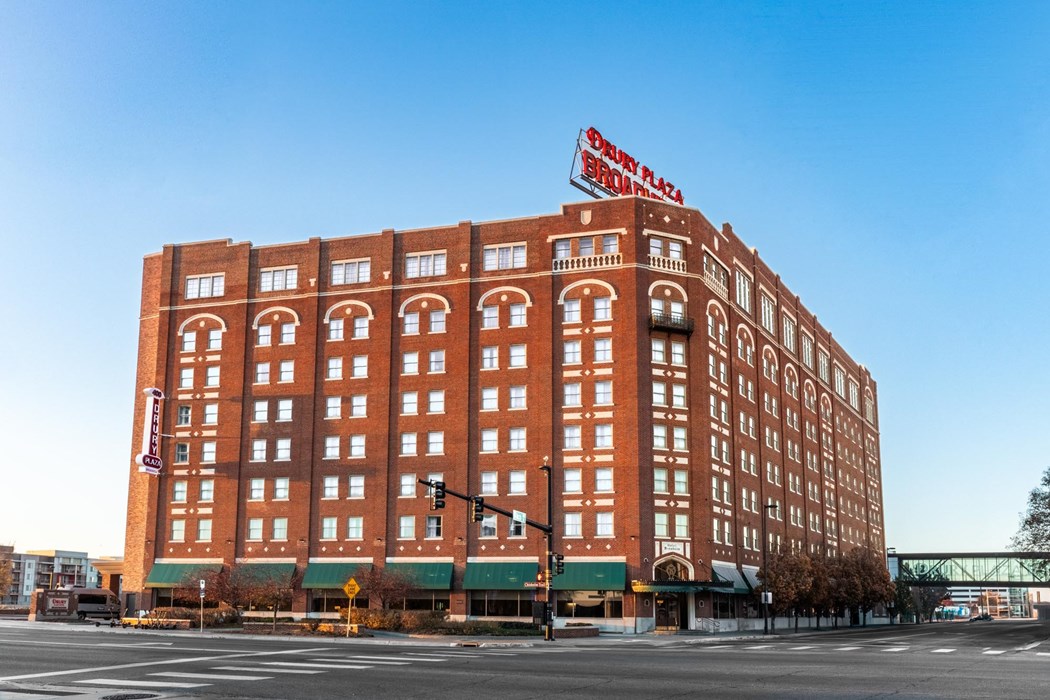
Drury Plaza Hotel Broadview
The Drury Plaza Hotel Broadview stands eight stories above the banks of the Arkansas River at the corner of West Douglas Avenue and North Waco Street in downtown Wichita, Kansas—a massive brick landmark that has anchored the city's skyline since the early days of the oil boom and the aviation industry that would come to define it. Built in 1922 by George H. Siedhoff, one of Wichita's most prolific contractors, the hotel was conceived as a first-class destination for railroad passengers and travelers moving through the central Plains. Its name came from Siedhoff's wife, who stood in the rooftop garden shortly before the grand opening on May 15, 1922, looked out over the city and the river below, and suggested it simply be called the Broadview. The name fit. The building sat at the intersection of two major avenues, and its unusual placement on an angled lot meant that passersby could see two full sides of the facade at once—a broad view in both directions. The Broadview opened during Prohibition, and like many grand hotels of the era, it adapted quietly. The basement housed what was reportedly Wichita's only speakeasy, where liquor and gambling ran uninterrupted behind closed doors. Upstairs, the rooftop promenade offered dining, dancing, and a 360-degree panorama of the prairie horizon. A restaurant on the main floor seated six hundred. The guest list over the decades read like a cross-section of American ambition: Charles Lindbergh, aviation pioneer Clyde Cessna, and Al Capone all passed through the Broadview's doors. A north wing was added in 1929, and in 1948, the Crystal Ballroom was constructed on the ground floor, featuring a 1,500-square-foot mosaic mural by renowned Kiowa-Comanche artist Blackbear Bosin—the same artist responsible for Wichita's iconic Keeper of the Plains sculpture. The mosaic depicts the settlement of Kansas, with panels showing Native Americans, early pioneers, wildlife, and the railroad that brought them all together. The hotel's most persistent ghost story centers on a man known only as Clarence. According to accounts passed down through decades of staff and guests, Clarence checked into the Broadview with his wife for an evening event. At some point during their stay, he discovered she was having an affair with another guest. In a fit of rage, Clarence shot and killed his wife, then threw himself from an eighth-floor balcony. The story has never been independently verified through historical records, and the details shift depending on who tells it—sometimes the affair is discovered in a hallway, sometimes in the room itself, sometimes the fall is from a window rather than a balcony. But the name Clarence has attached itself to the building with a permanence that suggests either a real event or a remarkably durable piece of hotel folklore. Paranormal reports at the Broadview are varied and have been consistent across decades. Guests report lights flickering in their rooms with no electrical explanation, telephones ringing repeatedly with no caller on the line, and doors shaking violently as though someone is trying to force entry. Furniture has reportedly been rearranged within seconds of a guest stepping out of a room. Cold spots appear without warning in otherwise climate-controlled spaces. Former employees from the 1960s and 1970s recall long, dark hallways and abandoned rooms in the basement—remnants of the old speakeasy era—where the atmosphere was dense and unsettling. One former bellboy described tunnels in the basement whose purpose no one could explain. A particular room was known among staff for a lamp that perpetually blew its bulbs and delivered an electric shock to anyone who replaced them. In the Crystal Ballroom, guests have reported seeing figures dressed in 1920s attire dancing when the room is otherwise empty. One of the stranger recurring reports involves the sound of wings flapping down a long, vacant hallway—a phenomenon no one has been able to attribute to birds, bats, or ventilation. Kitchen staff have reported equipment activating on its own, including a disused soap dispenser that began clicking rhythmically with no one near it. Ghost hunters who have investigated the property report capturing EVP recordings throughout the building. Skeptics will note that a century-old building with a complicated electrical history, a basement full of disused infrastructure, and a rooftop exposed to Kansas wind will produce its share of odd noises and mechanical quirks. The Clarence story, lacking firm documentation, may be an invention that calcified into local fact through repetition. But the range of the reports—from visual apparitions in period clothing to physical disturbances with furniture and electronics—extends well beyond what aging wiring and drafty hallways typically explain. Today the Broadview operates as a Drury Plaza Hotel, having been renovated in 2011 with careful attention to preserving its historic character. The original lobby tile, hand-crafted moldings, and Bosin mosaic remain intact. The building earned LEED Green certification during the renovation, and the surrounding riverfront park hosts community events throughout the year. The hotel is listed on the National Register of Historic Places. It sits within walking distance of Wichita's Old Town entertainment district and the Douglas Avenue corridor, and the St. Charles streetcar archway from the original rail depot is still visible on the building's east side. Whether you come for the architecture, the history, or the chance to meet Clarence, the Broadview remains what it has been for over a century—a building that holds on to everything, including, by many accounts, the people who never checked out.

Kansas Aviation Museum
The Kansas Aviation Museum in Wichita, Kansas is housed in a historic building that was originally constructed to serve as the terminal facility for Wichita's airport during the early to mid-twentieth century. The structure was built during a period when aviation was rapidly expanding as both a commercial transportation industry and a cultural phenomenon, with airports and aviation facilities serving as symbols of modern progress and technological achievement. The terminal building was designed to process passengers, manage luggage, and provide the administrative and operational infrastructure required to support increasingly frequent air travel. The building reflects architectural styles and construction standards consistent with the aviation industry of the 1930s through 1950s. The Kansas Aviation Museum collection includes more than forty vintage aircraft, with examples spanning multiple decades of aviation history and including both civilian and military designs. The museum operates within and around the historic terminal building, with aircraft displayed on the grounds and preserved within hangar spaces. Among the collection is a bright yellow crop duster aircraft, a type of specialized aircraft developed for the specific purpose of applying pesticides and fertilizers from the air to agricultural fields. Crop dusting was a specialized and frequently dangerous occupation, requiring skilled pilots to fly at very low altitudes in close proximity to terrain while maneuvering precisely to apply chemicals across fields. The yellow crop duster aircraft in the museum's collection carries the history of one such pilot, a man named Paul Coski who died in the aircraft under tragic circumstances. Paul Coski was killed when his bright yellow crop duster aircraft crashed, an event that occurred during the operational history of aviation in Kansas. The crash resulted from causes that remain somewhat unclear in the historical record, though various accounts suggest equipment failure or other factors contributed to the loss of the aircraft and pilot. The death of a skilled and experienced pilot under sudden and traumatic circumstances in such a distinctive and memorable aircraft seems to have created the conditions for a powerful haunting phenomenon. The yellow crop duster has become not merely a museum artifact but a spiritually charged object carrying the presence of the man who died within it. Paranormal activity at the Kansas Aviation Museum has been documented extensively, with particular concentration around the bright yellow crop duster aircraft and the terminal building where museum operations are conducted. Disembodied voices have been heard in the vicinity of the aircraft, with some accounts suggesting that visitors and staff hear the voice of a man apparently still associated with the aircraft. Mysterious music has been reported, with some descriptions suggesting music from an earlier era of aviation history, creating an atmospheric soundtrack apparently emanating from no identifiable source. Slamming sounds consistent with aircraft cabin doors or cargo doors closing forcefully have been reported in the absence of any mechanical operation or human action. Unexplained sounds suggesting aircraft engine operation or mechanical activity have been documented. Apparitions have been sighted in the vicinity of the aircraft and in the terminal building, with descriptions suggesting a figure in 1940s-era clothing consistent with the period when Paul Coski was active. The Kansas Aviation Museum has embraced its paranormal reputation as part of its attraction to visitors, offering public paranormal investigation events in partnership with experienced paranormal investigation teams. These organized investigations provide opportunities for members of the public to participate in formal paranormal research within the museum environment, with guidance from investigators who utilize specialized equipment designed to detect and measure paranormal phenomena. The investigation events have attracted considerable interest from paranormal enthusiasts and researchers, creating a distinctive museum experience that combines historical preservation with paranormal investigation. The museum continues to preserve and display the historic aircraft collection with careful attention to historical authenticity and preservation standards.