
Haunted Places in Iowa
53 haunted locations

Villisca Axe Murder House
Villisca, Iowa is the kind of small railroad-and-farm town where everybody knows everybody—so when the Moore family didn’t step outside on a Monday morning in June 1912, the silence felt wrong. By the end of that day, Villisca would become a name that never really faded from America’s collective nightmares. On the evening of June 9, 1912, Josiah “Joe” Moore and his wife Sarah took their children home after a Children’s Day program at the local Presbyterian church. Two friends of the Moore girls—Ina and Lena Stillinger—came along for a sleepover. Sometime late that night, stretching into the early hours of June 10, someone entered the Moore home and carried out one of the most brutal crimes in Iowa history. By morning, eight people were dead: Joe and Sarah; their children Herman, Mary Katherine, Arthur, and Paul; and the Stillinger sisters. Investigators determined the killer used an axe, striking the victims in their sleep with devastating force. The crime scene details would become infamous. Curtains were drawn. Mirrors were covered. Rooms were darkened. There were signs of strange staging inside the house that left the town grasping for meaning. The investigation, overwhelmed by crowds and curiosity seekers, was chaotic. Evidence was compromised. Suspects were questioned and released. The case spiraled into rumor, accusation, and national headlines. Over the decades, a long list of suspects emerged, but no one was ever definitively convicted. One of the most discussed figures was Reverend George Kelly, a traveling minister who had been in Villisca around the time of the murders. His behavior and later writings about the case drew suspicion. He was arrested and tried, but after a confession that many believed was coerced or unreliable, the trials ultimately ended without a lasting conviction. Other theories pointed to local business rivalries, hired killers, drifters passing through town, and even connections to other axe murders that plagued parts of the Midwest and South in the early 1900s. None of these theories has ever been proven in court. That uncertainty is what keeps Villisca alive in the public imagination. The house itself still stands at 508 East Second Street, preserved and restored to resemble its 1912 appearance. What was once simply a family home became a true crime landmark—and eventually, a focal point for paranormal investigation. Visitors and investigators report footsteps on empty stairs, children’s voices in vacant rooms, doors opening or slamming without explanation, cold spots that seem to move with you, and an overwhelming feeling of being watched. Some claim to capture EVPs that sound like frightened children. Others describe sudden physical sensations—touches, scratches, or nausea—while inside the upstairs bedrooms. Skeptics attribute these experiences to suggestion, atmosphere, and the psychological weight of knowing what happened there. Believers argue that violent, unresolved trauma can imprint itself on a location. Today, the Villisca Axe Murder House offers tours and overnight investigations, drawing everyone from true crime historians to seasoned paranormal teams. For some, it’s a place to confront one of America’s most infamous unsolved murders. For others, it’s a chance to test whether the past truly lingers. More than a century later, the horror of that night still clings to the structure. It’s not just the brutality of the crime that unsettles people—it’s the absence of answers. No clear motive. No proven killer. Just a quiet Iowa house where eight lives ended and a mystery began. Whether you approach it as history, legend, or something darker, Villisca remains one of the most chilling and debated haunt locations in the United States.
Edinburgh Manor
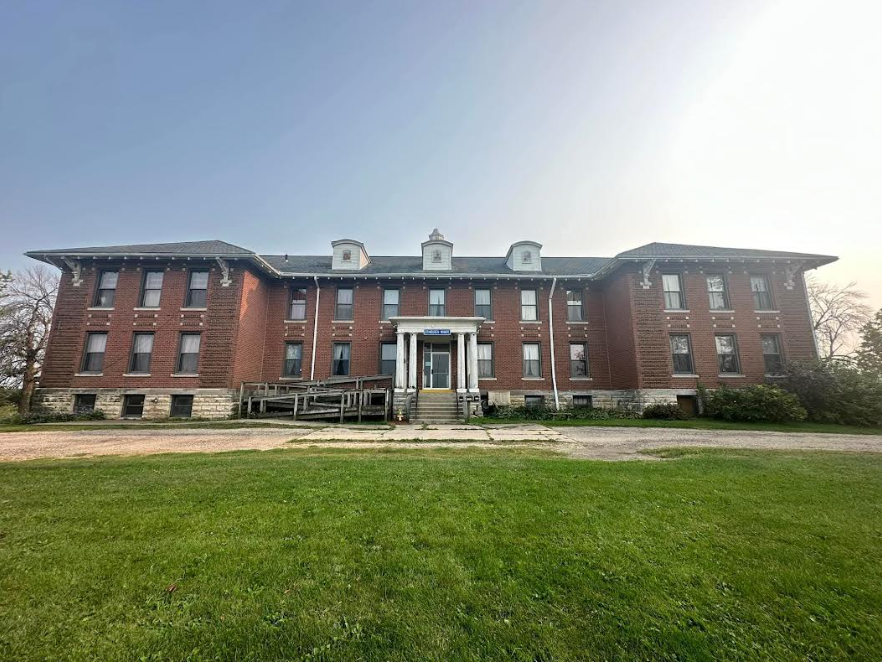
Rising from the rolling hills outside Scotch Grove, Iowa, Edinburgh Manor looks exactly like what most people picture when they think of a haunted asylum—massive brick walls, tall narrow windows, and an isolated presence that feels cut off from the modern world. But Edinburgh Manor wasn’t built as an asylum in the cinematic sense. It began in 1910 as the Jones County Poor Farm, part of a nationwide system designed to house society’s most vulnerable. Like many county poor farms of the era, the facility provided housing for the elderly, disabled, mentally ill, and those who had nowhere else to go. Residents worked the land if they were physically able. Crops were grown. Livestock was raised. The goal was self-sufficiency, but life inside these institutions was rarely comfortable. Resources were limited, oversight was minimal, and many residents spent their final years there. Over time, the Manor transitioned into a county home and later included mental health care wards as state systems evolved. Unlike locations tied to one infamous act of violence, Edinburgh Manor’s weight comes from duration. Decades of illness, poverty, isolation, and death unfolded inside its walls. Records confirm that many residents died on the property, and a cemetery sits nearby where some former occupants were buried. For paranormal believers, that long accumulation of hardship forms the foundation of the Manor’s reputation. The building itself amplifies the experience. Four stories tall, with an imposing central staircase and long corridors branching into patient rooms, it feels institutional and austere. The basement once housed storage areas and mechanical systems, while upper floors were dedicated to living quarters and later mental health wards. Paint peels from plaster walls. Old hardware remains intact. Natural light struggles to fill certain hallways, even during the day. Paranormal claims at Edinburgh Manor are among the most persistent in Iowa. Visitors frequently report hearing footsteps when no one is nearby. Doors are said to slam or move on their own. Disembodied voices—sometimes calm, sometimes distressed—are reported in EVPs and live sessions. Some investigators claim to capture direct responses to questions, suggesting intelligent interaction rather than residual replay. One of the most discussed areas is the former mental health ward, often described as heavy or oppressive. Guests report sudden mood shifts, unexplained anxiety, or the sensation of being watched. Shadow figures are commonly described moving across doorways or at the end of hallways. Others claim to see full-bodied apparitions, particularly near the central staircase. Cold spots and equipment malfunctions—draining batteries, REM pods triggering—are also frequently cited. Skeptics point out that the building’s age and structure naturally produce creaks, pressure changes, and temperature fluctuations. Large brick facilities amplify echoes. Wildlife in surrounding rural areas can create unexpected sounds. The power of suggestion plays a significant role, especially in a location marketed as haunted. Still, even seasoned investigators often describe Edinburgh Manor as unusually active compared to similar historic properties. Today, the Manor operates as a public paranormal investigation site. It has been featured in television shows, documentaries, and countless independent investigations. Unlike heavily themed attractions, it remains largely preserved in its institutional form—rooms mostly empty, hallways intact, the original layout maintained. That authenticity contributes to its atmosphere. There are no staged jump scares. Just silence, old architecture, and whatever people believe may still linger. Edinburgh Manor represents a chapter of American history that many communities quietly moved past—the poor farm system and early institutional mental health care. Whether you approach it as a historical landmark or a paranormal hotspot, it forces visitors to consider the lives once lived inside its walls. Some leave convinced they encountered something beyond explanation. Others walk away with logical answers. But almost everyone agrees on one thing: once the doors close and the building settles into darkness, Edinburgh Manor feels anything but empty.

Farrar Schoolhouse
Just northeast of the Des Moines metro, surrounded by quiet farmland and gravel roads, sits the tiny unincorporated community of Farrar, Iowa. The town itself is small—just a church, a handful of homes, and one enormous brick building that seems strangely oversized for the countryside around it. That structure is the Farrar Schoolhouse, a former rural school that educated generations of local children before eventually becoming one of the Midwest’s most recognized paranormal investigation locations. The community of Farrar formed in the early 1900s after a railroad line was built through the area. As farms developed across the surrounding countryside, the need for a centralized school became clear. At the time, many children in rural Iowa attended scattered one-room schoolhouses. Local leaders decided to consolidate those small schools into a single modern facility that could serve the wider farming community. Land for the new school was donated by local farmer C.G. Geddes, and construction began in the early 1920s. When the Farrar School officially opened in 1922, it was considered remarkably modern for rural Iowa. The two-story brick building spanned roughly 17,000 square feet and included amenities many country schools lacked at the time: electric lighting, boiler heat, indoor plumbing, and multiple classrooms under one roof. The project came with a steep price tag—nearly $100,000—which sparked debate among local residents who believed the building was too extravagant for such a small community. Despite the controversy, the school quickly became the educational and social center for the surrounding farmland. Generations of students attended classes, played basketball in the gymnasium, and gathered for community events inside its large halls. For roughly eighty years, the school served families throughout the region. Like many rural schools in the Midwest, however, declining populations and district consolidations eventually made it difficult to maintain such a large aging facility. In 2002, the Farrar Schoolhouse officially closed when students were absorbed into newer schools within the Bondurant–Farrar district. After the final class graduated, the building sat empty for several years. In 2006 it was purchased by Jim and Nancy Oliver, who began restoring the property and living inside the former school. It was during this period that stories of unusual activity began gaining wider attention. Visitors and investigators reported unexplained footsteps in empty hallways, doors closing on their own, children’s voices echoing through classrooms, and shadowy figures moving between rooms. Over time, Farrar Schoolhouse developed a reputation as one of Iowa’s most active paranormal locations. The building attracted numerous investigative teams and media coverage, including appearances on television programs such as My Ghost Story, Ghost Stalkers, and Kindred Spirits. Independent investigators and YouTube creators also began documenting their experiences inside the school, further expanding its reputation among paranormal enthusiasts. In 2024, the property gained even wider attention when it was purchased by paranormal YouTubers Sam Golbach and Colby Brock—better known online as Sam & Colby. The pair, whose channel reaches millions of viewers, bought the school after learning it might be demolished. Their goal was to preserve the building and continue investigating its claims while opening it to other paranormal researchers. Their multi-episode investigation series filmed inside the school brought a new wave of global interest to the location. During their time at the property, they collaborated with several well-known figures in the paranormal community, including Exploring With Josh, Dakota Laden from Project Fear, and creators such as CelinaSpookyBoo and KallMeKris. These investigations introduced Farrar Schoolhouse to a massive online audience and helped cement its status as one of the most recognizable haunted schools in the United States. Today the building remains largely intact from its days as a rural school. Classrooms, staircases, chalkboards, and administrative offices still stand much as they did decades ago. For historians, the structure represents a rare surviving example of early 20th-century rural school consolidation. For paranormal investigators, it has become a place where history, folklore, and modern digital storytelling intersect. Whether the strange reports inside Farrar Schoolhouse stem from paranormal forces, the psychology of expectation, or simply the acoustics of a century-old building is still debated. What is certain is that this once-quiet rural school now sits at the center of one of Iowa’s most widely discussed paranormal case files.
Malvern Manor
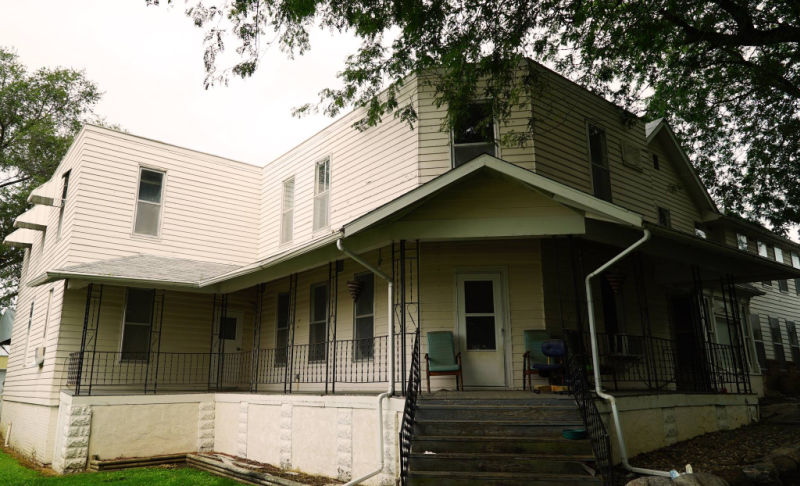
Tucked into the quiet town of Malvern, Iowa—population barely over 1,000—stands a red-brick building that looks more institutional than residential. Malvern Manor isn’t a centuries-old mansion or a crumbling castle. It’s a former care facility turned private residence turned paranormal destination. And despite its modest exterior, it has earned a reputation as one of Iowa’s most intensely investigated locations. The structure was built in 1867 and originally served as the Mills County Poor Farm. In the 19th and early 20th centuries, poor farms were county-run facilities that housed individuals who could not financially support themselves—the elderly, disabled, mentally ill, widowed, orphaned, or otherwise destitute. Life in these institutions was often harsh. Residents worked the land if they were able. Those who couldn’t were simply housed and managed with limited resources. Over time, Malvern Manor evolved. It later functioned as a private care facility for individuals with mental health conditions and developmental disabilities. Records indicate that patients were housed on site well into the mid-20th century. Like many institutions of that era, treatment standards reflected the time—structured, clinical, and sometimes controversial by modern understanding. While there are no confirmed records of extreme abuses often dramatized in asylum lore, the reality remains that the building housed vulnerable populations for decades. Eventually, the facility closed and the building passed into private ownership. In the early 2000s, new owners began restoring the property and living in it as a home. It was during this period that reports of unusual activity began surfacing publicly. The claims at Malvern Manor are wide-ranging. Visitors and investigators report shadow figures moving down hallways, disembodied voices, doors opening and closing on their own, and footsteps when no one else is present. Some claim to hear conversations in empty rooms. Others describe sudden cold spots or the sensation of being touched. One of the most frequently mentioned phenomena is children’s laughter or small voices, often attributed to the building’s time housing families and younger residents. Electronic voice phenomena (EVP) sessions conducted inside the Manor have allegedly captured responses to direct questions. Some investigators claim intelligent interaction—knocks in response to prompts, objects shifting, and REM pods activating without visible cause. A particular room often referred to as the “Shadow Room” has gained notoriety for reports of a darker presence, with some guests describing feelings of oppression or sudden anxiety while inside. Unlike many historic haunts built on a single violent event, Malvern Manor’s reputation stems from accumulation. There is no infamous mass murder tied to the building. Instead, its atmosphere seems connected to decades of human struggle—poverty, illness, abandonment, and isolation. For some paranormal researchers, that prolonged emotional weight creates what they believe to be residual energy rather than a single traumatic imprint. Skeptics argue that the building’s age, layout, and acoustics contribute heavily to reported experiences. Old plumbing knocks. Wooden floors shift. Temperature changes move through brick and plaster differently than modern drywall. Add darkness, expectation, and group dynamics, and experiences can escalate quickly. Yet even experienced investigators often admit the Manor feels unusually active compared to similarly aged structures. Today, Malvern Manor operates as a paranormal investigation venue, offering public events and private overnight stays. It has been featured in regional investigations, independent documentaries, and numerous YouTube explorations. Unlike heavily commercialized haunted attractions, the Manor maintains a more stripped-down, investigation-focused identity—bare halls, original rooms, minimal theatrics. For a small Iowa town, Malvern carries a surprisingly heavy story inside its brick walls. It represents a different kind of haunting—less about a single night of horror and more about the quiet accumulation of forgotten lives. Whether you believe spirits linger or not, the building forces visitors to confront a chapter of American history that isn’t often romanticized: the era of poor farms and institutional care. Malvern Manor stands as both historical landmark and paranormal lightning rod. It’s a place where history is documented, but interpretation varies. Some walk away convinced something unseen shares the halls. Others leave with logical explanations. Either way, few leave without feeling something.
Stage Coach Inn
Half a mile west of Ida Grove, Iowa, tucked into the timber of Moorehead Pioneer Park, a one-and-a-half-story frame building sits on land that was occupied long before any European settlers arrived in Ida County. The Moorehead Stagecoach Inn is the first structure ever built in Ida Grove, the oldest surviving building in the county, and a place where the layers of human use run so deep—and in some cases so grim—that the paranormal activity reported within its walls has drawn investigators for years and inspired a book-length account of what happens inside after dark. The Western Stage Line began operating stagecoaches from Lizzard Point at Fort Dodge to Sergeant Bluff near Sioux City in 1855, and the route needed way stations roughly every thirty miles where horses could be changed and riders could rest. The following year, John H. Moorehead began constructing an inn along the route on a site that, according to local accounts, sat directly over a Native American burial ground. A Sioux burial tree still stands approximately forty feet from the front door of the building. Moorehead completed the inn in 1863, creating a twelve-room, L-shaped frame structure that would serve the community in nearly every capacity a frontier settlement could require. In the years that followed, the inn functioned simultaneously as a stagecoach depot, the first Ida County courthouse—a role it held until 1871—the county post office, the community's first church, its first schoolroom, and its first hospital, where surgical procedures including amputations were performed on a table that reportedly remains inside the building to this day. The sheer density of function compressed into one small wooden structure meant that the inn absorbed births, deaths, legal proceedings, worship, education, and frontier medicine all under a single roof during the most volatile decades of Iowa's settlement period. John and Martha Moorehead raised their family in the building while operating it, and the inn passed through the decades as Ida Grove grew around it. The original stagecoach barn still stands nearby. By the twentieth century, the inn had outlived its practical usefulness but retained its historical significance. It was listed on the National Register of Historic Places in 1974. A historical architect was brought in during the 1970s to assess the building, and a restoration effort preserved the structure with its original character intact. Today the inn is part of Moorehead Pioneer Park, under the direction of the Ida County Conservation Board, and is open to the public on Sundays during summer months, with tours available by appointment year-round. The interior features period antiques and memorabilia from the stagecoach era, along with artifacts from the building's many institutional roles. The paranormal reputation of the Stagecoach Inn has been documented most extensively by Allen Cornelison, a veteran paranormal investigator who moved to Ida Grove around 2011 and, after discovering the building during a walk through the park, conducted an intensive six-year investigation of the site with permission from the Ida County Historical Society. Cornelison published his findings in Ghosts and Legends of the Stage Coach Inn, describing the inn as one of the most active locations he had encountered in two decades of investigative work. The phenomena reported at the inn span a wide range. Disembodied voices and whistling are heard regularly inside the building, along with phantom footsteps that sound through the rooms when no one is present. On one documented occasion, a spinning wheel displayed in the schoolroom area was captured on video turning rapidly on its own before abruptly stopping. The staircase has been identified by investigators as a particular focal point of activity, described as a kind of energy portal, with the top landing producing the most concentrated phenomena. Cornelison himself reported being physically tugged on the back of his coat during an early investigation, an experience he captured on video though the source of the pull was not visible. Audio recordings made during his sessions captured what investigators believe is a child's voice responding to direct questions. Outside the inn, the proximity of the Sioux burial tree adds another dimension to the site's reputation. Shadowy figures have been reported near the tree and around the burial ground, particularly after dark. Paranormal teams that have investigated the exterior have noted unusual occurrences near the tree, including sudden barrages of falling acorns that intensify when people approach and cease when they withdraw. The convergence of Indigenous sacred ground, frontier-era suffering, and the sheer volume of human activity that passed through the building during its working life creates a setting that investigators and visitors describe as unmistakably charged. Today the Moorehead Stagecoach Inn stands quietly in its park setting, surrounded by hiking trails, a stocked lake, and the other preserved structures of the Ida County Historical Society. The burial tree still rises near the front door. The amputation table, if the accounts are accurate, still sits inside. The building is the kind of place that looks unremarkable from the outside—a modest wooden house in a county park—but carries within its twelve rooms the compressed weight of an entire community's origins, from the sacred ground it was built upon to the stagecoach travelers who slept under its roof to whatever remains of the voices that investigators continue to record in the silence between visits.

Lawther Hall – University of Northern Iowa
Sitting quietly on the residential edge of the University of Northern Iowa campus in Cedar Falls, Lawther Hall doesn't announce itself the way a prison or asylum does. It's a brick dormitory, institutional and understated, built in 1940 and named for Anna B. Lawther — the first woman appointed to the Iowa State Board of Education and a figure in the women's suffrage movement. From the outside, it looks like exactly what it is: a mid-century college residence hall with long corridors, small rooms, and a top-floor attic that students haven't had access to in decades. What makes it notable isn't architecture or tragedy. It's a name. Augie. The building opened for the summer 1940 term, initially housing 293 women. During World War II, the adjacent Bartlett Hall was converted to house a training unit for the U.S. Navy WAVES — Women Accepted for Volunteer Emergency Service — which pushed Bartlett residents into Lawther, sometimes four students to a room designed for two. That wartime compression is the most dramatic chapter in Lawther's documented history. The building was always a women's dormitory. It was never officially used as a military infirmary, though the legend that eventually grew up around it says otherwise. Somewhere between the wartime crowding, the sealed attic floors, and the particular way old dormitories settle at night, a story took shape. The legend of Augie describes a World War II soldier who died in Lawther Hall when the building was being used as an infirmary — a detail that university archivists have been unable to verify and that conflicts with the building's known history as an exclusively female residence. What is documented is that the upper attic floors of Lawther were closed off in the early 1970s, deemed unsafe and in disrepair, and that students began reporting strange experiences around that time and after. The earliest recorded reference to Augie by name dates to 1977, when someone rearranged the lettering on a hall bulletin board to read: "Augie will return to haunt Bordeaux House." It is unclear whether that was a prank, a genuine report, or the moment a legend crystallized into campus fact. The building itself contributes to its reputation through atmosphere alone. The sealed upper floors — inaccessible, dusty, and unlit — created the kind of physical mystery that college-aged imaginations tend to populate. For years, a student-run haunted house called Augie's Attic operated in those upper spaces during Halloween season, drawing four hundred to a thousand visitors annually from campus and the surrounding Cedar Falls-Waterloo area. The event ran until the late 1990s, when fire code violations and roof damage ended it. The last Augie's Attic was held in 1997. After that, the attic stayed quiet, and Augie, according to students, moved to other parts of the building. Reports associated with Lawther Hall are consistent in their details if not in their explanation. Residents describe electronics behaving erratically — televisions switching on unprompted, radios continuing to play after being unplugged, alarm clocks failing without any mechanical defect. Posters found inverted or relocated overnight. Closet lights switched back on after being taped down. A resident assistant reported seeing a man in a striped outfit walking the hall during a period when the building was closed for break, who vanished into a women's restroom. One widely circulated account describes a resident waking in the night to find her television screen illuminated blue, hearing footsteps in the room, feeling her bedsheets pulled from her grip despite her resistance, and seeing the words "Good Night" appear on the screen before the pulling stopped. Skeptics — and there are reasonable ones — note that residence halls are among the noisiest, most suggestible environments imaginable. Hundreds of people have lived in Lawther Hall over the decades, sharing close quarters and trading stories across generations of students. Pipes, drafts, settling foundations, and shared folklore account for a great deal. The Augie legend itself may have its origins in misidentified history, a bulletin board prank, or simply the appeal of having a named ghost in a building with a sealed attic. These are not unreasonable explanations. What they don't fully account for is why the accounts from Lawther have remained so specific and so consistent for nearly fifty years, told by students who arrived with no prior knowledge of the legend and left with stories that matched the ones before them. Lawther Hall is not a place defined by documented violence or suffering. It's a place defined by accumulation — of stories, of residents, of years. Whether Augie is the ghost of a soldier, the product of a long-running campus tradition, or something harder to categorize, the building has earned its reputation through simple persistence. Generations of students have lived there, and a notable number of them left convinced that something in Lawther Hall was paying attention.
Wildwood Apartments
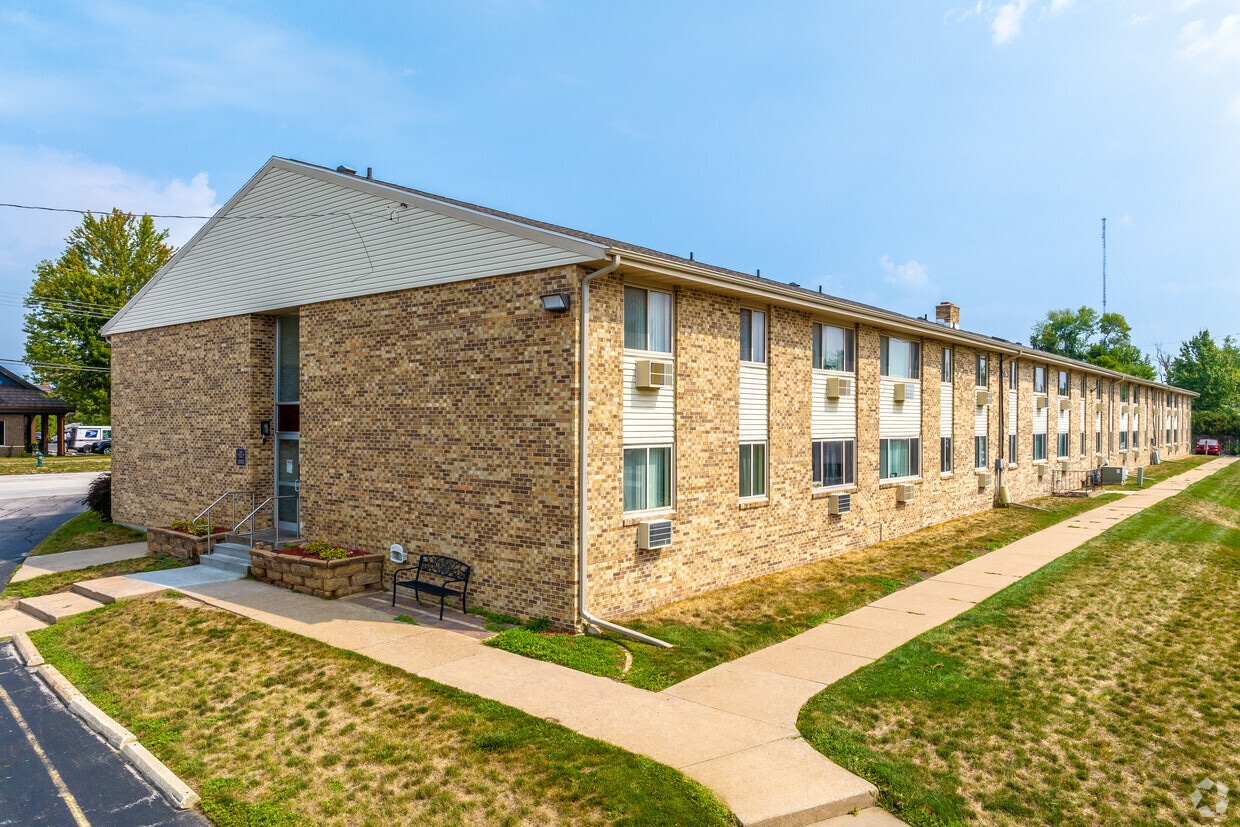
Situated on Old Marion Road on the northeast side of Cedar Rapids, Iowa, Wildwood Apartments occupies a stretch of flat suburban ground between the city proper and the neighboring community of Marion. The complex sits adjacent to Elmcrest Country Club, a private golf course that has operated since the 1930s, and within the boundaries of the Kenwood Park neighborhood—a former independent town incorporated in 1886 and annexed into Cedar Rapids in the late 1920s. The area around Old Marion Road developed steadily through the mid-twentieth century as Cedar Rapids expanded outward from its downtown core along the Cedar River, filling in residential tracts between the older neighborhoods closer to the business district and the farmland that once separated the two cities. Wildwood Apartments was built in 1968, part of the postwar suburban apartment boom that reshaped the edges of midsize Midwestern cities during the 1960s and 1970s. The complex is a modest two-story affair comprising 128 units spread across multiple buildings, with a pool, clubhouse, and gazebo on the grounds. It was and remains workforce housing—affordable, functional, unremarkable in architecture, and designed for a transient population of renters rather than long-term homeowners. The property has been under professional management since at least the mid-1980s, and it continues to operate as an active rental community today. Nothing in the building's construction history or documented record points to a dramatic origin story. There is no institutional past, no former use as a hospital or asylum, no connection to a notable disaster. Wildwood Apartments is, by all outward appearances, an ordinary apartment complex in an ordinary part of town. That ordinariness is part of what makes the haunting legend attached to it notable—not for its scale, but for how persistently it has circulated despite limited evidence. The story that appears on multiple paranormal listing sites and local haunted-location databases follows a consistent outline. According to the account, a convicted child molester once lived in one of the buildings at Wildwood Apartments. At some point—usually described as roughly twenty years prior to the earliest online postings, which would place the alleged event somewhere around the 1990s—one of the victims' parents confronted the man and beat him to death. His body, according to the story, was not discovered for three days. In the years since, residents and visitors have reportedly heard what they describe as the cries of children echoing through the apartment hallways late at night, particularly in the building associated with the alleged killing. The legend has no verifiable anchor in public records. At least one former resident who claims to have investigated the matter through official channels has stated flatly that no documentation supports the story—no police reports of a fatal beating matching the description, no corroborating court records, no news coverage. Others who have lived at the complex describe nothing more unusual than the typical sounds of a densely occupied apartment building with thin walls: footsteps overhead, voices carrying through corridors, the ambient noise of families in close quarters. One former tenant, a college student who lived in a ground-floor unit, reported a different kind of unsettling experience altogether—old copies of the Saturday Evening Post appearing under the apartment door at irregular intervals, with no one in the building claiming responsibility. The tenant found it strange enough to move out, though the incident was never connected to the broader haunting legend. Skeptics, and there are many even within the complex's own resident population, point to the obvious: the building's thin walls and long interior hallways create an acoustic environment where sounds travel easily and are easily misidentified. An aging apartment complex occupied largely by lower-income tenants will inevitably produce nighttime noise—arguments, crying children, doors slamming—that can take on a different character when filtered through a preexisting ghost story. The legend itself has the hallmarks of an urban myth that attaches to affordable housing complexes in many American cities: a violent crime, a vague timeframe, no named individuals, and a haunting that conveniently resists verification. No formal paranormal investigations of Wildwood Apartments appear in any published record. The location does not feature on ghost tour circuits, has not been the subject of any known documentary or television coverage, and draws no organized visitation from paranormal research teams. Its presence on haunted-location databases is driven entirely by user submissions repeating the same core legend, sometimes with minor variations in detail. Wildwood Apartments remains a fully occupied, actively managed rental property. It operates under the name Wildwood Pool Apartments, managed by One Property Management Iowa, and continues to offer one-, two-, and three-bedroom units to tenants in the Cedar Rapids area. The pool still opens in summer. The clubhouse still hosts residents. The hallways still carry sound the way hallways in buildings like this always have—faithfully, indiscriminately, and sometimes in ways that make a person pause and listen a moment longer than they intended.

Squirrel Cage – Old Pottawattamie County Jail
The Squirrel Cage Jail, constructed in 1885 as a correctional facility for Pottawattamie County, Iowa, stands as a remarkable example of late nineteenth-century criminal justice architecture and technological innovation combined with one of the most actively haunted locations in the continental United States. The facility was built on the site of a former church morgue, a historical fact that may have significance in understanding the paranormal phenomena that have been documented there across multiple decades. The building's design incorporated a unique rotational cage mechanism that allowed jailers to rotate a three-tiered cage structure containing prisoner cells, a technological innovation intended to improve security and reduce the number of staff members required to maintain the facility. The cage structure itself, despite its intended purpose of secure detention, appears to have created an environment conducive to the retention of traumatic impressions and the manifestation of persistent spiritual phenomena. The jail's architecture creates a distinctive physical environment featuring cell blocks arranged within the rotating cage mechanism, narrow hallways connecting various functional areas, and a fourth-floor apartment apparently designed to house a jailer or other staff member. This architectural configuration creates spaces of confined intensity where traumatized individuals were held during some of the worst periods of their lives, potentially creating emotional and psychological imprints that have persisted beyond physical death. The jail operated as a correctional facility from the late 1880s until the 1950s, housing hundreds of individuals during its operational period, some held for minor offenses and others awaiting trial or sentence for serious crimes. During the jail's operational period, multiple deaths occurred within its walls, deaths resulting from a variety of circumstances including accidents and intentional acts. A prisoner died of a heart attack while detained within the facility, a death that occurred within an environment already characterized by stress and confinement. Another prisoner fell three stories while being held at the facility, suffering fatal injuries as a result. A prisoner hanged himself within a cell, an act of desperation that represents the most extreme form of psychological distress. An officer was shot within the facility, an incident that introduced violence and loss of life among the staff responsible for maintaining the jail. These accumulated deaths and traumatic incidents appear to have created an environment saturated with suffering and loss, circumstances that may facilitate the manifestation of paranormal phenomena. From the early 1900s through the 1950s, staff members at the jail noticed strange happenings occurring within the facility that could not be explained by conventional means. Footsteps were distinctly heard echoing through empty hallways at times when the jail was secured and evacuated, with no living persons present to account for the sounds. Doors repeatedly opened and closed without human agency, locking mechanisms apparently disengaged by unseen forces. These phenomena were documented by multiple staff members across several decades, establishing a pattern of consistent manifestations rather than isolated incidents. Professional paranormal investigation teams equipped with sensitive electromagnetic field detection equipment have documented significant EMF spikes occurring at specific locations within the jail, spikes that cannot be attributed to electrical infrastructure or natural sources. Electronic Voice Phenomena recordings have been captured by investigators within the facility, audio recordings purporting to contain the voices or sounds of deceased individuals. Shadowy figures have been photographed by paranormal investigation teams, images suggesting the presence of non-physical entities within the building. These various forms of documentation appear to provide objective evidence for the reality of paranormal phenomena occurring within the jail. Apparitions of deceased prisoners have been reportedly sighted at the entrances of specific cells, manifestations suggesting that individual spirits remain bound to the locations where they suffered or died. The first paranormal investigation team to spend the night at the facility reported hearing the sound of approaching boots during their investigation, sounds that appear to have represented the presence of former jailers or law enforcement personnel continuing their duties in spectral form. The accumulated evidence from multiple decades of investigation and documentation establishes the Squirrel Cage Jail as one of America's most significantly haunted locations, a place where the trauma and loss of the past appears to retain powerful manifestations in the present.
American Theatre
The American Theatre stands as a landmark venue whose distinguished architectural heritage and cultural significance have been enriched by generations of performances and memorable entertainment experiences, yet underlying this public-facing legacy lies a distinctly haunted dimension that has captured the attention of both casual observers and serious paranormal researchers. The theatre's construction during the early-to-mid twentieth century established it as a premier destination for vaudeville, film, and theatrical performances, attracting audiences from surrounding communities who came to experience the glamour and artistic excellence that defined the era's entertainment culture. Among the theatre's most notable historical figures was Mr. Goldie, the entrepreneurial founder and proprietor whose visionary leadership transformed the venue into a thriving cultural institution and whose personal investment in the theatre's success became inseparable from the building's identity. The relationship between Mr. Goldie and the American Theatre evolved into something transcendent of conventional business management, suggesting a spiritual attachment to the venue that may have persisted beyond his natural death and continued to manifest through paranormal phenomena observable to staff and patrons across subsequent decades. The primary paranormal phenomenon most consistently reported within the American Theatre involves the apparently autonomous rocking of seats in the audience seating areas, an activity that occurs without apparent external cause and has been witnessed by multiple observers simultaneously on numerous occasions. Theatre employees have provided detailed accounts of seat rocking incidents where the motion appears to follow a slow, rhythmic pattern that suggests intentional manipulation rather than mechanical failure or environmental movement, implying an intelligence directing the phenomenon. The paranormal manifestations extend throughout the building's interior spaces, with staff members reporting encounters with what they have come to understand as the persistent presence of Mr. Goldie, the former owner whose apparent inability or unwillingness to permanently depart from his beloved theatre has created a situation of indefinite coexistence between the living and the deceased within the venue's boundaries. These encounters typically manifest as presence sensations rather than dramatic visual apparitions, creating an atmosphere of subtle but unmistakable paranormal activity that employees have learned to accommodate and normalize within their working environment. Theatre employees have documented an extensive collection of paranormal stories and accounts derived from their daily interactions within the building, narratives that accumulate into a comprehensive portrait of ongoing supernatural activity that has become virtually synonymous with the American Theatre's operational history. The experiences reported by staff demonstrate remarkable consistency in their descriptions of the supernatural phenomena, suggesting that the haunting follows comprehensible patterns and behavioral characteristics rather than manifesting randomly or unpredictably. Many staff members acknowledge having developed a form of respectful coexistence with the haunting, understanding Mr. Goldie's presence as neither threatening nor malevolent but rather as a testament to his enduring dedication to the theatre and his reluctance to abandon the venue that had become the defining focus of his professional life and personal identity. The American Theatre's reputation as a haunted venue has become integrated into its contemporary identity, with patrons and staff alike acknowledging the paranormal dimension of the space as an authentic component of the theatre experience rather than treating it as mere urban legend or sensationalized folklore. Paranormal investigators who have conducted research within the building have gathered evidence consistent with the presence of a residual haunting centered on the venue's interior spaces, particularly areas most frequently occupied by the theatre's administrative and performance personnel. The continued operation of the American Theatre as an active entertainment venue, combined with the persistent paranormal phenomena reported by employees and visitors, creates a unique situation where the building functions simultaneously as both a cultural destination and a site of significant ongoing paranormal activity.
Coe College
Coe College stands as an academic institution of significant historical importance within Iowa, with institutional origins tracing to the nineteenth century period of American expansion and establishment of educational institutions supporting intellectual development and professional training. The college was founded during a period when American higher education underwent dramatic expansion, with numerous private institutions established throughout the nation to provide educational opportunities to growing populations. The institution developed into a comprehensive college offering specialized academic programs in sciences, humanities, business, and professions, attracting student bodies and faculty engaged in intellectual pursuits across multiple disciplinary domains. The college's campus encompasses multiple buildings spanning different architectural periods, with original nineteenth-century structures preserved alongside twentieth-century additions reflecting evolving institutional needs. Voorhees Hall, identified as a primary location of documented paranormal phenomena, represents one of the college's earliest and most historically significant structures, with architectural features reflecting design principles characteristic of the late nineteenth or early twentieth century. The transformation of the Coe College campus during the early twentieth century coincided with significant transitions in American society, including the impact of World War I and subsequently the influenza pandemic of 1918-1919 that devastated populations throughout the United States and internationally. The influenza pandemic, spread by military movements and disrupted by wartime population concentrations, reached into educational institutions and affected student bodies, faculty, and staff populations. Coe College, like many American educational institutions during this period, experienced deaths among student populations from influenza infection. The pandemic deaths represented sudden tragic losses of young individuals at the threshold of their adult lives, with infections progressing to death within days in severe cases, overwhelming medical services. The psychological trauma of witnessing multiple deaths among student peer populations, combined with fear regarding disease transmission, created an environment of significant emotional disturbance and anxiety. The primary paranormal phenomenon documented at Coe College centers on the manifestation of Helen, identified as a college student who died of influenza during the 1918-1919 pandemic. Helen's apparition appears as a female figure consistent with contemporary dress of the historical period, manifesting most frequently in Voorhees Hall and female dormitory areas, locations where she would have lived and studied during her college enrollment. Contemporary descriptions of paranormal phenomena attributed to Helen include doors slamming within dormitory areas, footsteps ascending and descending stairs in dormitory buildings, blankets being pulled from beds by invisible hands, and the sound of piano music played in dark hours when the building should be unoccupied. Occasionally, students and staff have reported observing the full apparition of Helen, appearing as a translucent female figure in period clothing, sometimes interacting with physical objects or disappearing when approached. The manifestations demonstrate characteristics consistent with both residual haunting phenomena and active haunting phenomena. The historical context of Helen's death involves the overwhelming and devastating nature of the influenza pandemic, creating circumstances of sudden mortality and inadequate psychological and grief processing at the institutional level. Helen, presumably a young woman of late teenage or early adult age, undertook college education at a time when educational opportunities for women were expanding. Her death at the college represented the interruption of personal development and achievement, a loss of future potential and unfulfilled life trajectory. The psychological impact on surviving student peers, faculty members, and family members would have been substantial, representing not merely individual loss but collective trauma affecting institutional morale. Helen's spirit may have become bound to the college location through the trauma of her death, the strength of her attachment to the institution, or the inadequacy of grief processing and memorialization. The manifestations suggest an entity continuing to inhabit the physical spaces of the college. Contemporary paranormal investigations have documented electromagnetic anomalies and audio phenomena potentially consistent with paranormal manifestations.
Hotel Blackhawk
Hotel Blackhawk, located in Davenport, Iowa, represents a distinguished historic hospitality establishment constructed in 1915 that occupies a prominent position within the city's architectural and cultural heritage. The building stands as a testament to early twentieth-century design principles and construction standards, featuring elegant architectural details consistent with the luxury hotel standards of that period. The structure includes multiple floors housing guest accommodations, with the eighth floor receiving particular attention within paranormal literature due to documented phenomena concentrated in that location. Hallways extending throughout the building connect individual rooms and facilitate guest movement, creating linear spaces that extend through multiple floor levels. The hotel underwent significant development and operation throughout the twentieth century, establishing itself as a preferred accommodation destination for visitors to Davenport and a focal point for regional social and commercial activity. The building's architectural prestige and continued maintenance has preserved its historical integrity while adapting to evolving hospitality standards and guest expectations. Throughout its operational history spanning more than a century, Hotel Blackhawk has hosted numerous guests including business travelers, families, celebrities, and individuals from diverse walks of life seeking accommodation during their time in Davenport. The property became associated with numerous notable figures during its operational history, including the renowned jockey Cary Grant, whose name became attached to phenomena occurring within the property. Multiple staff members worked within the hotel across the decades, providing services necessary to maintain the establishment's reputation for hospitality. The guest rooms witnessed countless personal moments, celebrations, business activities, and routine rest experienced by visitors from around the world. The hallways connected different areas of the building and facilitated daily movement of guests and staff through the structure. The accumulated presence of numerous individuals passing through the property across generations created layered social and emotional history within the hotel's walls and spaces. The building became embedded in the cultural memory of the Davenport region, representing a particular era of American hospitality and commercial development. Multiple independent witnesses have reported paranormal phenomena occurring within Hotel Blackhawk, with particular concentration in the eighth-floor areas and throughout the building's hallway systems. The most distinctive and frequently documented phenomenon involves reports of an apparition associated with the name and likeness of Cary Grant, the famous jockey, appearing within the hotel's spaces. The figure described in witness accounts manifests as a distinct apparition visible to multiple observers across different time periods, with descriptions showing consistency regarding appearance and behavior. Accompanying the apparition phenomena are reports of unexplained chills experienced by guests and visitors moving through affected areas, described as sudden drops in temperature localized to particular spaces without identifiable environmental cause. Unexplained noises have been documented throughout the property, described as footsteps, voices, and sounds consistent with hotel activities yet occurring when such sounds would have no conventional explanation. The phenomena show particular concentration on the eighth floor and in hallway areas, though reports from other locations within the hotel indicate phenomena are not strictly localized. The manifestations have been documented consistently across decades and by numerous independent observers. The apparition associated with Cary Grant, combined with the hotel's documented history of association with the renowned jockey, suggests the paranormal phenomena may relate to significant events in Grant's life that intersected with the hotel. The figure's continued manifestation within the property decades after the individual's death indicates possible strong emotional attachment or unfinished business associated with the location. The concentration of phenomena on the eighth floor suggests possible critical incident occurring at that location during the jockey's life. The reported chills and unexplained noises could represent manifestations of emotional intensity or the consciousness of an entity unable to transition from physical existence. The consistency of reports across extended time periods strengthens evidence for authentic phenomena rather than coincidental explanations. The historical significance of the hotel and Cary Grant's prominence in racing history have made the location particularly well-documented within paranormal literature. Research into Grant's biography and connection to the hotel may illuminate the specific circumstances creating the spiritual attachment to the property. Hotel Blackhawk continues operating as an active hospitality establishment serving contemporary visitors to Davenport while maintaining its historical identity and architectural character. The property has developed a visible presence within paranormal tourism literature and regional ghost tour circuits, with the location appearing in multiple paranormal databases and investigative reports. The building maintains its status as a preferred accommodation destination while acknowledging the paranormal reputation that has enhanced its cultural prominence. Guests specifically interested in paranormal phenomena have sought accommodations at the hotel, particularly rooms and areas associated with the reported apparition. Paranormal researchers and investigators have conducted systematic studies of the property, documenting environmental conditions and attempting to gather evidence through various methodologies. The hotel's management demonstrates awareness of and transparency regarding the paranormal reports, incorporating historical interest into the property's contemporary identity. The ongoing accumulation of visitor accounts continues to reinforce the hotel's reputation as one of Iowa's most actively and consistently haunted historic establishments.
Larsen Hall – Luther College
Larsen Hall at Luther College in Decorah, Iowa represents a residential dormitory structure within an academic community committed to educational excellence and intellectual development. Located within the distinctive landscape of northeastern Iowa, Luther College occupies a position of significance within American higher education history, with its religious foundations and commitment to Christian education shaping the institution's cultural and spiritual character. Larsen Hall, like other residential facilities on the campus, serves as student housing where young adults experience formative years of intellectual development, social maturation, and personal growth within a community environment. The building's physical structure reflects mid-twentieth century dormitory design principles, with multiple floors of residential rooms arranged along corridors that facilitate community interaction and shared living experiences. The dormitory environment creates particular psychological and emotional intensity, as students navigate academic pressures and complex social dynamics characteristic of residential college communities. The tragic event that transformed Larsen Hall's third floor into a haunted location centered on the death of Gertrude, a student who died in a bicycle accident during the early twentieth century, a period when transportation safety standards and emergency medical capabilities were substantially less developed. The circumstances of her death appear to have been sufficiently sudden and traumatic that her spirit became bound to the location where she had lived and where her absence was most keenly felt by her fellow students. The fact that Gertrude died at a young age during what should have been the most promising years of her life appears to have intensified the spiritual and emotional impact of her death. Her presence seems to have remained focused on the residence hall where she inhabited a room and where her unexpected absence created a void within the community structure. The dormitory setting, characterized by intense emotional and social bonds among residents sharing close physical proximity, may have facilitated the spiritual attachment that manifested as paranormal phenomena. Paranormal phenomena on the third floor of Larsen Hall center on a spirit that residents and staff believe to be Gertrude, manifesting her continued presence within the dormitory through various categories of supernatural activity. Fire alarms are repeatedly pulled without any visible human agent pressing the alarm switches, triggering building evacuations and emergency responses that create considerable disruption despite there being no actual fire threat. The phenomenon occurs with such frequency and consistency that it has become one of the most distinctive characteristics associated with the third floor haunting. Personal items belonging to residents mysteriously go missing from locked rooms, disappearing without explanation and remaining absent despite careful searching of the dormitory and surrounding areas. Most remarkably, the missing items sometimes reappear in different locations or in the possession of their original owners, suggesting a pattern rather than simple theft. Some missing contemporary clothing mysteriously reappears replaced with old-fashioned garments consistent with clothing styles from the early twentieth century when Gertrude died, suggesting the spirit is deliberately substituting modern apparel with items from her own historical period. Larsen Hall continues its function as student housing at Luther College in contemporary times, with paranormal phenomena persisting despite the passage of more than a century since Gertrude's death. Current residents and student staff members are typically informed of the dormitory's haunted reputation, creating awareness of and readiness to interpret unexplained phenomena within the context of established paranormal patterns. Rather than viewing the haunting as merely disruptive or frightening, many members of the college community have developed affection and protective feelings toward the spirit believed to be Gertrude, viewing her continued presence as a legitimate, if unconventional, aspect of the dormitory's community character. The persistent paranormal phenomena create a unique dormitory environment where residents experience not only the normal challenges of residential college life but also the ongoing presence of a spirit from the institution's historical past. Larsen Hall stands as a location where educational space and spiritual presence intersect, creating an environment where the past maintains unusual salience within the contemporary residential community.
Mason House Inn and Caboose Cottage
The Mason House Inn and Caboose Cottage occupies a position of preeminence among haunted locations throughout Iowa, with the property widely regarded as the most paranormally active location within the state's borders and a premier venue for paranormal investigation and ghosthunting experiences. Located in Keosauqua, Iowa, the inn represents a continuously occupied historic property with extended operational history encompassing both its period as a private residential dwelling and its contemporary function as a commercial hospitality establishment. The structure dates to eighteen forty-six, placing its initial construction during a formative period in Iowa's settlement history, when European immigration and American frontier expansion created the demographic foundation for permanent community establishment in the region. The property's construction during this early period established it as a structure that has witnessed nearly two centuries of continuous human occupation, witnessing major historical events including the American Civil War, frontier conflicts, industrial transformation, and the agricultural development that characterized Iowa's emergence as an agricultural center. The mansion's substantial architectural footprint, multiple stories, and numerous rooms create extensive interior space where paranormal phenomena can manifest with complexity, with the structure's longevity and continuous occupancy generating layers of human experience and potential psychological impressions that might contribute to paranormal manifestation. The Mason House Inn achieved historical distinction through its documented involvement with the Underground Railroad, the clandestine network of routes and safe houses through which enslaved African Americans escaped to northern states and Canada during the pre-Civil War era. The inn provided sanctuary and shelter to fugitive enslaved individuals navigating the dangerous journey toward freedom, with the property's proprietors risking substantial legal and social consequences for their abolitionist convictions and willingness to shelter fugitive individuals. The structure subsequently served as a Civil War hospital during the conflict's progression, treating wounded soldiers and providing refuge to individuals displaced by the violence and destruction that characterized the war's devastating impact on American communities. The mansion also survived five major flood events associated with the Des Moines River, which runs in proximity to the structure, with documented instances of inundation causing property damage and displacement of residents during particularly severe hydrological events. These multiple historical roles created an environment of trauma, suffering, death, displacement, and tragedy that established the foundational conditions for subsequent paranormal manifestation, with the combination of historical circumstances creating concentrated reservoirs of human suffering and loss within the building's physical structure. Paranormal phenomena documented at the Mason House Inn and Caboose Cottage demonstrates the property's distinction as Iowa's most actively haunted location, with at least five distinct spiritual entities identified by the property's current owners and paranormal investigation teams conducting systematic research throughout the facility. A young boy ghost frequently manifests within Room 5, where visitors and investigators report physical contact sensations including tugging on clothing during nighttime hours, with the entity's presence particularly active during sleeping periods when guests are most vulnerable to paranormal contact. A woman dressed in a white nightgown manifests throughout the inn's interior spaces, appearing briefly before vanishing from sight, with multiple witnesses describing nearly identical apparitions of a spectral female figure wearing period clothing consistent with late nineteenth-century fashion. An entity identified as a man named Knapp is associated with Room 7, where he was murdered during an undocumented violent incident, with the location maintaining elevated paranormal activity concentrated in the room where his death occurred. Paranormal investigation teams have documented unexplained footsteps throughout hallways, disembodied voices captured through electronic voice phenomena recording equipment, physical contact experiences, and sense-of-presence phenomena. The Caboose Cottage, a separate structure associated with the main inn, generates similar paranormal phenomena, with investigators documenting coordinated activity suggesting intelligent interaction and intentional communication between paranormal entities and living investigators. Currently, the Mason House Inn and Caboose Cottage operate as a dedicated paranormal investigation venue offering ghost hunting classes and overnight paranormal experiences to individuals interested in firsthand paranormal investigation and potential documentation of survival of consciousness. The property's management has fully embraced its paranormal reputation, providing professional equipment, systematic investigative protocols, and expert guidance to participants interested in engaging directly with the location's documented phenomena. Paranormal investigation teams from throughout the paranormal research community have conducted systematic studies documenting the property's paranormal activity with technological instrumentation designed to detect electromagnetic anomalies, record auditory phenomena, and capture photographic and video evidence of apparitions and paranormal manifestation. The Mason House Inn and Caboose Cottage maintains its position as the premier paranormal investigation destination within Iowa, attracting researchers, enthusiasts, and paranormal tourists seeking authentic experiences with documented spiritual manifestations. The property's combination of historically significant events, documented tragedy, multiple identified spiritual entities, and consistent paranormal phenomena has established it as a location of paramount importance to the paranormal research community, with the inn functioning simultaneously as a historical artifact, a commercial hospitality venue, and an active center for paranormal investigation and documentation.
Strayer-Wood Theatre
Strayer Wood Theatre serves as the primary theatrical performance and instructional facility for the Department of Theatre at the University of Northern Iowa, occupying a central role in the university's academic programs and cultural operations. The building incorporates the technical and architectural elements necessary for theatrical performance, including stage equipment, lighting systems, sound apparatus, and seating arrangements. The theatre functions as a workspace where students and faculty engage daily in the activities central to theatrical art: rehearsal, performance, technical operation, and the collaborative work required to create productions. The atmosphere within a working theatre, encompassing the creative energy of students exploring artistic expression and the emotional intensity of performance moments, creates an environment psychologically distinct from ordinary institutional spaces. The departmental operations of the Theatre program would involve numerous students and faculty engaging with the facility across extended periods, developing familiarity with the spaces, technical systems, and rhythms of theatrical production. Students pursuing theatrical training develop strong associations with the theatre facility as the primary location where their artistic education occurs and creative aspirations receive cultivation. The emotional investment students develop in theatrical spaces, the memories associated with significant performances and artistic growth, and the sense of belonging to a creative community generate powerful psychological attachments to the facility. Faculty members similarly develop deep connections to the space, conducting meaningful aspects of their professional work within the theatre's confines. The accumulated presence of individuals devoted to theatrical art and the intensive emotional energy expended within the building create conditions that paranormal traditions associate with generation of persistent manifestations. Paranormal phenomena at Strayer Wood Theatre are attributed to an entity students have collectively nicknamed Zelda, a designation suggesting personality, familiarity, and affection rather than fear or hostility. The documented phenomena attributed to Zelda focus on activities connected to musical performance and theatrical technical operation. Most notably, Zelda is credited with playing the theatre's piano, with witnesses reporting instances of piano music emerging from the instrument without any living individual operating the keys. The piano music carries qualities suggesting intentional performance rather than accidental sound, with observers describing coherent melodies consistent with deliberate musical expression. Beyond piano performance, witnesses have reported Zelda producing strange noises and theatre equipment operating independently of human control. Equipment has been documented functioning in ways inconsistent with normal operational patterns, suggesting an entity whose identity and continued activities remain focused on theatrical art and performance. The legend of Zelda has become integrated into student culture and institutional memory within the University of Northern Iowa's Theatre Department, with successive cohorts contributing to and perpetuating the folklore. Student accounts spanning years consistently describe similar phenomena and reference the entity by the collective designation Zelda. The development of a nickname and cultivation of a benevolent relationship with the entity, rather than fearful avoidance, suggests that manifestations have been integrated into departmental culture as an accepted, if unusual, aspect of working in the theatre facility. Contemporary students and faculty continue to report experiences attributed to Zelda, with accounts suggesting playfulness or positive engagement rather than malevolence. Paranormal researchers have documented the theatre as a location of interest for studying manifestations within institutional spaces and the role of collective belief in perpetuating paranormal narratives. Strayer Wood Theatre continues to function as an active theatre facility while maintaining its reputation as a location where paranormal manifestations attributed to Zelda continue to intrigue students, faculty, and researchers investigating the mysteries of theatrical spaces and the creative energy they contain.
Pleasant Ridge Cemetery
Pleasant Ridge Cemetery, commonly known as the Thirteen Stairs Cemetery, occupies a rural location several miles north of Palo in Fayette County, Iowa, rising prominently on a hillside characterized by distinctive architectural features that have contributed to its paranormal reputation over generations of local residents. The cemetery's most remarkable physical feature is the remarkable flight of thirteen stairs ascending the hillside to the burial grounds proper, an unusual architectural element for cemetery design that created a memorial structure serving both functional and symbolic purposes for the rural community. The thirteen stairs became deeply embedded in local folklore and paranormal tradition, with the specific number acquiring mystical significance within the paranormal and occult community that subsequently became attracted to the location. The rural setting, removed from urban development and surrounded by agricultural land, created an isolated and peaceful environment. The documented paranormal phenomena at Pleasant Ridge Cemetery represent some of the most extensively recorded supernatural activity associated with any cemetery location in the Midwest, with systematic documentation of unexplained sounds, apparitions, and electronic voice phenomena spanning several decades of investigation. Paranormal researchers utilizing electronic voice phenomena technology have captured disembodied voices speaking within the cemetery grounds, establishing recorded documentation of auditory phenomena that suggest conscious spiritual communication. The voices documented on EVP recordings employ intelligible human speech patterns and occasionally appear to respond to questions posed by investigators, indicating an interactive quality to the manifestations rather than residual echoes of past events. Beyond auditory phenomena, visitors and researchers have reported visual apparitions of humanoid figures appearing within the cemetery grounds. Particular paranormal manifestations at Pleasant Ridge Cemetery include reports of a distinctly visible red-eyed dog spirit, described as growling and manifesting supernatural characteristics that distinguish it from living animals. This canine apparition appears with sufficient frequency and consistency to be treated as a distinct entity within the paranormal phenomena associated with the location. Additional reports describe witch sightings within the cemetery, with observers claiming to encounter the apparition of a female figure displaying characteristics consistent with historical witch trials era depictions and folklore traditions. Floating light orbs have been documented photographically and visually at the cemetery location, with multiple documented instances of luminous spherical phenomena appearing within the burial grounds during darkness. The cemetery management and local authorities have implemented security and trespassing restrictions specifically in response to paranormal activity and the attraction of paranormal investigators to the location. A gate at the cemetery entrance is equipped with surveillance camera systems and posted with explicit warnings against trespassing or nighttime access, establishing clear boundaries regarding appropriate use of the burial ground. These restrictions were implemented following incidents involving unauthorized paranormal investigation, damage to grave markers, and disturbances to the peaceful environment intended for grieving families. Pleasant Ridge Cemetery continues to maintain its reputation as one of the Midwest's most actively haunted cemetery locations, with ongoing reports of paranormal phenomena and continued interest from paranormal research organizations and enthusiasts. The distinctive thirteen stairs, the documented voices captured on electronic voice phenomena equipment, and the reports of the red-eyed dog spirit and witch sightings have established the location as a significant paranormal site worthy of respectful investigation and documentation.
Boone County Historical Society – Masonic Temple
The Champlin Memorial Masonic Temple, constructed in 1907 in Boone, Iowa, stands as an impressive example of early twentieth-century fraternal architecture and represents a significant chapter in the social and civic history of central Iowa. Built to serve the spiritual and organizational needs of Mt. Olive Lodge No. 79 of the Free and Accepted Masons, the temple incorporated the finest architectural practices of its era and reflected the importance that Masonic organizations placed upon visible symbols of permanence, brotherhood, and moral authority. The structure housed this active Masonic lodge for more than eight decades, becoming an integral part of Boone's downtown landscape and serving as a gathering place for members of one of America's oldest and most widespread fraternal organizations. Throughout the early and middle twentieth century, the building served not only as a lodge facility but also as a venue for community events, celebrations, and ceremonies that reflected the central role Masonic organizations played in American civic life. The Champlin Memorial Masonic Temple maintained its primary purpose for nearly a century before Mt. Olive Lodge No. 79 changed significantly. In 1990, the lodge relocated to a newly constructed facility, leaving the historic temple building vacant and in need of new purpose. The structure's historical significance and architectural merit prevented its demolition, and the building was subsequently recognized for its importance to Iowa's architectural heritage. The property was included on the National Register of Historic Places in 1990, the same year the lodge vacated the structure. Following the lodge's departure, the Boone County Historical Society assumed responsibility for the building, transforming it from an exclusive fraternal gathering place into a museum and archive facility dedicated to preserving the region's history and making it accessible to the broader public. During the transition from active Masonic lodge to historical society headquarters, staff and visitors began reporting unusual phenomena within the Champlin Memorial Masonic Temple. These manifestations centered around a poltergeist entity that became known by the name Frank to those who worked regularly within the building. Frank's presence announced itself through characteristically mischievous poltergeist behavior, most notably the repeated and unexplained slamming of doors throughout the structure, often occurring when the building stood otherwise empty and locked. Witnesses reported lights turning on and off without human intervention, creating an unsettling atmosphere of unseen presence and activity within the halls. Staff members working during evening hours described hearing disembodied footsteps echoing across the second floor, footsteps that appeared to follow no logical pattern and vanished when investigation was attempted. Employees reported being called by name in clear voices emanating from nowhere visible. The identity of the entity known as Frank remains unknown, though several theories have emerged regarding his possible origin and motivation. Some researchers suggest that Frank may have been a lodge member who died while actively involved with Mt. Olive Lodge, his spiritual connection creating a lingering presence after his death. Others propose that Frank might represent a previous caretaker or custodian whose years of service created such deep attachment to the structure that departing the physical plane did not compel him to move beyond the familiar halls. The particular manifestation of poltergeist activity suggests an entity possessed of considerable energy and intention, capable of interacting with physical objects in his environment. The phenomenon has persisted even after the building's transition to historical society use, suggesting that Frank's attachment to the Champlin Memorial Masonic Temple transcends the specific purpose the building served during his apparent lifetime. The Boone County Historical Society continues to operate within the building despite the ongoing paranormal phenomena, and the structure remains open to visitors and researchers exploring Iowa's regional history.
Cherokee Mental Health Institute Cemetery
The Cherokee Mental Health Institute, located in Cherokee, Iowa, was established in 1902 as a state psychiatric facility designed to provide medical care and institutional treatment for individuals suffering from severe mental illness. The facility was constructed during a period of expansion in American psychiatric infrastructure, when states invested in large-scale facilities designed to house and manage individuals whose mental conditions rendered them unable to function independently. The location was selected for its isolation from urban centers, following psychiatric theory that rural settings offering agricultural labor and distance from city stress could contribute positively to therapeutic treatment. The institute was designed to be largely self-sufficient, with extensive agricultural operations and workshops providing labor opportunities. During its early decades, the Cherokee Mental Health Institute grew substantially, eventually housing thousands of individuals from throughout Iowa. The conditions varied across periods, ranging from relatively progressive therapeutic approaches to severe overcrowding and inadequate care. Patients admitted included those with treatable conditions and those with chronic, severe mental illness requiring long-term institutional care. The lack of effective pharmacological treatments before the mid-twentieth century meant many patients spent decades or entire lifetimes confined within institutional settings, their identities gradually fading from community memory as they became permanent residents. The cemetery adjacent to the institute contains the graves of eight hundred thirty-one patients who died while resident at the facility, with burials from 1902 through 1962. These graves are numbered sequentially, representing individuals whose lives were defined by mental illness and institutionalization. The graves are often marked only with simple stone markers bearing numbers rather than names, reflecting both economic limitations and a historical era when the deceased poor were frequently buried with minimal ceremony or individual recognition. The numbering system removed individual identity and replaced it with anonymous designation, a practice contemporary observers find deeply troubling. Paranormal investigators and cemetery visitors have consistently reported unusual phenomena throughout the grounds, suggesting the spirits of deceased patients remain attached to their burial location. Photographs frequently capture facial images appearing within frames when viewed under flash illumination, suggesting either photographic anomalies or spiritual entities responding to the disruption caused by flash photography. Visitors report hearing whispers and disembodied voices, sounds unexplainable by environmental sources. Cold drafts sweep through specific areas despite calm weather. The overwhelming sensation of being watched persists throughout the cemetery, with visitors experiencing intense feelings of observation from unseen presences. Some witnesses report disembodied screams suggesting extreme emotional distress emanating from the earth. The concentration and intensity of paranormal phenomena has prompted investigation groups to conduct research within the grounds, frequently documenting electromagnetic anomalies associated with paranormal activity. The Cherokee Mental Health Institute Cemetery functions as a memorial to the eight hundred thirty-one individuals who died institutionalized, while simultaneously serving as an active paranormal location where their continued presence manifests through various forms of spiritual communication.
Simpson College – Old Chapel – College Hall
Simpson College's College Hall, formerly designated as the Old Chapel, stands as one of the central academic and spiritual structures on the Indianola, Iowa campus, constructed in 1870 during the institution's foundational development. The building was originally conceived as a multipurpose structure serving both chapel and academic instruction functions, reflecting the integrated spiritual and educational missions characteristic of nineteenth-century American colleges with Methodist affiliations. The architectural design reflects Romantic-era institutional construction principles, with emphasis on verticality, ornamental detailing, and spaces conducive to both contemplation and scholarly activity. Over the course of its existence spanning more than one hundred and fifty years, the building has served generations of students, faculty, and visiting scholars while accumulating a complex history intertwining academic progress, social change, and unexplained paranormal phenomena. The structure has been maintained and renovated multiple times to accommodate evolving institutional needs while preserving its fundamental architectural integrity and historical significance. The most significant tragedy associated with College Hall occurred on a fateful day in 1935 when Mildred Hedges, a first-year student known locally as Millie, fell from an interior staircase and sustained fatal injuries. The exact circumstances surrounding the fall remain somewhat unclear and have been subject to various interpretations over the decades. Millie's death at such a young age, during what should have been the beginning of her academic and personal development, created a profound emotional and spiritual imprint upon the building. She was not the only young person to meet an untimely death within the structure's walls, as historical records indicate that multiple students died by suicide within the building during the 1920s and surrounding decades. These tragedies collectively created layers of grief and psychological trauma absorbed by the physical structure, establishing College Hall as a location bearing the accumulated sorrow of multiple untimely deaths. Paranormal activity at College Hall has been extensively documented and validated through multiple independent witness accounts collected over the past several decades. Mildred Hedges's apparition appears with remarkable consistency in the locations where she spent her final moments, particularly in proximity to the staircase where her fatal fall occurred. Her spirit maintains apparent awareness of living persons present in the building, responding to attempts at communication and demonstrating knowledge of current events and campus activities occurring within the structure. One legendary incident involves a female spirit dressed in a distinctive purple dress whose manifestation occurred in response to a perceived transgression by a living individual. According to the account, a person stole an item from the chapel, and the spirit in the purple dress allegedly pursued this individual with apparent determination, following them across substantial distances of several hundred miles before the apparition's manifestation ceased. This incident suggests a level of spiritual agency and purpose extending beyond simple residual haunting phenomena, indicating intelligent communication and intentional action by deceased spirits. The paranormal phenomena documented at Simpson College's College Hall reflect a complex haunting incorporating elements of both residual and intelligent manifestation. Residual phenomena manifest through repetitive sounds and apparitional appearances occurring at specific times and locations, suggesting recordings of past events imprinted upon the physical environment. Intelligent phenomena are evidenced by responses to direct communication attempts, apparent awareness of human presence, and actions that suggest purposeful communication. The building has become recognized throughout paranormal research communities as an exceptional location for the study of multiple-spirit haunting phenomena and the interaction between intelligent spirits and living persons. The college administration has maintained appropriate respect for the building's paranormal history while facilitating legitimate research and documentary efforts. College Hall remains actively used for academic purposes, yet the persistent paranormal activity has established it as one of Iowa's most thoroughly documented haunted locations, attracting ongoing paranormal research and gaining mention in multiple national paranormal databases and publications.
Springville Cemetery
Springville Cemetery in Brown Township, Linn County, Iowa stands as a burial ground that has become known throughout paranormal research circles as the site of extraordinary and persistent paranormal phenomena centered on the grave of a man who died in the act of performing the very labor that defines his existence. The cemetery, established in the traditional pattern of rural American burial grounds, represents both a repository for the deceased and, according to numerous witness accounts and documented paranormal investigations, a location where the boundary between death and continued existence has become measurably thin. The inclusion of Springville Cemetery among the confirmed haunted cemeteries of Iowa speaks to both the intensity and consistency of phenomena documented there, elevating it from local folklore to a location worthy of serious paranormal investigation and documentation. The haunting of Springville Cemetery centers on the spirit of a gravedigger who died in 1920 while performing the labor that constituted his profession and, apparently, defined his very existence. The gravedigger was actively engaged in the task of digging a grave—the precise work of excavating earth to prepare a burial space for the deceased—when death claimed him. The tragic irony of a gravedigger dying while performing the act of grave-digging has not been lost on researchers and observers, who have noted that the circumstances of death often correlate with the nature and intensity of paranormal manifestation. A person whose life and identity were bound up in the work of grave-digging, meeting death during the performance of that very labor, creates a kind of spiritual signature—a consciousness potentially unable to fully comprehend or accept the transition from life to death when that transition occurs in the midst of the defining work of his existence. The paranormal phenomena attributed to the gravedigger's spirit represent one of the most visually distinctive and well-documented hauntings in American paranormal research. Witnesses, cemetery visitors, and paranormal investigators have reported seeing the apparition of the gravedigger moving through the cemetery at night, actively engaged in the labor of digging graves. More extraordinarily, the gravedigger's spectral shovel appears to glow with a distinctive green luminescence that makes the spirit's work unmistakably visible against the darkness of the night. This glowing shovel phenomenon represents one of the most visually striking and easily recognizable paranormal phenomena associated with any American cemetery, creating an unmistakable visual signature that has been reported consistently across decades by independent observers. The gravedigger's nightly activity has been documented by multiple independent sources and paranormal investigation teams over many years. The apparition appears to move with purpose and focus, engaged in the repetitive motions of grave-digging—raising the shovel, thrusting it into the earth, lifting the loosened soil, casting it aside, and repeating the process with mechanical regularity. The phenomenon suggests either residual haunting energy—a recording of past behavior playing repeatedly—or an active spirit engaged in the only work he apparently knows, continuing the labor of his life even after death has claimed him. The green luminescence of the shovel remains unexplained by conventional physics or conventional paranormal theory, suggesting either unusual energy manifestation or a spirit with particular ability to produce visible light. The historical context of the gravedigger's death in 1920 places it during a period of significant mortality in America. The year 1920 was the final year of the Spanish Flu pandemic that had devastated global populations in 1918-1919, and gravediggers across America were overwhelmed with the volume of burials required by the pandemic's casualties. The gravedigger at Springville Cemetery may have been working under conditions of extraordinary labor intensity, exhaustion, and exposure to the miasma of death that pandemic-era grave-digging entailed. Whether his death resulted directly from pandemic illness or from the physical exertion of excessive grave-digging labor during this period remains a matter of historical speculation, though the timing suggests correlation with pandemic-related mortality. Paranormal investigations conducted at Springville Cemetery have documented the gravedigger's apparition with photographic evidence, eyewitness accounts, and the careful correlation of multiple independent reports occurring across many years. The consistency of the apparition's appearance, the distinctive green glow of the shovel, and the mechanical repetition of grave-digging motions all suggest a genuine paranormal phenomenon rather than folklore or imaginative reconstruction. The cemetery itself, like many rural American burial grounds, contains graves dating back more than a century, creating a location where multiple generations of the deceased are physically present beneath the ground, potentially contributing to the overall paranormal atmosphere of the location. The phenomenon of the glowing shovel and the gravedigger's ghost at Springville Cemetery has achieved something of iconic status within paranormal research literature, becoming a frequently cited example of how certain spirits appear unable or unwilling to relinquish the work that defined their earthly existence. The gravedigger's continued labor, visible each night through the medium of his glowing shovel and his methodical movements, raises questions about the nature of consciousness after death and whether certain traumatic deaths or deeply ingrained patterns of behavior create spiritual prisons from which the deceased cannot escape. The phenomenon also suggests that some spirits retain sufficient energy and capability to interact with the physical world in measurable ways—to move earth, to create visible light, to move with apparent purpose and intention. Today, Springville Cemetery remains an active burial ground serving the Brown Township community in Linn County, Iowa. The gravedigger's apparition continues to appear, according to occasional reports from visitors and researchers, continuing the work he began more than a century ago. For paranormal researchers studying the mechanisms of spirit manifestation, the psychological effects of death during the performance of work, and the nature of consciousness after death, Springville Cemetery represents a uniquely compelling case. The gravedigger of Springville Cemetery appears to have become immortalized not in memory or historical record but in actual continued presence, a spirit whose refusal or inability to accept death has translated into nightly manifestations that bridge the worlds of the living and the dead, visible to any who visit the cemetery after darkness falls and look carefully among the graves.
Farm House Museum
The Farm House Museum in Ames, Iowa stands as the oldest surviving building on the Iowa State University campus, underscoring its historical significance within the institution's development. Built in 1860, the Farm House predates the college's formal establishment and represents an artifact of the frontier agricultural era from which the institution evolved. The structure underwent substantial renovation in the 1970s while maintaining architectural integrity as a Victorian residential building. The building has become documented as a location haunted by two female entities whose distinct personalities and behavioral patterns have been embedded in witness accounts and paranormal literature. The two entities are identified as Edith Curtiss and Esther Wilson, figures whose historical connection and circumstances of death remain partially embedded in institutional memory and paranormal accounts. Edith Curtiss is associated with accounts of romantic conduct, with paranormal traditions describing gentleman callers sneaked through windows, suggesting social transgression and a young woman's agency negotiating constraints of her historical moment. This creates a psychological dimension to her paranormal presence, suggesting continuing engagement with concerns central to her life. Esther Wilson represents a distinct personality marked by apparently purposeful, corrective behavioral patterns. Paranormal phenomena manifest primarily through object movement, auditory disturbances, and environmental alterations. Objects move without visible human agency, with items changing position or orientation. Window shades move mysteriously despite absence of drafts or mechanical explanations. Flatware and table settings change angles and positions, suggesting either direct intervention or environmental traces of past activities repeatedly manifesting. These phenomena cluster around the house's interior spaces, particularly those associated with the identified entities. Auditory phenomena constitute a significant component of the Farm House's paranormal characterization. Curtains snap open and close instantaneously with no one present, creating dramatic disturbances. A mysterious female voice has been documented by witnesses and paranormal investigators. Doors open and close on their own, with students and staff witnessing these movements under circumstances excluding conventional physical explanation. These phenomena create an active quality suggesting ongoing occupation and agency by ghostly residents. Edith Curtiss's presence appears marked by window incidents and romantic narrative associations. Her apparent facilitation of romantic liaisons creates a personality-driven haunting narrative. Esther Wilson is characterized as a correcting presence, with accounts describing her apparent adjustment of table settings and household objects, suggesting domestic perfectionism continuing beyond death or protective oversight. The distinction between the two entities has contributed to sophisticated paranormal characterizations. The Farm House Museum serves the dual function of historical artifact and documented paranormal location. Campus visitors and paranormal investigators bring their interpretive frameworks, engaging with both its historical significance as the oldest structure on campus and its paranormal reputation. The 1970s renovation, while maintaining architectural integrity, has not diminished paranormal reporting. Students have reported experiences and requested overnight access for paranormal documentation purposes. The Farm House exemplifies institutional haunting narratives where the oldest structures become repositories of paranormal associations. The building's longevity, original construction predating the formal institution, and documented female occupants whose stories have become embedded in paranormal tradition create a rich substrate for interpretation. The location continues to attract both historical and paranormal investigation attention, functioning as a site where institutional memory, frontier history, Victorian social dynamics, and contemporary paranormal investigation intersect in ongoing documentation of phenomena attributed to Edith Curtiss and Esther Wilson.